
10 Elegant Garage Loft Ideas and Space-Saving Techniques
- Garage Decor
 Ben
Ben- 0
- 40 minutes read
Look, if your garage floor currently resembles a landfill with power tools, holiday decorations, and that treadmill you swore you’d use — you’re not alone. I’ve been there. My two-car garage somehow turned into a zero-car storage disaster, and I spent months tripping over boxes before I finally looked up and realized I had an entire unused dimension just waiting for me.
That realization changed everything. Building a garage loft gave me back my floor space, organized my chaos, and honestly made my garage a place I actually wanted to spend time in. Whether you’re looking for extra storage, a quiet workspace, or even a mini retreat above the clutter, a well-designed garage loft can completely transform your space.
I’ve spent a good chunk of time researching, building, and helping friends plan their own garage loft projects. So I’ve pulled together 10 elegant garage loft ideas and space-saving techniques that actually work — not just Pinterest fantasies that look great in photos but crumble under the weight of a single storage bin.
Let’s get into it.
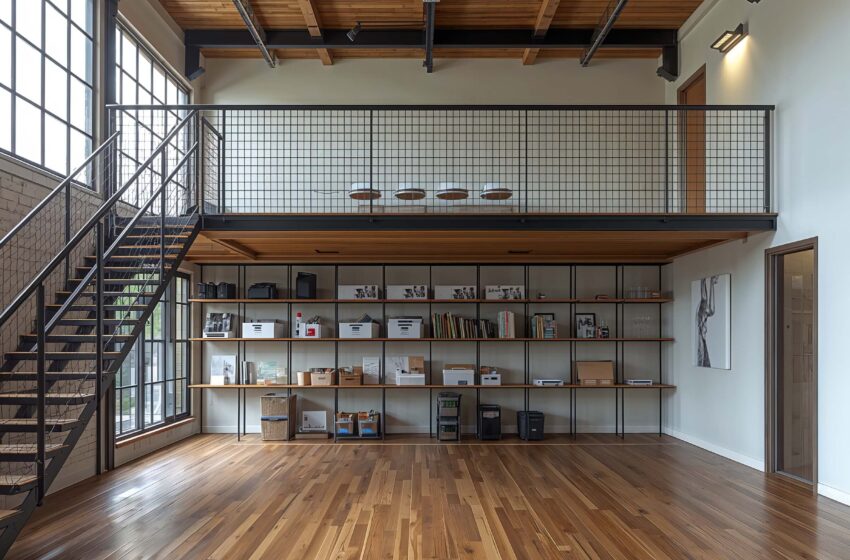
1. Modern Industrial Garage Loft

If you love the look of exposed steel beams, raw concrete, and metal accents, a modern industrial garage loft might be your perfect match. This style leans heavily into the “warehouse chic” aesthetic, and honestly, it just works in a garage setting because garages already have that utilitarian bones.
Why Industrial Works So Well in a Garage
Think about it — your garage already has concrete floors, open framing, and maybe some exposed ductwork. Instead of fighting against that, an industrial loft design embraces it. You’re working with the space, not against it.
The key materials here include:
- Steel or iron framing for the loft platform
- Metal railings with clean, geometric lines
- Plywood or reclaimed wood decking for the loft floor
- Edison bulb or pendant lighting for that signature industrial glow
Making It Functional
A modern industrial garage loft doesn’t just look cool — it performs. I recommend using steel angle brackets and heavy-gauge supports to ensure the structure holds serious weight. If you plan to store heavy items like toolboxes, tires, or equipment up top, industrial framing gives you that peace of mind.
Pair the loft with a metal staircase or a steel ship ladder to keep the look cohesive. And please, skip the flimsy decorative railings. You want something that can actually keep you (and your stuff) from tumbling over the edge.
2. Rustic Wooden Storage Loft
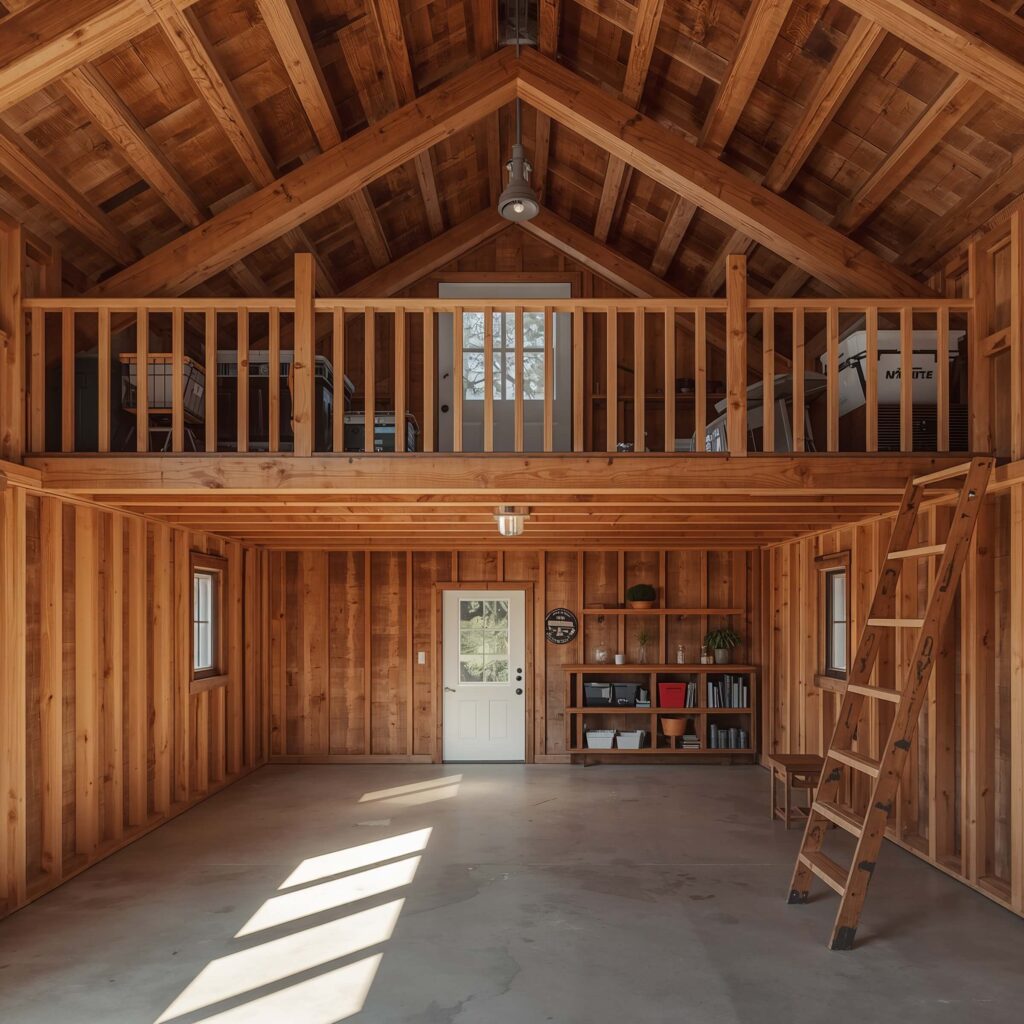
Not everyone wants their garage to feel like a Brooklyn co-working space, and that’s totally fair. A rustic wooden storage loft brings warmth, character, and a cabin-like feel that somehow makes organizing your garage feel… cozy?
Choosing the Right Wood
The wood you pick matters more than you might think. Here’s a quick breakdown:
- Pine — Affordable, easy to work with, but softer. Great for lighter storage.
- Douglas Fir — Stronger, more durable, and handles weight beautifully.
- Reclaimed barn wood — Gorgeous character, eco-friendly, but inspect it carefully for structural integrity.
- Cedar — Naturally resistant to moisture and insects, which is a huge plus in a garage environment.
Design Tips for a Rustic Vibe
You can amplify the rustic feel with hand-hewn beams, wrought iron hardware, and natural wood stains instead of paint. I built a small rustic storage loft in my buddy’s garage using reclaimed oak planks, and the thing looked like it belonged in a mountain lodge. The contrast between rough-sawn wood and the typical concrete garage floor creates a surprisingly elegant visual.
One practical tip: always seal your wood with a weatherproof finish, especially if your garage isn’t climate-controlled. Untreated wood in a humid garage will warp faster than you’d expect.
3. DIY Floating Garage Loft

Ever walked into someone’s garage and seen a loft that seems to hover against the wall with no visible legs or posts? That’s a floating garage loft, and it’s one of the cleanest, most space-efficient designs you can build.
How a Floating Loft Works
The “floating” effect comes from mounting the loft platform directly to the wall studs using heavy-duty ledger boards and lag bolts. Instead of support columns eating up your floor space, the walls carry the load.
Here’s why this matters: no support posts means 100% usable floor space beneath the loft. You can park your car directly underneath, set up a workbench, or keep the area completely open.
Can You Actually DIY This?
Short answer: yes, but with caveats. You need to:
- Verify your wall studs can handle the load (standard 2×4 studs have limits)
- Use Simpson Strong-Tie connectors or equivalent structural hardware
- Consult your local building codes — some jurisdictions require permits for loft construction
- Avoid overloading — a floating loft typically supports less weight than a post-supported design
I’ve done one of these myself, and the trickiest part was getting the ledger board perfectly level across a 12-foot span. A laser level is your best friend here. Don’t eyeball it. Trust me on that one.
Also Read: 10 Innovative Half Garage Gym Ideas and Efficient Plans
4. Small Space Compact Loft
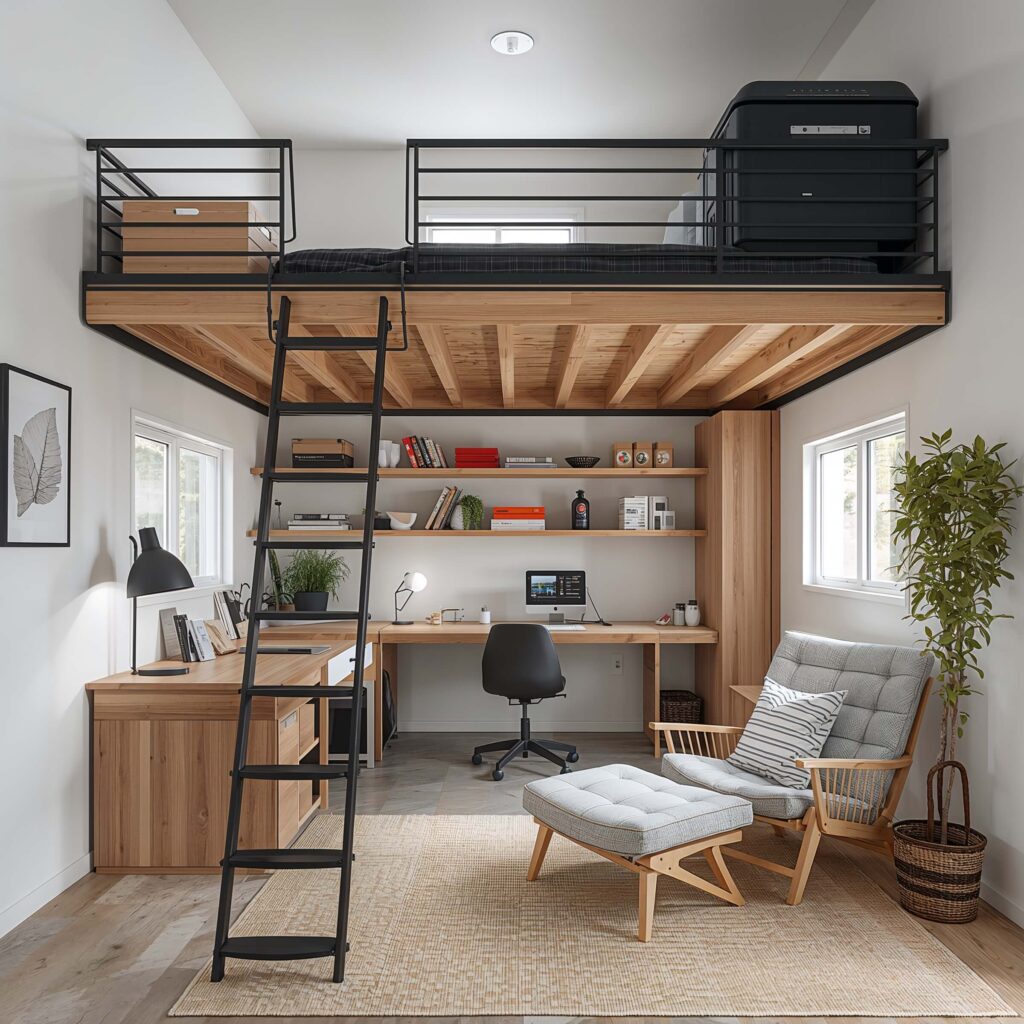
What if your garage is barely big enough for one car, let alone a full loft? A compact garage loft designed specifically for small spaces can still give you meaningful storage without making the garage feel cramped.
Maximizing Every Inch
The secret to a successful compact loft is vertical thinking combined with smart zoning. You don’t need the loft to span the entire garage. Even a 4×8-foot platform tucked into a corner or mounted above the garage door opening can provide a shocking amount of storage.
Key space-saving techniques include:
- Mounting the loft above the garage door track area — this dead space is almost always wasted
- Using fold-down or retractable ladders instead of permanent stairs
- Installing ceiling-mounted storage nets alongside the loft for overflow items
- Keeping the loft depth shallow (3–4 feet) so it doesn’t interfere with parking
Keeping It Organized
A compact loft gets messy fast if you don’t have a system. I’m a big fan of clear plastic bins with labels — it sounds boring, but when you can see exactly what’s in each bin from the ground, you save yourself the hassle of climbing up and digging through mystery boxes every time you need something.
5. Multi-Purpose Garage Loft Office
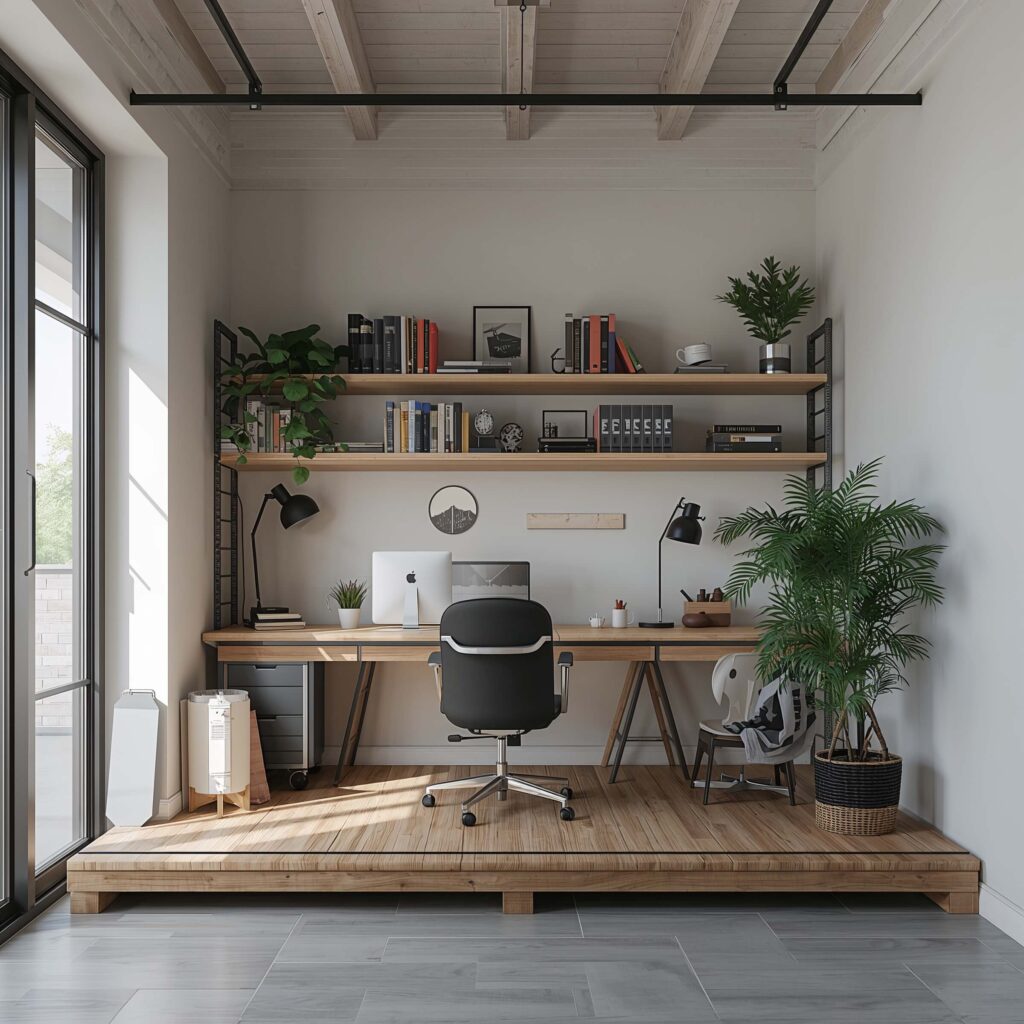
Here’s where things get really interesting. The garage loft office has exploded in popularity, especially since remote work became the norm for so many people. And honestly? A loft office above the garage might be the most underrated workspace setup out there.
Why a Garage Loft Office Actually Makes Sense
You get physical separation from the main house, which means fewer distractions (no kids barging in during Zoom calls, no temptation to raid the fridge every 30 minutes). The loft elevation gives you a sense of privacy and enclosure, even without full walls.
Here’s what you’ll want to include:
- Electrical outlets and USB ports — run these during the build, not after
- Proper lighting — overhead LED panels or a desk lamp; garage lighting alone won’t cut it
- Insulation — at minimum, insulate the loft ceiling and any adjacent walls
- A small HVAC solution — a mini-split unit or portable AC keeps things comfortable year-round
- Sound dampening — foam panels or even thick curtains help block garage noise
My Personal Experience
I converted a section of my garage loft into a small office nook about two years ago, and it genuinely improved my productivity. Something about climbing a ladder to “go to work” creates a mental boundary between home life and work life. It sounds ridiculous, but it works. The only downside? Carrying coffee up a ladder requires a level of coordination I don’t always possess in the morning. 🙂
6. Garage Loft with Pulley Storage
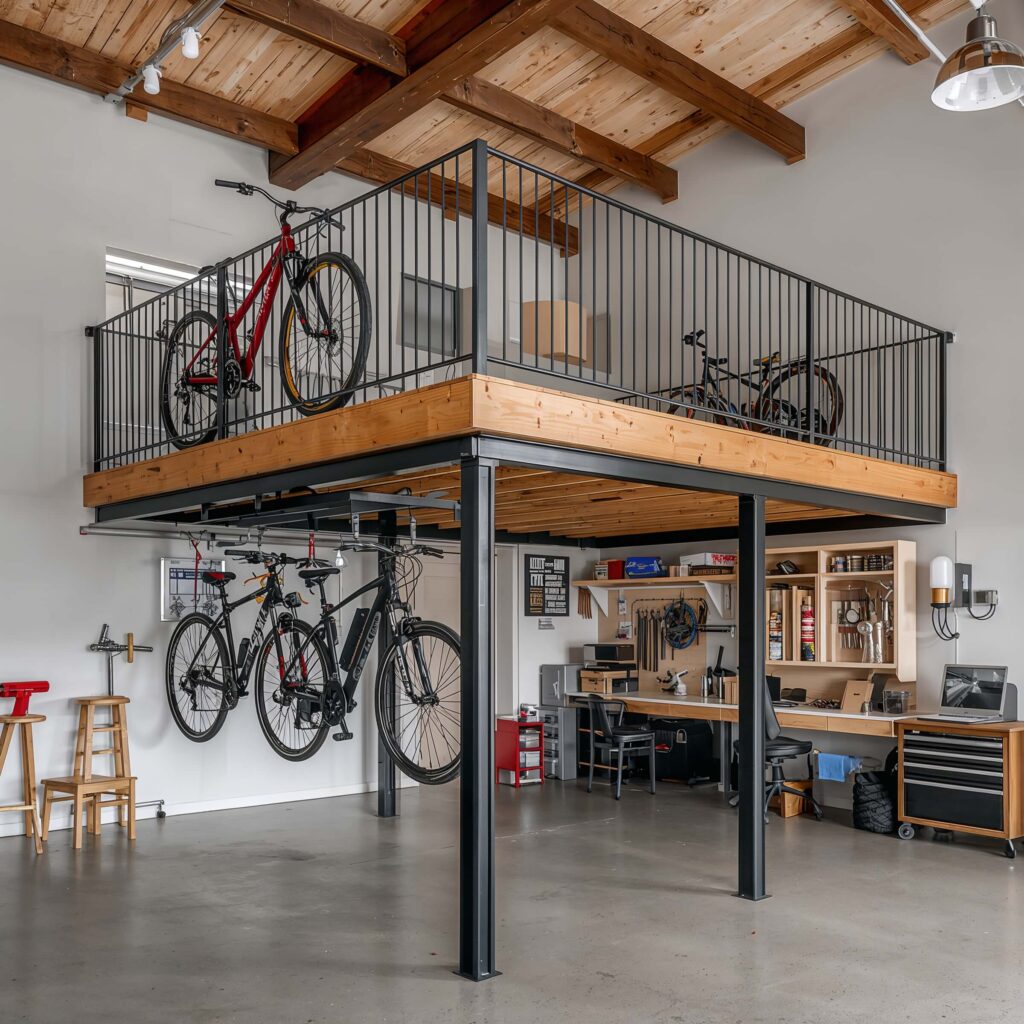
Okay, this one is seriously cool and incredibly practical. A garage loft with a pulley storage system lets you hoist heavy items up to the loft without breaking your back on a ladder. Ever tried carrying a 40-pound bin of Christmas decorations up a steep ladder? Yeah, it’s not fun and it’s not safe.
How Pulley Systems Work with Lofts
The basic setup involves a ceiling-mounted pulley, a rope or cable, and a platform or hook system. You attach your item at ground level, pull the rope, and the item rises smoothly to loft height where you can slide it onto the platform.
More advanced setups use:
- Electric winch systems — push a button, and the load goes up automatically
- Bicycle-style pulleys — perfect for hoisting bikes, kayaks, or ladders to the loft level
- Cargo net pulley platforms — ideal for lifting multiple smaller items at once
Installation Considerations
You absolutely need to anchor the pulley system into ceiling joists or structural beams — not just drywall or thin sheathing. The last thing you want is your pulley ripping out of the ceiling mid-lift. FYI, most residential garage ceiling joists can handle 30–50 pounds per point load, but you should always verify this before installing.
A good pulley system turns your garage loft from “storage I never access because it’s too annoying” into “storage I actually use regularly.” That distinction matters more than you’d think.
Also Read: 10 Perfect Garage Aesthetic Ideas to Boost Organization
7. Minimalist Loft with Ladder Access
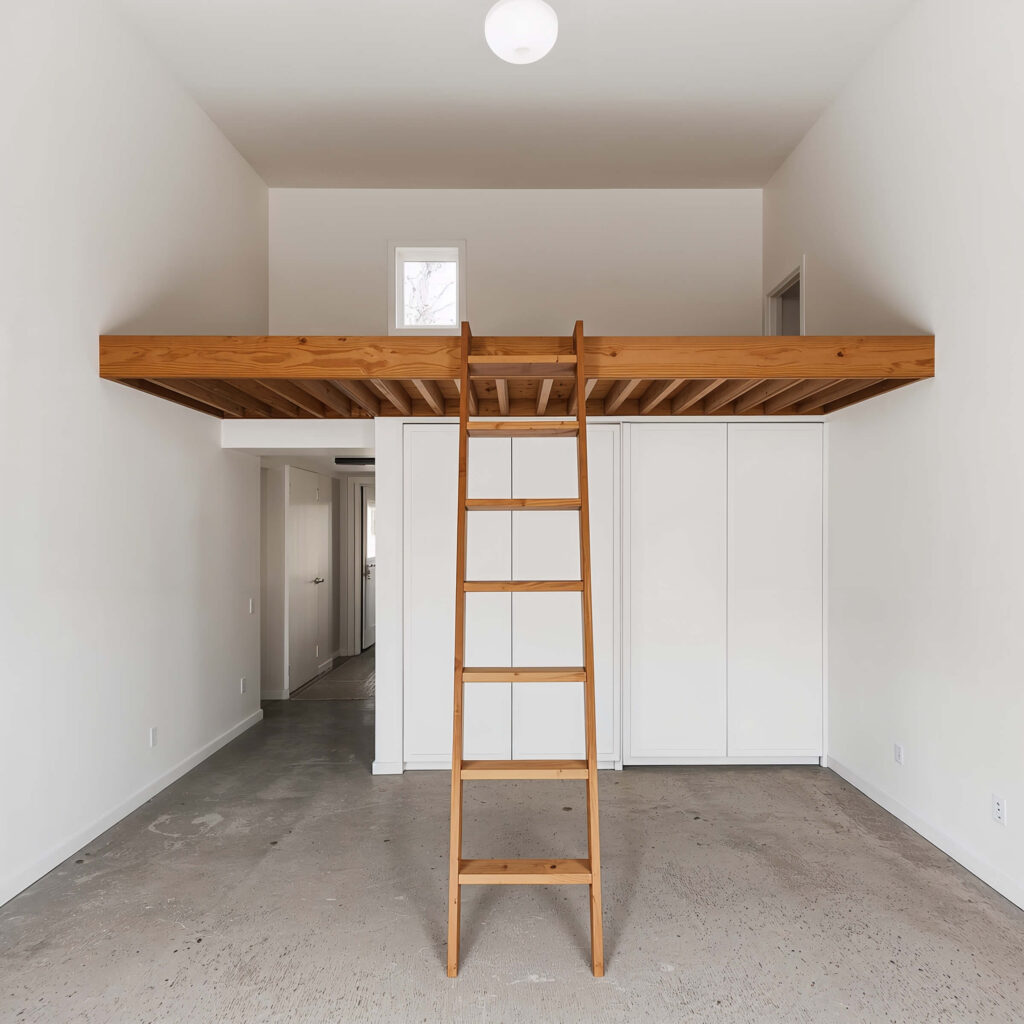
Sometimes less really is more. A minimalist garage loft strips away all the extras and gives you a clean, uncluttered platform with simple ladder access. No fancy railings, no elaborate staircases — just a solid platform and a sturdy ladder.
The Beauty of Simplicity
A minimalist loft works especially well when you want to maximize your budget and minimize build time. You can construct a basic loft with:
- 2×6 or 2×8 joists for the frame
- 3/4-inch plywood for the decking
- Joist hangers and structural screws for secure connections
- A fixed or hook-on ladder for access
Total material cost? Often under $300–$500 depending on the size and lumber prices in your area. Compare that to a contractor-built loft that can easily run $1,500–$3,000+, and the minimalist route starts looking very attractive.
Who This Is Best For
This style is perfect if you just need seasonal storage, a place for bins and boxes, or overhead parking for rarely used items. You’re not trying to live up there or impress anyone — you’re trying to get stuff off the floor, and a minimalist loft does exactly that without overcomplicating things.
I always tell people: start minimalist and upgrade later if you need to. You can always add railings, lighting, or shelving down the road. But you can’t un-build an overly complex loft you realize you didn’t need.
8. Luxury Garage Loft Retreat

On the complete opposite end of the spectrum, we have the luxury garage loft retreat. This is for anyone who wants to turn their garage loft into a genuine living space — think man cave, she shed, reading nook, meditation room, or entertainment lounge above the garage.
What Makes It “Luxury”?
The difference between a standard loft and a luxury retreat comes down to finishes, comfort, and livability features:
- Finished walls and ceiling — drywall, paint, or even shiplap
- Proper flooring — engineered hardwood, luxury vinyl plank, or thick carpet
- Climate control — a ductless mini-split system for heating and cooling
- Windows or skylights — natural light transforms the space from “attic” to “retreat”
- Comfortable furniture — a recliner, small couch, or even a daybed
- Entertainment setup — TV, speakers, mini fridge… you get the idea
Is It Worth the Investment?
IMO, absolutely — if you plan to use it regularly. A luxury garage loft retreat can also add real value to your home, especially if it’s well-finished and versatile enough to appeal to future buyers. It’s essentially bonus square footage that didn’t exist before.
The cost will obviously be higher — a fully finished luxury loft can run anywhere from $5,000 to $15,000+ depending on the scope. But when you consider that a home addition or a detached building costs multiples of that, a garage loft retreat is still a bargain by comparison.
One friend of mine turned his garage loft into a vinyl listening room with acoustic panels, a turntable setup, and two leather chairs. I’ve never been more jealous of a garage in my life.
9. Loft with Built-In Shelving
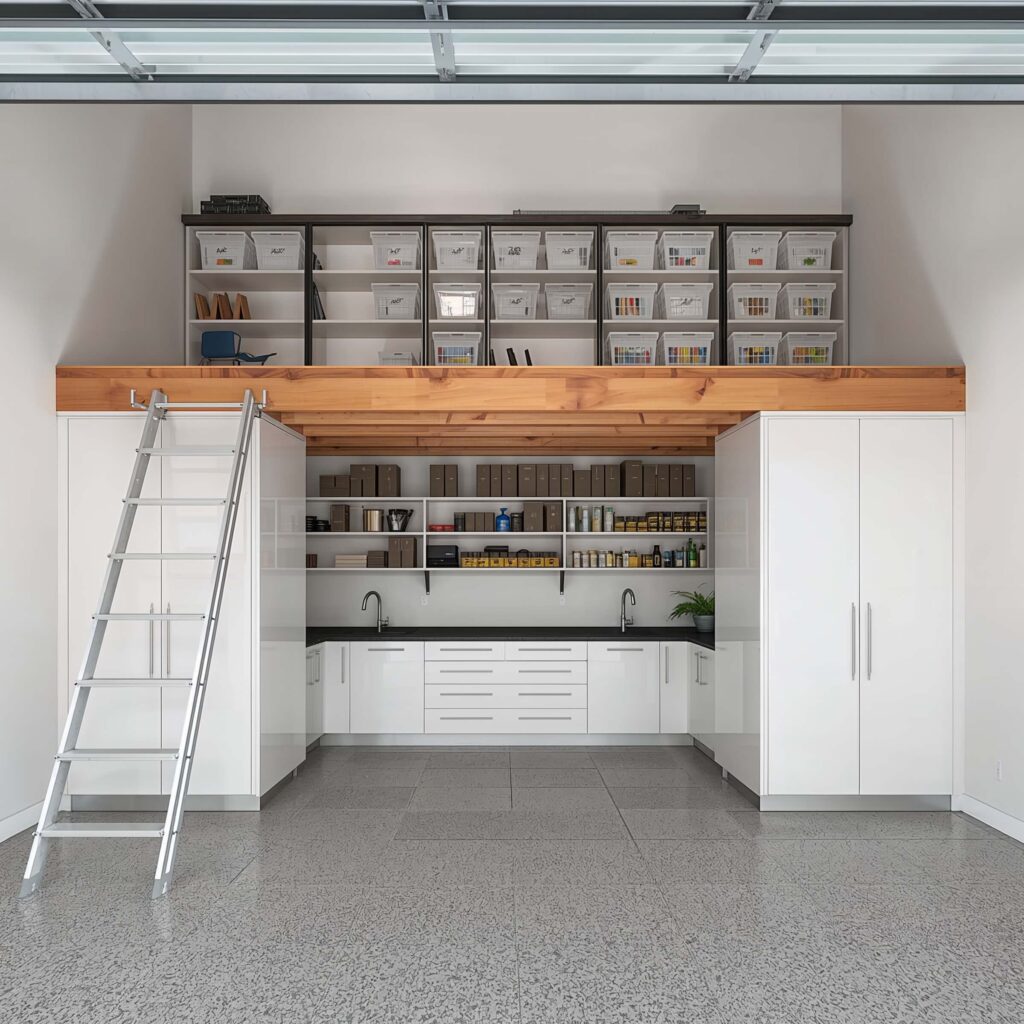
Here’s a hybrid approach that really maximizes your storage potential: a garage loft with built-in shelving. Instead of just creating a flat platform and throwing stuff on top, you integrate shelving directly into the loft structure — along the back wall, along the sides, or even underneath the loft itself.
Built-In Shelving Ideas
There are several ways to approach this:
- Back wall shelving — floor-to-ceiling shelves on the wall behind the loft platform, accessible from the loft level
- Underside shelving — hanging shelves or cubbies mounted to the underside of the loft joists, accessible from the ground floor
- Side rail shelving — narrow shelves integrated into the loft railing, perfect for small items, tools, or supplies
- Pegboard integration — mount pegboard on the wall above the loft for flexible, customizable storage
Why This Approach Wins
The reason I love built-in shelving is that it eliminates the pile problem. You know what I mean — you build a loft, load it up, and within six months you’ve got a disorganized mountain of stuff up there that you can’t find anything in.
Shelving forces organization. Every item has a designated spot, and you can group things logically (automotive supplies on one shelf, seasonal decor on another, sports equipment on a third). It takes a bit more planning upfront, but the long-term payoff is enormous.
For materials, 3/4-inch plywood shelves supported by L-brackets or dado joints provide a solid, clean look. If you want adjustable shelving, use a French cleat system — it’s incredibly strong, easy to install, and lets you rearrange shelf positions whenever you want.
Also Read:
10. Garage Loft for Hobby Workshop
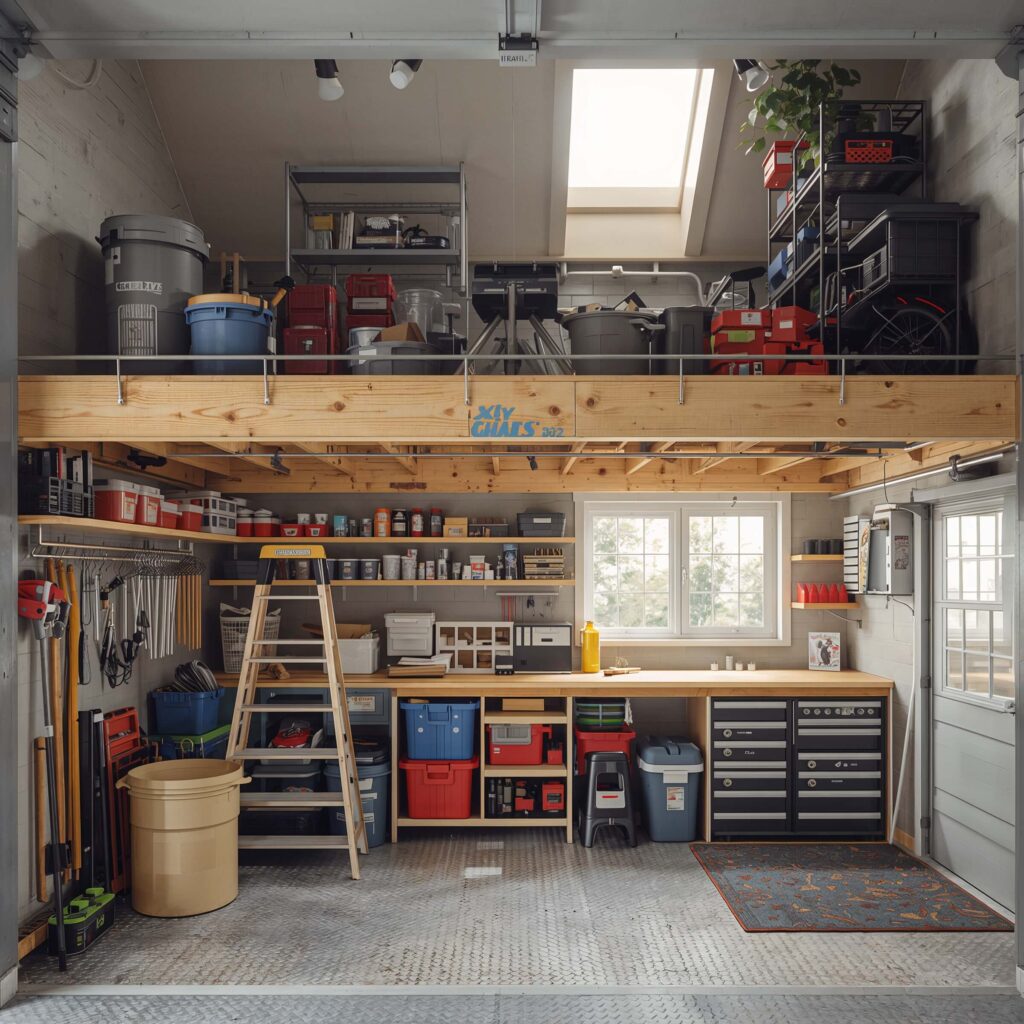
Last but absolutely not least — the garage loft hobby workshop. This is the dream setup for anyone who paints, builds models, does leatherwork, assembles electronics, ties flies for fishing, or pursues any hobby that needs a dedicated, organized workspace away from the main living areas.
Designing a Functional Hobby Space
A hobby workshop loft needs more than just a platform — it needs to be purpose-built for the type of work you do. Here are some essentials:
- A sturdy workbench or table — sized appropriately for the loft dimensions
- Task lighting — adjustable LED lamps or overhead shop lights with high CRI for accurate color rendering
- Power access — multiple outlets, ideally on a dedicated circuit
- Ventilation — critical if you work with paints, adhesives, resins, or solvents
- Tool organization — wall-mounted racks, magnetic strips, drawer units, or a tool chest
- Comfortable seating — you’ll spend hours up there, so invest in a decent stool or chair
Safety First
Because a hobby workshop involves tools, chemicals, and sometimes heat-producing equipment, safety considerations are non-negotiable:
- Install a smoke detector in the loft area
- Keep a fire extinguisher within arm’s reach
- Ensure the loft has adequate ventilation or an exhaust fan
- Make sure your ladder or staircase allows quick exit — don’t block it with supplies
- Use GFCI-protected outlets if any water or liquid is involved in your hobby
I turned a small section of my garage loft into a leather working station last year, and it’s easily become my favorite spot in the house. There’s something deeply satisfying about climbing up to your own little creative space, shutting out the world, and just making stuff. The physical act of ascending to a separate level signals to your brain that it’s “hobby time,” and that mental shift is surprisingly powerful.
Space-Saving Techniques That Work Across All Garage Loft Designs
No matter which loft style you choose, a few universal space-saving techniques will help you get the most out of your build:
- Use retractable or folding ladders to free up floor space when the loft isn’t in use
- Install hooks on the underside of the loft joists for hanging bikes, chairs, or extension cords
- Opt for stackable, uniform-sized bins instead of random boxes — they pack tighter and look cleaner
- Add LED strip lights under the loft to illuminate the ground-level space without bulky fixtures
- Use the vertical space between the loft and ceiling by adding hooks or small shelf brackets for lightweight items
- Label everything — boring advice, but it saves time and prevents you from buying duplicates of things already buried in the loft
These small additions compound over time. Your garage goes from “I can barely walk in here” to “wow, this is actually functional” faster than you’d expect.
Final Thoughts
If you’ve stuck with me this far, you probably already have a vision forming in your head — and that’s exactly the point. A garage loft isn’t just a storage solution; it’s a way to reclaim space you didn’t even realize you were wasting.
Whether you go full luxury retreat with a TV and leather chairs, or keep it simple with a minimalist platform and a ladder, the right garage loft design can fundamentally change how you use (and feel about) your garage. The key is choosing a design that matches your actual needs, not just what looks coolest on social media.
Start with your budget. Consider your garage dimensions. Think about what you’ll realistically store or do up there. Then pick the style that fits and start building. Even a basic weekend loft project can deliver results that make you wonder why you didn’t do it five years ago.
And hey — if you do build one, take a photo of the before and after. There’s nothing more satisfying than looking at the disaster your garage used to be and comparing it to the organized, elevated (literally) space you created. That “before” photo will become your favorite piece of evidence that you’re capable of great things.
Now go measure your garage ceiling height. You’ve got a loft to plan.