10 Inspiring Basement Layout Ideas Floor Plans for Family Fun
- Basement Decor
 Ben
Ben- 0
- 34 minutes read
Remember that musty basement you avoided as a kid? Well, times have changed, and today’s basements have become the coolest spots in the house! I’ve spent the last decade transforming forgotten underground spaces into family havens, and let me tell you – the possibilities will blow your mind. Whether you’re working with a sprawling 2,000 square feet or a cozy 500-square-foot space, these basement layout ideas will transform your lower level into the heart of your home.
Open-Concept Basement with Entertainment Zone
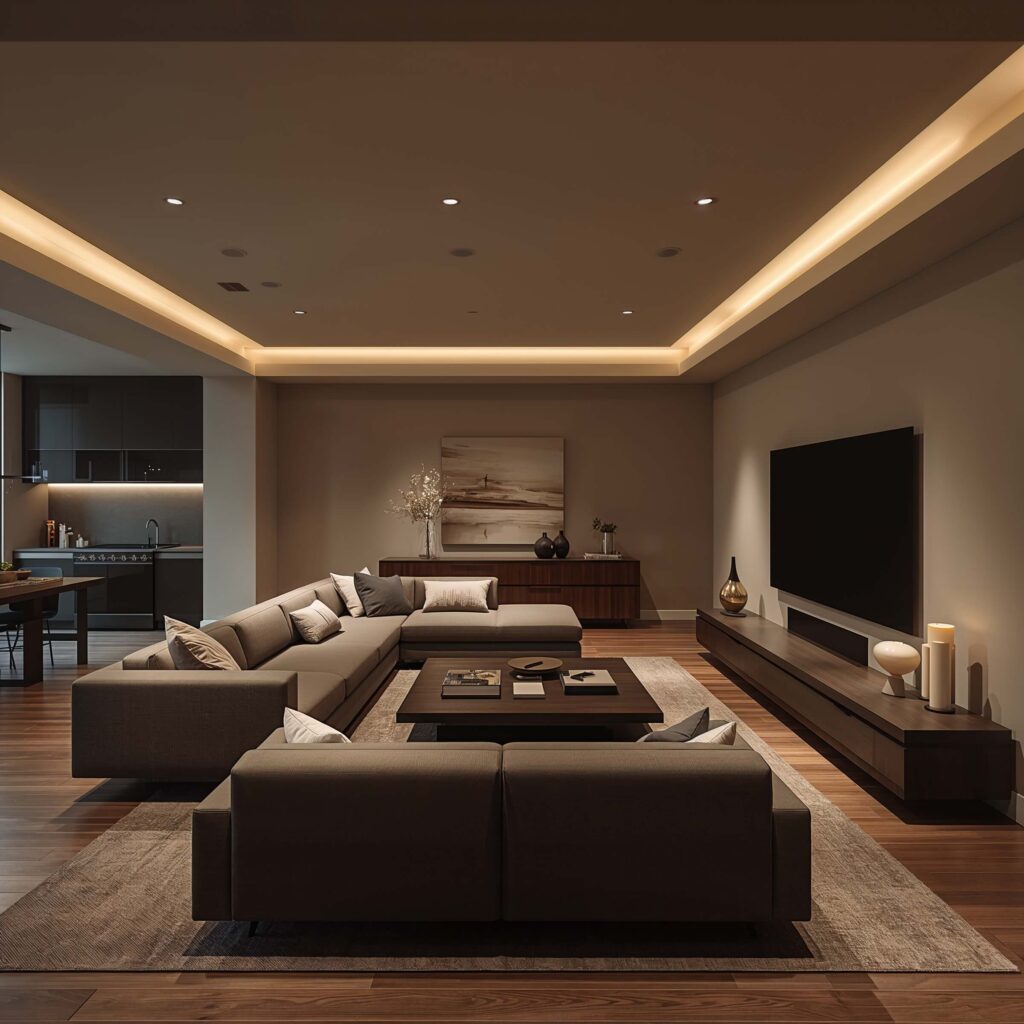
Let’s kick things off with my personal favorite – the open-concept entertainment basement. You know how everyone gravitates toward the kitchen at parties? Well, imagine that same magnetic pull, but underground, with better acoustics and zero judgment about volume levels!
The beauty of an open-concept basement layout lies in its flexibility. I recently helped design one where we positioned the main entertainment area centrally, creating natural flow between different zones. Picture this: a 65-inch TV mounted on the main wall, surrounded by comfortable modular seating that you can rearrange depending on whether you’re hosting movie night or the big game.
Key Elements for Your Open Entertainment Space:
- Central media wall with built-in storage for gaming consoles
- L-shaped sectional sofa that defines the TV viewing area
- Wet bar or beverage station positioned for easy access
- Pool table or gaming area in the opposite corner
- Floating shelves for displaying collectibles and storing games
What makes this layout brilliant? You eliminate those annoying support posts by working with them rather than against them. I once wrapped a structural column with reclaimed wood and added floating shelves – suddenly, that eyesore became a rustic room divider that guests actually compliment!
The trick with open-concept basement floor plans involves zoning without walls. Use area rugs to define spaces, vary your ceiling heights with drop-ceiling sections, or install track lighting to create visual boundaries. Trust me, your teenagers will love having space for their friends while you can still keep an eye on things from the bar area.
Cozy Basement Living Room with Reading Nook
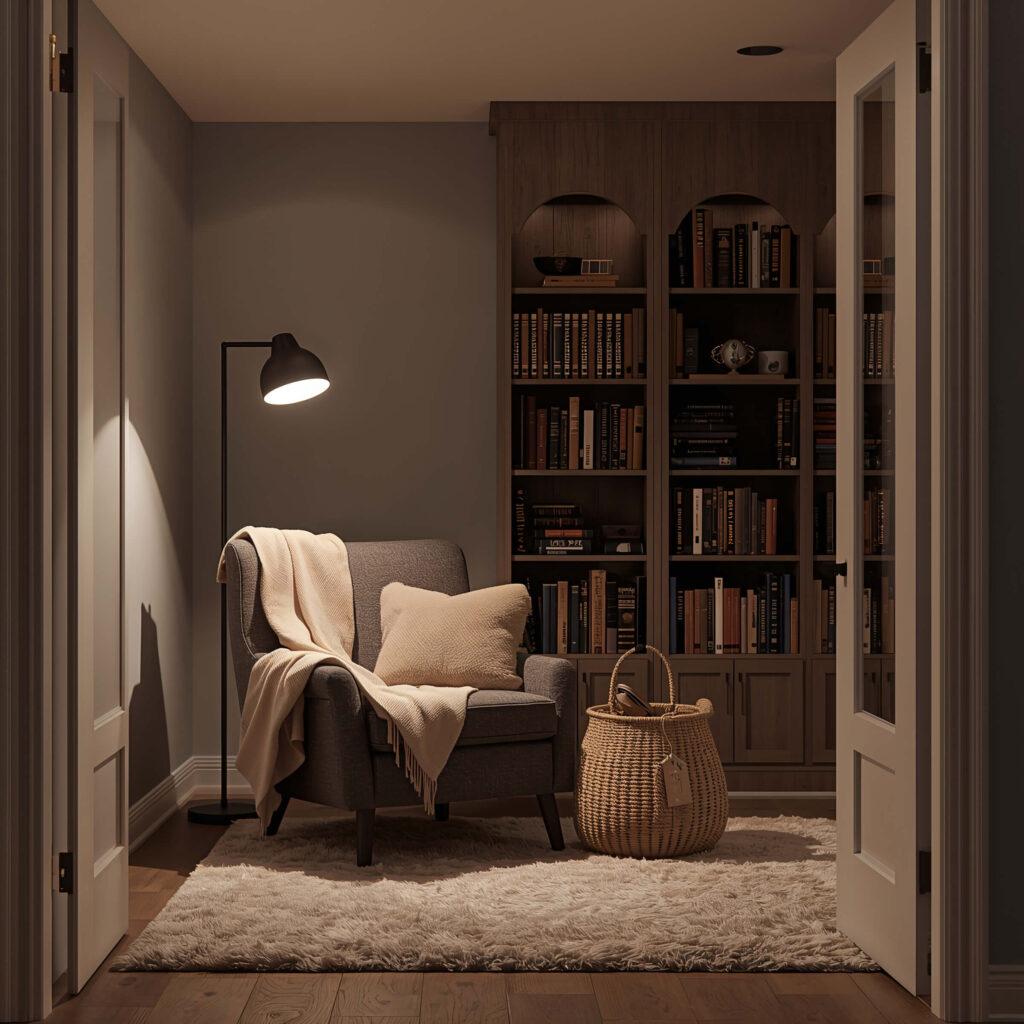
Now, if you’re more of a bookworm than a party animal (no judgment here!), creating a cozy basement living room with a dedicated reading nook might be your jam. This layout works beautifully in basements with those awkward window wells – you know, the ones that barely let in any natural light?
I transformed my own 800-square-foot basement using this concept, and honestly, it’s become my favorite escape. The main living area features a plush three-seater sofa facing a modest entertainment center, but the real magic happens in the corner reading nook.
Creating the Perfect Reading Corner:
- Position near existing windows for natural light
- Install wall-mounted reading lights at the perfect height
- Choose an oversized armchair with ottoman
- Add floor-to-ceiling bookshelves (IKEA Billy bookcases work great!)
- Include a small side table for your coffee or wine
Here’s where it gets interesting: instead of fighting the typical basement ceiling height, I embraced it. Lower ceilings actually create that cozy, den-like atmosphere that makes reading nooks feel special. I painted the ceiling a shade darker than the walls – it sounds counterintuitive, but it makes the space feel intentionally intimate rather than accidentally cramped.
FYI, the secret to making this layout work involves strategic furniture placement. Float your main sofa away from the walls to create a natural pathway to your reading area. This prevents that dreaded “furniture against every wall” look that screams “we don’t know what we’re doing!”
Modern Basement Home Office Layout
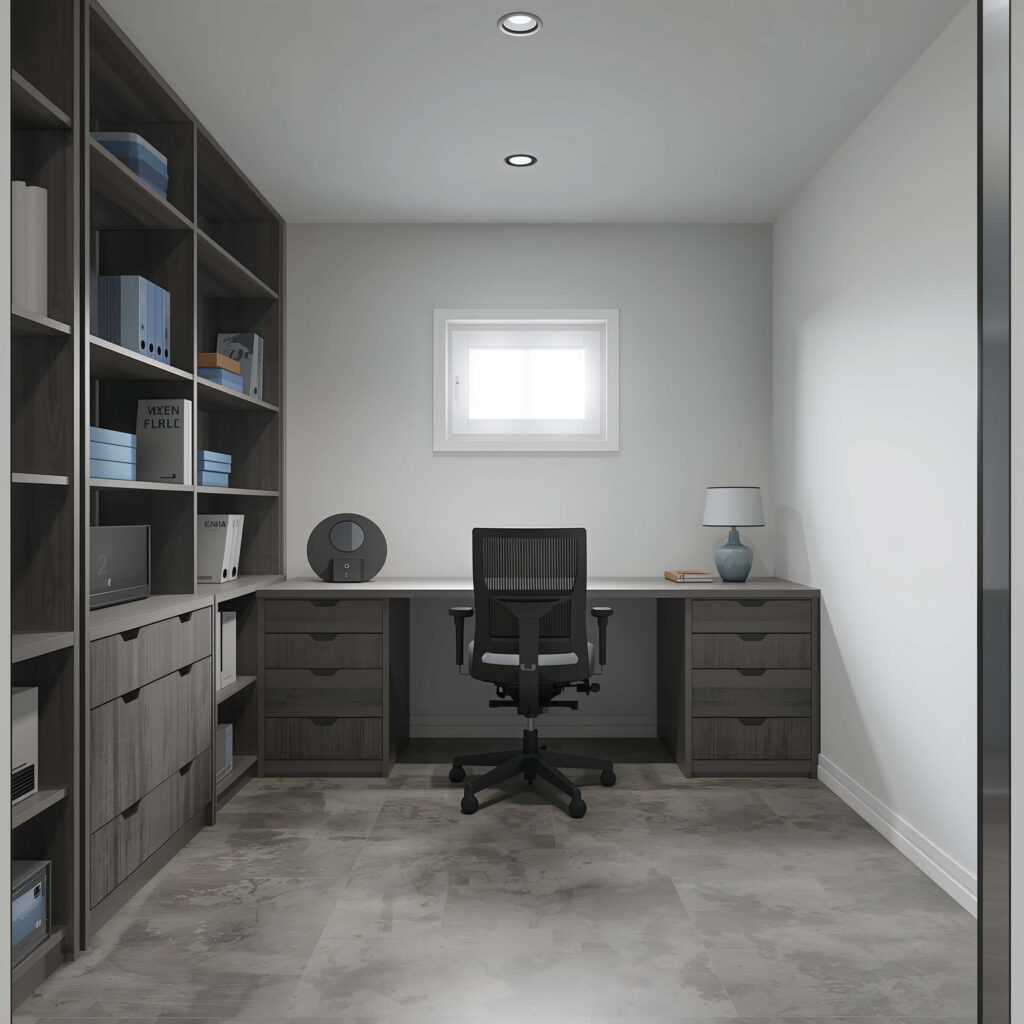
With remote work becoming the norm (thanks, 2020 :/ ), basement home offices have evolved from afterthoughts to necessities. The modern basement office layout I’m about to share has saved more marriages than couple’s therapy – and I’m only half-joking!
The key to a productive basement office lies in addressing the unique challenges of working underground. Natural light scarcity? Check. Potential for feeling isolated? Double-check. But here’s what most people miss: basements offer the best sound insulation in your entire house.
Essential Components for Your Basement Office:
- L-shaped or U-shaped desk maximizing corner space
- Ergonomic office chair (your back will thank you)
- Task lighting combining overhead and desk lamps
- Dedicated video call backdrop with good lighting
- Storage solutions including filing cabinets and floating shelves
- Mini-fridge and coffee station (because who wants to trek upstairs?)
I positioned my desk perpendicular to the wall rather than facing it – this simple change opened up the entire room and eliminated that “working in a dungeon” feeling. Plus, you can glance up and see the entire space rather than staring at drywall all day.
Want to know the game-changer? Install a separate entrance if possible. Even a basic walkout access transforms your basement office from a cave to a legitimate workspace. Clients appreciate not walking through your living room, and you’ll love the psychological separation between work and home life.
Also Read: 10 Vibrant Basement Color Schemes Ideas for Fun Rooms
Basement Gym and Wellness Space Design
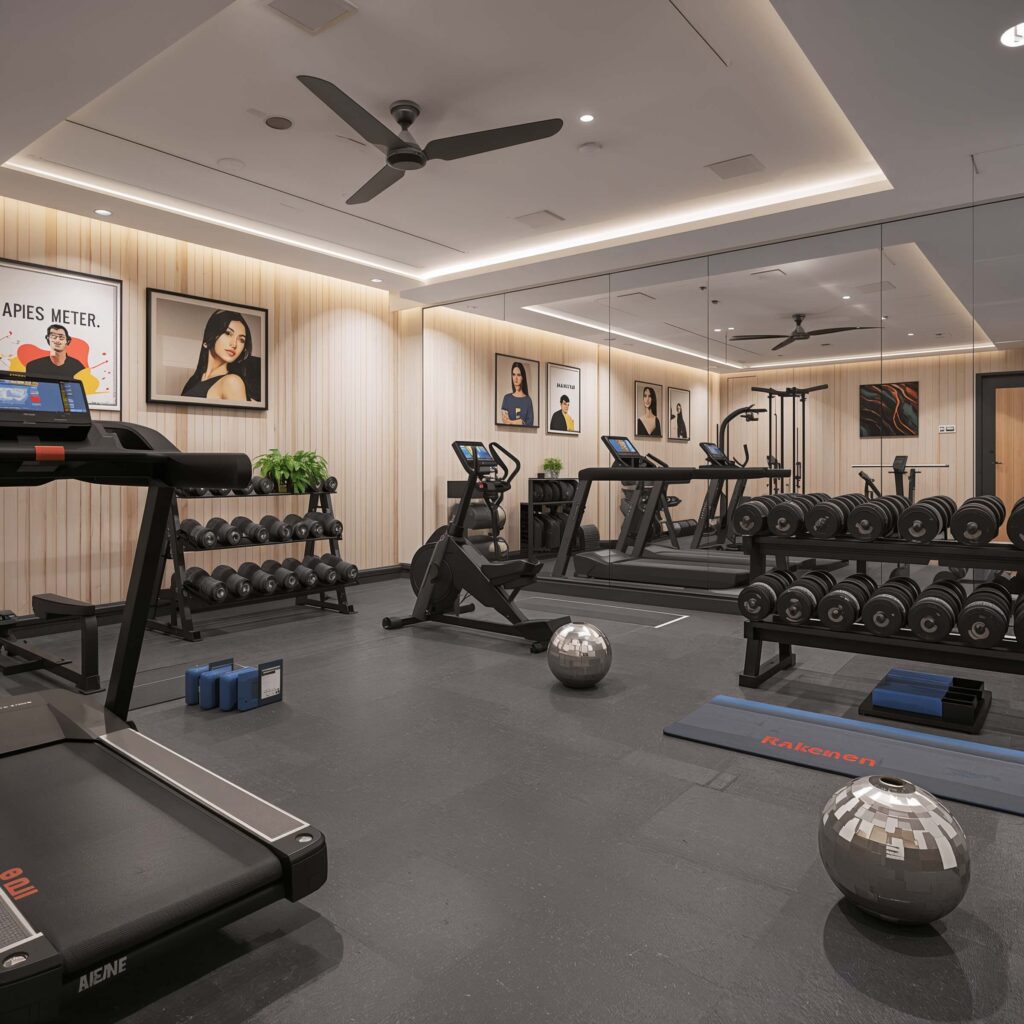
Let me guess – you bought that expensive gym membership and used it exactly three times last year? Been there! Creating a basement gym and wellness space eliminates every excuse for skipping workouts. No commute, no gym bros hogging equipment, and you control the playlist.
The basement gym layout that works best depends on your fitness style. Are you a cardio junkie, a weightlifting enthusiast, or a yoga devotee? I’ve learned the hard way that trying to accommodate everything usually means excelling at nothing.
Smart Gym Layout Considerations:
- Rubber flooring throughout (minimum 8mm thickness)
- Mirrored wall on at least one side
- Ceiling height clearance for overhead movements
- Proper ventilation with fans or dehumidifier
- Equipment zones separated by function
- Sound dampening materials to protect the family upstairs
My current setup dedicates 600 square feet to different zones: free weights along one wall, cardio equipment facing the TV, and an open mat area for stretching and bodyweight exercises. The mistake I see most often? People cramming equipment into corners without considering movement flow.
Pro tip: Mount your TV at eye level when you’re on the treadmill, not when you’re standing. Learned that lesson after developing neck strain from looking up during runs. Also, invest in a good sound system – nothing kills motivation faster than tinny phone speakers trying to pump out workout music.
Multi-Purpose Family Basement Layout
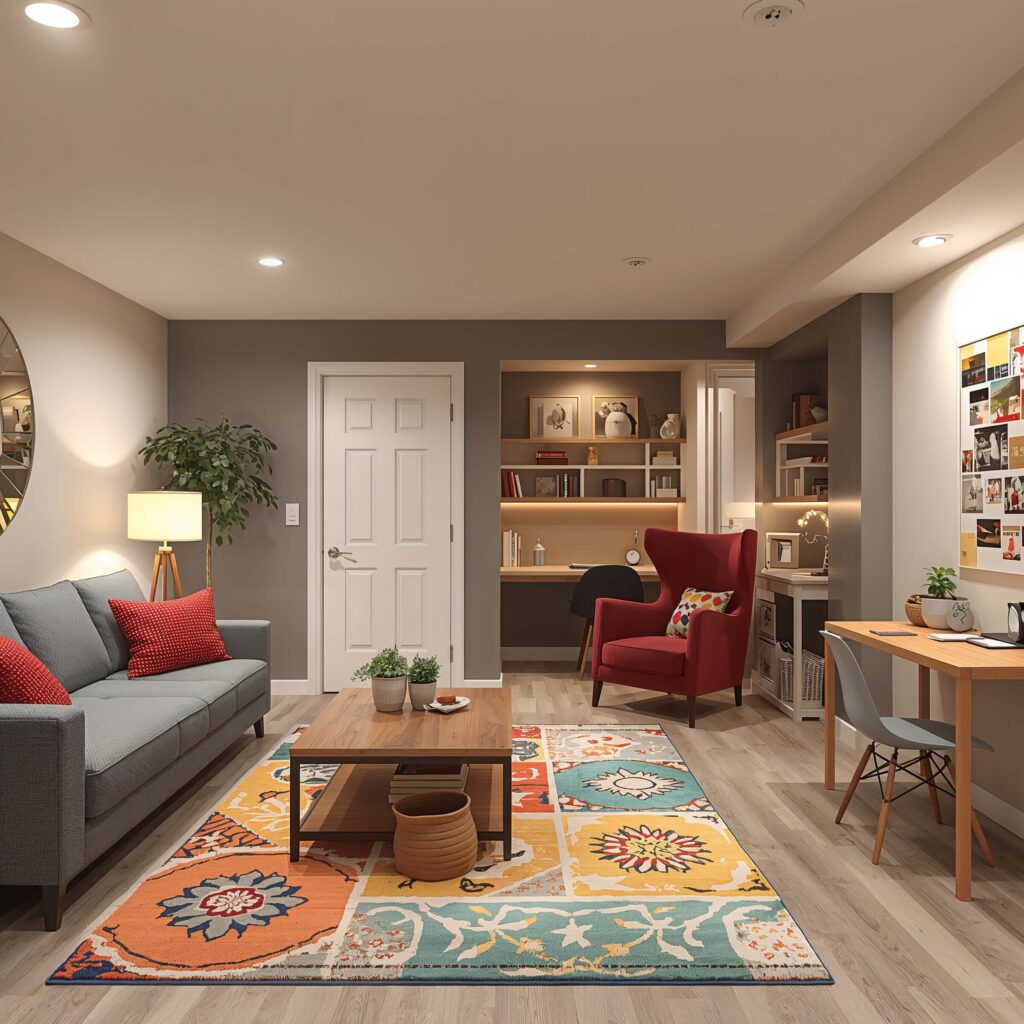
Here’s where things get really interesting. The multi-purpose family basement represents the Swiss Army knife of floor plans. This layout acknowledges that your family’s needs change faster than fashion trends, and what works today might not work tomorrow.
I designed my neighbor’s 1,200-square-foot basement with this philosophy, and five years later, they’re still raving about it. The secret? Flexible zones with moveable boundaries. Instead of permanent walls, we used curtain tracks, sliding barn doors, and modular furniture.
Zones in a Multi-Purpose Layout:
- Main gathering area with sectional seating
- Homework/craft station with built-in desk
- Play corner with toy storage
- Exercise area with equipment storage
- Media zone for gaming and movies
The genius move? We installed electrical outlets in the ceiling for projectors and speakers, allowing complete room reconfiguration without rewiring. Imagine transforming your space from kids’ birthday party venue to adult dinner party setting in under an hour!
Storage becomes your best friend in multi-purpose layouts. We built custom storage benches along one wall – they provide seating, hide toys, and even work as a makeshift stage for impromptu kid performances. Every piece of furniture should earn its keep by serving at least two purposes.
Stylish Basement Guest Suite Floor Plan
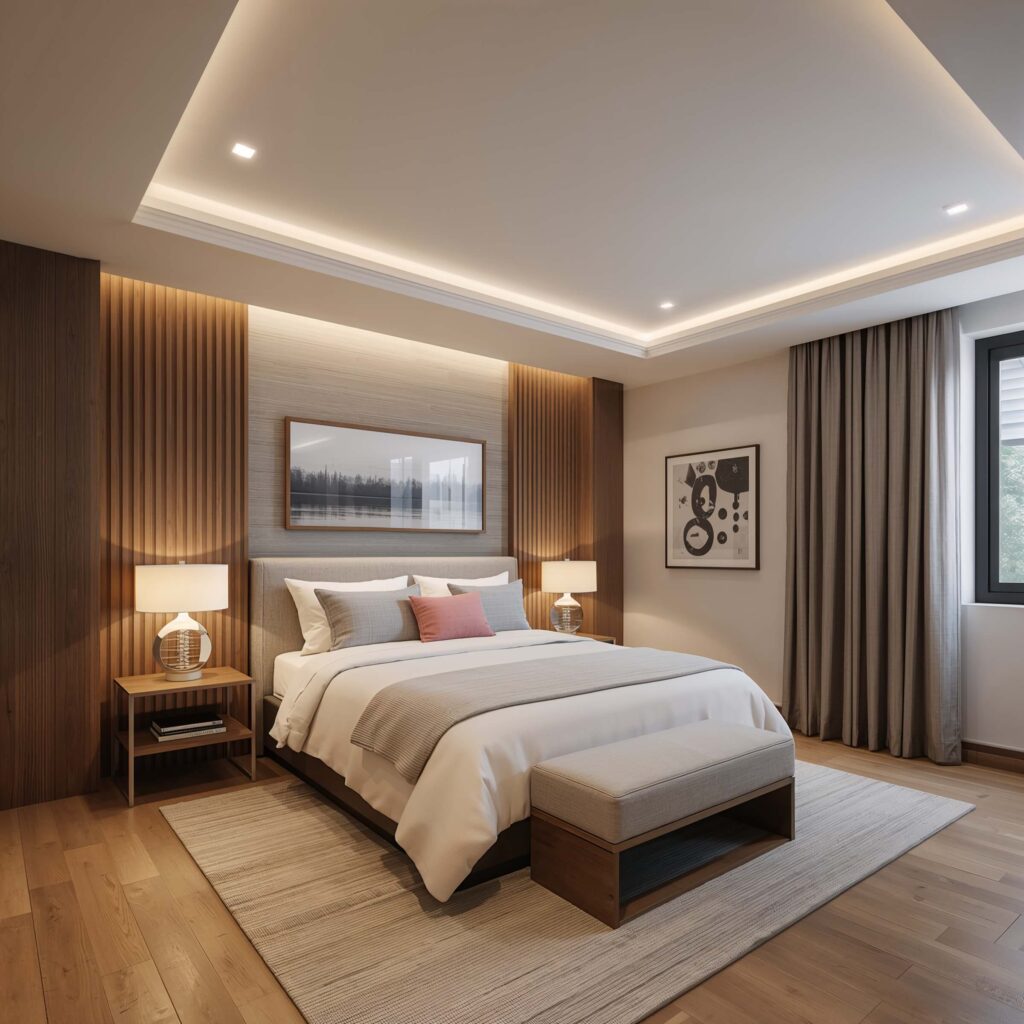
Ever had in-laws stay for “just a few days” that turned into weeks? A well-designed basement guest suite provides privacy for everyone while maintaining family harmony. The best part? When not hosting guests, it doubles as a teenage hangout or rental opportunity.
The layout I’ve refined over multiple projects includes three essential zones: sleeping area, bathroom access, and a small living space. Even in 400 square feet, you can create a hotel-like experience that makes guests feel welcome without invading your personal space.
Guest Suite Must-Haves:
- Queen-size bed with quality mattress
- Closet or wardrobe for extended stays
- Private or semi-private bathroom access
- Mini-kitchenette with microwave and mini-fridge
- Separate HVAC control for temperature preferences
- Dedicated entrance (if possible)
The trick to making basement guest suites feel luxurious rather than banished? Layer your lighting. Combine recessed ceiling lights with bedside lamps and accent lighting. I always install dimmer switches – nothing says “afterthought guest room” like harsh overhead fluorescents.
IMO, the biggest mistake people make involves skimping on the bathroom situation. If a full bathroom isn’t possible, at least ensure easy access to one without traversing the entire house in pajamas.
Also Read: 10 Beautiful Walkout Basement Ideas for Multi-Functional Spaces
Basement Bar and Game Room Arrangement
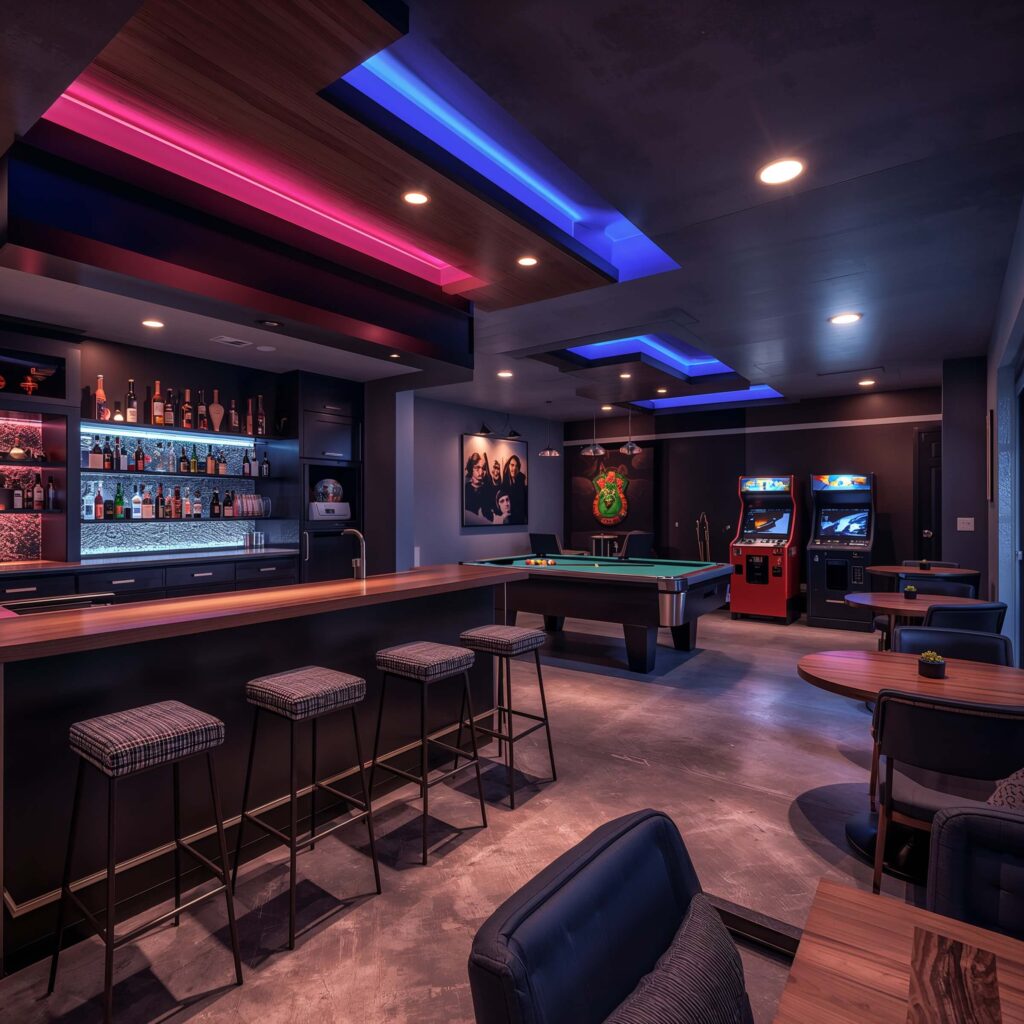
Who says you need to leave home for happy hour? The basement bar and game room combo creates that neighborhood pub atmosphere where everybody knows your name – because they’re already on your Christmas card list!
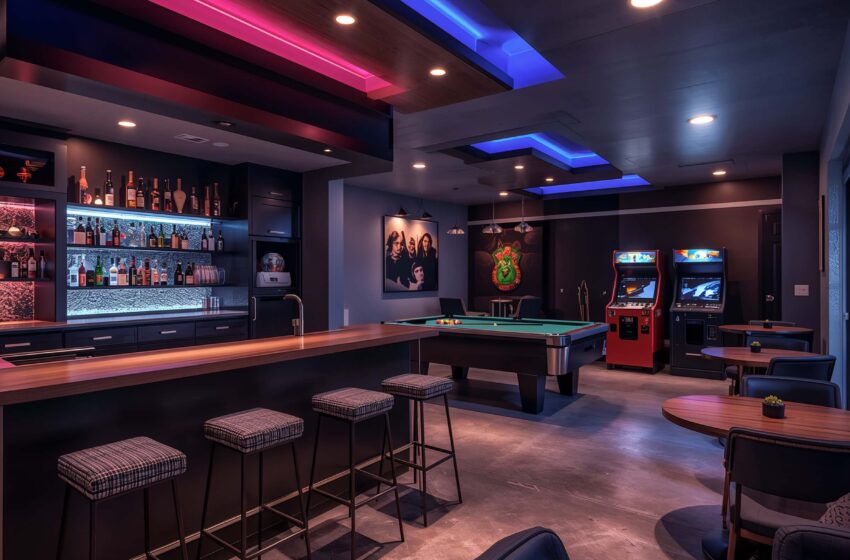
My buddy transformed his 900-square-foot basement into what we now call “the grown-up playground.” The L-shaped bar anchors one corner, while the pool table commands center stage. What makes it work? Strategic placement that prevents bottlenecks when people move between activities.
Bar and Game Room Essentials:
- L-shaped or straight bar with 4-6 stools
- Back bar shelving for glassware display
- Kegerator or wine fridge built into cabinetry
- Pool table with 5-foot clearance on all sides
- Dart board with proper throwing distance
- High-top tables for spectators
Here’s something nobody tells you: the pool table should go in first when planning your layout. These beasts need more room than you think – minimum 5 feet of clearance on every side for proper cue action. I’ve seen too many beautiful game rooms ruined by cramped pool table placement.
The bar doesn’t need to be massive to be impressive. A 6-foot bar with smart storage beats a 12-foot bar with wasted space. Install glass holders underneath the bar top, add LED strip lighting for ambiance, and suddenly your basement feels like a legitimate entertainment destination.
Bright Basement Studio Apartment Design
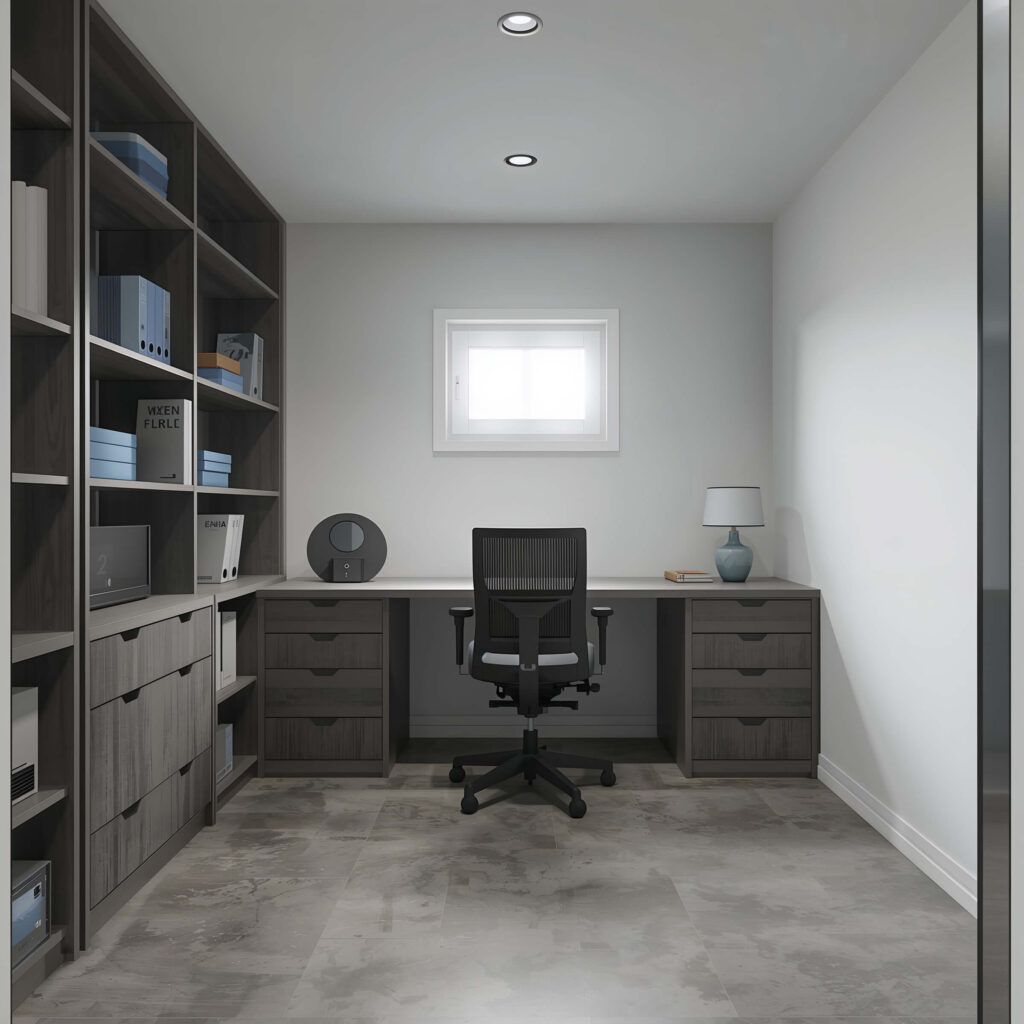
Converting your basement into a studio apartment opens up income opportunities or provides independent living space for adult children. The challenge? Making 500-700 square feet feel spacious and bright when you’re literally underground.
The studio layout that consistently works features an open floor plan with defined zones. I position the bed area furthest from the entrance, the kitchen along one wall, and the living space acts as a buffer between them. Sounds simple, but the execution makes all the difference.
Studio Apartment Layout Tricks:
- Murphy bed or daybed to maximize floor space
- Compact kitchen with apartment-sized appliances
- Bathroom with stackable washer/dryer
- Built-in storage everywhere possible
- Light color palette throughout
- Multiple light sources to eliminate shadows
Want to know the secret to making basement studios feel larger? Consistent flooring throughout. Skip the transitions between “rooms” and use the same luxury vinyl plank everywhere. Your eye travels uninterrupted, creating an illusion of more space.
I learned this the hard way: never skimp on the egress window. Yes, it’s expensive, but it transforms your basement from a cave to a legitimate living space. Plus, it’s legally required for bedrooms in most areas – better to know that before starting construction!
Basement Kids’ Playroom and Study Zone
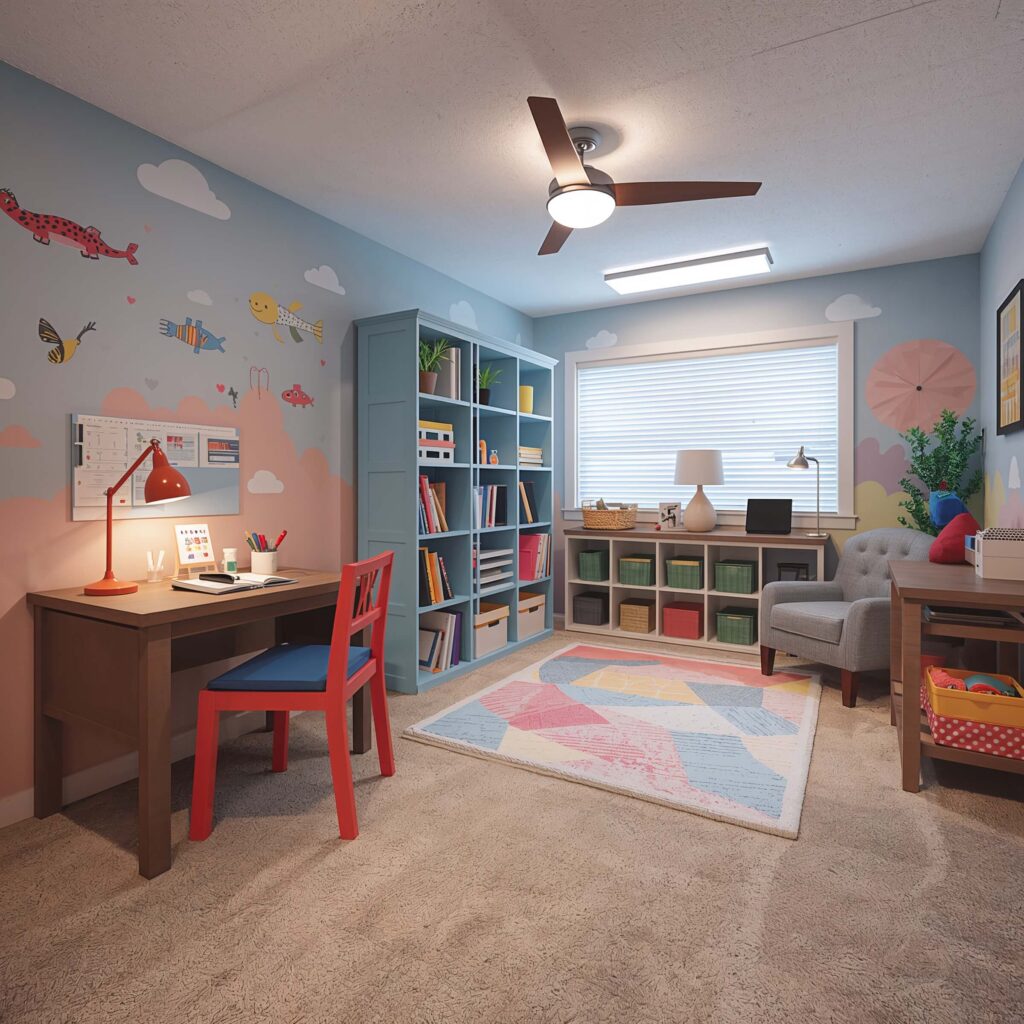
Parents, this one’s for you. A well-designed kids’ basement contains the chaos while giving children space to be kids. The dual playroom and study zone layout I’m sharing has saved countless living rooms from Lego landmines!
The key involves creating age-flexible spaces that grow with your children. That playroom for toddlers becomes a homework haven for tweens and eventually transforms into a teenage hangout zone. Plan for evolution from day one.
Kids’ Zone Layout Elements:
- Open play area with washable rugs
- Built-in desk area along one wall
- Reading corner with bean bags or floor cushions
- Art station with wipeable surfaces
- Toy storage at kid-height
- Tech zone for computers or gaming
My sister’s basement uses color-coding to define zones – blue for quiet study, green for creative play, and orange for active play. Kids instinctively understand these visual cues, making cleanup and transitions easier.
Here’s a parent hack: install closet organizers on one wall for toy storage, but mount them at different heights as your kids grow. Today’s stuffed animal storage becomes tomorrow’s sports equipment organizer. Also, use chalkboard or whiteboard paint on one wall – kids love having that creative freedom, and you’ll love containing the mess to one washable surface.
Also Read: 10 Fresh Modern Basement Ideas to Maximize Every Corner
Luxury Basement Home Theater Layout
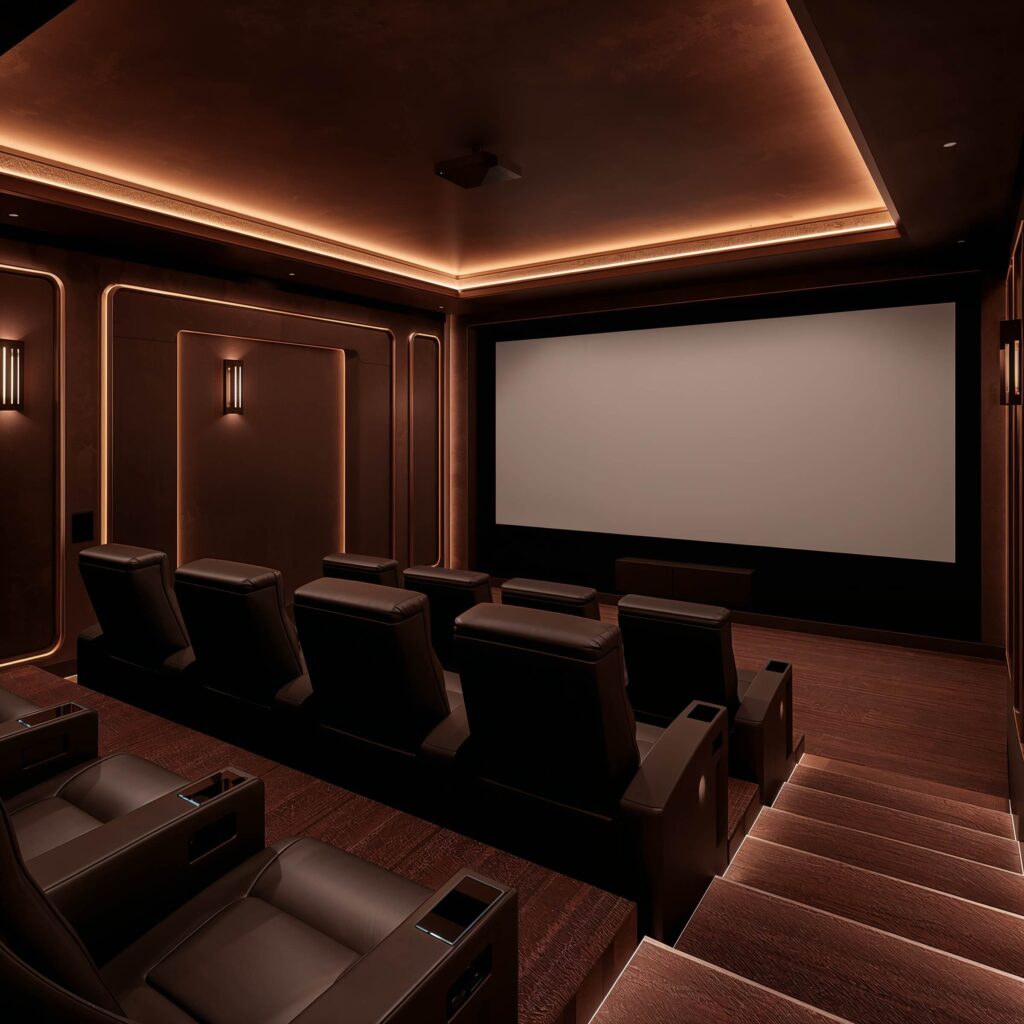
Let’s end with the ultimate basement transformation – the luxury home theater. This isn’t your basic TV-and-couch setup; we’re talking about a legitimate cinematic experience that rivals commercial theaters.
The optimal theater layout follows specific ratios. Your screen size should be roughly 1/3 your viewing distance, and seating should be arranged in a slight arc facing the screen. I’ve built several of these, and the ones that truly impress follow theater design principles rather than forcing a TV room to be something it’s not.
Home Theater Must-Haves:
- Projector and screen (minimum 100 inches)
- Tiered seating using platform construction
- 7.1 surround sound system properly positioned
- Acoustic panels for sound optimization
- Blackout capability for all light sources
- Dedicated equipment closet with ventilation
- Theater seating with cup holders and recline
The biggest mistake I see? People focus on equipment while ignoring acoustics. You can have a $10,000 projector, but if sound bounces off bare walls, you’ve wasted your money. Install acoustic panels strategically – behind the screen, at first reflection points, and on the back wall.
Lighting control separates good theaters from great ones. Install LED strip lighting along the floor for safe movement during movies. Add sconces on dimmers for ambiance. Program everything through a smart home system so one button transforms your basement from regular room to theater mode.
The viewing distance formula everyone gets wrong? Multiply your screen width by 1.5 for optimal seating distance. Closer feels overwhelming; further reduces impact. My current setup features a 120-inch screen with seating 12 feet away – pure perfection.
Wrapping Up Your Basement Transformation
So there you have it – ten basement layout ideas that’ll transform your underground space from forgotten storage area to family favorite. Whether you’re drawn to the entertainment zone, craving a quiet office, or dreaming of that home theater, remember that the best basement layout is the one that fits YOUR family’s lifestyle.
Start with one zone and expand over time. Rome wasn’t built in a day, and neither is the perfect basement! Consider your budget, your family’s needs, and most importantly, how you actually live. That magazine-worthy basement means nothing if it doesn’t match your reality.
The biggest lesson I’ve learned from years of basement transformations? Flexibility beats perfection every time. Design for today while planning for tomorrow. Your basement should evolve with your family, adapting to new needs and interests as they arise.
Now grab that measuring tape, sketch out your ideas, and start imagining the possibilities. Your dream basement awaits – you just need to take that first step underground! Who knows? This time next year, you might be hosting movie nights in your own home theater or finally using that home gym you’ve always wanted. The only limit is your imagination… and maybe your ceiling height, but we can work with that! 😉