10 Innovative Shop Rack Design Ideas for Better Product Display
- Rack Design
 Ben
Ben- 0
- 41 minutes read
You know that feeling when you walk into a store and your eyes just glaze over because everything looks like a chaotic mess? Yeah, we’ve all been there. But then there are those shops where products practically jump off the shelves and beg you to take them home. The secret? Smart rack design.
I’ve spent way too much time (probably an unhealthy amount, honestly) wandering through stores and analyzing what makes some displays work while others fall flat. And trust me, the right rack setup can literally make or break your retail game. So let’s talk about ten shop rack designs that actually get the job done—and look damn good doing it.
Minimal Wall-Mounted Shop Rack Display Concept
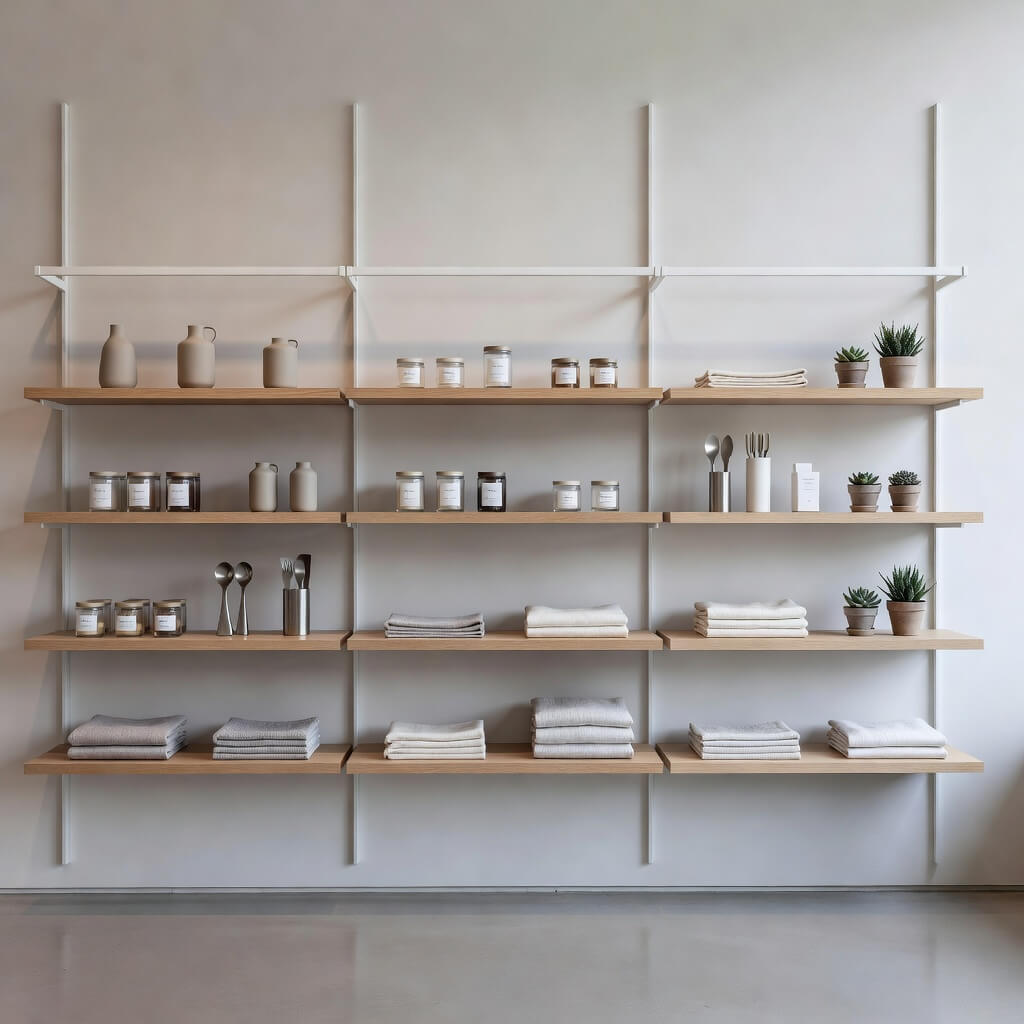
Ever notice how some of the coolest boutiques barely have any furniture, yet somehow their products look like they belong in a museum? That’s the magic of minimal wall-mounted racks.
I’m obsessed with these things. They float on your wall like product halos, keeping your floor space clear while creating this clean, breathable aesthetic. Your customers can actually walk around without bumping into stuff—revolutionary concept, right?
Why Wall-Mounted Works
Here’s the deal: wall-mounted racks maximize vertical space without eating up your precious floor area. For small shops, this is basically a superpower. You can display shoes, bags, folded clothes, or accessories without making the place feel cramped.
The best part? Your customers’ eyes naturally travel upward, which means they’re seeing more of your inventory. I’ve watched people in stores, and they literally scan walls from bottom to top—you’re using psychology without even trying.
Design Tips That Actually Matter
- Keep it sparse: Don’t stuff every inch. White space sells products.
- Use quality materials: Cheap brackets scream “cheap products” even if yours aren’t.
- Create visual lines: Arrange racks horizontally or vertically to guide the eye.
- Mix heights: Stagger your racks at different levels for visual interest.
One shop I visited had these sleek black metal wall mounts with wooden shelves. Simple, but the wood-metal combo gave this warm-yet-modern vibe that made everything from candles to leather journals look expensive. That’s what you’re going for.
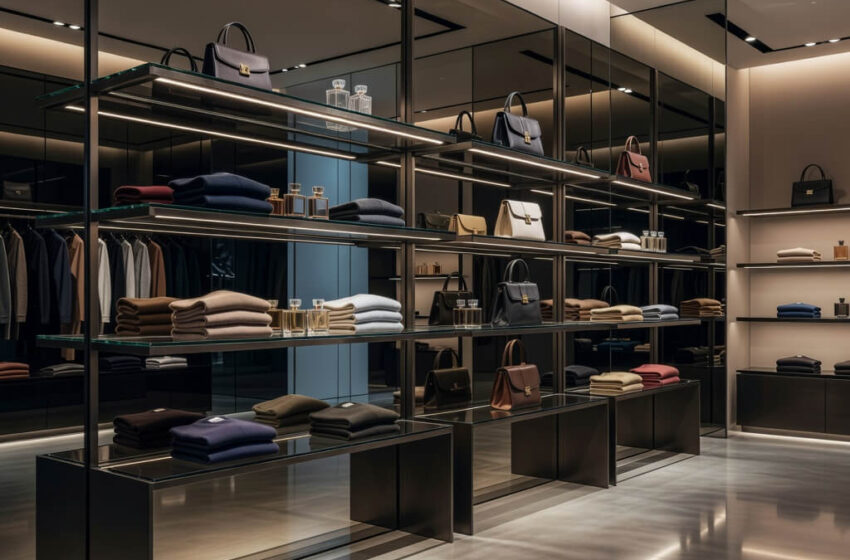
Modern Glass and Metal Retail Shelf Design
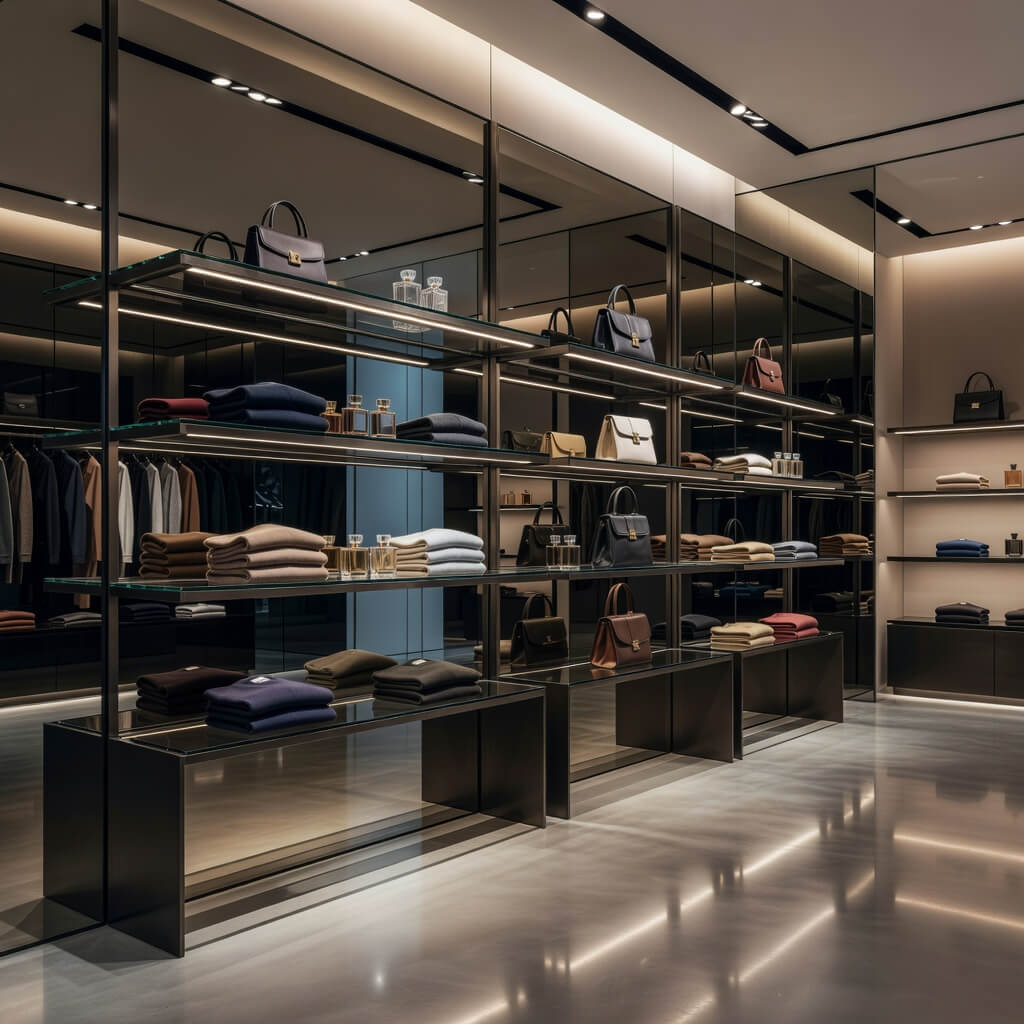
Okay, let’s talk about the showstopper: glass and metal combos. This design screams sophistication without being pretentious (which is a fine line, believe me).
I’ll be honest—when I first saw these in high-end cosmetic stores, I thought they were overkill. But after seeing how they transform product presentation, I’m a total convert. The transparency of glass lets products shine while the metal framework adds structure and modernity.
What Makes Glass and Metal Special
Glass shelves create visual lightness that wooden racks just can’t match. When you place products on clear glass with metal supports, they appear to float. This works insanely well for:
- Beauty products and cosmetics
- Tech gadgets and electronics
- Jewelry and watches
- High-end home décor items
- Glassware and crystal products
The metal framework—whether you go with brushed steel, matte black, or gold accents—provides that architectural element. It says “we care about details” without shouting it.
Real Talk About Maintenance
FYI, glass shows fingerprints like nobody’s business :/
You’ll need to clean these regularly, but honestly? The payoff in visual appeal totally justifies the extra Windex budget. Plus, your products look so good on these that customers actually want to touch them (which, you know, leads to sales).
Small Space Corner Shop Rack Layout Idea
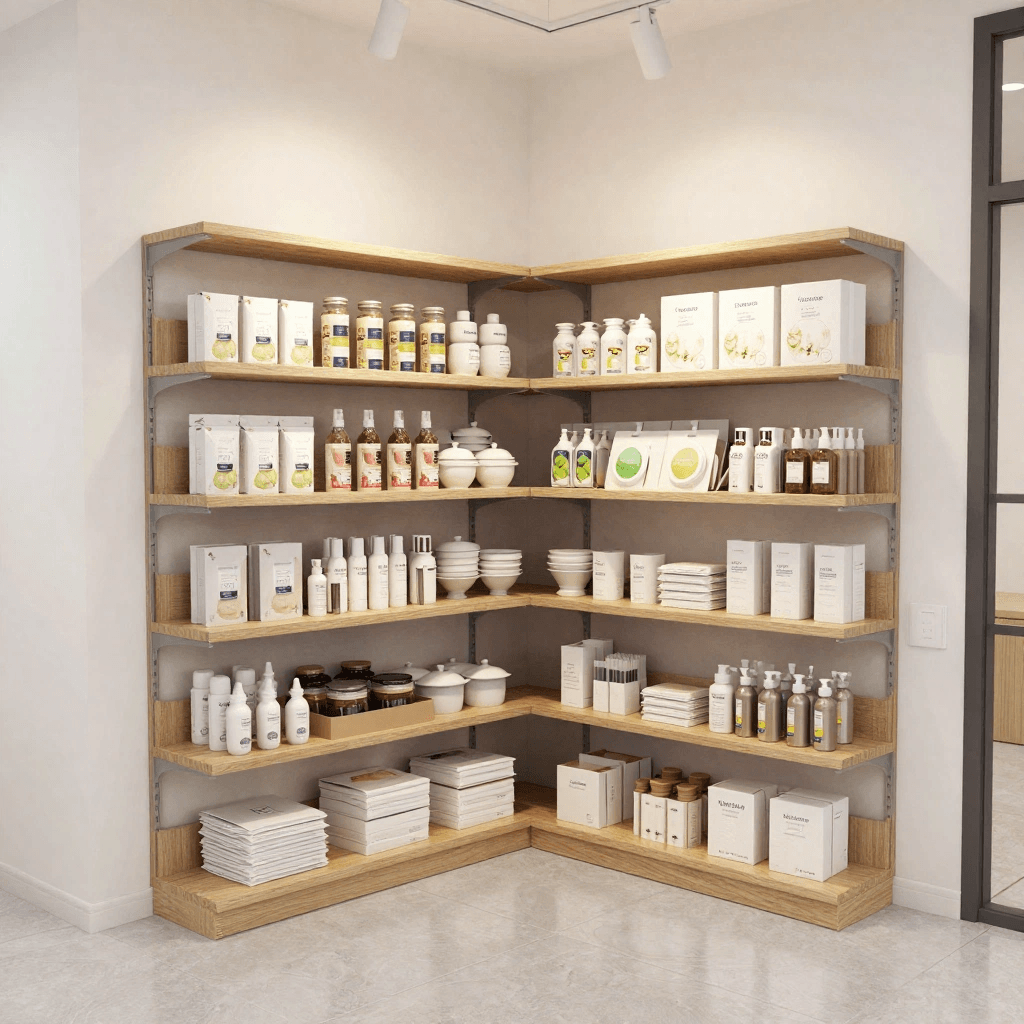
Corners are the awkward middle children of retail spaces. Everyone ignores them, and they end up being dead zones where you stick clearance items to die. But what if I told you corners could be your secret weapon?
I learned this the hard way when I helped a friend set up a tiny vintage clothing shop. We had maybe 400 square feet total, and every inch counted. That’s when corner racks became our MVP.
Making Corners Work Harder
Corner racks utilize neglected angles and turn them into featured display areas. The psychology here is sneaky but effective—people naturally gravitate toward corners because they frame products and create a sense of discovery.
Here’s what works:
- Triangular corner units: Fit perfectly into 90-degree angles and maximize the dead space
- Rotating corner displays: Let customers spin the rack to see all sides
- Tiered corner shelving: Stack products vertically to draw eyes upward
- L-shaped configurations: Create a natural flow from one wall to another
The Display Strategy
I watched this genius shop owner place her “hidden gem” products in corner displays—items with better margins that needed a spotlight. Customers felt like they discovered something special tucked away in that corner. Sales on those items jumped by like 40% just from repositioning. Never underestimate a good corner!
Read More: 10 Practical Kitchen Rack Design Ideas for Clean Organization
Wooden Floating Display Rack for Boutique Shops
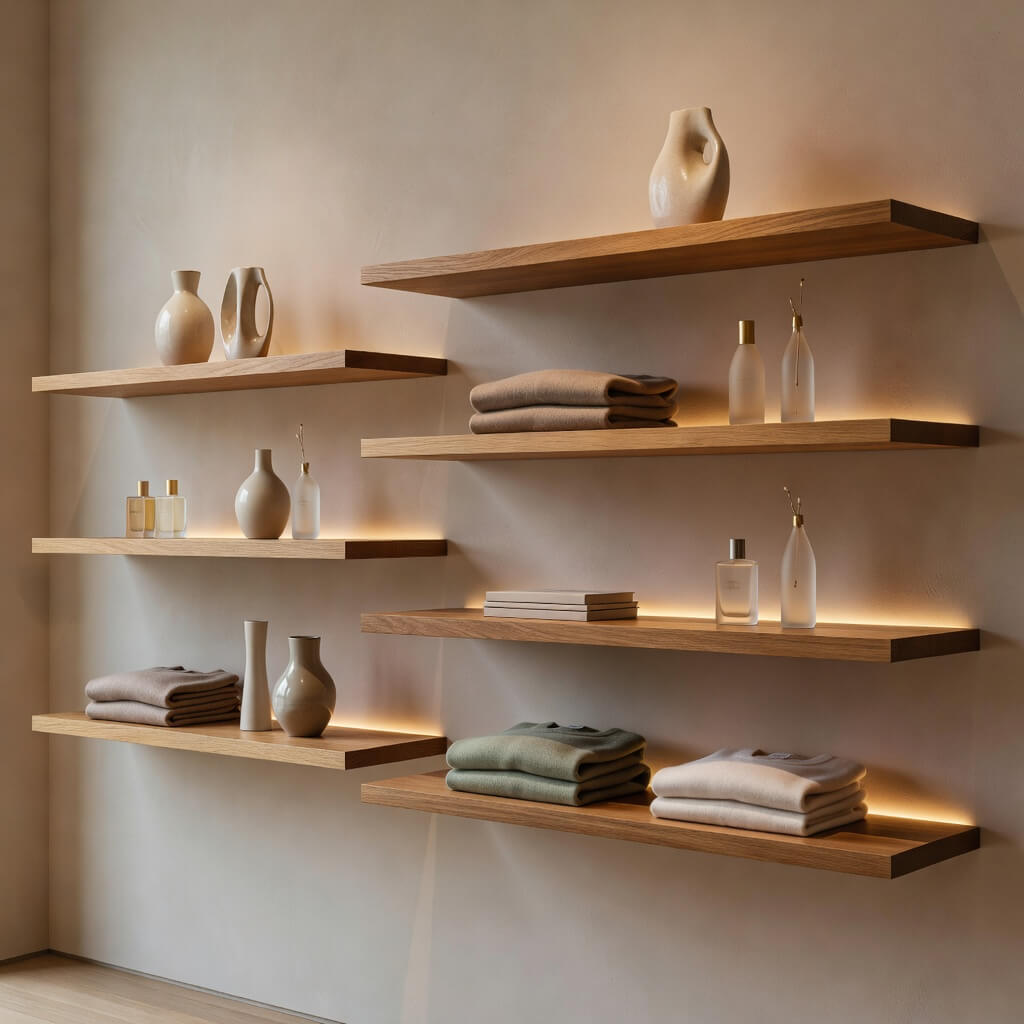
There’s something about wooden floating shelves that just hits different. Maybe it’s the warmth, maybe it’s the organic vibe—whatever it is, these racks work magic in boutique settings.
I’ve got three of these in my own studio space, and people comment on them constantly. They look effortless (even though mounting them level took me an embarrassing number of tries), and they make whatever you put on them look intentional and curated.
The Boutique Advantage
Boutiques thrive on personality, and wooden floating racks add character without competing with your products. They’re the supporting actors that make your merchandise the star.
Different wood tones create different vibes:
- Light pine or birch: Fresh, Scandinavian, minimalist
- Medium oak or walnut: Warm, approachable, rustic-chic
- Dark mahogany or ebony: Sophisticated, luxurious, dramatic
- Reclaimed barnwood: Vintage, eco-conscious, story-driven
Installation Real Talk
Here’s what nobody tells you: the “floating” part requires serious wall anchors. I’m talking heavy-duty stuff, especially if you’re displaying anything with weight. Cheap installation will have your beautiful display crashing down faster than you can say “liability lawsuit.”
Get a professional unless you really know what you’re doing. Your products (and customers’ toes) will thank you.
Luxury Boutique Grid Wall Rack System
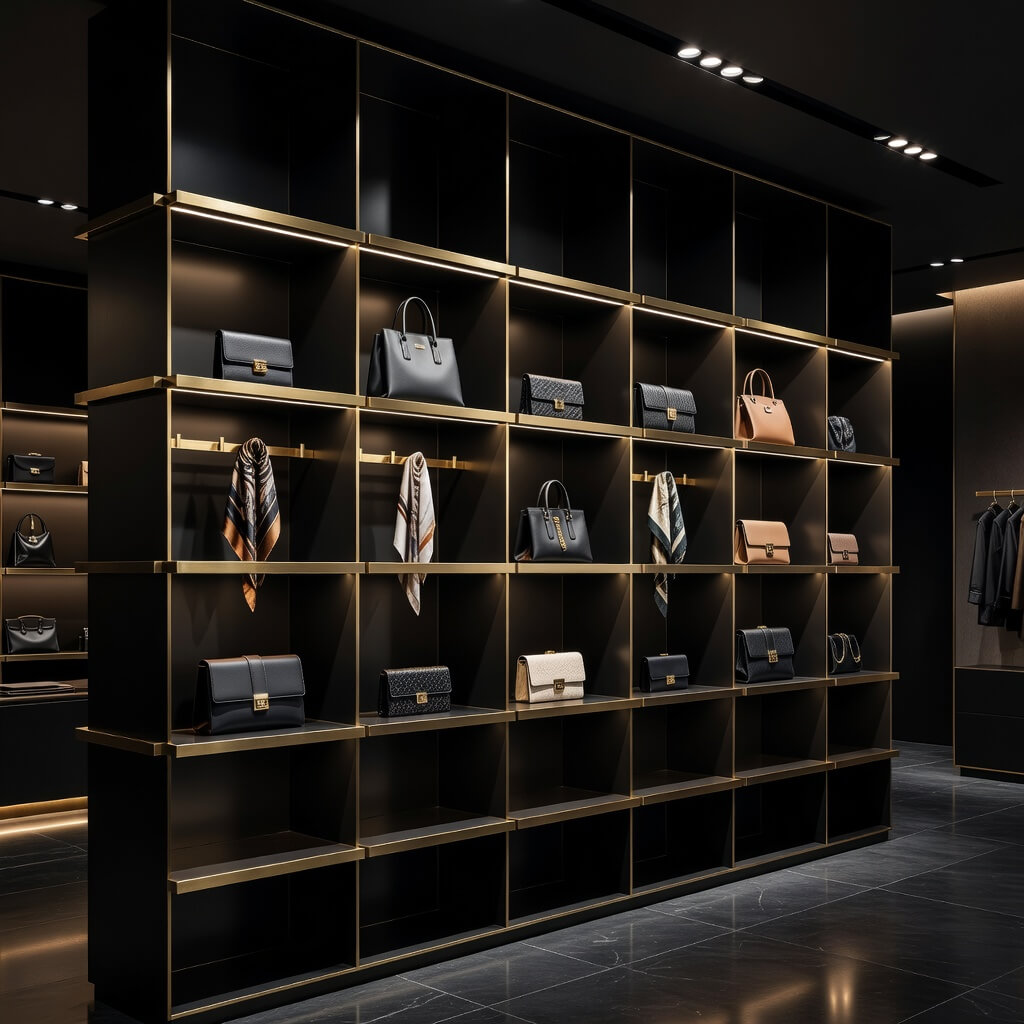
Grid walls are having a moment, and I am here for it. These versatile metal grid panels are like adult LEGOs for retail—you can rearrange them endlessly to create fresh displays.
Luxury boutiques have figured out that grid systems aren’t just practical; they’re actually gorgeous when done right. The geometric pattern creates visual rhythm, and the customization options are basically infinite.
Why Grids Win the Flexibility Game
IMO, grid wall systems are the most adaptable display solution out there. You can add hooks, shelves, baskets, or hangers wherever you need them, then move everything around next week when you change your mind (which you will).
Key advantages:
- Modular design: Add or remove components without buying new fixtures
- Clean aesthetic: The grid pattern itself becomes part of your brand visual
- Easy updates: Refresh your display layout in minutes, not hours
- Cost-effective: One grid system serves multiple purposes
- Space-efficient: Maximizes vertical display without bulk
Making It Look Luxe (Not Garage Sale)
The difference between “luxury boutique” and “suburban garage” is all in the execution. Quality matters here. Get thick, sturdy metal grids in matte black, white, or metallic finishes. Cheap wire grids will ruin the whole vibe.
Pair them with matching accessories—no mixing random hooks from different sources. Consistency makes the grid look intentional instead of thrown together.
Compact Grocery Store Multi-Level Rack Design
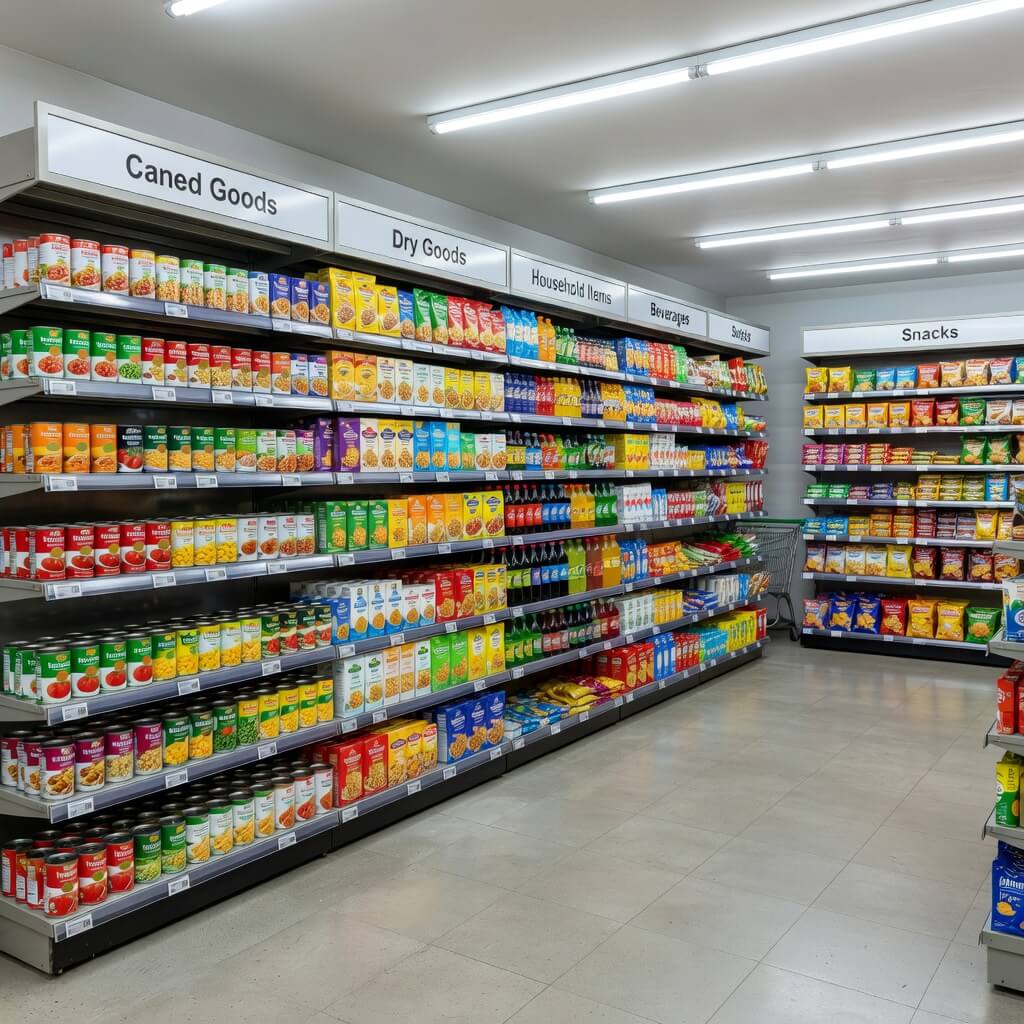
Now we’re getting practical. Multi-level grocery racks are the workhorses of retail displays, and when designed well, they move serious product.
I used to think these were boring until I saw a gourmet food shop absolutely nail their multi-level setup. They turned basic tiered shelving into a display that made artisanal pasta and imported olive oil look like treasures. It’s all about thoughtful design.
The Science of Levels
Multi-level racks create natural eye-scanning zones that play into customer behavior patterns:
- Eye level (approx. 5-5.5 feet): Your premium, high-margin items go here
- Waist level (3-4 feet): Popular items customers actively seek
- Floor level (below 3 feet): Bulk items, value products, or kid-friendly stuff
- Above eye level: Brand building, decorative elements, or overflow stock
Ever wondered why cereal companies fight for eye-level shelf space? Because eye level is buy level, and that principle applies to any shop.
Design Elements That Matter
- Adjustable shelving: Products change size; your racks should adapt
- Tilted front edges: Gravity helps products face forward
- Clear pricing zones: Integrated label holders keep info visible
- Strong weight capacity: Nobody wants a grocery avalanche
- Easy restocking: Front-load or top-load designs save staff time
One grocery boutique I frequent uses these gorgeous wooden multi-level racks with metal frames. They stock specialty items like fancy jams and craft chocolate, and the warm wood makes gourmet food feel even more premium. Smart move.
Read More: 10 Elegant Clothes Rack Design Ideas for Modern Interiors
LED Backlit Product Display Rack Concept
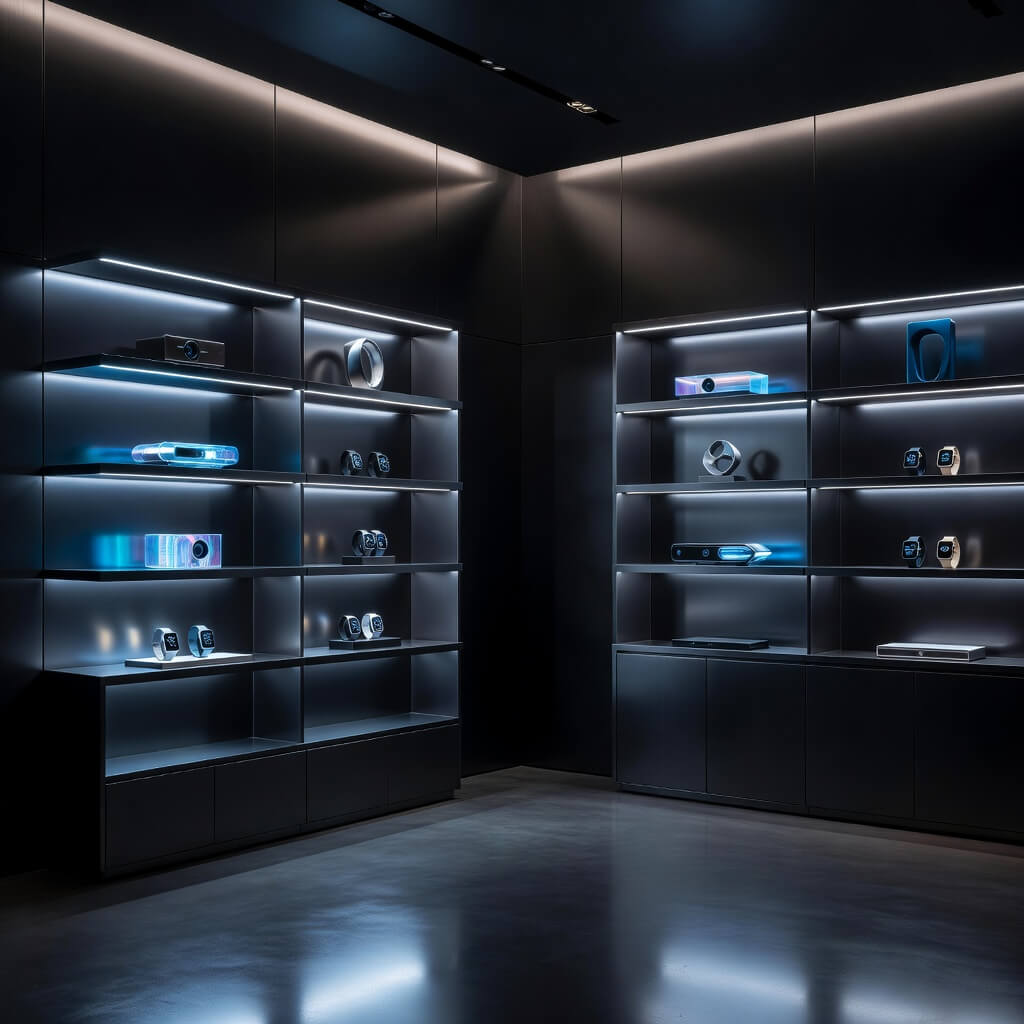
Alright, let’s get a little fancy. LED backlit racks are the theatrical drama queens of product display—and sometimes, drama is exactly what you need.
I saw these first in a high-end liquor store where backlit shelves made bottles glow like liquid gold. The lighting transformed ordinary products into objects of desire. It was honestly a bit manipulative, and I totally fell for it 🙂
When Backlighting Makes Sense
Not every product needs the LED treatment. Strategic backlighting works best for:
- Translucent or transparent items (bottles, glassware, beauty products)
- Premium products that justify the investment
- Featured collections or new arrivals
- Signature items that define your brand
- High-margin products you want to push
The key word here is strategic. Backlight everything and nothing stands out. Use it to create focal points that draw customers deeper into your store.
Technical Considerations
LED strips are affordable and energy-efficient, which is great. But installation requires some planning:
- Even lighting: No dark spots or overly bright sections
- Color temperature: Warm white (2700-3000K) for cozy vibes, cool white (4000-5000K) for modern feels
- Dimming capability: Adjust intensity for different times of day
- Heat management: LEDs run cool, but power supplies can get warm
- Wire management: Hide those cables or the magic disappears
A tech accessories shop near me uses blue-tinted backlighting on their phone case wall. It creates this futuristic atmosphere that perfectly matches their brand. The cases literally pop off the wall visually, and sales reflect it.
Industrial Pipe Style Shop Rack Design Idea
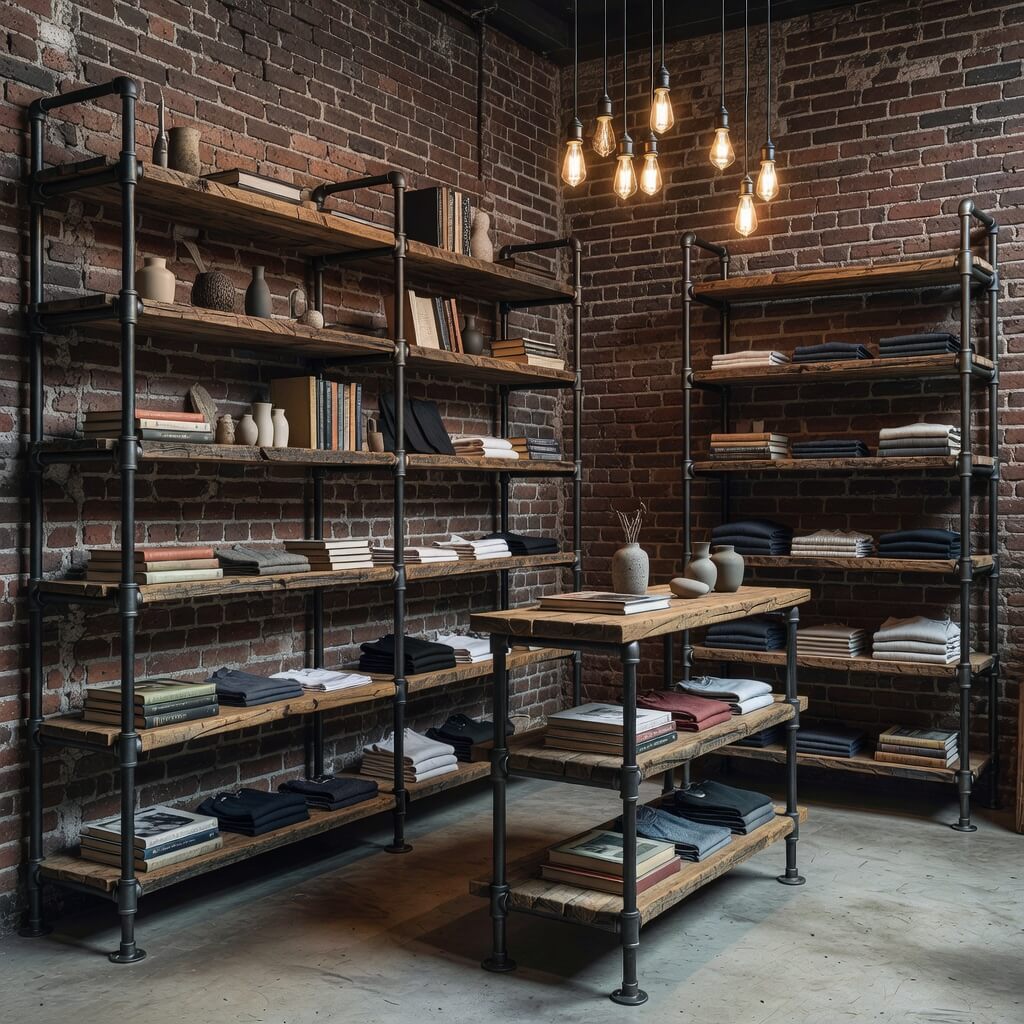
If you’re going for that trendy urban-industrial vibe (and who isn’t these days?), pipe-style racks are your best friend. These bad boys combine form and function in a way that feels both rugged and refined.
I built a clothing rack using black iron pipes for a pop-up shop once. Not gonna lie—it was heavier than I expected and my arms hurt for days. But the final result? Absolutely worth the muscle strain.
The Industrial Appeal
Pipe racks bring raw, architectural energy to your retail space. They work especially well for:
- Clothing boutiques (particularly streetwear or denim-focused)
- Hardware or lifestyle shops
- Coffee shops with retail components
- Bookstores with a modern edge
- Plant shops or garden centers
The exposed pipes and fittings create visual interest through their very structure. You’re not hiding the mechanics—you’re celebrating them as part of the design.
DIY vs. Professional
Here’s the thing: pipe racks look like they should be easy DIY projects. And technically, they can be. But getting them level, stable, and safe requires real skill.
If you go DIY:
- Use black iron or galvanized steel pipes (not PVC—it looks cheap)
- Invest in a pipe threader or buy pre-threaded sections
- Use floor flanges for serious stability
- Apply clear coat to prevent rust or unwanted patina
- Test weight capacity before loading products
Professionally made systems often include hidden structural supports that DIY versions lack. They’re pricier but won’t randomly collapse during business hours, which is a definite plus.
Modular Adjustable Retail Shelf System
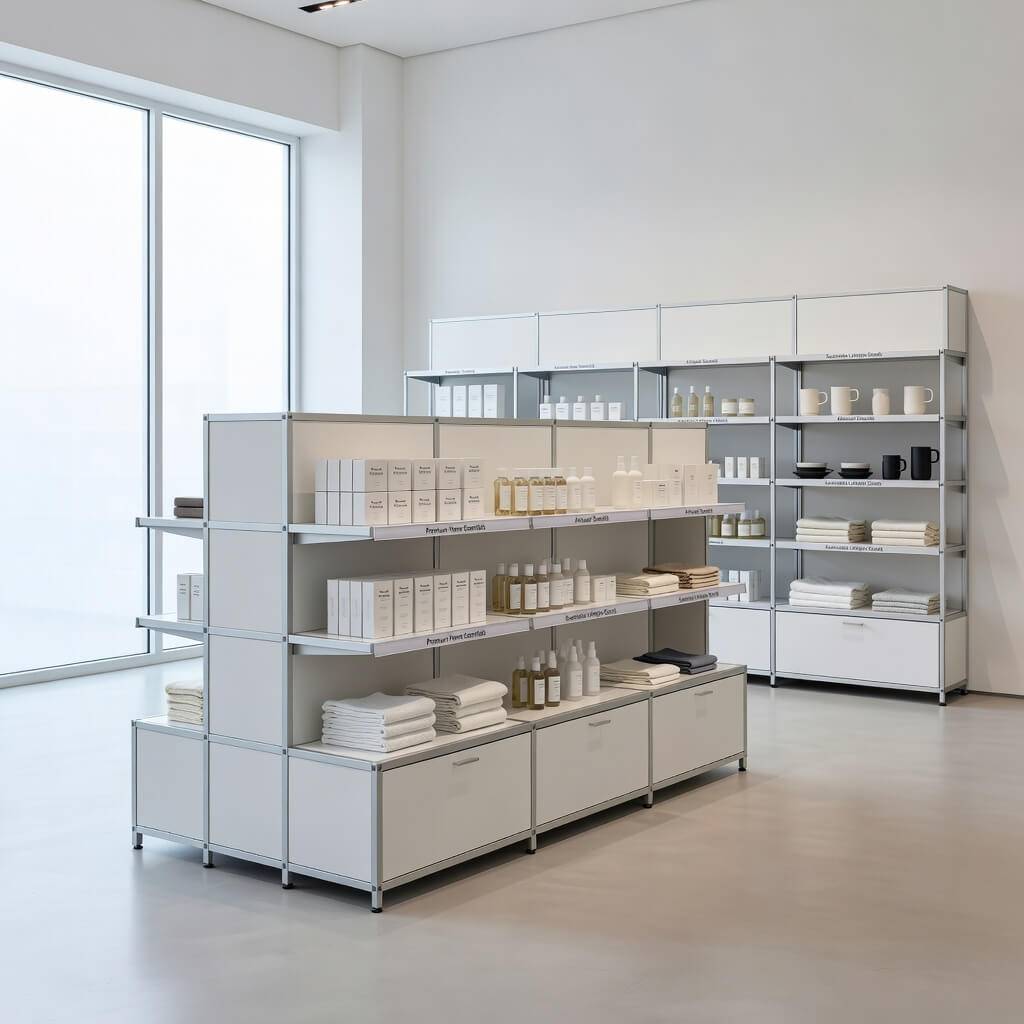
Let’s talk about the chameleons of shop racks: modular adjustable systems. These are perfect if you’re the type who rearranges furniture every few months (no judgment—I totally am).
The beauty of modular systems is that you’re never locked into one configuration. Seasonal changes? New product lines? Sudden inspiration at 2 AM? No problem—just reconfigure.
Flexibility Is Freedom
Modular systems adapt to your evolving needs instead of forcing you to adapt to static fixtures. This matters more than most shop owners realize initially.
Benefits you’ll actually use:
- Seasonal adjustments: Holiday displays, summer collections, clearance sales
- Product size changes: Accommodate everything from small accessories to large items
- Testing layouts: Experiment with configurations to find what sells best
- Multi-use capability: One system serves different departments or product types
- Future-proofing: Add components as your business grows
What to Look For
Not all modular systems deliver equal value. Quality modular racks feature:
- Tool-free adjustments (nobody has time for wrenches during setup)
- Solid locking mechanisms (shelves shouldn’t shift randomly)
- Compatible accessories across product lines
- Durable materials that withstand repeated reconfiguration
- Clean aesthetic that works with various styles
I’ve seen shops waste money on cheap modular systems that looked great in catalogs but wobbled in real life. The connection points were flimsy, and after a few reconfigurations, nothing fit together properly anymore. Buy once, cry once—invest in quality.
Read More: 10 Beautiful TV Rack Design Ideas for Stylish Homes
Open Island Center Display Rack Layout
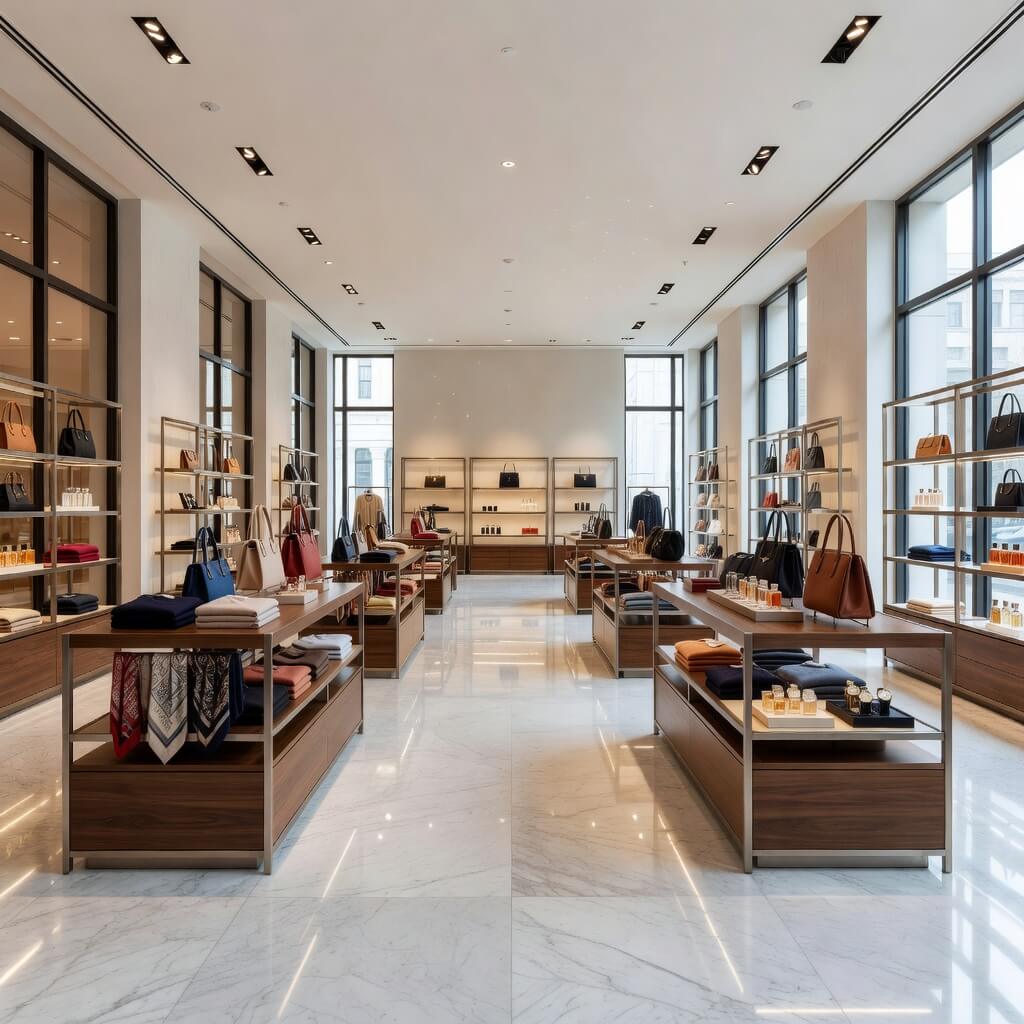
Last but absolutely not least: the open island display. This is the peacock of retail fixtures—designed to be admired from every angle.
Island displays sit in open floor space, drawing customers toward the center of your store. They’re high-traffic magnets when positioned correctly, and they create a natural browsing flow that keeps people moving through your space.
Strategic Placement Matters
Island displays work best when they guide customer flow rather than obstruct it. Think of them as intentional interruptions in the walking path—you want to capture attention without creating congestion.
Placement strategies:
- Store center: Create a destination focal point
- End of main aisle: Intercept customers heading toward checkout
- Between departments: Transition spaces benefit from eye-catching displays
- Near windows: Catch attention from outside passersby
- High-traffic intersections: Maximize visibility from multiple angles
Design Principles for Islands
The 360-degree visibility of island displays means every angle needs to look good. There’s nowhere to hide messy backs or tangled wires.
Key design elements:
- Four-sided appeal: Make all sides equally attractive and accessible
- Height variation: Use multiple levels to create visual interest
- Central anchor: Place a tall or striking element at the center
- Clear sightlines: Don’t block views of the rest of your store
- Easy access: Customers should reach products without stretching awkwardly
A home goods store I love uses a circular island display for seasonal items. They change it monthly—holiday decorations, summer picnic stuff, cozy fall accessories. It’s literally the first thing you see when entering, and I’ve never walked past it without grabbing something. That’s effective merchandising.
Bringing It All Together
Look, at the end of the day, your shop rack design should serve three masters: your products, your customers, and your brand identity. Nail those three elements, and you’ve got a winning display.
The designs I’ve walked you through here aren’t just about looking pretty (though they definitely do that). They’re about creating shopping experiences that feel natural, exciting, and maybe just a tiny bit irresistible.
Some quick takeaways before you go rack shopping:
- Match design to product type: Delicate items need different displays than bulk goods
- Consider your space limitations: Work with your square footage, not against it
- Invest in quality: Cheap racks telegraph cheap products
- Stay flexible: Retail changes fast; your fixtures should keep up
- Think about maintenance: Beautiful displays that require constant upkeep will look shabby quickly
- Test and adjust: What works on paper might not work on your floor—be ready to pivot
The most successful shops I’ve visited mix several of these design concepts rather than committing to just one. Maybe wall-mounted minimal racks frame the perimeter while an LED-backlit island anchors the center. Or industrial pipe clothing racks pair with modern glass shelving for accessories. Combining styles creates depth and interest that single-concept layouts sometimes lack.
Final Thoughts
Here’s what I’ve learned from watching countless shops succeed and fail: your rack design is never “done.” Retail is a living thing that evolves with trends, seasons, and customer behavior. The best shop owners treat their display systems as ongoing experiments rather than permanent installations.
Start with one strong design concept that fits your brand, implement it thoughtfully, and then watch how customers interact with it. Do they gravitate toward certain racks? Do they struggle to reach products on others? Are they spending time browsing or rushing past? Let customer behavior guide your evolution.
And hey, if you’re feeling overwhelmed by all these options, just start small. Pick one area of your shop that needs the most help and upgrade that display first. You don’t need to revolutionize your entire retail space overnight. Even one innovative rack design can significantly impact how customers perceive and interact with your products.
The shops that stick in our memories aren’t necessarily the biggest or the ones with the most inventory. They’re the ones where product display feels like an art form—where every rack, shelf, and fixture contributes to a cohesive story. That’s what these ten design ideas give you: tools to tell your brand’s story through thoughtful, innovative product presentation.
Now go forth and make your products look absolutely irresistible. Your customers (and your sales numbers) will thank you for it.