10 Eye-Catching Classroom Decor Ideas for Happy Students
- Classroom Decor
 Ben
Ben- 0
- 33 minutes read
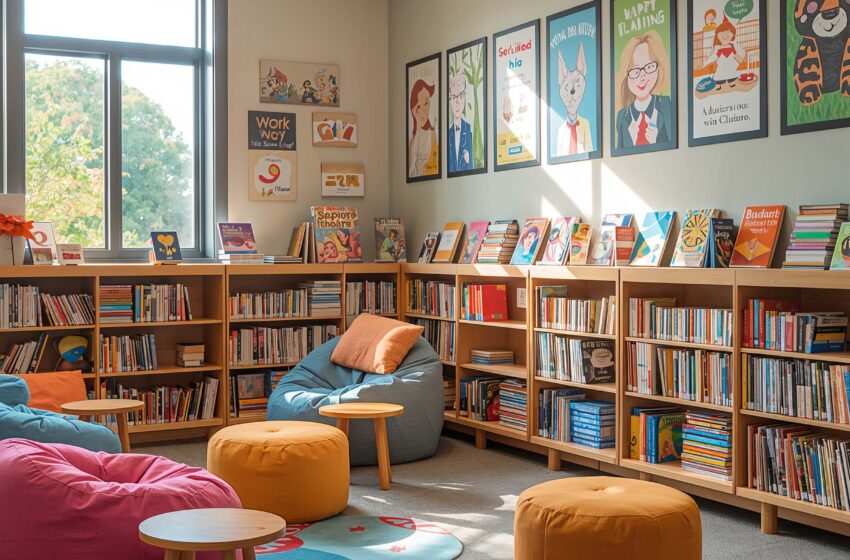
Remember walking into that one classroom that just made you want to learn? You know, the kind where everything seemed to sparkle with possibility, and you couldn’t wait to explore every corner? That’s the magic we’re creating today, friend.
I’ve spent years transforming bland, beige boxes into learning wonderlands, and let me tell you – the right classroom decor changes everything. Students walk taller, smile bigger, and actually look forward to Monday mornings. Wild concept, right? After testing countless ideas (and removing way too much sticky tack from walls), I’m sharing the classroom transformations that actually work.
Colorful Learning Zones
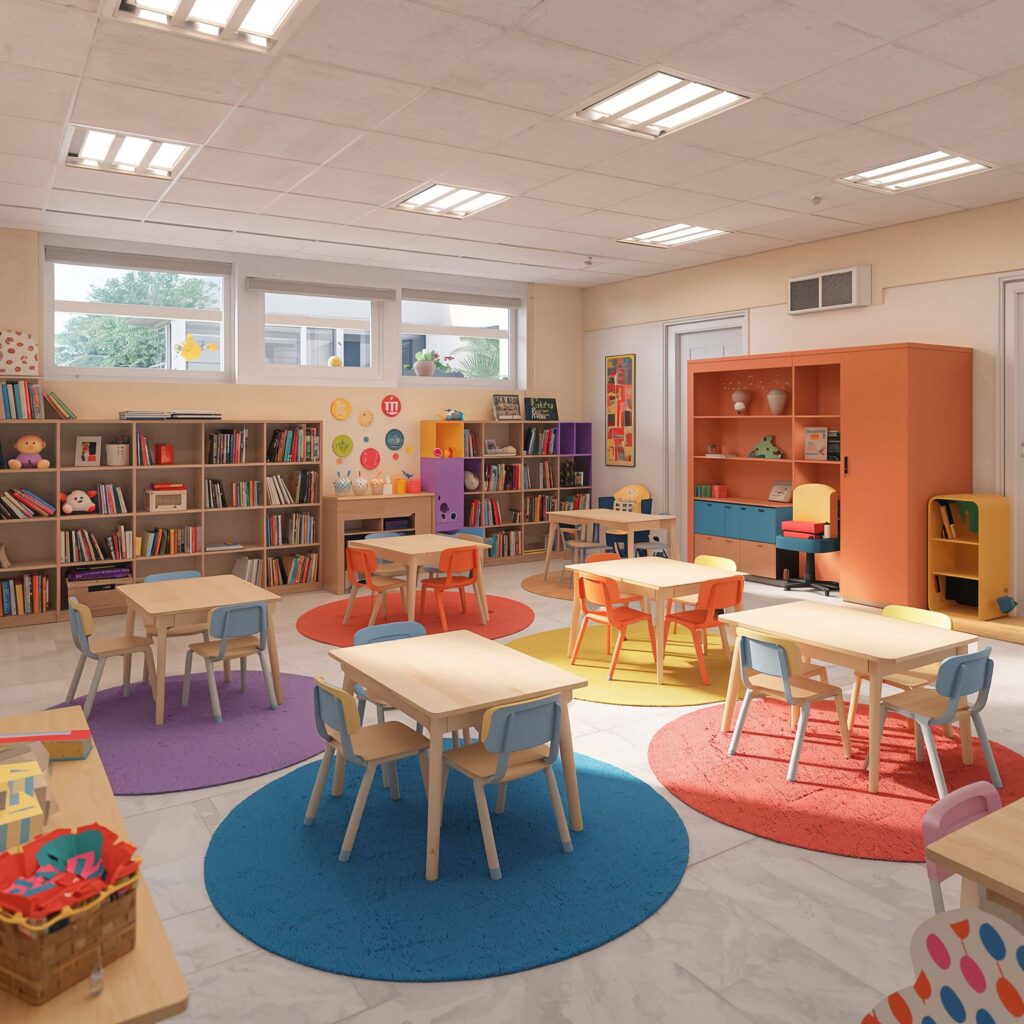
Want to blow your students’ minds without saying a word? Create distinct learning zones using bold, purposeful colors. I started doing this five years ago, and honestly, classroom management practically handles itself now.
Think about it – when kids know the blue corner means quiet reading and the orange area screams group work, you’ve just eliminated half your daily instructions. I use painter’s tape to create geometric borders on the floor, marking each zone with its signature color. The math station gets energizing yellow, the calm-down corner rocks soothing green, and the creative writing spot bursts with inspiring purple.
Making Zones Work for You
Here’s what makes color coding genius:
- Visual boundaries help kids with spatial awareness
- Different colors trigger different mental states (science backs this up!)
- Students self-regulate based on their location
- Transitions become smoother when everyone knows where they’re headed
The trick? Keep your color choices consistent throughout the year. Kids’ brains create associations faster than you’d think. My third-graders now automatically lower their voices when they step into the blue zone – no reminder needed.
Pro tip: Match your storage bins and supplies to each zone’s color. Watch organization happen like magic. When the red bins belong in the red zone, even your messiest student becomes a cleaning machine.
Inspirational Quote Wall
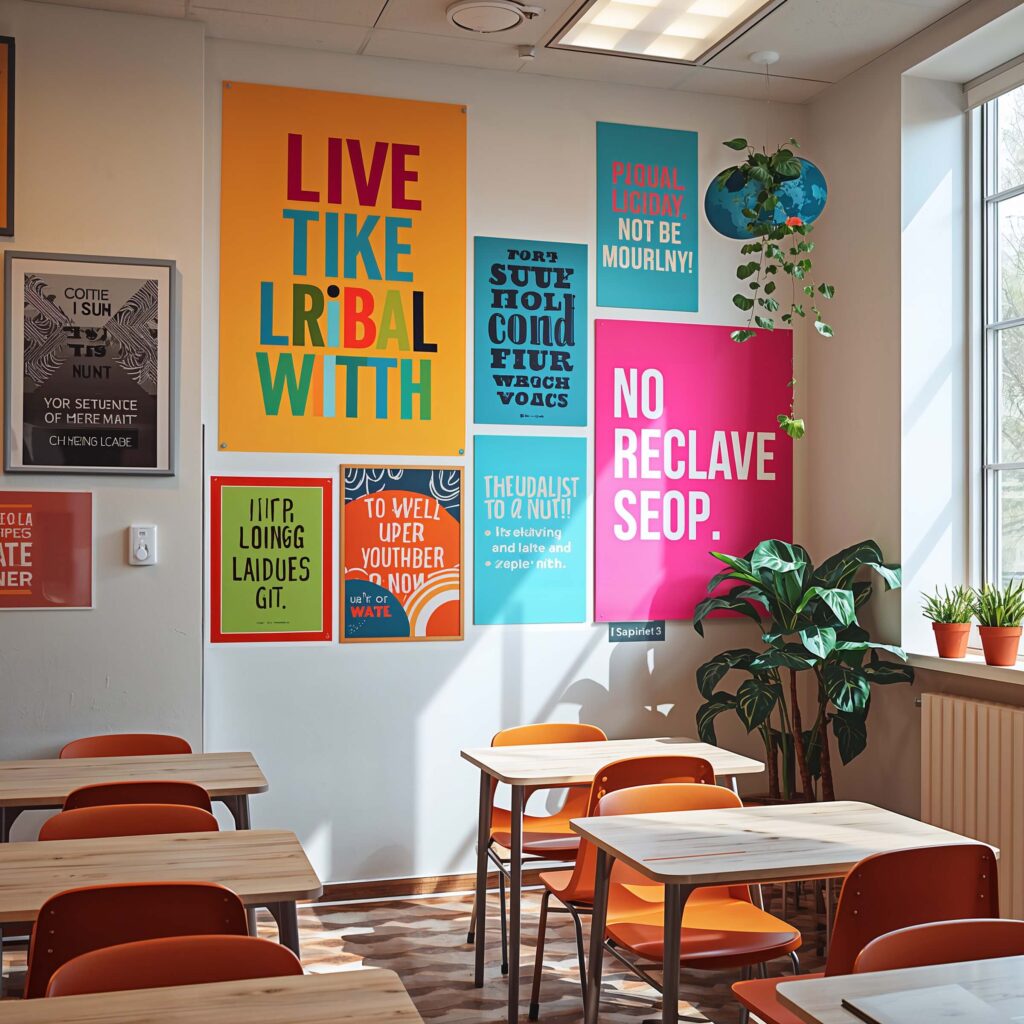
Let’s get real – motivational posters from the teacher supply store aren’t cutting it anymore. Students need quotes that actually speak their language, not some generic “Believe in Yourself” nonsense they’ve seen a million times.
I dedicate one wall to student-selected quotes that change monthly. Here’s the kicker: kids submit their favorites, we vote as a class, and winners get professionally printed (okay, I use Canva, but they don’t need to know that). Suddenly, you’ve got buy-in from day one.
Quote Wall Elements That Actually Inspire
Start with these foundation pieces:
- Student submissions box where kids drop their favorite quotes
- Rotating “Quote of the Week” in massive letters
- Mix of famous quotes and student-created wisdom
- Different fonts and colors for visual interest
- QR codes linking to videos of speeches or songs
Ever seen a tough kid tear up because their quote made it onto the wall? I have. That’s when you know you’re doing something right. BTW, including quotes in multiple languages celebrates diversity and makes everyone feel seen.
My current favorite? A student submitted: “Your only limit is your WiFi connection” – posted right above our computer station. Comedy gold, and surprisingly motivating!
DIY Bulletin Boards
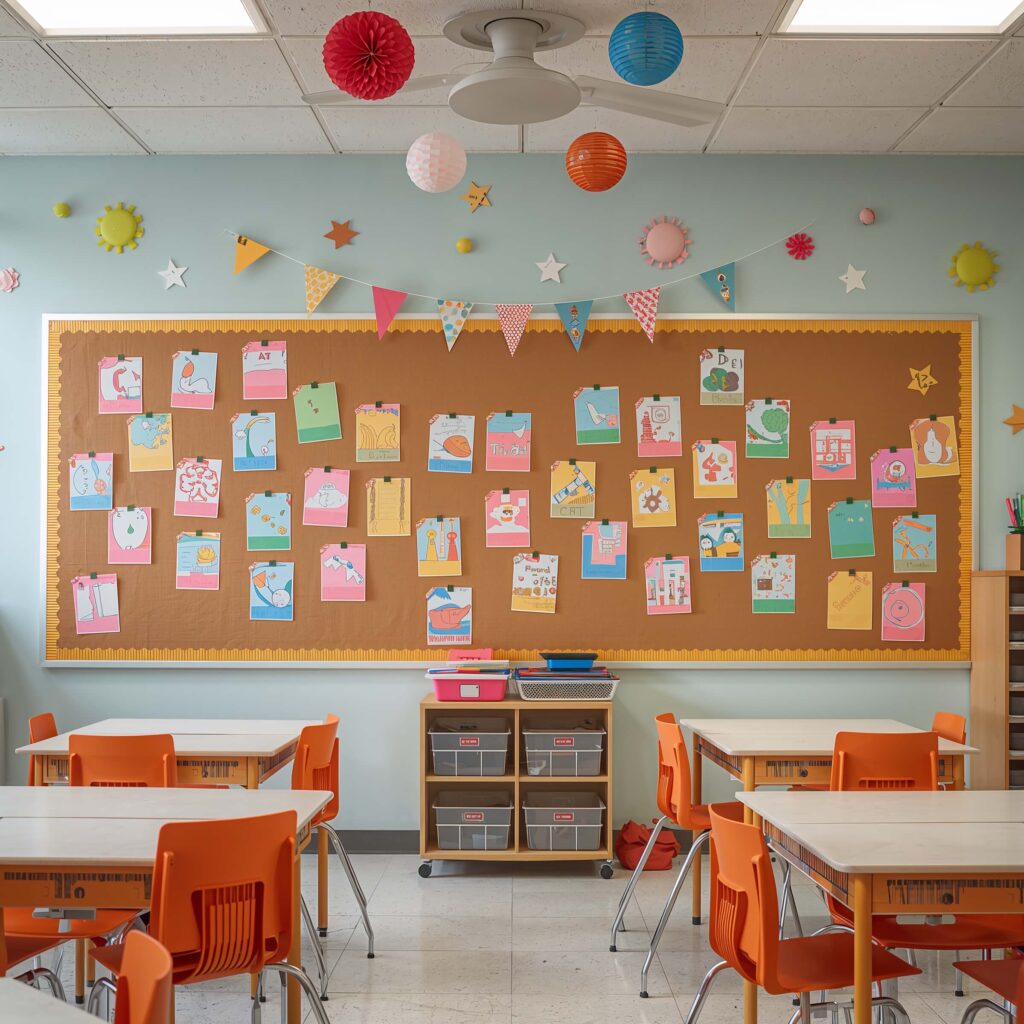
Store-bought bulletin boards? Boring. DIY boards that students help create? That’s where the magic happens. I learned this lesson the hard way after spending my entire August creating Pinterest-perfect boards that students ignored completely.
Now, I provide the frame and basic structure, but students fill in the content. Our current math board started as blank cork with just the title “Number Ninjas.” Kids added their own math discoveries, trick solutions, and even math memes (yes, they exist, and yes, they’re actually funny).
Bulletin Board Hacks That Save Your Sanity
Transform those boards with these techniques:
- Fabric backgrounds instead of paper (lasts all year, looks professional)
- Velcro dots for easy swapping of student work
- 3D elements using foam boards and hot glue
- Interactive components like flip cards or spinning wheels
- Border designs created by students during art time
The secret sauce? Change only the content, not the entire board. I keep the same fabric backing and borders all year, just switching out the displayed work. Saves time, looks cohesive, and students know exactly where to look for updates.
FYI, pool noodles cut lengthwise make incredible 3D borders. Spray paint them any color, and you’ve got instant pop for under five bucks.
Also Read: 10 Inspiring Basement Layout Ideas Floor Plans for Family Fun
Seasonal Theme Corners
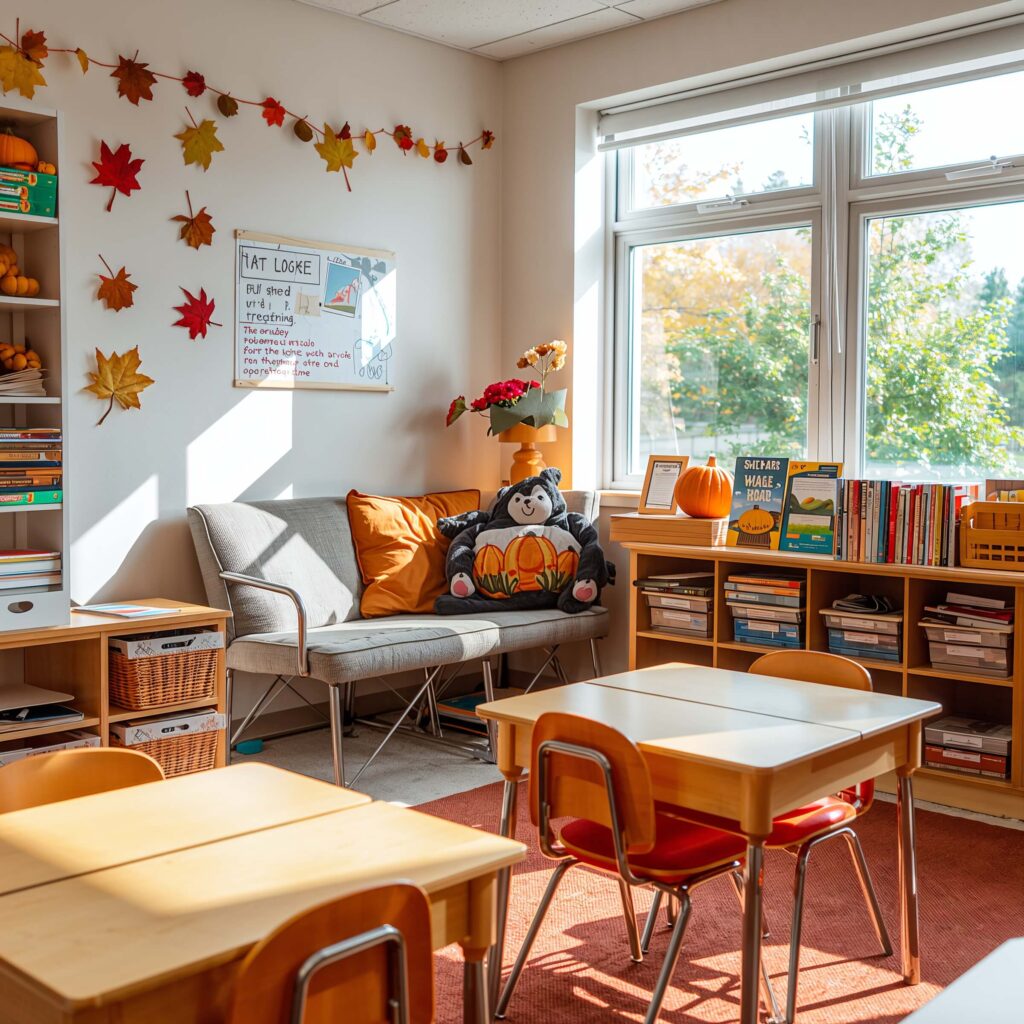
Who says you need to redecorate your entire classroom four times a year? One seasonal corner does the trick without the overwhelm. Pick that awkward space near the coat hooks or beside the bookshelf – boom, seasonal headquarters.
I rotate through themes that connect to our curriculum. Fall brings harvest math problems, winter showcases snowflake symmetry, spring explodes with life cycle diagrams, and summer celebrates reading adventures. The corner evolves naturally with our learning, not because some calendar says it’s October.
Seasonal Corners Without the Stress
Keep it manageable with these strategies:
- One anchor piece that stays all season (like a fabric tree that changes “clothes”)
- Student-created decorations during indoor recess
- Nature collections displayed in clear containers
- Seasonal books on rotating display
- Weather tracking charts that students update daily
Here’s what nobody tells you: kids get more excited about subtle changes than complete overhauls. When they spot new leaves on our corner tree or notice the temperature chart shifting, they feel like classroom detectives. That engagement? Priceless.
My favorite hack involves a large branch in a sand-filled bucket. It becomes a fall tree, winter wonder, spring bloom showcase, and summer reading tree throughout the year. Same branch, different decorations – minimum effort, maximum impact.
Interactive Reading Nooks
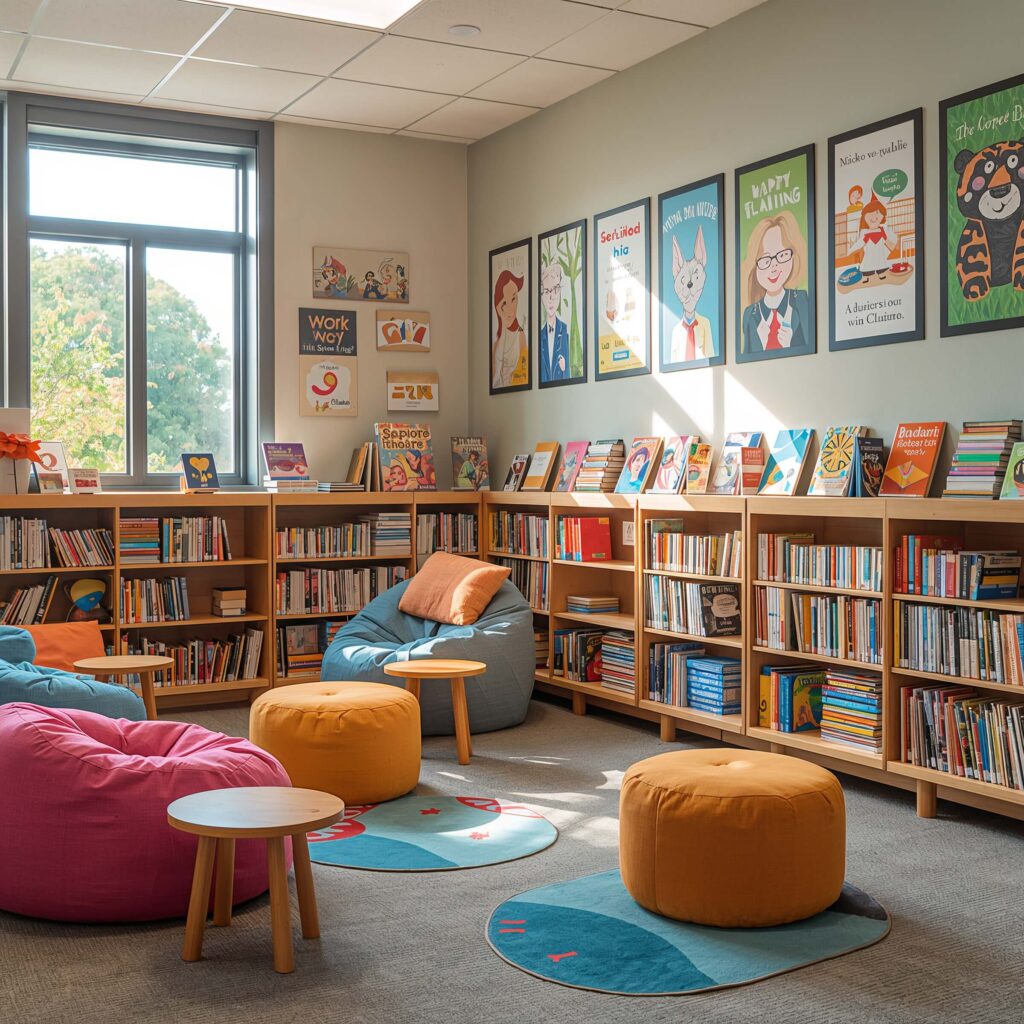
Forget those sad bean bags in the corner calling themselves a “reading area.” Today’s students need reading nooks that actually make them want to pick up a book. I’m talking full sensory experiences here.
Start with lighting – harsh fluorescents kill the reading vibe faster than a fire alarm. String lights, desk lamps, even battery-powered candles create that cozy bookstore feeling. Add textured pillows, a soft rug, and suddenly you’ve got prime real estate everyone fights over.
Building Nooks Kids Actually Use
Essential elements for reading success:
- Multiple seating options (not everyone loves bean bags)
- Book displays facing forward, bookstore-style
- Personal reading trackers or journals
- Quiet fidgets for kinesthetic readers
- Genre labels with student-designed icons
Want to know what changed everything for my reluctant readers? Installing a “book tasting menu” where I display five books each week with appetizer-style descriptions. “Looking for adventure with a side of humor? Try this!” Students eat it up (pun intended).
The game-changer move: create reading passports where kids collect stamps for different genres or reading locations. Watch them beg for reading time. Seriously, they’ll ask if they can skip recess to read. Mind. Blown.
Student Artwork Gallery
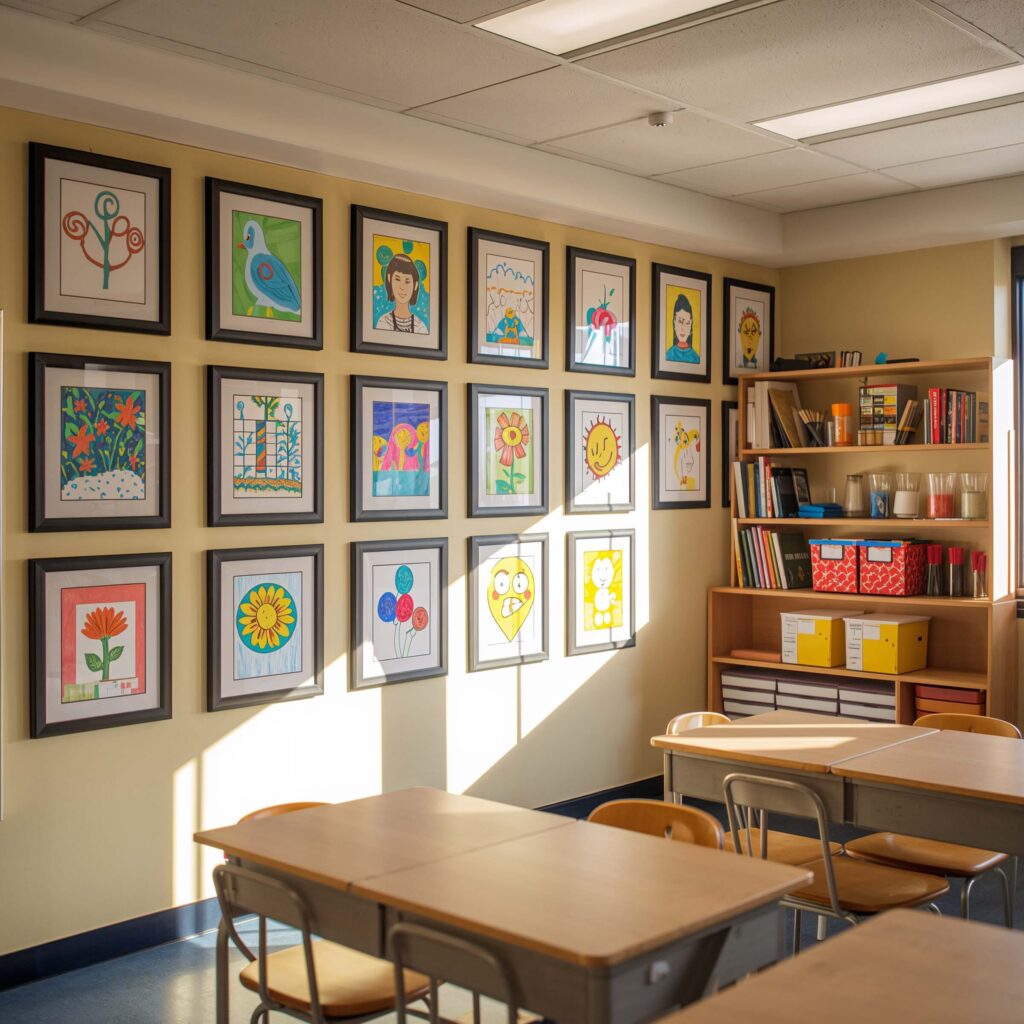
Nothing – and I mean nothing – builds pride like seeing your work displayed gallery-style. Forget the chaotic mess of papers taped everywhere. We’re creating an actual gallery that would make any museum jealous.
I use simple frames from dollar stores (remove the glass for safety), creating a professional display wall. Students submit pieces for monthly exhibitions, complete with artist statements. Yes, eight-year-olds writing artist statements. They’re hilarious and heartfelt in equal measure.
Gallery Features That Elevate Everything
Transform your display with these upgrades:
- Consistent frames in two colors maximum
- Typed labels with student name, title, and date
- QR codes linking to student voice recordings about their work
- Rotating “Artist of the Week” spotlight
- Opening night celebrations for new exhibitions
The pride on parents’ faces during conferences when they see their kid’s work professionally displayed? That’s worth every penny spent on frames. Plus, students treat the classroom with more respect when they see you respecting their work.
Hot tip: photograph every displayed piece before taking it down. Create a digital gallery on your class website. Parents love it, students feel famous, and you’ve got documentation gold for portfolios.
Also Read: 10 Fresh Modern Basement Ideas to Maximize Every Corner
Nature-Inspired Classroom
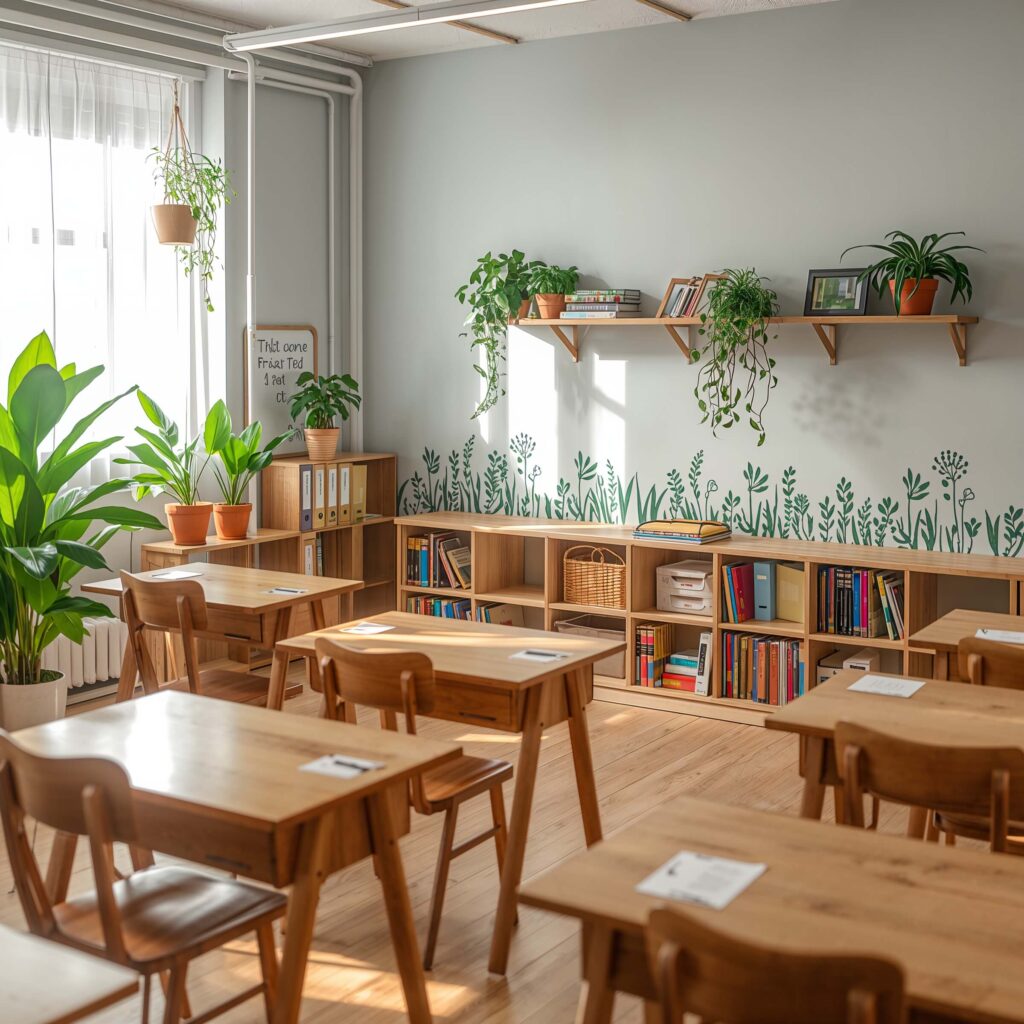
Who decided classrooms need to feel like sterile boxes? Bringing nature inside transforms the entire learning atmosphere. I’m not suggesting you turn your room into a jungle (although that would be epic), but strategic natural elements work wonders.
Start small: a few potted plants, some interesting rocks, maybe a small water feature. Students take turns as “plant scientists,” caring for our green friends. The responsibility factor alone makes this worthwhile, but the air quality improvement? That’s the real MVP.
Natural Elements That Actually Work
Practical nature additions include:
- Low-maintenance plants (pothos, snake plants, succulents)
- Collection displays in clear containers
- Nature photography printed large-scale
- Wood elements like branches or driftwood
- Natural fiber baskets for storage
Real talk: I killed three plants before finding ones that survive classroom life. Spider plants? Indestructible. They even produce babies that students can propagate and take home. Science lesson and decor in one!
The unexpected benefit? Behavioral issues decrease around living things. That kid who usually bounces off walls? Hand them a spray bottle for plant duty and watch the magic happen. Nature has this weird calming superpower that no behavior chart can match.
Minimalist Organization Shelves
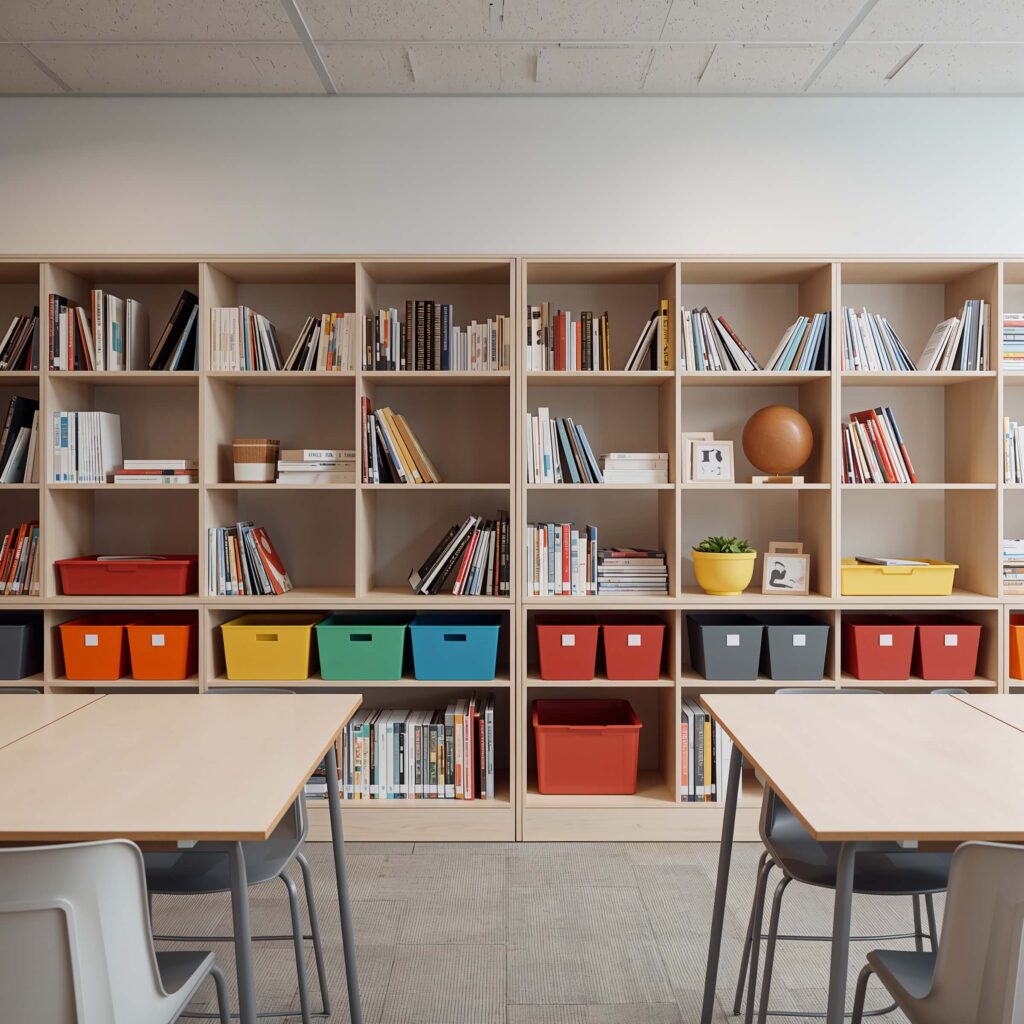
Listen, I get it – the urge to fill every shelf with educational everything is strong. But minimalist organization might just save your sanity (and your students’ focus). Less visual chaos equals more mental clarity. It’s science, people!
I learned this after a student told me our classroom made his “brain feel fuzzy.” Ouch. But he was right. Now, every shelf has a purpose, a limited color palette, and breathing room. The difference in student focus? Night and day.
Minimalist Strategies That Maximize Learning
Implement these organization principles:
- One color per shelf (or two complementary colors max)
- Labels with pictures and words
- Empty space between items (revolutionary, I know)
- Matching containers for similar supplies
- Regular purging of unused materials
Here’s the plot twist: minimalist doesn’t mean boring. Use interesting containers, vary heights, add one statement piece per shelf. Students find supplies faster, clean up happens quicker, and everyone’s stress levels drop.
My favorite minimalist hack? Assign each table group one shelf to maintain. They decide the organization system (within parameters), create labels, and keep it tidy. Ownership equals investment, friend.
Alphabet & Number Wall Displays
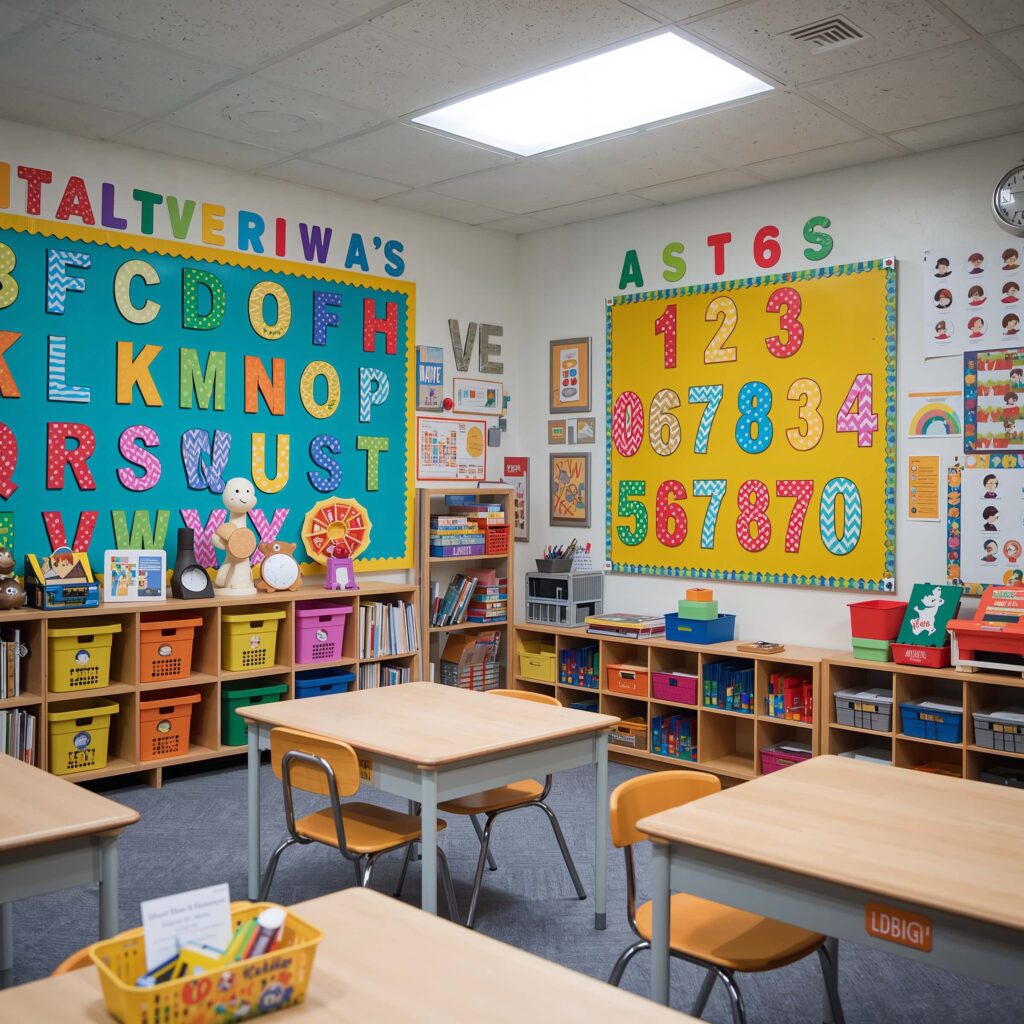
Sure, every classroom needs alphabet and number displays, but does yours need to look like it time-traveled from 1982? Modern letter and number walls can be functional art pieces that students actually reference.
I ditched the cartoon animals and went with bold, graphic designs. Each letter gets its own card with multiple fonts showing the same letter, plus a word chosen by students. “X” isn’t for xylophone anymore – it’s for X-ray, X-Games, or whatever the class votes on.
Display Elements That Teach and Delight
Upgrade your basics with these features:
- Multiple representations of each letter/number
- Student-generated vocabulary words
- Cultural variations in number systems
- Sign language alphabet alongside traditional letters
- Mathematical concepts beyond basic counting
Want students to actually use these displays? Make them interactive with removable elements. Velcro numbers that students can grab for math problems. Letter cards they can pull down for spelling practice. Suddenly, your wall becomes a teaching tool, not just decoration.
The winning move: create a “number of the day” with fun facts. Did you know 7 is considered lucky in most cultures but unlucky in China? These tidbits stick in kids’ brains way longer than “7 comes after 6.”
Also Read: 10 Vibrant Basement Color Schemes Ideas for Fun Rooms
Cozy Flexible Seating Area
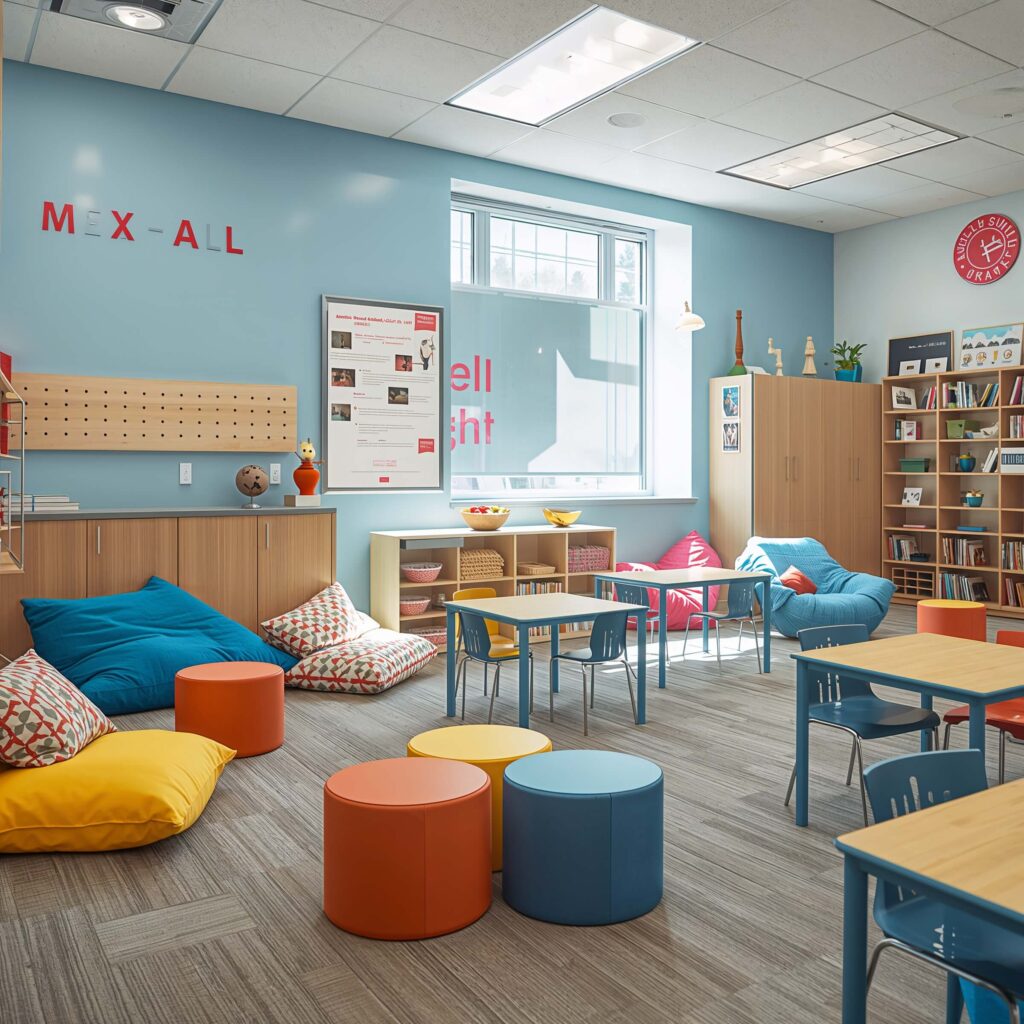
Traditional desks in rows? That ship has sailed, my friend. Flexible seating transforms classrooms into dynamic learning environments where students choose spots that match their learning needs. And no, this doesn’t mean chaos – it means intentional choices that boost engagement.
I started small: a few stability balls, some standing desks, floor cushions. Now? Students rotate through different seating options based on the task. Need to focus on writing? Grab a privacy shield at a traditional desk. Group project time? Floor cushions around a low table. The variety keeps bodies moving and brains engaged 🙂
Flexible Seating That Actually Functions
Essential elements for success:
- Clear expectations for each seating type
- Rotation system ensuring fairness
- Storage solutions for personal items
- Mix of individual and collaborative spaces
- Options for different sensory needs
The reality check: not every kid wants a wobble cushion. Some need that traditional chair for security. Flexibility means options, not forcing everyone into yoga balls. IMO, the mix matters more than any single seating type.
My unexpected discovery? Giving students choice in where they sit reduces behavior issues by about 70%. When kids feel trusted with decisions, they rise to meet expectations. Who knew furniture could be a classroom management strategy?
Making It All Work Together
Here’s the thing about classroom decor – it’s not about creating Instagram-worthy spaces (though that’s a nice bonus). It’s about building an environment where learning feels like an adventure, not a chore. Every element should serve a purpose, whether that’s inspiring creativity, organizing chaos, or simply making kids smile when they walk through the door.
Start with one idea. Maybe it’s the reading nook, maybe it’s color-coded zones. Master one before adding another. Rome wasn’t built in a day, and neither is the perfect classroom. Besides, watching your space evolve throughout the year keeps things interesting for everyone.
The students remember the classrooms where they felt valued, seen, and inspired. They remember the teacher who hung their artwork in actual frames, who let them choose the inspirational quotes, who trusted them with plant care. These decorations aren’t just about making things pretty – they’re about showing students they matter.
The Real Secret? Student Investment
After years of classroom decorating wins and fails, here’s what I know for sure: the best-decorated classroom is one students help create. Every single idea I’ve shared works better when kids have ownership. Let them vote on colors, submit quotes, arrange the reading nook, design bulletin board borders.
Will it look exactly like your Pinterest vision board? Nope. Will it be perfectly coordinated? Probably not. But will students treat the space with respect, feel proud to learn there, and actually enjoy being in school? Absolutely. And honestly? That’s worth more than any perfectly curated classroom.
The transformation doesn’t happen overnight. Start where you are, use what you have, do what you can. Maybe this year you tackle three ideas. Next year, three more. Before you know it, you’ve created a learning environment that makes everyone – including you – excited for Monday morning.
Your classroom becomes more than just a room; it becomes a launching pad for curiosity, creativity, and confidence. The best part? When former students visit years later, they don’t remember the worksheets or the tests. They remember the reading nook where they discovered Harry Potter, the quote wall where their words mattered, the plant they kept alive all year.
That’s the power of intentional classroom decor. It’s not about the perfect aesthetic or the trendiest themes. It’s about creating a space where learning feels like home and every student knows they belong. So grab some paint, recruit some helpers, and start building the classroom your students will remember forever. Trust me, future you will thank present you for taking the leap.
Because at the end of the day, happy students learn better, dream bigger, and shine brighter. And isn’t that what we’re all here for? Now excuse me while I go hot-glue some more pool noodles to my bulletin boards. This classroom isn’t going to decorate itself! :/