10 Bright Elementary Classroom Decor Ideas for Happy Students
- Classroom Decor
 Ben
Ben- 0
- 33 minutes read
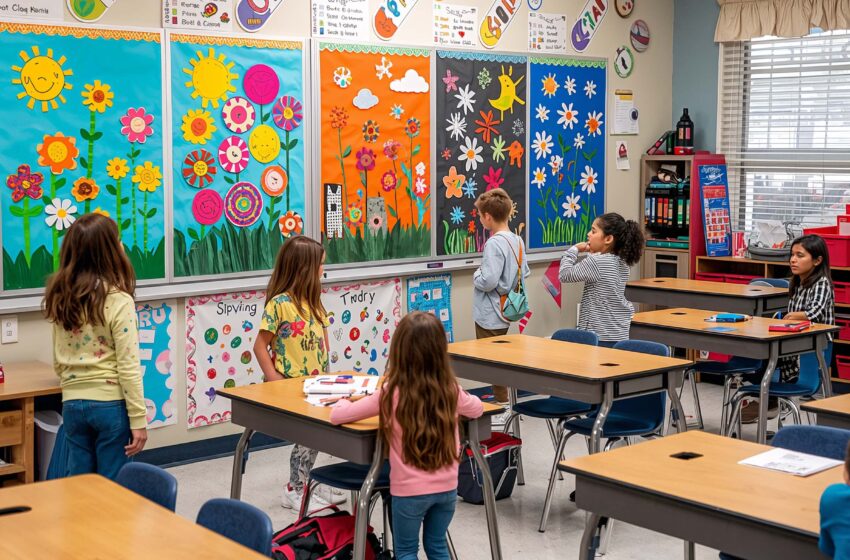
Remember walking into that one classroom that just felt magical? You know, the kind where everything seemed to sparkle with possibility, and you couldn’t wait to explore every corner? That’s the power of thoughtful classroom decor, my friend. After spending countless hours setting up classrooms (and redoing them because, let’s face it, Pinterest exists), I’ve discovered that the right decorations don’t just make a room pretty—they transform learning spaces into adventures waiting to happen.
Creating an inviting classroom isn’t about breaking the bank or becoming a professional interior designer overnight. It’s about crafting spaces that whisper “you belong here” to every student who walks through that door. And trust me, I’ve learned this the hard way after watching kids’ faces light up when they spot their artwork on display or find their perfect reading spot.
Rainbow-Themed Learning Zones
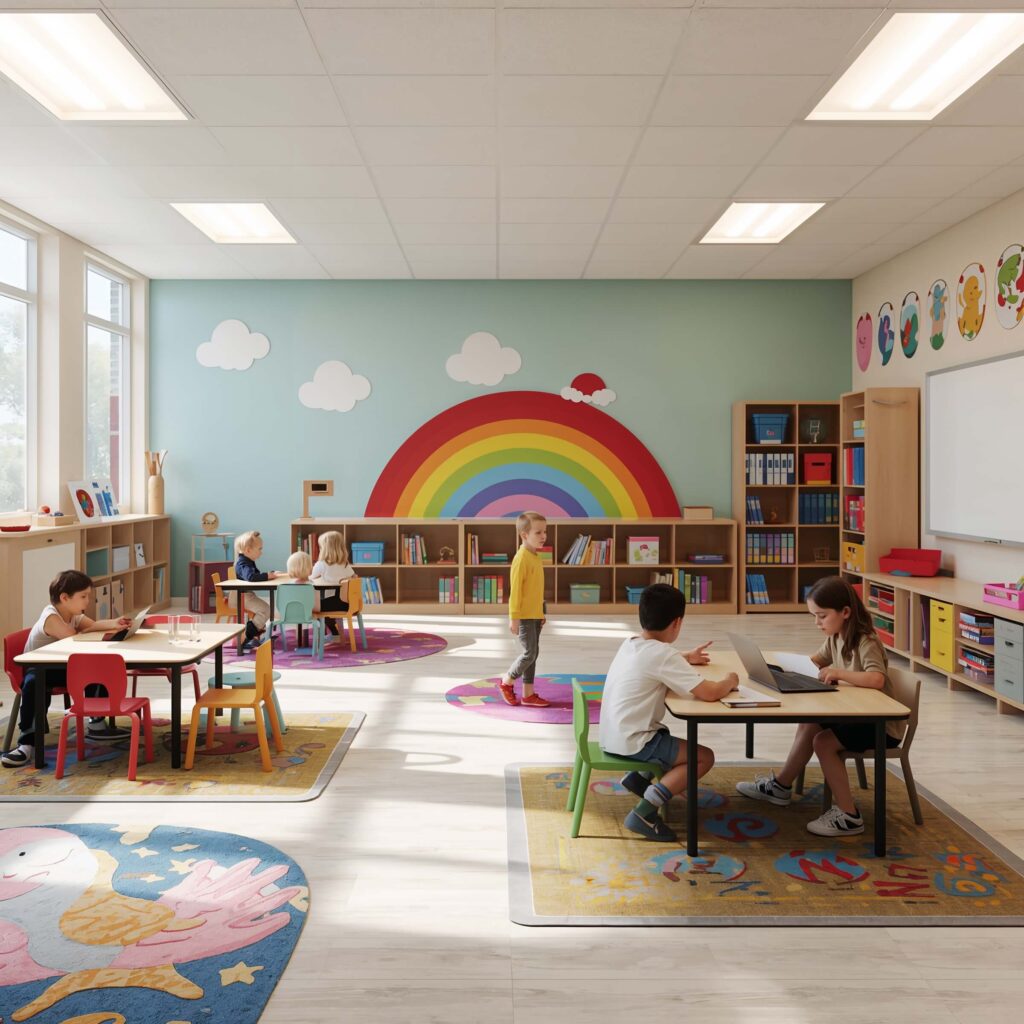
Who says learning can’t look like a celebration? Rainbow-themed zones bring instant joy to any classroom while secretly organizing your space like a boss. I started using this approach three years ago, and honestly, it revolutionized how my students navigate the room.
Picture this: each learning area gets its own vibrant color scheme. Your math corner rocks those cool blues and greens, while the creative writing station bursts with warm oranges and yellows. Students instinctively know where to go because their brains connect colors with activities faster than you can say “line up for recess.”
Setting Up Your Rainbow Zones
Creating these zones doesn’t require an art degree (thank goodness). Start by mapping out your classroom activities:
- Red Zone: Drama and movement activities
- Orange Zone: Art and creative projects
- Yellow Zone: Reading and quiet work
- Green Zone: Science experiments and nature study
- Blue Zone: Math and logic puzzles
- Purple Zone: Music and listening center
The beauty lies in the simplicity. Grab some colored tape, a few matching storage bins, and maybe some fabric if you’re feeling fancy. Students quickly learn that yellow means quiet time while red signals it’s okay to move around and make some noise.
What really sells this system? The visual boundaries help kids self-regulate without constant reminders. They see the color, they know the expectations. It’s like magic, except it’s just clever psychology wrapped in pretty colors.
DIY Nature-Inspired Bulletin Boards
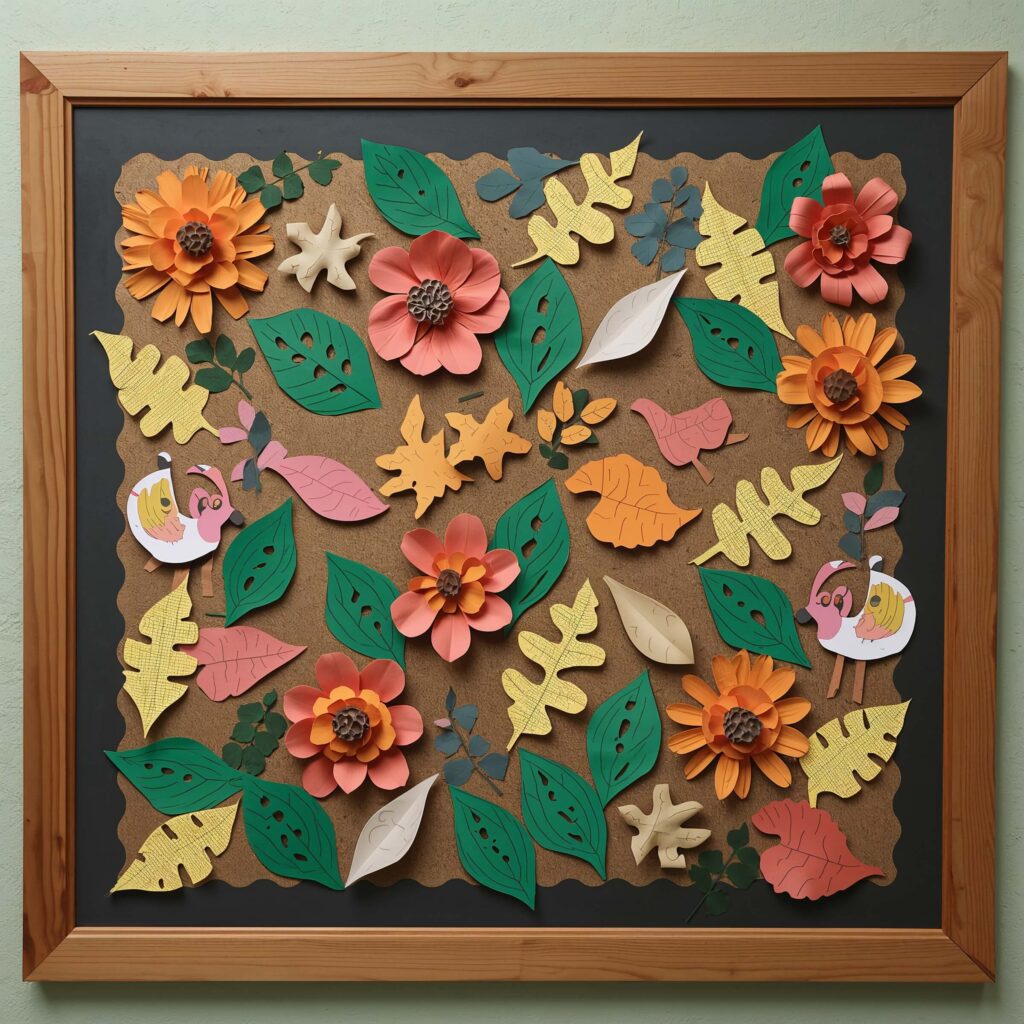
Forget those store-bought borders that scream “educational supply catalog.” Nature-inspired boards bring the outside in, and kids absolutely eat it up. Plus, creating them costs next to nothing if you know where to look.
Last fall, I collected leaves with my students during recess (multitasking at its finest). We pressed them, laminated them, and created the most gorgeous bulletin board border you’ve ever seen. Real materials connect kids to their environment in ways that plastic decorations never will.
Materials You’ll Love Working With
Here’s what makes nature boards special:
- Pressed flowers and leaves (change them seasonally)
- Twine and burlap for rustic textures
- Photographs of local wildlife and plants
- Student-collected natural specimens
- Recycled paper in earth tones
The trick? Let students help create these boards. They’ll protect and admire their handiwork all year long. One student told me she felt like a “real scientist” when we displayed her leaf classification project. Can store-bought posters do that? I think not.
Don’t stress about perfection either. Nature isn’t perfect, and that’s what makes it beautiful. Crooked branches and mismatched leaves add character that manufactured decorations can’t touch.
Interactive Alphabet Wall
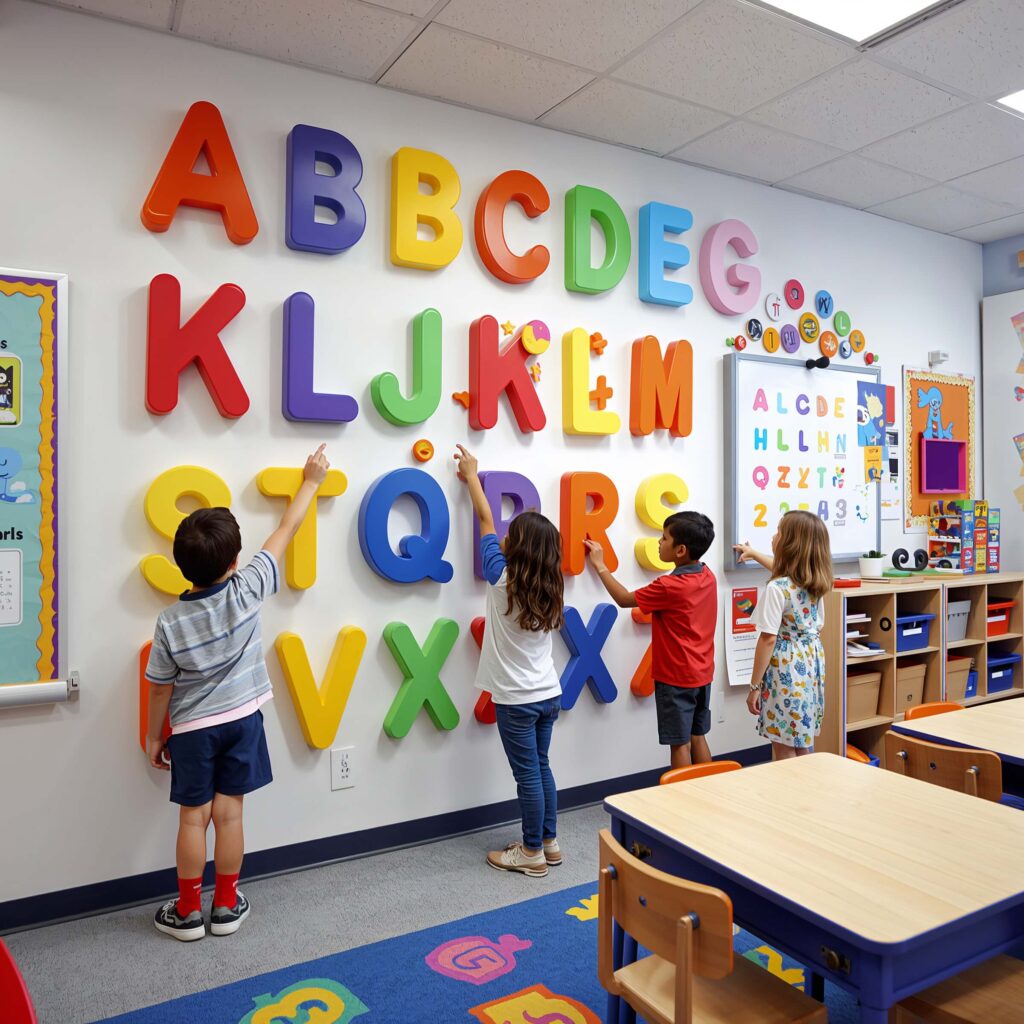
Static alphabet strips? Boring. Interactive alphabet walls that kids can touch, move, and play with? Now we’re talking! This isn’t your grandmother’s ABC display (though I’m sure hers was lovely).
I discovered the power of interactive alphabets when I caught students literally jumping to touch letters during indoor recess. Why fight that energy when you can harness it? Make those letters work for you, not against you.
Building Your Interactive Wall
Transform your alphabet display with these elements:
- Velcro-backed letters kids can rearrange
- Picture pockets for rotating vocabulary words
- Texture samples for each letter (A for aluminum foil, B for burlap)
- QR codes linking to alphabet songs or videos
- Student photo cards that move to match their names’ first letters
The best part? Students teach themselves without realizing it. They’ll spend free time organizing pictures, spelling words, and challenging friends to alphabet races. Learning disguised as play works every single time.
Want to level up? Add a mystery letter of the day with clues. Watch kids buzz with excitement trying to guess which letter holds today’s surprise. Sometimes the simplest ideas create the biggest impact.
Also Read: 10 Eye-Catching Classroom Decor Ideas for Happy Students
Cozy Reading Nook Corner
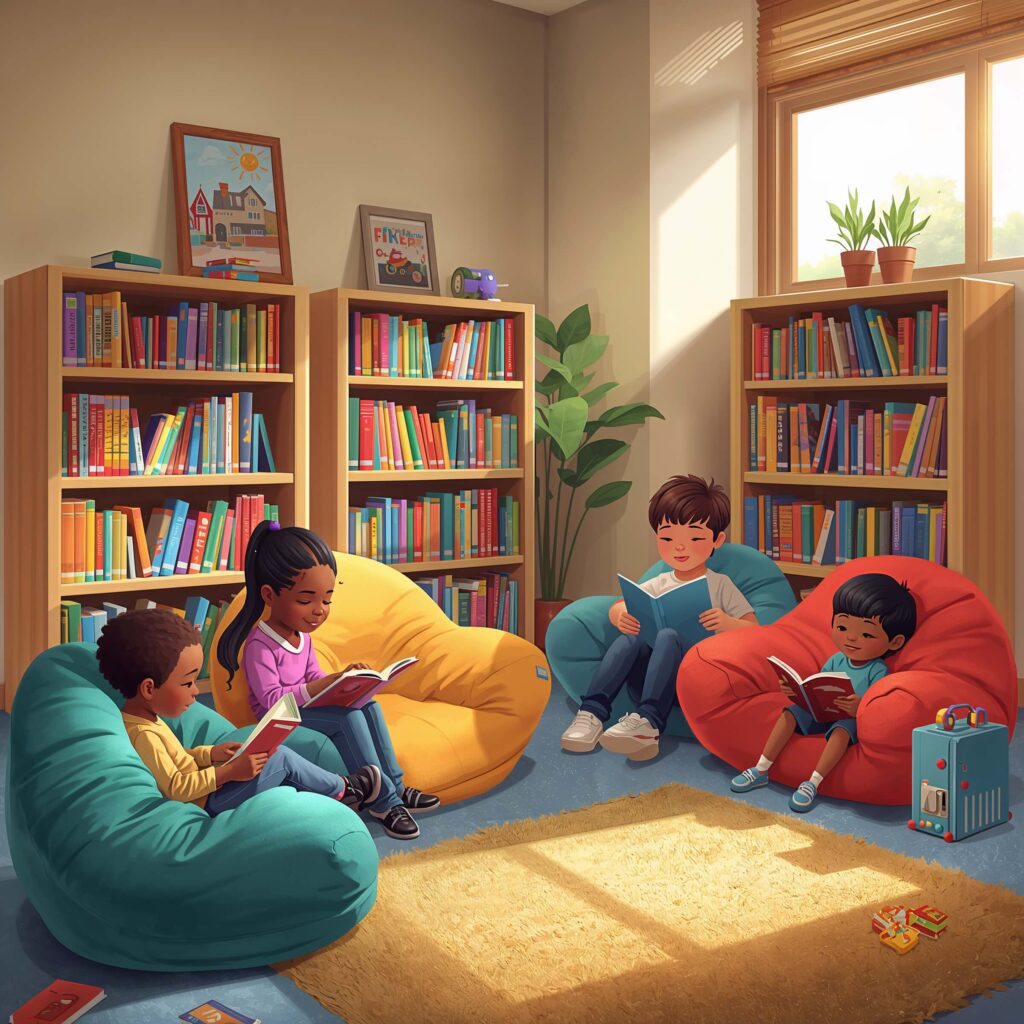
Every classroom needs that one spot where kids can escape into books. Not just a few beanbags thrown in a corner—I’m talking about a legitimate reading sanctuary that makes kids want to curl up with stories.
Creating this space changed my classroom dynamic completely. Suddenly, reading became a privilege, not a chore. Kids started asking for extra reading time. Can you imagine?
Essential Nook Elements
Here’s what makes a reading corner irresistible:
- Soft lighting (string lights or a lamp work wonders)
- Comfortable seating at different heights
- Book displays showing covers, not spines
- Personal reading trackers kids can update
- A “Currently Reading” board for peer recommendations
The secret sauce? Make it feel separate from the classroom. Hang fabric from the ceiling, use a small rug, or position bookshelves to create walls. Kids need to feel they’re entering a different world when they step into your reading nook.
I learned to rotate books monthly, keeping the selection fresh. Display books cover-out whenever possible—those colorful covers draw readers like magnets. And yes, I totally judge books by their covers when setting up displays. Don’t you?
Seasonal Rotating Display Boards
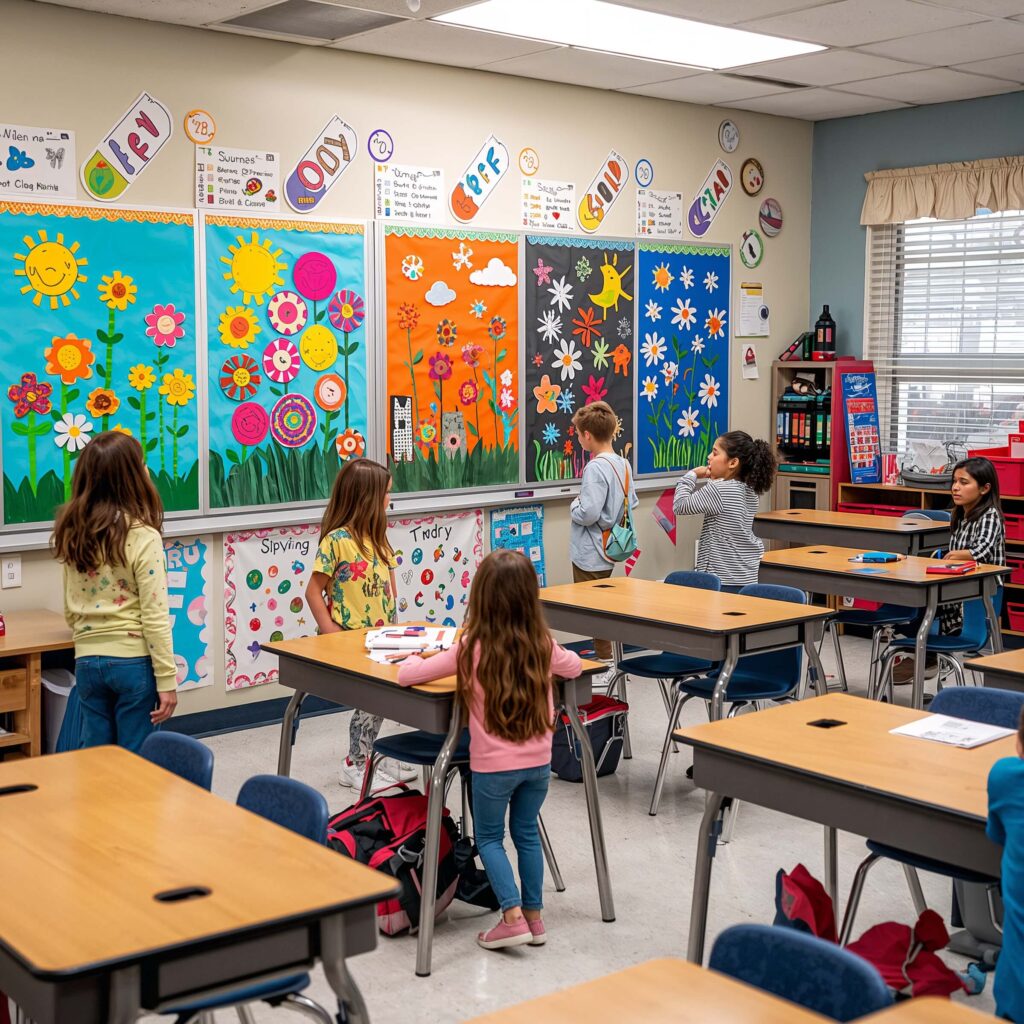
Static decorations get stale faster than last week’s cafeteria mystery meat. Rotating seasonal boards keep your classroom fresh and give students something new to explore throughout the year. Plus, it saves you from the “same old classroom” blues that hit around February.
My rotating board system became the classroom Instagram before Instagram was cool (okay, maybe I’m dating myself here). Students actually anticipate what’s coming next, and that anticipation drives engagement like nothing else.
Planning Your Rotation Schedule
Map out your year with purpose:
- September: “New Beginnings” with student goals
- October: “Harvest of Learning” showcasing growth
- December: “Winter Celebrations Around the World”
- February: “Random Acts of Kindness” tracker
- April: “Spring into Science” with student experiments
- June: “Summer Dreams” with next year’s aspirations
The trick is connecting displays to curriculum whenever possible. Teaching fractions? Make March all about “Pi Day” and fraction art. Studying habitats? Transform April into an ecosystem showcase.
Keep templates and basic supplies organized by month. Future you will thank present you when September rolls around and everything’s ready to go. Trust me on this one.
Inspirational Quote Wall
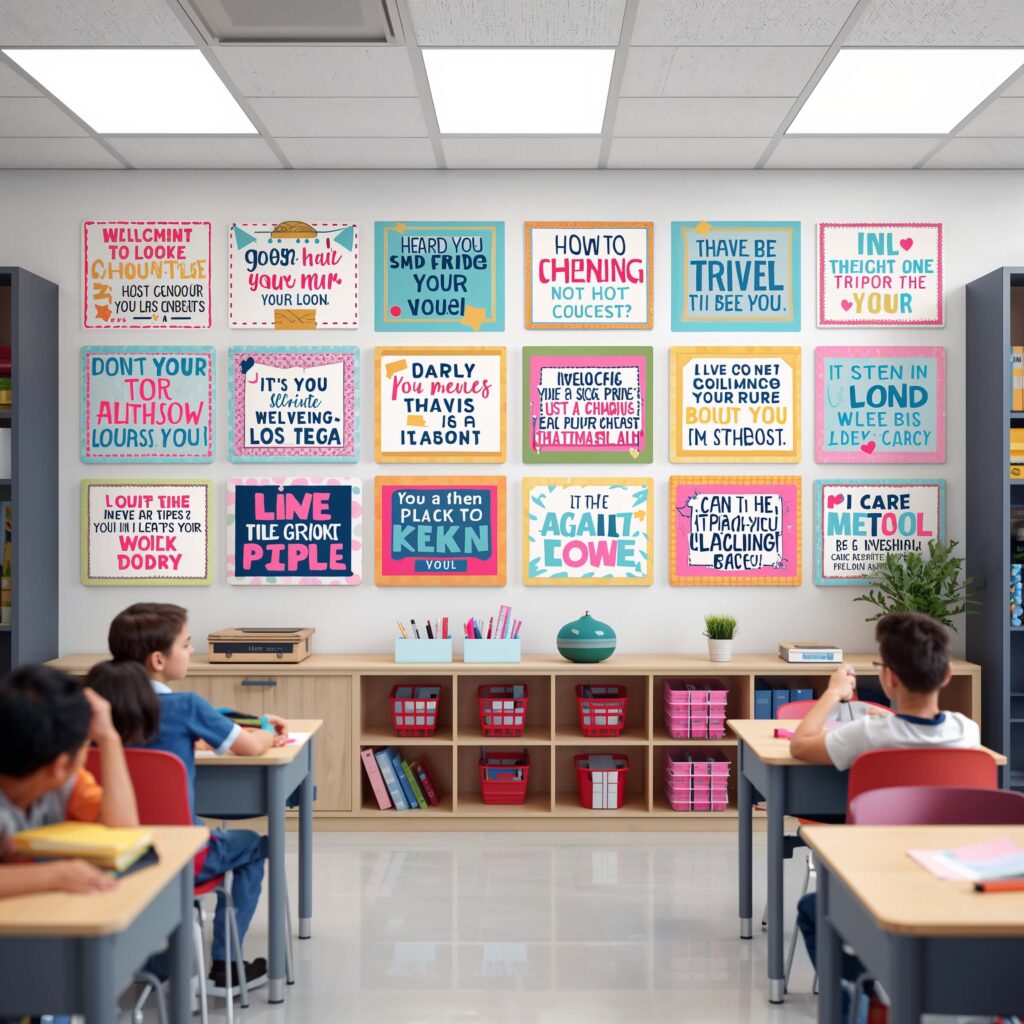
Kids need encouragement like plants need sunlight. An inspirational quote wall delivers daily doses of motivation without the cheese factor that makes everyone cringe. The key? Choose quotes that actually speak to elementary-aged kids, not corporate motivational posters.
After experimenting with different approaches, I discovered that student-generated quotes work better than famous ones. Who knew third-graders could be so profound? Their words resonate with peers in ways adult wisdom never could.
Creating Your Quote Collection
Build a meaningful quote wall with:
- Student-written encouragements
- Quotes from favorite read-alouds
- Growth mindset statements in kid-friendly language
- Weekly rotating “quote of the week”
- Visual representations alongside text
Make it interactive by letting students add their own quotes throughout the year. Provide colorful cards and markers, then watch wisdom flow. One student wrote, “Mistakes are just practice for getting it right,” and honestly? That hit harder than any Pinterest quote ever could.
Change quotes regularly to maintain impact. Stale inspiration is worse than no inspiration at all. Keep a quote journal where students can save their favorites—they’ll treasure these collections years later.
Also Read: 10 Easy Kindergarten Classroom Decor Ideas for Organized Classrooms
Classroom Job & Responsibility Chart
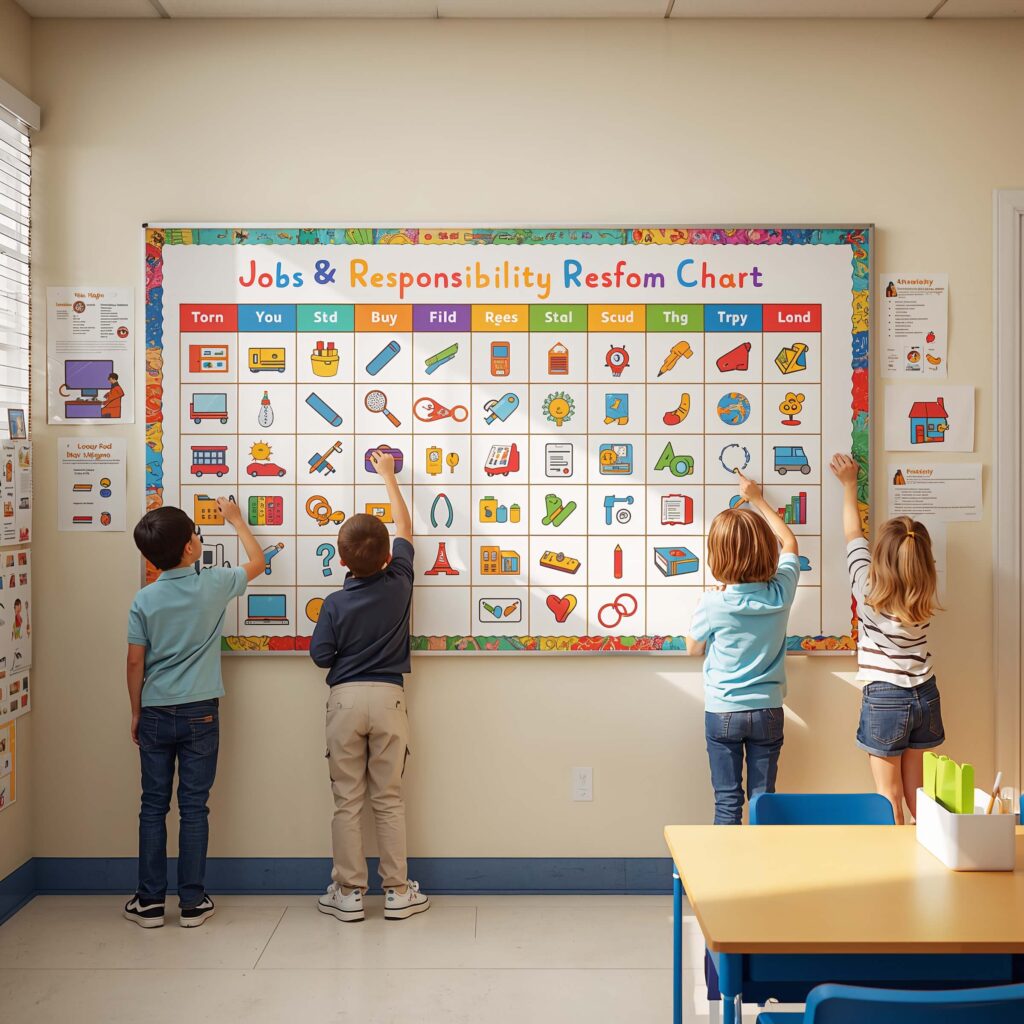
Nothing builds community faster than giving kids ownership of their space. A well-designed job chart transforms your classroom into a cooperative society where everyone contributes. Plus, it cuts down on your workload—win-win! 🙂
The magic happens when students realize their classroom literally doesn’t function without them. Suddenly, that pencil sharpener job isn’t just busywork; it’s essential to daily operations. Watch responsibility bloom when kids feel genuinely needed.
Jobs That Actually Matter
Design meaningful roles like:
- Tech Manager: Charges devices and manages equipment
- Botanist: Cares for classroom plants
- Librarian: Organizes and recommends books
- Supply Captain: Monitors and restocks materials
- Photographer: Documents classroom moments
- Weather Reporter: Updates daily conditions
- Kindness Detective: Spots and celebrates good deeds
Rotate jobs weekly or biweekly, depending on your style. Create application forms for premium positions—yes, kids will actually apply to be Line Leader when you make it official. The application process teaches job skills while building excitement.
Display the chart prominently with photos and job descriptions. Visual clarity prevents the dreaded “what’s my job again?” questions that’ll drive you bonkers by October.
Color-Coded Supply Organization
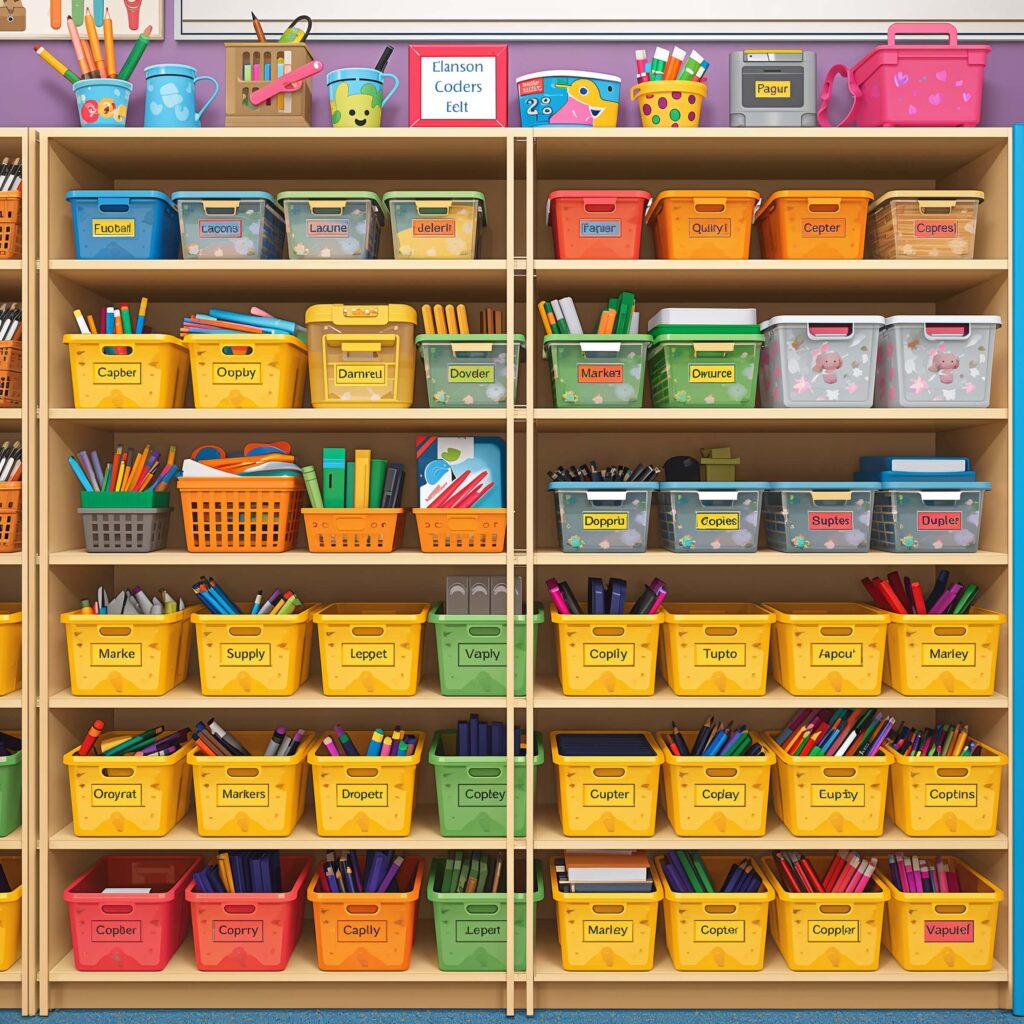
Chaos breeds in disorganized classrooms faster than fruit flies in forgotten lunch boxes. Color-coding supplies revolutionizes classroom management while looking absolutely fantastic. It’s organization that even the messiest kids can follow.
I stumbled into color-coding accidentally when I ran out of matching bins. Necessity became innovation, and now I can’t imagine teaching without it. Students find supplies independently, and cleanup takes half the time it used to.
The Color-Coding System
Organize everything by color:
- Red bins: Writing supplies (pencils, erasers, sharpeners)
- Blue bins: Art materials (crayons, markers, colored pencils)
- Green bins: Math manipulatives
- Yellow bins: Science tools
- Purple bins: Technology accessories
- Orange bins: Craft supplies (glue, scissors, tape)
Label everything with pictures and words. Younger students rely on images while older ones read labels—everybody wins. Use matching color dots on items that belong in each bin. Even kindergarteners can match red dots to red bins.
The game-changer? Assign table groups matching colors. The blue table knows exactly which supply bins they’re responsible for maintaining. Peer pressure keeps supplies organized better than any reminder from you.
Student Artwork Gallery Wall
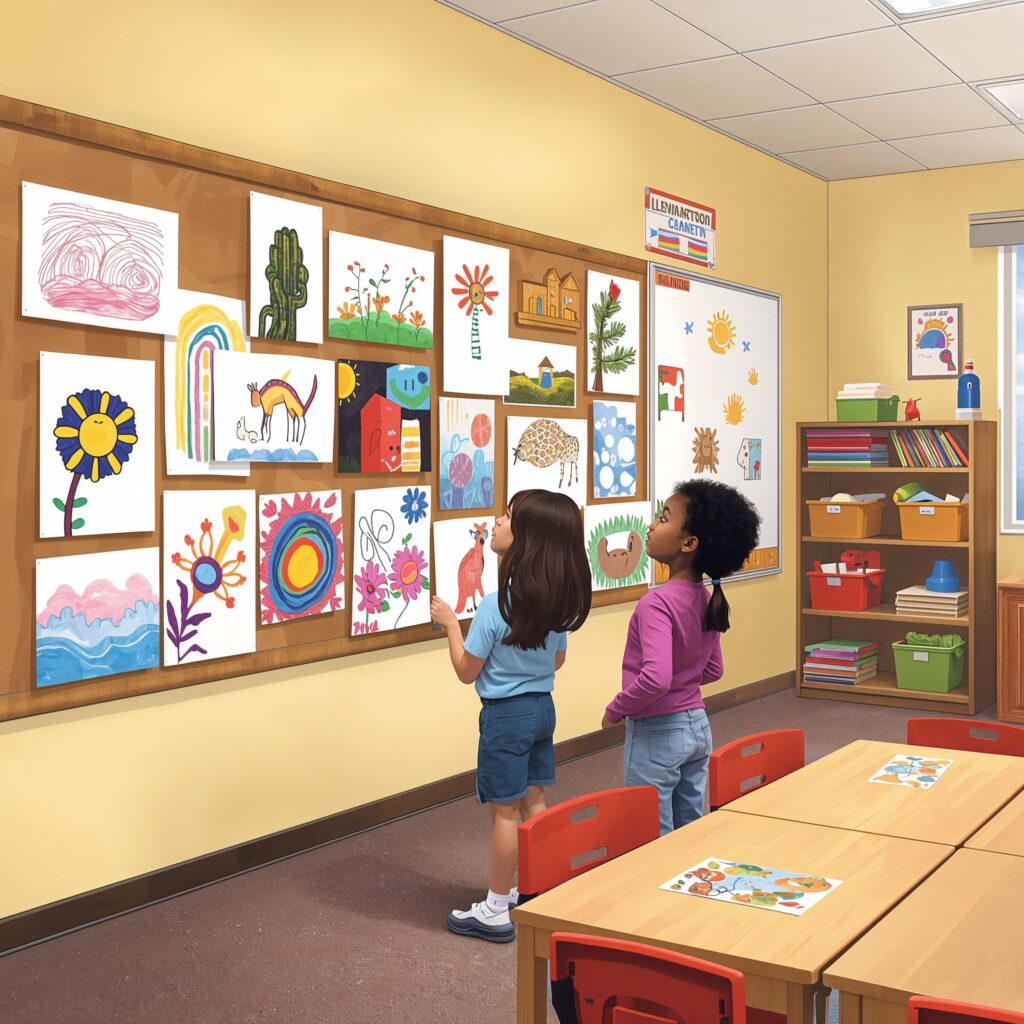
Every kid deserves their moment in the spotlight. A proper gallery wall showcases student creativity while building confidence and classroom pride. This isn’t just tacking papers to a bulletin board—we’re creating a legitimate art exhibition here.
The transformation happens when students see their work displayed professionally. They start taking their art seriously because you’re taking it seriously. Quality improves when kids know their pieces might make the gallery.
Gallery Setup Tips
Create a professional display with:
- Uniform frames (cheap ones from dollar stores work great)
- Museum-style labels with artist name and title
- Rotating exhibitions monthly or bi-monthly
- Opening night celebrations for new displays
- Artist statements written by students
- Voting boxes for “People’s Choice” awards
Document everything. Take photos of each exhibition before rotating pieces. Create a digital gallery on your class website so parents can admire their children’s work. Some families frame these photos—talk about building home-school connections!
Consider themed exhibitions. “Portraits of Kindness” or “Mathematical Masterpieces” give focus while celebrating different skills. Not every kid excels at traditional art, but everyone can contribute to conceptual exhibitions.
Also Read: 10 Charming Preschool Classroom Decor Ideas for Cozy Classrooms
Storybook-Themed Ceiling Decor
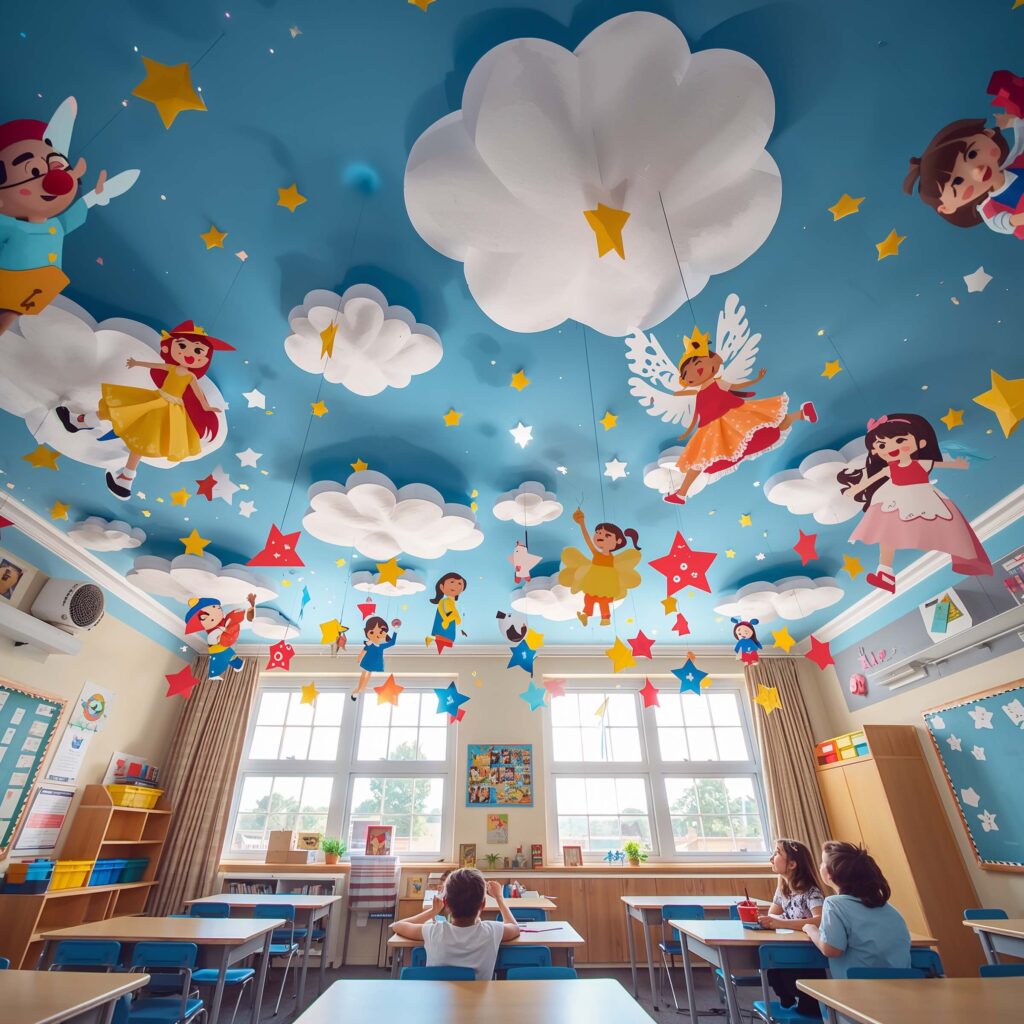
Why waste that huge canvas above everyone’s heads? Ceiling decorations transport students into different worlds without taking up precious wall space. After visiting a classroom with clouds floating overhead, I knew I had to try this myself.
The ceiling sets the mood for your entire room. Walking into a classroom with story characters floating overhead feels like entering a book. That sense of wonder stays with kids long after they leave your class.
Bringing Stories to Life Overhead
Transform your ceiling with:
- Paper lanterns as hot air balloons from “Around the World in 80 Days”
- Hanging butterflies from “The Very Hungry Caterpillar”
- Cloud cutouts with rainbow streamers
- Solar system models for space units
- Paper chains creating story timelines
- Character mobiles from current read-alouds
Change decorations with your reading units. Studying fairy tales? Hang castle turrets and dragon silhouettes. Reading ocean stories? Suspend fish and seaweed. The ceiling becomes another teaching tool, not just decoration.
Pro tip: Use fishing line for invisible hanging. Nothing ruins the magic faster than obvious tape and string. Also, check fire codes first—safety beats aesthetics every time (learned that one the hard way).
FYI, involve students in creation. They’ll lie on their backs during reading time, staring at decorations they helped make. That ownership creates connection, and connection drives learning.
Making It All Work Together
Creating a cohesive classroom from these elements might seem overwhelming. Start small—pick two or three ideas that excite you most. Build from there as you get comfortable. Rome wasn’t built in a day, and neither are amazing classrooms.
Remember that the best decorations evolve with your students. What works in September might need tweaking by January. Stay flexible, listen to your kids, and don’t be afraid to scrap ideas that aren’t working. Your classroom should be a living space that grows throughout the year.
The most important element isn’t the decorations themselves—it’s the intention behind them. Every choice should support learning, build community, or spark joy. Preferably all three! When students feel ownership, pride, and comfort in their classroom, magic happens.
Your classroom becomes more than just a room—it transforms into a launching pad for dreams, a safe harbor for struggles, and a celebration of growth. That’s what these decoration ideas really create: not just a pretty space, but a home for learning. And honestly? Watching kids thrive in a space you’ve thoughtfully created makes every minute of preparation worthwhile.
So grab those scissors, unleash your creativity, and start building the classroom your students deserve. They’ll remember the feeling of your classroom long after they’ve forgotten the specific lessons. Make it count, make it bright, and most importantly, make it theirs. Because at the end of the day, happy students in engaging environments become lifelong learners—and isn’t that what we’re all after?