10 Smart Art Classroom Decor Ideas for Inspiring Students
- Classroom Decor
 Ben
Ben- 0
- 30 minutes read
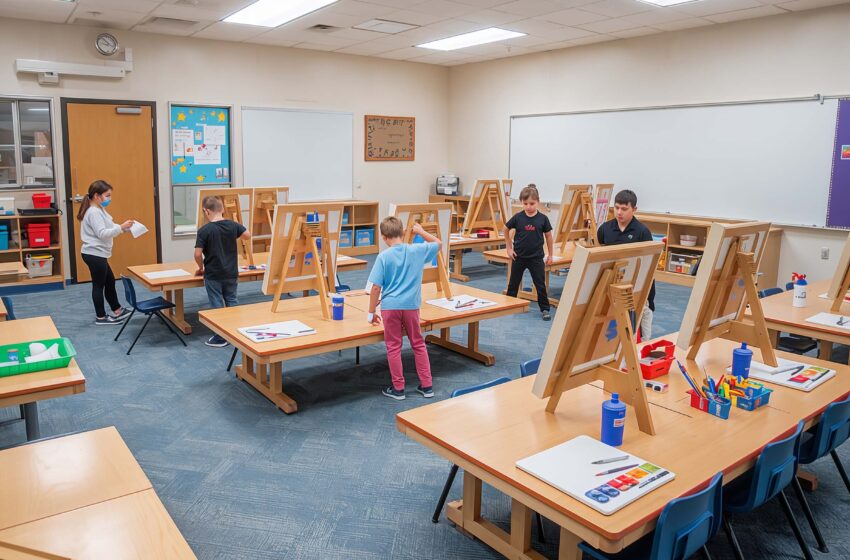
Remember that first time you walked into an art classroom that just clicked? The kind where creativity practically dripped from the walls, and you couldn’t wait to grab a paintbrush? Yeah, that’s what we’re creating today. Your art classroom shouldn’t look like a storage closet that happens to have tables in it – it should scream “make something amazing here!”
I’ve spent years transforming bland classrooms into creative powerhouses, and let me tell you, the right decor makes students actually want to create art. Not just doodle in their notebooks while pretending to listen – I mean really create. So grab your hot glue gun (you know you have three of them somewhere), and let’s transform your space into an artistic wonderland that’ll have kids begging to stay after school.
Colorful Student Artwork Gallery Wall
Creating Your Living Museum
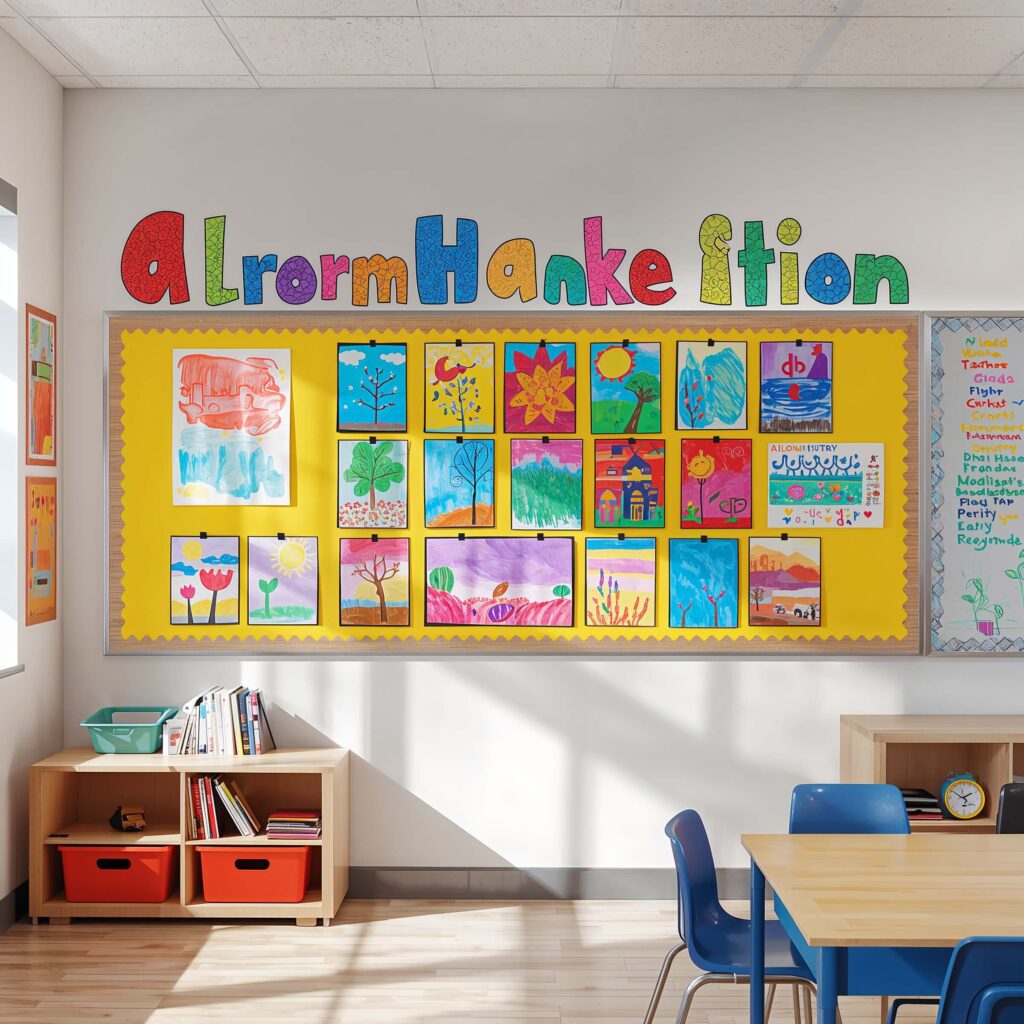
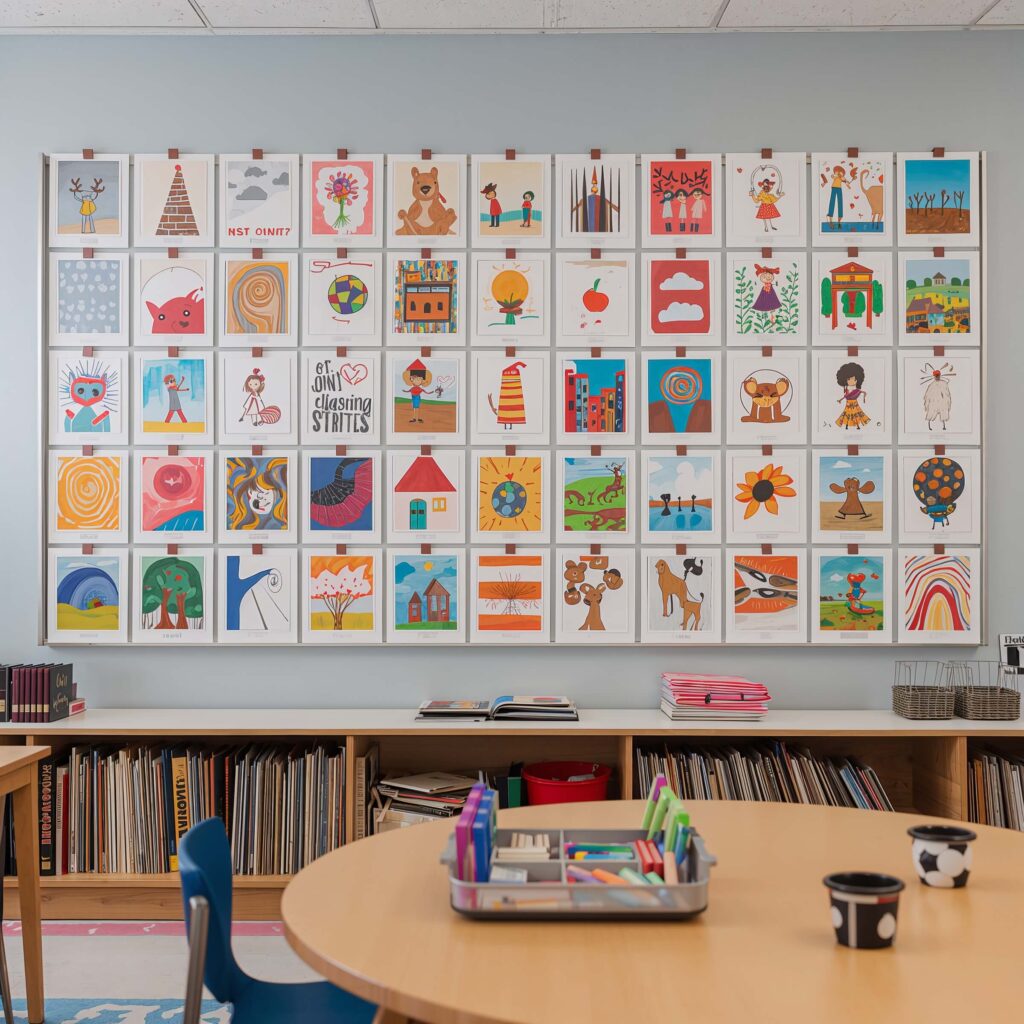
Nothing says “your art matters” quite like a dedicated gallery wall showcasing student masterpieces. I learned this trick my second year teaching when a kid literally cried because I displayed his painting. Happy tears, folks – the good kind.
Start by designating an entire wall as your gallery space. Paint it a neutral color (white or light gray works best) to make the artwork pop. Install a simple wire system with clips – you can snag these at IKEA for like twenty bucks, and they’ll change your life.
The magic happens when you rotate the artwork weekly or bi-weekly. Students get pumped knowing their turn is coming, and it keeps the space fresh. Plus, parents lose their minds (in a good way) when they spot their kid’s art during conferences.
Professional Presentation Tips
Here’s where most teachers mess up – they just slap artwork on the wall with tape. Don’t be that teacher. Frame everything using simple black frames from the dollar store, or create DIY frames with colored cardstock. It instantly elevates crayon drawings to museum-worthy status.
Add small labels next to each piece with the artist’s name, title, and a brief artist statement. Yes, even kindergarteners can dictate artist statements. “I made this because I like dinosaurs” is totally valid artistic expression, thank you very much.
Create different sections for different media – watercolors here, sculptures on that shelf, digital art printed over there. This organization teaches students that all art forms deserve respect and attention.
DIY Hanging Art Supply Organizer
The Pegboard Revolution
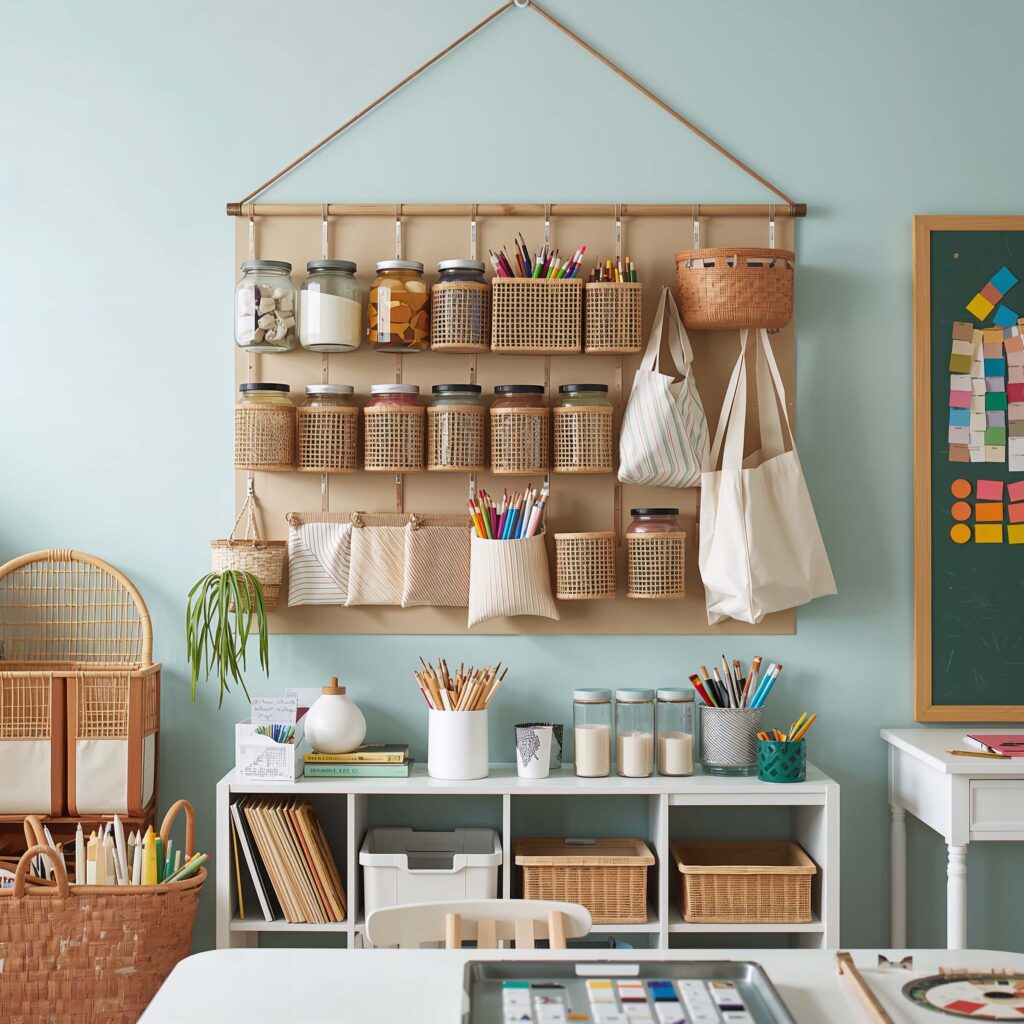
Forget those sad plastic bins that everyone kicks over. Pegboard organizers will revolutionize your supply storage while looking ridiculously Pinterest-worthy. I discovered this after tripping over paint containers for the millionth time.
Mount a large pegboard on your wall and spray paint it a fun color. Attach small buckets, hooks, and shelves to hold everything from paintbrushes to glue sticks. The best part? Students can actually see what’s available without dumping three bins on the floor first.
Color-code your containers by supply type – all drawing tools in blue buckets, painting supplies in red, cutting tools in yellow. This system practically runs itself once students learn it.
Hanging Solutions That Actually Work
Mason jars suspended from a wooden rod make perfect brush holders. Drill holes in the jar lids, thread wire through, and hang them at different heights. It looks like an art installation while being stupidly practical.
Create a hanging shoe organizer art station by repurposing a clear over-the-door shoe holder. Each pocket holds different supplies, and students can grab what they need without creating chaos. Label each pocket clearly because, let’s be honest, middle schoolers will still ask where the scissors are even when they’re literally looking at them.
Those mesh laundry bags? Perfect for storing fabric scraps, yarn, or paper rolls. Hang them from ceiling hooks with colorful ribbons. They’re see-through, lightweight, and add vertical storage without eating up precious floor space.
Themed Seasonal Art Corners
Rotating Inspiration Stations
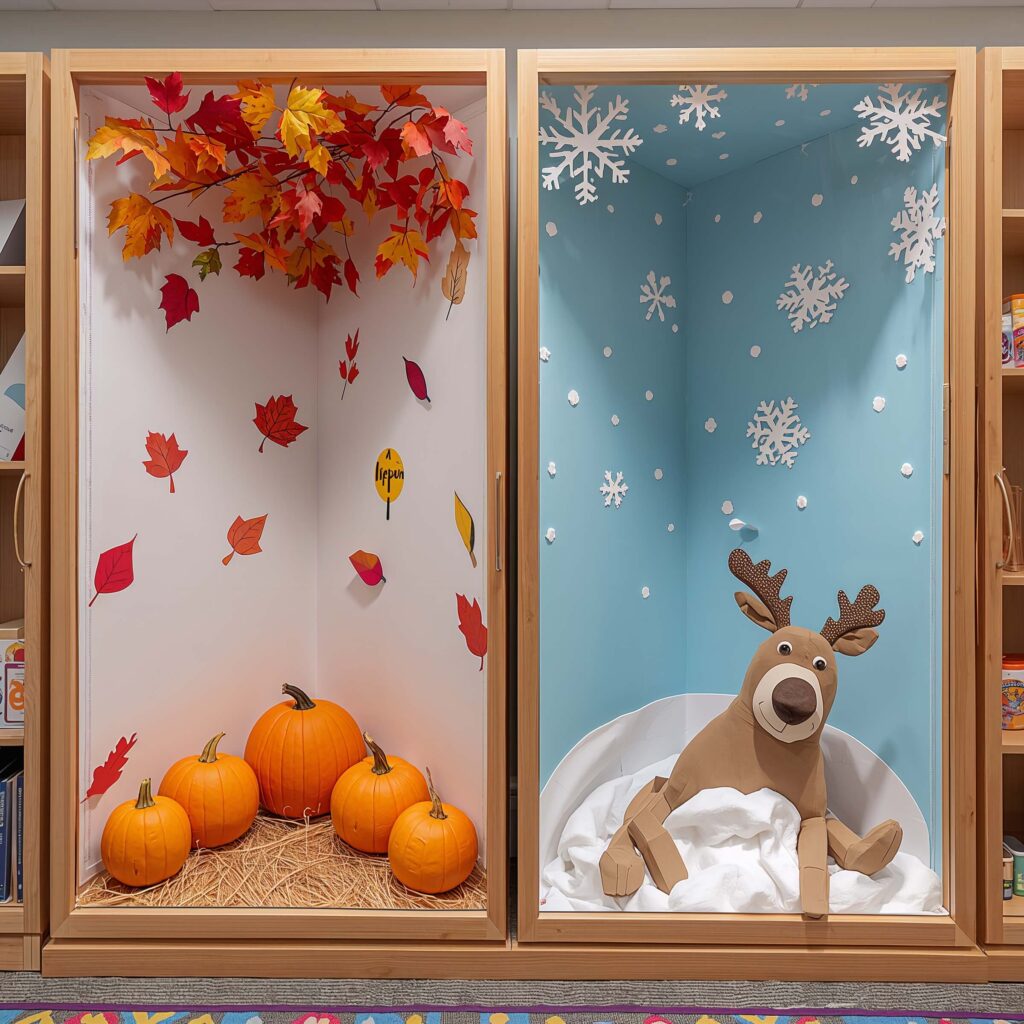
Want to keep things fresh without redecorating your entire classroom every month? Create a dedicated seasonal corner that changes with the calendar. This little zone becomes the spot where inspiration lives.
Set up a small table or cart that you transform completely every season. Fall? Load it with leaves, pumpkins, and warm-toned fabric swatches. Winter? Think metallic papers, white branches, and sparkly everything. Students gravitate toward these areas like moths to a very artistic flame.
Include seasonal art technique cards that suggest projects using the displayed materials. “Try leaf printing!” or “Create winter shadows with these branches!” These prompts spark creativity when students feel stuck.
Making Seasons Educational
Here’s the teacher hack nobody tells you – seasonal corners double as cross-curricular learning zones. Studying Japanese culture? Spring corner becomes a cherry blossom festival. Learning about Day of the Dead? Fall corner transforms into an ofrenda.
Display famous artworks that match the season. Monet’s water lilies in spring, Van Gogh’s wheat fields in summer. Students start making connections between master artists and the world around them without you having to lecture about it.
Keep a seasonal sketchbook at the corner where students can quick-draw observations. Watch them fight over who gets to sketch the weird gourd you brought in October. Educational entertainment at its finest.
Also Read: 10 Bright Elementary Classroom Decor Ideas for Happy Students
Inspirational Quote Chalkboard Wall
Beyond Basic Motivation
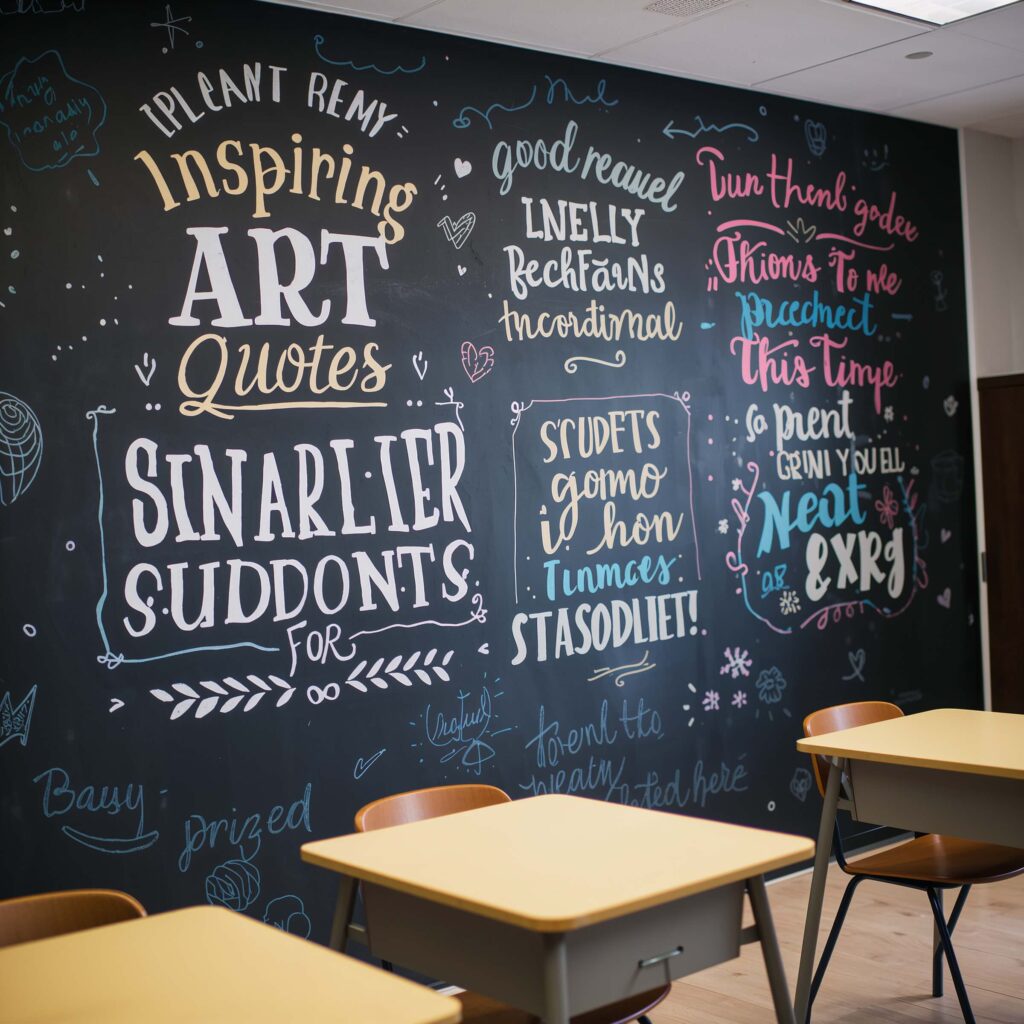
Look, we’ve all seen those “Shoot for the moon” posters that make everyone’s eyes roll so hard they practically fall out. Your chalkboard quote wall needs to be different – actually inspiring, not Instagram-inspiration-fake.
Paint an entire wall (or large section) with chalkboard paint. This investment pays for itself in engagement alone. Let students write their own quotes, song lyrics that inspire them, or even just encouraging messages to each other.
Dedicate sections to different types of quotes: artist quotes, student quotes, and quote of the week. My personal favorite student quote? “Art is just expensive scribbling until someone likes it.” That kid gets it.
Interactive Quote Activities
Make your quote wall interactive by creating “finish the quote” challenges. Start famous art quotes and let students complete them with their own endings. Picasso said “Every child is an artist. The problem is…” Student answer: “…running out of paper.” Genius.
Install small clipboards around the chalkboard where students can submit quote suggestions. Vote on the best ones monthly. Democracy in action, plus students actually read the wall when they know their friends might have written something.
Use colorful chalk to highlight keywords or create quote art. Teach students that typography is art too. Watch them spend twenty minutes perfecting the letter ‘Q’ because suddenly lettering matters to them.
Interactive Art Station Zones
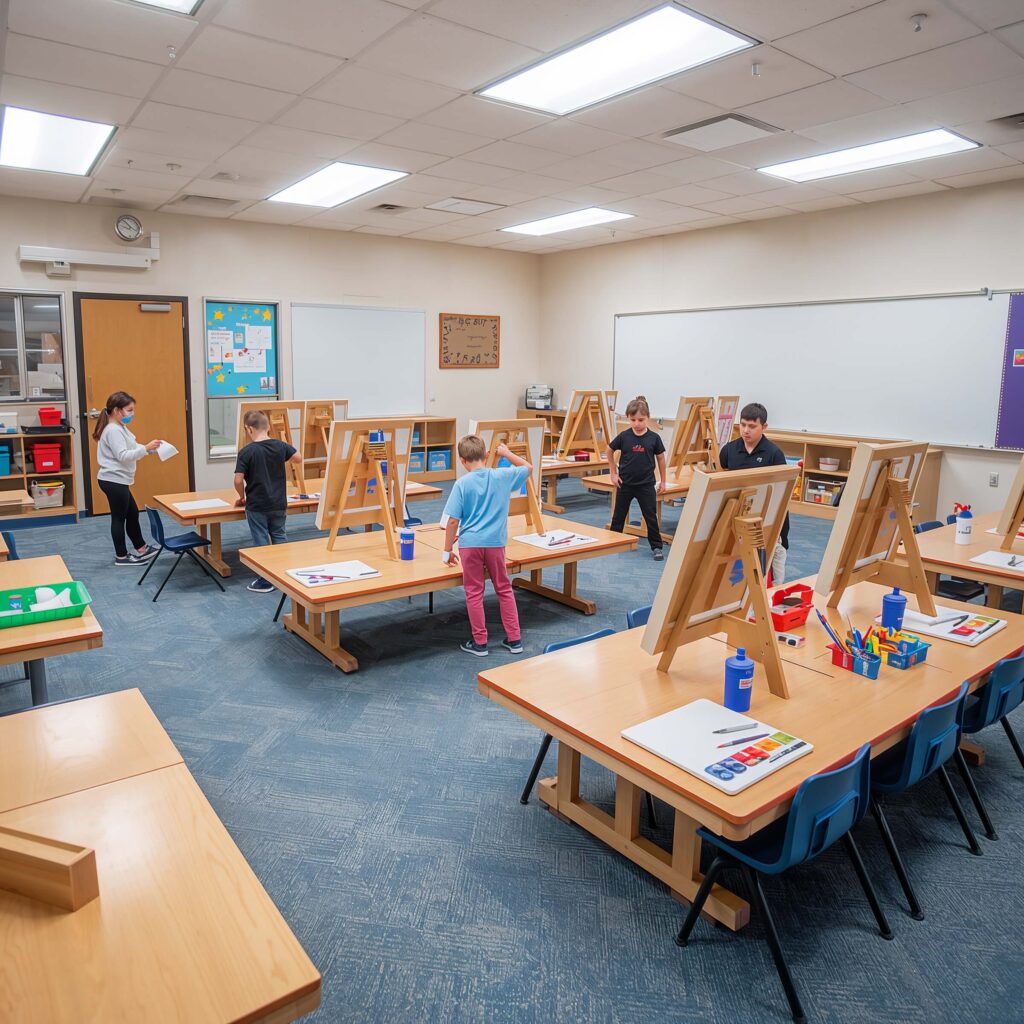
Designing Purposeful Spaces
Your classroom needs distinct zones for different creative processes. Think of it like a gym with different equipment stations, except cooler and with fewer sweaty teenagers.
Create a messy zone with tile or laminate flooring where paint can fly freely. Cover tables with wipeable tablecloths that you replace monthly (dollar store gold right here). This zone gets a “chaos welcome” sign because sometimes art needs to be messy.
Set up a quiet detail zone with good lighting and comfortable seating. Individual desk lamps make students feel like professional artists. This space is for intricate work, sketching, and the kid who insists on drawing every individual hair on their portrait.
Technology Integration Stations
Don’t fight technology – embrace it. Create a digital art station with tablets or computers loaded with art programs. Even free apps like Autodesk Sketchbook turn students into digital Picassos.
Set up a photography corner with a simple backdrop system. Two PVC pipes, a sheet, and some clips create an instant photo studio. Students learn composition, lighting, and that selfies can actually be art (mind-blowing, right?).
Include a stop-motion animation station with a basic tablet stand and free apps. Watch students spend hours making paper cutouts dance. They’re learning patience, planning, and sequential art without realizing it.
Upcycled Classroom Decor Projects
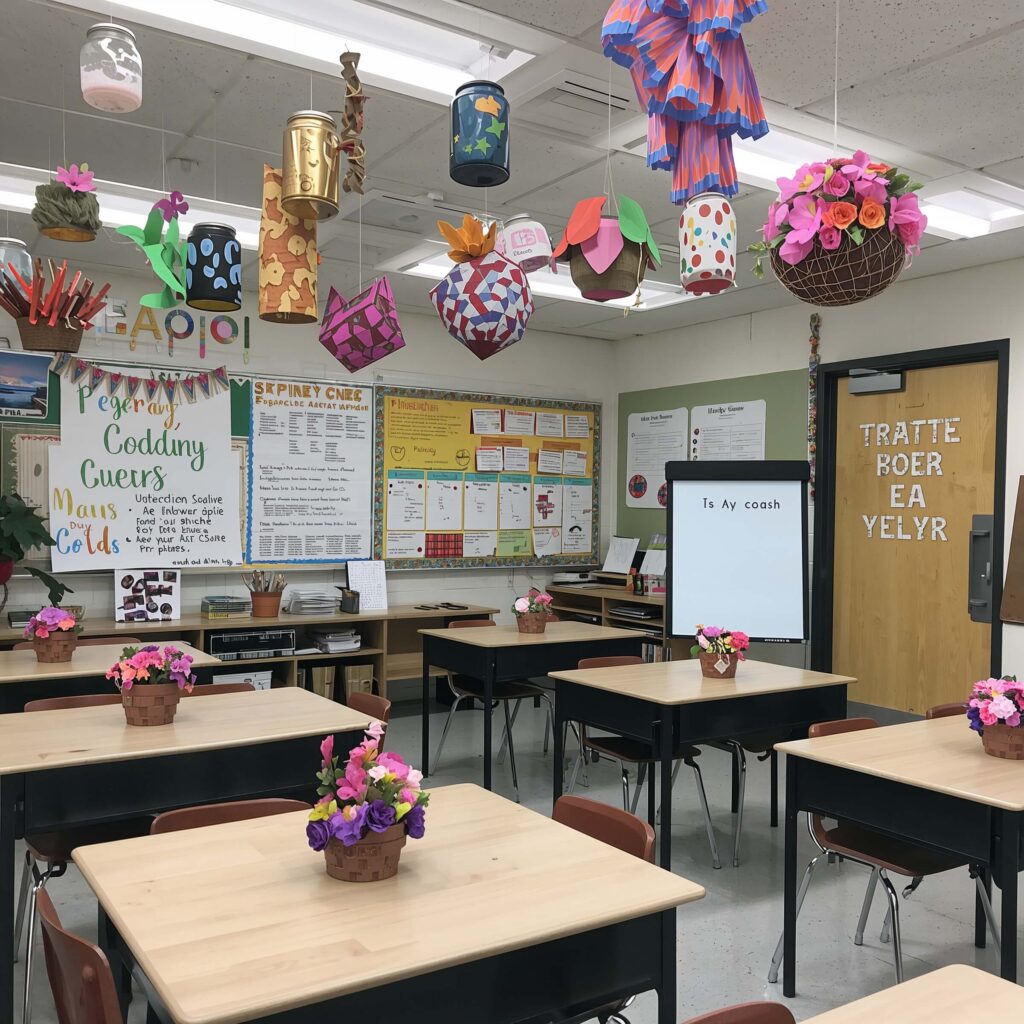
Turning Trash into Treasure
Here’s where your inner hoarder finally pays off. All those cardboard boxes, plastic bottles, and random materials become spectacular classroom decor. Plus, you’re teaching environmental responsibility without preaching about it 🙂
Create stunning wall sculptures from cardboard. Students design, cut, and layer cardboard pieces into 3D masterpieces. Paint them one color for a sophisticated look, or go wild with patterns. Either way, visitors always ask where you bought them.
Transform plastic bottles into hanging planters or supply holders. Cut them in half, decorate with permanent markers or paint, and suspend them with fishing line. Instant vertical garden that also holds markers. Two birds, one recycled stone.
Student-Created Decorations
Let students create collaborative upcycled installations. Collect bottle caps for months, then have students create a massive mural. Each cap becomes a pixel in a larger image. It’s like pointillism but with garbage – educational and eco-friendly!
Old magazines become collage material for decorating storage boxes, filing cabinets, or even entire walls. Students learn about composition while covering that ugly metal cabinet you inherited from 1987.
Turn worn-out jeans into wall pockets for supplies. Cut the pockets off donated jeans and staple them to a board. Each pocket holds different tools, and students love the quirky storage solution. Plus, it’s basically free decoration that’s actually useful.
Also Read: 10 Creative English Classroom Decor Ideas to Boost Engagement
Creative Ceiling Art Installations
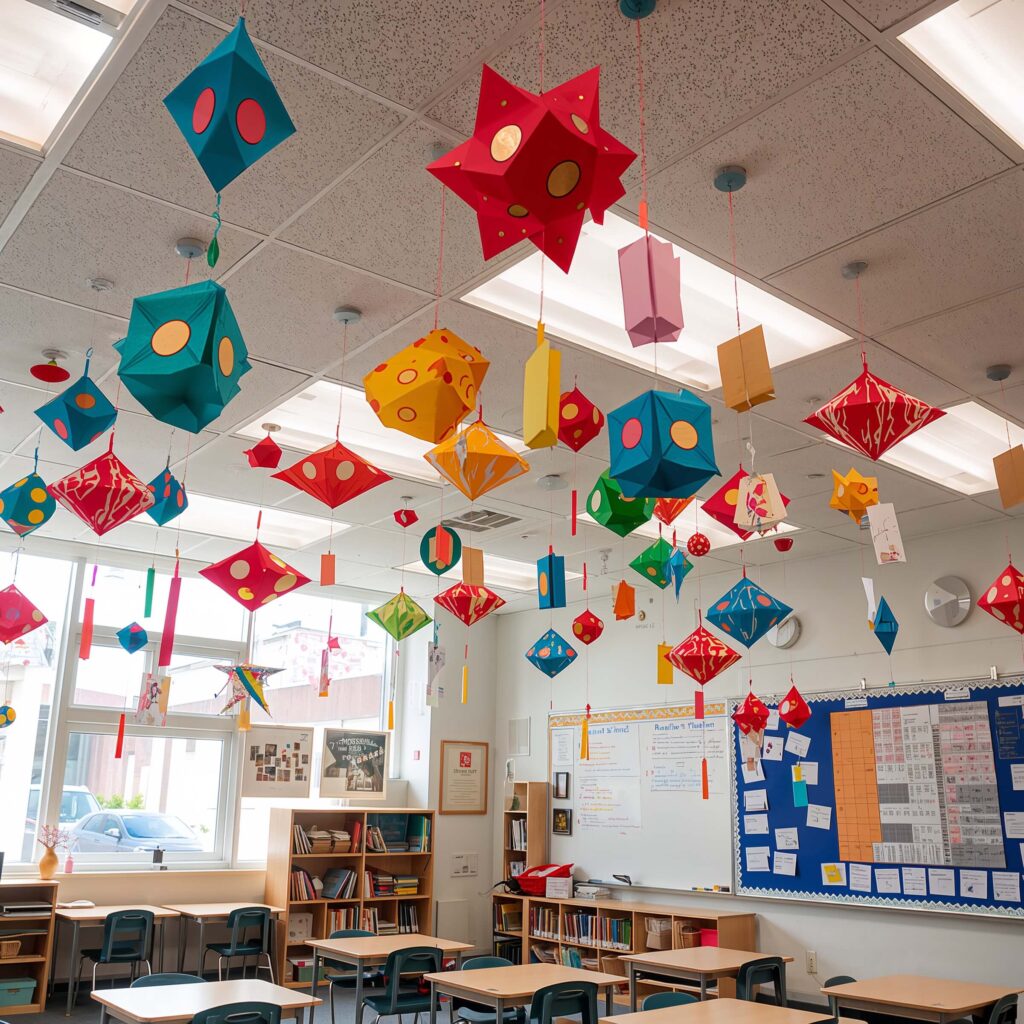
Looking Up for Inspiration
Nobody ever uses ceiling space effectively, which is weird because it’s literally just hanging there doing nothing. Time to change that with suspended art installations that make everyone look up in wonder.
Hang colorful umbrellas upside down from fishing line at different heights. They create instant visual interest and can hold lightweight supplies or display small artworks. Students love working under a canopy of color.
Create cloud installations from cotton batting and white paper lanterns. Add LED lights inside for a dreamy effect. This transforms harsh fluorescent lighting into something actually pleasant. Your students might even stop complaining about the lighting (unlikely, but we can dream).
Kinetic Ceiling Art
Install mobile-making stations where students create hanging sculptures that move. Old CDs, painted cardboard shapes, or origami creations work perfectly. The gentle movement adds life to your classroom without being distracting.
String wire or fishing line across the ceiling in geometric patterns. Clip student artwork to these lines with tiny clothespins. The art appears to float, and you can change displays in seconds.
Hang large paper sculptures or fabric panels that students collaboratively create. These statement pieces define your classroom’s personality and show that student work deserves prominence, not just wall space.
Rotating Student Showcase Display
The Spotlight System
Every student deserves their moment in the spotlight, not just the naturally talented ones. Create a “Artist of the Week” display that celebrates effort, improvement, and creative risk-taking, not just technical skill.
Dedicate a prominent corner with professional-looking display boards, good lighting, and even a small easel. Include a photo of the featured artist (yes, they love this), a short bio they write themselves, and 3-5 of their best pieces.
Add an artist statement board where the student explains their creative process, inspiration, and goals. Even reluctant artists engage when they realize their thoughts matter as much as their artwork.
Making It Special
Create opening receptions for each new showcase. Spend five minutes at the start of class letting the featured artist talk about their work. Serve juice and crackers if you’re feeling fancy (apple juice in plastic cups counts as fancy in middle school).
Install a comment box where classmates leave positive feedback and questions. Review these before sharing to avoid middle school drama, but students genuinely support each other when given structured opportunities.
Document each showcase with photos and create a yearbook of featured artists. Students beg to be included, and suddenly everyone’s trying harder because they want their turn in the spotlight.
Color-Coded Supply Storage System
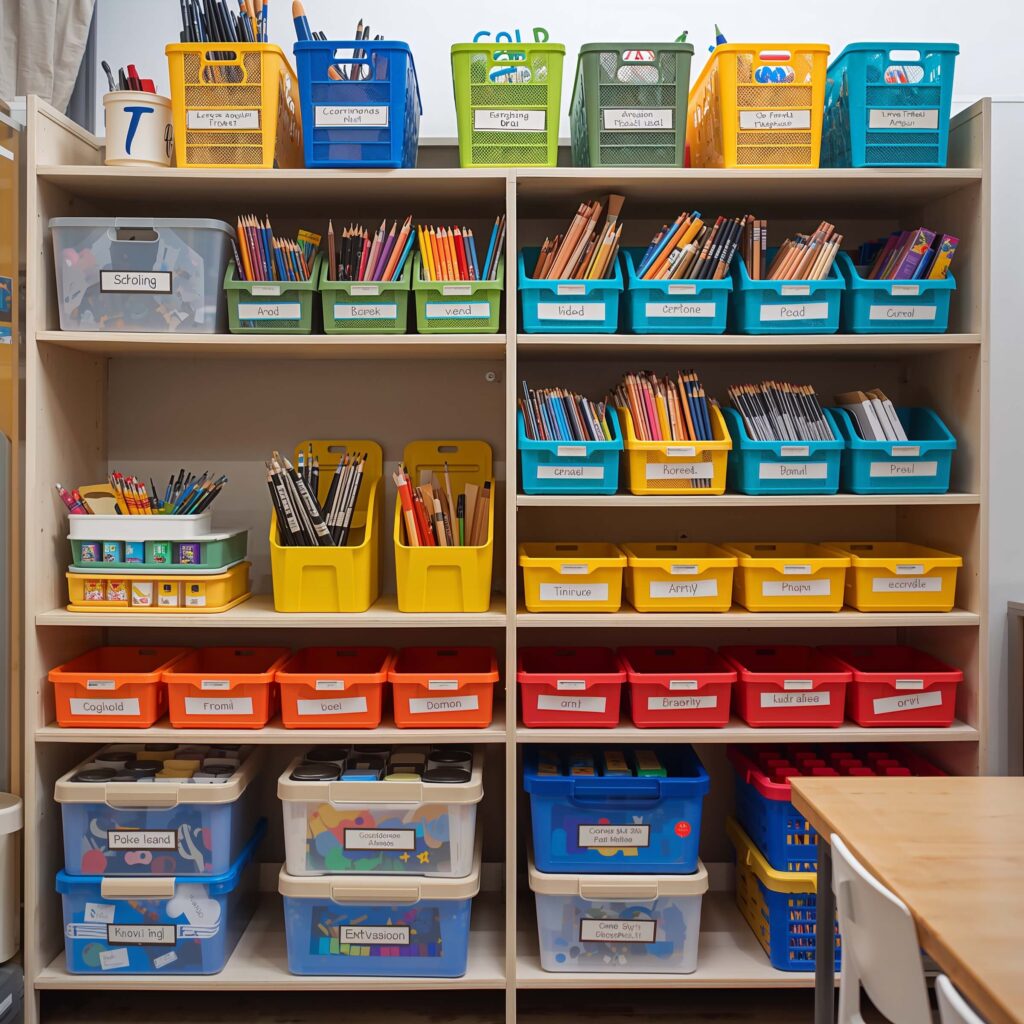
The Rainbow Method
Organizing art supplies doesn’t have to feel like solving a Rubik’s cube blindfolded. Implement a color-coded system that even your most scattered student can follow.
Assign each supply category a color: red for painting, blue for drawing, green for cutting/gluing, yellow for specialty tools. Use colored tape, bins, or labels to mark everything. FYI, this system works so well that students actually put things back where they belong (mostly).
Create a supply checkout system using colored cards. Students grab a card matching what they need, and you know exactly who has what. No more mysterious disappearing scissors or phantom paintbrush thieves.
Visual Organization Strategies
Install clear storage solutions wherever possible. When students see what’s inside, they don’t dump everything searching for one item. Those clear plastic drawers from Target? Worth every penny.
Use painter’s tape to create designated spots on tables for different supplies. Blue square for water cups, red rectangle for paint palettes. It looks like a weird floor plan, but students automatically organize their workspace.
Label everything with both words and pictures. Yes, even high schoolers benefit from visual labels. That tiny drawing of scissors means nobody can claim they “didn’t know” where scissors go.
Also Read: 10 Bright Elementary Classroom Decor Ideas for Happy Students
Art Project Inspiration Bulletin Boards
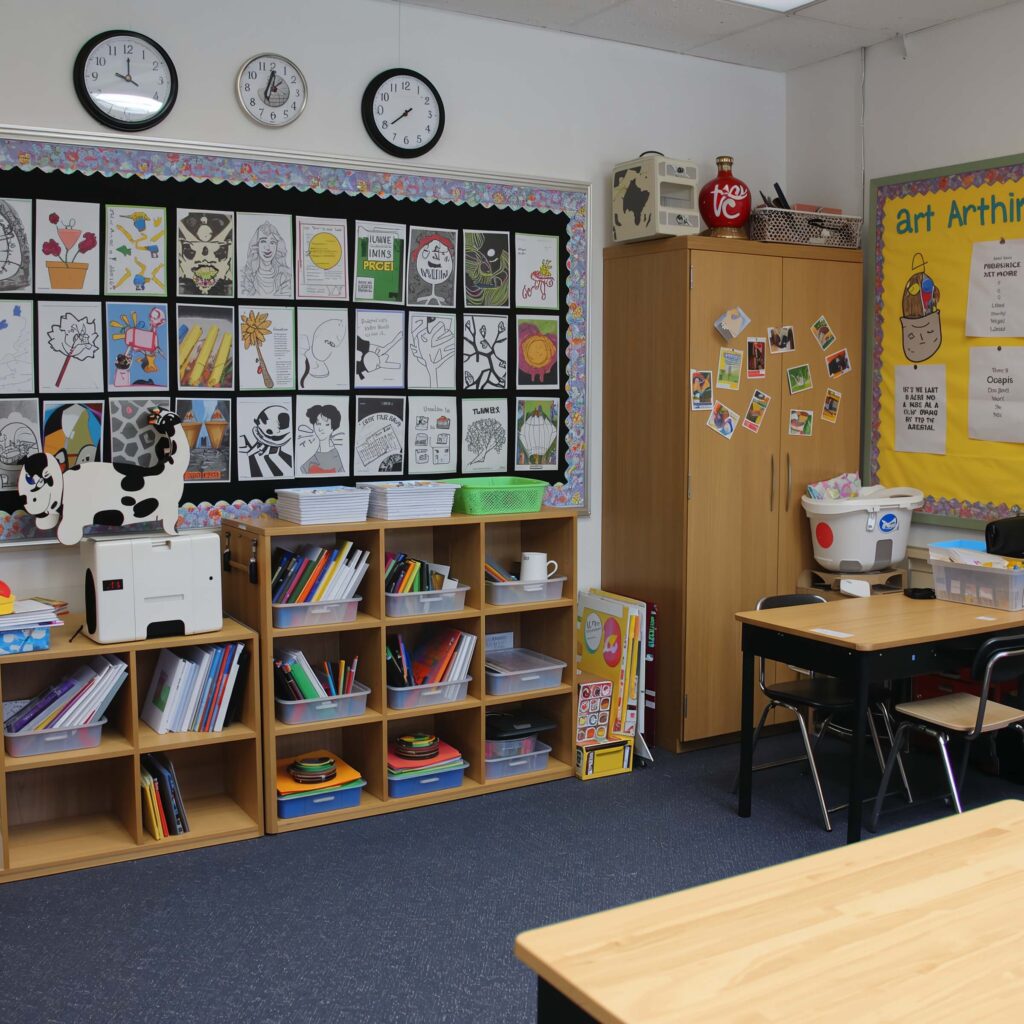
Curating Creative Fuel
Your inspiration boards should be living, breathing idea generators, not static displays that everyone ignores after day two. Mix famous artworks with contemporary pieces, student work, and random visual inspiration.
Create themed boards that change monthly: texture exploration, color relationships, artistic movements. Include technique cards that explain how to achieve certain effects. Students reference these constantly when stuck.
Add QR codes linking to video tutorials or virtual museum tours. Students scan them with their phones (which they’re on anyway) and suddenly they’re learning without realizing it. Sneaky education at its finest.
Interactive Inspiration Elements
Install “I wonder” pockets where students drop questions about art techniques or artists. Answer one question weekly on the board, creating an ongoing dialogue about art.
Create a “technique of the week” section with step-by-step photos showing how to achieve specific effects. Students love having visual references, and you’ll stop answering “how do I blend colors?” fifty times daily.
Include a “artistic challenge” corner with weekly prompts. “Draw your mood using only geometric shapes” or “Create art using only materials from the recycling bin.” These challenges spark creativity when students feel stuck and give fast finishers something meaningful to do.
Bringing It All Together
So there you have it – ten ways to transform your art classroom from “meh” to “magnificent.” The best part? You don’t need a massive budget or interior design degree to make these ideas work. Start with one or two concepts and build from there.
Remember, your classroom decor isn’t just about making things pretty (though that’s definitely a bonus). It’s about creating an environment where creativity thrives, where students feel valued, and where art becomes more than just another class period. When students walk into a thoughtfully designed art space, they understand immediately that this is somewhere special, somewhere their creative voice matters.
IMO, the most important element isn’t perfection – it’s authenticity. Your classroom should reflect your teaching style and your students’ needs. Maybe your gallery wall is a little crooked, or your color-coding system occasionally falls apart. That’s totally fine! The effort you put into creating an inspiring space tells students that art matters, that they matter, and that creativity deserves a beautiful home.
The transformation won’t happen overnight, and honestly, it’ll never really be “done.” Your art classroom is a living space that grows and changes with each group of students. But when you see a kid’s face light up because their work is displayed professionally, or watch students actually organize supplies without being asked, or hear them tell their friends that art class is their favorite part of the day – that’s when you know you’ve created something special.
Now grab those hot glue guns, raid the dollar store, and start building the creative haven your students deserve. Trust me, future you will thank present you when your classroom becomes the space where artistic magic happens daily.