10 Inspiring Classroom Decor High School Ideas Teens Will Love
- Classroom Decor
 Ben
Ben- 0
- 32 minutes read
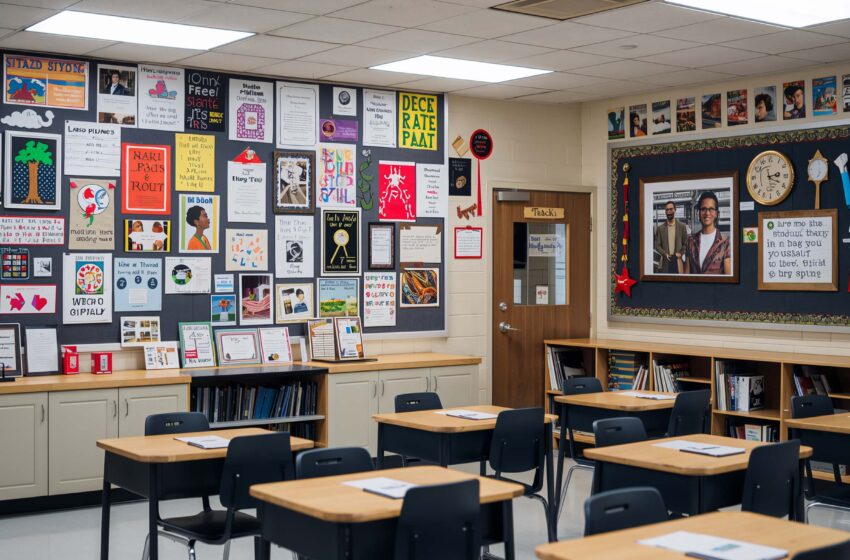
Remember walking into that one classroom that just felt different? The one where you actually wanted to spend time? Yeah, that’s what we’re creating today. After spending countless hours in bland, beige classrooms myself (and later decorating a few), I’ve learned that the right classroom vibe can make or break a teenager’s learning experience.
Let’s face it – high schoolers aren’t exactly thrilled about spending seven hours in prison-like rooms with flickering fluorescent lights. But here’s the thing: when you transform your classroom into a space that actually speaks their language, magic happens. Students start showing up early. They participate more. Heck, they might even smile on a Monday morning!
I’ve watched teens go from zombie mode to fully engaged just because their teacher took the time to create an environment that doesn’t scream “institutional nightmare.” So grab your coffee (or energy drink – no judgment here), and let’s transform that classroom into a space your students will actually Instagram about.
Inspirational Quote Wall
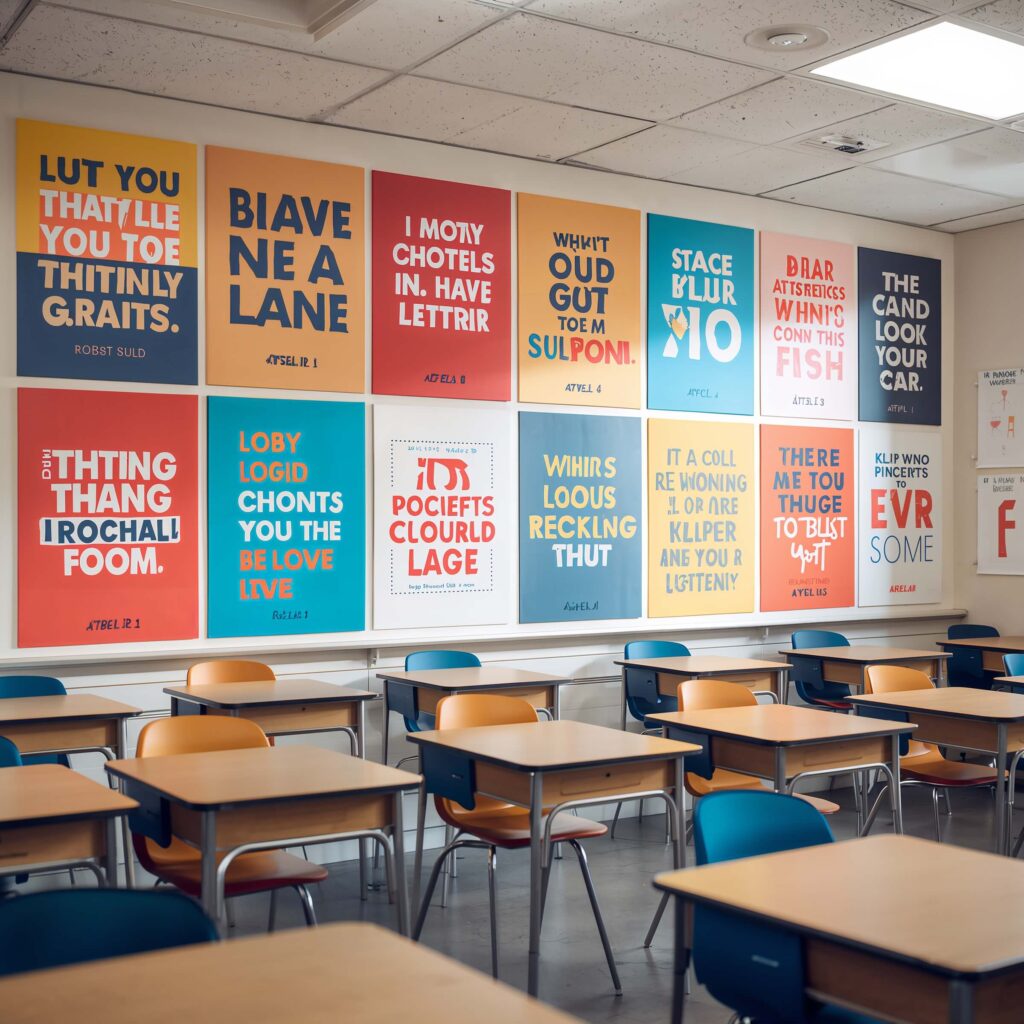
Who says motivation has to be cheesy? The key to creating a quote wall that high schoolers won’t roll their eyes at is choosing quotes that actually resonate with them. Forget those generic “Hang in there” posters with dangling kittens – teens need something real.
Start by mixing classic wisdom with modern voices. Throw in some lyrics from Kendrick Lamar next to Maya Angelou. Add a quote from their favorite YouTuber beside Einstein. The beauty of this mashup? Students see that wisdom comes from everywhere, not just dusty old textbooks.
Here’s what works best for creating your quote wall:
- Vinyl letter decals for a clean, professional look
- Rotating student picks – let them choose a quote each month
- QR codes linking to the full speech or song
- Mixed media approach – combine typography styles and colors
- Interactive elements like speech bubbles students can fill in
Making It Instagram-Worthy
Want to know a secret? Make your quote wall photo-friendly, and students will literally market your classroom for you. Create a designated hashtag corner where quotes are displayed in trendy fonts against a solid background. I’ve seen kids line up to take selfies with particularly inspiring quotes – and suddenly, your classroom wisdom spreads beyond those four walls.
The placement matters too. Don’t hide these gems in a corner! Position your main quote display where natural light hits it best. Trust me, nothing kills the vibe faster than trying to read inspirational words under harsh overhead lighting.
Minimalist Modern Desk Zones
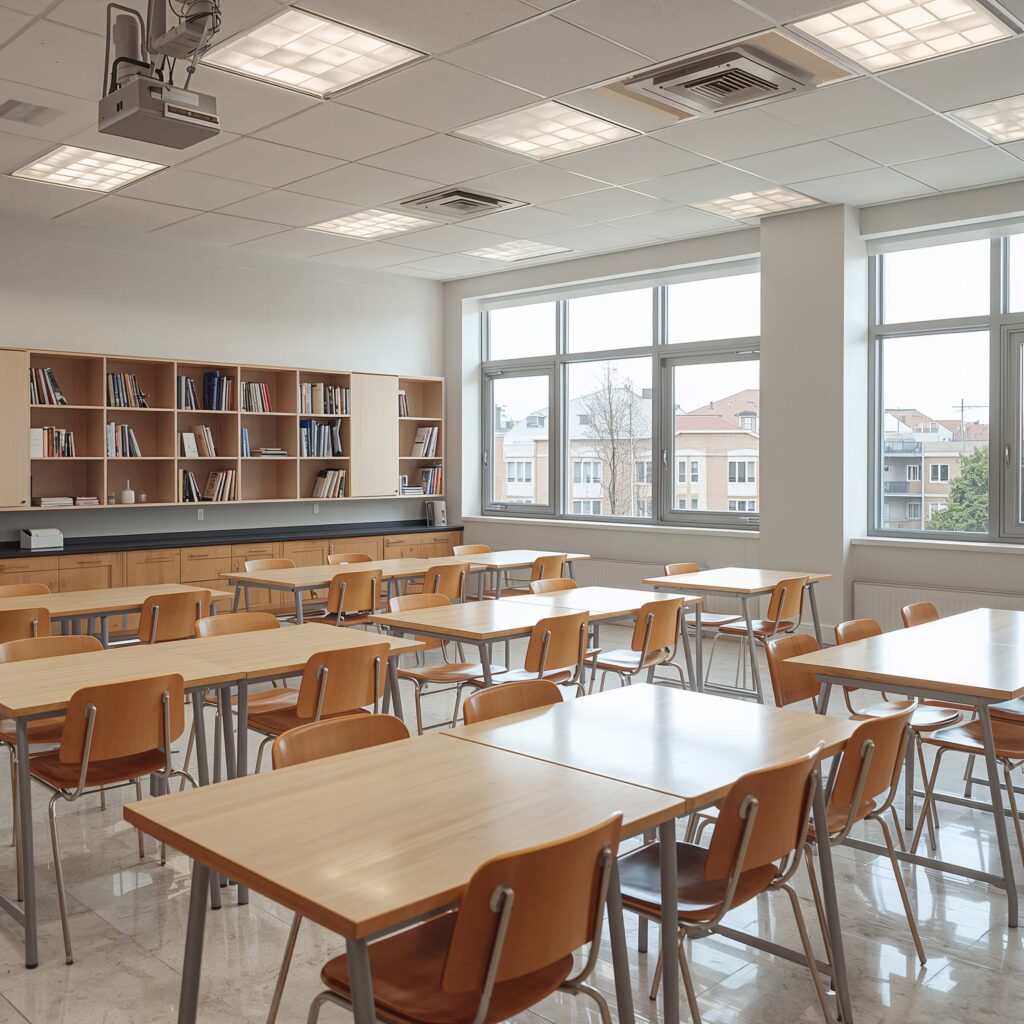
Gone are the days when rows of desks facing forward made sense. Modern teens work differently – they collaborate, they need space for devices, and honestly? They appreciate good design. Creating minimalist desk zones transforms your classroom from a lecture hall into a dynamic workspace.
Think about how startup offices design their spaces. Clean lines, purposeful arrangements, and flexibility rule the day. Apply these same principles to your classroom, and watch how students respond. They’ll actually take care of a space that looks intentional and modern.
Start with these essential elements:
- Modular desk arrangements that can shift for different activities
- Neutral color palettes with strategic pops of color
- Cable management solutions (because device charging is life)
- Personal storage cubbies with a sleek design
- Standing desk options for students who need movement
The Power of Negative Space
Here’s something most teachers miss: empty space is just as important as filled space. Cramming every inch with educational posters creates visual chaos that stresses students out. Instead, embrace the minimalist approach. Leave breathing room between desk clusters. Create clear pathways. Your classroom should feel open and inviting, not like a educational supply store exploded.
I learned this the hard way when a student told me my old classroom gave them anxiety just walking in. Ouch, right? But that feedback changed everything about how I approach classroom design.
Interactive Learning Corners
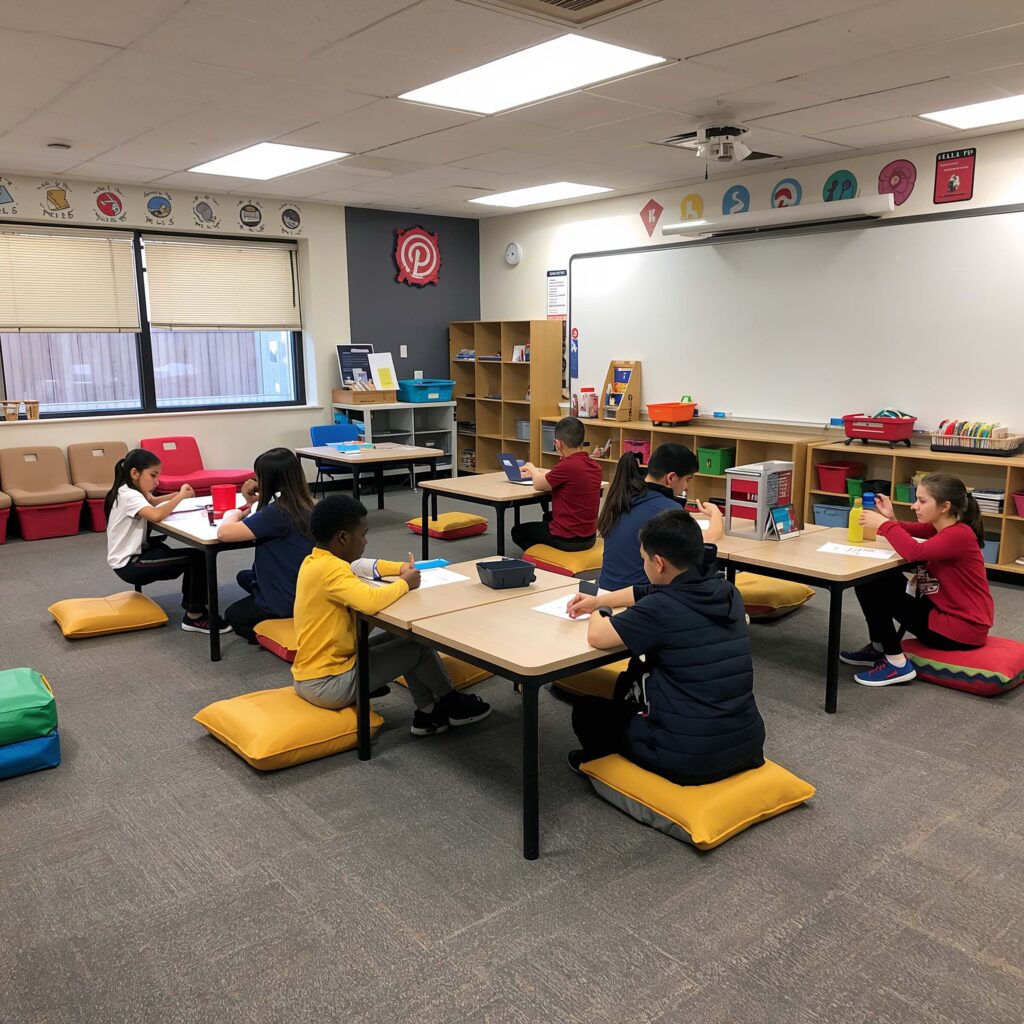
Remember how excited you got about reading corners in elementary school? Teens still crave those special spaces – they just need them to be more sophisticated. Interactive learning corners give students ownership over their learning environment while breaking up the monotony of traditional classroom layouts.
Create distinct zones that serve different purposes. Maybe you’ve got a collaboration corner with whiteboards and comfy seating. Perhaps there’s a quiet study nook with noise-canceling headphones available. The trick is making each space feel intentional and inviting.
Essential Interactive Zones to Consider
The Maker Space Corner:
Stock this area with supplies for hands-on projects. Include a 3D printer if your budget allows (or campaign for one – FYI, grants are everywhere for this stuff!). Add bins of art supplies, building materials, and project storage. Students love having a designated space to create and experiment.
The Discussion Circle:
Arrange flexible seating in a circle – bean bags, floor cushions, or those trendy wobble stools work great. Mount a small whiteboard nearby for brainstorming sessions. This becomes the go-to spot for Socratic seminars and group discussions.
The Research Station:
Set up tablets or laptops with research databases bookmarked. Include physical reference materials too – yes, some kids still prefer actual books! Add comfortable seating and good task lighting. This corner becomes invaluable during project work time.
Also Read: 10 Clever Classroom Door Decor Ideas to Impress Parents
Seasonal Bulletin Boards
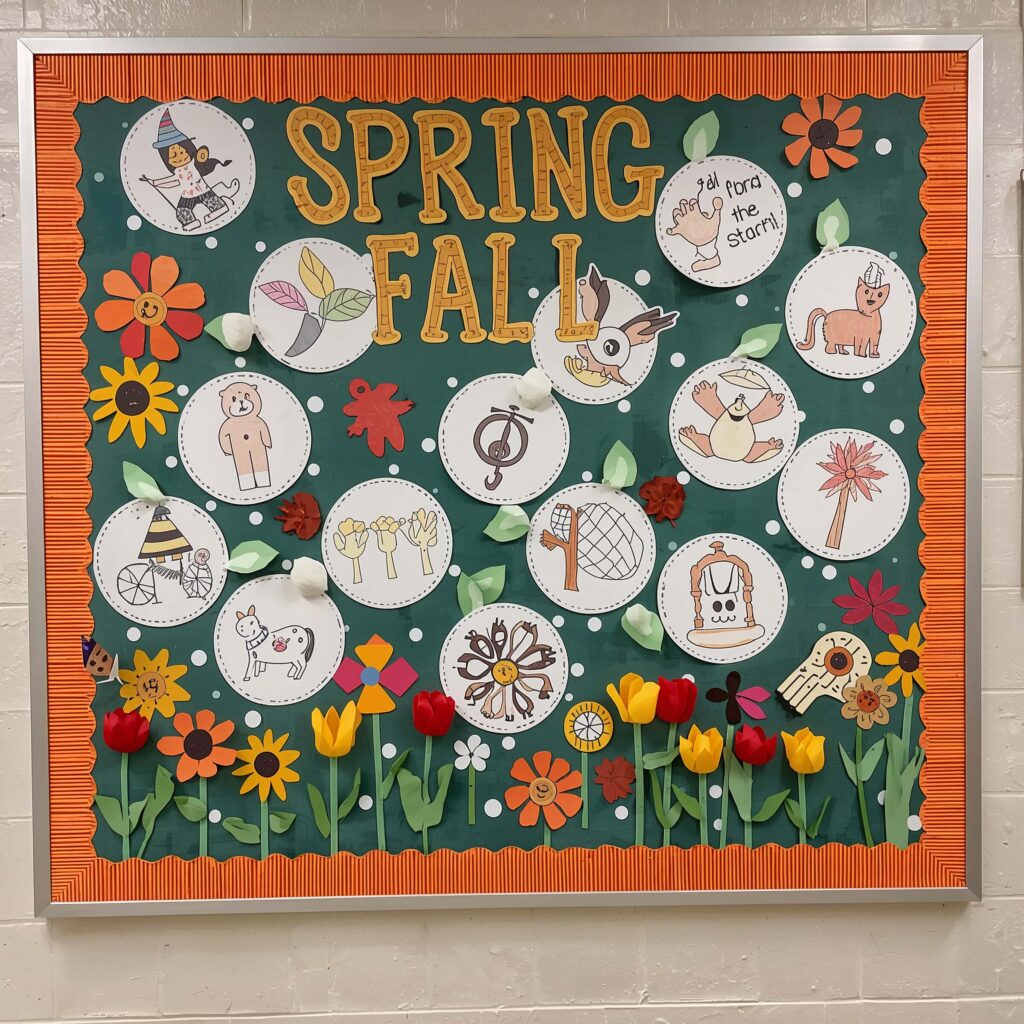
Okay, I know what you’re thinking – bulletin boards sound about as exciting as watching paint dry. But hear me out. When you approach bulletin boards as living, breathing displays that evolve with the seasons, they become conversation starters rather than background noise.
The secret sauce? Let students own these spaces. Assign different groups to design boards throughout the year. Give them themes but let them interpret creatively. You’d be amazed at what happens when you hand over the staple gun and step back.
Seasonal Themes That Actually Work
Fall: Focus on fresh starts and goal setting. Create an interactive “autumn goals” tree where students add leaves with their objectives. Mix in Halloween elements that aren’t childish – think Edgar Allan Poe quotes or science facts about fear responses.
Winter: Celebrate diversity with holiday traditions from around the world. Add a “warm wishes” wall where students leave encouraging notes for each other. Include winter break reading recommendations from peers.
Spring: Showcase growth and progress. Create before-and-after displays of student work. Add a “spring cleaning” section for study tips and organization hacks.
Summer: Build excitement for next year while celebrating achievements. Include a “summer bucket list” where students share plans. Add QR codes linking to educational podcasts or YouTube channels for continued learning.
Color-Coded Organization System
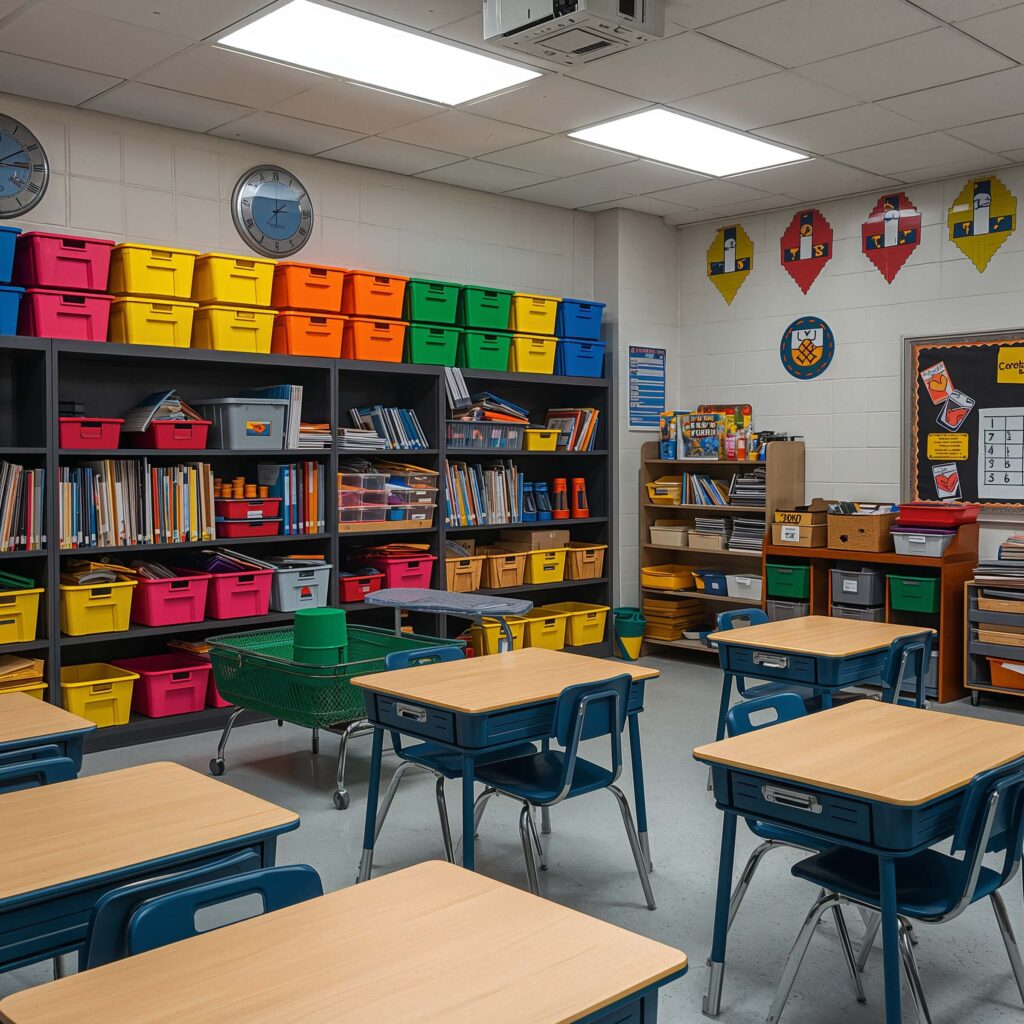
Let’s talk about something that makes my organization-loving heart sing: color coding that actually makes sense. We’re not just slapping random colors on things here – we’re creating a visual language that helps students’ brains process information faster.
Start by assigning colors to different subjects or classroom areas. Math might be blue, English green, Science purple – whatever makes sense for your space. But here’s where it gets interesting: extend this system everywhere. Folder colors, wall sections, even seating areas can follow this code.
Implementation Tips That Work
- Use washi tape to add color coding without permanent changes
- Create a color key poster that stays visible all year
- Apply colors to digital organization too – Google Classroom folders should match physical ones
- Involve students in choosing the color associations – they’ll remember better
- Keep some flexibility for students with color blindness (use patterns too!)
The payoff happens when a student automatically knows where to find resources or submit work based on color alone. I’ve watched kids go from chronically disorganized to having systems they actually maintain. One student told me the color coding “made his brain happy” – and honestly? Mine too 🙂
DIY Wall Art & Murals
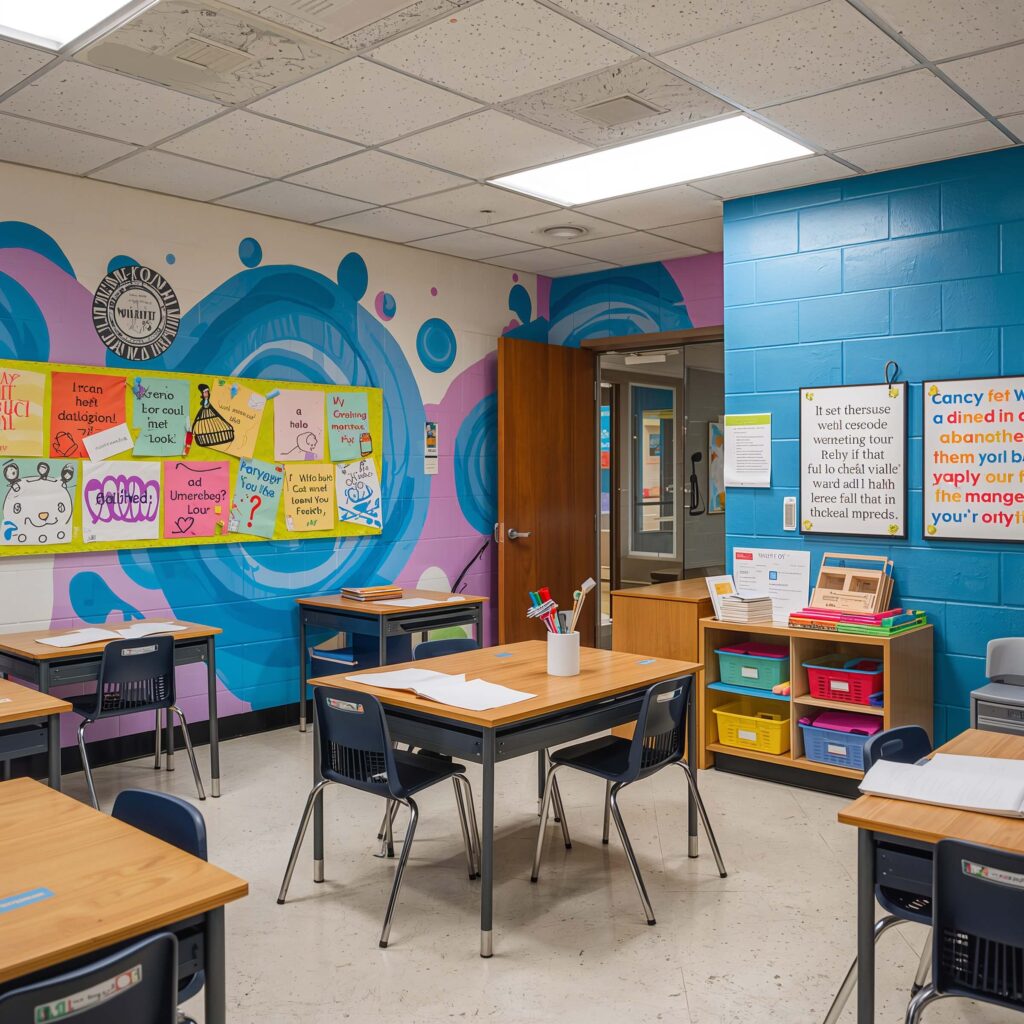
Nothing transforms a space faster than student-created art that actually looks intentional. Forget random poster collages – we’re talking about cohesive, Instagram-worthy murals that make your classroom the envy of the entire school.
Start with a theme that connects to your subject matter but leaves room for creativity. Teaching history? Commission a timeline mural that students add to throughout the year. Science classroom? How about a periodic table where each element gets artistic treatment from different students?
Making It Happen Without Chaos
Planning Phase:
Get students to submit design proposals. Vote on the best concepts. This buy-in is crucial – they’ll protect and maintain art they helped choose. Create a detailed sketch before anyone touches the wall. Use projection mapping to transfer designs accurately.
Execution Tips:
- Use removable wallpaper as a base if you’re renting or worried about permanence
- Assign sections to different students or groups
- Set quality standards – this isn’t finger-painting time
- Document the process for social media and yearbook
- Host an unveiling event to celebrate completion
I once had students create a literary quote mural that became legendary in our school. Three years later, alumni still visit to see if it’s still there. That’s the power of giving students ownership over their space.
Also Read: 10 Exciting Classroom Wall Decor Ideas for Fun Learning
Student Showcase Gallery
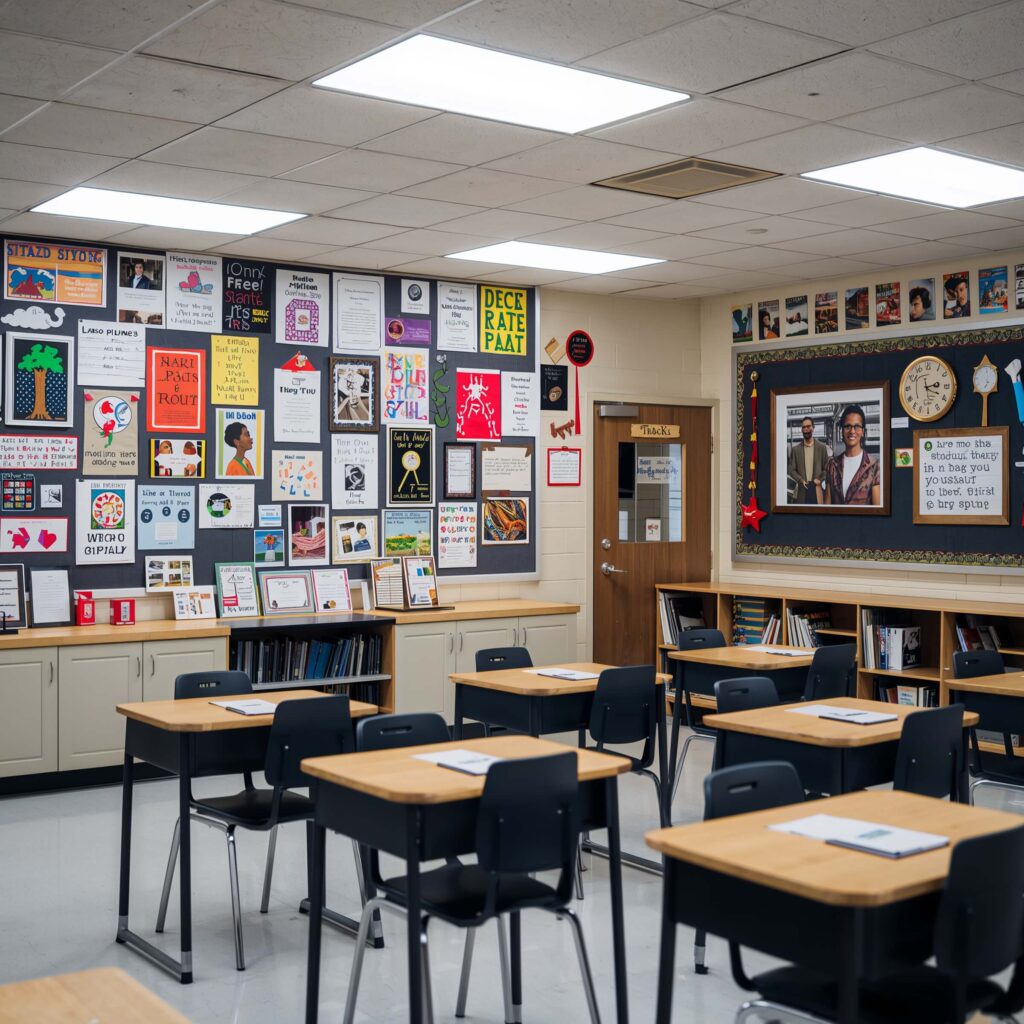
Every student deserves their moment in the spotlight, and a rotating showcase gallery makes everyone feel like their work matters. This isn’t your typical “good job!” bulletin board – we’re creating a legitimate gallery experience right in your classroom.
Think about it: how often does student work just get stuffed in backpacks or thrown away? Creating a dedicated gallery space changes the entire dynamic. Students start putting more effort into assignments when they know there’s a chance for display.
Gallery Elements That Elevate Student Work
Professional Presentation:
Mount work on colored backing paper. Add typed labels with student names and project descriptions. Use uniform frames from the dollar store for special pieces. Install picture ledges for easy rotation of displayed work.
Digital Integration:
Create QR codes linking to video presentations or extended projects. Set up a digital frame rotating through photography or digital art. Start an Instagram account dedicated to showcasing student work (with permissions, obviously).
Celebration Rituals:
Host monthly “gallery walks” where students present their displayed work. Invite other classes or parents for special exhibitions. Create “artist statement” cards where students explain their process. Award “piece of the month” recognition with actual prizes.
Tech-Friendly Classroom Setup
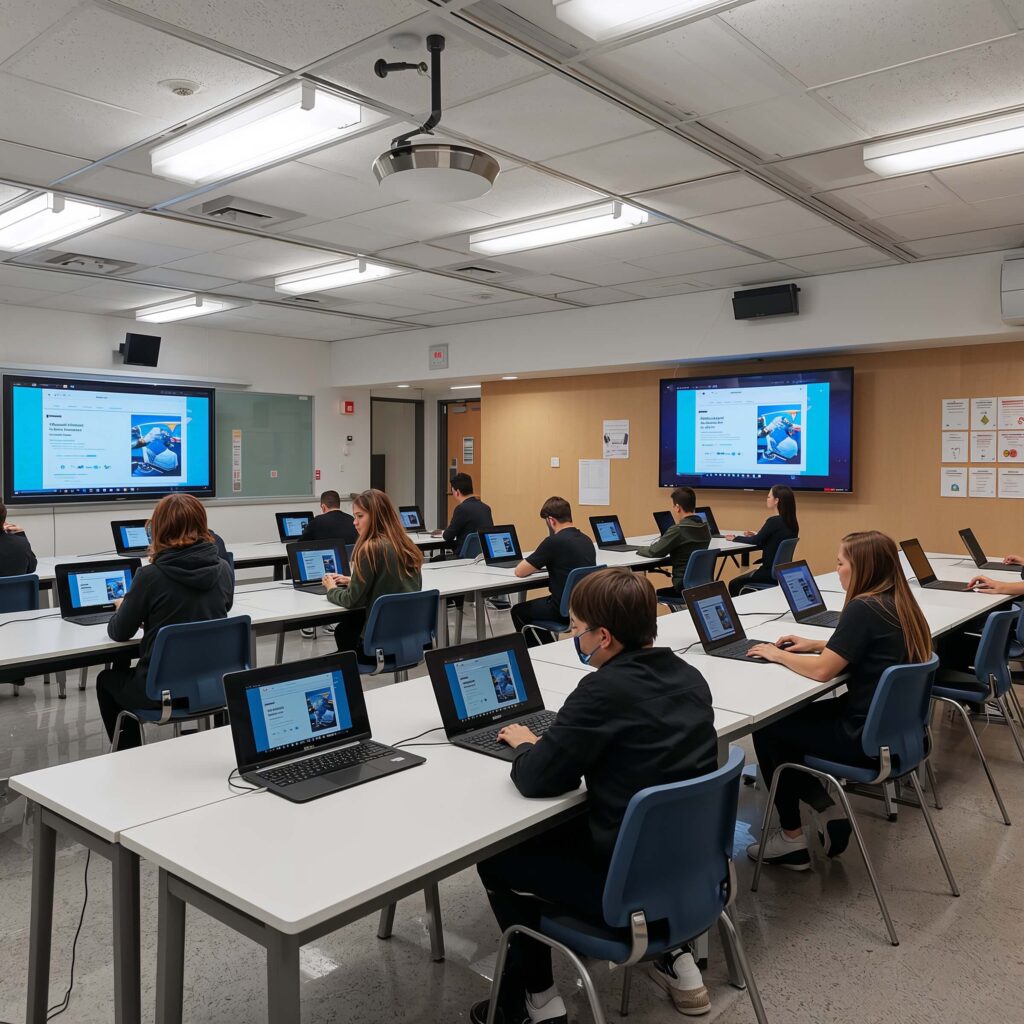
Can we just acknowledge that fighting against technology is like trying to hold back the ocean with a sandcastle? Instead of banning devices, let’s create a classroom that embraces them intelligently. IMO, the classrooms that work best are ones where tech enhances rather than distracts.
Start by establishing charging stations that don’t create traffic jams. Mount power strips under desks or create a central charging hub with labeled slots. Nothing disrupts class flow like the “my phone is dying” panic.
Smart Tech Integration Ideas
- Device parking lots for when tech needs to take a break
- Screen-sharing capabilities so students can present from their seats
- Collaborative digital boards everyone can contribute to
- Noise meters that visually show when volume gets too high
- Timer displays for keeping activities on track
Here’s what nobody tells you: the physical setup matters as much as the rules. When students have designated spots for devices and clear expectations about when to use them, the constant battle disappears. Position your projector or smart board where everyone can see without neck strain. Test your WiFi dead zones and arrange accordingly.
Creating Tech Boundaries Without Being the Bad Guy
Mount a “WiFi password of the week” board that requires completing certain tasks to access. Create phone-free zones with comfortable seating that makes students want to unplug. Use app timers that automatically limit certain sites during class time.
The goal isn’t to eliminate technology – it’s to make it work for learning rather than against it. When students see you embracing their digital world thoughtfully, they’re more likely to respect the boundaries you set.
Motivational Corner with Vision Boards
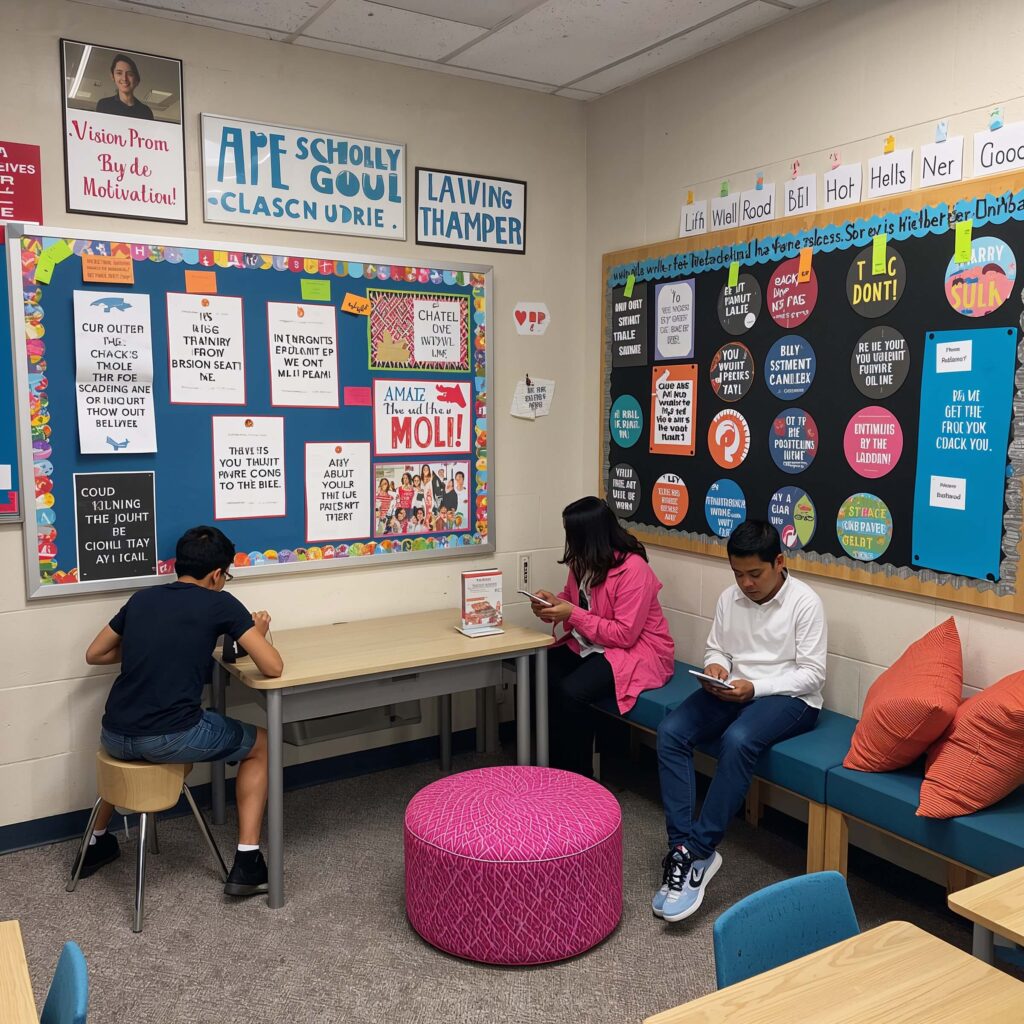
Here’s where things get real: teenagers need to see their dreams visualized to believe they’re possible. A motivational corner with vision boards isn’t just feel-good fluff – it’s a powerful tool for helping students connect current efforts with future goals.
Set aside a corner with comfortable seating and supplies for vision board creation. Include magazines, printed images, markers, and whatever else sparks creativity. But here’s the kicker – make it an ongoing project, not a one-time activity.
Making Vision Boards Actually Work
Quarterly Updates:
Have students revisit and update their boards each quarter. What changed? What goals got accomplished? This reflection process is where the magic happens. They start seeing progress and adjusting goals based on reality, not just dreams.
Accountability Partners:
Pair students up to share and support each other’s visions. Sometimes teenagers need peer encouragement more than adult guidance. These partnerships often extend beyond the classroom.
Success Stories Wall:
Create a space highlighting alumni who achieved their vision board goals. Include their original boards if possible. Nothing motivates like seeing someone who sat in the same desks actually making it happen.
I watched a student who created a vision board about becoming a nurse actually follow through – she’s in nursing school now. She told me that daily visual reminder kept her going through tough chemistry classes.
Also Read: 10 Magical Classroom Decor Themes Ideas for Young Minds
Classroom Theme Makeover
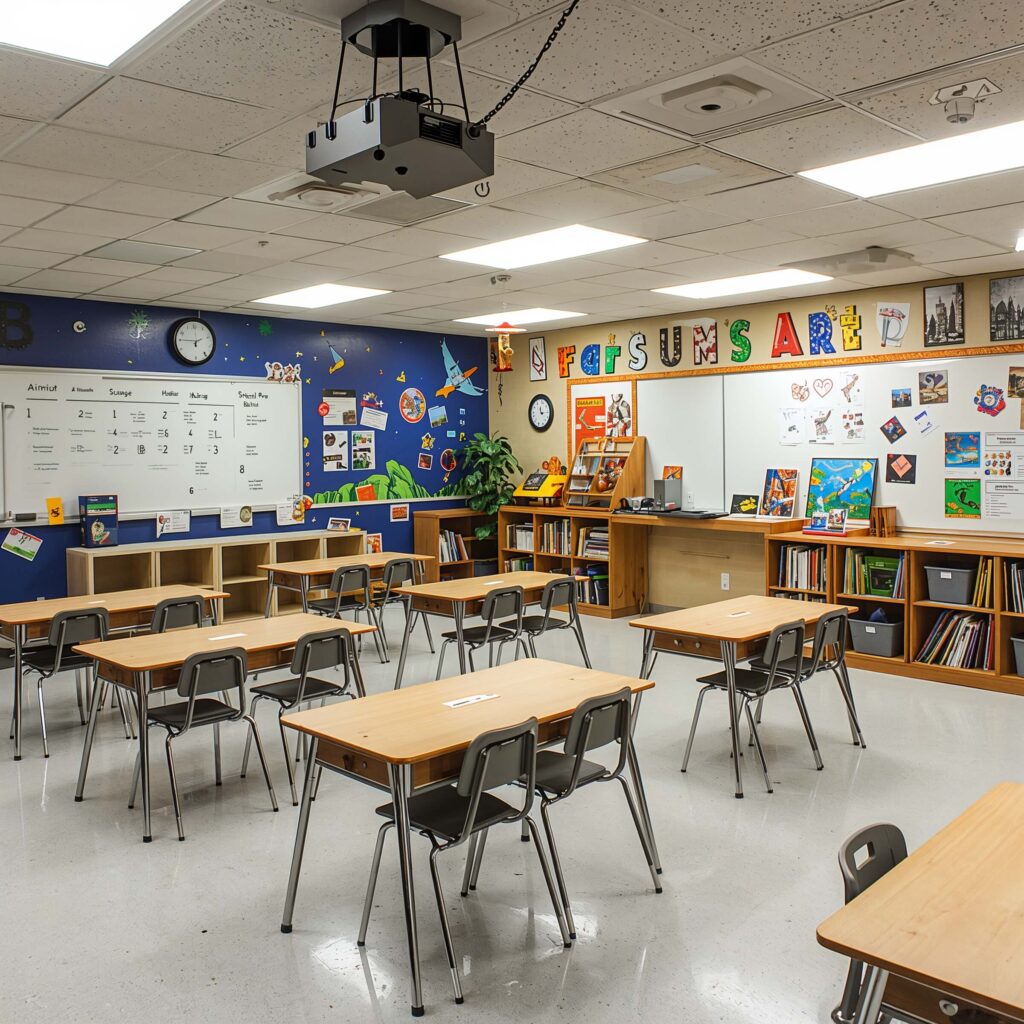
Want to completely transform your classroom vibe? Pick a cohesive theme and commit to it fully. Not in a cheesy, overdone way – think sophisticated interpretation that makes students feel like they’re somewhere special.
The best themes connect to your subject matter while appealing to teenage aesthetics. Teaching literature? Create a coffee shop vibe with string lights and vintage book covers. Science class? Go full NASA mission control or tropical research station.
Theme Ideas That Don’t Suck
Industrial Modern:
Exposed elements, metal accents, and Edison bulb string lights create an urban loft feeling. Add some fake exposed brick wallpaper to one wall. Include industrial shelving for supplies. This works especially well for STEM classes.
Nature Retreat:
Bring the outside in with plants (real or quality fake ones), nature sounds playlist, and earth tones. Add a small water feature for ambiance. Include nature photography from students. Perfect for environmental science or mindfulness spaces.
Art Studio Vibe:
Splatter paint effects on one wall (controlled, of course). Display color wheels and art history timelines. Set up easels for displaying current work. Include a “supplies library” with organized art materials. Great for any creative subject.
Execution Without Breaking the Bank
- Shop discount stores after holidays for decor elements
- Use peel-and-stick wallpaper for temporary transformations
- Recruit parent volunteers with specific skills (painting, carpentry)
- Apply for small grants – many organizations support classroom makeovers
- Start small and build throughout the year
Remember: consistency sells the theme. Every element should support your chosen vibe, from the pencil holders to the wall colors. Half-hearted themes look worse than no theme at all.
Pulling It All Together
So there you have it – ten ways to transform your classroom from institutional blah to inspirational hub. The best part? You don’t need to implement everything at once. Start with one or two ideas that resonate most with you and your students.
Here’s my final piece of advice: involve your students in every step. They’ll surprise you with their creativity, and more importantly, they’ll take ownership of the space. When teenagers feel heard and valued, they show up differently. They engage more. They even help maintain the space (shocking, I know).
Remember that perfection isn’t the goal here – connection is. Your classroom should feel lived-in, dynamic, and responsive to student needs. Some ideas will flop spectacularly (my attempt at a meditation corner became a nap zone real quick), and that’s okay. The willingness to try something new speaks volumes to your students.
The classrooms that stick in our memories aren’t the ones with perfect decorations – they’re the ones where we felt seen, inspired, and capable of greatness. That’s what these ideas are really about. Not just making your room pretty for Instagram, but creating a space where teenage humans can explore, grow, and maybe even enjoy learning.
What idea are you most excited to try? Start there. Your students (and your teaching soul) will thank you for it. Trust me on this one – I’ve seen too many transformations to doubt the power of an intentionally designed classroom. Now go forth and create some magic. Your students are waiting for a space that finally gets them :]