10 Inspiring Middle School Classroom Decor Ideas Cozy Space
- Classroom Decor
 Ben
Ben- 0
- 33 minutes read
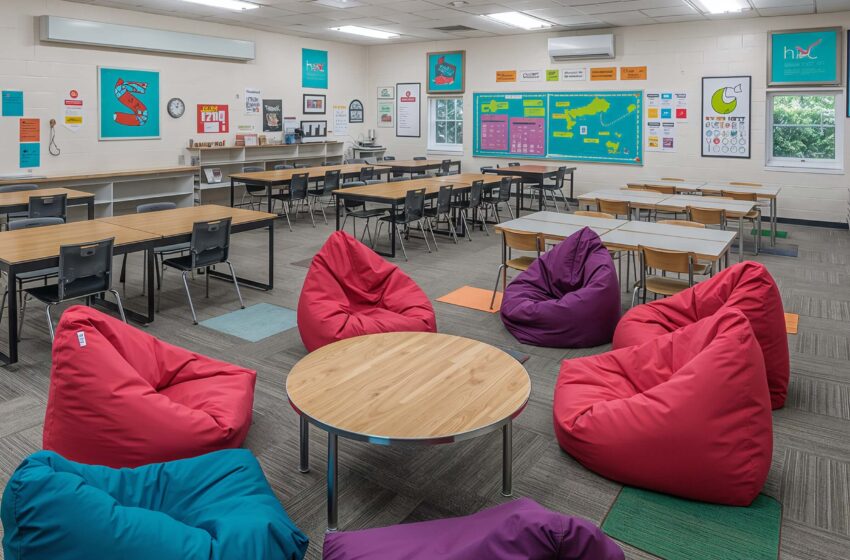
Remember walking into that one classroom that just felt right? You know, the kind where you actually wanted to sit down and learn something instead of counting ceiling tiles? Well, creating that magical space for middle schoolers isn’t rocket science – it just takes the right mix of comfort, creativity, and a dash of teenage-approved coolness.
Let’s face it: middle schoolers are tough critics. They’re not impressed by basic poster boards and generic motivational posters anymore. These kids crave authenticity, comfort, and spaces that speak to their evolving identities. After spending years transforming bland classrooms into inspiring learning havens, I’ve discovered what actually works (and what definitely doesn’t).
Modern Neutral Tone Classroom Setup
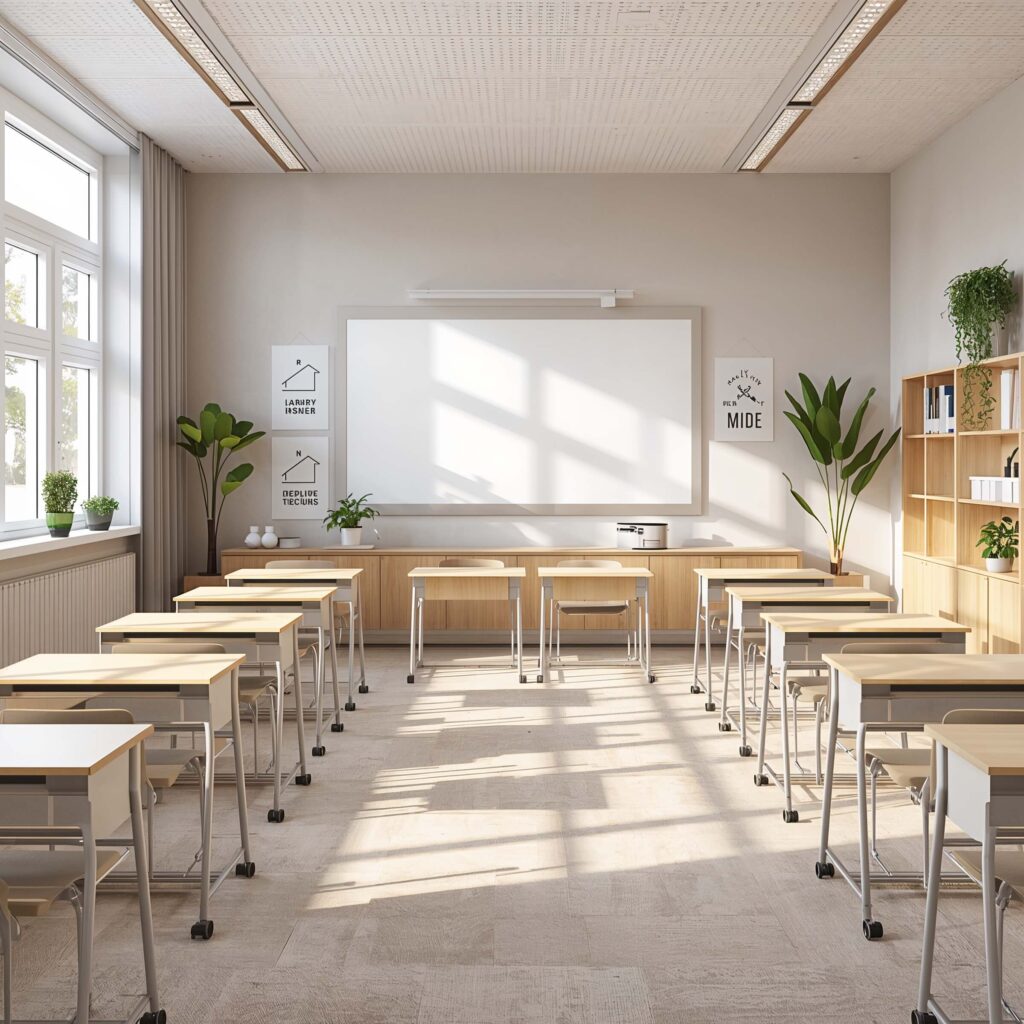
Gone are the days when classrooms needed rainbow explosions on every wall. Modern neutral tones create a sophisticated yet calming environment that middle schoolers actually appreciate. Think warm grays, soft beiges, and muted earth tones that won’t overstimulate already-distracted teenage brains.
I started incorporating neutral palettes in my classroom three years ago, and the transformation was incredible. Students actually commented that they felt more focused and less anxious. Who would’ve thought that ditching the primary color parade could make such a difference?
The beauty of neutral tones lies in their versatility. You can easily switch up accent colors seasonally without repainting everything. Plus, neutral backgrounds make student work pop when displayed on bulletin boards.
Key Elements for Your Neutral Setup:
- Warm gray or beige walls (if painting is allowed)
- Natural wood furniture or accents
- White or cream storage solutions
- Soft textured fabrics in seating areas
- Metallic accents in gold or copper for sophistication
Want to add personality without breaking the neutral vibe? Try incorporating natural textures like woven baskets, cork boards, or linen curtains. These elements add visual interest while maintaining that calm, modern aesthetic middle schoolers secretly love.
Motivational Quote Wall for Middle School
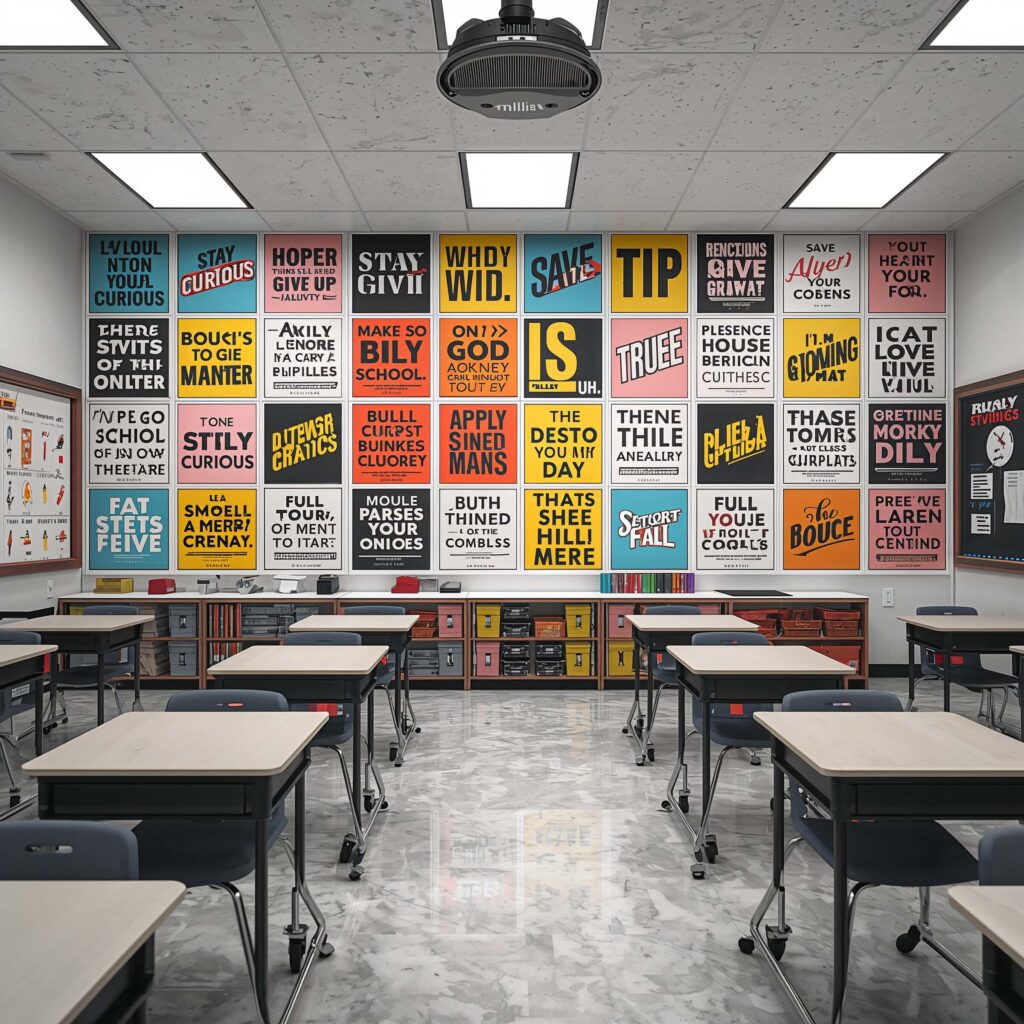
Here’s where things get interesting. Middle schoolers roll their eyes at cheesy motivational posters faster than you can say “Hang in there, kitten!” But create a thoughtfully curated quote wall with messages that actually resonate, and you’ve got their attention.
My quote wall became the talk of the school when I started including lyrics from clean versions of popular songs, quotes from TikTok influencers (yes, really), and snippets from young adult novels. Suddenly, students were actually reading them – and discussing them!
The trick is mixing classic inspiration with contemporary relevance. Sure, throw in some Maya Angelou, but balance it with quotes from athletes they actually follow on social media. Update your quotes quarterly to keep things fresh and relevant.
Quote Wall Success Tips:
- Use various fonts and sizes for visual interest
- Include student-submitted quotes (with approval)
- Create themed sections: perseverance, creativity, friendship
- Add small spotlights or string lights for emphasis
- Leave space for a “Quote of the Week” that students choose
Print quotes on different materials – canvas, wood, acrylic – to create depth and texture. This isn’t your grandmother’s bulletin board anymore 🙂
Boho Style Middle School Classroom Theme
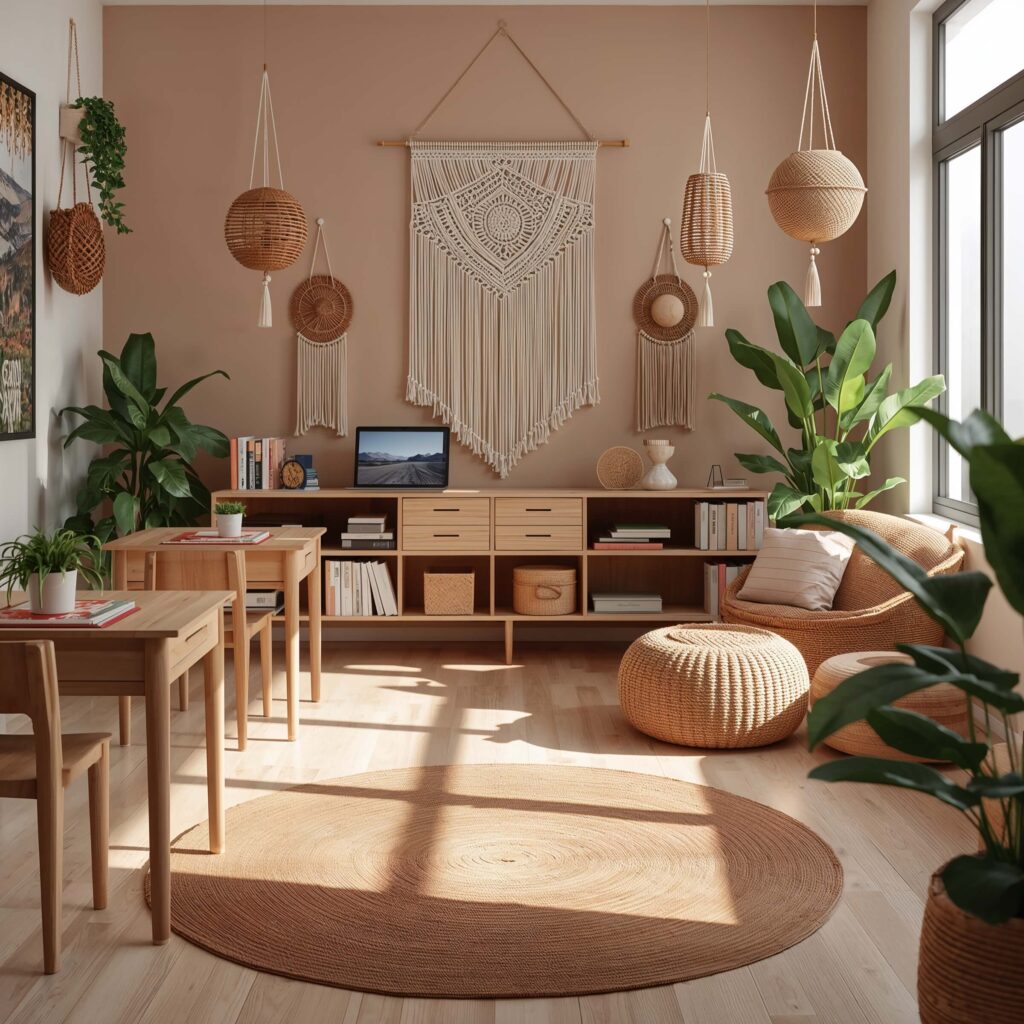
Who says classrooms can’t have style? Boho decor brings warmth and personality that transforms sterile learning spaces into cozy retreats. And before you worry about it being “too much,” remember that boho done right feels intentional, not chaotic.
I discovered the magic of classroom boho when a student said my room reminded them of their favorite coffee shop. That’s when I knew I was onto something! Middle schoolers crave spaces that feel authentic and lived-in, not institutional.
The boho aesthetic works particularly well because it encourages creativity and self-expression – exactly what middle schoolers need. Plus, many boho elements can be DIY projects, making this style budget-friendly.
Essential Boho Elements:
- Macramé wall hangings (students love making these!)
- Layered rugs in natural fibers
- Plants in woven or ceramic planters
- Warm string lights or lanterns
- Tapestries or fabric wall art
- Natural wood elements
- Comfortable floor cushions
Layer textures and patterns, but keep a cohesive color scheme to avoid visual chaos. Earth tones, burnt orange, and deep teals work beautifully together while maintaining that cozy vibe.
Also Read: 10 Creative Music Classroom Decor Ideas That Inspire Learning
Minimalist Black and White Classroom Decor
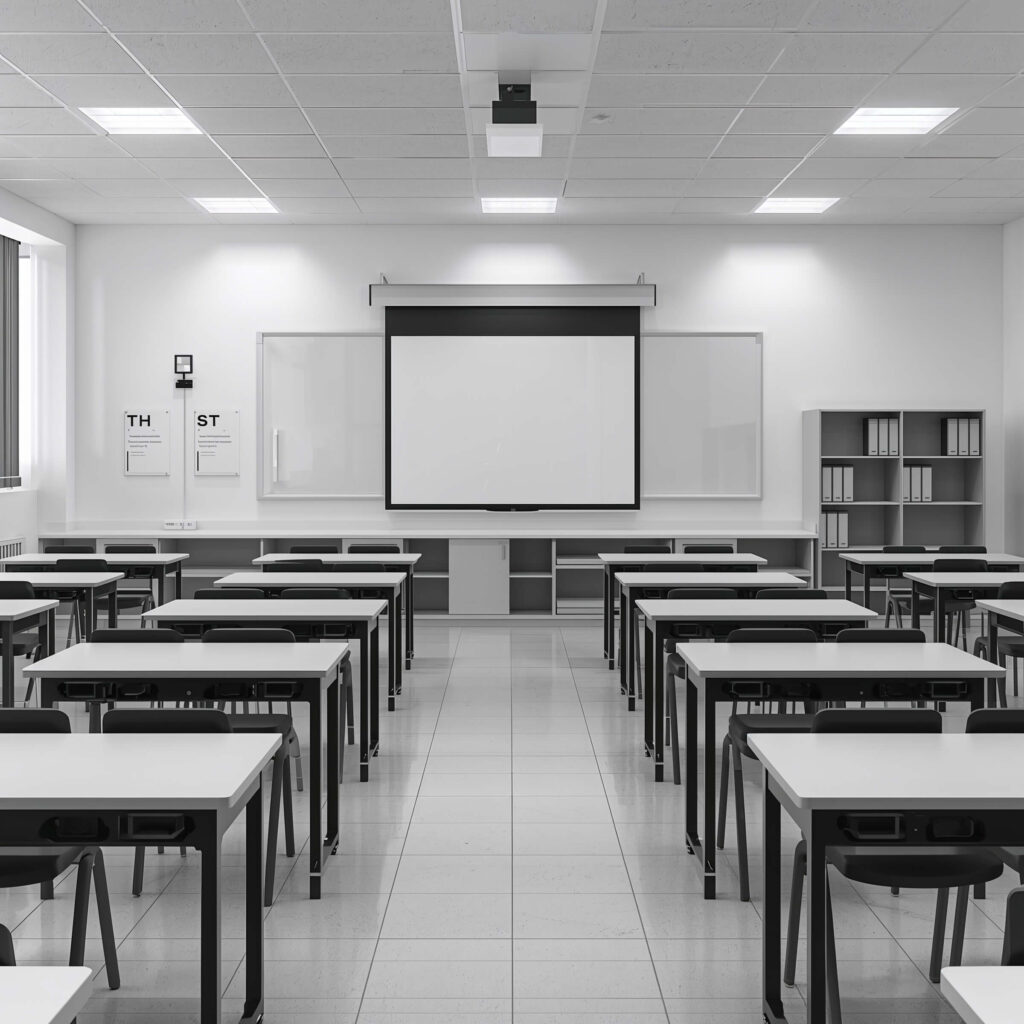
Sometimes less really is more. A minimalist black and white theme creates a sophisticated, distraction-free environment that appeals to the maturing tastes of middle schoolers. Plus, it photographs beautifully for all those classroom Instagram posts (we all do it, FYI).
This approach might seem boring at first glance, but minimalism forces you to be intentional with every design choice. Every item serves a purpose, and the clean aesthetic helps reduce visual clutter that can overwhelm students with attention challenges.
I’ve noticed students in minimalist spaces tend to keep their areas cleaner. There’s something about a pristine environment that encourages maintaining order. Who knew peer pressure could work in favor of classroom tidiness?
Minimalist Must-Haves:
- Clean-lined furniture in black, white, or natural wood
- Geometric patterns for subtle visual interest
- Strategic pops of green from plants
- Simple, functional storage solutions
- Black frames for displaying student work
- White boards or black chalkboard walls
The key to successful minimalism? Quality over quantity. Invest in a few well-designed pieces rather than cluttering the space with mediocre items. Your students will appreciate the breathing room.
Interactive Bulletin Board Ideas for Students
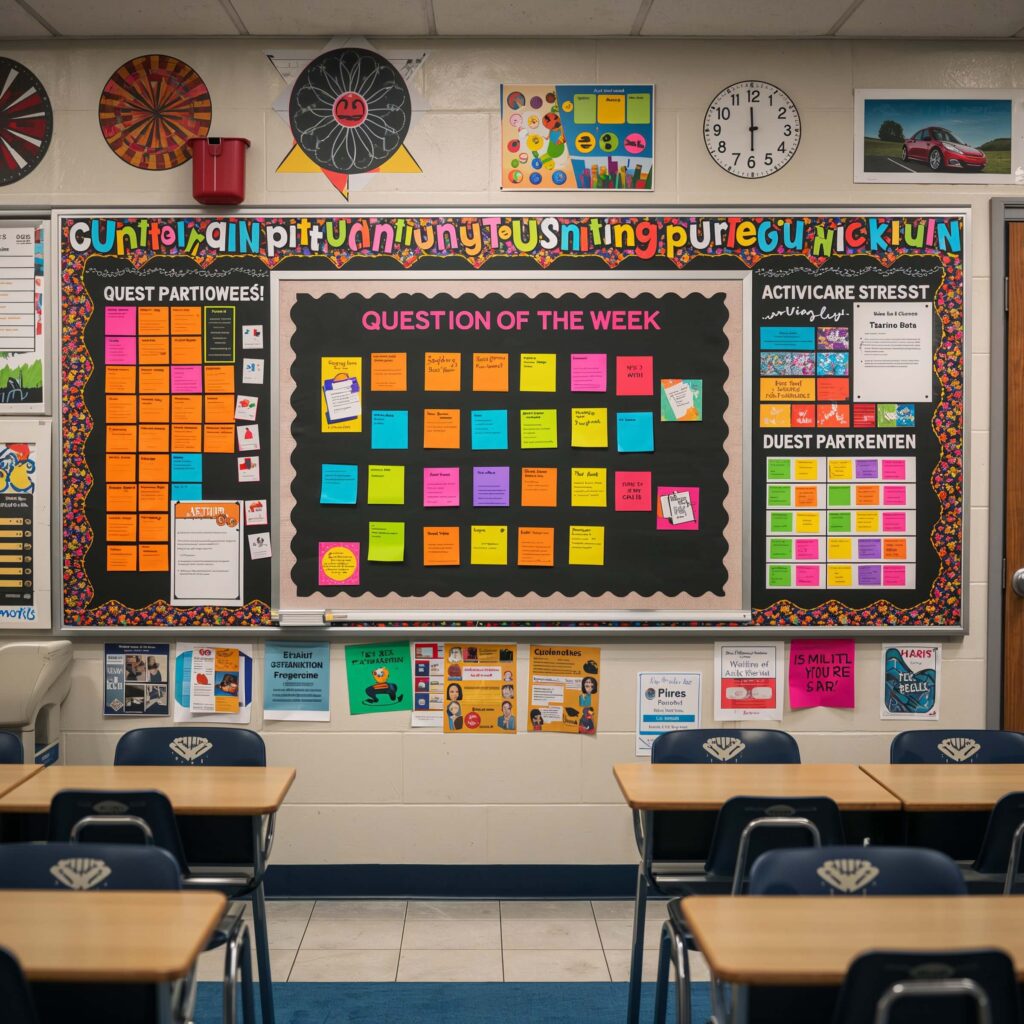
Static bulletin boards are so yesterday. Today’s middle schoolers expect interaction, engagement, and the ability to contribute. Interactive bulletin boards turn wall space into collaborative learning tools that students actually want to use.
My game-changer was creating a “Question of the Week” board where students could post anonymous responses on sticky notes. Suddenly, even my quietest students were participating in class discussions – just through a different medium.
Interactive boards work because they give students ownership of the classroom space. When they see their contributions displayed and valued, engagement naturally increases. Plus, these boards practically update themselves!
Interactive Board Ideas That Actually Work:
- “Currently Reading” recommendation wall with moveable book covers
- Math problem of the day with solution pockets
- “Mood Meter” check-in board
- Vocabulary word puzzle walls
- Student goal-tracking displays
- “Shout Out” boards for peer recognition
- QR code scavenger hunts
Remember to rotate interactive elements monthly to maintain interest. What works in September might be ignored by November, so stay flexible and responsive to student engagement levels.
Flexible Seating Classroom Layout Design
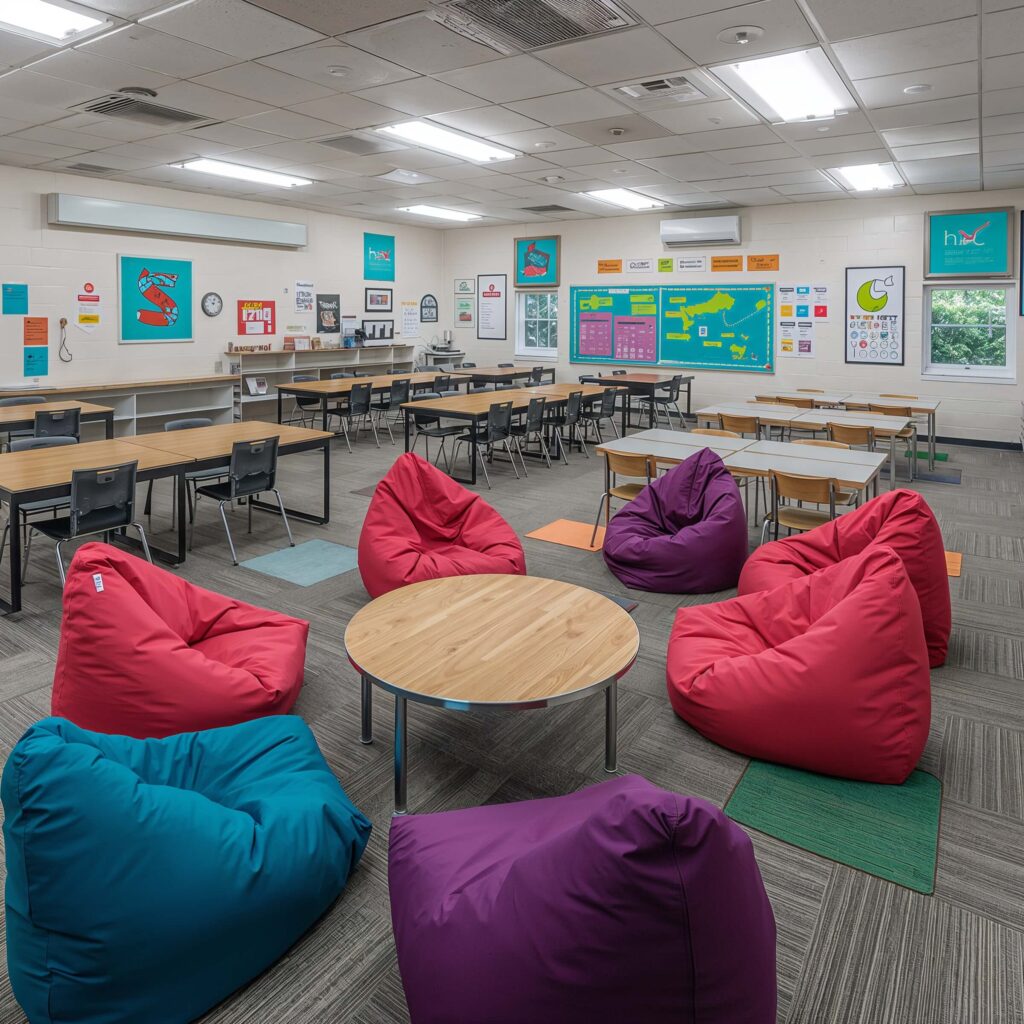
Let’s be honest – making thirteen-year-olds sit in hard plastic chairs for seven hours is basically torture. Flexible seating acknowledges that different students learn best in different positions, and middle schoolers especially appreciate having choices.
When I first introduced flexible seating, I worried about chaos. Would students fight over the bean bags? Would they actually work while lounging? Surprisingly, giving them freedom resulted in better behavior and increased focus. Go figure!
The secret lies in establishing clear expectations and letting students earn seating privileges. Not every kid can handle the wobble cushion on day one, but most rise to the occasion when given trust and responsibility.
Flexible Seating Options to Consider:
- Standing desks with fidget bars
- Stability ball chairs
- Floor cushions with lap desks
- Wobble stools
- Traditional desks (yes, some kids prefer them!)
- Soft seating corner with bean bags
- High-top tables with stools
- Carpet squares for floor work
Create zones for different types of work. Collaborative spaces need different seating than quiet study areas. Map out your room’s flow before purchasing anything – trust me on this one.
Also Read: 10 Affordable Boho Classroom Decor Ideas for Budget-Friendly Fun
Subject-Themed Learning Wall Decor
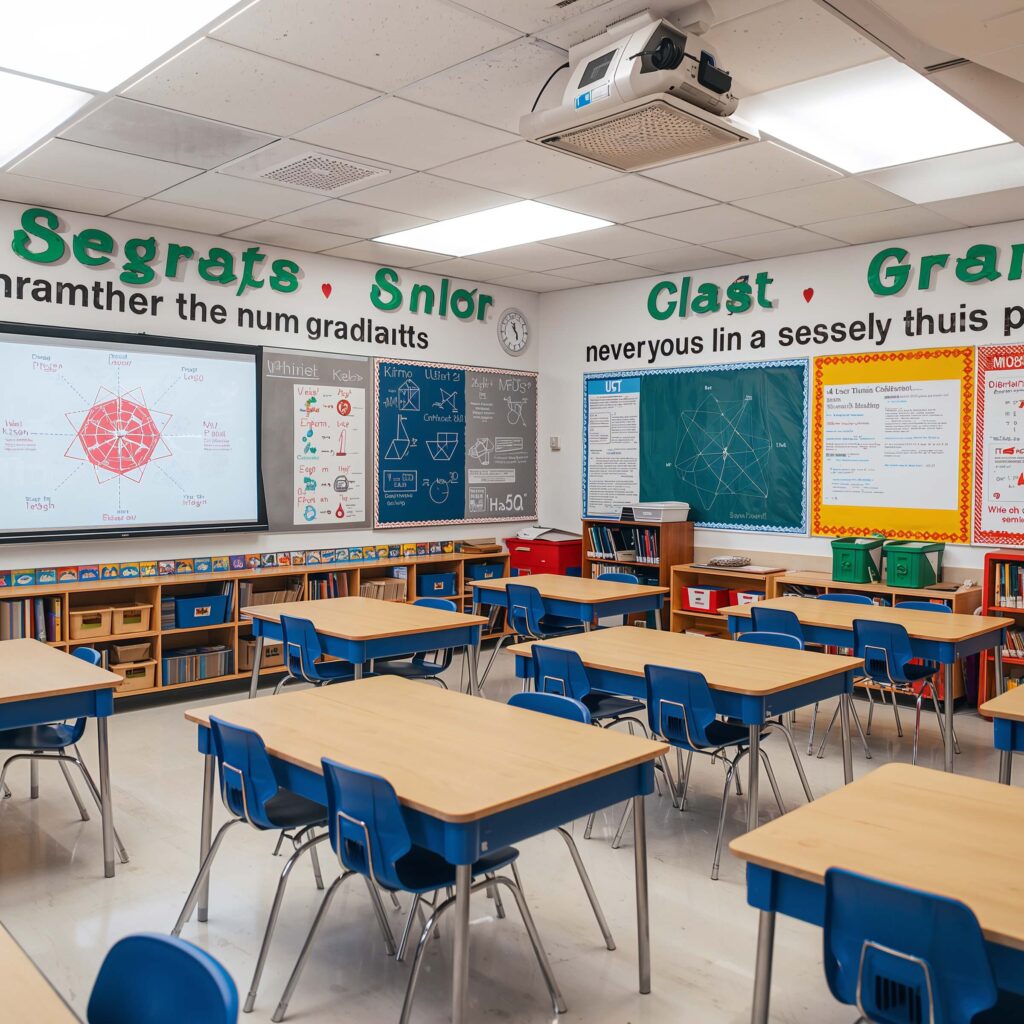
Why pretend your classroom is generic when you can celebrate your subject? Subject-themed decor immerses students in content from the moment they walk in. It’s like environmental learning – they absorb information without even trying.
My English classroom features a “Living Literature” wall where book spines create a rainbow effect, famous first lines frame the doorway, and character quotes pepper the walls. Students often pause to read them between classes, accidentally learning while they socialize.
The trick is avoiding overwhelming decoration. Choose elements that enhance learning rather than distract from it. Quality subject-themed decor serves as both decoration and teaching tool.
Subject-Specific Decor Ideas:
For English/Language Arts:
- Literary timeline displays
- Author portrait gallery
- Grammar rule posters with modern examples
- Student book review corner
For Math:
- Famous mathematician profiles
- Real-world math application displays
- 3D geometric shapes hanging from ceiling
- Number pattern artwork
For Science:
- Element periodic table wall art
- Scientific method visual guides
- Nature photography displays
- Student experiment showcase area
For Social Studies:
- Historical timeline ribbons
- Map collection displays
- Cultural artifact corners
- Current events bulletin board
Calm Corner Setup for Student Relaxation
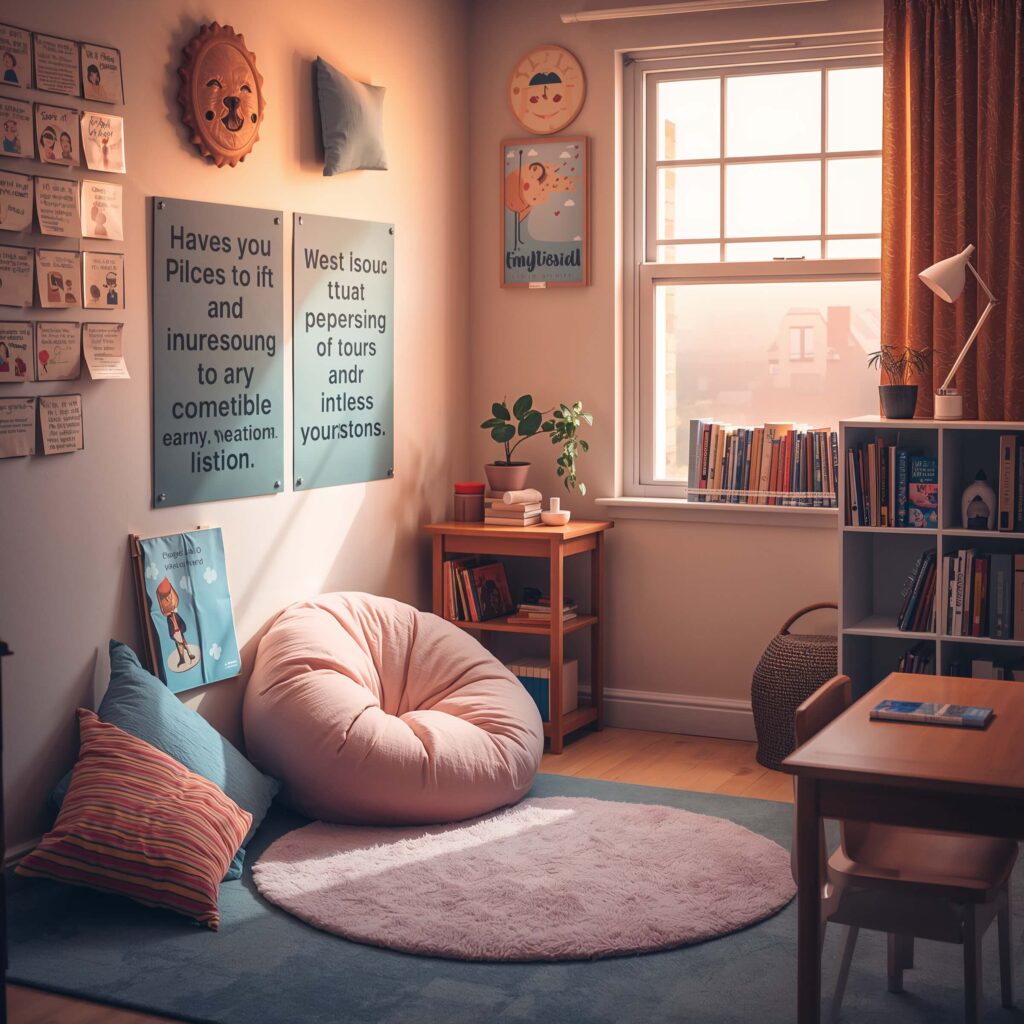
Middle school emotions run high – shocking, right? Creating a designated calm corner gives students a safe space to decompress without leaving the classroom. It’s not timeout; it’s smart emotional regulation.
Initially, I worried other students would abuse the calm corner to avoid work. Instead, I found students self-regulating beautifully. They’d take five minutes to reset, then return to work more focused than before. Sometimes teenagers surprise you with their maturity.
The calm corner should feel separate from the learning space without being isolated. Students need privacy to process emotions while still feeling connected to the classroom community.
Essential Calm Corner Components:
- Comfortable seating (bean bag or soft chair)
- Noise-reducing headphones
- Stress balls or fidget tools
- Calming artwork or nature photos
- Timer for self-monitoring
- Journaling supplies
- Breathing exercise cards
- Soft lighting or lamp
Set clear guidelines for calm corner use. Students should understand it’s a privilege, not an escape route. I recommend a simple sign-in system to track usage patterns and identify students who might need additional support.
Color-Coded Organization Classroom System
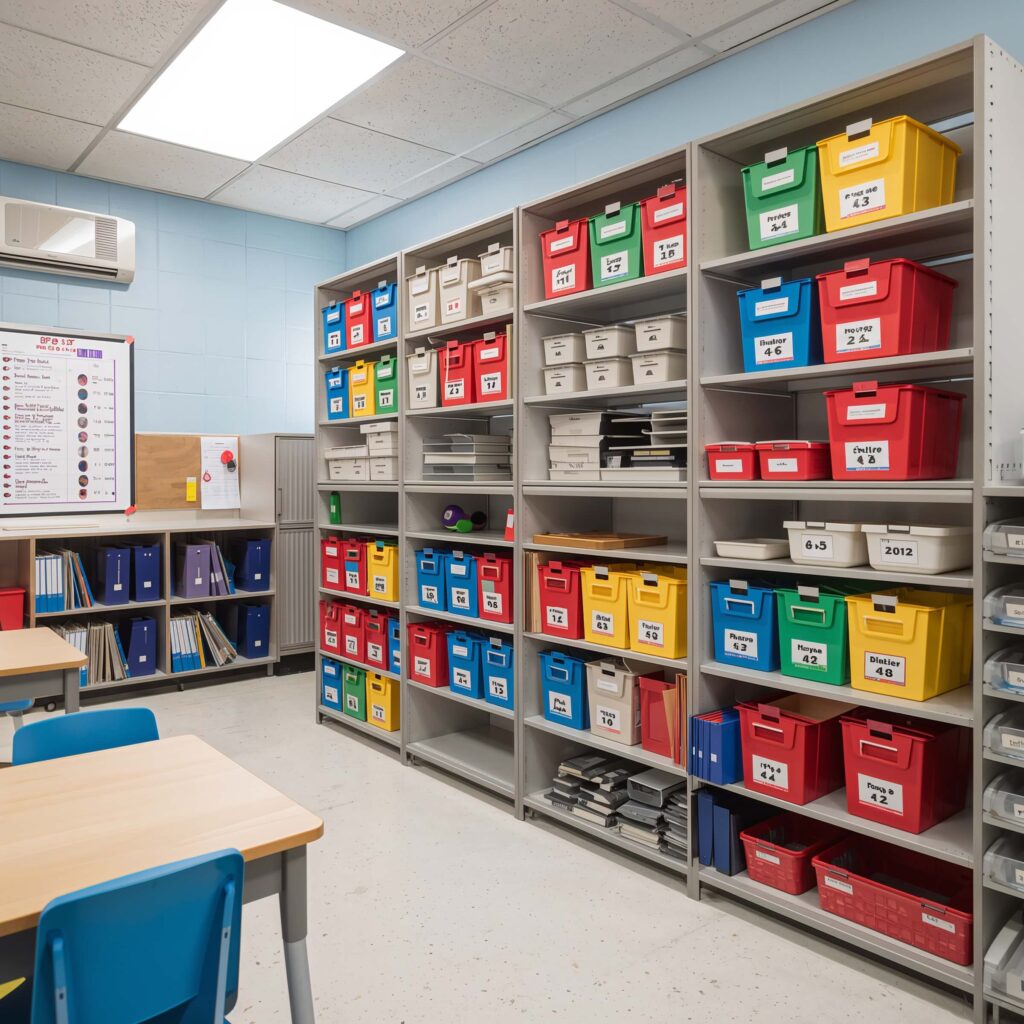
Chaos might be creative, but middle schoolers need structure (even if they claim otherwise). A color-coded organization system makes classroom management visually intuitive – even the most disorganized student can follow colors.
I learned this lesson the hard way after spending countless hours explaining where things go. Now? Red bin for homework, blue for supplies, green for returned work. Simple, visual, effective. Even substitute teachers can manage the system without lengthy instructions.
Color-coding extends beyond storage. Use it for seating groups, schedule blocks, and subject materials. Consistency is key – once you establish a color system, stick with it all year.
Color-Coding Implementation Strategies:
- Assign each class period a color for easy identification
- Use colored folders for different subjects
- Label storage areas with color-coded tags
- Create color-coded turn-in trays
- Mark group supplies with colored tape
- Use colored sticky notes for different task types
- Implement colored passes for bathroom/office
IMO, rainbow organization isn’t just pretty – it’s practical. Students spend less time searching for materials and more time actually learning. Plus, the visual appeal makes maintaining organization more appealing.
Also Read: 10 Stunning Teaching Classroom Decor Ideas for Modern Style
LED Light Aesthetic Classroom Setup
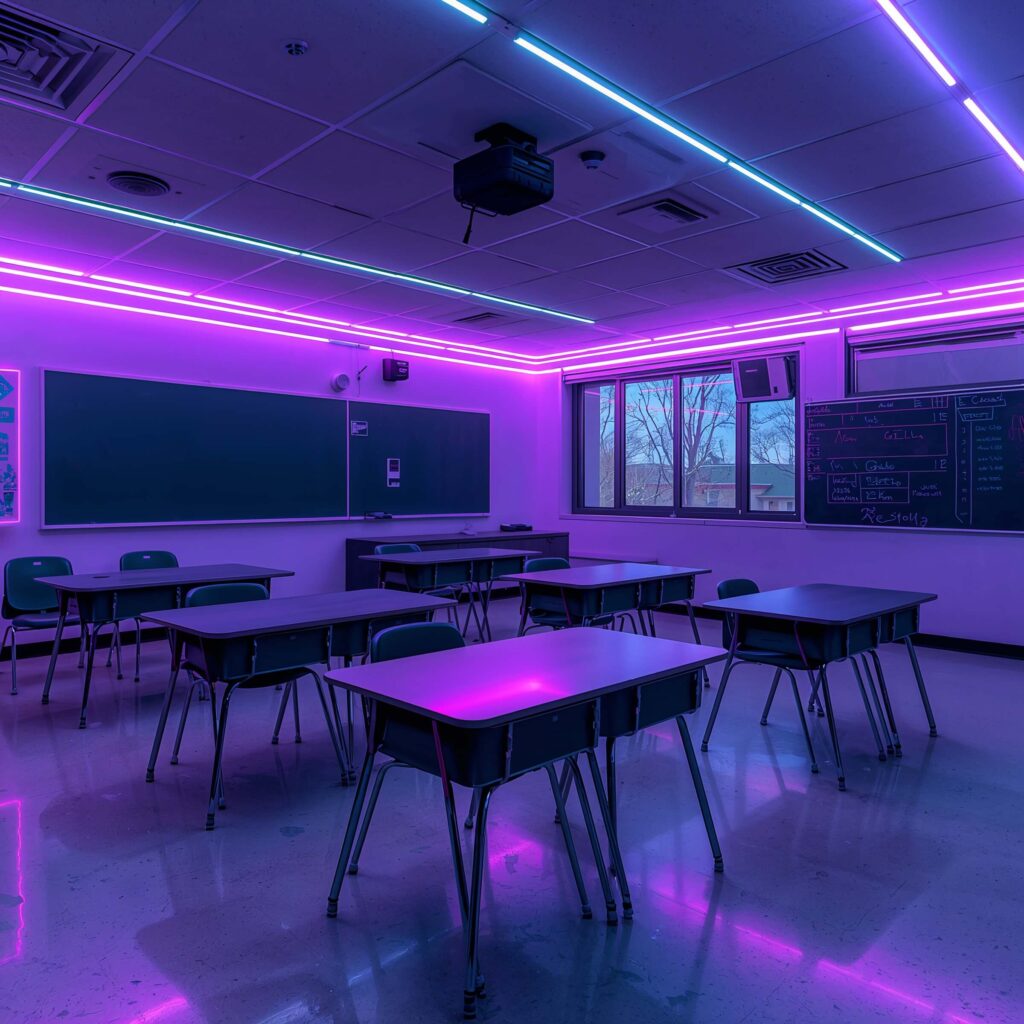
Natural light is ideal, but let’s be real – most classrooms have fluorescent lighting that makes everyone look slightly green. LED lights can transform harsh classroom lighting into an inviting ambiance that students actually enjoy.
When I first strung LED lights around my classroom perimeter, the principal raised an eyebrow. Three months later, she was asking where I bought them for her office. The soft, customizable lighting reduced headaches and created a calmer learning environment.
The best part? LED lights are energy-efficient and long-lasting. You can even find options with remote controls to adjust brightness and color temperature throughout the day.
LED Lighting Ideas That Work:
- Warm white string lights along walls or windows
- Color-changing LED strips behind boards
- Desk lamps with adjustable brightness
- Fairy lights in reading corners
- Backlit displays for student work
- Under-shelf lighting for supply areas
- Seasonal colored lights for special occasions
Remember to check school policies about electrical modifications. Some districts have strict rules about adding lighting, so get approval before going full Instagram-aesthetic.
Making It All Work Together
Here’s the thing about classroom decor – you don’t need to implement all ten ideas at once. Pick two or three that resonate with your teaching style and student needs. Build from there.
Start with one major element, like flexible seating or a neutral color palette. Layer in smaller touches like LED lights or interactive bulletin boards. Let your classroom evolve organically based on what works for your specific students.
Budget constraints? Get creative! Dollar stores, thrift shops, and parent donations can stretch your decorating dollars surprisingly far. Plus, involving students in DIY projects builds ownership and pride in their learning space.
Don’t forget to regularly assess what’s working. That motivational quote wall might need refreshing by January. The calm corner might need adjusting based on usage patterns. Stay responsive to your students’ changing needs.
The Bottom Line
Creating an inspiring middle school classroom isn’t about perfection or Pinterest-worthy photos (though those are nice bonuses). It’s about crafting a space where pre-teens feel comfortable, engaged, and ready to learn. Whether you go full boho or minimalist chic, the key is intentionality.
Your classroom should reflect both your personality and your students’ needs. Don’t be afraid to experiment, adjust, and even fail occasionally. Some of my best classroom design elements came from happy accidents or student suggestions I initially doubted.
Remember, middle schoolers appreciate authenticity more than perfection. They’d rather learn in a genuinely cozy, slightly imperfect space than a sterile showroom. So grab those LED lights, print those quotes, and start creating a classroom that makes everyone – including you – actually want to be there Monday morning.
After all, you’re not just decorating a room. You’re creating a space where young minds grow, friendships form, and maybe, just maybe, some actual learning happens along the way. And if your classroom becomes the spot where kids want to eat lunch? Well, that’s when you know you’ve nailed it.