10 Trendy High School Classroom Decor Ideas That Wow Students
- Classroom Decor
 Ben
Ben- 0
- 39 minutes read
Remember walking into that one classroom that just felt different? You know, the one where you actually wanted to spend time, where the walls seemed to whisper inspiration instead of institutional boredom? Yeah, that’s what we’re creating today.
I’ve spent years transforming bland classrooms into spaces that make students actually excited to learn. And honestly, watching teenagers’ faces light up when they walk into a thoughtfully decorated classroom never gets old. These aren’t your grandmother’s bulletin boards with faded construction paper – we’re talking about modern, engaging spaces that speak the language of today’s students.
Inspirational Quote Wall
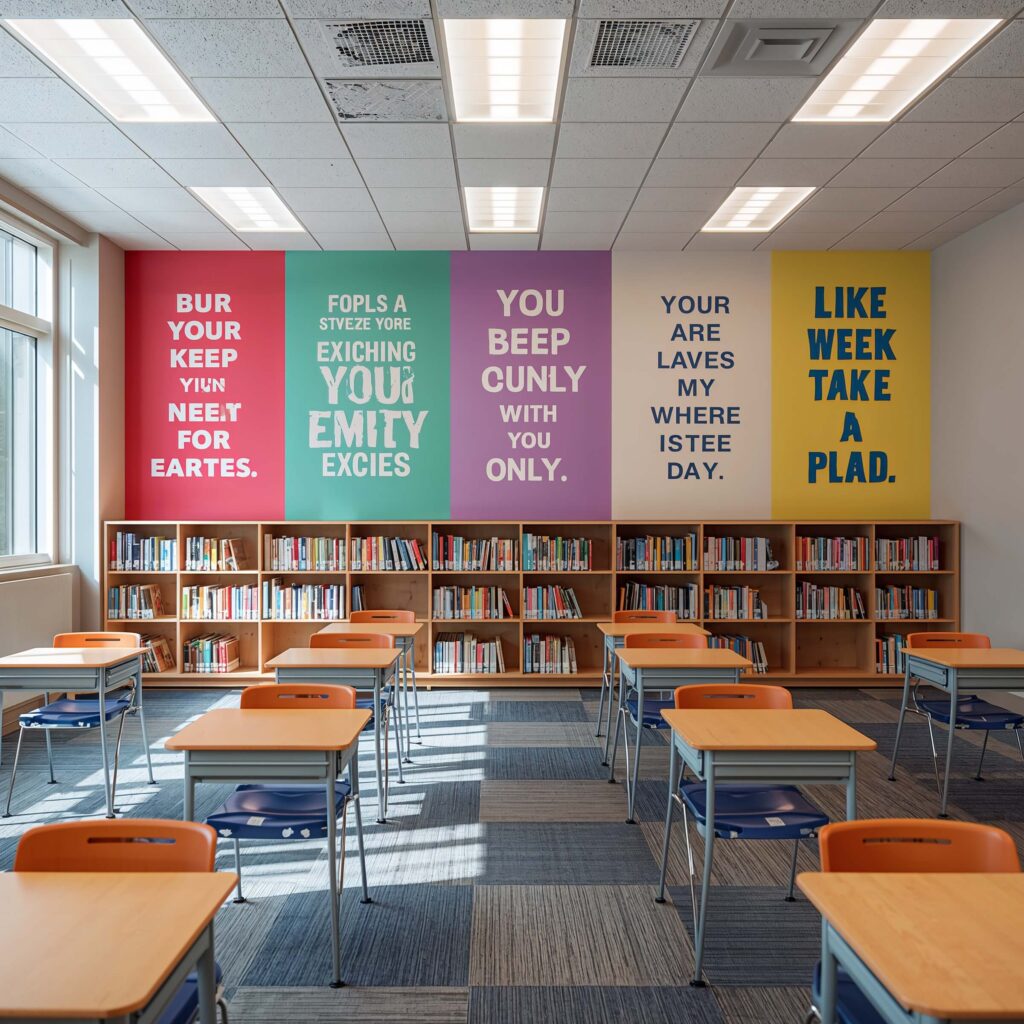
Let’s kick things off with something that packs a serious motivational punch. An inspirational quote wall transforms that boring blank space into a daily dose of encouragement. But here’s the thing – we’re not talking about those cheesy posters from the teacher supply store that scream “Live, Laugh, Learn” (seriously, who approved those?).
I discovered the magic of quote walls when my students started photographing one I created and sharing it on social media. That’s when I knew I’d hit gold. The key is choosing quotes that resonate with teenagers, not what adults think teenagers should hear.
Making It Work
Start by selecting quotes from sources your students actually care about:
- Contemporary authors they’re reading in class
- Musicians and artists from various genres
- Athletes from different sports
- Scientists and innovators who changed the world
- Student-submitted quotes (this one’s huge!)
The visual presentation matters just as much as the content. I use vinyl lettering in bold, modern fonts – none of that Comic Sans nonsense. Mix different sizes and colors to create visual interest. One wall in my classroom features a massive quote in 3D foam letters that students can’t help but touch every time they pass by.
Want to take it up a notch? Create an evolving quote wall where students can add their own favorite quotes throughout the year. Give them colorful sticky notes or small cards to contribute. You’d be amazed at the profound thoughts teenagers share when given the chance.
Design Tips That Actually Matter
Keep your color scheme cohesive – I stick to three colors max. Black text on white walls with one accent color works beautifully. If you’re feeling adventurous, try a gradient background using removable wallpaper. The ombre effect catches eyes without overwhelming the space.
Position quotes at different heights to create movement across the wall. Place shorter, punchier quotes at eye level where they’ll grab immediate attention. Longer, more thoughtful quotes can go higher up, encouraging students to pause and reflect.
Interactive Bulletin Boards
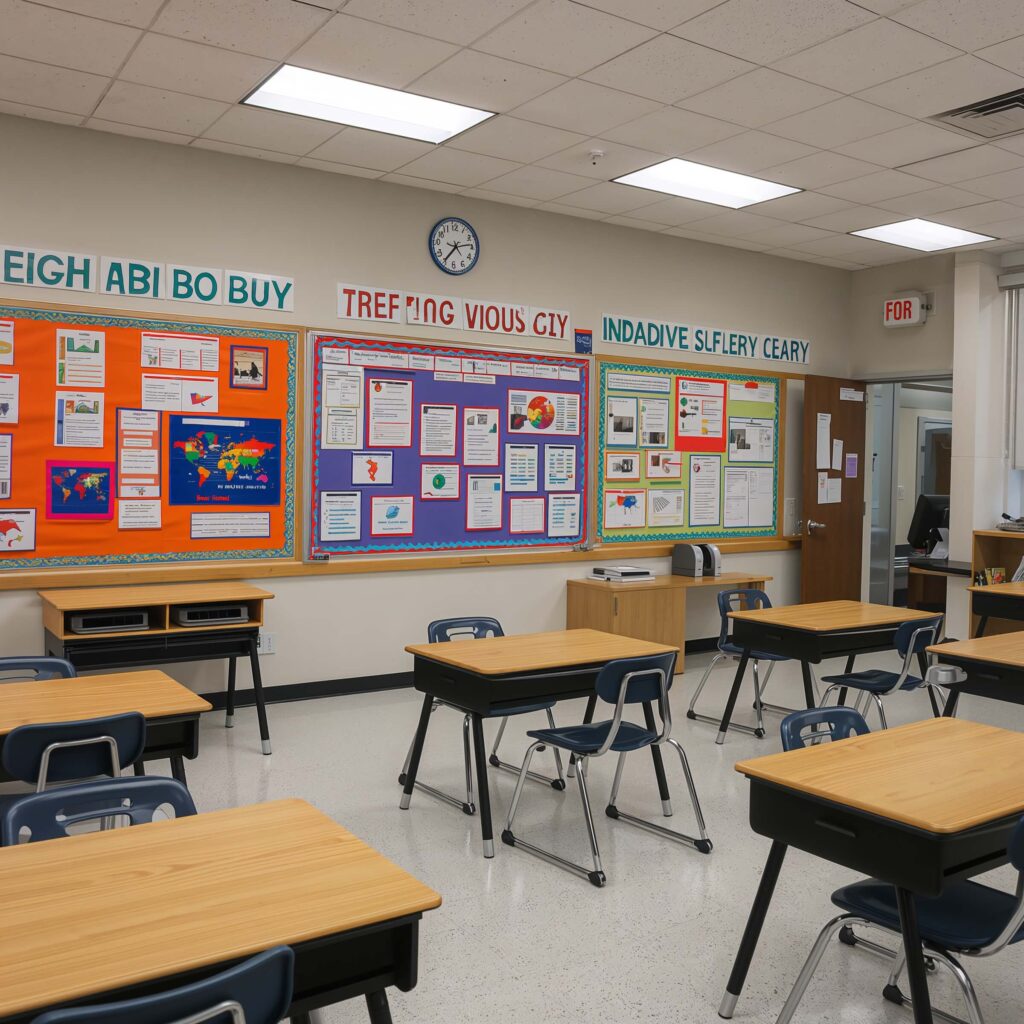
Static bulletin boards are dead – long live the interactive revolution! Students ignore traditional displays faster than they skip ads on YouTube. But give them something to touch, move, or contribute to? Now you’ve got their attention.
My most successful interactive board started as an experiment. I created a “Question of the Week” board where students could post anonymous responses. The engagement blew my mind. Students who never spoke in class were suddenly sharing deep thoughts through sticky notes.
Types That Actually Engage Students
The Debate Wall divides hot topics into two sides. Students move their name magnets to show where they stand. Topics range from “Is a hot dog a sandwich?” to more serious current events. The physical act of choosing a side sparks conversations that continue long after class.
The Achievement Tracker lets students publicly celebrate their wins. Create sections for different types of achievements:
- Academic victories (test scores, project completions)
- Personal goals reached
- Acts of kindness witnessed
- Skills mastered
I use colorful magnets and dry-erase surfaces so students can update their progress regularly. Watching them rush to update their achievements on Monday mornings tells me everything about its effectiveness.
Materials That Won’t Break Your Budget
Forget expensive specialty boards. Cork tiles from the hardware store work perfectly and cost a fraction of educational suppliers. Cover them with fabric for a softer look, or paint them with chalkboard paint for endless customization options.
Magnetic paint transforms any surface into an interactive wonderland. Two coats under your regular paint color, and suddenly your entire wall becomes a canvas for creativity. Students love the surprise factor when they discover random walls are magnetic.
Cozy Reading Nook
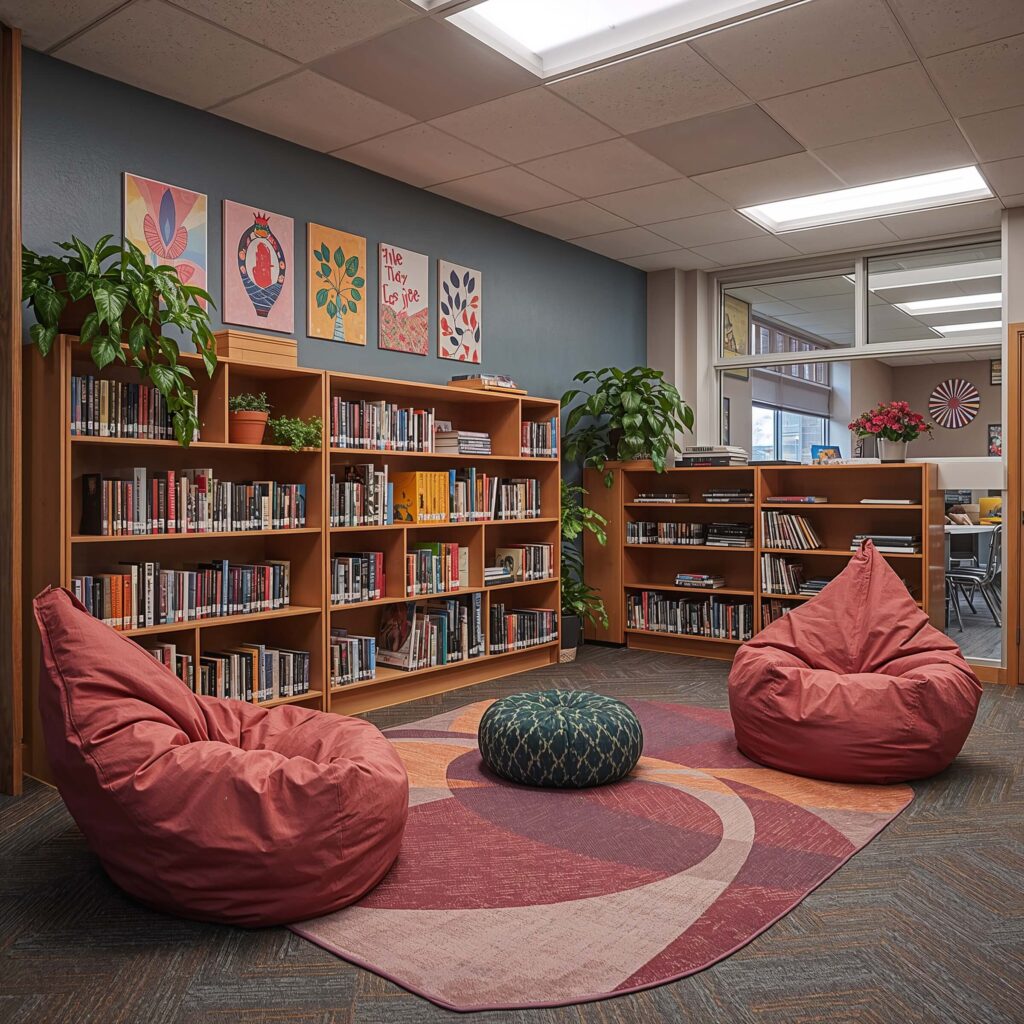
Who says high schoolers don’t want cozy spaces? Creating a reading nook shows students you value comfort and quiet reflection. Plus, it gives introverted students a refuge when group work gets overwhelming.
The transformation happens with just a few key elements. Soft seating changes everything – even one comfortable chair signals this space operates differently from the rigid desk area. I scored two oversized bean bags at a garage sale, and they’ve become the most coveted seats in my classroom.
Essential Elements for Maximum Coziness
Lighting makes or breaks a reading nook. Harsh fluorescents kill the vibe faster than a pop quiz on Friday. String lights create instant ambiance – I use warm white LEDs on a timer so they automatically create that perfect glow during reading time. A couple of cheap floor lamps from the thrift store add task lighting without the institutional feel.
Texture adds warmth without saying a word. Throw pillows, a small rug, and even a soft blanket transform cold corners into inviting spaces. My students initially laughed at the fuzzy pillows, but now they fight over who gets to use them during independent reading time 🙂
Storage solutions keep the space functional. Floating shelves display rotating book selections, while a small ottoman with hidden storage holds extra supplies. The key is keeping it organized without making it feel sterile.
Making It Work in Small Spaces
No room for a full nook? Create a “reading corner” with just a comfortable chair and a small side table. Hang a canopy or fabric from the ceiling to define the space psychologically. Even a folding screen can create that separated feeling students crave.
I’ve seen teachers transform closets into reading caves (with the door removed for safety, obviously). The enclosed feeling actually appeals to many students who find open classrooms overwhelming.
Also Read: 10 Inspiring Middle School Classroom Decor Ideas Cozy Space
Modern Color Block Walls
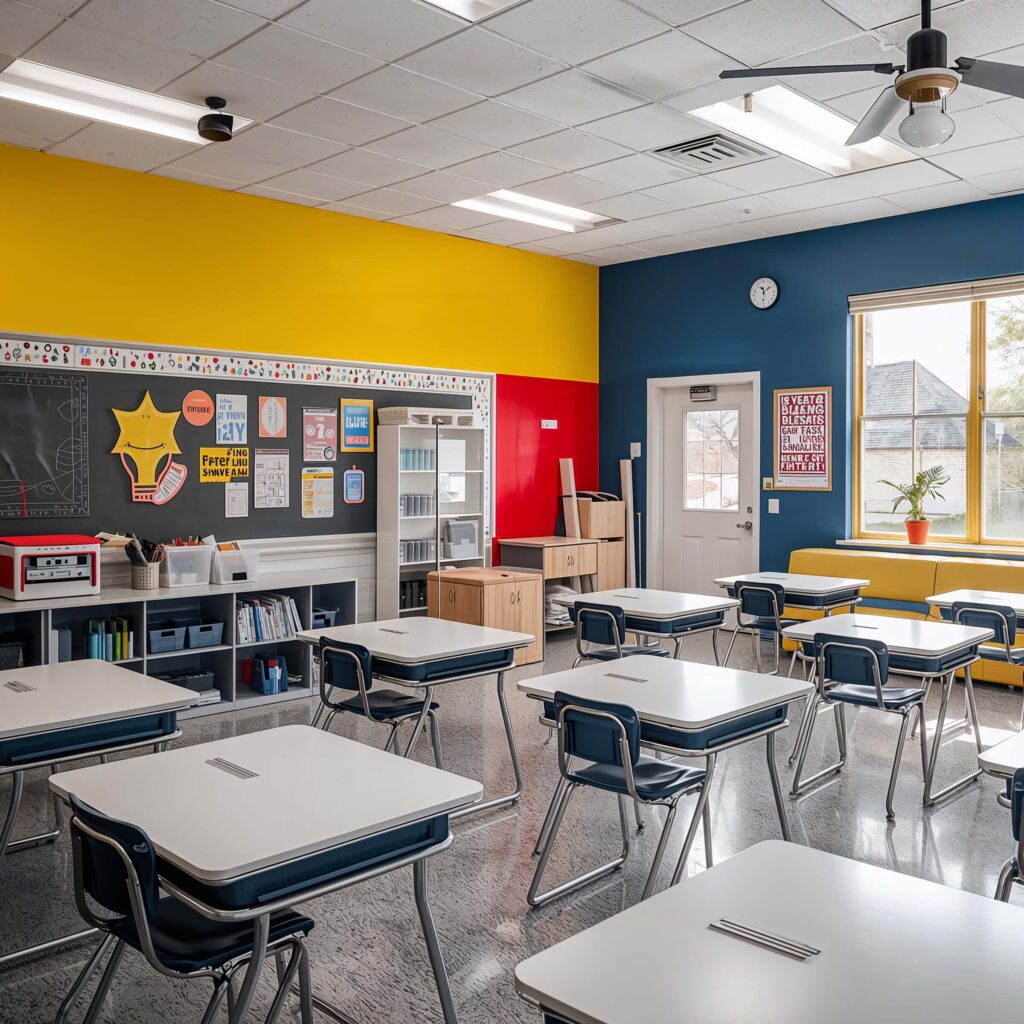
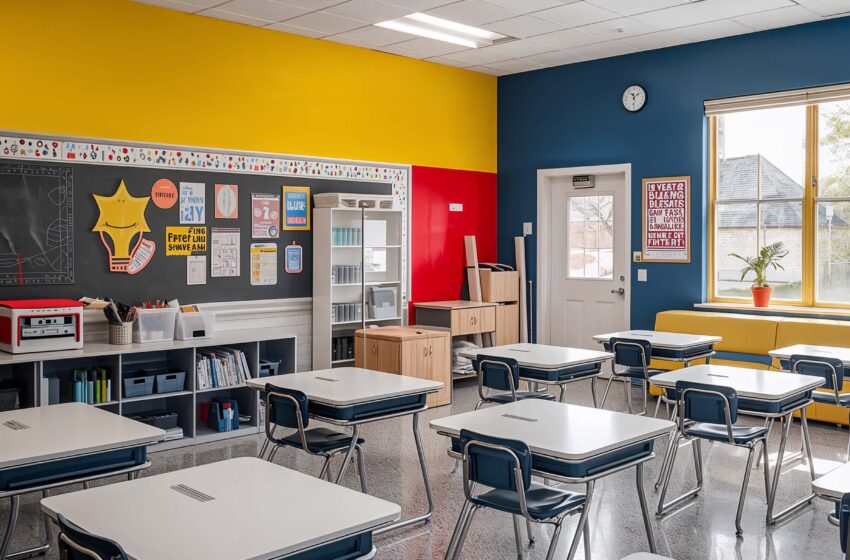
Color blocking brings contemporary design into educational spaces without requiring artistic talent. This trend exploded in interior design, and honestly, it works even better in classrooms where visual interest keeps minds engaged.
I stumbled into color blocking accidentally when I ran out of one paint color mid-wall. Instead of matching it exactly, I embraced the difference and created geometric shapes. Students immediately noticed and complimented the “intentional” design choice. Sometimes the best ideas come from happy accidents!
Choosing Your Color Story
Start with your school colors as a base, then add complementary tones. This creates unity while avoiding that overwhelming team spirit store vibe. My current classroom uses navy and gold (school colors) with mint green and coral accents. The combination feels fresh without ignoring school pride.
The 60-30-10 rule keeps things balanced:
- 60% neutral base (white, gray, or beige walls)
- 30% secondary color (your main color block shade)
- 10% accent color (bold pops in specific areas)
Techniques That Don’t Require Perfection
Painter’s tape becomes your best friend here. FYI, the secret to crisp lines is removing the tape while the paint’s still slightly wet. Learned that one the hard way after peeling off chunks of dried paint with the tape.
Geometric shapes work better than organic curves for beginners. Triangles, rectangles, and hexagons create modern looks without requiring artistic precision. I use a level and measuring tape to map out designs, then let students help with the actual painting. They take ownership of the space when they contribute to its creation.
Consider removable wallpaper for commitment-phobes. Peel-and-stick options let you experiment with bold patterns without permanent consequences. Perfect for renters or teachers who change rooms frequently.
Student Artwork Gallery
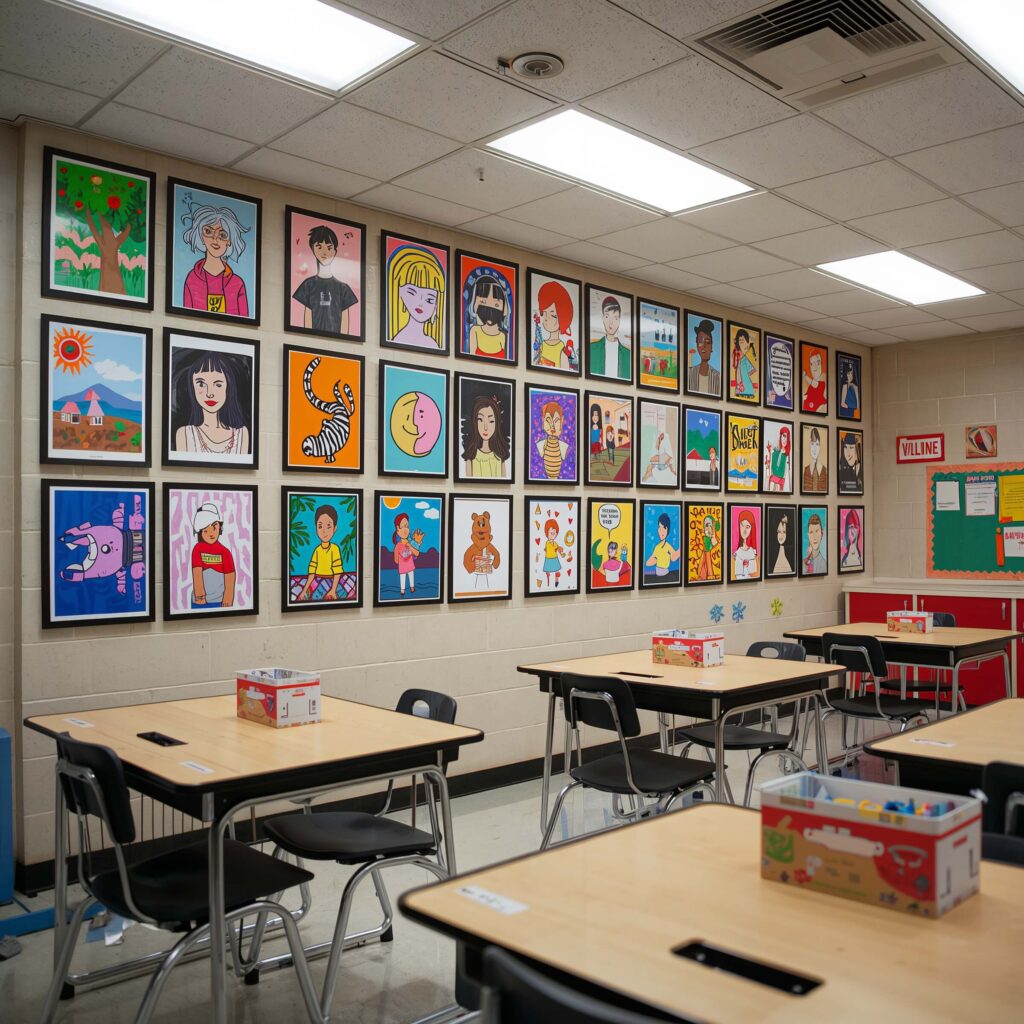
Nothing validates student creativity like displaying their work gallery-style. But we’re not talking about slapping papers on a bulletin board with pushpins. We’re creating a legitimate gallery experience that makes students feel like real artists.
The shift from “student work display” to “art gallery” changes how students perceive their own creativity. I noticed students started putting more effort into projects when they knew their work would be professionally displayed. That pride in presentation carries over into all their work.
Professional Display Methods
Matching frames instantly elevate any artwork. Hit up dollar stores and thrift shops for cheap frames, then spray paint them all the same color. Black or white frames create museum vibes without breaking the budget. I keep various sizes on hand to accommodate different projects.
Create a rotating exhibition schedule. Each month features different students or themes. Post “opening reception” dates when students can invite friends to see their work. The formality makes them take it seriously while building community around creativity.
Document everything with gallery labels. Small cards listing the artist’s name, title, medium, and artist statement teach professional presentation skills. Students learn to articulate their creative choices, a skill that extends far beyond art class.
Beyond Traditional Art
Expand your definition of display-worthy work:
- Photography projects from phone cameras
- Digital art printed in high quality
- Creative writing excerpts in beautiful fonts
- Scientific diagrams that blur art and academics
- Mathematical patterns and geometric designs
One of my favorite gallery moments happened when a student who “hated art” discovered his calculus graphs looked incredible when enlarged and displayed. He started experimenting with colored pencils to enhance his mathematical visualizations. That intersection of subjects? That’s where real learning happens.
Themed Supply Stations
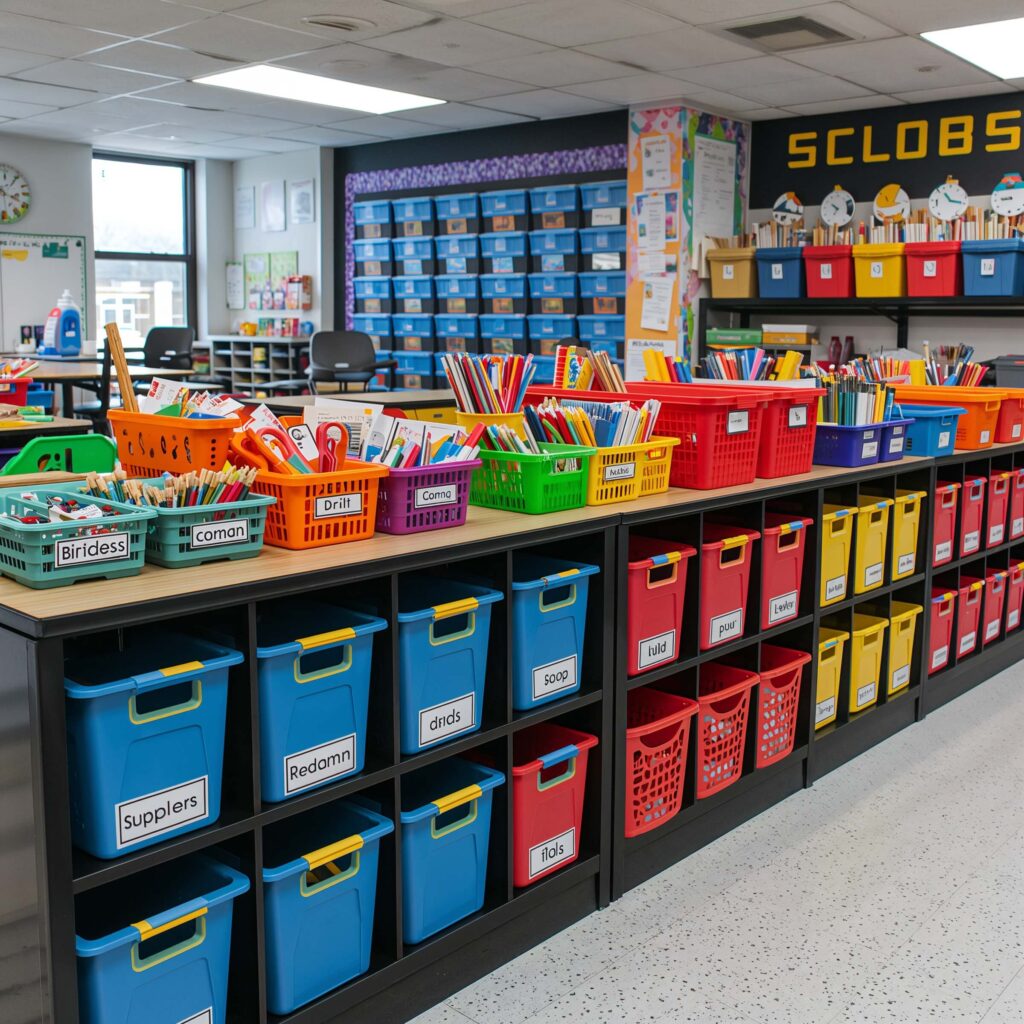
Organization meets personality when you create themed supply stations. Students actually return supplies when the system makes sense and looks appealing. Who knew that color-coding could be so powerful?
My classroom runs on zone-based organization. Each area has its own theme, color, and purpose. The writing station lives in blues and greens (calm, focused colors), while the creative station explodes with warm oranges and reds. Students unconsciously associate colors with activities, streamlining transitions.
Stations That Students Actually Use
The Tech Station houses chargers, headphones, and tablet stands. I use a vintage suitcase as storage – it looks cool and locks for security. Cable management clips keep cords tangle-free, and a small lamp provides task lighting for detail work. Students treat this area with respect because it doesn’t feel like typical school storage.
The Creativity Corner overflows with art supplies in clear containers. Visibility encourages use – hidden supplies might as well not exist. I label everything with both words and pictures, making it accessible for visual learners and English language learners. Rainbow organization isn’t just pretty; it helps students quickly find what they need.
The Research Station combines analog and digital resources. Physical dictionaries and thesauri sit alongside QR codes linking to online databases. A small bulletin board displays research tips and citation guides. This hybrid approach acknowledges that different students prefer different research methods.
Making It Sustainable
The secret to maintaining organized stations? Student ownership. Assign different groups as “station managers” each week. They’re responsible for restocking, organizing, and reporting supply needs. This distributed responsibility means I’m not constantly playing cleanup crew.
Use unconventional containers to add personality. Mason jars, tin cans wrapped in decorative paper, and repurposed food containers all work beautifully. My pencil holder collection includes everything from a ceramic pineapple to a 3D-printed dinosaur. These small touches make the space memorable.
Also Read: 10 Creative Music Classroom Decor Ideas That Inspire Learning
Motivational Desk Nameplates
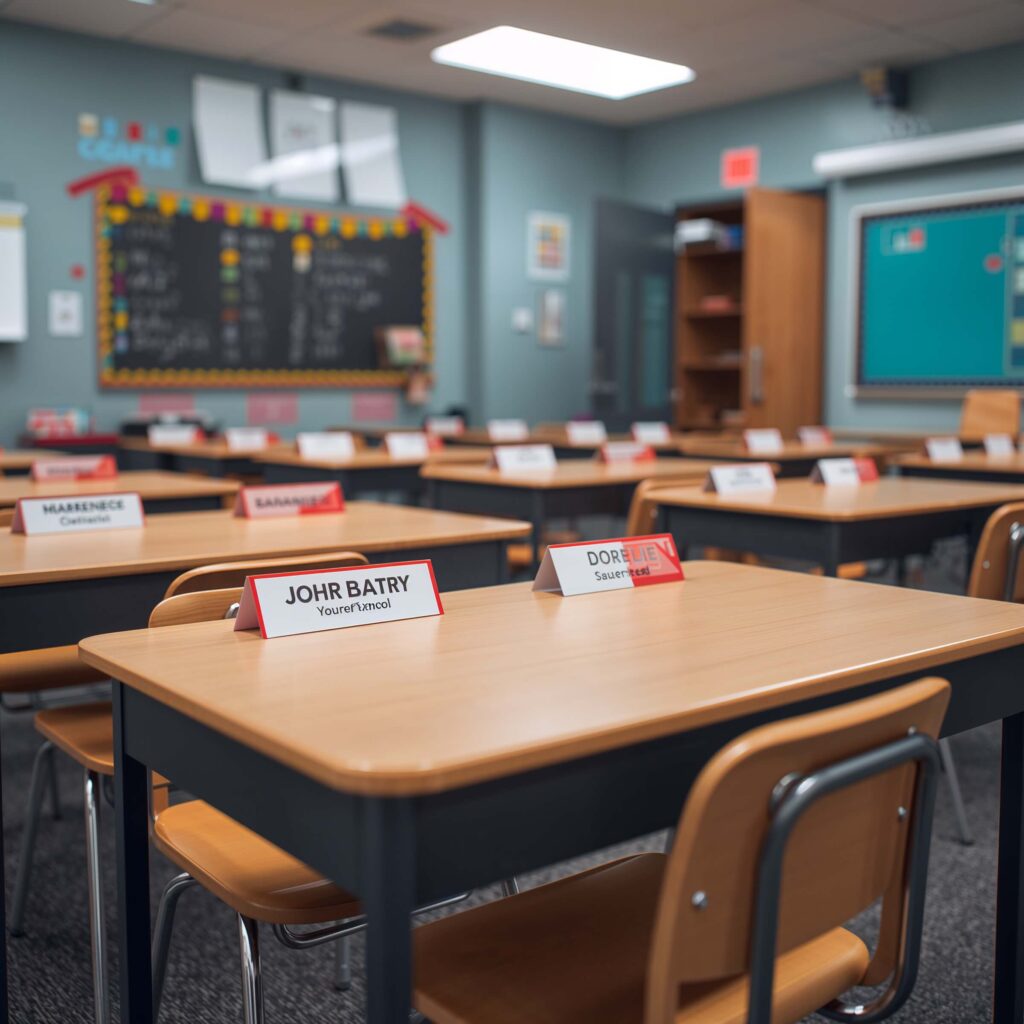
Forget those generic nameplates from the teacher store. We’re creating personalized motivation stations that sit right where students need them most – at their desks. These aren’t just identification tools; they’re daily affirmations of each student’s potential.
I started making custom nameplates after noticing students doodling motivational phrases on their desks. Instead of fighting the behavior, I channeled it productively. Now students design their own nameplates at the year’s beginning, incorporating elements that represent their goals and interests.
Design Elements That Inspire
Each nameplate includes:
- Student’s preferred name (respect for identity matters)
- A personal motto or goal for the year
- Visual elements representing interests or aspirations
- Achievement tracking space (small boxes to check off)
- A growth mindset reminder chosen by the student
The creation process itself builds community. Students share their designs, explain their choices, and often discover unexpected connections with classmates. That football player and theater kid might both choose the same motivational quote, breaking down social barriers.
Practical Production Tips
Lamination is non-negotiable. These nameplates need to survive teenage handling for an entire year. I print on cardstock, let students decorate with permanent markers, then laminate everything. The result withstands spills, erasers, and frustrated pencil tapping.
Create templates that balance structure with creativity. I provide the basic layout in Google Slides, then students customize colors, fonts, and images. This digital approach means they can revise until they’re satisfied, and I can print replacements if needed.
Consider making seasonal versions. Some teachers think I’m crazy for creating new nameplates quarterly, but the fresh start each season brings renewed motivation. Plus, students can see their growth by comparing their September goals to their June achievements.
Seasonal Wall Displays
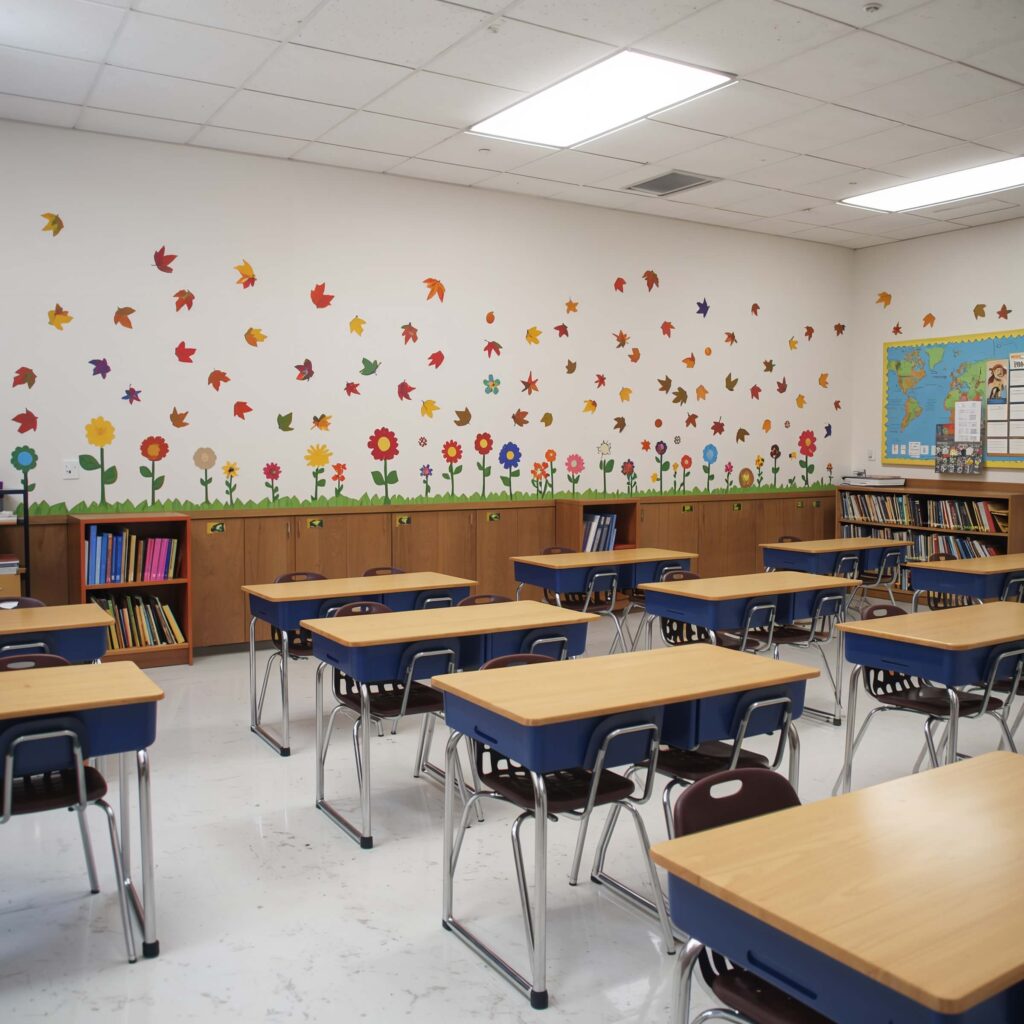
Seasonal displays keep your classroom feeling fresh without requiring complete redecorating. But here’s the trick – we’re going beyond traditional holiday decorations. Think seasonal inspiration that acknowledges the academic calendar’s natural rhythm.
September isn’t just about fall leaves; it’s about new beginnings and setting foundations. January isn’t just winter; it’s about renewal and pushing through challenges. When you align decorations with emotional seasons, not just weather seasons, they resonate deeper.
Displays That Evolve Naturally
Create a “Growth Tree” that changes with seasons. The bare branches of winter gradually gain leaves (each representing a learned concept) through spring. By year’s end, it’s fully bloomed with student achievements. This visual metaphor for learning sticks with students long after they leave your classroom.
Seasonal student spotlights celebrate different achievements each quarter:
- Fall: Goal setters and planners
- Winter: Persistent workers and improvement stories
- Spring: Collaborators and community builders
- Summer: Risk-takers and creative thinkers
The weather as metaphor board connects daily weather to learning moods. Sunny days represent clarity and understanding. Cloudy days acknowledge confusion as part of learning. Storms represent challenging concepts that require extra effort. Students add their own weather reports about their learning journey.
Efficient Seasonal Swaps
Create a base display that stays year-round, then add seasonal elements. My main bulletin board has a neutral background with velcro attachment points. Seasonal elements stick on and peel off easily, making transitions take minutes instead of hours.
Store seasonal elements in labeled boxes with photos of the completed display. This system means you’re not recreating the wheel each year. IMO, the time invested in organization pays dividends in future years.
Creative Ceiling Decor
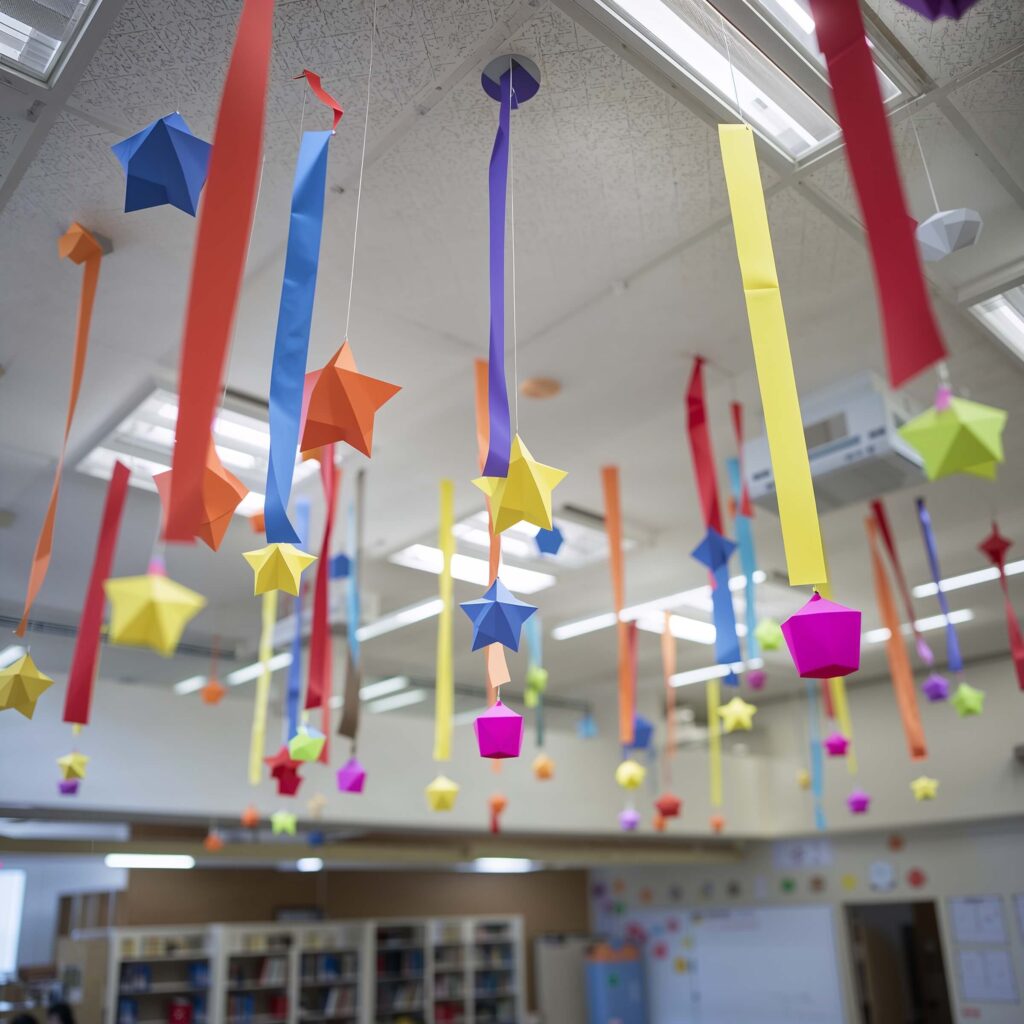
Look up! That forgotten ceiling space offers prime real estate for inspiration. Most classrooms waste this area, but creative ceiling decor adds dimension without cluttering work spaces.
I discovered ceiling decor’s power during state testing. Students naturally look up when thinking, and blank ceilings offer nothing but fluorescent glare. Now my ceiling provides visual interest that doesn’t distract from focused work.
Safe and Stunning Options
Hanging gardens bring nature indoors without maintenance hassles. Artificial vines and plants from craft stores create a canopy effect. I weave battery-powered fairy lights through them for magical ambiance. Students consistently mention the “garden classroom” as their favorite space.
Educational mobiles aren’t just for elementary rooms. Create sophisticated versions using:
- Literary quotes on geometric shapes
- Historical timeline events suspended at different heights
- Scientific models that actually demonstrate concepts
- Mathematical formulas arranged artistically
- Foreign language vocabulary in motion
Fabric panels soften acoustics while adding color. Sheer fabrics in school colors create elegant draping without blocking light. I hang them from fishing line attached to ceiling hooks, making installation and removal simple. The gentle movement adds life to static spaces.
Installation Without Destruction
Most schools prohibit permanent ceiling modifications, so removable solutions are essential. Command strips hold lightweight decorations without damage. Magnetic hooks work on metal ceiling grids. Suspension systems using existing fixtures require no new holes.
Paper lanterns offer maximum impact with minimal investment. Various sizes and colors create depth and interest. I change colors seasonally or for special units. Students love when the room’s whole mood shifts with new lantern colors.
Also Read: 10 Affordable Boho Classroom Decor Ideas for Budget-Friendly Fun
Tech-Friendly Learning Corners
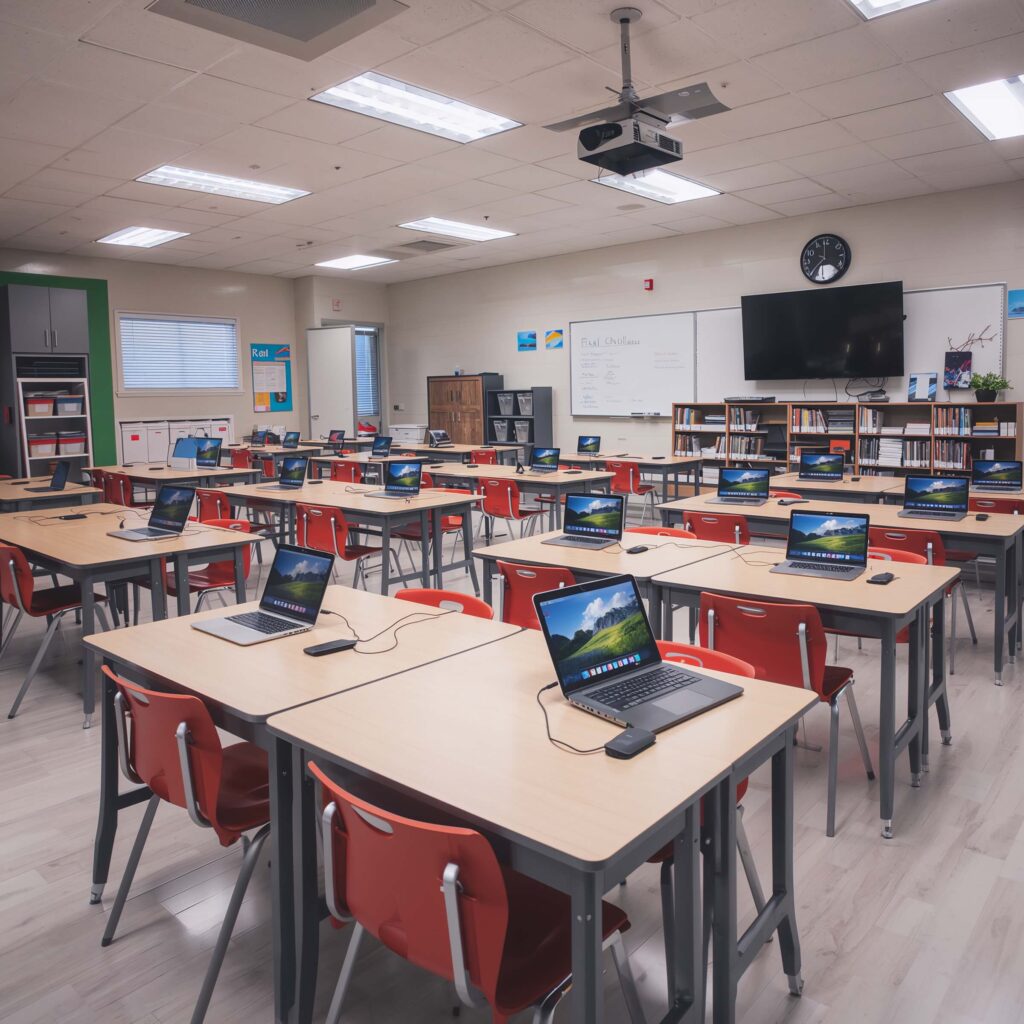
Modern students live in digital worlds, so our classrooms need tech-friendly spaces that acknowledge this reality. But we’re not just adding charging stations – we’re creating purposeful tech integration zones that enhance rather than distract from learning.
My tech corner started as a necessity when students’ devices kept dying mid-lesson. Now it’s become a collaborative hub where digital and analog learning merge seamlessly. Students actually moderate their own screen time better when tech has a designated space rather than being forbidden or unlimited.
Essential Components
Charging solutions that don’t create wire jungle gyms:
- Wall-mounted charging shelves with built-in cable management
- Power strips with individual switches for each outlet
- USB charging hubs that handle multiple devices efficiently
- Labeled cubbies for device storage during non-tech activities
Furniture that supports device use makes a huge difference. Bar-height tables allow students to stand while working (great for kinesthetic learners). Adjustable laptop stands prevent neck strain. Even simple lap desks transform uncomfortable plastic chairs into workable tech spaces.
Visual tech etiquette reminders establish expectations:
- Screen time guidelines posted at eye level
- Digital citizenship principles displayed creatively
- Troubleshooting tips for common tech issues
- QR codes linking to helpful tutorials
Balancing Digital and Physical
The best tech corners encourage collaboration, not isolation. I arrange seating in pods facing partially toward each other, making screen sharing natural. Whiteboards nearby let students sketch ideas before diving into digital creation. This hybrid approach prevents tech from becoming a barrier to communication.
Create “analog alternatives” within the tech space. Sometimes the best solution isn’t digital. Having graph paper, colored pencils, and manipulatives nearby reminds students that technology is a tool, not the only tool. My students often start projects on paper before moving to screens, improving their final digital products.
Bringing It All Together
Creating an inspiring high school classroom isn’t about perfection or massive budgets. It’s about intentionally designing spaces that speak to teenage souls while supporting serious learning. Every element we’ve discussed works because it acknowledges students as complex individuals who deserve beautiful, functional spaces.
The magic happens when students walk in and immediately feel the room was designed for them, not at them. When they contribute to the decor, maintain the organization, and take pride in their learning environment, that’s when education transforms from obligation to opportunity.
Start small if you’re feeling overwhelmed. Pick one idea that resonates with your teaching style and student needs. Maybe it’s the quote wall that speaks to your literature-loving heart, or perhaps the tech corner addresses your students’ real needs. Build from there, adding elements as you see what works for your unique classroom community.
Remember, the best classroom decor evolves with your students. What works in September might need tweaking by February. Stay flexible, listen to student feedback, and don’t be afraid to try something that seems a little crazy. Some of my biggest decorating wins came from ideas that seemed ridiculous at first.
Your classroom’s physical environment sends powerful messages about learning, creativity, and belonging. When students feel valued and inspired by their surroundings, they’re more likely to take academic risks, engage deeply with content, and build meaningful connections with peers. That’s the real power of thoughtful classroom design – it creates conditions where learning thrives naturally.
So grab that painter’s tape, raid some thrift stores, and start transforming your classroom into a space that makes students actually excited for the bell to ring. Trust me, when teenagers voluntarily hang out in your classroom before and after school, you’ll know you’ve created something special. The best part? Watching their faces light up when they realize this amazing space was created just for them :/