10 Easy Terrace Garden Design Ideas for Fresh Green Vibes
- Garden Design
 Ben
Ben- 0
- 34 minutes read
Look, I get it. You stare at that bland concrete terrace every morning and wonder why your outdoor space looks like a parking lot instead of the lush green paradise you pinned on Pinterest three months ago. Trust me, I’ve been there—standing on my rooftop with a single sad succulent in a plastic pot, thinking I had a “garden.” Spoiler alert: I didn’t.
But here’s the good news. Transforming your terrace into a green oasis doesn’t require a horticulture degree or selling a kidney to afford fancy planters. You just need some creativity, a bit of planning, and honestly, these ten design ideas I’m about to share. Whether you’re working with a shoebox-sized balcony or a sprawling rooftop, I’ve got you covered. Let’s turn that concrete jungle into an actual jungle, shall we?
Small Space Terrace Garden Layout Ideas
Ever tried fitting your entire gardening dreams into a space smaller than your bathroom? Yeah, it’s a special kind of challenge. But small doesn’t mean you can’t create something absolutely stunning.
The secret sauce here is vertical thinking. When you can’t grow outward, grow upward! I learned this the hard way after cramming seventeen pots onto my tiny balcony and creating what I can only describe as a plant obstacle course. Not my finest moment.
Here’s what actually works for small spaces:
- Corner stacking systems: Use those awkward corners everyone ignores. Stack tiered planters or install corner shelves to maximize every square inch.
- Railing planters: These beauties hook right onto your balcony railing and don’t eat up precious floor space.
- Fold-down tables: Get yourself a wall-mounted fold-down table for your gardening tools and potting needs. Fold it up when you’re done, and boom—space reclaimed.
The key is choosing compact plants that don’t spread like they’re trying to take over the world. Herbs, small flowering plants, and dwarf varieties are your best friends here. I keep basil, mint, and cherry tomatoes in my small space setup, and they’re perfectly happy without demanding an entire zip code.
Also, use light-colored pots and furniture to make the space feel bigger. Dark colors absorb light and make small spaces feel cramped, while whites, creams, and pastels open things up visually. It’s like wearing vertical stripes but for your terrace. 🙂
Modern Rooftop Garden Design Ideas
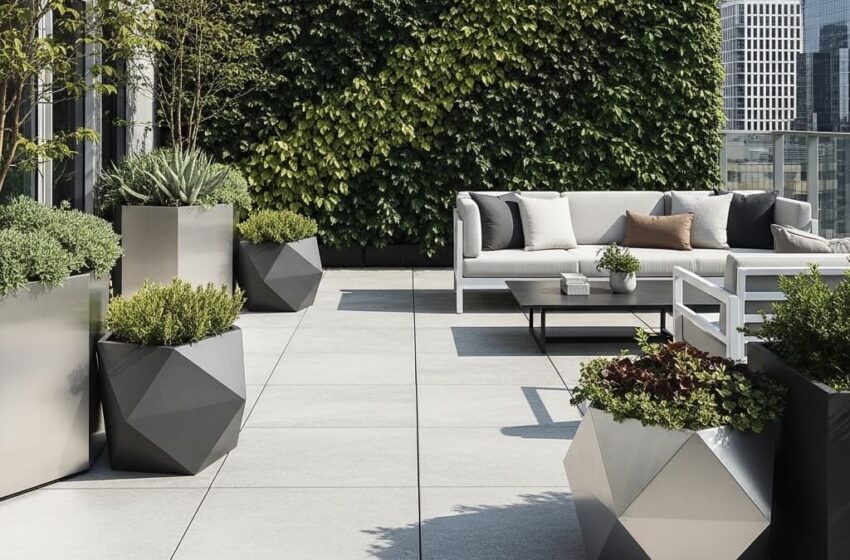
Modern design is all about clean lines, minimalism, and making your neighbors seriously jealous when they peek over. Think sleek, think chic, think “I definitely have my life together” vibes.
Geometric planters are the MVP of modern terrace gardens. Forget those fussy terracotta pots your grandma uses (no shade to grandma, though). We’re talking concrete cubes, rectangular fiber planters, and those Instagram-worthy hexagonal beauties. Arrange them in asymmetrical clusters for that effortlessly cool look.
Want to go full modern? Here’s your checklist:
- Monochromatic color schemes: Stick to grays, blacks, whites, and one accent color. Maybe a pop of emerald green through your plant choices or a single bold planter in mustard yellow.
- Outdoor LED lighting: String lights are cute, but recessed LED strips or geometric pendant lights scream modern sophistication.
- Minimalist furniture: A simple teak bench or metal chairs with clean lines. Nothing ornate or fussy.
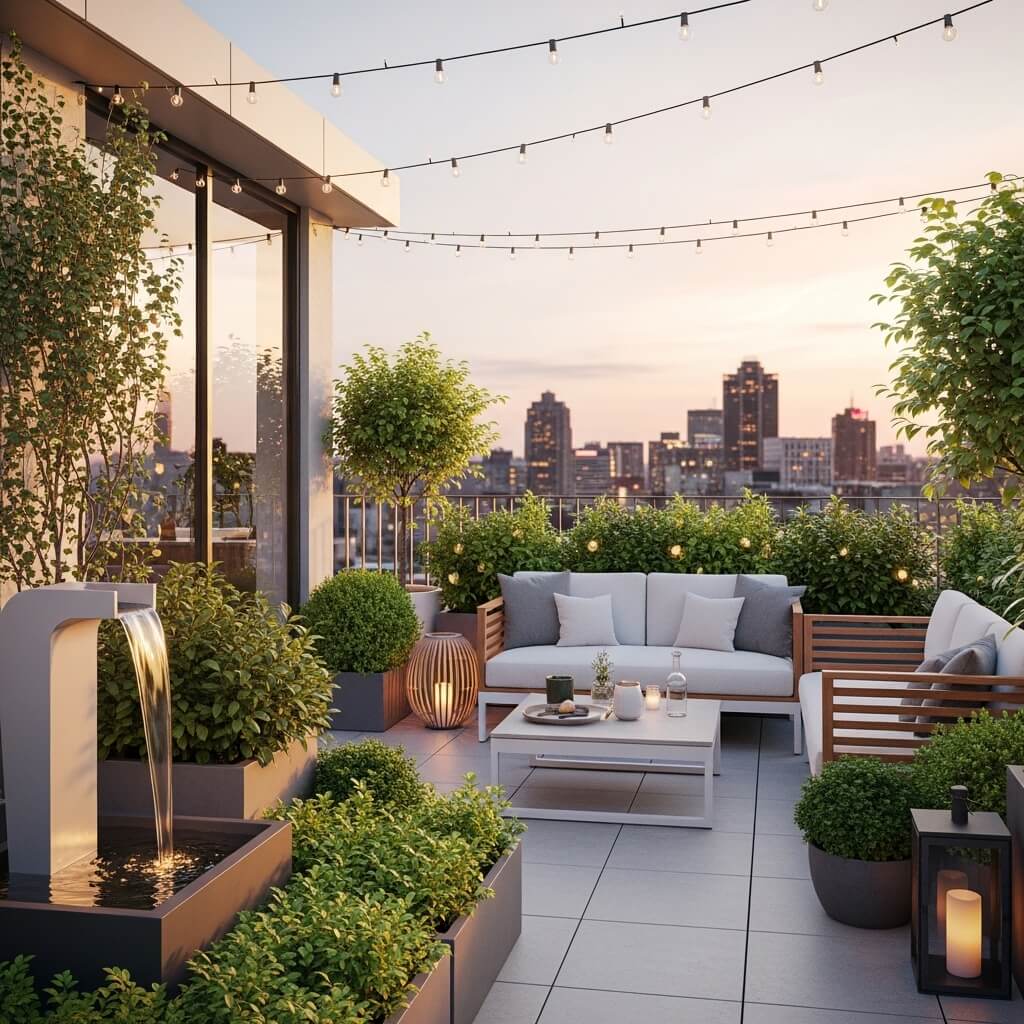
- Water features: A sleek rectangular fountain or a simple bowl with water and floating plants adds that zen factor.
I installed a small rectangular water feature on my rooftop last summer, and honestly? Best decision ever. The sound of trickling water makes the whole space feel like a boutique hotel, and it drowns out my neighbor’s questionable music choices. Win-win.
Don’t forget about hardscaping. Modern gardens balance greenery with structural elements. Wooden decking, stone pavers, or even outdoor rugs define different zones and add visual interest beyond just plants.
Budget-Friendly Terrace Garden Setup Ideas
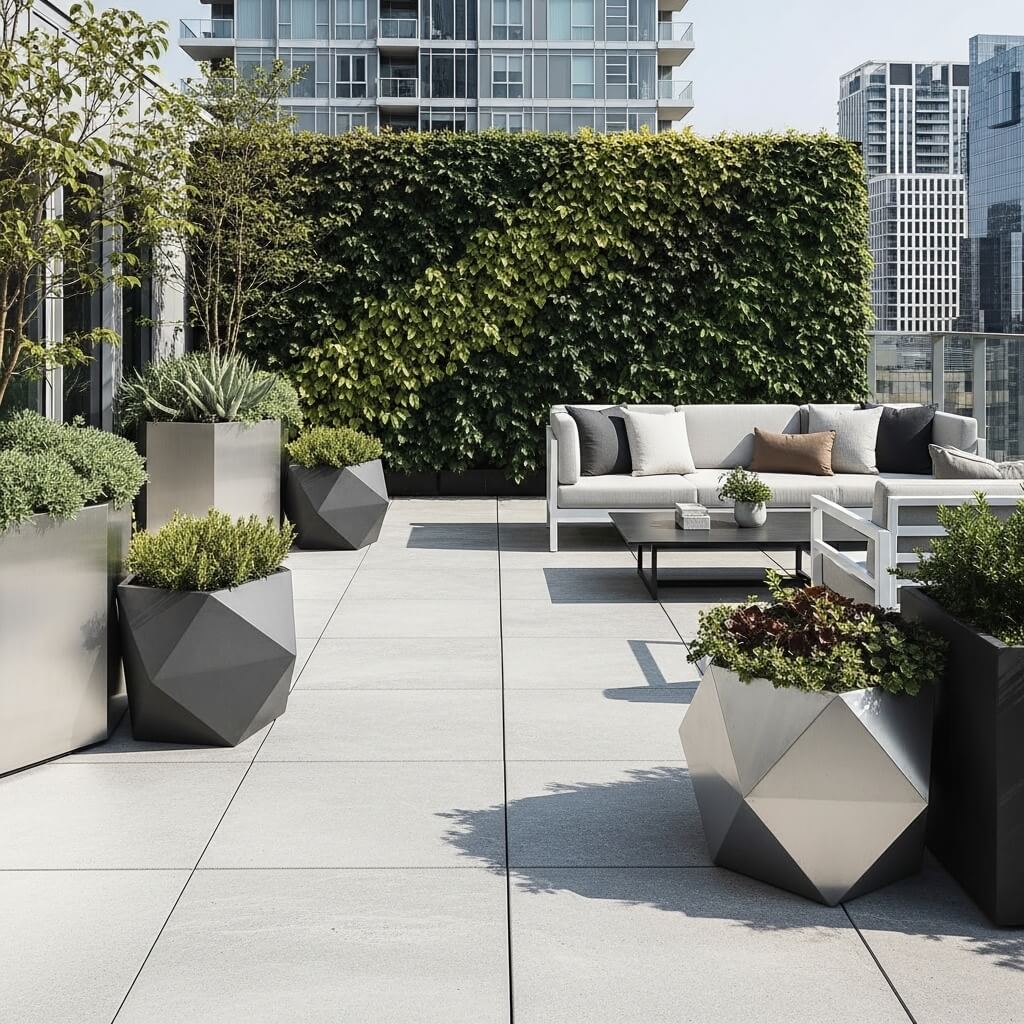
Let’s talk money, because not everyone wants to drop their entire paycheck on a terrace makeover. FYI, expensive doesn’t always mean better—some of my favorite garden elements cost less than my weekly coffee habit.
Repurposing is your best friend when you’re on a budget. Old wooden crates make fantastic rustic planters. Those plastic bottles you’re about to recycle? Cut them in half, poke some drainage holes, and you’ve got free pots. I’ve even used old cooking pots that lost their lids—just drill a drainage hole, and you’re golden.
Here are my favorite budget hacks:
- Grow from seeds: Buying mature plants is pricey. Seeds cost pennies and watching stuff grow from scratch is oddly satisfying. Plus, you get to feel like a plant wizard.
- DIY compost: Stop buying expensive fertilizers. Kitchen scraps make excellent compost, and it’s literally free nutrition for your plants.
- Pallet furniture: Wooden pallets transform into benches, vertical planters, or shelving with minimal effort. Sand them down, maybe add a coat of outdoor paint, and you’ve got custom furniture for next to nothing.
- Thrift store finds: Old ladders become plant stands, vintage baskets become hanging planters, and those weird ceramic containers? Perfect for succulents.
I once found a rusty metal ladder at a garage sale for five bucks. Spray-painted it white, hung small pots from the rungs, and now everyone asks where I bought my “designer plant display.” Little do they know… :/
Propagation is another money-saver. One plant becomes ten when you learn to propagate cuttings. I started with a single pothos, and now I have them in literally every room and multiple pots on my terrace. It’s like plant cloning, and it costs zero dollars.
Also Read: 10 Lovely Home Garden Design Ideas for Aesthetic Backyard Charm
Cozy Balcony Terrace Green Garden Ideas
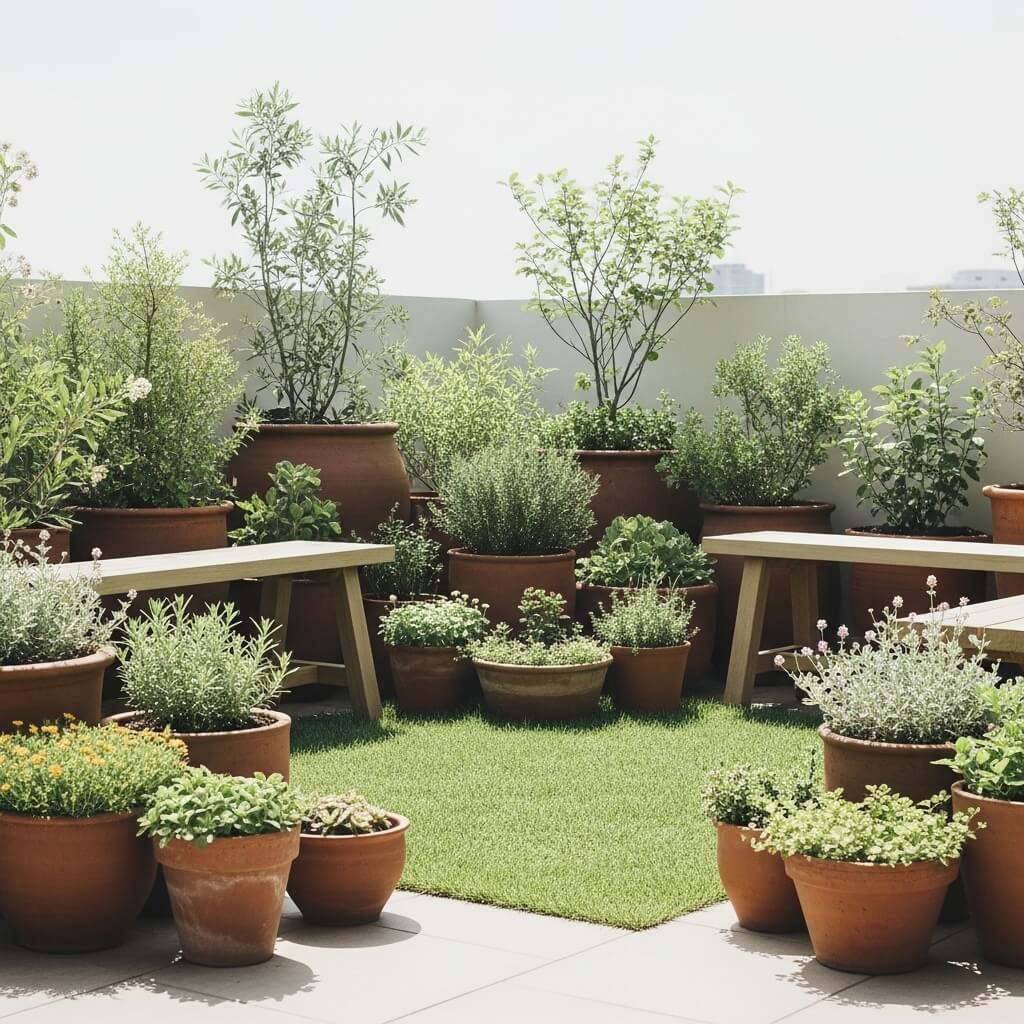
Who says your balcony can’t feel like a secret garden hideaway? Cozy is all about creating a space that makes you want to curl up with a book and never leave.
Layering is everything for cozy vibes. You want different heights, textures, and densities. Tall bamboo or ornamental grasses for privacy, medium-sized ferns and flowering plants at eye level, and trailing plants spilling over the edges. It’s like decorating a cake but with plants.
My cozy balcony essentials include:
- Outdoor cushions and throws: Comfort is king. Get yourself some weather-resistant cushions in warm, inviting colors.
- Fairy lights or lanterns: Warm lighting creates instant coziness. I’m obsessed with solar-powered lanterns because they’re effortless and magical.
- Fragrant plants: Jasmine, lavender, roses—whatever smells divine. Nothing says cozy like natural aromatherapy wafting around.
- A small seating area: Even a single comfortable chair with a side table transforms the space from “place with plants” to “actual retreat.”
I installed a small hammock chair on my balcony last year, and it’s become my favorite spot on Earth. Something about being surrounded by greenery while gently swinging makes all of life’s problems feel smaller. Highly recommend.
Privacy screens made from climbing plants are genius for cozy balconies. Train ivy, clematis, or passion flower up a trellis, and suddenly you’ve got a living wall that blocks out the world. Your balcony becomes a private oasis instead of a fishbowl for the neighbors to gawk at.
Low-Maintenance Terrace Garden Ideas
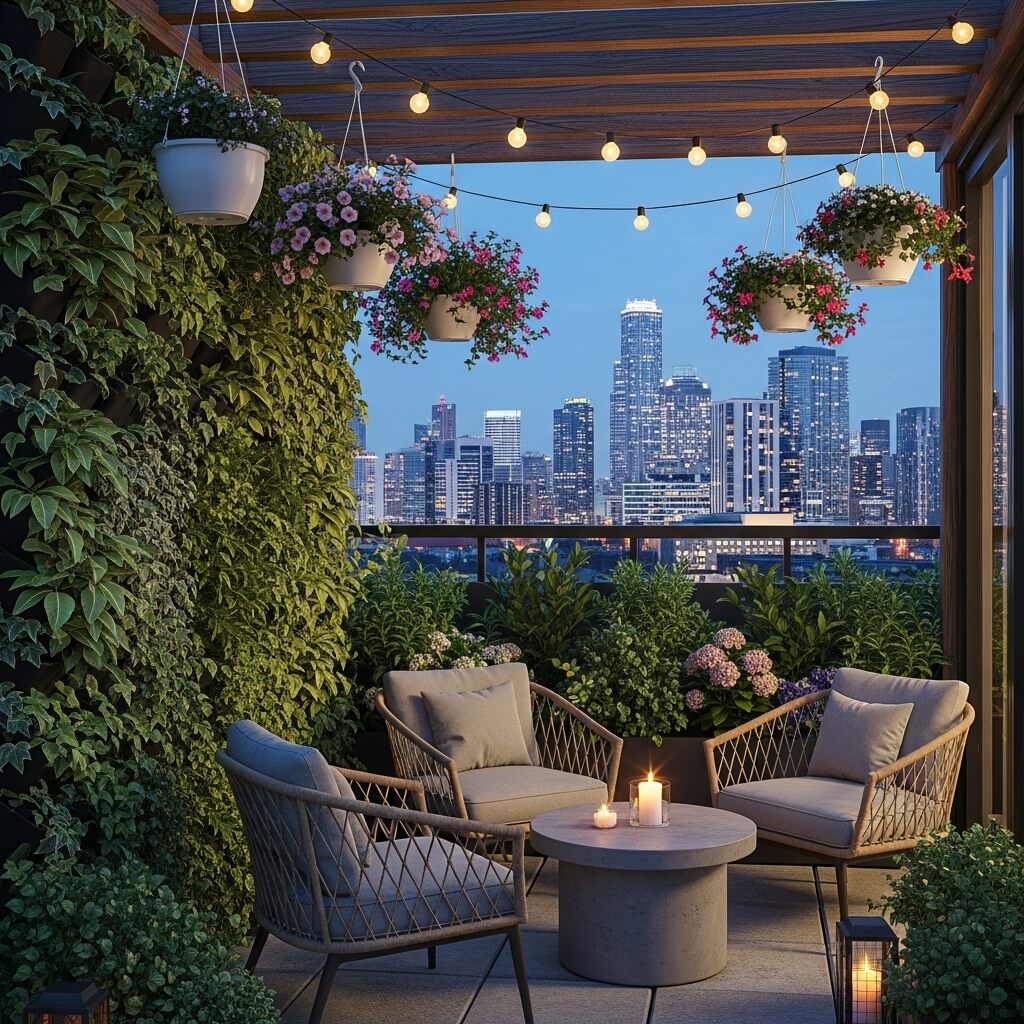
Real talk? Not everyone has time to baby plants like they’re toddlers. Some of us want greenery without the commitment of a twice-daily watering schedule.
Succulents and cacti are the obvious choice, but don’t stop there. Plenty of gorgeous plants laugh in the face of neglect. Snake plants, pothos, ZZ plants, and most herbs are ridiculously forgiving. I once forgot about my snake plant for three weeks (don’t judge me), and it was perfectly fine. Thriving, even.
Low-maintenance doesn’t mean boring. Check out these strategies:
- Self-watering planters: These beauties have built-in reservoirs that feed water to plants as needed. You fill them up every week or two and forget about it.
- Drip irrigation systems: Sounds fancy, but basic systems are cheap and easy to install. Set a timer, and your plants water themselves.
- Native plants: Choose plants adapted to your local climate. They need less fussing because they’re already suited to your weather conditions.
- Mulching: A layer of mulch retains moisture, meaning less frequent watering. Plus, it looks neat and tidy.
I installed a simple drip irrigation system with a timer, and it’s been life-changing. I travel for work, and coming home to dead plants was getting depressing. Now everything stays green whether I’m home or not.
Grouping plants with similar needs also saves effort. Put all your sun-lovers together, shade-tolerant plants in another area, and water-hungry specimens in one zone. It’s like meal prepping but for gardening—batch processing makes everything more efficient.
Luxury Rooftop Garden Design Inspiration
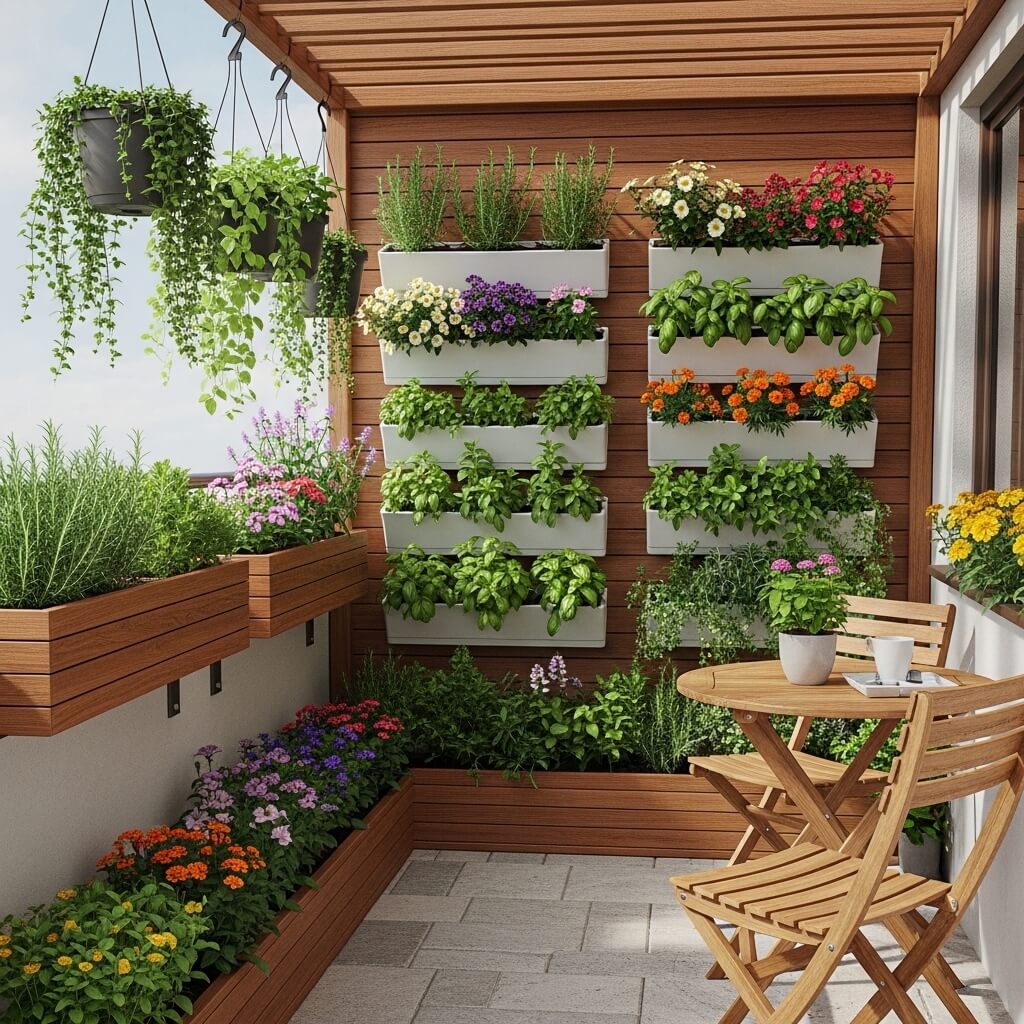
Okay, so maybe you want to go all out. No judgment here—if you’ve got the budget for a luxury setup, why not create something spectacular?
Built-in seating with storage is luxury 101. Imagine custom benches with hidden compartments for gardening tools, cushions, and supplies. Everything looks seamless and high-end, plus you get functionality.
Luxury terrace gardens include these showstoppers:
- Pergolas or gazebos: Create shade and architectural interest. Drape them with wisteria or grapevines for that Mediterranean villa aesthetic.
- Outdoor kitchen or bar area: A built-in grill, mini-fridge, and counter space turn your rooftop into an entertainment zone.
- Premium materials: Teak furniture, natural stone pavers, copper planters—quality materials that age beautifully.
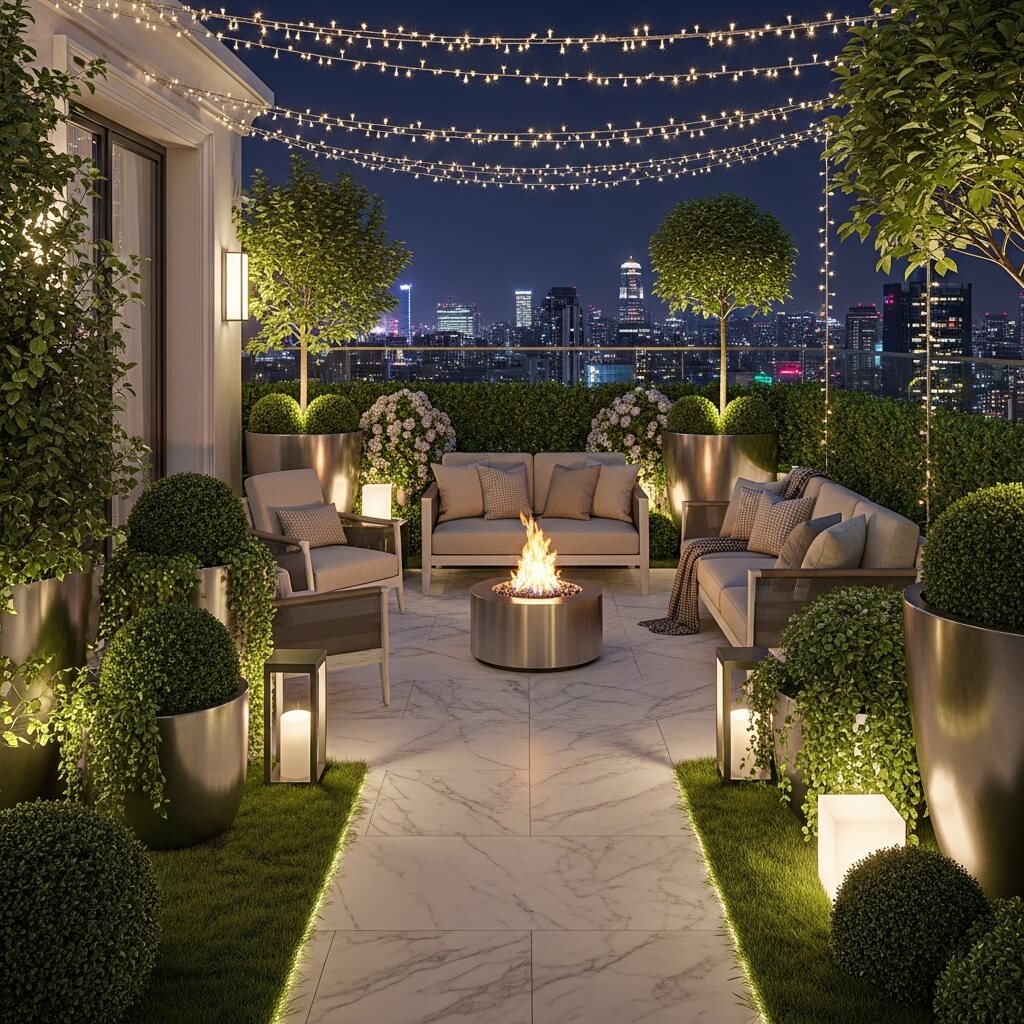
- Professional lighting design: Uplighting for trees, path lights, spotlights on focal points. Proper lighting makes your garden usable and gorgeous after dark.
- Statement plants: Mature olive trees, Japanese maples, or large palms. These aren’t cheap, but they provide instant impact.
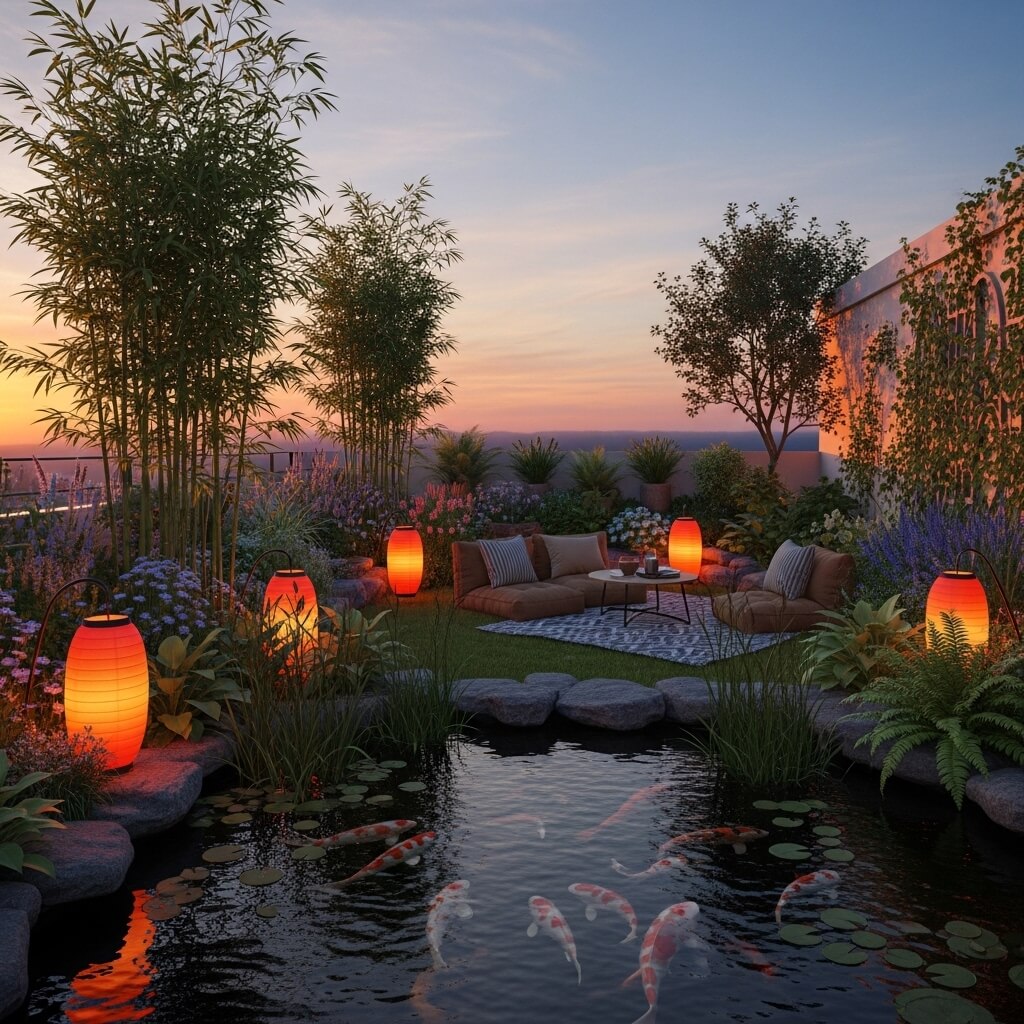
I visited a luxury rooftop garden once that had an actual koi pond. Like, with real fish. Was it over the top? Absolutely. Was it stunning? Also absolutely. Sometimes excess is just impressive.
Automated everything is another luxury move. Automated irrigation, weather-responsive shade systems, and smart outdoor speakers controlled from your phone. It’s high-tech gardening at its finest.
Also Read: 10 Modern Vegetable Garden Design Ideas for Stylish Gardens
DIY Vertical Terrace Garden Ideas
Vertical gardens are honestly genius, and they’re way easier to create than you’d think. When horizontal space is limited, why not use your walls?
Pallet gardens are the classic DIY vertical option. Stand a pallet upright, attach landscape fabric to the back, fill the slats with soil, and plant away. I made one for growing lettuce and herbs, and it’s both functional and conversation-starting.
Other vertical DIY ideas that actually work:
- Hanging gutter gardens: Mount rain gutters horizontally on a wall, fill with soil, and plant shallow-rooted crops like lettuce or strawberries.
- Shoe organizer planters: Yes, really. Those over-the-door fabric shoe organizers make surprisingly effective vertical herb gardens.
- PVC pipe towers: Cut holes in PVC pipes, cap the bottom, fill with soil, and plant through the holes. Great for strawberries or small flowers.
- Wall-mounted pocket planters: Buy or sew fabric pockets that hang on walls. Each pocket holds a plant, creating a living wall tapestry.
I tried the shoe organizer method after seeing it online, fully expecting it to be one of those Pinterest fails. But nope—it actually worked beautifully for growing herbs. Each pocket held a different herb, and harvesting was super convenient.
Living walls can get fancy with modular systems you buy, but DIY versions using wooden frames and chicken wire work just fine. The key is ensuring proper drainage—nothing kills vertical gardens faster than waterlogged roots.
Minimalist Terrace Garden Design Styles
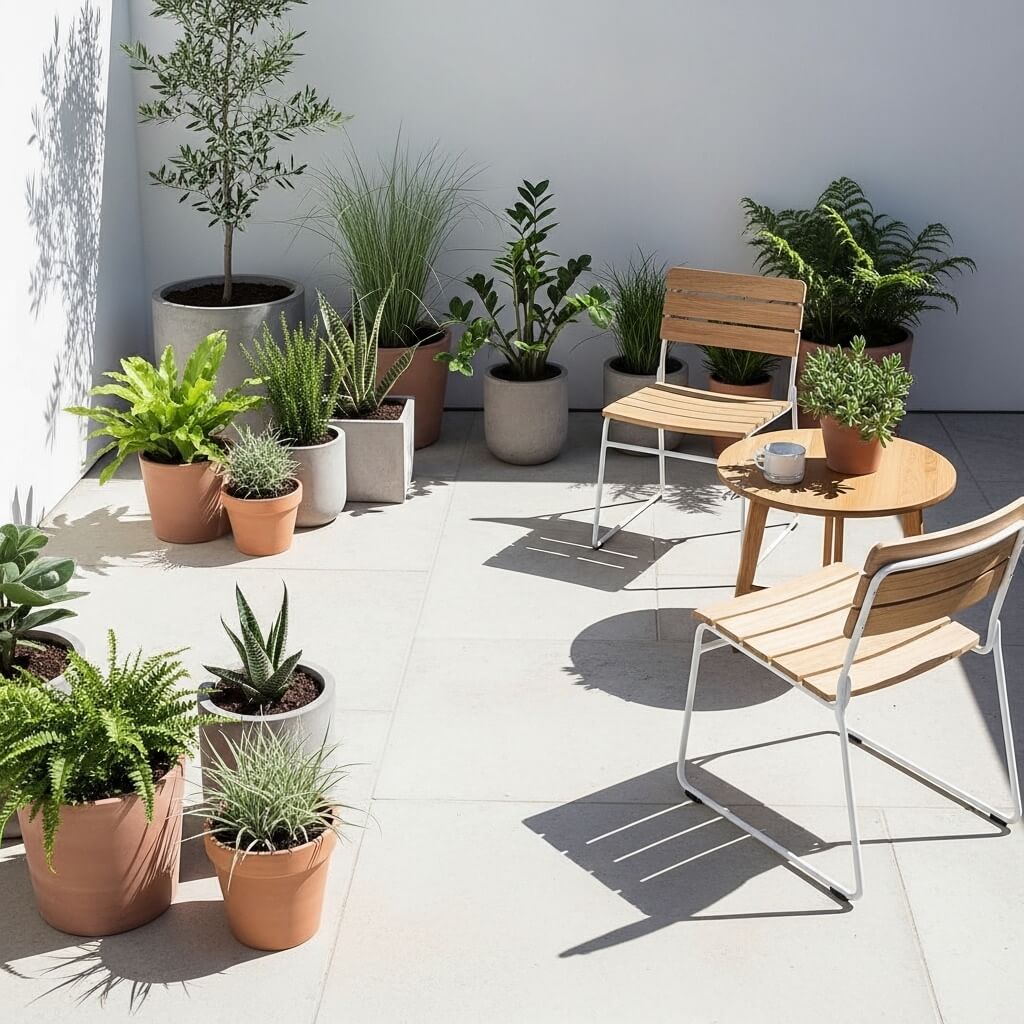
IMO, minimalism is harder than it looks. It’s not about having less stuff—it’s about having only the right stuff. Every element needs to earn its place.
Less is more applies to plant selection too. Instead of twenty different plant varieties creating visual chaos, choose three to five types max and repeat them throughout the space. This creates cohesion and calm.
Minimalist terrace garden principles:
- Negative space matters: Don’t fill every inch. Empty space gives the eye rest and makes what you do have stand out.
- Quality over quantity: One beautiful, well-maintained plant in a perfect planter beats a dozen random plants in mismatched pots.
- Simple color palette: Stick to greens with maybe one other color. White flowers, silvery foliage, or uniform pot colors.
- Clean lines and symmetry: Arrange elements with intention. Symmetrical layouts feel orderly and peaceful.
I transitioned to a more minimalist terrace setup last year after my previous “more is more” approach became overwhelming. Honestly? It’s so much easier to maintain, and the space feels more relaxing. Fewer plants to water, less visual clutter, more zen.
Structural plants work best for minimalism. Think boxwood, bamboo, ornamental grasses, or sculpted topiary. These have strong forms that create impact without needing a bunch of accessories or companion plants.
Urban Jungle Rooftop Garden Ideas
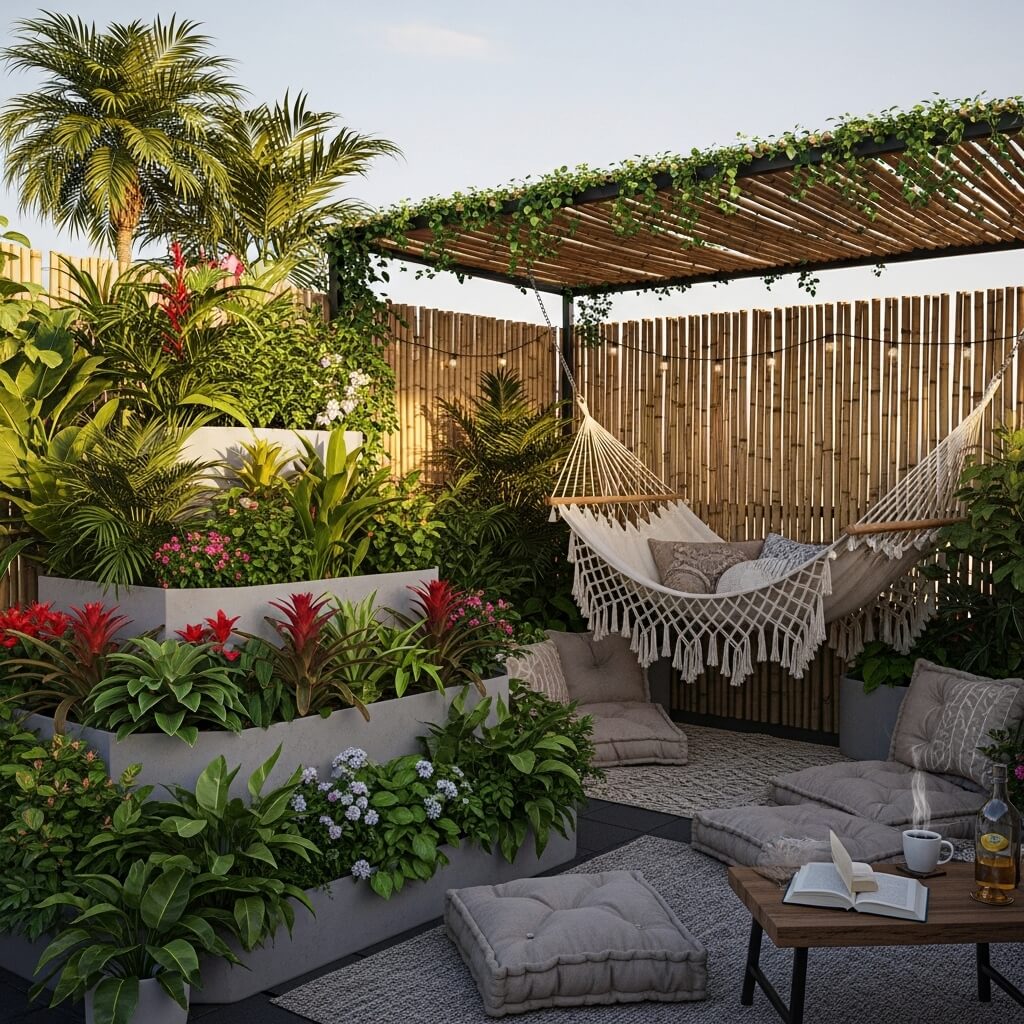
Alright, now we’re going the opposite direction—maximum lushness, tropical vibes, and enough greenery to make Tarzan feel at home. Urban jungle style is for people who think “too many plants” isn’t a real concept.
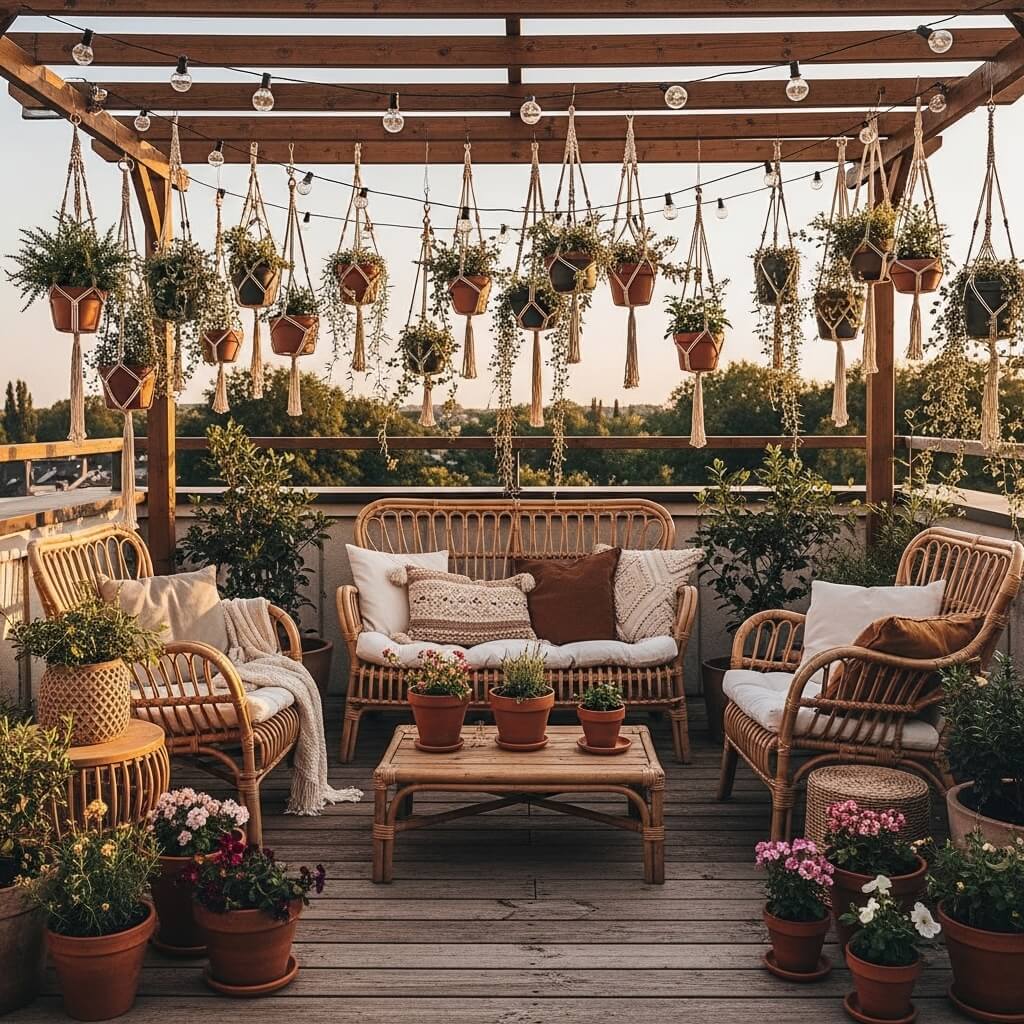
Layering is crucial for jungle vibes. You want plants at every level—ground covers, medium shrubs, tall statement plants, and overhead hanging baskets. The goal is barely seeing any walls or floor through all the foliage.
Essential elements for your urban jungle:
- Big, bold foliage: Monstera, banana plants, elephant ears, ferns—anything with dramatic leaves.
- Varied textures: Mix smooth leaves with frilly ferns, spiky plants with trailing vines. Variety creates that wild, untamed look.
- Hanging plants everywhere: Devil’s ivy, string of pearls, Boston ferns cascading from above.
- Natural materials: Wicker, bamboo, rattan furniture. Nothing too sleek or modern—you want organic vibes.
I went a bit jungle-crazy on one section of my terrace, and guests legitimately don’t believe it’s the same space from the photos I showed them before. It feels like stepping into a different climate zone, which is wild considering we’re in the middle of a city.
Don’t fear overcrowding with jungle style. Plants can be close together—they actually look better that way. In nature, plants compete for space, creating that dense, layered look we’re after.
Also Read:10 Relaxing Small Garden Design Ideas for Outdoor Oasis
Small House Rooftop Vegetable Garden Ideas
Growing your own food on a rooftop is ridiculously satisfying. There’s something primal about eating a tomato you grew yourself, even if it’s technically only five feet from your kitchen.
Container gardening is perfect for rooftop vegetables. You’ll need pots at least 12 inches deep for most veggies, though deeper is better for tomatoes, peppers, and root vegetables.
Best vegetables for rooftop growing:
- Tomatoes: Cherry varieties do especially well in containers. Just stake them properly because rooftops can get windy.
- Leafy greens: Lettuce, spinach, arugula, and kale thrive in containers and don’t need much depth.
- Herbs: Basil, cilantro, parsley, mint—basically all the expensive stuff you buy in tiny plastic containers at the store.
- Peppers: Both sweet and hot peppers adapt well to container life.
- Radishes and carrots: Choose short varieties that don’t need super deep soil.
I grow cherry tomatoes, basil, and hot peppers on my rooftop, and the flavor difference from store-bought is insane. Plus, the satisfaction of making pasta sauce from your own tomatoes and basil? Unmatched.
Succession planting keeps harvests coming all season. Instead of planting all your lettuce at once, plant a new batch every two weeks. You’ll have continuous greens instead of a massive harvest followed by nothing.
Watch out for wind and sun exposure on rooftops. These spots typically get more of both than ground-level gardens. Wind can dry out soil quickly and damage plants, so windbreaks might be necessary. On the flip side, all that sun is fantastic for sun-loving vegetables like tomatoes and peppers.
Use quality potting mix, not garden soil. Rooftop containers need light, well-draining soil. Garden soil becomes compacted and heavy, which stressed container plants. I learned this the hard way, and my first attempt at rooftop tomatoes was… underwhelming.
Making It All Work Together
Here’s the thing nobody tells you about terrace gardens—you don’t have to commit to just one style. My rooftop mixes elements from several of these ideas because that’s what works for my space and lifestyle.
I’ve got a cozy seating area surrounded by jungle-style lushness, a minimalist corner with succulents for low-maintenance greenery, and vertical herb gardens feeding my cooking addiction. It’s eclectic, but it’s mine, and it works.
Start small and expand as you figure out what thrives in your specific conditions. Every terrace has its own microclimate—sun exposure, wind patterns, heat retention. You’ll discover these quirks as you go, and your garden will evolve accordingly.
Don’t stress about perfection. Plants die sometimes (I’ve killed so many, it’s embarrassing), design choices don’t always work out (that hot pink planter seemed like a good idea at the time), and that’s totally fine. Gardening is a process, not a destination. Wow, that sounds like a motivational poster, but it’s true.
Invest in good drainage. I’m putting this in bold because it’s genuinely the most important technical detail. Without proper drainage, even the best design ideas lead to root rot and dead plants. Make sure every container has drainage holes, and if you’re building raised beds, install drainage systems.
Look, transforming your terrace into a green sanctuary isn’t about having the perfect space, unlimited budget, or expert knowledge. It’s about starting somewhere—anywhere—and learning as you go. Maybe you begin with a single corner filled with easy herbs, or perhaps you go all-in with a full rooftop renovation. Both approaches are totally valid.
The fresh green vibes you’re craving? They’re absolutely achievable with these design ideas. Whether you’re working with a tiny balcony or a sprawling rooftop, limited funds or luxury budgets, seeking low-maintenance simplicity or lush jungle abundance—there’s an approach here that’ll work for you.
So grab some pots, pick up some plants, and get started. Your future self will thank you when you’re sipping coffee surrounded by greenery instead of staring at boring concrete. And hey, if things don’t go perfectly? At least you tried, which is more than most people scrolling through plant photos on Instagram can say. Now get out there and create your green oasis—you’ve got this! 🙂