10 Dreamy Kids Game Room Decor Ideas for Playful Vibes
- Game Room Design
 Ben
Ben- 0
- 49 minutes read
Look, I get it. You’ve stepped on one too many LEGO pieces, tripped over controllers, and found gaming headsets in the weirdest places. Your kid’s “gaming setup” probably looks like a tornado hit a toy store, right? Well, what if I told you that you could create an actual designated game room that’s both functional AND Instagram-worthy? Yeah, I’m talking about a space that’ll make your kids actually want to keep their stuff organized (okay, maybe that’s asking too much, but we can dream).
I’ve spent way too much time researching, planning, and yes—making mistakes—when it comes to kids’ game rooms. After my own kid’s bedroom started looking like a GameStop exploded in it, I knew something had to change. So buckle up, because I’m sharing ten seriously dreamy game room ideas that’ll transform your chaotic play area into a space that screams “playful vibes” without making you want to scream.
1. Cozy Minimal Kids Gaming Corner
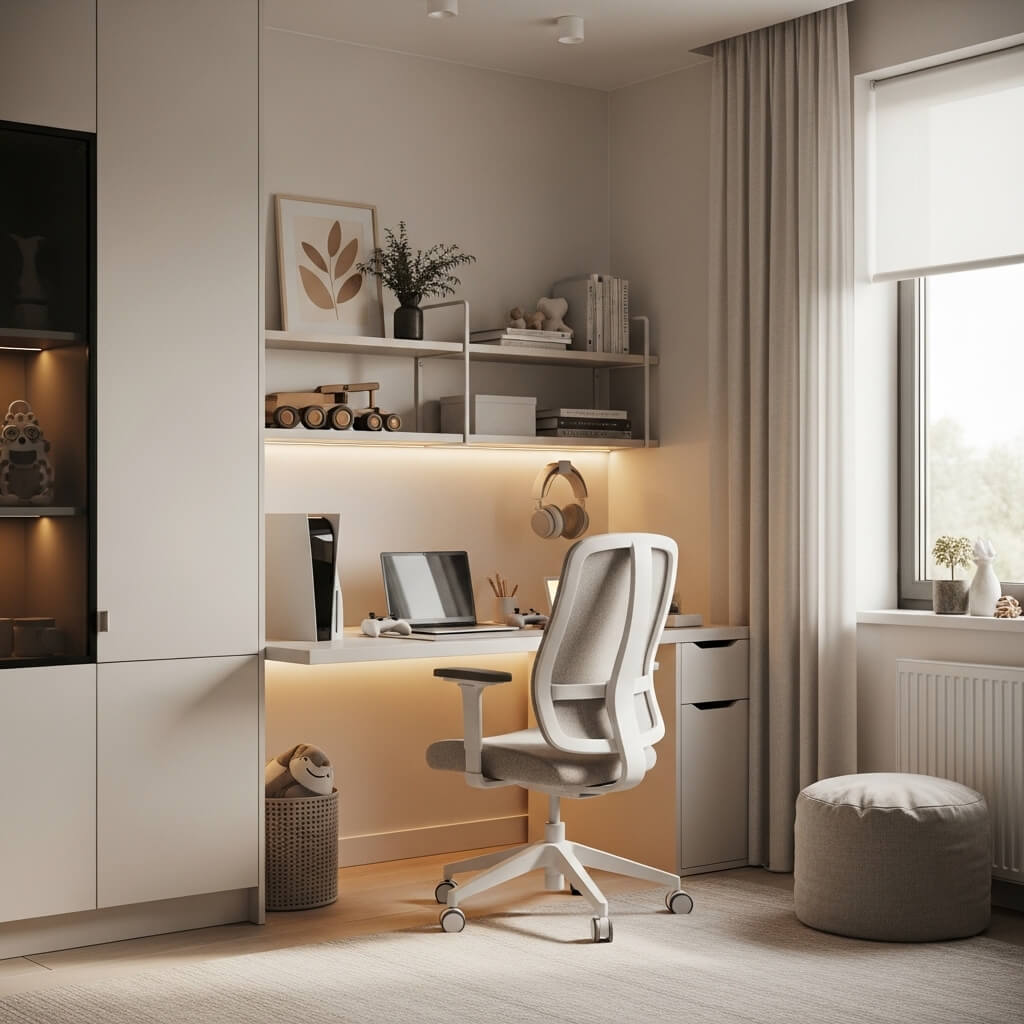
Less Is Actually More (Who Knew?)
Here’s the thing about minimal design—it’s not about being boring. It’s about being intentional, and honestly? Kids’ spaces benefit from this approach more than you’d think. A cozy minimal gaming corner focuses on quality over quantity, which means you’re not drowning in plastic junk by Tuesday.
I created one of these in my own home, and the secret sauce is choosing neutral colors as your base—think soft grays, warm whites, or gentle beiges. Then you add pops of color through carefully selected pieces. Maybe a mustard yellow bean bag or a sage green floor cushion. The beauty here is that your kid won’t get visually overstimated, which (fun fact) actually helps them focus better on their games.
The Essential Elements
Want to nail this look? Here’s what you need:
- A simple, low-profile gaming desk or floor table in natural wood
- One quality ergonomic chair or floor cushion (your kid’s posture will thank you later)
- Floating shelves for organized game storage
- A small area rug to define the space
- Warm, ambient lighting like a simple arc lamp or LED strips in soft white
The trick is keeping surfaces clear. I use a “one in, one out” rule—every new game means an old one gets donated or stored elsewhere. Does it always work? Eh, we’re about 70% successful, but that’s better than the chaos we had before 🙂
Why This Works
Minimal doesn’t mean your kid can’t personalize their space. They absolutely can! But you’re giving them a calm foundation that won’t overwhelm their senses. Plus, cleanup becomes SO much easier when there aren’t a million things to put away. Ever noticed how kids actually play more creatively when they have fewer options? There’s actual research on this, and it blew my mind when I first learned about it.
The cozy part comes from textures—add a chunky knit throw, some soft pillows, maybe a faux sheepskin rug. These elements make the space feel inviting without cluttering it up. And honestly, you might find yourself wanting to hang out in there too.
2. Colorful Adventure Play Game Room
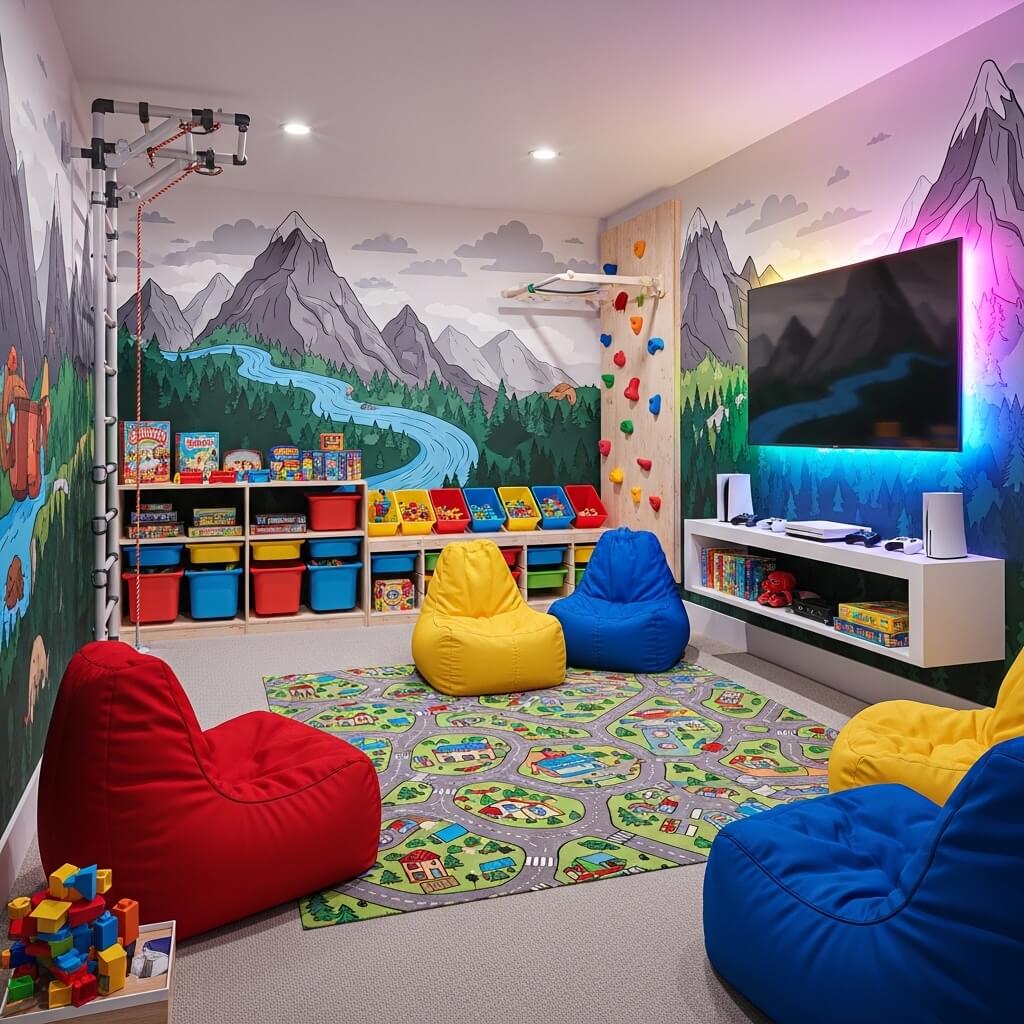
Go Bold or Go Home
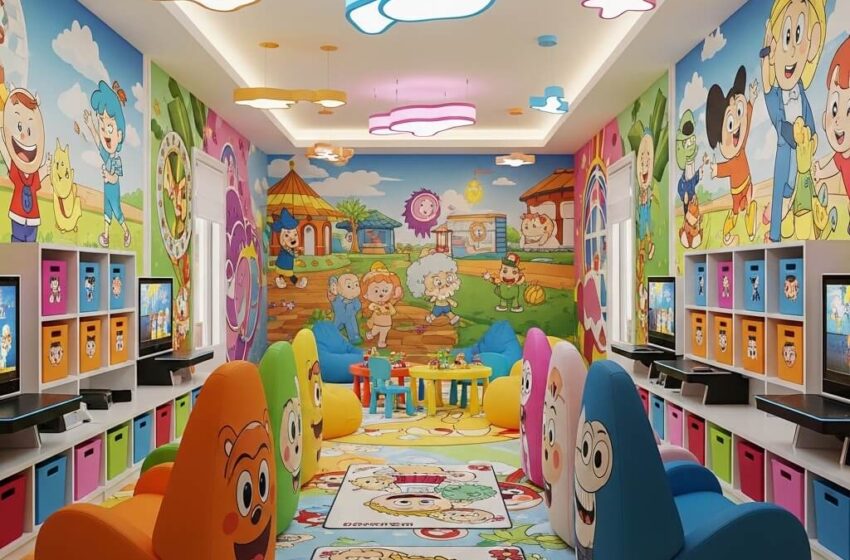
If minimalism makes you yawn, let me introduce you to its complete opposite. The colorful adventure game room is where your inner child gets to run wild, and trust me, kids absolutely lose their minds over this style. We’re talking rainbow walls, vibrant furniture, and decor that looks like it jumped straight out of a cartoon.
I’ll be real with you—this approach isn’t for the faint of heart. You need to commit to the chaos in the best possible way. But done right? You’ll create a space that sparks imagination and makes every gaming session feel like an actual adventure.
Color Blocking Magic
Here’s how I’d approach this without making the room look like a crayon factory exploded:
- Choose 3-4 main colors and stick to them (mine were turquoise, coral, sunny yellow, and lime green)
- Use color blocking on walls—paint different walls in different colors or create geometric patterns
- Mix and match furniture in complementary shades
- Add themed decor like jungle plants, mountain wall decals, or ocean-inspired elements
- Include interactive elements like a climbing wall feature or a reading nook designed as a “cave”
The key is balance. Too many colors competing for attention will give everyone a headache. But the right combination? Chef’s kiss. You create visual interest that energizes the space without overwhelming it.
Adventure-Themed Touches
What really sells this concept are the adventure elements. Think about adding a teepee for quiet gaming sessions, or install rope ladder wall art that doubles as a growth chart. You could create a “treasure chest” storage solution for controllers and accessories, or hang a world map where your kid can mark off places they “visit” in their games.
FYI, I added a chalkboard wall to ours where my kid draws their latest gaming achievements or designs their own game characters. It’s become their favorite feature, and it was literally the cheapest addition we made. Sometimes the simplest ideas win, you know?
3. Modern Neon Kids Gaming Setup
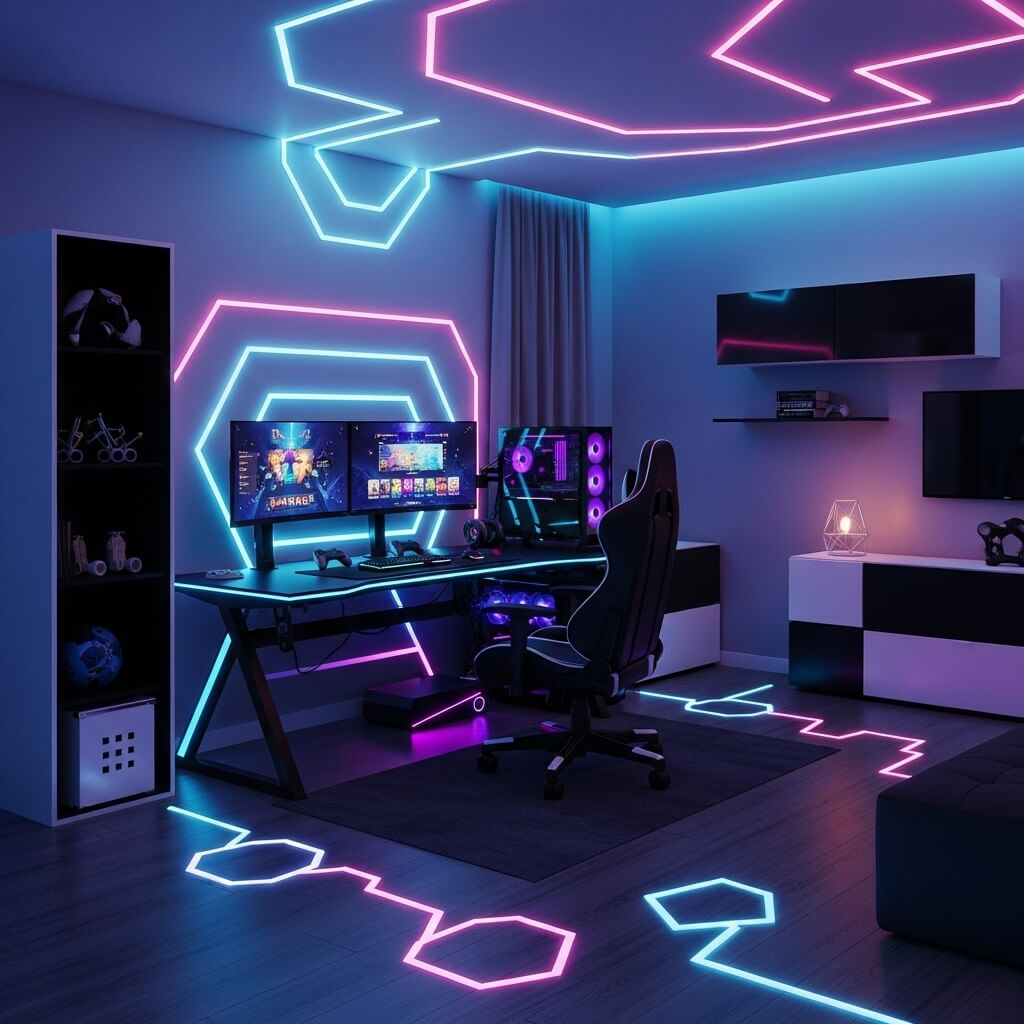
Welcome to the Future
Okay, this one’s my personal favorite, and I’m not even sorry about it. The modern neon gaming setup brings that cool, futuristic vibe that makes kids feel like professional gamers. We’re talking LED strips, neon signs, and a color scheme that screams “2024 gaming aesthetic”.
The beauty of this style is that it grows with your kid. A seven-year-old thinks it’s cool, and a teenager won’t demand a complete redo because they’re “too old” for their room now. You’re basically future-proofing your investment, which is pretty smart if you ask me.
Getting That RGB Life
Here’s what makes a modern neon setup absolutely sing:
- Smart LED strip lights behind the desk, TV, or shelving (the ones you can control with an app are worth it)
- A neon sign with their gamer tag, name, or a fun phrase like “Game On” or “Player 1”
- Black or dark gray walls to make the neon elements pop
- Modern, streamlined furniture in black, white, or metallic finishes
- Cable management solutions because nothing ruins the aesthetic like tangled wires everywhere
I learned the hard way that cable management is non-negotiable with this style. You’re going for sleek and modern, so visible cords totally kill the vibe. Invest in some cable raceways, velcro ties, and maybe a cable management box. Your setup will look infinitely more professional.
The Tech-Forward Approach
This style loves technology, so embrace it! Add a gaming chair with LED lights, use a monitor with ambient backlighting, or install sound-reactive LED panels on the walls that pulse with the game audio. These elements create an immersive experience that genuinely enhances gameplay.
One thing I’d recommend? Make sure you can easily adjust the lighting brightness. Full neon mode is awesome for gaming sessions, but you don’t want those bright lights blasting all the time. Dimmable options or smart lights you can control give you flexibility for different activities and times of day.
Also Read: 10 Stunning Small Game Room Ideas for Cozy Setup
4. Space-Themed Kids Game Room Design
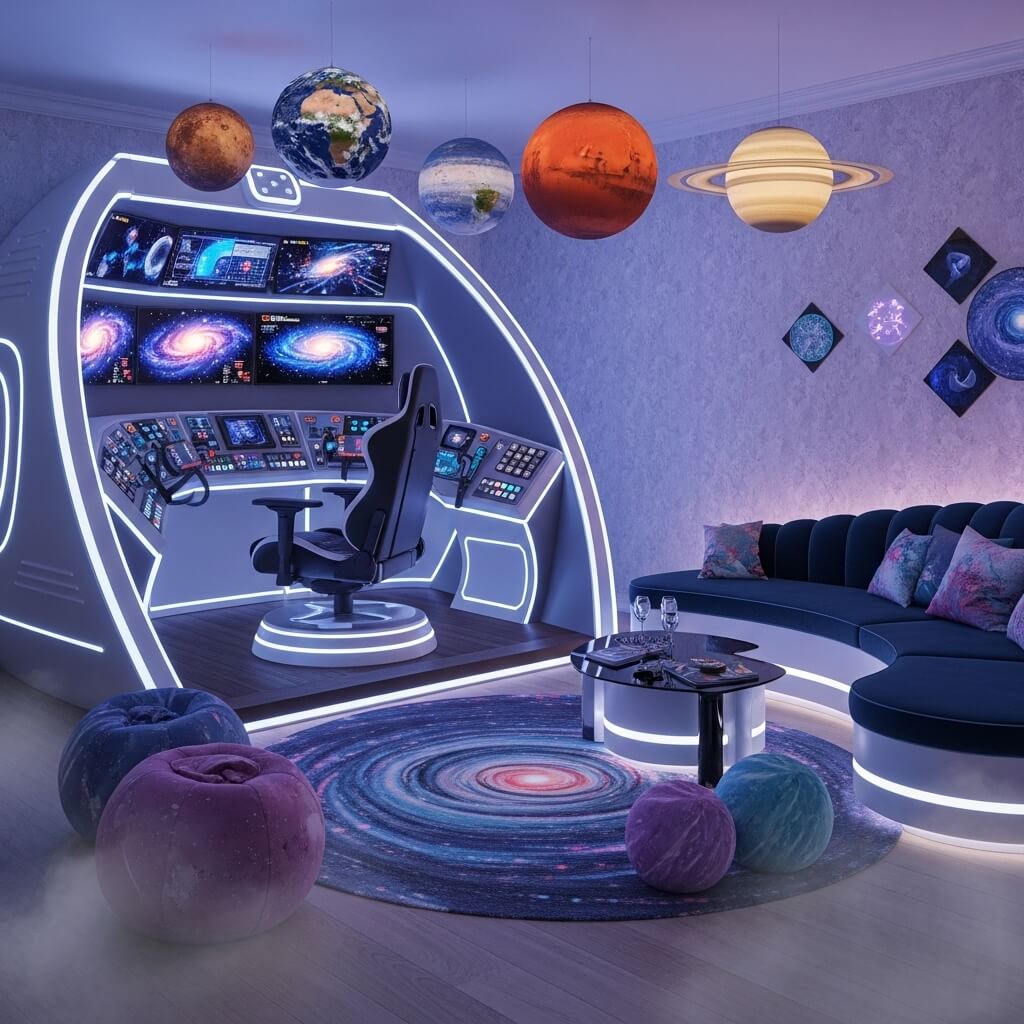
Houston, We Have a Solution
Ever met a kid who wasn’t fascinated by space? Yeah, me neither. A space-themed game room taps into that universal wonder while creating an environment that’s genuinely out of this world (sorry, had to). The best part? This theme works beautifully for both younger kids and older ones.
I actually helped my sister design one of these for my nephew, and watching his face light up when he first saw it? Priceless. We went all-in on the galaxy vibes, and it became the coolest room in their entire house.
Creating Your Own Galaxy
Here’s how you build a space-worthy gaming zone:
- Dark blue or black walls as your base (we used navy with scattered white stars)
- Glow-in-the-dark elements like star stickers, planets, or decals
- A projector that displays galaxies or nebulas on the ceiling
- Metallic silver or chrome accents for that spaceship feel
- Planet-shaped lights or a moon lamp for ambient lighting
- Space-themed storage like rocket ship bookcases or astronaut hooks
The wall treatment makes or breaks this theme. You could paint a full galaxy mural (we hired someone from Fiverr who did an amazing job for like $200), or you could use galaxy-printed wallpaper on one accent wall. Either way, you want that cosmic backdrop that makes the whole room feel like you’re floating through space.
Interactive Space Elements
What takes this from “nice” to “absolutely epic” are the interactive parts. We installed a hanging astronaut chair that swivels (perfect for gaming), and added a DIY cardboard rocket ship in the corner that doubles as a reading nook. You could also incorporate:
- A solar system mobile hanging from the ceiling
- NASA posters or vintage space program prints
- A telescope near the window (for actual space gazing between gaming sessions)
- Constellation maps that also serve as wall art
The space theme naturally lends itself to organized zones—you can have different “planets” or “space stations” for different activities. Gaming station on Mars, book nook on Jupiter, that kind of thing. Kids eat this stuff up, and it actually helps with organization.
5. Montessori-Inspired Play and Game Room
The Method Behind the Magic
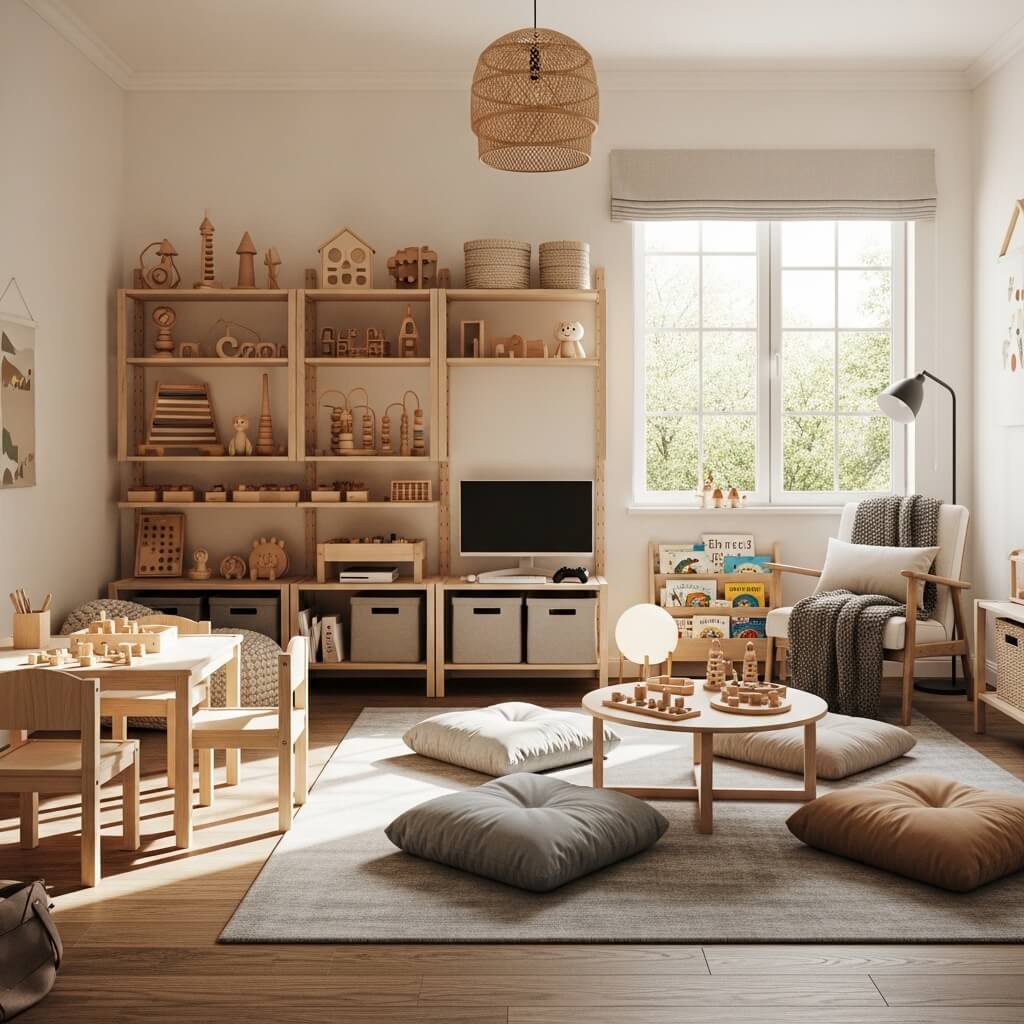
Alright, I know what you’re thinking—Montessori and gaming don’t exactly seem like natural partners. But hear me out! The Montessori approach is all about child-led play, accessibility, and intentional organization, which actually works brilliantly for a game room setup.
The core idea is creating a space where your kid can independently access everything they need without constantly asking for help. Everything has its place, items are stored at kid-height, and the environment encourages focused, purposeful play.
Montessori Principles in Action
Here’s how you translate Montessori concepts into a gaming space:
- Low, open shelving where games and accessories are visible and accessible
- Organized by category with labels or picture labels for younger kids
- Natural materials like wood furniture, cotton cushions, and wool rugs
- A low gaming setup with a floor desk or very low table so kids can sit comfortably
- Minimal decor that doesn’t distract from the activities
- Defined zones for different types of play (video games, board games, creative play)
I implemented some of these principles in my kid’s space, and the independence it created was honestly shocking. No more “Mom, where’s my controller?” fifty times a day because everything has a specific, visible home.
The Beauty of Structure
The Montessori approach is big on rotating toys and games. Instead of having every game out at once (overwhelming!), you keep some in closed storage and rotate them every few weeks. This keeps things fresh and prevents that “I have nothing to play with” complaint despite owning approximately four million things.
For the gaming setup itself, you want ergonomic, child-sized furniture. A regular gaming chair might look cool, but if your kid’s feet don’t touch the ground, it’s not great for their posture or concentration. Look for adjustable options or use a footrest.
The color palette typically stays neutral with pops of natural color—think wood tones, soft whites, and maybe some forest green or sky blue. It’s calming without being sterile, and it creates a focused environment that somehow makes gaming sessions more intentional and less chaotic.
6. Small Space Multi-Use Kids Gaming Room
Making Every Inch Count
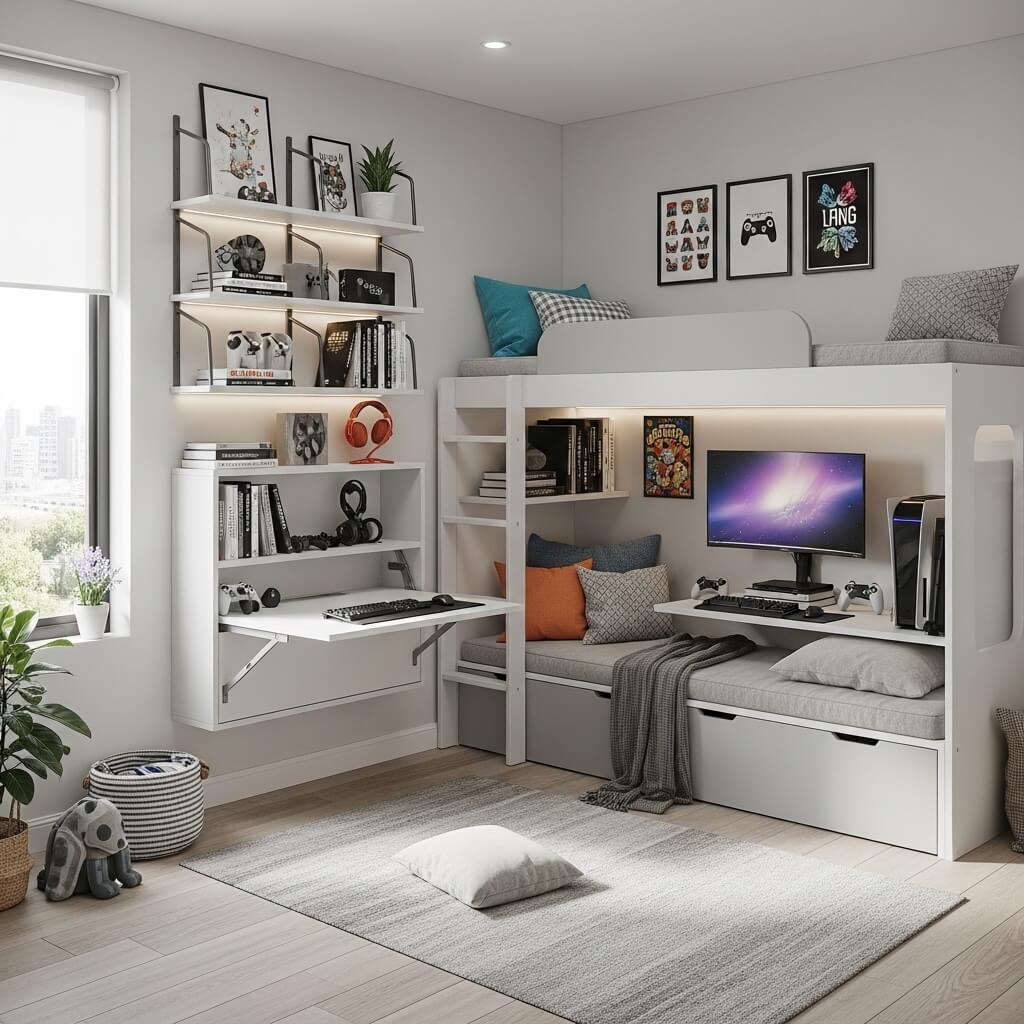
Real talk—not everyone has a massive room to dedicate entirely to gaming. Most of us are working with whatever space we can carve out, and you know what? That’s totally fine! Some of my favorite game room setups have been in small spaces because they forced creative, smart solutions.
The multi-use approach recognizes that the space needs to pull double (or triple) duty. Gaming zone by afternoon, homework station by evening, maybe even guest sleeping area occasionally. The challenge is making it work for all these purposes without feeling cramped or chaotic.
Space-Saving Superstars
Here are the MVPs of small-space game rooms:
- Wall-mounted folding desk that drops down when needed and folds away when not
- Ottoman or bench with storage for games and accessories
- Murphy bed or daybed if the room also serves as a guest room
- Vertical storage solutions using every inch of wall space
- Multi-functional furniture like a storage cube that’s also a seat
- Pegboard walls for hanging controllers, headphones, and organizing small items
I absolutely swear by pegboards for small spaces. You can customize them infinitely, they keep things visible and accessible, and they barely take up any floor space. Plus, they look pretty cool with the right organization system—almost like a gaming command center.
Zones Within Zones
Even in a small space, you can create distinct zones using area rugs, different lighting, or simple furniture placement. Your gaming zone might be a 4×4 corner with a small desk and bean bag, while the rest of the room serves other purposes. The key is making each zone feel intentional rather than cramped.
Vertical thinking is your best friend here. Mount the TV or monitor on the wall instead of using a stand. Install floating shelves going up the wall. Use over-the-door organizers for game storage. Think up, not out, and you’ll be amazed how much functionality you can pack into a small footprint.
One trick I love? Cord management and wireless options become even more crucial in small spaces. Tangled wires make a small room feel chaotic and cluttered fast. Invest in wireless controllers, use cable boxes, and mount power strips under the desk or behind furniture.
Also Read: 10 Modern Game Room Design Ideas for Stylish Gaming Spaces
7. Cartoon Character Themed Game Room
When Their Obsession Meets Your Design Skills
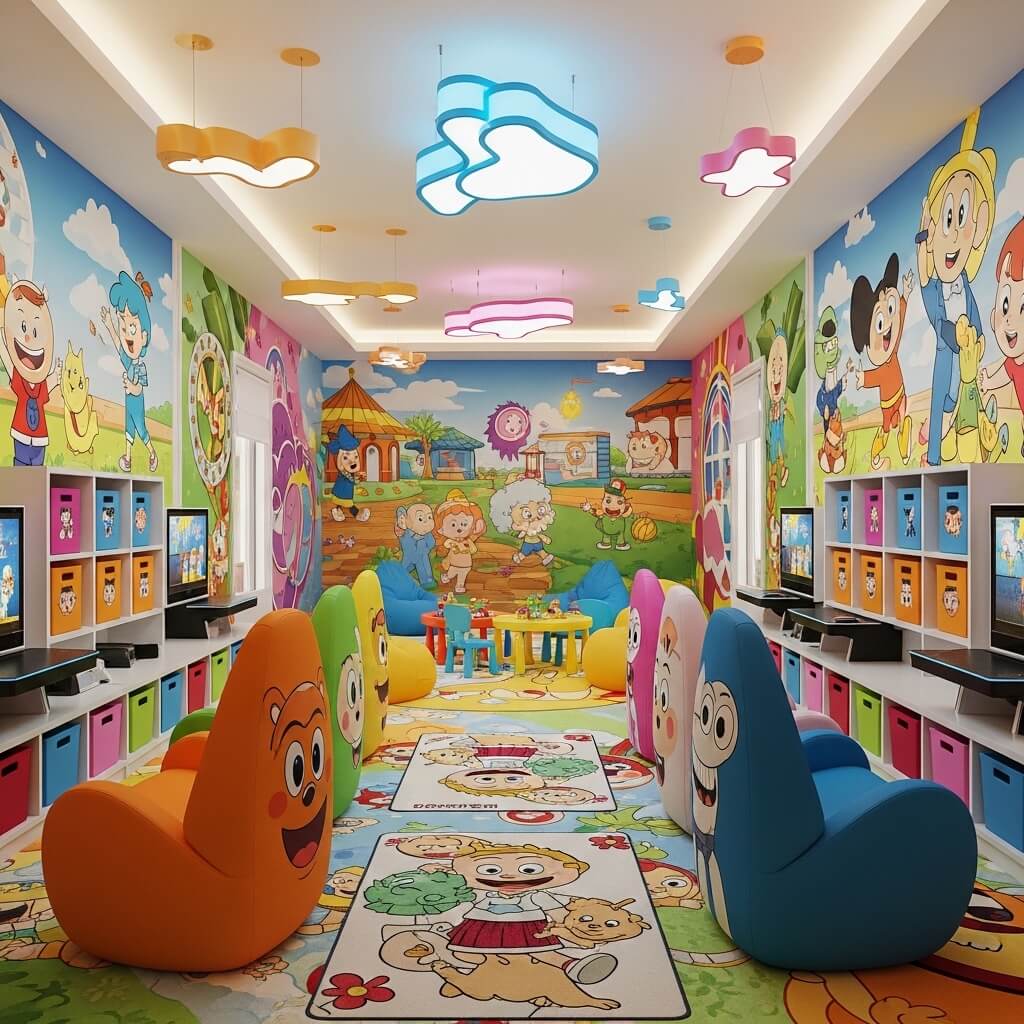
Your kid has a favorite cartoon character. No, scratch that—they’re completely obsessed with a character, show, or animated universe. Whether it’s Pokémon, Minecraft characters, Mario, or whatever animated thing they’re currently losing their mind over, you can absolutely build a game room around it.
The trick here is doing it in a way that looks intentional and designed, not like you just slapped random merchandise all over the walls. I’ve seen both approaches, and trust me, one looks like a cohesive game room and the other looks like a gift shop exploded.
Themed Without Tacky
Here’s how you create a character-themed space that actually looks good:
- Choose a color scheme based on the character (Mario = red and blue, Minecraft = green and brown, etc.)
- Use wall decals instead of posters for a cleaner look
- Incorporate subtle nods through colors and patterns rather than obvious merch
- Invest in one or two statement pieces like a character bean bag or themed rug
- DIY custom elements that feel unique rather than store-bought
- Mix licensed products with generic decor in matching colors
The 80/20 rule works perfectly here—about 80% of your decor should be solid colors and neutral design, with 20% being obvious character theming. This keeps the room from feeling overwhelming and gives you flexibility as your kid’s interests inevitably change.
The Growth Factor
Here’s the hard truth—your kid’s current obsession probably won’t last forever (I know, shocking). So you want to design with adaptability in mind. Instead of painting entire walls with characters, use removable decals. Choose furniture in solid colors that’ll work with any theme. Make the character elements easy to swap out.
That said, some themes have serious staying power. Pokémon, Mario, and Minecraft have been going strong for years (decades, even), so you’re probably safe investing a bit more if those are the fandoms of choice. But if we’re talking about whatever random YouTube cartoon is trending this month? Maybe keep those elements easily changeable :/
You can also theme different areas of the room to different characters or games, creating a mashup that celebrates their various interests. One wall could be Pokémon, another could be Mario Kart, and the gaming setup itself could have Minecraft vibes. It sounds chaotic, but with the right color coordination, it actually comes together beautifully.
8. Smart Storage Kids Gaming Play Zone
Organization That Actually Works
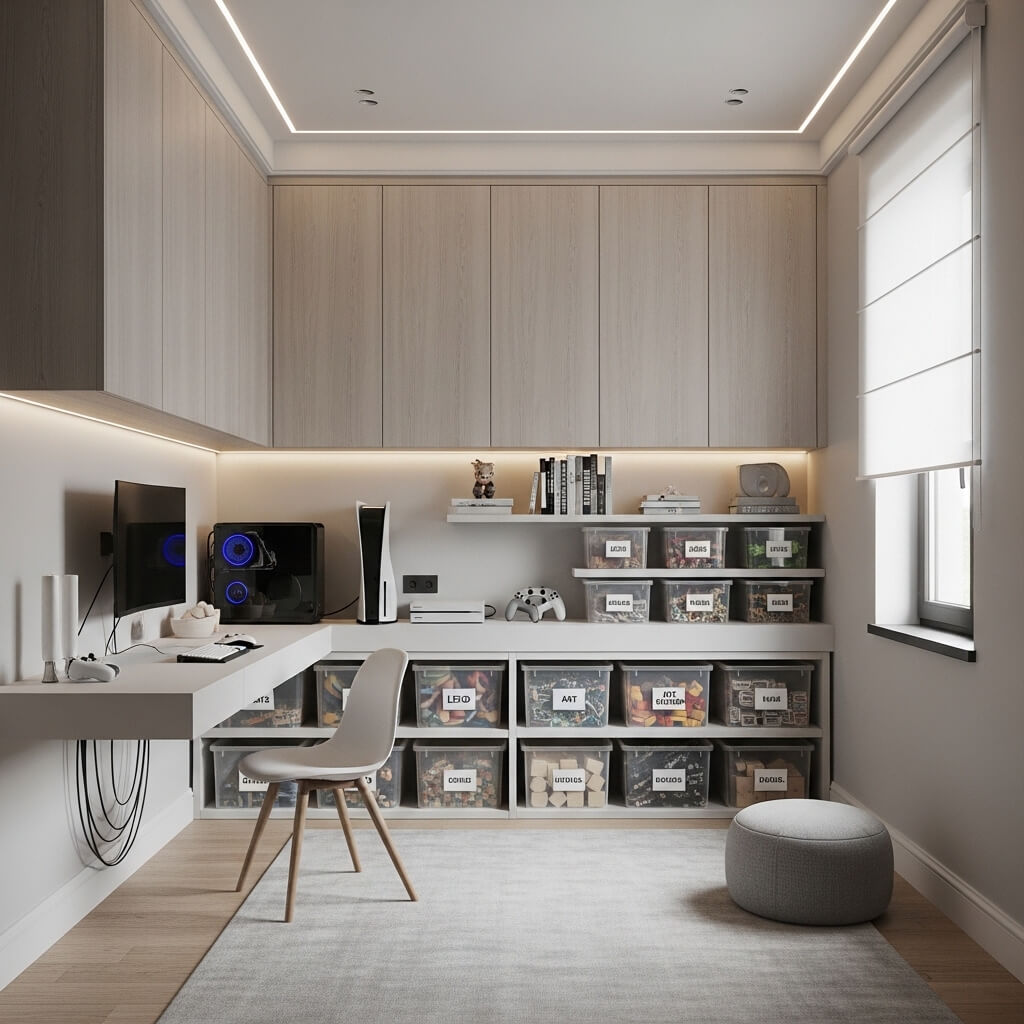
Listen, I don’t care how gorgeous your game room looks—if you don’t have smart storage solutions, it’ll be a disaster zone within a week. This is the hill I’ll die on. Proper storage isn’t optional; it’s the foundation that makes everything else possible.
A smart storage game room prioritizes organization as part of the design, not an afterthought. Every game, controller, accessory, and random piece has a designated home. Sound impossible with kids? I thought so too until I cracked the code.
Storage Solutions That Don’t Suck
Here’s what actually works in real life:
- Clear storage bins labeled with contents (clear is key so kids can see what’s inside)
- Game cartridge organizers that display everything visually
- Controller charging docks that also serve as storage
- Drawer organizers for smaller accessories and cables
- Magazine holders repurposed for tablet and Switch storage
- Rolling cart for portable gaming supplies
- Wall-mounted hooks for headphones and VR equipment
The absolute game-changer for us was a rolling cart system. We have one cart for current games, one for art supplies (because creative play always happens mid-gaming), and one for snacks and water bottles. The kids can wheel what they need to their play area and wheel it back when done. Does it always happen perfectly? No. But it happens way more often than when stuff was scattered across five different shelves.
The “See It, Use It” Principle
Kids don’t think like adults when it comes to storage. If they can’t see it, they forget it exists. That’s why open shelving and clear containers work better than closed cabinets and opaque bins. You want that visual reminder of what’s available.
IMO, the best setup uses a combination of open and closed storage. Display the current favorites openly on shelves or in clear containers. Stash the less-used games, out-of-season stuff, or things you’re rotating out in closed storage. This keeps the room from feeling cluttered while still maintaining that visual accessibility.
One thing I implemented that’s been brilliant: a “game library” system. Each game has a designated spot on the shelf, and you can only take out one or two at a time. Before getting a new game, you return the old one to its spot. It’s the same concept as a real library, and it keeps the chaos manageable. Plus, it teaches responsibility without feeling like you’re nagging constantly.
9. Luxury Style Kids Entertainment Room
Because Kids Deserve Nice Things Too
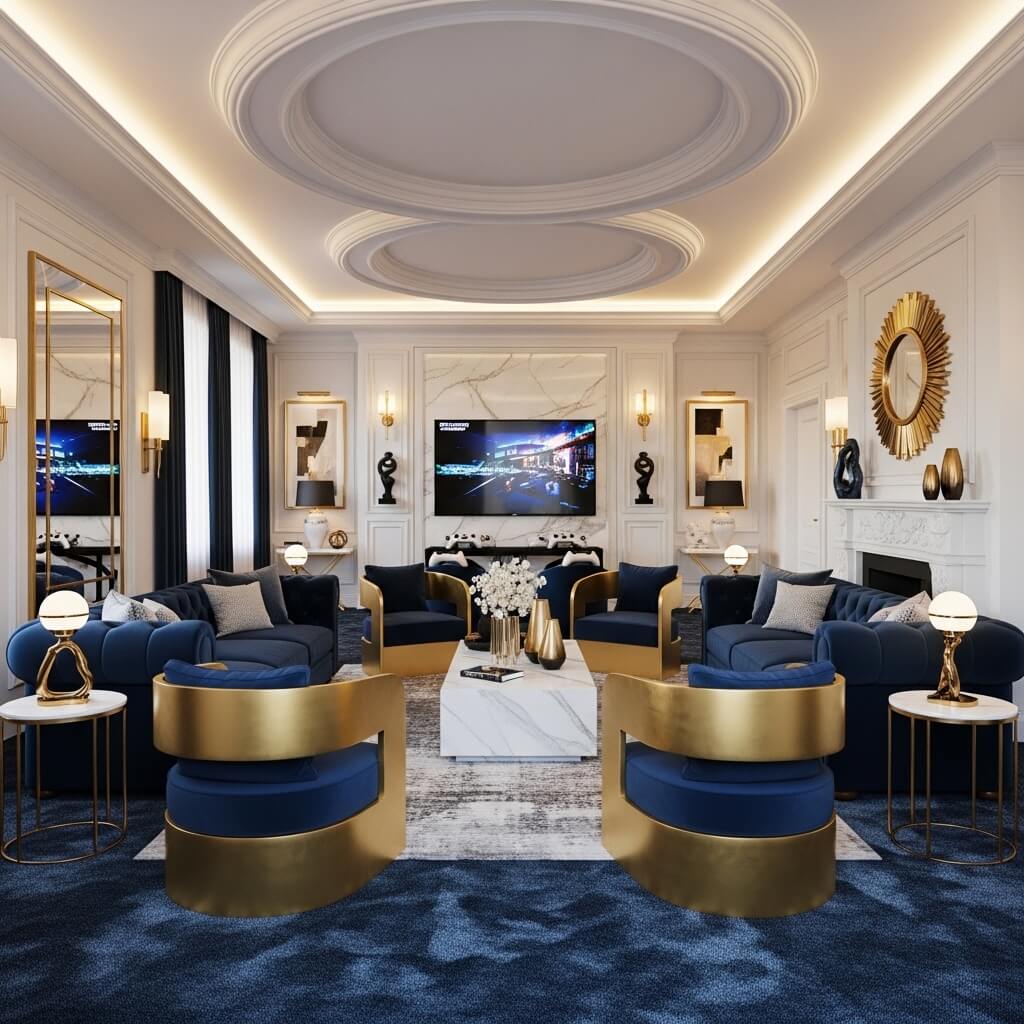
Who says kids’ spaces can’t be sophisticated? The luxury-style entertainment room approach creates a space that’s elegant, refined, and yes—still totally functional for kids. This is the option for families who want the game room to feel cohesive with the rest of their home’s aesthetic.
Before you worry that “luxury” means “dry-clean only everything,” let me clarify. We’re talking about elevated design choices, quality materials, and thoughtful details. You can absolutely achieve this look with durable, kid-friendly materials that just happen to look expensive.
Luxury Elements That Work
Here’s what creates that upscale vibe:
- Rich, deep colors like navy, emerald, or charcoal rather than primary brights
- Velvet or faux leather seating (surprisingly kid-friendly and wipeable!)
- Brass or gold hardware accents on furniture and fixtures
- Crown molding or board and batten walls for architectural interest
- Plush area rug in a sophisticated pattern
- Built-in shelving painted to match the walls for a custom look
- Statement lighting like a modern chandelier or designer pendant light
We added board and batten to my friend’s kid’s game room, and it completely transformed the space from basic to boutique. It cost maybe $150 in materials and a weekend of work, but it looks like a professional design firm came through.
Balancing Fancy and Functional
The secret to pulling this off is choosing high-style, high-durability materials. Velvet is actually super easy to clean—most spills wipe right off. Faux leather is practically indestructible. And quality wood furniture with a good finish can take a beating while still looking great.
You want timeless pieces rather than trendy ones. A beautiful wooden gaming desk will look appropriate for decades. A quality upholstered chair in a neutral color works for any age. You’re investing in pieces that grow with your kid rather than things you’ll need to replace in three years.
The color palette stays sophisticated but not boring. Think jewel tones, rich neutrals, and metallics rather than cartoon brights or stark minimalism. You can still add playful elements through accessories—maybe some elegant throw pillows with subtle gaming motifs, or framed art prints of game landscapes that look like actual artwork.
Also Read: 10 Magical Halloween Balcony Decor Ideas Spooky Cute Balcony
10. DIY Budget Kids Game Room Makeover
Making Magic on a Shoestring
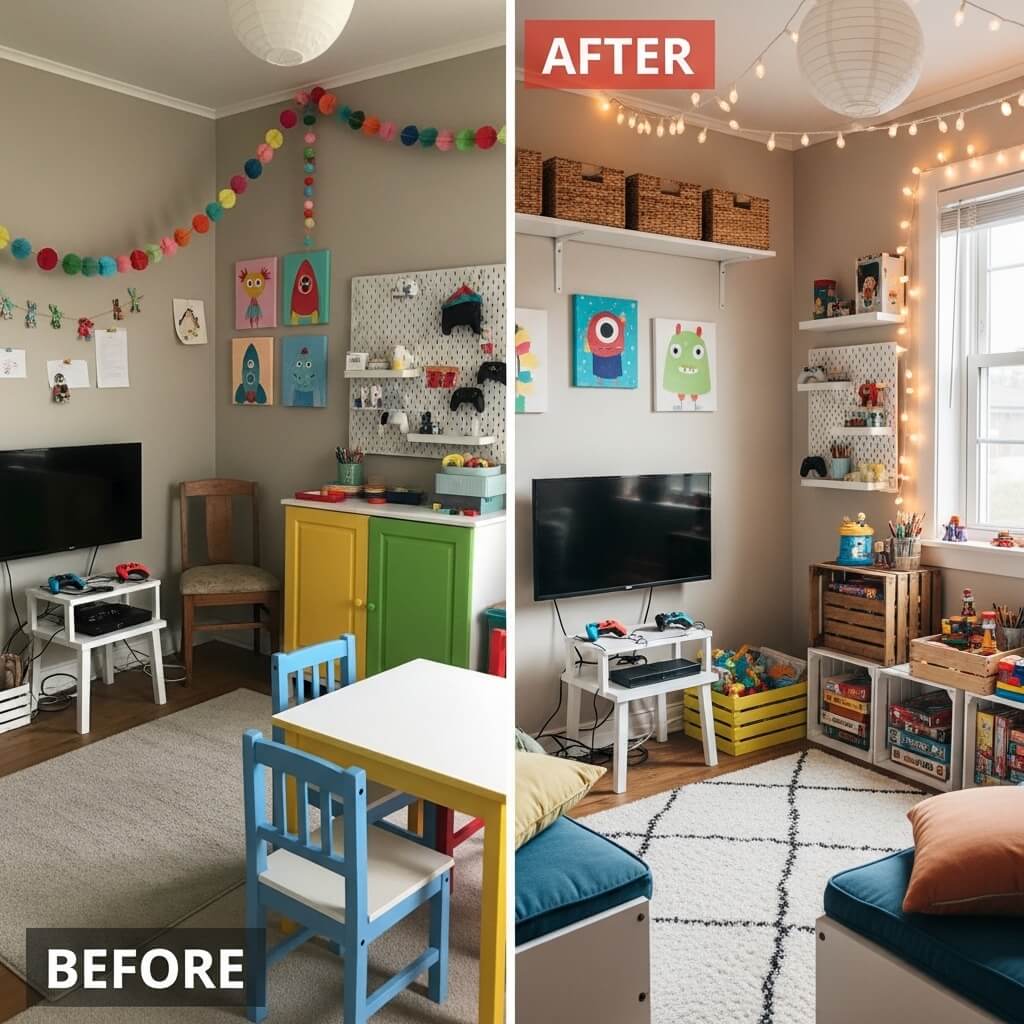
Alright, let’s get real—not everyone has thousands of dollars to drop on a game room makeover. Most of us are working with whatever budget we can scrape together, and you know what? You can absolutely create an amazing space without breaking the bank.
I’ve done this personally, and some of my favorite design choices were the DIY budget options. There’s something satisfying about creating a great space through creativity and effort rather than just throwing money at it.
Budget-Friendly Big Impacts
Here’s where your money makes the biggest difference:
- Paint (a $30 can of paint can completely transform a space)
- DIY wall murals using painter’s tape and multiple paint colors
- Thrifted furniture that you update with paint or new hardware
- DIY shelving using boards and brackets from the hardware store
- Homemade bean bags (seriously, buy the fabric and fill yourself—you’ll save 70%)
- Printed and framed video game art from free online sources
- PVC pipe creations for storage (shelves, controller holders, etc.)
Paint is your best friend on a budget. You can create geometric patterns, color-blocking, an accent wall, a mural—all for under $50. We painted a pixel-art style wall using painter’s tape to create the squares, and it looks like something from a professional gamer’s setup. Total cost? $35 in paint.
The Hunt for Deals
Become best friends with Facebook Marketplace, thrift stores, and yard sales. I’ve found amazing furniture pieces for next to nothing that just needed a quick paint job or new drawer pulls. That “vintage” gaming aesthetic everyone pays big money for? You can actually get it vintage for cheap if you’re willing to look around.
Repurposing is the name of the game (pun intended). Old bookshelves become game storage. A wooden crate becomes a controller charging station. PVC pipes turn into custom shelving for game cartridges. Get creative with what you already have or what you can find cheaply.
One of my favorite budget hacks: print and frame your own artwork. There are tons of free gaming artwork online, or your kid can create their own. Buy cheap frames from the dollar store or thrift store, spray paint them to match your room, and suddenly you have custom wall art for under $20.
DIY Projects That Actually Work
Some DIY projects are worth the effort, others are Pinterest lies. Here are the ones that actually work and look good:
- Pallet wood shelves (pallets are often free, and the rustic look is perfect for gaming spaces)
- Concrete block and wood plank shelving (industrial look, super cheap)
- Paint chip wall art (free paint chips arranged into pixel art or patterns)
- Rope lighting instead of expensive LED systems
- DIY floor cushions using old pillows and fabric
- Painted cardboard storage boxes that look way more expensive than they are
The key to successful DIY on a budget is choosing projects that look intentional, not cheap. A well-executed simple project beats a poorly done complicated one every time. Start with easy wins like painting and wall art before tackling bigger furniture builds.
Wrapping This Up
So there you have it—ten completely different approaches to creating a game room that your kids will actually want to hang out in (and you won’t hate looking at). The beautiful thing? You don’t have to choose just one. Maybe you go minimal with neon accents. Or luxury style with smart storage solutions. Mix and match the ideas that speak to you and fit your family’s needs.
The most important thing I’ve learned through all my game room adventures is this: involve your kids in the process! Their input matters, and they’ll take way better care of a space they helped create. Plus, you might be surprised by their creative ideas. My kid suggested the pegboard system that became our favorite organization feature—sometimes they know what works for them better than we do.
Whatever direction you choose, remember that a game room should grow and evolve with your kid. Don’t stress about getting it perfect or permanent. The best game rooms are the ones that adapt, change, and reflect whoever’s using them. And if all else fails? There’s always paint 🙂
Now go forth and create something awesome. Your future self (who isn’t stepping on controllers at 2 AM) will thank you!