10 Trendy Game Room Aesthetic Decor Ideas for 2026 Setup
- Game Room Design
 Ben
Ben- 0
- 43 minutes read
You know that feeling when you walk into your gaming space and something just feels… off? Like, you’ve got the gear, you’ve got the games, but the vibe isn’t hitting right? Yeah, I’ve been there too many times. Your game room should be more than just four walls with a desk—it should be your personal sanctuary where you can lose yourself for hours without feeling like you’re sitting in a boring office cubicle.
I’ve spent way too much time (and honestly, too much money) experimenting with different gaming room aesthetics over the years. Some worked beautifully, others made my space look like a confused teenager’s bedroom. But here’s what I’ve learned: 2026 is all about making bold statements while keeping functionality front and center. Whether you’re working with a massive basement or a tiny corner of your bedroom, there’s an aesthetic that’ll make your setup absolutely pop.
Let me walk you through the 10 hottest game room aesthetic trends that are dominating 2026. These aren’t just pretty pictures—I’m giving you real, actionable ideas you can actually implement without needing a degree in interior design.
Neon Cyberpunk Gaming Cave Setup
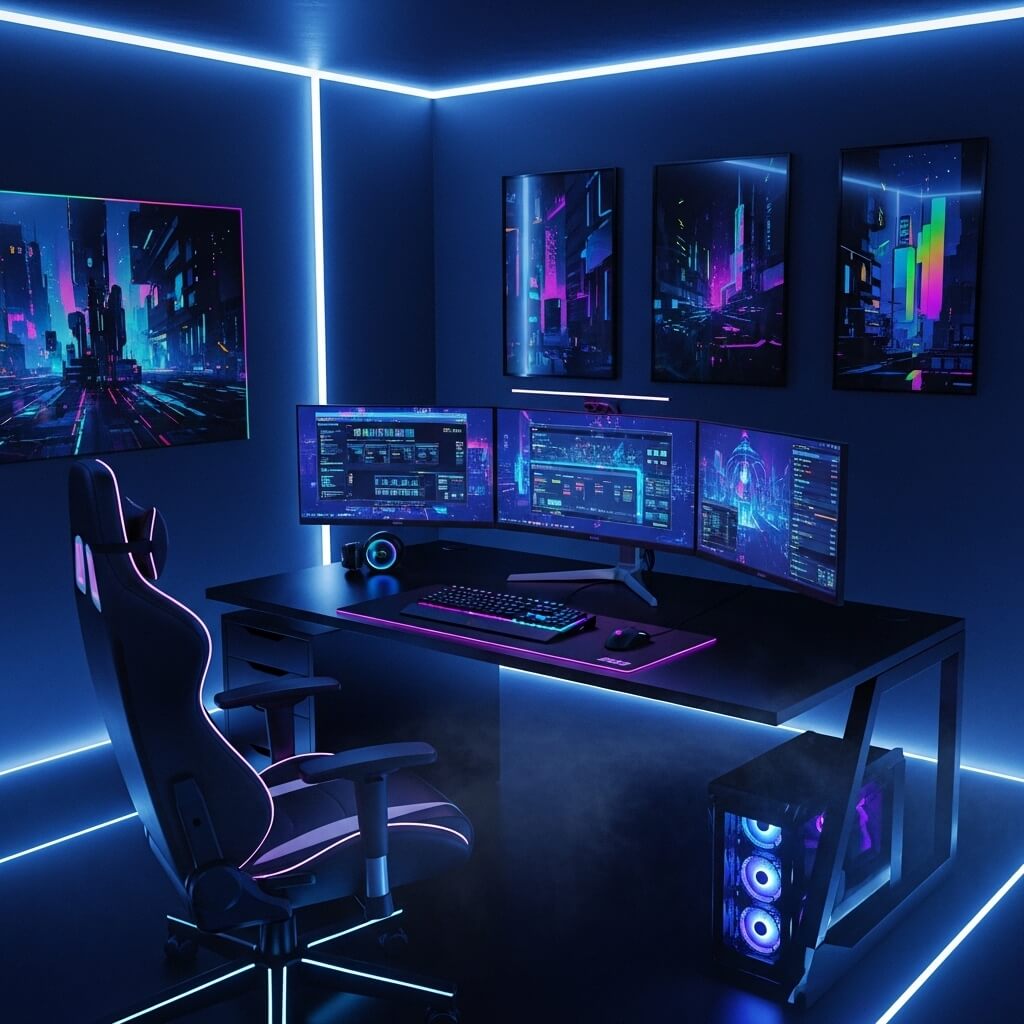
Holy smokes, this aesthetic has been blowing up everywhere, and honestly? I totally get why. The cyberpunk vibe makes you feel like you’re gaming inside Blade Runner or Night City from Cyberpunk 2077. We’re talking neon pink, electric blue, and vibrant purple lighting that transforms your ordinary room into a futuristic dystopian paradise.
Here’s how you nail this look: Start with your lighting game. Forget those boring white LEDs—you need neon tube lights mounted on your walls in geometric patterns. I recently installed some flexible LED neon strips behind my monitors, and the difference is insane. The glow creates this incredible depth that makes your entire setup feel three-dimensional.
Your color palette should scream rebellion. Think black as your base with explosive pops of neon. Paint one accent wall in deep charcoal or matte black, then strategically place neon signs with phrases like “Game Over” or custom Japanese characters. IMO, the Japanese katakana signs add that authentic cyberpunk street aesthetic that English just can’t match.
For furniture, go industrial and edgy. Metal desk frames with tempered glass tops work perfectly here. I swapped my old wooden desk for a sleek black metal one, and it completely changed the energy of my space. Add some exposed brick wallpaper or metal paneling to amplify that urban dystopian feel.
Key elements for your cyberpunk cave:
- Neon tube lighting in pink, blue, and purple
- Black furniture with chrome or metal accents
- Japanese-inspired neon signs or posters
- Exposed brick or industrial-style wall treatments
- Tech-focused accessories (mechanical keyboards, futuristic mice)
- Dark curtains or blackout blinds to control ambiance
Don’t forget the small details that tie everything together. Cyberpunk thrives on technology worship, so display your hardware proudly. A clear side-panel PC case with RGB components becomes a centerpiece rather than just a computer. Cable management becomes crucial here—visible cables break the sleek futuristic illusion faster than anything.
Cozy Minimalist Game Room Aesthetic
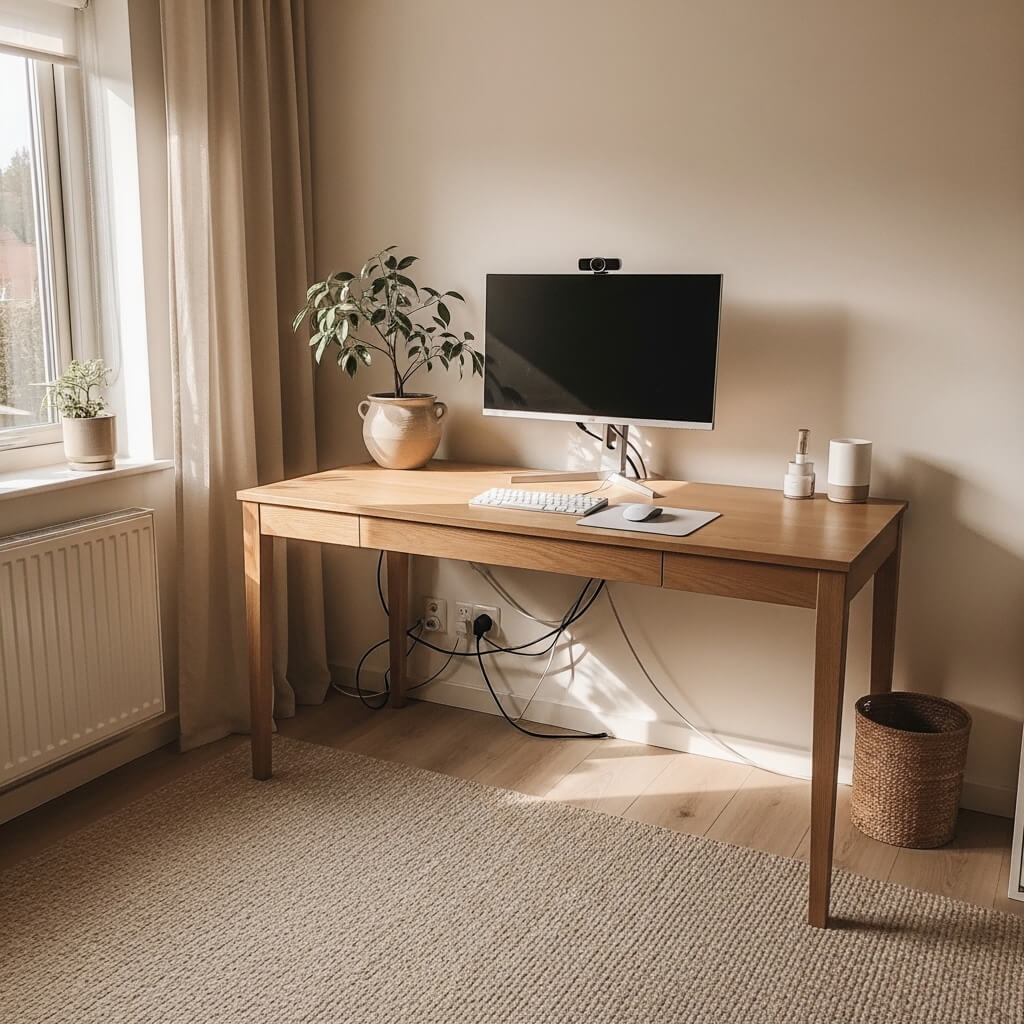
Ever walked into a space and immediately felt your shoulders relax? That’s the magic of minimalist design done right. But here’s the thing: minimalism in a game room doesn’t mean boring or lifeless. It means intentional, clean, and stupidly comfortable.
This aesthetic is perfect for people who get overwhelmed by visual clutter. I used to have cables everywhere, RGB everything, and random gaming merch scattered around like confetti. Switching to a minimalist approach actually improved my focus during gaming sessions. Who knew?
Start by choosing a neutral color palette—whites, beiges, light grays, and warm wood tones. Your walls should be a soft, calming color that doesn’t compete for attention with your screens. I painted mine a warm off-white, and it creates this canvas that lets my monitors become the natural focal points.
Furniture selection is critical here. You want pieces that serve multiple purposes and have clean lines. A simple wooden desk with cable management built in, a comfortable ergonomic chair in a neutral tone, and maybe one sleek storage unit for your games and accessories. That’s it. Seriously.
Minimalist game room essentials:
- Neutral color scheme (white, beige, light gray, natural wood)
- Clean-lined furniture with hidden storage
- Limited decorative items (choose 2-3 meaningful pieces)
- Organized cable management (invisible is the goal)
- Natural lighting supplemented with warm LED strips
- Indoor plants for a touch of life
The secret weapon for this aesthetic? Texture instead of color. Add warmth through a cozy area rug, a chunky knit throw blanket on your chair, or wooden floating shelves. These elements create visual interest without the chaos. I added a small succulent and a framed minimalist gaming poster, and that’s genuinely all I needed.
Keep your tech visible but organized. A single monitor or a perfectly aligned dual-monitor setup works better than three random screens at different heights. Your keyboard, mouse, and headset should have a designated home—preferably in matching or complementary colors.
Luxury Black & Gold Gaming Room Design
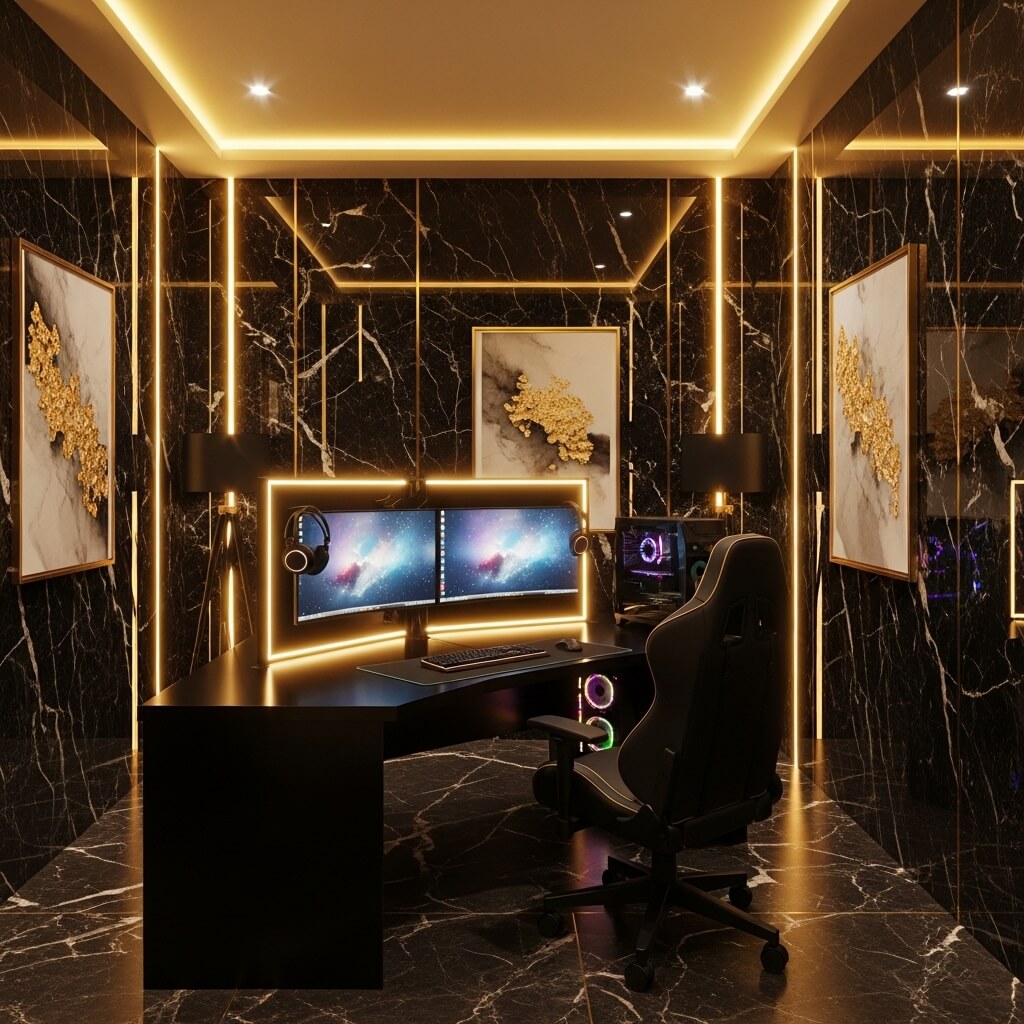
Okay, let’s talk about making a statement. The black and gold aesthetic screams sophistication meets gaming, and it’s absolutely perfect if you want your space to feel upscale without losing that gamer edge. This isn’t your typical teenage setup—this is what you build when you want people to walk in and say “Damn, okay, I see you.”
Black and gold is tricky because it can quickly veer into tacky territory if you’re not careful. The key is balance and quality over quantity. I learned this the hard way after buying cheap gold accessories that looked more like plastic toys than luxury accents.
Your foundation should be rich, matte black. Black walls, black desk, black chair—but make sure the materials vary. A black leather chair, a black wood desk, and matte black painted walls create depth through different textures. This prevents that flat, one-dimensional look that ruins the luxury vibe.
Now for the gold. Use it as an accent, not the main event. Gold accents work best in metallic finishes—think brushed gold, not shiny cheap-looking gold. I added gold desk legs, gold picture frames around my gaming posters, and gold cable sleeves. These small touches elevate everything without overwhelming the space.
Luxury black & gold must-haves:
- Matte black walls or dark charcoal
- High-quality black furniture (leather, wood, metal)
- Brushed gold or brass accent pieces
- Marble or faux-marble accessories
- Warm ambient lighting (no harsh whites)
- Premium materials (avoid cheap plastics)
- Framed gaming art with gold frames
Lighting makes or breaks this aesthetic. You need warm, soft lighting that makes the gold shimmer without creating harsh shadows. I installed warm LED strips under my desk and behind my monitor, set to a subtle amber glow. It creates this expensive, lounge-like atmosphere that makes even a Tuesday night gaming session feel special.
Add some texture with a black and gold geometric rug, or incorporate marble patterns through mouse pads, coasters, or desk mats. These patterns scream luxury while staying functional. And hey, if you really want to go all out, a small bar cart with your favorite gaming drinks styled in gold-rimmed glasses? Chef’s kiss 🙂
Also Read: 10 Stylish Basement Game Room Ideas For Dream Setup
Small Space Wall-Mounted Gaming Corner
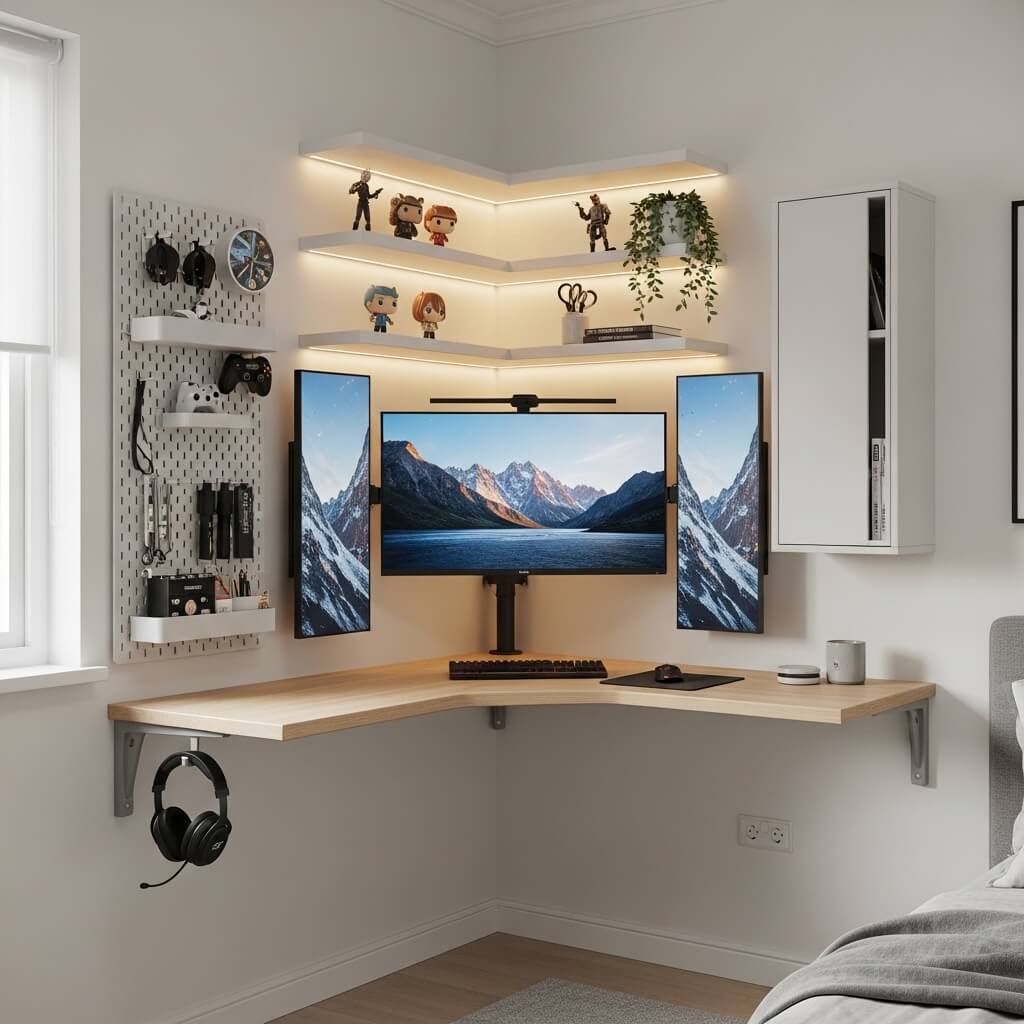
Not everyone has a dedicated room for gaming, and that’s totally fine. Some of us are working with a corner of our bedroom or a slice of our living room. But here’s what I’ve discovered: limited space can actually force you to get more creative and intentional with your setup.
Wall-mounted setups are absolute game-changers for small spaces. When I lived in a tiny apartment, I mounted everything I could to the walls, and it completely transformed my cramped corner into a functional gaming haven. Suddenly I had floor space to actually, you know, walk around.
Start with a wall-mounted desk or floating shelf that serves as your gaming surface. These take up zero floor space and can be installed at the perfect height for your chair. I used a simple floating shelf desk that’s 40 inches wide—enough for my monitor, keyboard, and mouse, with nothing extra to create clutter.
Your monitor should also be wall-mounted on an articulating arm. This frees up desk space and lets you adjust your screen position perfectly. I can push my monitor back against the wall when I’m not gaming, creating even more room for other activities. It’s like having a transforming space.
Small space optimization essentials:
- Floating desk or wall-mounted shelf
- Monitor arm mount (vesa compatible)
- Wall-mounted headphone hooks
- Vertical storage solutions
- Compact wireless peripherals
- Cable raceways along walls
- Fold-down or compact chair
Storage goes vertical too. Install floating shelves above your desk for your games, controllers, and accessories. Wall-mounted pegboards are incredibly versatile—you can customize them with hooks for headphones, small shelves for figures, or clips for cable management. I added one above my setup, and it’s both functional and looks pretty sick.
Choose your chair wisely. In small spaces, a bulky racing chair becomes a obstacle. I switched to a compact, armless office chair that slides completely under my desk when not in use. This simple change made my room feel twice as large. FYI, you don’t need a massive gaming throne to be comfortable during long sessions.
RGB LED Immersive Battle Station Setup
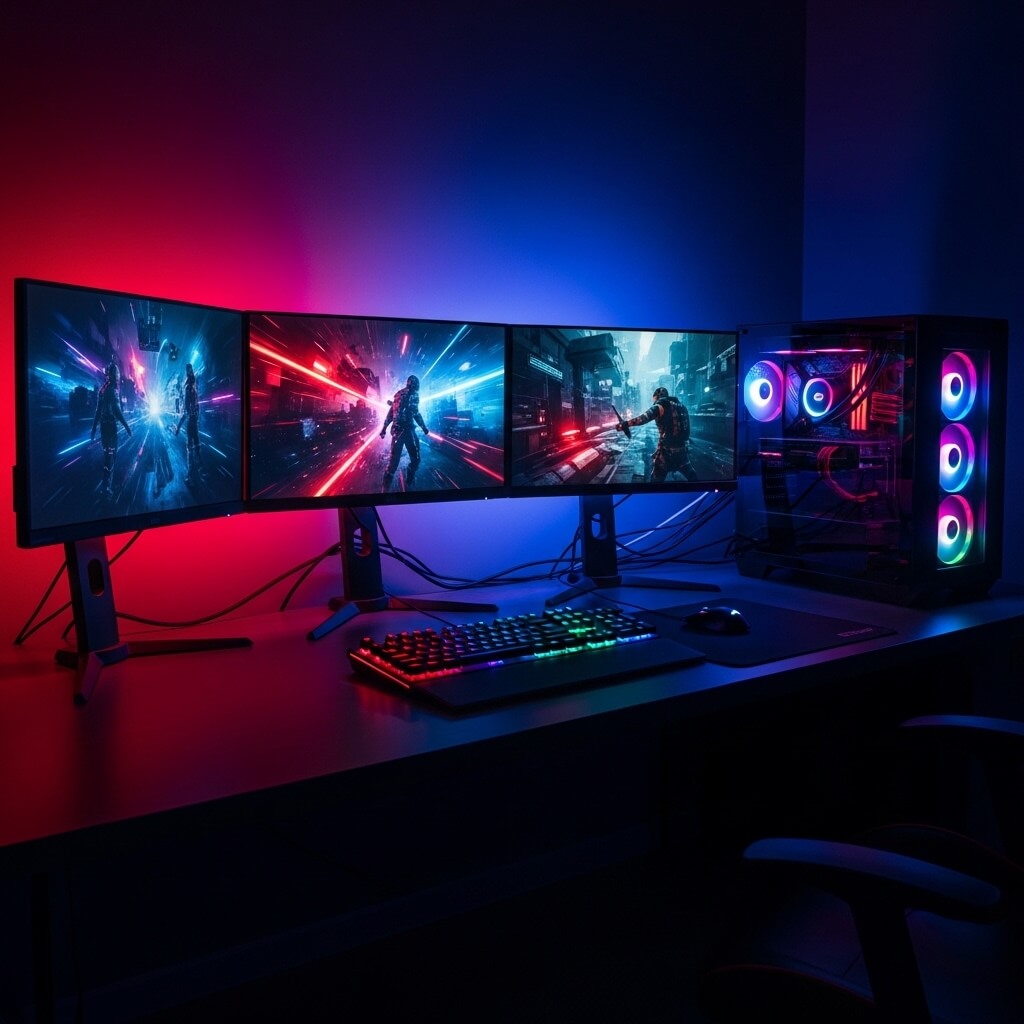
Let’s be real: RGB gets a lot of hate from the minimalist crowd, but when done right, it’s absolutely mesmerizing. The key phrase here is “when done right.” I’ve seen RGB setups that look like a unicorn exploded in a Best Buy, and I’ve seen setups that look like portals to another dimension. Guess which one we’re aiming for?
The immersive battle station is all about creating a synchronized lighting ecosystem that responds to your gaming, music, or mood. This isn’t just slapping some rainbow strips behind your monitor and calling it a day. We’re talking full-room integration that actually enhances your gaming experience.
Your PC should be the centerpiece. If you’re building or upgrading, invest in RGB RAM, RGB fans, RGB motherboard lighting, and RGB GPU accents. But here’s the critical part: sync them all to the same ecosystem. Whether that’s Corsair iCUE, ASUS Aura Sync, or Razer Chroma, pick one platform and stick with it. Mixing platforms creates a chaotic light show that looks amateurish.
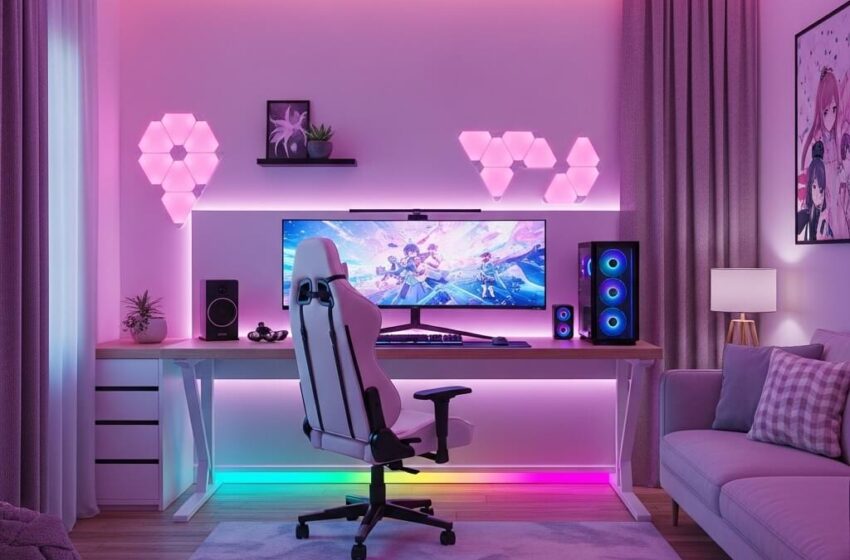
Extend that lighting beyond your PC. RGB light strips behind your monitor, under your desk, along your ceiling line, and even behind furniture create this immersive glow that makes you feel surrounded by your game’s atmosphere. I programmed mine to react to in-game audio, and watching the lights pulse with explosions or shift with ambient music is genuinely addictive.
RGB immersion setup requirements:
- Synchronized RGB ecosystem (single software platform)
- RGB PC components (RAM, fans, strips inside case)
- Smart LED strips (addressable for effects)
- RGB keyboard and mouse
- RGB headset stand or accessories
- Nanoleaf panels or similar smart lighting
- Bias lighting behind monitors
Color coordination matters more than you’d think. Random rainbow cycling is cool for about five minutes, then it becomes distracting. I create color profiles for different games—cool blues and purples for cyberpunk games, warm oranges and reds for action games, green for horror games. This subtle theming makes your entire room feel connected to what you’re playing.
Don’t forget about bias lighting. Strip lights directly behind your monitors, set to a soft white or color that complements your screen, reduce eye strain dramatically during those marathon sessions. I used to get headaches after a few hours of gaming, but proper bias lighting basically eliminated that issue.
Anime-Inspired Gaming Room Aesthetic Decor
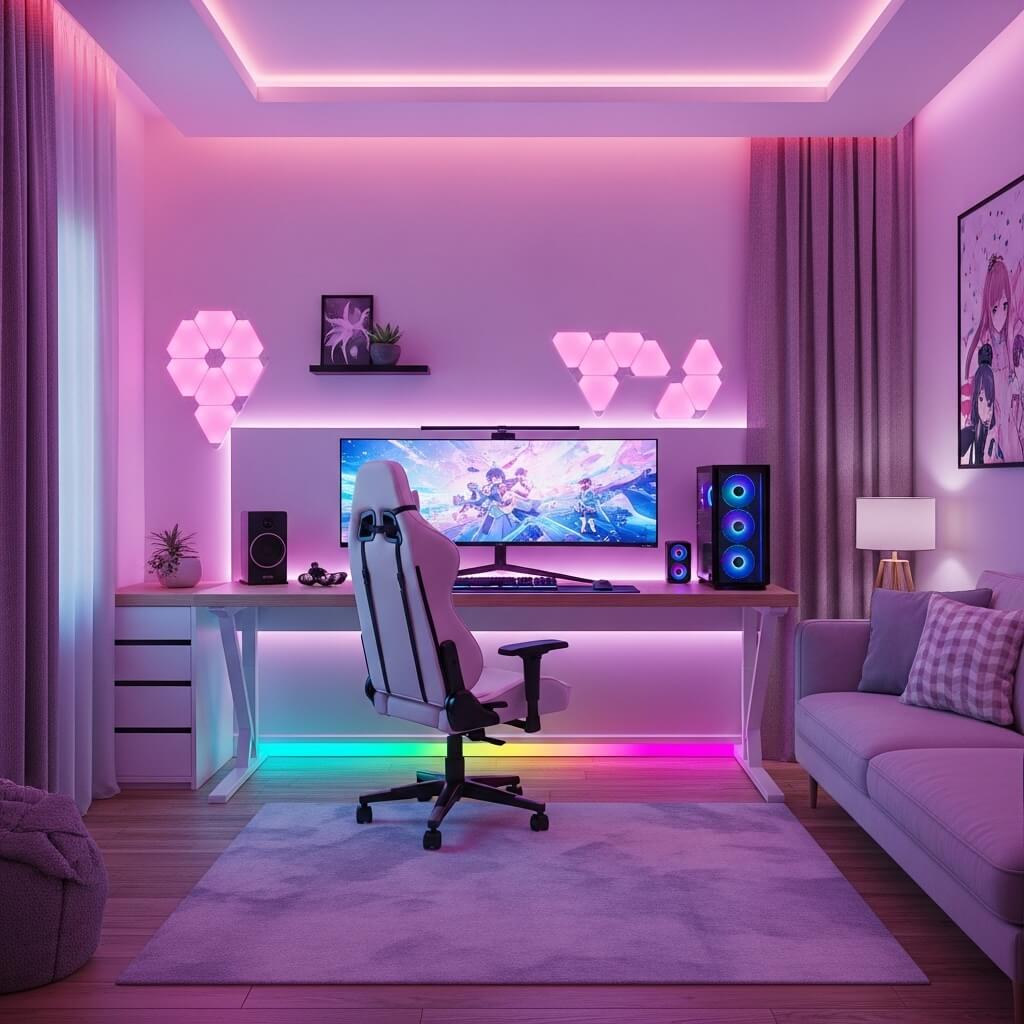
Anime culture and gaming culture overlap so perfectly that an anime-inspired game room just makes sense. But there’s a fine line between a tasteful anime aesthetic and turning your room into a teenage poster collection. I’ve walked both sides of that line, trust me.
The modern anime aesthetic for game rooms focuses on quality over quantity. Instead of covering every inch of wall space with random posters, curate your collection. Choose key artwork from your favorite series, get them professionally printed or buy official art, and frame them properly. Framing is the difference between “cool room” and “I might be concerned about this person.”
Color schemes should pull from anime aesthetics—think pastel pinks, soft purples, sky blues, and whites for that slice-of-life vibe, or darker teals, blacks, and reds for more action-oriented series. I themed my space around Cyberpunk anime, using neon accents with darker base colors, and it perfectly bridges my love for both aesthetics.
Japanese-inspired furniture and decor elements elevate this from “I watch anime” to “I appreciate the aesthetic.” Low-profile furniture, shoji screen room dividers, tatami mats, or Japanese paper lantern lights add authentic cultural elements. I incorporated a small kotatsu-style table for my handheld gaming sessions, and it’s become my favorite spot in the entire house.
Anime room aesthetic elements:
- Curated framed artwork (not random posters)
- Color palette inspired by favorite series
- Japanese cultural decor (lanterns, fans, calligraphy)
- Anime figure display shelves with LED backlighting
- Themed accessories (anime-branded peripherals)
- Fabric elements (tapestries, curtains with subtle patterns)
Figure collecting pairs perfectly with this aesthetic, but display matters. Glass display cases with LED lighting showcase your collection professionally instead of just having figures randomly scattered on shelves collecting dust. I invested in a detolf-style cabinet with RGB strips inside, and now my figure collection looks like a museum display rather than clutter.
Wall scrolls and tapestries add large-scale visual impact without the permanence of paint. I hung a large high-quality tapestry featuring cyberpunk anime art behind my setup, and it creates an incredible backdrop for my monitors. When I eventually want to change things up, I can swap it out in five minutes.
Also Read: 10 Perfect Luxury Game Room Decor Ideas Elite Zone
Budget-Friendly Modern Gamer Room Makeover
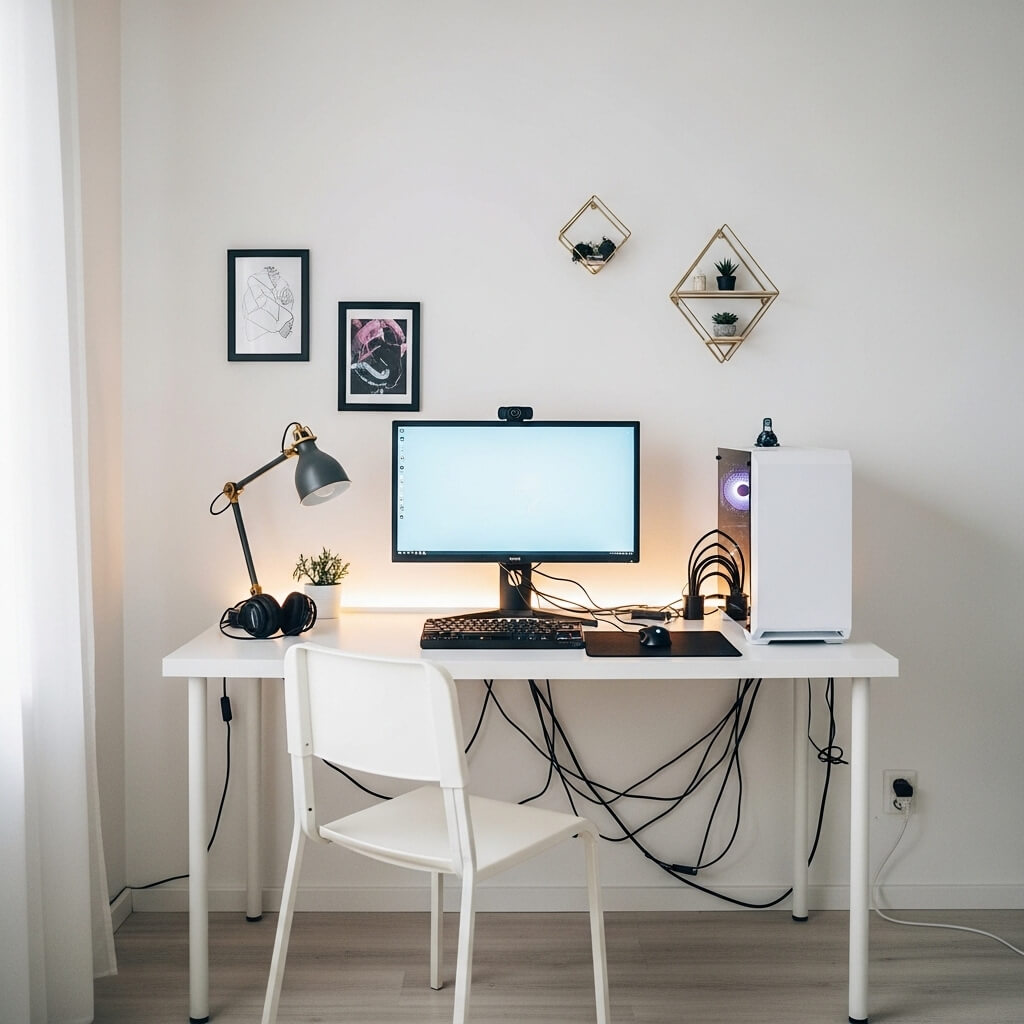
Here’s the truth nobody wants to admit: you don’t need thousands of dollars to create a killer gaming space. The internet loves showing off those $10,000 setups with every premium peripheral, but most of us are working with real-world budgets. And you know what? Some of my favorite setup improvements cost less than a new video game.
The biggest budget hack I’ve discovered is prioritizing what actually impacts your experience. A fancy $500 gaming chair looks cool in photos, but a $120 ergonomic office chair from a discount retailer often provides better support. I used a well-reviewed budget office chair for three years before upgrading, and my back never complained once.
LED light strips are your best friend on a budget. You can transform your entire room’s atmosphere for like $20-30. I bought basic RGB strips from Amazon (not even the fancy smart ones), and the difference was night and day. Suddenly my boring corner looked intentional and designed. Mount them behind your monitor, under your desk, or along your ceiling line for instant atmosphere.
DIY solutions save massive amounts of money. Instead of buying expensive gaming posters, I printed high-resolution wallpapers from my favorite games at a local print shop and framed them in cheap frames from discount stores. Total cost per piece? Maybe $15 compared to $50+ for official merchandise. They look identical once they’re on the wall.
Budget-friendly upgrade ideas:
- LED light strips (basic RGB, not smart: $20-30)
- Printed and framed gaming artwork ($10-15 per piece)
- Cable management sleeves and ties ($10-15)
- Budget ergonomic chair ($100-150)
- Peel-and-stick wallpaper for accent wall ($30-50)
- Thrifted furniture painted/refinished
- DIY floating shelves from hardware store lumber
Paint is insanely cost-effective for impact. A gallon of paint costs around $30-40 and can completely transform your space. I painted one accent wall a deep charcoal gray, and it created this focal point that made my entire setup look more professional. Painting is time-consuming but dirt cheap for the visual payoff.
Shop secondhand for furniture. I found a solid wood desk at a thrift store for $40, sanded it down, painted it matte black, and added some budget gold contact paper accents. Everyone thinks I spent hundreds on it. The wood is better quality than most new budget desks, and it has character that IKEA particle board can’t match.
Cable management costs almost nothing but makes your setup look exponentially more expensive. Velcro ties, cable raceways, and under-desk cable trays probably cost me $25 total, but they made my $300 budget setup look as clean as setups costing thousands. Never underestimate the power of hidden cables.
Dark Moody Gamer Setup with Ambient Lighting
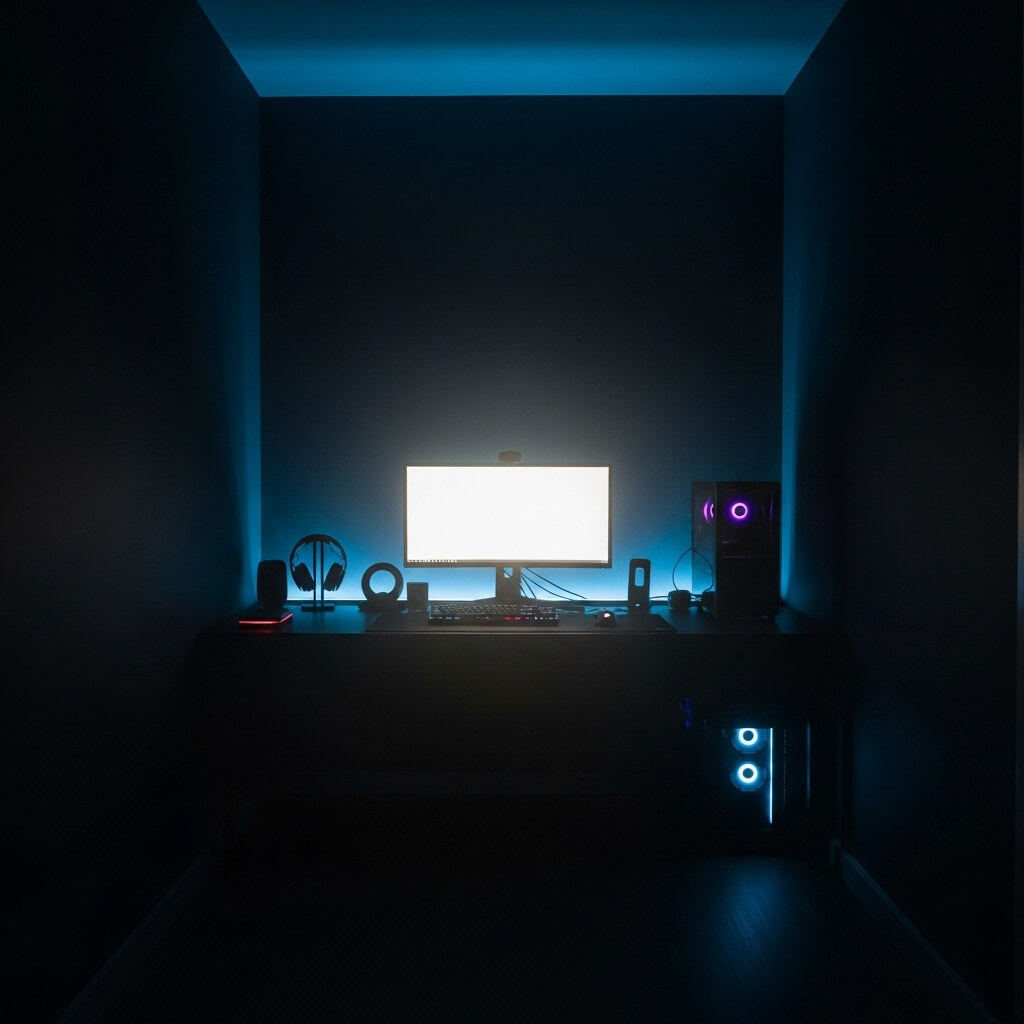
Some of us are nocturnal creatures who do our best gaming when the sun goes down and the world gets quiet. If that’s you, the dark moody aesthetic is calling your name. This setup embraces shadows instead of fighting them, creating this intimate, focused atmosphere that’s perfect for immersive gaming sessions.
The foundation here is darkness—but intentional, designed darkness, not just “I forgot to turn on lights” darkness. Start with dark walls in deep grays, navy blues, or even black. I went with a dark slate blue that reads almost black in low light but has this subtle color dimension when my ambient lighting hits it. It’s moody without being depressing.
Ambient lighting is what separates a cave from a curated space. You want multiple light sources at low intensity rather than one bright overhead light. I use warm-toned LED strips, small desk lamps with amber bulbs, and smart bulbs in corner lamps—all dimmable and usually set around 30-40% brightness. This creates layers of light that feel warm and inviting.
Your furniture should embrace dark tones too. Black desks, dark wood, charcoal fabrics—these all contribute to the cohesive moody vibe. But texture becomes super important here because you need visual interest when everything’s the same color value. I mix matte black furniture with leather accents and brushed metal hardware to create depth.
Dark moody aesthetic essentials:
- Dark wall colors (charcoal, navy, deep gray, black)
- Multiple warm ambient light sources
- Dimmable lighting (smart bulbs or dimmers)
- Dark furniture with varied textures
- Warm color temperature LEDs (2700K-3000K)
- Minimal but impactful decor
- Blackout curtains for light control
Window control is crucial. Blackout curtains or blinds give you complete control over your environment. During the day, I can create that moody atmosphere by blocking harsh sunlight. At night, no street lights or external light pollution interferes with my carefully crafted ambiance. This control is what makes the aesthetic work in any lighting condition.
Accent colors should be used sparingly. A single warm orange LED strip creates this campfire-like glow. Deep burgundy accents add richness. Dark forest greens provide subtle color without breaking the mood. I keep a single small plant with deep green leaves on my desk—it’s the only bright color in the space, which makes it surprisingly impactful.
Futuristic White Clean Gaming Room Design
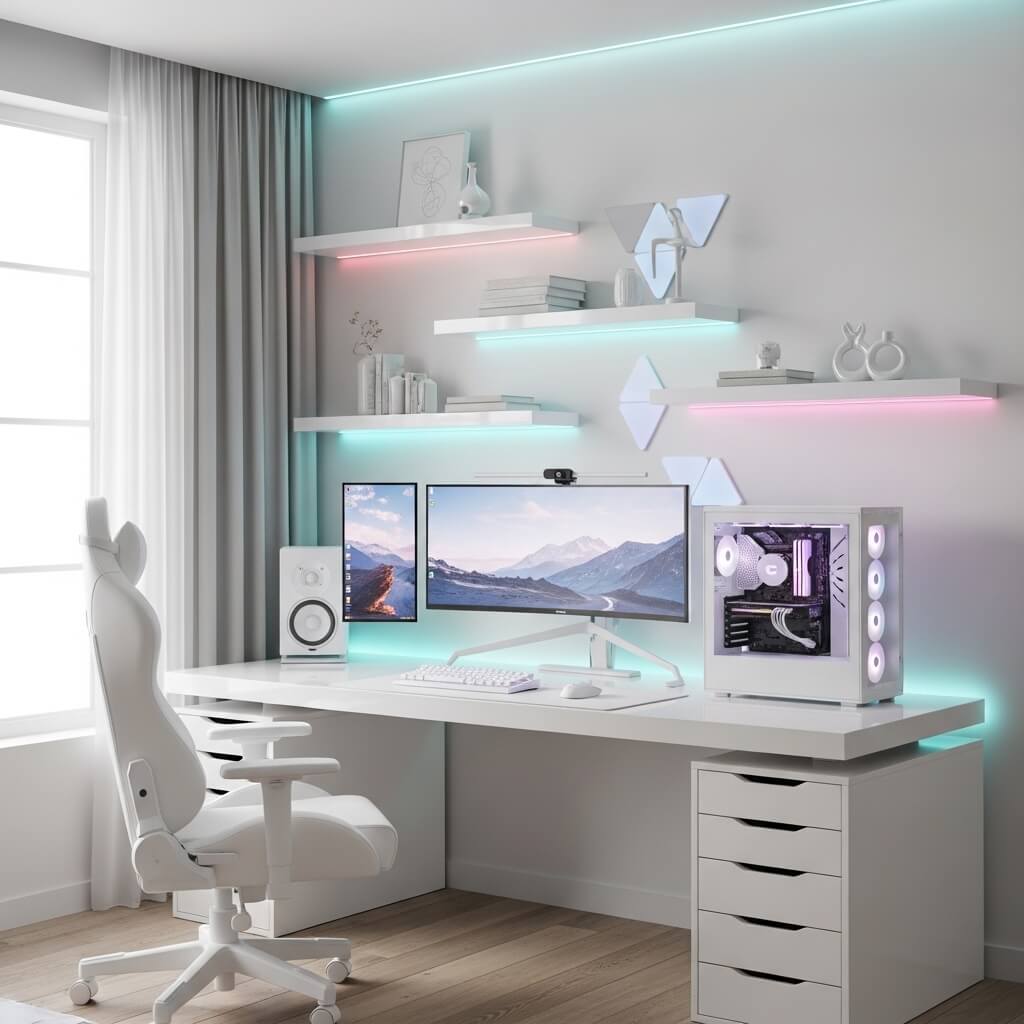
On the complete opposite end of the spectrum, we have the futuristic white aesthetic. This is Apple Store meets sci-fi movie, and when executed well, it looks absolutely incredible. It’s also probably the most challenging aesthetic to maintain because, let’s face it, white shows everything.
The all-white setup creates this clean, almost clinical look that screams “future.” But you need to be meticulous about keeping things clean and organized. One smudge, one visible cable, one piece of clutter, and the entire illusion shatters. Ask me how I know :/
Start with bright white walls and white furniture. Your desk should be white or very light wood, your chair should have white upholstery, and even your monitor bezels should ideally be white or silver. I hunted specifically for white-framed monitors, which are harder to find but make a massive difference in the overall cohesion.
Tech integration needs to be seamless. This means wireless everything when possible. Wireless keyboard, wireless mouse, wireless headphones, wireless charging pads—eliminate cables from view. The few cables you absolutely need should be white and managed obsessively. I use white cable raceways along my white walls, and they basically disappear.
White futuristic setup elements:
- All white or light neutral color palette
- Wireless peripherals (eliminate visible cables)
- White cable management solutions
- Chrome or silver accent pieces
- Bright white LED lighting
- Glass or acrylic furniture elements
- Minimal decorations (every item must be intentional)
Lighting in a white room needs to be bright and even. Under-desk lighting, behind-monitor lighting, and overhead lighting should all work together to eliminate shadows. I installed white LED strips along all my edges—desk underside, monitor backs, and ceiling perimeter. The even illumination makes the space feel larger and more futuristic.
Add subtle color through your RGB capabilities, but keep it sophisticated. Instead of rainbow effects, program your lights to shift slowly through cool tones—ice blue to soft purple to pale pink. These subtle color shifts add visual interest without breaking the clean futuristic vibe. I program mine to match the time of day, shifting cooler in the morning and warmer in the evening.
Decor should be minimal and geometric. Think white sculptural pieces, a single artistic plant in a white pot, or geometric wall art in white or chrome frames. I have exactly three decorative items in my white setup: a white geometric sculpture, a single tall plant in a white ceramic pot, and a piece of abstract art in a chrome frame. That’s it, and it’s enough.
Also Read: 10 Affordable Family Game Room Decor Ideas for Budget Homes
Retro Arcade Style Game Room Aesthetic
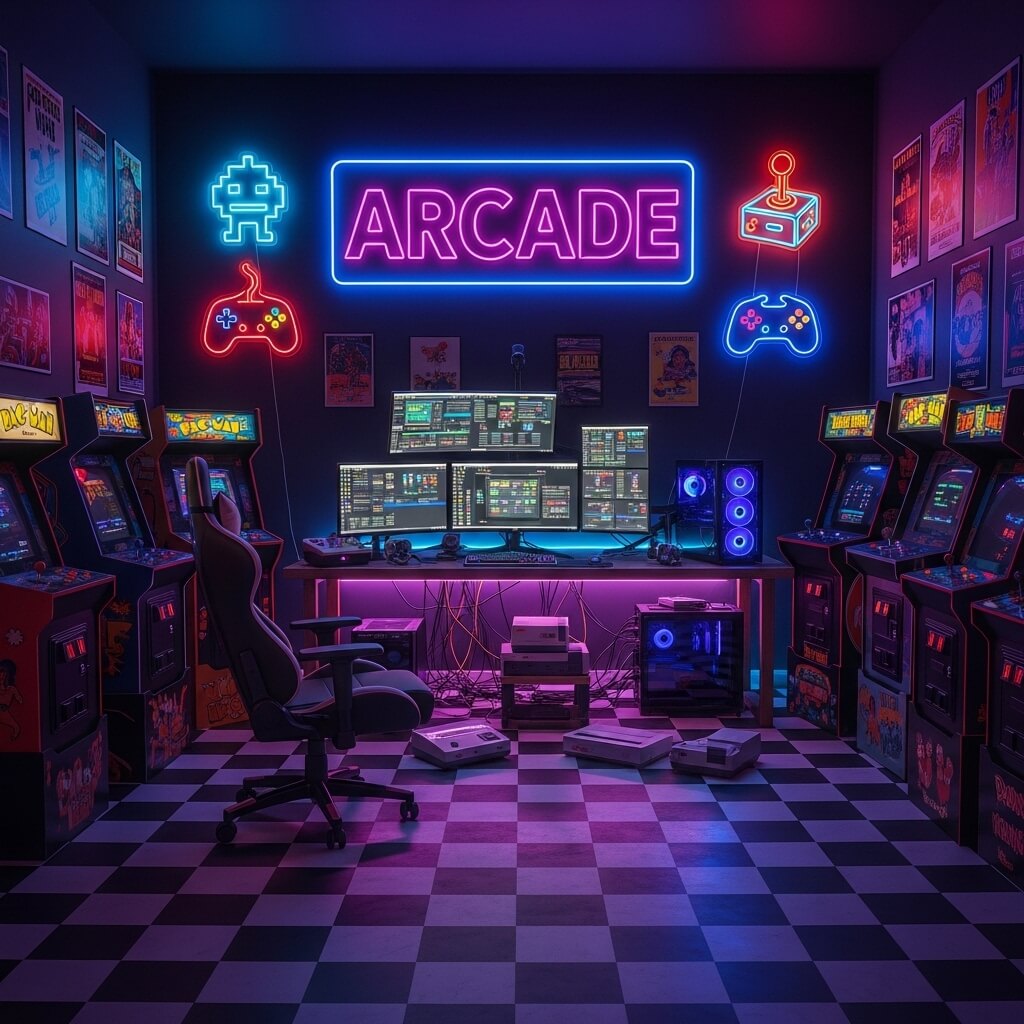
Let’s end with some nostalgia, shall we? The retro arcade aesthetic brings back that magic feeling of walking into an arcade in the ’80s or ’90s—the sounds, the lights, the energy. This aesthetic is pure fun, and honestly, it’s the most forgiving style because a bit of chaos is part of the charm.
The color palette here is bold and unapologetic. Bright reds, electric blues, sunny yellows, and classic arcade blacks. These colors should pop off the walls through posters, neon signs, and decorative elements. I created one wall as my “arcade wall” with vintage game posters, neon signs featuring classic games, and even some retro joystick wall art.
If you can swing it, an actual arcade cabinet becomes the centerpiece. You can buy full-size cabinets, build your own with a Raspberry Pi, or get those half-size replicas of classic games. I built a MAME cabinet for around $400, and it’s the conversation starter in my entire house. Playing classic arcade games on original-style controls hits different than emulating them on a modern controller.
Lighting should reference classic arcade aesthetics. Marquee-style lights, neon signs, and even old-school exposed bulb strings create that carnival midway energy. I found vintage-style marquee letters spelling “GAME” at a home decor store, and they provide this warm, nostalgic glow that makes me smile every time I see them.
Retro arcade aesthetic essentials:
- Bold primary colors (red, blue, yellow)
- Vintage arcade game posters and artwork
- Neon signs (classic game logos or phrases)
- Arcade cabinet (full-size, bartop, or mini replica)
- Checkered patterns (floor mats, accents)
- Vintage gaming memorabilia displayed prominently
- Marquee-style lighting
Furniture can lean into the retro vibe with mid-century modern pieces or industrial metal stools like you’d find at an old arcade. I grabbed a vintage metal stool at a flea market and repainted it in glossy red—it’s uncomfortable for long sessions but perfect for my arcade cabinet and looks authentic as hell.
Don’t forget the sound. Retro games have iconic soundtracks and effects. I keep a small speaker near my arcade cabinet that plays 8-bit versions of classic songs on shuffle when I’m not actively gaming. It’s subtle background ambiance that reinforces the theme without being annoying.
Collect and display vintage gaming accessories. Old controllers, cartridges, console boxes, gaming magazines—these become art in a retro setup. I mounted some classic NES cartridges in shadow boxes on my wall, and they’re simultaneously decoration and conversation pieces. Hunt flea markets, garage sales, and online marketplaces for authentic pieces.
There you have it—10 completely different aesthetics that can transform your gaming space from “meh” to “holy crap, come check this out!” The beauty of 2026’s gaming room trends is that they’re accessible to everyone, regardless of budget or space constraints.
The most important thing I’ve learned through all my setup experimentation? Choose an aesthetic that genuinely resonates with you, not just what looks cool on Instagram. Your gaming space should make you excited to sit down and play, whether that means bathing in RGB glory, embracing minimalist zen, or surrounding yourself with retro nostalgia.
Mix and match elements that speak to you. Maybe you love the dark moody vibe but want to incorporate some anime artwork. Perhaps the minimalist approach appeals to you, but you want those retro neon accents. The “rules” I’ve outlined are guidelines, not laws. Your space, your style, your rules.
Now stop reading, pick an aesthetic (or frankly, mash a few together), and start transforming that gaming space. Future you deserves to game in a room that feels like it was designed specifically for who you are. And trust me, the first time someone walks into your newly designed space and their jaw drops? That feeling never gets old.
Happy decorating, and may your setup always be Instagram-worthy and your frame rates forever high!