10 Unique Book Rack Design Modern Ideas for Trendy Spaces
- Rack Design
 Ben
Ben- 0
- 31 minutes read
You know that feeling when you walk into someone’s home and their book collection just screams “I’ve got my life together”? Yeah, I’ve been chasing that vibe for years. Books deserve better than being stuffed into random corners or piled on nightstands like literary refugees. Your collection needs a home that’s as thoughtful as the stories inside those covers.
I’ve spent way too much time obsessing over book storage solutions (my partner thinks I’m slightly unhinged), and honestly? Modern book rack designs have become absolute game-changers for creating spaces that feel both functional and Instagram-worthy. Whether you’re working with a tiny studio apartment or a sprawling living room, the right book rack can transform dead wall space into a conversation starter.
Let’s talk about 10 book rack designs that’ll make your space look like it belongs in an architecture magazine – without breaking the bank or requiring a PhD in interior design.
Floating Minimalist Wall Book Rack Design
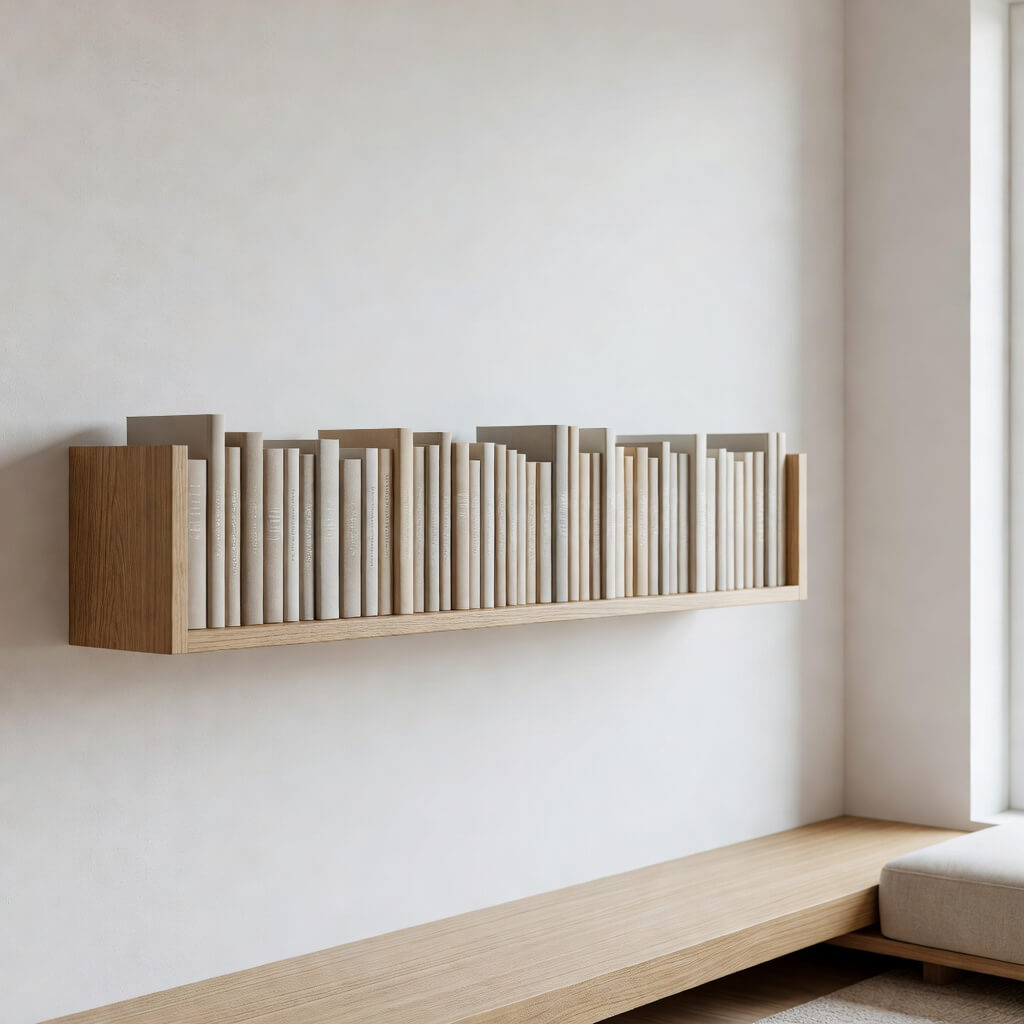
Floating shelves remain the holy grail of modern book storage, and for good reason. These bad boys create the illusion that your books are literally hanging in mid-air, which never gets old. I installed my first set three years ago, and guests still do double-takes when they walk into my living room.
The beauty of floating minimalist designs lies in their invisibility. The brackets hide behind your books, creating clean lines that don’t compete with your wall color or artwork. You can arrange them in perfectly symmetrical patterns for that OCD-satisfying look, or go asymmetrical if you’re feeling rebellious.
Here’s what makes floating shelves work so well:
- They take up zero floor space (crucial for small apartments)
- Installation is surprisingly straightforward with the right wall anchors
- You can adjust spacing based on your book heights
- They work with literally any interior style
The trick is choosing the right depth. Go too shallow, and your books become unstable. I learned this the hard way when half my poetry collection took a tumble at 2 AM. Aim for shelves that are at least 8 inches deep for standard paperbacks and hardcovers.
Pro tip: Mix book heights and add a few decorative objects between book clusters. It breaks up the monotony and prevents that “library catalog” look that screams “I alphabetize my spice rack.” 🙂
Corner Space-Saving Modern Book Shelf Idea
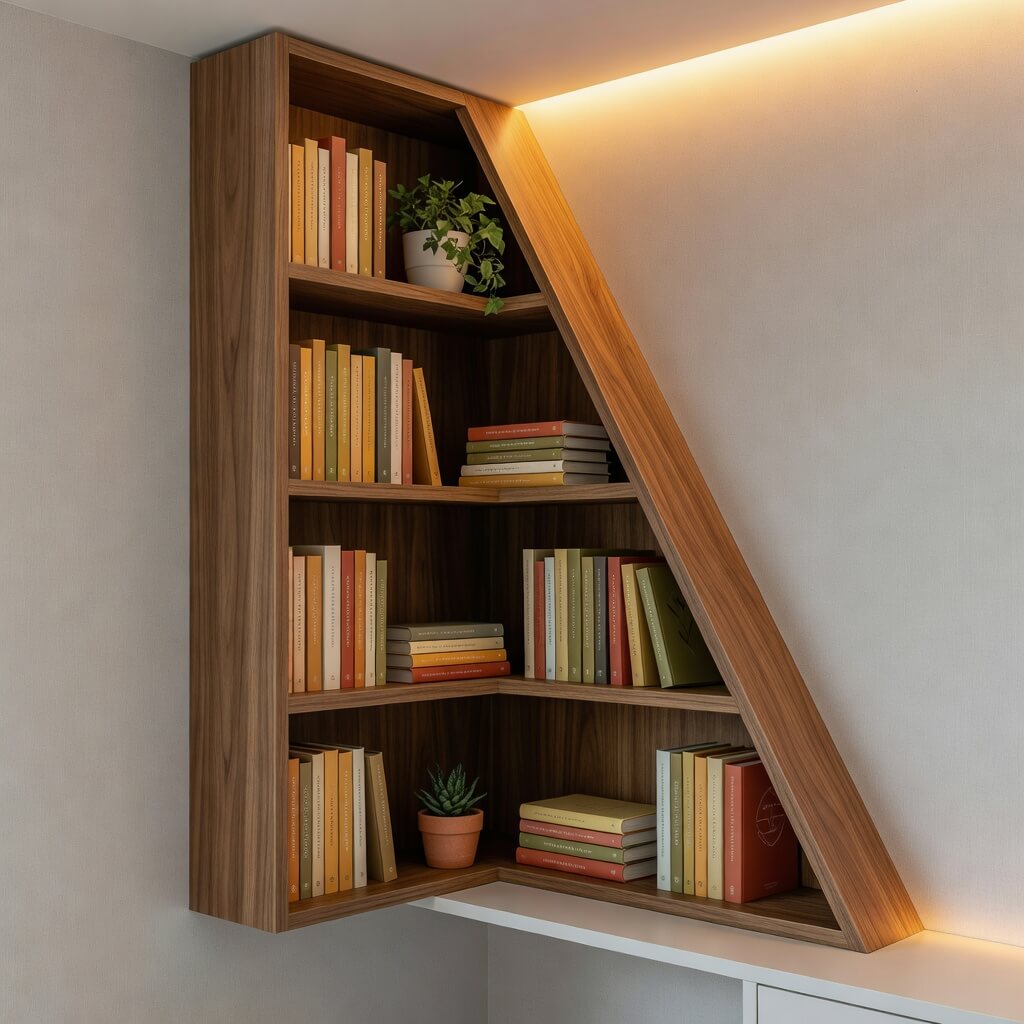
Corners get ignored way too often, which is basically a crime against interior design. Corner book shelves transform these awkward spaces into functional storage that actually enhances your room’s flow. I’ve got a corner unit in my home office that holds about 150 books in a space that was previously just collecting dust bunnies.
Modern corner designs come in two main flavors: the wraparound style that hugs both walls, and the triangular units that fit snugly into the corner itself. The wraparound versions offer more storage, but triangular units create this cool geometric focal point that’s perfect for smaller collections.
Why corner shelving works brilliantly:
- Maximizes unused space without cluttering walkways
- Creates natural reading nooks when you add a chair nearby
- Draws the eye upward, making rooms feel taller
- Provides stability since they’re anchored to two walls
The key is measuring your corner angle first. Not all corners are perfect 90 degrees (thanks, builders from the 1970s), so you’ll want to account for any quirks before ordering or building your unit. I made this mistake once and ended up with a shelf that looked drunk.
Installation tip: Start with the lower shelves and work your way up. Your back will thank you, and you’ll have better control over getting everything level.
Scandinavian Style Wooden Book Rack Setup
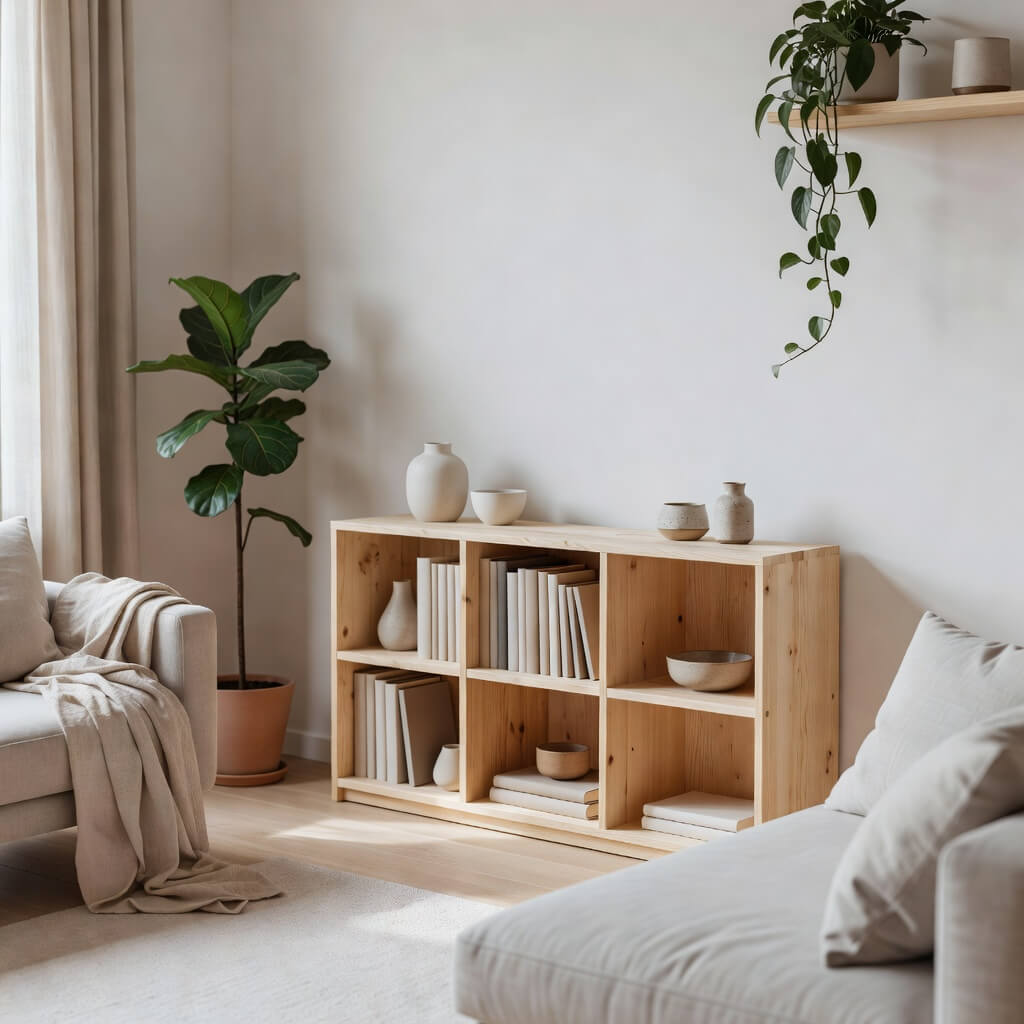
Nothing says “I have excellent taste and probably drink artisanal coffee” like Scandinavian-inspired wooden book storage. This style embraces natural wood tones, clean lines, and that effortless sophistication that makes everything look intentional rather than thrown together.
Light woods like birch, pine, or oak work beautifully for achieving that authentic Nordic vibe. The grain patterns add visual interest without overwhelming the space, and the warm tones create a cozy atmosphere that invites you to actually read those books instead of just displaying them.
I’ve noticed that Scandinavian designs tend to favor horizontal lines over vertical ones, which creates a sense of calm and stability. Think low-profile shelving units that stretch across walls rather than towering bookcases that make you crane your neck.
Essential elements of Scandinavian book storage:
- Natural wood finishes (avoid dark stains that feel heavy)
- Simple, geometric shapes without unnecessary ornamentation
- Integration with other furniture pieces for a cohesive look
- Plenty of negative space to let the design breathe
The genius of this style is its versatility. You can pair wooden shelves with metal brackets for an industrial twist, or keep everything wood for maximum hygge. Either way, your books will look like they’re living their best life.
Ever wonder why Scandinavian design feels so calming? It’s because every element serves a purpose without shouting for attention. Your books become part of the overall aesthetic rather than fighting with busy patterns or competing colors.
Also Read: 10 Innovative Shop Rack Design Ideas for Better Product Display
Geometric Shape Wall Mounted Book Storage
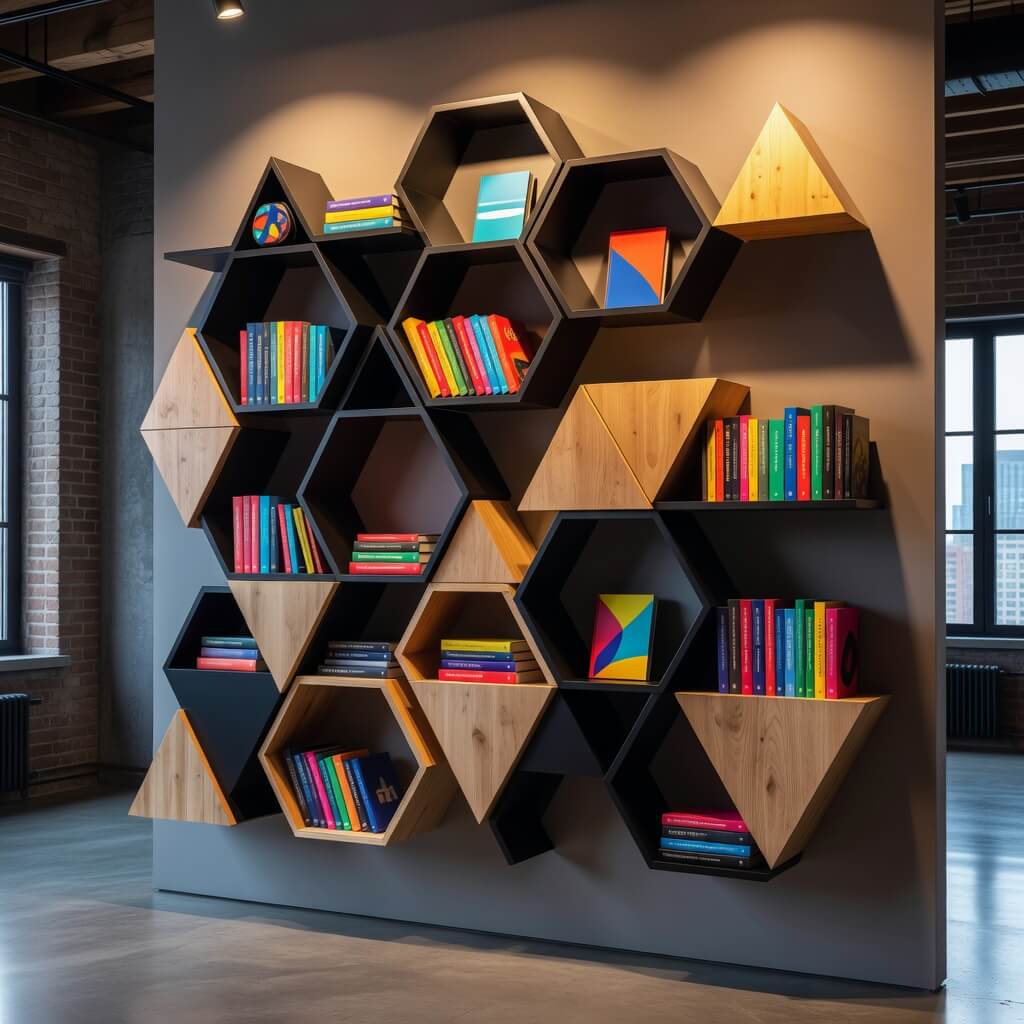
Geometric book storage turns your wall into a piece of modern art that happens to hold your favorite novels. I’m talking hexagons, diamonds, triangular clusters – shapes that make people stop and say “Wait, how does that even work?”
The beauty of geometric designs lies in their ability to create visual rhythm and movement across your wall. You’re not just storing books; you’re creating patterns that guide the eye around the room. I installed a honeycomb-style setup in my bedroom, and it completely transformed what used to be a boring wall behind my bed.
These designs work particularly well for:
- Contemporary and modern interior styles
- Spaces that need a bold focal point
- Collections of similarly-sized books
- Rooms with lots of neutral colors that need visual interest
The challenge with geometric storage is planning your layout before you start drilling holes. Trust me on this one – I’ve got extra holes in my wall from an overly ambitious hexagon arrangement that looked amazing in my head but terrible on the wall.
Start by cutting paper templates of your chosen shapes and taping them to the wall. Live with the layout for a few days, adjusting until it feels right. Your wall (and your security deposit) will thank you for the extra planning time.
IMO, the most successful geometric arrangements follow the rule of odd numbers. Groups of three, five, or seven shapes create more dynamic compositions than even numbers, which can feel static or too symmetrical.
Luxury LED Backlit Book Rack Design Concept
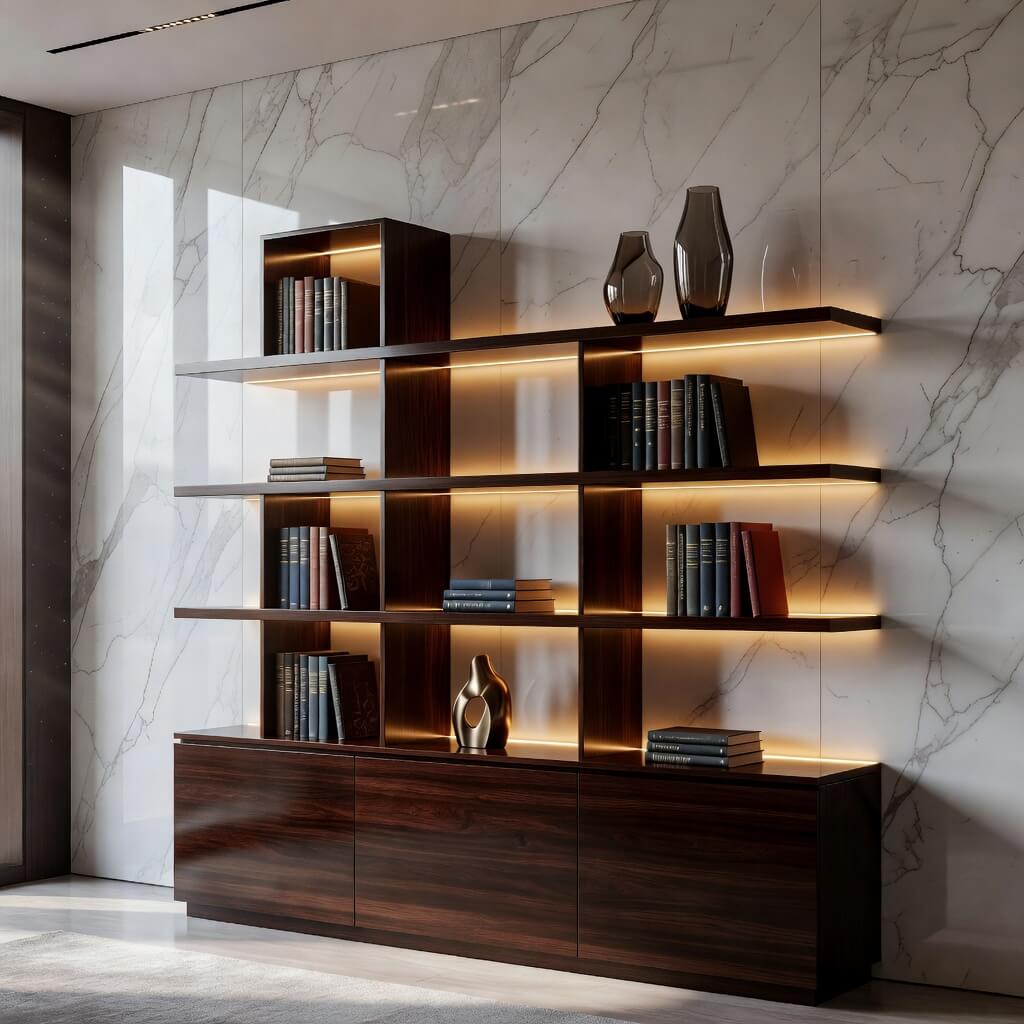
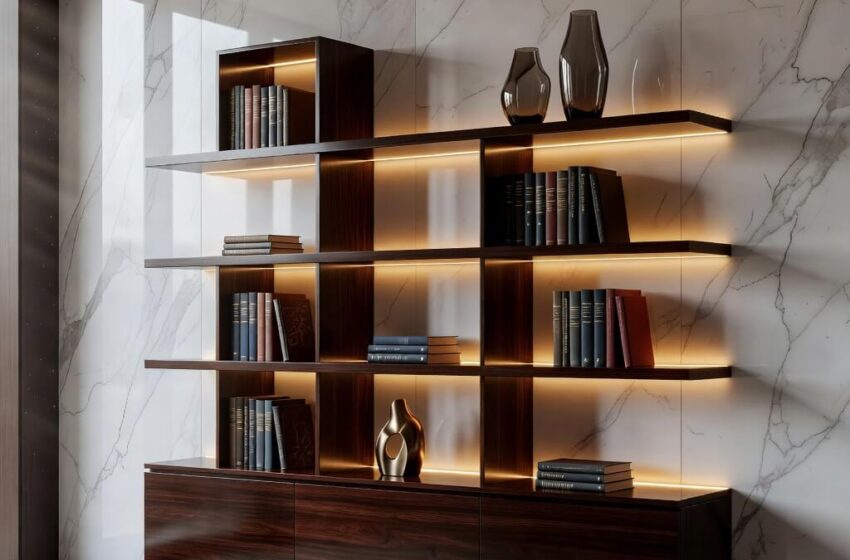
Want to make your books look like they belong in a high-end boutique? LED backlighting transforms ordinary book storage into dramatic focal points that work as mood lighting and functional storage. I added LED strips behind floating shelves in my living room, and the transformation was honestly ridiculous – in the best way possible.
The key to successful LED book lighting is subtlety. You want a warm, diffused glow that highlights your collection without creating harsh shadows or turning your living room into a nightclub. Cool white LEDs feel clinical, while warm white or soft yellow tones create that cozy, inviting atmosphere that makes people want to grab a book and settle in for the evening.
Technical considerations for LED book lighting:
- Choose dimmable strips so you can adjust intensity
- Plan cable management during installation (visible wires ruin the effect)
- Consider smart bulbs that you can control with your phone
- Ensure adequate ventilation to prevent heat buildup
Installation gets tricky with floating shelves because you need to route the LED strips and power cables through or behind the mounting system. I ended up hiring an electrician for the final connections, and it was worth every penny for the professional finish.
The best part about LED-lit book storage? It serves double duty as ambient lighting for movie nights or dinner parties. You can dial down the overhead lighting and let your book collection provide a warm, sophisticated glow that makes everyone look better in photos.
Compact Study Room Book Organizer Shelf Idea
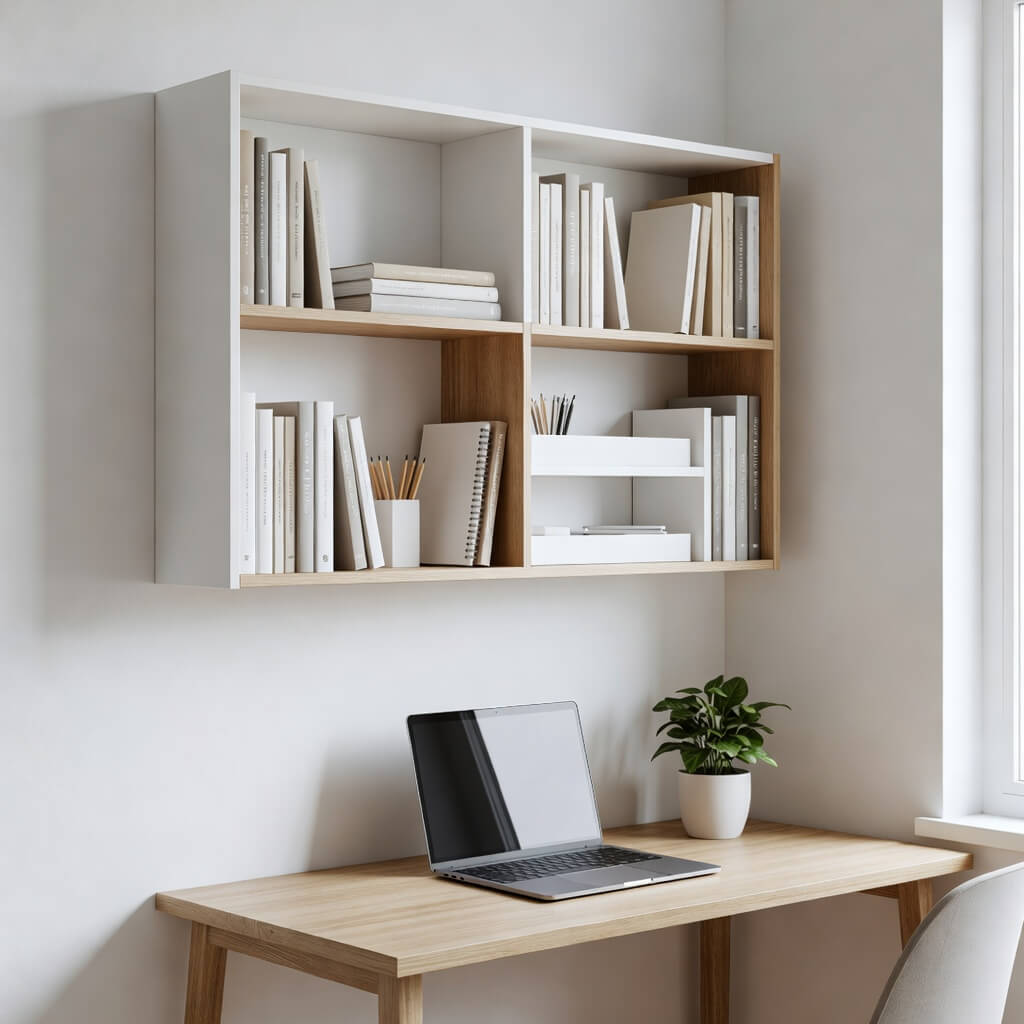
Small study spaces require book storage solutions that maximize every square inch without creating visual chaos. I’ve worked in tiny home offices where traditional bookcases would have made the space feel claustrophobic, but the right compact organizer can actually make a small room feel larger and more organized.
Vertical storage becomes your best friend in compact spaces. Think tall, narrow shelving units that draw the eye upward and take advantage of often-ignored ceiling height. Wall-mounted units work particularly well because they free up floor space for your desk chair or a small reading nook.
Smart features for small study spaces:
- Adjustable shelving that adapts to different book sizes
- Integration with desk surfaces for seamless workflow
- Hidden storage for supplies and non-display items
- Wheels or modular components for easy reconfiguration
I’ve found that mixing open and closed storage prevents small spaces from feeling cluttered. Display your most attractive books on open shelves, then tuck reference materials and less photogenic items behind cabinet doors.
The psychology of organized study spaces is real. When your books are properly sorted and easily accessible, you’ll actually use them more often. There’s something motivating about being able to grab exactly the reference book you need without excavating through piles of paper.
Also Read: 10 Practical Kitchen Rack Design Ideas for Clean Organization
Industrial Metal Frame Modern Book Rack Style
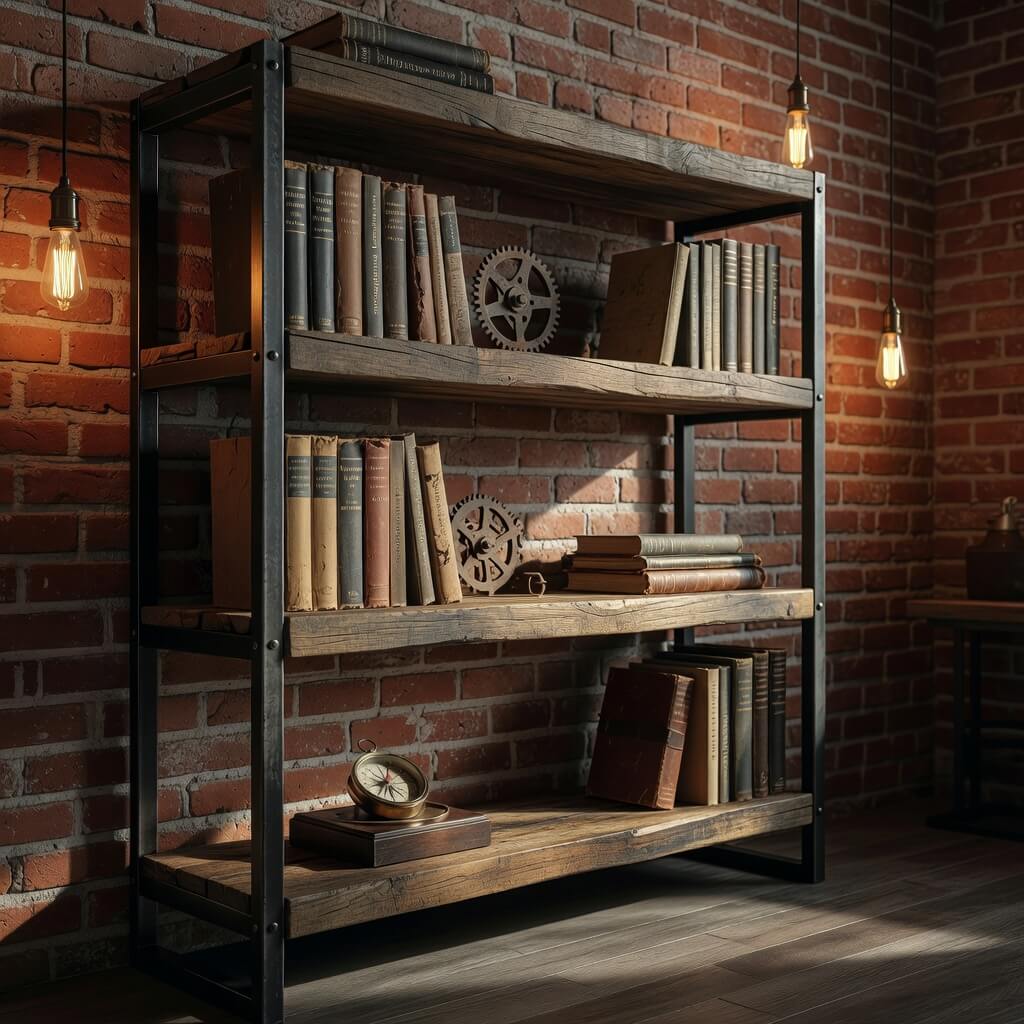
Industrial design brings an edge to book storage that works beautifully in lofts, modern apartments, or any space that embraces that “expensive warehouse” aesthetic. Metal frames provide incredible durability while creating visual contrast against the organic shapes and textures of your books.
Black powder-coated steel remains the most popular choice, but raw steel with clear coat protection offers amazing character as it develops a subtle patina over time. I’ve got an industrial ladder-style bookshelf that’s aged beautifully over five years, developing this gorgeous weathered look that you can’t fake.
Why industrial metal book storage works:
- Incredibly strong and stable for heavy book collections
- Pairs perfectly with wood shelves for mixed-material appeal
- Easy to clean and maintain
- Timeless style that won’t look dated in five years
The trick with industrial design is balancing the hardness of metal with softer elements. Add some plants, include books with colorful spines, or incorporate warm lighting to prevent the space from feeling too cold or institutional.
Installation tip for metal frame units: These things are heavy, especially when loaded with books. Make sure you’re hitting wall studs with your mounting hardware, and don’t skip the wall anchors even if you think the unit is stable. Physics always wins. :/
Hidden Invisible Floating Book Shelf Design
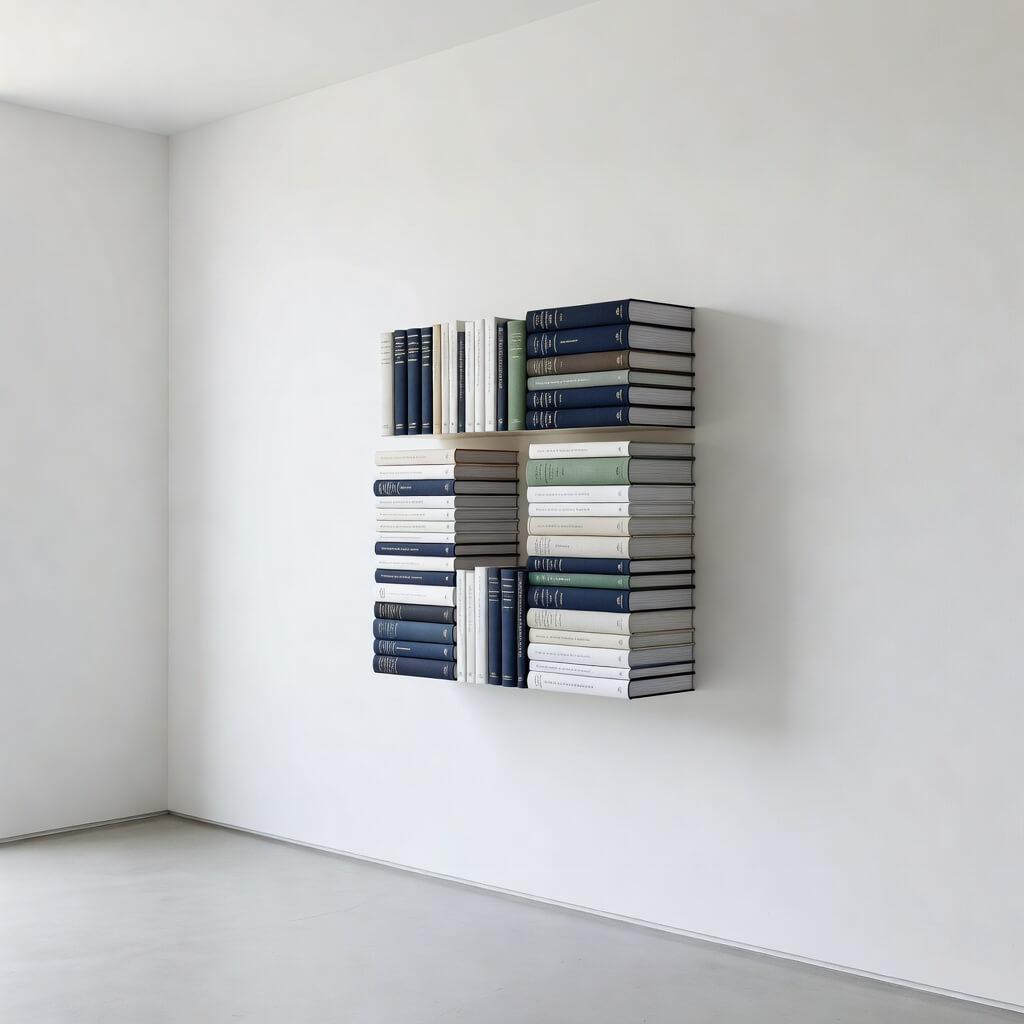
Hidden bracket systems create the most dramatic floating effect you can achieve with book storage. These shelves appear to defy gravity, with no visible means of support – it’s like magic for book lovers. I installed my first invisible shelf system last year, and I still get a little thrill every time I look at it.
The secret lies in specially designed brackets that slide inside hollow books or attach to the back edge of your shelf in ways that remain completely hidden. The engineering is actually pretty clever, using leverage and weight distribution to create incredibly stable storage that looks impossible.
Types of invisible floating systems:
- Hidden bracket systems that mount inside the shelf
- Book-end style supports that look like decorative objects
- Magnetic mounting systems for lightweight displays
- Tension-based systems that work between floor and ceiling
The biggest limitation of invisible shelves is weight capacity. You’re not going to support a complete encyclopedia set with hidden brackets, but they’re perfect for novels, art books, and lighter reference materials.
Planning invisible shelf layouts requires more precision than traditional floating shelves. You need to account for the specific mounting requirements of your hidden hardware, and there’s less flexibility for adjustment once everything is installed.
Multi-Layer Modular Book Rack Wall Unit
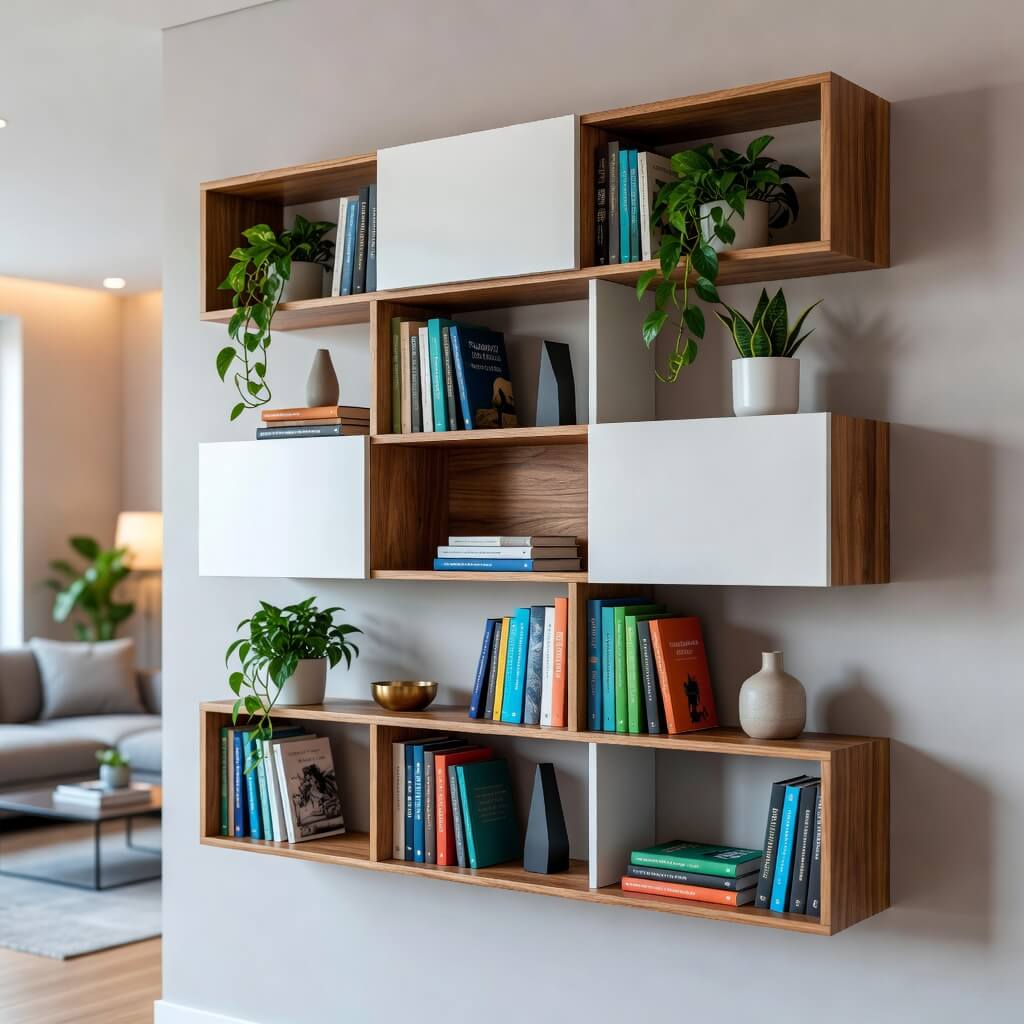
Modular systems give you the flexibility to start small and expand as your book collection grows (because let’s be honest, it will grow). These puzzle-like components can be rearranged, stacked, and reconfigured whenever you move or redecorate. I started with three cubes and now have a wall installation that would make Marie Kondo weep with joy.
The beauty of modular design lies in its adaptability to different spaces and needs. Moving to a new apartment? Reconfigure your modules to fit the new wall dimensions. Want to separate your fiction from your non-fiction? Create distinct clusters without buying new furniture.
Key benefits of modular book storage:
- Scalable investment that grows with your collection
- Easy to transport when moving
- Allows for creative, personalized arrangements
- Often more affordable than custom built-ins
Quality varies dramatically between manufacturers, so pay attention to connection methods and weight ratings. Cheap plastic connectors will fail under the weight of books, while well-designed metal or wood joints can support impressive loads.
I’ve found that mixing module sizes creates the most visually interesting arrangements. Combine standard cubes with rectangular units and a few narrow vertical pieces for collections that look intentionally curated rather than randomly assembled.
Also Read: 10 Elegant Clothes Rack Design Ideas for Modern Interiors
Aesthetic Living Room Book Display Shelf Idea
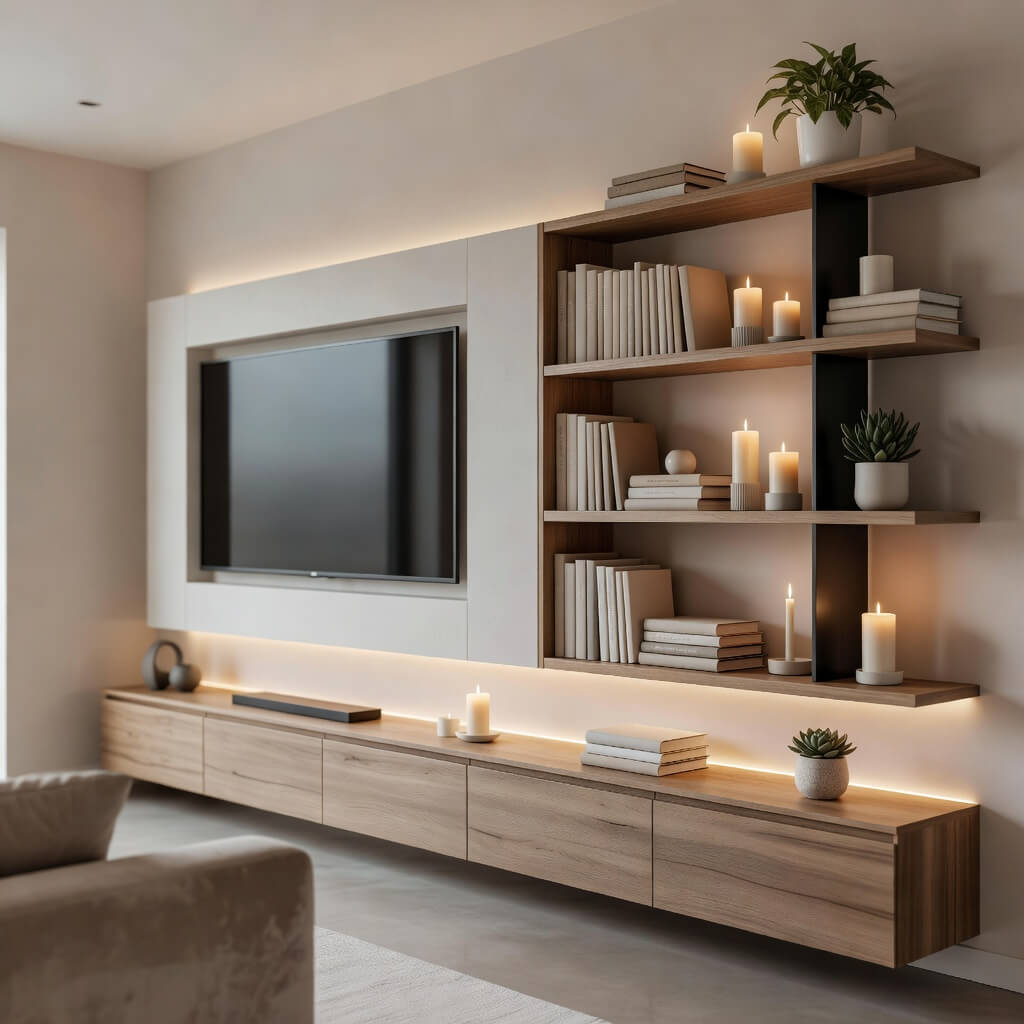
Your living room book storage should feel like part of the furniture rather than an afterthought stuffed against a wall. These are the books that represent your personality to guests, so the display method matters as much as the titles themselves. Think of it as curating a literary gallery that happens to be functional.
The secret to aesthetic book displays is intentional mixing. Combine books with decorative objects, plants, and artwork to create vignettes that tell stories about your interests and travels. I rotate seasonal elements through my living room shelves – pinecones and warm-toned books in winter, bright flowers and beach reads in summer.
Essential elements for aesthetic book displays:
- Varied heights and textures to create visual rhythm
- Strategic color coordination without being too matchy
- Integration with existing furniture and decor styles
- Adequate lighting to highlight both books and decorative elements
Styling your books takes practice, but some basic principles always work. Group books by color for dramatic impact, arrange them by height for clean lines, or mix horizontal and vertical stacking for dynamic energy.
The living room is where your book collection becomes part of your home’s personality. Choose shelving that enhances rather than dominates the space, and don’t be afraid to edit your display regularly to keep it fresh and interesting.
FYI, coffee table books deserve prime real estate in living room displays. These oversized beauties are conversation starters and perfect for filling gaps in your shelving composition.
Modern book rack design has evolved far beyond simple shelving. Today’s options blend storage, style, and smart space utilization in ways that transform how we think about organizing our literary collections. Whether you’re drawn to minimalist floating shelves or bold geometric statements, the right book storage becomes an integral part of your home’s design story.
The best book rack for your space depends on your collection size, room dimensions, and personal style preferences. Start with one approach that speaks to you, then expand and adapt as your needs change. Your books have been patient long enough – they deserve a home that’s as thoughtful and engaging as the stories they contain.
Remember, the goal isn’t just storage; it’s creating spaces that inspire you to read, discover, and share the books that matter most to you. Now go give those books the stylish home they deserve!