10 Elegant Breakfast Counter Design Ideas for Modern Living
- Counter Design
 Ben
Ben- 0
- 36 minutes read
You know that awkward space in your kitchen where you’re not quite sure what to do? Yeah, that one. The spot that’s too big for a plant but too small for a full dining setup? Well, I’ve got news for you—a breakfast counter might just be your kitchen’s missing puzzle piece.
I recently redesigned my own kitchen, and let me tell you, choosing the right breakfast counter turned into this wild journey of Pinterest boards, contractor arguments, and way too many 2 AM design sessions. But here’s the thing: once I nailed it, everything changed. Suddenly, my mornings felt less chaotic, my kitchen looked intentional, and honestly? My coffee tasted better (okay, maybe that last part is psychological, but I’m sticking with it).
So grab your favorite beverage, and let’s chat about ten breakfast counter designs that’ll make your kitchen the envy of your group chat. Trust me, these ideas go way beyond “just put some stools there and call it a day.”
Minimalist Marble Breakfast Counter Ideas
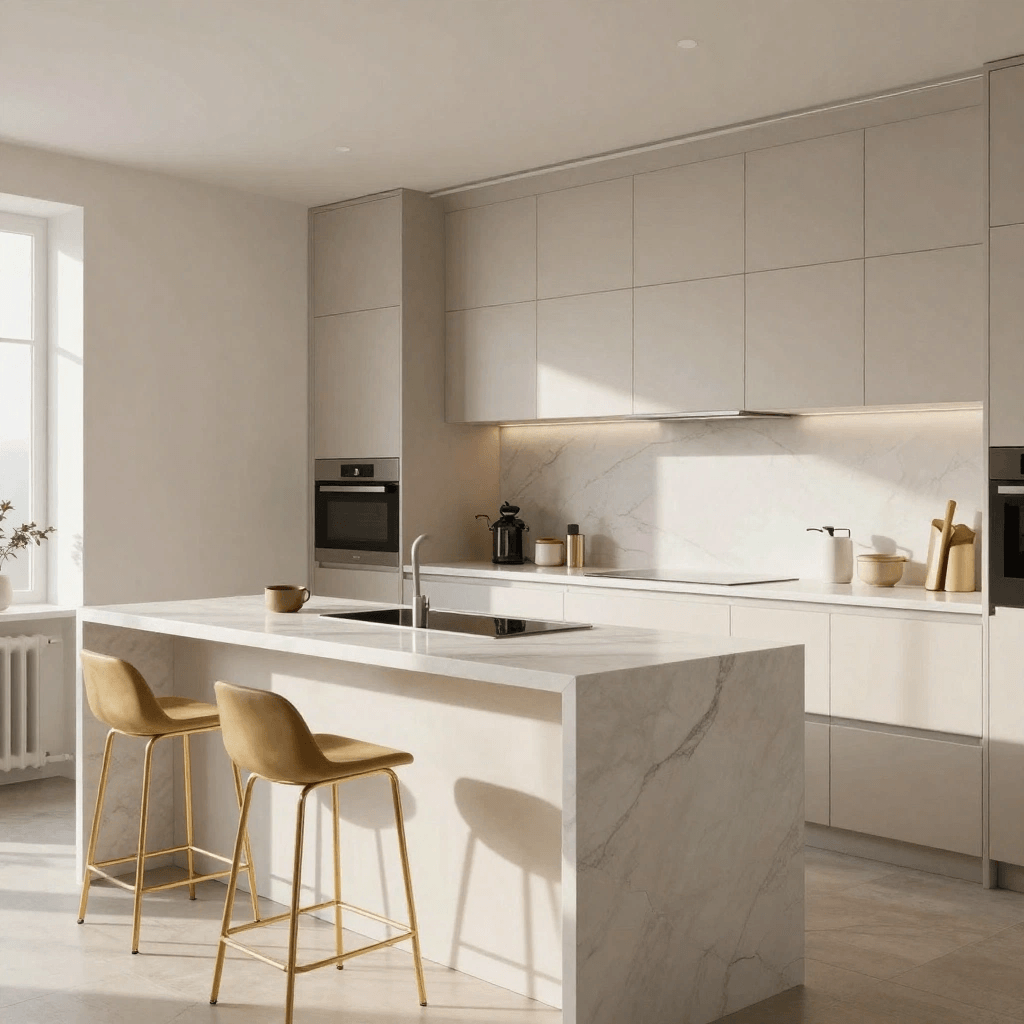
Ever walked into a space and felt like you could breathe better? That’s what minimalist marble counters do. I’m talking clean lines, zero clutter, and that gorgeous veined marble that makes you feel like you’re having croissants in a Parisian café—even if you’re just microwaving yesterday’s pizza.
Here’s what makes marble counters absolutely killer for breakfast setups:
- Timeless elegance: Marble never goes out of style. Period. Your grandkids will still think it looks sophisticated.
- Cool surface: Perfect for rolling dough or keeping your butter from turning into soup during summer.
- Light reflection: White or light-colored marble bounces natural light around like nobody’s business.
The minimalist approach means you’re not drowning in decorative nonsense. You choose sleek, handleless cabinets below, maybe some floating shelves if you’re feeling fancy, and let the marble do the talking. I went with Carrara marble for mine, and pairing it with slim black metal legs created this contrast that still makes me do a little happy dance every morning.
One pro tip? Seal that marble properly. I learned this the hard way when my nephew’s grape juice created a purple stain that haunted me for weeks. Marble is gorgeous but high-maintenance—kind of like that friend who always looks perfect but freaks out if it rains.
For the minimalist vibe, stick to two or three neutral colors max. Think white marble, black accents, and maybe a warm wood tone. Add some simple pendant lights that hang low enough to create ambiance but high enough that tall people don’t concuss themselves (speaking from experience here :/).
Space Saving Breakfast Counter Designs
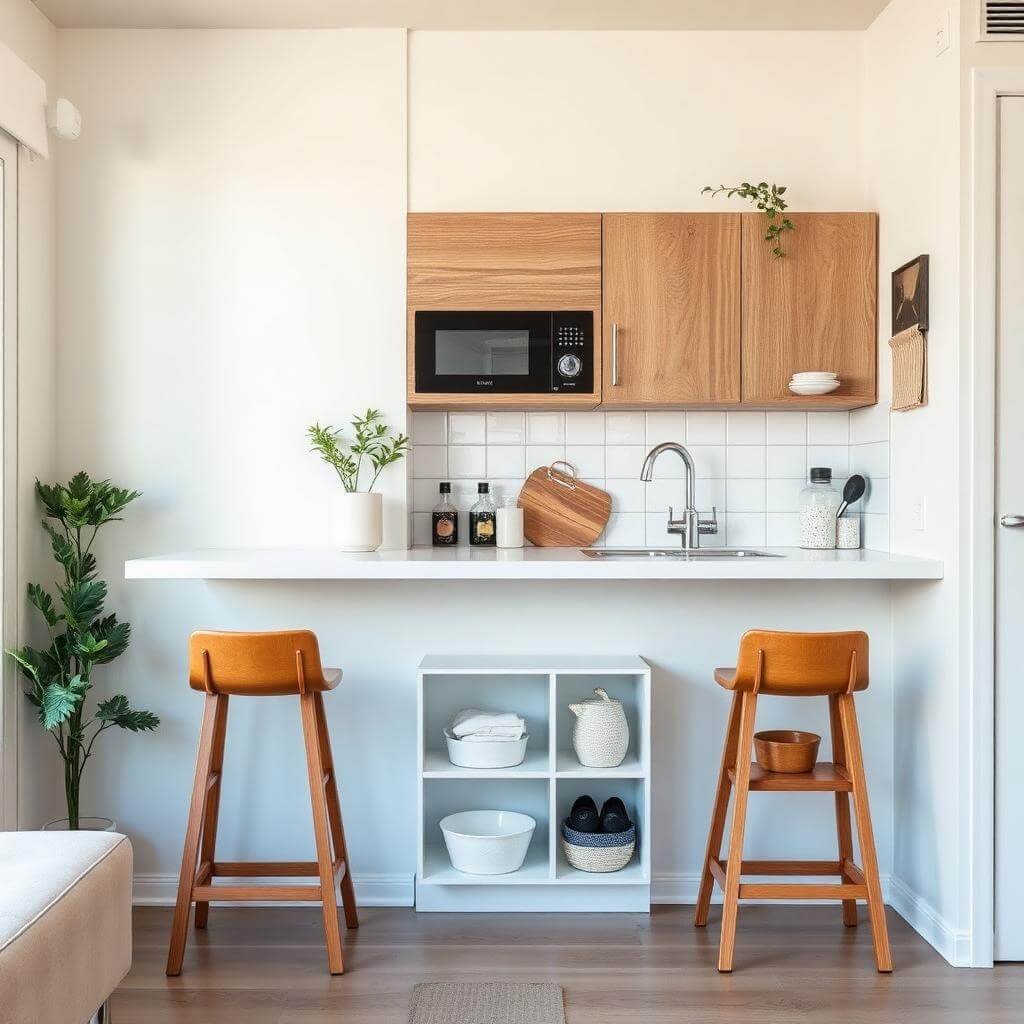
Okay, let’s talk real estate—specifically, the lack of it. Not all of us have kitchens the size of a basketball court, and that’s totally fine. Space-saving breakfast counters are where creativity meets functionality, and honestly? They’re often more interesting than their sprawling counterparts.
Pull-out counters are basically magic. You slide them out when you need them, tuck them away when you don’t. I installed one in my previous apartment, and guests literally thought I was performing a party trick every time I revealed it. These work brilliantly under your existing counter or even as an extension of your kitchen island.
Wall-mounted fold-down counters are another genius solution. Picture this: a sleek wooden panel mounted flush against your wall. When breakfast time hits, you fold it down, lock it in place, and boom—instant breakfast bar. When you’re done? It disappears like it was never there.
Here’s what to consider for space-saving setups:
- Height matters: Make sure your counter height works with stackable or tucking stools.
- Weight capacity: Check what your fold-down or pull-out can actually support (learned this after my counter sagged under Thanksgiving leftovers).
- Easy mechanisms: You don’t want to wrestle with your furniture before your first coffee.
Corner breakfast counters maximize those awkward L-shaped spaces that usually just collect random appliances nobody uses. Round or curved counters also create flow in tight spaces better than sharp corners—plus, you’ll stop bruising your hip on the corner every single morning.
FYI, combine your space-saving counter with some wall-mounted storage or a pegboard above it, and you’ve essentially created a breakfast station that takes up about two square feet of floor space. Pretty clever, right?
Modern Wooden Breakfast Bar Ideas
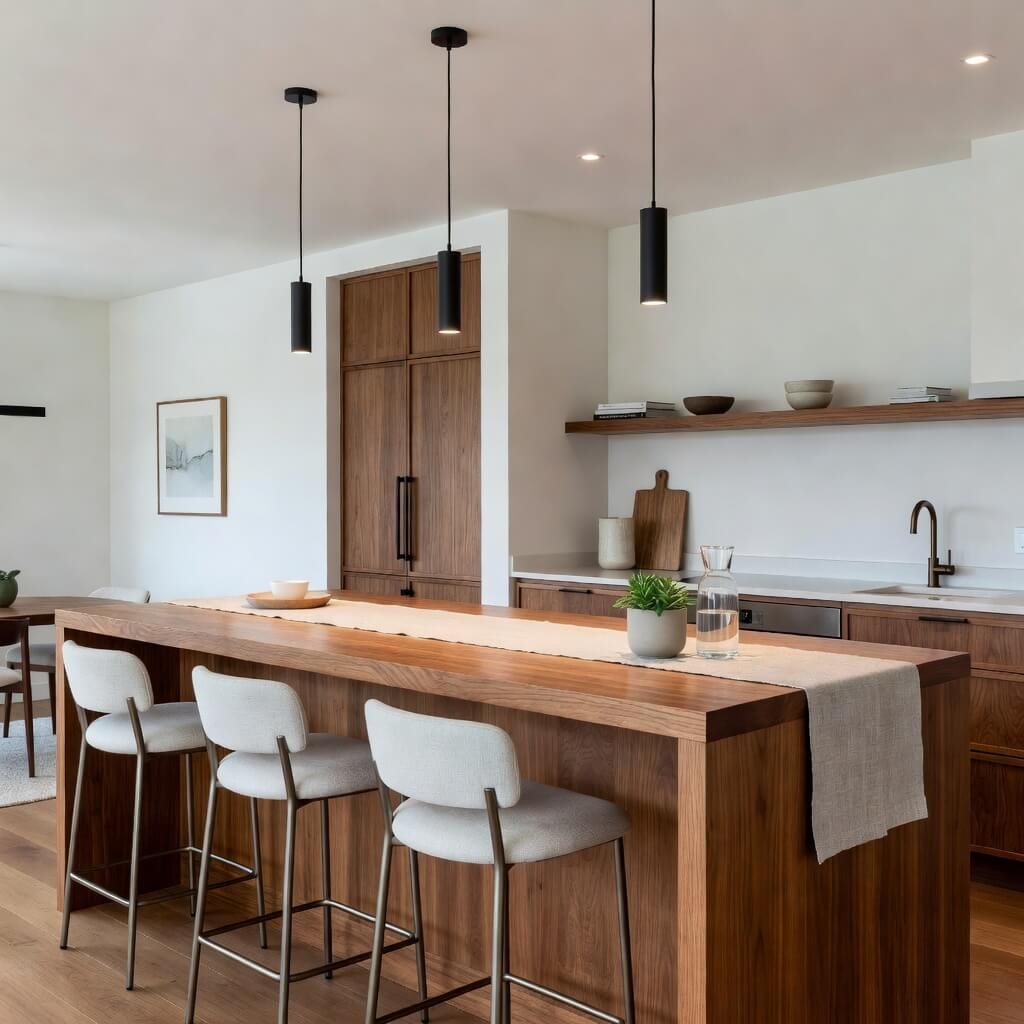
There’s something about wood that just feels right in a kitchen. Maybe it’s the warmth, or the texture, or the fact that it doesn’t feel like you’re eating breakfast in a laboratory. Modern wooden breakfast bars take traditional materials and give them a contemporary twist that works whether you’re into Scandi vibes or industrial chic.
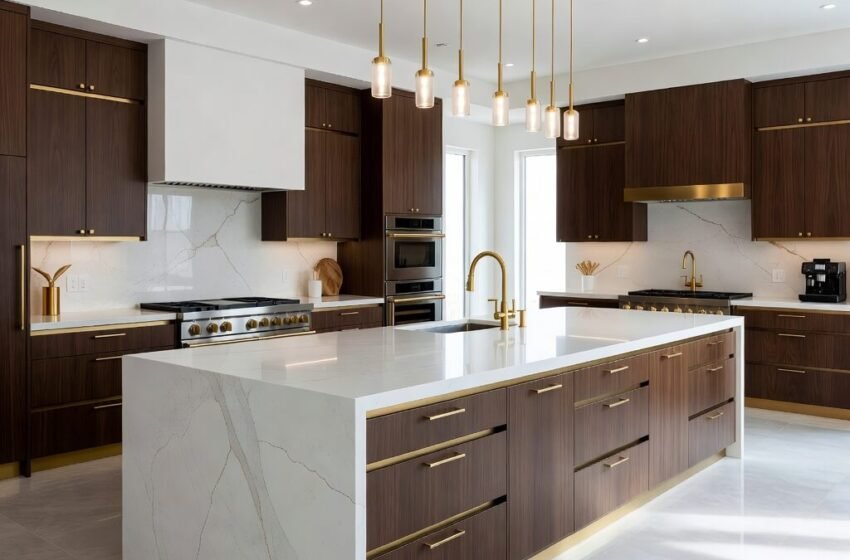
I’m obsessed with walnut countertops right now. The rich, dark tones add depth without feeling heavy, and the natural grain patterns mean each counter is genuinely one-of-a-kind. Pair walnut with white or light gray cabinets, and you’ve got yourself a magazine-worthy situation.
Live-edge wood is another stunner if you want that organic, “I’m connected to nature” feeling—even though you’re probably three floors up in an apartment building. The natural edge of the tree becomes part of your design, creating this beautiful imperfection that’s way more interesting than perfectly straight lines.
For modern wooden breakfast bars, consider:
- Wood type: Oak for durability, maple for lighter tones, walnut for richness, or reclaimed wood for character.
- Finish: Matte finishes feel contemporary; high-gloss can look dated fast.
- Support structure: Waterfall edges (where the counter material flows down the sides) create a seamless, modern look.
- Maintenance: Wood needs love—regular oiling and immediate spill cleanup are non-negotiable.
Mix wood with metal for that modern industrial vibe. I paired a thick oak counter with matte black steel brackets, and the combination feels both sturdy and surprisingly elegant. Add some Edison bulb pendants above, and you’ve basically created a hipster coffee shop in your own home (minus the overpriced lattes).
Also Read: 10 Gorgeous Cafe Counter Design Ideas for Urban Cafes
Cozy Apartment Breakfast Counter Setups
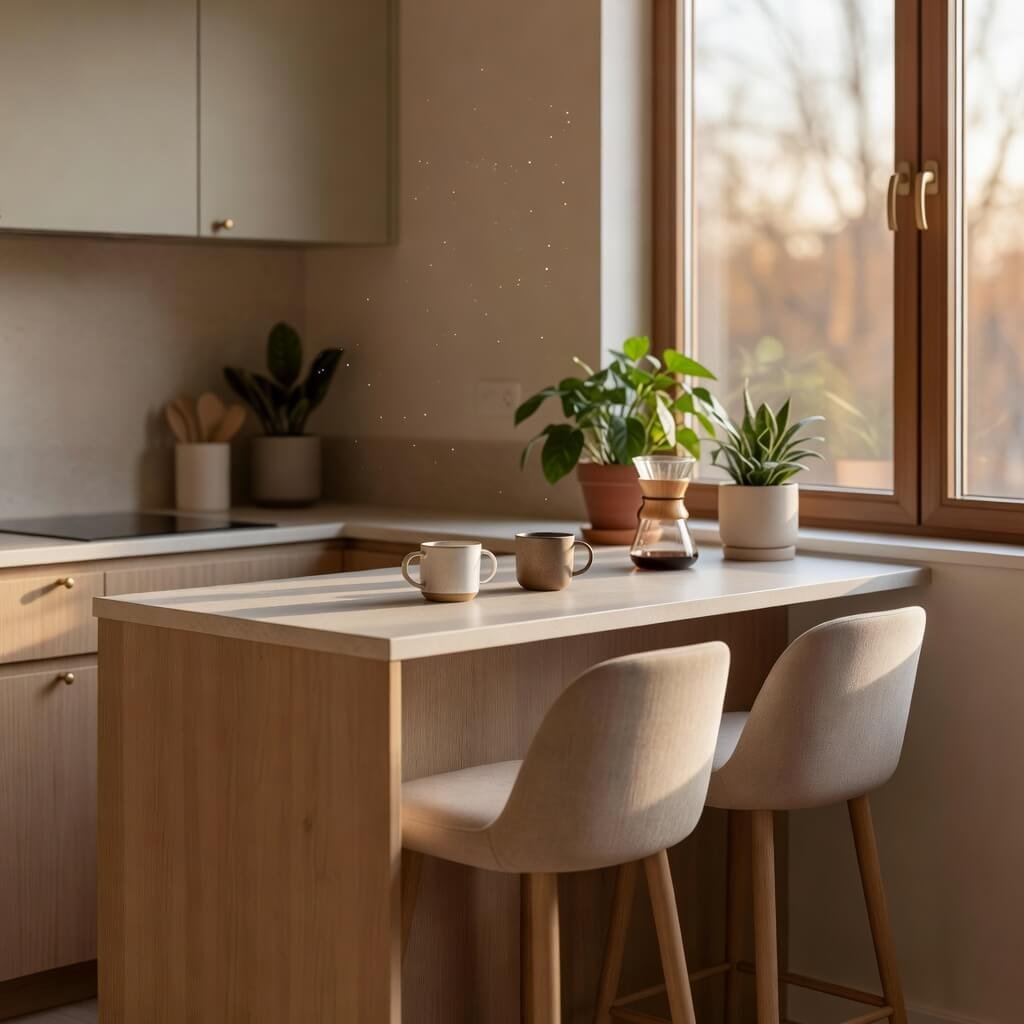
Apartment living means working with what you’ve got—and what you’ve got is probably limited. But cozy? Cozy we can absolutely do. Small breakfast counters in apartments aren’t about compromise; they’re about creating intimate, intentional spaces that make you actually want to sit down instead of eating over the sink like a college student.
The secret to cozy apartment counters is layering. You want texture, warmth, and personality packed into a small footprint. Think soft pendant lighting, comfortable stools with cushions (yes, cushions—your tailbone will thank you), and personal touches that make the space yours.
I created a breakfast nook in my 600-square-foot apartment by installing a narrow counter along an empty wall—we’re talking 18 inches deep max. Added some brass rail-back stools, hung a small shelf above for coffee mugs and plants, and suddenly I had this little breakfast retreat that felt way bigger than its actual dimensions.
Key elements for cozy apartment setups:
- Lighting: Warm, dimmable lights create ambiance even in a shoebox-sized space.
- Textiles: A small runner, cushioned stools, or even a hanging fabric piece adds softness.
- Greenery: Plants make everything feel more alive and intentional.
- Personal items: Your favorite art, a quirky salt shaker collection, vintage coffee tins—whatever makes you smile.
Don’t be afraid of color in small spaces. I painted the wall behind my counter this gorgeous deep teal, and it actually made the counter feel more defined and special, like its own little room within the room. Bold colors create boundaries and personality—boring beige just creates boring beige.
Luxury Kitchen Island Counter Ideas
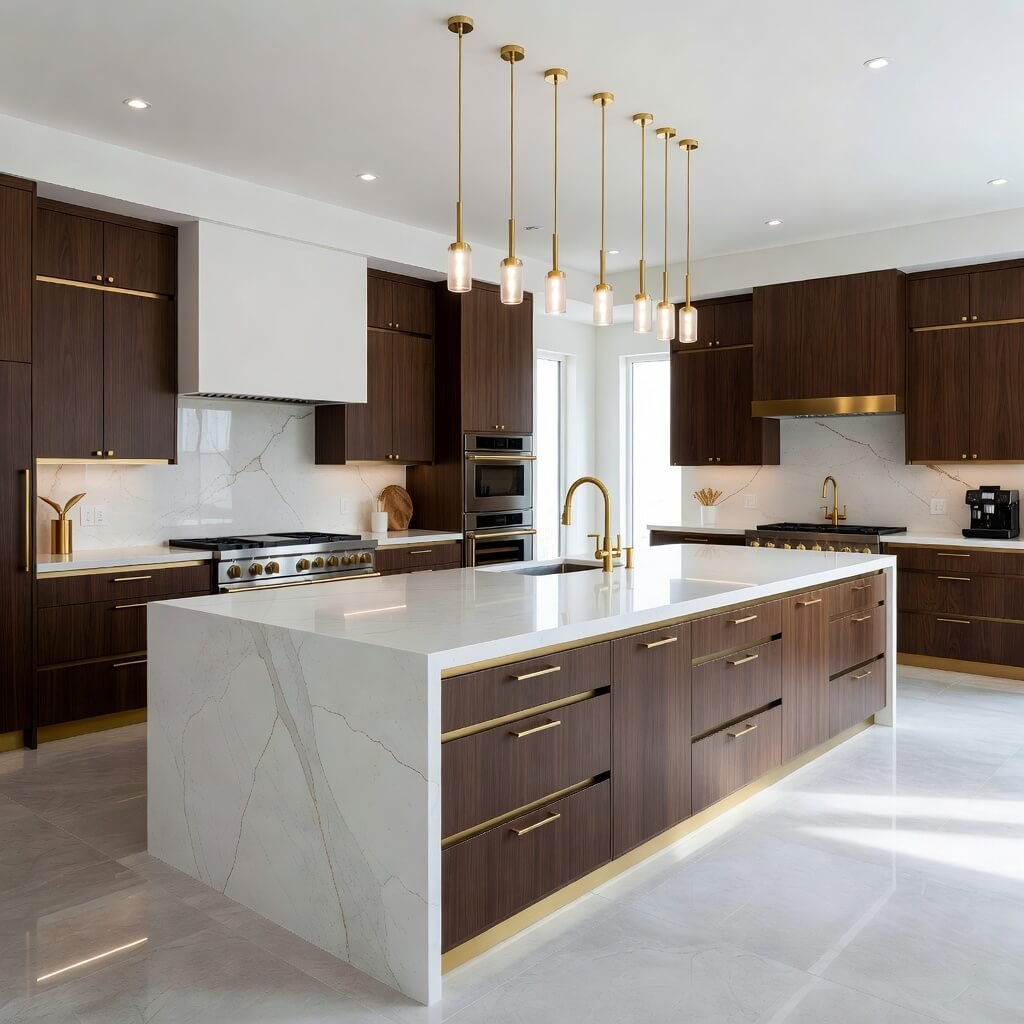
Alright, let’s talk about going full-on fancy. Luxury kitchen island counters are where you pull out all the stops—we’re talking statement pieces that make visitors audibly gasp when they walk into your kitchen. No judgment here; if you’ve got the space and budget, why not make breakfast feel like a five-star hotel experience?
Quartz with dramatic veining mimics marble but handles wine spills and hot pans without having a breakdown. I’ve seen some stunning white quartz with bold gray veining that looks expensive because, well, it kind of is. But the maintenance is way easier than natural stone, which means you can have the luxury look without hiring a full-time counter babysitter.
Waterfall edges on kitchen islands scream luxury. The counter material cascades down the sides instead of showing exposed cabinet edges, creating this continuous, sculptural look. I helped my sister install one with dark granite, and the effect is genuinely dramatic—in a good way, not in a “why is there a theater stage in your kitchen” way.
Luxury features to consider:
- Built-in appliances: Wine fridge, warming drawer, or even a small dishwasher integrated into the island.
- Dual-level counters: Different heights for prep work and casual dining.
- Premium materials: Think quartzite, exotic granite, or even concrete with metallic inlays.
- Statement lighting: Oversized pendants or a custom chandelier above the island.
- Designer stools: This is where you invest in the Eames knockoffs you’ve been eyeing (or the real deal if you’re fancy like that).
IMO, the best luxury counters balance wow-factor with functionality. You want people impressed, sure, but you also want to actually use the thing. I’ve seen gorgeous islands that are so precious, nobody dares eat on them, which completely defeats the purpose. Make it luxurious and livable.
Farmhouse Style Breakfast Counter Designs
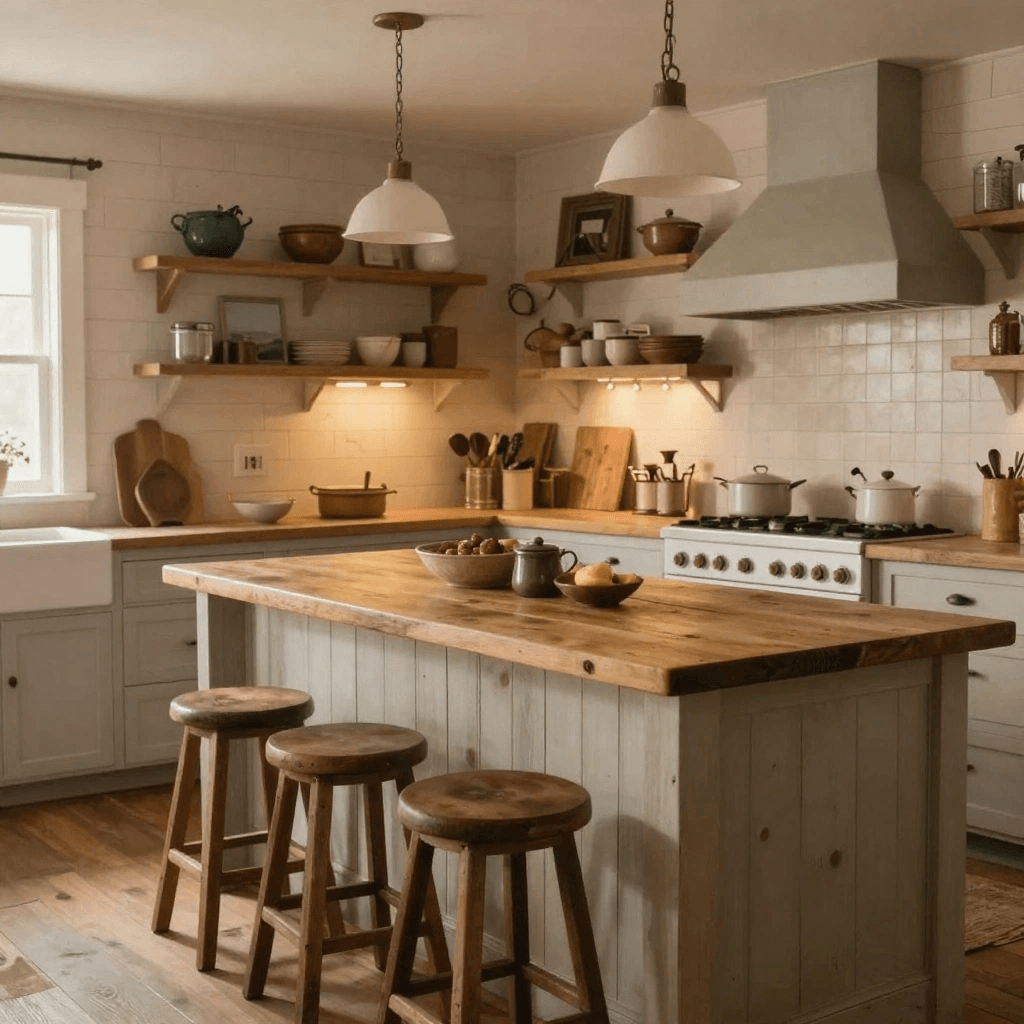
Can we talk about how farmhouse style refuses to die? I mean, Joanna Gaines basically made shiplap and butcher block a personality trait for an entire generation, and honestly? I’m not mad about it. Farmhouse breakfast counters bring this comfortable, lived-in vibe that makes your kitchen feel like home—even if you just moved in yesterday.
The foundation of farmhouse counters is natural materials with character. We’re talking thick butcher block counters that show knife marks and patina over time, reclaimed barn wood with nail holes and weathering, or even concrete cast to look intentionally rustic. The goal isn’t perfection; it’s warmth and authenticity.
I visited a friend’s farmhouse-style kitchen last month, and her breakfast counter setup was chef’s kiss. She used a chunky reclaimed wood counter supported by white-painted corbels, paired it with mismatched vintage stools she’d collected from flea markets, and hung mason jar pendant lights above. It felt collected and personal rather than “bought the entire display room from Pottery Barn.”
Essential farmhouse counter elements:
- Butcher block or reclaimed wood: The warmer and more textured, the better.
- White or cream base cabinets: Creates that classic farmhouse contrast.
- Open shelving: Display your dishes, cookbooks, and those cute canisters you definitely overpaid for.
- Vintage or industrial touches: Metal brackets, wire baskets, old scales as decor.
- Apron-front details: If your counter extends from cabinetry, consider an apron-front panel for that traditional look.
The trick with farmhouse style is knowing when to stop. Too many “GATHER” signs and galvanized metal buckets, and you’ve crossed into theme restaurant territory. Keep it balanced—mix old and new, rustic and refined. Your breakfast counter should feel like it evolved over time, not like you panic-bought everything from the farmhouse section at Target in one afternoon 🙂
Also Read: 10 Luxurious Basin Counter Design Ideas for Modern Homes
Small Kitchen Breakfast Nook Ideas
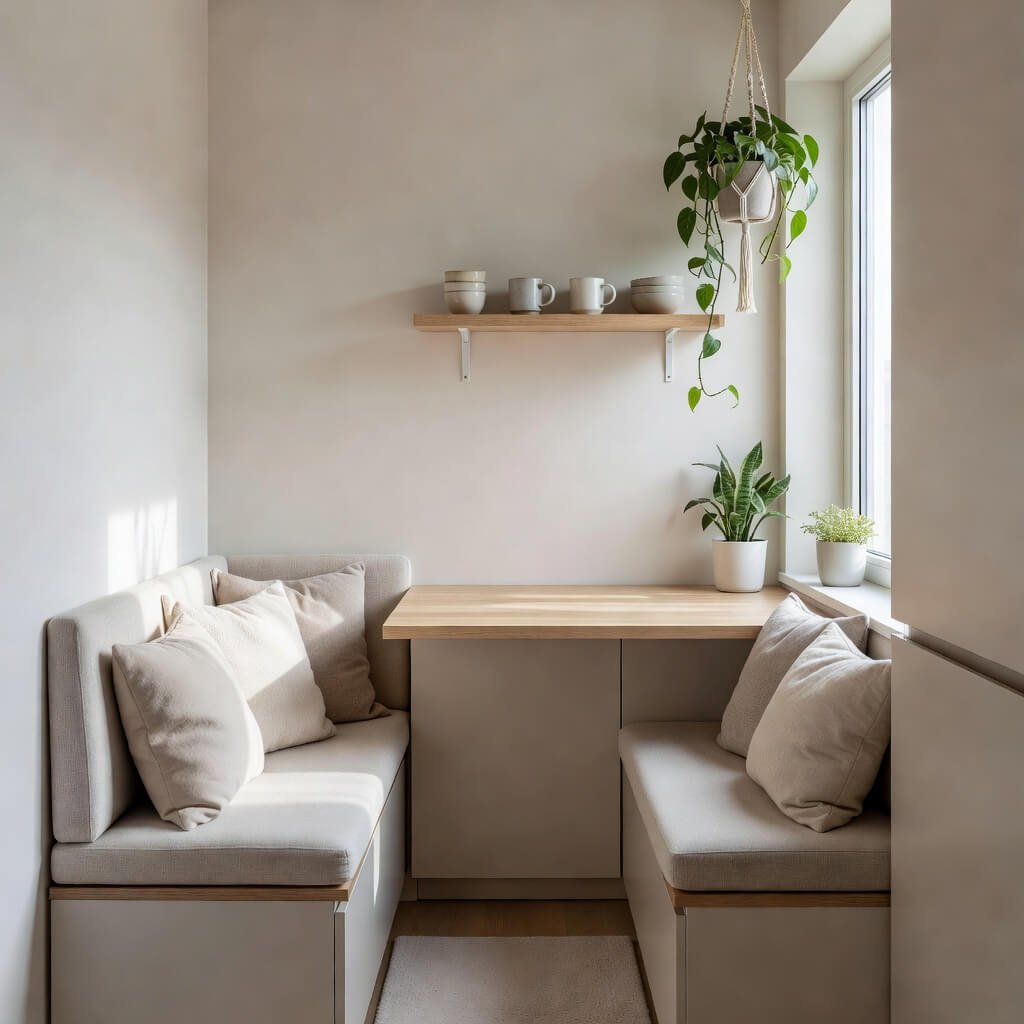
Small kitchens need love too, and breakfast nooks are the perfect solution when you can’t fit a full counter or island. These cozy corners transform unused spaces into functional breakfast spots without requiring a kitchen renovation or knocking down walls.
Banquette seating is your best friend in small kitchens. Build or buy an L-shaped bench that fits snugly into a corner, add a small table or narrow counter, and you’ve created seating for 4-6 people in a space that previously held nothing but a sad dying plant. Bonus: most banquettes have storage underneath, which is basically gold in small kitchens.
I squeezed a breakfast nook into my galley kitchen by using a slim console table against the wall with two backless stools that slide completely underneath. When I’m not using it, the whole setup virtually disappears, giving me crucial floor space back. When I want breakfast, I pull out the stools, and I’ve got a legit dining spot.
Smart small nook strategies:
- Multi-functional furniture: Tables that fold down, stools that stack, counters that double as prep space.
- Light colors: Keep everything bright to make the space feel larger.
- Mirrors: A mirror on the wall beside or behind your nook creates the illusion of more space.
- Vertical storage: Use wall space above and around your nook for storage and display.
- Natural light: Position your nook near a window if possible—makes small spaces feel airy.
Round tables work better in tight nooks than rectangular ones because you’re not constantly bruising yourself on sharp corners. I switched from a square table to a 30-inch round one, and the flow improved dramatically. Plus, round tables feel more intimate and conversational, which is nice when you’re having breakfast with someone whose face is approximately eight inches from yours due to space constraints.
Black and White Breakfast Counter Inspiration
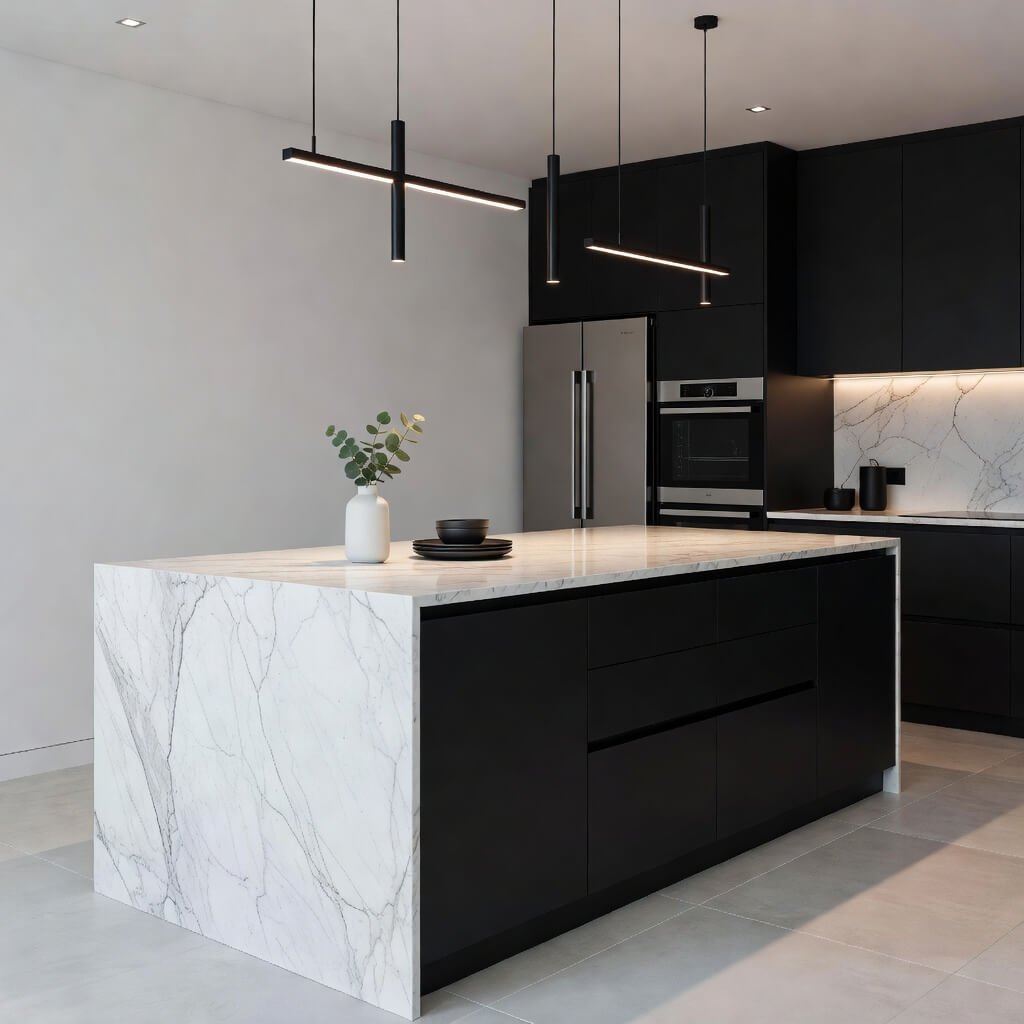
Black and white is the little black dress of design—timeless, sophisticated, and it works for basically any occasion. Black and white breakfast counters create high-contrast drama without being loud or overwhelming, and they pair beautifully with literally any accent color you want to add later.
White counters with black cabinets is the classic inversion that feels modern and bold. I did this in my current kitchen—crisp white quartz on top, matte black base cabinets below—and the result is clean, graphic, and surprisingly versatile. I can change my accent colors seasonally (copper fixtures in fall, chrome in summer) without anything clashing.
Alternatively, black counters with white surroundings create this grounded, anchored feeling. Black granite, soapstone, or even black concrete paired with white walls and cabinetry makes your counter the focal point. Just make sure you’re okay with seeing every single crumb and water spot, because black shows everything.
Ways to work the black and white theme:
- Patterned tile backsplash: Black and white geometric or Moroccan tiles add visual interest.
- Mixed materials: White marble with black metal base, or black counter with white oak accents.
- Monochrome accessories: Black pendant lights, white stools, black and white art above the counter.
- Texture variation: Mix matte and glossy finishes to keep it from feeling flat.
The beauty of black and white counters is you can swing them modern, traditional, industrial, or minimalist just by changing the surrounding elements. Want it modern? Add chrome and glass. Traditional? Brass fixtures and classic molding. Industrial? Exposed bulbs and metal shelving. It’s honestly the most flexible design choice you can make.
One warning though: don’t go totally sterile. All black and white with zero warmth can feel like eating breakfast in an operating room. Add wood tones, greenery, or warm metallics to keep things inviting and human.
Elegant Open Concept Breakfast Counters
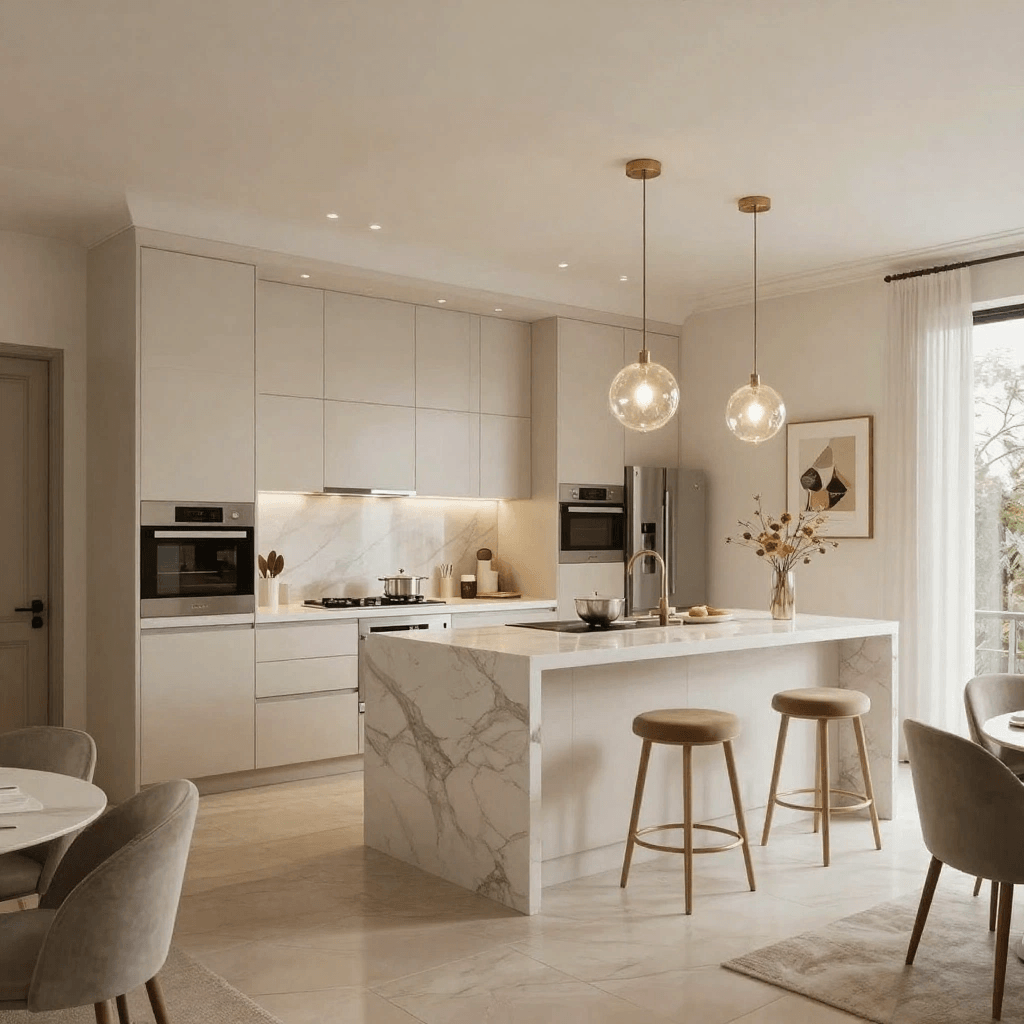
Open concept living means your breakfast counter isn’t just functional—it’s a design statement visible from basically everywhere in your main living area. No pressure, right? These counters need to look good from all angles while serving as both a dining spot and a visual divider between kitchen and living spaces.
Kitchen islands with seating on multiple sides work beautifully in open concepts. You can prep food on one side while guests sit on the other, creating this interactive cooking-and-chatting situation that’s way more fun than being isolated in a closed kitchen. I’ve hosted so many dinner parties where everyone congregates around my island, drinks in hand, while I cook—and honestly, it’s the best.
For open concepts, material continuity matters. Your breakfast counter should connect visually with the rest of your visible space. If you’ve got hardwood floors, maybe echo that wood tone in your counter base. If your living room has marble accents, bring that into your counter material. The space should flow rather than feeling like seven different rooms smashed together.
Open concept counter essentials:
- Cable management: Hide electrical outlets and charging stations smartly—these are visible from everywhere.
- Symmetry and balance: The counter should feel intentional, not randomly placed.
- Coordinated stools: They’re part of your visible furniture now, so choose them carefully.
- Lighting as sculpture: Statement pendants that look good from all angles.
- Clean lines: Open concepts benefit from uncluttered, streamlined designs.
I added a beautiful walnut counter to my open concept space with seating on both the kitchen and living room sides. The living room side feels more lounge-y with comfortable backless stools, while the kitchen side has taller, more functional seating. This way, the counter serves different purposes depending on which side you’re approaching from, but it all feels cohesive.
Also Read: 10 Premium Office Counter Design Ideas Luxury Front Counter
Smart Storage Breakfast Counter Ideas
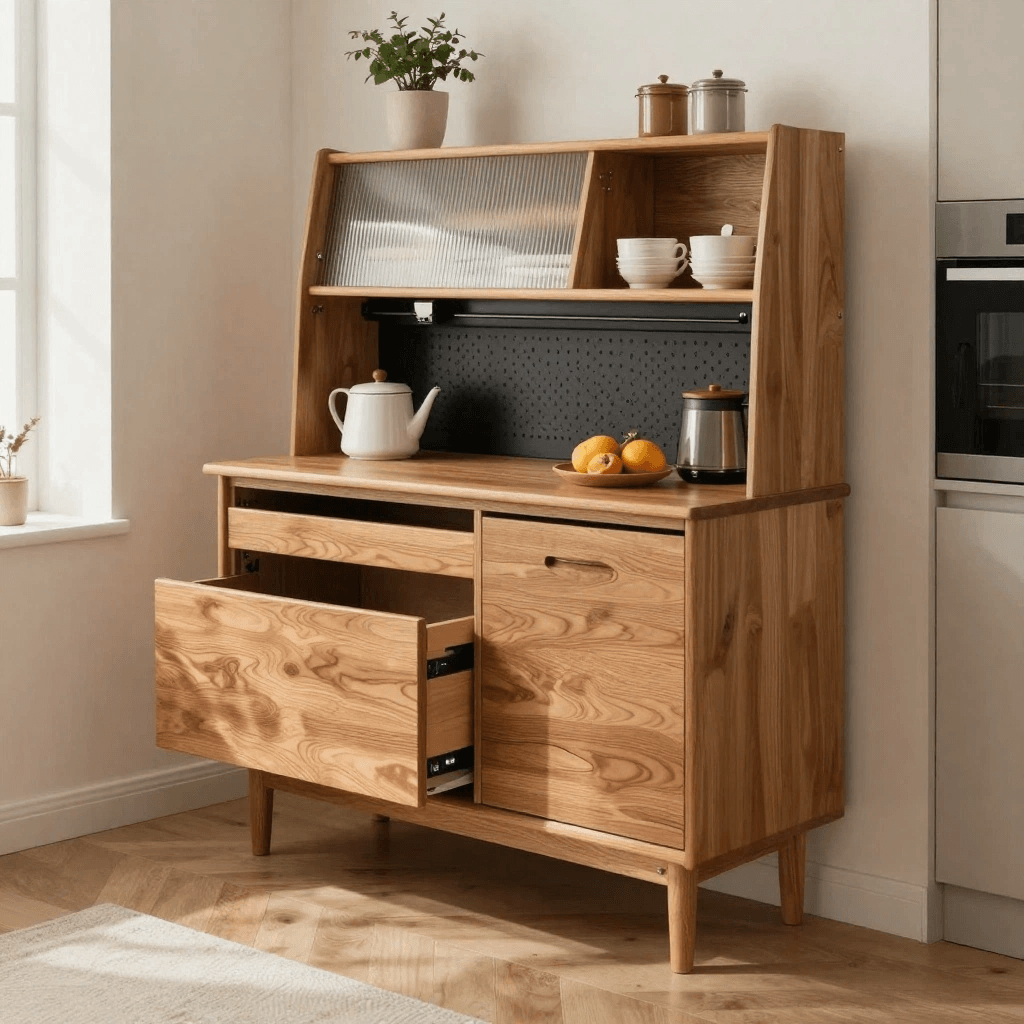
Let’s be real—kitchens never have enough storage. Ever. I don’t care if you live in a mansion; you’ll still find yourself shoving random appliances into weird corners. Smart storage breakfast counters solve this by making every square inch work overtime while still looking great.
Cabinets and drawers underneath your breakfast counter are the obvious move, but the smart part is how you organize them. I installed pull-out spice racks, a hidden trash/recycling bin, and a dedicated coffee station drawer under my counter. Everything I need for breakfast is within arm’s reach, which makes mornings significantly less chaotic.
Open shelving on the ends or sides of your counter creates display storage—perfect for cookbooks, pretty dishes, or those kitchen gadgets that actually deserve to be seen (unlike the avocado slicer you bought and used once). I built open shelves on one end of my counter and styled them with my vintage cookbook collection and some plants. It looks intentional and gives me storage without the closed-in feeling of upper cabinets.
Smart storage features to consider:
- Built-in wine rack: Horizontal bottle storage in the base cabinet or island.
- Appliance garage: Hidden compartment for your toaster, blender, etc.
- Charging drawer: Dedicated spot with built-in outlets for devices and tablets.
- Plate rack or dish storage: Easy-access storage for breakfast dishes.
- Hanging pot rack above: If ceiling height allows, this frees up tons of cabinet space.
One genius move I saw recently: a breakfast counter with a flip-up panel in the countertop that revealed storage for placemats, napkins, and utensils. When closed, it looked like a normal counter. When opened, it was this hidden organizational heaven. I’m still kicking myself for not thinking of it first.
The goal is making your breakfast counter pull double (or triple) duty. It’s a dining spot, a prep surface, and a storage solution all in one. Every inch should earn its keep, especially if you’re working with limited kitchen space.
Conclusion
So there you have it—ten breakfast counter ideas that range from “I can totally DIY this” to “I need to call in professionals and maybe take out a small loan.” The beautiful thing about breakfast counters is they’re whatever you need them to be: space-savers, showstoppers, storage solutions, or cozy corners that make your morning coffee feel special.
Here’s what I’ve learned after years of obsessing over kitchen design (both professionally and in my own homes): the best breakfast counter is the one you’ll actually use. Seriously. You can have the most Instagram-worthy marble masterpiece ever created, but if it doesn’t fit your lifestyle, it’s just expensive furniture. Think about how you actually live—do you eat on-the-go or leisurely? Do you need storage or seating? Do you want easy-maintenance or are you willing to baby your materials?
Start with function, then layer in the style. Choose materials you can maintain realistically (looking at you, white grout lovers who don’t actually own a grout pen). Pick a design that makes you happy every time you see it, not just one that looks good in someone else’s kitchen.
And remember—your breakfast counter doesn’t have to be perfect from day one. Mine has evolved over three years, and I’m still tweaking it. I’ve changed the stools twice, adjusted the lighting, added storage, and removed clutter. Your space will grow with you, and that’s exactly how it should be.
Now go make yourself some breakfast at that sad, empty counter space you’re about to transform. You’ve got this.