10 Inspiring Showroom Counter Design Ideas for Shop Upgrade
- Counter Design
 Ben
Ben- 0
- 35 minutes read
Look, if you’ve been running a shop with the same tired counter setup for years, you already know the problem. Customers walk in, glance around, and their eyes just… skip right over your sales area like it’s invisible. Your showroom counter isn’t just a place to ring up sales—it’s your shop’s handshake, its first impression, and honestly? It better be a good one.
I’ve spent way too many hours browsing showrooms (both as a designer and as someone who just can’t help analyzing retail spaces), and I can tell you this much: the counter makes or breaks the vibe. Whether you’re selling high-end jewelry or artisan coffee, your counter design tells customers exactly what kind of experience they’re about to have. So let’s talk about ten counter designs that’ll make people actually want to approach your sales area instead of awkwardly hovering near the door.
1. Minimal Glass Front Showroom Counter Design
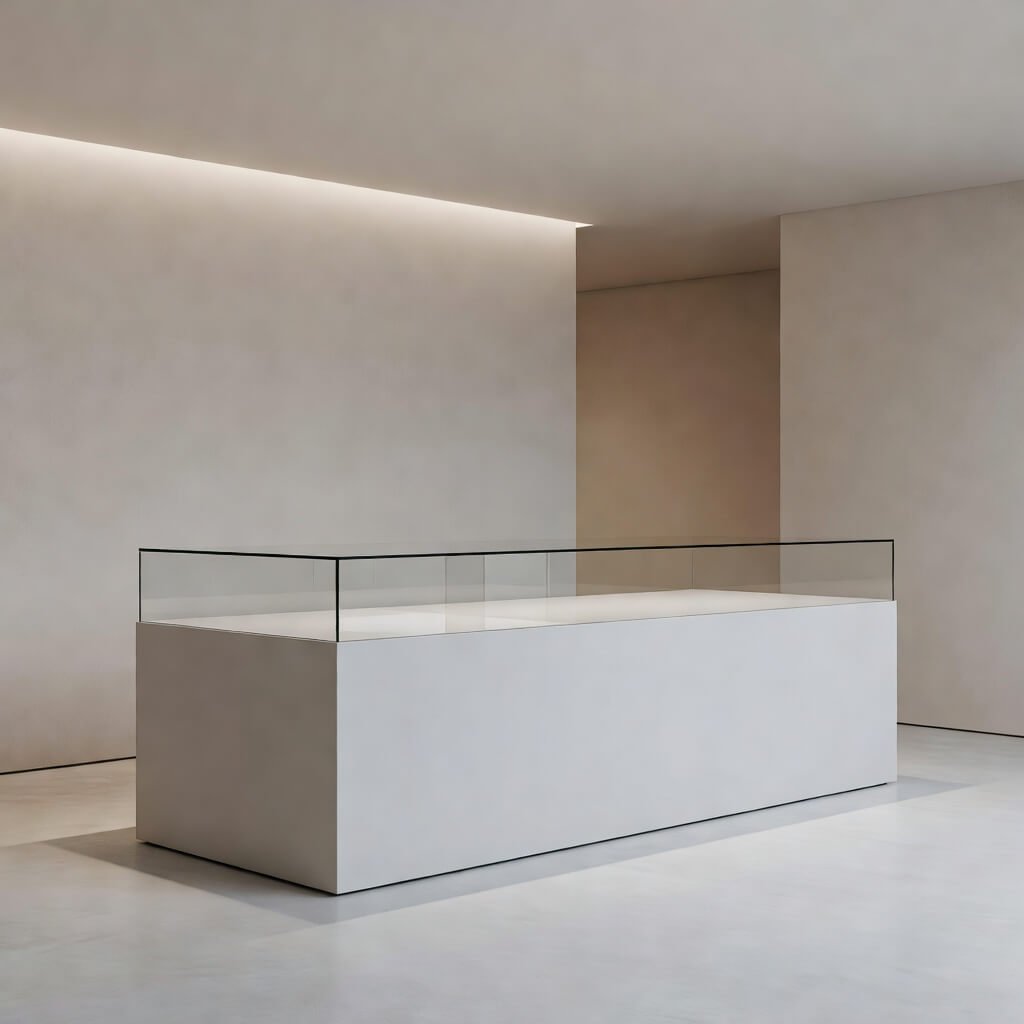
Ever walked into an Apple Store and felt that clean, almost zen-like calm wash over you? That’s the magic of minimal glass design, my friend.
Why Glass Works So Well
Glass counters create this incredible optical illusion—they make your space look bigger while keeping everything visible. I’m talking about that sleek, transparent front panel that lets customers peek at your displayed products without feeling like there’s a fortress between you and them. The minimalist approach strips away all the unnecessary decoration and leaves you with pure functionality wrapped in elegance.
Here’s what makes this design absolutely killer for modern retail:
- Visual openness that doesn’t create barriers between staff and customers
- Easy product visibility from multiple angles
- Light reflection that brightens your entire showroom naturally
- Contemporary aesthetic that screams “we’re current and professional”
The thing about glass counters? They demand cleanliness. You can’t let fingerprints and smudges pile up because, trust me, customers will notice. But if you’re willing to keep a microfiber cloth handy, the payoff is worth it. IMO, this works brilliantly for tech stores, cosmetics boutiques, or anywhere you’re selling premium products that deserve to be showcased properly.
Making It Work in Your Space
You’ll want to pair this with subtle LED underlighting (we’ll get to that later) and keep the surrounding area clutter-free. The minimal approach only works when you actually commit to minimalism—no random promotional posters taped to your beautiful glass front, okay?
2. Luxury Marble Finish U-Shaped Counter Setup
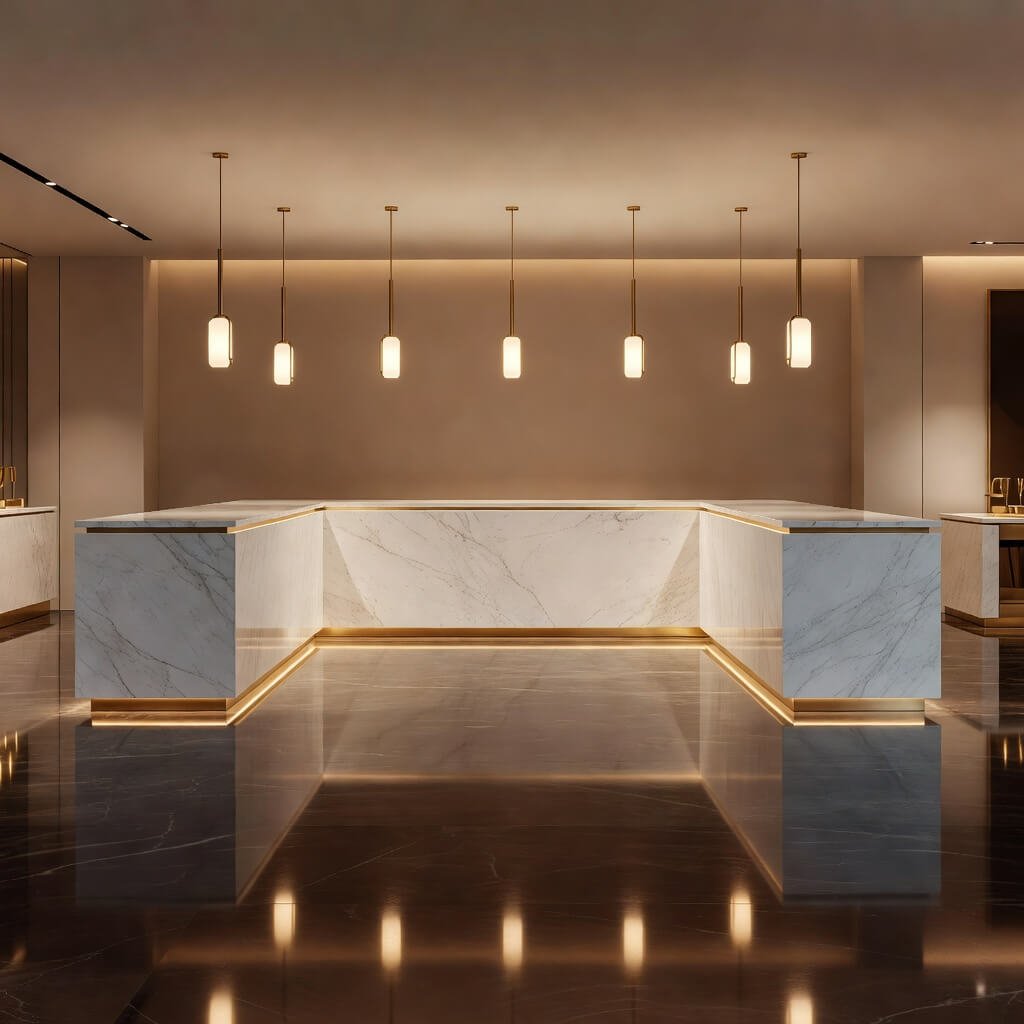
Alright, let’s get fancy. Marble isn’t just for Italian villas and bougie hotel lobbies anymore.
The Power of the U-Shape
A U-shaped counter does something brilliant—it creates a semi-enclosed workspace that gives your staff room to breathe while still keeping them accessible to customers from multiple angles. When you combine this layout with a luxury marble finish, you’re basically telling every customer who walks in: “Yeah, we take ourselves seriously, and you should too.”
I once helped a jewelry store owner redesign their counter with Carrara marble, and the customer response was immediate. People literally started taking photos of the counter. The natural veining in marble creates this one-of-a-kind pattern that screams exclusivity and permanence.
Consider these benefits:
- Multiple service points around the U-shape mean less customer waiting
- Ample interior workspace for your staff to organize inventory
- Luxurious aesthetic that justifies premium pricing
- Durability because marble, when properly sealed, lasts basically forever
Watch Out for These Pitfalls
Real talk though—marble requires maintenance. It stains if you spill acidic liquids on it, and it can scratch. But here’s a pro tip: you can use marble-look porcelain or engineered stone that gives you the same visual impact with way less fussing. Don’t let purists shame you for this; it’s your budget and your business 🙂
3. Modern LED Backlit Display Counter Design
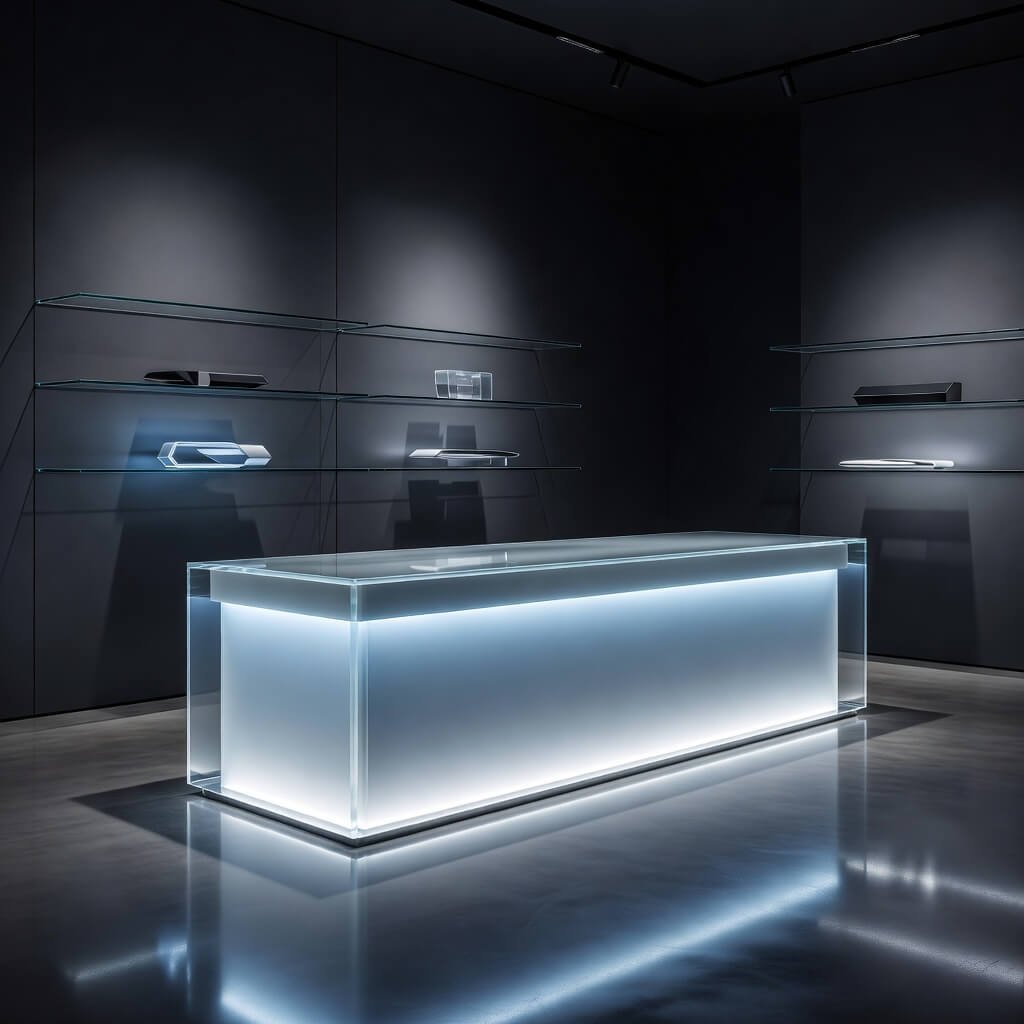
Now we’re talking about some serious drama. LED backlighting is like the difference between a regular photo and one with a ring light—everything just pops.
Creating Atmosphere with Light
LED backlit counters use strategically placed lighting strips behind translucent panels (usually frosted acrylic or glass) to create an ambient glow that draws the eye like a moth to a very stylish flame. I’ve seen this work wonders in phone stores, beauty boutiques, and even high-end bakeries (yes, really).
The magic happens when you can control the color temperature and intensity:
- Warm lighting (2700-3000K) creates an intimate, welcoming feel
- Cool lighting (5000-6500K) feels modern and energetic
- RGB options let you change moods for different times of day or special promotions
- Edge-lit designs create impossibly thin, futuristic-looking counters
What really gets me excited about this option is the versatility. You can program some systems to change throughout the day—warmer in the morning when customers need gentle awakening, cooler and brighter during peak afternoon hours. FYI, this kind of dynamic lighting has been shown to increase customer engagement and dwell time in retail studies.
Installation Considerations
You’ll need access to power, obviously, and if you want the color-changing RGB stuff, you’re looking at slightly more complex installation. Work with a designer who actually understands electrical requirements because DIY-ing this can look… let’s say “less than professional” if you mess up the wiring.
Also Read: 10 Elegant Breakfast Counter Design Ideas for Modern Living
4. Wooden Classic Retail Showroom Counter Style
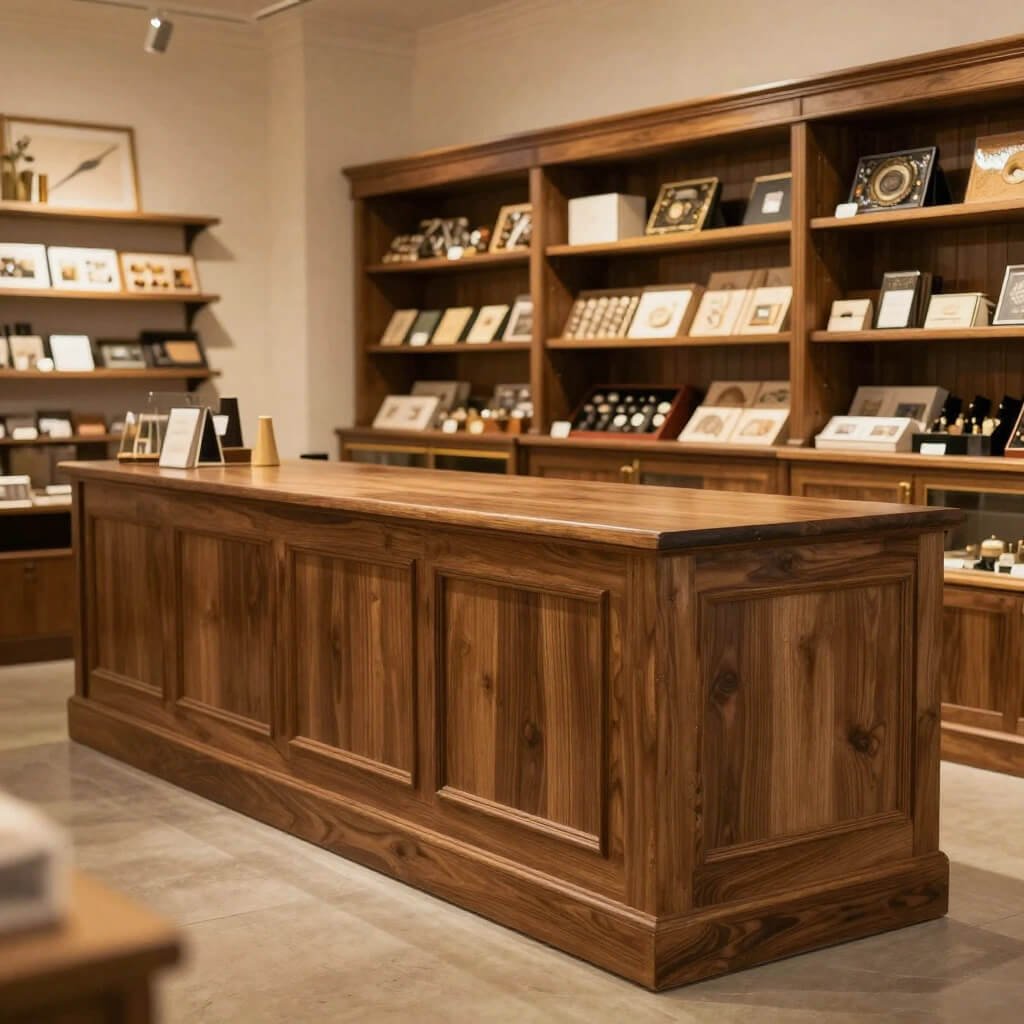
Sometimes you don’t need to reinvent the wheel. Sometimes you just need really, really good wood.
The Timeless Appeal of Natural Materials
Wooden counters have been anchoring retail spaces since shops existed, and there’s a reason they haven’t gone anywhere. Rich wood tones create warmth that no amount of glass or metal can replicate. They make customers feel like they’re dealing with an established, trustworthy business rather than a pop-up that might disappear next Tuesday.
I’m particularly obsessed with these wood varieties for counters:
- Walnut for that deep, sophisticated chocolate brown
- Oak when you want durability with beautiful grain patterns
- Teak for moisture-resistant applications (great for plant shops or outdoor gear retailers)
- Reclaimed wood when you want character and sustainability points
The classic retail counter usually features a raised transaction area with lower display sections on either side. It’s functional, it’s familiar, and customers know exactly how to interact with it. No learning curve, no confusion—just straightforward retail the way it’s been done well for decades.
Modernizing the Classic
Here’s where you can get creative without losing that timeless vibe: mix your wooden counter with modern hardware, integrate wireless charging pads into the surface, or add slim LED strips under the overhang for task lighting. You keep the warmth and tradition while showing you’re not stuck in the past.
5. Compact Space Saving Corner Counter Layout
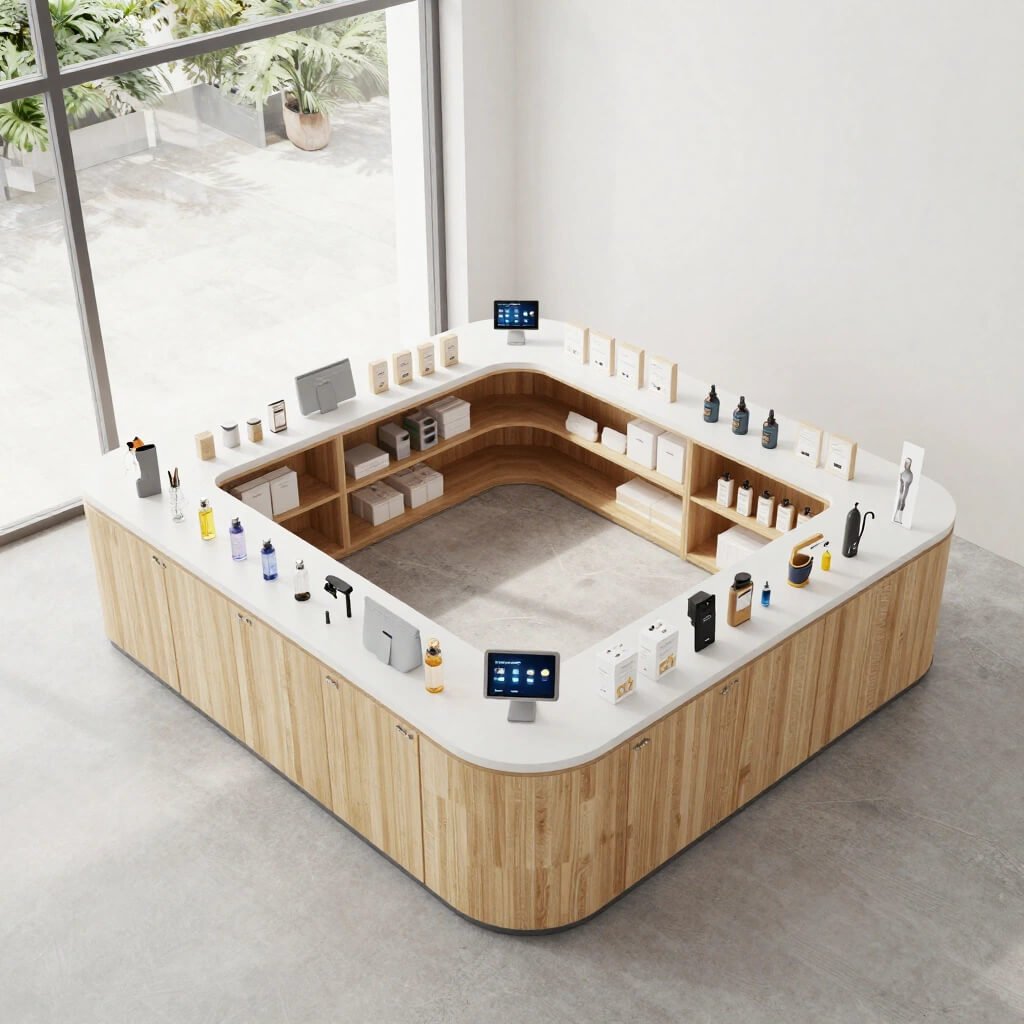
Small spaces, big challenges. But also? Big opportunities if you’re clever about it.
Maximizing Every Square Inch
Corner counters are the unsung heroes of compact retail design. They tuck into spaces that would otherwise just collect dust and awkward plant displays, turning dead zones into functional sales areas. I’ve designed corner setups for boutiques that had maybe 200 square feet total, and these configurations literally doubled their usable counter space.
The geometry works in your favor:
- Two walls provide structural support, reducing material costs
- L-shaped layout creates natural workflow for staff
- Customers approach from the open side, keeping traffic flow smooth
- Vertical storage becomes easier when you’ve got corner walls to anchor to
What really makes me recommend corner counters for small shops is how they create the illusion of intentional design. Instead of cramming a counter against one wall and calling it a day, the corner placement looks like you actually planned your layout (even if you didn’t have many options to begin with).
Design Tips for Corner Setups
Keep the outer edge curved rather than sharply angled—it’s safer and feels more welcoming. Add overhead lighting directly above the counter since corner spaces tend to be darker. And please, I’m begging you, don’t let the corner become a junk collector. Keep it as clean and organized as your main display areas.
6. High-End Glossy Black Counter with Gold Trim
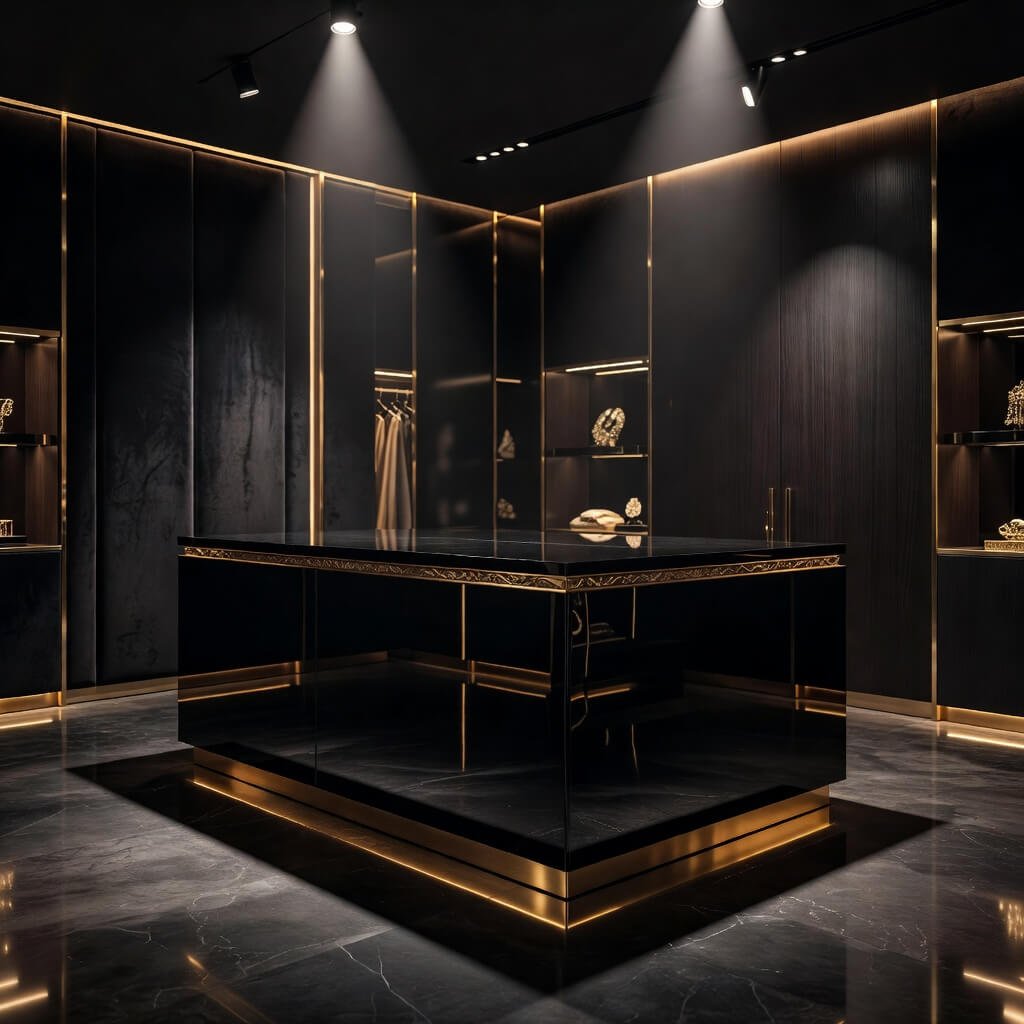
Want to know what screams luxury louder than basically anything else? Black and gold, baby.
The Psychology of Premium Colors
There’s something about a high-gloss black surface that just reads as expensive. Maybe it’s because we associate it with grand pianos, luxury cars, and high-end electronics. Whatever the reason, when you add gold trim and accents, you’re creating a visual that tells customers their wallet is about to get lighter—and they’re okay with it.
I worked with a watch retailer who switched from a standard wood counter to glossy black with brass (gold-toned) trim, and their average transaction value went up by 22% within three months. Now, correlation isn’t causation, but the owner swears customers started treating the space differently, handling products more carefully and asking about premium options more often.
This design works best for:
- Jewelry stores and luxury accessories
- High-end fashion boutiques
- Premium electronics retailers
- Upscale cosmetics and fragrance shops
Achieving the Look Without Breaking the Bank
Real gold trim? Unless you’re Cartier, probably not necessary. Gold-anodized aluminum, brass, or even high-quality gold vinyl wrapping can give you the look at a fraction of the cost. For the black glossy surface, you’ve got options ranging from automotive-grade paint on MDF to actual lacquered wood to high-pressure laminate that looks nearly identical to the expensive stuff.
Just remember: glossy black shows every fingerprint, every dust particle, every tiny scratch. You’re committing to constant maintenance, so factor that into your decision.
Also Read: 10 Gorgeous Cafe Counter Design Ideas for Urban Cafes
7. Open Display Counter with Shelving Integration
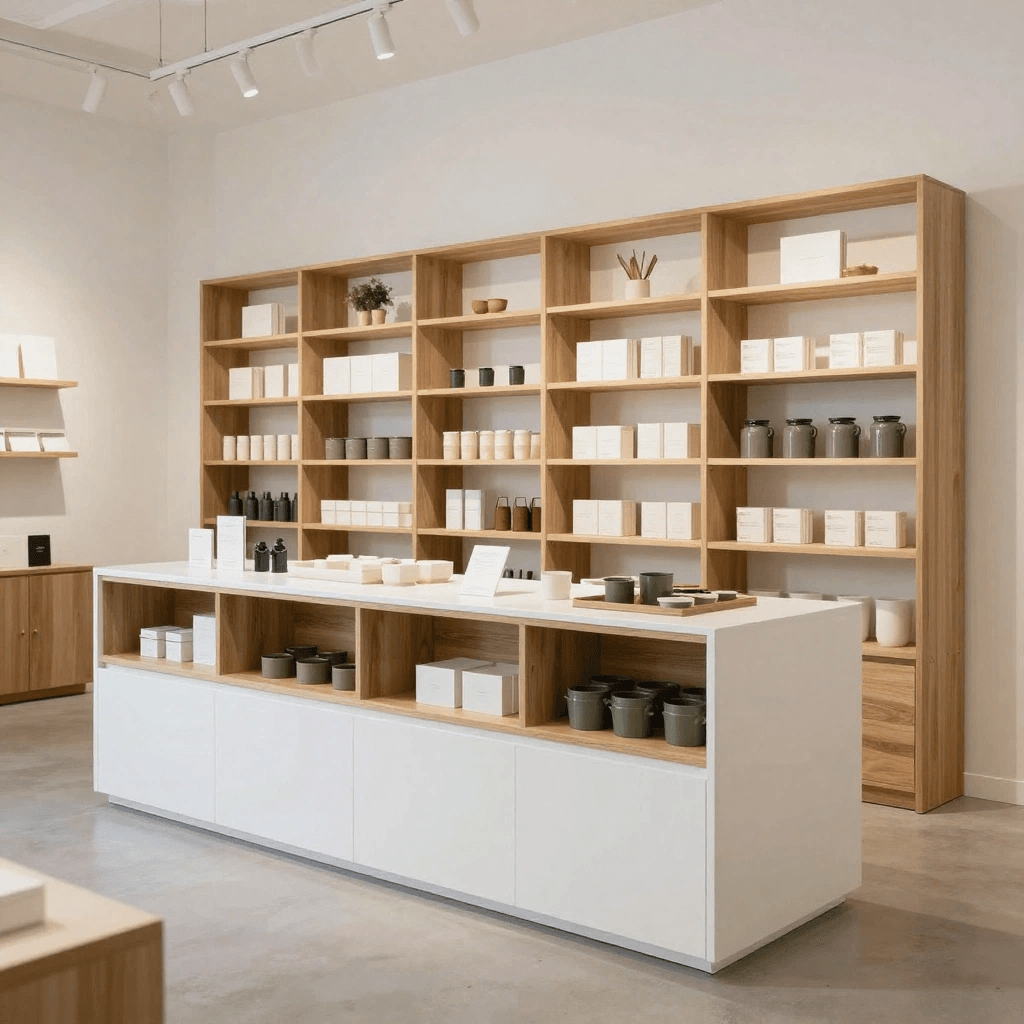
Why choose between a counter and product display when you can have both? Revolutionary, I know.
Multi-Functional Design Philosophy
Open shelving integrated into your counter design serves double duty—it’s your checkout area AND your product showcase. This approach works phenomenally well for retail categories where customers like to browse while they wait or where you want to encourage impulse purchases.
Think about bookstores with bestsellers displayed in the counter unit, cosmetic shops with travel-size products arranged on counter shelves, or gift shops with small items at various price points right where customers are already focused. The strategic product placement basically does your upselling for you.
Key features to incorporate:
- Adjustable shelving so you can modify heights for different products
- Back-lighting on shelves to highlight merchandise
- Secure transaction area that’s separate from the display sections
- Easy access for staff to restock without disrupting customers
I’ve seen this work brilliantly in coffee shops that display beans, mugs, and coffee accessories in their counter shelving. Customers are standing there anyway waiting for their latte—might as well give them something to look at (and buy).
Balance is Everything
The trick is not cramming so many products into the counter that it looks cluttered or chaotic. You’re going for curated display, not warehouse clearance sale energy. Rotate products regularly, use the rule of three for visual appeal, and for the love of retail gods, dust those shelves weekly.
8. Industrial Style Metal Frame Counter Design
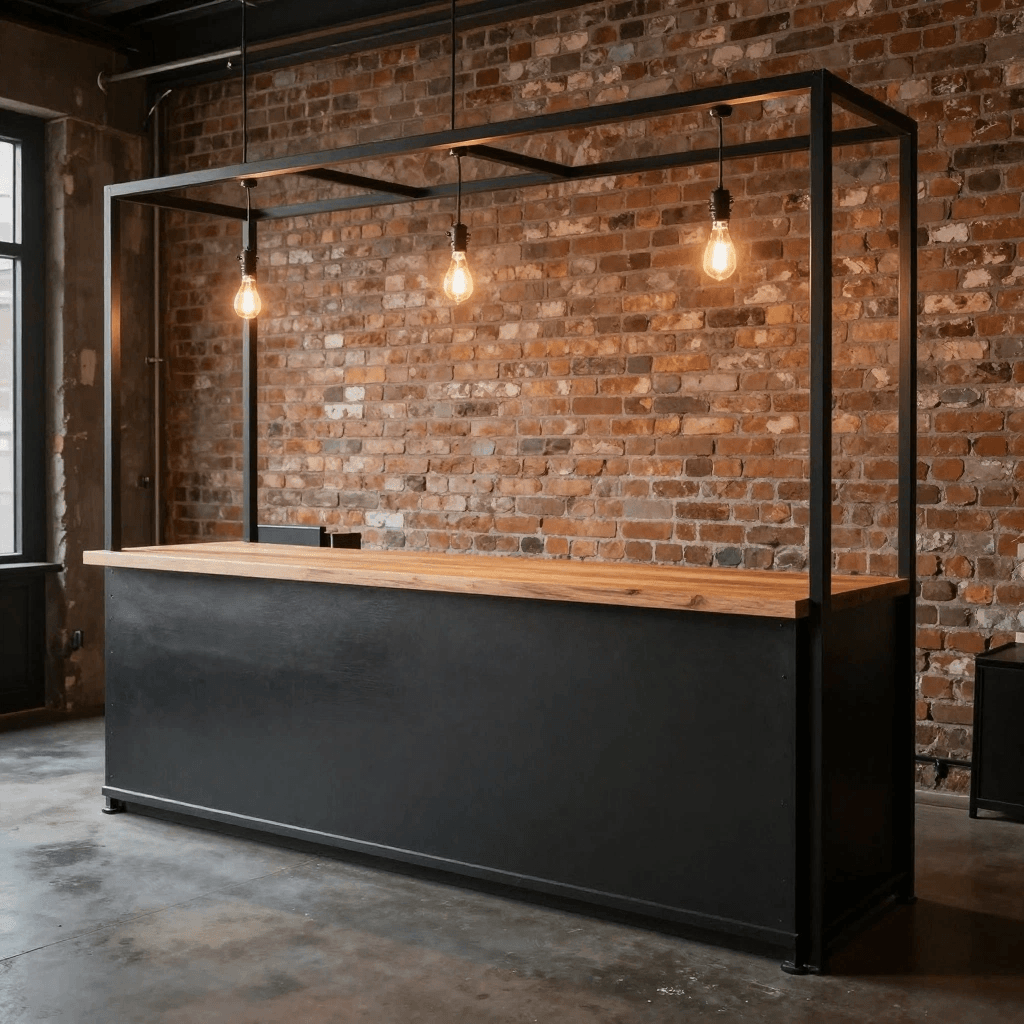
Raw, edgy, and unapologetically bold—industrial design isn’t for everyone, and that’s exactly why it works so well for the right brands.
When Rough Edges Make Sense
Industrial-style counters typically feature exposed metal frames (think black steel or brushed iron), reclaimed wood tops, and a deliberately unfinished aesthetic. This style has exploded in urban retail spaces, artisan workshops, and anywhere targeting customers who appreciate authenticity over polish.
I’m talking about visible welds, matte black powder-coated steel, pipe fittings as design elements, and materials that look like they could have come from a 1940s factory floor. The vibe is rugged, no-nonsense, and refreshingly honest in a world of Instagram-perfect retail environments.
This works exceptionally well for:
- Motorcycle and automotive accessories shops
- Craft breweries and distilleries selling merchandise
- Artisan workshops (leather goods, metalwork, etc.)
- Urban clothing boutiques with a street style focus
- Barbershops and tattoo shops (yes, they need counters too!)
Pairing Industrial with Warmth
Here’s the thing about industrial design—it can feel cold if you don’t balance it properly. I always recommend mixing the hard metal frames with warm wood surfaces, adding vintage Edison bulb lighting, or incorporating some greenery. You want “reclaimed factory” not “abandoned warehouse,” you know?
The beauty of metal frame counters is their incredible durability. You’re not worried about scratches or dings ruining the aesthetic—they actually add to it. It’s the only counter style where wear and tear is a feature, not a bug.
9. Curved Reception Style Showroom Counter Idea
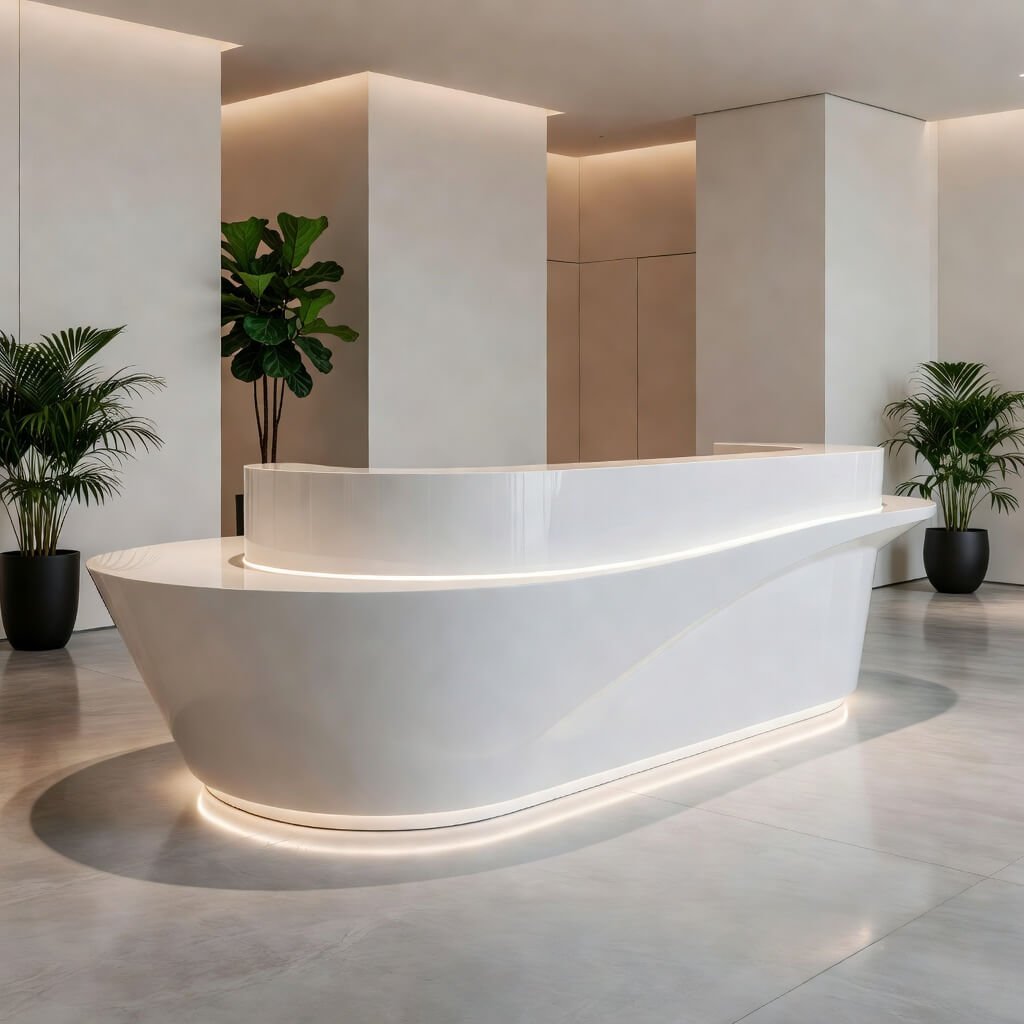
Straight lines are fine and all, but curves? Curves are friendly.
The Welcoming Power of Rounded Design
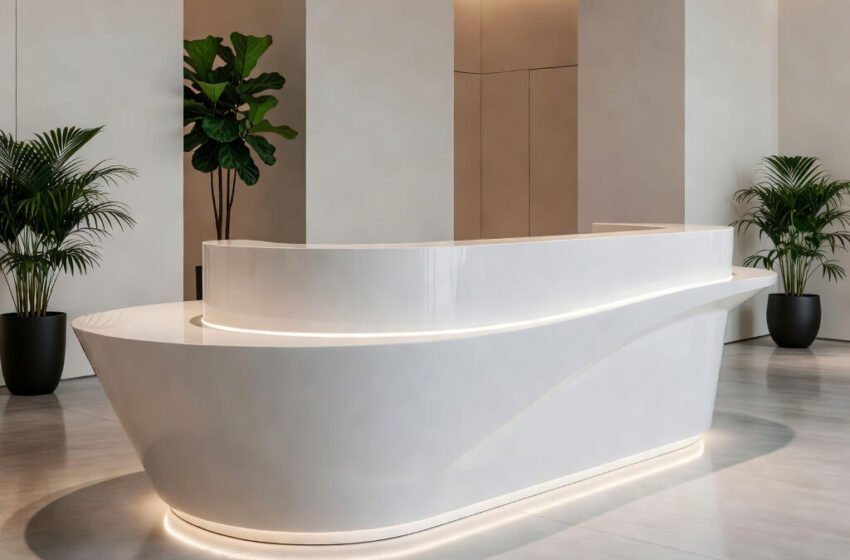
Curved counters, especially those inspired by modern reception desk design, completely change how customers approach your space. Sharp corners create psychological barriers; flowing curves invite people in. It’s subtle, but the difference in customer behavior is real.
I once redesigned a boutique’s straight counter into a gentle curved design, and the owner noticed customers were more willing to approach and start conversations. The curve creates a natural gathering point and eliminates that “barrier behind the desk” feeling that straight counters can have.
Design benefits include:
- Softer, more approachable aesthetic that reduces intimidation
- Better traffic flow around the counter
- Modern, distinctive look that stands out from standard rectangular designs
- Eliminates sharp corners making it safer in crowded spaces
This style works beautifully in spaces where customer service and interaction are priorities—think high-end clothing boutiques, wellness product stores, interior design showrooms, or anywhere the customer experience is as important as the products.
The Construction Challenge
Real talk? Curved counters are more expensive and complex to build than straight ones. You’re looking at custom fabrication in most cases, which means higher costs. But if your budget allows and your brand values that welcoming, distinctive aesthetic, the investment pays off in customer perception and space differentiation.
Also Read: 10 Luxurious Basin Counter Design Ideas for Modern Homes
10. Smart Modular Multi-Use Sales Counter Design
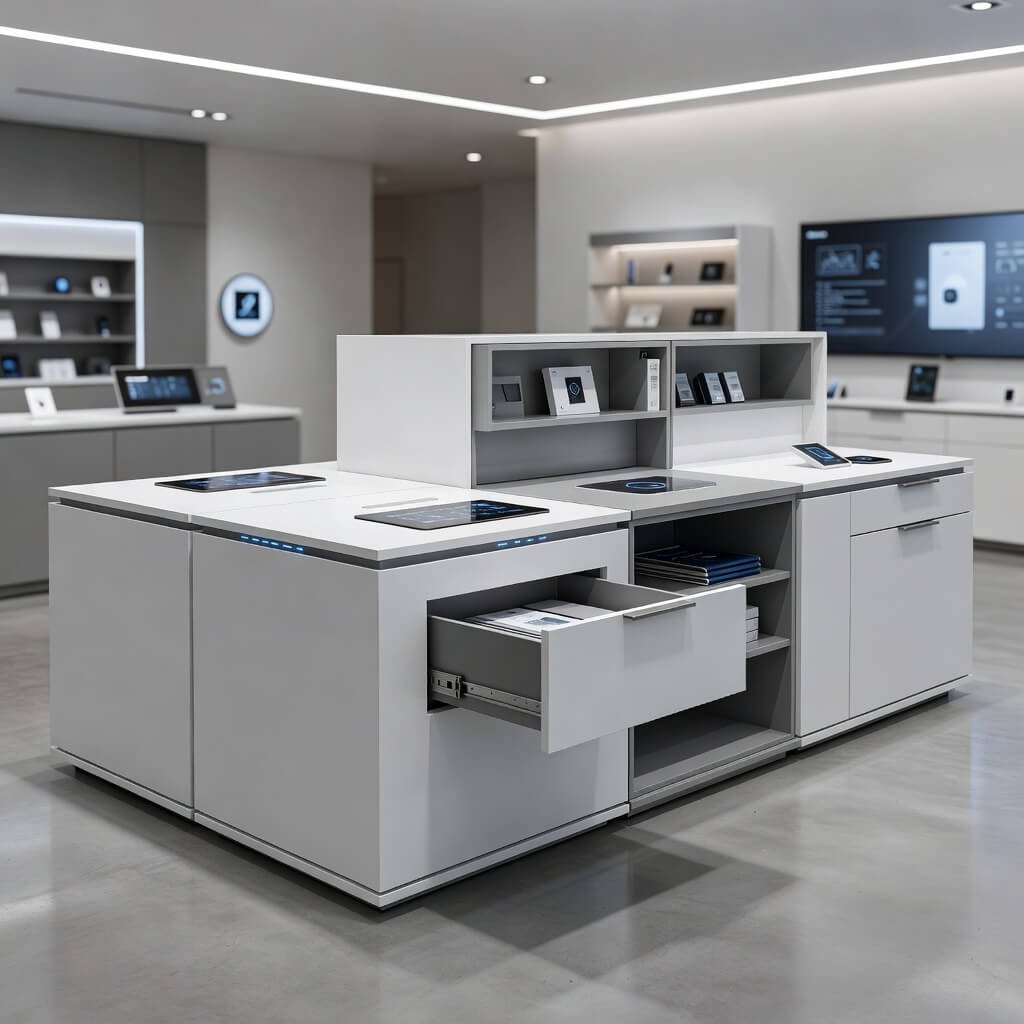
Welcome to the future, where your counter adapts to you instead of the other way around.
Flexibility as a Core Feature
Modular counters are exactly what they sound like—configurable units that you can rearrange, add to, or modify based on changing needs. Got a sale coming up and need extra checkout capacity? Add a module. Slow season and want to open up floor space? Remove a section. Changing your product line? Reconfigure the display areas.
I’m genuinely excited about this trend because it acknowledges what every shop owner knows: retail is dynamic. What works in December doesn’t necessarily work in March. Why should your counter be permanently stuck in one configuration?
Smart features to look for:
- Lockable wheels on base units for true portability
- Standardized connection points for electrical and data
- Interchangeable panels (glass, wood, solid, display)
- Integrated tech like built-in payment terminals, wireless charging, tablets
- Expandable design that lets you start small and grow
The “smart” part comes from integrating technology—think built-in inventory scanners, customer-facing displays for pricing and product info, integrated POS systems, and even IoT sensors that track customer interaction patterns. Some high-end versions even include programmable LED displays in the counter panels themselves. Fancy, right?
Investment and ROI
Modular systems typically cost more upfront than traditional fixed counters, but the long-term value is significant. You’re future-proofing your retail space and potentially avoiding the need for complete redesigns as your business evolves. Plus, if you ever move locations, your counter moves with you and adapts to the new space.
Bringing It All Together: Choosing Your Perfect Counter
So, which of these ten designs is calling your name? Here’s the thing—there’s no universally “best” option. The right counter design for your shop depends on your specific situation, brand identity, and budget.
Consider these factors when making your decision:
- Your brand personality (luxury? Casual? Edgy? Traditional?)
- Available space and layout constraints
- Budget (both initial and ongoing maintenance)
- Your product type and how it needs to be displayed
- Customer demographics and expectations
- Durability requirements based on traffic volume
Don’t rush this decision. Your showroom counter is a significant investment that’ll influence your daily operations and customer perceptions for years. Visit other shops in your area, take photos of counters that catch your eye, and really think about how each option would function in your specific space.
And here’s my final piece of unsolicited advice: whatever design you choose, execute it fully. A half-committed design is worse than a basic but well-executed one. If you’re going industrial, commit to the aesthetic throughout your space. If you’re choosing minimal glass, keep everything clean and uncluttered. Consistency matters.
Your counter is where the magic happens—where browsing converts to buying, where customer relationships begin, and where your brand makes its most tangible impression. Make it count, make it yours, and most importantly, make it something you’re genuinely excited to stand behind every day. Because if you’re not excited about your space, how can you expect your customers to be?
Now get out there and upgrade that counter situation. Your shop (and your sales numbers) will thank you.