10 Inspiring A-Frame House Plans and Tiny Home Layouts
- House Plans
 Ben
Ben- 0
- 32 minutes read
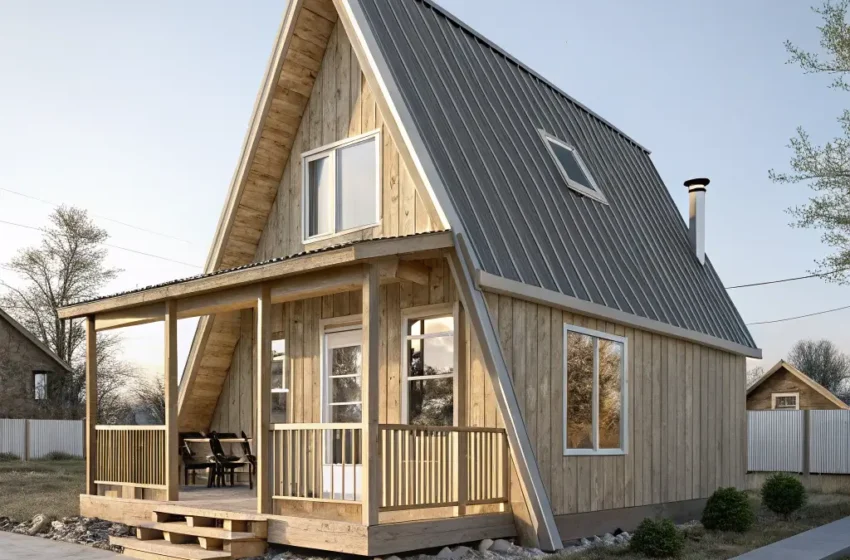
Ever driven past an A-frame house and thought, “That looks like a giant piece of cheese, but I kind of love it”? You’re not alone.
These triangular beauties have been stealing hearts since the 1950s, and honestly, they’re having a major moment right now.
I fell in love with A-frames during a ski trip to Vermont. We stayed in this incredible A-frame cabin that felt like living inside a cozy wooden tent, except with indoor plumbing and killer mountain views.
The steep roof shed snow like nobody’s business, and those massive windows made me feel like I was living in a nature documentary.
That weekend changed everything—I went from “houses should have normal roofs” to “triangles are the superior shape” real quick.
So let’s dive into ten A-frame house plans that’ll make you reconsider everything you thought you knew about home design.
Whether you’re dreaming of a weekend retreat or planning your forever home, these ideas will show you why triangular living deserves serious consideration.
Why A-Frames Make Such Incredible Homes
Before we explore specific plans, let’s talk about why A-frames work so brilliantly. That distinctive triangular shape isn’t just for show—it solves real problems while creating spaces unlike anything you’ll find in conventional homes.
The steep roofline sheds rain and snow effortlessly, making A-frames perfect for harsh climates. Those angled walls create cozy nooks and dramatic vertical spaces that rectangular homes can’t match. Plus, the simple structure typically costs less to build than complex traditional rooflines.
A-frames also tap into something primal. They remind us of tents, tepees, and basic shelters, creating an immediate sense of refuge and comfort. Yet they feel thoroughly modern with their clean lines and geometric simplicity. It’s nostalgia meets contemporary design, and the combination just works.
1. Cozy A-Frame Cabin Floor Plans
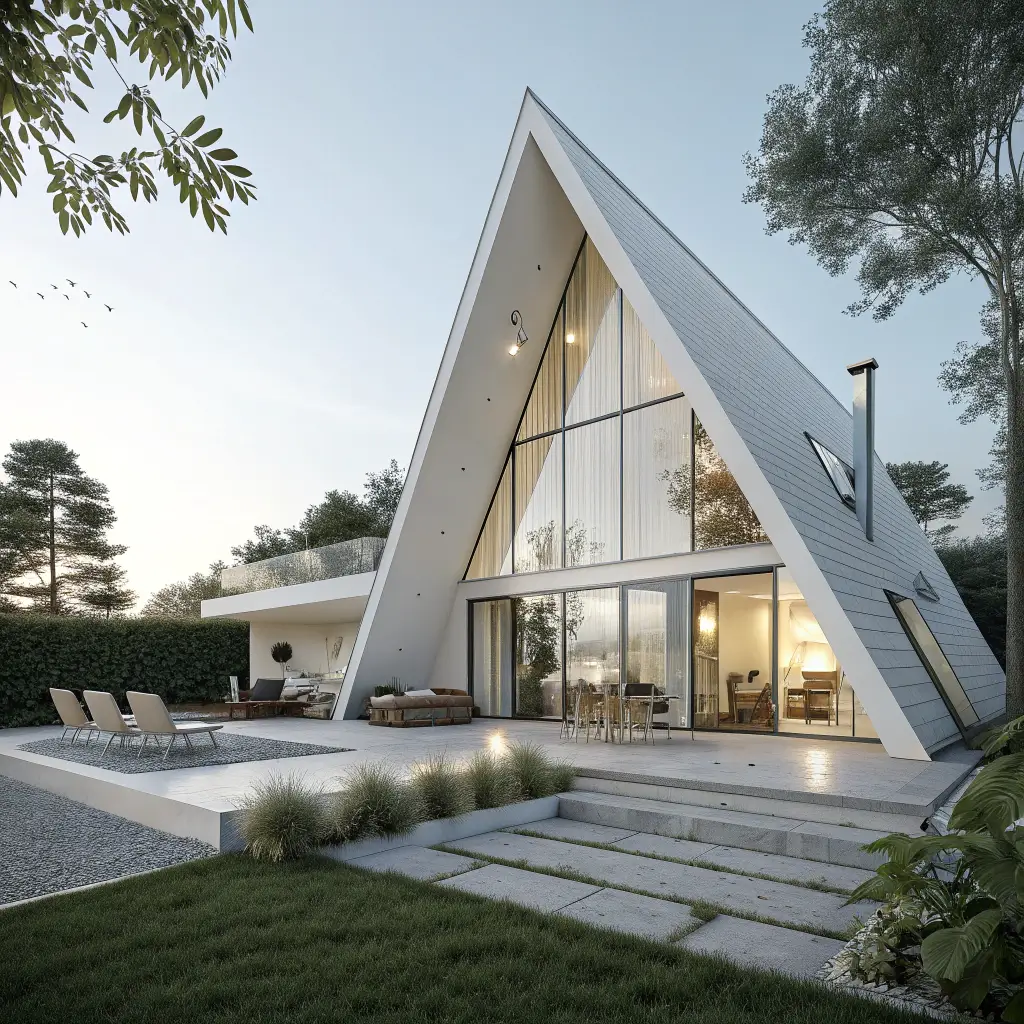
Let’s start with the classic—the cozy A-frame cabin that launched a thousand Pinterest boards. These plans embrace the intimate scale that makes A-frames feel like the world’s most sophisticated blanket fort.
Maximizing the Triangle
Cozy cabin plans typically range from 600 to 1,200 square feet, using every inch of that triangular space wisely. The main floor usually contains an open living area, kitchen, and bathroom, while a loft provides sleeping space under the peak. This vertical arrangement makes small footprints feel surprisingly spacious.
The key lies in embracing the angles rather than fighting them. Built-in seating follows the slanted walls. Storage tucks into the triangular spaces where walls meet floors. Even that awkward spot where you can’t stand up becomes perfect for a reading nook or storage.
Creating Warmth in Geometric Spaces
Cozy A-frame cabins combat any coldness from the angular architecture through warm materials and soft furnishings. Wood paneling, exposed beams, and stone fireplaces add texture and warmth. Throw rugs, cushy furniture, and layered textiles soften all those sharp angles.
I stayed in one cabin where the owners had installed a wood stove right at the center of the main floor. The heat rose naturally through the open loft, and the whole place felt like a warm hug. That’s the magic of good A-frame design—using the shape to your advantage.
Windows That Wow
The best cozy cabin plans feature that iconic wall of windows on one or both gable ends. These massive glass expanses flood the interior with light and frame views like living artwork. Even tiny cabins feel expansive when one entire wall opens to nature.
2. Modern Minimalist A-Frame Designs
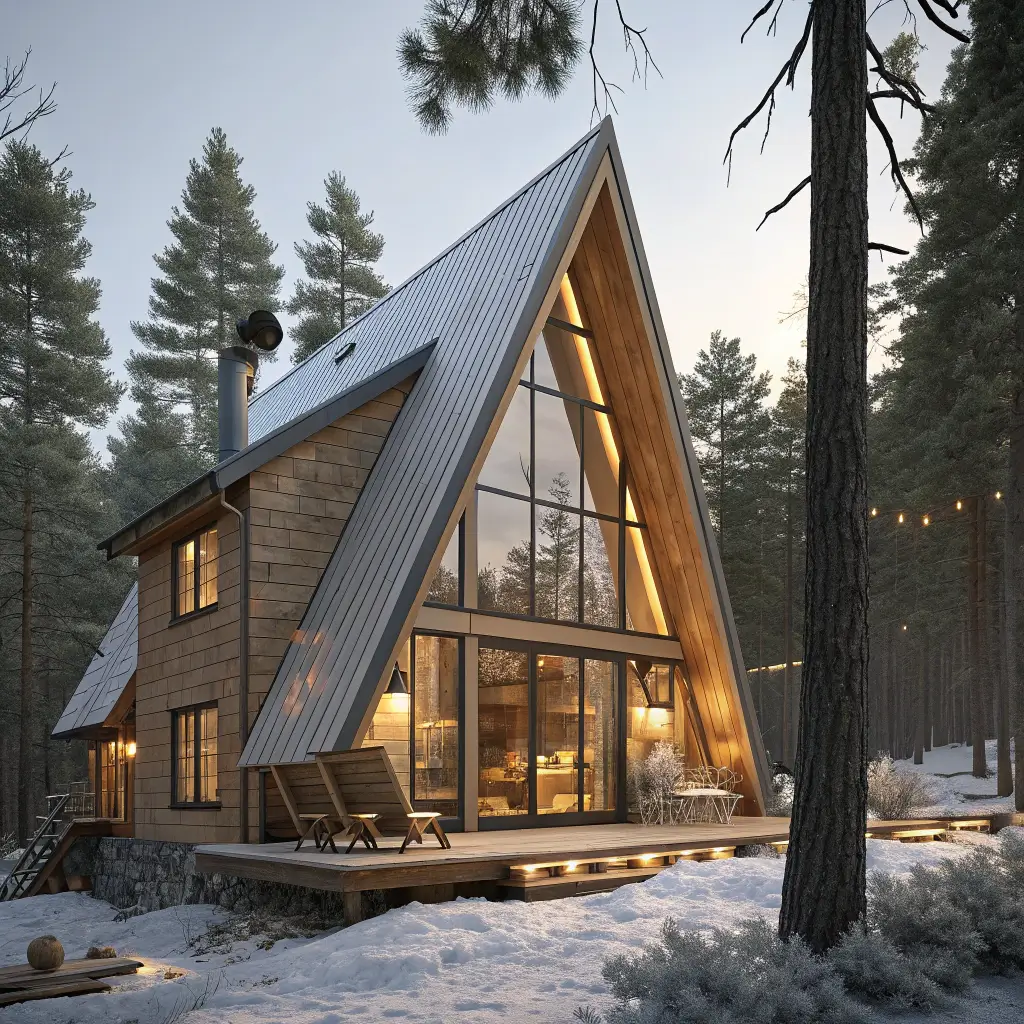
Who says A-frames have to be rustic? Modern minimalist designs strip away the cabin clichés and reveal the pure architectural beauty of the triangular form.
Clean Lines and Simple Materials
Modern A-frames embrace simplicity through monochromatic color schemes, sleek materials, and uncluttered spaces. Think black metal roofing, white interior walls, and concrete floors. The triangle becomes a piece of geometric art you can live in.
These designs often feature steel frames instead of traditional wood, creating thinner profiles and larger spans. Cable railings replace chunky wood barriers. Built-in furniture maintains clean lines while maximizing space efficiency.
Light as a Design Element
Minimalist A-frames treat light as a material, using it to define spaces and create drama. Skylights run along the roofline. Clerestory windows bring light deep into the structure. Those signature gable windows become floor-to-ceiling glass walls that dissolve the boundary between inside and out.
The minimalist approach actually enhances the A-frame’s natural drama. Without visual clutter, you really appreciate the soaring ceilings and bold angles. It’s architecture as sculpture, and it’s absolutely stunning when done right.
Technology Integration
Modern minimalist A-frames seamlessly integrate smart home technology. Hidden speakers, automated lighting, and climate control systems maintain the clean aesthetic while providing contemporary comfort. Solar panels follow the roofline without disrupting the silhouette.
3. Small Family A-Frame Home Ideas
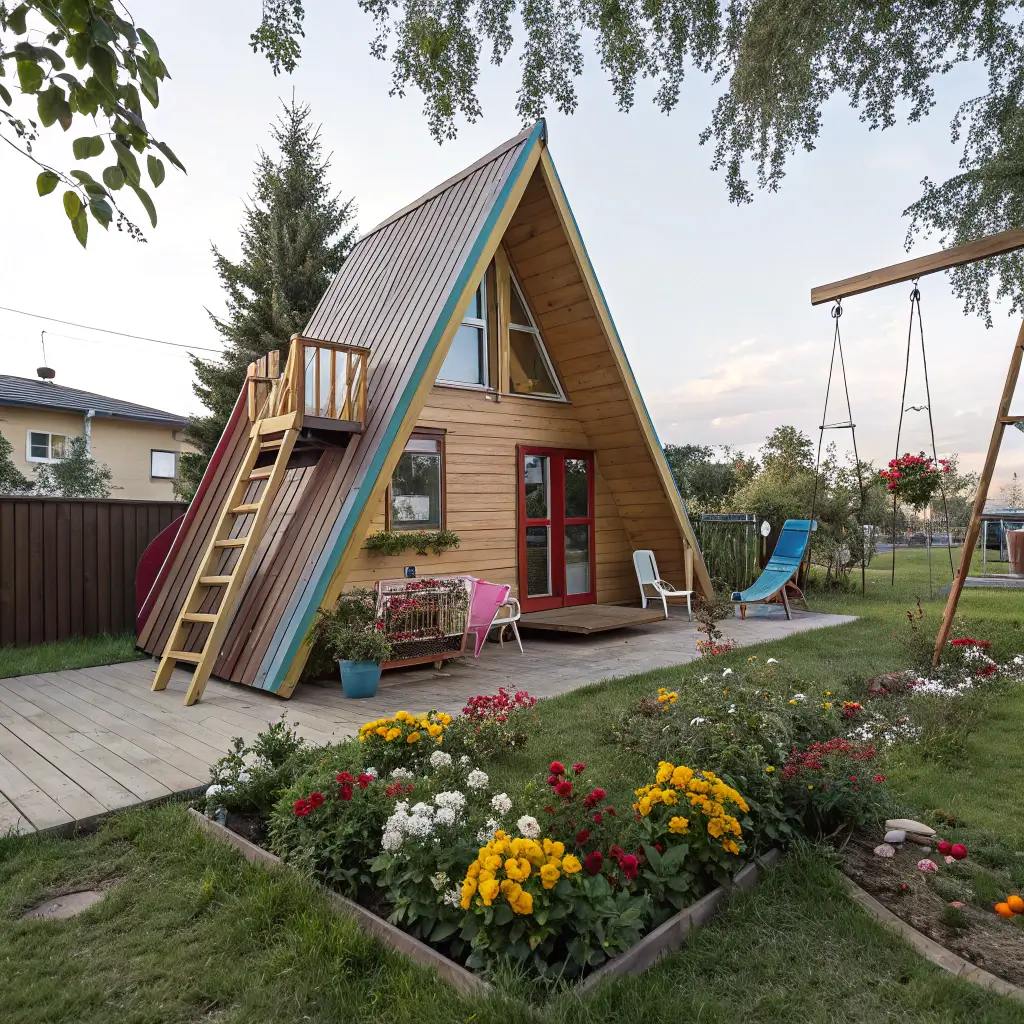
Think A-frames can’t work for families? Think again. Smart family-oriented plans prove these triangular homes can accommodate kids, pets, and real life just fine.
Kid-Friendly Layouts
Family A-frames typically expand the traditional layout to include multiple bedrooms and bathrooms. The main floor might contain master bedroom and shared spaces, while the upper level houses kids’ rooms. Some designs add dormers to create more headroom in loft bedrooms.
The slanted walls that might seem limiting actually create magical spaces for kids. Those low-ceiling edges become perfect play areas, reading forts, or built-in bunk beds. Kids love the adventure of living in a triangle—it’s like a permanent indoor camping trip.
Practical Family Features
Family-oriented A-frames include mudrooms for managing gear, dedicated storage solutions, and durable materials that handle daily wear. Open floor plans let parents supervise from the kitchen while kids play in living areas.
Some plans cleverly incorporate “grow-with-you” features. That loft playroom becomes a teen hangout and eventually a home office. Flexible spaces adapt as families evolve, making these homes surprisingly practical for long-term living.
Safety Considerations
Family A-frames require attention to safety details. Loft railings need proper height and spacing. Stairs should have appropriate rise and run despite space constraints. Non-slip surfaces become crucial on stairs and lofts where excited kids might run.
FYI, many family A-frame plans now include alternate stairs like alternating tread designs that save space while remaining safe for daily use.
Also Read: 12 Stylish Multigenerational House Plans Ideas for Dream Homes
4. Rustic Woodland A-Frame Plans
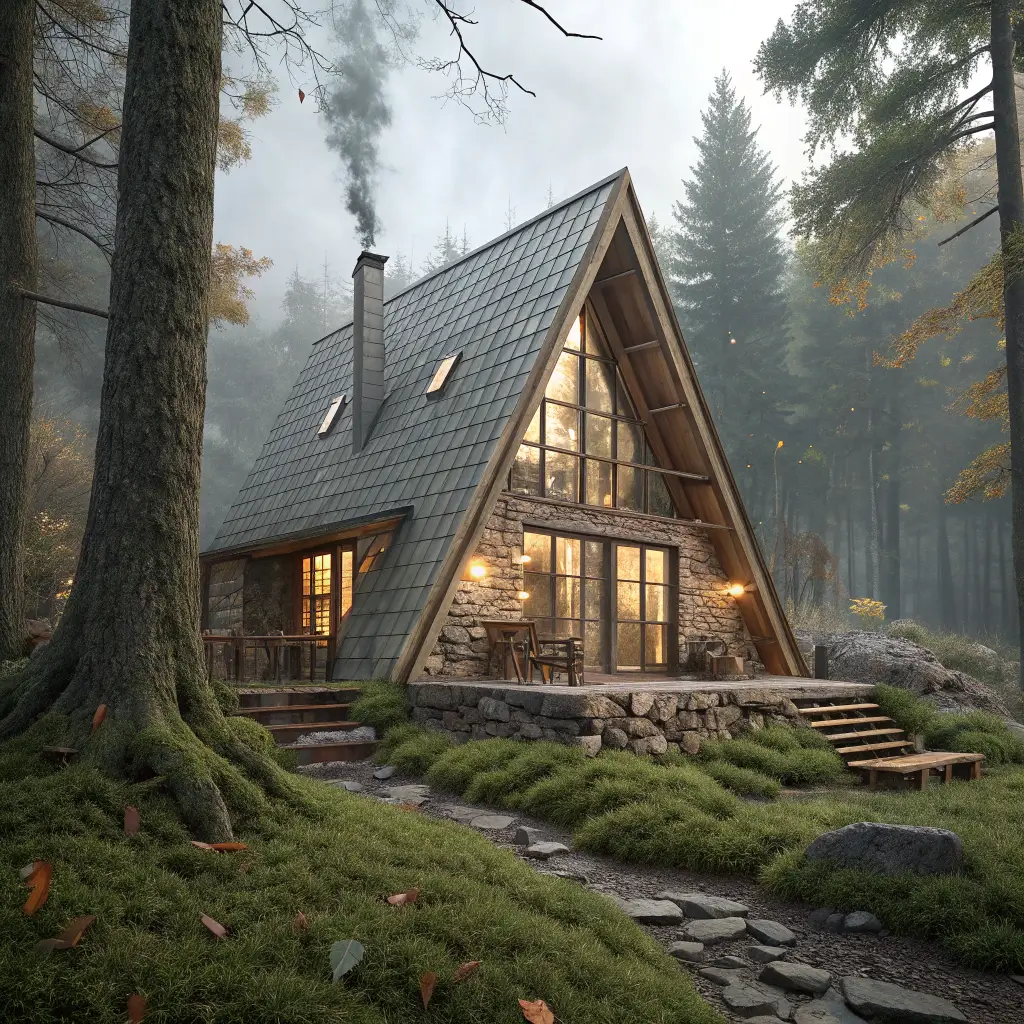
Some A-frames lean fully into their forest cabin heritage, creating rustic retreats that feel like they grew from the ground up. These woodland wonders celebrate natural materials and organic integration with their surroundings.
Natural Material Palettes
Rustic woodland A-frames showcase wood in all its glory. Cedar shake siding weathers to silver-gray. Log posts support loft areas. Live-edge counters and shelving celebrate wood’s natural beauty. Stone foundations and chimneys ground these structures in their landscape.
These homes often feature reclaimed materials that add character and sustainability. Barn wood accent walls, salvaged hardware, and vintage fixtures create spaces rich with history and texture.
Blending with the Landscape
Woodland A-frames minimize site disturbance, working with existing topography rather than against it. They might perch on posts to preserve root systems or tuck into hillsides for natural insulation. Native landscaping blurs the transition from wild to cultivated.
The best woodland plans orient windows to capture forest views while maintaining privacy. Covered decks extend living space into the trees. Some designs incorporate tree wells that let you build around existing trees—imagine a tree growing through your deck!
Off-Grid Possibilities
Many rustic woodland A-frames incorporate off-grid features. Solar panels follow the southern roof slope. Rainwater collection systems utilize the steep roof. Composting toilets and greywater systems reduce environmental impact.
These self-sufficient designs appeal to people seeking simpler, more sustainable living. The A-frame’s efficiency makes off-grid systems more manageable than in larger traditional homes.
5. Luxury A-Frame Vacation Homes
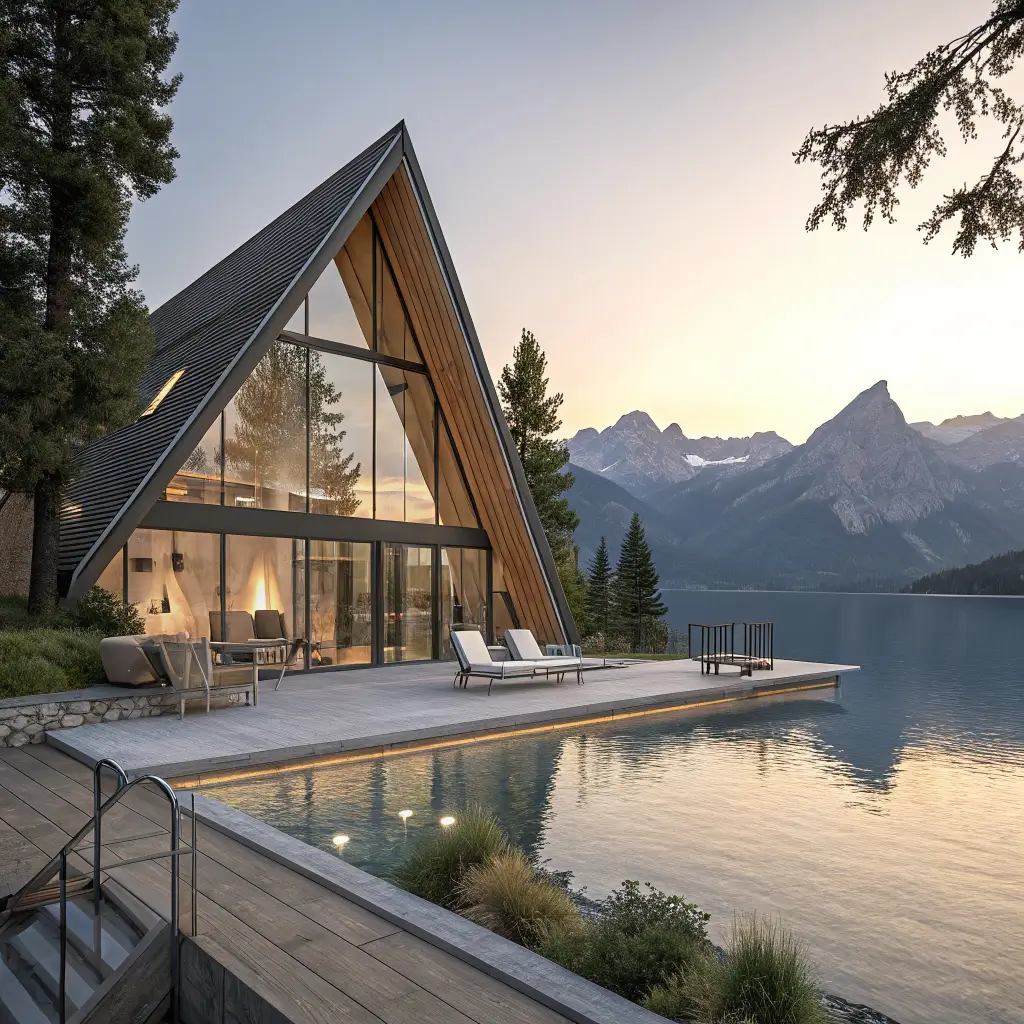
Let’s talk about A-frames that spare no expense. Luxury vacation A-frames prove that triangular living can be absolutely spectacular when budget isn’t a constraint.
Premium Materials and Finishes
Luxury A-frames feature materials that make architects weep with joy. Floor-to-ceiling glass walls with invisible frames. Copper or zinc roofing that develops gorgeous patina. Engineered wood beams that span impossible distances. These homes showcase what’s possible when vision meets resources.
Inside, expect heated floors, chef-grade kitchens, and spa-worthy bathrooms. Custom millwork maximizes every angle. Smart glass windows tint on command. The triangle becomes a framework for showcasing the finest finishes available.
Amenity-Rich Designs
Luxury vacation A-frames include amenities that transform them into private resorts. Hot tubs positioned for sunset views. Saunas tucked under eaves. Wine cellars built into foundations. Media rooms with acoustic treatments that work with angular walls.
Some designs feature detached guest A-frames connected by covered walkways. Others include garage A-frames that echo the main structure’s geometry. The result creates cohesive compounds that accommodate large groups while maintaining architectural harmony.
Location-Specific Features
Luxury A-frames adapt to their settings with location-appropriate amenities. Beach versions might include outdoor showers and surfboard storage. Mountain retreats feature ski rooms and boot warmers. Lake houses incorporate boat houses that mirror the main structure’s triangular theme.
6. Tiny A-Frame House Layouts
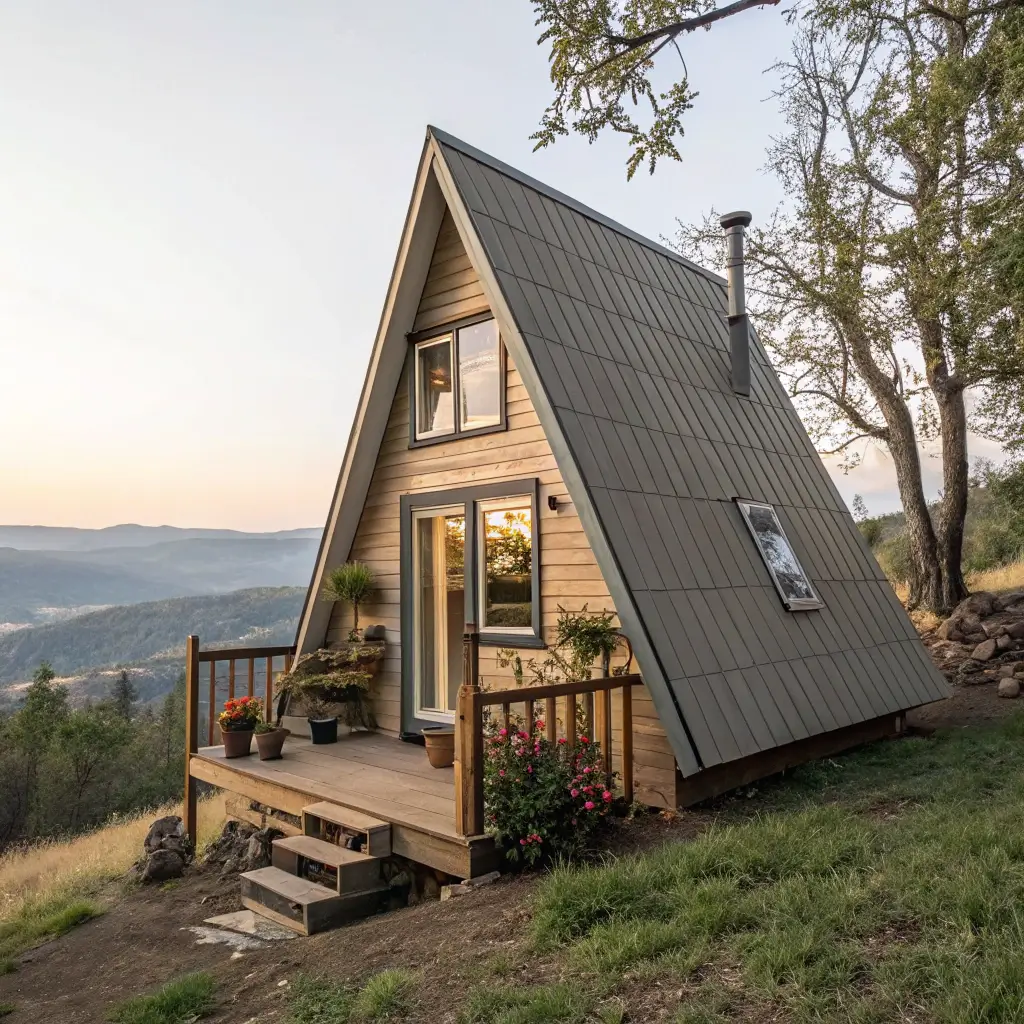
The tiny house movement meets triangular architecture in these compact designs that prove you don’t need much space to live well. Tiny A-frames typically measure under 500 square feet but pack serious style.
Hyper-Efficient Space Planning
Tiny A-frame layouts eliminate every wasted inch. Murphy beds fold against slanted walls. Stairs incorporate drawers in each riser. Kitchen appliances hide behind seamless panels. Every surface serves multiple purposes.
The triangular shape actually helps in tiny homes by naturally creating zones. The peak provides sleeping loft space. The wider base accommodates living functions. The geometry guides organization in ways rectangular tiny homes can’t match.
Vertical Living Strategies
Tiny A-frames maximize vertical space through clever solutions. Suspended net lofts create bonus square footage. Pulley systems raise and lower storage. Climbing walls double as access to lofts. It’s basically adult jungle gym meets efficient housing.
I toured a 400-square-foot A-frame where the owner had installed a counterweighted bed that raised to the ceiling during the day. The entire living space transformed from bedroom to yoga studio with one smooth motion. Brilliant!
Outdoor Living Extensions
Tiny A-frames compensate for interior limitations through generous outdoor spaces. Decks might equal interior square footage. Fold-down exterior tables create outdoor kitchens. Awnings extend living space seasonally.
These designs recognize that tiny living works best when you treat outdoors as additional rooms. The A-frame becomes base camp for a lifestyle that happens largely outside.
Also Read: 10 Inspiring Cottage House Plans Ideas and Lakeside Views
7. Loft-Style A-Frame Interiors
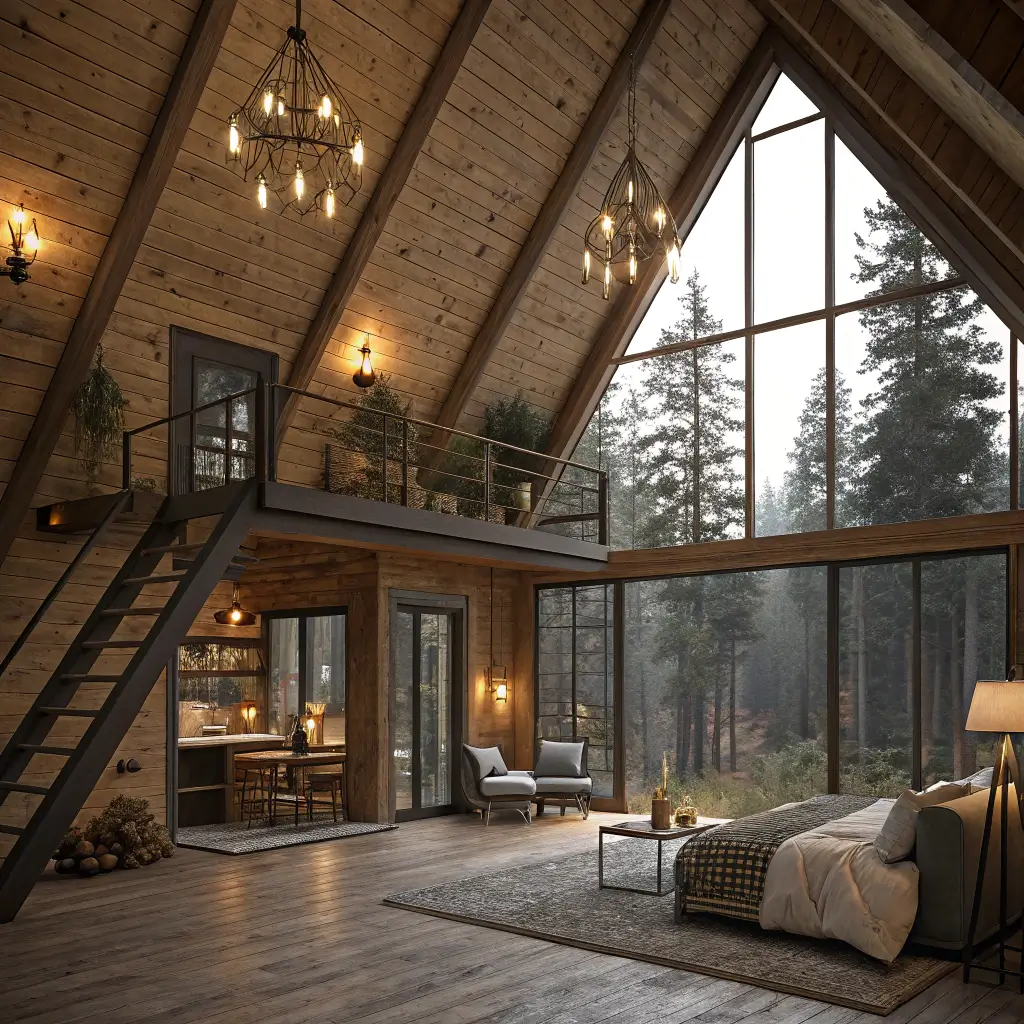
Some A-frames embrace their vertical nature by creating dramatic loft spaces that make you feel like you’re living in a very stylish church. These designs celebrate height and openness.
Open-to-Peak Designs
Loft-style A-frames eliminate the traditional ceiling at loft level, leaving the entire structure open to the peak. This creates cathedral-like spaces with 20-30 foot ceilings that absolutely take your breath away.
Living areas benefit from this vertical drama, feeling palatial despite modest footprints. Light fixtures become sculptural elements suspended in space. The architecture itself becomes the primary decoration.
Mezzanine Solutions
Rather than full lofts, these designs might feature mezzanines that preserve the open feeling while adding functional space. A sleeping platform might occupy one side while leaving the other open. Home offices perch above kitchens. Libraries spiral around the perimeter.
The partial coverage maintains visual connections between levels while providing necessary square footage. You get the best of both worlds—dramatic height and usable space.
Industrial Elements
Many loft-style A-frames incorporate industrial elements that complement the exposed structure. Steel cable railings, exposed ductwork, and concrete floors create urban loft vibes in triangular packages. 🙂
8. Affordable A-Frame Starter Homes
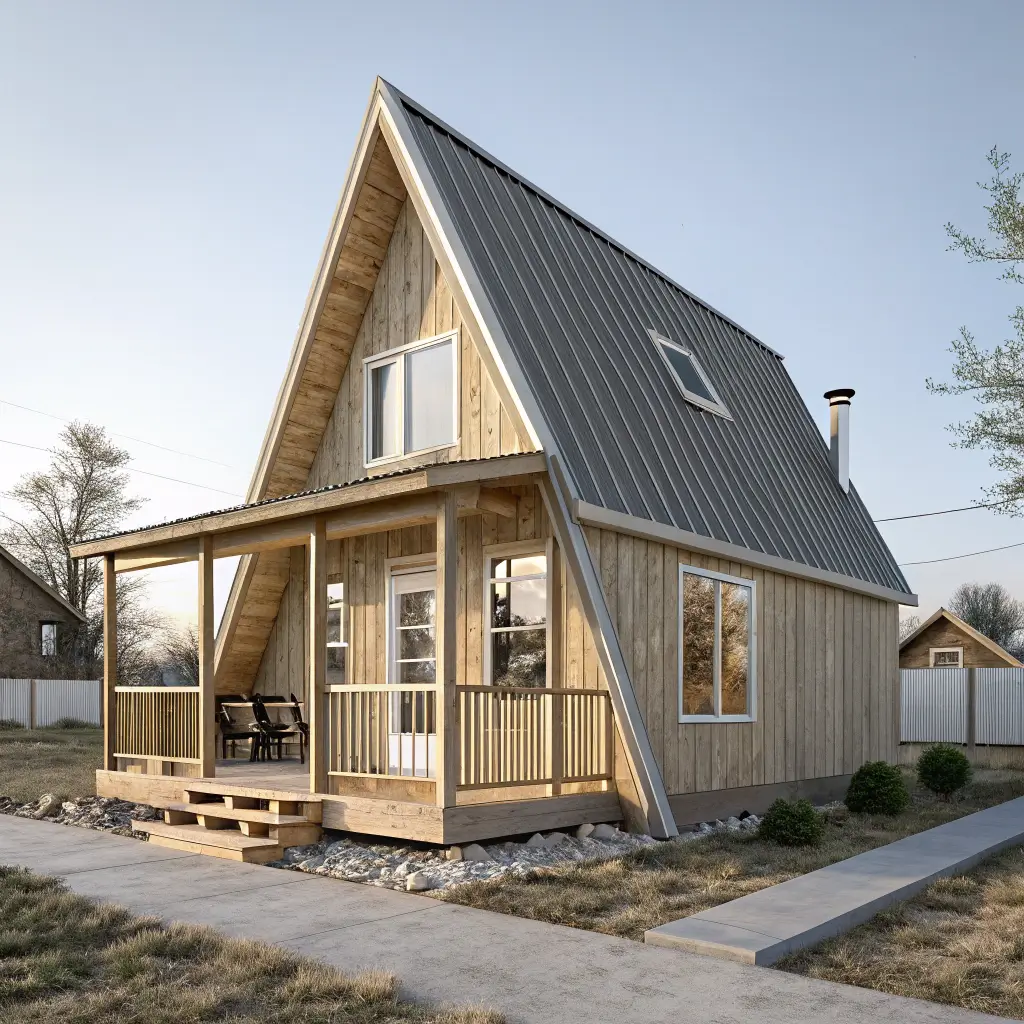
Not everyone has unlimited budgets, and that’s where affordable A-frame plans shine. These designs deliver the A-frame dream without the nightmare price tag.
Cost-Effective Construction
A-frames’ simple structure makes them naturally affordable. The roof IS the walls, reducing materials and labor. Standard lumber dimensions work efficiently with typical A-frame angles. DIY builders find A-frames more manageable than complex traditional homes.
Affordable plans stick to rectangular footprints that maximize standard material usage. They avoid dormers, skylights, and other features that complicate construction. The beauty comes from the form itself, not expensive add-ons.
Smart Material Choices
Budget-friendly A-frames use affordable materials wisely. Metal roofing costs more initially but lasts decades longer than shingles. Plywood interior walls look intentional when properly finished. Concrete floors eliminate the need for additional flooring materials.
The key lies in choosing materials that look good naturally rather than requiring expensive finishes. Raw wood, exposed fasteners, and simple hardware become design features rather than compromises.
Phased Building Approaches
Many affordable A-frame plans accommodate phased construction. You might build a basic shell initially, then finish interiors over time. Lofts can remain unfinished until needed. Decks and additions wait for future budgets.
This approach lets you start living your A-frame dream sooner while spreading costs over years. The simple structure makes DIY finishing projects manageable for handy owners.
9. Mountain Retreat A-Frame Designs
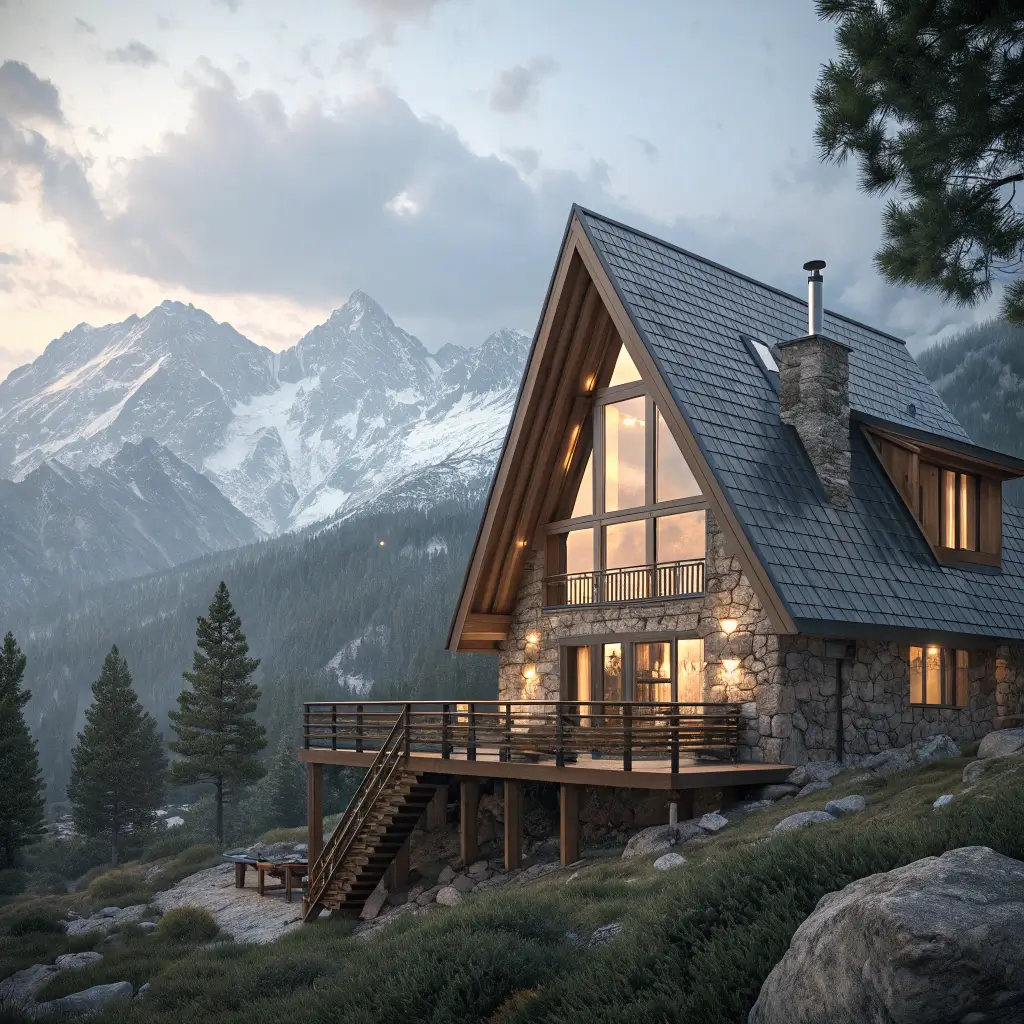
A-frames and mountains go together like peanut butter and jelly. These high-altitude designs handle snow loads, capture views, and create the perfect base camps for mountain adventures.
Engineering for Altitude
Mountain A-frames require serious structural engineering. Steep roof pitches shed heavy snow loads. Reinforced frames handle wind loads. Deep foundations anchor structures to sloped sites. These aren’t aesthetic choices—they’re survival strategies.
The triangular shape naturally handles mountain conditions better than traditional designs. Snow slides off rather than accumulating. Wind flows around the aerodynamic profile. The low center of gravity resists uplift forces.
View Optimization
Mountain A-frames orient to capture spectacular vistas while managing solar gain. Large windows face views but include overhangs that prevent overheating. Clerestory windows bring in north light without glare.
Many designs feature wraparound decks that provide 360-degree view opportunities. Others incorporate crow’s nests or observation towers that extend above the main roofline. When you’ve got mountain views, you maximize them!
Seasonal Considerations
Mountain retreats need to work year-round. Mudrooms handle wet ski gear. Radiant floor heating warms cold mornings. Window placement encourages cross-ventilation during summer. Storage accommodates seasonal equipment swaps.
The best mountain A-frames feel equally inviting whether you’re escaping summer heat or embracing winter sports. They adapt to seasonal rhythms while maintaining comfort throughout.
Also Read: 12 Smart Duplex House Plans Ideas with Functional Spaces
10. Open Concept A-Frame Floor Plans
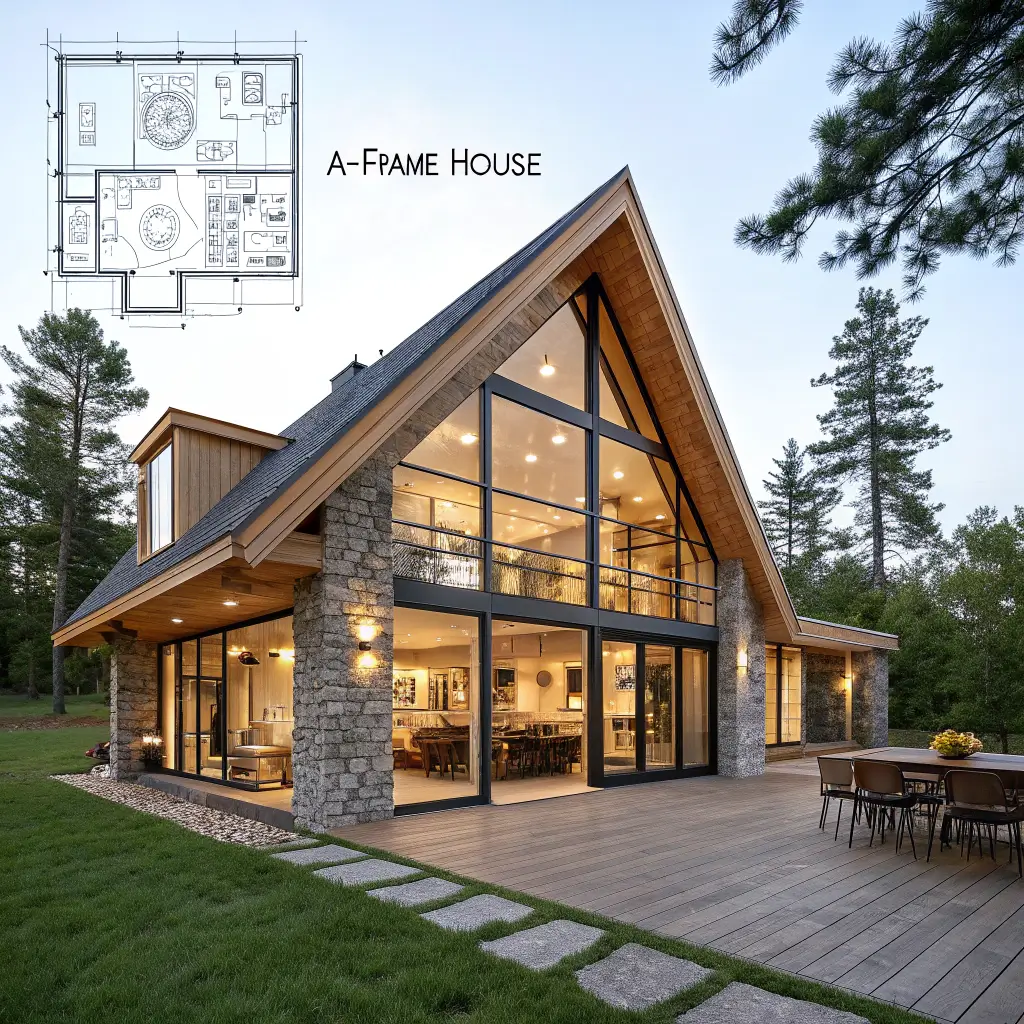
Finally, let’s explore A-frames that eliminate interior walls entirely, creating flowing spaces that feel larger than their footprints suggest. Open concept A-frames maximize both space and social connection.
Removing Barriers
Open concept A-frames use the triangular structure itself for support, eliminating the need for interior load-bearing walls. This creates unobstructed spaces from gable to gable. Kitchen, dining, and living areas flow together seamlessly.
The absence of walls means light travels throughout the space unimpeded. Views extend through the entire home. Conversations flow naturally between zones. It’s communal living at its finest.
Defining Spaces Without Walls
Without walls, other elements define functional areas. Kitchen islands separate cooking from living zones. Area rugs designate seating areas. Furniture arrangement guides traffic flow. Changes in ceiling height or flooring material signal transitions.
These subtle definitions maintain the open feeling while providing necessary organization. You know where each area begins and ends without physical barriers blocking connection.
Acoustic Challenges
Let’s be real—open concept A-frames can get noisy. Sound bounces off all those angular surfaces. Cooking sounds travel everywhere. Privacy becomes challenging. :/
Smart designs address these issues through soft furnishings, acoustic panels disguised as art, and strategic placement of quieter functions. Some plans include one enclosed space—usually a bedroom or office—as an acoustic retreat.
Making Your A-Frame Dreams Reality
After exploring these ten approaches, you might wonder how to choose the right A-frame plan for your situation. Start by considering your primary use—weekend retreat, full-time residence, or rental property? Your answer shapes everything else.
Climate plays a huge role in A-frame success. Snow country demands steeper pitches and stronger structures. Hot climates need serious ventilation and sun protection. Coastal areas require corrosion-resistant materials. Work with your environment, not against it.
Budget obviously matters, but remember that A-frames’ simple structure often makes them more affordable than traditional homes of similar size. The savings on complex rooflines can go toward better windows or finishes.
The Emotional Appeal of Triangular Living
Beyond practical considerations, A-frames offer something intangible—they make us feel different. Living in a triangle changes your perspective, literally and figuratively. The unusual space encourages creative thinking and unconventional living.
A-frames also connect us to architectural history while feeling completely contemporary. They’re nostalgic and forward-thinking simultaneously. This temporal flexibility means your A-frame won’t look dated in a decade like some architectural trends might.
Your A-Frame Adventure Awaits
Whether you choose a cozy cabin, modern minimalist masterpiece, or affordable starter home, remember that A-frames reward bold thinking.
These aren’t houses for people who want to blend in. They’re for people who appreciate good design, efficient use of space, and the beauty of geometric simplicity.
IMO, A-frames represent everything good about alternative architecture—they challenge conventions, solve problems creatively, and create spaces that feel special every single day.
Sure, you might bump your head occasionally while you figure out those slanted walls, but that’s a small price for living in your own personal geometric paradise.
So go ahead, embrace the triangle. Your A-frame adventure starts with choosing a plan that speaks to your soul, then making it uniquely yours.
Whether you build, buy, or just dream, remember that sometimes the best homes come in the most unexpected shapes.