10 Smart Corner Sofa Design Ideas for Space Saving Rooms
- Living Room Decor
 Ben
Ben- 0
- 34 minutes read
Look, I get it—you’re staring at that awkward corner in your living room wondering how the heck you’re supposed to make it work. You’ve measured the space about seventeen times, scrolled through Pinterest until your eyes glazed over, and you’re still not sure if a corner sofa is the answer or just another expensive mistake waiting to happen.
Here’s the thing: corner sofas are absolute game-changers when you do them right. I’ve seen tiny apartments transform into cozy havens and sprawling living rooms finally make sense, all because someone figured out how to work that corner angle. So grab your coffee (or wine, no judgment here), and let me walk you through ten ridiculously smart corner sofa ideas that’ll actually save space instead of eating it up.
Minimal Modern L-Shaped Corner Sofa Living Room Layout
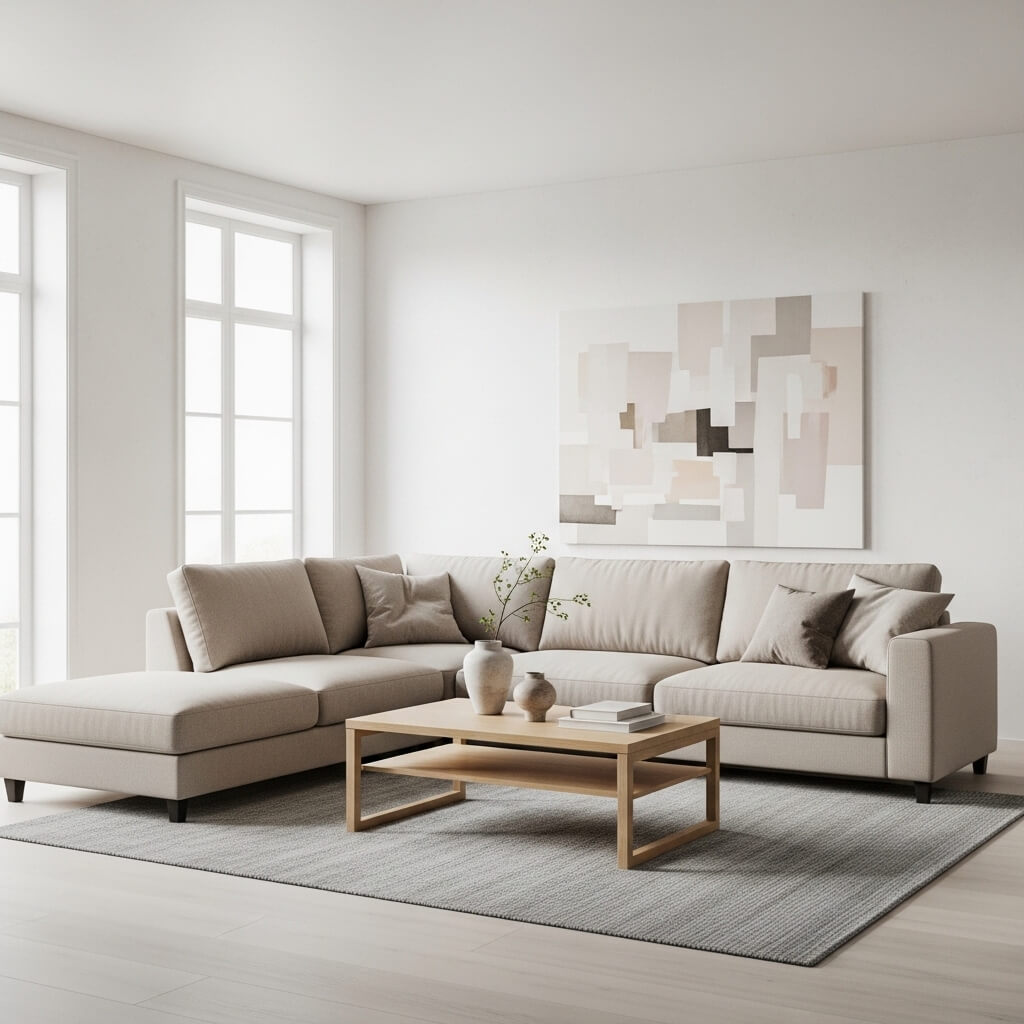
You know what I love about minimal modern design? It doesn’t try too hard. An L-shaped corner sofa in a clean, streamlined silhouette basically does all the heavy lifting while looking effortlessly cool.
I recently helped my cousin set up her new apartment, and we went with a sleek grey L-shaped number with thin metal legs. The secret sauce here is choosing a sofa with a low profile and slim arms—it visually takes up less space even though you’re getting tons of seating. We’re talking about maximizing every square inch without making the room feel like a furniture showroom exploded.
The beauty of this layout is how it naturally divides your space. The sofa creates a subtle boundary between your living area and, say, your dining zone or home office nook. You don’t need walls or bulky room dividers when your furniture does the work for you.
Making It Work
Here’s what actually matters with this design:
- Stick to neutral colors: Whites, greys, beiges, or even a muted charcoal keep things open and airy
- Choose thin, angled legs: Chunky block feet make sofas look heavier and eat up visual space
- Skip the clutter: One or two throw pillows max—this isn’t the time for your entire pillow collection
- Keep the coffee table minimal: A glass top or simple wooden surface maintains the clean vibe
The whole point is creating breathing room. When you walk into a space like this, you shouldn’t feel crowded. You should feel like someone actually thought about the layout instead of just shoving furniture wherever it fit.
Luxury Marble Accent Corner Sofa Design Ideas
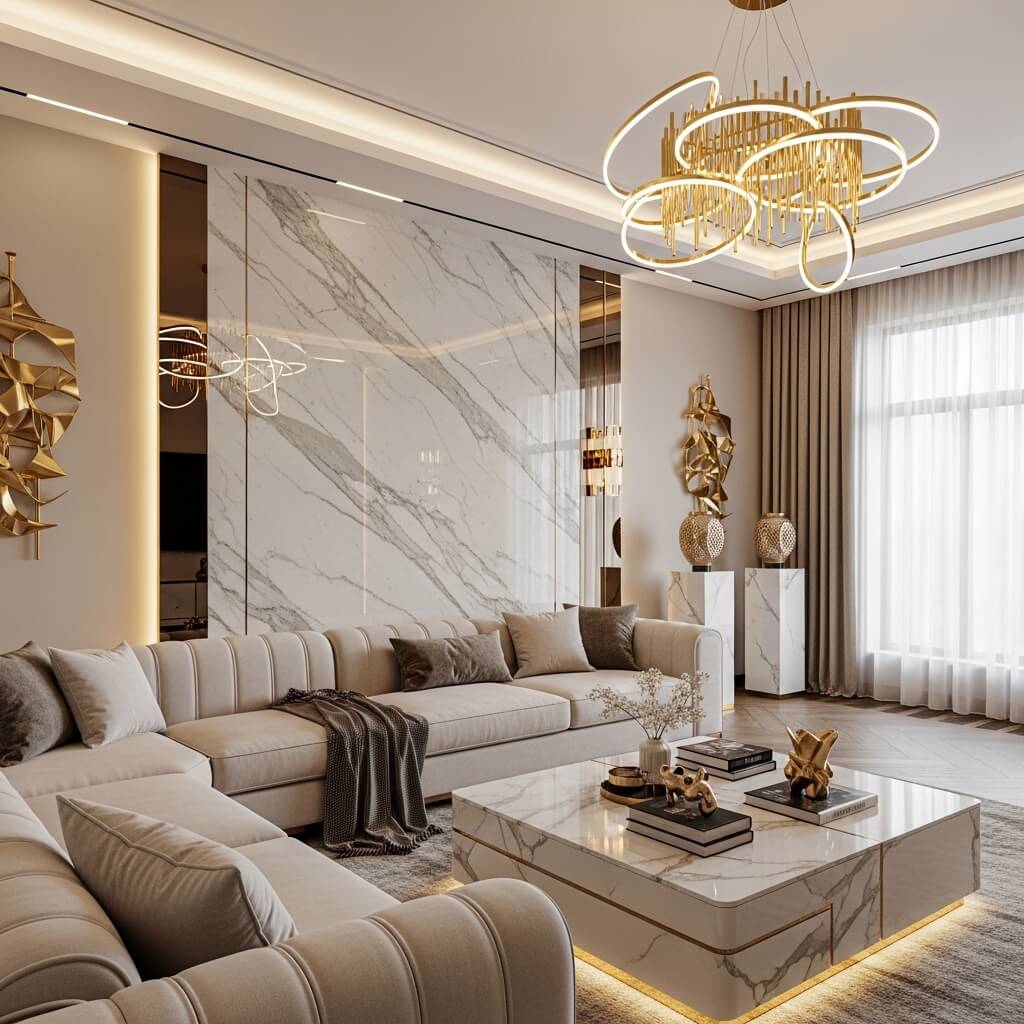
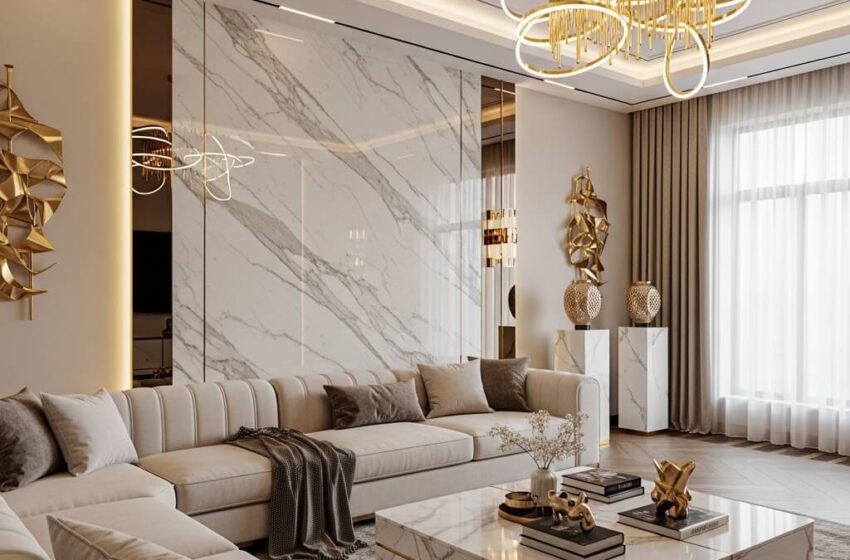
Okay, hear me out on this one. I know “luxury” and “small space” don’t usually hang out in the same sentence, but marble accents can actually make a compact room look more expensive without adding physical bulk.
Picture this: a plush velvet corner sofa in deep emerald or navy, paired with a gorgeous marble side table or coffee table. The marble brings this elevated, sophisticated vibe that tricks your brain into thinking the space is fancier (and somehow bigger) than it actually is. I saw this setup at a friend’s condo, and I legitimately thought she’d upgraded to a penthouse until I realized she just upgraded her styling game.
The marble element adds visual weight without physical heaviness. A sleek marble coffee table with thin legs or a small marble accent table tucked into the corner creates a focal point that draws the eye upward and outward, not down and cramped.
Pulling Off the Luxe Look
- Choose one marble piece: Don’t go marble-crazy—one statement piece is enough
- Pair with rich fabrics: Velvet, chenille, or high-quality linen elevates the whole vibe
- Add metallic accents: Gold or brass lamp bases, picture frames, or decorative objects complement marble beautifully
- Keep it clean: Luxury thrives on simplicity, so resist the urge to over-accessorize
FYI, this look works especially well in smaller spaces because it makes guests focus on the quality of your pieces rather than the quantity of your square footage. Smart, right? 🙂
Small Space Cozy Corner Sofa Arrangement Ideas
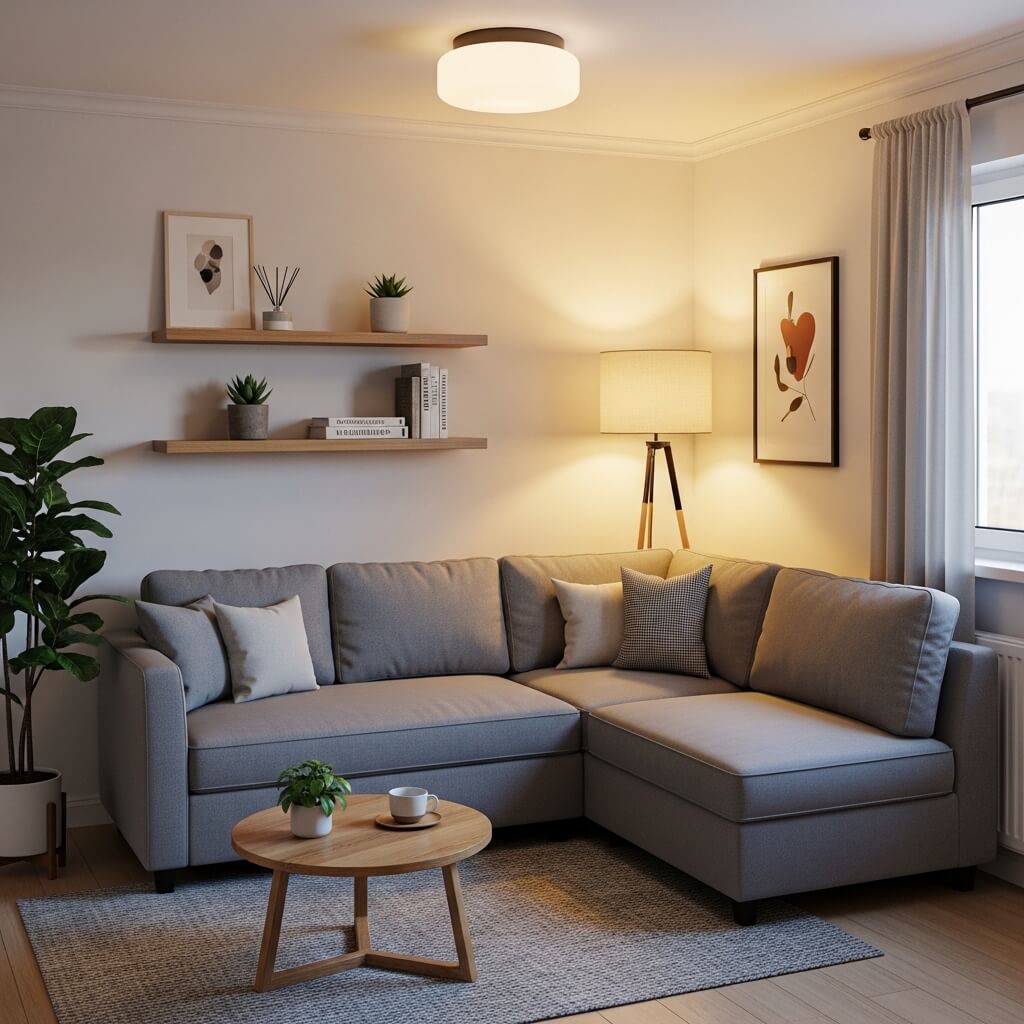
Let’s talk about the elephant in the room—or rather, the corner sofa in the shoebox apartment. When you’re working with seriously limited space, every decision counts, and a badly chosen corner sofa can turn your living room into an obstacle course.
I lived in a 400-square-foot studio for three years, and I mastered the art of small-space corner sofa arrangement out of pure necessity. The trick is choosing a sofa with a compact footprint but maximum comfort. You want something that hugs the corner tightly, doesn’t extend too far into the room, and ideally offers hidden storage.
My game-changer was finding a corner sofa with a reversible chaise. On days when I needed more floor space for yoga or when friends came over, I could reconfigure it. Storage ottomans that double as coffee tables? Absolute lifesavers. Under-sofa storage? Yes, please.
Small Space Essentials
When you’re tight on space, these features matter:
- Modular or reversible designs: Flexibility is your best friend
- Built-in storage: Ottomans with hidden compartments, under-seat storage, lift-up sections
- Scaled-down proportions: Shorter depth, narrower arms, compact overall dimensions
- Light colors: They reflect light and make the space feel less cramped
- Raised legs: Creates visual space underneath and makes cleaning easier
Ever wondered why some small spaces feel cozy while others just feel cramped? It’s all about intention. A carefully chosen corner sofa that fits the scale of your room creates a cozy nook instead of a furniture traffic jam.
Also Read: 10 Stunning Luxury Sofa Design Ideas for Dream Homes
Scandinavian Style Neutral Tone Corner Sofa Setup
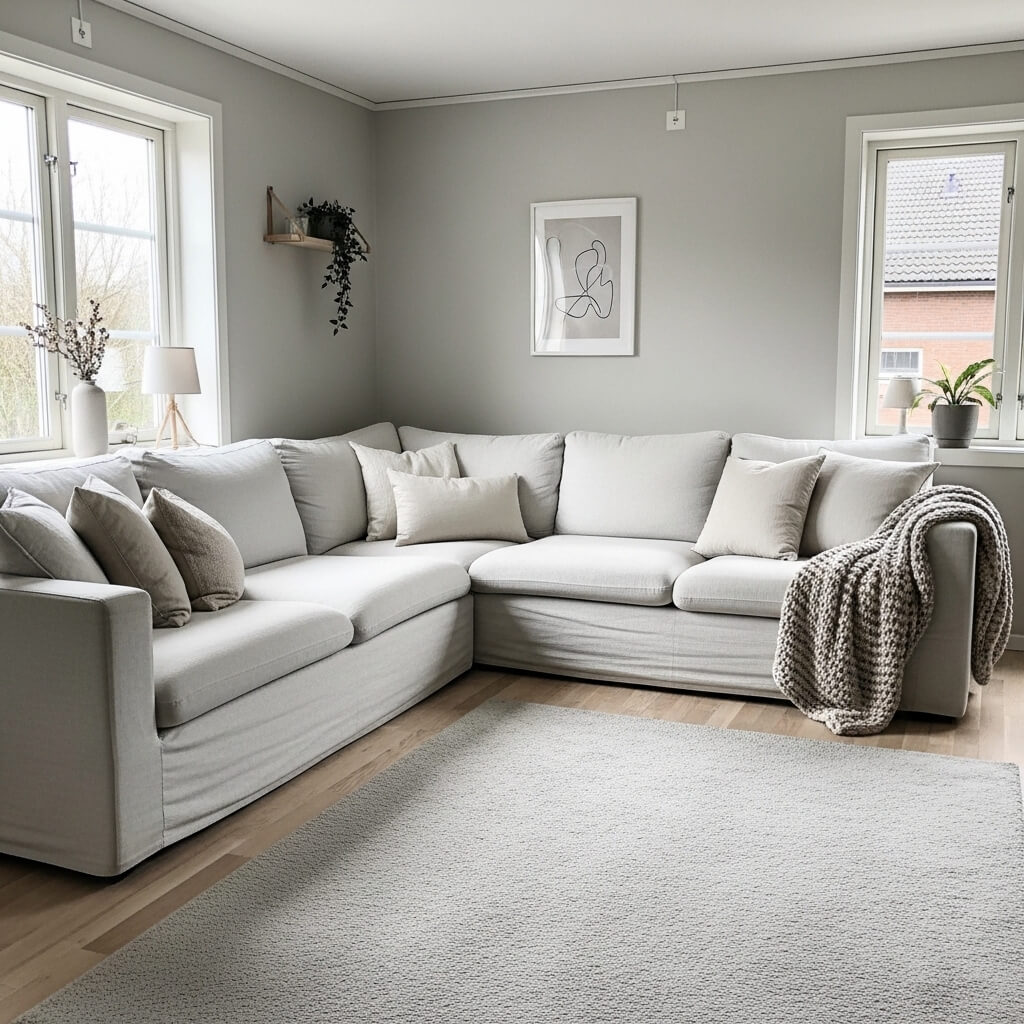
Scandi design is having a moment—okay, it’s been having a moment for like a decade, but there’s a reason for that. The Scandinavian approach to corner sofas is all about that perfect balance between minimalism and warmth, and honestly, it’s perfect for space-conscious living.
Think soft beiges, warm greys, or even a gentle cream-colored corner sofa with clean lines and natural wood accents. I helped my sister design her living room in this style, and the transformation was insane. The room didn’t get physically bigger, obviously, but it felt twice as spacious and about ten times more inviting.
The Scandi secret is layering textures within a neutral palette. Your corner sofa might be a simple grey linen, but you add a chunky knit throw, some sheepskin pillows, a jute rug underneath, and suddenly you’ve got depth and interest without visual chaos.
Nailing the Scandi Vibe
Here’s your Scandinavian corner sofa checklist:
- Neutral base: Stick to whites, greys, beiges, or soft taupes
- Natural materials: Wood legs, linen or cotton fabrics, wool throws
- Minimal accessories: A few well-chosen pieces beat a dozen random ones
- Plants: A fiddle leaf fig or rubber plant adds life without clutter
- Natural light: Keep window treatments simple and light-filtering
The whole philosophy centers on hygge—that Danish concept of coziness and contentment. Your corner sofa should invite you to curl up with a book and a cup of tea, not stress you out every time you walk past it.
Lush Green Indoor Plant Corner Sofa Living Space
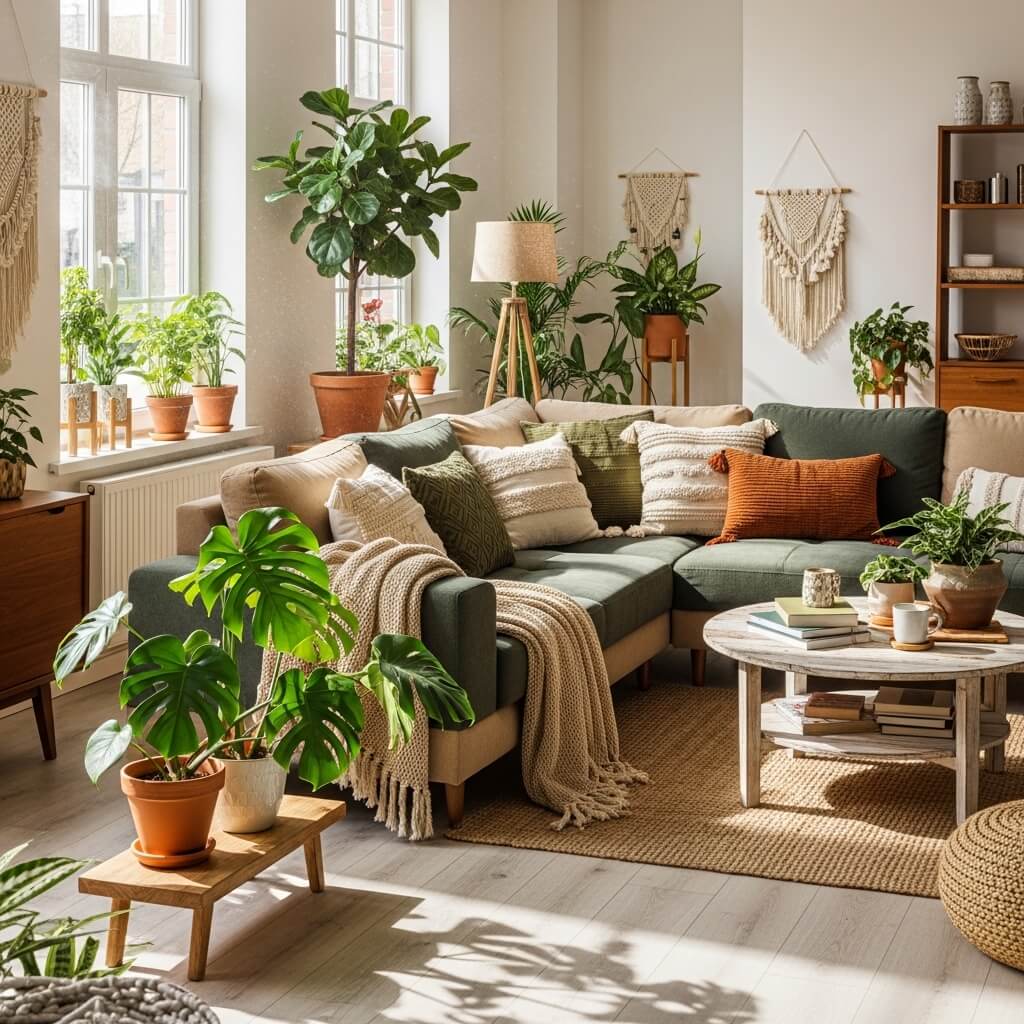
Okay, plant people, this one’s for you. I’m talking about transforming that corner sofa area into an actual indoor oasis. Before you roll your eyes and think this sounds cluttered, trust me—strategically placed plants can actually make your space feel bigger and way more alive.
I went a bit plant-crazy during lockdown (who didn’t?), and my corner sofa became ground zero for my jungle aspirations. A large monstera in the corner behind the sofa, a snake plant on the side table, some trailing pothos on a floating shelf above—suddenly, my basic living room had personality and depth.
Plants draw the eye vertically, which creates the illusion of height and space. They also improve air quality, boost your mood, and give you something to fuss over when you’re procrastinating on actual work. IMO, it’s a win-win-win situation.
Creating Your Plant Paradise
- Start with one large statement plant: A fiddle leaf fig, bird of paradise, or monstera in the corner anchors the space
- Add varying heights: Mix tall floor plants with medium tabletop plants and trailing varieties
- Choose low-maintenance options: Pothos, snake plants, ZZ plants, and rubber plants forgive occasional neglect
- Consider plant stands: They elevate smaller plants and create visual interest at different levels
- Match your aesthetic: Modern ceramic pots for contemporary spaces, woven baskets for boho or Scandi vibes
The greenery softens the hard edges of furniture and adds an organic element that makes your space feel thoughtfully designed rather than just furnished. Plus, you get to call yourself a plant parent, which is basically a personality trait at this point.
Open Concept Corner Sofa TV Lounge Design Ideas
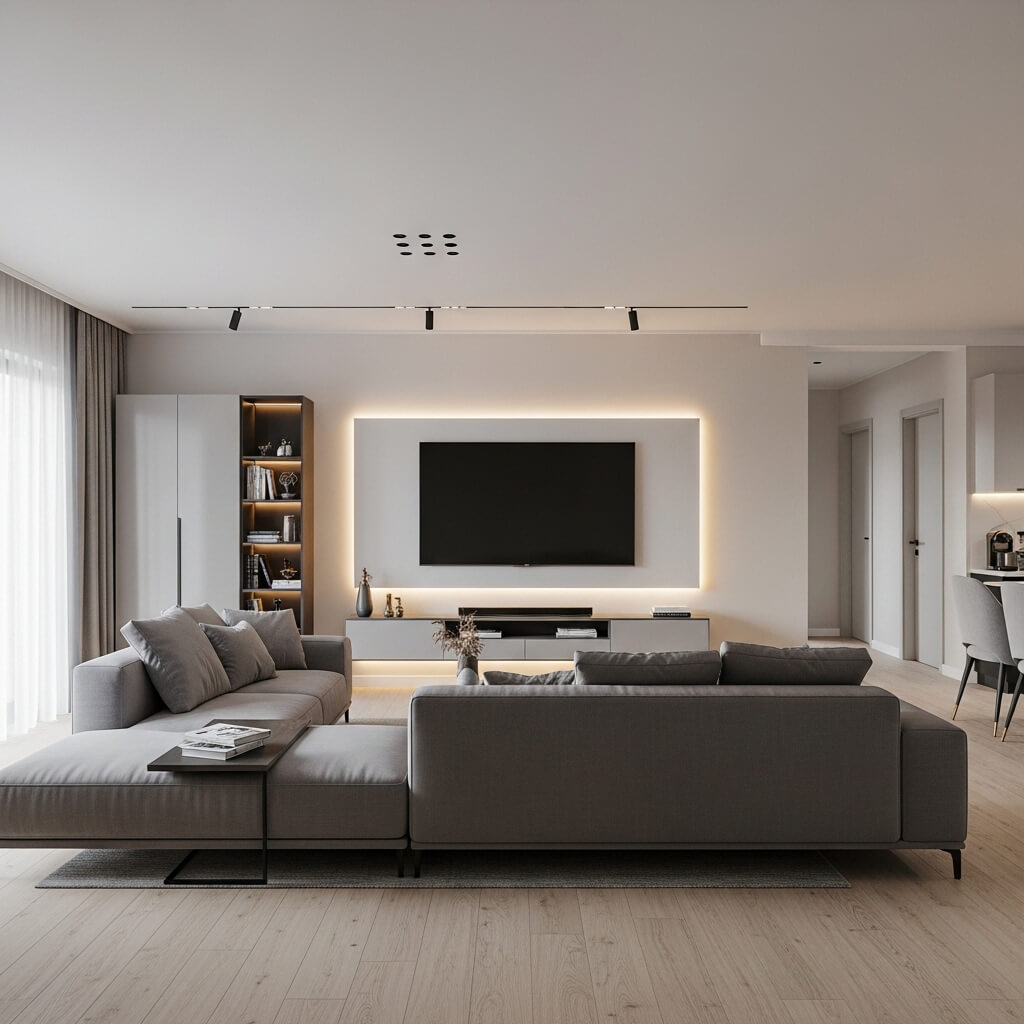
Open concept living is fantastic until you realize you need to define different zones without actual walls. A corner sofa becomes your secret weapon for creating a TV lounge area that feels distinct but not disconnected from the rest of your space.
I’ve seen this work brilliantly in my friend’s loft apartment. She positioned her corner sofa to face the TV while also creating a natural boundary between the living area and the kitchen/dining space. The back of the sofa essentially acts as a visual divider, giving structure to an otherwise undefined space.
The key is positioning. You want the sofa to anchor your TV viewing area while not completely cutting off sightlines to the rest of your home. Nobody wants to feel isolated in their own apartment, even during a Netflix binge.
Open Concept Arrangement Tips
Here’s how to nail this layout:
- Float the sofa: Don’t push it against a wall—let it define the space by positioning it purposefully
- Create walkways: Ensure at least 24-30 inches of walking space around the sofa
- Add a console table behind: This creates a subtle boundary and provides extra surface space
- Coordinate with other zones: Your TV lounge aesthetic should flow into your dining or kitchen area
- Consider sightlines: Make sure your sofa placement doesn’t block natural light or create awkward views
The beauty of this setup is that it makes your open concept space feel intentional. You’ve created a cozy TV lounge without sacrificing the airy, connected feel that makes open layouts so appealing in the first place.
Also Read: 10 Luxury Sofa Design Ideas for High-End Interiors
Boho Chic Colorful Corner Sofa Living Room Style
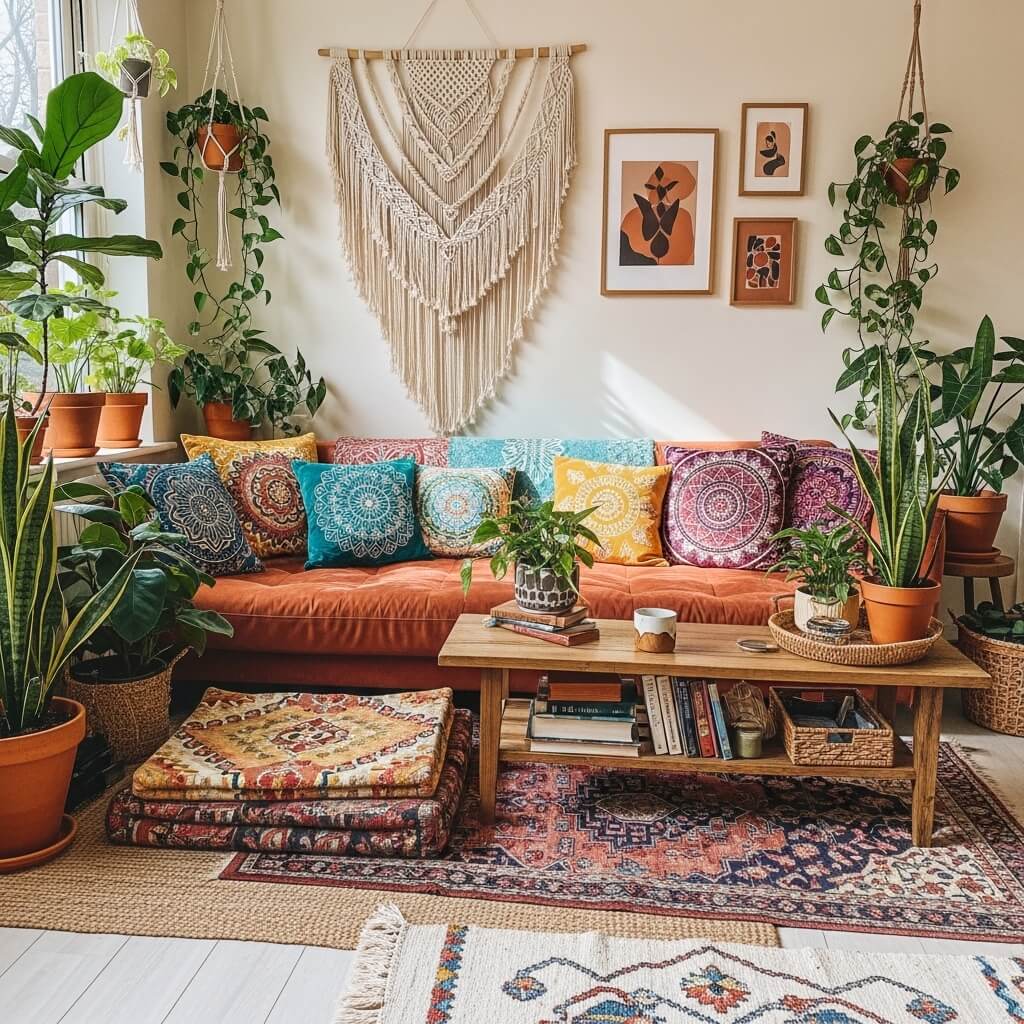
Listen, not everyone wants to live in a greige monastery. Sometimes you want color, pattern, and enough texture to make a maximalist weep with joy. A boho corner sofa setup lets you go wild while still being space-conscious.
I absolutely love this style because it gives you permission to break rules. Your corner sofa might be a rich terracotta or burnt orange. You layer on pillows in different patterns—florals, geometrics, tribal prints—and somehow it all works together. Add a vintage rug, some macramé wall hangings, and you’ve got yourself a space with serious personality.
The trick with boho style in smaller spaces is controlled chaos. Yes, you want that eclectic, collected-over-time vibe, but you still need some visual anchors to prevent it from looking like a flea market exploded.
Boho Without the Overwhelm
- Start with a solid-colored sofa: Let your accessories bring the pattern and color
- Layer, layer, layer: Different textures and patterns add depth without taking up physical space
- Mix old and new: Vintage finds paired with modern pieces create visual interest
- Incorporate natural elements: Rattan, jute, wood, and plants are boho essentials
- Create a focal point: Maybe it’s your sofa, maybe it’s a gallery wall above it—just pick one main attraction
What I appreciate about boho style is how personal it feels. Your space tells a story instead of looking like a catalog page. And honestly, in a smaller room, that personal touch makes the space feel curated rather than cramped.
Ultra Modern Black Leather Corner Sofa Design
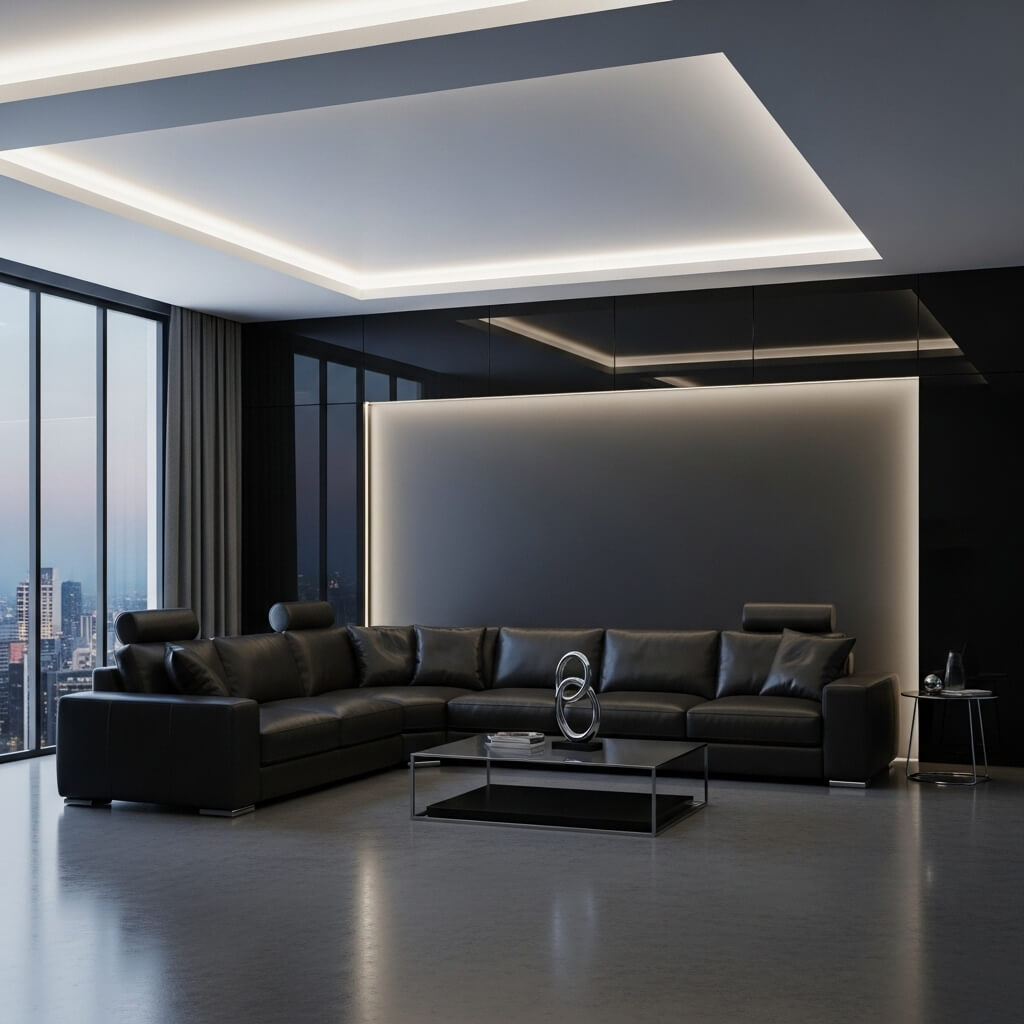
Now we’re getting edgy. A black leather corner sofa is basically the James Bond of furniture—sleek, sophisticated, and undeniably cool. But can it work in a space-saving context? Absolutely, if you style it right.
Black leather gets a bad rap for making spaces feel smaller or darker, but I’ve seen it work beautifully when you balance it correctly. The key is surrounding it with lighter elements and ensuring you have proper lighting. My buddy has a black leather sectional in his apartment, and instead of feeling like a cave, it feels like a modern bachelor pad (in the best way).
The leather itself is practical as heck—easy to clean, ages well, and works with almost any design style from industrial to modern minimalist. Plus, a black leather sofa is basically the little black dress of furniture. It goes with everything.
Styling Black Leather Successfully
- Lighten up the surroundings: White or light grey walls, light wood floors, bright accents
- Layer in texture: Add soft throw blankets and pillows to soften the sleek leather
- Invest in lighting: Floor lamps, table lamps, and overhead lighting prevent the space from feeling too dark
- Add pops of color: Bright artwork, colorful accessories, or vibrant plants create contrast
- Keep it clean: Black leather shows dust and fingerprints, so regular maintenance keeps it looking sharp
Black leather in a small space is a bold move, but bold moves pay off when you commit to them. You’re creating a statement instead of apologizing for your square footage, and that confidence shows.
Window-Facing Bright Corner Sofa Relaxing Setup
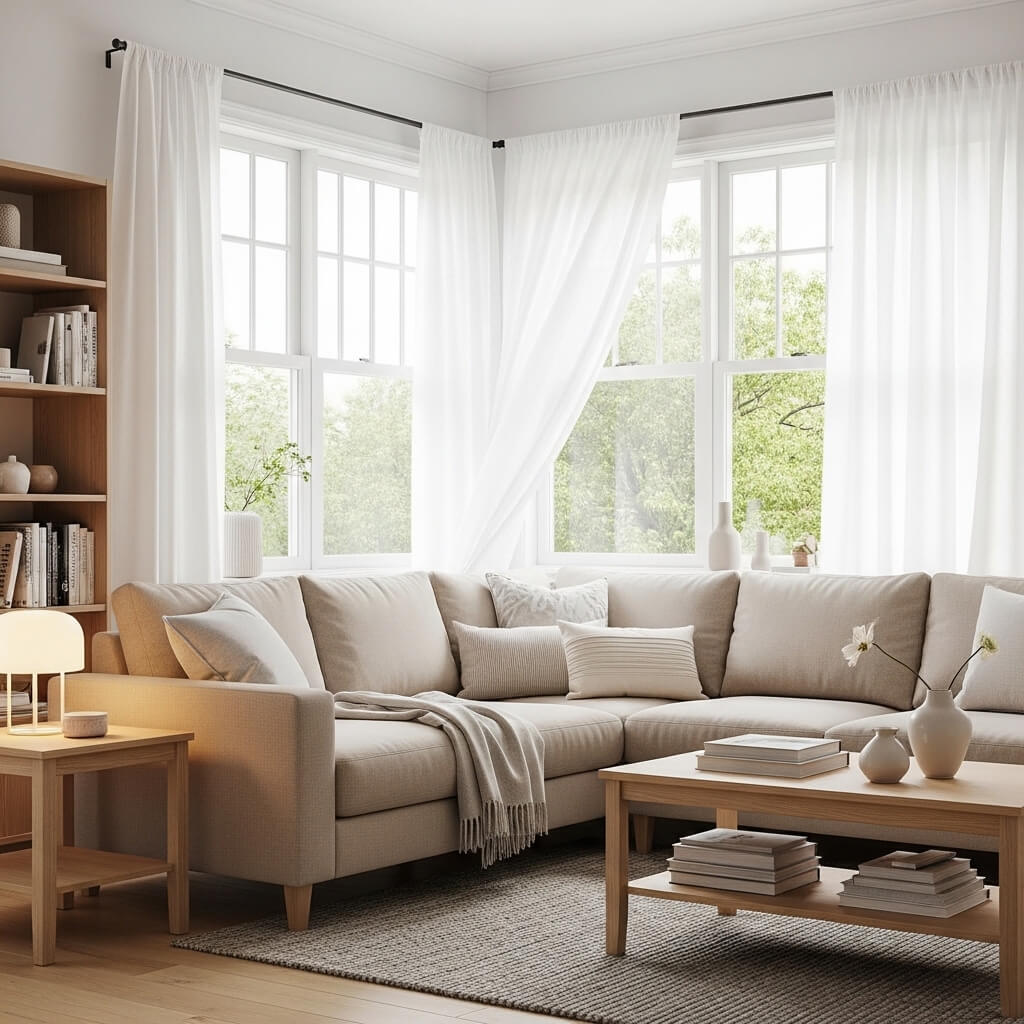
If you’re lucky enough to have a corner near a window, you’ve hit the layout lottery. A window-facing corner sofa maximizes natural light and creates the most relaxing spot in your entire home.
I specifically arranged my apartment to put my corner sofa near the windows, and it completely changed how I use my living room. Morning coffee while watching the sunrise, afternoon reading sessions with perfect natural light, evening wind-down time watching the city lights—your sofa becomes a destination instead of just seating.
The natural light also makes your space feel significantly larger. Dark corners eat up visual space, but a bright, window-lit corner sofa area opens everything up. Plus, you save on electricity during the day because you’re not constantly flipping on lamps.
Maximizing Window-Side Placement
Here’s how to make the most of this setup:
- Choose light-reflecting fabrics: Light colors or even subtle sheens bounce natural light around the room
- Keep window treatments simple: Sheer curtains or simple blinds maintain privacy without blocking light
- Add a small side table: Perfect for your coffee, book, or phone while you enjoy the view
- Consider the sun: If you get harsh afternoon sun, you might want UV-resistant fabrics to prevent fading
- Create a reading nook: Add a floor lamp for evening use and some bookshelves nearby
Ever noticed how hotel rooms always try to orient seating toward windows? There’s a reason for that. Natural light and views make spaces feel more expansive and way more enjoyable. Why not steal that trick for your own home?
Also Read: 10 Perfect 7 Seater Sofa Design Living Rooms Ideas
Wooden Warm Tone Rustic Corner Sofa Interior Design
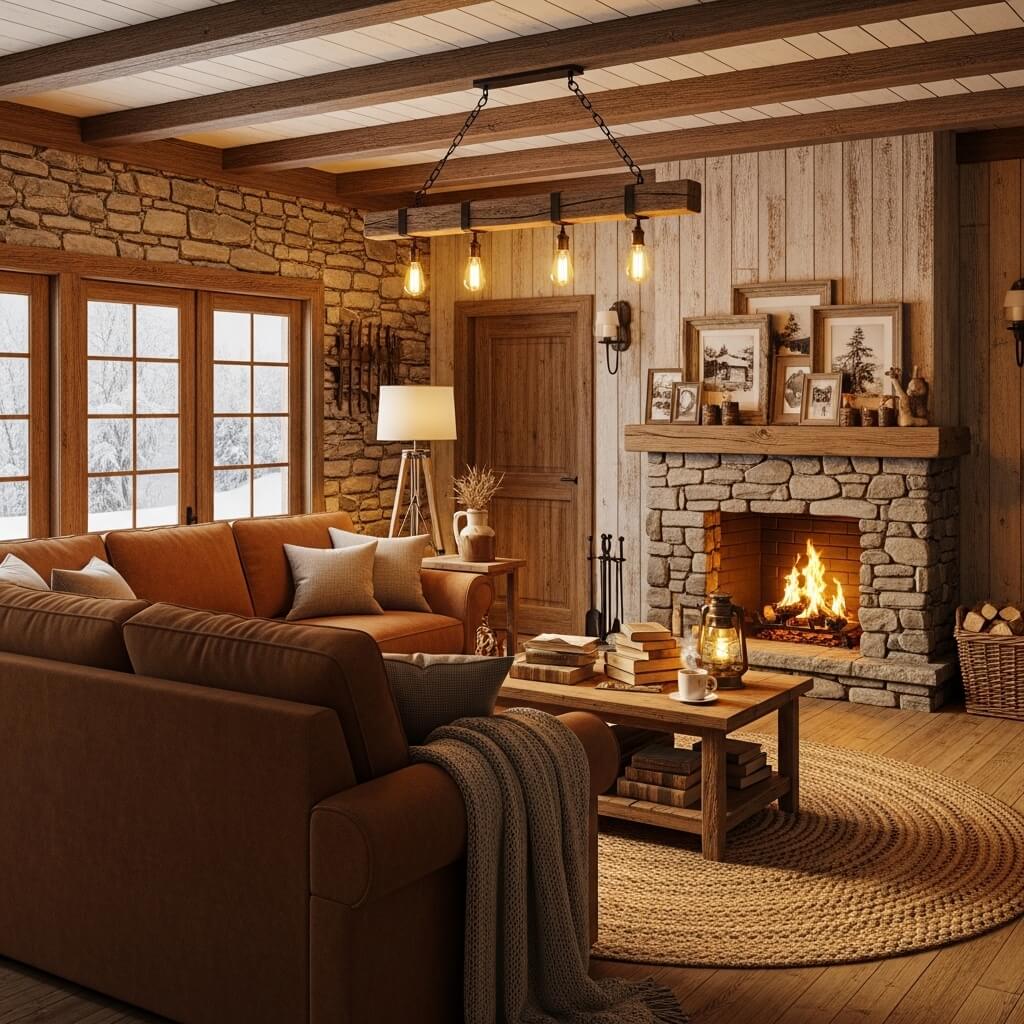
Let’s wrap this up with something cozy and grounded. A rustic corner sofa setup with warm wood tones creates this cabin-in-the-woods vibe even if you live in the middle of the city. There’s something deeply comforting about combining soft fabrics with natural wood elements.
I visited my friend’s mountain house last year, and she nailed this aesthetic. Her corner sofa had this perfect caramel-colored linen upholstery paired with chunky reclaimed wood coffee table and exposed ceiling beams. Even though the space wasn’t huge, it felt warm, inviting, and completely relaxing. 🙂
The warm wood tones add character without requiring extra space. A wooden coffee table, side tables, or even wooden sofa legs bring in that rustic element while keeping your footprint manageable. You’re working with color and texture rather than adding more stuff.
Achieving Rustic Warmth
- Choose warm-toned fabrics: Caramels, warm greys, soft browns, or even rust colors
- Incorporate reclaimed or distressed wood: Adds instant character and history
- Add cozy textiles: Chunky knit throws, wool pillows, soft area rugs in natural fibers
- Mix in metal accents: Black iron or bronze hardware and fixtures complement the rustic vibe
- Keep it natural: Avoid overly polished or synthetic elements that clash with the organic aesthetic
The rustic approach works beautifully in smaller spaces because it feels intentionally cozy rather than accidentally cramped. You’re leaning into the intimate scale rather than fighting against it, and that makes all the difference.
Bringing It All Together
So there you have it—ten genuinely smart ways to make a corner sofa work in your space-saving room. Whether you’re team minimalist modern or full-on boho maximalist, there’s an approach here that’ll transform that awkward corner into your favorite spot in the house.
The real secret? Choose a style that actually matches your personality instead of just copying whatever’s trending on Instagram. Your corner sofa should make you happy every time you see it, not stressed about whether you styled it correctly according to some arbitrary design rules.
Think about how you actually live. Do you binge-watch shows every weekend? Go for that open concept TV lounge setup. Are you a plant hoarder in denial? Embrace the indoor jungle vibes. Do you love curling up with a book in natural light? Window-facing arrangement all the way.
Your space might be small, but with the right corner sofa approach, it’ll feel intentional, comfortable, and uniquely yours. And honestly, that’s way more valuable than an extra hundred square feet of generic floor space. Now go transform that corner—you’ve got this!