10 Brilliant Very Tiny Bedroom Ideas for Small Spaces
- Bedroom Design
 Ben
Ben- 0
- 39 minutes read
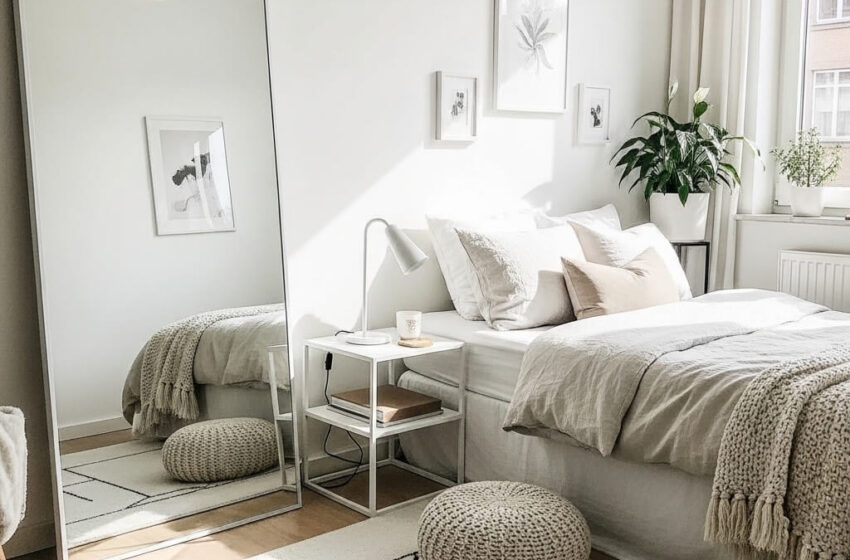
So, you’ve got a bedroom that’s roughly the size of a walk-in closet — or maybe it is a converted walk-in closet — and you’re trying to figure out how to make it feel like an actual, livable space. Trust me, I’ve been there. My first apartment had a bedroom so small that I had to step outside just to change my mind. But here’s the thing: small bedrooms don’t have to feel cramped, chaotic, or depressing.
With the right ideas, a tiny bedroom can actually feel cozy, functional, and even stylish. And no, I’m not talking about magic tricks or some unrealistic Pinterest fantasy. I’m talking about real, practical design moves that genuinely work. Let’s walk through 10 brilliant very tiny bedroom ideas that will completely change the way you think about your small space.
1. Under-Bed Storage Drawer Setup
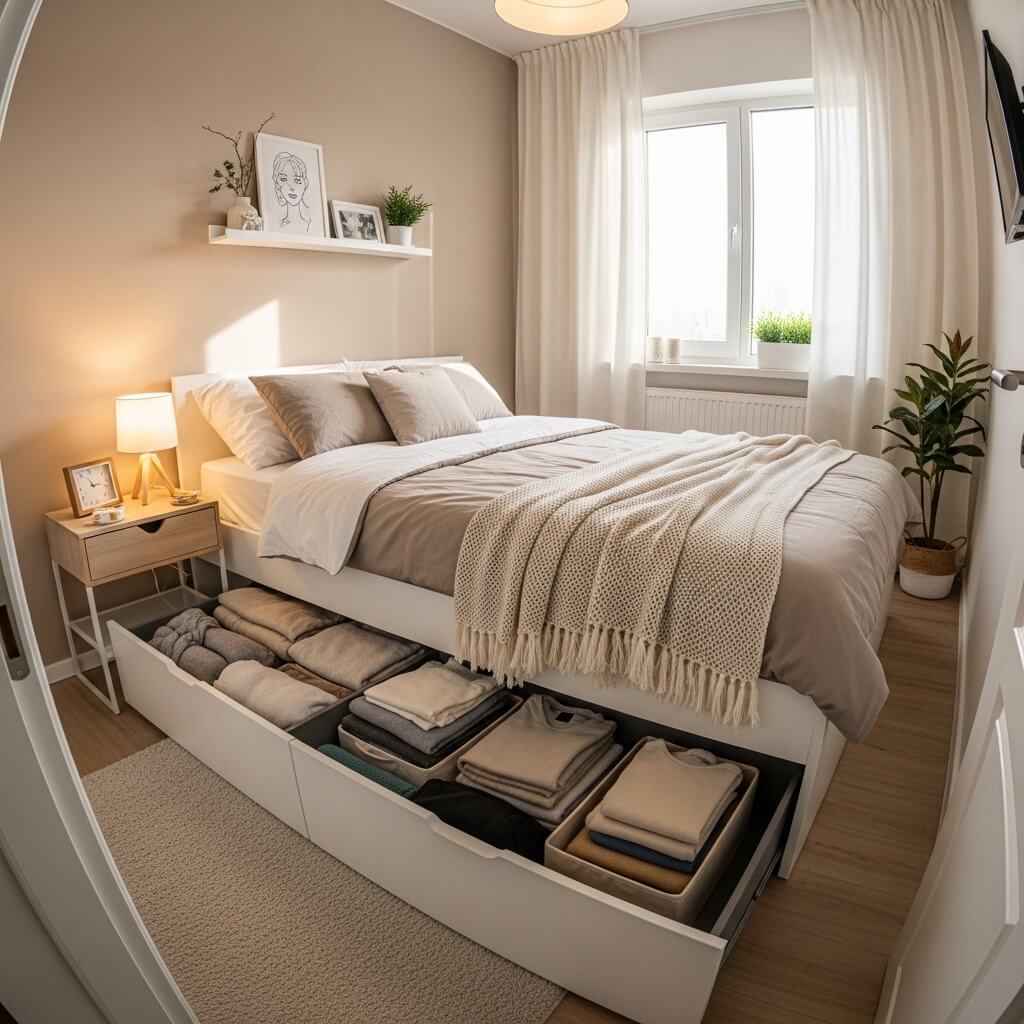
Let’s start with the most underrated real estate in any bedroom — the space under your bed. Seriously, why are so many people just letting that space collect dust bunnies and forgotten socks? If you’ve got a tiny bedroom, the area beneath your bed is basically a goldmine you haven’t cashed in yet.
Why Under-Bed Storage Drawers Are a Game-Changer
Under-bed storage drawers give you an entire extra layer of storage without taking up a single inch of floor space. That’s the whole point, and it’s brilliant. You can store:
- Seasonal clothing (sweaters, thick socks, heavy jackets)
- Extra bed linens and pillowcases
- Shoes you don’t wear every day
- Books, magazines, or hobby supplies
- Out-of-season accessories like scarves and gloves
The key is to go with a bed frame that either comes with built-in drawers or sits high enough off the floor to accommodate rolling storage bins. IMO, beds with built-in drawers are the superior option because they look cleaner and keep everything contained without needing to pull out a bin every time.
Tips for Making This Work
Choose shallow, wide drawers over deep ones. Deep drawers make it hard to find things buried at the back. Shallow drawers keep everything visible and accessible. If you’re using rolling bins instead of built-in drawers, grab some with labels so you’re not pulling everything out just to find your winter sweater.
Also, use vacuum storage bags for bulky items like duvets and comforters. These compress your stuff to a fraction of their size, and suddenly you’ve got way more room than you expected. I started doing this last winter, and it honestly felt like I doubled my storage space overnight.
2. Wall-Mounted Foldable Desk Idea
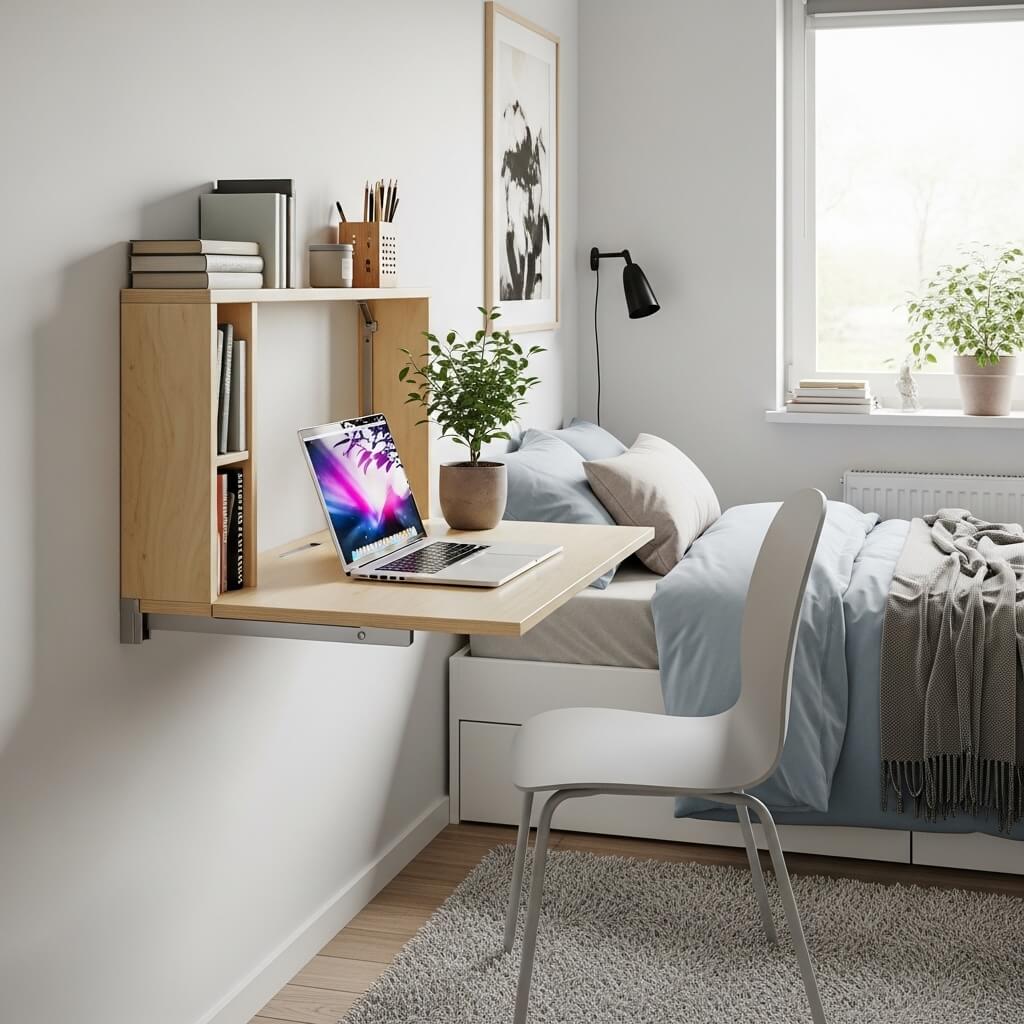
Here’s a question: do you actually need a full-sized desk in your tiny bedroom, or do you just think you do? Because if you’re working from your bed half the time anyway, a wall-mounted foldable desk might be exactly what your space needs.
The Beauty of the Fold-Down Desk
A wall-mounted foldable desk takes up zero floor space when you’re not using it. You mount it to the wall, fold it up when you need to work, and fold it back down when you’re done. The whole thing sits flush against the wall and practically disappears. For tiny bedrooms, this is nothing short of revolutionary.
When you’re shopping for one of these, look for:
- A sturdy bracket system that won’t wobble when you’re typing
- Enough surface area to comfortably fit your laptop and a notebook
- A built-in ledge or lip to keep things from sliding off
- A smooth finish that matches your room’s aesthetic
I personally went with a walnut-finish fold-down desk, and it completely transformed my small room setup. When it’s folded up, it looks like a decorative wall panel. When it’s open, it functions like a proper workstation.
Pairing Your Foldable Desk with the Right Chair
Don’t forget to pair your desk with a foldable or stackable chair. A chair that you can tuck away after use completes the whole system. Some people even use a small stool that slides under the desk when folded down, which keeps the floor completely clear. That’s the kind of thoughtful design decision that makes a tiny bedroom feel intentional rather than cramped.
3. Minimal Floating Shelf Layout
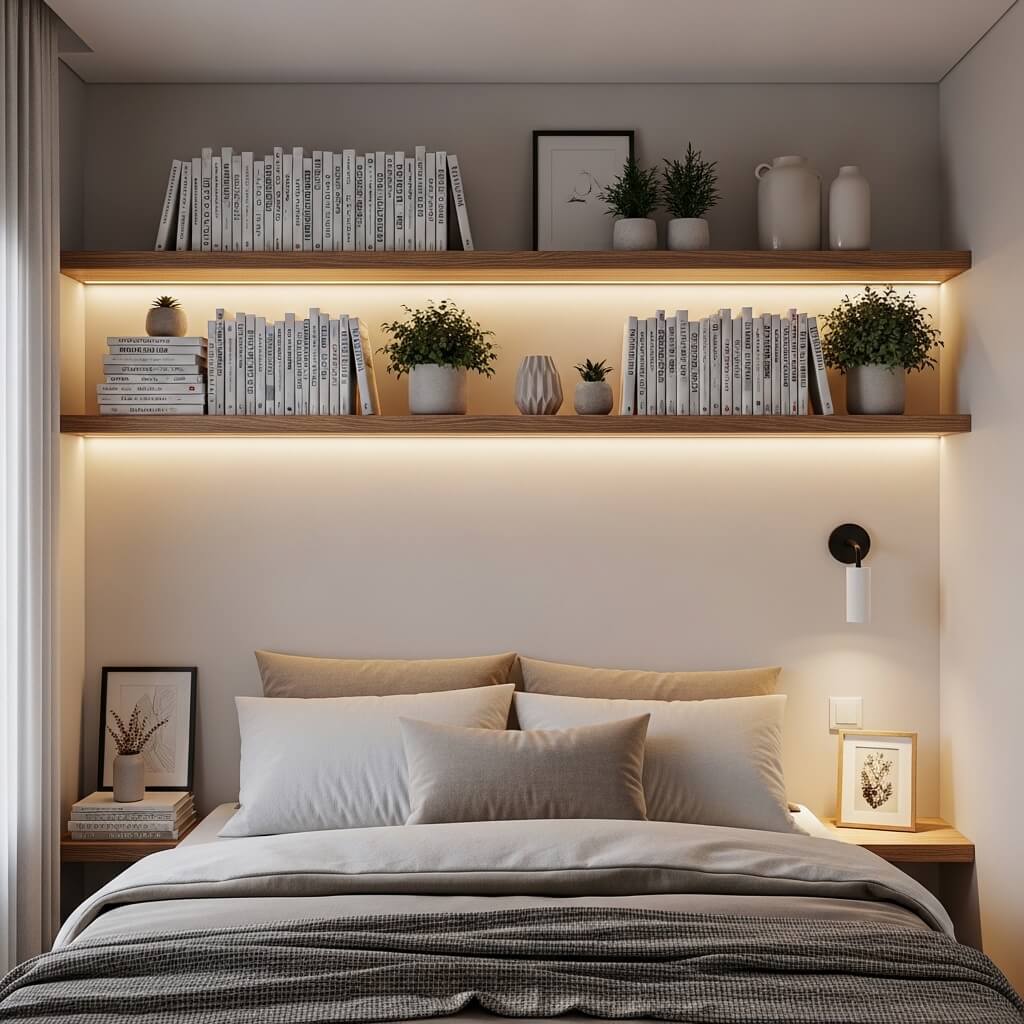
Floating shelves are one of those ideas that sound simple but completely change the dynamics of a small room when done right. The concept is straightforward: mount shelves directly to the wall so they float without any visible support brackets messing up the clean look.
How to Design a Minimal Floating Shelf Layout
The word “minimal” here is doing a lot of heavy lifting, and on purpose. The biggest mistake people make with floating shelves is overloading them with stuff. You end up with a cluttered wall that makes your room feel even smaller. Less is genuinely more when it comes to floating shelves in tiny bedrooms.
Here’s what works well on floating shelves in small bedrooms:
- A few books, stood upright or stacked horizontally
- One or two small plants (succulents are perfect)
- A small lamp or LED light strip underneath
- A framed photo or small piece of art
- A candle or decorative object
Space your shelves at varying heights to create visual interest. Don’t just line them all up at the same level — that looks like office supply storage. Stagger them, mix widths, and let some breathing room exist between items.
Where to Place Your Floating Shelves
Position floating shelves above your bed, beside your wardrobe, or in awkward corner spaces. These are areas where furniture can’t go but shelves absolutely can. Over-the-bed shelves work beautifully for books and small lamps, essentially replacing a bedside table without occupying any floor space.
Also Read: 10 Brilliant Tiny Bedroom Design Ideas for Functional Rooms
4. Mirror Placement to Expand Space
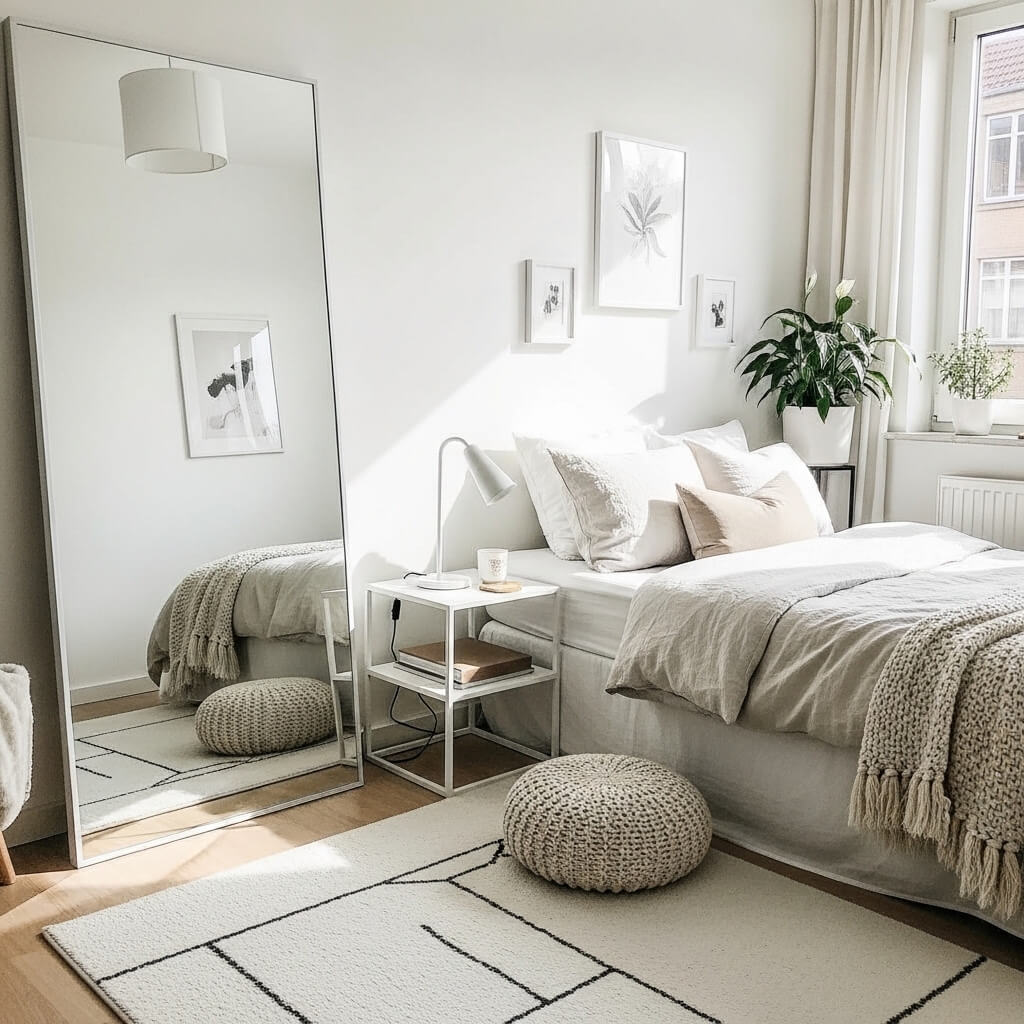
Okay, here’s where a little bit of design psychology comes into play. Mirrors don’t actually make a room bigger — obviously — but they create the illusion of more space, and in a tiny bedroom, that illusion matters enormously. A strategically placed mirror can make your bedroom feel almost twice the size it actually is.
The Science (and Art) of Mirror Placement
The best placement for a mirror in a small bedroom is directly across from a window. When natural light hits the mirror, it bounces back across the room and creates the sense of depth and brightness. The room suddenly feels airy and open rather than boxed in.
Other smart mirror placement strategies include:
- Full-length mirrors on wardrobe doors — functional and space-expanding at the same time
- A large leaning mirror in a corner — adds personality and depth
- Mirrored furniture or accent pieces — like a mirrored bedside table or dresser front
- A horizontal mirror above the bed — draws the eye outward and makes the ceiling feel higher
What to Avoid with Mirror Placement
Don’t place a mirror directly facing your bed if it bothers you at night — some people find it disorienting or unsettling. Also, avoid cluttering the mirror’s reflection with messy corners of the room. The mirror will only amplify whatever it reflects, so if it’s reflecting chaos, it’s not helping you :/ Keep the area the mirror faces tidy and well-lit for the best visual effect.
5. Loft Bed with Workspace Underneath
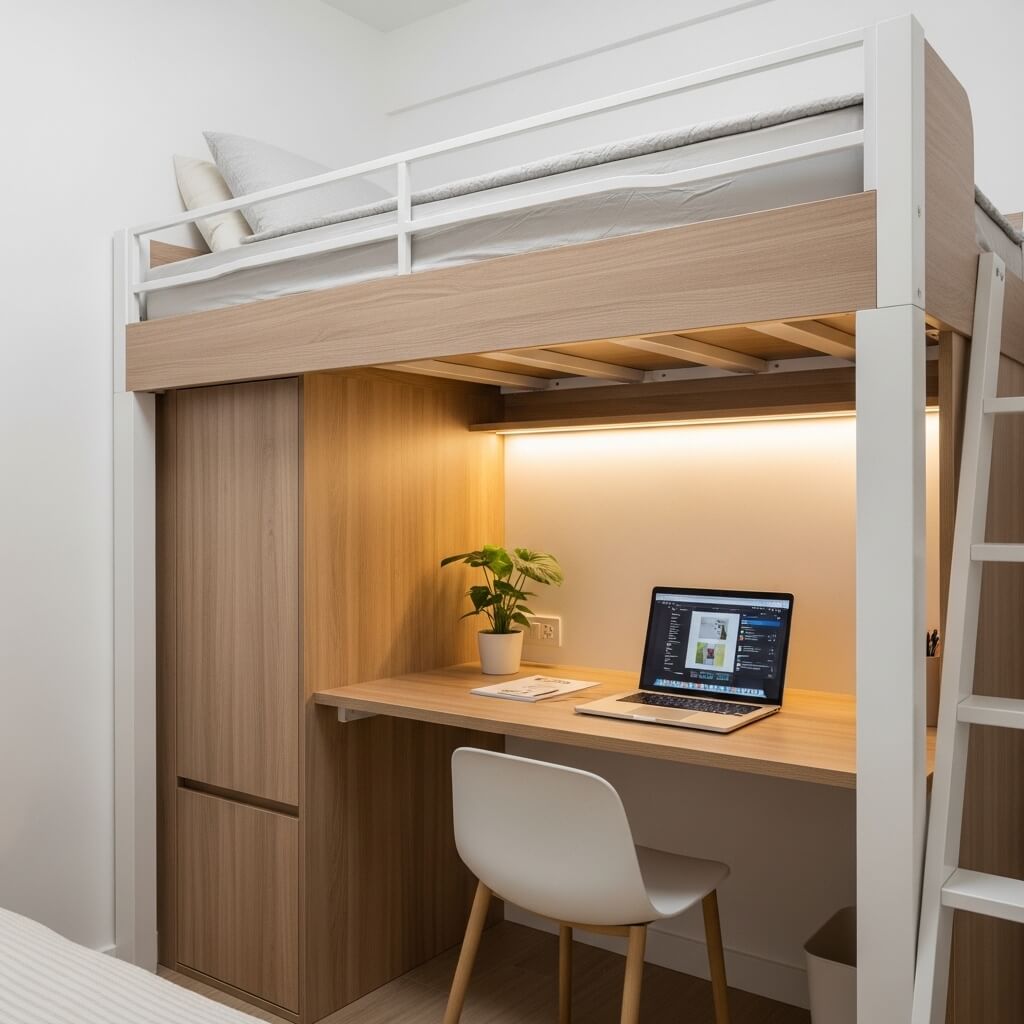
If you’ve never considered a loft bed as an adult, I totally understand the hesitation. It feels very “college dorm,” right? But hear me out, because a well-designed loft bed with a workspace underneath is one of the most efficient uses of vertical space in a tiny bedroom. And some of the modern designs look genuinely sophisticated.
Why the Loft Bed Works So Well
The entire principle behind a loft bed is vertical space optimization. You sleep on top, and the entire footprint of your bed becomes functional living space below. In a tiny bedroom, that’s massive. Depending on your ceiling height and the setup you choose, the space underneath can become:
- A full desk and office area
- A reading nook with a small chair and bookshelf
- A wardrobe or closet space
- A combination of all three
Choosing the Right Loft Bed Setup
Ceiling height is the most critical factor here. You need at least 7.5 to 8 feet of ceiling height to comfortably fit a loft bed with functional space underneath. Anything lower and you’ll spend every morning bonking your head, which — trust me — gets old fast.
Look for loft beds that include:
- A built-in ladder with wide, comfortable rungs
- Guardrails on all sides for safety
- A sturdy frame rated for adult weight
- Integrated desk or shelving options beneath the sleeping platform
Customize the space underneath to suit your lifestyle. If you work from home, make it a proper office setup. If you’re a reader or creative, make it a cozy nook. The versatility here is what makes this idea truly brilliant for small spaces.
6. Corner Bed Space-Saving Design
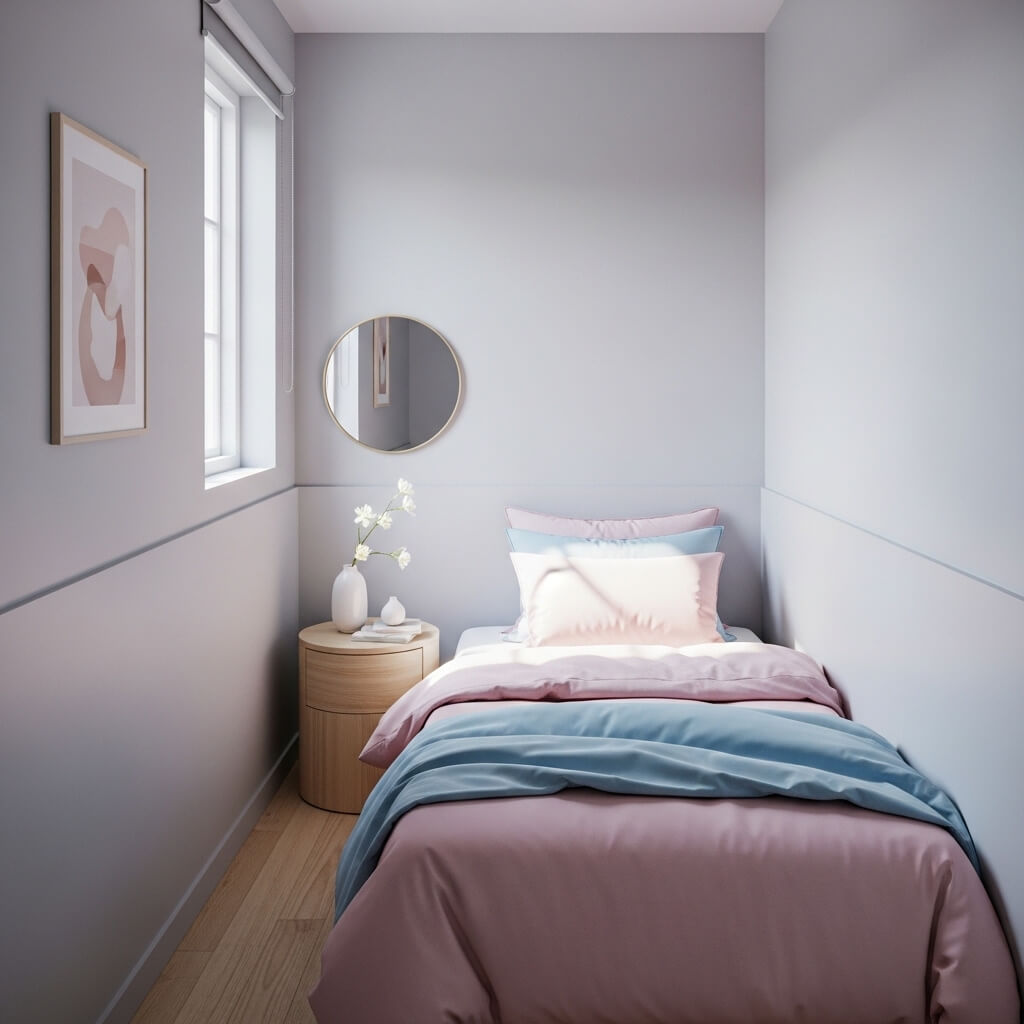
Most people push their bed against one wall and call it a day. But what if you pushed it into a corner instead? A corner bed placement opens up the center of your bedroom and creates a surprisingly spacious feel. It’s one of those moves that sounds obvious once you hear it but completely changes the room’s flow.
How to Pull Off a Corner Bed Setup
Place your bed directly into a corner so two sides are against the walls. This frees up the remaining floor space for movement, furniture, or even just breathing room. The psychological impact of open floor space in a tiny bedroom is huge — it makes the room feel intentional and airy rather than cluttered.
To make this work aesthetically:
- Use corner-specific headboard designs or go headboard-free with a wall panel behind the bed
- Add corner shelving above the bed to take advantage of the wall space on both sides
- Use the walls as a backdrop with some tasteful wall art or a decorative accent
The Hidden Benefits of Corner Placement
A corner bed naturally creates a cozy, nest-like feel that many people actually prefer for sleeping. You’ve got walls on two sides, which feels more secure and enclosed — in a good way. It’s like the room is giving you a hug. And with the floor space freed up, you can actually walk around without performing an obstacle course every morning.
Also Read: 10 Inspiring Kids Bed Headboard Design Ideas for Kids Spaces
7. Light Color Palette Tiny Room Setup
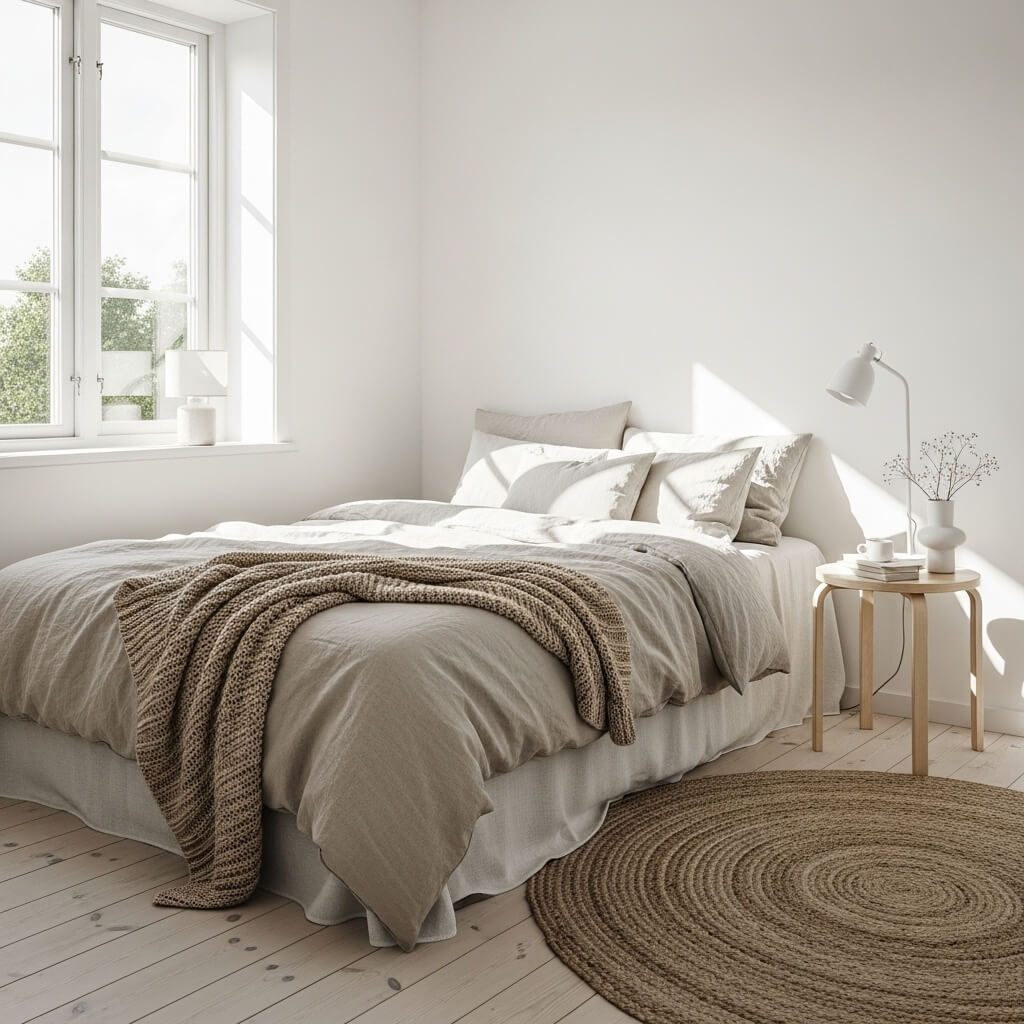
Color is one of the most powerful tools you have in a small bedroom, and it costs significantly less than most furniture upgrades. A light, cohesive color palette makes a tiny bedroom feel larger, brighter, and more open. This isn’t just design opinion — it’s basic light physics. Lighter colors reflect more light, and more light means more perceived space.
Best Colors for a Tiny Bedroom
FYI, you don’t have to go full white to make this work. While bright white is effective, it can feel sterile if not balanced correctly. Here are some of the best options:
- Soft white or off-white — clean, classic, and universally effective
- Warm beige or cream — adds warmth without making the room feel small
- Pale sage green — trendy, calming, and surprisingly spacious-feeling
- Light gray — modern and versatile
- Pale blush pink — soft, warm, and incredibly flattering in small spaces
Stick to a maximum of two or three colors in your palette. Too many colors in a small room create visual noise, which makes the space feel even more cramped. Choose one main color, one accent, and a neutral — and let that be enough.
Applying Color Strategically
Paint your ceiling the same color as your walls, or a shade lighter. This blurs the boundary between wall and ceiling, making the room feel taller. It’s a trick interior designers use constantly in small spaces, and it genuinely works every time.
Also, match your larger furniture pieces to your wall color as closely as possible. When your wardrobe blends into the wall, it visually recedes and the room feels bigger. Contrast pulls attention and makes things feel more crowded.
8. Vertical Storage Wall Organizer Idea
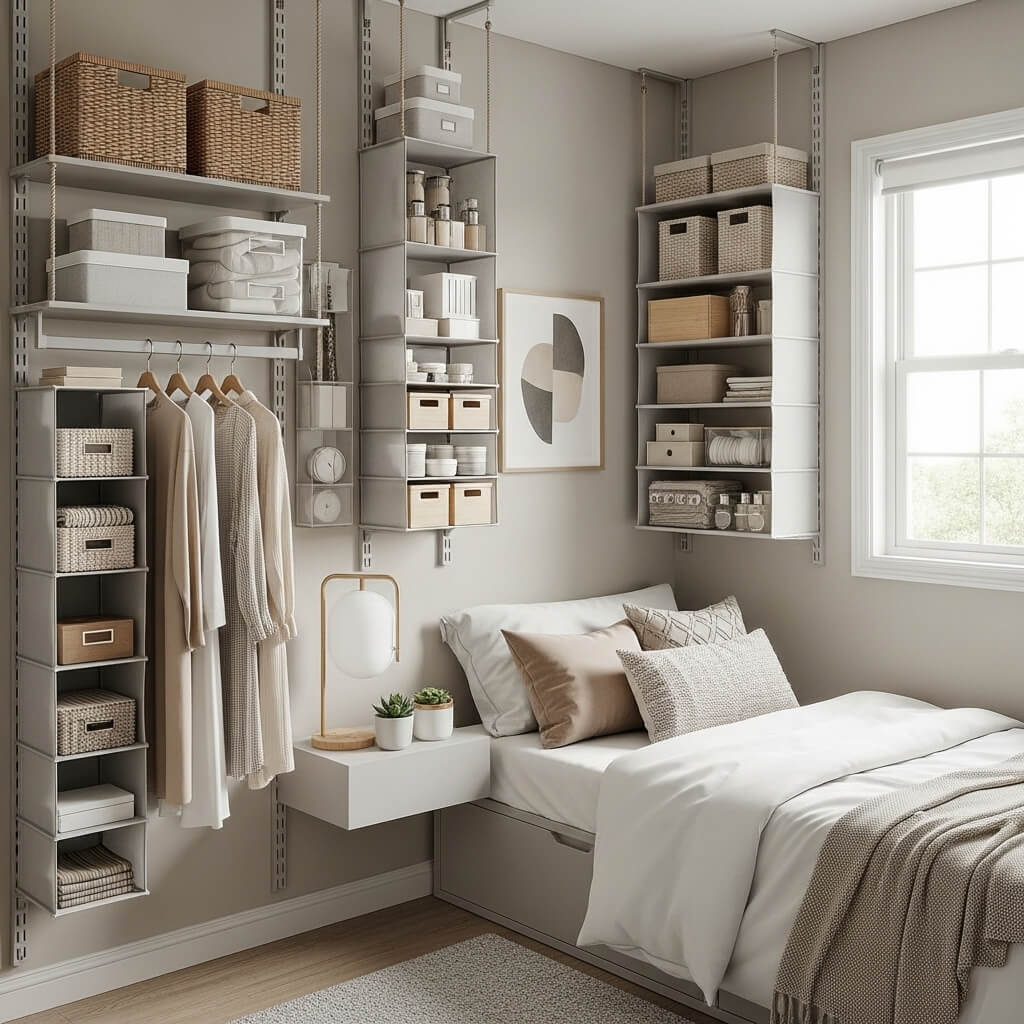
When floor space is tight, the solution is simple: go vertical. Walls are basically free storage space that most people completely ignore. A vertical storage wall organizer takes your clutter off the floor and distributes it upward, keeping the room functional without sacrificing precious square footage.
What Makes a Great Vertical Wall Organizer
The best vertical wall organizers for bedrooms combine multiple storage functions in one unit. Think hooks, pockets, shelves, and rails all working together on a single wall section. For tiny bedrooms, you want a system that handles as many categories of storage as possible in the smallest horizontal footprint.
Great items to hang or store vertically include:
- Jewelry and accessories
- Hats and bags
- Books and stationery
- Small plants in wall-mounted pots
- Charging cables and tech accessories
- Folded clothes or workout gear
DIY vs. Pre-Made Vertical Organizers
Pre-made pegboard systems are one of the most versatile options out there. You can configure and reconfigure them as your needs change, adding hooks, shelves, and bins wherever you need them. IKEA’s SKÅDIS system is a popular choice, and honestly, it’s worth every penny for the flexibility it offers.
If you’re feeling handy, a DIY version using a sheet of plywood, spray paint, and pegboard hooks can cost you under $30 and look just as good — sometimes better, because you customize it exactly to your space and style.
9. Multi-Functional Furniture Bedroom Setup
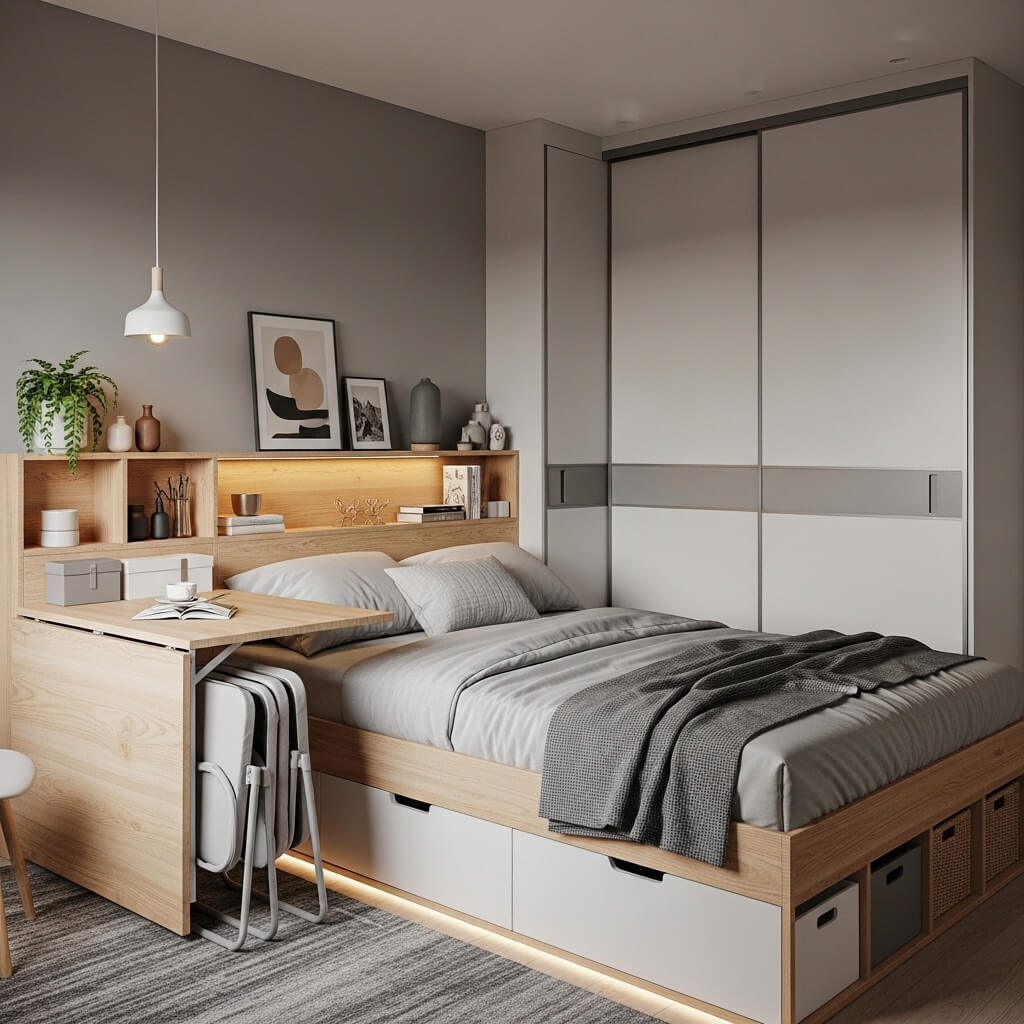
If there’s one golden rule for tiny bedrooms, it’s this: every piece of furniture should do more than one job. The days of single-purpose furniture are over when you’re working with limited space. Multi-functional furniture isn’t just practical — it’s a lifestyle upgrade.
The Best Multi-Functional Furniture Pieces for Tiny Bedrooms
Let’s break down some of the most impactful options:
- Storage ottomans — seating that doubles as a blanket chest or shoe storage
- Murphy beds — fold up into the wall during the day, turning your bedroom into a living space
- Beds with built-in bookshelves in the headboard — no need for a separate bedside table or bookshelf
- Benches with under-seat storage — perfect at the foot of the bed for extra linen storage
- Nightstands with drawers and charging stations built in — function multiplied in a tiny footprint
- Mirrors with hidden storage behind them — looks like a mirror, acts like a medicine cabinet
How to Choose Multi-Functional Pieces Wisely
Don’t buy something just because it’s marketed as multi-functional. Test it mentally before purchasing. Ask yourself: will I actually use both functions regularly? Because a sofa bed that’s uncomfortable to both sit on and sleep in isn’t a smart purchase — it’s just two bad experiences in one.
Prioritize quality over quantity. One excellent multi-functional piece beats three mediocre single-purpose ones every time. Invest in pieces that are well-made, attractive, and genuinely serve multiple daily needs. Your tiny bedroom will thank you for the restraint.
Also Read: 10 Exclusive Luxury Bed Headboard Design Ideas for Premium Looks
10. Hanging Nightstand Small Space Idea
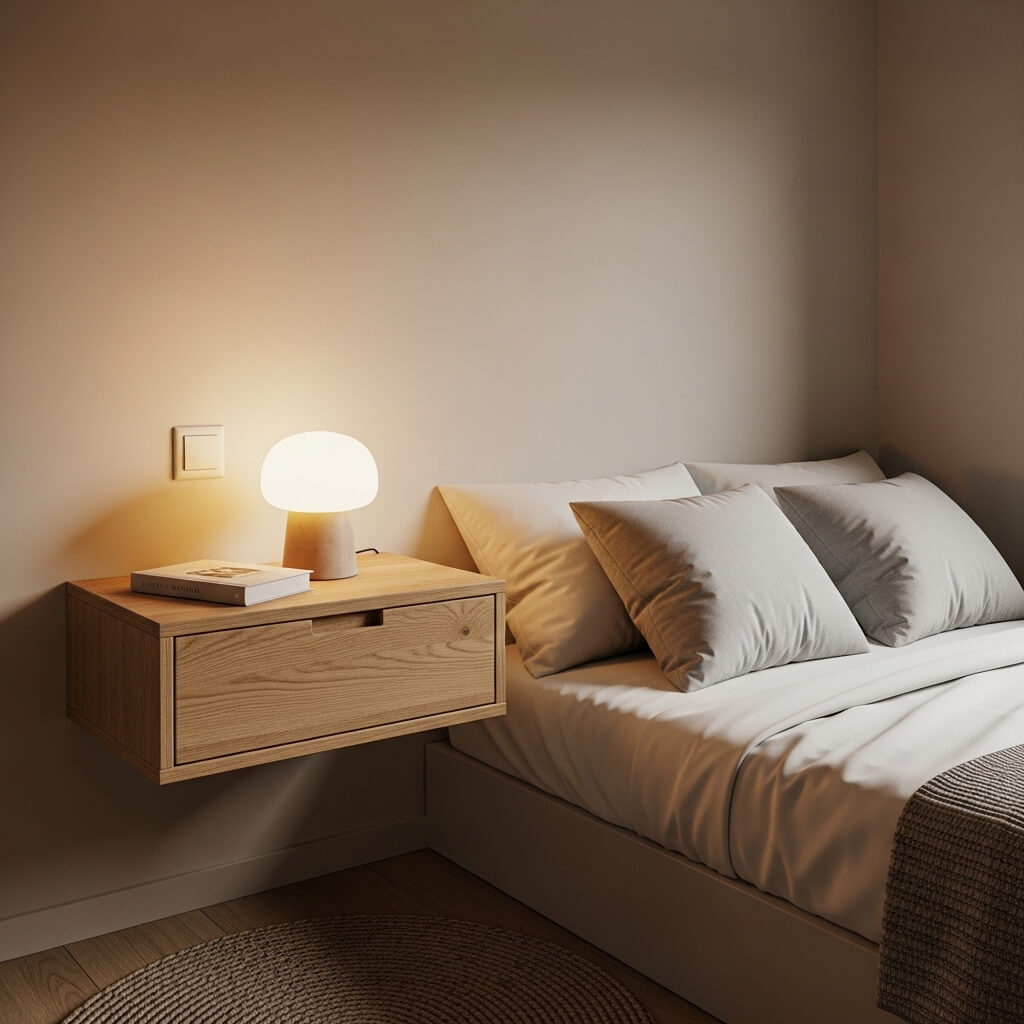
And we wrap up with one of my personal favorites — the hanging nightstand. It sounds quirky, but once you see it in action, you’ll wonder why anyone bothers with floor-standing bedside tables in small spaces.
What Is a Hanging Nightstand?
A hanging nightstand mounts directly to your wall beside the bed, eliminating any floor footprint entirely. It hangs at the perfect height for easy access while you’re lying down, and it keeps the floor beneath completely clear. The result is a bedroom that feels instantly more open and less crowded.
Most hanging nightstands offer:
- A flat surface for your phone, water bottle, or book
- A small drawer or shelf for essentials like chargers or earbuds
- A built-in USB or power outlet in some modern designs
- Various materials — wood, metal, fabric pocket styles — to match any aesthetic
Why You Should Make the Switch
The visual lightness of a hanging nightstand completely changes the feel of a small bedroom. Because there are no legs touching the floor, the eye reads the space as more open. It’s the same reason floating shelves feel less bulky than traditional bookshelves — the perceived floor space expands even if the actual dimensions haven’t changed.
Hang it at the right height. Ideally, the surface should sit level with or slightly above your mattress top. Too high and reaching for things becomes awkward; too low and you lose the clean aesthetic. Spend five minutes measuring before you mount it permanently — you’ll be glad you did.
Wrapping It All Up
So there you have it — 10 genuinely brilliant ideas for making a tiny bedroom work harder and feel better. Let’s do a quick recap of the key moves:
- Under-bed storage drawers to capitalize on unused floor space
- Wall-mounted foldable desks for a workspace that disappears when you need it to
- Minimal floating shelves for storage and style without the bulk
- Strategic mirror placement to visually double your space
- Loft beds with workspaces underneath for ultimate vertical efficiency
- Corner bed placement to free up the center of the room
- Light color palettes to brighten and expand the visual space
- Vertical wall organizers to move clutter upward and off the floor
- Multi-functional furniture so everything earns its place
- Hanging nightstands to eliminate bedside table footprint entirely
Here’s the thing nobody tells you about small bedrooms: the constraint is actually a creative gift. When you can’t just keep buying more furniture, you start making smarter decisions. You prioritize. You get intentional. And the result is usually a room that feels more curated and personal than any sprawling bedroom ever could.
So pick two or three of these ideas and start there. You don’t need to overhaul everything at once. Even one smart change — a fold-down desk here, a hanging nightstand there — can completely transform how your tiny bedroom feels to live in. And once you start, I promise you won’t stop. 🙂
Your small bedroom has way more potential than you’ve given it credit for. Time to unlock it.