10 Beautiful 2 Bedroom Tiny House Floor Plans Modern Space Designs
- Bedroom Design
 Ben
Ben- 0
- 40 minutes read
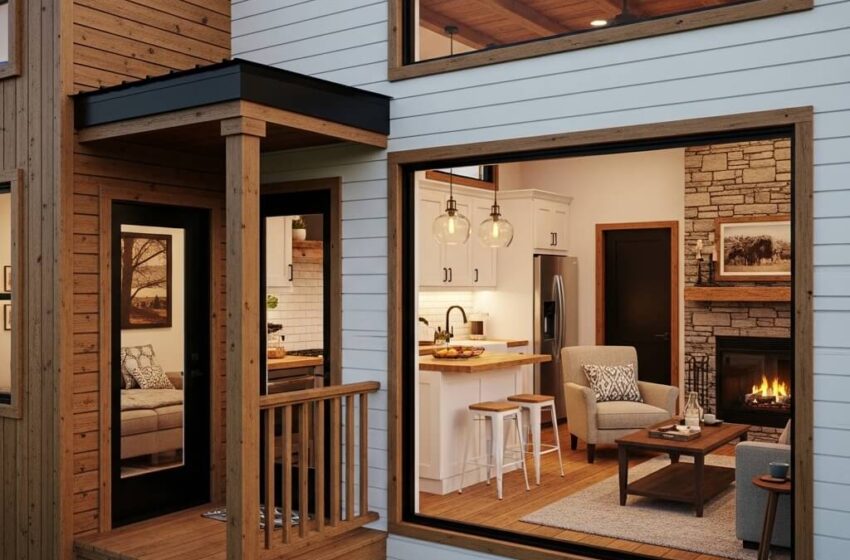
Let me guess — you’re tired of paying rent that costs more than your self-respect, and you’ve started wondering if a tiny house might actually be the answer. Same. The tiny house movement has completely flipped the script on what “home” really means, and honestly? I’m here for it.
Two-bedroom tiny houses are the sweet spot. They give you just enough space to breathe, host a friend, set up a proper home office, or raise a small family without drowning in square footage you’ll never actually use. But here’s the thing — the floor plan you choose makes or breaks the whole experience. A badly designed tiny house feels like a shoebox. A well-designed one feels like a lifestyle upgrade.
So let’s talk about 10 genuinely beautiful 2 bedroom tiny house floor plans that actually make sense for modern living. I’ve broken these down with real details, honest opinions, and the stuff nobody else tells you. Let’s get into it.
1. Open Concept 2 Bedroom Tiny House with Central Living Space
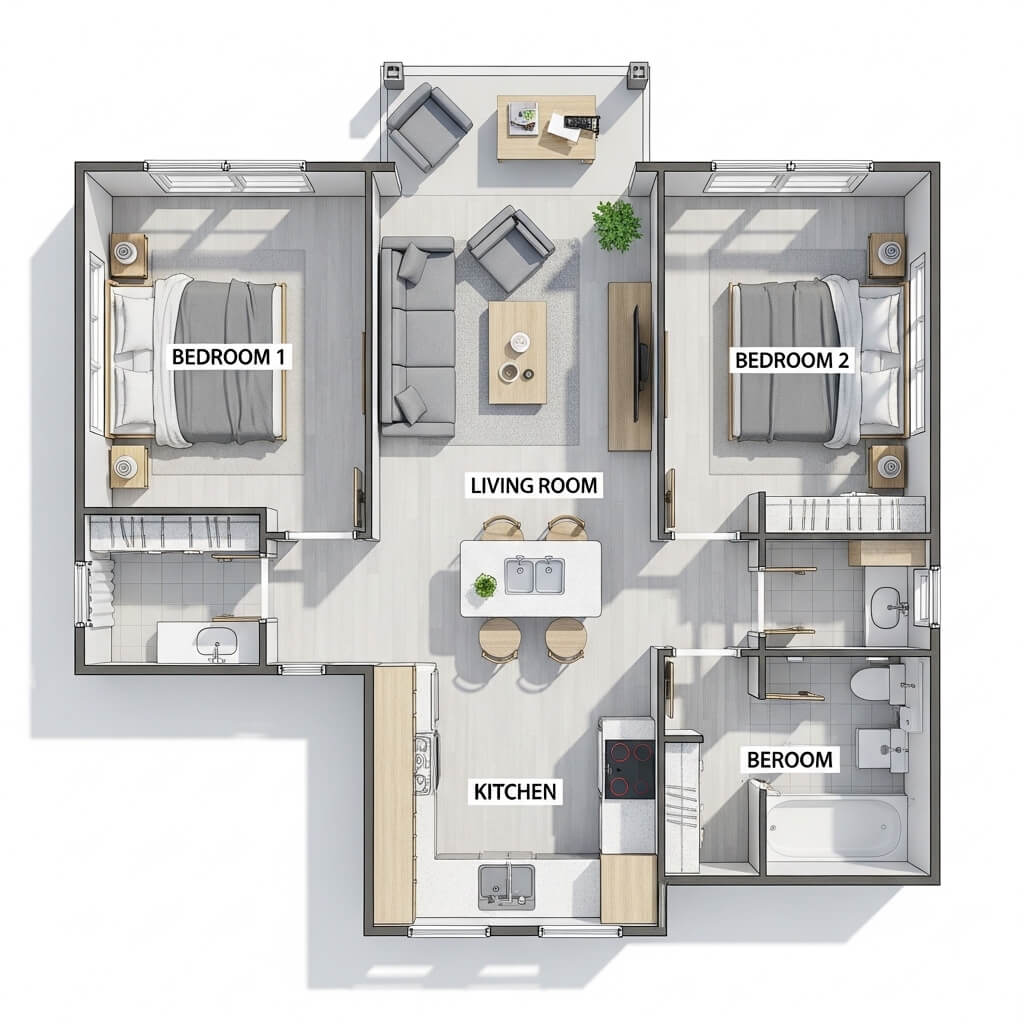
The open concept layout is basically the golden child of tiny house design — and for very good reason. When you remove unnecessary walls between the kitchen, dining, and living areas, the entire home feels dramatically larger than its actual square footage suggests. A central living space acts as the connective tissue of the whole floor plan.
Why the Open Concept Works So Well Here
In a standard home, walls divide spaces into isolated rooms that each need their own lighting, ventilation, and furniture arrangement. In a tiny house, those walls just eat square footage you cannot afford to lose. The open concept 2 bedroom tiny house puts both bedrooms at opposite ends of the home, with the living area sitting right in the center like the heart of the layout.
Here’s what you typically get with this design:
- Two bedrooms positioned at each end of the structure for natural separation
- A unified kitchen, dining, and living area in the middle that flows seamlessly
- Large windows strategically placed to maximize natural light across the entire space
- Sliding barn doors or curtain dividers to close off bedrooms when privacy is needed
- Minimal hallway space so every square inch goes toward livable area
One thing I personally love about this layout is how social it feels. When you’re cooking dinner, you’re not isolated in some back room — you’re part of the conversation. The whole space feels alive and connected.
The Honest Downside
If you live with someone and both of you are working from home, the open concept can get a little loud. Sound travels freely when there are no walls to stop it. This is where good quality doors on the bedrooms and maybe some strategic rug placement actually matter. But overall? This layout delivers a big-home feel inside a small footprint, and that’s a genuine win.
2. Loft Style 2 Bedroom Tiny House Floor Plan Design
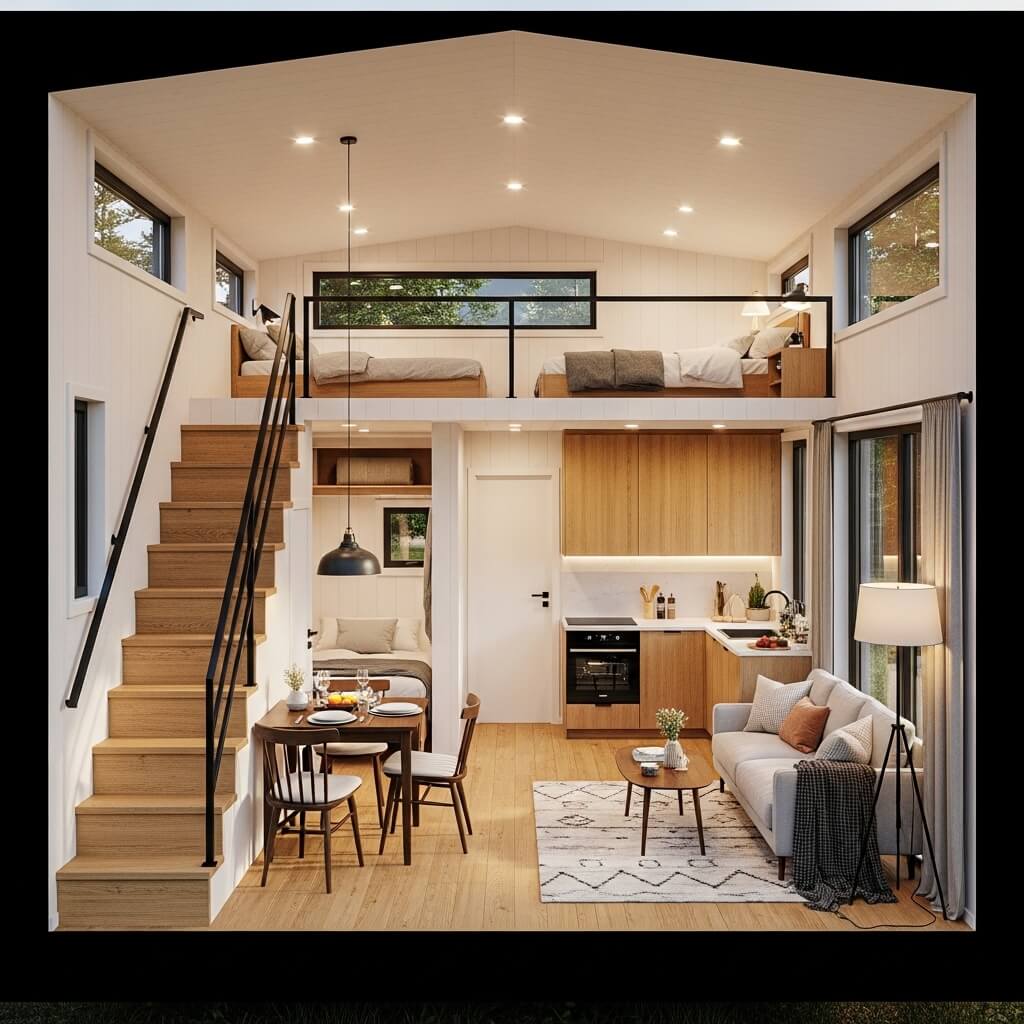
Now here’s where tiny house design gets genuinely clever. The loft-style floor plan takes advantage of vertical space rather than horizontal square footage. Instead of spreading two bedrooms side by side, you stack one above the other — with one bedroom on the ground floor and a second bedroom nestled in a loft space above.
How the Loft Bedroom Setup Works
The ground floor bedroom usually functions as the primary bedroom — full-height ceilings, a proper closet, and easy bathroom access. The loft bedroom sits above the kitchen or living area, accessible by a compact staircase or a well-built ladder system. The loft bedroom is perfect for kids, guests, or a secondary sleeping area that doesn’t need to meet the same daily-use standards as your main bedroom.
Here’s what makes a loft-style layout genuinely functional:
- Ground floor primary bedroom with full ceiling height and proper storage
- Loft bedroom positioned above common areas to maximize floor-level living space
- Open railing systems on the loft edge that keep the space from feeling boxed in
- Under-stair storage that handles everything from shoes to cleaning supplies
- Skylights above the loft to bring in natural light and prevent the upper level from feeling like a cave
My Honest Take on Loft Living
I’ll be straight with you — loft bedrooms are not for everyone. If you’ve ever tried navigating a ladder at 3 AM when you need water, you’ll understand the charm wears off quickly :/ But with a proper staircase design and solid railings, loft bedrooms become genuinely usable spaces. The key is investing in a well-built staircase, not a rickety ladder. The ones with built-in storage drawers in each step? Absolute game changers.
3. Split Bedroom Layout Tiny House with Privacy Zones
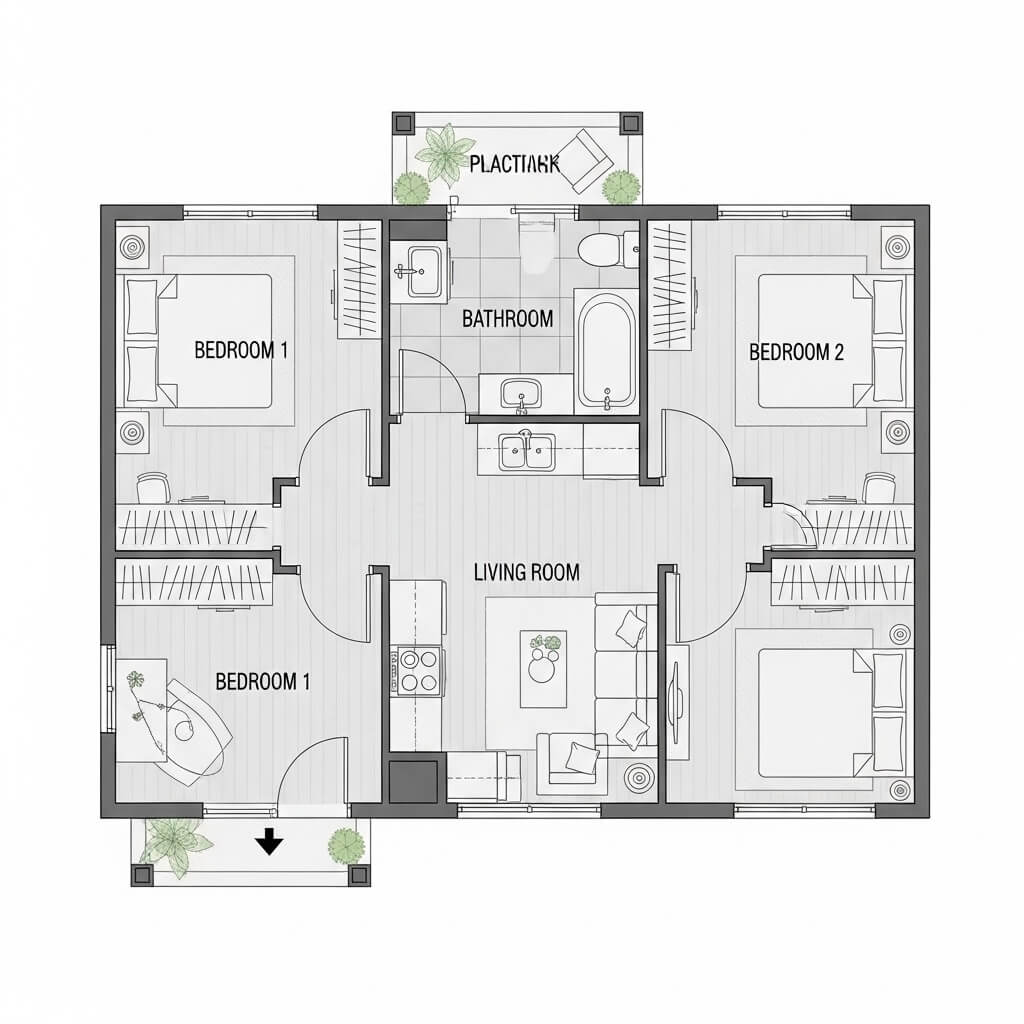
Ever tried sharing a small space with someone and realized privacy is basically a luxury? Yeah, the split bedroom layout was designed specifically to solve that problem. This floor plan places the two bedrooms on opposite sides of the tiny house, with all shared living spaces sitting between them.
The Smart Logic Behind the Split
The concept borrows from standard residential design but scales it down brilliantly. Each bedroom becomes its own private zone, separated from the other by the kitchen, living room, and bathroom. This means two people can maintain completely independent schedules without constantly disrupting each other.
Key features of a well-executed split bedroom tiny house layout:
- Bedroom one near the entrance end — great for guests or older family members who don’t do stairs
- Bedroom two at the rear of the home — typically quieter and more private
- Shared bathroom positioned centrally so both bedrooms have equal access
- A defined living zone in the middle that neither bedroom encroaches on
- Soundproofing insulation between bedroom walls and common areas
Who This Layout Is Really For
IMO, the split bedroom layout is the best option for two adults sharing a tiny house who have different sleep schedules, work habits, or just value their personal space. Roommates, couples with different morning routines, or even a parent and adult child sharing a home — this layout handles all of those scenarios with grace. It’s all about intentional separation without sacrificing a cohesive overall design.
Also Read: 10 Clever Tiny Guest Bedroom Ideas That Save Space
4. L-Shaped 2 Bedroom Tiny House Compact Floor Plan
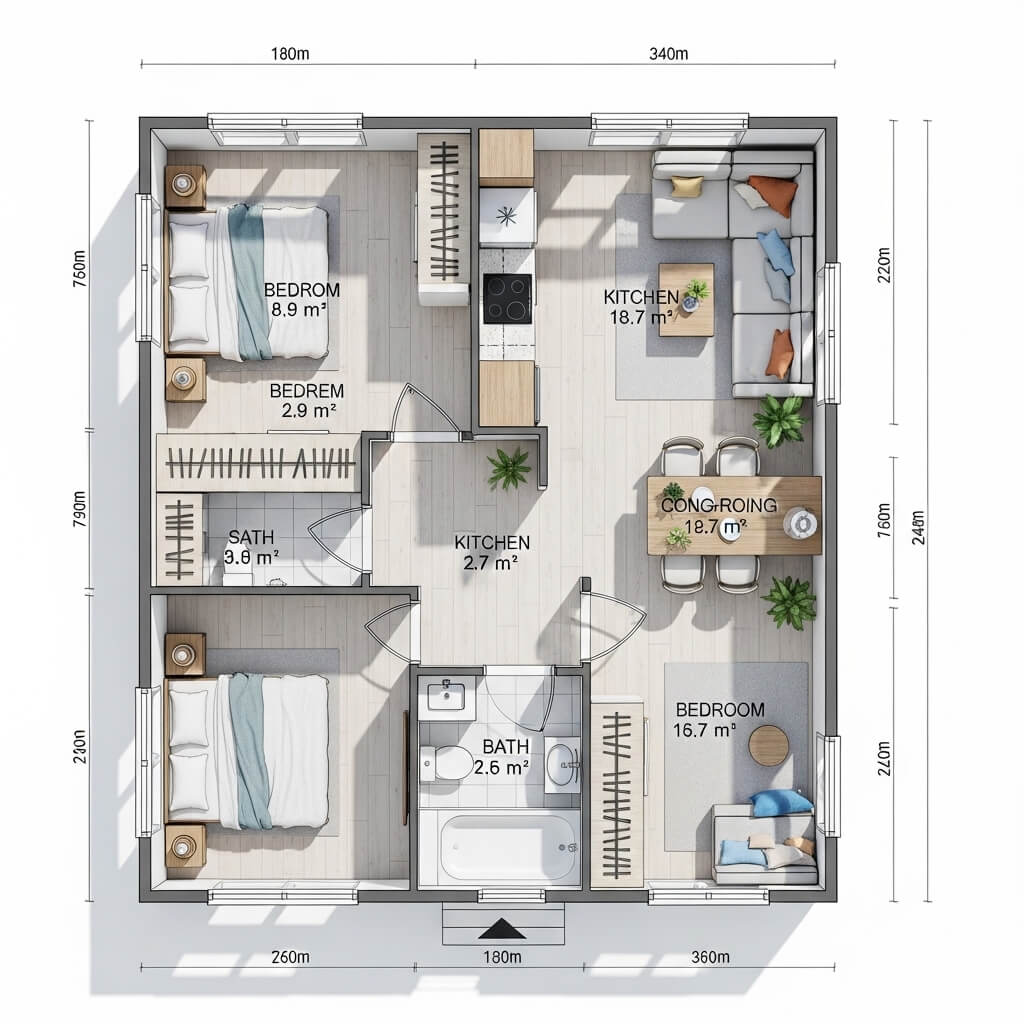
Here’s a floor plan that most people overlook, and that’s a genuine shame. The L-shaped 2 bedroom tiny house uses the natural geometry of an L-shaped footprint to create distinct zones without requiring interior walls. The two “arms” of the L each house a bedroom, and the corner becomes the central living hub.
Why the L-Shape Is Smarter Than It Looks
The L-shape works brilliantly on irregular or corner lots where a rectangular house simply won’t fit. Beyond that, the angled layout creates a natural visual separation between spaces. You get the openness of an open-concept design combined with the implied separation of a split-bedroom layout. That’s a pretty sweet combination.
What you’ll find in a strong L-shaped plan:
- One bedroom in each arm of the L for natural spatial separation
- Kitchen and dining area in the corner junction — the natural gathering point
- Outdoor deck or patio extending from the junction point for expanded living space
- Large corner windows at the junction point to flood the kitchen and living area with light
- Each bedroom wing has its own sense of separation from the other without requiring full walls
The Space Efficiency Angle
The L-shaped footprint also creates a natural courtyard effect on the exterior. If you position a small patio or garden in the interior corner of the L, you suddenly have outdoor living space that feels private and sheltered. That outdoor extension effectively doubles your usable living area in good weather. For a tiny house owner, that’s not a bonus — that’s a strategy.
5. Modern Farmhouse 2 Bedroom Tiny Home Design
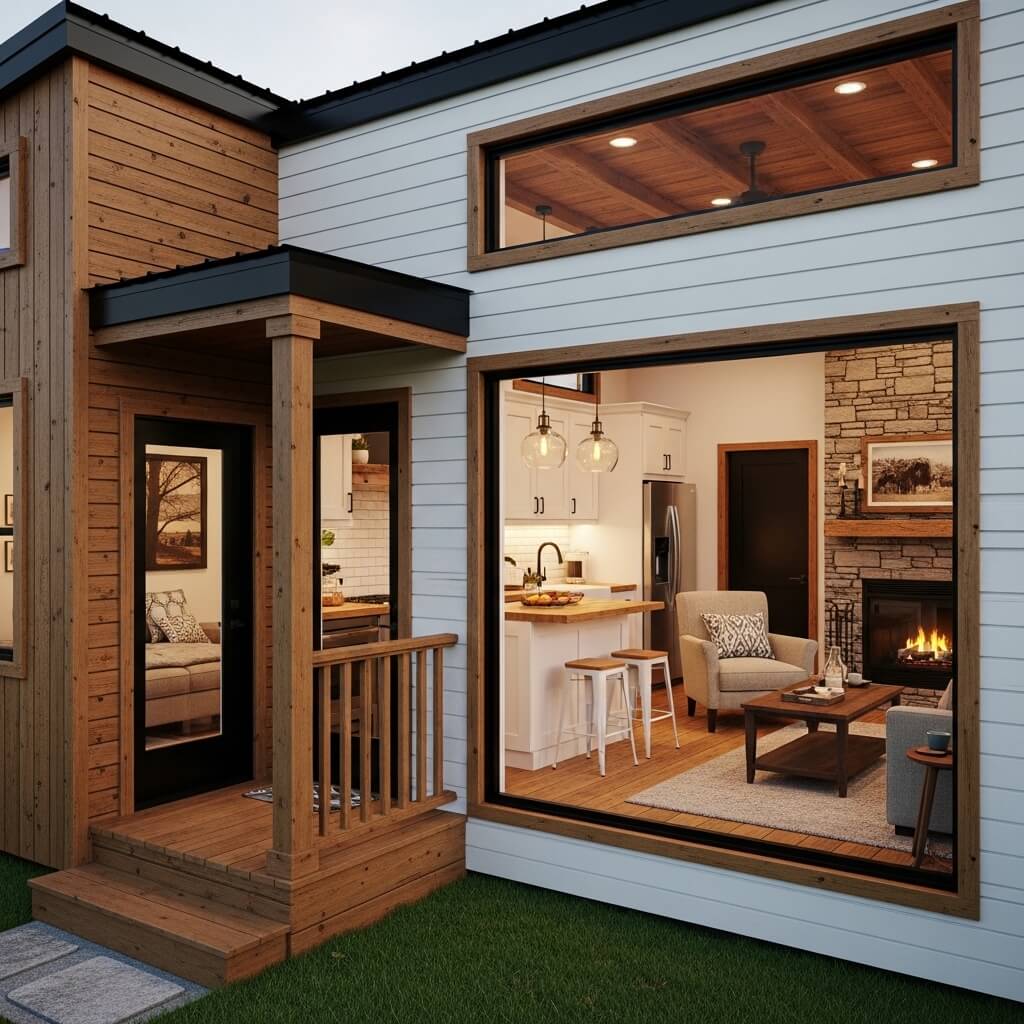
Okay, I know the word “farmhouse” gets thrown around a lot in the design world, and sometimes it feels like marketing fluff. But the modern farmhouse tiny house design is genuinely one of the most livable and visually stunning options on this list. It blends clean modern lines with warm, natural materials to create something that feels both current and timeless.
What Makes It “Modern Farmhouse”
The modern farmhouse style is defined by its material palette and architectural details. Think shiplap walls, exposed wooden beams, black metal hardware, and large double-pane windows. The floor plan itself tends to be practical and efficient — nothing wasted, everything purposeful.
Here’s what a well-designed modern farmhouse 2 bedroom tiny house typically includes:
- Open-plan main living area with a farmhouse-style kitchen featuring a deep sink and open shelving
- Two bedrooms with barn door closures instead of standard swinging doors
- Shiplap accent walls in at least one bedroom or the main living area
- A covered front porch that extends the living space outdoors in a classic farmhouse manner
- Natural wood flooring throughout with area rugs to define specific zones
- Black metal fixtures for lighting, faucets, and hardware to add contrast and modernity
The Aesthetic That Actually Ages Well
What I genuinely appreciate about the modern farmhouse tiny house is that it doesn’t feel trendy in a way that will look dated in five years. The warmth of natural wood and the crisp contrast of black metal is a combination that holds up over time. Compare that to some ultra-minimalist designs that can feel cold and sterile after a while, and the farmhouse style wins on long-term livability.
6. 2 Bedroom Tiny House with Hidden Storage Solutions Layout
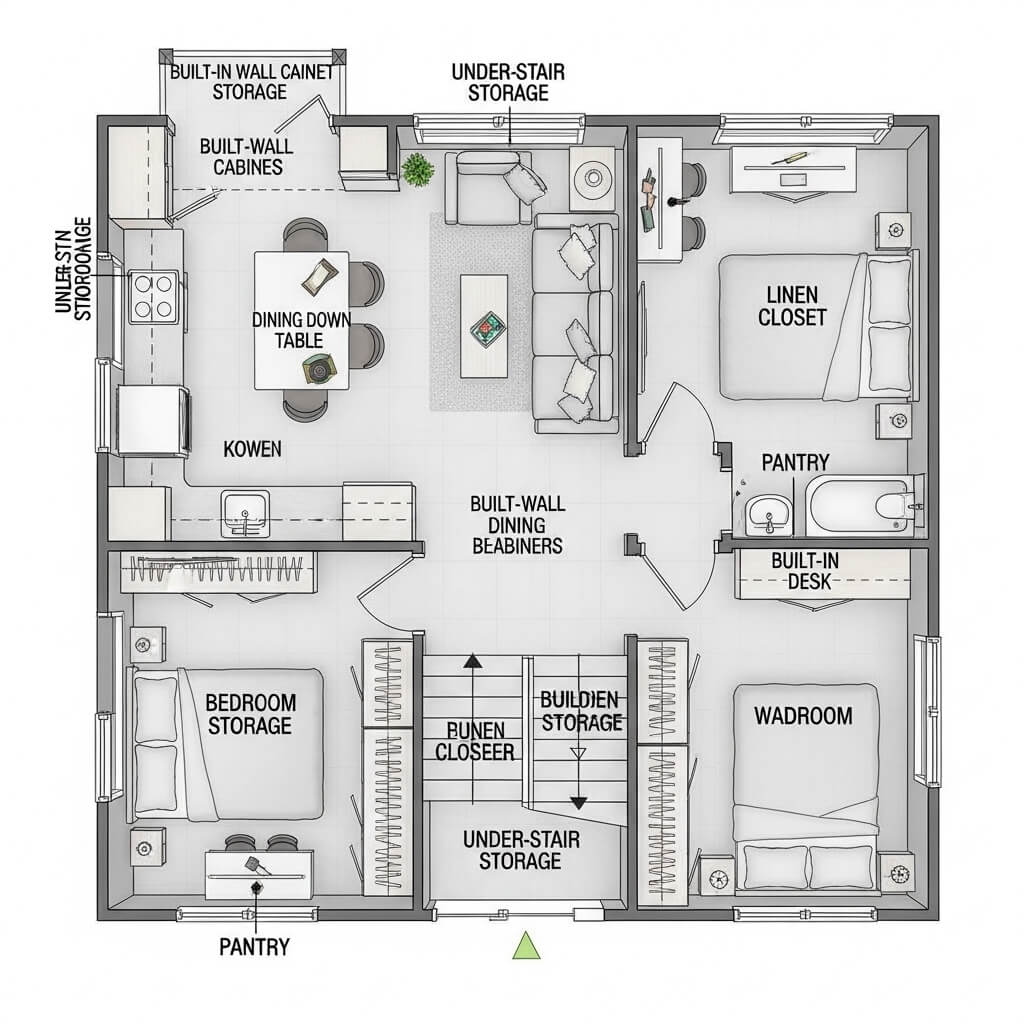
Let’s be honest — tiny house living with poor storage is basically organized chaos. Clutter in a small space doesn’t just look bad; it makes the entire home feel smaller and more stressful. The hidden storage layout addresses this by engineering storage into every wall, floor, staircase, and ceiling before a single piece of furniture ever enters the home.
Where the Storage Actually Hides
This layout is less about the room arrangement and more about how every surface and cavity in the home becomes a storage opportunity. FYI, the best tiny house designers treat storage as a structural feature — not an afterthought.
Here’s where hidden storage shows up in the best designs:
- Under-bed platform drawers in both bedrooms that replace the need for separate dressers
- Built-in window seat benches in the living area with hollow interiors for blankets, books, and gear
- Toe-kick drawers beneath kitchen cabinets that use the dead space at floor level
- Staircase drawers on each step for shoes, tools, or seasonal items
- Overhead cabinet runs that extend all the way to the ceiling for less-accessed storage
- Murphy bed integration in the second bedroom that converts to a desk or seating area during the day
- Hidden pantry panels that look like flat wall sections but open to reveal shelving
The Design Philosophy Behind It
The hidden storage layout operates on a simple principle: every square inch either serves a purpose or it doesn’t belong. When you design with that mindset, the home actually feels more spacious because visible clutter disappears. It takes skilled planning upfront, but the payoff is a tiny house that stays functional and organized long-term.
Also Read: 10 Brilliant Very Tiny Bedroom Ideas for Small Spaces
7. U-Shaped Kitchen Center 2 Bedroom Tiny House Plan
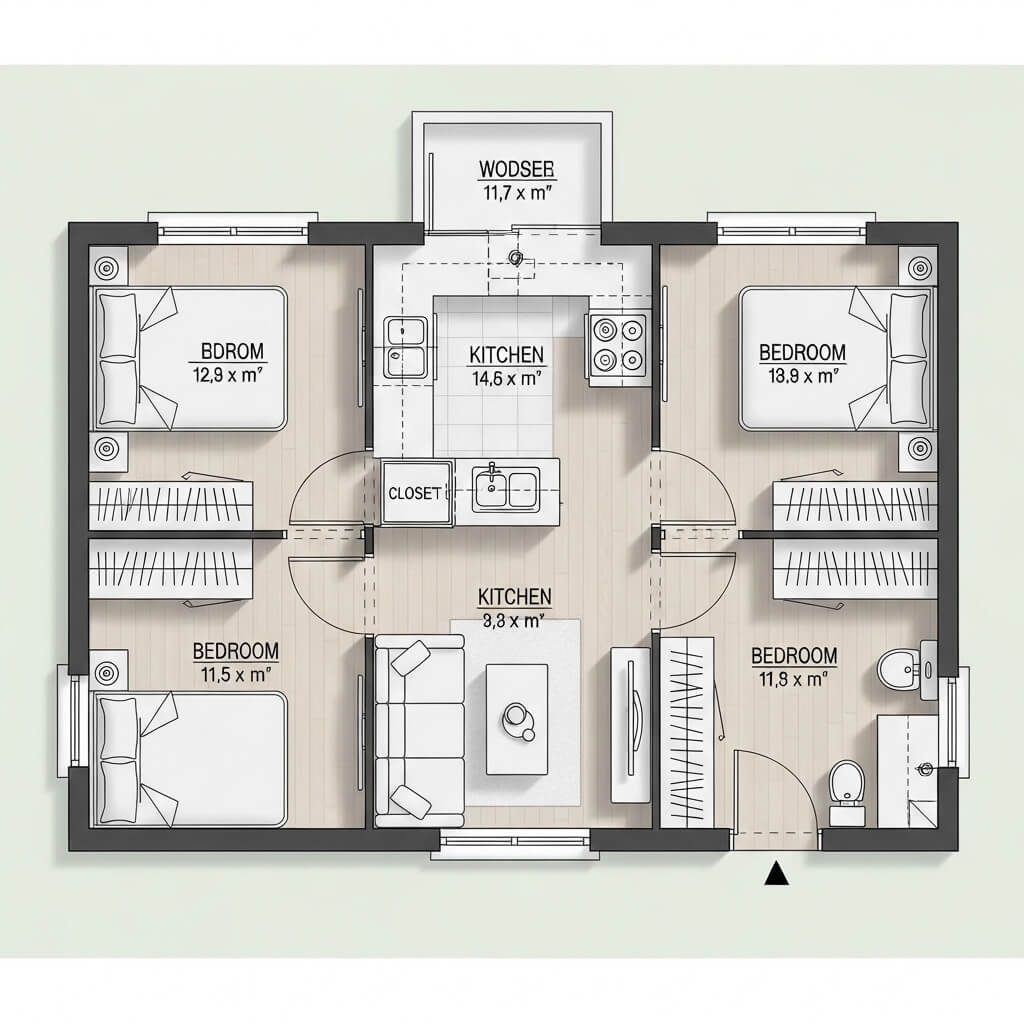
Most tiny house kitchens get squeezed into a corner or along a single wall. That approach works, but it limits both storage and counter space dramatically. The U-shaped kitchen center layout puts the kitchen at the literal heart of the floor plan, with three-sided counter space wrapping around a central cooking zone.
Why Centering the Kitchen Changes Everything
When the kitchen sits in the middle of the floor plan, it naturally divides the home into living space on one side and bedroom zones on the other. The U-shape creates an efficient work triangle between the sink, stove, and refrigerator — which is basically the holy trinity of kitchen design.
Key features of the U-shaped kitchen centered layout:
- Three-sided kitchen counter space that maximizes prep and storage area
- Pass-through or island extension on one open end for casual dining and social interaction
- Kitchen positioned between the two bedroom wings for natural zone separation
- Overhead cabinetry on all three counter walls for maximum vertical storage
- Integrated appliances recessed into cabinetry to keep the visual profile clean and uncluttered
The Cooking Experience in a Tiny Kitchen Done Right
Have you ever tried cooking a proper meal in a galley kitchen and felt like you were working in a submarine? A well-executed U-shaped kitchen eliminates that feeling entirely. The wraparound counter gives you space to prep, cook, and plate simultaneously without shuffling everything around. For anyone who genuinely loves cooking, this layout is a serious upgrade over the single-wall tiny house kitchen.
8. Minimalist Box Style 2 Bedroom Tiny House Layout
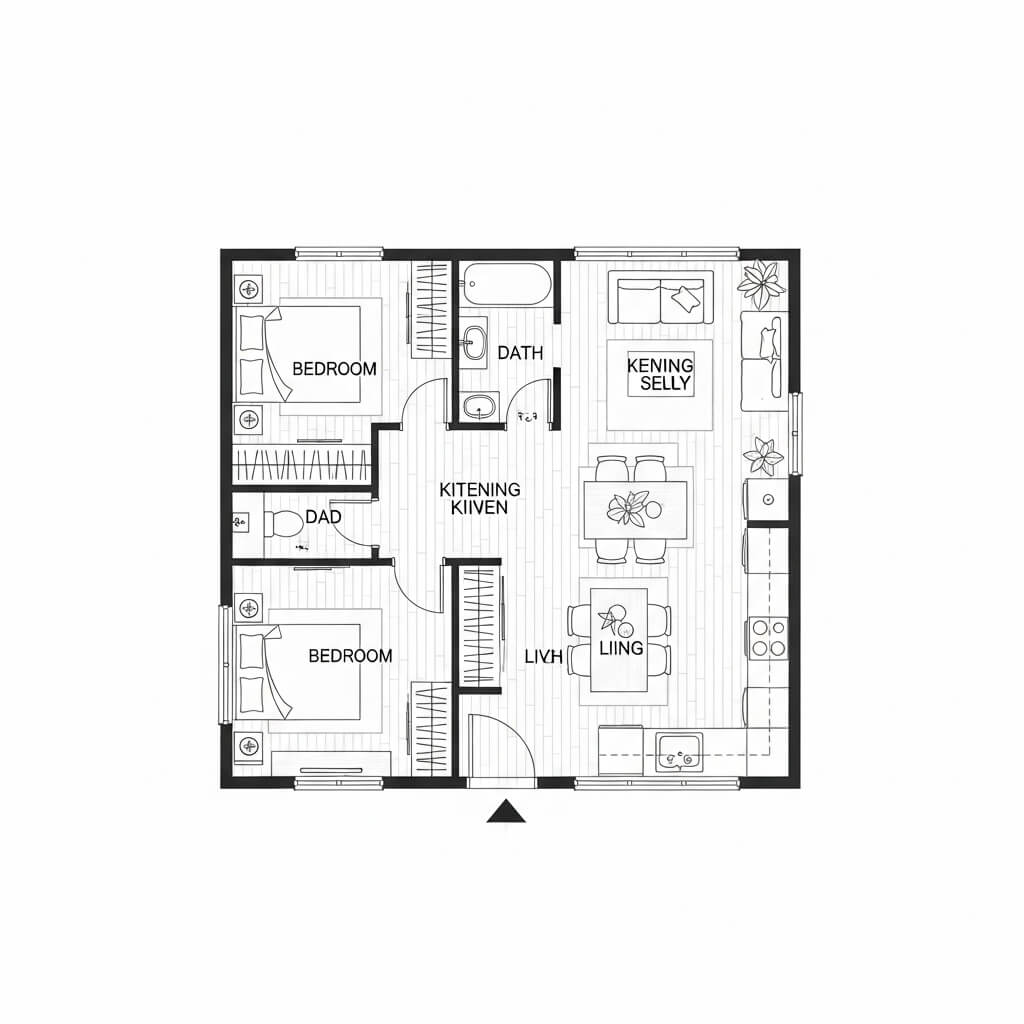
If you want maximum visual calm and architectural drama in one package, the minimalist box style is your answer. This design strips everything down to pure geometric simplicity — a rectangular or square footprint, flat or low-pitch roofline, clean exterior cladding, and an interior that refuses to waste a single element.
The Design Rules of Minimalist Box Style
Minimalism in architecture isn’t about emptiness — it’s about intentionality. Every element earns its place. The box style tiny house takes that principle and applies it structurally as well as aesthetically.
Here’s what defines a strong minimalist box-style 2 bedroom tiny house:
- Clean rectangular footprint with no unnecessary protrusions or architectural decorations
- Flat or mono-pitch roofline that maximizes interior volume without a traditional pitched roof
- Floor-to-ceiling windows on the primary elevation to flood the interior with light
- Neutral color palette inside — whites, warm greys, natural wood tones — nothing competing for visual attention
- Built-in furniture that integrates seamlessly with the walls so nothing looks added-on
- Two bedrooms positioned at opposite ends with a shared central living and kitchen zone
The Surprising Warmth of Minimalism
Here’s something that surprises people who haven’t spent time in a genuinely well-executed minimalist space: it doesn’t feel cold or sterile when it’s done right. The key is using warm materials — raw wood, linen textiles, concrete with warm undertones — within the minimalist framework. Strip away the clutter, keep the warmth. That’s the move.
9. 2 Bedroom Tiny House with Shared Bathroom Central Design
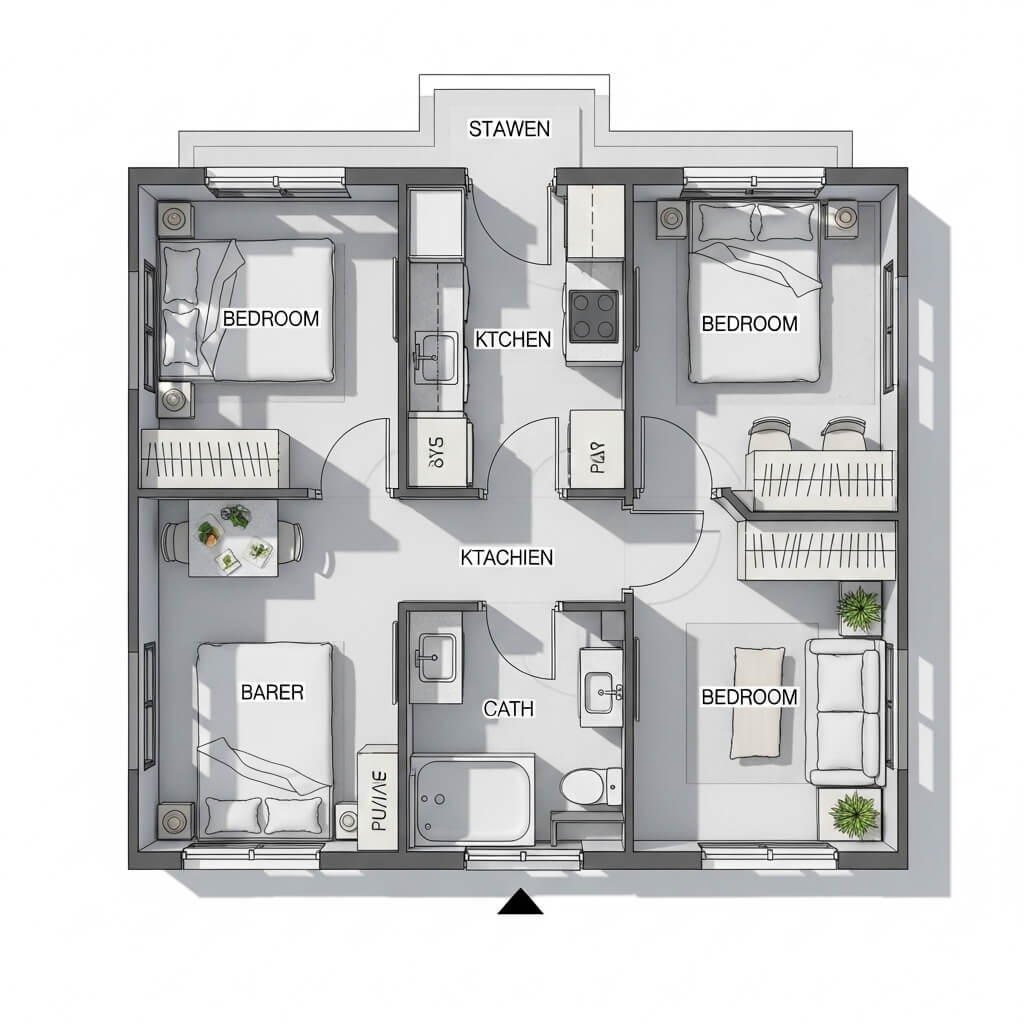
Bathroom placement is one of those details that people rarely think about until they’re living with a bad decision. The shared bathroom central design solves this by positioning a single, well-designed bathroom directly between the two bedrooms — equally accessible from both without anyone crossing through a living area at odd hours.
The Intelligent Symmetry of This Layout
This layout works on a simple axis. Bedroom one sits on the left. The bathroom sits in the center. Bedroom two sits on the right. The living, dining, and kitchen areas occupy the remaining space either in front of or behind this bedroom-bathroom spine.
What makes this layout work exceptionally well:
- Central bathroom accessible directly from both bedrooms without walking through common areas
- Dual-access design option where the bathroom has two doors — one facing each bedroom
- Space-efficient bathroom layout with a combination tub-shower, compact vanity, and smart storage
- Pocket doors or sliding barn doors on the bathroom entrances to save floor space
- Laundry integration in the bathroom — a stacked washer-dryer unit tucked into a bathroom closet
Who Benefits Most from This Design
This layout is genuinely ideal for families with young children, where bathroom access needs to be fast and practical at all times. It also works brilliantly for co-living situations where two adults share the house but need bathroom access that doesn’t require wandering through someone else’s space. Privacy, practicality, and efficiency — the central shared bathroom delivers all three. 🙂
Also Read: 10 Brilliant Tiny Bedroom Design Ideas for Functional Rooms
10. Multi-Level 2 Bedroom Tiny House with Loft and Ground Room
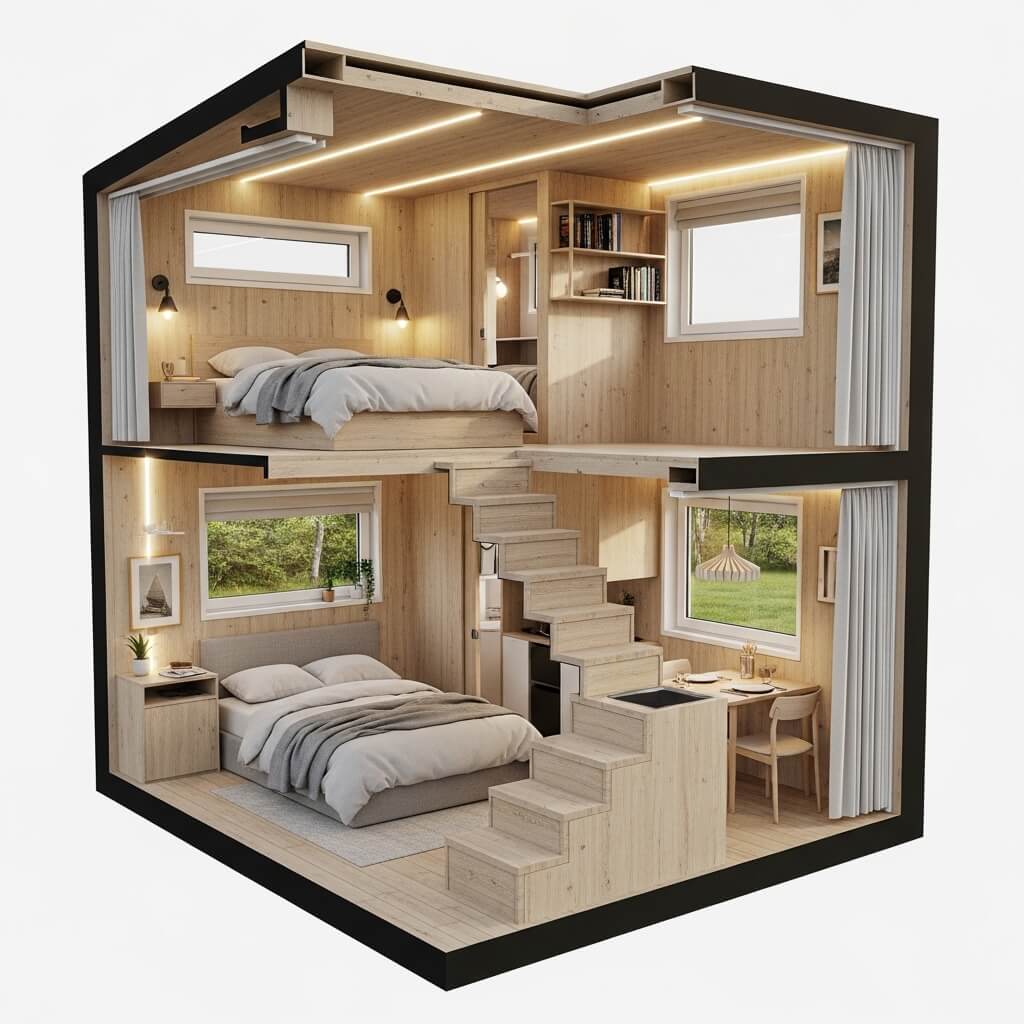
We’re finishing with the most architecturally interesting option on the list — and honestly, one of the most impressive. The multi-level tiny house takes the vertical concept beyond a simple loft and creates distinct, defined levels within a compact footprint. One full bedroom occupies the ground level. A second full bedroom occupies an elevated level. The living, dining, and kitchen spaces flow between them.
What “Multi-Level” Really Means Here
Unlike the basic loft layout where the upper space is more of a sleeping alcove, the multi-level design gives the upper bedroom real standing height, proper walls, and genuine room character. This is achieved through a combination of clever roof design, raised foundation sections, or split-level floor plans that create different elevations within the same structure.
Here’s what a strong multi-level design delivers:
- Ground floor bedroom with full ceiling height, dedicated closet, and direct bathroom access
- Upper level bedroom with sufficient ceiling height for comfort — typically 7 feet minimum
- A proper staircase (not a ladder) with built-in storage in each step connecting the levels
- Mid-level living and kitchen area positioned between the two bedroom levels for natural zoning
- Roof windows or clerestory windows on the upper level to bring in light without sacrificing wall space
- Structural design that maximizes vertical volume rather than spreading horizontally
The Statement This Design Makes
There’s something genuinely special about a multi-level tiny house. It doesn’t feel like a compromise — it feels like a deliberate, sophisticated design choice. Visitors who walk into a well-executed multi-level tiny house are consistently surprised by how spacious and architecturally interesting it feels. This layout proves that small doesn’t have to mean simple.
Key Takeaways: Choosing the Right 2 Bedroom Tiny House Floor Plan
Before you commit to a floor plan, it’s worth thinking about a few critical factors:
- Who will live in the home? Couples, families with children, roommates, and solo owners all have different space priorities
- How important is privacy? The split bedroom and central bathroom layouts maximize privacy; the open concept minimizes it
- What’s your relationship with cooking? The U-shaped kitchen layout is built for people who actually use their kitchen seriously
- How much do you value visual calm? The minimalist box style and hidden storage layout both reduce visual clutter dramatically
- Do you have specific lot constraints? The L-shaped layout solves irregular lot problems that rectangular designs can’t
Final Thoughts
Here’s the bottom line: the best 2 bedroom tiny house floor plan isn’t the one with the most square footage or the most impressive feature list. It’s the one that fits your actual life, habits, and daily routine. A floor plan that works perfectly for a remote-working couple might drive a young family absolutely crazy — and that’s totally fine.
The ten designs we walked through today cover a genuinely wide range of priorities, aesthetics, and spatial philosophies. Whether you want the social warmth of an open concept layout, the clever verticality of a multi-level design, or the practical genius of a hidden storage-focused plan, there’s a floor plan on this list that was basically made for you.
The tiny house movement isn’t just about living with less. It’s about living more intentionally — choosing the spaces that actually serve you rather than spaces you feel obligated to fill. And when you find the right floor plan? The whole thing just clicks.
Now go find your floor plan and start building the life you actually want. What are you waiting for? 🙂