15 Stunning Small Bathroom Tile Ideas for Modern Homes
- Bathroom Design
 Ben
Ben- 0
- 30 minutes read

Small bathrooms can feel like trying to solve a Rubik’s cube while wearing oven mitts—frustrating and seemingly impossible. But here’s the thing: the right tile choice can completely transform your cramped quarters into a space that actually feels breathable. I’ve renovated three small bathrooms in my lifetime (don’t ask why), and each time, tiles made or broke the entire project.
You know what’s funny? Most people think small bathrooms need tiny tiles. Wrong! The game has changed, and I’m about to show you 15 tile ideas that’ll make your pint-sized powder room feel like a luxury spa. Well, almost.
Minimalist White Subway Tile Elegance
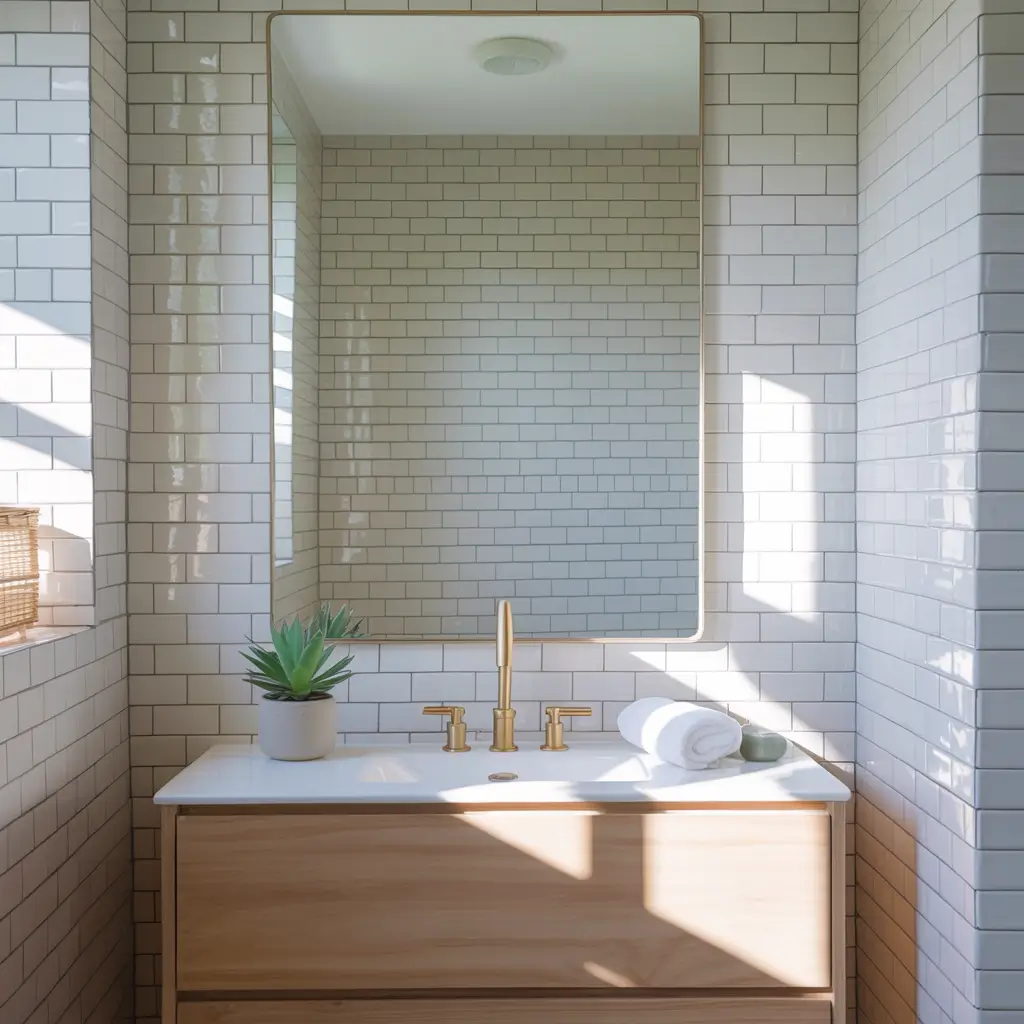
Let’s start with the classic that never goes out of style. White subway tiles are like that perfect white t-shirt in your closet—they work with everything and never look dated. I installed these in my first apartment’s bathroom, and five years later, they still look fresh as day one.
The beauty of subway tiles lies in their versatility. You can arrange them in the traditional brick pattern, stack them vertically, or even go wild with a herringbone layout. The crisp white color reflects light like nobody’s business, making your small bathroom feel instantly larger.
Want to add some personality without going overboard? Try contrasting grout. Dark gray or black grout creates a graphic look that adds depth without cluttering the visual space. Trust me, this simple trick transforms basic subway tiles into a design statement.
Why White Works Wonders
White tiles create what I call the “infinity effect.” Your eyes don’t have a specific stopping point, so the space feels continuous. Plus, white tiles are budget-friendly—you can find quality options starting at $2 per square foot. That leaves more money for that fancy rainfall showerhead you’ve been eyeing, right?
Diagonal Tile Layout for Spacious Effect
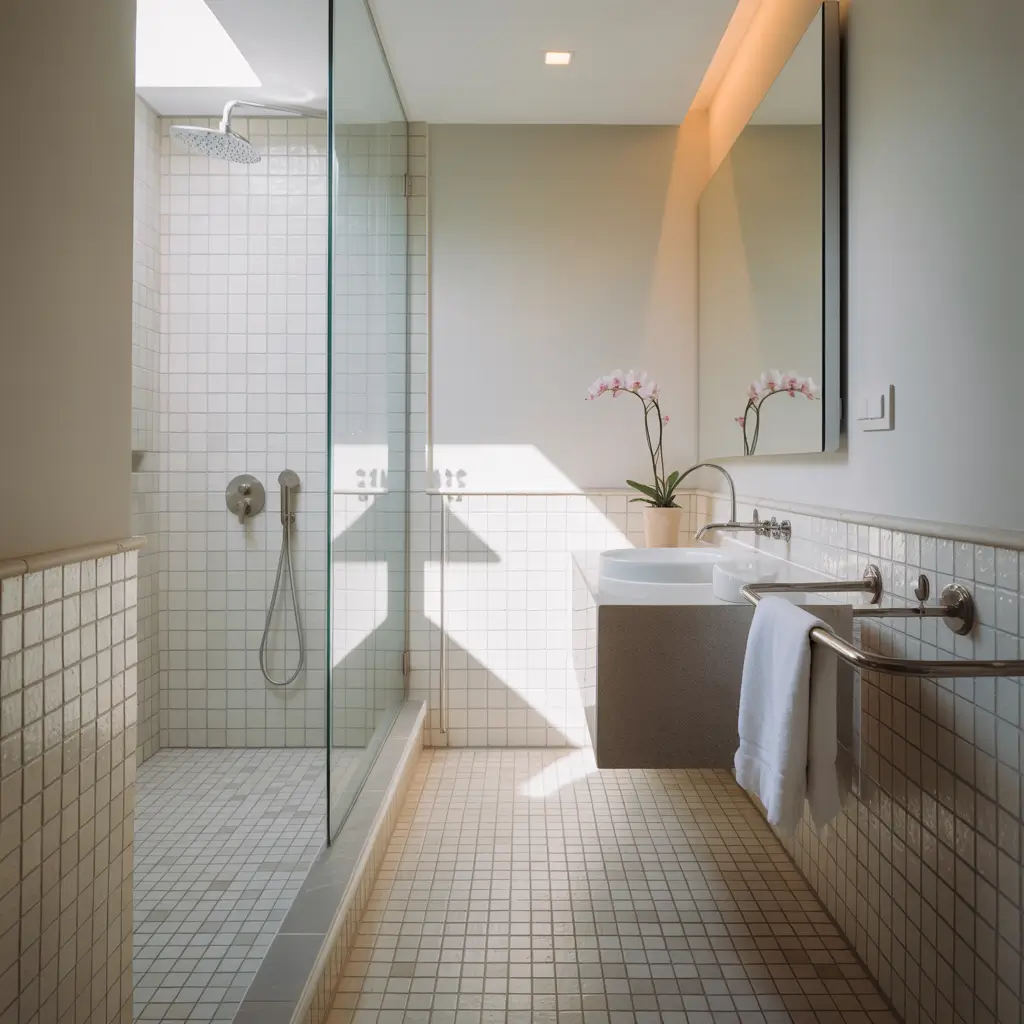
Here’s a trick that blew my mind when my contractor suggested it: laying tiles diagonally instead of straight. Sounds simple? It is. But the visual impact? Massive.
When you install tiles on a diagonal, you create longer sight lines that trick your brain into perceiving more space. I tried this with 12×12 inch tiles in my guest bathroom, and visitors always comment on how “spacious” it feels. (It’s literally 35 square feet, folks.)
The diagonal pattern works especially well on floors, but don’t stop there. Consider running diagonal tiles up one accent wall for a dynamic look that draws the eye upward. Just remember—cutting diagonal tiles requires more waste, so order about 15% extra to account for those angled cuts.
Glossy Marble Tiles with Gold Accents
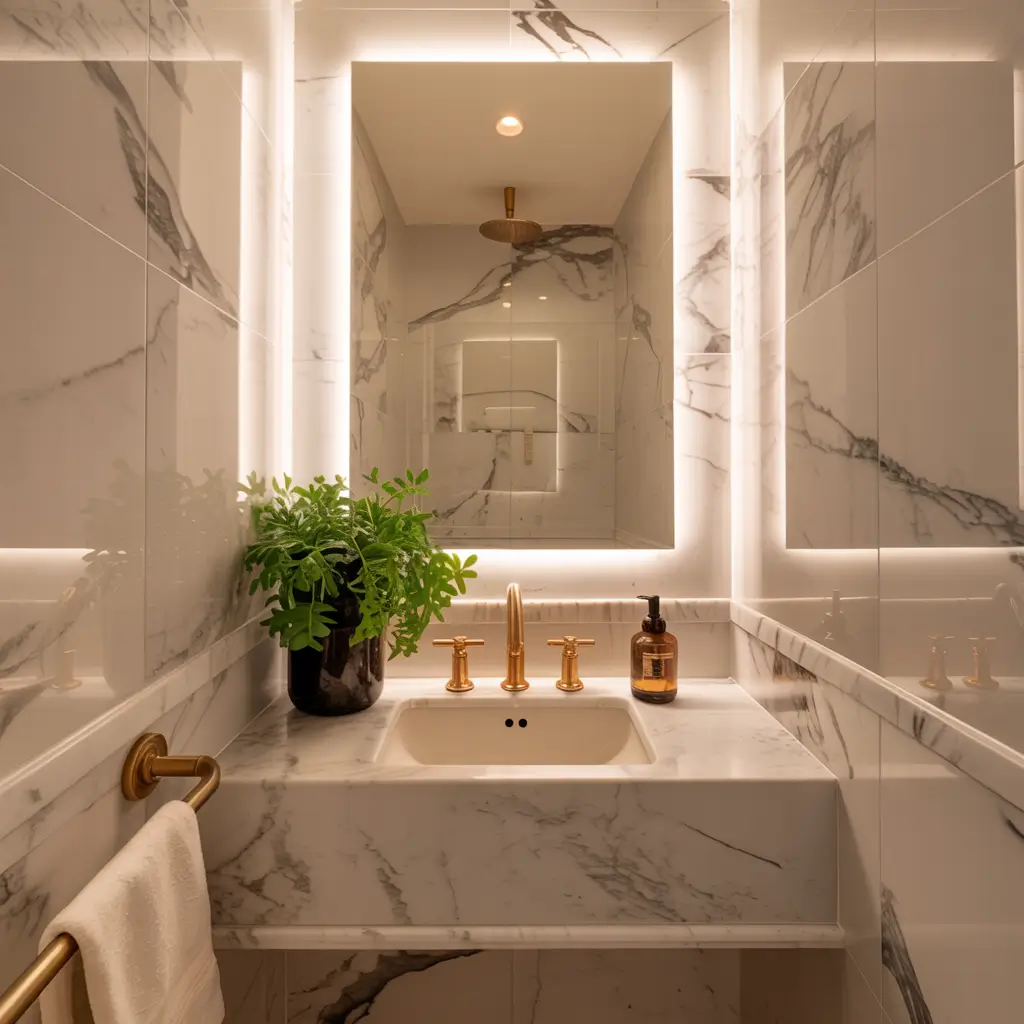
Okay, let’s talk luxury on a small scale. Glossy marble tiles with gold veining might sound like overkill for a tiny bathroom, but hear me out. The high-gloss finish acts like a mirror, bouncing light around and creating depth.
I splurged on marble-look porcelain tiles (because real marble maintenance? No thanks) for my master bath renovation. The gold veining adds warmth and sophistication without overwhelming the space. Pro tip: pair these with brass or gold fixtures for a cohesive, upscale vibe.
Making Marble Work in Small Spaces
The key to using marble tiles in small bathrooms? Keep everything else simple. White walls, minimal accessories, and clean lines let the marble shine without creating visual chaos. Think of it as giving your tiles the spotlight they deserve.
You don’t need to tile every surface either. Consider using marble tiles as a statement wall behind the vanity or in the shower area only. This approach gives you that luxe look without breaking the bank or overwhelming your tiny space.
Also Read: 15 Stunning Small Narrow Bathroom Ideas and Space-Saving Hacks
Light Gray Hexagon Floor Tiles
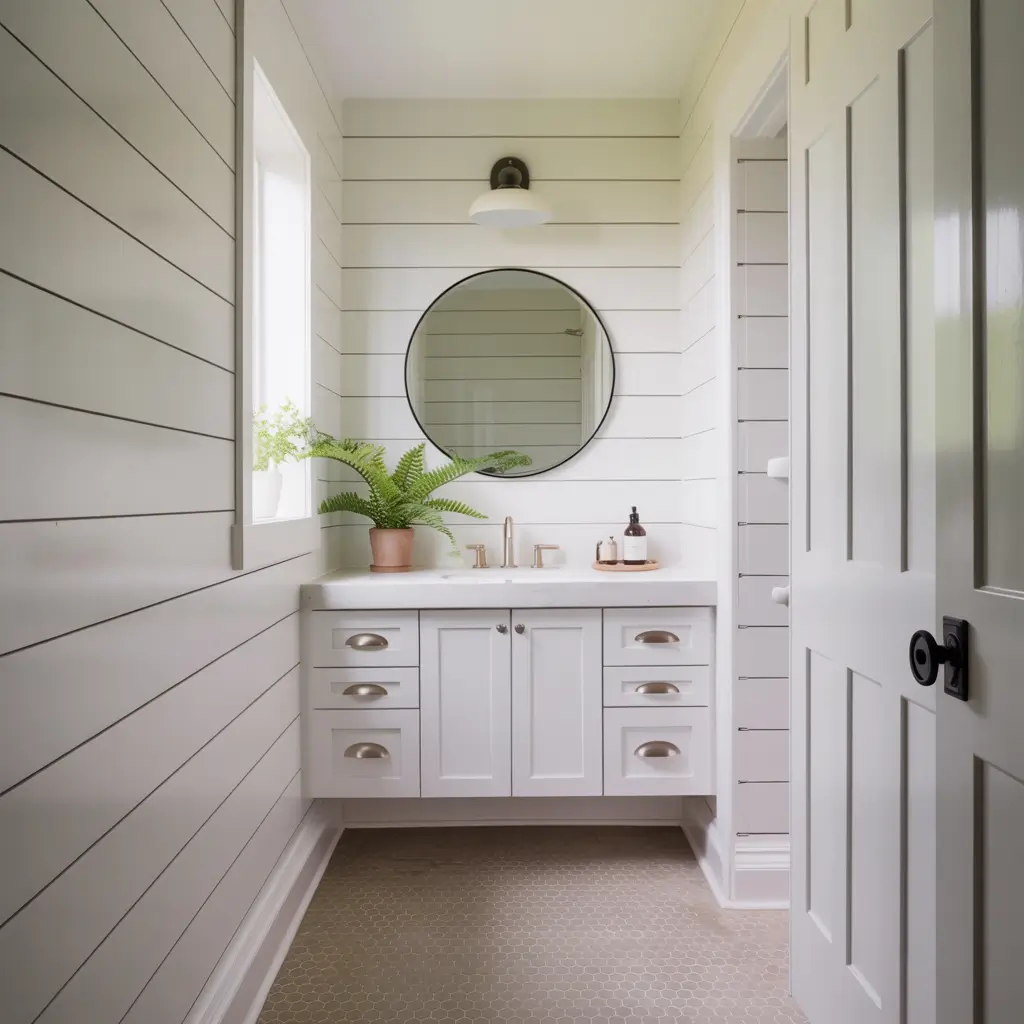
Hexagon tiles are having a serious moment, and I’m here for it. Light gray hexagons offer the perfect balance between interesting and neutral. They add pattern without screaming for attention—kind of like that friend who’s effortlessly cool without trying.
I recently helped my sister choose tiles for her 40-square-foot powder room, and we went with light gray hexagons. The geometric shape adds visual interest while the soft color keeps things calm. The result? A floor that feels like art but doesn’t compete with other design elements.
Want to maximize the effect? Choose larger hexagon tiles (6-8 inches) rather than tiny penny tiles. Fewer grout lines mean less visual clutter, which equals a more spacious feel. See how that works?
Herringbone Pattern Wall Design
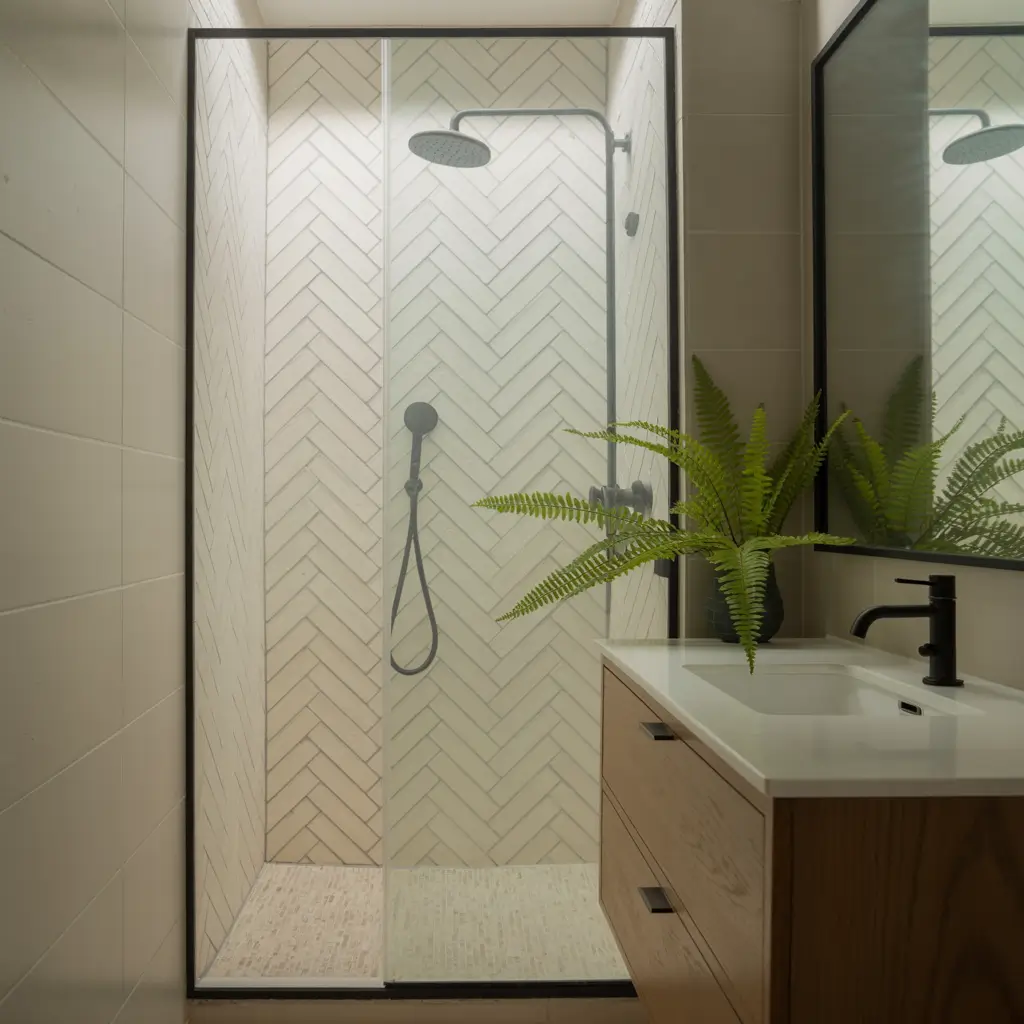
Let me tell you about the time I thought herringbone was too complicated for my DIY skills. Spoiler alert: I was wrong. Herringbone patterns create movement and sophistication that make small bathrooms feel intentionally designed rather than just… small.
The zigzag pattern naturally draws your eye along the wall, creating an illusion of width or height depending on orientation. Install it horizontally to make walls appear wider, or vertically to emphasize ceiling height. I went vertical in my narrow bathroom, and suddenly it felt less like a hallway and more like an actual room.
Herringbone Installation Tips
FYI, herringbone requires precise cutting and planning. Map out your pattern before starting, and consider hiring a pro if you’re not confident with tile work. The labor cost might be higher, but a poorly executed herringbone pattern will haunt you every morning. Trust me on this one.
Color-wise, stick to one shade for herringbone in small spaces. Multiple colors can make the pattern feel busy and overwhelming. A soft white or pale gray herringbone creates texture without chaos.
Soft Pastel Mosaic Accent Wall
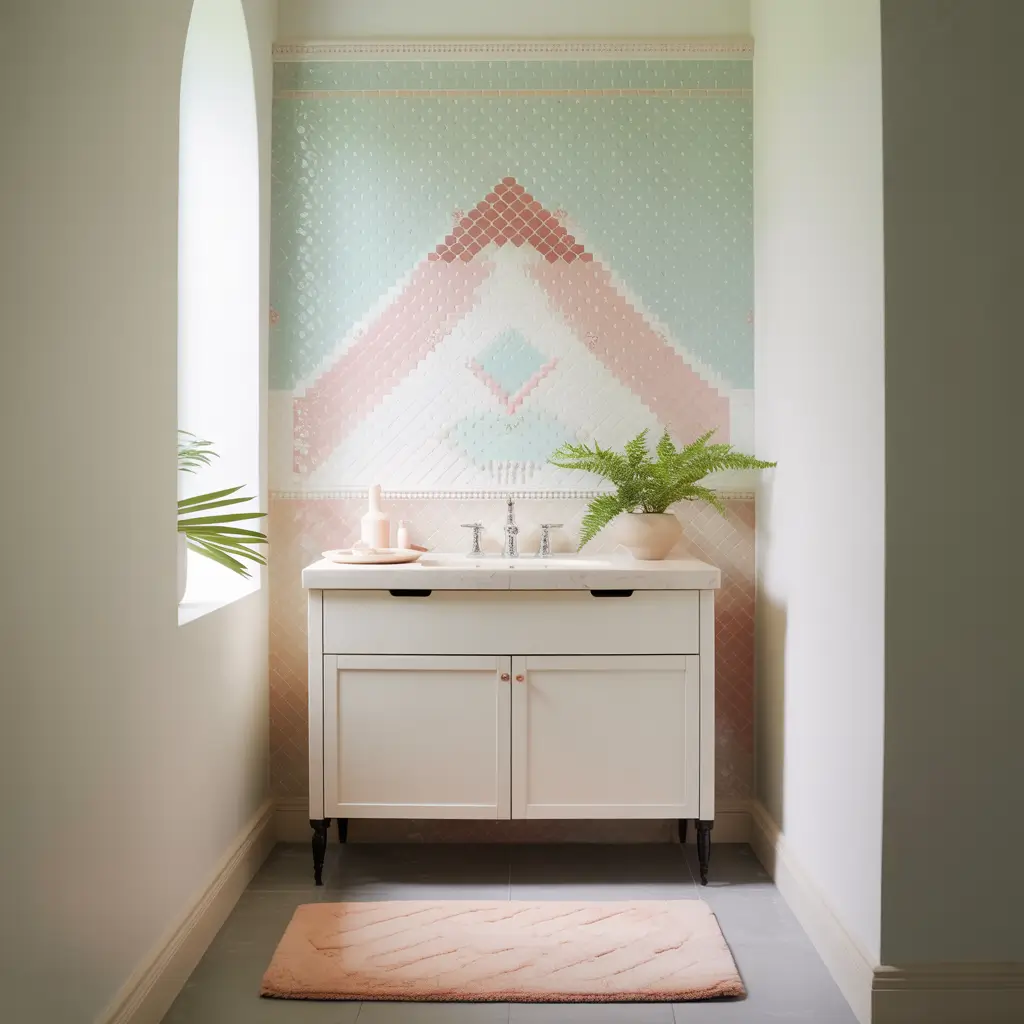
Who says small bathrooms can’t have personality? Pastel mosaic tiles on a single accent wall inject color and whimsy without going full rainbow explosion. I’m talking soft pinks, mint greens, and powder blues—colors that whisper rather than shout.
Choose one wall (usually behind the vanity or toilet) for your mosaic moment. The key is keeping the other walls neutral—white or very light gray work best. This creates a focal point that adds interest without making the space feel smaller.
I installed pale pink and white mosaic tiles in my daughter’s bathroom, and it transformed the space from boring to boutique hotel vibes. The varied tile sizes in the mosaic create depth and movement that keep the eye engaged.
Also Read: 15 Stunning Small Moody Bathroom Ideas for Cozy Spaces
Large Format Porcelain Tiles
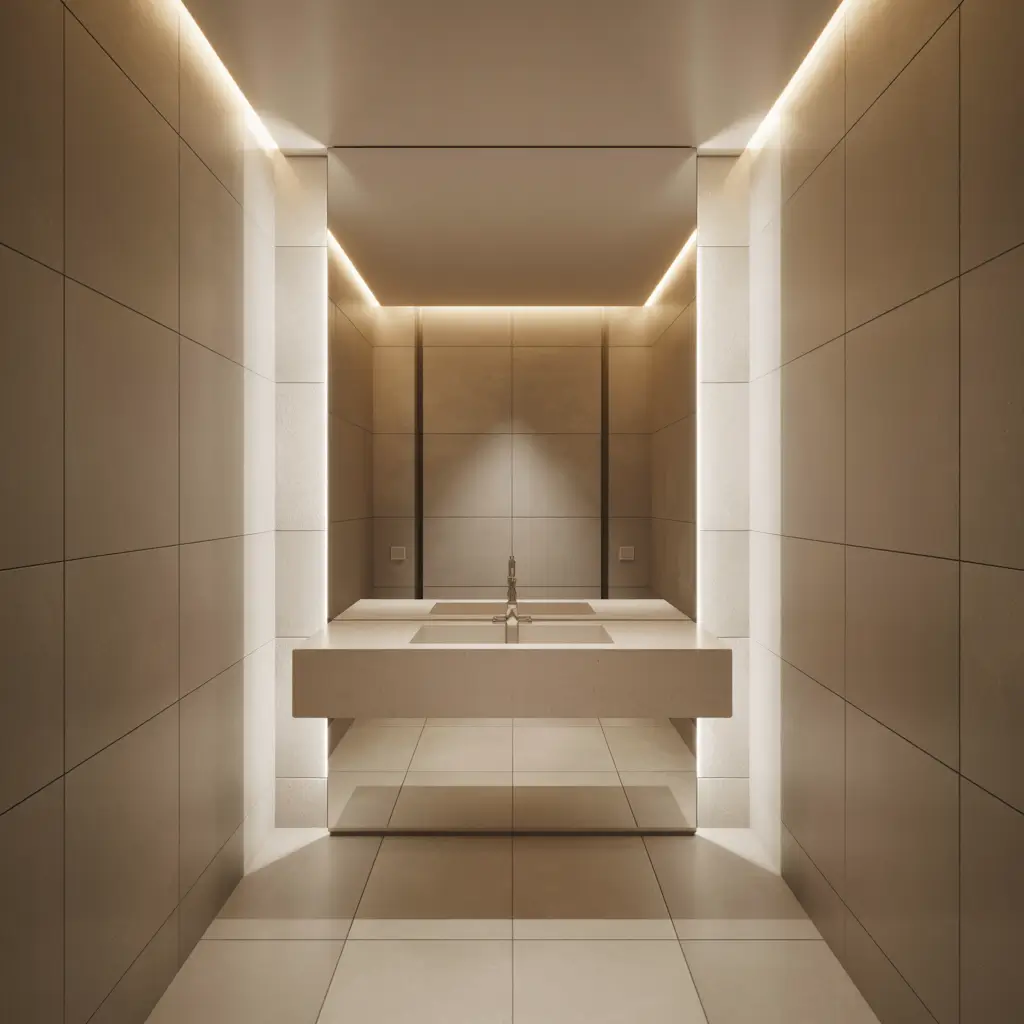
This might sound counterintuitive, but large format tiles (think 24×48 inches) can make small bathrooms feel enormous. Fewer grout lines mean less visual interruption, creating a seamless, expansive look.
I fought my contractor on this initially. “Large tiles in a small bathroom? You’re nuts!” But once we installed them, I ate my words. The continuous surface makes the floor appear to stretch beyond its actual boundaries. It’s basically magic, minus the wand.
Practical Considerations for Large Tiles
Here’s what nobody tells you about large format tiles: they require a perfectly level substrate. Any dips or bumps will cause tiles to crack or sit unevenly. Spend the extra time (or money) on proper floor prep—you’ll thank yourself later.
Also, large tiles mean large cuts around fixtures. Make sure your installer has the right equipment, or you’ll end up with choppy edges that ruin the whole streamlined effect. A wet saw is non-negotiable for this job.
Textured Stone-Look Shower Tiles
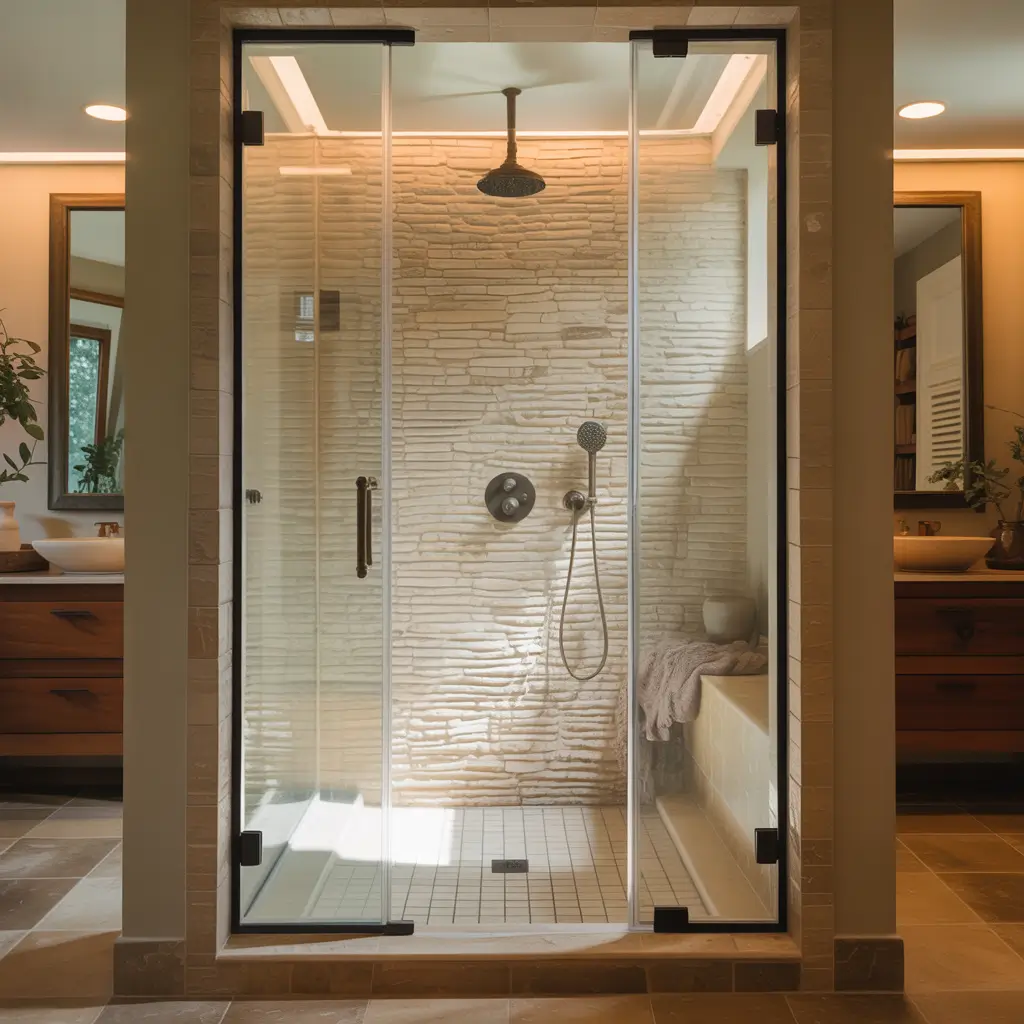
Let’s talk shower safety meets style. Textured stone-look tiles give you that natural, spa-like aesthetic while providing crucial slip resistance. Because nothing ruins a relaxing shower faster than doing the splits. (Ask me how I know.)
I chose textured slate-look porcelain for my shower floor, and it’s been a game-changer. The texture adds visual depth while the stone appearance brings organic warmth to the space. Plus, porcelain is way easier to maintain than actual stone—no sealing required!
The texture also helps hide water spots and soap scum between cleanings. In a small bathroom where every surface is visible, this little maintenance hack makes a big difference. Your future self will appreciate this choice, guaranteed.
Blue and White Coastal Tile Theme
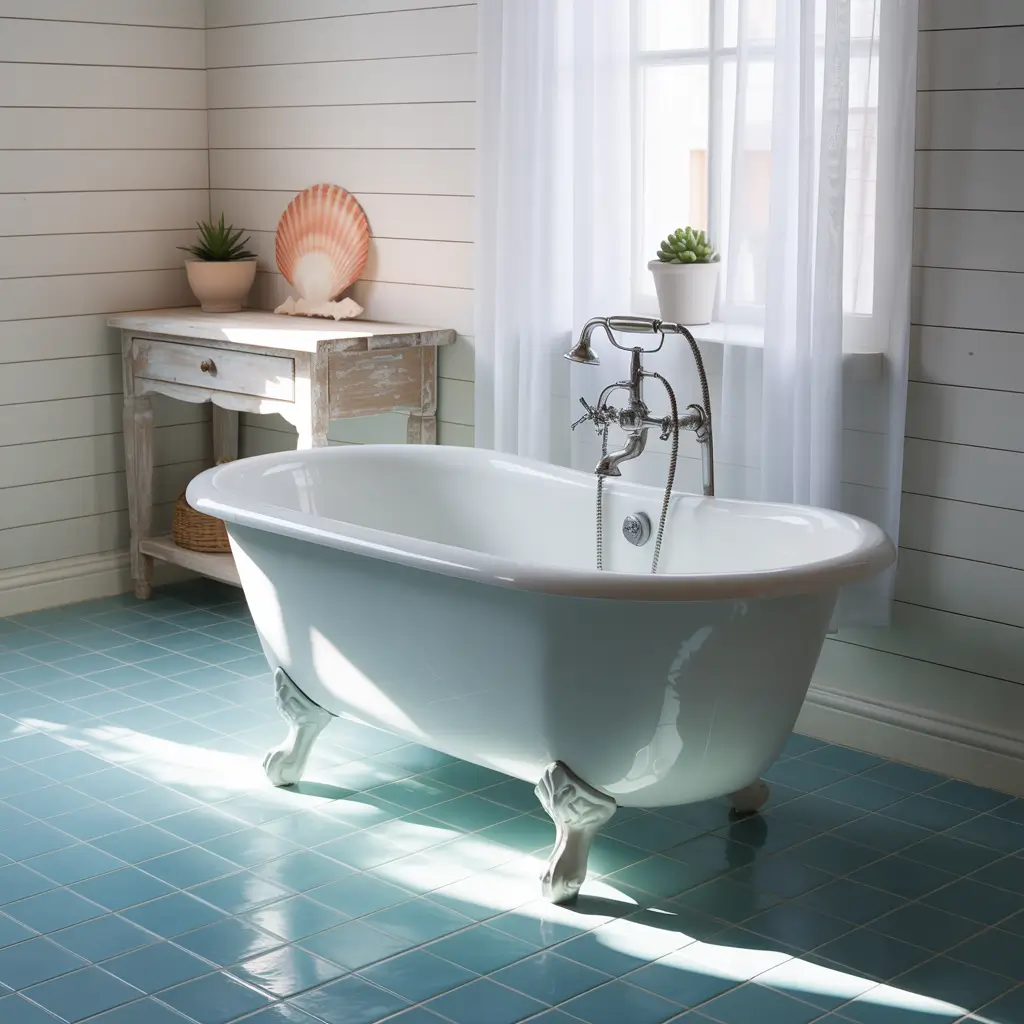
Want your small bathroom to feel like a beach cottage? Blue and white tiles create that breezy, coastal vibe faster than you can say “seafoam.” But here’s the trick: don’t go overboard with the nautical theme, or you’ll end up with a space that screams “cruise ship cabin.”
I recommend using soft, muted blues rather than bright navy. Think sky blue, dusty blue, or that perfect blue-gray that reminds you of morning fog over the ocean. Pair these with crisp white tiles for balance, using an 80/20 ratio of white to blue.
Creating Coastal Without Cliché
Skip the seashell borders and anchor motifs. Instead, create pattern through tile arrangement. Try alternating blue and white tiles in a checkerboard pattern, or use blue tiles as a wainscoting effect on the lower third of walls.
The goal is suggesting “coastal” rather than announcing it. Your bathroom should feel like a subtle nod to the beach, not a souvenir shop explosion. IMO, restraint is key here.
Also Read: 15 Brilliant Small Bathroom Ideas on a Budget for Tiny
Vertical Tile Arrangement Illusion
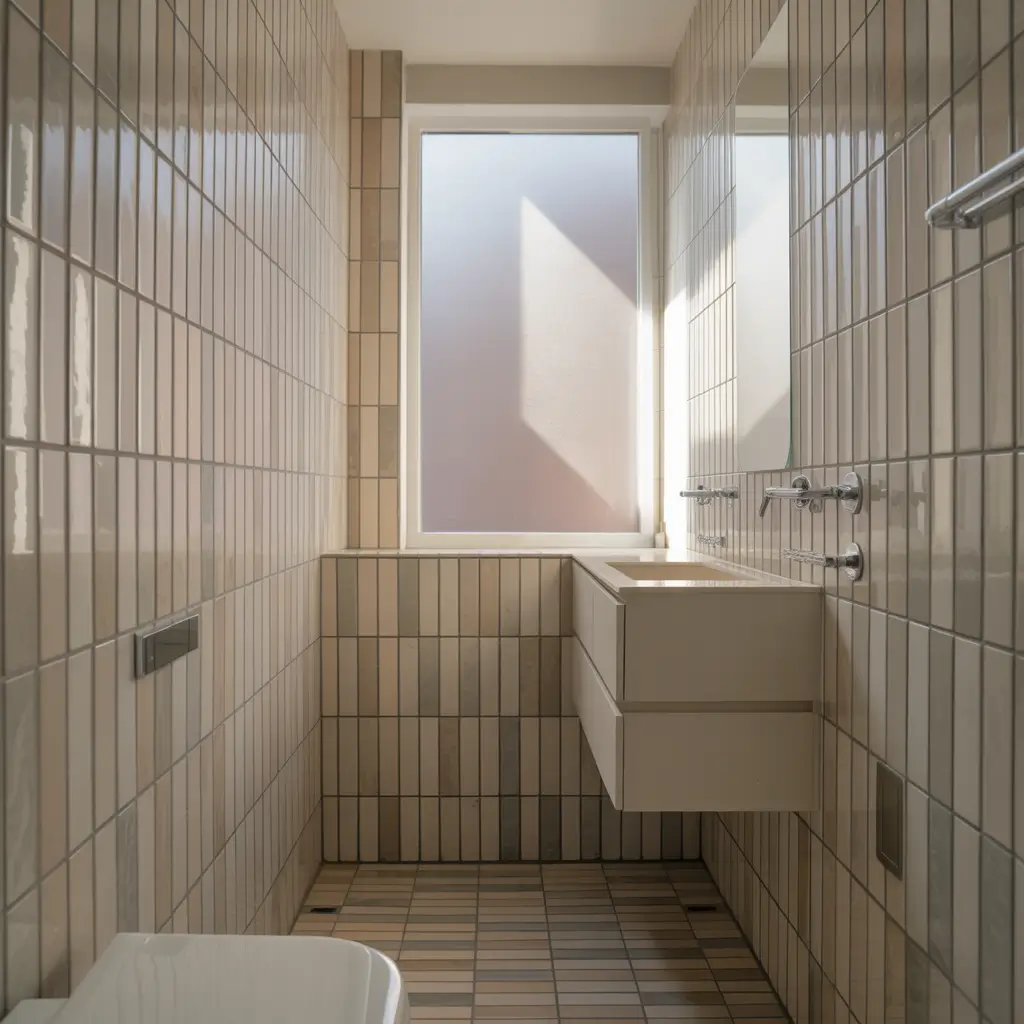
Here’s a designer secret that costs nothing extra: installing rectangular tiles vertically instead of horizontally makes your ceiling appear higher. It’s like wearing vertical stripes, but for your bathroom.
I discovered this trick accidentally when my tiler misunderstood my instructions. Happy accident! The vertical orientation draws the eye upward, creating an illusion of height that makes the space feel less confined. Now I recommend it to everyone with standard 8-foot ceilings.
Maximizing the Vertical Effect
To really amplify this effect, run the vertical tiles all the way to the ceiling. Don’t stop at the standard 7-foot mark. Yes, it means buying more tiles, but the visual payoff is worth every penny.
Choose tiles that are at least twice as long as they are wide—think 4×8 or 4×12 inches. The more elongated the tile, the stronger the vertical effect. Combine this with light-colored grout that matches your tile color to maintain uninterrupted vertical lines.
Matte Black Floor with White Walls
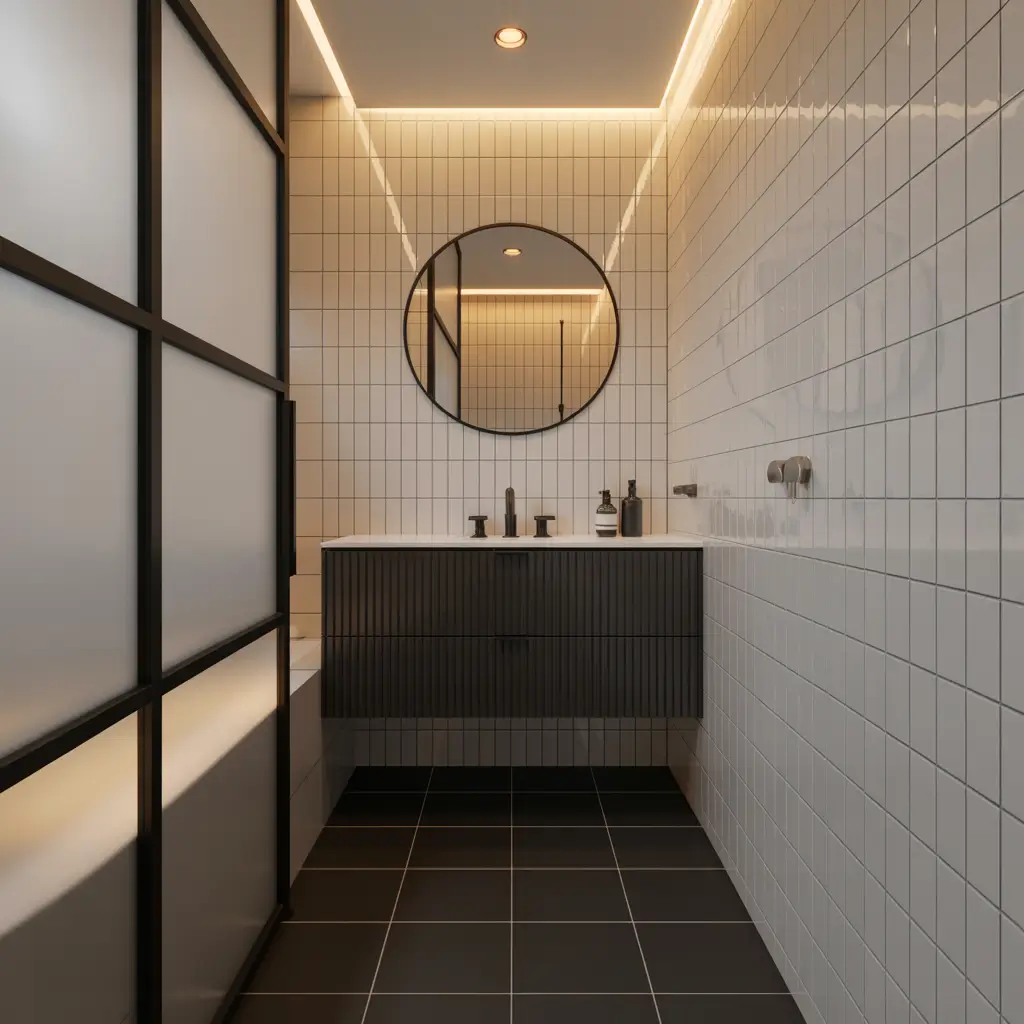
Bold choice alert: matte black floor tiles paired with white wall tiles create drama without overwhelming small spaces. This high-contrast combo is like wearing a tuxedo—classic, sophisticated, and always appropriate.
I’ll admit, I was skeptical when my designer friend suggested black floors for my tiny powder room. Won’t it make the space feel smaller? Surprisingly, no. The black floor grounds the space while white walls keep it bright and open. It’s all about balance.
Making Black Floors Work
The “matte” part is crucial here. Glossy black shows every speck of dust and water spot—nightmare fuel for perfectionists. Matte finishes hide imperfections while adding a modern, sophisticated touch.
Keep your fixtures and vanity light-colored to prevent the space from feeling too heavy. Chrome or brushed nickel hardware works beautifully with this color scheme. And here’s a pro tip: add a white or light gray bath mat to break up the black floor and prevent it from feeling like a void.
Geometric Patterned Tile Mix
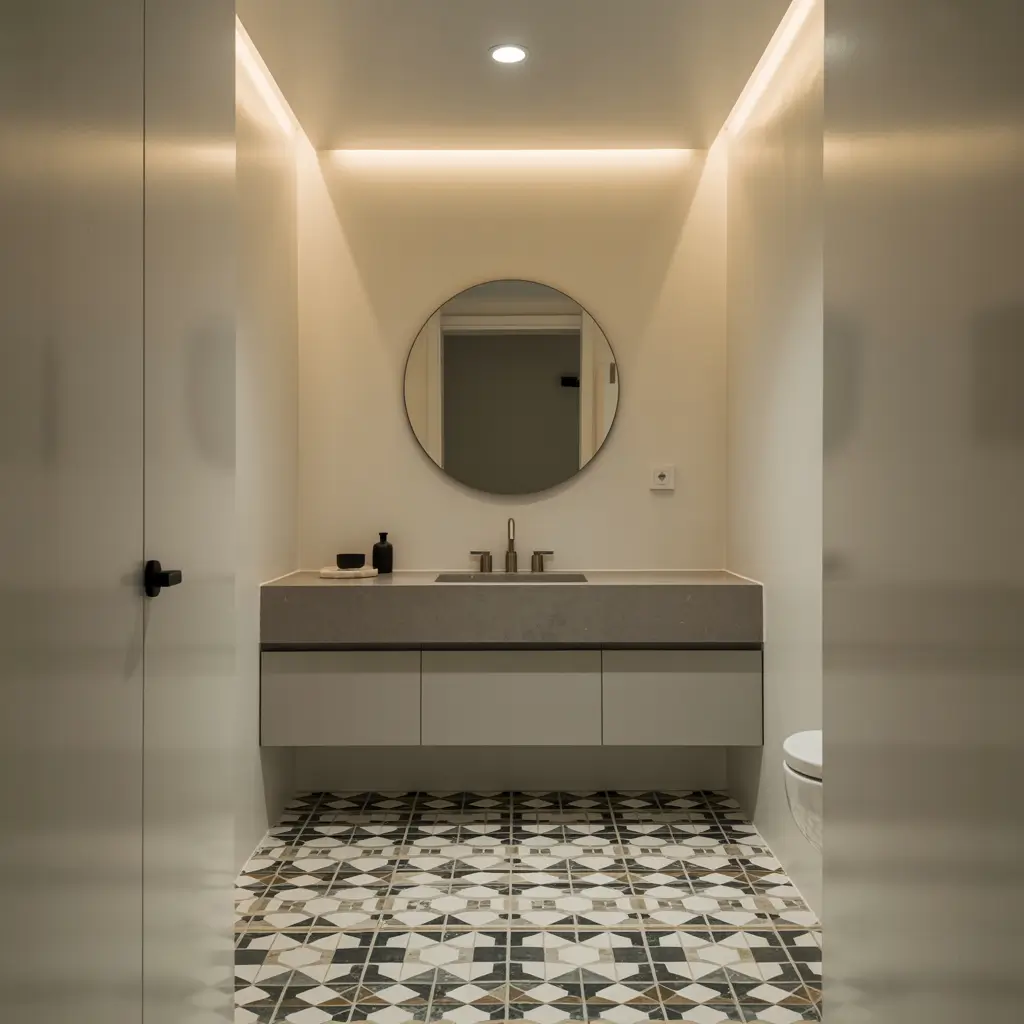
Feeling adventurous? Geometric patterned tiles can transform your small bathroom into an Instagram-worthy space. But there’s a fine line between “designer chic” and “dizzy spell inducing.”
The secret is choosing one geometric pattern and sticking with it. Don’t mix hexagons with triangles with arabesque shapes—your small bathroom will feel like a geometry textbook exploded. Pick your favorite and commit.
I used black and white geometric floor tiles in my half bath, keeping walls simple white subway tile. The contrast creates visual interest on the floor while maintaining calm on the walls. Visitors always comment on how “designed” the space feels. 🙂
Terrazzo Tiles for Modern Vibe
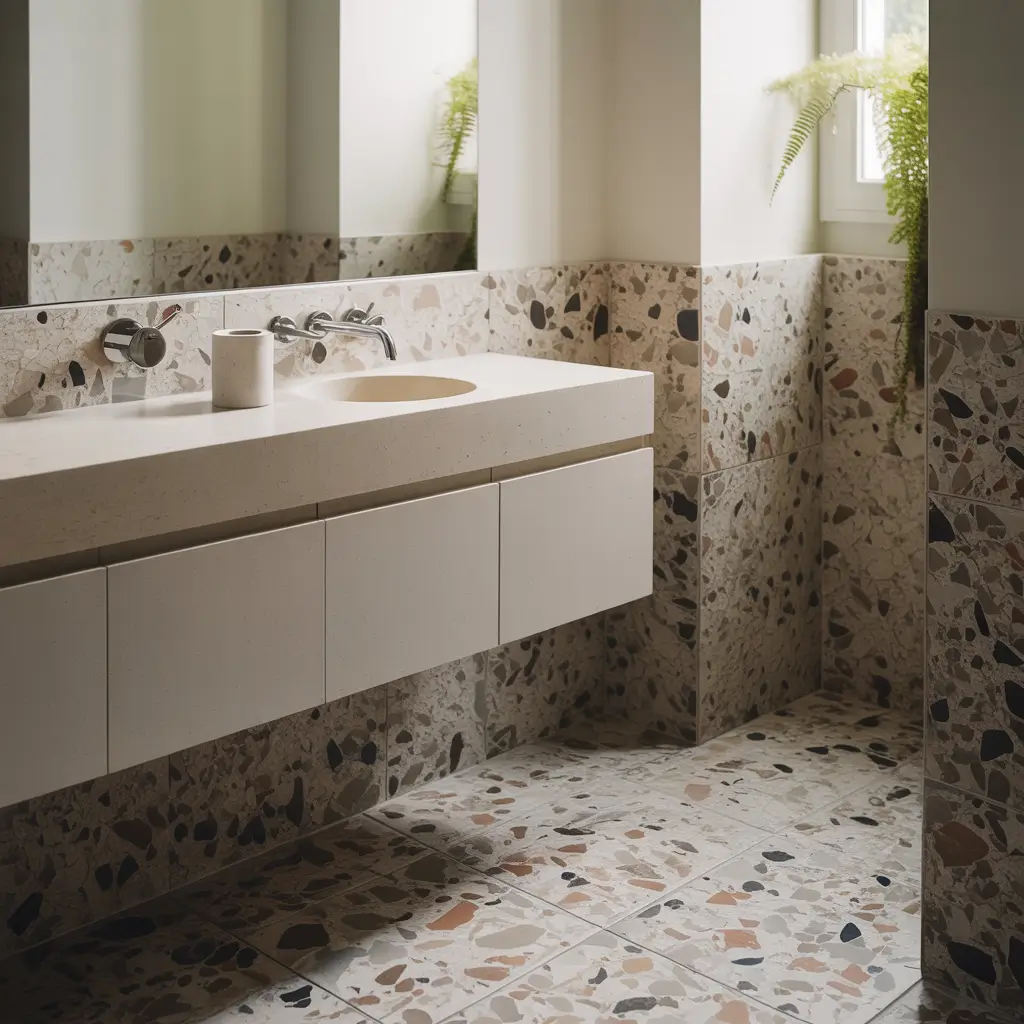
Terrazzo tiles are having a major comeback, and small bathrooms are the perfect place to experiment with this trend. The speckled pattern adds texture and interest without overwhelming—think of it as controlled chaos.
Real terrazzo can be pricey, but porcelain versions give you the look for a fraction of the cost. I chose a terrazzo-look tile with soft pink and gray chips on a white base for my renovation, and it adds just enough personality without dating the space.
Terrazzo Do’s and Don’ts
Do: Choose terrazzo with smaller chip sizes for small bathrooms. Large chips can feel overwhelming in tight spaces.
Don’t: Pair terrazzo with other busy patterns. Let the terrazzo be the star while everything else plays supporting roles.
The beauty of terrazzo is its forgiving nature. The pattern naturally camouflages dirt and water spots, making it perfect for high-traffic small bathrooms. Plus, it works with almost any color scheme—true versatility.
Reflective Glass Tiles for Brightness
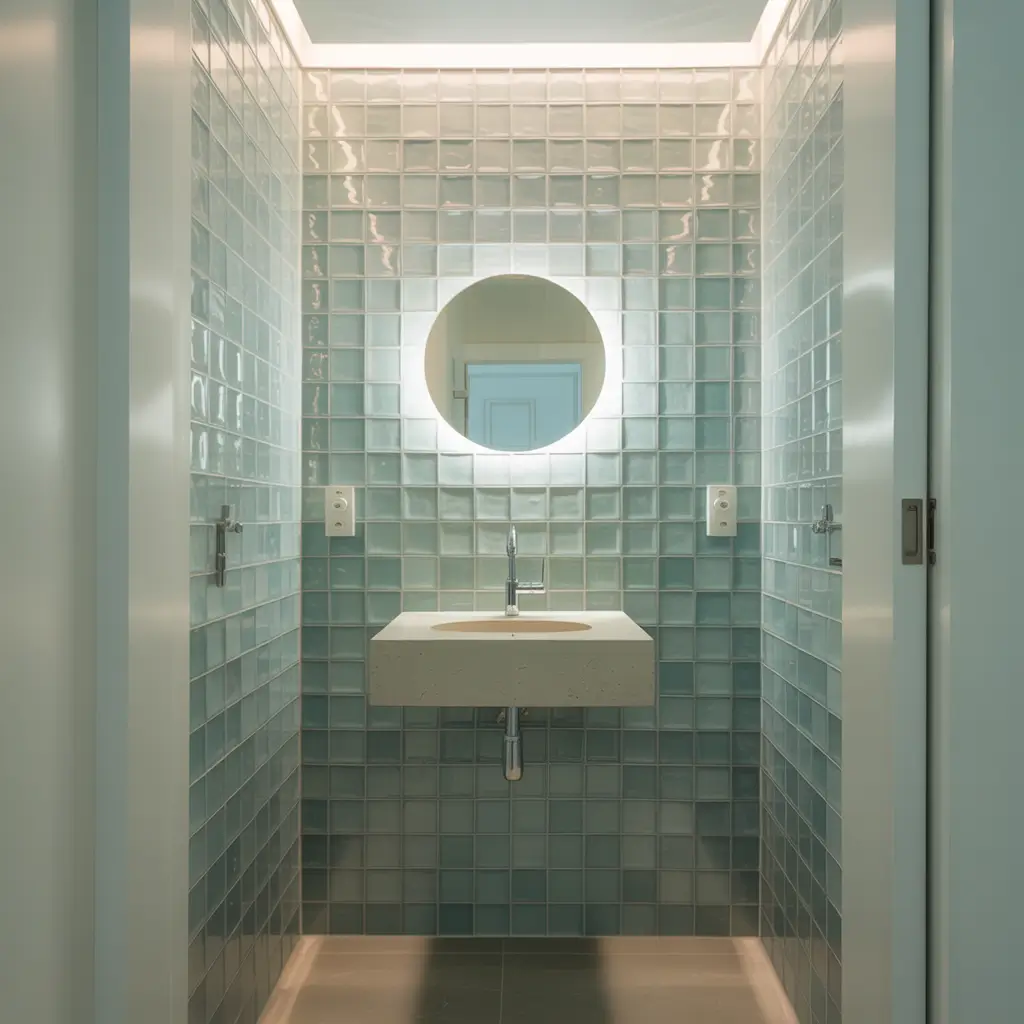
Want to amplify natural light in your small bathroom? Glass tiles are your secret weapon. They reflect and refract light in ways that ceramic or porcelain simply can’t match.
I installed a strip of glass mosaic tiles as a shower accent in my windowless bathroom. Even with just overhead lighting, the glass tiles create sparkle and movement that prevents the space from feeling cave-like. The effect is subtle but significant.
Strategic Glass Tile Placement
You don’t need to cover entire walls with glass tiles (your wallet will thank you). Instead, use them strategically as accent strips or borders. A horizontal band of glass tiles at eye level in the shower creates a focal point without overwhelming.
Choose neutral-colored glass tiles like soft gray, white, or pale blue for maximum light reflection without color overload. Save the bold jewel tones for larger bathrooms where they won’t dominate the space.
Natural Wood-Look Ceramic Tiles
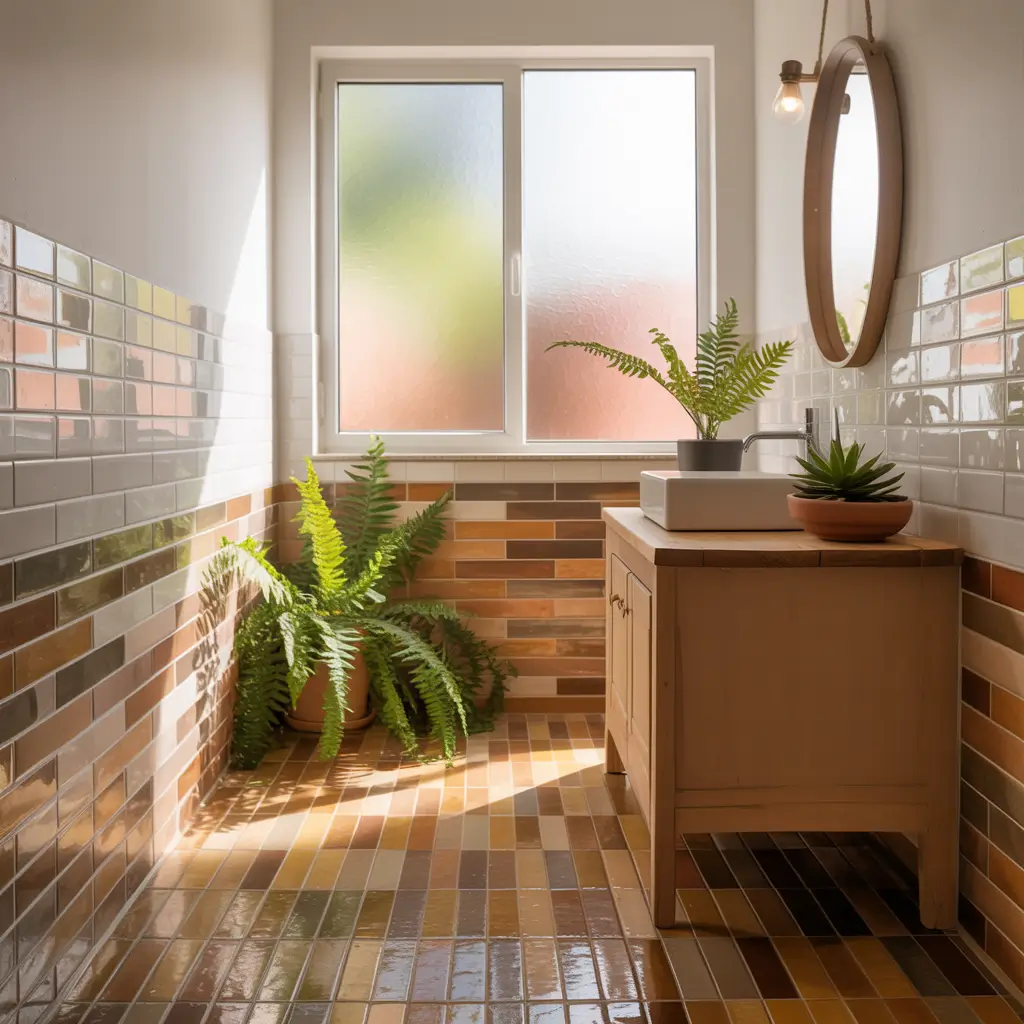
Who says bathrooms can’t have warmth? Wood-look ceramic tiles bring that cozy, natural element without the moisture concerns of real wood. Technology has come so far that some ceramic tiles are virtually indistinguishable from actual hardwood.
I installed wood-look tiles in a diagonal pattern in my guest bathroom, and the combination of organic warmth with water-resistant practicality is unbeatable. The linear grain pattern naturally elongates the space, especially when tiles run the length of the room.
Choosing the Right Wood Tone
Light wood tones work best in small bathrooms—think bleached oak or white-washed pine rather than dark walnut. The lighter color keeps the space bright while still adding that natural texture you’re after.
Consider mixing wood-look floor tiles with white or light gray wall tiles for balance. The contrast between organic and clean creates visual interest without competition. Plus, wood-look tiles are slip-resistant when textured, making them practical for bathroom use.
Wrapping Up Your Small Bathroom Transformation
There you have it—15 tile ideas that prove small bathrooms don’t have to feel cramped or boring. The right tile choice can literally transform your tiny bathroom from claustrophobic to comfortable, from basic to beautiful.
Remember, the best tile for your small bathroom is the one that speaks to your style while working with your space’s limitations. Don’t be afraid to mix techniques—maybe vertical tiles on one wall with large format tiles on the floor? The possibilities are endless.
Here’s my final piece of advice: samples are your best friend. Order samples of your top choices and live with them for a few days. See how they look in different lighting, how they feel underfoot, and whether you still love them after the initial excitement wears off.
Small bathrooms might present challenges, but they also offer opportunities for creativity. With these tile ideas in your toolkit, you’re ready to create a space that feels anything but small. Now, who’s ready to start shopping for tiles? :/