10 Smart Small Nursery Ideas and Functional Furniture Plans
- Bedroom Design
 Ben
Ben- 0
- 45 minutes read
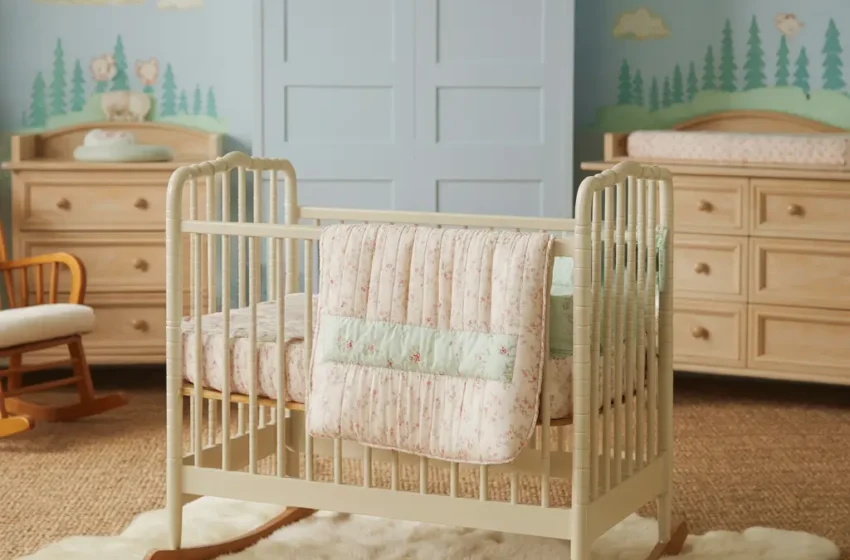
Standing in my 8×8 “nursery” (and I use that term generously), I had a complete meltdown.
My Pinterest board was full of gorgeous nurseries that looked bigger than my entire apartment, and there I was, trying to figure out how to fit a crib, changing table, and chair into a space that barely held my yoga mat.
The measuring tape became my enemy, and I definitely considered if the baby really needed a crib or if a nice drawer would work.
Here’s what nobody tells you about small nurseries: they force you to be brilliant. You can’t just throw money and furniture at the problem.
You need to think like a Tetris champion, shop like a minimalist, and somehow create magic in a space that makes you wonder if your baby will develop claustrophobia.
After designing three tiny nurseries (mine and two for friends who also live in “cozy” spaces), I’ve learned that small nurseries can actually be better than sprawling ones.
Less space to clean, everything within arm’s reach during those 3 AM diaper changes, and a cozy atmosphere that makes babies feel secure.
These ten small nursery ideas will help you create a functional, beautiful space that doesn’t require knocking down walls or selling organs to afford a bigger place.
Minimalist Monochrome Nursery
When Every Inch Counts, Make It Count
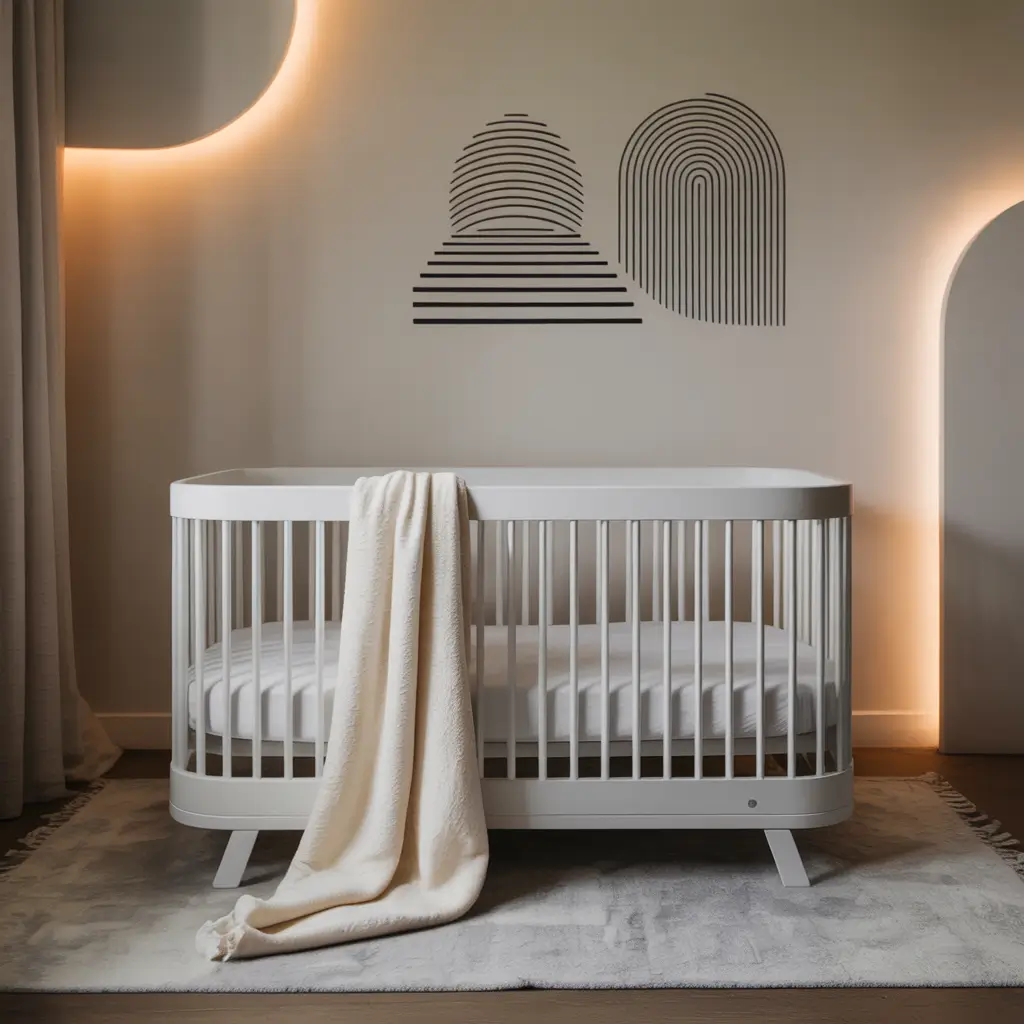
You know what’s genius about minimalist monochrome nurseries in small spaces? They trick the eye into thinking the room is twice its actual size. No visual clutter, no competing colors, just clean lines that make your tiny space feel intentional rather than cramped.
I went full monochrome in my 7×9 nursery – white walls, white crib, gray accents, and exactly three black elements for contrast. Friends walk in and ask if we expanded the room. Nope, just removed everything that wasn’t absolutely necessary and stuck to one color story. The space feels calm, organized, and surprisingly spacious.
The best part about monochrome minimalism? You can’t overbuuy because anything that doesn’t match sticks out like a sore thumb. It forced me to be selective, which saved money and prevented the gear explosion that usually happens with first babies.
Essential Monochrome Elements
Creating your minimalist sanctuary:
- White or light gray walls (makes space feel larger)
- Simple white crib with clean lines
- Gray or white dresser/changing combo
- One black accent piece for contrast
- White floating shelves
- Neutral textiles only
- Hidden storage in matching colors
- Minimal decorative objects
Making Monochrome Work
Avoiding the hospital look:
- Add texture through different materials
- Use various shades of your chosen color
- Include one plant for life
- Layer lighting for warmth
- Choose matte finishes over glossy
- Add personal touches sparingly
- Keep patterns geometric and simple
Vertical Storage Baby Room
Going Up When You Can’t Go Out
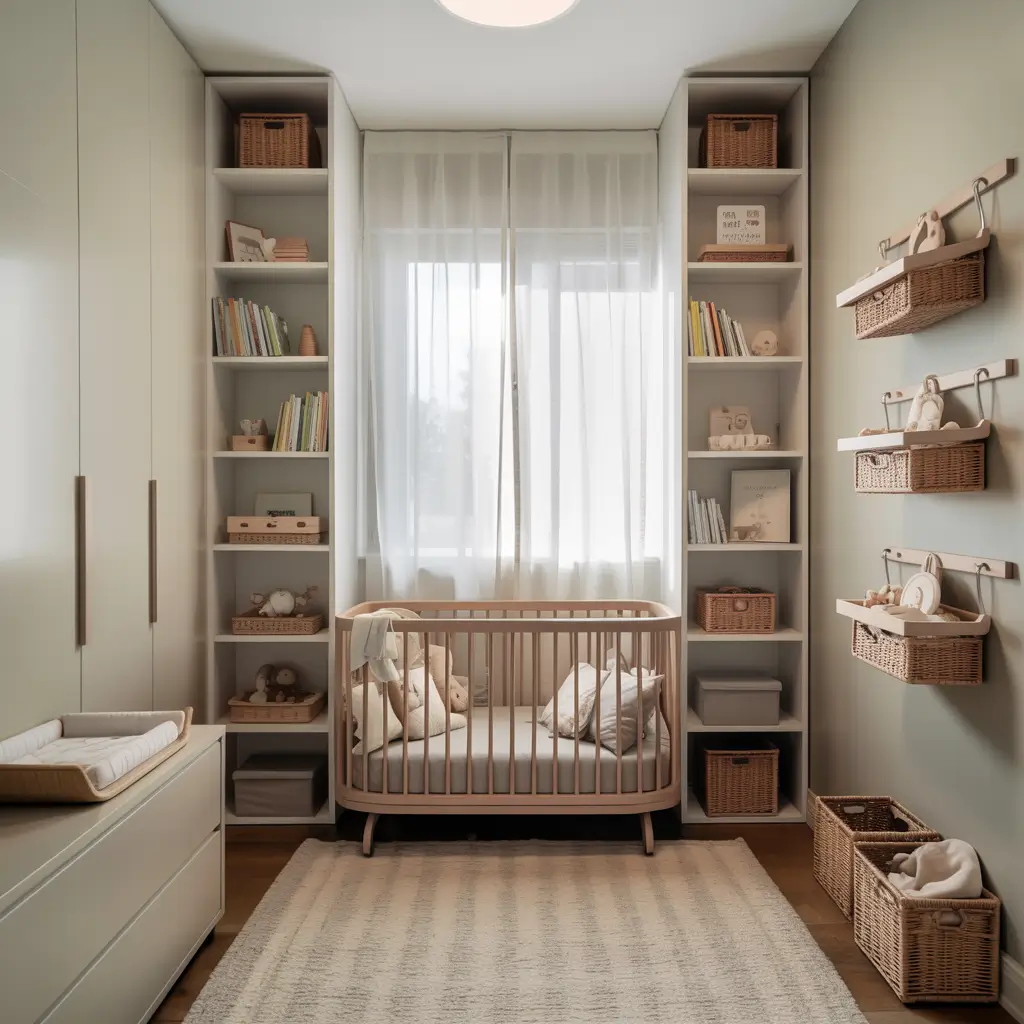
Let me tell you about my vertical storage revelation: walls are free real estate in small nurseries. While everyone else was trying to squeeze furniture onto the floor, I looked up and realized I had about 40 square feet of unused wall space just begging for shelves.
My friend’s 6×8 nursery has floor-to-ceiling shelving on one wall, and it holds everything – diapers, clothes, toys, books, decorative items. The floor stays clear, making the room feel bigger, and she can reach everything she needs without taking a single step from the changing table. Efficiency at its finest.
The vertical approach works because babies don’t need floor space for the first several months anyway. By the time they’re mobile, you can adjust the storage to keep dangerous items high and toys low.
Vertical Storage Solutions
Maximizing your walls:
- Floor-to-ceiling bookshelf units
- Floating shelves at various heights
- Wall-mounted diaper caddy
- Hanging organizers on doors
- Pegboard for flexible storage
- Wall hooks for everything
- Overhead storage nets for stuffed animals
- Vertical drawer units
Installation Tips
Making vertical storage safe:
- Anchor everything to studs
- Keep heavy items low
- Use earthquake straps on tall furniture
- Install shelves you can reach easily
- Leave growing room for standing baby
- Create zones by height
- Test weight limits before loading
Compact Crib Corner Design
Making the Most of That Awkward Corner
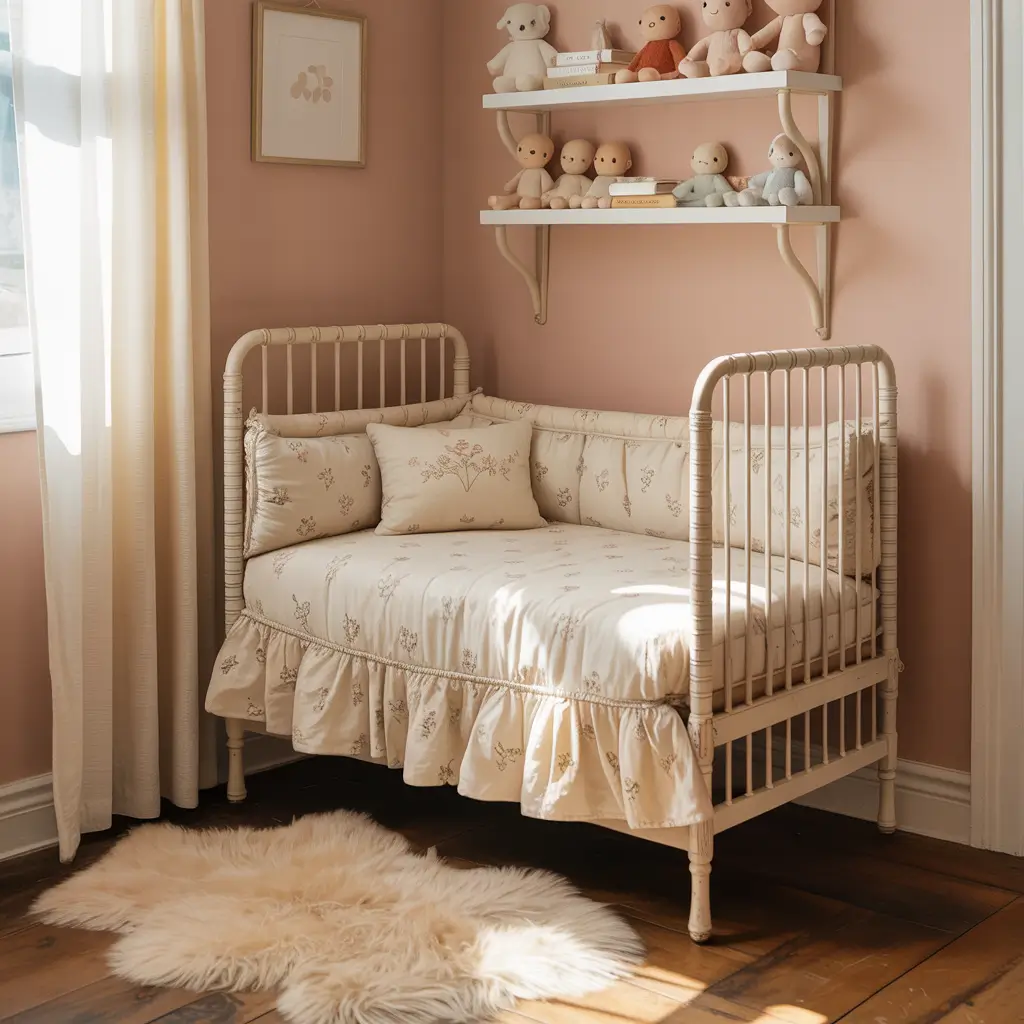
Ever notice how corners are usually dead space in nurseries? That’s prime real estate you’re wasting! Corner crib placement changed my entire nursery game and freed up the center of the room for actual movement.
I positioned the crib diagonally in the corner of my tiny nursery, and suddenly the room felt twice as big. Added corner shelves above for storage, hung a mobile from the ceiling, and created this cozy sleep nook that feels intentional rather than crammed. My baby slept better too – something about corners feeling more secure.
The corner approach works especially well in square rooms where traditional furniture placement leaves weird gaps. You’re using space that usually just collects dust bunnies and lost pacifiers.
Corner Crib Setup
Maximizing corner potential:
- Angle crib diagonally across corner
- Install corner shelves above crib height
- Use corner space for mobile hanging
- Add corner guards for safety
- Create canopy effect with fabric
- Position changing pad on adjacent wall
- Use remaining corners for storage
- Keep one corner empty for chair
Corner Design Benefits
Why corners work:
- Creates cozy sleep environment
- Frees up room center
- Provides two walls for support
- Makes room feel larger
- Natural mobile hanging spot
- Protected from room traffic
- Easy to add corner storage
Also Read: 12 Cute Boy Nursery Ideas and Cozy Decor Tips
Foldable Furniture Nursery
Now You See It, Now You Don’t
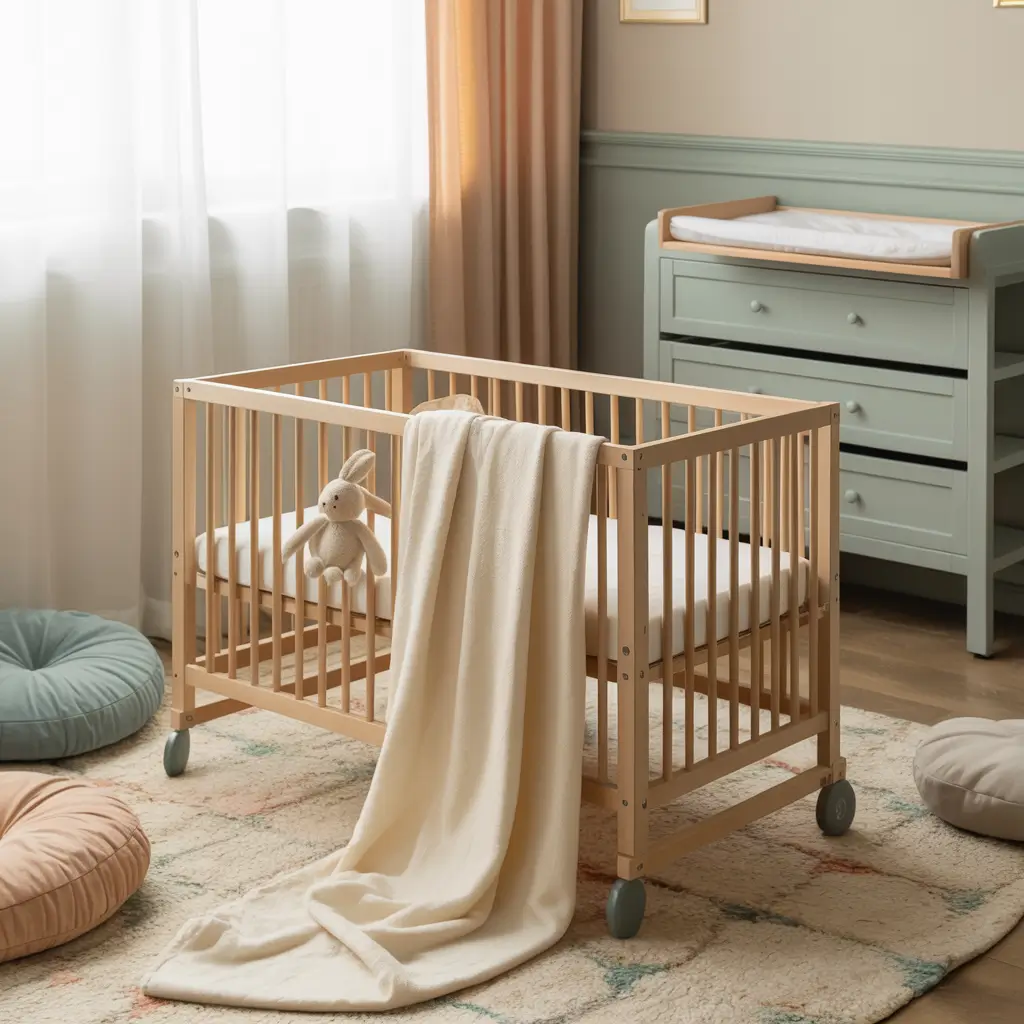
Foldable furniture in a small nursery is like having a magic trick up your sleeve. Need a changing table? Boom, it folds down from the wall. Feeding time? Here’s a chair that appears from nowhere. Playtime? The crib mattress lowers and toys fold out.
My sister’s nursery is basically a transformer. Wall-mounted changing table folds flat when not used, her nursing chair collapses and slides under the crib, and even the toy storage folds into the wall. During the day, her nursery has tons of floor space. At night, everything needed appears. It’s basically nursery origami.
The key to foldable furniture is choosing pieces that actually fold easily. If you need an engineering degree to operate the changing table, you’ll never use the folding feature. Test everything before buying. FYI, your sleep-deprived self will thank you later.
Foldable Furniture Options
Space-saving transformers:
- Wall-mounted folding changing table
- Collapsible rocking chair
- Fold-down crib (for later toddler bed)
- Nesting storage ottomans
- Folding bookshelf
- Collapsible bassinet
- Wall-mounted drop-leaf table
- Folding room divider
Making Foldable Functional
Practical folding tips:
- Choose one-handed operation when possible
- Test weight limits thoroughly
- Keep hinges and joints maintained
- Create designated folded positions
- Label or mark positions
- Practice folding before baby arrives
- Have backup for essential items
Cozy Reading Nook for Baby
Because Every Baby Needs Their Library
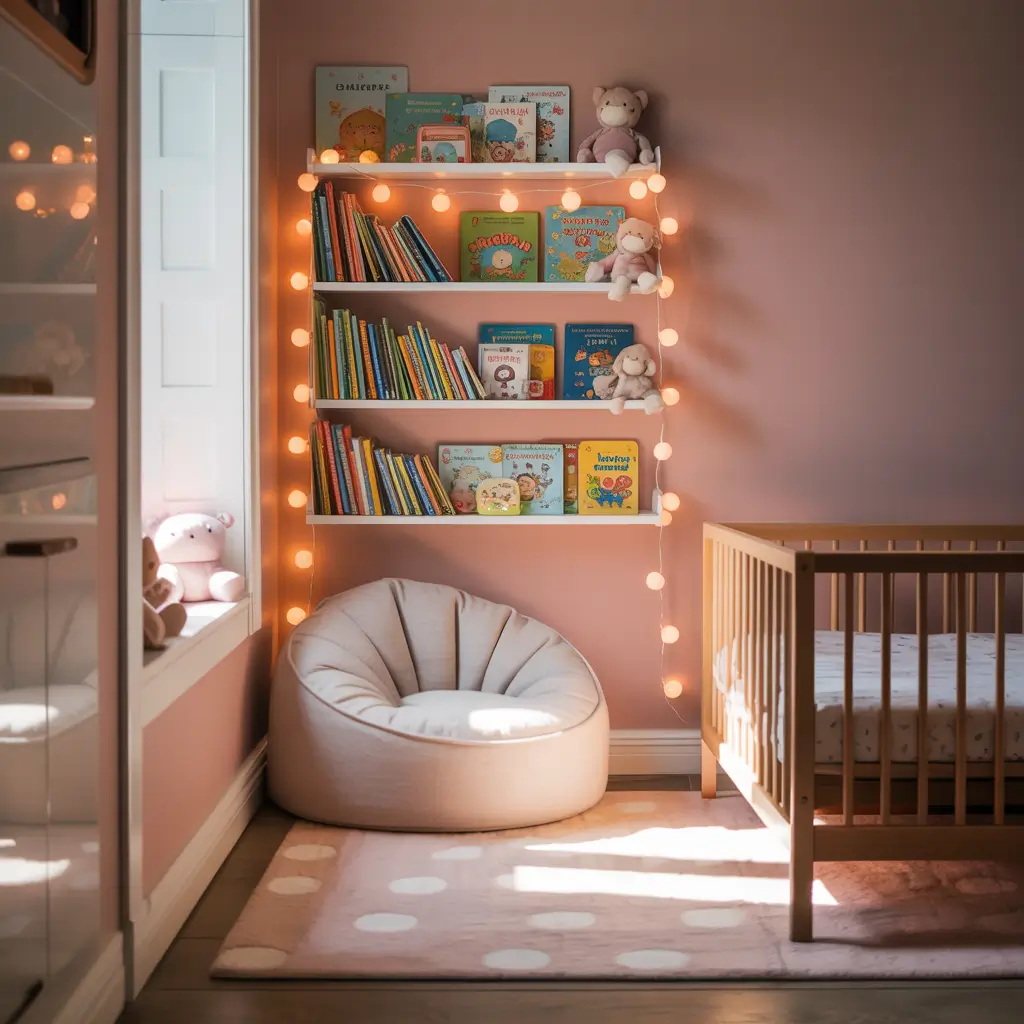
Creating a dedicated reading nook in a small nursery sounds impossible, but hear me out – you’re going to spend hours reading to your baby anyway, so why not make it special? Plus, a defined reading area takes up less space than random chairs and books scattered everywhere.
I carved out a 3×3 corner for a reading nook using a small pouf, wall-mounted book display, and soft lighting. It became our favorite spot for bedtime stories and morning cuddles. The defined space actually makes the nursery feel bigger because every area has a purpose.
The reading nook also solves the “where do I put the chair” problem in small nurseries. Instead of a bulky glider taking up half the room, you get a cozy spot that encourages bonding and literacy from day one.
Reading Nook Essentials
Creating your story corner:
- Small pouf or floor cushion
- Wall-mounted book ledges
- Soft lamp or string lights
- Small side table or shelf
- Cozy throw blanket
- Book storage basket
- Wall decals with quotes
- Soft rug defining the space
Making Reading Spaces Work
Small space reading solutions:
- Use corners for natural boundaries
- Float shelves instead of bookcases
- Choose furniture that stores books
- Display books as wall art
- Rotate book selection regularly
- Keep favorites accessible
- Make it comfortable for adults too
Multi-Functional Changing Station
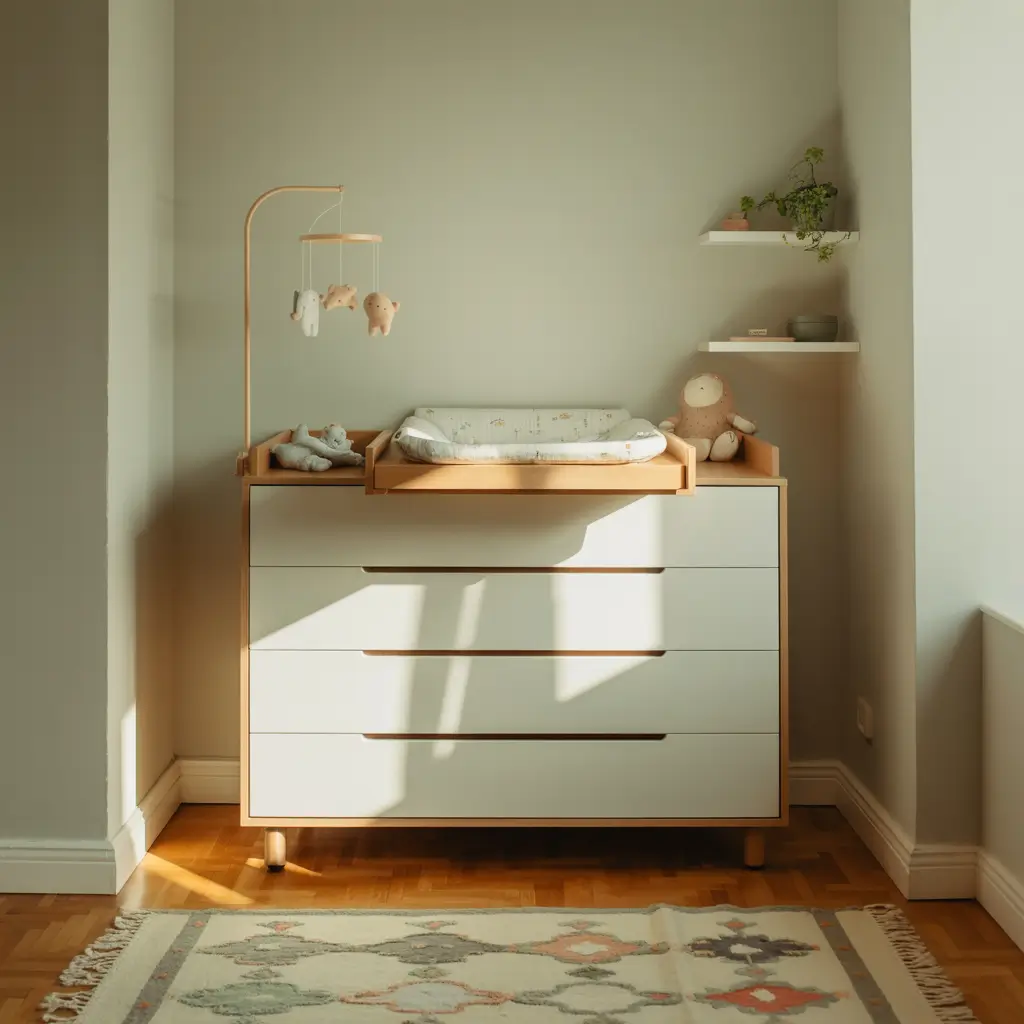
One Piece, Many Jobs
The multi-functional changing station is the Swiss Army knife of small nurseries. Mine does four jobs: changing table, dresser, storage unit, and eventually converts to regular dresser when diaper days end. That’s space efficiency that makes me genuinely happy.
I bought a dresser with a removable changing topper, added organizers in the top drawer for diaper supplies, and use the remaining drawers for clothes and extras. Everything needed for changes lives in one spot, the height is perfect for my back, and when we’re done with diapers, I just remove the topper. Boom, regular dresser.
The secret is choosing a piece that actually works for multiple functions, not trying to force something to multitask. A wobbly bookshelf with a changing pad on top isn’t multi-functional – it’s dangerous.
Multi-Function Options
Changing stations that work harder:
- Dresser with changing topper
- Changing table with storage shelves
- Wall-mounted fold-down changer
- Crib with attached changing table
- Storage bench with changing pad
- Convertible changing table/desk
- Changing basket for any surface
- Over-the-crib changing surface
Maximizing Functionality
Making it work efficiently:
- Keep all supplies within arm’s reach
- Use drawer organizers religiously
- Label everything clearly
- Create diaper changing kit for each level
- Plan for post-diaper life
- Ensure proper height for your back
- Include wipe warmer if space allows (luxury!)
Allso Read: 10 Fun Girl Nursery Ideas and Playful Color Combos
Pastel-Themed Small Space Nursery
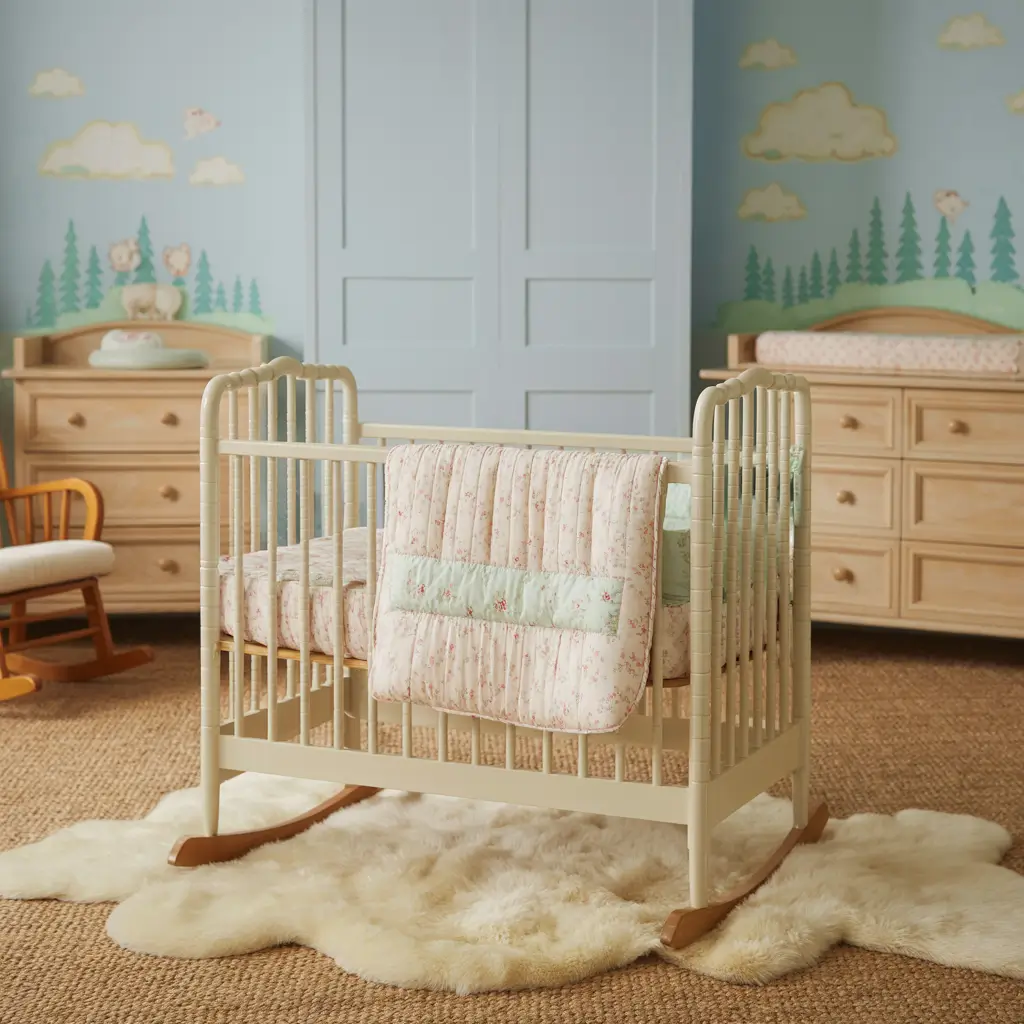
Soft Colors, Big Impact
Here’s something people don’t realize: pastels make small nurseries feel larger and airier than bold colors ever could. Light bounces off those soft pinks, blues, and yellows, creating an illusion of space that dark colors just can’t achieve.
My neighbor’s 7×10 nursery uses a gradient of pastels – palest pink on one wall flowing into lavender, then soft blue. It looks like a dreamy cloud, and everyone comments on how spacious it feels. She spent maybe $100 on paint and created more visual space than $1000 of furniture rearranging could achieve.
The trick with pastels in small spaces is using them strategically. One or two pastel walls, white everything else, and suddenly your closet-sized nursery feels like a peaceful retreat.
Pastel Color Strategies
Making pastels work:
- Gradient effect on one wall
- Mix 2-3 pastels maximum
- Keep furniture white or natural
- Use pastels in textiles
- Add metallic accents for sophistication
- Paint ceiling lightest shade
- Keep floors neutral
- Use pastels to define zones
Pastel Combinations
Palettes that expand space:
- Blush + white + gold
- Mint + gray + cream
- Lavender + sage + white
- Butter yellow + pale blue + white
- Peach + mint + natural wood
- Soft rainbow gradient
- Monochromatic pastels
Wall-Mounted Toy & Book Storage
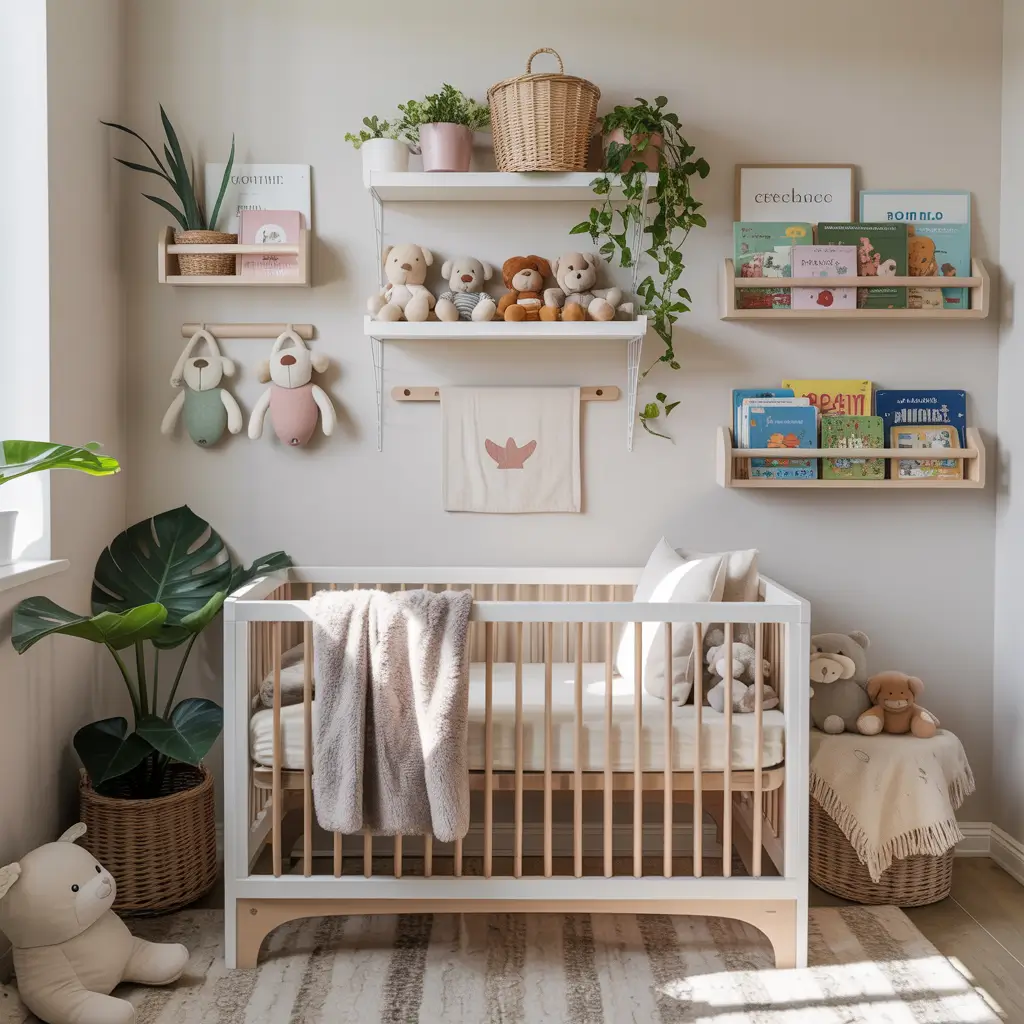
Everything Off the Floor
The day I discovered wall-mounted everything was the day my small nursery doubled in size. Okay, not literally, but it felt like it. Toys in wall baskets, books on floating shelves, even stuffed animals in wall-mounted nets – suddenly the floor was clear and the room felt massive.
I installed a pegboard system on one wall of my nursery, and it’s been a game-changer. Baskets hang at different heights, hooks hold everything from clothes to toys, and I can rearrange as needed. The baby can’t reach it yet (safety first), but I can grab anything while holding him. 🙂
Wall-mounted storage also grows with your child. Start with it high for safety, lower it as they grow, and eventually they’re picking their own books from wall shelves. It’s storage that evolves.
Wall Storage Solutions
Getting everything up:
- Pegboard with baskets
- Floating shelves at varying heights
- Wall-mounted toy hammocks
- Book ledges for display
- Magnetic strips for metal toys
- Wall pockets for small items
- Hanging organizers
- Corner shelving units
Installation Best Practices
Making it secure:
- Find and use wall studs
- Test weight limits thoroughly
- Keep heavy items lower
- Use appropriate anchors
- Consider earthquake safety
- Leave growing room
- Create accessible zones
Scandinavian Tiny Nursery
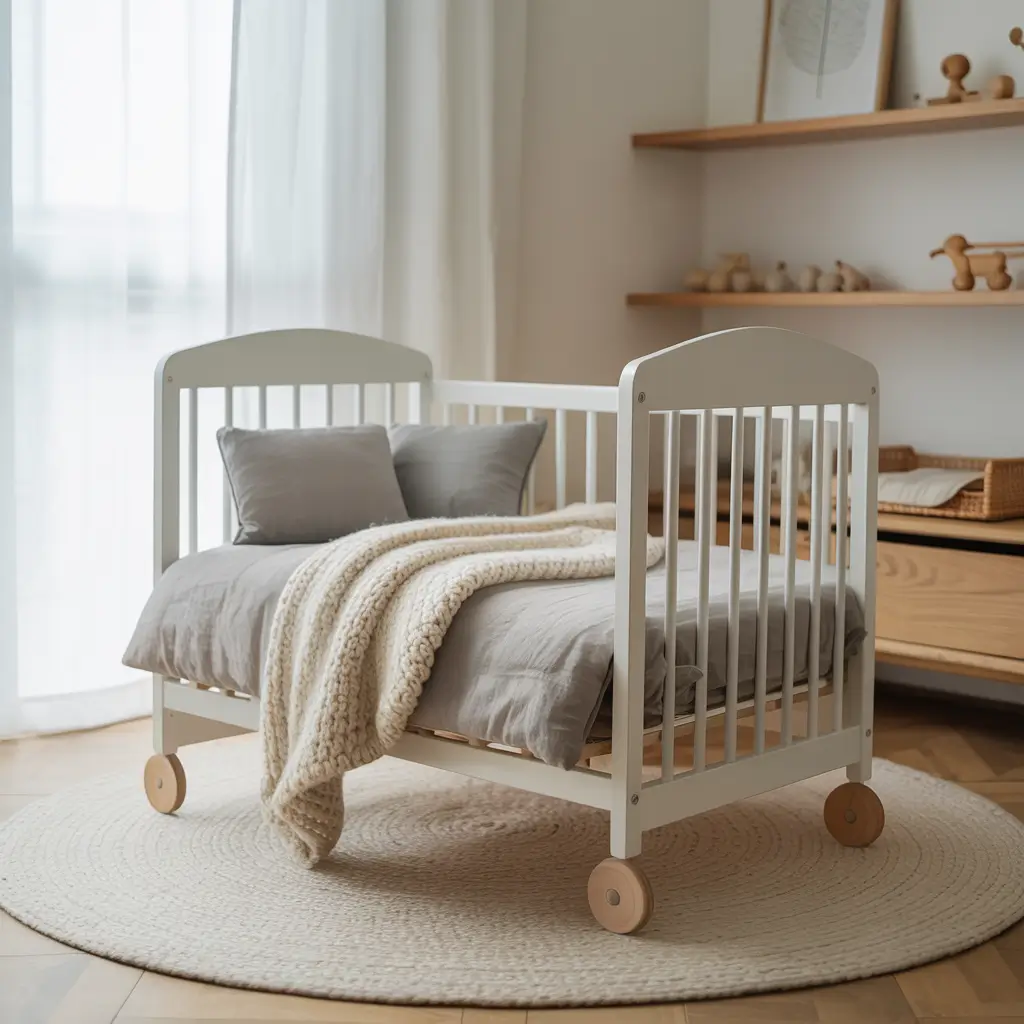
Nordic Wisdom for Tiny Spaces
Scandinavian design was basically invented for small spaces, which makes sense when you realize how tiny Nordic apartments are. The philosophy of functional beauty, natural materials, and cozy minimalism works perfectly in small nurseries.
My Scandinavian-inspired nursery uses white walls, natural wood accents, and exactly five decorative items. Everything has a purpose, nothing is excessive, and the room feels like a peaceful sanctuary. The hygge is real, and it only took 80 square feet to achieve it.
The Scandi approach works because it prioritizes function without sacrificing warmth. You’re creating a cozy nest, not a cold showroom, but every single item earns its place.
Scandinavian Essentials
Creating Nordic calm:
- White or very light gray walls
- Natural wood furniture
- Minimal decorative objects
- Cozy textiles (wool, cotton)
- Excellent lighting
- One or two plants
- Neutral color palette
- Functional everything
Adding Hygge to Small Spaces
Making it cozy:
- Layer soft textures
- Use warm lighting
- Add sheepskin rug
- Include knit blankets
- Choose quality over quantity
- Display meaningful items only
- Keep it simple but warm
Also Read: 12 Creative Baby Nursery Ideas for a Magical Space
Hanging Decor & Mobile Focus
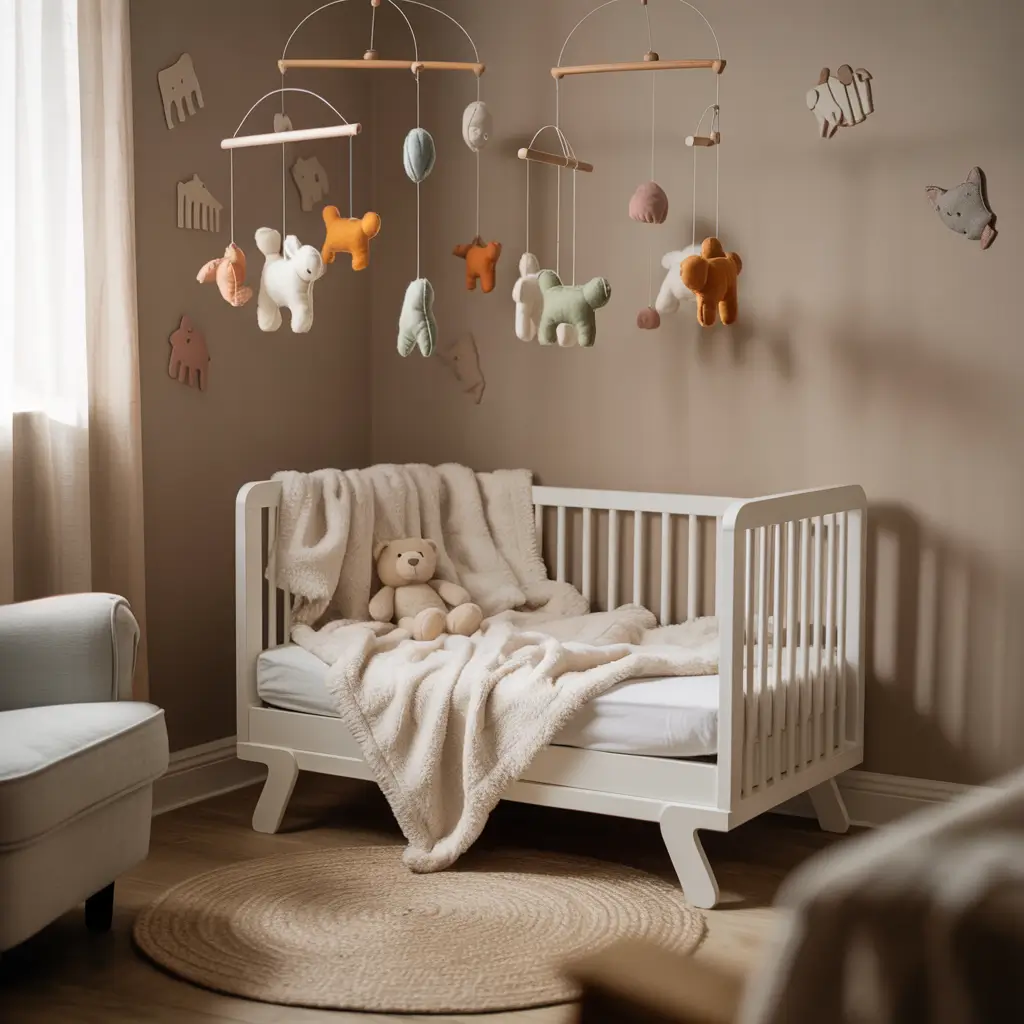
Using Air Space Like a Pro
Here’s the thing about small nurseries and hanging decor – you’ve got all this air space doing nothing while your floor is cramped. Mobiles, hanging planters, suspended shelves, paper lanterns – the ceiling is basically free real estate nobody thinks about.
My tiny nursery has three hanging elements that make it special: a gorgeous mobile over the crib, hanging planters in the corner (fake plants because I kill everything), and a suspended shelf for decorative items. The room feels decorated and interesting without losing any floor space.
The key to hanging decor is balance. Too much and you feel like you’re in a wind chime store. Too little and you’re missing opportunities. Find that sweet spot where the eye travels up naturally.
Hanging Decor Options
Using vertical air space:
- Statement mobile over crib
- Hanging planters (real or fake)
- Suspended shelving
- Paper lanterns for soft lighting
- Macrame wall hangings
- Hanging toy storage
- Ceiling-mounted canopy
- Suspended reading chair (if weight allows)
Safety with Hanging Items
Keeping it secure:
- Check ceiling support thoroughly
- Keep hanging items away from crib reach
- Use appropriate ceiling anchors
- Test weight limits carefully
- Avoid items that could fall
- Regular safety checks
- Remove as baby becomes mobile
Making Small Nurseries Mighty
Here’s what three small nurseries taught me: constraints breed creativity. When you can’t just buy more furniture or add another wall, you become innovative.
You think vertically, you choose multi-functional everything, and you realize babies don’t actually need much space – they need smart space.
The best small nursery is one that works for YOUR specific situation. Maybe that’s wall-mounted everything, or perhaps it’s minimalist magic.
Start with your biggest challenge (usually storage), solve that first, then build from there. Don’t try to implement all ten ideas at once – that’s how you end up with a cramped, confused space.
Remember, your baby doesn’t know the nursery is small. They know it’s warm, safe, and smells like you. Everything else is just bonus.
The fact that you’re reading this, planning carefully, and making the most of your space? That already makes you an amazing parent.
Small nurseries force you to be intentional, and intentional spaces are always better than accidental ones, regardless of size. So embrace your tiny nursery, get creative with these ideas, and create something special.
When your kid is older, you’ll miss that cozy little room where everything was within arm’s reach and 2 AM feedings happened in your perfectly organized, tiny sanctuary. Now go make that small space work magic – you’ve totally got this! :/