12 Creative Tiny Nursery Ideas and Small Room Magic
- Bedroom Design
 Ben
Ben- 0
- 43 minutes read
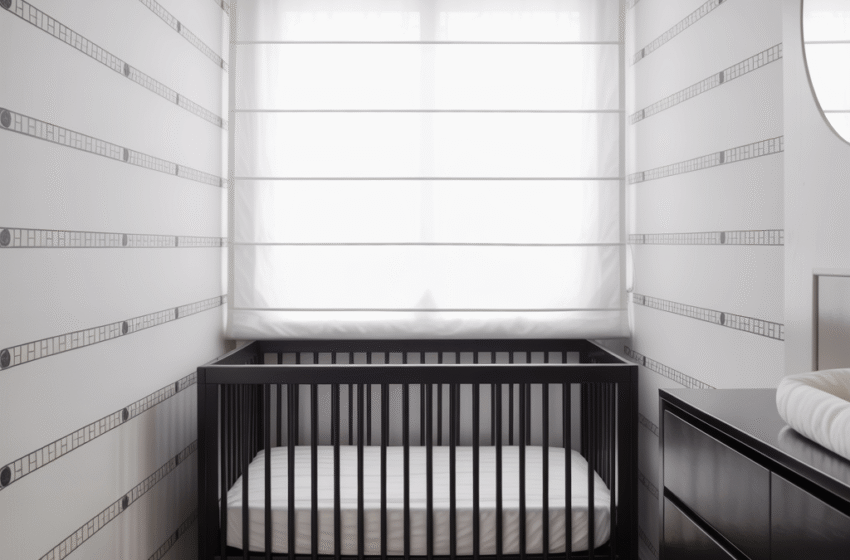
So your “nursery” is actually a glorified closet? Join the club! When I found out I was pregnant in my 500-square-foot apartment, I literally measured the spare room three times, hoping the tape measure was lying.
Spoiler alert: it wasn’t. That 7×8 foot space was all I had, and somehow I needed to fit a baby in there.
Here’s what nobody tells you about tiny nurseries – they’re actually easier to design than huge ones. You can’t overthink it when you barely have room for the basics. No space for that Pinterest-worthy reading nook?
Perfect, one less thing to organize. Can’t fit both a glider and an ottoman? Your back will thank you for choosing just the glider.
After designing my own microscopic nursery and helping five friends tackle their tiny spaces (including one that was literally a walk-in closet), I’ve learned that small nurseries force you to be creative in the best ways.
These 12 ideas aren’t just about making it work – they’re about creating spaces that are actually better because they’re small.
1. Minimalist Scandinavian Tiny Nursery
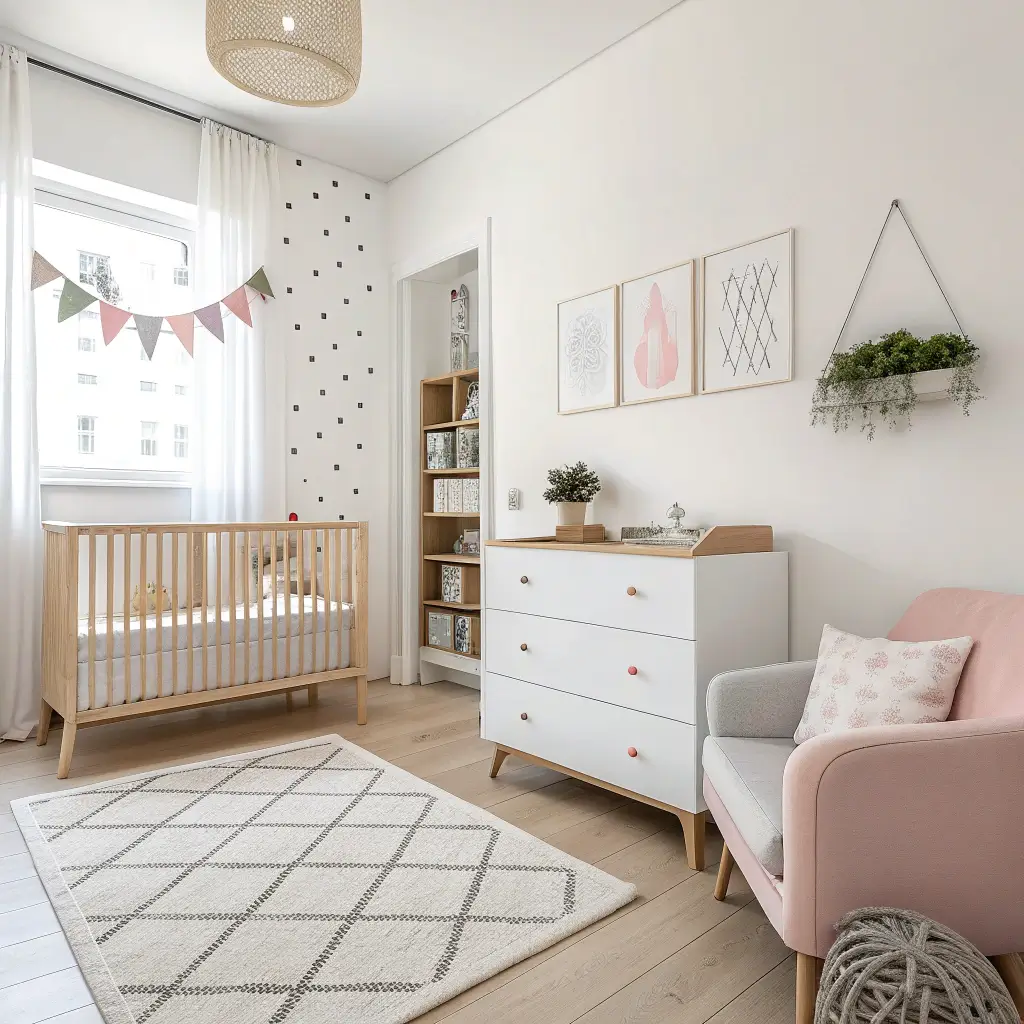
The Scandinavians basically invented the art of living beautifully in small spaces. When your entire country experiences darkness for half the year, you learn to maximize light and minimize clutter real quick. Their approach to tiny nurseries? Pure genius.
I discovered Scandinavian design when desperately googling “help my nursery is a shoebox” at 2 AM. The before-and-after photos of tiny Swedish nurseries blew my mind. These rooms were smaller than mine but somehow looked spacious and serene. The secret? They only put in what they absolutely needed.
The Scandinavian Formula for Tiny Spaces
Here’s what makes it work:
• White walls everywhere (yes, with a baby)
• Light wood furniture with legs (you can see the floor!)
• One color accent maximum
• Hidden storage inside everything
• Natural light prioritized over decor
• Cozy textiles in neutral tones
The philosophy is simple – when you can’t go out, go up. Wall-mounted everything, floating shelves, and hooks at adult height keep the floor clear and the room feeling open.
Making White Walls Work With Kids
Everyone freaks out about white walls with babies. Here’s the truth:
- Magic erasers handle most marks
- Flat paint actually hides imperfections better
- White makes tiny rooms feel twice as big
- You can add color through removable elements
- Scandinavian kids survive just fine with white walls
The biggest game-changer? Keeping furniture off the floor when possible. My wall-mounted changing table freed up so much space, I actually did a little dance when I installed it.
2. Multi-Functional Furniture Nursery
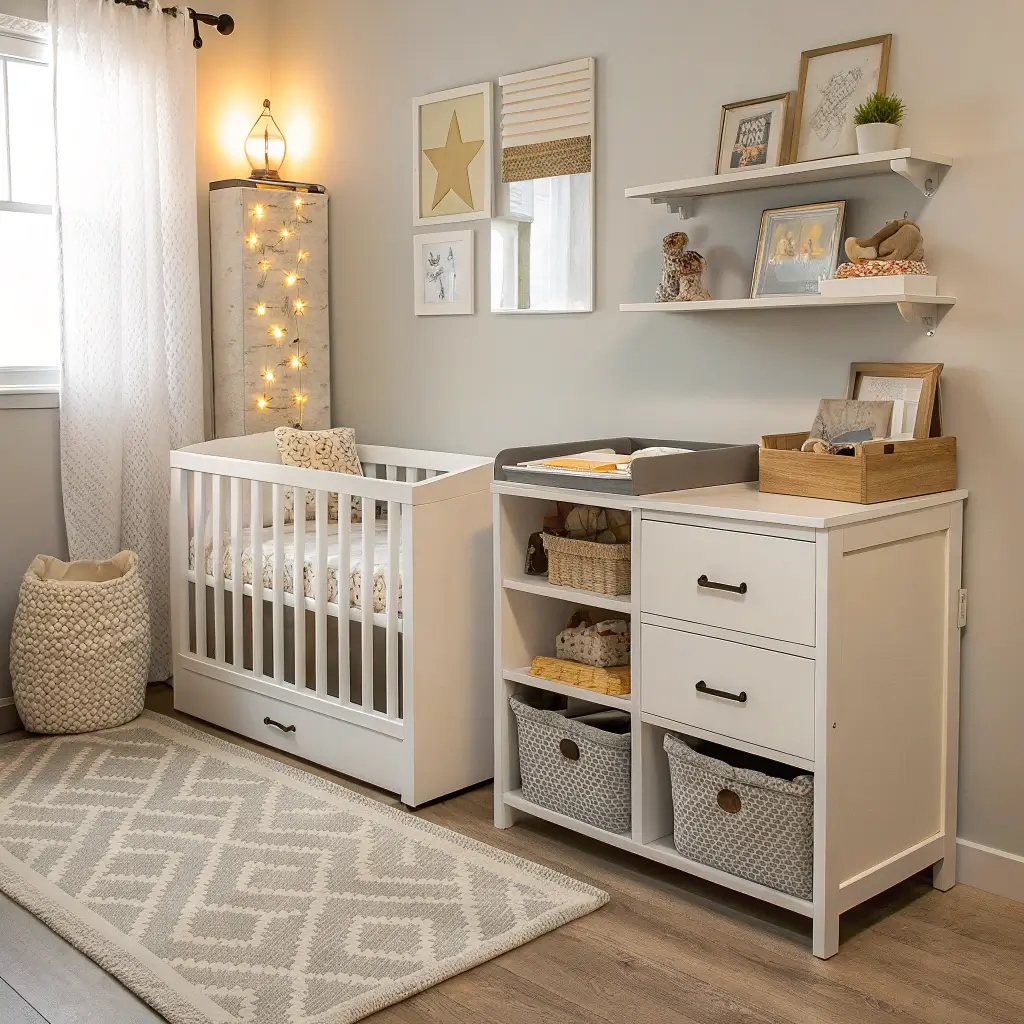
Listen, in a tiny nursery, every piece of furniture needs to work harder than a parent on two hours of sleep. Single-purpose furniture is a luxury you literally don’t have room for. That ottoman that’s just an ottoman? Not in this house.
My favorite tiny nursery hack came from pure desperation. I needed a changing table, dresser, and bookshelf but had room for exactly one piece of furniture. Enter the dresser-changing table combo with bookshelf ends. Three problems, one solution, and I still had room to walk around the crib.
Furniture That Earns Its Keep
Must-have multi-functional pieces:
• Crib with built-in storage drawers
• Ottoman that opens for toy storage
• Changing table/dresser combinations
• Bookshelf that doubles as a room divider
• Rocking chair with pockets for essentials
• Mirror that’s also a growth chart
The key is thinking about furniture differently. That gorgeous vintage trunk? It’s storage, a bench, and a side table. The ladder shelf? Book storage that takes up zero floor space.
Avoiding Multi-Function Mistakes
Not all combo furniture is created equal:
- Test weight limits before buying
- Make sure conversions are actually practical
- Check that storage is accessible with a baby in arms
- Ensure safety standards are met for all functions
- Don’t sacrifice primary function for secondary features
I learned this the hard way with a crib that “converted” to a toddler bed but required buying a $200 conversion kit. Not exactly the money-saver I’d imagined :/
3. Pastel-Themed Cozy Corner Nursery
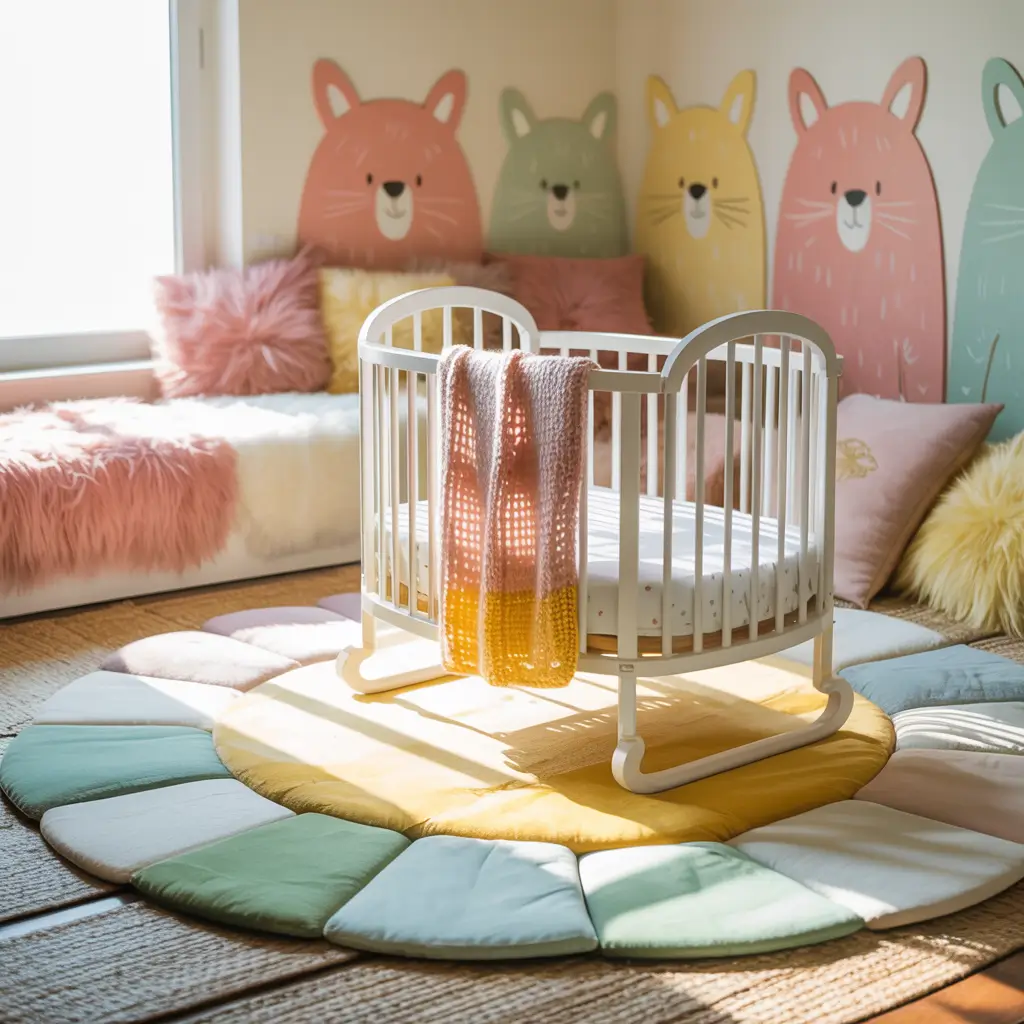
Who says tiny nurseries can’t be absolutely adorable? Pastels are perfect for small spaces because they reflect light while adding color. Plus, soft colors create that cozy, nestled feeling that makes tiny rooms feel intentional, not cramped.
My friend transformed her 6×9 nursery into the most Instagram-worthy pastel paradise using just three colors: blush, mint, and cream. Everyone who sees it assumes the room is bigger than it actually is. The soft colors blur the boundaries and make the walls seem to recede.
The Pastel Strategy for Small Spaces
Make pastels work in tiny rooms:
• Stick to 2-3 pastel shades maximum
• Use the lightest shade on walls
• Add depth with slightly darker pastel accents
• Include white to prevent color overload
• Keep patterns minimal and small-scale
• Let natural light enhance the soft colors
The beauty of pastels? They make everything look expensive and intentional. That basic IKEA crib painted mint? Suddenly it’s a design statement.
Creating Cozy Without Clutter
The cozy corner approach means:
- Defining zones even in tiny spaces
- Using textiles to add warmth, not stuff
- Creating one perfect spot for feeding/rocking
- Layering soft elements vertically
- Making the crib the focal point
Corner placement is crucial in tiny nurseries. I positioned the crib diagonally in one corner, and suddenly the room felt bigger. Physics? Magic? Who cares – it worked!
Also Read: 10 Inspiring Gender Neutral Nursery Ideas and Color Schemes
4. Wall-Mounted Storage Nursery
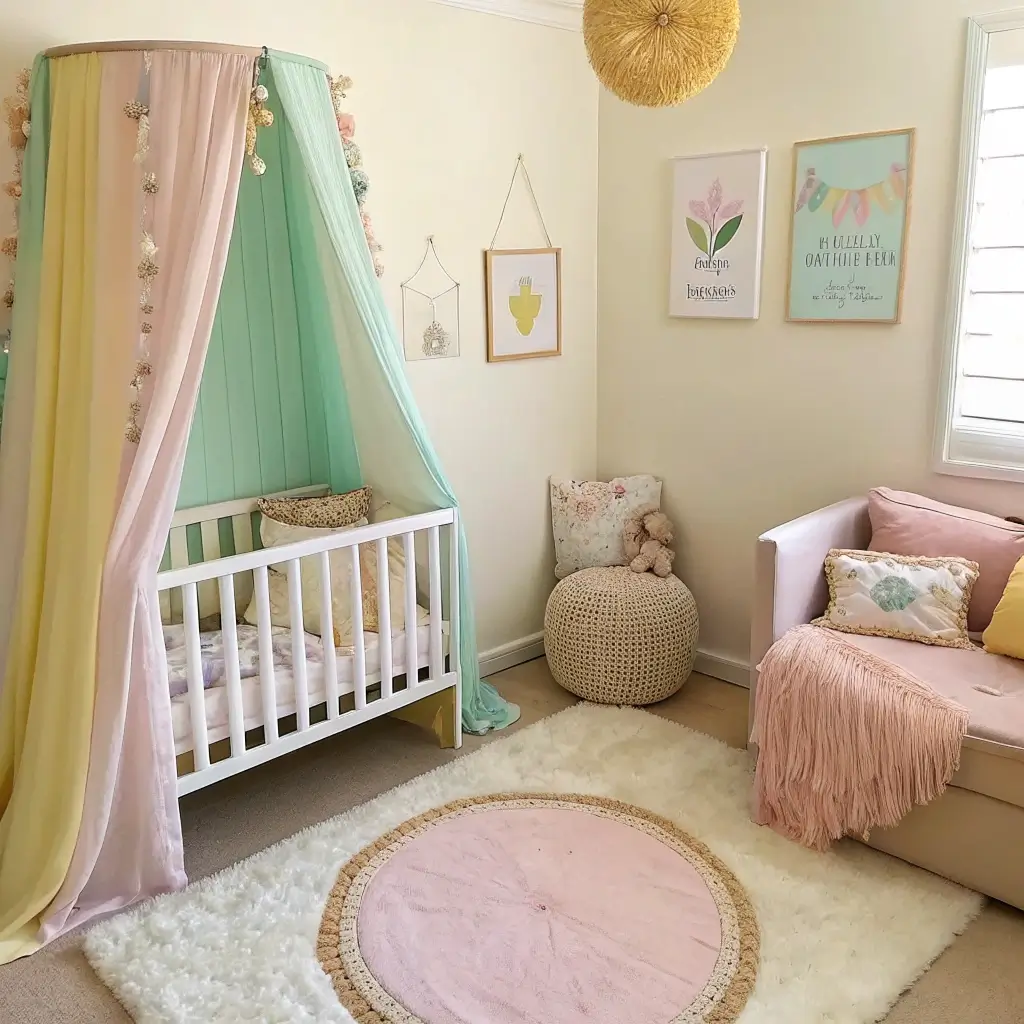
If I could give tiny nursery parents one piece of advice, it would be this: look up. Your walls are prime real estate that most people completely waste. In my tiny nursery, the walls do 90% of the heavy lifting, storage-wise.
I went absolutely wild with wall-mounted everything. Shelves, hooks, organizers, even a wall-mounted diaper station. My friends thought I was crazy until they saw the finished room. With nothing on the floor except the crib and chair, the space felt huge.
Wall Storage That Actually Works
Essential wall-mounted solutions:
• Floating shelves at varying heights
• Pegboard for customizable storage
• Wall pockets for diaper supplies
• Mounted book displays
• Hanging organizers on closet doors
• Command strips for lightweight items
The trick is mounting everything at the right height. Frequently used items go at arm’s reach. Decorative or dangerous items go high. Future-toddler-climbing-temptations go even higher.
Installation Without Destroying Walls
Renting? No problem:
- Command strips hold more than you think
- Tension rods create instant shelving
- Over-door organizers require no holes
- Removable adhesive hooks are lifesavers
- Ladder shelves lean without mounting
My entire wall storage system comes down in 20 minutes if needed. Landlord-friendly solutions exist, you just need to get creative.
5. Boho Chic Small Space Nursery
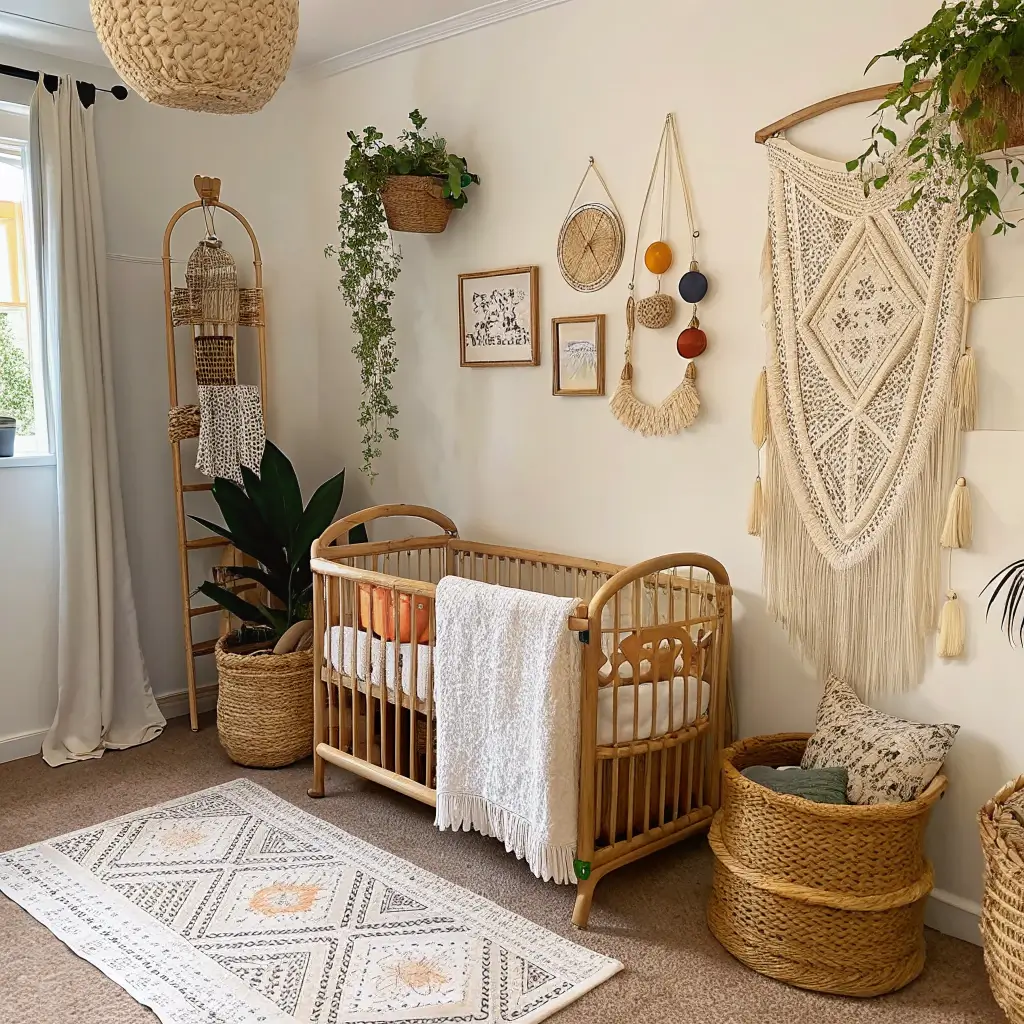
Boho design and tiny spaces are actually perfect together. The layered, collected-over-time vibe means you can mix different pieces without them matching perfectly. In a small room, this eclectic approach adds personality without requiring more space.
I helped my sister create a boho tiny nursery using mostly thrifted and handmade items. The whole room cost less than a fancy crib, but looks like something from a design blog. The secret? Keeping the color palette tight while going wild with textures.
Boho Elements for Tiny Rooms
Small-space boho essentials:
• Macramé wall hangings (vertical interest!)
• Rattan or wicker storage baskets
• Layered rugs to define spaces
• Plants in hanging planters
• Natural wood in various tones
• Textile wall art instead of frames
The best part about boho? Imperfection is part of the charm. That slightly crooked floating shelf? Adds character. Mismatched baskets? Totally intentional.
Keeping Boho Baby-Safe
Safety considerations for small boho spaces:
- Mount everything above grabbing height
- Choose sturdy baskets over flimsy ones
- Secure lightweight furniture to walls
- Skip floor pillows until toddler years
- Keep plants completely out of reach
Small rooms mean everything is within reach, so baby-proofing happens earlier and needs to be more thorough.
6. Convertible Crib Nursery
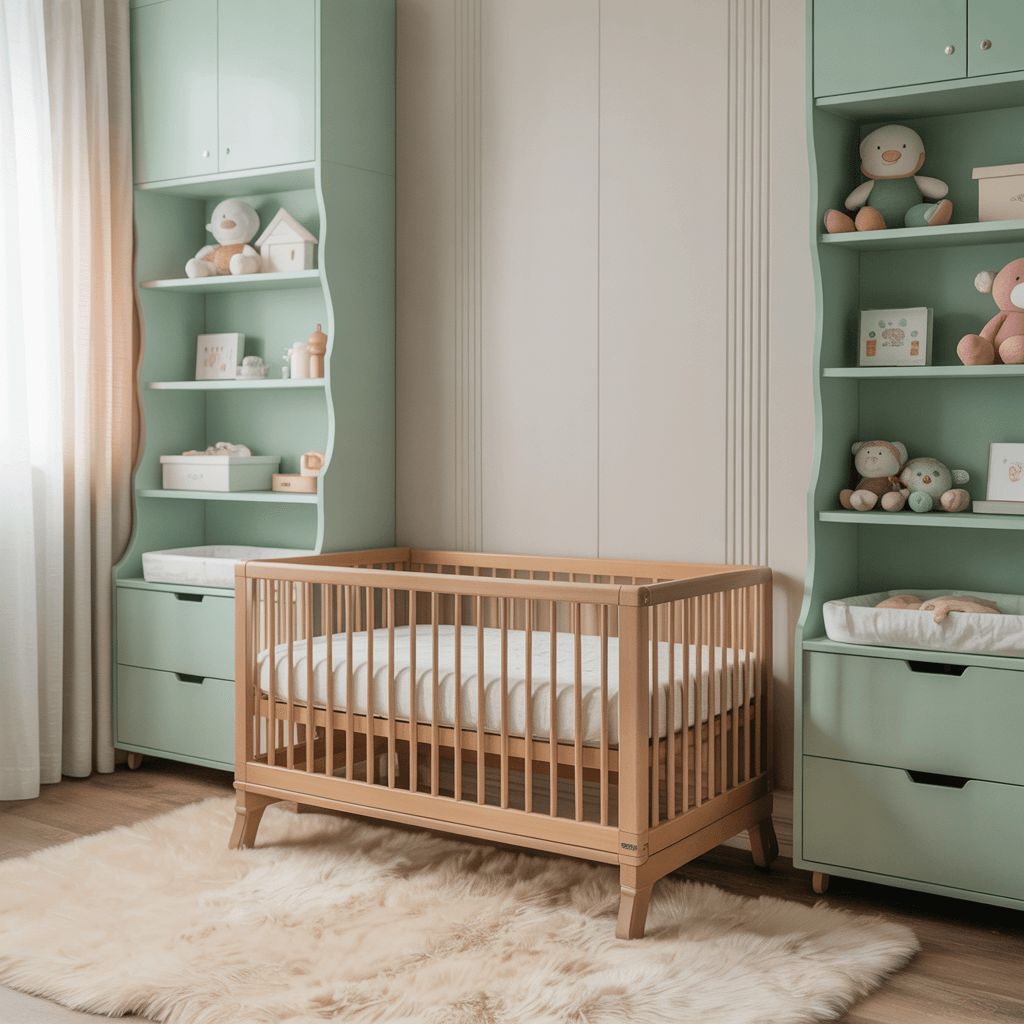
In a tiny nursery, a convertible crib isn’t just smart – it’s essential. Why replace furniture in a small space when you can transform it? The right convertible crib can take you from newborn to teenager in the same tiny room.
I splurged on a high-quality convertible crib, and three years later, it’s the best money I ever spent. It’s been a crib, a toddler bed, and will eventually become a full-size headboard. Meanwhile, friends with traditional cribs are trying to figure out where to store them between kids.
Choosing the Right Convertible
What to look for:
• True conversion ability (not just marketing)
• Conversion kits included or reasonably priced
• Style that ages well
• Solid construction for longevity
• Storage options built in
• Safety certifications for all configurations
Some “convertible” cribs only remove one side to become a toddler bed. That’s not conversion, that’s modification. Look for cribs that genuinely transform.
Maximizing Convertible Benefits
Get the most from your investment:
- Choose neutral colors that grow with kids
- Buy the conversion kit immediately (they discontinue!)
- Consider the room’s future layout
- Invest in quality since it’s long-term
- Keep all hardware in a labeled bag
FYI, the best convertible cribs actually look better as toddler beds than as cribs. It’s like they were designed backwards, which works perfectly for long-term use.
Also Read: 12 Delightful Church Nursery Ideas for Soft and Serene Decor
7. Monochrome Modern Tiny Nursery
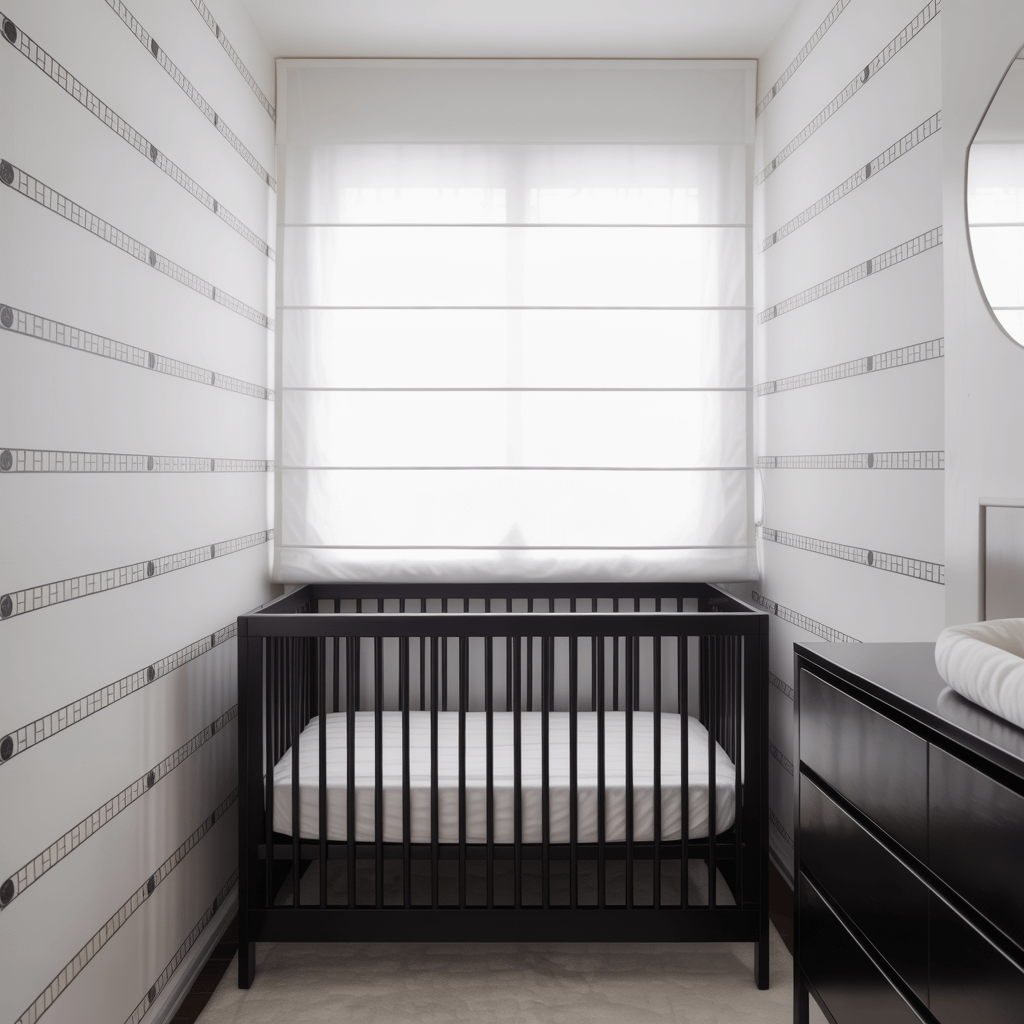
Black and white in a tiny nursery might sound harsh, but done right, monochrome makes small spaces look incredibly sophisticated. Plus, high contrast is actually ideal for newborn vision development. Science and style – what’s not to love?
My neighbor’s 7×7 nursery is entirely black, white, and gray, and it’s stunning. The monochrome palette makes the tiny space feel intentional and designed, not cramped and compromised. Every piece looks like it belongs exactly where it is.
Monochrome Without Monotony
Keep it interesting with:
• Different patterns at various scales
• Texture variety (smooth, rough, soft)
• Strategic pops of metallic
• Varying shades from pure white to charcoal
• One accent color if desired (optional)
• Thoughtful use of negative space
The biggest mistake? Using only pure black and white. Include grays to bridge the contrast and create depth.
Making Monochrome Warm
Add coziness to black and white:
- Layer soft textiles in various textures
- Include warm lighting (crucial!)
- Add natural wood elements
- Use creamy whites, not stark ones
- Include personal photos in black and white
Monochrome rooms photograph beautifully, which is perfect when your tiny nursery is also your backdrop for every baby photo.
8. Nature-Inspired Compact Nursery
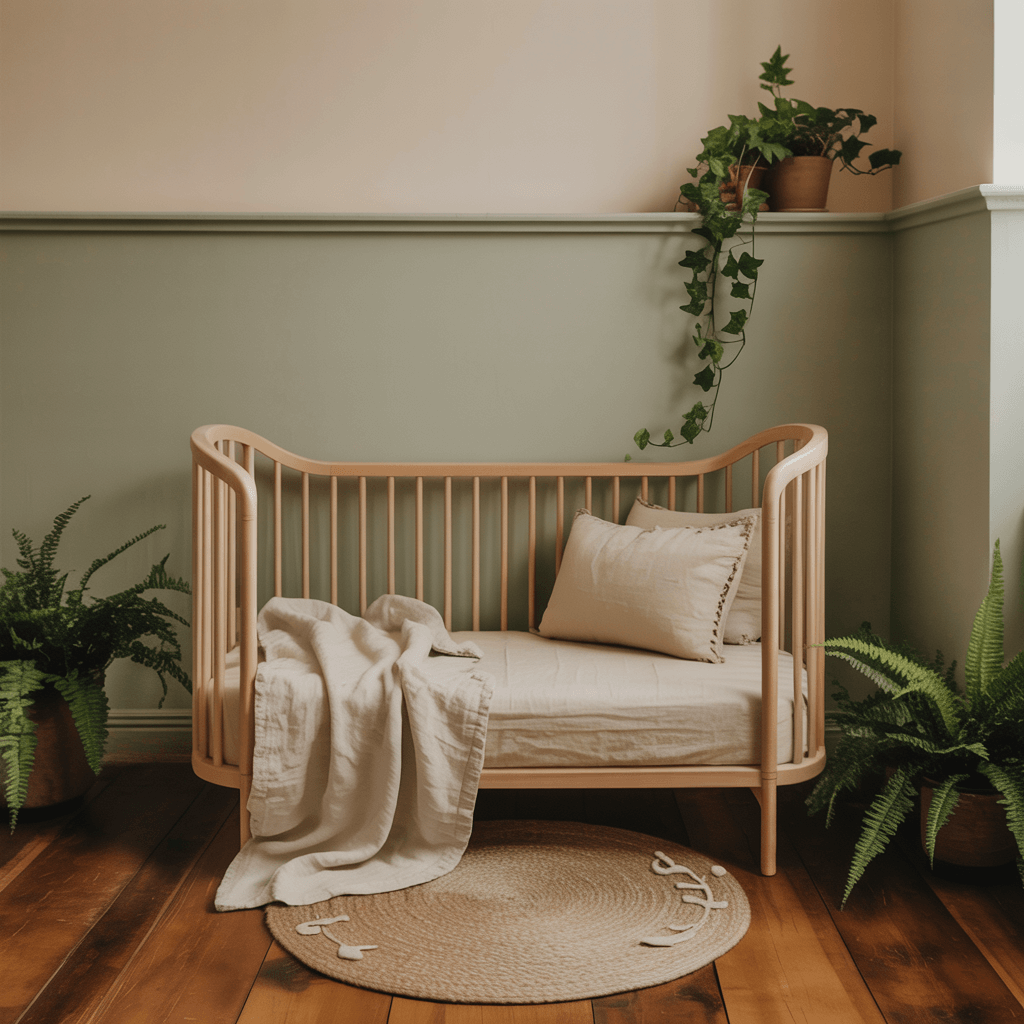
Bringing nature into a tiny nursery creates instant calm and makes the space feel larger. Natural elements don’t add visual clutter the way decorative objects do. They just make the room feel alive and breathing.
I turned my friend’s windowless tiny nursery into a nature oasis using mostly paint and wall decals. A simple mountain mural, some plant decals, and wooden accents transformed the cramped space into a peaceful retreat. Total cost? Under $100.
Natural Elements for Tiny Spaces
Bring the outdoors in:
• Paint or decals of mountains/trees
• Real plants (if you can keep them alive)
• Natural wood furniture
• Nature sounds machine
• Earth-tone color palette
• Natural fiber textiles
The key is choosing a few natural elements and repeating them throughout the space. Consistency prevents the room from feeling chaotic.
Safe Nature Integration
Keep it baby-friendly:
- Research plant toxicity thoroughly
- Mount plants completely out of reach
- Use unbreakable planters
- Avoid loose natural materials
- Secure any climbing elements
Want a pro tip? Fake plants have come so far that nobody can tell the difference, and you’ll never worry about toxic leaves or maintaining them.
9. Vertical Space-Saving Nursery
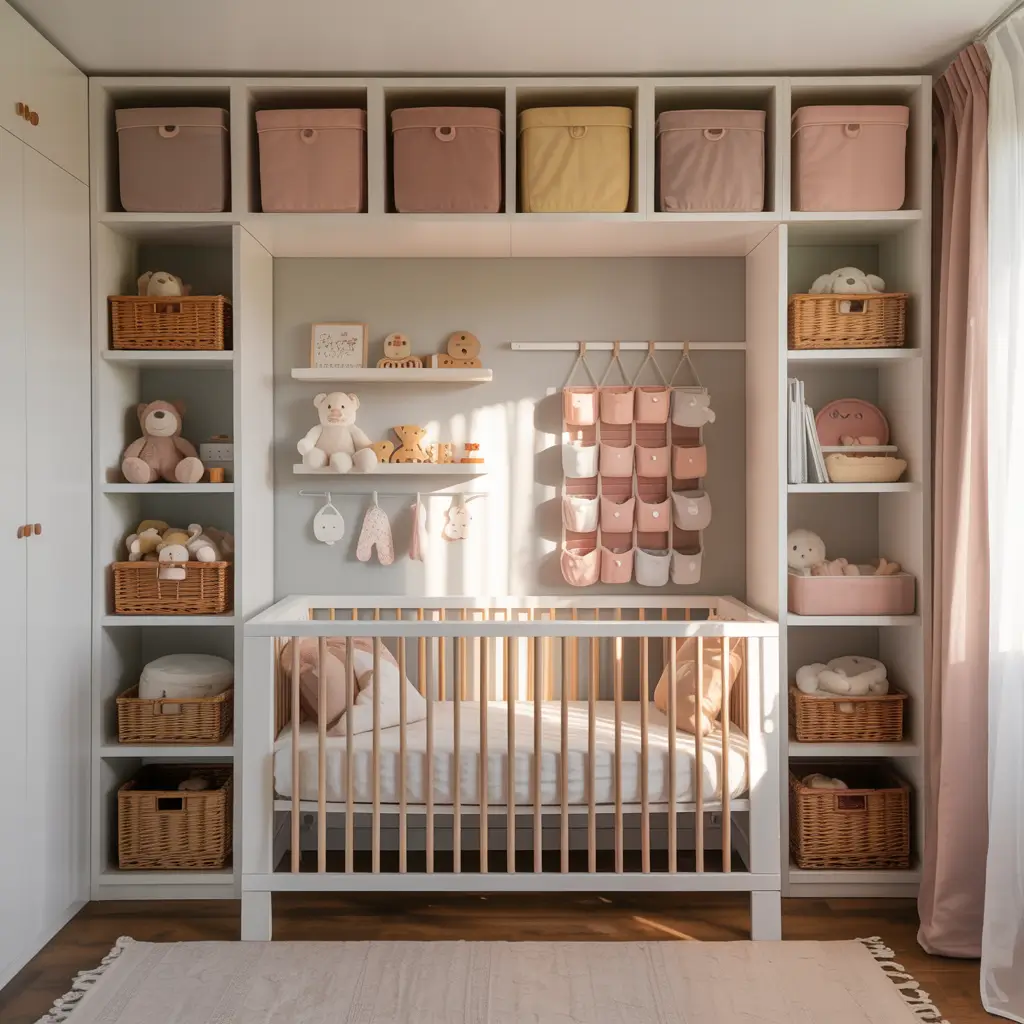
Think of your tiny nursery as a city – when you can’t build out, you build up. Vertical design is the secret weapon of every tiny nursery that somehow fits everything. The floor might be limited, but those walls? That’s your kingdom.
In my own nursery, I created five distinct storage zones just on one wall. Books up high, daily supplies at arm level, toys in hanging baskets, clothes on wall hooks, and decorative items near the ceiling. The floor stayed completely clear except for essentials.
Vertical Solutions That Work
Maximize your wall space:
• Floor-to-ceiling shelving units
• Hanging organizers from ceiling
• Wall-mounted desks for changing
• Vertical book displays
• Suspended storage nets
• Ceiling-mounted mobiles and lights
The game-changer? Using the space above the door. That’s 2-3 feet of storage everyone forgets about.
Safety in Vertical Design
Keep vertical storage safe:
- Anchor everything to studs
- Test weight limits religiously
- Keep heavy items low
- Use safety straps on tall furniture
- Create “no climb” zones
- Regular stability checks
I learned to think like a toddler when designing vertically. If it looks climbable, they’ll climb it, so design accordingly.
Also Read: 10 Dreamy Baby Girl Nursery Room Ideas with Soft Colors
10. Vintage-Inspired Tiny Nursery
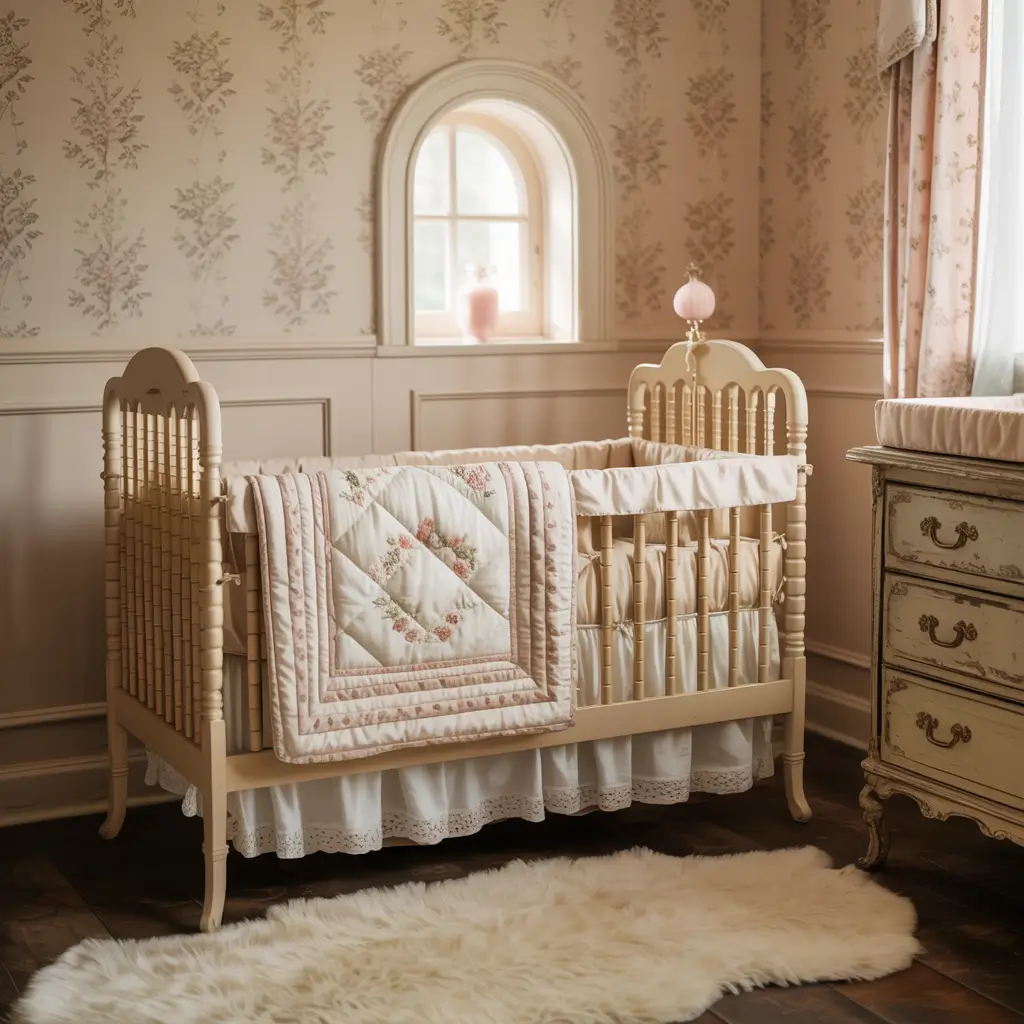
Vintage style works brilliantly in tiny nurseries because older furniture was often smaller and more multipurpose. Plus, vintage pieces add instant character without requiring extra space for decorative items.
My vintage tiny nursery started with one amazing find – a 1940s dresser that was narrow but tall. It fit perfectly in the awkward space between the door and window. From there, I built a whole vintage vibe using mostly secondhand finds and hand-me-downs.
Vintage Pieces Perfect for Small Spaces
Hunt for these gems:
• Narrow vintage dressers
• Antique mirrors to add depth
• Vintage suitcases for storage
• Old wooden crates as shelves
• Retro compact rocking chairs
• Vintage frames for gallery walls
The beauty of vintage? Each piece tells a story, so you need fewer items to create interest.
Modernizing Vintage Safely
Update old pieces properly:
- Check for lead paint before using
- Reinforce wobbly furniture
- Update hardware for safety
- Ensure cribs meet current standards
- Clean thoroughly for allergens
IMO, the best vintage nurseries mix eras. Pair that 1950s dresser with a modern crib for safety and style.
11. Gender-Neutral Small Nursery
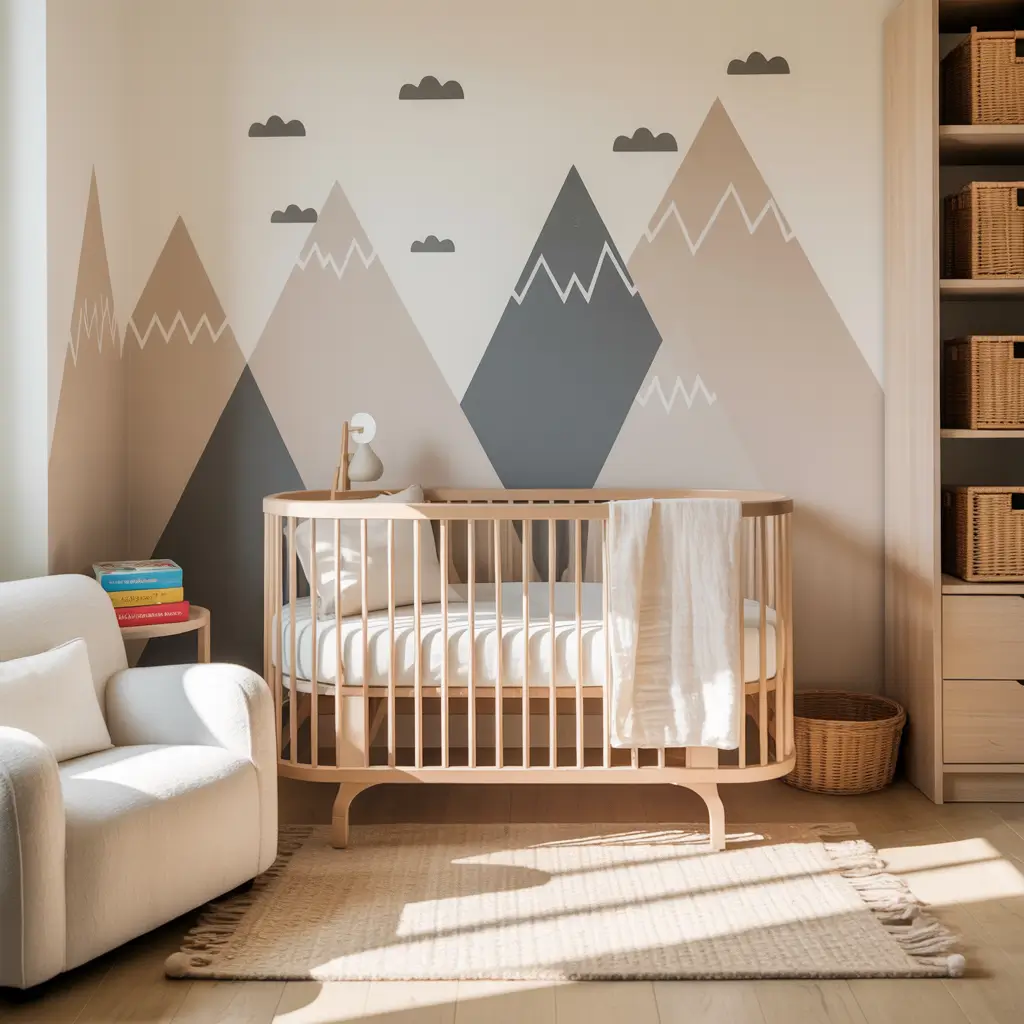
Gender-neutral design is perfect for tiny nurseries because you’re not locked into a color scheme that might feel overwhelming in a small space. Plus, it works for future siblings without redecorating.
My gender-neutral tiny nursery uses nature-inspired colors – sage, cream, and natural wood. Everyone comments on how calming it feels. The neutral palette makes the small space feel larger and more sophisticated than any theme-specific design could.
Colors That Work for Everyone
Perfect gender-neutral palettes:
• Sage green and cream
• Gray and yellow
• Navy and white
• Earth tones throughout
• Black, white, and natural wood
• Soft rainbow pastels
The trick is choosing colors based on the feeling you want, not gender associations.
Making Neutral Interesting
Add personality without gender:
- Focus on textures over colors
- Include meaningful art
- Display books as decoration
- Use patterns strategically
- Add plants for life
- Layer different materials
Neutral doesn’t mean boring. It means the room grows with your child instead of needing constant updates.
12. Bright & Airy Mini Nursery
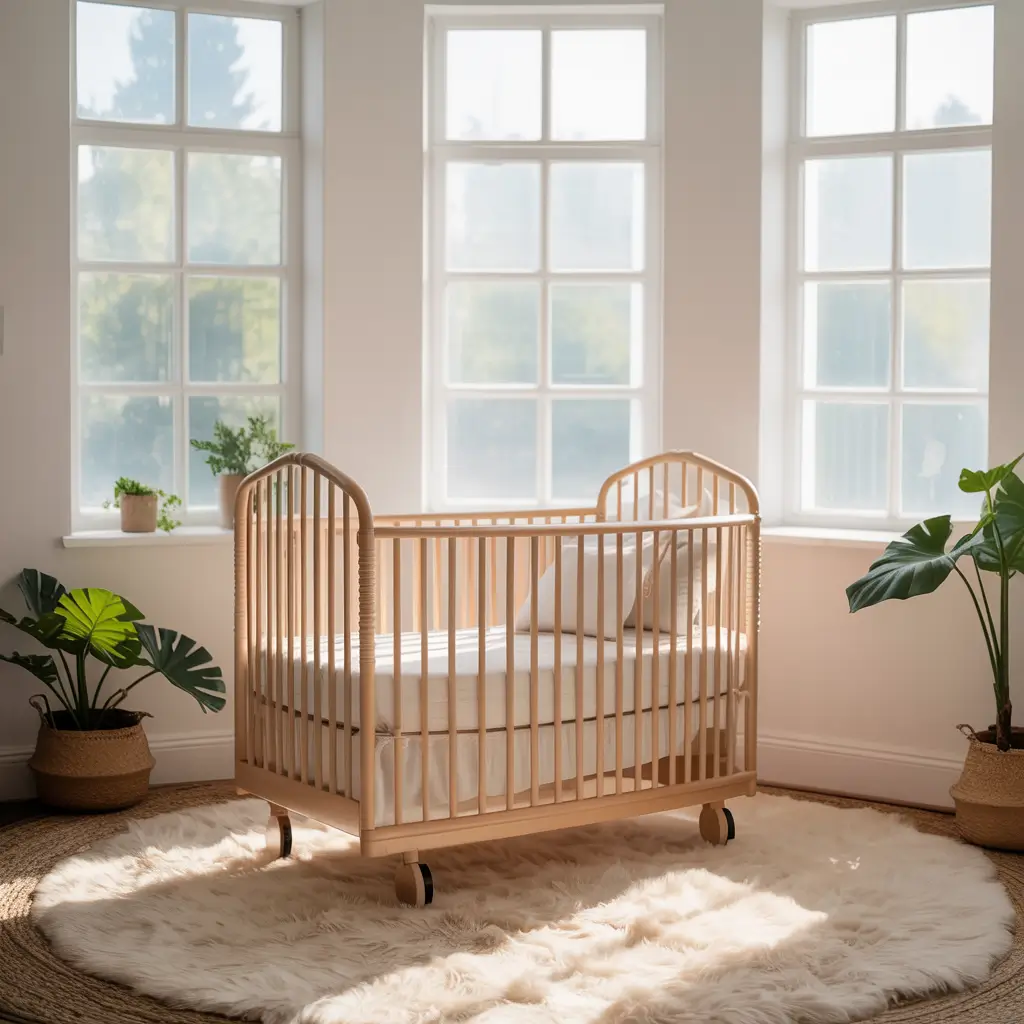
Making a tiny nursery feel bright and airy sounds impossible, but it’s actually totally doable. Light is your best friend in small spaces, and there are so many ways to maximize it beyond just painting everything white.
My cousin’s north-facing tiny nursery gets basically no natural light. But with strategic mirrors, light colors, and good artificial lighting, it feels bright and cheerful all day long. She literally created light where there was none.
Brightening Techniques That Work
Create airiness in tiny spaces:
• Mirrors opposite windows
• Light, reflective paint colors
• Sheer curtains only
• Multiple light sources
• Metallic accents for reflection
• Glass or acrylic furniture
The biggest impact? Painting the ceiling the same color as the walls. It makes the room feel taller and eliminates harsh shadow lines.
Layered Lighting Strategy
Never rely on one light source:
- Overhead for general lighting
- Task lighting for changing/feeding
- Ambient lighting for mood
- Natural light maximized
- Night lights for safety
- Dimmer switches on everything
Good lighting can literally double how spacious a tiny nursery feels. It’s worth investing in proper fixtures.
Making Tiny Work for You
Here’s what three years in a tiny nursery taught me – small spaces force you to be intentional. Every single item needs to earn its place. Every color choice matters.
Every storage solution needs to work perfectly. And you know what? That’s actually a gift.
My tiny nursery is the most organized room in my house because it has to be. There’s no room for maybe-later piles or just-in-case items. Everything has a home, a purpose, and a reason for being there.
The Hidden Benefits of Tiny
What nobody tells you:
• Decorating costs less
• Cleaning takes minutes
• Baby feels cozy and secure
• You can reach everything from the chair
• Less overwhelming for baby
• Forces creativity and innovation
The best part? When friends with huge nurseries visit, they’re actually jealous. My tiny nursery feels intentional, designed, and loved. Their big nurseries often feel empty and overwhelming.
Your Tiny Nursery Action Plan
Start here:
- Measure everything twice
- List absolute necessities only
- Go vertical immediately
- Choose furniture that multitasks
- Embrace the coziness
- Remember it’s temporary
The truth about tiny nurseries? They’re not a compromise – they’re an opportunity. An opportunity to be creative, intentional, and prove that the best things really do come in small packages.
Your baby won’t know the room is tiny. They’ll just know it’s home.
So grab that measuring tape, channel your inner Scandinavian designer, and create the tiny nursery that proves size doesn’t determine style.
You’ve got this, and that small space? It’s about to become the most loved room in your home!