10 Creative Kitchen Splashback Tiles Ideas for Stylish Spaces
- Kitchen Tiles Ideas
 Ben
Ben- 0
- 47 minutes read
Your kitchen splashback does so much more than protect your walls from rogue tomato sauce splatters.
It sets the mood, ties your design together, and honestly becomes the first thing people notice when they walk into your kitchen.
I learned this lesson the hard way. My first kitchen renovation featured the most boring beige splashback imaginable. Every time I cooked, I stared at that lifeless expanse of nothing and regretted not taking more risks. Never again.
The right kitchen splashback tiles transform a functional cooking area into a space that genuinely excites you.
Whether you prefer sleek modern aesthetics, bold artistic statements, or rustic charm, your splashback options stretch far beyond basic white squares.
Ready to discover kitchen splashback tiles ideas that actually inspire you? Let’s explore ten distinct styles that cover every taste, budget, and skill level—from professional installation to weekend DIY projects.
1. Modern Subway Tile Splashback
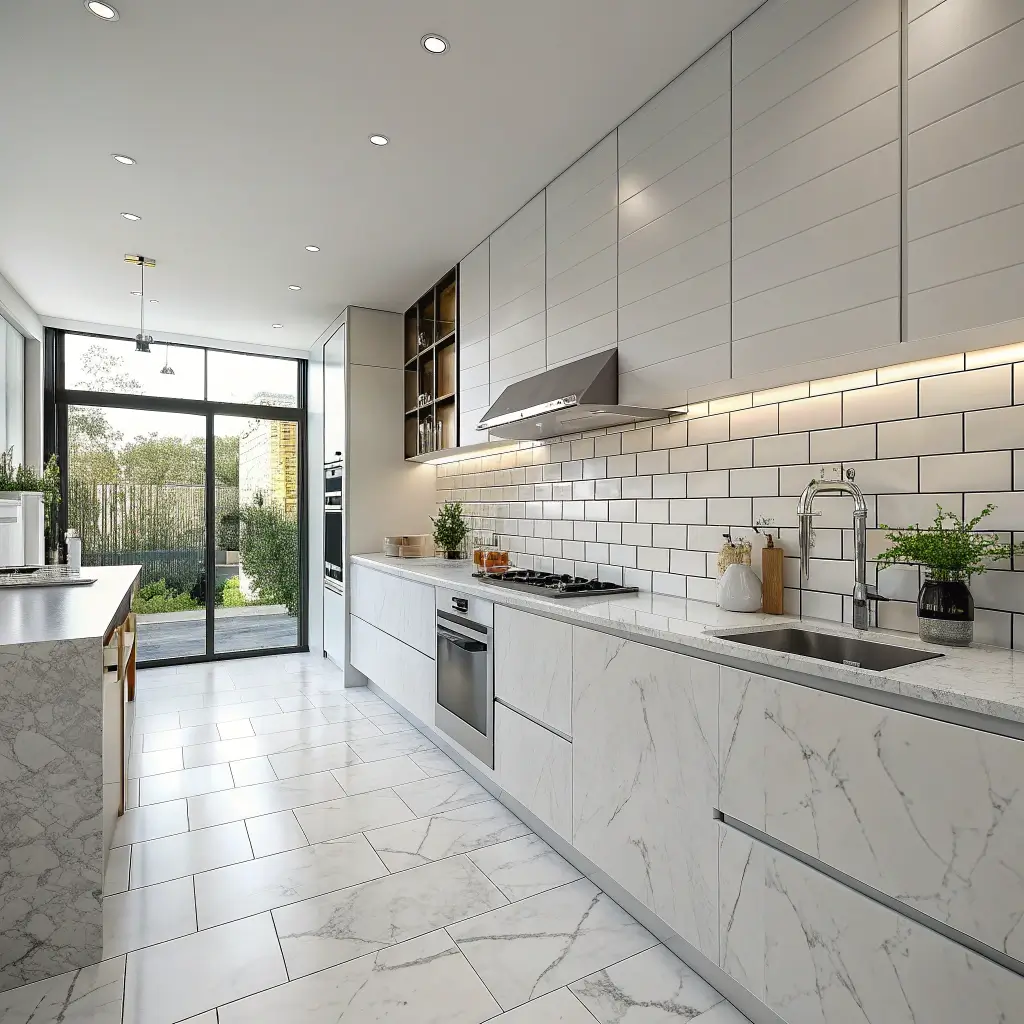
Subway tiles have dominated kitchen design for over a century, and they show absolutely no signs of slowing down. There’s something undeniably satisfying about their clean lines and versatile nature.
Why Subway Tiles Remain Unbeatable
Subway tile splashbacks work in virtually any kitchen style. Traditional, contemporary, farmhouse, industrial—these rectangular tiles adapt effortlessly. Their popularity stems from perfect simplicity combined with endless customization possibilities.
The classic subway tile measures 3×6 inches, but modern variations expand these proportions significantly. Extended subway tiles (4×12 or 4×16 inches) create a more contemporary aesthetic with fewer grout lines and a streamlined appearance.
What makes modern subway splashbacks different from traditional applications?
- Layout variations: Herringbone, vertical stack, or diagonal patterns add visual interest
- Colored grout choices: Dark grout against light tiles creates dramatic contrast
- Finish options: Glossy, matte, beveled, or handmade textures change the entire vibe
- Color beyond white: Sage green, navy blue, and blush pink subway tiles offer fresh alternatives
Installation and Practical Considerations
Subway tiles rank among the easiest splashback tiles to install. Their manageable size means fewer cuts and simpler alignment. Many confident DIYers tackle subway tile projects successfully, though professional installation ensures perfect results.
Grout selection matters tremendously with subway tiles. Dark grout emphasizes each individual tile and creates a grid pattern effect. Matching grout minimizes visible lines for a more seamless appearance. I personally prefer contrasting grout—it adds character and actually hides staining better than white grout ever will.
For a truly modern subway tile splashback, consider extending tiles from countertop to ceiling. This approach eliminates the awkward stopping point that budget renovations often feature and creates a more polished, intentional look.
2. Colorful Mosaic Tile Inspiration
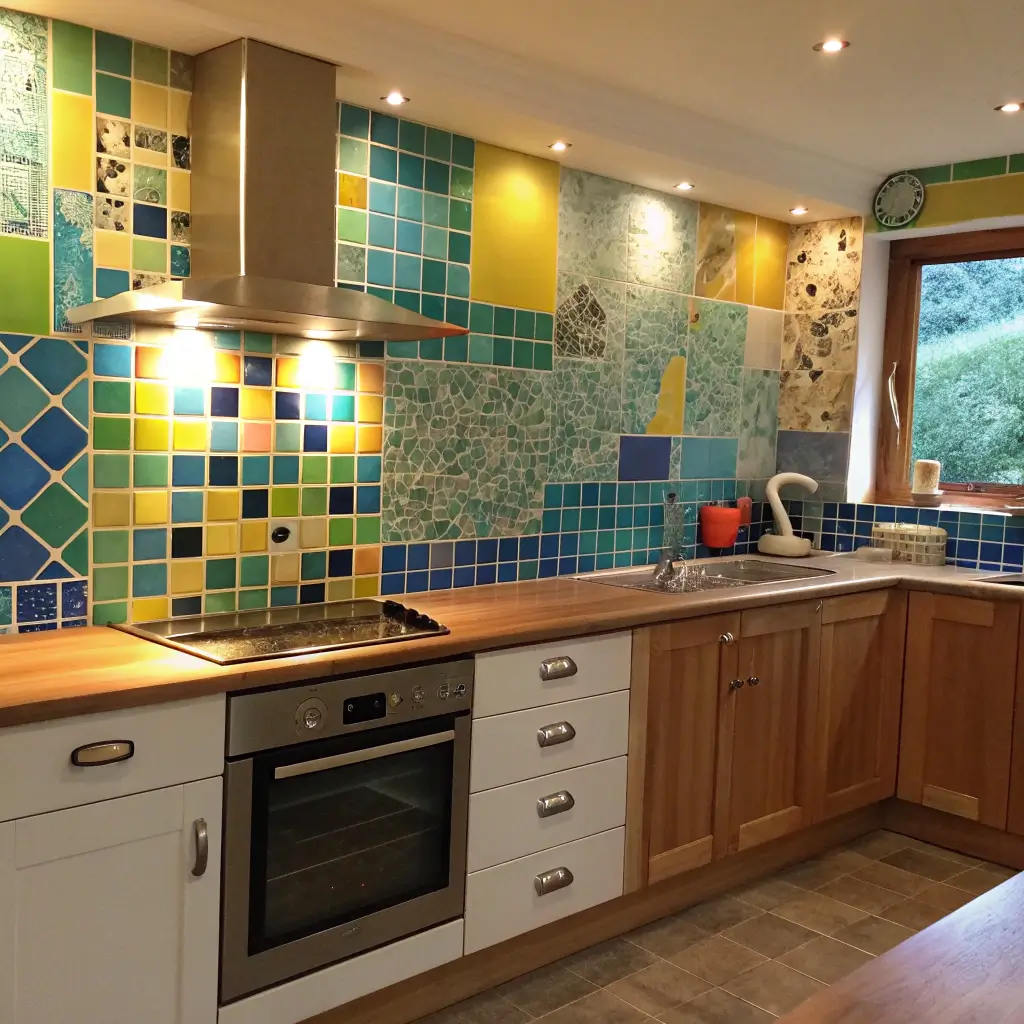
Want your kitchen to feel like a work of art? Mosaic tiles deliver personality, energy, and undeniable visual impact that no other splashback style can match.
The Magic of Mosaic Splashbacks
Mosaic tiles consist of small pieces (typically 1-2 inches) arranged in patterns, gradients, or random compositions. They arrive pre-mounted on mesh backing, making installation more manageable than placing each tiny tile individually.
Mosaic splashbacks offer advantages that larger tiles simply cannot:
- Color blending: Mix multiple shades for gradient effects or complex patterns
- Curve accommodation: Small tiles conform to awkward corners and rounded surfaces
- Visual texture: The grid of grout lines creates inherent depth and interest
- Artistic expression: Create custom patterns or picture-like compositions
- Material mixing: Combine glass, stone, ceramic, and metal in single installations
Choosing Your Mosaic Style
Glass mosaics reflect light beautifully and add luminosity to darker kitchens. They come in stunning color ranges from subtle neutrals to vibrant jewel tones. The translucent quality of glass creates depth that opaque materials cannot replicate.
Stone mosaics bring natural variation and earthy warmth. Each piece differs slightly, creating organic movement across your splashback. Marble, travertine, and slate mosaics work particularly well in traditional or Mediterranean-inspired kitchens.
Ceramic and porcelain mosaics offer the widest color and pattern selections at generally lower price points. These materials provide excellent durability and straightforward maintenance.
My honest take: Mosaic splashbacks require more grout maintenance than large-format tiles. All those grout lines collect grease and grime, especially behind stovetops. Seal your grout properly and expect to scrub occasionally. The visual payoff makes the extra effort worthwhile, but go in with realistic expectations.
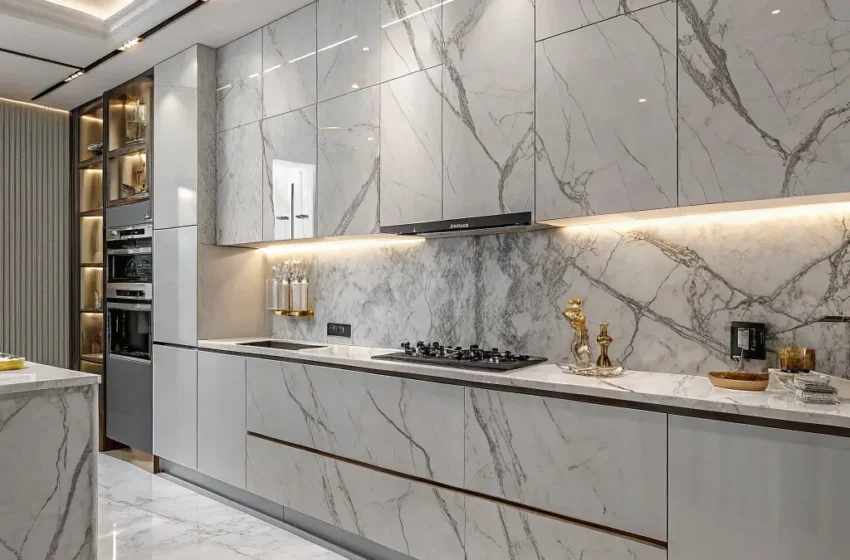
3. Marble Effect Splashback Designs

Real marble screams luxury. It also screams “please don’t spill lemon juice on me” and “I cost more than your first car.” Marble-effect tiles offer the elegance without the drama.
Understanding Marble-Look Alternatives
Modern porcelain and ceramic tiles replicate marble’s distinctive veining, color variations, and surface depth so convincingly that distinguishing them from natural stone requires close inspection. These alternatives democratize luxury aesthetics for everyday kitchens.
Why choose marble-effect tiles over actual marble for splashbacks?
- Acid resistance: Porcelain won’t etch from lemon juice, vinegar, or tomato sauce
- Stain proof: Properly glazed tiles resist absorption completely
- Cost effective: Dramatically cheaper than natural marble slabs
- Consistent appearance: No surprise variations between batches
- Lower maintenance: Standard cleaning products work perfectly
- Easier installation: Lighter weight and simpler to cut
Popular Marble Styles to Consider
Carrara-inspired tiles feature soft gray veining on white backgrounds. This classic Italian marble look suits traditional kitchens and pairs beautifully with both warm and cool color palettes.
Calacatta-style tiles show bolder, more dramatic veining with golden undertones. This rarer marble aesthetic creates striking focal points and suits more contemporary spaces.
Statuario patterns combine the drama of Calacatta with cooler undertones. The heavy, bold veining makes powerful statements in modern kitchens.
For the most realistic marble-effect splashback, choose large format tiles with book-matched veining. Position tiles so patterns flow continuously across the surface, mimicking how natural marble slabs would appear. Rectified edges allow minimal grout lines, enhancing the seamless slab illusion.
Also Read: 12 Gorgeous Kitchen Tiles Design Ideas for Small Spaces
4. Geometric Patterned Tiles
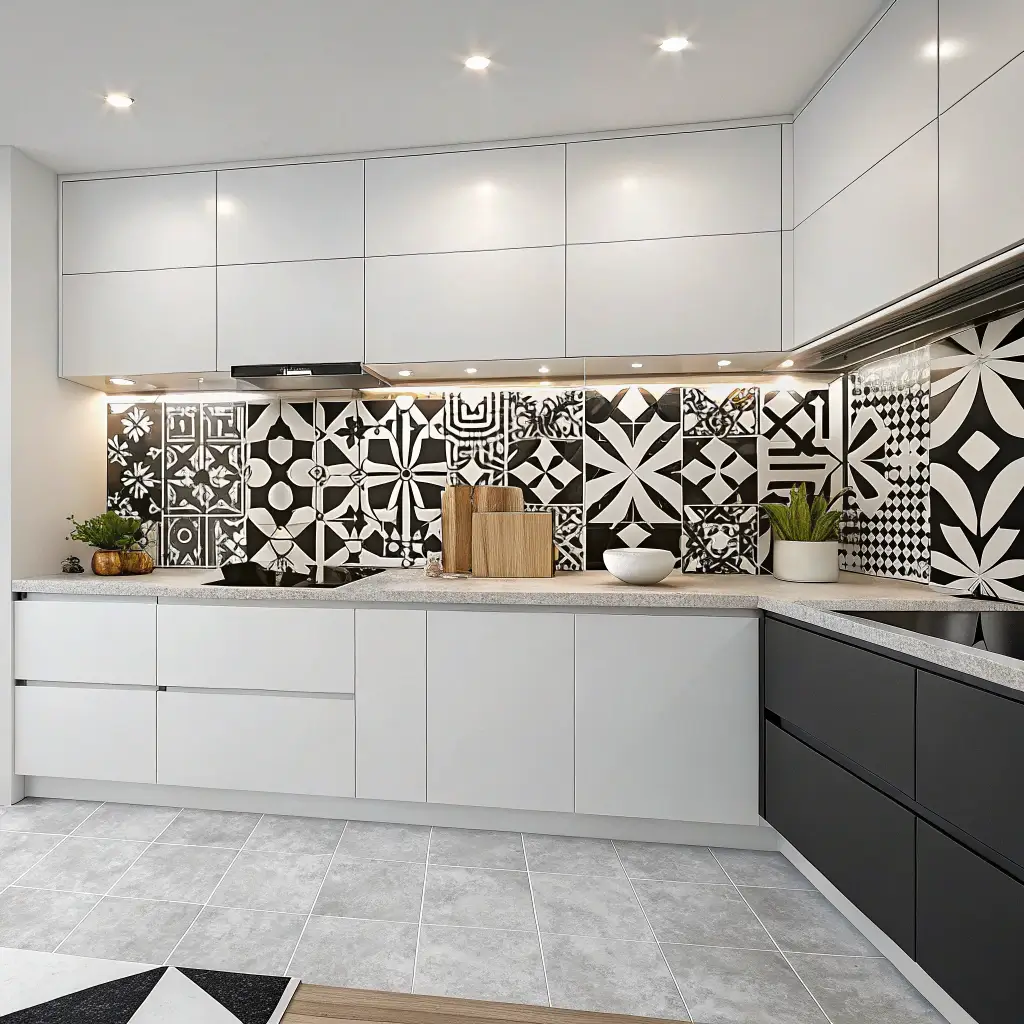
Bored with squares and rectangles? Geometric patterned tiles break the mold—literally—with shapes and arrangements that transform splashbacks into conversation pieces.
The Appeal of Geometric Splashbacks
Geometric tiles encompass everything from hexagons and triangles to complex tessellating patterns and three-dimensional relief designs. They add architectural interest and visual movement that conventional tiles simply cannot achieve.
Popular geometric shapes for kitchen splashbacks include:
- Hexagons: From tiny mosaics to large statement pieces
- Fish scales (scallops): Art Deco elegance with organic curves
- Chevron and herringbone: Directional patterns creating flow
- Arabesque: Mediterranean-inspired flowing shapes
- Triangles: Sharp, modern, and unexpectedly versatile
- 3D relief patterns: Textured surfaces that play with light and shadow
Making Geometric Tiles Work in Your Kitchen
The secret to successful geometric splashbacks? Restraint and balance. These tiles naturally command attention, so surrounding elements should remain relatively simple.
Pair bold geometric patterns with solid-colored countertops and understated cabinetry. Let the splashback serve as your kitchen’s focal point rather than competing with equally bold elements elsewhere.
IMO, geometric tiles work best when you commit fully to the concept. A small strip of hexagons above your sink looks hesitant. A full wall of hexagons extending to the ceiling looks intentional and designed. Go big or stick with simpler options.
Consider color carefully with geometric tiles. Monochromatic geometric patterns create sophisticated texture without overwhelming color. Multi-colored geometric arrangements deliver maximum impact but require careful coordination with your overall kitchen palette.
5. Minimalist White Glossy Tiles
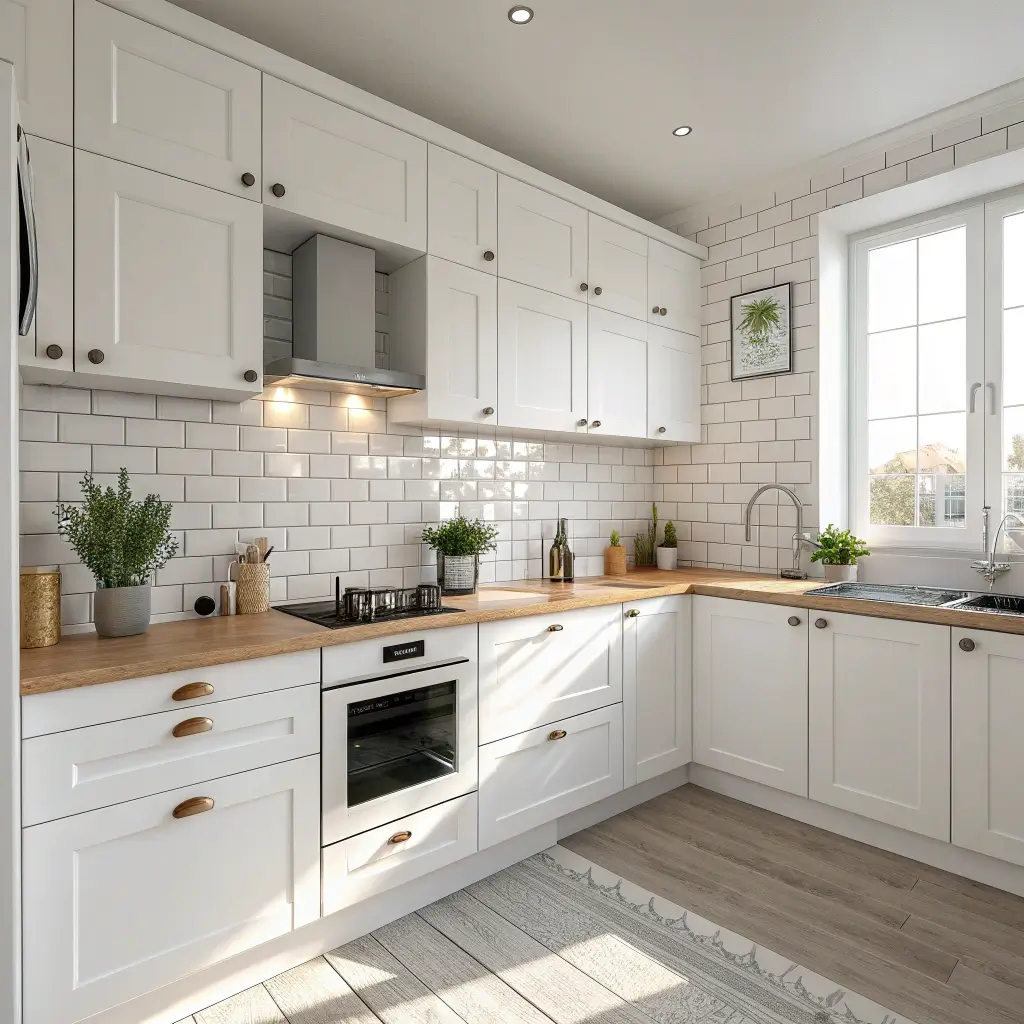
Sometimes the most powerful design statement involves not making a statement at all. Minimalist white glossy splashbacks offer timeless elegance through deliberate simplicity.
The Power of Pure White
White glossy tiles maximize light reflection, brighten spaces, and create the illusion of larger kitchens. Their neutral character provides a blank canvas that accommodates changing décor trends without requiring renovation.
Why designers consistently recommend white glossy splashbacks:
- Light amplification: Glossy surfaces bounce natural and artificial light
- Space enhancement: White recedes visually, making kitchens feel larger
- Timeless appeal: Never dates or conflicts with evolving styles
- Flexibility: Works with any cabinet color, countertop, or accessory palette
- Clean aesthetic: Communicates hygiene and freshness
- Resale value: Universally appealing to potential buyers
Preventing the “Sterile” Look
Here’s the honest challenge with minimalist white splashbacks: they can feel cold, clinical, or boring without thoughtful execution. The solution lies in texture, dimension, and finishing details.
Consider these approaches:
- Beveled edges: Subway tiles with angled edges catch light and create shadow lines
- Handmade textures: Zellige-style tiles offer organic variation within white tones
- 3D patterns: Relief textures add depth without adding color
- Varied sizes: Mix large format tiles with mosaic accents for textural contrast
- Interesting layouts: Herringbone or vertical stack patterns elevate basic tiles
I installed plain white glossy subway tiles in a rental property kitchen years ago. Functional? Absolutely. Inspiring? Not remotely. When I renovated my own home, I chose white zellige-style tiles with handmade irregularities. Same color family, completely different personality. The subtle texture variations transform boring white into something genuinely beautiful.
6. Bold Patterned Ceramic Tiles
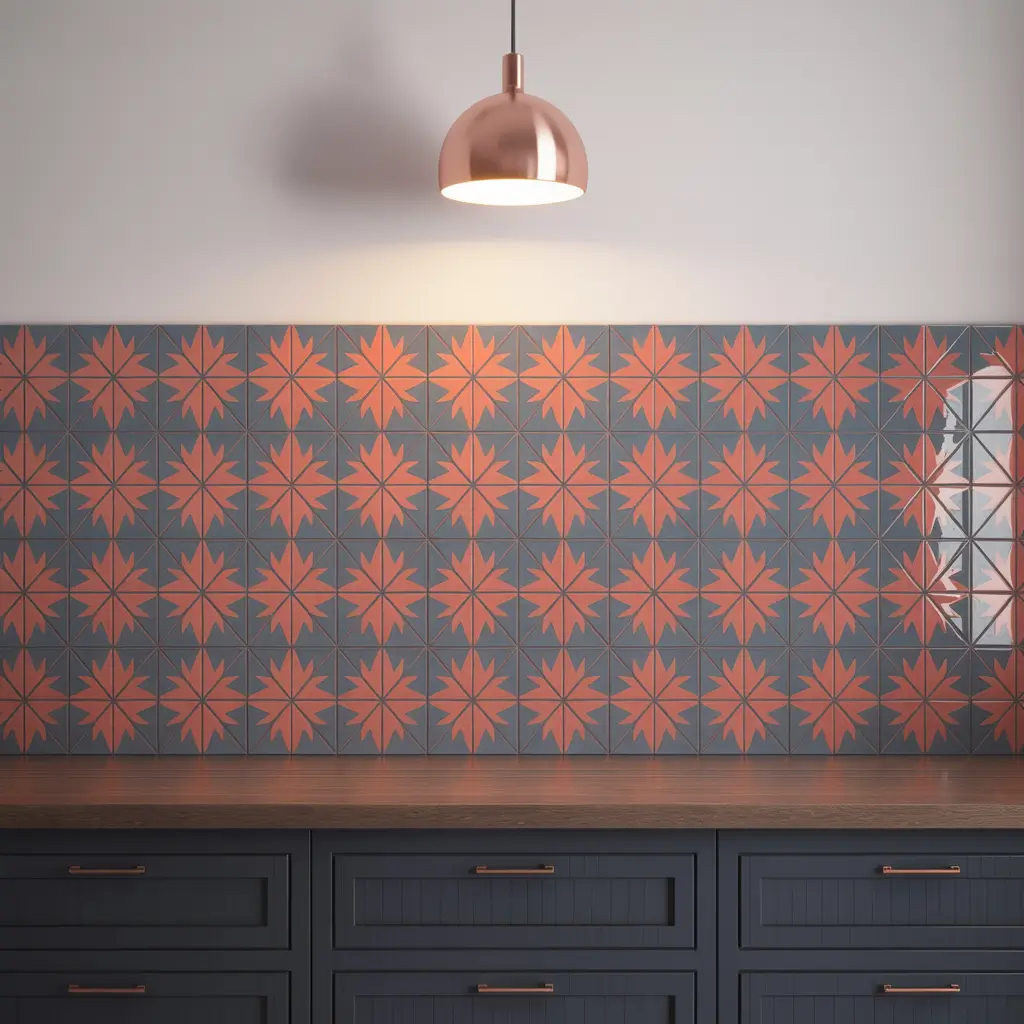
Ready to inject serious personality into your kitchen? Bold patterned ceramic tiles deliver statement-making impact that neutral options simply cannot achieve.
Embracing Pattern in Kitchen Design
Patterned ceramic tiles range from traditional encaustic-inspired designs to contemporary graphic prints. These tiles turn functional splashbacks into artistic focal points that express your unique aesthetic preferences.
Popular patterned tile styles include:
- Encaustic-look patterns: Moroccan and Mediterranean-inspired geometric designs
- Floral motifs: From vintage-inspired to modern botanical prints
- Abstract graphics: Contemporary artistic patterns
- Vintage reproductions: Historical patterns from various eras
- Cultural influences: Spanish, Portuguese, Mexican, and Middle Eastern inspirations
Working with Bold Patterns Successfully
The key to patterned splashback success involves intentional contrast and restraint elsewhere. Bold patterns demand attention—give them the spotlight they deserve.
Keep these principles in mind:
- Solid surroundings: Pair patterned splashbacks with plain cabinets and countertops
- Color coordination: Pull accent colors from the pattern into accessories
- Scale consideration: Larger patterns suit bigger kitchens; smaller patterns work anywhere
- Pattern placement: Feature behind ranges or sinks as defined accent zones
- Grout choices: Usually match grout to the dominant background color
One approach I particularly love: using bold patterned tiles only behind the cooktop while keeping the remaining splashback in a coordinating solid tile. This creates a stunning focal point without overwhelming the entire kitchen.
Patterned tiles also age beautifully. Unlike trendy solid colors that may feel dated within years, traditional patterns carry historical pedigree that transcends fleeting fashion. 🙂
Also Read: 10 Elegant Kitchen Floor Tiles Ideas for Stylish Kitchens
7. Metallic and Reflective Tiles
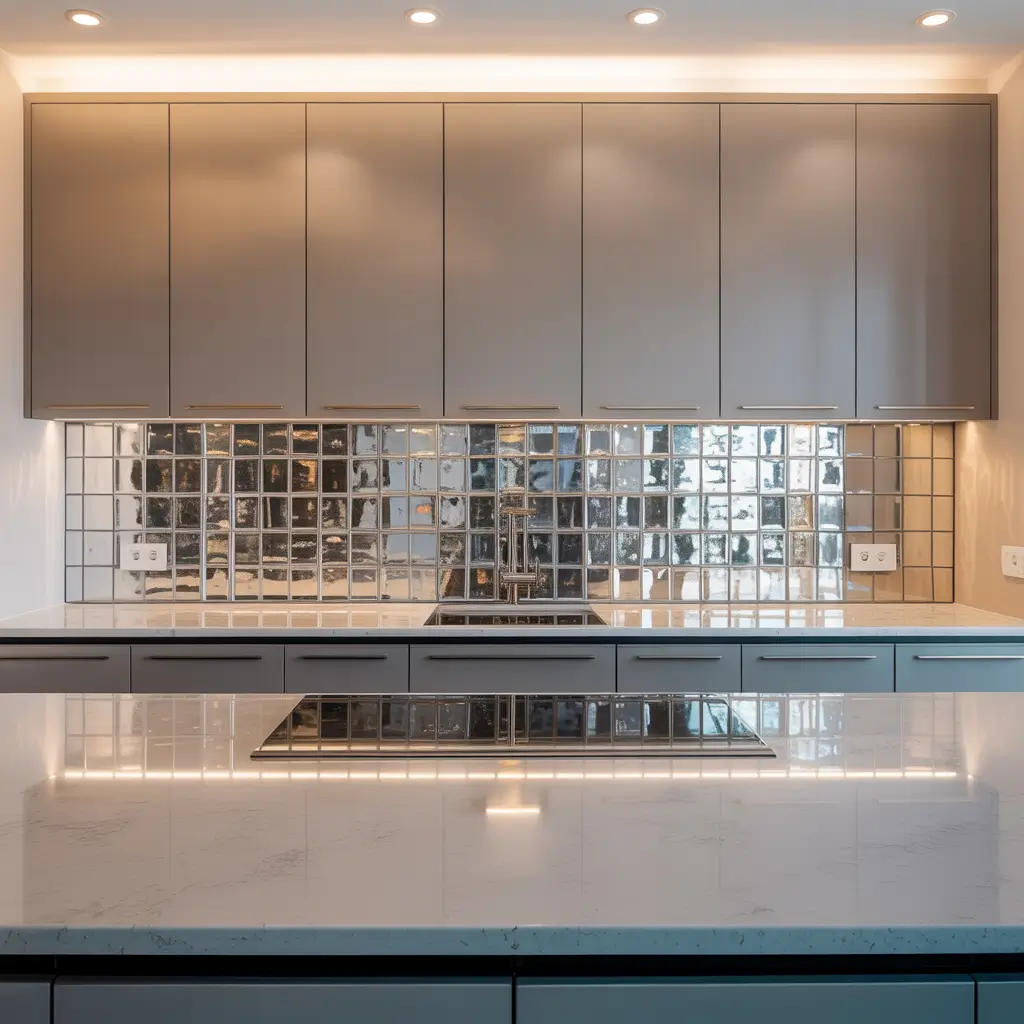
Want your kitchen to sparkle? Metallic and reflective splashback tiles add glamour, light, and contemporary sophistication that conventional materials cannot match.
The Allure of Metallic Surfaces
Metallic tiles incorporate actual metal, metallic glazes, or mirror-like finishes to create light-catching surfaces. They work particularly well in kitchens with limited natural light, bouncing available illumination throughout the space.
Metallic splashback options include:
- Stainless steel tiles: Industrial, professional, and incredibly durable
- Copper and brass finishes: Warm metallic tones adding vintage character
- Antique mirror tiles: Aged, distressed mirror effects with romantic appeal
- Metallic-glazed ceramics: Ceramic tiles with lustrous metallic surface treatments
- Mixed metal mosaics: Combinations of silver, gold, copper, and bronze tones
- Hammered or textured metals: Dimensional surfaces creating organic light play
Practical Considerations for Metallic Splashbacks
FYI, metallic tiles require specific maintenance considerations. Fingerprints and water spots show prominently on highly reflective surfaces. Stainless steel tiles need regular wiping to maintain their pristine appearance.
Some metallic finishes scratch more easily than ceramic or porcelain. Position softer metal tiles away from high-contact areas or embrace the developing patina as part of the aesthetic.
Mirror tiles dramatically expand perceived space but reflect everything—including clutter. Keep countertops organized if you choose this option, or prepare for your morning coffee mess to stare back at you.
For maximum impact with minimal maintenance, consider metallic tiles as accent elements rather than full splashback coverage. A band of copper tiles running through a neutral field, or metallic mosaic inserts within larger format tiles, delivers the glamour without overwhelming maintenance demands.
8. Rustic Brick-Style Splashback
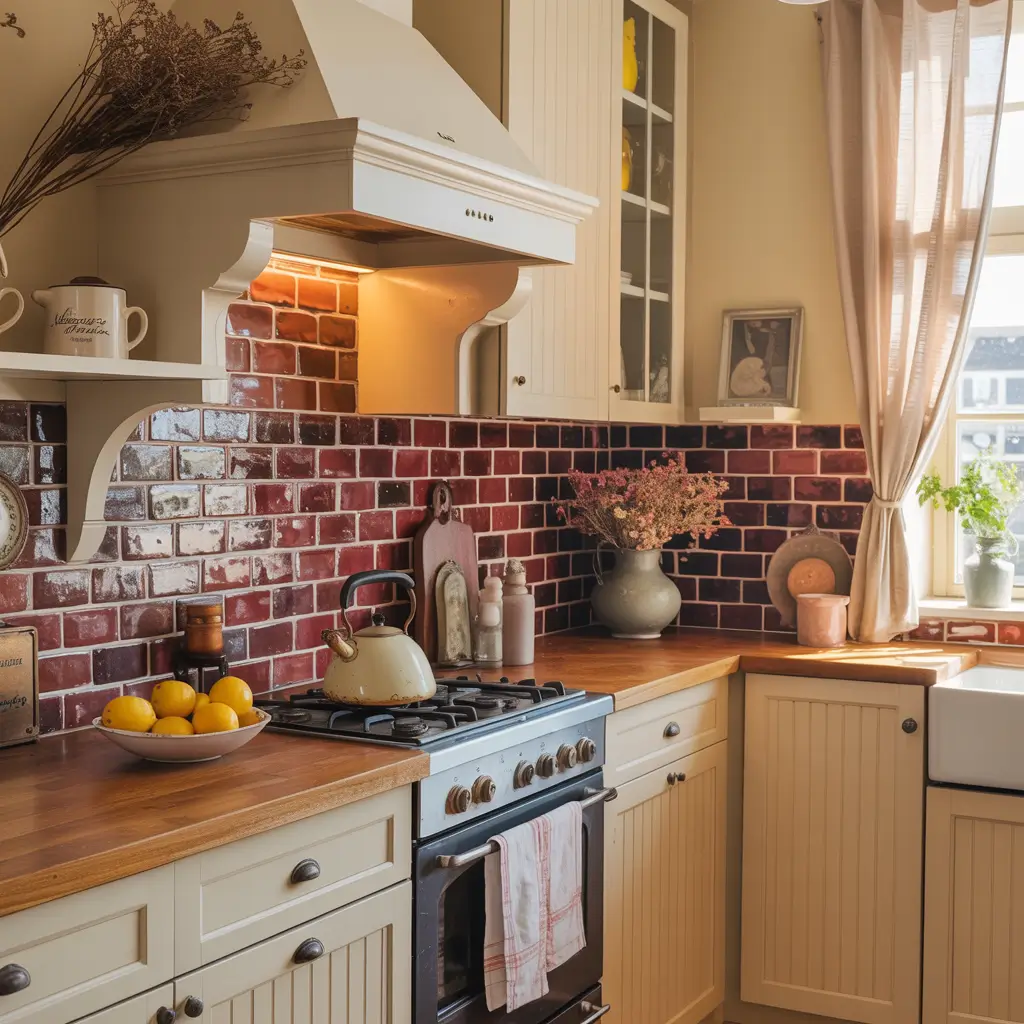
Craving warmth, character, and that effortlessly lived-in aesthetic? Brick-style splashbacks bring rustic charm to kitchens without the complexities of actual brick installation.
Capturing Authentic Brick Character
Brick-look tiles replicate the texture, color variation, and weathered appearance of genuine brick while offering the practical benefits of modern tile materials. These tiles suit farmhouse, industrial, and traditional kitchen styles beautifully.
The appeal of brick-style splashbacks includes:
- Textural warmth: Rough surfaces add tactile and visual interest
- Color depth: Natural variation creates organic movement across surfaces
- Timeless aesthetic: Brick has anchored architecture for centuries
- Easy maintenance: Unlike real brick, tile surfaces clean effortlessly
- Consistent sizing: Uniform dimensions simplify installation
- No sealing required: Porcelain and ceramic resist moisture without treatment
Choosing Your Brick Aesthetic
Brick-style tiles come in diverse interpretations:
Whitewashed brick offers the rustic texture with brighter, more contemporary coloring. This approach works beautifully in modern farmhouse kitchens where you want warmth without darkness.
Exposed red brick delivers classic industrial character. These tiles reference warehouse conversions and urban loft aesthetics. Pair them with dark cabinets and metal accents for authentic industrial vibes.
Gray and charcoal brick creates modern sophistication while maintaining rustic texture. These cooler tones suit contemporary kitchens with stainless steel appliances and minimalist design.
Tumbled or distressed finishes enhance the aged, weathered appearance. These heavily textured options create the most authentic antique brick illusion.
Installation tip: Use contrasting grout to emphasize individual bricks, or match grout color for a more subtle textural effect. The grout choice dramatically affects the final appearance, so request samples before committing.
9. DIY Peel-and-Stick Tile Ideas
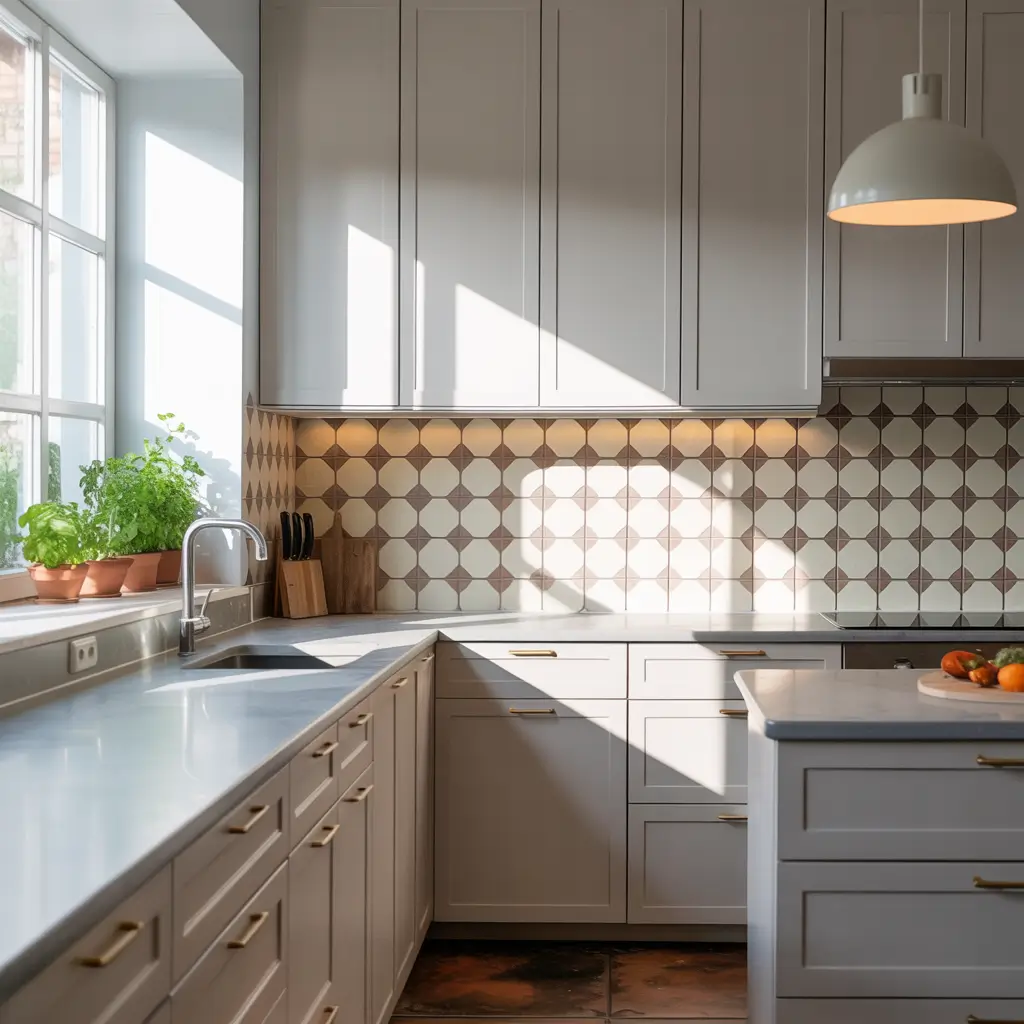
Not everyone has the budget, skills, or landlord permission for permanent tile installation. Peel-and-stick tiles offer a legitimate alternative that has improved dramatically in recent years.
The Modern Peel-and-Stick Revolution
Forget the cheap, obviously-fake stick-on tiles from decades past. Today’s peel-and-stick splashback tiles include realistic textures, substantial thickness, and adhesives that actually stay put.
Why consider peel-and-stick for your kitchen splashback?
- Renter-friendly: Removable without damaging walls
- Budget-conscious: Fraction of traditional tile costs
- DIY accessible: No special tools or skills required
- Quick transformation: Complete a splashback in hours, not days
- Mistake-forgiving: Reposition or replace individual tiles easily
- Commitment-free: Test bold designs without permanent consequences
Realistic Expectations for Peel-and-Stick
Let me give you honest expectations here. Peel-and-stick tiles work best away from direct heat and heavy moisture. The area directly behind your cooktop gets too hot for most adhesive products. Heavy steam exposure around sinks can loosen cheaper options over time.
Quality matters enormously with peel-and-stick products. Cheap options bubble, peel, and look obviously fake. Premium options—particularly those made from actual aluminum, glass, or thick vinyl—perform remarkably well and fool most observers.
Best applications for peel-and-stick splashbacks:
- Rental kitchens: Transform spaces without losing deposits
- Budget renovations: Allocate funds elsewhere while still achieving updated looks
- Temporary solutions: Bridge the gap until full renovation becomes possible
- Design testing: Live with bold patterns before committing permanently
- Behind sinks: Less heat exposure than cooktop areas
Surface preparation determines success. Clean walls thoroughly, repair any damage, and ensure surfaces remain completely dry before application. Most failures result from poor preparation rather than product defects.
Also Read: 10 Charming Kitchen Tiles Backsplash Ideas for Farmhouse Style
10. Two-Tone Contrasting Tile Designs
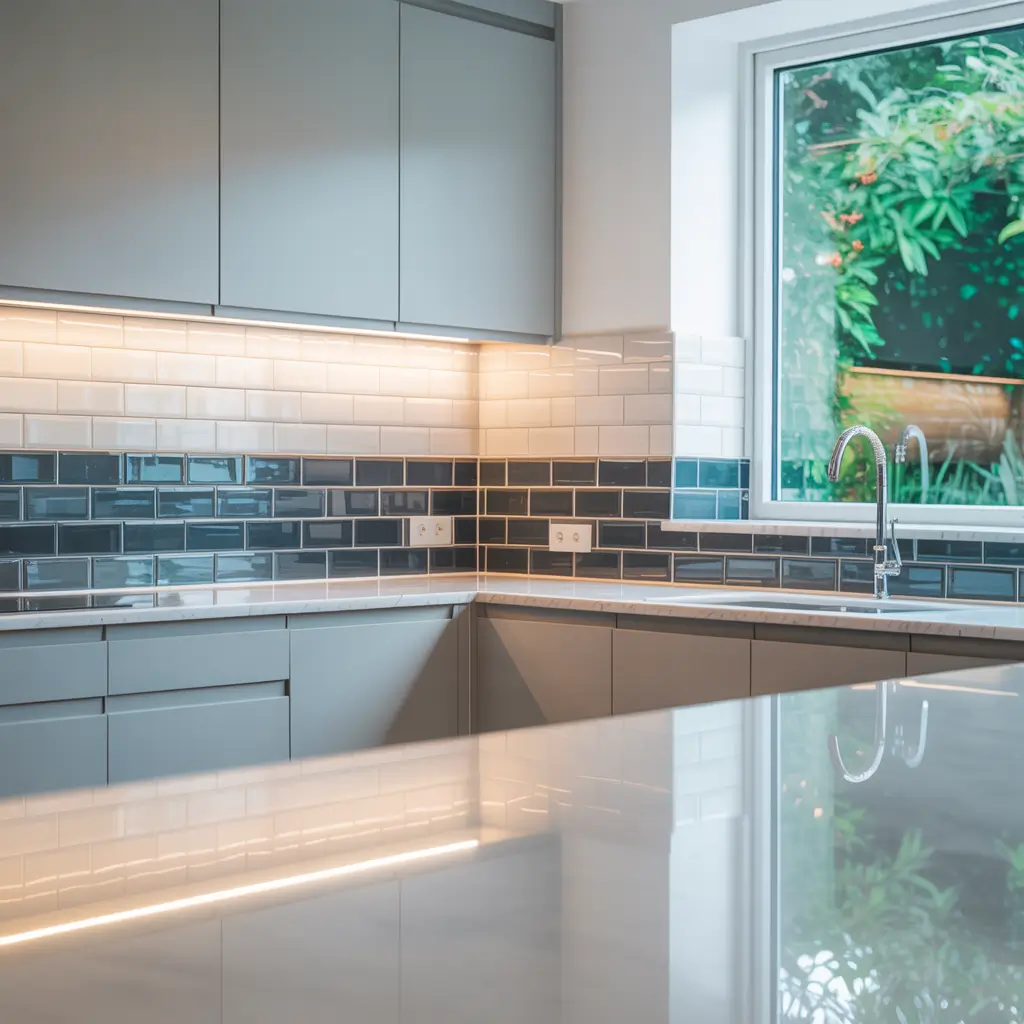
Why choose one tile when two can create dramatically more interesting results? Two-tone splashback designs add depth, define zones, and showcase design sophistication.
Understanding Two-Tone Concepts
Two-tone splashbacks strategically combine contrasting or complementary tiles to create visual interest, architectural definition, or functional zone separation within your kitchen.
Popular two-tone approaches include:
- Horizontal division: Different tiles above and below a specific height
- Vertical zones: Distinct tiles for cooktop versus sink areas
- Accent panels: Feature sections in contrasting tiles within larger fields
- Border treatments: Frame primary tiles with complementary edging
- Gradient transitions: Blend colors from one area to another
- Pattern and solid combinations: Patterned accents within neutral surroundings
Creating Cohesive Two-Tone Designs
The secret to successful two-tone splashbacks lies in intentional contrast. Your tiles should differ enough to read as deliberate design choices rather than mismatched leftovers.
Consider these proven combinations:
- Light and dark versions of similar tiles: Safe, coordinated, always works
- Solid and patterned pairs: Pattern creates focal points while solid provides visual rest
- Matte and glossy finishes: Same color, different texture
- Complementary colors: Blue and orange, green and pink create energy
- Scale contrast: Large format tiles paired with mosaic details
I experimented with a two-tone approach in my current kitchen. White subway tiles cover most of the splashback, but the area behind the range features Moroccan-inspired patterned tiles in blue and white. The transition creates a clear focal point without overwhelming the space with pattern. Guests consistently compliment this design choice.
Execution Tips for Two-Tone Success
Plan your transition points carefully. Common division lines include:
- Counter height: Split at the point where upper and lower sections meet
- Window sills: Use windows as natural breaking points
- Appliance edges: Transition at range hood or refrigerator boundaries
- Architectural features: Corners, columns, or alcoves provide natural divisions
Use tile trim pieces or metal strips to create clean transitions between different tiles. Raw edges meeting look unfinished; proper transitions look intentional and professional.
Choosing the Right Splashback Tiles for Your Kitchen
After exploring these ten kitchen splashback tiles ideas, you probably feel both inspired and slightly overwhelmed. That’s completely normal. Splashback selection involves balancing aesthetics, practicality, budget, and personal taste.
Here’s my practical decision-making framework:
Consider Your Kitchen’s Existing Elements
Your splashback should complement, not compete with cabinets, countertops, flooring, and appliances. Collect samples and view them together under your kitchen’s actual lighting before committing.
Match Your Maintenance Reality
Be honest about your cleaning habits. Highly textured tiles and extensive grout lines require more maintenance than smooth, large-format options. Choose accordingly.
Think Beyond Current Trends
Splashbacks represent significant investments that remain for years or decades. Select tiles you’ll still love in ten years, not just what’s popular this season.
Sample Everything
Never choose splashback tiles from website images alone. Order physical samples and live with them for at least a week. Colors shift dramatically between screens and reality.
Consider Installation Requirements
Some tiles require professional installation; others suit confident DIYers. Factor installation costs and complexity into your overall budget and timeline.
Final Thoughts
Your kitchen splashback occupies prime visual real estate in the room where you probably spend the most waking hours.
Whether you gravitate toward timeless subway tiles, bold geometric patterns, glamorous metallics, or budget-friendly peel-and-stick options, the right choice transforms your cooking space into somewhere genuinely inspiring.
I’ve stared at enough boring splashbacks during morning coffee sessions to know how much the right tiles matter.
The upgrade from that forgettable beige I mentioned earlier to something with actual personality improved my daily kitchen experience more than any appliance ever could.
Take your time with this decision. Visit showrooms. Touch the tiles. Imagine them splattered with pasta sauce at 10 PM. Picture yourself wiping them down for the thousandth time.
The perfect kitchen splashback tiles exist for your space, your style, and your lifestyle. Now you have ten solid directions to explore. Happy tile hunting! 🙂