10 Unique Partition Design Ideas for Beautiful Home Spaces
- Partition Design
 Ben
Ben- 0
- 35 minutes read
Why Your Home Needs a Good Partition (And Why You’re Here)
Look, we both know why you clicked on this article. Your home feels like one giant, chaotic blob of space, right? Maybe your studio apartment desperately needs some definition, or perhaps your open-plan living area could use a little privacy without making things feel like a prison cell. I get it. I’ve been there, staring at my living room-slash-bedroom-slash-office wondering how the heck I could create zones without building actual walls.
Partitions solve this problem beautifully. They give you privacy, define spaces, add character, and honestly? When you pick the right design, they become the statement piece you never knew you needed. So let’s talk about ten partition ideas that’ll transform your space from “meh” to “wow, did you hire an interior designer?” (Spoiler: you didn’t, you just read this article.)
Modern Wooden Slat Room Divider Partition Ideas
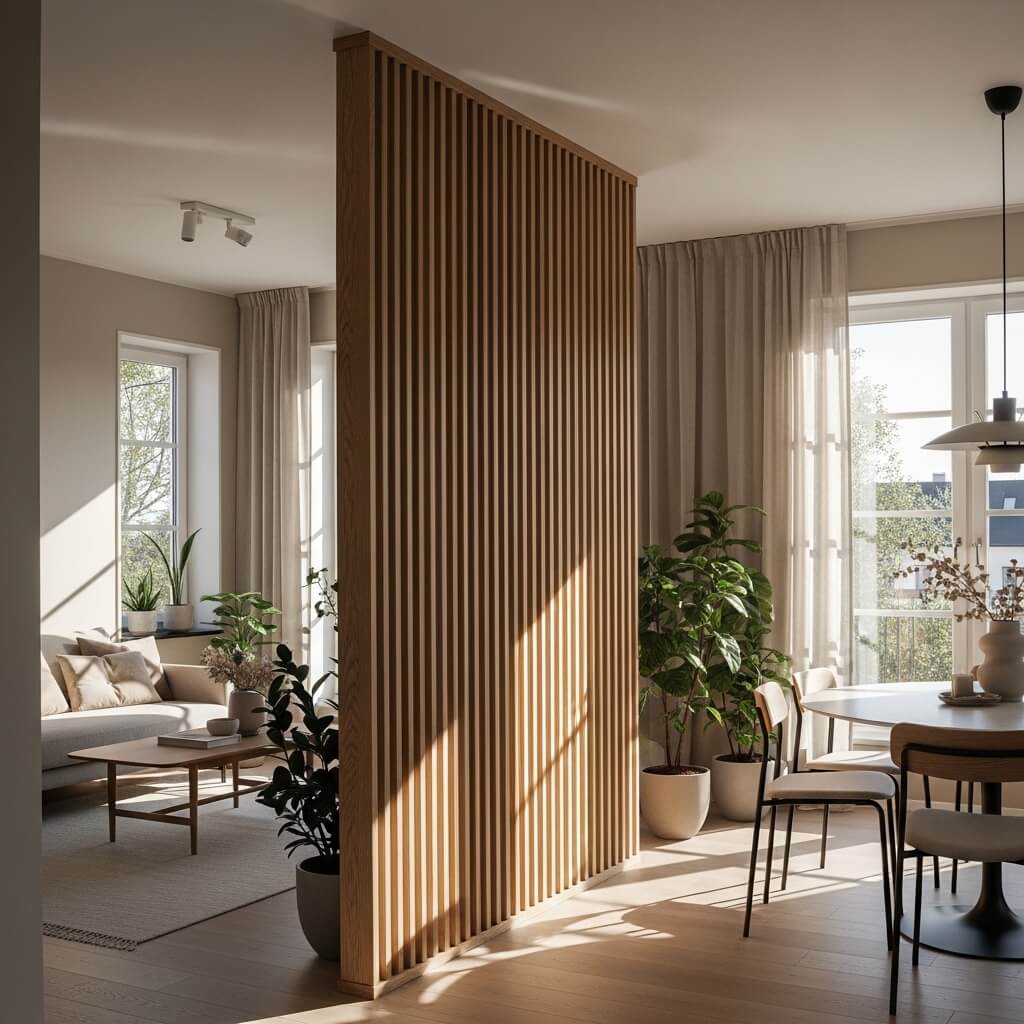
The Warm, Trendy Option Everyone’s Crushing On
Wooden slat partitions have absolutely taken over Pinterest boards, and for good reason. These beauties feature vertical or horizontal wooden slats arranged with gaps between them, creating this semi-transparent barrier that doesn’t completely block light or sightlines. I installed one between my dining area and living room last year, and guests cannot stop asking about it.
Here’s why wooden slat dividers work so well:
- They filter light beautifully – Sunlight creates gorgeous shadow patterns throughout the day
- They maintain visual flow – Your space doesn’t feel chopped up or claustrophobic
- They add warmth instantly – Wood brings that cozy, organic vibe that cold materials just can’t match
- Customization is endless – You can choose slat thickness, spacing, wood type, and finish
Making It Work in Your Space
You can mount these slats floor-to-ceiling for maximum drama, or create a half-height version that works as a subtle room divider. Want something really cool? Try mixing wood tones or adding LED backlighting between the slats for evening ambiance. (Yes, I did this. Yes, it’s as awesome as it sounds.)
The installation isn’t rocket science either. You can DIY this project with a good drill, some timber, and patience, or buy pre-made panels online. IMO, the DIY route gives you way more control over dimensions and aesthetics, but ready-made options save you serious time.
Glass Partition Design Ideas for Elegant Interiors
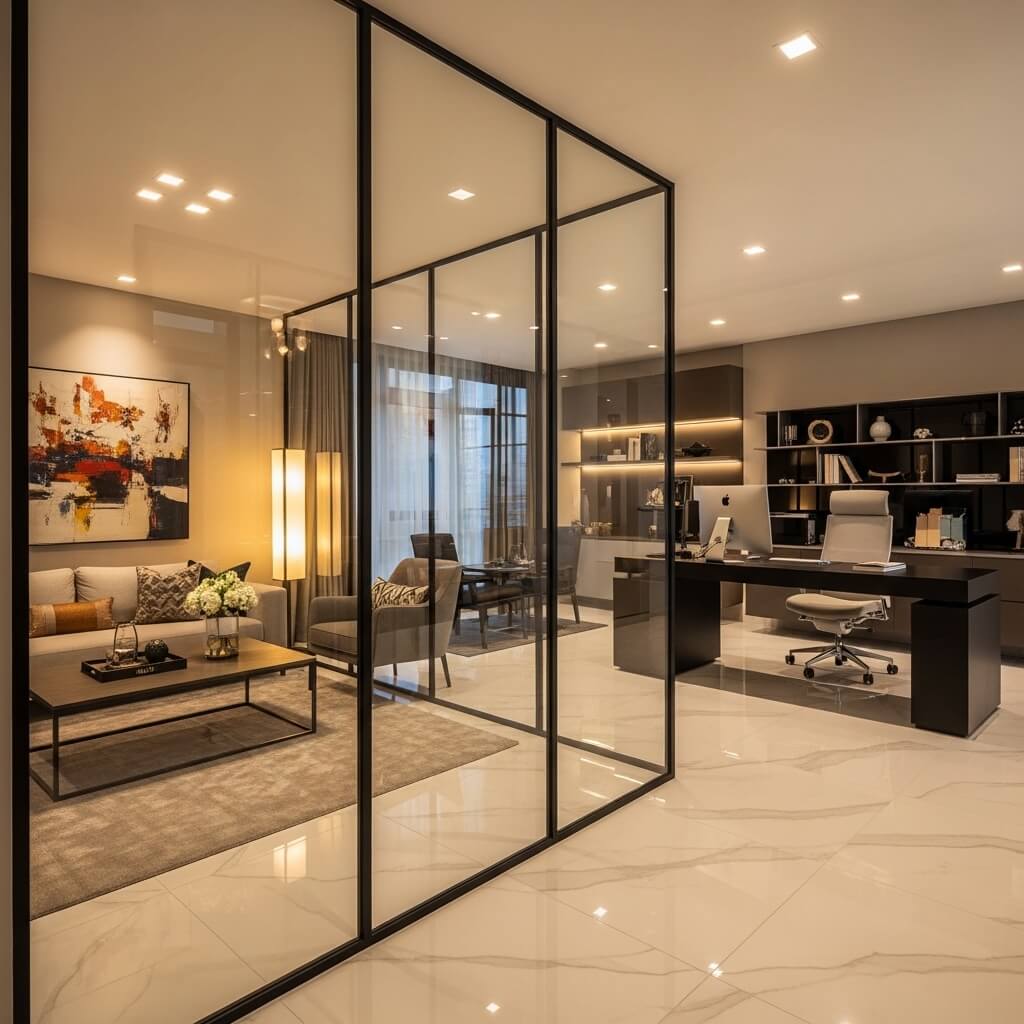
When You Want Separation Without Losing Space
Glass partitions are the sophisticated cousin in the partition family. They create distinct zones while keeping your space feeling open and airy. I’m talking about that expensive hotel lobby vibe, but in your actual home. Fancy, right?
The different glass partition styles you should consider:
- Clear glass – Maximum light transmission, perfect for small spaces
- Frosted or textured glass – Privacy without sacrificing brightness
- Tinted glass – Adds color and reduces glare
- Fluted or ribbed glass – Currently trending hard, creates visual interest with vertical grooves
Real Talk About Glass Partitions
Here’s the thing nobody tells you: glass partitions require maintenance. Fingerprints, smudges, dust—they all show up like they’re auditioning for a detective show. But honestly? The elegance they bring is worth the occasional wipe-down. I use one to separate my home office from the main living area, and it makes Zoom calls look infinitely more professional.
Glass partitions work especially well in bathrooms (hello, modern shower enclosures), between kitchens and dining areas, or creating a home office nook. Frame them in black metal for industrial vibes, or go frameless for that seamless, luxury look.
Hanging Curtain Divider Partition Ideas for Small Spaces
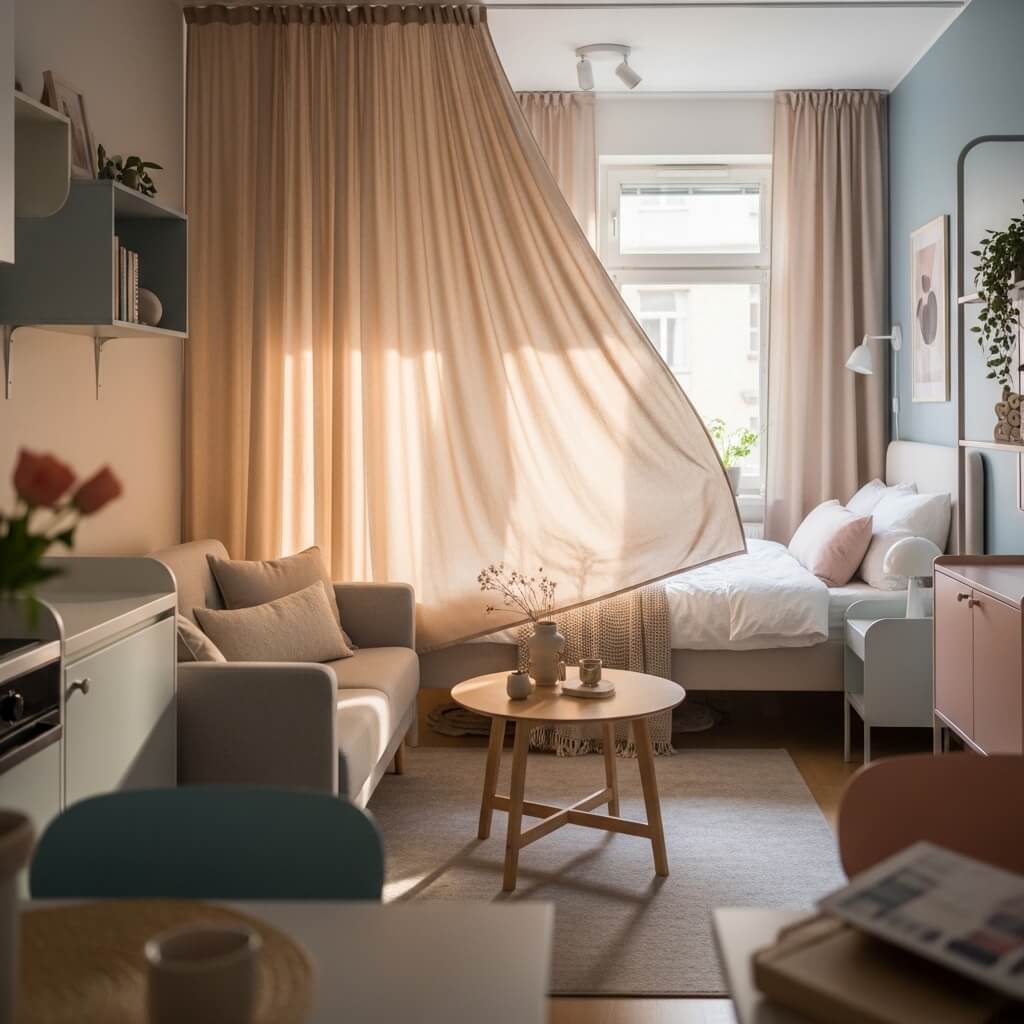
The Budget-Friendly Champion
Ever wondered why curtains work so brilliantly as room dividers? Because they’re cheap, easy to install, and you can change them on a whim when you get bored. (Which, let’s be honest, happens to the best of us.)
I lived in a tiny studio for three years, and curtain dividers saved my sanity. I hung a ceiling track with thick linen curtains to separate my sleeping area from my living space. Total cost? Maybe $80. Total impact? Absolutely transformative.
Why curtain dividers are secretly genius:
- Installation takes minutes – Ceiling track or tension rod, done
- Infinite fabric options – Match any aesthetic from boho to minimalist
- Sound absorption – Heavy fabrics actually dampen noise
- Flexibility – Open them completely when you want one large space
Choosing the Right Curtain
Don’t just grab any old bedsheet and call it a day (I mean, you could, but we’re trying to elevate here). Look for floor-to-ceiling panels in heavier fabrics like velvet, linen, or thick cotton. Sheer curtains create a dreamy, romantic division but offer zero privacy—great for aesthetic zones, terrible for hiding your unmade bed from dinner guests. :/
Also Read: 10 Brilliant Wall Partition Design Ideas for Modern Spaces
Bookshelf Room Divider Partition Ideas for Storage & Style
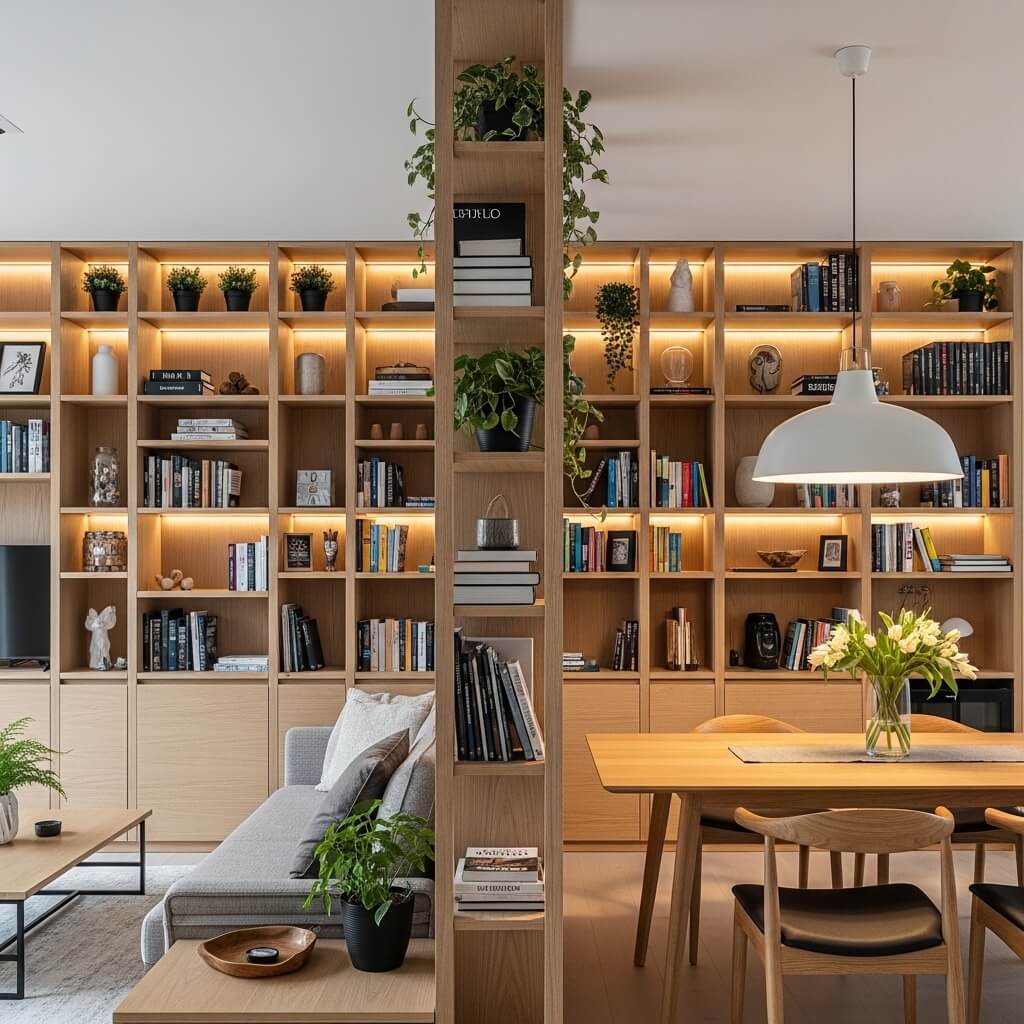
The Multitasking Overachiever
Bookshelf partitions are the friend who looks good AND helps you move apartments. They divide your space while providing storage, display areas, and serious style points. What’s not to love?
I’m particularly obsessed with open-back bookshelf dividers. You can see through them (keeping that open feeling), access items from either side, and they don’t require wall mounting. These work phenomenally well between living and dining areas, or separating a bedroom from a home office.
Bookshelf divider benefits that’ll make you want one immediately:
- Double-duty functionality – Storage + division in one piece
- No construction required – Just position and style
- Customizable styling – Change the look by switching up what you display
- Light flows through – Especially with open-back designs
Styling Your Bookshelf Partition
Here’s where you can have some fun. Mix books with decorative objects, plants, baskets, and personal mementos. Keep it balanced but not too symmetrical (nobody wants their home looking like a furniture catalog). I alternate between vertical and horizontal book stacks, add trailing plants for softness, and keep some shelves completely empty for visual breathing room.
Pro tip: Choose a bookshelf that’s roughly two-thirds the height of your ceiling. Full-height units can feel heavy and overwhelming, while shorter pieces maintain better visual flow.
Sliding Door Partition Design Ideas for Modern Homes
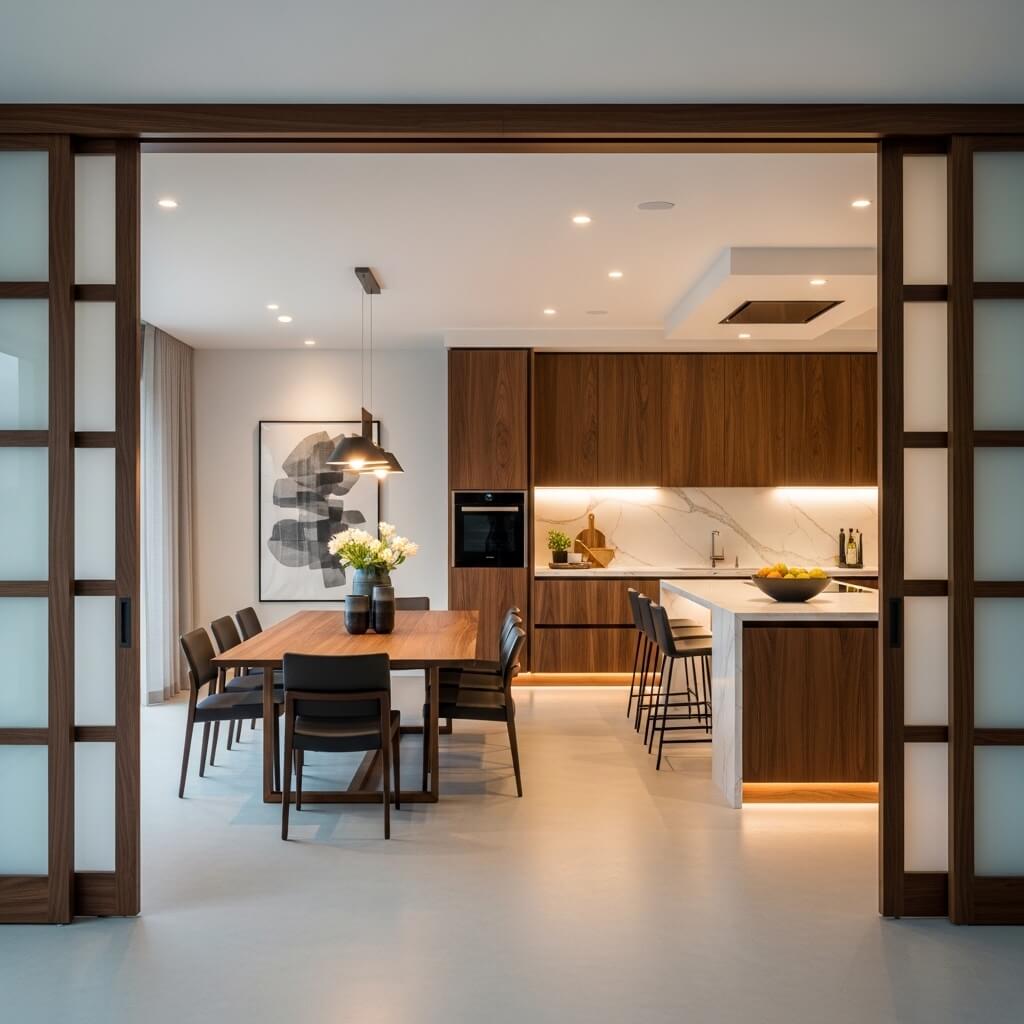
The Space-Saving Showstopper
Sliding door partitions are clutch when you need a real door but don’t have the floor space for the swing radius. They glide along a track, looking sleek and modern while saving you precious square footage.
I recently helped my sister install barn-style sliding doors to separate her master bedroom from the ensuite. The transformation? Chef’s kiss. The space feels intentional, grown-up, and way more expensive than the actual budget.
Popular sliding door partition styles:
- Barn doors – Rustic-modern hybrid, usually wood with metal hardware
- Japanese-inspired shoji screens – Translucent panels in wooden frames
- Contemporary panel doors – Clean lines, minimal hardware
- Glass sliding doors – Sleek, modern, light-preserving
Installation Considerations
You’ll need a sturdy track system mounted to the ceiling or wall above the doorway. The door hangs from rollers that slide along this track. Most hardware kits come with everything you need, and installation is pretty straightforward for anyone comfortable with a drill and level.
The cool factor here is undeniable. Sliding doors add architectural interest and that satisfying “whoosh” sound when you open them. FYI, they work brilliantly for closets, bathrooms, pantries, or creating flexible guest rooms.
Green Plant Wall Partition Ideas for Natural Interiors
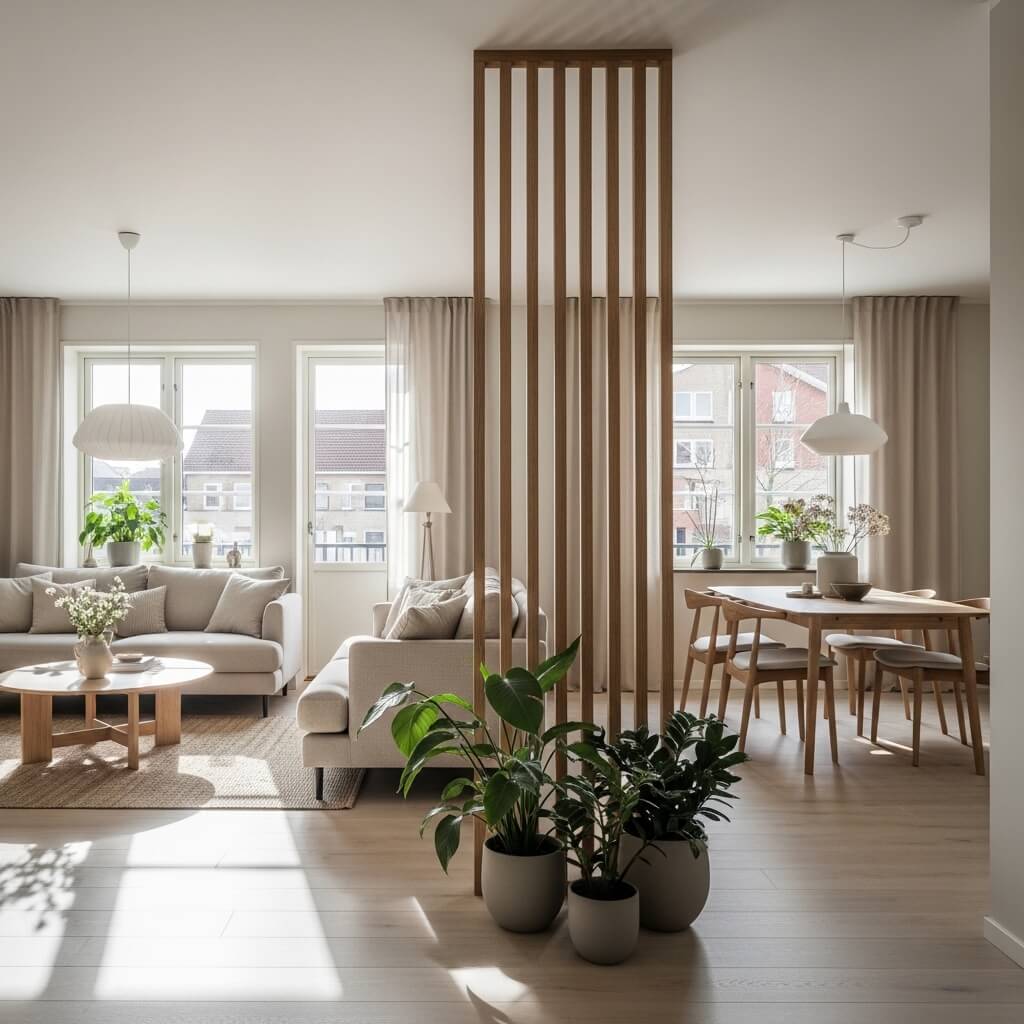
The Living, Breathing Room Divider
Plant wall partitions are for people who love nature but live in concrete jungles (guilty as charged). These vertical gardens create a stunning natural barrier while purifying your air and making you feel like you’re living in a botanical garden.
I won’t lie—plant walls require commitment. You’re basically adopting multiple living things that need water, light, and occasional attention. But the payoff? Your space becomes an oasis that smells amazing and looks unlike anyone else’s home.
Types of plant wall partitions:
- Vertical garden systems – Modular panels with built-in irrigation
- Hanging planters on frames – Individual pots attached to a freestanding structure
- Moss walls – Preserved moss requiring zero maintenance (my personal favorite for lazy plant parents)
- Trellis with climbing plants – A frame that supports vining plants like pothos or philodendrons
Making Your Plant Wall Thrive
Choose plants based on your light conditions. Low-light spaces? Go for pothos, snake plants, or ferns. Bright, sunny spots? Succulents and spider plants will flourish. I installed a simple wooden frame with wire mesh and attached small potted plants at varying heights. The look is organic and slightly wild—exactly what I wanted.
The maintenance reality: you’ll need to water (obviously), trim occasionally, and rotate plants if growth gets uneven. But honestly? Watering my plant wall has become this meditative morning ritual I actually look forward to. 🙂
Also Read: 10 Beautiful Sofa Back Wall Design Ideas for Elegant Living
Jali Laser Cut Partition Design Ideas for Stylish Homes
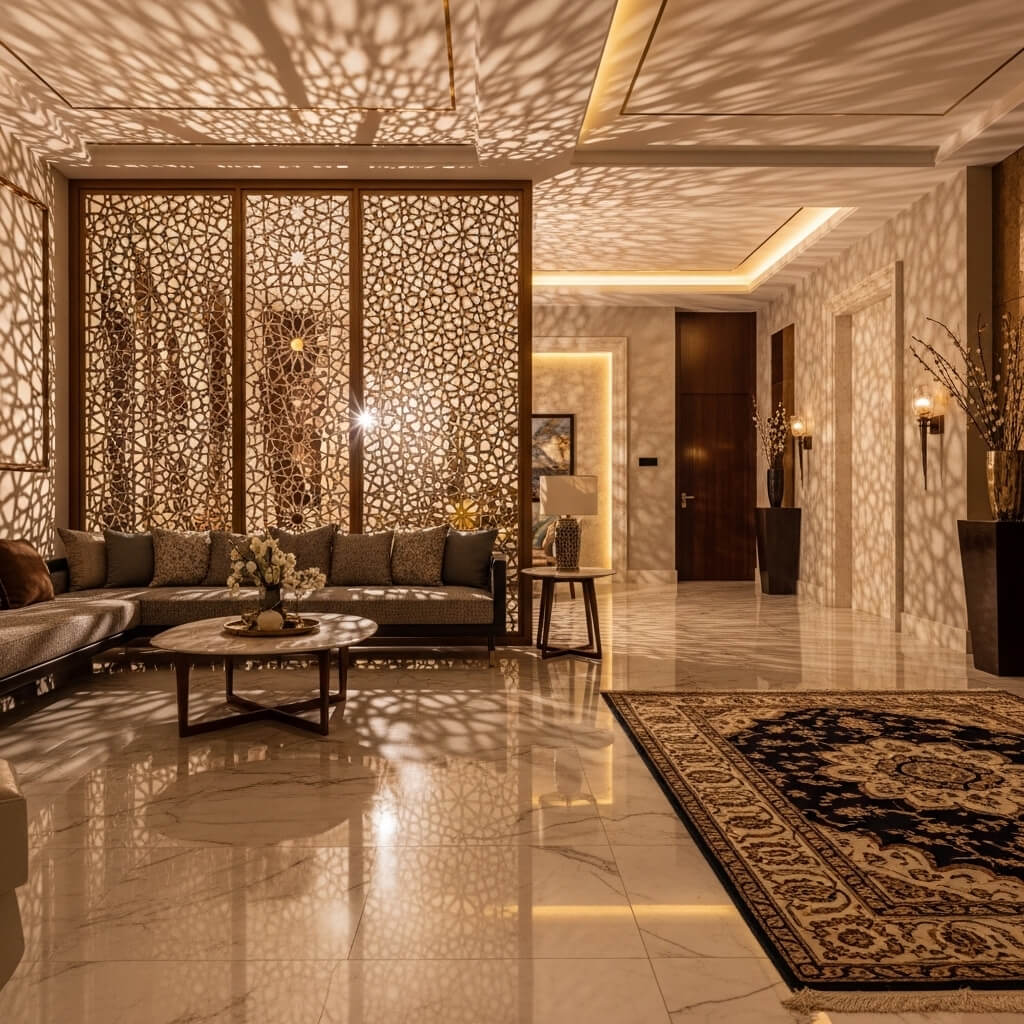
The Intricate Pattern Perfection
Jali partitions originated in traditional Indian architecture, featuring intricate lattice patterns that filter light and air while maintaining privacy. Modern versions use laser-cutting technology to create mind-blowingly detailed designs in materials like MDF, metal, or acrylic.
These partitions are art pieces, full stop. I saw one in a friend’s entryway—a geometric pattern laser-cut into black MDF—and I literally stood there staring at it for five minutes. The shadows it cast changed throughout the day, creating this ever-evolving art installation.
Why jali partitions deserve your attention:
- Unmatched visual impact – Intricate patterns create stunning focal points
- Cultural richness – Traditional designs with contemporary execution
- Light play – Patterns create beautiful shadow effects
- Privacy with airflow – Perfect for tropical or warm climates
Design Pattern Options
You can find patterns ranging from traditional Islamic geometry to modern abstract designs. Floral motifs, mandala patterns, contemporary geometric shapes—the options are endless. Many companies offer custom laser-cutting, so you can literally design your own pattern or choose from their catalogs.
Material-wise, MDF is budget-friendly and easy to paint, metal (especially brass or copper) adds luxury, and acrylic offers a contemporary edge. I’m partial to white-painted MDF for a clean, Scandinavian look, but darker finishes create more dramatic shadow play.
Foldable Screen Partition Ideas for Flexible Room Setup
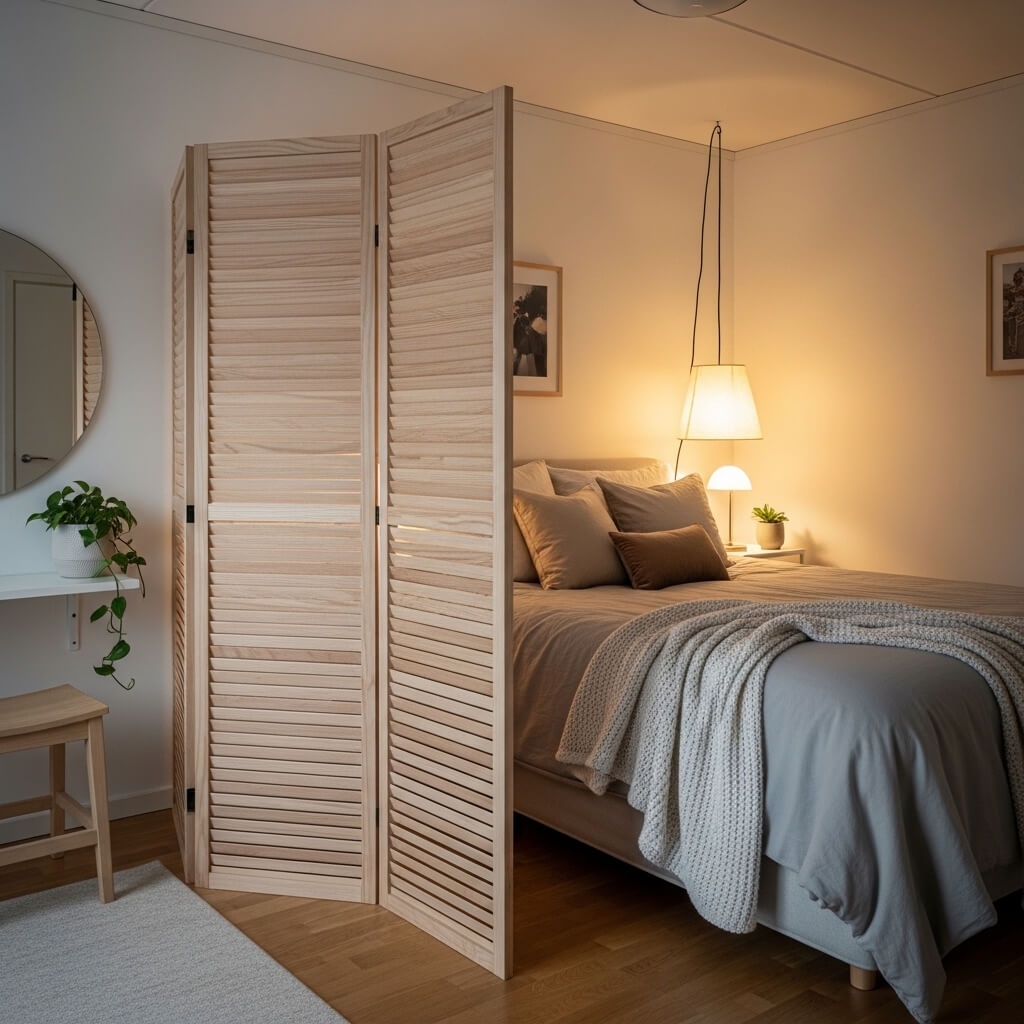
The Ultimate Commitment-Phobe Solution
Foldable screens are perfect for renters, frequent redecorators, or anyone who values flexibility. You can position them wherever you need, fold them up when you don’t, and move them between rooms as needed. Zero installation, maximum versatility.
I keep a four-panel folding screen in my spare room. When guests visit, it creates a private changing area. During my yoga sessions, it blocks visual distractions. When I’m photographing products for my side hustle, it serves as a backdrop. One piece, multiple uses—that’s smart home design.
Popular foldable screen styles:
- Traditional Japanese shoji screens – Rice paper or fabric panels in wooden frames
- Rattan or wicker screens – Boho-chic, textured, organic
- Upholstered fabric screens – Sound-dampening, soft, customizable
- Metal or carved wood screens – Ornate, statement-making designs
Choosing the Right Screen Height and Panel Count
Three-panel screens work for narrow spaces or accent pieces. Four to six panels give you more coverage and flexibility in arrangement. Height-wise, you want something substantial—at least 6 feet tall for effective room division.
The beauty of these screens is their instant impact. You can find stunning vintage screens at estate sales or thrift stores, or purchase new ones that match your exact aesthetic. Either way, you’re getting a portable, practical, and pretty partition solution.
TV Unit Partition Wall Design Ideas for Living Rooms
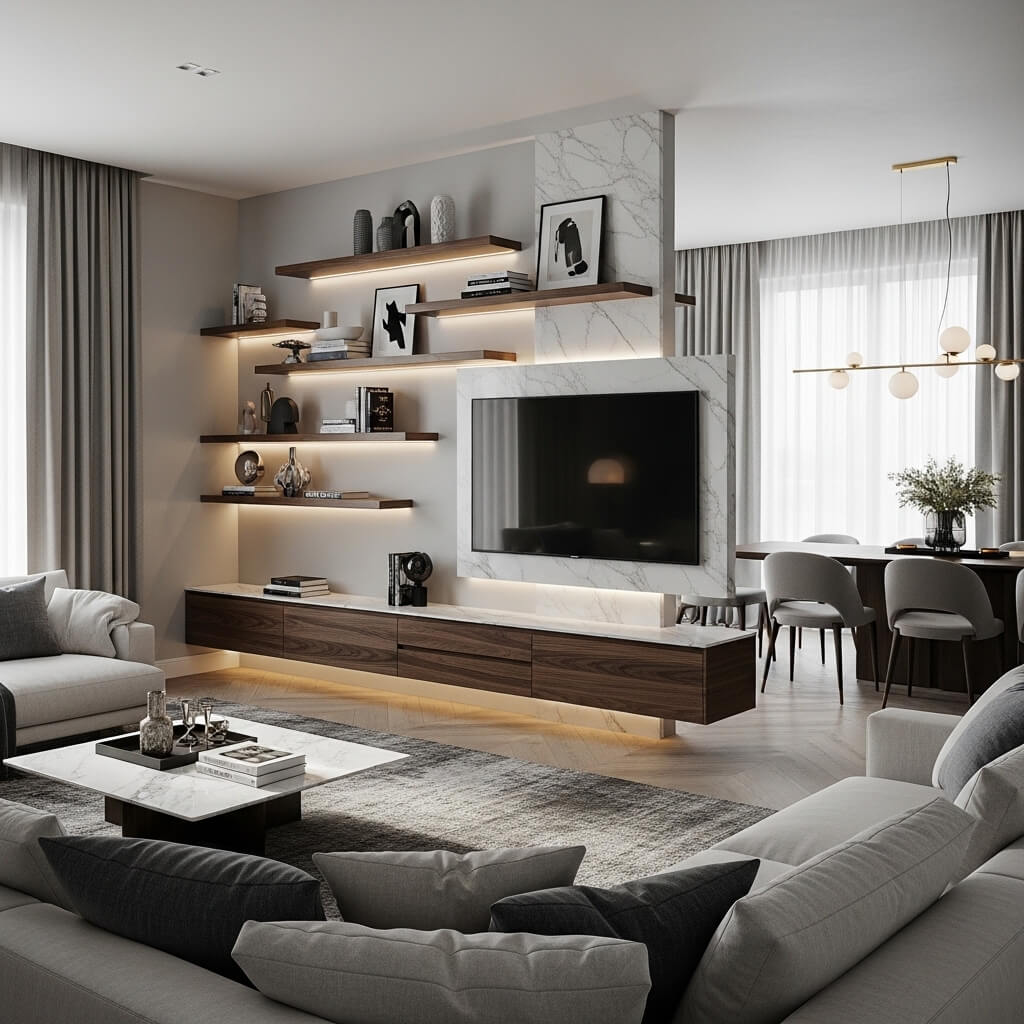
The Entertainment Center Meets Space Divider
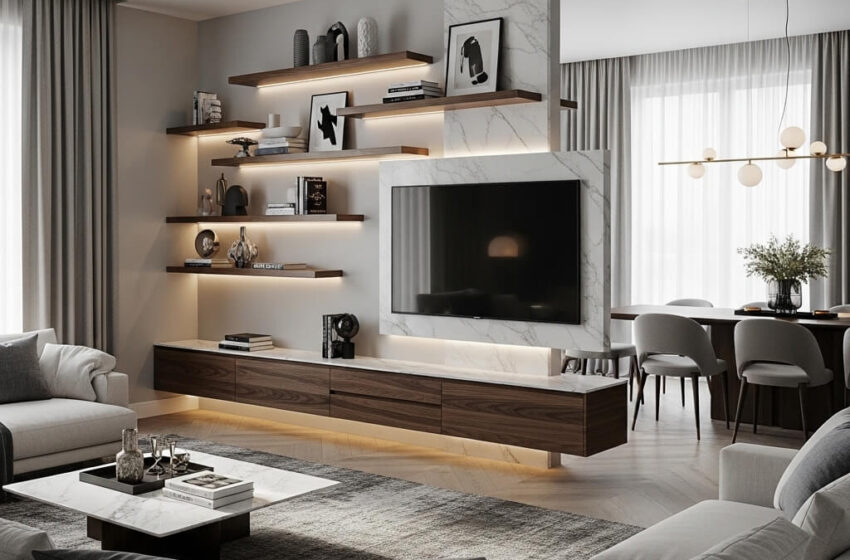
TV unit partitions are genius for open-plan spaces. They face your main seating area with the TV while creating a subtle division from the dining area or kitchen behind. Plus, you get storage and cable management built right in.
I designed one of these for my open-concept living space, and it completely changed the room’s functionality. The TV faces the couch, the back features open shelving for cookbooks and dining essentials, and the whole unit creates a natural divider between living and dining zones.
What makes TV partition walls work:
- Dual-sided functionality – Different purposes on each side
- Cable management – Built-in channels hide unsightly wires
- Storage integration – Shelves, cabinets, drawers on both sides
- Structural presence – Creates clear zones without full walls
Design Approaches That Actually Look Good
You can go full built-in with a floor-to-ceiling unit (expensive but stunning), or choose a substantial TV stand that extends wider than your TV (more budget-friendly). I went with a mid-height unit that allows visual connection over the top—this keeps the space feeling open while providing clear functional zones.
Materials matter here. Wood veneer brings warmth, lacquered finishes offer modern sleekness, and textured materials like concrete or stone add weight and luxury. Whatever you choose, make sure both sides look intentional and finished—nobody wants to stare at the back of a TV unit during dinner.
Also Read: 10 Smart Corner Sofa Design Ideas for Space Saving Rooms
Marble Accent Partition Design Ideas for Luxury Spaces
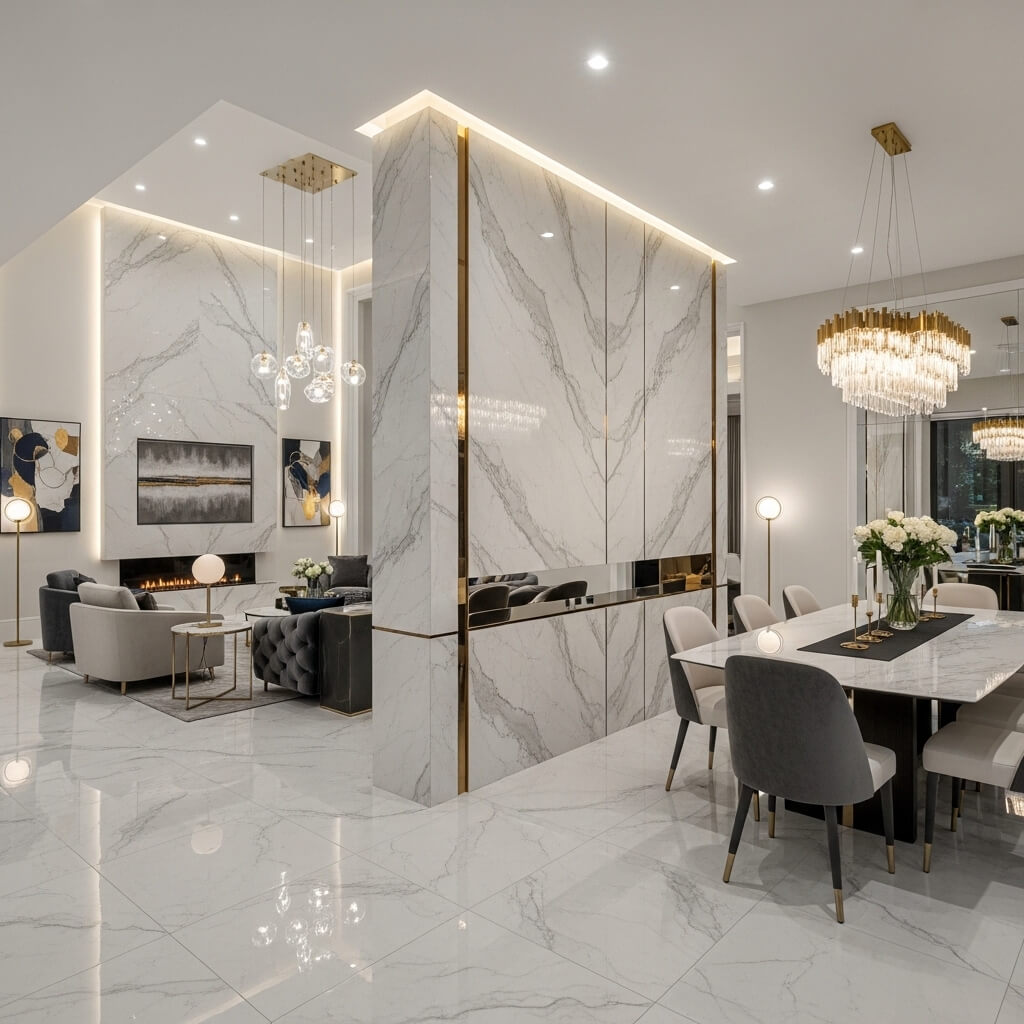
The Bougie Statement Piece
Marble partitions scream luxury. There’s no way around it—they’re expensive, they’re heavy, and they’re absolutely gorgeous. If you want to create a high-end hotel vibe in your home, marble accents deliver every single time.
I’ve seen these used to stunning effect in master bathroom renovations, separating the soaking tub from the vanity area with a partial marble wall. The veining in the stone creates natural artwork, and the material feels cool, smooth, and inherently expensive.
Marble partition applications that work beautifully:
- Bathroom wet room dividers – Separate toilet or shower areas
- Entryway accent walls – Create a grand first impression
- Kitchen-dining dividers – Partial walls with built-in breakfast bars
- Bedroom privacy screens – Separate sleeping area from sitting space
Working With Marble (Without Breaking the Bank)
Real marble is pricey, but marble-look porcelain tiles or engineered stone offer similar aesthetics at lower price points. For a true luxury feel, consider a marble accent within a larger partition design—maybe a central panel of real Carrara marble flanked by painted drywall.
The key with marble is restraint. You don’t need full walls of it. A well-placed marble section creates maximum impact without the maximum price tag. I’ve seen designers use marble slabs as backing panels in open shelving units, creating that luxury look while keeping costs manageable.
Making Your Partition Choice: What Actually Matters
Here’s the truth bomb: the “best” partition for your space depends entirely on your specific situation. Shocking revelation, I know. But seriously, consider these factors before you commit:
Your actual needs:
- Privacy level required (visual, acoustic, or both)
- Flexibility preferences (permanent vs. movable)
- Storage requirements (functional vs. purely aesthetic)
Your space constraints:
- Available floor space (crucial for freestanding units)
- Ceiling height (impacts visual proportions)
- Natural light (some partitions block more than others)
Your budget reality:
- Material costs vary wildly (curtains vs. marble—you can imagine)
- Installation expenses (DIY-friendly vs. requires professionals)
- Maintenance requirements (plants need care, glass needs cleaning)
I’ve mixed multiple partition types in my own home. Wooden slats in one area, a bookshelf divider in another, and curtains in my bedroom. There’s no rule saying you must commit to one style throughout your entire space. Mix it up based on what each zone needs.
The Final Word (Because Every Good Conversation Has One)
Partitions transform spaces from functional boxes into thoughtfully designed homes. They give you privacy when you need it, define zones in open layouts, and add legitimate style points that guests notice. Whether you go for the organic warmth of wooden slats, the flexibility of curtains, the living beauty of plant walls, or the luxury of marble accents—you’re making a choice that impacts how you experience your home every single day.
Start with one space that’s bugging you. Maybe it’s that awkward open bedroom-living room situation, or the lack of a defined entryway. Pick a partition style that matches both your aesthetic and your lifestyle, and just try it. The beauty of most of these options is that they’re not permanent architectural changes. You can adjust, modify, or completely change your mind without demolishing walls or losing your security deposit.
Your home should work for you, not against you. Partitions are one of the easiest, most impactful ways to make that happen. So what are you waiting for? Go create some gorgeous, functional zones in that space of yours. You’ve absolutely got this.