10 Brilliant Wall Partition Design Ideas for Modern Spaces
- Partition Design
 Ben
Ben- 0
- 32 minutes read
Look, I get it. You’ve got this weird, awkward open space in your home or office that feels too big, too empty, or just plain confusing. Maybe you want some privacy without building an actual wall that makes your place feel like a claustrophobic rabbit hutch. That’s where partition walls come in—those genius room dividers that separate spaces without making you feel like you’re living in a series of boxes.
I’ve spent way too much time obsessing over interior design (my friends joke it’s borderline unhealthy), and partition walls have become my absolute favorite design element. They’re functional, stylish, and honestly? They can completely transform a space without breaking the bank or requiring a full renovation. So let’s talk about ten partition wall ideas that’ll make your space look like it belongs in an architecture magazine.
Modern Wooden Slat Wall Partition Design
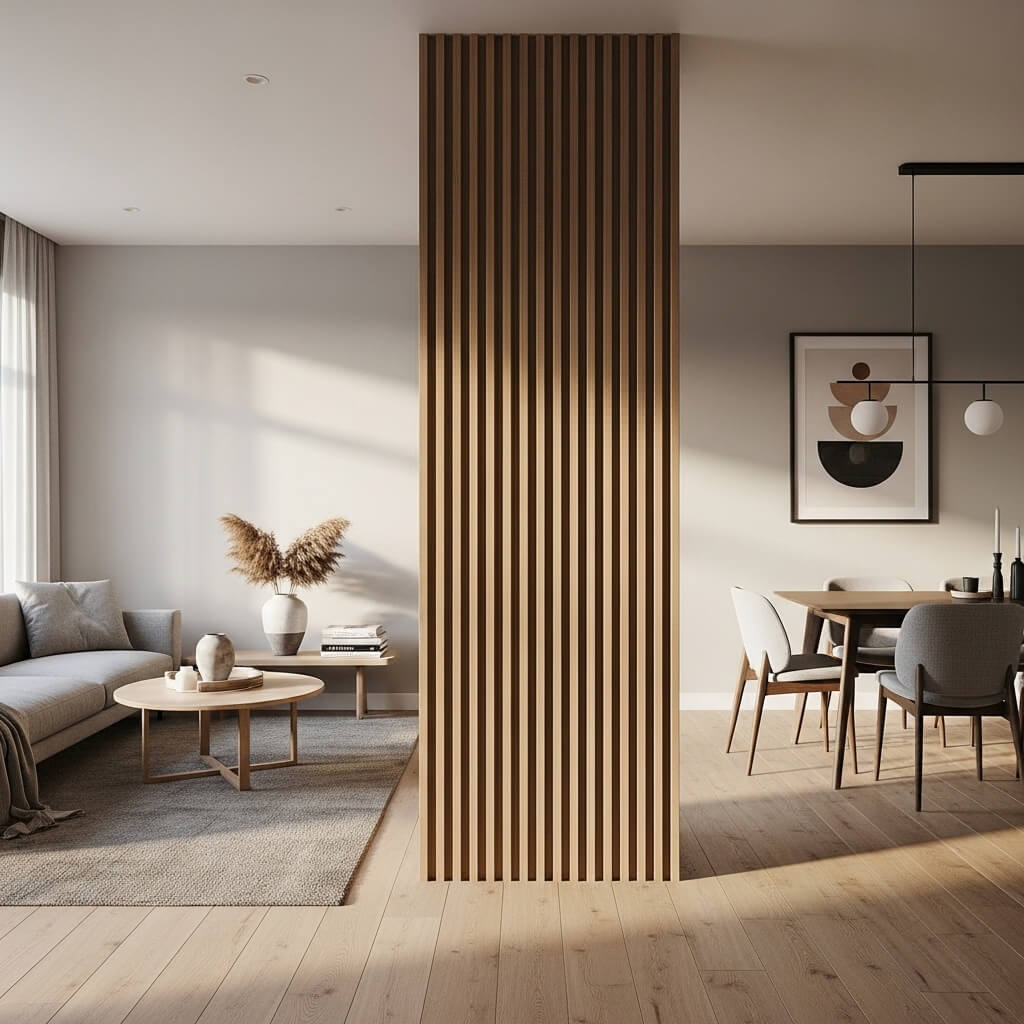
Let me start with my personal favorite—wooden slat partitions. There’s something ridiculously satisfying about vertical wooden slats that just works in almost any modern space.
These partitions feature evenly spaced wooden planks mounted vertically (or sometimes horizontally, if you’re feeling rebellious). The gaps between the slats create this beautiful semi-transparent effect that maintains visual connection between spaces while still defining separate zones. I installed one between my living room and dining area last year, and honestly, it’s the conversation starter at every dinner party.
Why wooden slats are brilliant:
- They allow light to flow through while creating privacy
- The natural wood texture adds warmth to modern, minimalist spaces
- You can customize the spacing to control how much visual separation you want
- They work equally well in homes, offices, restaurants, and retail spaces
Here’s the thing about wooden slat partitions—they’re deceptively simple. You can go super minimal with light oak or ash for a Scandinavian vibe, or choose dark walnut for something more dramatic and sophisticated. I’ve seen people paint them white, black, or even bold colors, though IMO, natural wood finishes look the most timeless.
Installation-wise, you’ve got options. You can mount them floor-to-ceiling for maximum impact, or create a half-height version that works more like a visual boundary than a full divider. The partial-height approach is genius if you want to maintain that open-plan feeling but still need some spatial definition.
Glass Panel Room Divider Wall Ideas
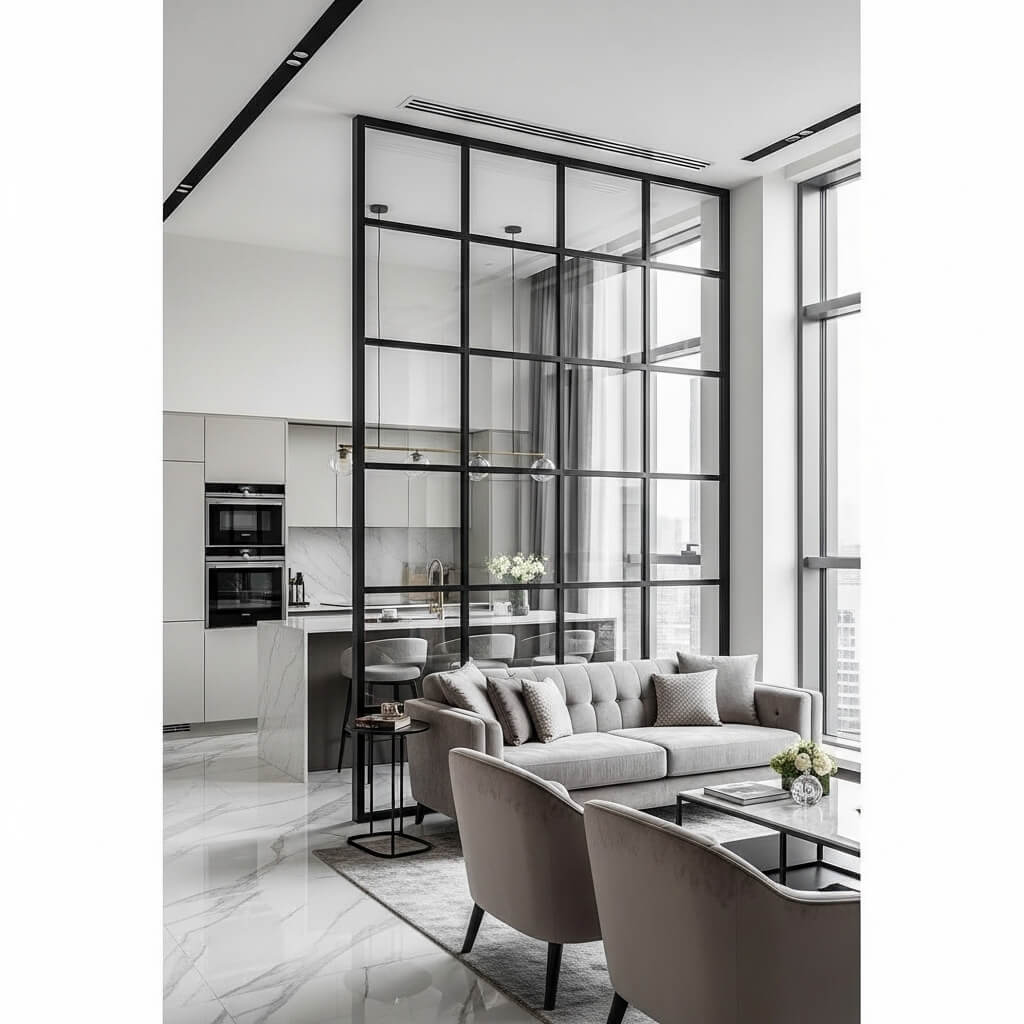
Glass partitions are the chameleons of the partition world. They create separation without sacrificing that precious natural light we all obsess over—and let’s be honest, who wants to make their space feel darker and smaller?
I recently worked on a home office project (because who doesn’t have a home office now?) where we installed frameless glass panels to separate the workspace from the bedroom. Game. Changer. You get privacy for Zoom calls without feeling like you’re working in a cave.
Types of glass partitions you should know about:
- Clear glass: Maximum transparency and light flow
- Frosted or etched glass: Privacy with style
- Tinted glass: Adds color and reduces glare
- Textured glass: Decorative patterns that obscure views while staying elegant
The beauty of glass partitions is their versatility. Want a sleek, modern corporate vibe? Go frameless with minimal hardware. Prefer something with more character? Add black metal frames for that trendy industrial-meets-modern aesthetic.
One heads-up though—glass partitions require some maintenance. Fingerprints and smudges are inevitable, especially if you have kids or just really expressive hand-talkers in your life. But honestly? A quick wipe-down with glass cleaner is a small price to pay for the visual spaciousness they create.
Floating Shelf Partition Wall Concepts
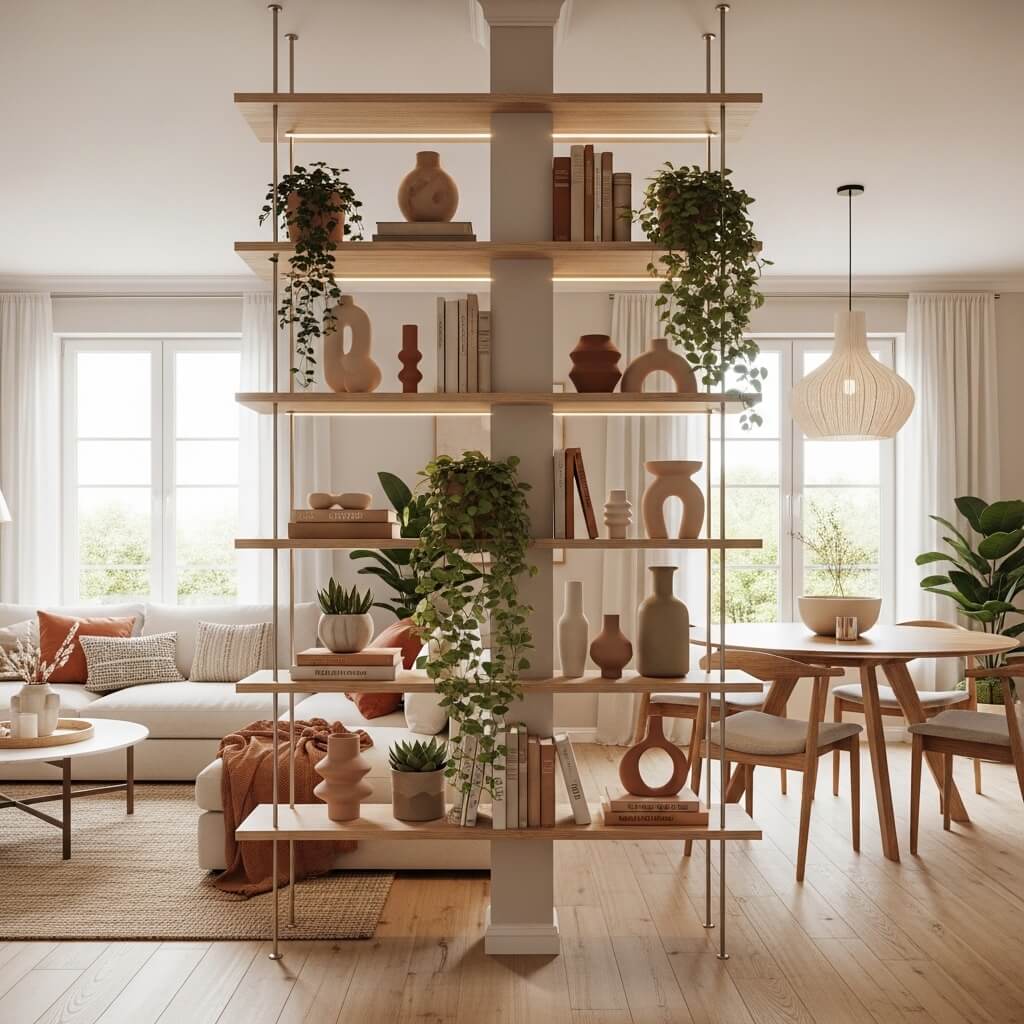
Ever wondered how to divide a room and add storage at the same time? Enter floating shelf partitions—the multitasking MVPs of interior design.
These partitions feature multiple horizontal shelves mounted between vertical supports, creating an open shelving unit that serves as both a divider and display area. I absolutely love these in studio apartments where every square inch needs to pull double duty. You can showcase books, plants, decorative objects, or even use storage baskets to hide the less photogenic stuff.
Best uses for floating shelf partitions:
- Separating living and sleeping areas in studio apartments
- Creating a home office zone within a bedroom
- Dividing kids’ rooms to give siblings their own territories
- Adding visual interest to long, boring hallways
The genius part? These partitions don’t feel like walls. They maintain that airy, open feeling because you can see through them. Plus, you control how “closed off” the space feels based on how densely you arrange items on the shelves. Leave them sparse for maximum openness, or pack them full for more privacy.
I’ve seen incredible variations of this concept. Some people go ultra-modern with sleek metal frames and glass shelves. Others choose rustic wood for a warmer, more organic vibe. You can even find asymmetrical designs where shelves are at different heights and depths—super artistic if that’s your jam.
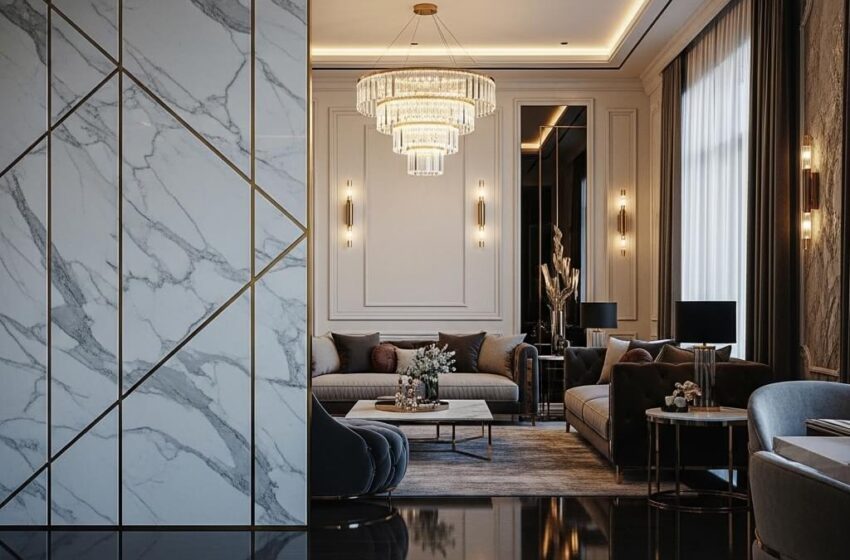
Luxury Marble Accent Partition Wall Design
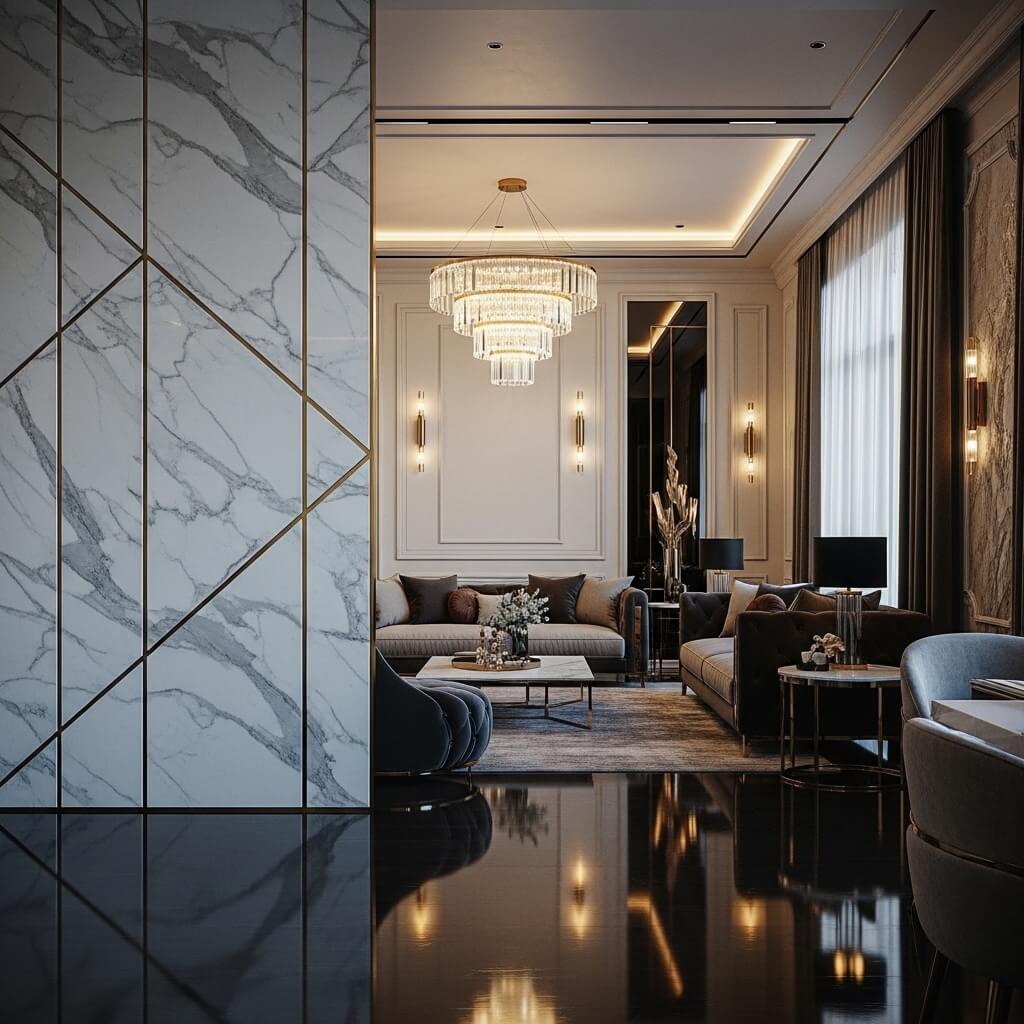
Okay, let’s talk about bringing the drama. Marble accent partitions are for when you want your space to scream “I have arrived” without actually screaming anything because that would be tacky 🙂
These partitions typically feature marble panels—either full slabs or marble-faced materials—that create a stunning focal point. The natural veining in marble ensures every installation is unique, and the material itself just exudes luxury and sophistication.
I’ll be straight with you—real marble is expensive. Like, really expensive. But if you’ve got the budget, it’s an investment that adds serious value and wow-factor to your space. The good news? There are excellent marble-look alternatives now, including porcelain tiles and engineered stone that capture the aesthetic at a fraction of the cost.
Where marble partitions really shine:
- Separating hotel lobby areas from reception desks
- Creating a statement wall in luxury residential bathrooms
- Dividing master bedroom suites from private sitting areas
- Adding elegance to high-end office reception areas
The color and veining pattern you choose dramatically impacts the overall vibe. White Carrara marble with gray veining feels classic and sophisticated. Dramatic black marble with gold veining? That’s bold and contemporary. Green marble creates an organic, earthy elegance.
Pro tip: Backlight your marble partition if you really want to level up. The translucent quality of certain marble types creates this absolutely stunning glow that’s pure magic. I saw this in a boutique hotel once and I’m still not over it.
Green Plant Living Wall Divider Ideas
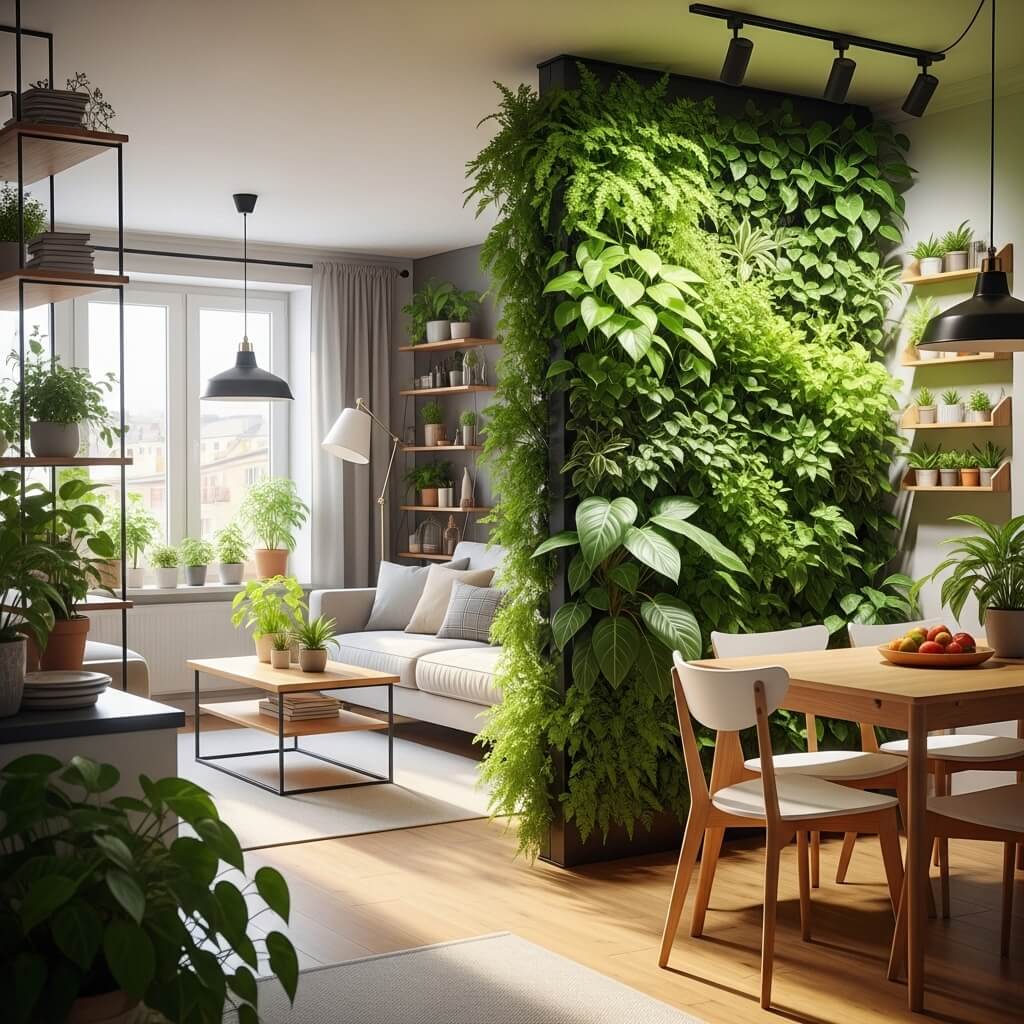
Can we talk about how plants make everything better? Living wall partitions take that concept and turn it up to eleven.
These vertical gardens serve as room dividers while bringing actual, living nature into your space. They purify air, reduce noise, add humidity, and create this incredible biophilic connection that makes spaces feel more alive and welcoming.
I installed a small living wall partition in my apartment last year, and FYI—it requires more maintenance than I initially anticipated. But it’s worth it. Walking past this lush, green wall every day genuinely improves my mood. Plus, my friends think I’m some kind of plant whisperer now (spoiler: I’m not, I just water regularly).
What you need to know about living walls:
- They require proper irrigation systems—manual watering gets old fast
- Choose plants suited to your space’s light conditions
- Mix different textures and shades of green for visual interest
- Consider maintenance access when planning installation
You’ve got options with living wall systems. Modular panels make installation and plant replacement easier. Felt pocket systems are popular for their flexibility. Hydroponic systems reduce water waste and simplify care. Some people even DIY versions with simple wooden frames and hanging planters.
The plant selection matters enormously. Pothos, philodendrons, and ferns work great in lower light. Succulents and air plants thrive in brighter conditions but need less water. I mixed several varieties in mine for that lush, layered jungle vibe.
CNC Cut Decorative Partition Wall Patterns
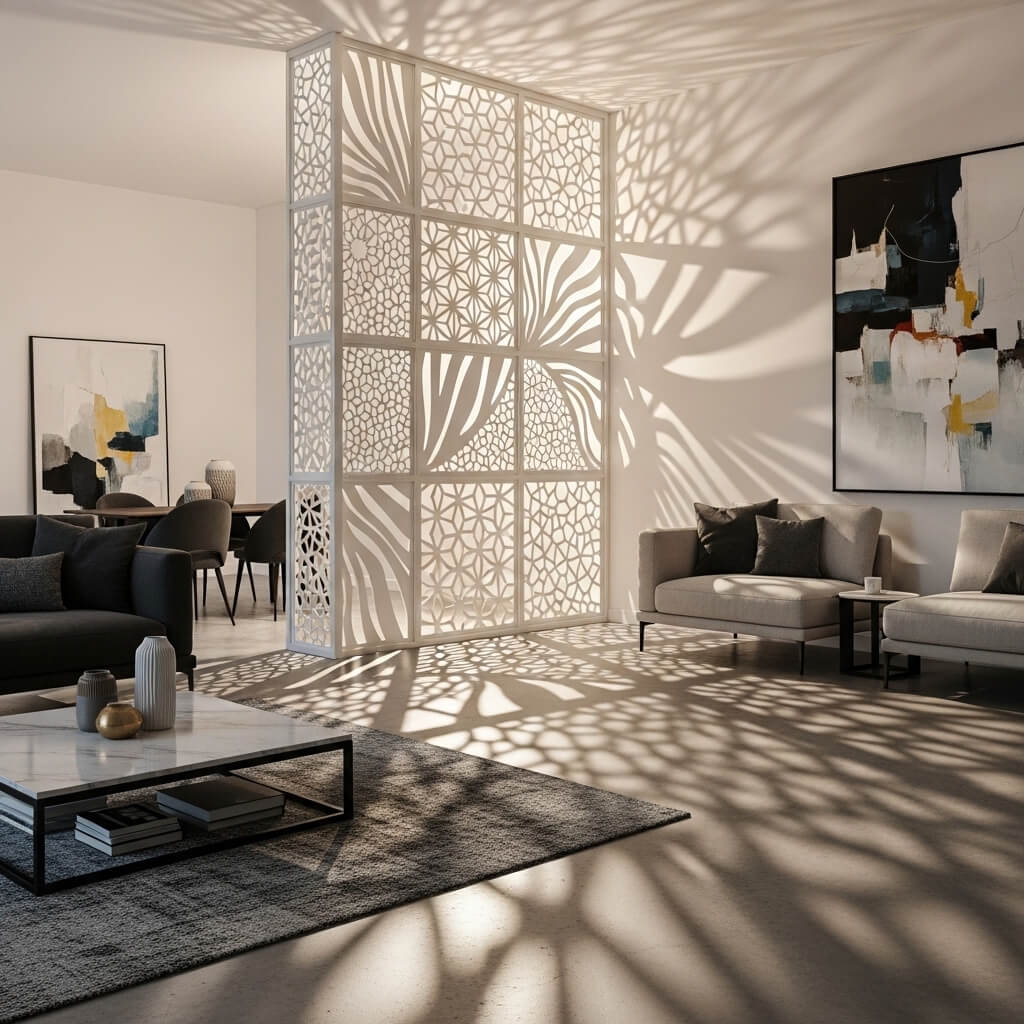
Technology meets art in CNC-cut partitions, and the results can be absolutely mind-blowing.
CNC (Computer Numerical Control) cutting allows designers to create intricate, precise patterns in various materials—usually MDF, plywood, metal, or acrylic. The level of detail possible with this technology is insane. We’re talking geometric patterns, organic flowing designs, traditional motifs, or completely custom artwork translated into three-dimensional screens.
I recently saw a CNC-cut partition in a restaurant that featured an abstract forest pattern, and I literally stopped mid-conversation to stare at it. The way light filtered through the intricate cutouts created these incredible shadow patterns on the surrounding walls. Pure artistry.
Popular CNC partition pattern styles:
- Geometric: Hexagons, triangles, circles arranged in repeating patterns
- Organic: Flowing lines, branches, leaves, abstract nature-inspired designs
- Traditional: Arabic screens (mashrabiya), Indian jali patterns, Asian-inspired motifs
- Custom: Literally anything you can design or imagine
The material choice dramatically affects the final aesthetic. MDF is affordable and takes paint beautifully—great for bold colors. Wood veneer brings natural warmth and premium feel. Metal (usually aluminum or steel) creates industrial-modern statements. Acrylic offers translucent options that play gorgeously with backlighting.
Here’s what nobody tells you: the pattern density matters. Too open, and the partition doesn’t really define the space. Too dense, and you lose the beautiful light-and-shadow play that makes these partitions special. Finding that sweet spot is crucial.
Half Brick Textured Partition Wall Designs
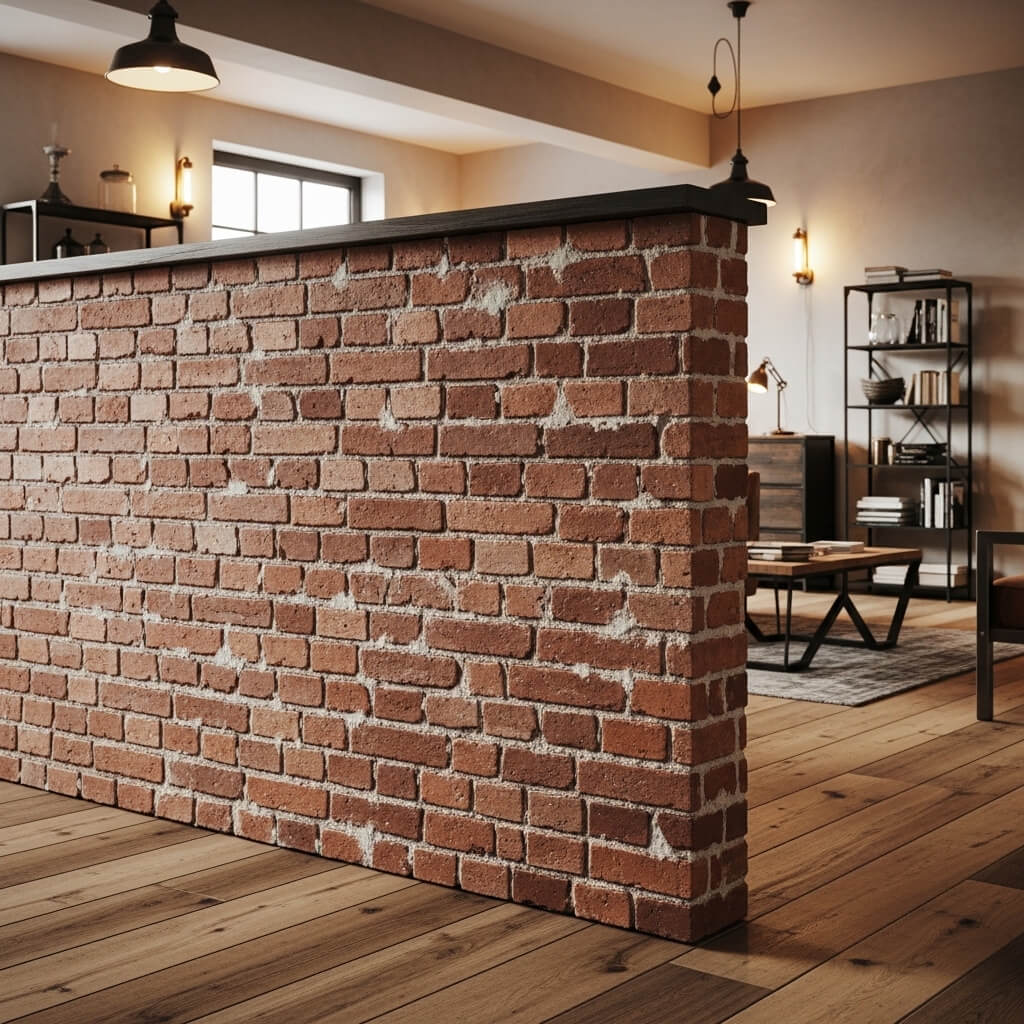
Sometimes you want that industrial, raw aesthetic without the commitment of full floor-to-ceiling brick. Half brick partitions give you exactly that—all the texture and character of exposed brick, but lighter and more versatile.
These partitions typically extend partway up the wall (anywhere from waist-height to about six feet), with the upper portion left open or finished with different materials like glass or metal framing. The combination creates visual interest while maintaining some openness.
I love half brick partitions in loft spaces and industrial-style homes. They add that gritty, urban edge without making spaces feel heavy or closed in. Plus, you can choose between authentic brick, brick veneer, or even brick-effect tiles depending on your budget and structural considerations.
Design variations to consider:
- Traditional red brick for classic industrial vibes
- White-painted brick for lighter, modern farmhouse aesthetics
- Reclaimed brick for authentic character and sustainability
- Brick-effect tiles for easier installation and lighter weight
The partial-height approach is brilliant for several reasons. It creates a physical barrier (useful in restaurant booths or office spaces) while allowing conversation and visual connection above. It permits light flow from upper windows. And honestly, it just looks more intentional and designed than a full brick wall.
I’ve seen designers combine half brick bases with different upper sections—glass panels, wooden slats, even plant installations. The contrast between rough brick texture and sleeker upper materials creates this really dynamic, layered look that feels sophisticated and thoughtfully designed.
Minimalist White Gypsum Partition Wall Ideas
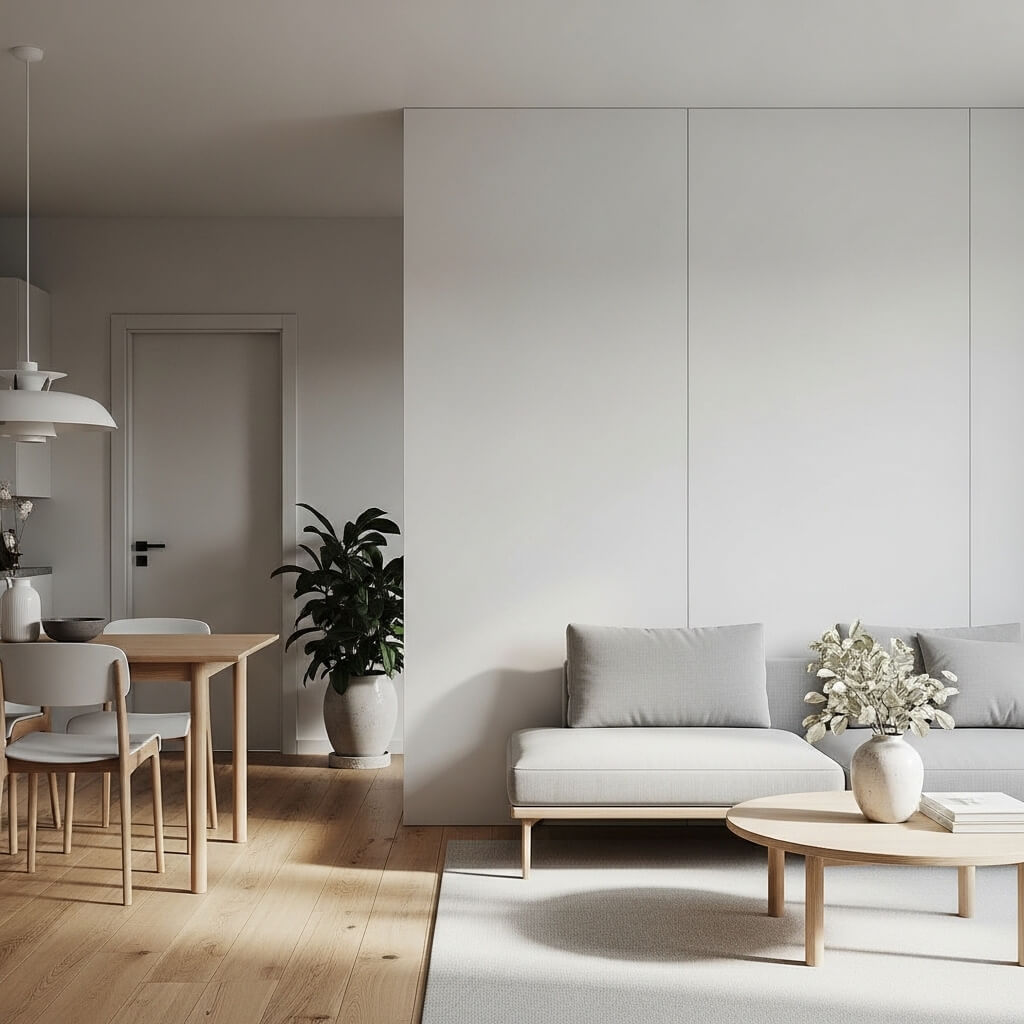
Sometimes less really is more. White gypsum partitions are the definition of minimalist elegance—clean, simple, and infinitely versatile.
Gypsum board (drywall) is the most common partition material because it’s affordable, easy to work with, and creates smooth, seamless surfaces. When finished in crisp white, these partitions become neutral backdrops that let other design elements shine while still defining space effectively.
Why minimalist white gypsum partitions work:
- They maximize light reflection, making spaces feel brighter
- The neutral palette works with literally any design style or color scheme
- Smooth surfaces create calm, uncluttered visual environments
- They’re budget-friendly compared to specialty materials
Don’t let the simplicity fool you though—there’s serious design potential here. You can create interesting shapes: curved walls, zigzag patterns, walls with integrated niches and alcoves. I’ve seen gypsum partitions with geometric cutouts, integrated lighting, or varying depths that create shadow play throughout the day.
The finish matters more than you’d think. Matte white feels soft and contemporary. High-gloss white creates drama and reflects even more light (though it shows every imperfection, so proceed with caution). Textured finishes add subtle dimension without overwhelming minimalist aesthetics.
One of my favorite applications is using white gypsum partitions with integrated LED strip lighting. The clean white surface becomes this glowing element that serves as both divider and ambient lighting source. It’s minimalism with function—exactly what good design should be.
Sliding Panel Partition Wall Systems
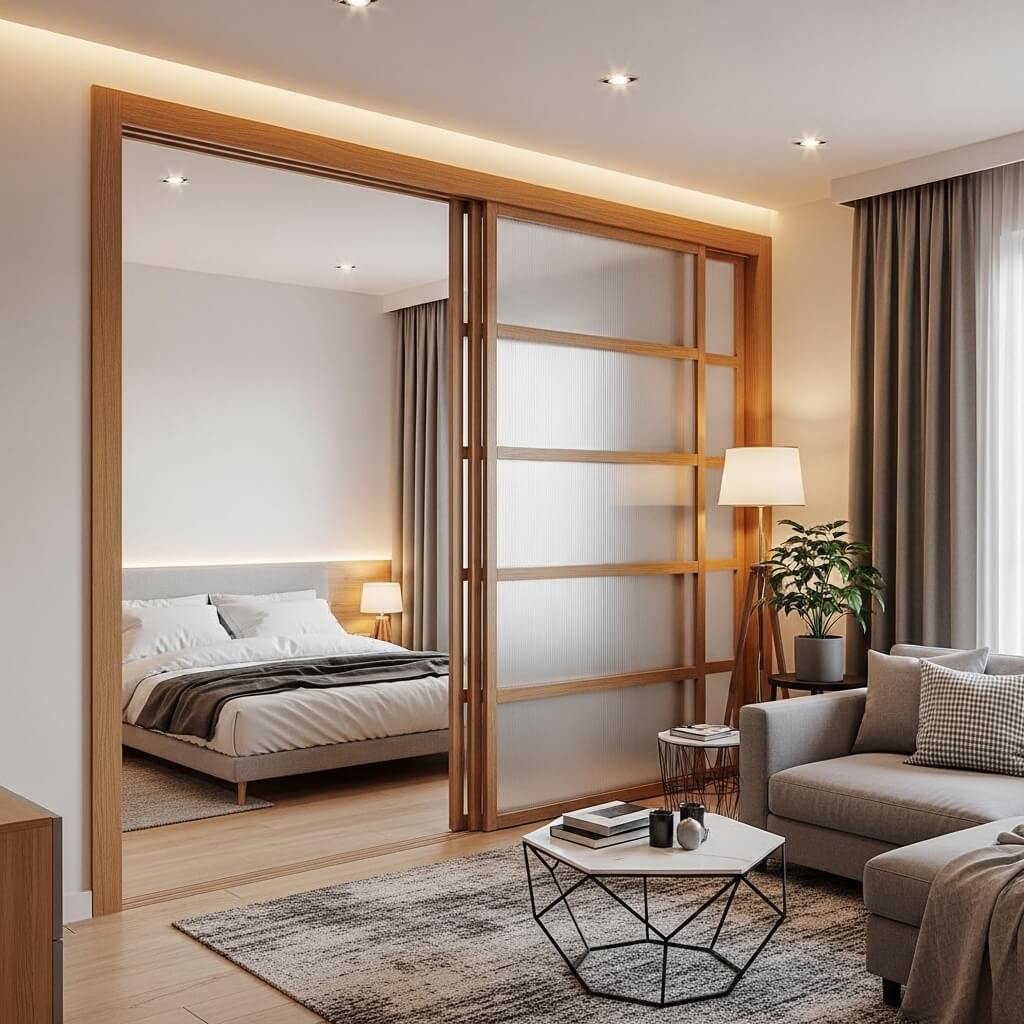
Flexibility is the name of the game with sliding partitions. Why commit to a fixed room division when you can change your space layout whenever you want?
Sliding partition systems feature panels mounted on ceiling tracks (sometimes floor tracks too) that glide open and closed. One minute you’ve got a wide-open entertaining space; slide the panels closed, and you’ve created separate rooms. It’s like having multiple floor plans in one space.
I’m borderline obsessed with this concept. The adaptability solves so many real-world problems. Need a quiet home office during work hours but want an open living space for evenings? Sliding partition. Want to divide a kids’ playroom into separate zones but open it up for playdates? Sliding partition. The applications are endless.
Types of sliding partition systems:
- Single-track: Panels stack to one side
- Multi-track: Panels slide in both directions and stack at both ends
- Pocketing systems: Panels disappear into wall cavities (super sleek but requires planning during construction)
- Folding/accordion: Panels fold as they slide (great for maximizing opening width)
Material choices are wide open. Glass panels maintain light flow in both open and closed positions. Solid panels (wood, MDF, fabric-covered) provide complete privacy and sound dampening. Some systems even allow you to mix panel types—alternate glass and solid panels for a custom balance of openness and privacy.
Installation ranges from simple DIY kits to complex professional systems. Lightweight panels on basic tracks? Totally doable for handy homeowners. Heavy glass or soundproof panels on multi-track systems? Yeah, hire a professional. Trust me on this one—I learned that lesson the hard way :/
Industrial Metal Frame Glass Partition Walls
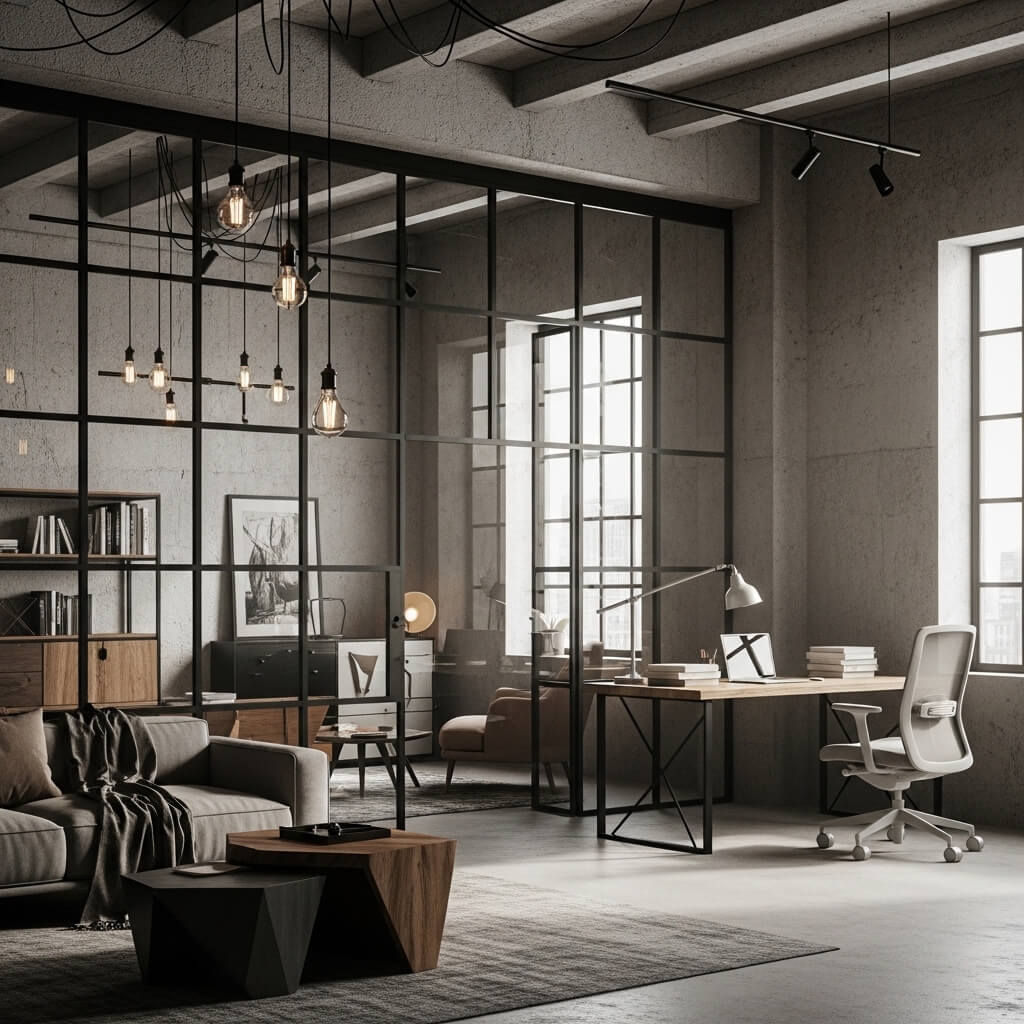
Let’s end with a style that perfectly captures modern urban design—metal-framed glass partitions. This look has absolutely exploded in popularity, and for good reason. It’s sharp, sophisticated, and adds instant architectural interest.
Think of those classic factory windows with their black metal frames and gridded glass panes. That’s the aesthetic we’re talking about, translated into room dividers. The black metal (usually steel or aluminum) provides strong visual lines, while the glass keeps spaces light and open.
I installed a metal-framed glass partition in my home office, and it’s hands-down my favorite design decision. The black frames add definition and structure, while the glass prevents the small space from feeling like a cave. Plus, let’s be real—it looks sophisticated as hell.
Style variations you’ll encounter:
- Classic grid: Evenly spaced vertical and horizontal frames creating rectangular panes
- Modern minimal: Larger panes with minimal framing
- Arched tops: Adding architectural detail and elegance
- Floor-to-ceiling: Maximum impact and space definition
- Half-height: Maintaining more openness while defining zones
The frame finish dramatically changes the vibe. Black is the most popular—it’s bold, modern, and versatile. Brushed steel or aluminum creates industrial-chic sophistication. Bronze or brass frames add warmth and luxury. White or gray frames feel softer and more Scandinavian.
Where metal-framed glass partitions absolutely kill it:
- Home offices needing separation from living spaces
- En-suite bathrooms in master bedrooms
- Restaurant and bar interiors
- Commercial office spaces
- Loft apartments maintaining industrial character
One thing I love about this style is how it works across different design aesthetics. It fits industrial lofts obviously, but also complements contemporary, transitional, and even traditional spaces when you choose the right frame finish and proportion.
The hardware and details matter. Exposed hinges and handles add to the industrial aesthetic. Minimal, concealed hardware creates sleeker, more refined looks. Some systems include doors within the partition for access, while others serve purely as fixed dividers.
Wrapping This Up
So there you have it—ten partition wall ideas that can completely transform how your space looks and functions. Whether you’re working with a sprawling open-plan home that needs some definition, a studio apartment requiring smart space division, or a commercial space needing flexible layouts, there’s a partition solution that fits.
The beauty of partition walls is they solve practical problems while adding serious design value. They create privacy without darkness, define spaces without claustrophobia, and add architectural interest that makes places feel intentional and designed rather than just… there.
My advice? Don’t overthink it. Choose a style that resonates with your aesthetic, fits your budget, and solves your specific spatial challenges. Start with one partition in the most problematic area of your space and see how dramatically it changes the whole vibe. I’m willing to bet you’ll wonder why you didn’t do it sooner.
And remember—these aren’t permanent walls. Most partition systems can be modified, moved, or completely removed if your needs change. That flexibility is incredibly valuable, especially if you’re renting or just commitment-phobic when it comes to design decisions.
What are you waiting for? Pick your favorite idea and start planning. Your space is about to get a serious upgrade.