10 Luxury Hall Partition Design Ideas for Elegant Homes
- Partition Design
 Ben
Ben- 0
- 30 minutes read
You know that awkward moment when guests walk into your home and there’s just… nowhere for their eyes to land? Your hallway feels like a boring tunnel leading to more interesting rooms, and you’re left wondering how to make that space actually work for you instead of against you.
I’ve been there, trust me. After years of experimenting with different partition designs (and making some pretty spectacular mistakes along the way), I’ve learned that the right hall divider can completely transform your home’s entire vibe. We’re not talking about those flimsy accordion-style room dividers your college roommate used – we’re going luxury here, baby.
Modern Wooden Slat Hall Divider Design
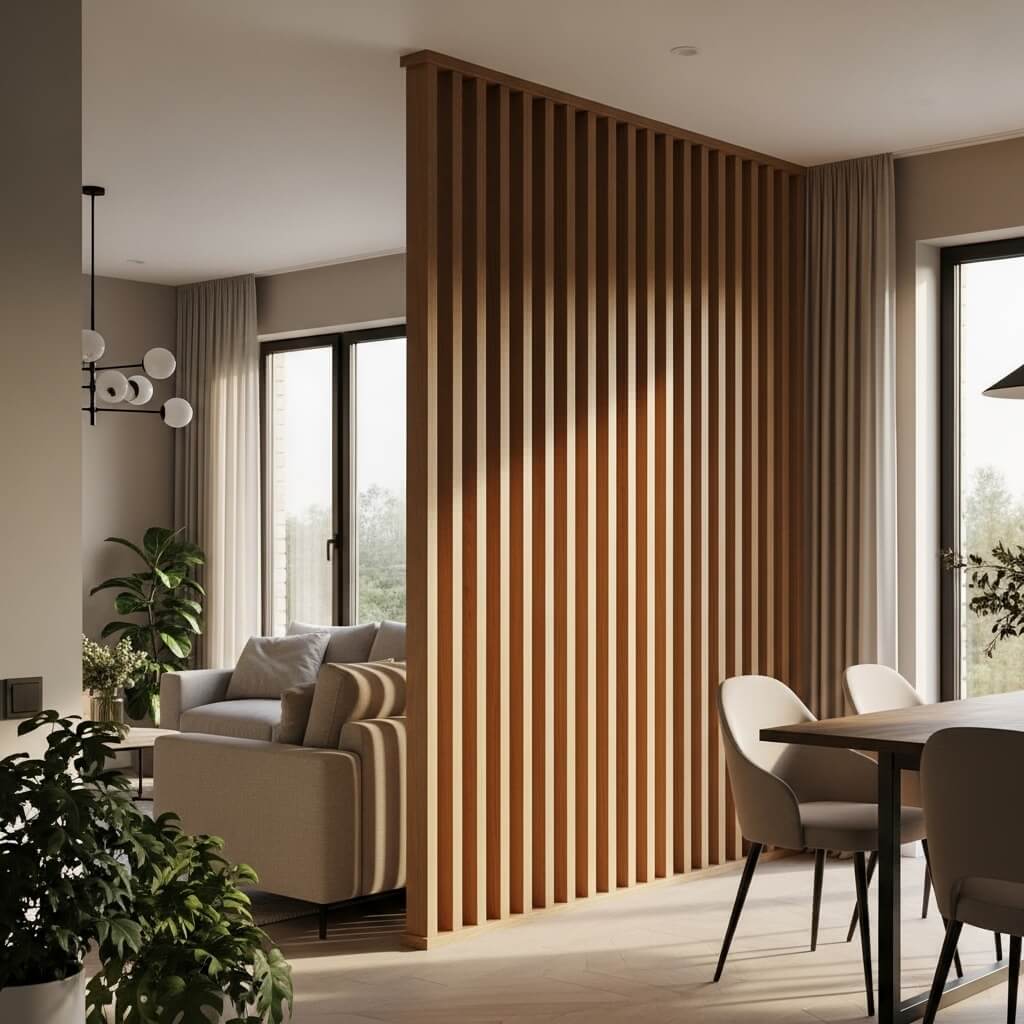
Let’s start with my personal favorite – wooden slat partitions. There’s something incredibly satisfying about the clean lines and natural warmth these beauties bring to any space.
I installed one of these bad boys between my entryway and living room last year, and honestly? Game changer. The vertical slats create this gorgeous shadow play throughout the day as light filters through. You get privacy without that claustrophobic “walled off” feeling that solid partitions can create.
Here’s what makes wooden slat dividers absolutely brilliant:
• Versatility in wood choices – From rich walnut to light oak, you can match any existing decor
• Customizable spacing – Wider gaps for more openness, tighter for more privacy
• Easy maintenance – A quick dusting is usually all they need
• Timeless appeal – Won’t look dated in five years like some trendy options might
The trick with wooden slats is getting the proportions right. Too narrow and they look like prison bars (learned that one the hard way). Too wide and you lose that sophisticated linear effect. I’ve found that 2-3 inch slats with 1-inch gaps hit that sweet spot perfectly.
Want to add some extra pizzazz? Consider LED strip lighting behind the slats. It creates this incredible ambient glow in the evenings that’ll have your guests asking for your interior designer’s number 🙂
Glass Partition Hall With Black Frame Elegance
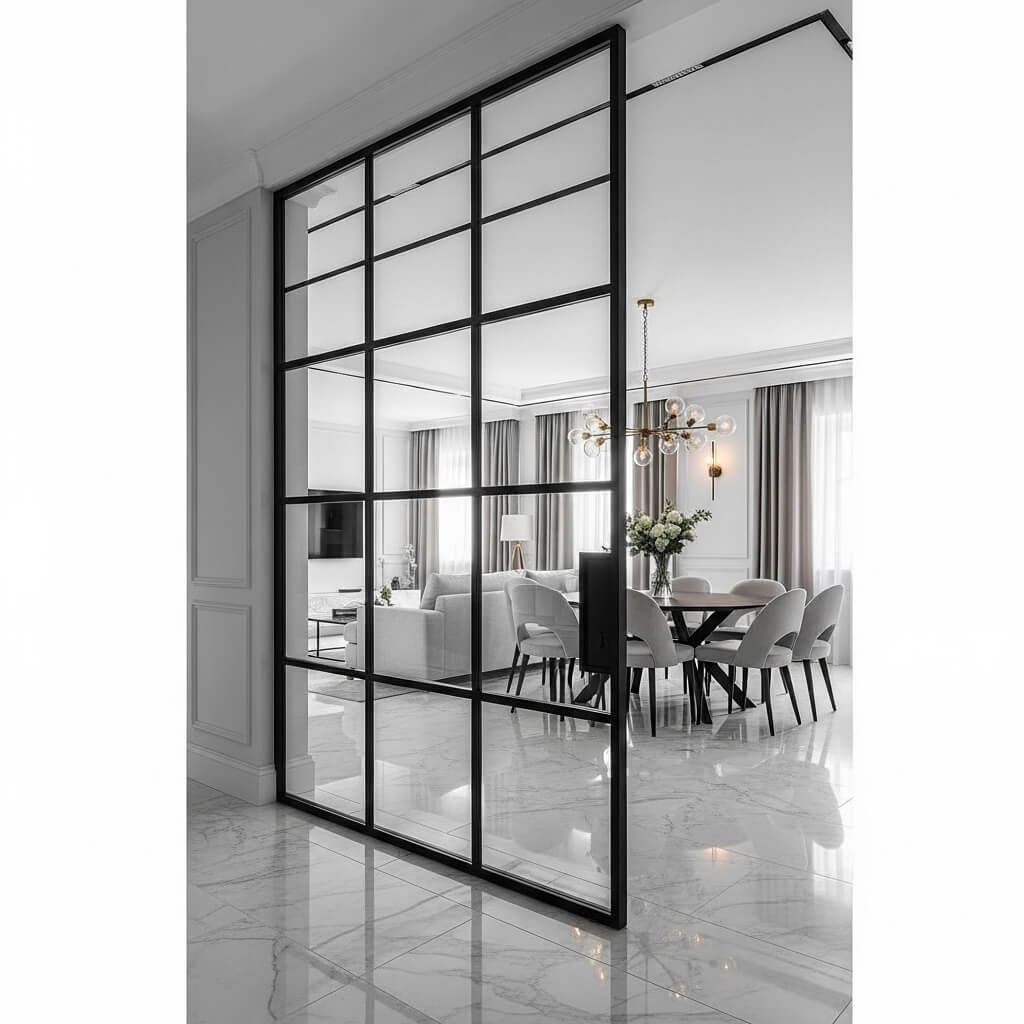
Now we’re talking serious sophistication. Black-framed glass partitions are having their moment, and for good reason – they’re like the little black dress of interior design.
I’ll be honest, I was skeptical about glass partitions at first. Seemed like a fingerprint magnet waiting to happen. But after seeing one properly executed in a friend’s home, I became a total convert.
The magic happens in the contrast. That sleek black frame against crystal-clear glass creates defined boundaries without blocking light flow. Your hallway maintains its open feel while still establishing distinct zones.
Key benefits that sold me:
• Light transmission – Keeps spaces bright and airy
• Visual continuity – Maintains sight lines throughout your home
• Modern industrial vibe – Perfect for contemporary and transitional styles
• Easy cleaning – Quality glass coatings make maintenance surprisingly simple
Pro tip from my own experience: invest in tempered safety glass from the get-go. Yes, it costs more upfront, but you’ll sleep better knowing it won’t shatter into a million pieces if someone (ahem, your kids) gets a little too enthusiastic with a ball indoors.
The black frame isn’t just about looks either – it’s incredibly practical. Shows way fewer fingerprints than silver or white frames, and it anchors the entire partition visually.
Floating TV Unit Room Separation Style
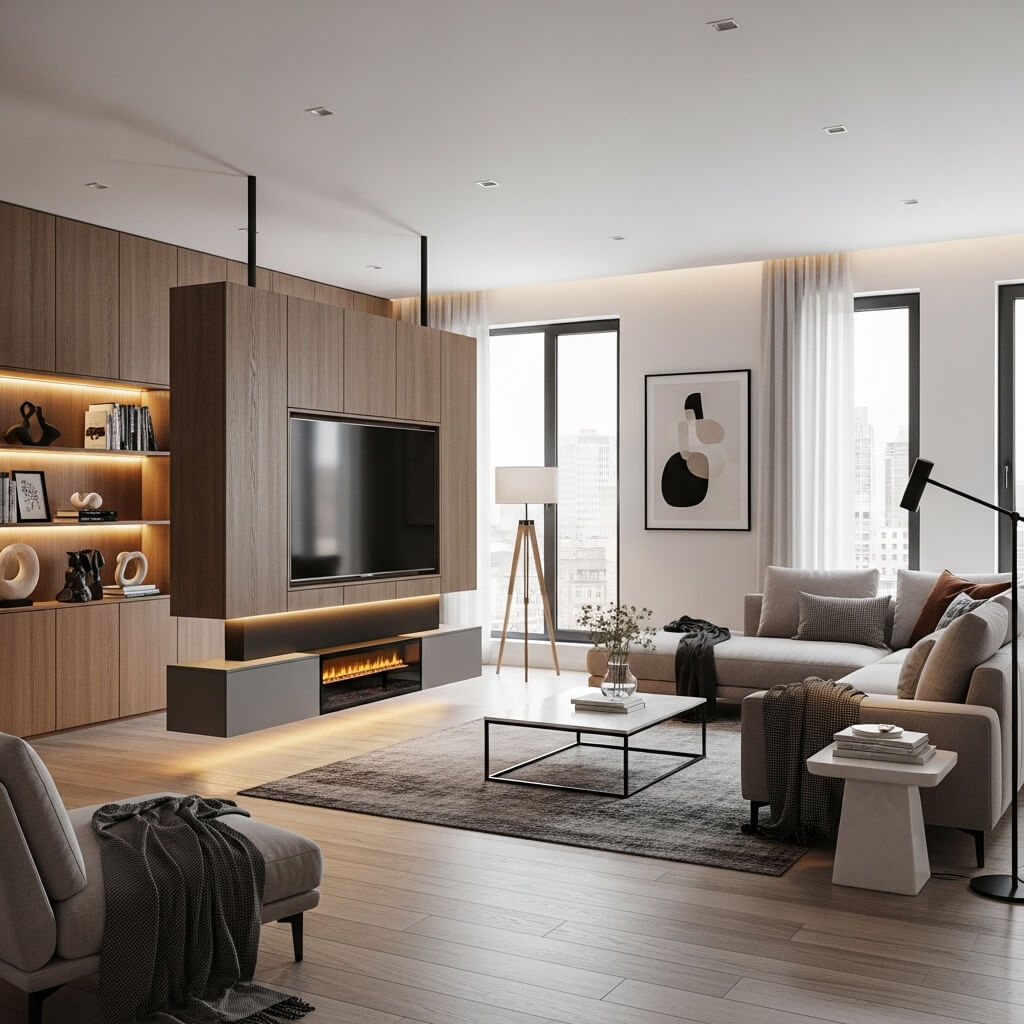
Ever wonder how to make your TV work double duty? Enter the floating TV unit partition – probably the most functional divider on this entire list.
I stumbled onto this concept when I was desperately trying to separate my open-plan living area without losing floor space. Traditional room dividers felt too bulky, but a floating TV unit? Genius.
Picture this: a sleek, wall-mounted unit that extends partially into your hallway space, creating natural separation while housing your entertainment system. The “floating” aspect keeps floor space clear, making your area feel larger than it actually is.
What makes this design particularly brilliant:
• Dual functionality – Storage and room division in one
• Cable management – Built-in solutions keep wires hidden
• Viewing flexibility – Can often rotate or swivel for multiple viewing angles
• Modern aesthetic – Clean lines that complement contemporary homes
The key is getting the proportions absolutely right. Too small and it looks like an afterthought. Too large and it overwhelms the space. I recommend extending the unit about 60-70% into the room – enough to create definition without blocking traffic flow.
Material choice matters too. I’ve seen gorgeous examples in everything from high-gloss lacquer to natural wood veneer. The trick is matching your existing furniture while ensuring the unit feels intentional, not like furniture you just happened to hang on the wall.
Also Read: 10 Amazing Office Partition Design Ideas for Stylish Interiors
Indoor Green Plant Partition Wall Idea
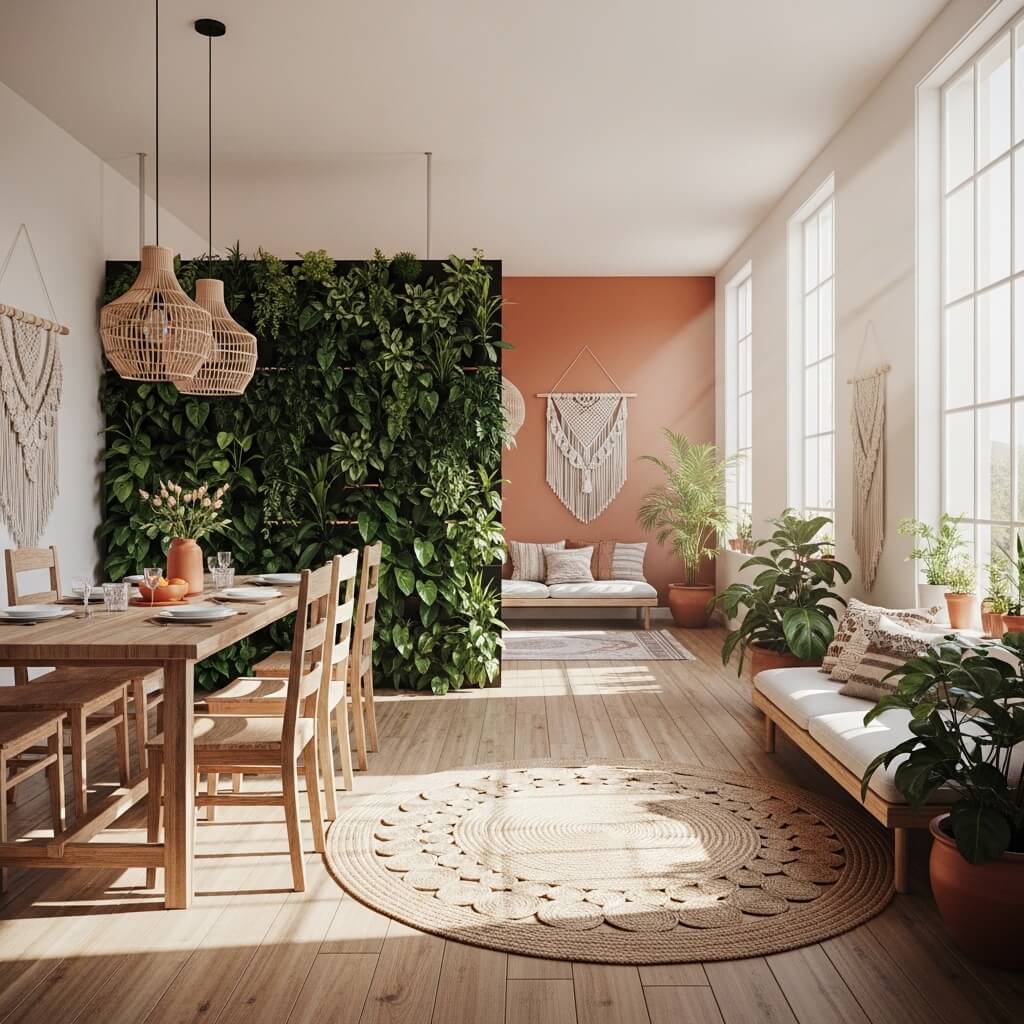
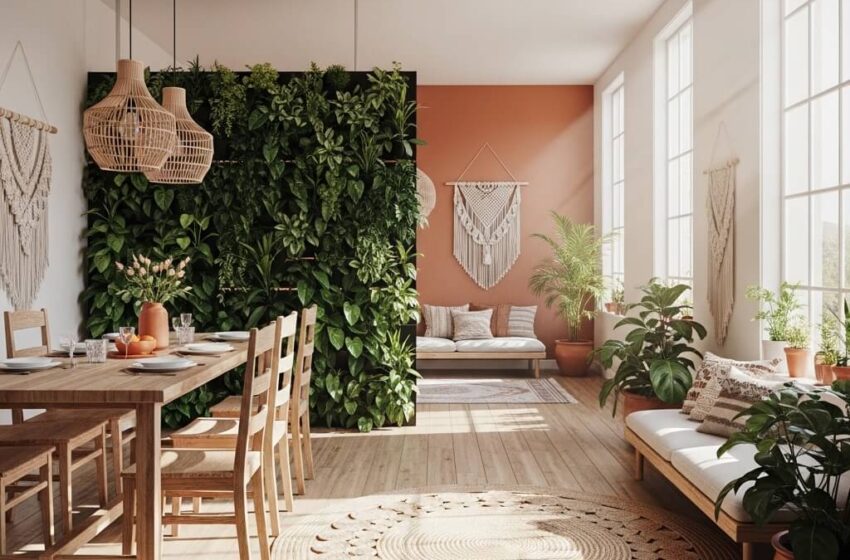
Okay, confession time – I used to be a plant killer. Seriously, I could make a cactus give up on life. But when I discovered living plant partitions, something clicked.
There’s something almost magical about using nature as your room divider. These aren’t your grandmother’s hanging plants (though honestly, she was onto something). We’re talking about sophisticated vertical garden systems that create stunning green walls.
The beauty of plant partitions goes way beyond aesthetics. You’re literally improving your indoor air quality while creating visual separation. It’s like having a natural air purifier that happens to look incredible.
Plants that actually work for partition walls:
• Pothos – Practically indestructible and grows fast
• Snake plants – Striking vertical lines, very low maintenance
• Philodendrons – Lush, tropical vibe
• ZZ plants – Glossy leaves that catch light beautifully
The maintenance situation isn’t as scary as you might think. Modern vertical garden systems often include automated watering solutions. Some even have built-in drainage and nutrient systems.
I installed a modular plant wall system last spring, and watching it evolve throughout the seasons has been surprisingly therapeutic. Plus, there’s something deeply satisfying about guests asking if those plants are real – because they look too perfect to be alive!
Open Shelf Bookshelf Hall Divider Concept
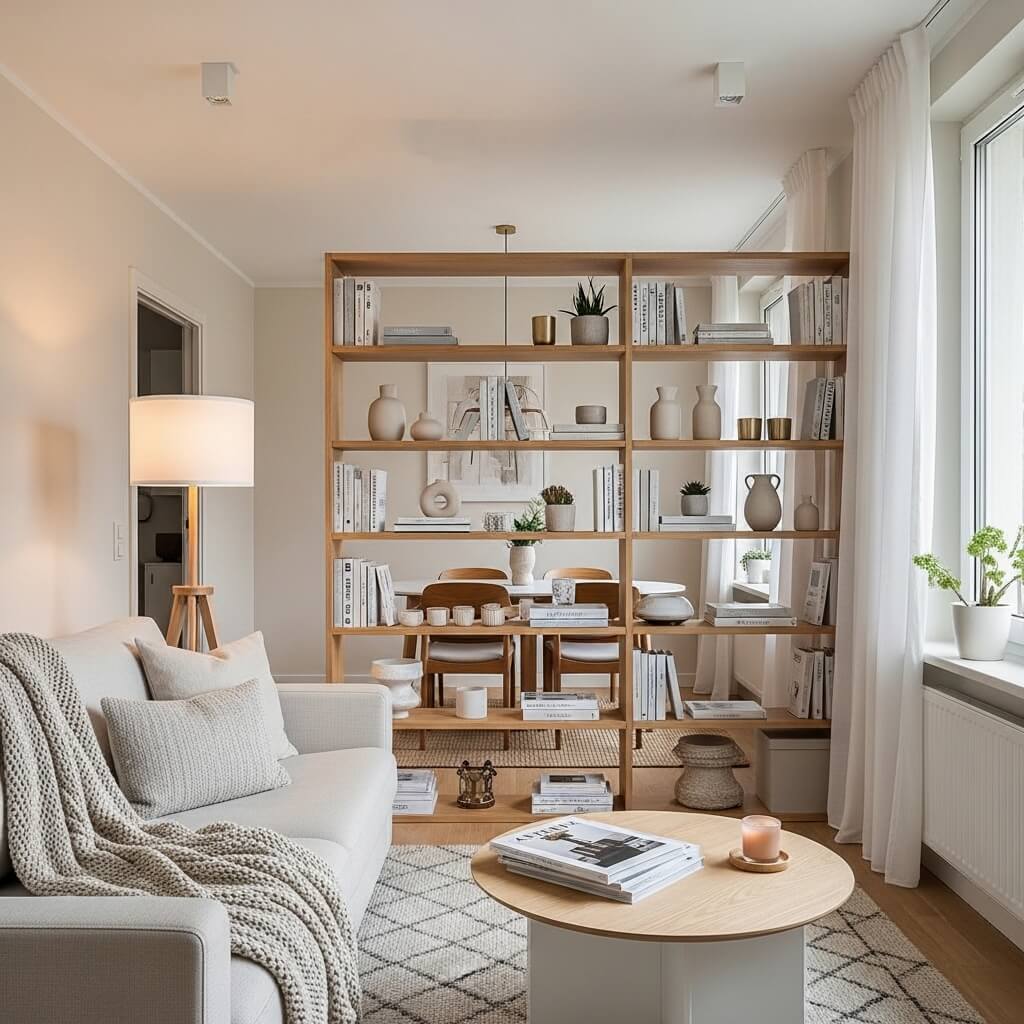
Let me paint you a picture: You walk into a home, and instead of a blank hallway, you’re greeted by floor-to-ceiling open shelving displaying books, art, and carefully curated objects. Instantly, you know something about the people who live there.
Open shelf dividers are brilliant because they’re functional storage that doubles as personal expression. Unlike solid partitions that block views, these babies maintain visual flow while adding tons of personality.
I learned this lesson the hard way when I first tried a solid bookshelf as a room divider. It worked functionally, but it made my space feel choppy and disconnected. Open shelving changed everything.
Strategic styling tips that actually work:
• Mix vertical and horizontal book placement – Creates visual rhythm
• Include negative space – Don’t fill every shelf completely
• Add plants and objects – Books alone can look flat
• Consider lighting – Small LED strips or spotlights add drama
The beauty lies in the flexibility. Rearrange displays seasonally, showcase new finds, or completely change the vibe when you’re ready for something fresh.
Material choice dramatically impacts the overall feel. Natural wood brings warmth, metal frames add industrial edge, and painted MDF offers endless color possibilities. I’ve seen stunning examples in deep navy that made books and objects pop like art pieces.
Sliding Panel Partition for Modern Living Hall
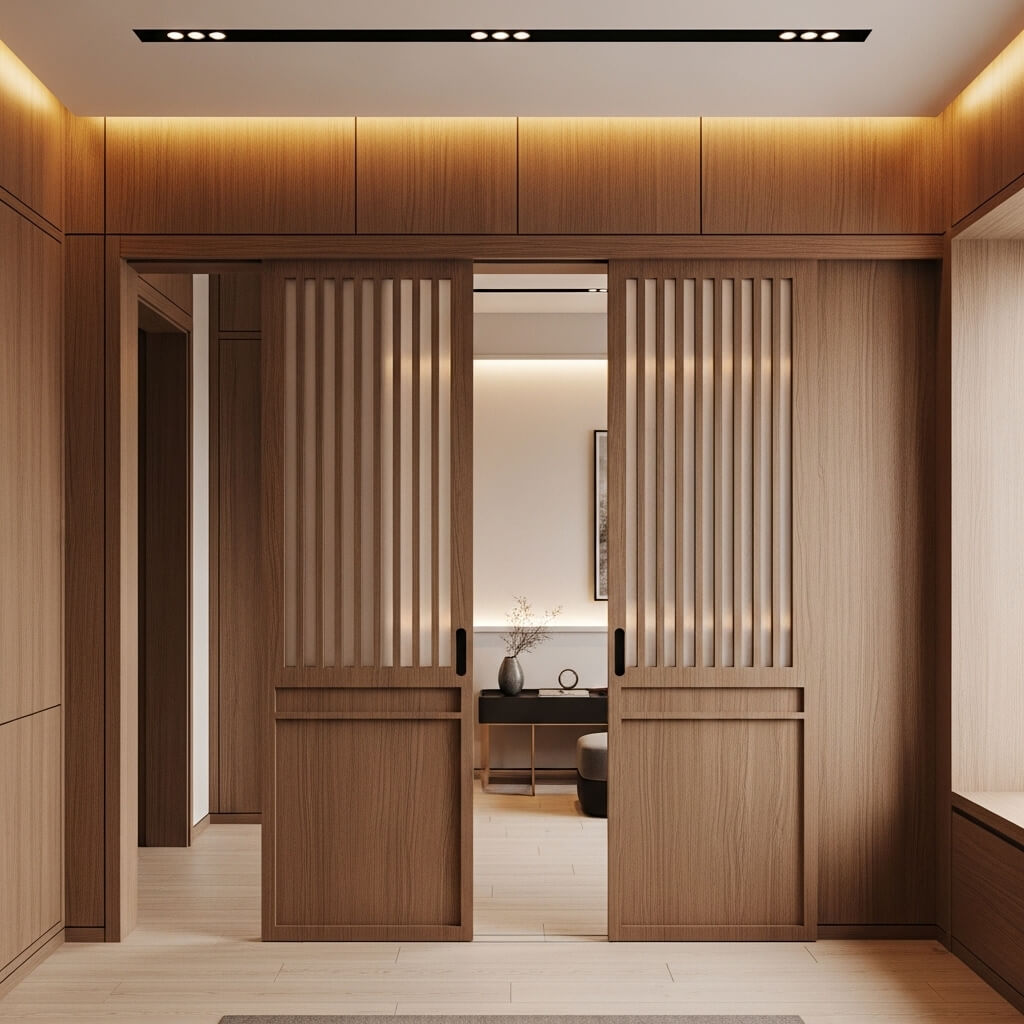
Picture this scenario: Sometimes you want your spaces connected, other times you need them completely separate. Enter sliding panel partitions – the Swiss Army knife of room dividers.
I installed a three-panel sliding system between my dining area and home office, and the flexibility has been incredible. Open for entertaining, closed for work calls, partially closed for that perfect amount of visual separation during dinner parties.
The engineering behind modern sliding systems is pretty impressive. Soft-close mechanisms prevent slamming, adjustable tracks accommodate slight floor variations, and premium hardware ensures smooth operation even after years of use.
Design options that’ll blow your mind:
• Wood panels with metal frames – Industrial-meets-warm aesthetic
• Fabric-covered acoustic panels – Sound dampening bonus
• Frosted glass inserts – Light transmission with privacy
• Mixed materials – Combine wood, metal, and glass for visual interest
The installation does require some planning – you’ll need proper structural support for the overhead track system. But trust me, the investment in quality hardware pays off. Cheap sliding systems get wobbly and frustrating fast.
One thing I didn’t anticipate was how much I’d use the partial positions. Having panels slightly overlapped creates interesting layered effects and allows you to fine-tune the level of separation.
Also Read: 10 Beautiful Unique Partition Design Ideas for Stylish Spaces
Elegant Metal Frame Partition With Frosted Glass
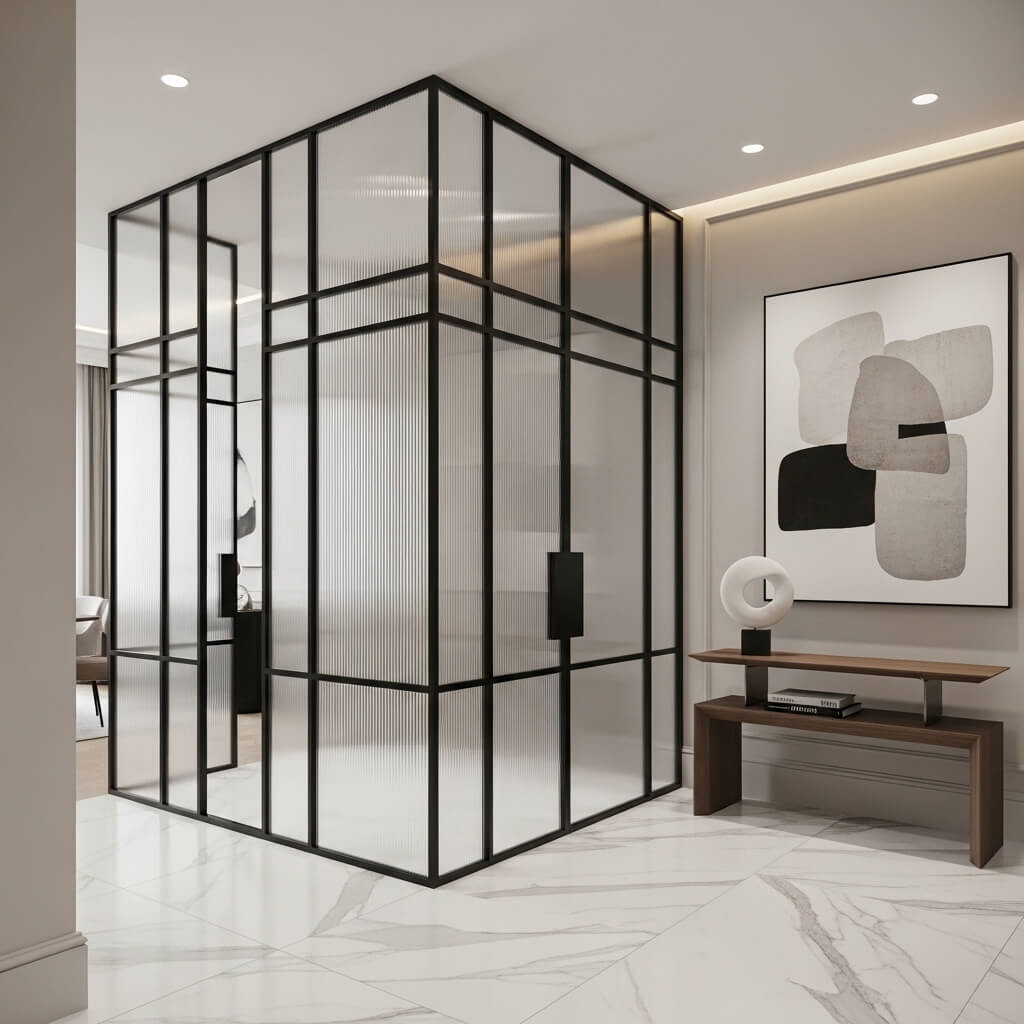
Want to add some serious architectural drama to your hallway? Metal frame partitions with frosted glass bring that high-end, custom-built look that makes people think you hired an expensive designer.
I’ve always been drawn to the contrast between industrial metal and soft, diffused glass. The frosted glass provides privacy while still allowing light to flow through – perfect for maintaining that open feel while creating distinct zones.
The metal finish options are where you can really personalize this look. Matte black feels ultra-modern, brushed brass adds warmth and luxury, and powder-coated colors let you tie into existing design elements.
Why frosted glass beats clear every time for hall partitions:
• Privacy without isolation – Obscures direct views while maintaining connection
• Light diffusion – Creates beautiful, soft illumination
• Hides imperfections – Doesn’t show every fingerprint or water spot
• Visual weight – Feels more substantial than clear glass
The proportions matter enormously here. I’ve seen installations where the metal frame overpowered the glass, creating a cage-like effect. The sweet spot seems to be thinner frame profiles that let the glass take center stage.
Installation tip: Consider the surrounding finishes carefully. This style works beautifully with concrete floors, exposed brick, or sleek tile – basically anything with some texture to balance the smoothness of the glass.
Curtain Divider Cozy Hall Space Separation
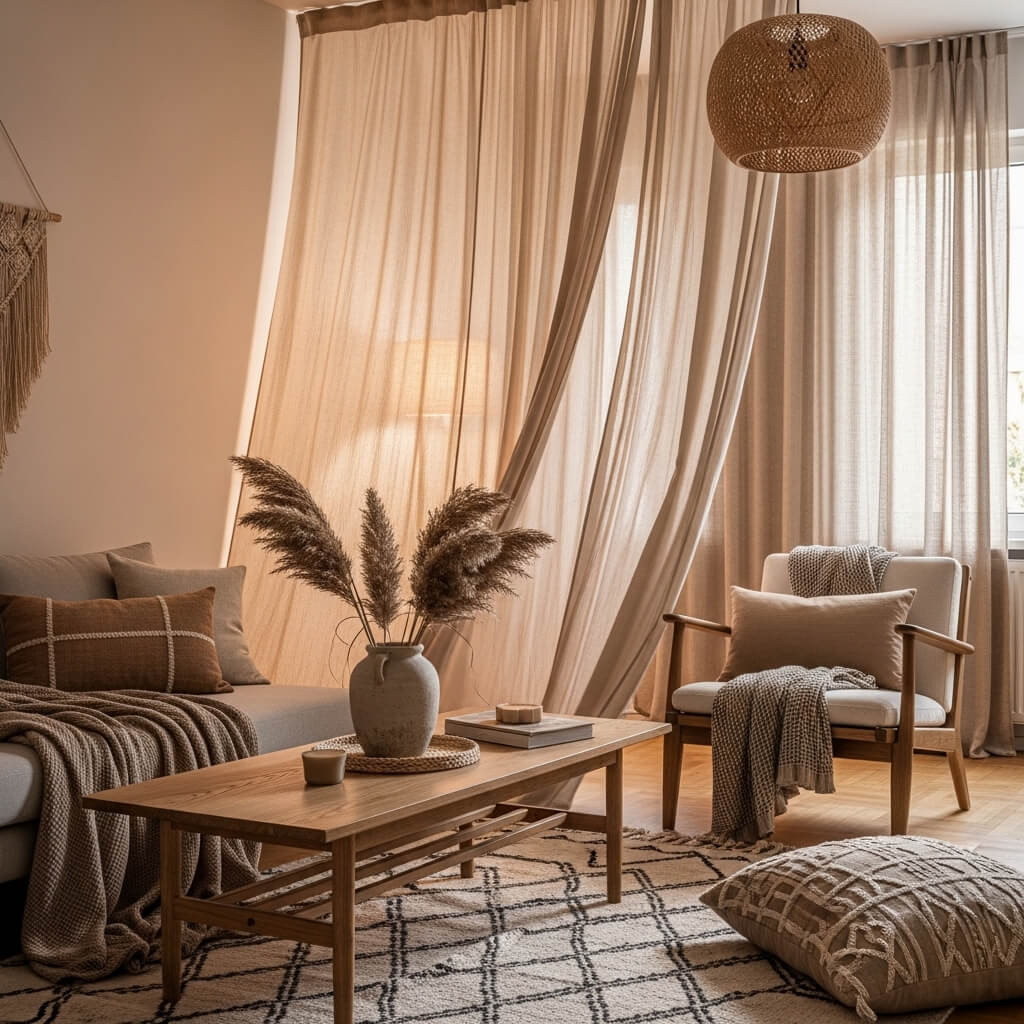
Okay, hear me out on this one. I know “curtain divider” might sound a bit college dorm-ish, but we’re talking about luxury fabric installations that are worlds away from those cheap tension rod setups.
I discovered high-end curtain partitions during a hotel stay in Tokyo. Floor-to-ceiling panels in gorgeous linen created intimate spaces within a larger room. The softness and movement brought this incredible sense of calm that hard partitions just can’t match.
Fabric choices that elevate the entire concept:
• Heavy linen – Natural texture with sophisticated drape
• Velvet panels – Luxurious and excellent for sound absorption
• Sheer overlays – Layered effects with varying opacity
• Custom prints – Turn your partition into functional art
The hanging system is crucial for achieving that high-end look. Hospital-grade track systems allow smooth movement, while decorative ceiling mounts can become design features themselves.
What surprised me most was the acoustic benefits. Fabric naturally absorbs sound, so these partitions actually improve the acoustics in your space – especially helpful in open floor plans where sound can bounce around.
The maintenance is easier than you’d think too. Most luxury fabrics can be professionally cleaned, and some modern options are even machine washable. FYI, investing in quality fabric upfront saves money on replacements later.
Half-Wall TV Lounge Partition Design
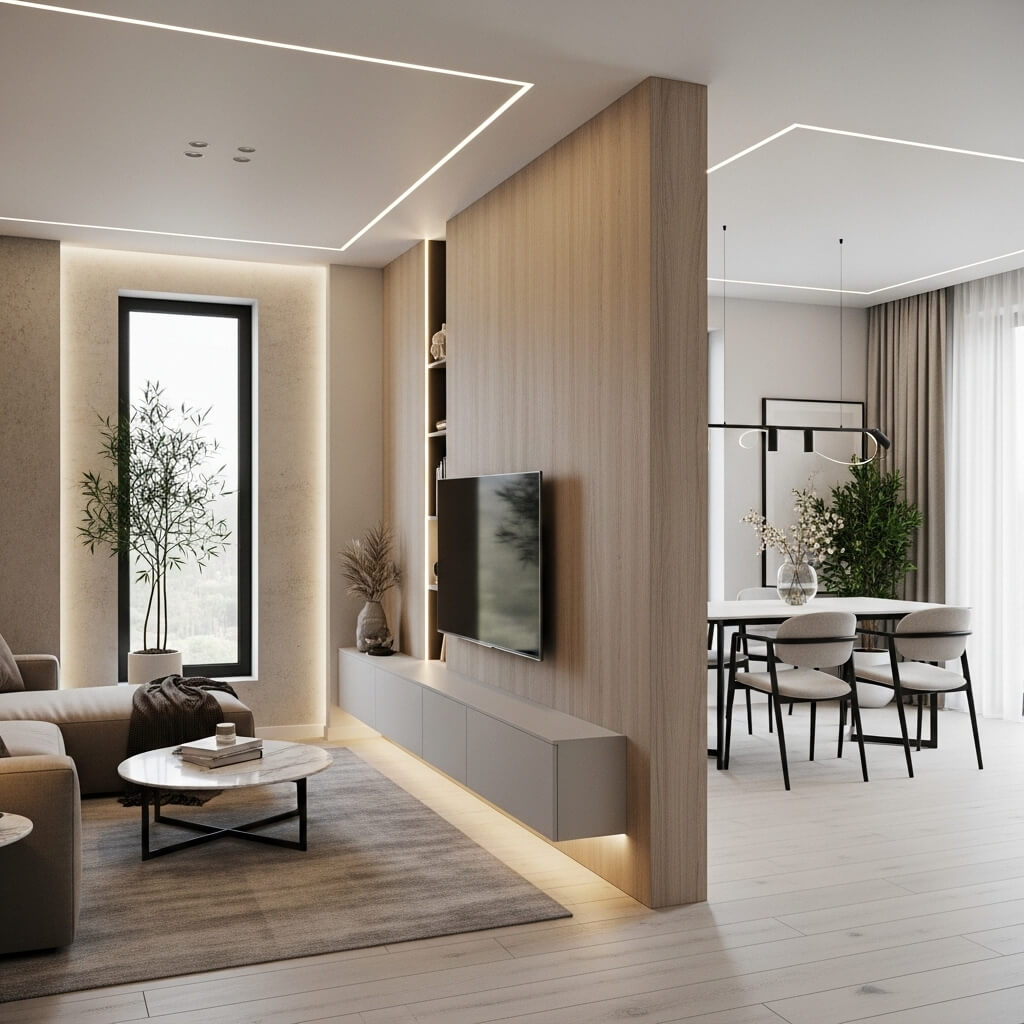
Sometimes the best solutions are the simplest ones. Half-wall partitions give you separation without sacrificing that open, flowing feeling that makes modern homes so appealing.
I added a half-wall between my entryway and living area specifically to house my TV setup, and it solved multiple problems at once. The wall height provides perfect mounting space while creating a natural transition between spaces.
The magic happens in the proportions and finishing touches. Too low and it feels like an afterthought. Too high and you’ve basically built a regular wall. I’ve found that 42-48 inches hits the perfect sweet spot – high enough for function, low enough to maintain openness.
Design elements that make half-walls exceptional:
• Built-in storage – Hidden compartments for media equipment
• Decorative tops – Stone, wood, or metal caps add finished appeal
• Lighting integration – LED strips or recessed fixtures
• Mixed materials – Combine drywall with wood or stone accents
The TV mounting aspect requires some planning. You’ll want to run all your cables through the wall during construction, and ensure the structure can support your TV’s weight safely.
One bonus I didn’t expect was how the half-wall created a natural console table effect. The top surface became perfect for displaying decor, plants, or even serving drinks during parties.
Also Read: 10 Smart Kitchen Partition Design Ideas Functional Decor Ideas
Decorative Jaali Pattern Hall Divider Style
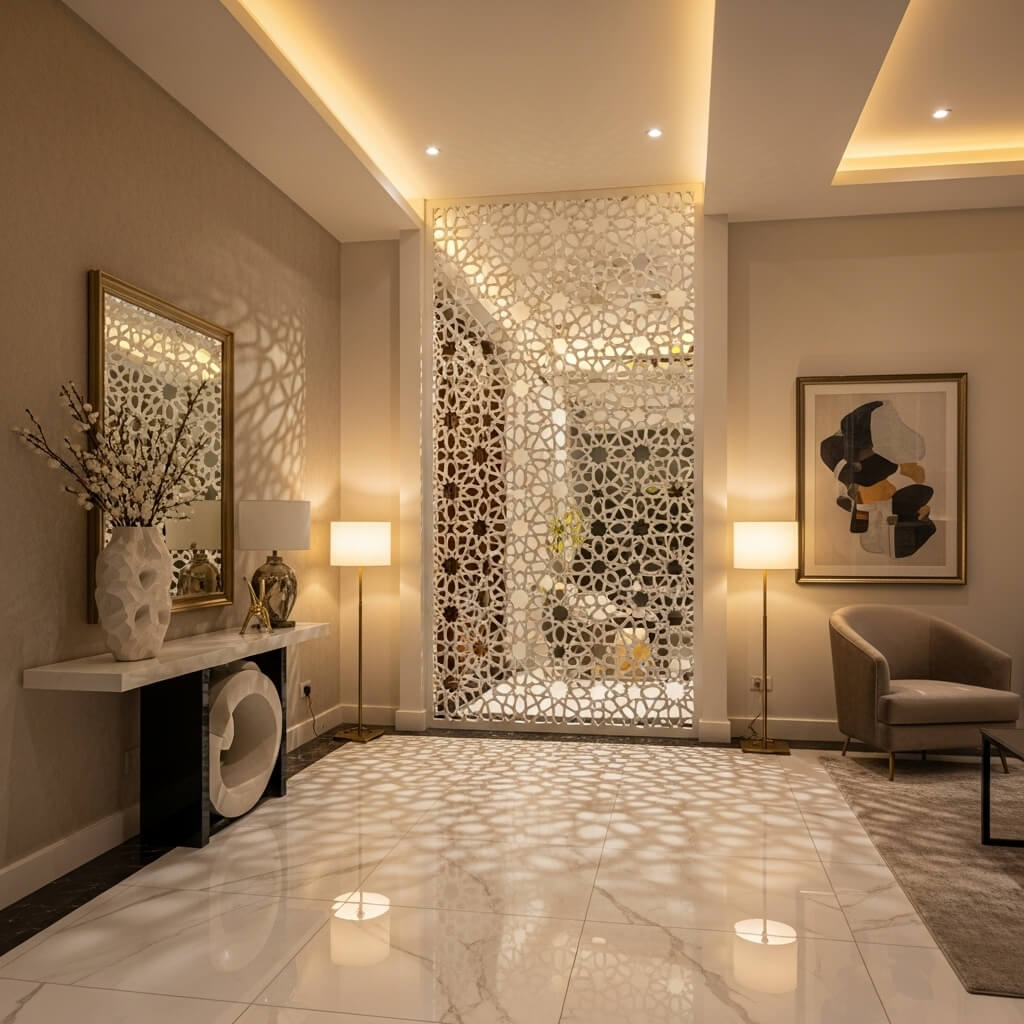
Last but definitely not least – jaali pattern partitions. If you’re not familiar with jaali, you’re missing out on one of the most beautiful traditional design elements that’s having a major modern moment.
Jaali refers to perforated decorative screens, traditionally used in Indian and Middle Eastern architecture. Modern interpretations bring this incredible geometric beauty to contemporary homes, creating partitions that are basically functional art pieces.
I fell in love with jaali patterns after seeing them used in a luxury hotel lobby. The intricate geometric designs cast the most beautiful shadows while providing visual interest from every angle.
Modern jaali materials that work brilliantly:
• Laser-cut metal panels – Precision patterns with industrial appeal
• CNC-routed wood – Warm, organic feeling with detailed patterns
• 3D printed elements – Unlimited design possibilities
• Stone or concrete – Permanent installations with incredible presence
The pattern choice dramatically affects the overall vibe. Geometric patterns feel contemporary and structured, while flowing organic designs bring movement and softness. Some of my favorite installations mix multiple pattern scales for added visual complexity.
Installation considerations:
• Structural support – Larger panels need proper anchoring
• Maintenance access – Intricate patterns can collect dust
• Lighting effects – Consider how shadows will play throughout the day
• Scale relationships – Pattern size should relate to room proportions
What makes jaali partitions particularly special is how they change throughout the day. As light angles shift, the shadow patterns transform your walls into ever-changing art installations.
Bringing It All Together
After living with various partition styles over the years, I’ve learned that the best choice depends on your specific needs, aesthetic preferences, and lifestyle.
Wooden slats bring warmth and work with almost any decor style. Glass partitions maximize light while maintaining separation. Plant walls improve air quality and add natural beauty. Sliding panels offer ultimate flexibility.
The key is thinking beyond just visual appeal. Consider maintenance requirements, acoustic properties, and how each option fits your daily routines. The most beautiful partition in the world won’t work if it becomes a daily frustration.
My advice? Start with your functional needs first, then find the aesthetic approach that excites you. Whether you go full luxury with custom metalwork or embrace the organic beauty of a living plant wall, the right partition will transform your hallway from forgettable transitional space into a stunning design feature that sets the tone for your entire home.
Trust me on this one – your future self (and your guests) will thank you for taking the time to get this right 🙂