10 Smart Kitchen Partition Design Ideas Functional Decor Ideas
- Partition Design
 Ben
Ben- 0
- 34 minutes read
Look, I get it—your kitchen’s probably bleeding into your living room, and you’re tired of seeing your dirty dishes while binge-watching Netflix. Or maybe you just want to hide the cooking chaos from your dinner guests without building an actual wall that makes your space feel like a shoebox. Kitchen partitions solve this problem beautifully, and honestly, they’re one of those design elements that can totally transform your home without requiring a second mortgage.
I’ve spent way too much time obsessing over interior design solutions (seriously, my search history is embarrassing), and kitchen partitions have become my latest fixation. They’re functional, stylish, and give you that semi-open concept vibe everyone’s chasing these days. Let me walk you through ten partition ideas that actually work—not just the Pinterest-perfect stuff that looks amazing but makes zero sense in real life.
Modern Glass Kitchen Partition
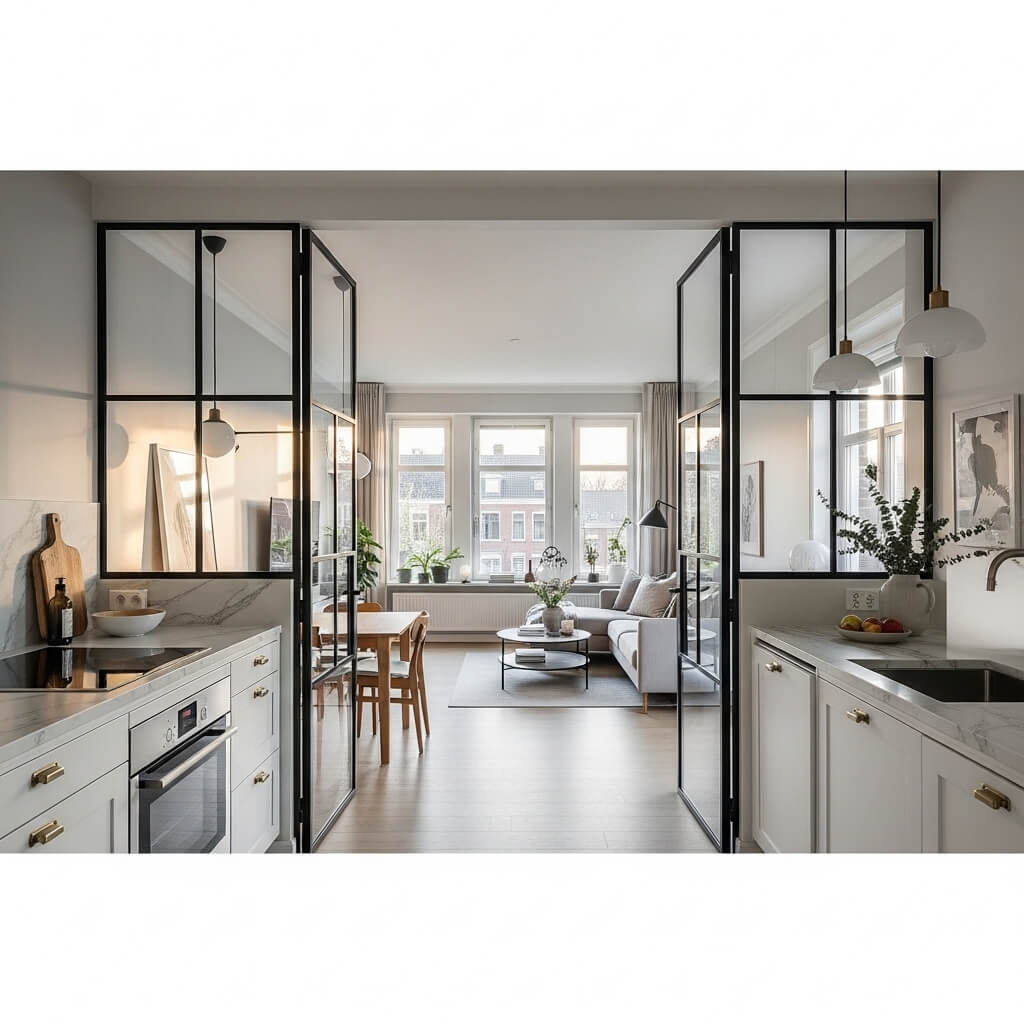
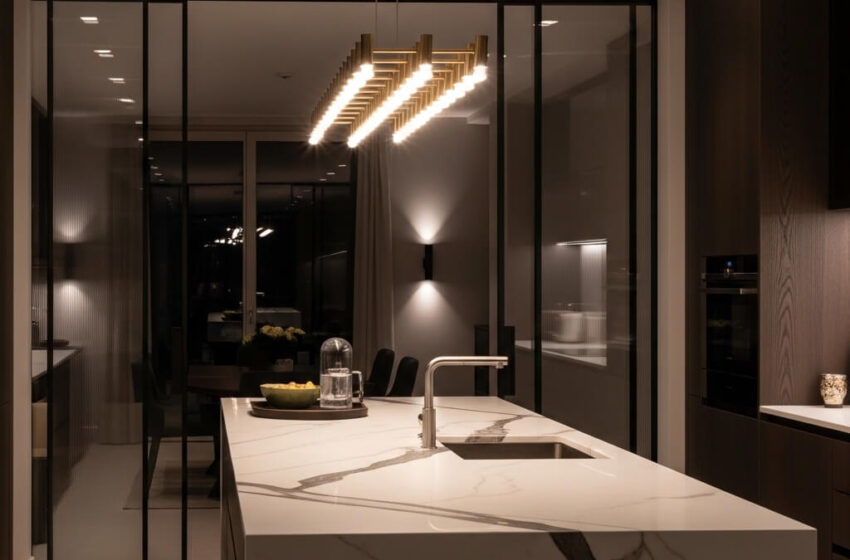
Glass partitions are like the cool kid of kitchen dividers—they look sleek, they’re sophisticated, and they don’t block your precious natural light. I personally love how a frosted or textured glass partition creates separation without making your space feel claustrophobic. You get privacy from the cooking mess while keeping everything bright and airy.
The beauty of glass partitions lies in their versatility. You can go with clear glass if you want maximum transparency, frosted glass for a bit more privacy, or even textured glass with geometric patterns that double as art. I’ve seen installations with black metal frames holding the glass panels, and honestly? Chef’s kiss. The industrial-meets-modern aesthetic works in almost any home.
Here’s what makes glass partitions practical: they’re easy to clean (just wipe them down), they make small spaces look bigger, and they’re surprisingly durable when you invest in tempered glass. Sure, you’ll see fingerprints—kids and guests seem magnetically drawn to touching glass—but that’s a small price to pay for the visual impact.
Installation tip: Get a professional to handle this one. Glass is heavy, and you want it mounted securely. The frame can be floor-to-ceiling or just a partial barrier, depending on how much separation you need. FYI, partial glass partitions work amazingly well if you still want some interaction between your kitchen and living area.
Wooden Slat Kitchen Divider
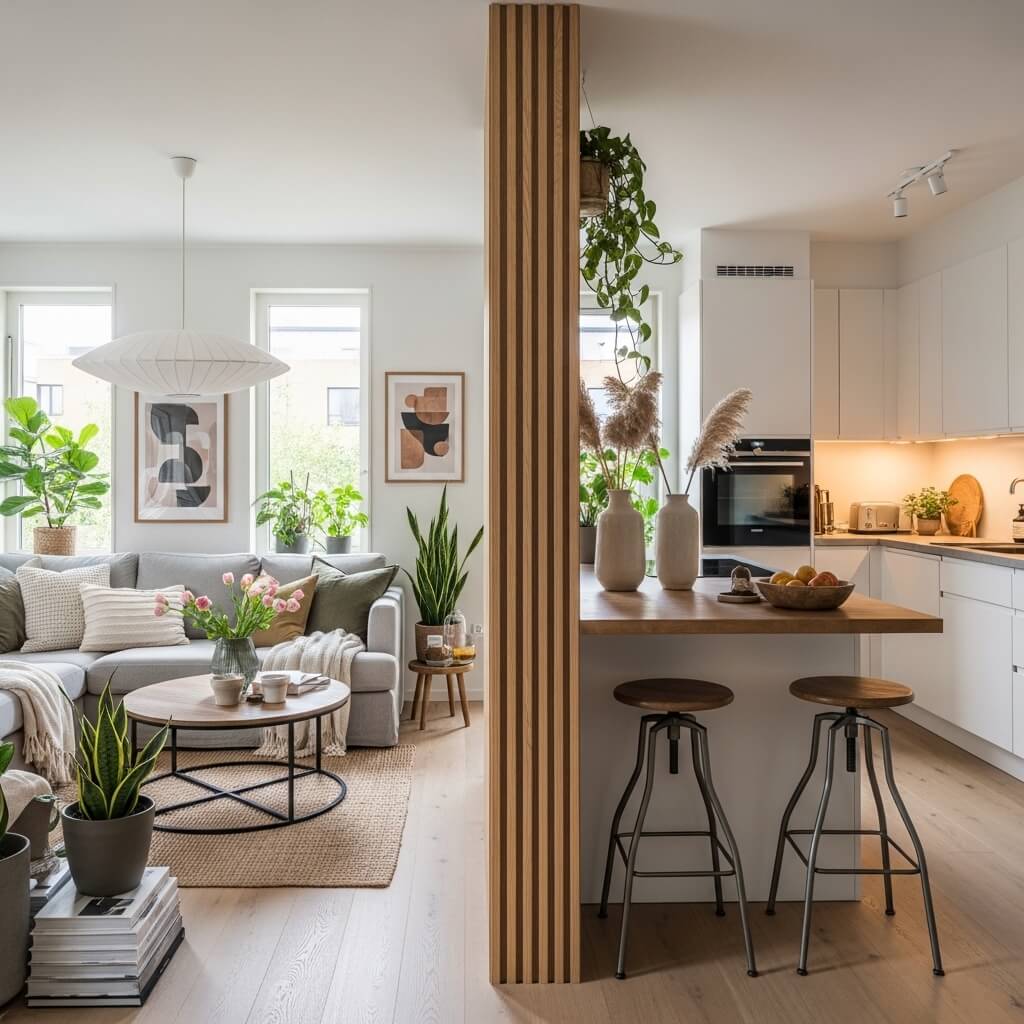
Want warmth and texture? Wooden slats are your answer. I’m biased here because I’m a sucker for anything that brings natural elements indoors, but hear me out—wooden slat dividers create visual interest while maintaining that open-concept flow everyone loves.
The slats run vertically (usually), and the spacing between them is key. Too close together, and you’ve basically built a wall. Too far apart, and the divider loses its purpose. I’ve found that 3-4 inch spacing hits the sweet spot—you get separation and definition without blocking sightlines completely.
What I really appreciate about wooden slats is how they work with different wood tones. Light oak creates a Scandinavian vibe, walnut brings in richness, and painted wood (white or black) can lean contemporary. You can even mix it up with horizontal slats if vertical feels too expected, though IMO, vertical elongates your space better.
Here are some practical considerations:
- Maintenance: Wood needs occasional care—dusting between slats can be annoying, not gonna lie
- Cost: Mid-range option; real wood costs more than composite, but it ages better
- Installation: Can be DIY-friendly if you’re handy, or hire a carpenter for custom work
- Customization: Paint, stain, or leave natural—your call
One trick I learned? Add LED strip lighting behind the slats. The light filters through the gaps and creates this incredible ambient glow in the evening. Total game-changer.
Open Shelf Kitchen Partition
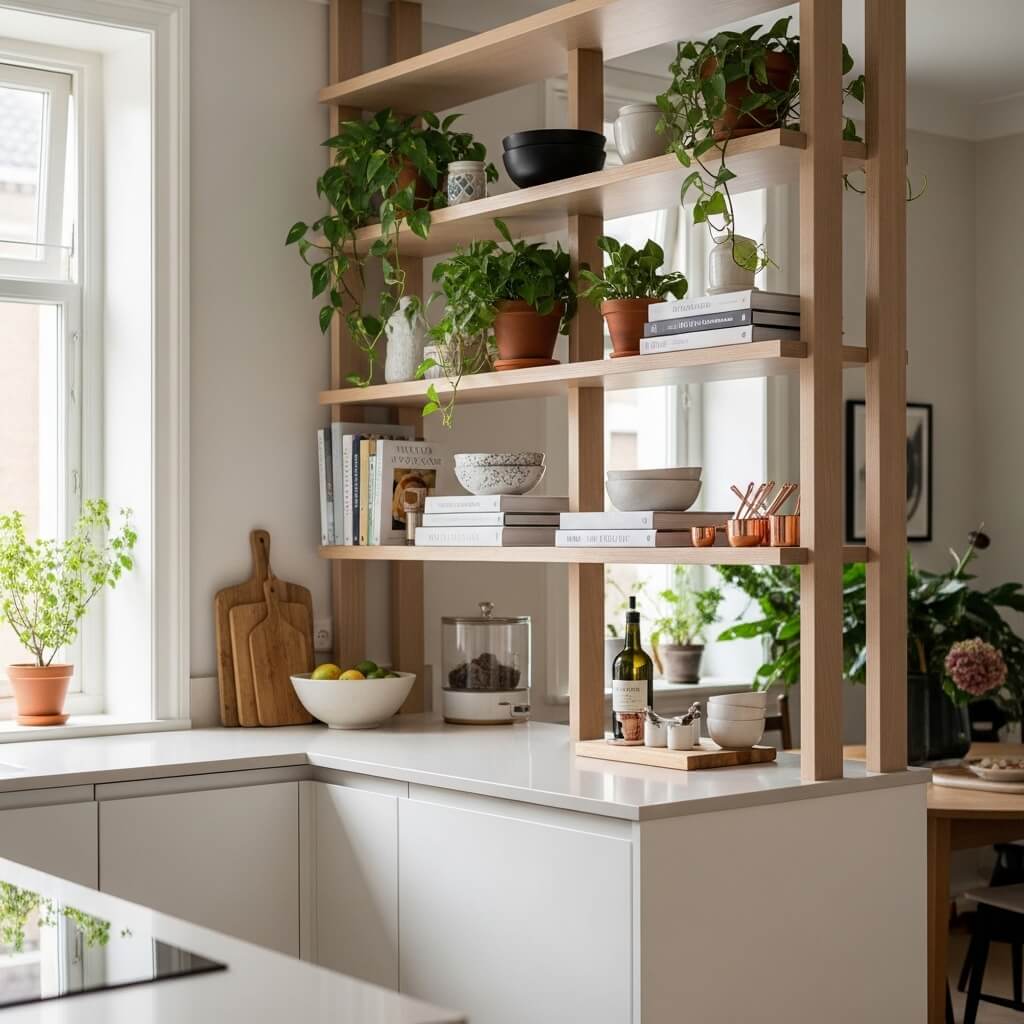
Ever wondered why open shelving became such a huge trend? Because it’s functional as hell, that’s why. An open shelf partition gives you storage, display space, and room division all in one shot. You’re basically getting triple duty from one piece of furniture.
I’ve designed one of these for my own kitchen, and it’s possibly the most practical decision I’ve made. The key is treating it like a curated display rather than random storage chaos. You want to showcase your pretty dishes, cookbooks, plants, potted herbs, or decorative pieces—not your mismatched Tupperware collection (we all have one, no judgment).
The structure typically features multiple tiers of shelving within a frame that’s open on both sides. This means people in the living room can see through to the kitchen and vice versa, but the shelves create a visual boundary. The items you place on the shelves become part of your decor, so choose wisely.
What works on open shelf partitions:
- Matching dishes or glassware sets (creates visual cohesion)
- Cookbooks arranged by color or size
- Small plants or herb gardens
- Decorative bowls, vases, or sculptures
- Woven baskets for hidden storage
- Bar accessories if you’re into entertaining
What doesn’t work:
- Clutter and random junk
- Heavy appliances (weight distribution issues)
- Things you rarely use (defeats the accessibility purpose)
The material matters too. Wood frames bring warmth, metal frames lean industrial, and combination designs can bridge different style aesthetics in your home. Just make sure the unit is stable and properly anchored—the last thing you need is your partition toppling over during dinner parties.
Also Read: 10 Modern Wooden Partition Design Ideas for Open Spaces
Sliding Door Kitchen Partition
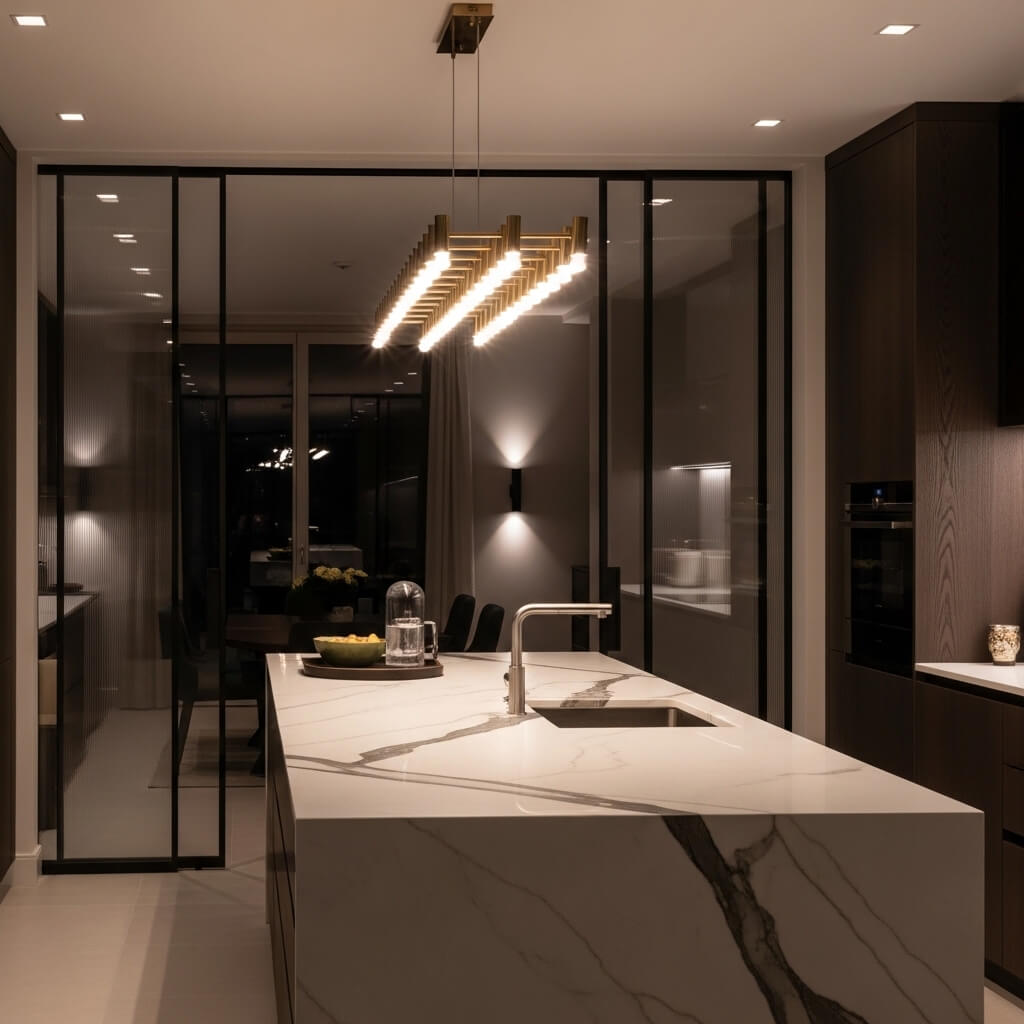
Flexibility is the name of the game here. Sliding door partitions let you completely close off your kitchen when needed or slide them open for that seamless flow. I love this option for people who cook messy (guilty as charged) or want to contain cooking smells when entertaining.
The mechanism is similar to barn doors or closet sliders—tracks mounted on the ceiling or floor (sometimes both) guide the doors smoothly. You can choose between single doors, double doors, or even pocket doors that disappear into the wall. The last option requires more construction work but looks incredibly clean.
Material choices for sliding doors are endless. Glass keeps things light and modern. Wood adds warmth and privacy. Metal and glass combinations deliver that contemporary edge. I’ve even seen frosted acrylic used, which is lighter than glass and budget-friendlier.
Here’s what sold me on sliding partitions: you control your space based on your needs. Hosting a dinner party? Keep it open. Making fried fish? (The smell lingers forever, right? :/). Slide those babies shut. Kids doing homework in the living room while you prep dinner? Partial closure reduces noise without full isolation.
Installation considerations:
- Track systems need solid mounting points (studs or reinforced headers)
- Door weight affects hardware requirements—heavier doors need robust tracks
- Soft-close mechanisms prevent slamming (worth the upgrade)
- Floor clearance matters if you have rugs or uneven flooring
The cost varies wildly depending on materials and complexity, but you can find options from budget-friendly to luxury. Custom work obviously costs more, but off-the-shelf systems have gotten way better in recent years.
Half Wall Kitchen Divider
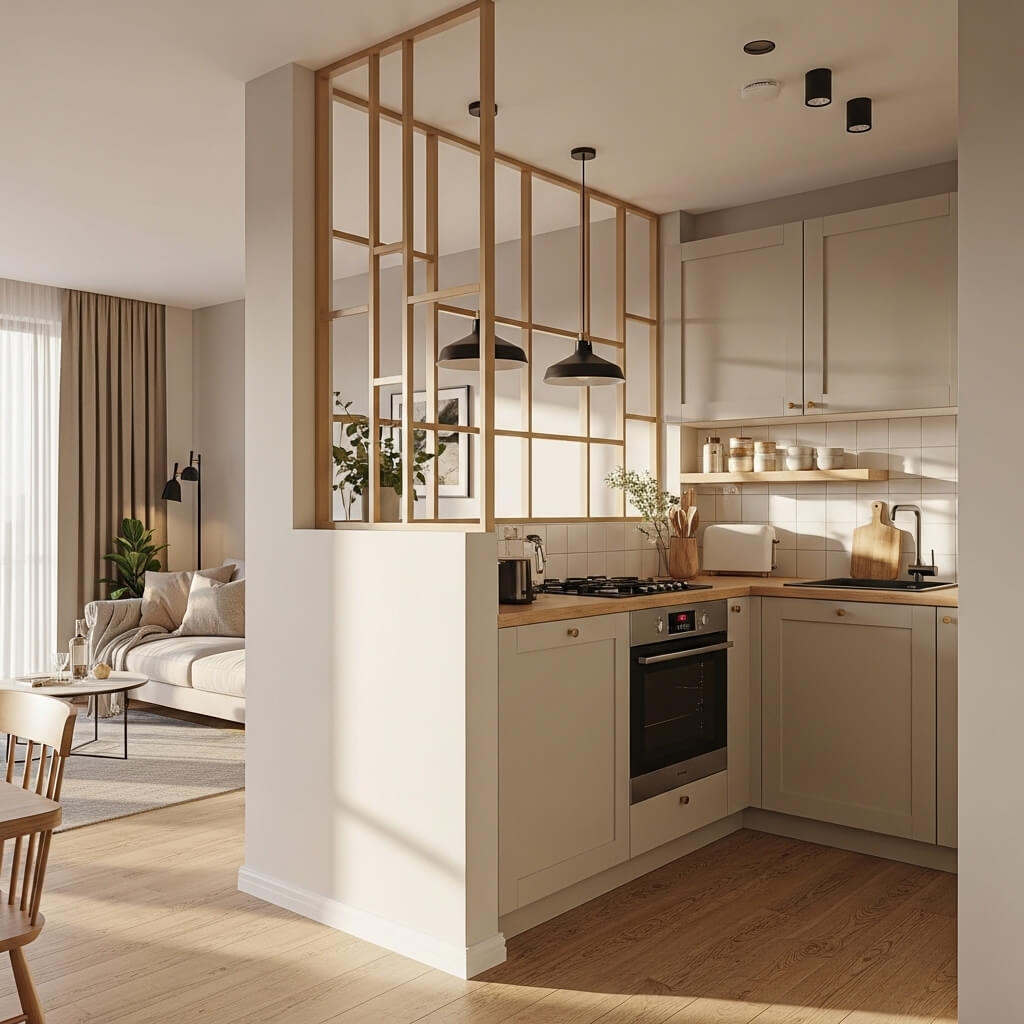
Sometimes you just need a little separation—not a full barrier, just enough to define spaces. Half walls (or pony walls, if you want to get technical) deliver exactly that. They typically run about 3-4 feet high, creating a physical boundary while keeping sightlines open above.
I’m particularly fond of half walls because they offer multiple design opportunities. The top can become a serving counter or breakfast bar. The sides can feature different finishes—tile on the kitchen side, wallpaper on the living side. You can add built-in shelving, electrical outlets, or even a small wine rack within the structure.
The functionality shines when you add seating. Throw some bar stools on the living room side, and suddenly you’ve got casual dining or a homework spot for kids. The kitchen side stays clear for cooking movement, while the other side becomes a social hub. Everyone gravitates toward the kitchen during parties anyway—might as well give them somewhere to perch.
Design variations I’ve seen work beautifully:
- Tiled half walls with waterfall edges (gorgeous but pricey)
- Drywall half walls with wood cap railings (classic and budget-friendly)
- Brick or stone veneer half walls (rustic and textural)
- Half walls with glass panels on top (best of both worlds)
Construction is more involved than other partition options since you’re building an actual structure. You’ll need proper framing, finishing, and possibly electrical work if you want outlets. But the permanence also means stability—this isn’t going anywhere, and it adds structural value to your home.
One heads-up: half walls can collect clutter. That top surface becomes a dumping ground for mail, keys, and random stuff. Combat this by intentionally styling it with a few decorative pieces or a tray to corral items.
Metal Frame Kitchen Partition
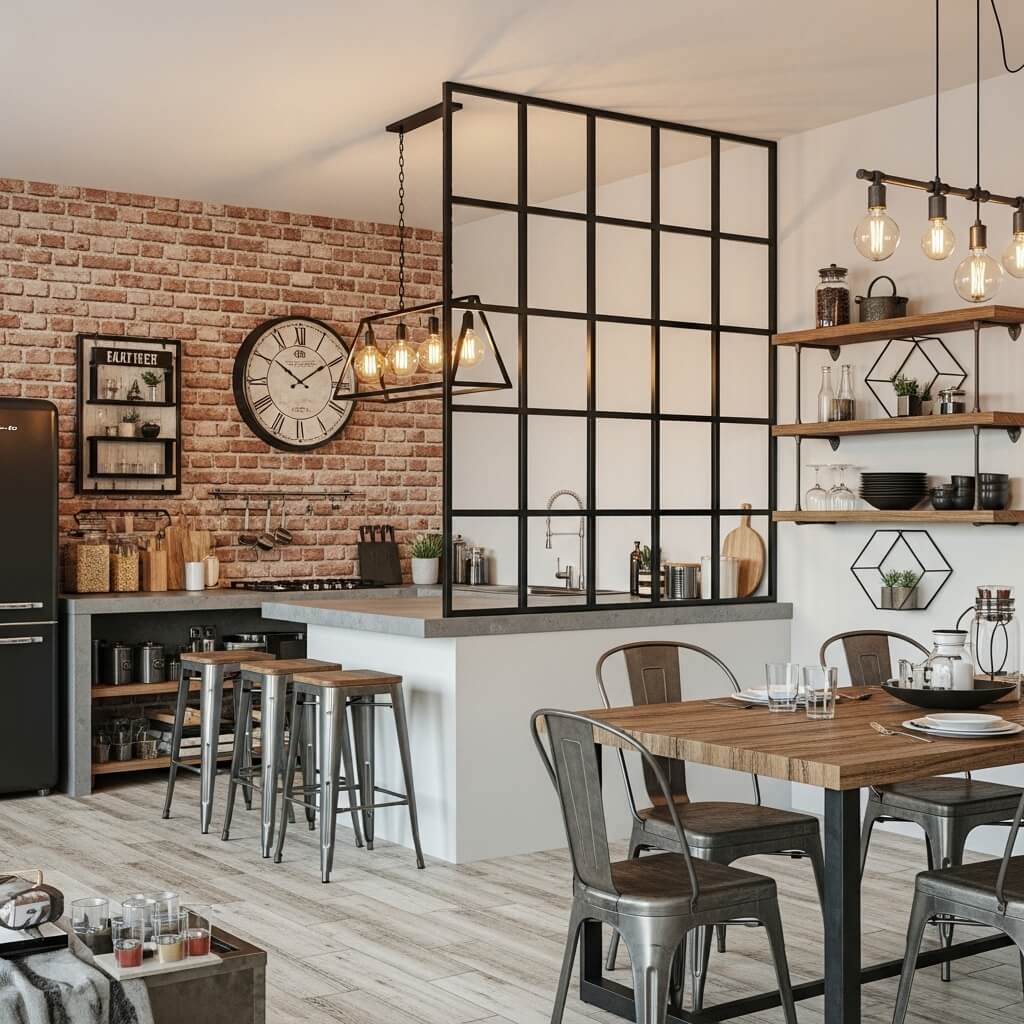
Industrial vibes, anyone? Metal frame partitions bring an edgy, contemporary feel that works surprisingly well in various design contexts. I love how the thin metal profiles create strong visual lines without bulkiness—the frames practically disappear while still defining boundaries.
The most popular style uses black steel or iron frames, often powder-coated for durability. The frames can hold glass panels, mesh screens, or even remain empty for an ultra-minimalist look. I’ve seen some installations combine metal frames with wood infill panels, creating a mixed-material aesthetic that feels current and sophisticated.
What makes metal frames special is their strength-to-size ratio. You get structural integrity from relatively thin materials, which means maximum openness with minimal visual weight. The industrial aesthetic pairs beautifully with concrete floors, exposed brick, or modern cabinetry—basically the whole urban loft vibe.
Practical considerations:
- Metal requires less maintenance than wood (no refinishing needed)
- Powder-coated finishes resist scratching and wear
- Installation usually requires professional welding or assembly
- Cost varies based on metal type and complexity
- Works in both modern and transitional design schemes
I particularly appreciate how metal frames age. They develop character over time without looking worn out. Minor patina or weathering can actually enhance the industrial aesthetic rather than detract from it.
You can customize the grid pattern too—large squares create bold statements, smaller grids feel more delicate, and asymmetrical layouts add artistic flair. The choice depends on your overall design vision and how much visual separation you want.
Also Read: 10 Elegant Partition Design Living Rooms Ideas for Stylish Interiors
Marble Accent Kitchen Divider
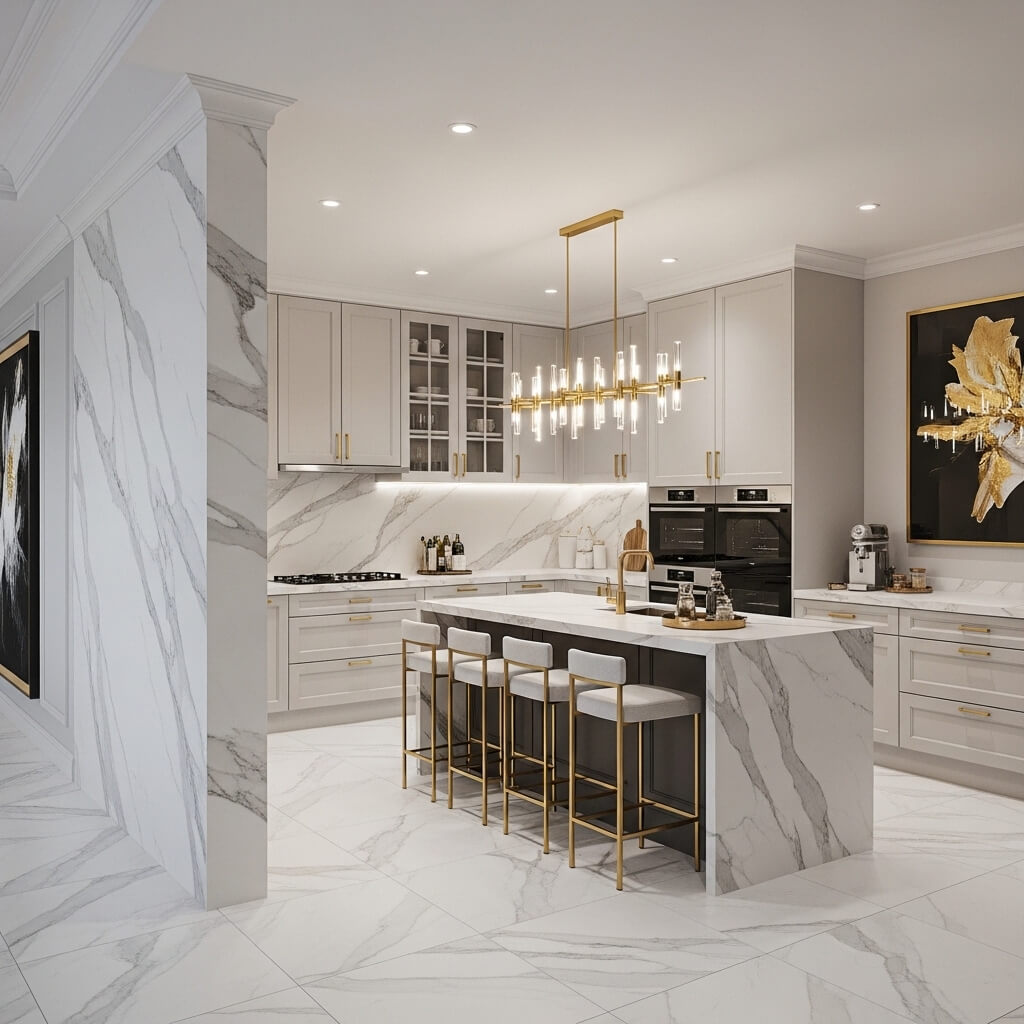
Okay, let’s talk luxury for a second. Marble accent partitions aren’t subtle—they make a statement, and they know it. If you want to elevate your kitchen design and create a focal point that screams elegance, marble delivers every single time.
Now, full marble partitions can get ridiculously expensive (and heavy), so most people use marble strategically. A marble-clad half wall? Stunning. A marble panel within a metal or wood frame? Sophisticated. Marble side panels flanking a glass partition? Absolutely gorgeous.
The veining in marble creates natural artwork—no two slabs look identical. White marble with gray veining (like Carrara or Calacatta) is classic and timeless. Darker marbles like Emperador or black marble create drama. Green or pink marbles add unexpected color while maintaining that upscale feel.
Here’s my honest take: marble isn’t for everyone. It stains (especially from acidic substances), it scratches more easily than granite or quartz, and it requires sealing and maintenance. But if you’re willing to baby it a bit, the visual payoff is incredible. I’ve literally seen people walk into kitchens and gasp at marble partitions—the impact is real.
Ways to incorporate marble without breaking the bank:
- Use marble on one section or panel rather than the entire partition
- Consider marble-look porcelain tiles (way more durable and affordable)
- Go with honed marble instead of polished (hides etching better)
- Use marble as an accent strip within another material
The weight of marble requires solid structural support, so factor that into your planning. You can’t just mount marble slabs to regular drywall—you need proper framing and anchoring. Professional installation is non-negotiable unless you’re experienced with heavy stone work.
Folding Screen Kitchen Partition
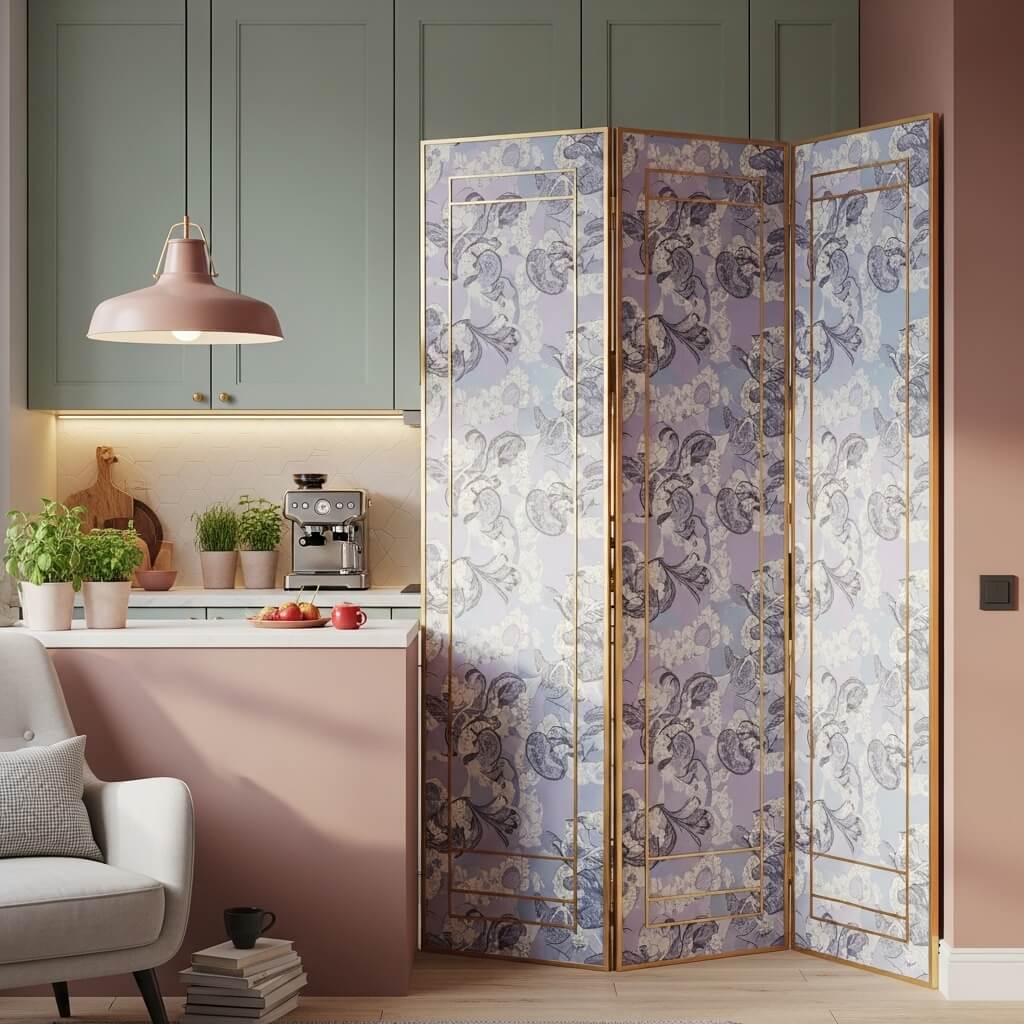
Want flexibility with zero construction? Folding screens are your friend. I know what you’re thinking—aren’t those just decorative room dividers from home goods stores? Yes, but also no. The right folding screen can absolutely function as a kitchen partition while adding serious style points.
The beauty of folding screens lies in their portability and adjustability. You can fold them out when you need separation, collapse them when you don’t, and move them to different positions based on your needs. Hosting a dinner party? Open them up to hide kitchen mess. Regular Tuesday night? Fold them away for open space.
Material and design options are endless. Wooden screens with carved details bring traditional elegance. Fabric panels on frames create softness and texture. Metal screens with geometric cutouts deliver contemporary edge. I’ve even seen screens upholstered in leather or vinyl for an unexpected luxe vibe.
What makes folding screens practical:
- No installation required (just unfold and position)
- Completely portable and rearrangeable
- Available at multiple price points
- Easy to swap out seasonally or when you redecorate
- Works for renters who can’t make permanent changes
The downside? They’re less stable than permanent partitions and can tip over if bumped. Choose screens with weighted bases or wide footprints for better stability. They also don’t provide acoustic separation—you’ll still hear everything happening in the kitchen.
I use a folding screen in my own space for those times when I’ve got cooking projects spread everywhere and guests arriving soon. It’s like a visual pause button that says “ignore the chaos behind this pretty screen” 🙂 Nobody needs to see my flour-covered counters while enjoying cocktails.
Minimalist Frame Kitchen Divider
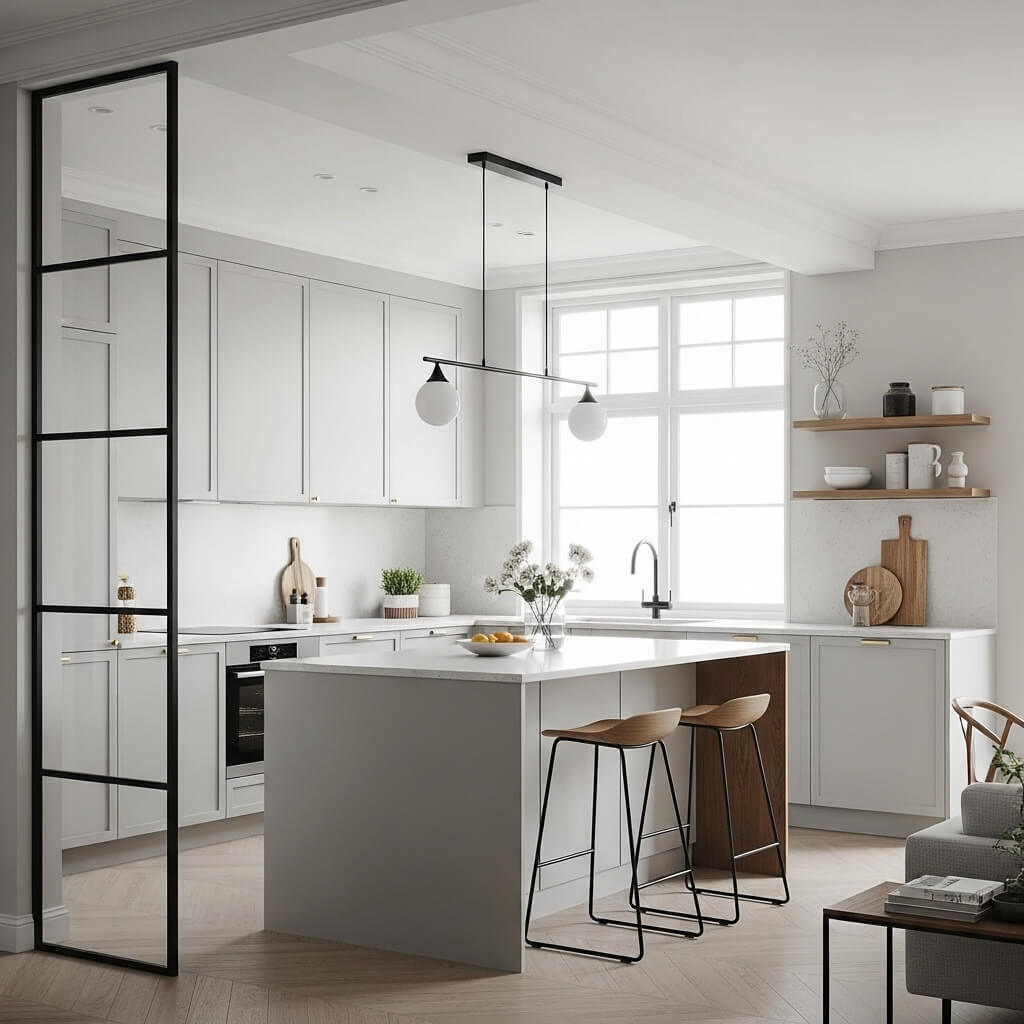
Less is more, right? Minimalist frame dividers embrace simplicity with clean lines, neutral colors, and unfussy designs. These partitions define space through structure and negative space rather than solid barriers—they suggest boundaries rather than enforce them.
Think thin metal or wood frames creating geometric shapes—squares, rectangles, or linear patterns—with lots of open space between. The frame itself becomes the design element, while the emptiness actually does the work of separating areas. It’s architectural sculpture that happens to function as a partition.
I’m drawn to minimalist frames because they work in almost any design context. Your style is Scandinavian? Perfect. Modern? Absolutely. Traditional with contemporary updates? Still works. The simplicity doesn’t compete with other design elements, so it becomes a supporting player rather than demanding the spotlight.
Key characteristics of minimalist frame dividers:
- Limited color palette (black, white, natural wood tones)
- Simple geometric shapes without ornate details
- Maximum negative space and openness
- Clean construction with hidden or minimal hardware
- Focus on proportion and balance
The installation can range from simple to complex depending on the design. Some minimalist frames are essentially free-standing furniture pieces you can position and move. Others require anchoring to floors, ceilings, or walls for stability. Custom designs usually need professional fabrication and installation.
What I love most about this approach is how it maintains visual flow while creating psychological separation. Your eye registers the boundary without feeling blocked. Light passes through easily, conversations flow naturally, but you still get that sense of distinct zones within your space.
Also Read: 10 Unique Partition Design Ideas for Beautiful Home Spaces
Multi-Functional Storage Partition
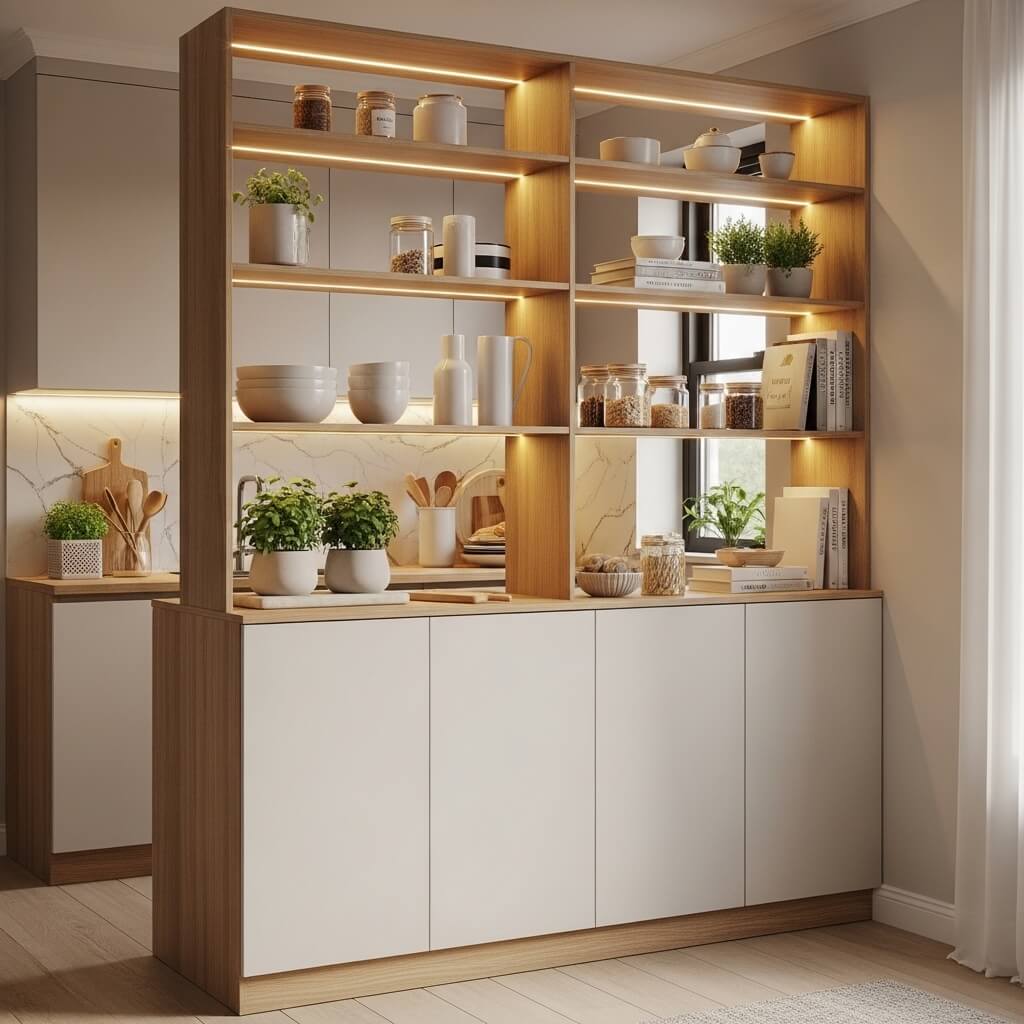
Let’s be real—most of us need more storage, not less. Multi-functional storage partitions tackle two problems simultaneously: they divide your space AND give you places to stash stuff. This is peak practical design, and I’m totally here for it.
These partitions combine structural division with built-in cabinets, drawers, shelves, or cubbies. Imagine a floor-to-ceiling unit that faces your kitchen with deep cabinets for appliances and faces your living room with open shelving for books and decor. Both sides work hard, and the partition earns its footprint by being genuinely useful.
I’ve designed storage partitions that include everything from wine racks and spice storage to cookbook libraries and small appliance garages. The kitchen side handles cooking-related storage while the living side holds entertainment or dining items. Everything has a home, and the partition justifies its existence beyond just looking pretty.
Smart storage partition features:
- Cabinets with doors on the kitchen side (hides clutter)
- Open shelving on the living side (displays decorative items)
- Pull-out drawers accessible from both sides
- Wine storage or bar sections
- Appliance garages with closing doors
- Electrical outlets integrated into the structure
- Countertop workspace on top of lower cabinets
The design complexity increases with functionality—more features mean more planning, construction, and cost. But if you genuinely need the storage, the investment makes sense. You’re essentially getting a custom storage unit and a room divider in one piece.
Construction requires carpentry skills and proper structural support, especially for heavy storage loads. You’ll want to anchor everything securely to prevent tipping, particularly if you have kids or pets. Professional installation ensures weight distribution and stability meet safety standards.
The aesthetic can go any direction. Modern storage partitions feature clean lines and handleless cabinets. Traditional designs incorporate raised panel doors and crown molding. Industrial styles use open metal shelving and reclaimed wood. Match the partition to your existing decor, or let it become a statement piece that defines your style.
Wrapping This Up
Kitchen partitions aren’t just about blocking views or creating barriers—they’re about smart space division that enhances how you actually live in your home. Whether you’re hiding cooking disasters behind a sliding door, showing off your dish collection on open shelves, or adding luxe marble accents, the right partition transforms your kitchen from open chaos into defined, functional zones.
I’ve walked you through ten solid options, from the sleek sophistication of glass and metal to the warmth of wood and the flexibility of folding screens. Each one brings different benefits, different aesthetics, and different price points. The trick is matching the partition to your actual needs—not just what looks cool on Instagram.
Think about how you use your space. Do you need flexibility or permanence? Storage or pure aesthetics? Full separation or subtle definition? Your answers guide your choice. And honestly? There’s no wrong answer here. Even a simple folding screen beats staring at dirty dishes while trying to relax after dinner.
Your kitchen deserves to be both functional and beautiful. These partition ideas give you the tools to make that happen without sacrificing the open feel that makes modern homes so appealing. Pick your favorite, plan it out, and create the defined-yet-connected kitchen space you’ve been craving. Your future self (and your dinner guests) will thank you.