10 Elegant Partition Design Living Rooms Ideas for Stylish Interiors
- Partition Design
 Ben
Ben- 0
- 38 minutes read
Look, I get it. Your living room feels like one giant blob of space, and you’re craving some definition without chopping it up with boring walls. You want that open-concept vibe everyone raves about, but you also need zones. Maybe you work from home and need to mentally separate your “office corner” from your “binge-watching Netflix zone.” Or perhaps your living room flows straight into the dining area, and you’re tired of staring at last night’s dishes while trying to relax.
I’ve been down this road myself, and honestly? Partition designs saved my sanity. They create visual interest, define spaces, and—here’s the kicker—they look absolutely stunning when done right. I’m talking about those Instagram-worthy interiors that make your friends ask, “Wait, did you hire a designer?”
So grab your coffee (or wine, no judgment here), and let’s explore ten gorgeous partition ideas that’ll transform your living room from meh to magnificent. Trust me, at least one of these will make you think, “Why didn’t I do this sooner?”
Wooden Slat Open Partition Wall Living Room
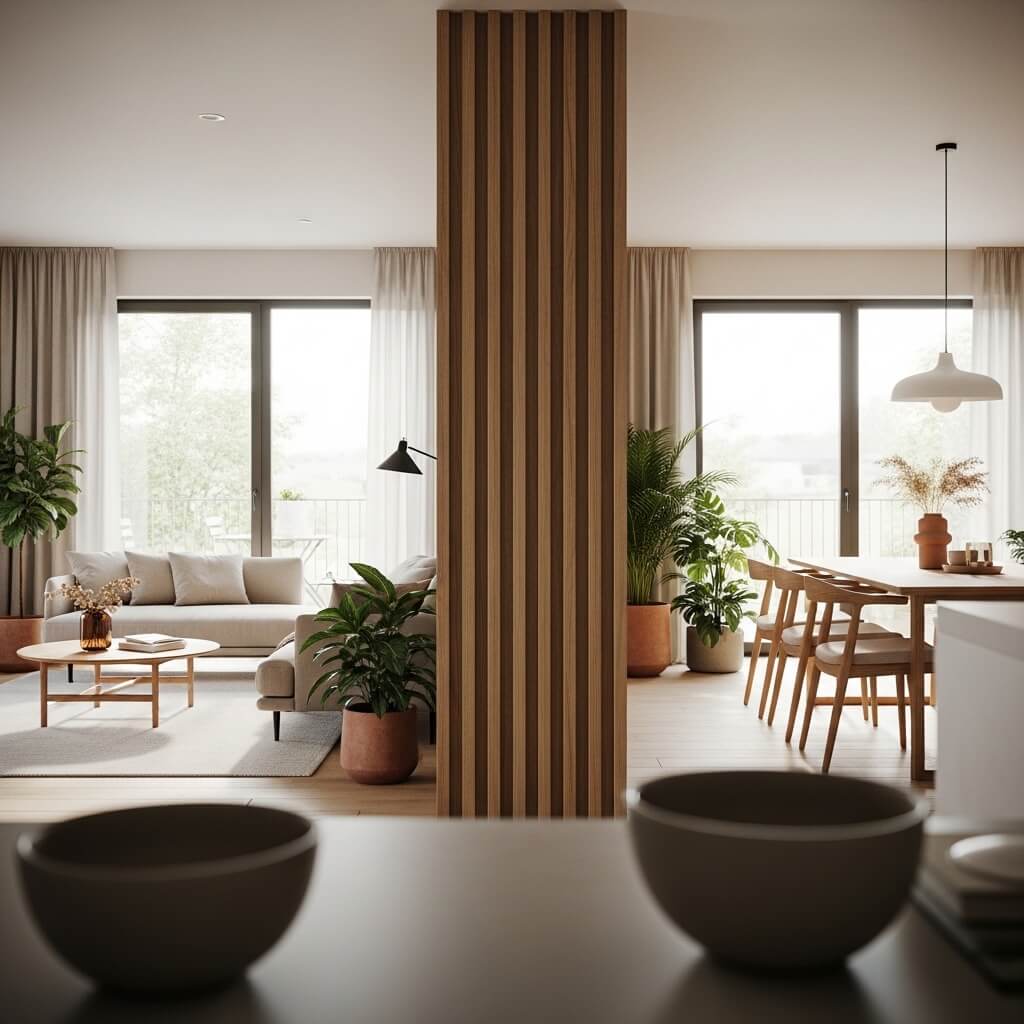
Wooden slats are having a major moment right now, and honestly, I’m here for it. I installed one of these beauties between my living room and entryway last year, and the compliments haven’t stopped rolling in.
Why Wooden Slats Work Like Magic
Here’s what makes this design absolutely brilliant: it divides your space without blocking light or airflow. You get that semi-private feeling without the claustrophobic vibes that solid walls bring. The vertical lines also do wonders for making your ceiling look higher—interior design trickery at its finest.
The natural wood grain adds warmth instantly. Whether you go for light oak, rich walnut, or even painted slats, you’re bringing texture and dimension to what might otherwise be a flat, boring space. Plus, the shadow play throughout the day? Chef’s kiss.
Styling Tips From Someone Who’s Been There
When I first considered this option, I worried it would look too “modern farmhouse” for my taste. But here’s the thing—wooden slats are incredibly versatile. You can:
- Space them wide apart for an airy, minimalist look
- Place them close together for more privacy
- Mix different wood tones for a contemporary edge
- Add built-in lighting between the slats for drama (seriously, try this)
Pro tip: Don’t make the slats go all the way to the ceiling unless you want that full separation. Stopping them about a foot short maintains the open feeling while still creating definition. FYI, this also saves you money on materials 🙂
I paired mine with some trailing pothos plants on top, and now it’s basically a living art installation. Your guests won’t know where to look first.
Glass Frame Modern Divider for Living Space
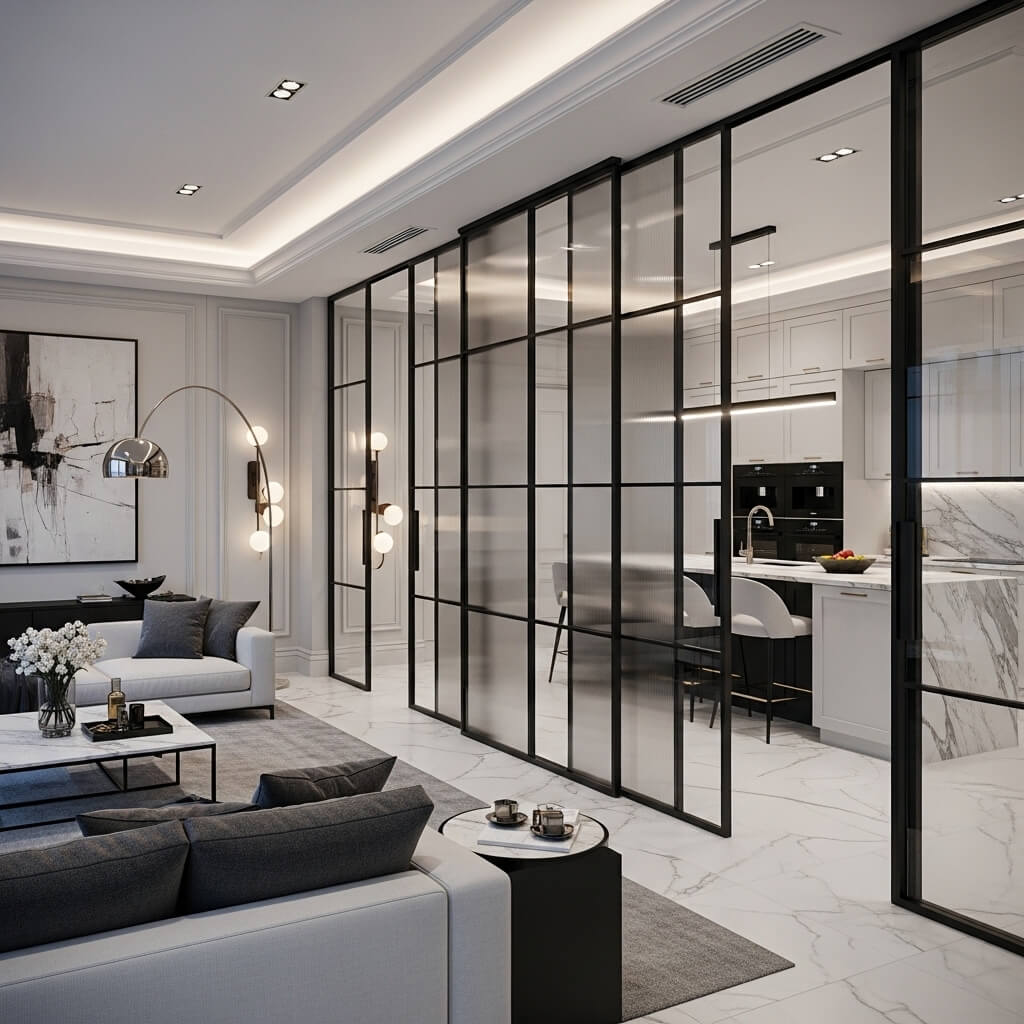
Ever wished you could separate spaces while keeping your sightlines completely open? Glass partitions are your answer, and they’re way more affordable than you’d think.
The See-Through Solution
I’ll be honest—when my sister suggested a glass divider for her small apartment, I thought she’d lost it. Wouldn’t that just feel like working in a fishbowl? But then I saw the finished result, and I immediately ate my words.
Glass partitions create boundaries without creating barriers. They’re perfect if you’re working with limited square footage but still need distinct zones. The light flows through freely, making your entire space feel bigger and brighter.
The frames matter more than you’d expect. Black metal frames scream contemporary chic, while brass or gold-toned frames add a luxurious touch. White or wooden frames soften the look for Scandinavian or coastal vibes.
Privacy Options Because We’re Not All Exhibitionists
Here’s where it gets interesting. You don’t have to go with completely clear glass (though that works beautifully in many spaces). Consider these options:
- Frosted glass for bathrooms or home office separation
- Tinted glass for a moody, sophisticated atmosphere
- Fluted or ribbed glass for visual interest and partial privacy
- Geometric patterns etched into the glass for an artistic statement
I’ve seen people use glass partitions to separate their work-from-home setup, and let me tell you—being able to “see” the end of your workday by stepping past that glass barrier? Game-changer for mental health.
Plus, cleaning them isn’t the nightmare you’d imagine. A quick wipe-down once a week keeps them crystal clear. Small price to pay for looking like you live in a design magazine.
Hanging Curtain Room Divider Cozy Living Room
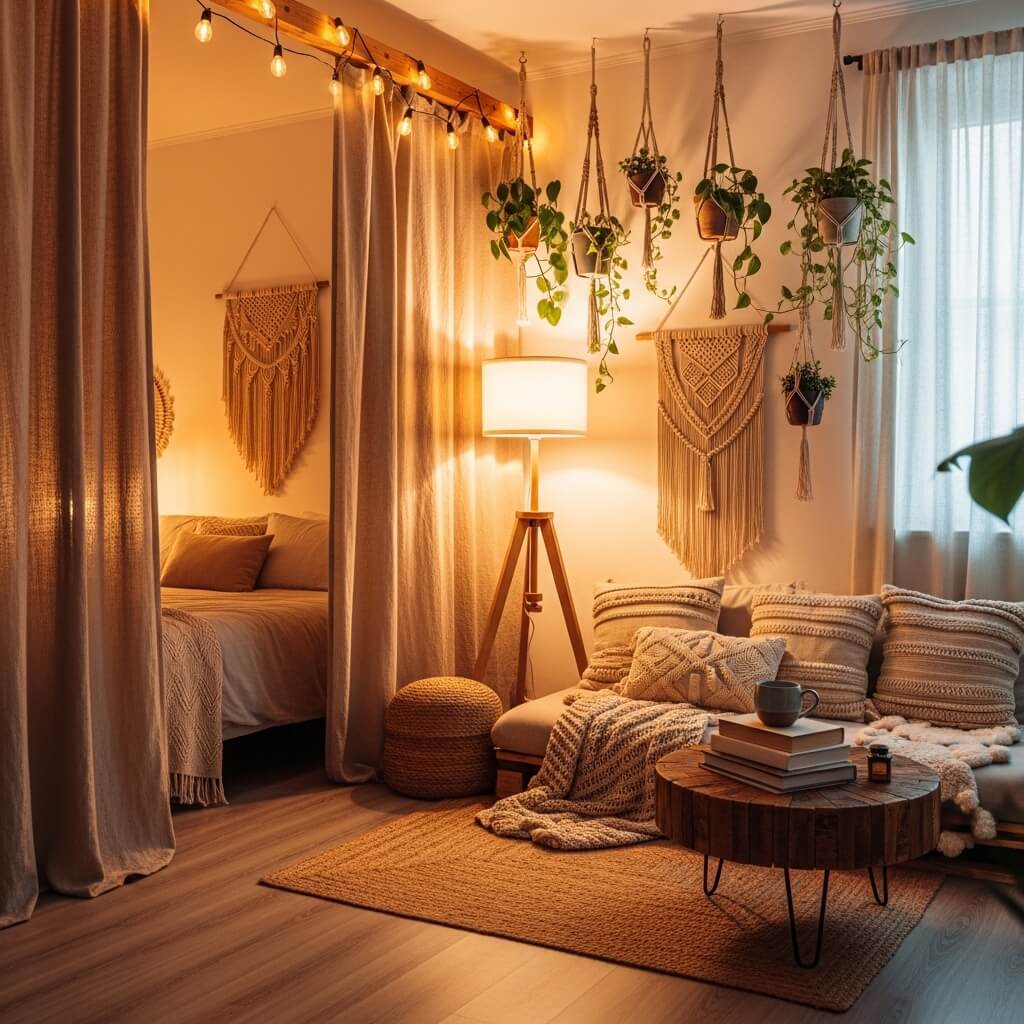
Okay, if you’re renting or just commitment-phobic about permanent changes, curtain dividers are your new best friend. They’re the relationship equivalent of “keeping things casual” in the interior design world.
Flexibility That Actually Makes Sense
I love curtain dividers because they’re completely reversible and ridiculously budget-friendly. Ceiling-mounted tracks cost less than dinner for two at a decent restaurant, and you can find gorgeous curtains at every price point.
Want privacy for a home office during Zoom calls? Pull the curtain closed. Hosting a party and need maximum floor space? Sweep it open. It’s literally that simple, and you don’t need to call a contractor or patch drywall later.
The fabric choice transforms the entire vibe. Heavy velvet curtains create a luxurious, sound-dampening barrier (perfect for blocking out noise from other rooms). Sheer linen gives you soft separation while maintaining airflow and light. Macramé or beaded curtains add bohemian charm without fully blocking the view.
Installation Mistakes I Made So You Don’t Have To
Listen, I mounted my first curtain track at the wrong height, and it looked absolutely ridiculous—like I was trying to create a partition for toddlers. Learn from my mistakes:
- Mount it at ceiling height, not doorframe height, to maximize the visual expansion of your space
- Use quality hardware that can actually support the weight of your curtains
- Measure twice (or three times) before drilling anything
- Consider double tracks if you want layered curtains for adjustable privacy
The texture and movement curtains bring to a space can’t be replicated with hard materials. There’s something inherently cozy about fabric dividers that makes rooms feel more inviting and less sterile.
Also Read: 10 Unique Partition Design Ideas for Beautiful Home Spaces
Bookshelf Partition Wall Functional Living Room
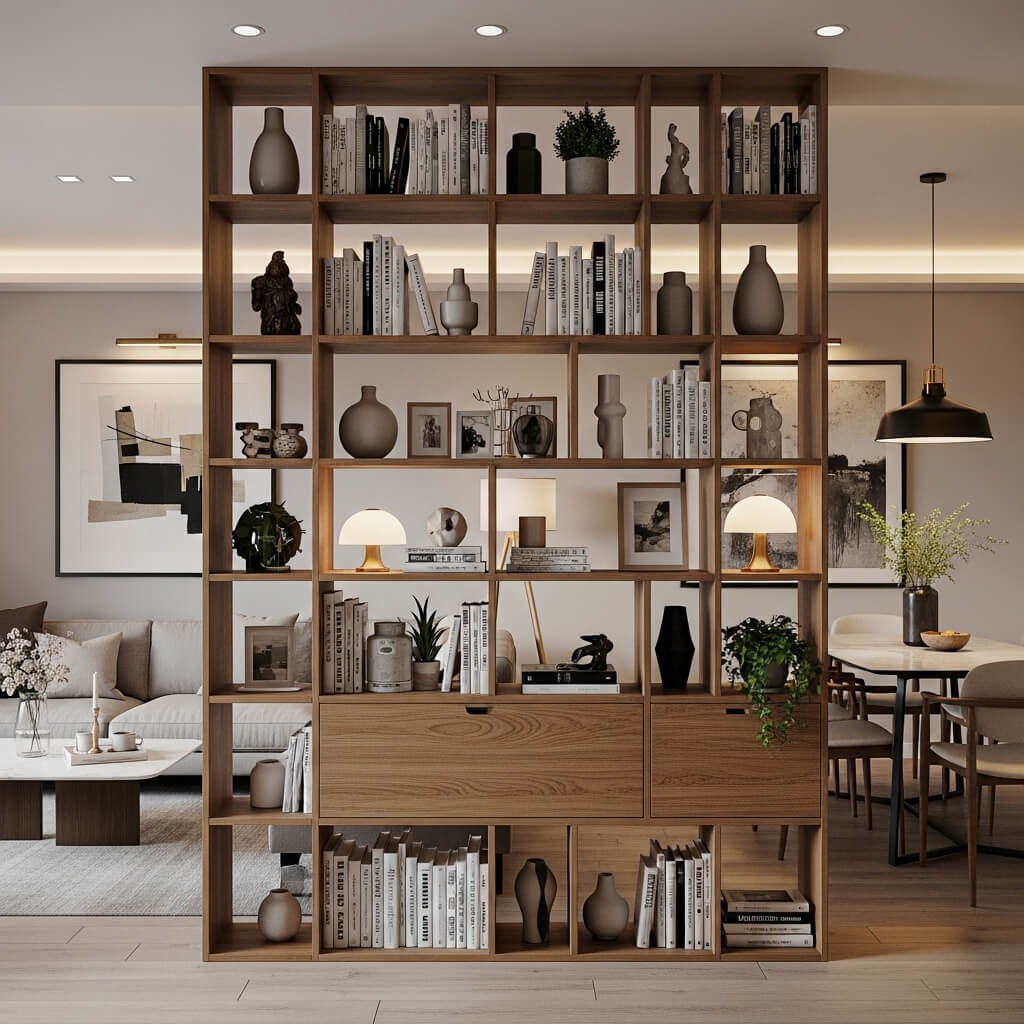
Why have a partition that just sits there looking pretty when it could also store all your stuff? Bookshelf partitions are the overachievers of the design world, and I’m obsessed.
Storage Meets Style (Finally)
I installed a double-sided bookshelf between my living room and dining area about three years ago, and it’s probably the smartest design decision I’ve ever made. You’re essentially getting a piece of furniture AND a room divider for the price and footprint of one.
Think about it—you can access storage from both sides, display your book collection (or let’s be real, your random decorative objects), and create visual separation all at once. It’s multitasking at its finest.
The open shelving style maintains some sightlines while still defining distinct areas. You’re not building a wall; you’re creating an interesting focal point that happens to be incredibly functional.
What Works and What Doesn’t
Not all bookshelf partitions are created equal. Here’s what actually matters:
- Stability is non-negotiable – anchor that baby to the ceiling or make sure it’s weighted properly
- Depth matters – too shallow and it looks flimsy; too deep and it eats up floor space
- Mix open and closed storage for visual interest and to hide the messy stuff
- Style both sides intentionally – people will see it from multiple angles
I keep books and plants facing the living room side, while the dining room side holds serving dishes and table linens. Everything has a home, and the whole setup looks intentional rather than cluttered.
Pro tip: Add LED strip lighting on some shelves for ambiance in the evening. It transforms the bookshelf from functional storage into a legitimate design statement.
Green Indoor Plant Divider Living Room Design
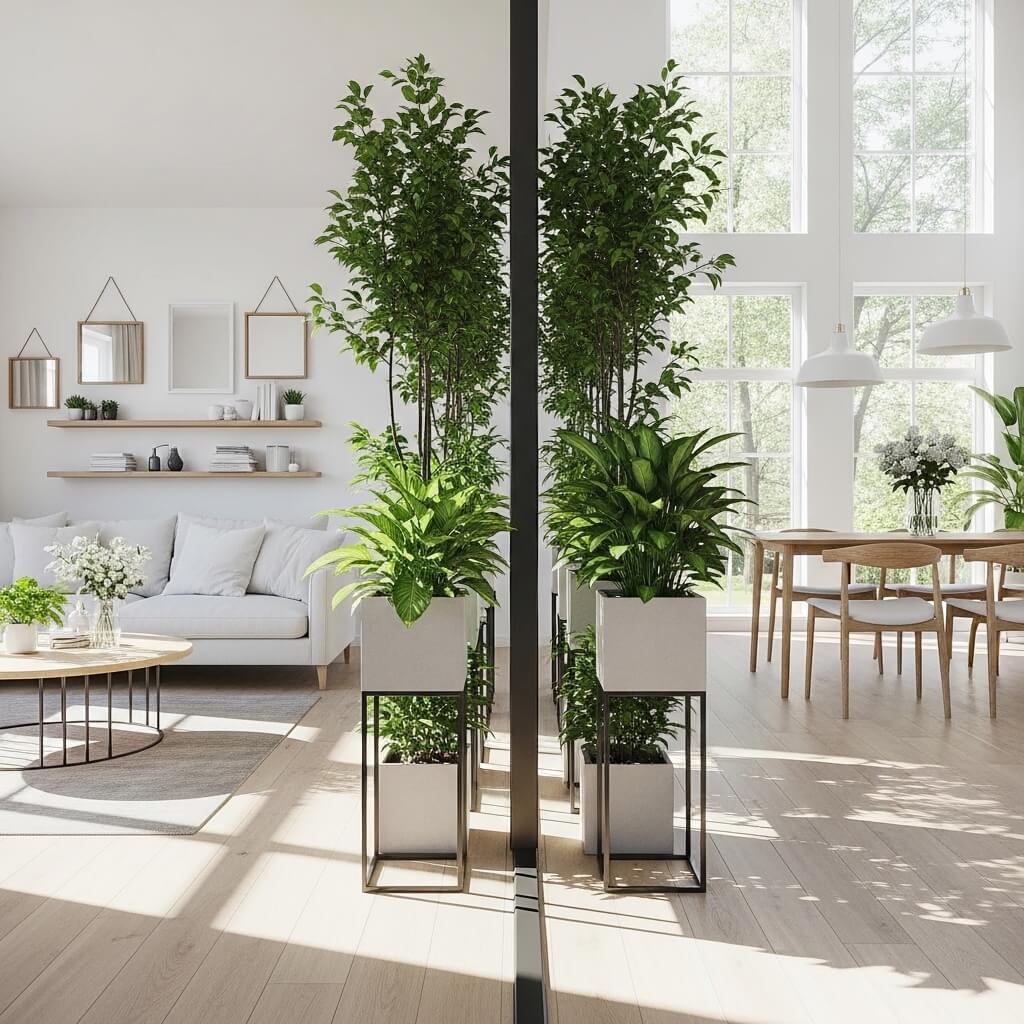
If you’re a plant person like me (I currently have 47, but who’s counting?), why not let your green babies do double duty as room dividers?
The Living Wall Concept
Plant dividers are having a serious moment, and for good reason. They bring life, literally, into your space while improving air quality and creating natural boundaries. It’s like getting free therapy and interior design in one package.
I created a plant partition in my apartment using a combination of tall floor plants and hanging planters on a simple frame. The result? A jungle-inspired oasis that makes my living room feel like a completely separate world from my bedroom area.
The visual softness of plants can’t be matched by hard materials. There’s movement as they grow, seasonal changes, and that undeniable connection to nature that makes spaces feel more alive and welcoming.
Making It Work Without Killing Everything
Real talk—plant partitions require maintenance. If you’re the person who forgets to water the one succulent on your desk (we’ve all been there), maybe reconsider. But if you’re willing to put in minimal effort, here’s how to succeed:
- Choose plants with similar light and water needs for easier care
- Mix heights and textures for visual interest (tall snake plants, trailing pothos, bushy ferns)
- Use a combination of floor planters and wall-mounted options
- Consider a modular plant wall system if you want the look with less DIY
I grouped mine in odd numbers (design rule forever), and the asymmetry actually makes it more interesting. Some plants touch the ceiling; others hang at eye level. It feels organic and intentional at the same time.
Bonus: Plants are literally the only decor that improves over time instead of collecting dust. Your partition gets better looking as the months go by. How cool is that?
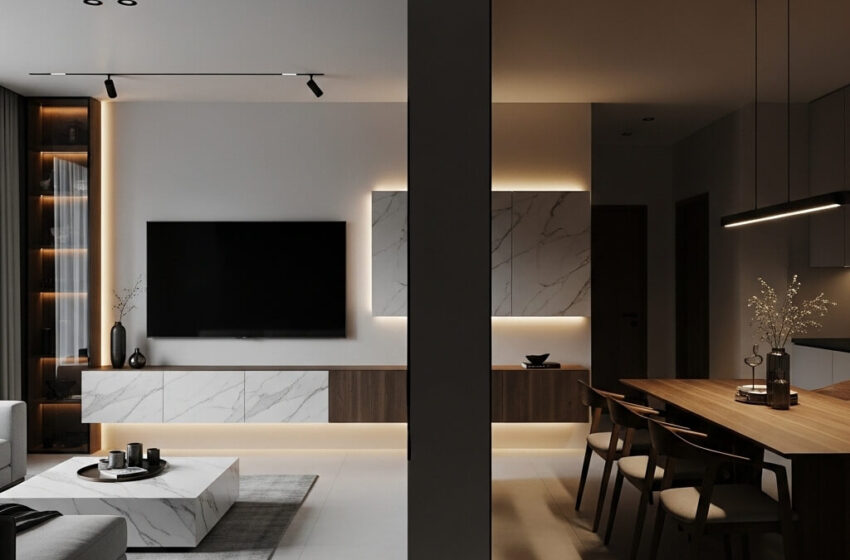
TV Unit Integrated Partition Wall Design
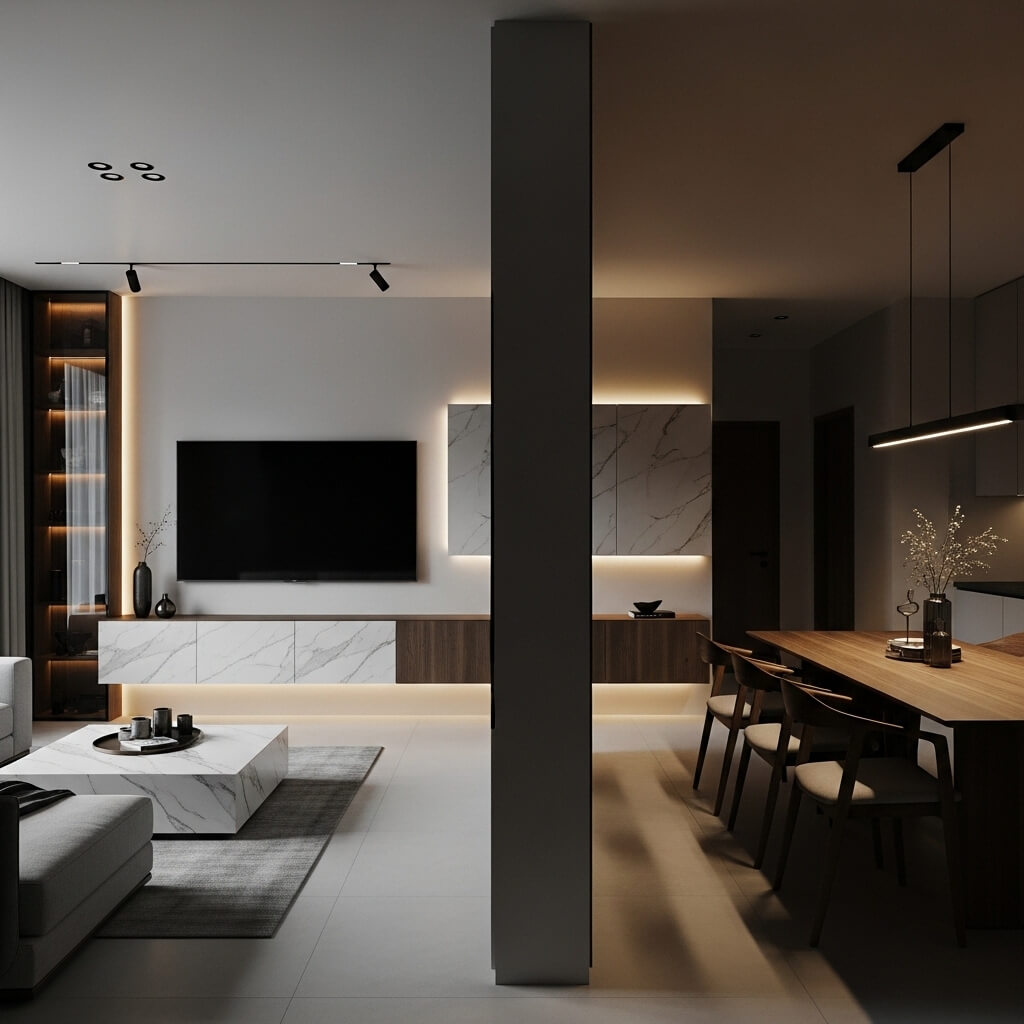
Here’s a brilliant solution for open-plan living: make your TV unit do the heavy lifting. Why dedicate wall space to your television when it could simultaneously divide your space?
The Practical Statement Piece
I’ve seen this work beautifully in loft apartments and open-plan homes where the living area flows into the bedroom or dining space. A TV unit partition gives you media storage, display space, and room division all in one fell swoop.
The back of the unit (facing away from the TV side) becomes additional storage or display shelving. You’re maximizing every square inch of floor space while creating functional zones.
The modern versions of these units rotate or swivel, which is absolutely genius. Watch TV from your sofa, then swivel it toward the dining table for movie night. IMO, this is the kind of flexible design we all need.
Design Considerations That Matter
Before you rush out and buy or build one of these, think through these points:
- Cable management is crucial – nothing ruins the look faster than tangled wires everywhere
- The unit needs to be substantial enough to feel like an anchor, not flimsy
- Consider the viewing angles from all seating areas
- Built-in lighting can highlight your decor and reduce eye strain
- Make sure it’s proportional to your room size (oversized units in small spaces = disaster)
I helped a friend install one of these, and we added LED backlighting behind the TV. The glow creates ambiance without the harsh overhead lights, and it looks absolutely stunning in the evenings.
The beauty here is that everyone already needs somewhere to put their TV, so you’re just being smart about placement. Function and form finally getting along? Love to see it.
Also Read: 10 Brilliant Wall Partition Design Ideas for Modern Spaces
Sliding Panel Wooden Divider Modern Living Room
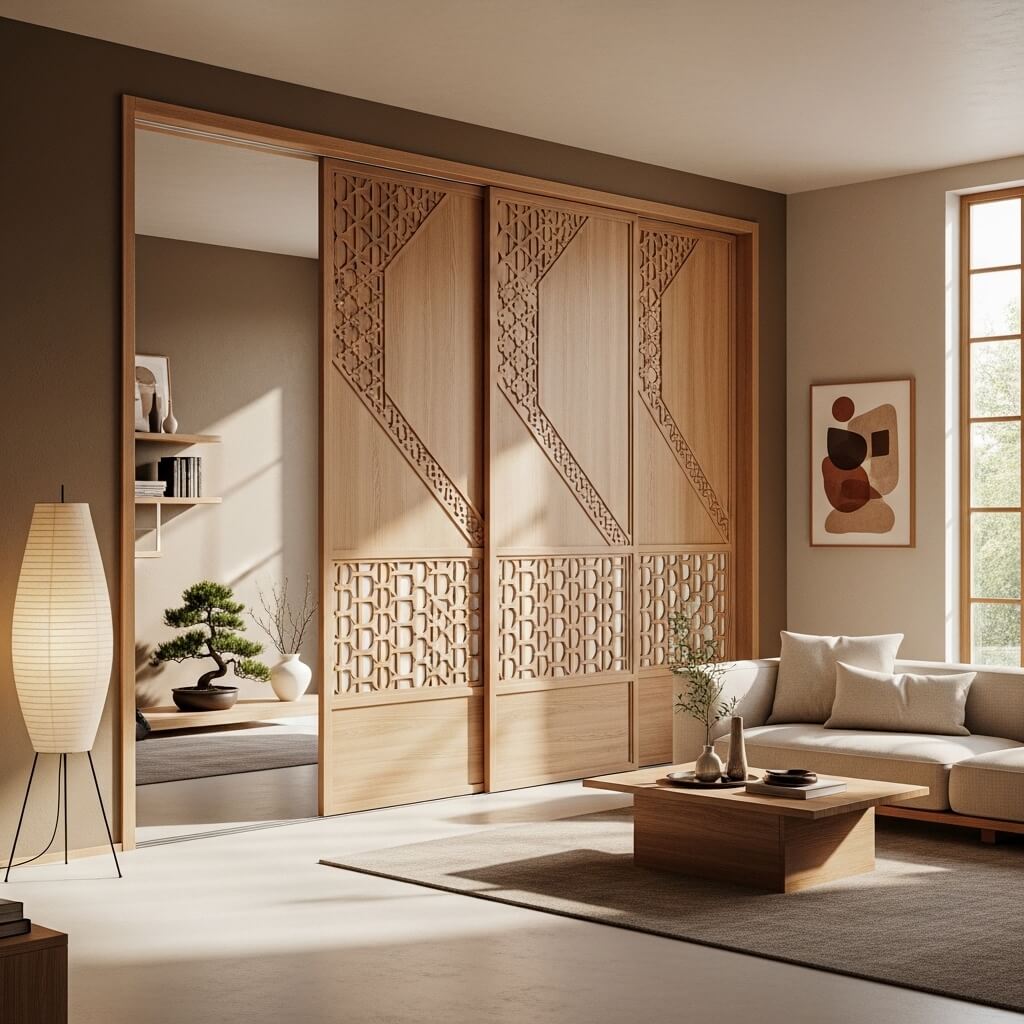
Sliding panels are the chameleons of partition design—they adapt to your needs in real-time, and they look sleek doing it.
Flexibility Meets Modern Aesthetics
I’m slightly obsessed with sliding panels because they give you complete control over your space. Want an open floor plan for weekend entertaining? Slide those panels open. Need privacy for a work call or reading time? Close them up.
The track system is the key to everything. Good-quality tracks glide smoothly and quietly, while cheap ones will frustrate you every single time you use them. Trust me, splurge on the hardware—your future self will thank you.
Wooden panels bring warmth and texture, especially in modern or industrial spaces that might otherwise feel cold. The horizontal or vertical grain patterns add visual interest, and you can stain or paint them to match any aesthetic.
Style Variations Worth Considering
The beauty of sliding panels is their versatility. You can go several directions:
- Floor-to-ceiling panels for complete separation when needed
- Barn door style for farmhouse or rustic interiors
- Japanese shoji-inspired with translucent paper or fabric inserts
- Slatted panels that let light through even when closed
- Multiple panels that stack or overlap for adjustable coverage
I’ve seen people use these to hide home offices at the end of the workday, and the psychological benefit of “closing off” work is huge. Your living room stops feeling like you’re always at the office.
The installation does require some planning—you need proper ceiling support for the track system—but the payoff is absolutely worth it. This is one of those designs that makes people stop and ask how you did it.
Metal Grid Geometric Partition Stylish Interior
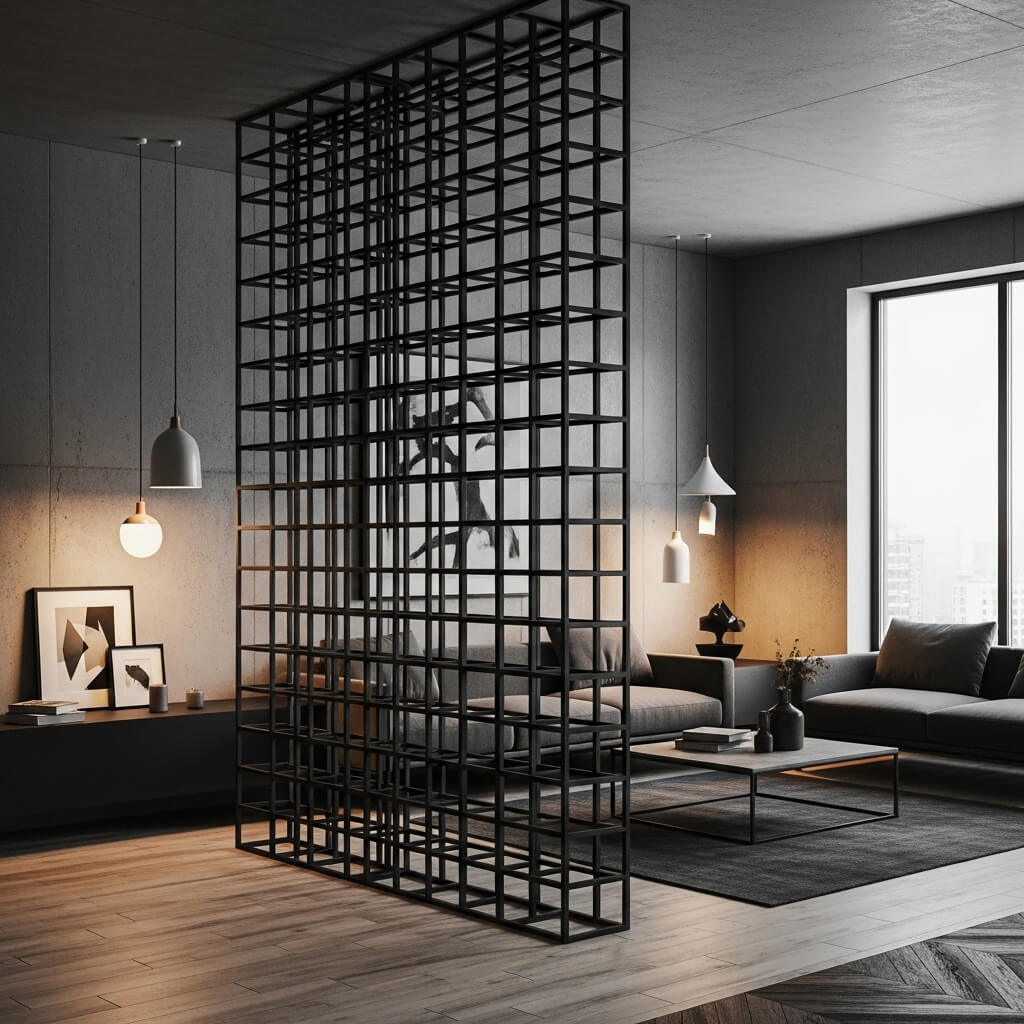
Want to make a bold statement? Metal grid partitions are edgy, industrial, and ridiculously photogenic.
Industrial Chic That Actually Works
I was skeptical about metal partitions until I saw one in person at a friend’s loft. The geometric patterns created this incredible interplay of light and shadow throughout the day, and the industrial vibe felt fresh rather than cold.
Metal grids read as modern art while functioning as space dividers. You’re basically installing a sculptural element that also happens to define your zones. The transparency keeps sight lines open while still creating clear boundaries.
The geometric patterns range from simple grids to complex, custom designs. Hexagons, diamonds, abstract patterns—the options are endless. Black metal is the most popular (and most versatile), but brass, copper, or brushed steel finishes can soften the look.
Pairing Metal With Warmth
Here’s the trick to making metal partitions work without your space feeling like a warehouse: balance the industrial edge with warm, soft elements. I’ve seen this done brilliantly:
- Pair with plush textiles—velvet sofas, layered rugs, cozy throws
- Add warm wood tones through furniture and flooring
- Include plenty of greenery to soften the hard lines
- Use warm lighting rather than cool white bulbs
The metal grid also works as a functional element. I’ve seen people weave string lights through the grid for ambient lighting, hang small planters for a vertical garden effect, or use S-hooks to display lightweight decor.
Maintenance is minimal—an occasional dusting keeps them looking sharp. And unlike painted or stained wood, you never need to worry about touch-ups or refinishing.
Half Wall Cement Partition Minimal Living Room
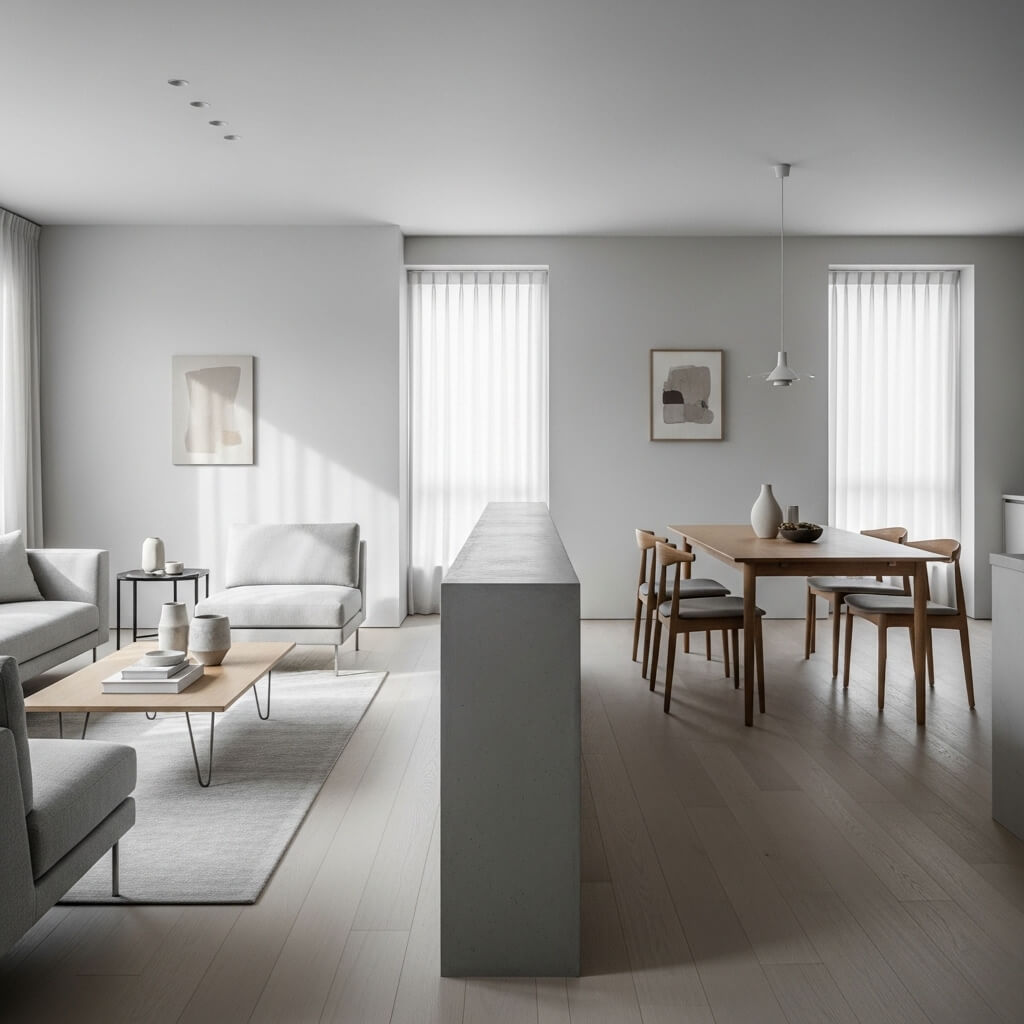
Sometimes you want just a hint of separation, not a full barrier. Half walls (or pony walls, if you want the official term) give you that subtle division with serious style potential.
The Power of Suggestion
Half walls are brilliant because they define spaces psychologically without blocking anything physically. Your brain registers “this is a different zone” while your eyes still see the full room. It’s architectural sleight of hand.
Cement or concrete finishes bring that minimalist, industrial aesthetic that photographs beautifully. The raw, textured surface adds character that painted drywall just can’t match. It feels substantial and permanent without being imposing.
I love that half walls give you a surface to work with—the top becomes a display ledge for plants, books, or decorative objects. You’re creating both division and decor space simultaneously.
Height and Design Decisions
Getting the height right is crucial. Too short, and it feels pointless. Too tall, and you might as well build a full wall. Here’s what works:
- Counter height (36-42 inches) is ideal for maintaining open sightlines while sitting
- Add thickness for more visual impact—thin walls look unfinished
- Consider built-in shelving on one or both sides
- Top it with wood or another material for contrast against the cement
The cement finish doesn’t have to be rough and industrial—you can go smooth and polished for a more refined look, or add pigment for color variation.
I’ve seen half walls used to separate living rooms from entryways, and the defined landing space for keys, bags, and mail is genuinely useful. Form meeting function yet again :/
Also Read: 10 Beautiful Sofa Back Wall Design Ideas for Elegant Living
Macrame Boho Hanging Divider Living Room Style
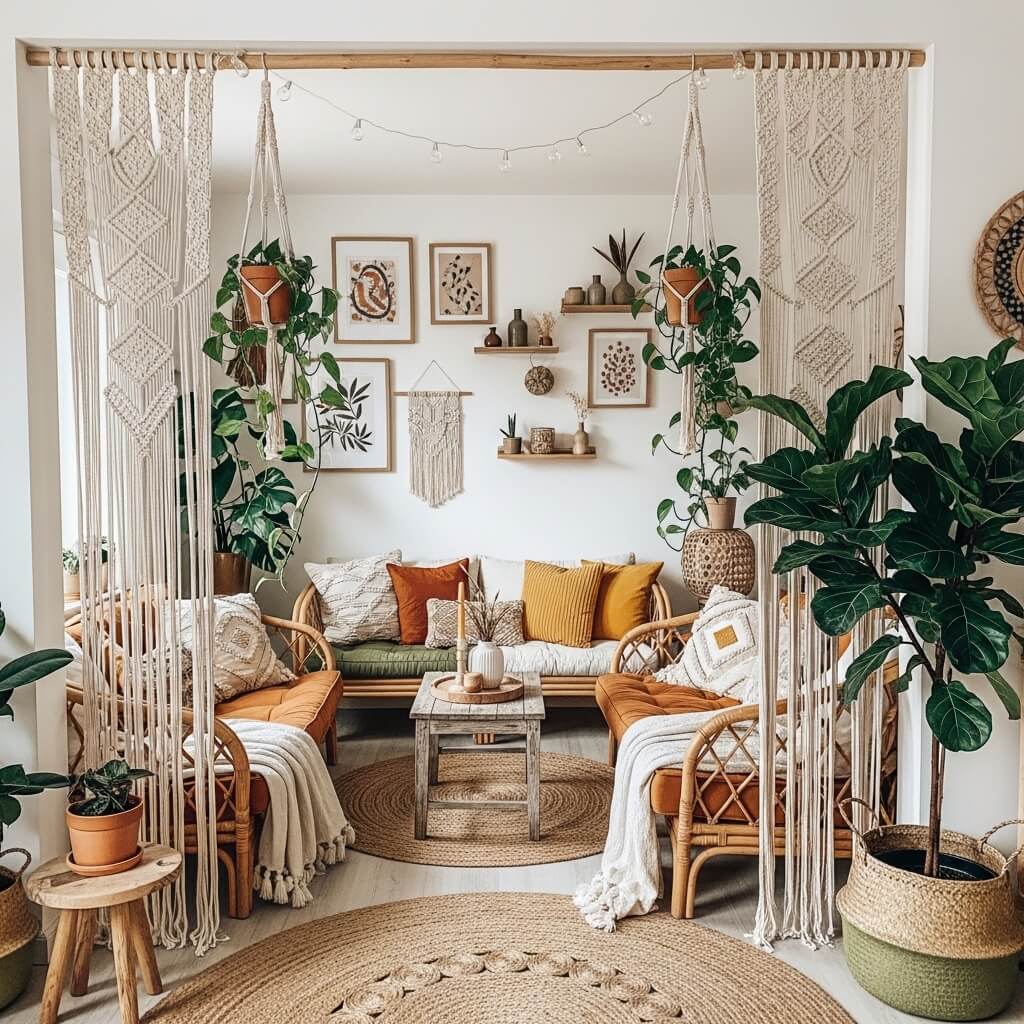
Last but definitely not least, let’s talk about the bohemian darling of partition design: macrame hanging dividers.
Texture and Movement for Days
If you’re going for relaxed, eclectic, boho vibes, macrame partitions are your jam. The intricate knotwork creates visual interest while maintaining airiness, and the natural cotton or jute fibers add warmth and texture.
I hung a macrame divider in my reading nook area, and it instantly made the space feel cozier and more intimate without closing it off completely. The gentle movement when someone walks by adds life to the room in a way that solid partitions can’t.
The beauty here is the handmade quality. Even mass-produced macrame has that artisanal feel that makes spaces look curated rather than cookie-cutter. Plus, the varying patterns—from simple to incredibly complex—mean you can find something that matches your skill level if you’re DIYing.
Styling Your Macrame Partition
The key to making macrame work is commitment to the aesthetic. It needs supporting players:
- Layer with other natural textures like rattan, wood, and linen
- Add plenty of plants (macrame and greenery are best friends)
- Keep the color palette warm and earthy
- Mix patterns and textures without fear—boho thrives on eclectic combinations
You can hang macrame from ceiling-mounted rods, attach it to frames, or even create panels on wooden dowels. The installation is usually simpler than other partition types since the material is lightweight.
Maintenance tip: Shake it out occasionally to remove dust, and spot clean as needed. The cotton fibers hold up surprisingly well, and they actually look better with a bit of age and patina.
I love that macrame brings softness and femininity to spaces without being overly precious or delicate. It’s sturdy enough to function as a real divider while maintaining that handcrafted, bohemian soul.
Final Thoughts: Your Space, Your Rules
Listen, there’s no one-size-fits-all solution for partition design. What works in my space might look ridiculous in yours, and that’s perfectly fine. The point is to choose something that solves your specific problem while matching your aesthetic.
Want privacy? Go with curtains, sliding panels, or bookshelf partitions. Need to maintain light flow? Choose glass, metal grids, or wooden slats. Working with a tight budget? Hanging dividers and curtains won’t break the bank. Commitment issues? Skip the permanent installations and stick with movable options.
I’ve experimented with several of these over the years, and honestly? Each one changed the way I used and felt about my space. Partitions aren’t just about dividing rooms—they’re about creating intentional zones that support how you actually live.
So pick the one that makes you think, “Yes, that’s so me,” and run with it. Your living room is waiting for that extra layer of style and function. And when your friends inevitably ask where you got the idea, just smile mysteriously and say you know a guy (or girl) who knows about this stuff. You’re welcome 🙂
Now get out there and create some zones. Your new, elevated living room awaits.