10 Lovely Home Garden Design Ideas for Aesthetic Backyard Charm
- Garden Design
 Ben
Ben- 0
- 39 minutes read
Look, I’m just going to say it—your backyard doesn’t have to look like a sad, forgotten patch of grass anymore. You know that feeling when you walk outside and think, “Yeah, this could use some serious help”? I’ve been there, staring at my own outdoor space wondering how to turn it from “meh” to “wow” without selling a kidney to afford it.
Here’s the thing: creating a stunning garden space isn’t about having acres of land or a massive budget. It’s about working with what you’ve got and getting a bit creative. I’ve spent years experimenting with different garden designs, making mistakes (RIP to those succulents I overwatered), and finally figuring out what actually works. So grab your coffee, and let me walk you through ten garden design ideas that’ll transform your outdoor space into something you’ll actually want to spend time in.
Small Balcony Garden Makeover Ideas
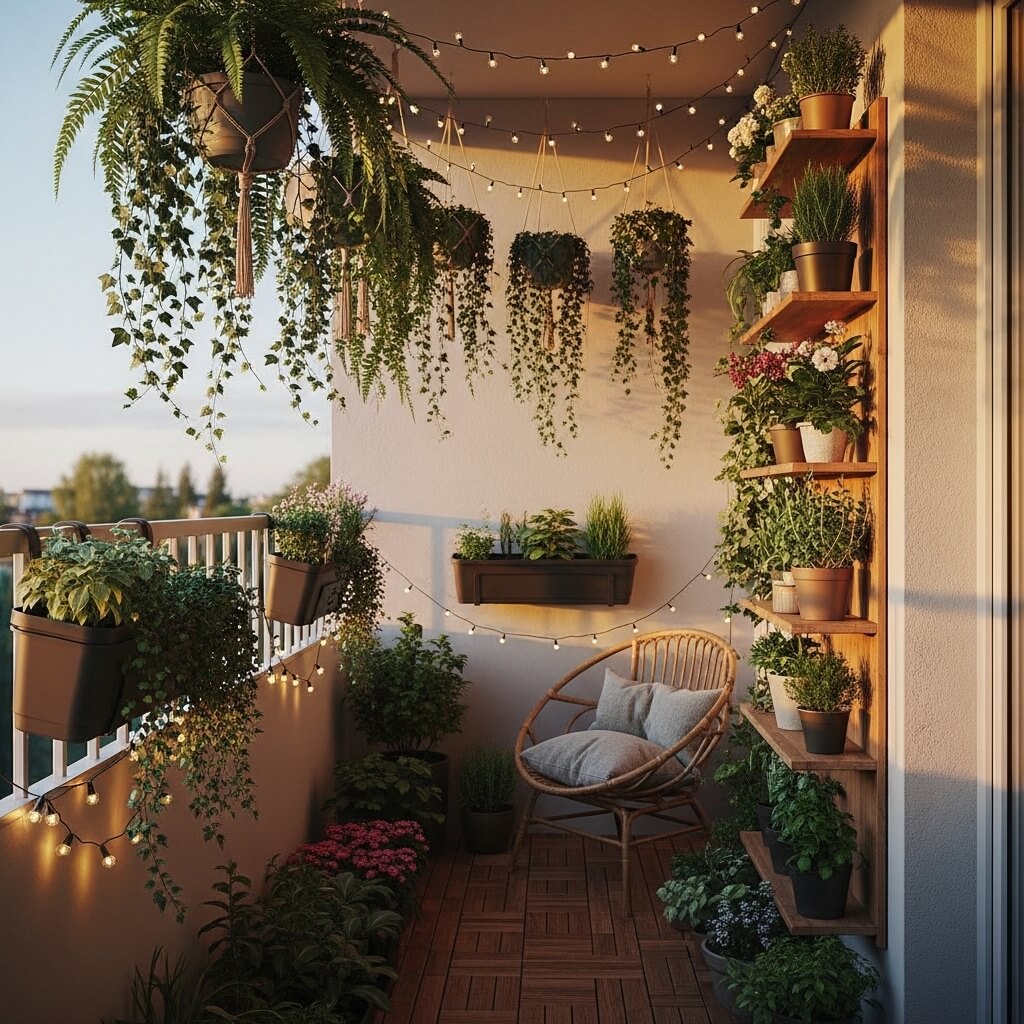
Ever looked at your tiny balcony and thought, “What’s even the point?” Yeah, me too. But here’s where I’m going to blow your mind a little—small balconies can pack serious punch when you design them right.
The secret to balcony gardens is vertical thinking. I’m not talking about stacking random pots and calling it a day. Think strategically about using railings, walls, and hanging solutions to maximize every square inch. Wall-mounted planters became my best friend when I realized my 4×6 balcony wasn’t going to accommodate ground pots.
Here’s what actually works:
- Railing planters: These babies clip right onto your balcony rails and don’t steal precious floor space
- Tiered plant stands: Corner ladder shelves let you display multiple plants without crowding
- Hanging macramé planters: They add that boho vibe while keeping surfaces clear
- Foldable bistro furniture: You need somewhere to sit and admire your work, right?
Start with herbs and small flowering plants. I learned this the hard way after trying to grow tomatoes on my balcony—they took over like they owned the place. Basil, mint, petunias, and succulents are your friends here. They’re low-maintenance and won’t stage a hostile takeover of your space.
Color coordination matters more in small spaces. Pick a color scheme and stick with it. I went with white pots and green/purple plants, and suddenly my cramped balcony looked intentional instead of chaotic. FYI, matching pots make everything look more expensive than it actually is. 🙂
Lighting transforms everything once the sun goes down. String lights aren’t just for Instagram—they genuinely make your balcony feel like an extension of your living space. I added solar-powered fairy lights, and now I actually use my balcony in the evenings instead of just looking at it through the window.
Modern Backyard Landscaping Designs
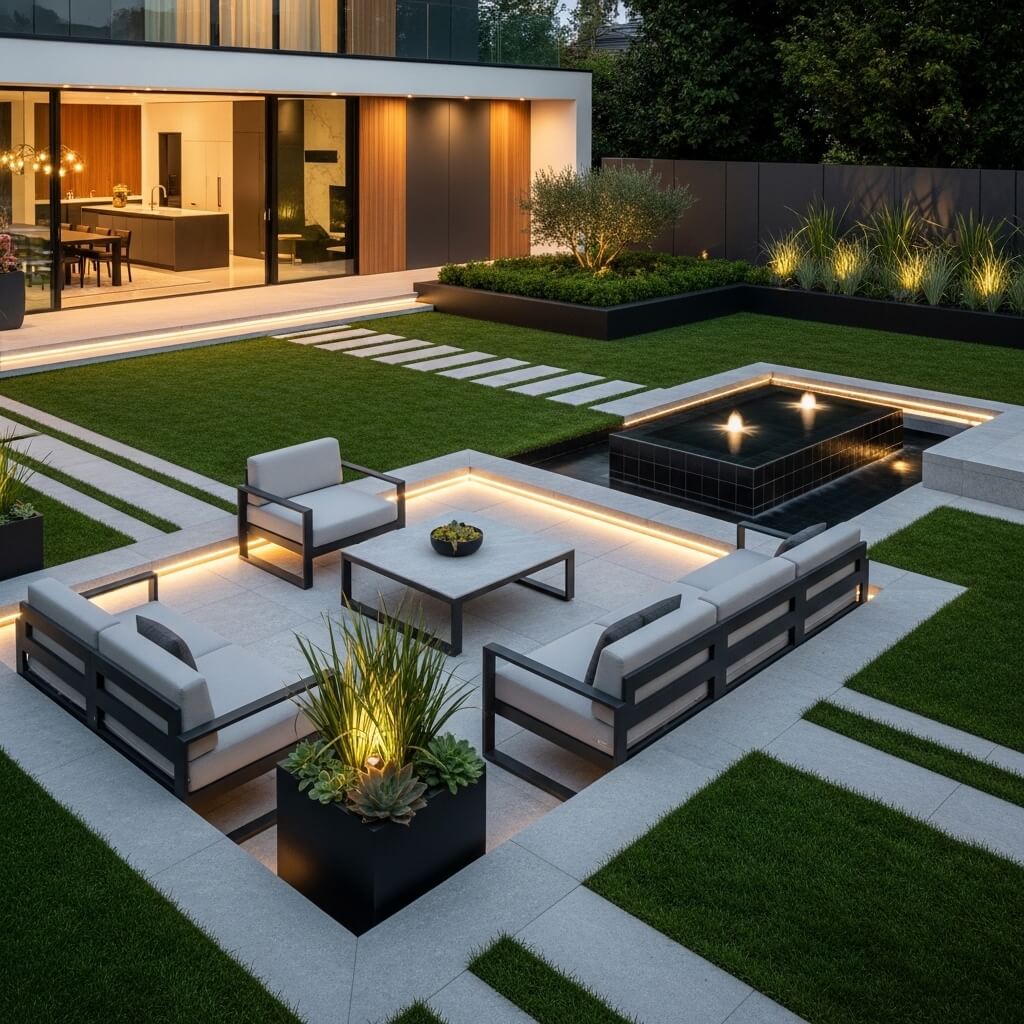
Modern landscaping isn’t about complicated, fussy designs. It’s actually the opposite—clean lines, minimal clutter, and intentional placement of every element. Think geometric shapes, neutral colors, and “less is more” philosophy.
Hardscaping becomes your foundation in modern designs. I’m talking about concrete pavers, wooden decking, gravel paths, and stone features. These create structure and reduce the amount of lawn maintenance you’ll deal with. Ever notice how modern yards always have those sleek, rectangular concrete paths? That’s not an accident.
The plant selection follows a specific vibe:
- Ornamental grasses: They add movement and texture without looking messy
- Architectural plants: Think agave, yucca, or large-leaf tropicals that make a statement
- Monochromatic greenery: Stick to various shades of green rather than rainbow flower explosions
- Boxwood hedges: Perfect for creating those clean, geometric borders
Water features work beautifully in modern designs, but skip the elaborate fountains. Go for simple, rectangular reflecting pools or minimalist water walls. I installed a basic rectangular water feature—honestly just a long, shallow basin with a simple fountain pump—and the sound alone makes my backyard feel like a spa.
Keep your color palette restricted. Modern designs typically use black, white, gray, and natural wood tones with maybe one accent color. I went with charcoal gray pavers, black metal planters, and pops of deep green foliage. Occasionally, I’ll add white flowering plants for contrast, but that’s it.
Outdoor furniture should be sleek and low-profile. Those chunky wooden Adirondack chairs? Not the vibe here. Look for metal frames, neutral cushions, and geometric shapes. Your backyard should look like it could be featured in an architecture magazine—clean, uncluttered, and seriously stylish.
Budget-Friendly Home Garden Ideas
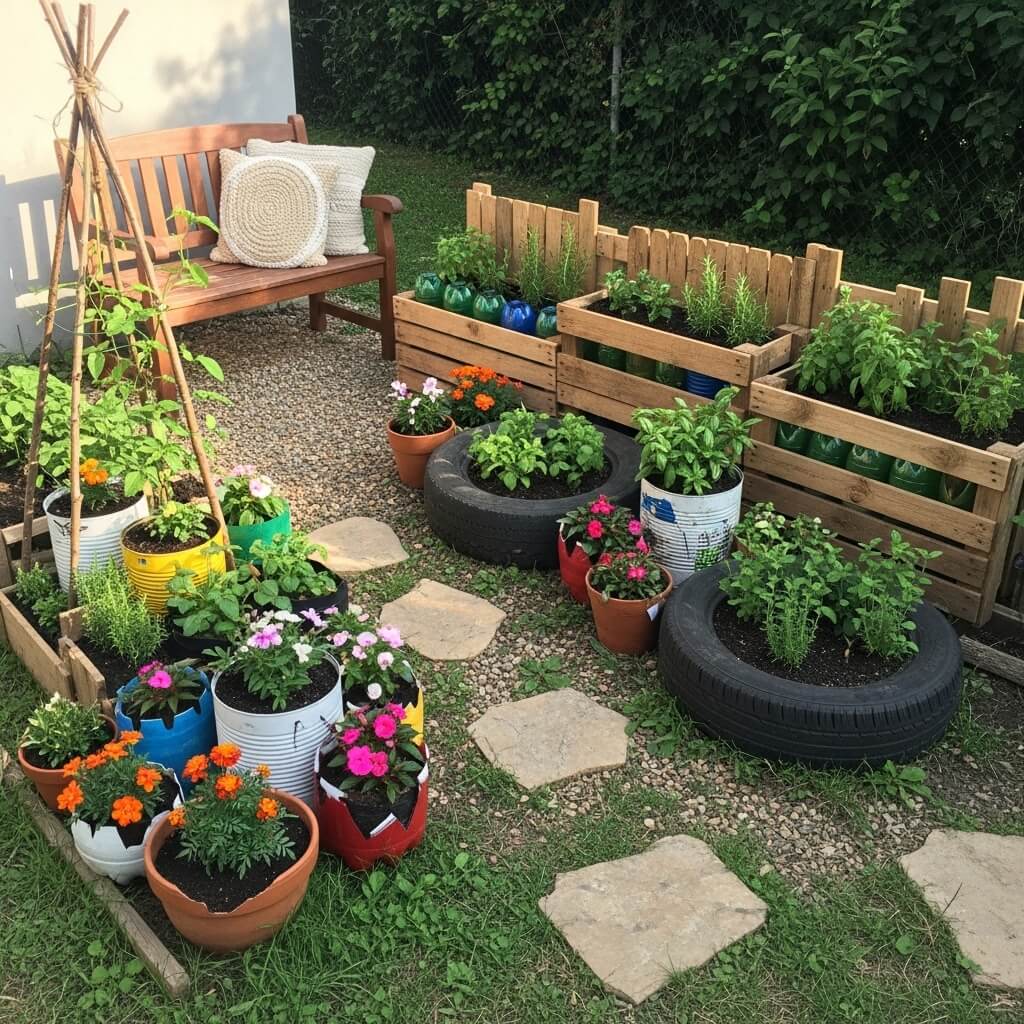
Let’s get real—not everyone has thousands to drop on landscaping. I certainly didn’t when I started, and honestly, some of my best garden projects cost less than a fancy dinner out.
Propagation is basically free plants, and I’m obsessed with it. You know those friends with gorgeous gardens? Ask them for cuttings. Most plants propagate easily in water or soil, and suddenly you’ve got a whole collection without spending a dime. I’ve filled entire garden beds with propagated lavender, rosemary, and succulents.
Here’s where you should spend versus save:
Spend wisely on:
- Quality soil and compost (cheap soil = sad plants)
- A few statement plants or trees
- Durable garden tools that won’t break after one use
Save money by:
- Growing from seeds instead of buying mature plants
- Using repurposed containers as planters
- Creating your own mulch from fallen leaves and grass clippings
- Borrowing expensive tools from neighbors or renting them
Pallets are garden gold. People literally throw these away, and you can transform them into vertical gardens, compost bins, or even garden furniture. I built a three-tier herb garden from a single pallet, some landscape fabric, and screws I already had. Total cost? About $8 for the fabric.
Perennials are your long-term budget friends. Yeah, they might cost a bit more upfront than annuals, but they come back year after year. I planted hostas, daylilies, and black-eyed Susans five years ago, and they’re still going strong without me buying new plants every spring.
Mulch transforms everything. It suppresses weeds, retains moisture, and makes your garden beds look finished. But don’t buy those expensive decorative mulches. I get free wood chip mulch from local tree trimming services—they’re usually happy to dump it in your driveway rather than pay to dispose of it.
Create focal points with DIY projects instead of expensive sculptures. I painted some large rocks with weather-resistant paint, arranged them artfully, and boom—instant garden art for the cost of paint.
Also Read: 10 Modern Vegetable Garden Design Ideas for Stylish Gardens
Cozy Outdoor Garden Seating Spaces
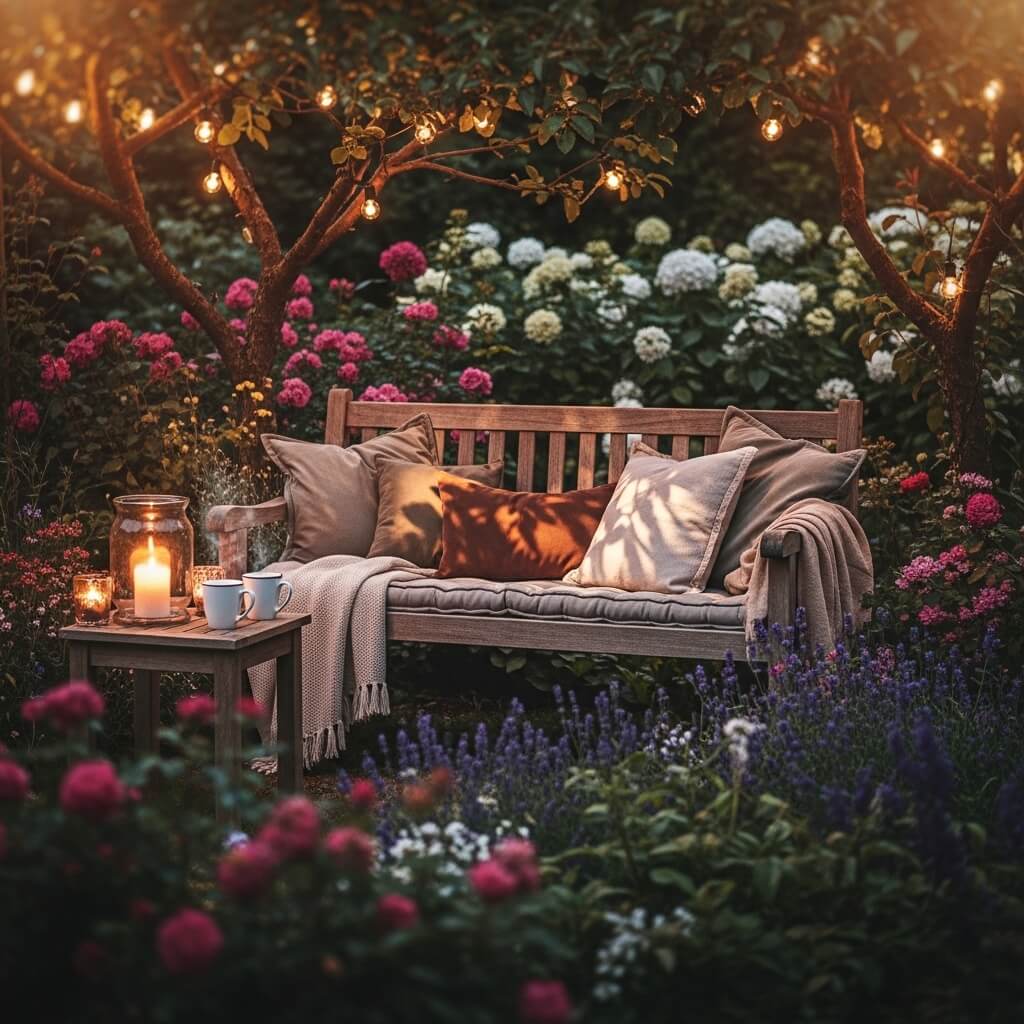
What’s the point of a beautiful garden if you can’t sit in it and feel smug about your accomplishments? Your outdoor seating should make you want to grab a book, settle in, and ignore your responsibilities for a while.
Location matters more than you think. I initially placed my seating in the sunniest spot (seemed logical, right?) and realized I never used it because it was too hot. Survey your yard at different times of day. Find that sweet spot with morning sun and afternoon shade, or vice versa, depending on when you’ll actually use the space.
Comfort is non-negotiable. Those cute metal bistro chairs look great in photos, but they’re terrible for actually sitting. Trust me, your back will hate you after ten minutes. Invest in outdoor cushions or choose furniture with built-in comfort. I found a secondhand wooden bench, sanded it down, added outdoor cushions, and threw some weather-resistant pillows on it. Now it’s the first place I head after work.
Create intimacy through boundaries:
- Install a pergola or arbor overhead for that “room” feeling
- Use tall plants or privacy screens to enclose the space
- Add an outdoor rug to define the seating area
- Hang curtains from a pergola for extra coziness and shade
Layered lighting makes your seating area usable after dark. I have three levels: string lights overhead for ambient glow, solar lanterns on side tables for task lighting, and battery-powered candles for ambiance. It sounds extra, but it genuinely extends my outdoor time into the evenings.
Side tables are essential. Where else will you put your drink, phone, and that book you’re pretending to read while actually just enjoying your garden? I use weatherproof stools that double as extra seating when friends visit.
Add personal touches that make the space yours. I’ve got a small outdoor speaker tucked behind a plant (because garden time plus good music equals perfection), a basket for throws when evenings get chilly, and a little shelf for my gardening books. IMO, your outdoor space should feel as personalized as your living room.
Vertical Garden Wall Design Ideas
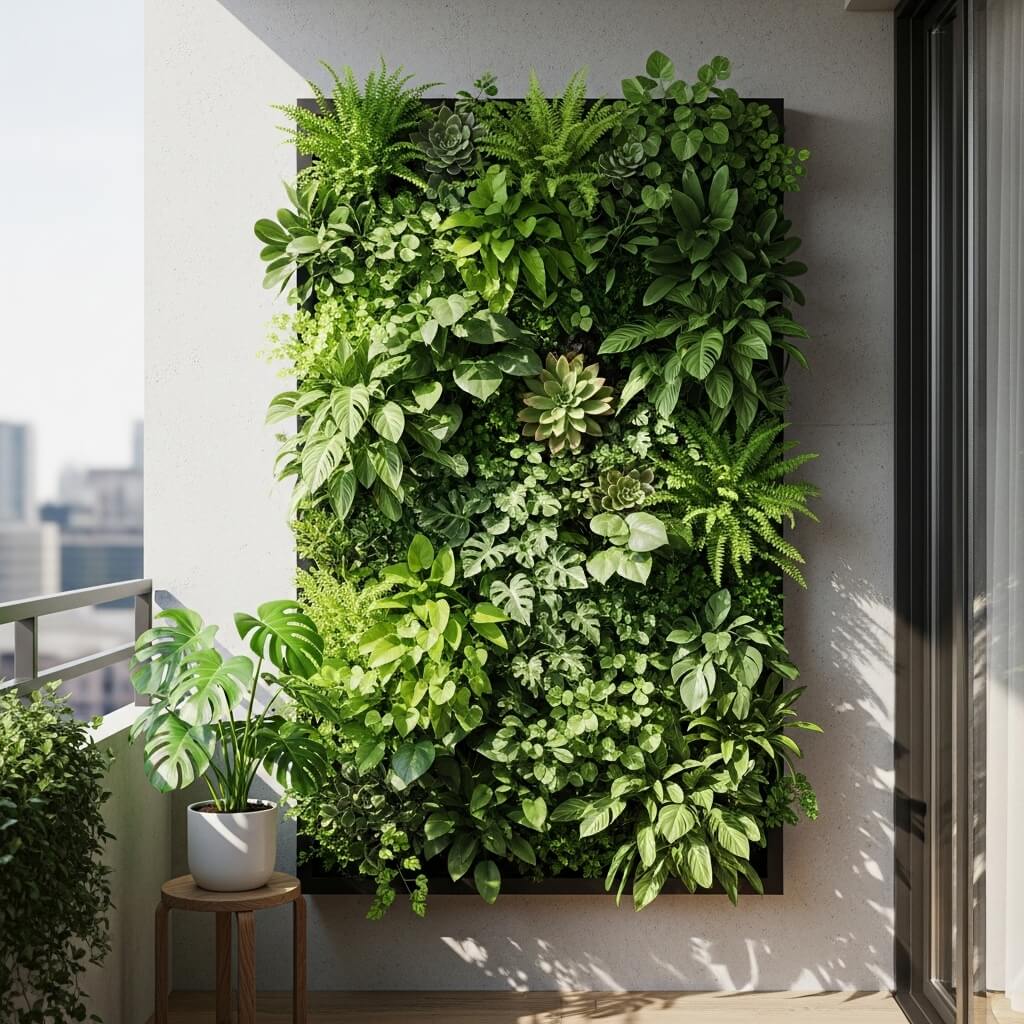
Vertical gardens are basically magic for small spaces. You’re using air that was just sitting there doing nothing, and turning it into productive growing space. Mind blown, right?
The structure you choose depends on your situation. Renting? Go for freestanding systems or hanging solutions you can take with you. Own your place? You can install permanent wall-mounted systems or build custom structures.
Here are vertical garden options that actually work:
- Pocket planters: Fabric or felt walls with built-in pockets—perfect for herbs and small plants
- Gutter gardens: Mount gutters horizontally on a wall or fence for shallow-rooted plants
- Pallet gardens: Stand them upright, add landscape fabric backing, and fill with soil
- Trellis and climbing plants: The OG vertical garden—let nature do the work
- Modular box systems: Stackable planter boxes that create a living wall effect
Irrigation is the tricky part with vertical gardens. Water runs down, so plants at the bottom get drenched while top plants get neglected. I learned this after killing my top row of plants three times (yeah, I’m stubborn). Now I either install a drip irrigation system or hand-water more frequently at the top, letting it trickle down naturally.
Choose plants based on their position. Sun-loving plants go at the top where they get maximum light, shade-tolerant varieties go at the bottom. I rotate herbs at the top (they love sun), lettuce and spinach in the middle, and shade-loving ferns at the bottom.
Weight matters when you’re mounting things to walls. A fully planted and watered vertical garden gets heavy fast. Make sure you’re mounting into studs or using proper wall anchors rated for the weight. I almost learned this lesson the hard way when my first attempt started pulling away from the wall. :/
Vertical gardens need more frequent watering than ground plants. The soil dries out faster with increased air exposure. I check mine daily during summer and water as needed. It sounds like work, but honestly, it takes maybe five minutes.
Minimalist Zen Garden Inspirations
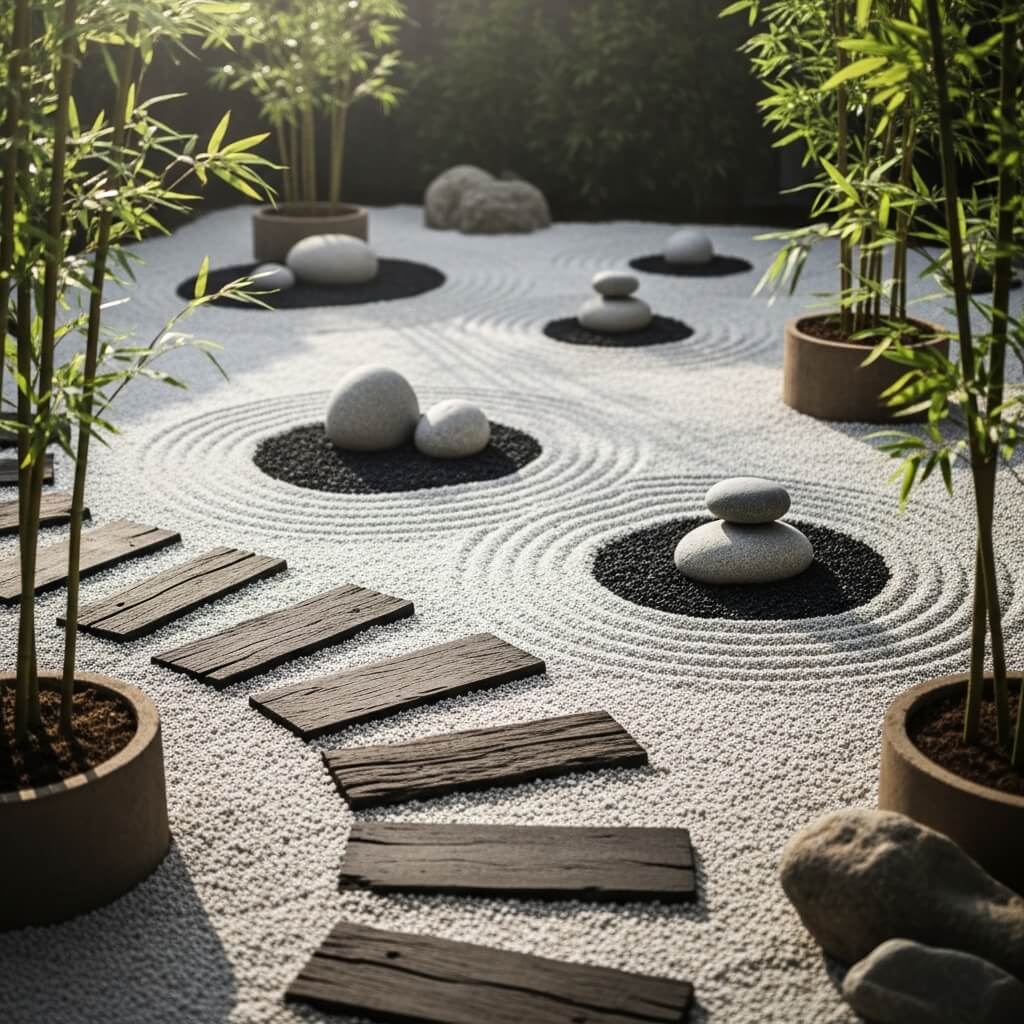
Zen gardens are all about creating calm, meditative spaces. No chaos, no clutter—just peace and intentional design. Perfect for when your brain feels like it’s running a million tabs at once.
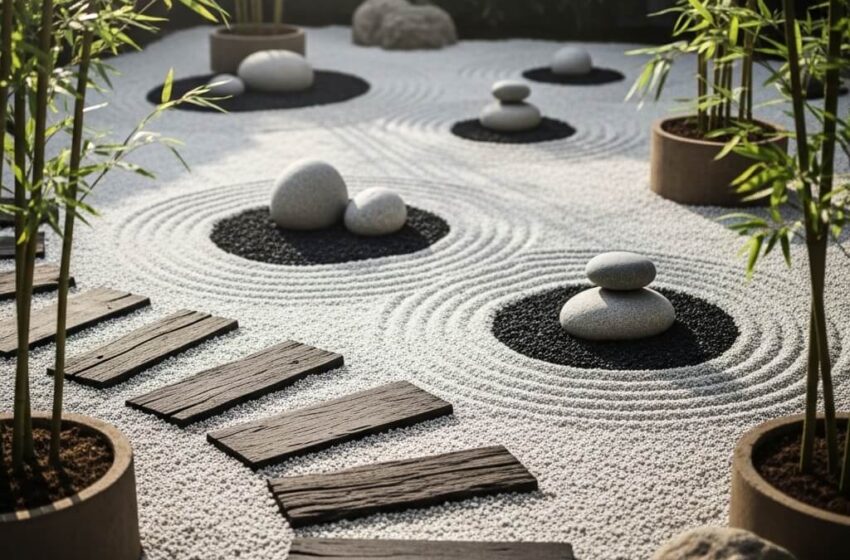
Simplicity is the entire philosophy here. Every element needs a purpose. You’re not filling space; you’re creating breathing room. I’ve got five elements in my zen corner: gravel, three rocks, one Japanese maple, a stone lantern, and a small water feature. That’s it. And it’s perfect.
The essential components of zen garden design:
- Gravel or sand: Raked into patterns representing water ripples
- Rocks and boulders: Placed intentionally, often in odd numbers (3, 5, 7)
- Minimal plantings: Typically evergreens, Japanese maples, or bamboo
- Water elements: Simple stone basins or small fountains
- Stone pathways: Stepping stones placed deliberately
Raking patterns into gravel is weirdly therapeutic. I keep a small rake near my zen garden and spend ten minutes raking new patterns when I’m stressed. It’s like adult sand art that actually helps you decompress.
Color palette stays neutral and natural. Think greens, grays, browns, and blacks. I added one burgundy Japanese maple as my only pop of color, and it becomes the focal point without overwhelming the peaceful vibe.
Asymmetry creates visual interest while maintaining balance. Don’t place elements symmetrically—zen design uses triangular arrangements and odd numbers to create harmony that feels natural rather than forced.
Maintenance should be minimal. The whole point is creating a low-stress, peaceful environment. Choose slow-growing evergreens, use weed fabric under gravel, and keep plantings simple. My zen garden requires maybe thirty minutes of maintenance monthly, which is the whole point—less work, more zen.
Also Read: 10 Relaxing Small Garden Design Ideas for Outdoor Oasis
DIY Patio Garden Transformation Ideas
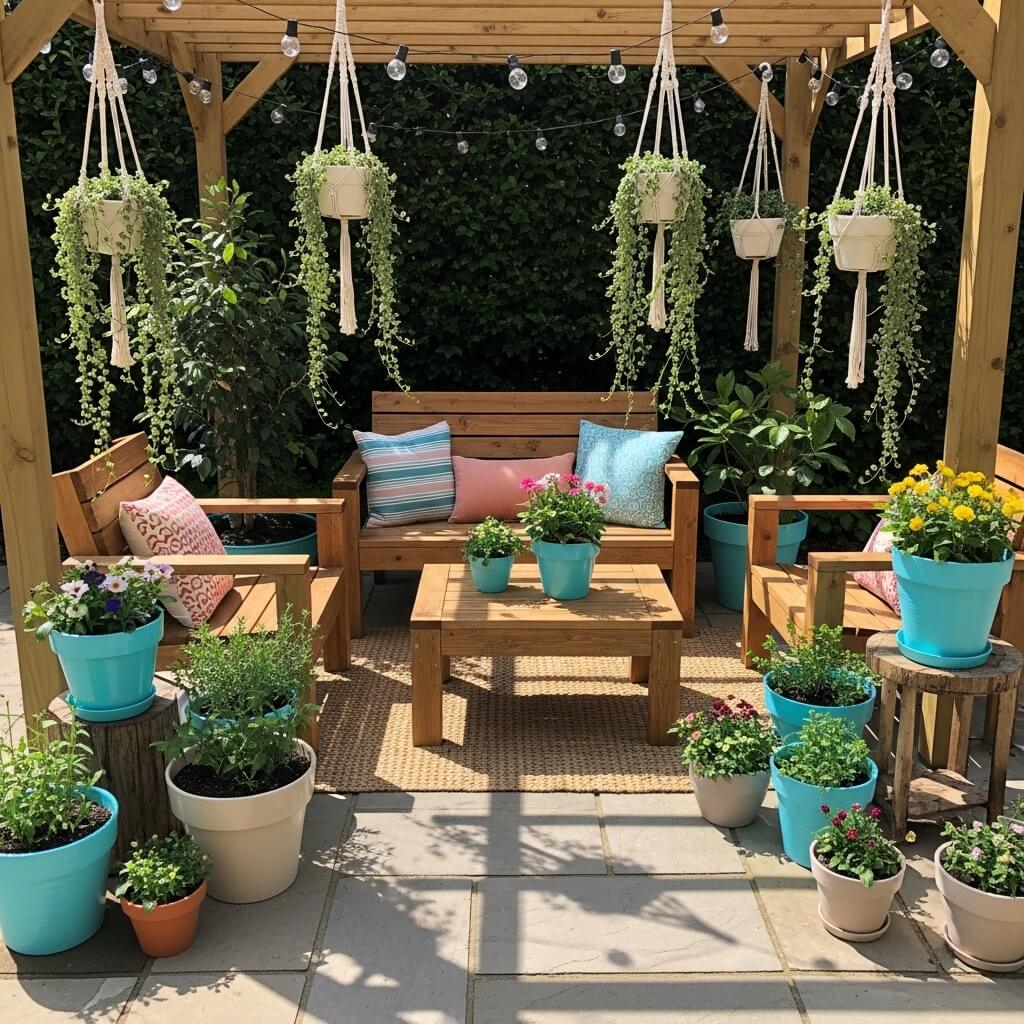
Your patio has so much potential beyond being a sad concrete slab where you store things you don’t know what to do with. Trust me, mine started as a repository for broken lawn chairs and random tools.
Container gardens are patio game-changers. You’re not limited by ground soil quality, and you can rearrange your entire layout whenever you feel like it. I’ve got containers in various sizes creating layers and visual interest—tall pots in corners, medium ones along edges, small ones clustered on surfaces.
Here’s how I transformed my basic patio:
Before starting:
- Thoroughly clean and power wash the surface (amazing what that alone accomplishes)
- Repair any cracks or damage
- Consider painting or staining concrete for instant upgrade
The actual transformation:
- Added an outdoor rug to define the space and add color
- Created height variation with plant stands and stacked containers
- Installed wall-mounted planters to use vertical space
- Hung string lights in a zigzag pattern overhead
- Brought in comfortable seating with weather-resistant cushions
Greenery softens hard patio edges. I placed larger pots with flowing plants like sweet potato vine and trailing petunias around the perimeter. They spill over the edges and make the whole space feel less rigid and more garden-like.
Privacy matters if neighbors can see directly into your patio. I added a trellis with climbing jasmine on one side and a bamboo screen on another. Now I can enjoy my morning coffee without waving at everyone who walks by.
Paint creates instant personality. I painted my back wall a soft sage green, and suddenly my plants popped against it. Accent walls work outdoors just like indoors—they create depth and interest without major construction.
Lighting extends your patio hours beyond daylight. Solar lights are great for eco-friendly options, but I splurged on plug-in string lights because they’re brighter and more reliable. I also added a couple of outdoor floor lamps near seating areas—yes, they make those, and yes, they’re awesome.
Small Space Urban Garden Designs
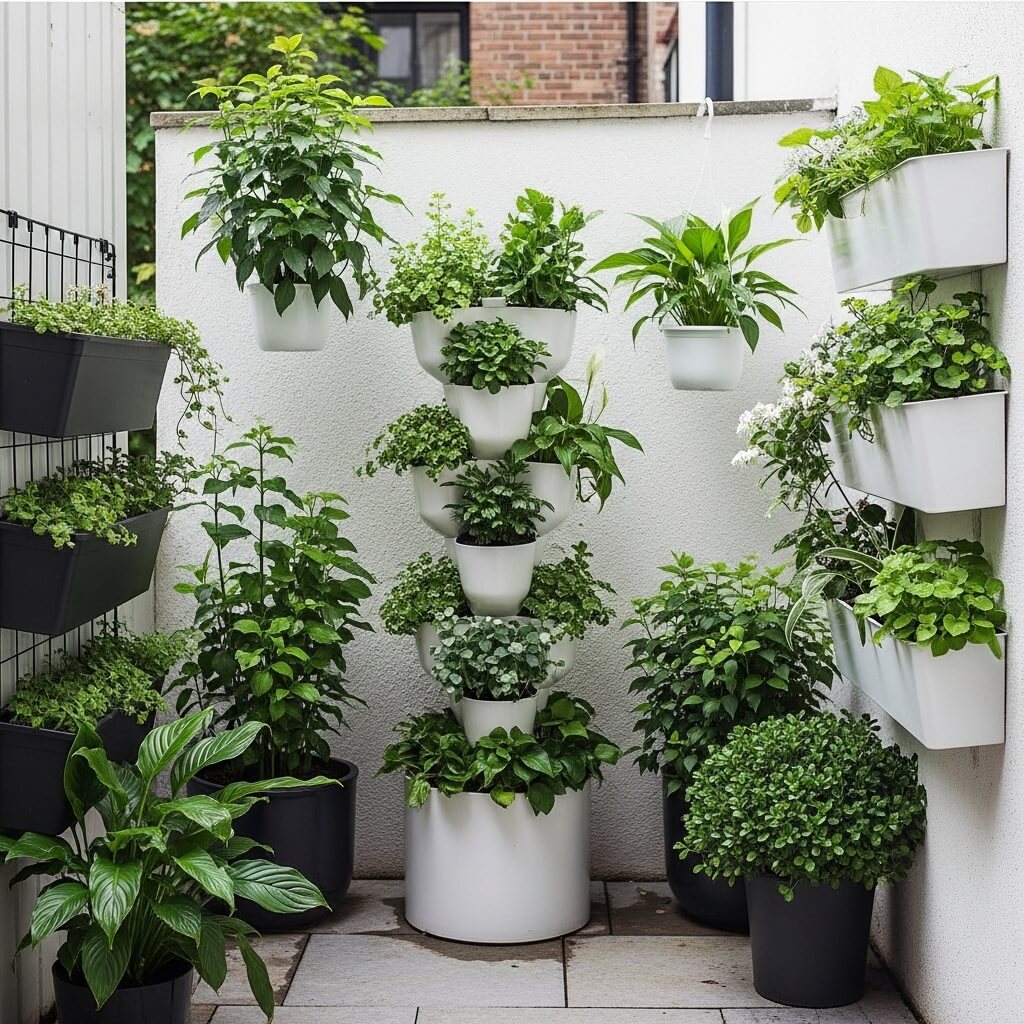
Urban gardening means working with constraints—limited space, container-only growing, possibly shaded by buildings, and definitely no sprawling lawns. But constraints breed creativity, and some of the most impressive gardens I’ve seen are in tiny urban spaces.
Assess your actual growing conditions before buying plants. How many hours of direct sunlight do you get? What’s your microclimate like? Urban areas often run warmer than suburbs due to heat absorption from buildings and pavement. I tracked sunlight for a week before choosing plants, and it saved me from killing shade plants in my surprisingly sunny corner.
Maximize every growing surface:
- Walls: Mount planters, install vertical gardens, use wall-mounted shelving
- Railings: Attach railing planters or build custom boxes that hook over rails
- Overhead: Hang plants from pergolas, beams, or ceiling hooks
- Furniture: Use tables and shelving as plant displays
- Floor: Tuck containers into corners and along edges
Dwarf and compact varieties are your friends. Regular tomato plants will take over your entire space. Cherry tomatoes in determinate varieties stay manageable. Same with dwarf fruit trees, compact peppers, and bush beans instead of pole beans. Read those plant tags carefully—”compact” and “dwarf” are magic words for urban gardeners.
Group plants with similar watering needs together. When you’re hand-watering containers (like most urban gardeners), efficiency matters. I have my thirsty vegetables in one area, drought-tolerant herbs in another, and shade plants grouped separately. Watering became way faster once I organized strategically.
Choose containers wisely. Bigger is better for water retention and root growth, but balance that against weight if you’re on a balcony or rooftop. I use lightweight resin pots that look like ceramic but weigh significantly less. Check your balcony’s weight limits—soil and water add up fast.
Community gardens are gold for urban dwellers wanting more space. I kept my balcony for ornamentals and herbs, but rent a small plot at a community garden for vegetables. Best of both worlds, plus you meet other plant nerds.
Cottage Style Home Garden Ideas
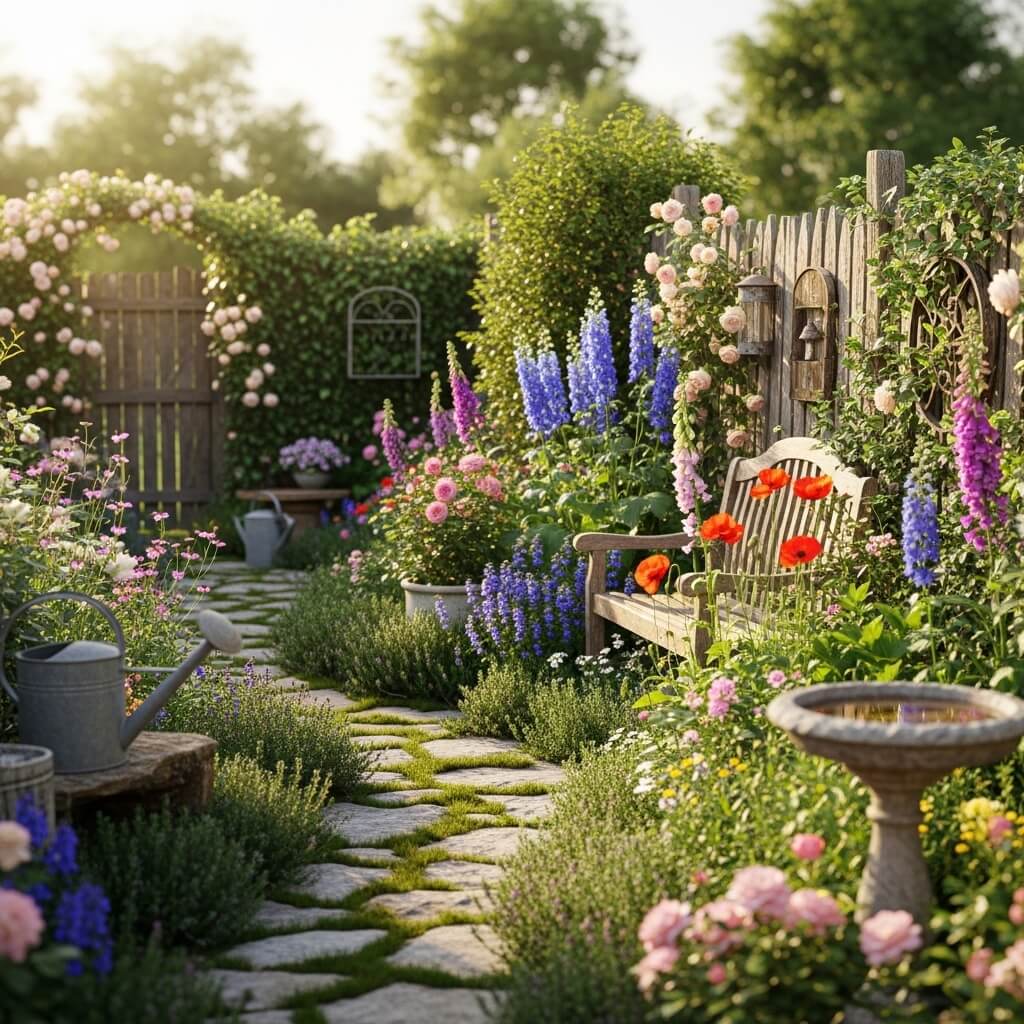
Cottage gardens are gloriously chaotic in the best way possible. Forget rigid lines and matchy-matchy plants—cottage style is about abundance, color, and that wonderfully overgrown look that seems effortless (but totally isn’t).
The cottage garden philosophy embraces fullness. You’re packing plants close together, layering heights, mixing flowers with edibles, and creating that “stumbled upon a secret garden” vibe. My cottage-style bed looks accidentally perfect, which took way more planning than I’ll admit.
Plant selection should be romantic and abundant:
- Traditional cottage flowers: Roses, lavender, hollyhocks, foxgloves, delphiniums
- Self-seeding annuals: Cosmos, poppies, sweet alyssum that fill gaps naturally
- Herbs mixed throughout: Sage, thyme, and rosemary add texture and scent
- Climbing plants: Clematis, climbing roses, honeysuckle on trellises and fences
Pathways should be casual and inviting. Forget formal straight lines—cottage garden paths curve gently and use materials like gravel, stepping stones, or brick laid in informal patterns. I edged mine with low-growing thyme that releases scent when stepped on.
Color coordination is looser here but still matters. I use a cottage palette of soft pastels (pinks, purples, whites, blues) with pops of stronger colors. It feels abundant without being overwhelming. The trick is repeating certain colors throughout so there’s visual flow despite the variety.
Include old-fashioned garden structures. Vintage or distressed wood works perfectly—arbors, picket fences, wooden gates, and rustic trellises. I found an old ladder at a thrift store, painted it white, and leaned it against my fence as a vertical planter. Very cottagecore, very effective.
Don’t deadhead everything religiously. Part of cottage charm is letting plants go to seed, dry out artfully, and self-sow for next year. I leave seed heads on coneflowers and black-eyed Susans—birds love them, and they look pretty even when dried.
Also Read: 10 Brilliant Garden Design Ideas for a Serene Nature Corner
Aesthetic Terrace Garden Setup Ideas
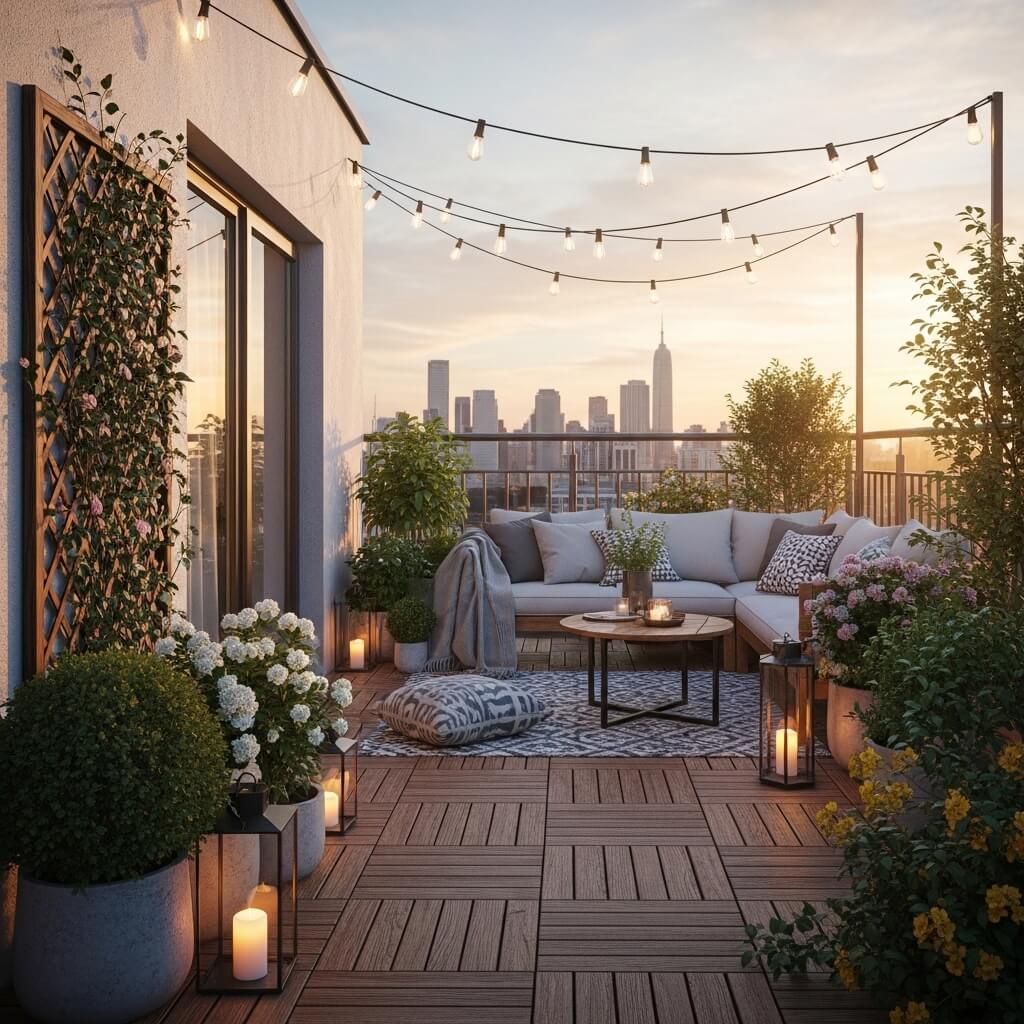
Terraces are amazing because you get garden space with a view, but they come with unique challenges—wind exposure, weight limitations, and making everything look cohesive across a larger space than a balcony.
Wind is your biggest challenge on terraces. Plants that thrive at ground level might struggle with constant breeze. I learned this when my taller plants kept getting battered and broken. Now I choose wind-resistant varieties and use heavy planters that won’t topple over. Ornamental grasses actually love wind and add beautiful movement.
Create different zones on larger terraces:
- Dining area: Table and chairs with potted herbs nearby
- Lounging zone: Comfortable seating surrounded by lush plantings
- Garden workspace: Potting bench or small shed for supplies
- Green wall: Vertical garden as a dramatic focal point
Weight distribution matters on rooftop terraces. Place heavy planters near load-bearing walls and corners rather than in the center. I consulted a structural engineer (sounds fancy, but it was just a quick conversation) before loading my terrace with large pots and soil.
Irrigation systems save your sanity on terraces. Hand-watering dozens of containers gets old fast, especially when you’re dealing with wind that dries everything out quickly. I installed a drip irrigation system on a timer—best decision ever. Now my plants get consistent water without me hauling watering cans daily.
Privacy screening makes terraces feel like outdoor rooms. I used a combination of tall planters with bamboo, wooden privacy panels, and climbing plants on trellises. Now I’ve got private zones for lounging without feeling like I’m on display for neighboring buildings.
Connect terrace levels if you have multiple tiers. I added lighting along the steps between levels and placed statement plants at transitions. It creates visual flow and makes the entire terrace feel like one cohesive garden rather than disconnected spaces.
So there you have it—ten garden design ideas that’ll transform whatever outdoor space you’re working with. Whether you’ve got a sprawling backyard or a tiny balcony, there’s absolutely no excuse for letting your outdoor area go to waste.
The secret sauce to any great garden? Just start. You don’t need a complete plan, a massive budget, or even much experience. Pick one idea from this list that speaks to you, grab some plants, and get your hands dirty. I’ve made countless mistakes over the years—overwatered succulents, placed sun-lovers in shade, picked paint colors I later hated—and somehow my garden still turned out pretty damn great.
Your outdoor space should bring you joy, not stress. Choose designs that match your lifestyle and maintenance tolerance. If you’re not going to rake zen gravel patterns weekly, skip the zen garden. If you love chaos and color, embrace cottage style. The best garden is the one you’ll actually enjoy and maintain.
Now seriously, what are you waiting for? Your future gorgeous garden isn’t going to create itself. Start small, experiment often, and remember—even professional gardeners kill plants sometimes. Happy gardening! 🙂