10 Brilliant Garden Design Ideas for a Serene Nature Corner
- Garden Design
 Ben
Ben- 0
- 35 minutes read
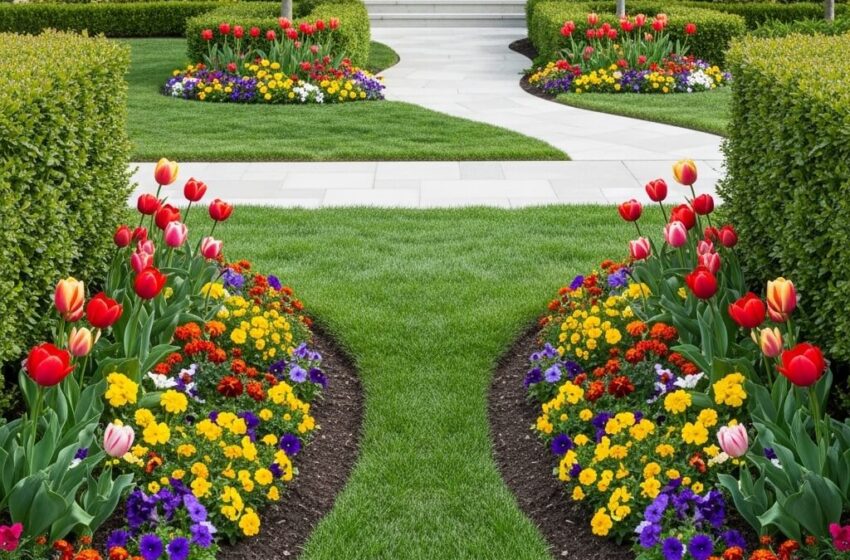
You know that feeling when you step outside and your outdoor space looks like a sad, forgotten afterthought? Yeah, I’ve been there. My first attempt at a garden looked like a plant graveyard meets storage unit. But here’s the thing—creating a serene nature corner doesn’t require a degree in landscape architecture or a trust fund. You just need some solid ideas and the willingness to get your hands dirty.
I’m going to walk you through ten garden design concepts that actually work for real people with real budgets and real space limitations. Some of these I’ve tried myself, others I’ve admired in friends’ yards while secretly plotting to steal their ideas. Let’s get your outdoor space looking like the peaceful retreat you’ve been dreaming about.
Small Backyard Garden Layout Ideas
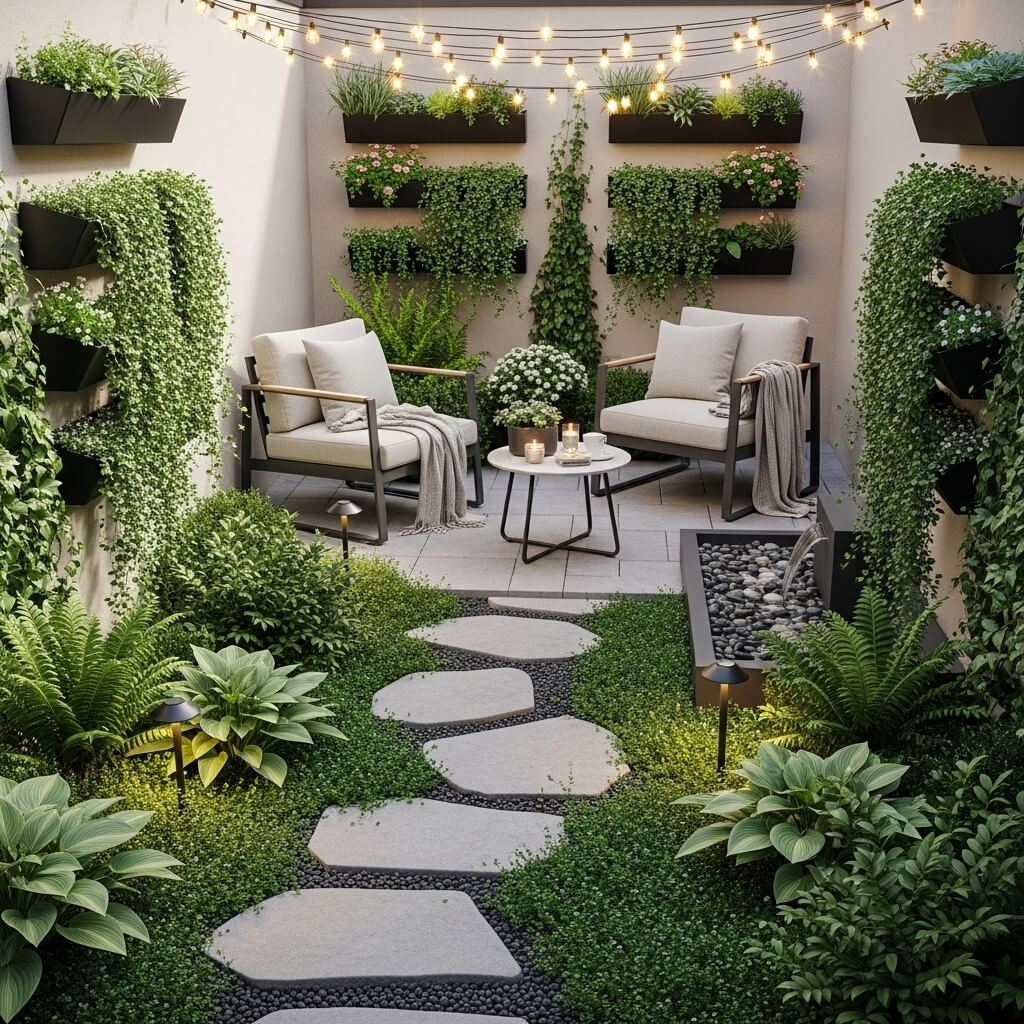
Ever looked at your tiny backyard and thought, “Well, I guess a single potted plant is my destiny?” Stop right there. Small backyards are like studio apartments—they just need smarter planning than their larger counterparts.
The secret to maximizing a small backyard lies in creating distinct zones. I learned this the hard way after cramming everything into one chaotic corner and ending up with what looked like a botanical traffic jam. Break your space into purposeful areas: a dining spot, a planting zone, and maybe a cozy reading nook.
Layering is your best friend when you’re working with limited square footage. Think vertical—use trellises, hanging planters, and wall-mounted containers to draw the eye upward. This trick makes your space feel bigger while giving you more planting real estate. I installed a simple wooden trellis last spring, and honestly? It transformed my cramped patio from “meh” to “magazine-worthy” (okay, maybe I’m exaggerating, but you get the point).
Here’s what works brilliantly in small backyards:
- Corner planting beds that follow your fence line and leave the center open
- Multi-functional furniture like storage benches that double as seating
- Mirrors strategically placed to create the illusion of depth (sounds weird, looks amazing)
- Light-colored paving to make the area feel more spacious
- One statement tree or large plant as a focal point instead of dozens of random plants
The biggest mistake I see people make? Trying to shrink everything down. Instead of using tiny furniture and miniature plants, go bold with a few well-chosen pieces. A medium-sized tree in a beautiful container beats twenty random shrubs every single time.
Modern Minimalist Garden Design Ideas
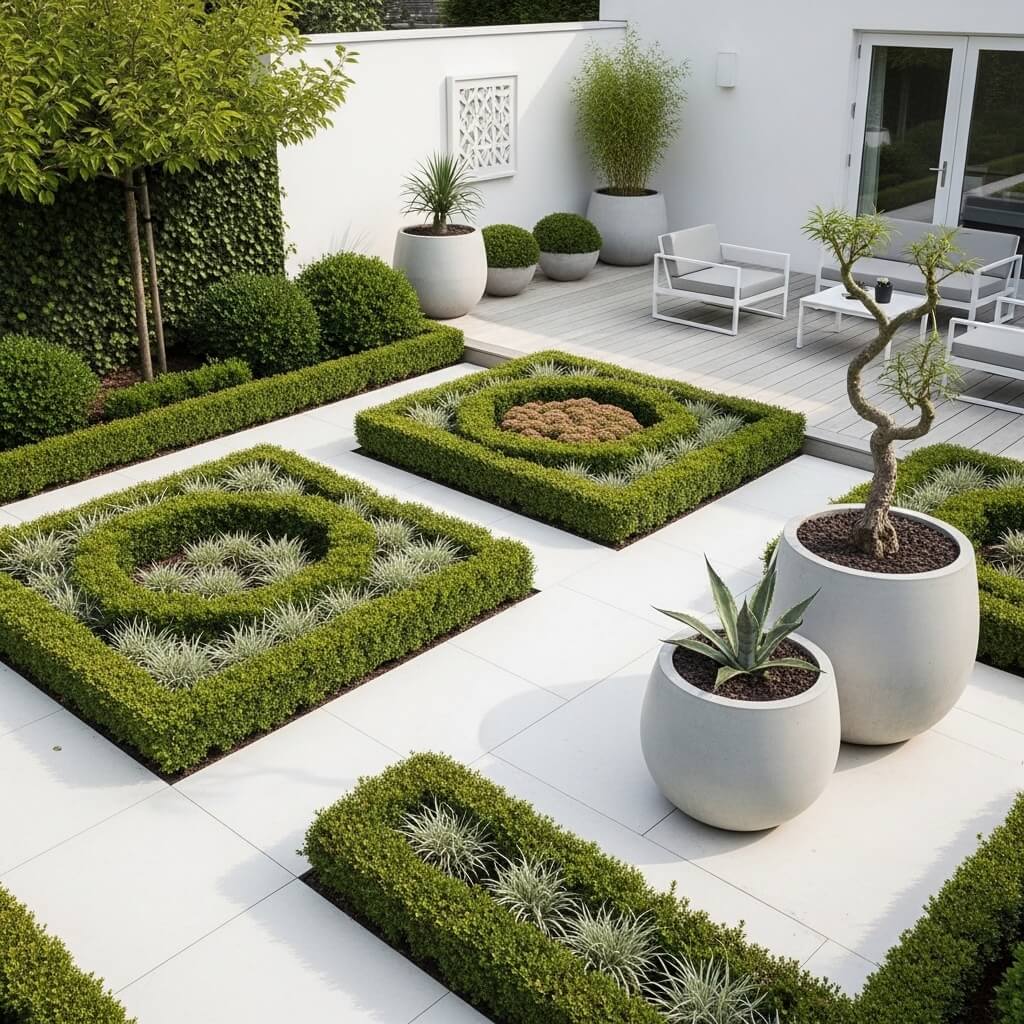
Minimalist gardens are perfect for people who want that “I have my life together” aesthetic without spending every weekend pruning and fussing. Clean lines, limited color palettes, and intentional empty space—that’s the formula.
I’ll be honest: when I first heard about minimalist gardens, I thought they’d look boring. I was completely wrong. There’s something incredibly calming about a space that doesn’t assault your senses with visual clutter. Your brain actually gets to relax instead of processing seventeen different plant varieties and a random garden gnome collection.
The foundation of minimalist garden design rests on geometric shapes and repetition. Think rectangular raised beds, perfectly aligned pathways, and plants grouped in odd numbers (three or five of the same species look intentional; four looks like you couldn’t commit). Use materials like concrete, steel, and smooth wood to reinforce that contemporary vibe.
Key elements that nail the minimalist look:
- Monochromatic or limited color schemes (whites, greens, and maybe one accent color)
- Gravel or decomposed granite instead of traditional lawns
- Sculptural plants like ornamental grasses, agaves, or Japanese maples
- Built-in seating that flows with the hardscape
- Subtle outdoor lighting that highlights architectural features
FYI, minimalist doesn’t mean lifeless. You’re creating negative space intentionally, which actually makes your chosen plants stand out more dramatically. I replaced my cluttered herb garden with three large planters of identical lavender, and the difference was night and day. Less really can be more.
Cozy Cottage Style Garden Ideas
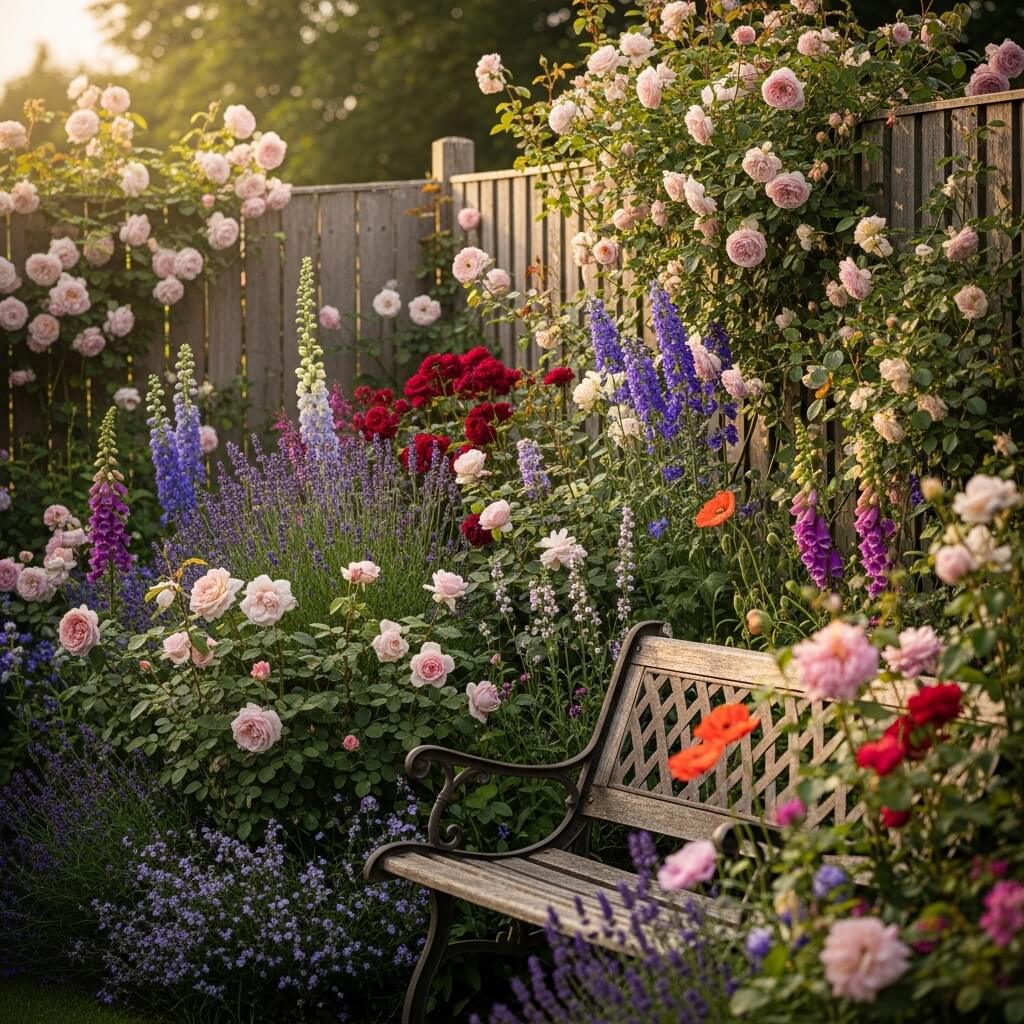
Want your garden to look like it belongs in the English countryside? Cottage gardens are the complete opposite of minimalism, and I love them for entirely different reasons. They’re romantic, slightly chaotic, and unapologetically abundant.
The beauty of cottage-style gardens lies in their organized chaos—everything looks natural and overgrown, but there’s actually a method to the madness. You’re aiming for that “grandmother’s secret garden” vibe where flowers spill over pathways and climbing roses frame every vertical surface.
Mixing edibles with ornamentals is classic cottage garden strategy. Tuck strawberry plants between your roses, let thyme creep between paving stones, and plant hollyhocks next to your tomatoes. Who says gardens need to choose between pretty and productive? (Spoiler: nobody who actually gardens.)
My cottage garden essentials include:
- Climbing plants galore: roses, clematis, honeysuckle, sweet peas
- Traditional cottage flowers: foxgloves, delphiniums, lavender, peonies
- Curved pathways made from brick, stone, or gravel
- Vintage containers and rustic accessories (old watering cans, weathered benches)
- Self-seeding annuals that pop up in unexpected places
The trick is creating layers—tall plants at the back, medium in the middle, low growers spilling onto paths. This creates that lush, overflowing feeling without actually turning your garden into an impenetrable jungle. And yes, you’ll need to do more maintenance than with minimalist designs, but if you love puttering around your plants (guilty!), that’s more feature than bug.
Also Read: 10 Beautiful Glass Wall Partition Design Ideas for Elegant Homes
Budget-Friendly DIY Garden Makeover Ideas
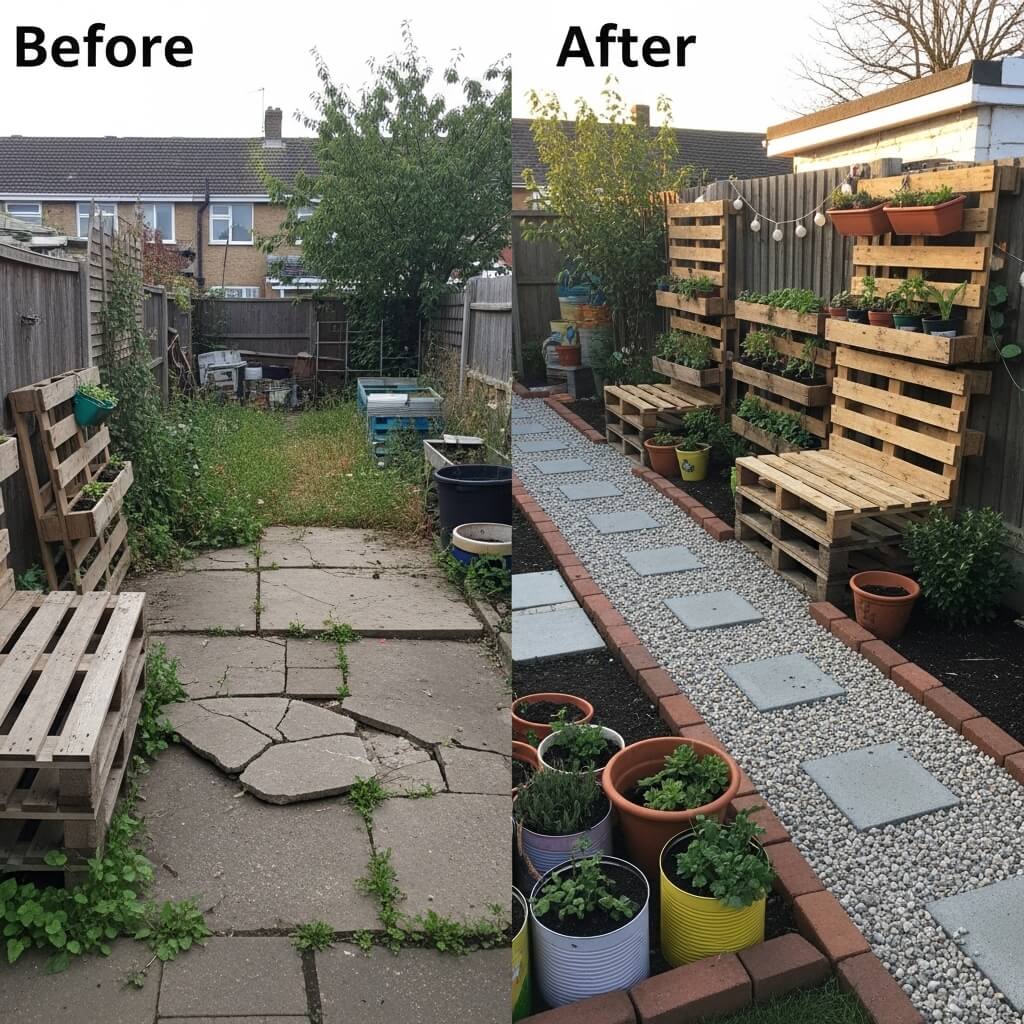
Let me guess—you’ve watched those garden transformation shows where they casually drop thousands of dollars on outdoor furniture alone? Yeah, that’s not happening in my world either. The good news? You can dramatically improve your garden without refinancing your house.
I’ve renovated my garden three times on what I call a “broke but creative” budget, and each time people asked who my landscaper was 🙂 The secret is prioritizing impact over expense and embracing DIY projects that look custom but cost practically nothing.
Mulch is criminally underrated for budget makeovers. A fresh layer instantly makes everything look intentional and cared-for, plus it suppresses weeds and retains moisture. I spent about fifty bucks on mulch last year and the transformation looked like I’d hired a professional crew. Bark chips, wood mulch, or even pea gravel if you’re going for a modern look—pick your poison and spread it thick.
Budget-friendly garden upgrades that actually work:
- Paint everything: Old pots, tired fences, concrete planters—a coat of outdoor paint works miracles
- Create pathways with free materials: Use reclaimed bricks, broken concrete pieces (mosaic style), or wood rounds from fallen trees
- Propagate your own plants: Take cuttings from friends’ gardens or divide perennials
- Make your own compost: Free soil amendment that improves everything
- Upcycle pallets: Turn them into vertical planters, potting benches, or furniture
- Collect free plants: Check local “buy nothing” groups, plant swaps, and end-of-season clearance sales
The biggest money-saver, IMO? Patience. Buying small plants and letting them grow costs a fraction of instant mature specimens. Your garden won’t look Instagram-ready immediately, but in two years you’ll have saved hundreds while getting the same result.
Vertical Garden Ideas for Small Spaces
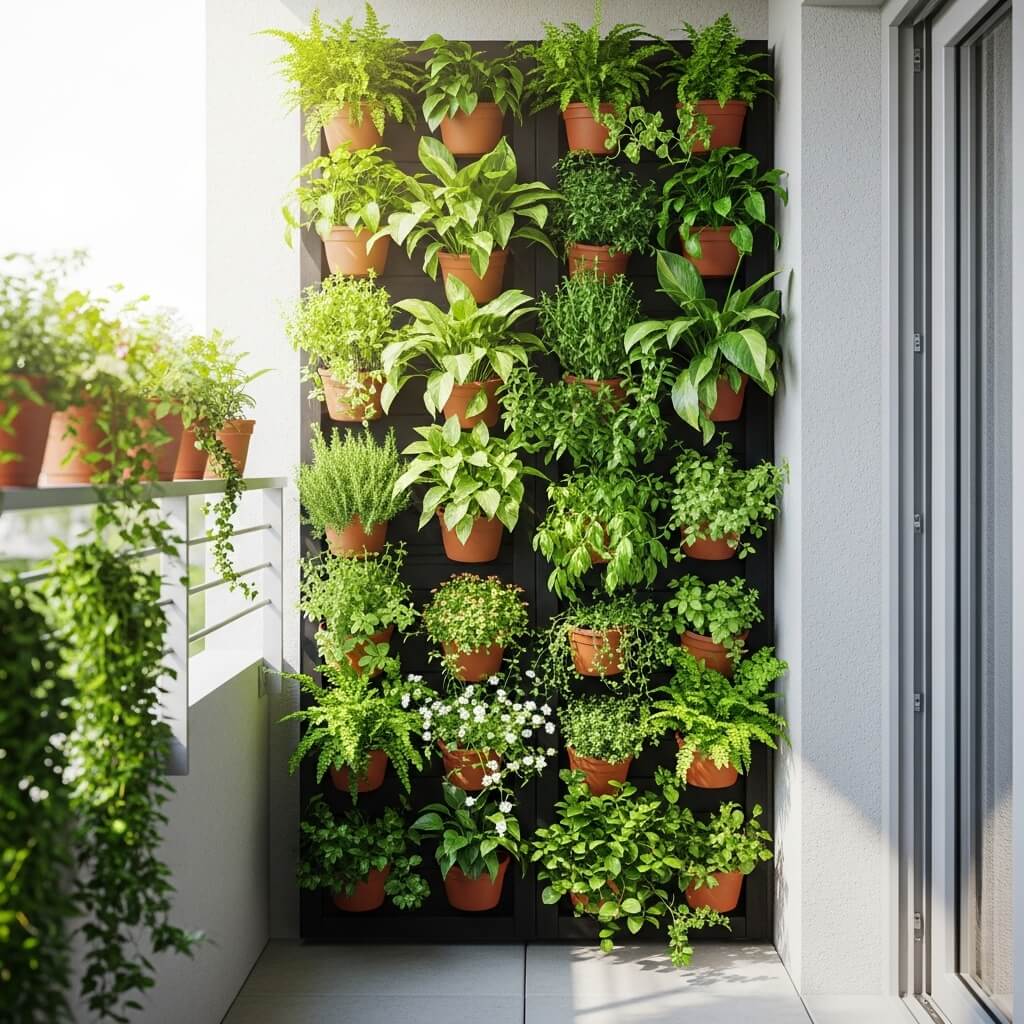
No ground space? No problem. Vertical gardening is like discovering you’ve had a whole extra room you didn’t know about. I started vertical gardening out of desperation when I realized my tiny patio couldn’t accommodate another horizontal surface, and honestly, I’m never going back.
Walls are underutilized real estate in most gardens. Think about it—you’ve got all these vertical surfaces just hanging out doing nothing while you’re cramming plants onto every horizontal inch. Walls can support living plant walls, hanging pockets, mounted containers, and climbing structures.
The simplest vertical garden? A basic trellis with climbing plants. But you can get way more creative than that. I installed a gutter garden on my fence last year (literally rain gutters mounted horizontally and filled with shallow-rooting plants), and it’s become my favorite garden feature. Cost me about twenty bucks and an afternoon of work.
Vertical garden systems that actually deliver:
- Pocket planters: Fabric or felt wall hangings with built-in pockets for plants
- Stacked containers: Tiered pot arrangements or purpose-built vertical planters
- Repurposed pallets: Attach landscape fabric to the back, fill with soil, plant the gaps
- Hanging gutters or pipes: Perfect for herbs and strawberries
- Living walls: Modular systems or DIY frames with chicken wire and moss
- Ladder shelves: Leaning or standing, perfect for container displays
Here’s what I’ve learned about vertical gardening: irrigation is crucial. Plants in vertical arrangements dry out faster than ground-level beds because of increased air circulation and drainage. I installed a simple drip irrigation system with a timer, and it’s saved my vertical gardens (and my sanity) during summer.
Zen Garden Design Ideas for Relaxation
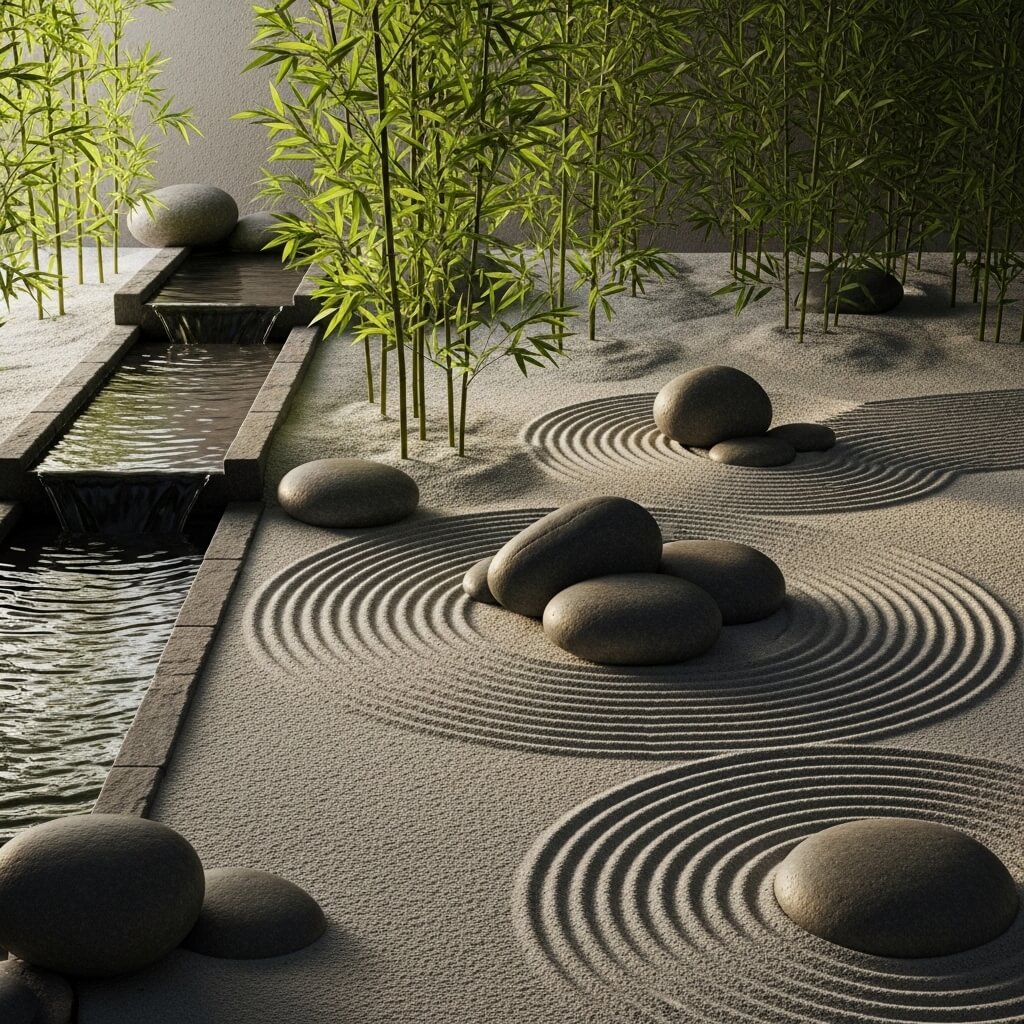
Want to create a space that makes you exhale the second you step into it? Zen gardens specialize in tranquility. These Japanese-inspired designs focus on simplicity, natural materials, and mindful placement of every element.
The philosophy behind Zen gardens is about representing nature in its essential form—no clutter, no chaos, just elements arranged to promote calm and contemplation. Before you roll your eyes thinking this sounds too woo-woo, hear me out. I created a small Zen corner in my backyard, and I actually use it for morning coffee instead of scrolling my phone. That’s saying something.
Traditional Zen gardens use rocks, gravel, and minimal plants to create meditative landscapes. You don’t need a huge space—even a small corner can become a contemplative retreat. The raked gravel patterns represent water, rocks symbolize islands or mountains, and the careful placement of each element creates balance.
Essential Zen garden components:
- Smooth stones or gravel that you can rake into patterns
- Larger rocks carefully placed as focal points (odd numbers, never symmetrical)
- Bamboo elements: fencing, water features, or accent pieces
- Minimalist plant selection: Japanese maples, bamboo, moss, simple evergreens
- Water features: A bamboo fountain or stone basin (tsukubai)
- Simple wooden elements: Bench, stepping stones, or a small bridge
You don’t need to recreate a traditional Japanese temple garden. I borrowed Zen principles—minimalism, natural materials, careful arrangement—and applied them to my own style. The result feels peaceful without looking like I’m appropriating someone’s cultural heritage. The goal is creating space that quiets your mind, whatever that looks like for you.
Also Read: 10 Stunning TV Partition Wall Ideas for Modern Homes
Outdoor Seating Garden Design Ideas
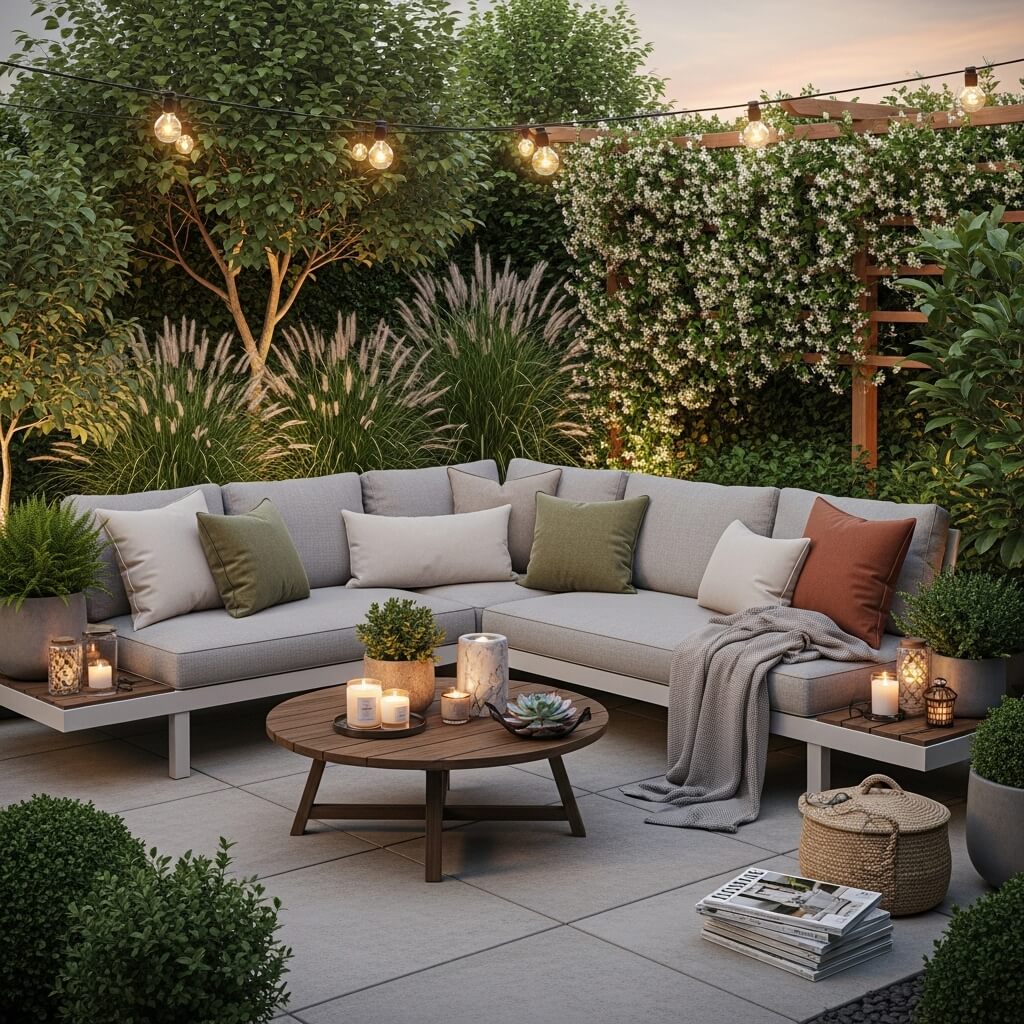
Real talk: what’s the point of a beautiful garden if you never actually sit in it? I spent my first year gardening so focused on plants that I never created a comfortable spot to enjoy them. Rookie mistake. Seating areas transform gardens from decorative spaces into actual living spaces.
The best garden seating feels intentional and inviting. You’re not just plopping random chairs onto grass and calling it done. Think about purpose—do you want morning coffee for one, intimate dinner for two, or weekend entertaining for groups? Your answer shapes what you build.
I’ve found that multiple small seating areas work better than one large space in most gardens. A bench tucked into a shaded corner serves different purposes than a dining table on a sunny patio. Creating variety gives you options depending on weather, time of day, and mood.
Seating design ideas that create atmosphere:
- Built-in benches: Use retaining walls, raised beds, or deck edges as seating perimeters
- Conversation circles: Arrange seats facing each other around a fire pit or focal point
- Swing or hanging chair: Adds movement and instant charm
- Window seat style: A bench against a wall or fence with cushions and pillows
- Dining setup: Table and chairs for outdoor meals (my personal favorite)
- Hammock zone: String one between trees or install posts
Overhead coverage changes everything. A pergola, umbrella, or even a large tree canopy makes seating areas usable in more weather conditions. I added a simple shade sail over my seating area, and suddenly I could use the space during midday summer instead of just morning and evening.
Low Maintenance Garden Design Ideas
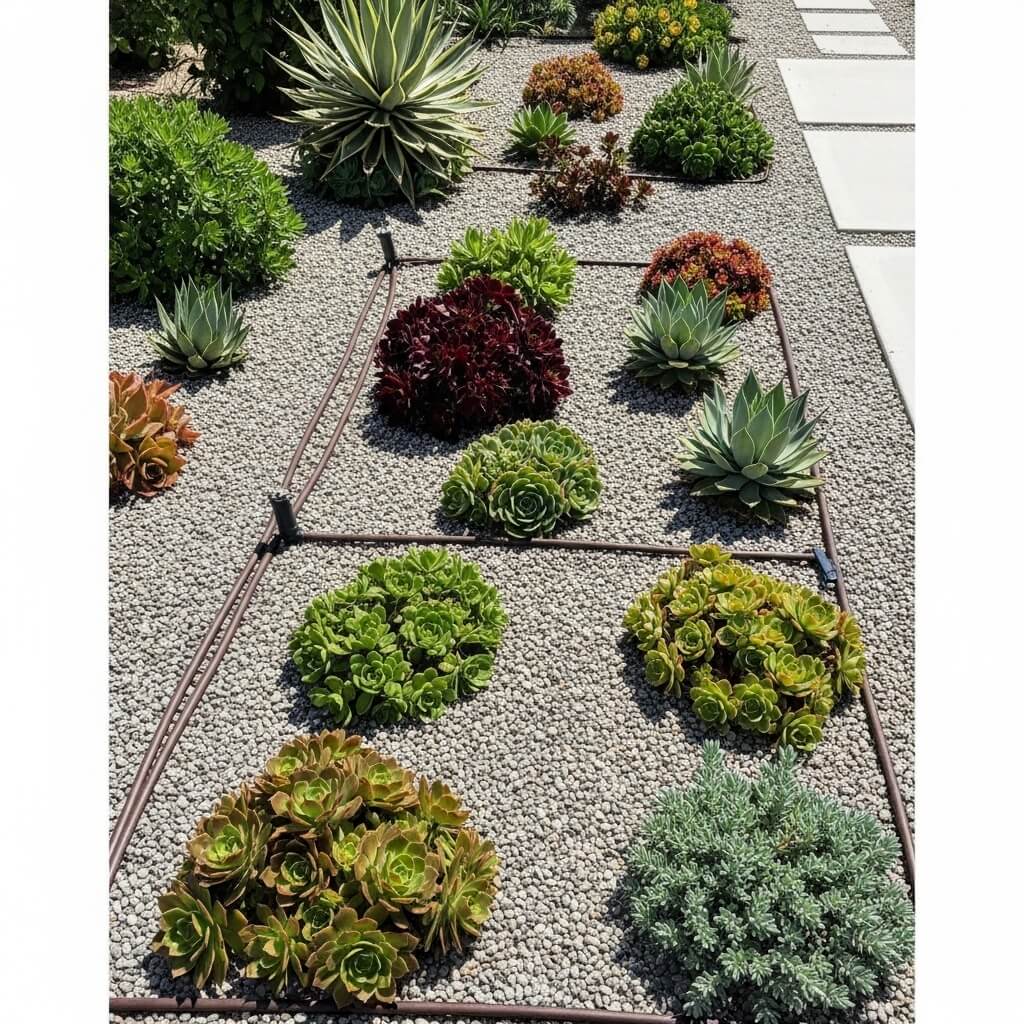
Let me share an unpopular opinion: high-maintenance gardens are overrated. There, I said it. Unless gardening is your primary hobby and greatest joy, you probably want a beautiful space that doesn’t demand constant attention. Low-maintenance doesn’t mean low-impact—it means smart design choices.
The secret to low-maintenance gardens is front-loading the work. You invest more time upfront in planning, soil preparation, and plant selection, then coast on those smart decisions for years. I redesigned my side yard using low-maintenance principles, and I’ve cut my garden chores by at least 60%. That’s 60% more time for actually enjoying the space instead of servicing it.
Choose the right plants and you’ll do half the maintenance you’re currently doing. Native plants adapted to your climate need less water, fewer amendments, and minimal pest control. Perennials come back year after year without replanting. Evergreen shrubs provide year-round structure without seasonal cleanup.
Low-maintenance design strategies:
- Eliminate or minimize lawns: Replace grass with groundcovers, gravel, or mulched beds
- Install drip irrigation: Automated watering systems save time and water
- Use landscape fabric and mulch: Suppresses weeds dramatically
- Choose slow-growing plants: Less pruning and shaping required
- Group plants by water needs: Makes irrigation planning simpler
- Go native: Plants adapted to your region require minimal intervention
- Hardscaping over planting: Patios, pathways, and gravel areas need zero maintenance
Here’s something nobody tells beginners: garden size matters less than plant choice for maintenance levels. A small garden full of finicky roses requires more work than a large space planted with tough native perennials. Choose lazy plants for a lazy (or just busy) gardener lifestyle.
Front Yard Curb Appeal Garden Ideas
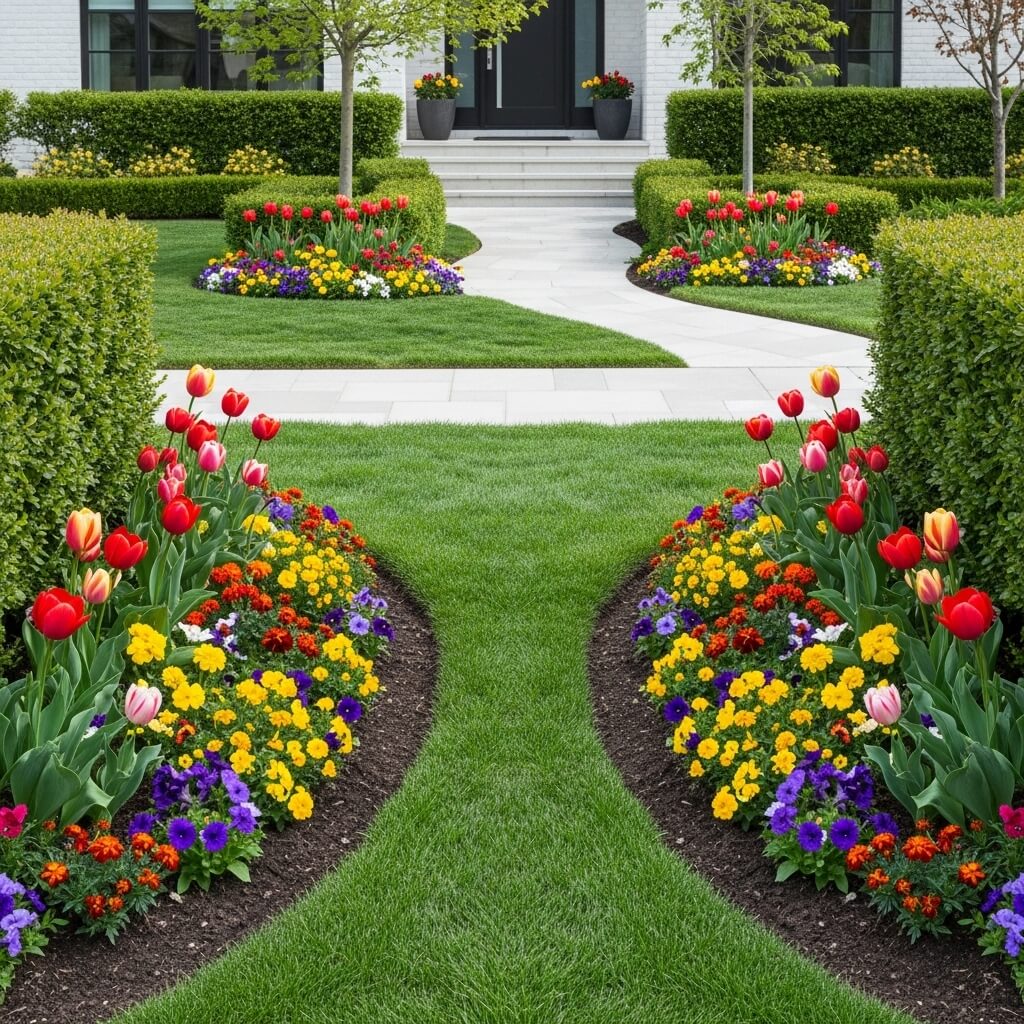
Your front yard is basically your home’s first impression, and we all know you never get a second chance at that. But here’s the thing—maximizing curb appeal doesn’t require complicated schemes. You just need to understand a few key principles.
Symmetry and framing work magic on front yards. Our brains find balanced, framed entrances naturally appealing. Matching plants on either side of your front door, a clear pathway leading to the entrance, and well-defined planting beds create instant polish. I once helped a friend add two identical boxwoods flanking her doorway, and the difference was shocking for such a simple change.
The other secret weapon? Foundation plantings that connect your house to the landscape. Bare walls meeting bare lawn look unfinished, like your house just landed from space. Shrubs and perennials that follow your home’s foundation create visual flow and make everything look intentional.
Curb appeal upgrades that deliver maximum impact:
- Define your pathway: Edge it clearly, resurface if needed, make it impossible to miss
- Add porch or entrance planters: Frame your door with seasonal containers
- Layer your planting beds: Tall in back, medium in middle, low in front
- Include evergreens: Maintain structure and color year-round
- Upgrade your mailbox area: Surround it with attractive plants
- Lighting: Illuminate pathways and focal points for evening appeal
- Maintain obsessively: Keep edges crisp, mulch fresh, and plants trimmed
The biggest mistake I see? People treating their front yard like a showcase garden with high-maintenance annuals that need constant refreshing. Choose durable perennials and shrubs that look good across seasons without weekly intervention. Save the fussy flowers for your backyard where you can baby them without public pressure :/
Also Read: 10 Elegant PVD Partition Design Ideas Stylish Home Upgrades
Balcony Garden Design Ideas
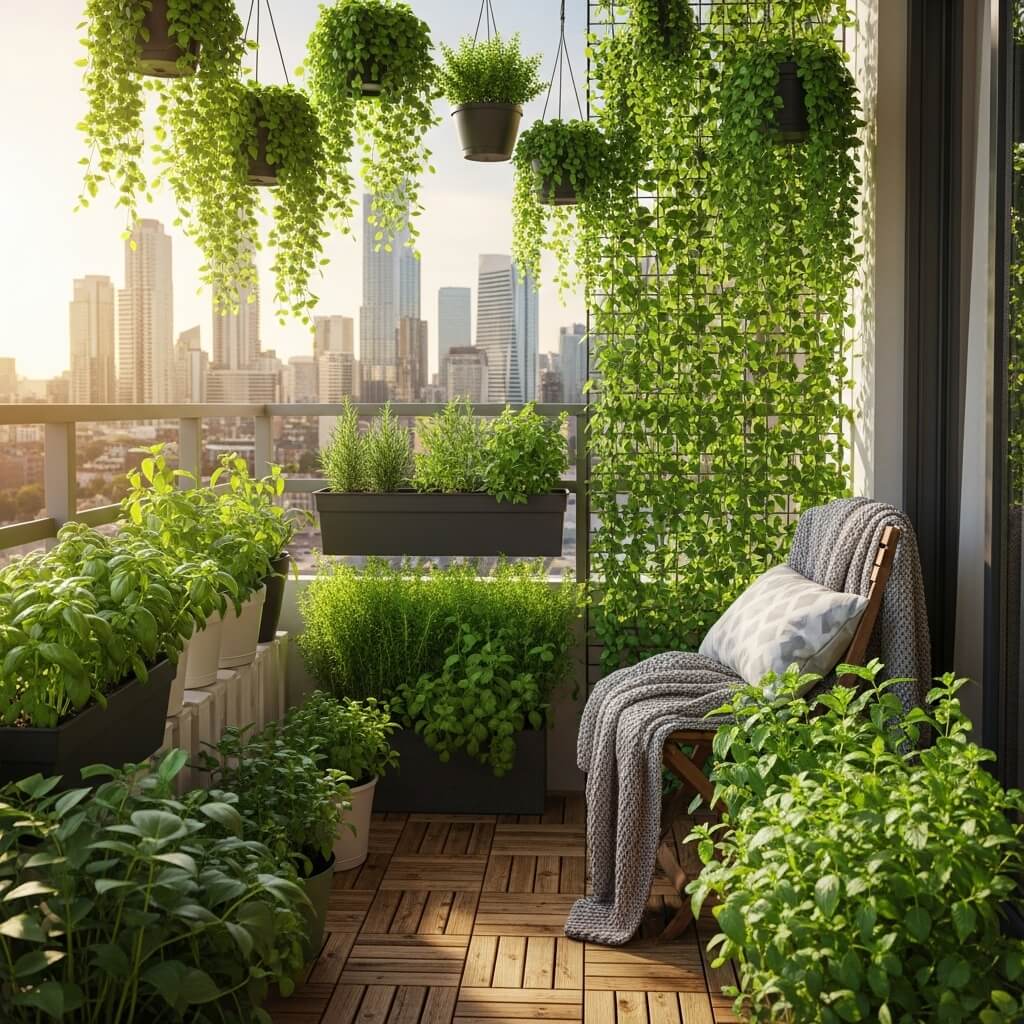
Balcony gardening is its own special challenge—you’re dealing with limited space, weight restrictions, wind exposure, and usually zero ground access. But you know what? Some of my favorite gardens I’ve created have been on balconies. The constraints force creativity.
Weight is your primary consideration on balconies. Before you load up on pots and soil, check your balcony’s weight capacity. Use lightweight potting mix (not garden soil), fiberglass or resin containers instead of ceramic, and distribute weight around the perimeter rather than concentrating it in one area.
I learned about wind exposure the hard way when my first balcony garden got demolished by a summer storm. Secure everything. Stake tall plants, anchor containers, and choose sturdy varieties that won’t shred in wind. Small-leaved, flexible plants handle balcony conditions better than large-leaved tender specimens.
Balcony garden essentials:
- Railing planters: Maximize space by hanging containers on railings
- Vertical arrangements: Wall-mounted planters, trellises, hanging baskets
- Folding furniture: Stow away when you need space, pull out when entertaining
- Container diversity: Mix sizes and heights for visual interest
- Privacy screens: Bamboo, lattice, or tall plants create seclusion from neighbors
- Mobile containers: Wheels let you rearrange and chase sunlight
Microclimate matters more on balconies than ground-level gardens. That sunny southern exposure might be perfect, or it might turn into a solar oven that crisps your plants by July. I installed a shade cloth on my west-facing balcony, and suddenly my plants stopped looking like they’d been through a desert survival course. Pay attention to your specific conditions and adapt accordingly.
Look, creating a serene nature corner doesn’t require perfection or a massive budget. You just need to pick a design direction that resonates with you, start with the basics, and build from there. Some of these ideas will speak to you, others won’t—that’s completely fine.
The most important thing? Start somewhere. My first garden attempts were objectively terrible, but each one taught me what worked and what didn’t in my specific space with my specific lifestyle. You’ll figure out your style through experimentation, not by waiting for perfect knowledge.
Your outdoor space should reduce stress, not create it. Choose the approach that excites you, matches your maintenance capacity, and fits your budget. Whether that’s a minimalist balcony corner or a lush cottage garden depends entirely on what makes you happy. And honestly, that’s the only metric that really matters.
Now grab some gloves and get started—your serene nature corner is waiting.