10 Stunning TV Partition Wall Ideas for Modern Homes
- Partition Design
 Ben
Ben- 0
- 33 minutes read
Look, I’ll be honest with you—when I first heard about TV partition walls, I thought they were just another design fad that would fade away faster than fidget spinners. Boy, was I wrong! These bad boys completely transformed my living space from a cramped, awkward layout into something that actually makes sense. And trust me, if you’re struggling with an open floor plan that feels more chaotic than cozy, you need to hear about these game-changing ideas.
TV partition walls solve a problem most of us didn’t even know we had. They create natural room divisions without blocking light or making your space feel like a series of tiny boxes. Plus, they give your TV a dedicated home that looks intentional instead of just… there. So let’s talk about ten absolutely stunning partition wall ideas that’ll make your friends ask, “Wait, did you hire an interior designer?”
Floating TV Partition Wall with Hidden Storage
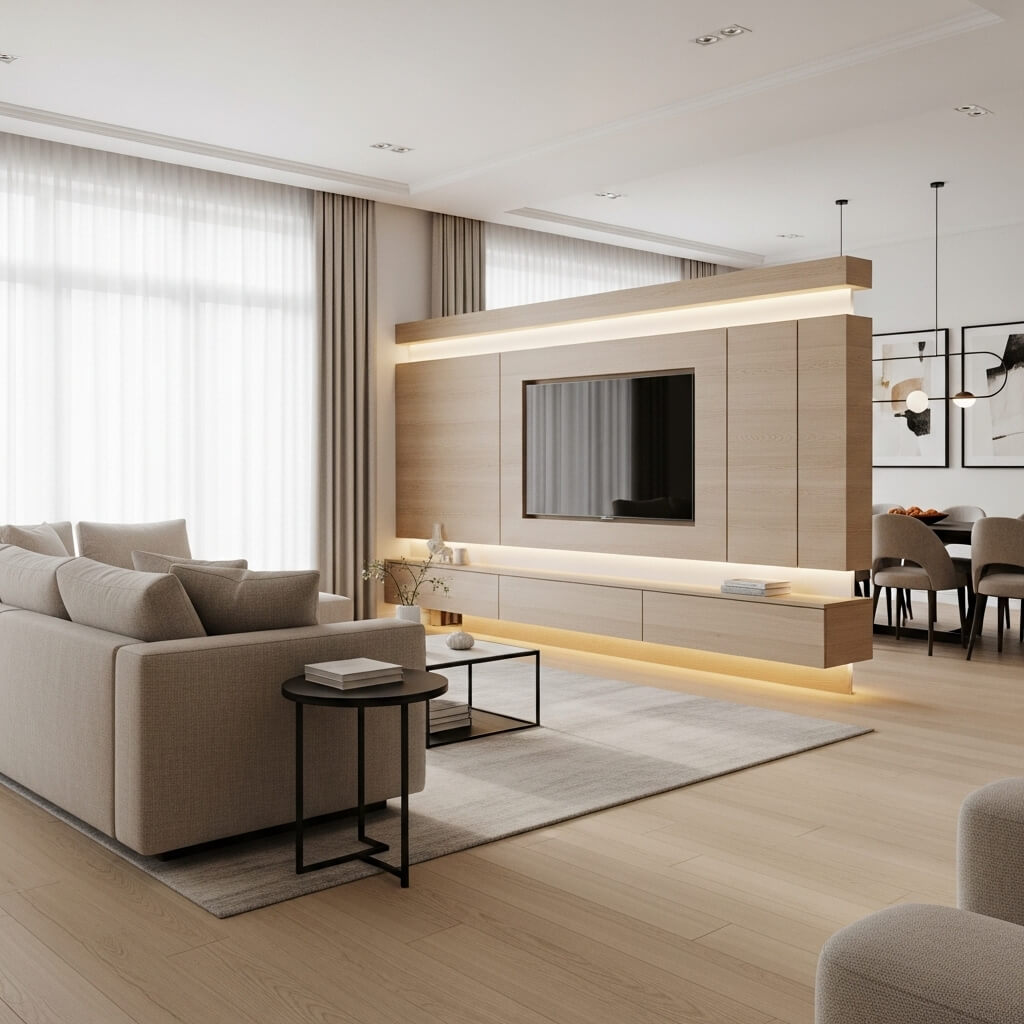
Ever looked at your living room and thought, “Where the heck am I supposed to hide all this stuff?” Yeah, me too. That’s exactly why floating TV partition walls with hidden storage became my obsession.
Here’s the deal: these walls literally float between your living room and dining area (or bedroom—whatever works for you). The TV mounts on one side while clever storage compartments hide behind sleek cabinet doors. I installed one last year, and honestly, it’s like having a magic trick in your home. Guests see a minimalist, clean partition wall, but you know there’s a whole universe of storage hiding remotes, cables, gaming controllers, and all that random stuff you don’t want on display.
The best part? You can customize the storage configuration based on what you actually need. Want drawers for DVDs? Done. Need shelves for your vinyl collection? Easy. The floating design keeps floor space clear, which makes your room look bigger and (bonus!) makes vacuuming way less annoying.
Here’s what makes these walls work so well:
- Weight distribution: Proper installation uses strong wall anchors and metal frames
- Cable management: Built-in channels keep wires completely hidden
- Accessibility: Storage opens from the back or sides
- Customization: You choose depths, widths, and internal configurations
One thing I learned the hard way—don’t cheap out on the mounting hardware. Seriously. Your TV and all that hidden storage create significant weight, and you don’t want that crashing down at 2 AM. Trust me on this one.
Wooden Slat TV Divider Wall for Modern Living Rooms
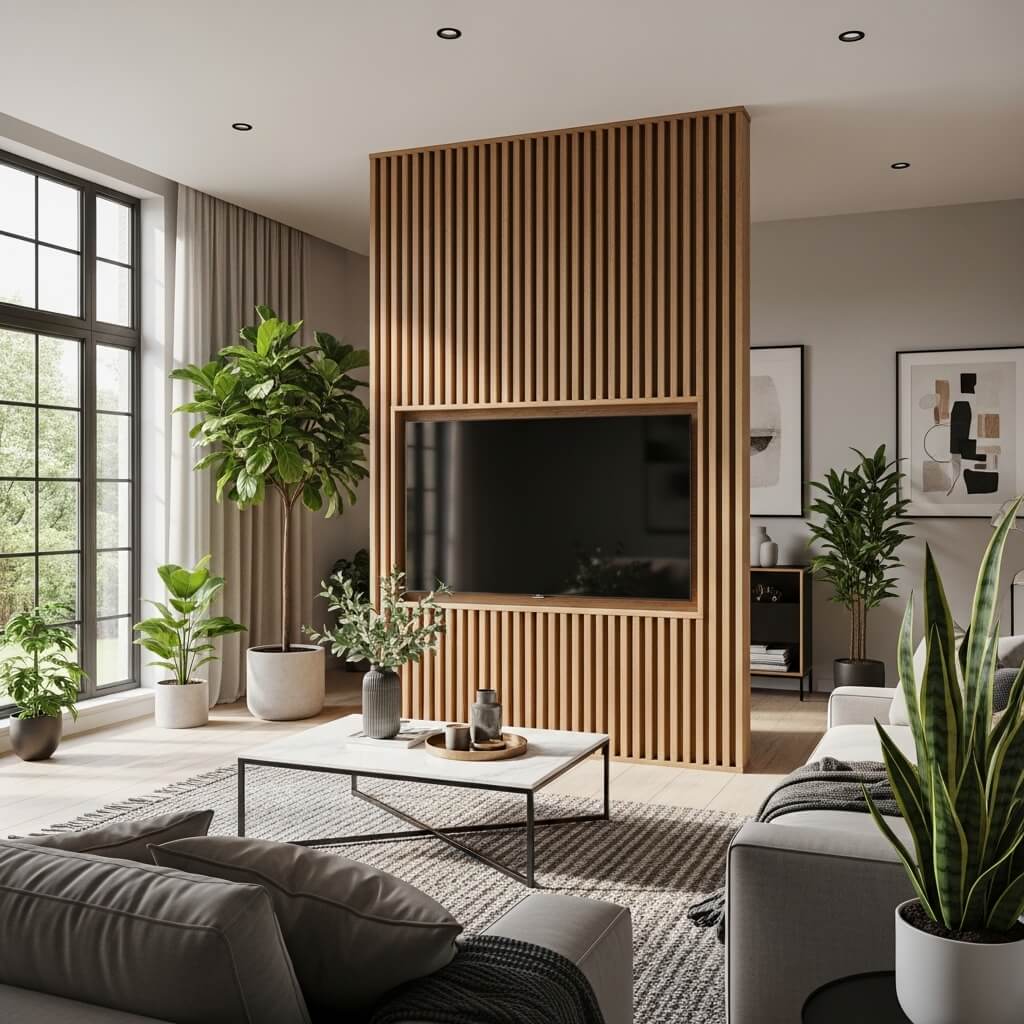
Wooden slat walls are everywhere right now, and honestly? I get why. They bring warmth to modern spaces without looking like your grandma’s wood-paneled basement from 1978.
I chose vertical slats for my own space (horizontal works too, but vertical makes ceilings look taller). The genius of this design lies in what it doesn’t do—it doesn’t completely block sightlines or airflow. You get privacy and division without that closed-off feeling. The spacing between slats lets light filter through while still creating a clear boundary between spaces.
Here’s my take on wood choices:
- Walnut: Rich, dark, sophisticated (but pricey—ouch)
- Oak: Classic, versatile, ages beautifully
- Pine: Budget-friendly, lighter color palette
- Teak: Durable, gorgeous grain patterns
The TV mounts directly to the slat wall, and you can run LED strips between the slats for a killer backlit effect. FYI, this creates an amazing ambient glow for movie nights that doesn’t blast your eyes like overhead lighting does.
One challenge? Dust. Those slats collect dust like it’s their job. But honestly, a quick weekly pass with a microfiber duster keeps things looking fresh. Small price to pay for something that looks this good.
Glass Partition TV Wall for Open Concept Spaces
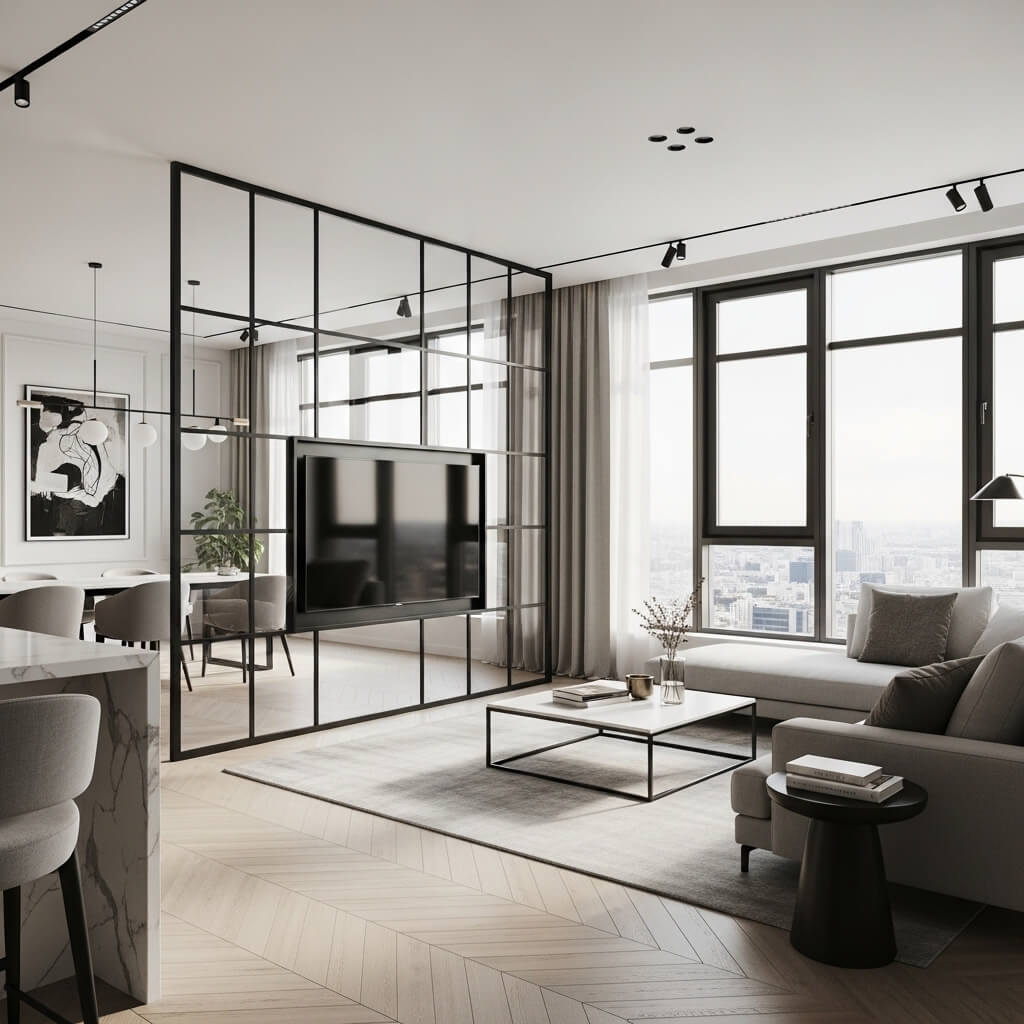
Okay, glass partition walls aren’t for everyone. Some people think they’re too cold or sterile. But hear me out—when you nail the execution, these things are absolutely stunning.
I visited my friend’s loft last month, and she installed a frosted glass partition with the TV mounted on a sleek metal frame. The glass doesn’t completely block the view (you can still see shapes and movement), but it creates enough separation that her bedroom area feels private from the living space. The whole setup screams modern luxury without requiring you to actually be wealthy 🙂
Glass partition benefits you should know:
- Light transmission: Natural light flows through both spaces
- Visual expansion: Transparent materials make rooms feel larger
- Sound dampening: Thicker glass reduces noise transfer
- Easy cleaning: A squeegee and glass cleaner = done
You’ve got options with glass types too. Clear glass offers maximum visibility. Frosted or textured glass provides privacy. Tinted glass adds a sophisticated vibe and reduces glare on your TV screen. I’m personally partial to the frosted route—it’s that sweet spot between openness and privacy.
The installation requires professional help unless you’re seriously handy. We’re talking tempered glass panels that weigh a ton and need precise measurements. Not exactly a weekend DIY project for most of us.
Also Read: 10 Elegant PVD Partition Design Ideas Stylish Home Upgrades
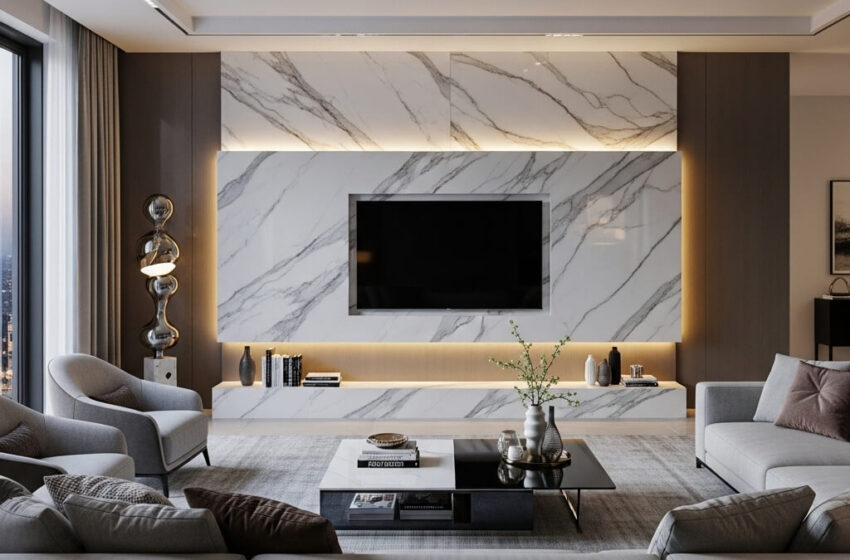
Marble Accent TV Partition Wall with Backlighting
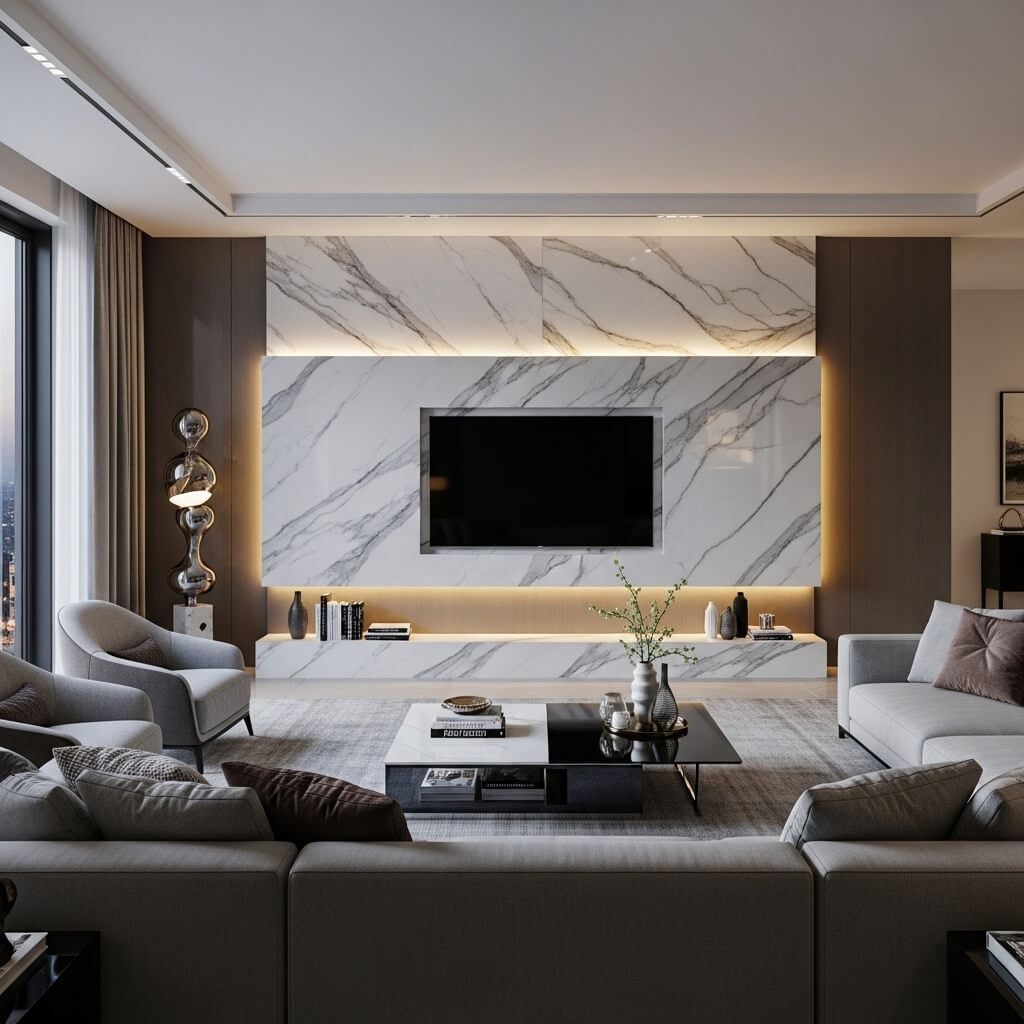
Want to feel fancy every single day? Marble accent walls will do that for you. I’m talking about that luxury hotel vibe right in your living room.
Now, real marble costs approximately one million dollars (okay, I’m exaggerating, but it’s definitely spendy). The good news? Marble-look porcelain tiles or even high-quality laminates can achieve nearly the same effect for a fraction of the cost. Nobody needs to know your “marble” wall didn’t require a second mortgage.
The real magic happens when you add backlighting. LED strips installed behind the TV or around the partition edges create this gorgeous glow that highlights the marble veining. It transforms the wall from pretty to absolutely breathtaking. I installed warm white LEDs behind mine, and the ambiance it creates during evening hours is chef’s kiss.
Backlighting tips from someone who learned by doing:
- Use LED strips with dimming capabilities (mood control matters!)
- Warm white (2700-3000K) creates cozy vibes
- Cool white (5000K+) feels modern and crisp
- RGB options let you change colors (fun for parties, maybe too much for daily life IMO)
The marble pattern naturally draws the eye, making your TV wall a legitimate focal point. Just balance it out—if your partition is this bold, keep surrounding décor simpler. You don’t want your living room competing with itself.
Minimalist Concrete TV Divider Wall Design
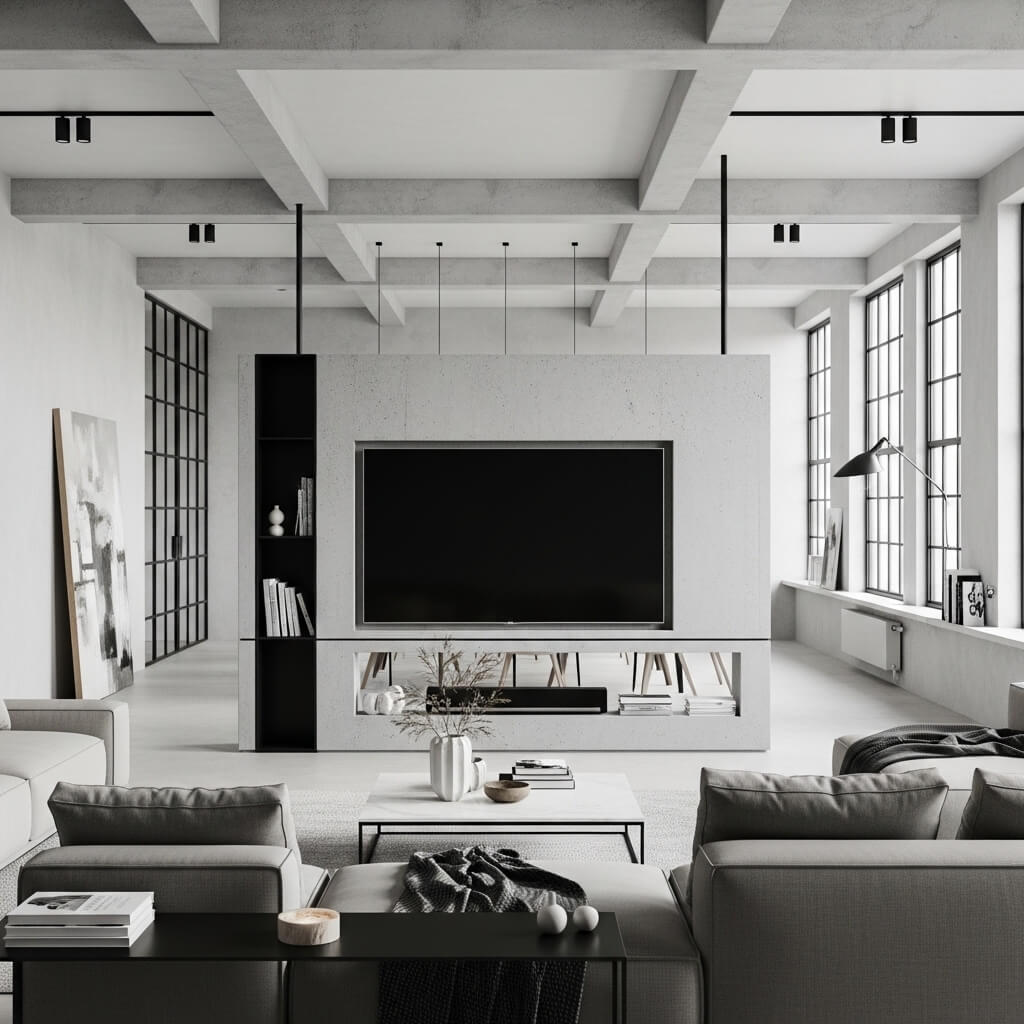
Concrete walls sound industrial and cold, right? That’s what I thought too, until I saw one done properly. Now I’m a total convert.
The minimalist concrete aesthetic works brilliantly for loft apartments, modern homes, or anywhere you want that urban-chic vibe. The raw, unfinished look of concrete creates texture and visual interest without any fussy details. Your TV sits against this bold, statement-making surface that somehow manages to be both edgy and sophisticated.
You don’t need actual poured concrete (thank goodness, because that’s intense). Concrete panels, microcement finishes, or concrete-effect paint can achieve the look. I went with microcement on a drywall base—way easier to work with and significantly lighter than real concrete.
Why concrete partition walls actually work:
- Texture contrast: Smooth furniture pops against rough concrete
- Neutral palette: Gray goes with literally everything
- Low maintenance: Sealed concrete resists stains and damage
- Acoustic benefits: Dense material helps absorb sound
Style this with warm wood furniture, cozy textiles, and plenty of greenery. The contrast between hard concrete and soft, natural elements creates balance that keeps the space from feeling cold. I’ve got a huge fiddle leaf fig next to mine, and the combination is perfect.
Fair warning—concrete looks darker in person than in Pinterest photos. Test samples in your actual lighting before committing to the whole wall. You don’t want surprise dungeon vibes when you’re going for industrial chic.
TV Wall with Built-in Bookshelf Partition
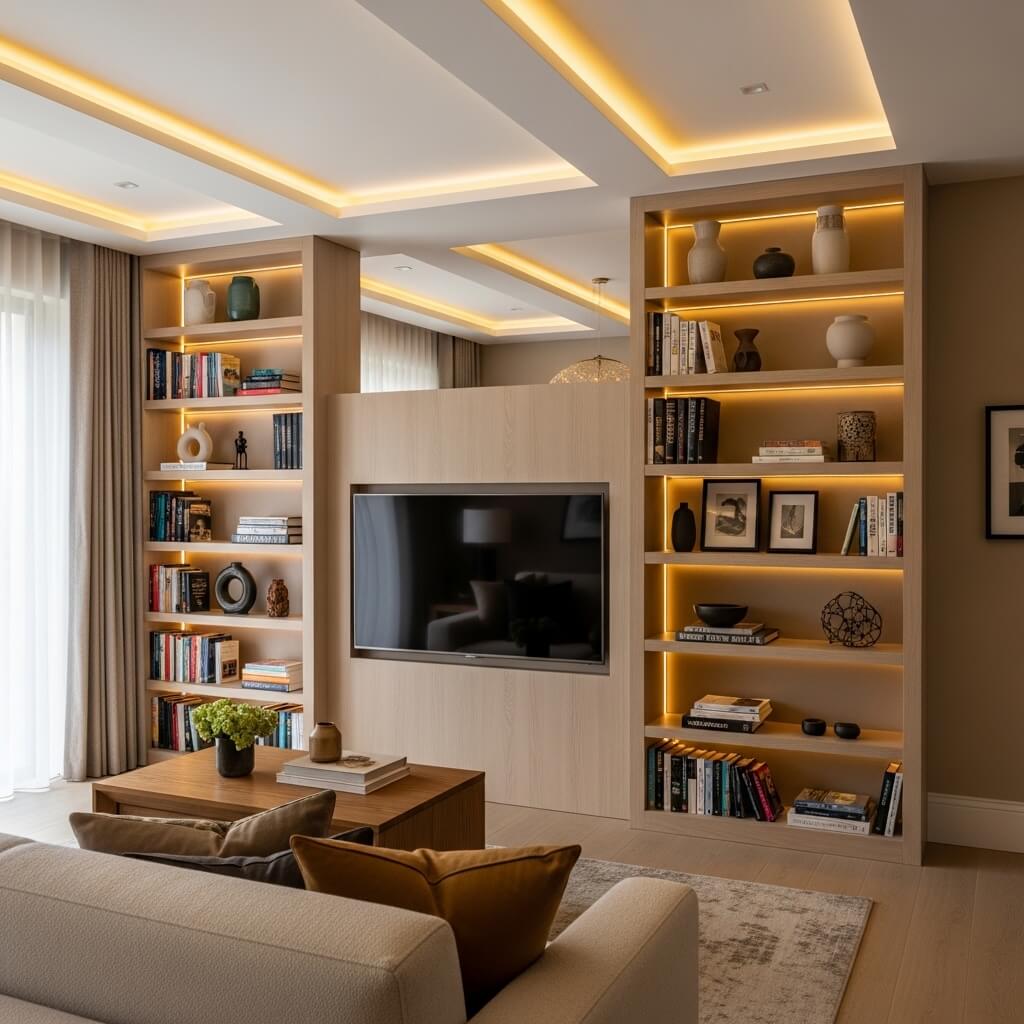
Book lovers, this one’s for you. Combining your TV wall with bookshelf storage is basically winning the functionality lottery.
I designed mine with the TV centered on one side and floor-to-ceiling shelving wrapping around both edges and continuing to the back side. The result? A partition that displays my book collection, houses décor pieces, and gives my TV a proper home. It’s like furniture multitasking at its finest.
The bookshelf portion creates natural division without solid walls. You maintain that open-concept flow while clearly separating spaces. Plus, books add personality—your collection tells a story about who you are in a way that blank walls never could.
Design considerations that matter:
- Depth: Make shelves 10-12 inches deep for standard books
- Spacing: Adjustable shelves adapt to different-sized items
- Weight capacity: Reinforce shelves if you’re a serious book collector
- Backing: Leave the back open for airflow and electrical access
I mixed books with decorative objects, plants, and a few family photos. This breaks up the visual weight and keeps it from looking like a library exploded in your living room. Organizing by color looks amazing in photos, but honestly, I organize by genre because I actually want to find my books :/
One unexpected benefit? The books provide additional sound absorption. Movie nights sound better because the books dampen echo. Who knew your book collection could double as acoustic treatment?
Also Read: 10 Clever Small Partition Design Ideas for Tiny Spaces
360° Rotating TV Partition Wall Design
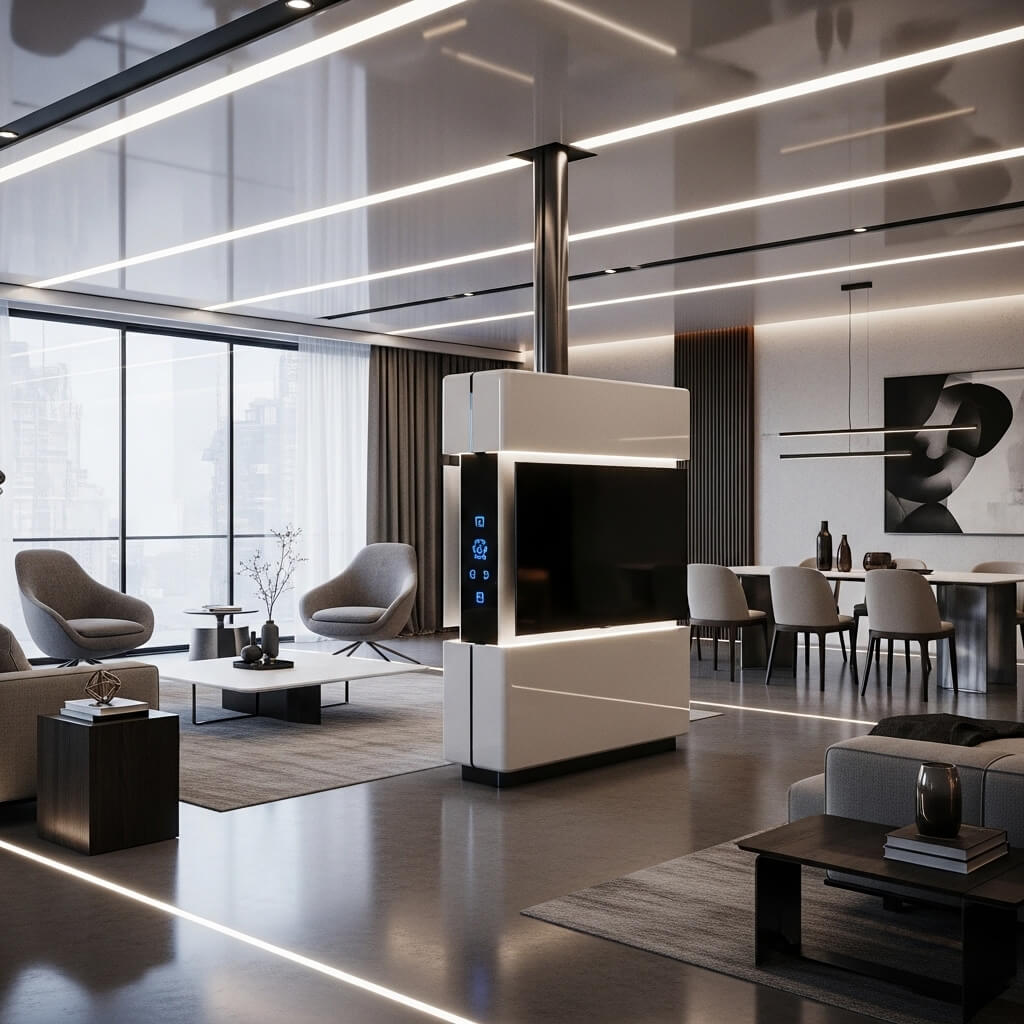
Alright, let’s talk about the coolest (and admittedly most extra) option on this list—the rotating TV partition wall.
Picture this: you’re cooking in the kitchen and want to watch the game. You rotate the TV toward the kitchen. Now you’re relaxing in the living room for movie night. You rotate it back. It’s basically magic, and yes, it absolutely makes you feel like a Bond villain every single time you use it.
I saw this at a showroom and nearly lost my mind. The TV mounts on a central rotating mechanism that allows 360-degree movement. Some designs include storage on the opposite side, while others feature a two-sided panel where you can mount TVs on both faces (seriously fancy).
Here’s what makes these work:
- Swivel base: Heavy-duty rotating mechanism bears the weight
- Cable management: Special channels allow cables to rotate without tangling
- Lock positions: Secure the TV at specific angles
- Motor options: Manual rotation or motorized (for peak laziness)
The motorized versions are incredibly cool but also incredibly expensive. Manual rotation works fine—you literally just push the panel to rotate it. Just make sure your cables have enough slack, or you’ll create a tangled nightmare behind the wall.
This option works best for true open-concept spaces where you actually want TV access from multiple areas. If your layout doesn’t support that functionality, you’re paying for features you won’t use. Be honest about your needs before committing to the rotating life.
Double-Sided TV Unit Partition for Living & Dining
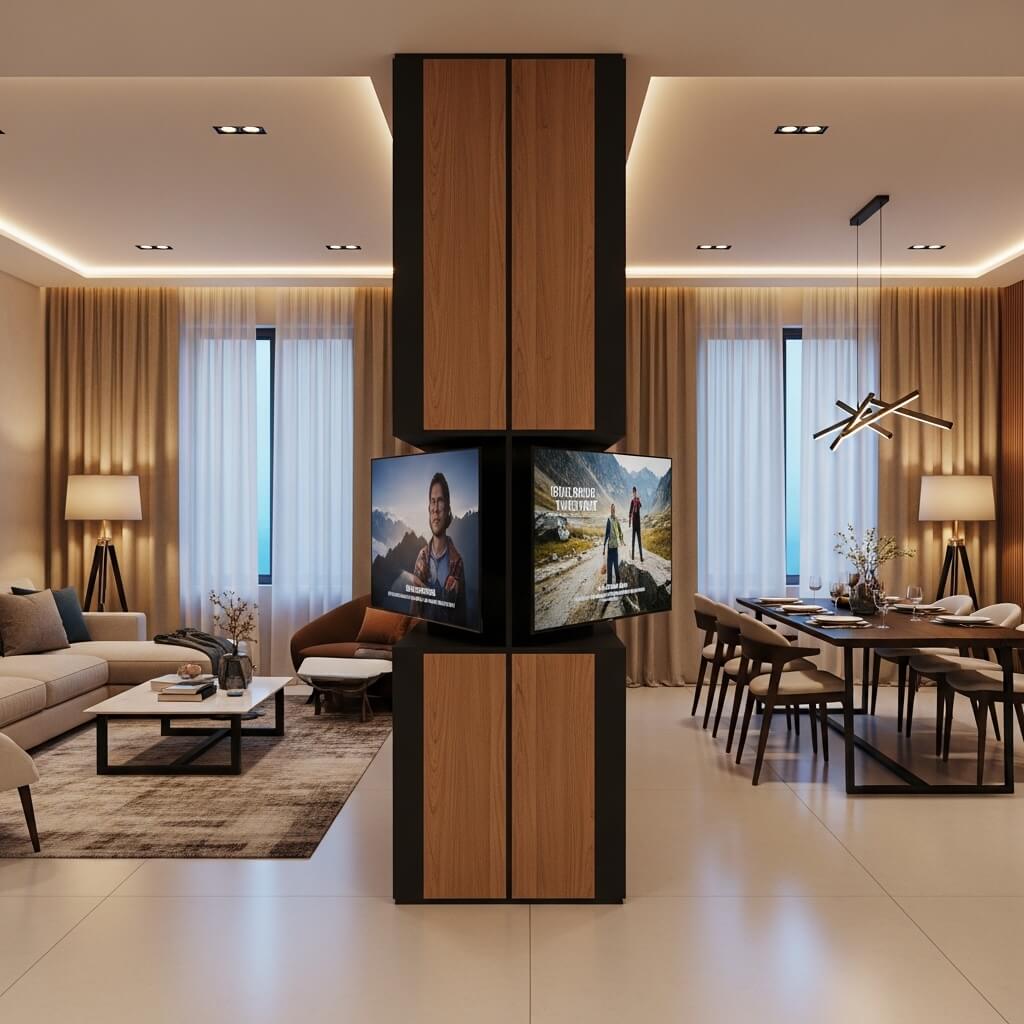
What if both sides of your partition need to be functional? Enter the double-sided TV unit, which solves that problem beautifully.
One side faces your living room with the TV mounted front and center. The opposite side faces your dining area with open shelving, a buffet surface, or even a second smaller TV (if you’re living that dual-TV lifestyle). The partition creates clear zones while serving both spaces equally.
I designed mine with the TV on the living room side and floating shelves on the dining side. Those shelves hold my nice dishes, some plants, and a few decorative pieces. Everything serves a purpose, nothing feels wasted.
Configuration options worth considering:
- Living side: TV + closed cabinets for media equipment
- Dining side: Open shelving + countertop for serving
- Living side: Large TV + floating media console
- Dining side: Wine storage + glass racks (fancy!)
The key is balancing closed and open storage. All closed cabinets look heavy and dark. All open shelves get visually cluttered fast. Mix both for a design that looks intentional and stays functional.
Make sure you plan electrical outlets on both sides during installation. Nothing’s more annoying than having a perfect spot for a lamp or coffee maker with no outlet nearby. Ask me how I know (spoiler: I learned this the hard way).
Scandinavian Style TV Wooden Divider Wall
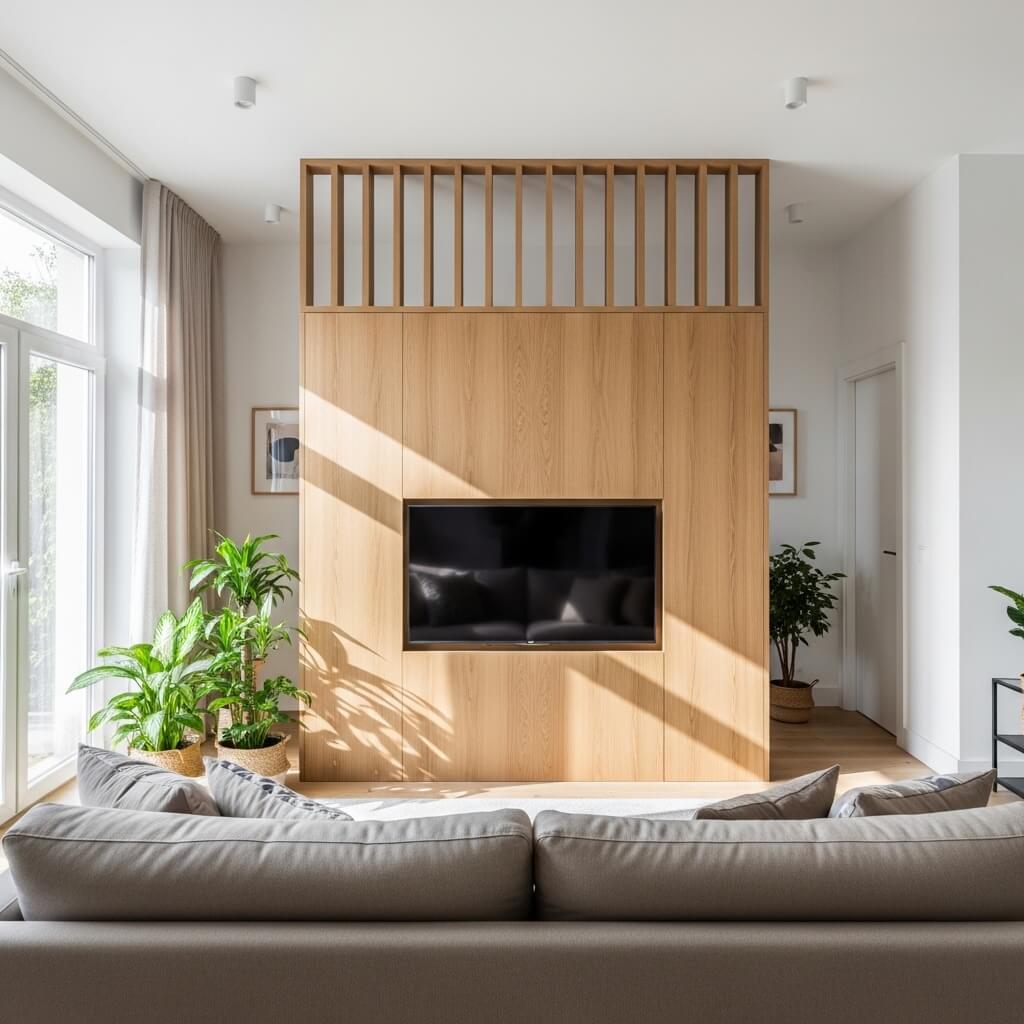
Scandinavian design is having a moment that’s lasted approximately a decade now, and honestly, I hope it never ends. The simplicity, functionality, and warmth of Scandi style translates perfectly to TV partition walls.
Think light-colored wood (birch, ash, or light oak), clean lines, and minimal ornamentation. The TV sits against this blonde wood backdrop that feels fresh, airy, and effortlessly stylish. No complicated details, no fussy hardware—just beautiful wood doing its thing.
I visited Copenhagen last year (humble brag, sorry), and every modern apartment I saw featured this aesthetic. Natural wood, white walls, cozy textiles, and that perfect hygge vibe. Bringing that feeling home through a Scandi-style TV partition was a no-brainer.
Essential Scandinavian design elements:
- Light wood tones: Keep it blonde and natural
- Simple geometry: Clean rectangles, no curves or ornate details
- Functionality first: Every element serves a purpose
- Negative space: Don’t overcrowd with décor
Pair your wooden partition with white or light gray walls, neutral furniture, and pops of muted color (think dusty blue, sage green, or warm terracotta). Add texture through wool throws, linen pillows, and natural fiber rugs.
The beauty of this style is its accessibility. You don’t need a massive budget to achieve the look. IKEA literally built their empire on Scandinavian design principles. Mix affordable pieces with a few quality items, and you’ll nail the aesthetic without breaking the bank.
Also Read: 10 Creative Half Partition Design Ideas for Small Spaces
Luxury Panelled TV Partition Wall with LED Strips
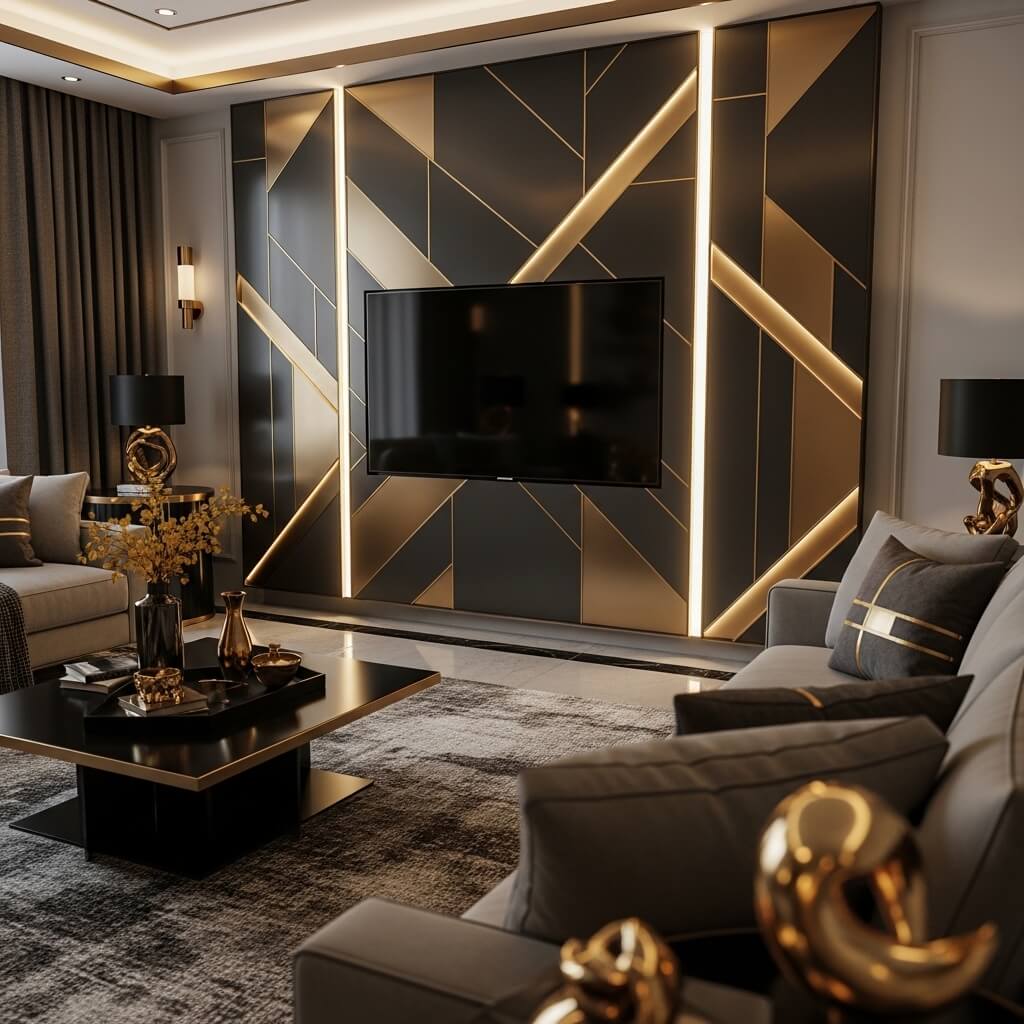
Ready to go full luxury? Panelled walls with integrated LED lighting create that high-end, designer vibe that makes your home feel like a premium hotel suite.
We’re talking about decorative wall panels—think modern geometric patterns, classic wainscoting styles, or contemporary linear designs—combined with strategically placed LED strip lighting. The panels add dimension and visual interest, while the LEDs provide ambient lighting that’s both functional and gorgeous.
I installed 3D geometric panels on my TV wall last year, and the transformation was ridiculous. The panels create shadows and depth that change throughout the day as natural light shifts. Add the LED backlighting, and it becomes a genuine showpiece.
LED strip placement strategies:
- Behind the TV: Creates a floating effect
- Perimeter of panels: Highlights architectural details
- Recessed into panel grooves: Subtle glow without visible strips
- Top and bottom edges: Washes light up and down the wall
You can find panels in wood, MDF, PVC, or even fabric-wrapped acoustic panels. Each material creates different effects. Wood adds warmth, MDF is budget-friendly and paintable, PVC resists moisture, and acoustic panels improve sound quality (crucial for home theaters).
The LED strips offer color-changing options, but here’s my honest opinion—stick with adjustable white temperatures for daily use. Rainbow colors are fun for about five minutes, then they get annoying. Save the RGB party mode for actual parties.
Installation requires some electrical knowledge, especially if you’re hardwiring LED strips. If you’re not comfortable working with electricity, hire a professional. Safety first, fancy lighting second.
Making Your Choice: What Actually Matters
Look, I’ve thrown a lot of information at you, and you might be feeling overwhelmed. That’s normal. Choosing the right TV partition wall comes down to a few key factors that you need to consider honestly.
Your budget sets realistic boundaries. Rotating walls and marble accents cost significantly more than wooden slats or simple glass panels. Know your number before falling in love with something unaffordable.
Your space dictates what’s actually feasible. Small apartments need space-efficient solutions like floating walls with hidden storage. Massive open lofts can handle bigger, bolder statements like concrete dividers or double-sided units.
Your lifestyle matters more than you think. Got kids? Maybe skip the glass partition and expensive marble. Love hosting? Consider the double-sided unit or rotating design for maximum flexibility. Your home should work for how you actually live, not some idealized Pinterest version of life.
Your aesthetic ties everything together. Choose a partition style that complements your existing décor rather than fighting against it. A concrete minimalist wall looks awkward in a traditional home filled with ornate furniture. Context matters.
Final Thoughts
TV partition walls genuinely changed how I experience my living space, and I’m not being dramatic here. They solve multiple problems simultaneously—creating room division, housing your TV properly, adding storage, and serving as a design focal point.
You don’t need to choose the most expensive or elaborate option to get great results. A simple wooden slat wall installed thoughtfully beats an expensive marble accent wall done poorly every single time. Focus on quality execution rather than just picking the fanciest option.
Start by honestly assessing your space, needs, and budget. Look at room dimensions, consider how you actually use your home, and be realistic about what you can afford. Measure twice (or three times), plan carefully, and don’t rush the decision.
And hey, if you’re still unsure? Start small. Install a basic partition design first, see how it works in your space, then add upgrades like LED lighting or storage later. Rome wasn’t built in a day, and your perfect TV partition wall doesn’t need to be either.
Whatever you choose, you’re already ahead of the game by thinking strategically about this space instead of just slapping your TV on any random wall and calling it done. Your future self, enjoying a perfectly arranged room with proper division and killer style, will definitely thank you. Now go make your living space actually work for you!