10 Gorgeous Stairs Railing Design Ideas Interior Upgrade
- Stairs Design
 Ben
Ben- 0
- 52 minutes read
You know that feeling when you walk into someone’s house and your eyes immediately lock onto their staircase? Yeah, stairs railings can totally make or break your interior game. I used to think railings were just functional things to keep us from face-planting down the stairs (because, safety first, right?), but they’re actually serious design statements that can transform your entire space.
Look, I get it. You’re staring at your boring, builder-grade stair railing right now, probably the same one that’s been there since 1997, and you’re ready for something that actually reflects your personality. Good news—you’ve got options, my friend. Beautiful, creative, jaw-dropping options that’ll make your neighbors wonder when you hired an interior designer.
I’ve spent way too much time obsessing over stair railing designs (don’t judge), and I’m here to share the absolute best ideas that work for real homes, not just those Pinterest boards we all save and never actually execute. Whether you’re building from scratch or upgrading what you’ve already got, these ten railing designs range from sleek and modern to rustic and industrial, with a few showstoppers thrown in that’ll genuinely wow anyone who visits.
Ready to stop ignoring that architectural feature you walk past seventeen times a day? Let’s talk about the ten most gorgeous stair railing designs that’ll give your interior the upgrade it’s been begging for.
Modern Glass Stair Railing with Minimal Frame Design
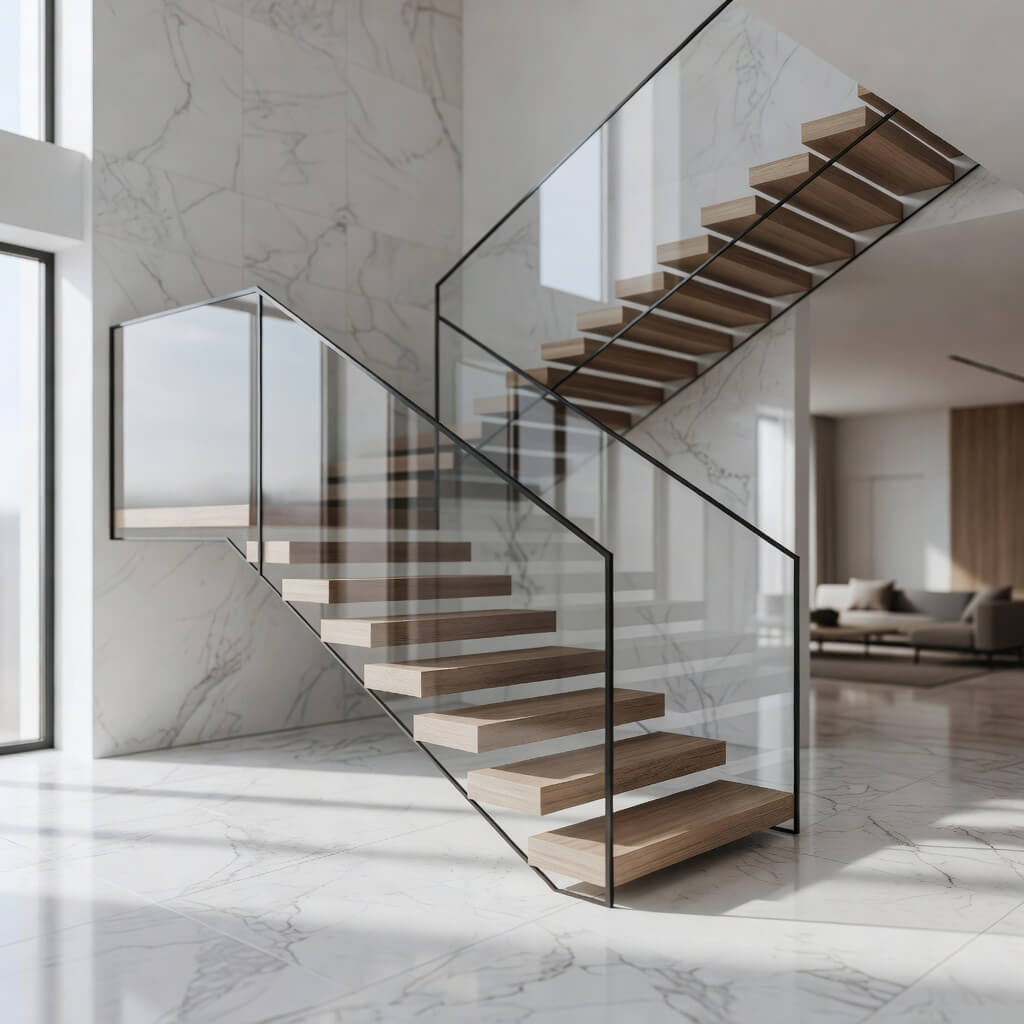
Glass railings are seriously having a moment right now, and honestly? I’m here for it. Modern glass stair railings with minimal frames create this incredible sense of openness that traditional railings just can’t match. Your space immediately feels bigger, brighter, and way more sophisticated.
Here’s what I love about this design: it doesn’t block your sightlines. Remember those chunky wooden spindles that made your staircase feel like a cage? Yeah, glass says goodbye to all that. You get uninterrupted views throughout your home, which makes everything feel connected and flowing.
The minimal frame aspect is key, though. We’re talking ultra-thin metal posts—usually stainless steel or aluminum—that hold crystal-clear glass panels in place. The frames almost disappear, letting the glass do the talking. I installed these in my last renovation, and visitors literally walked up to touch them because they couldn’t believe how seamless they looked.
Why This Works
Safety meets style, which is honestly the dream combo. Tempered glass panels are incredibly strong (we’re talking “can withstand a toddler ramming into them” strong), and the transparency means parents can keep eyes on kids throughout the house. No blind spots.
The maintenance situation is real, though—I’m not gonna lie. Fingerprints show up like it’s their job. But a quick wipe with glass cleaner once a week keeps them looking pristine. Small price to pay for that floating, contemporary vibe.
Best For
- Modern and contemporary homes
- Smaller spaces that need visual expansion
- Homes with great views you don’t want to obstruct
- Anyone who loves natural light (the glass doesn’t block it!)
FYI, installation costs run higher than traditional railings, but the impact on your home’s value and aesthetic? Totally worth it.
Luxury Gold Metal Stair Railing for Elegant Homes
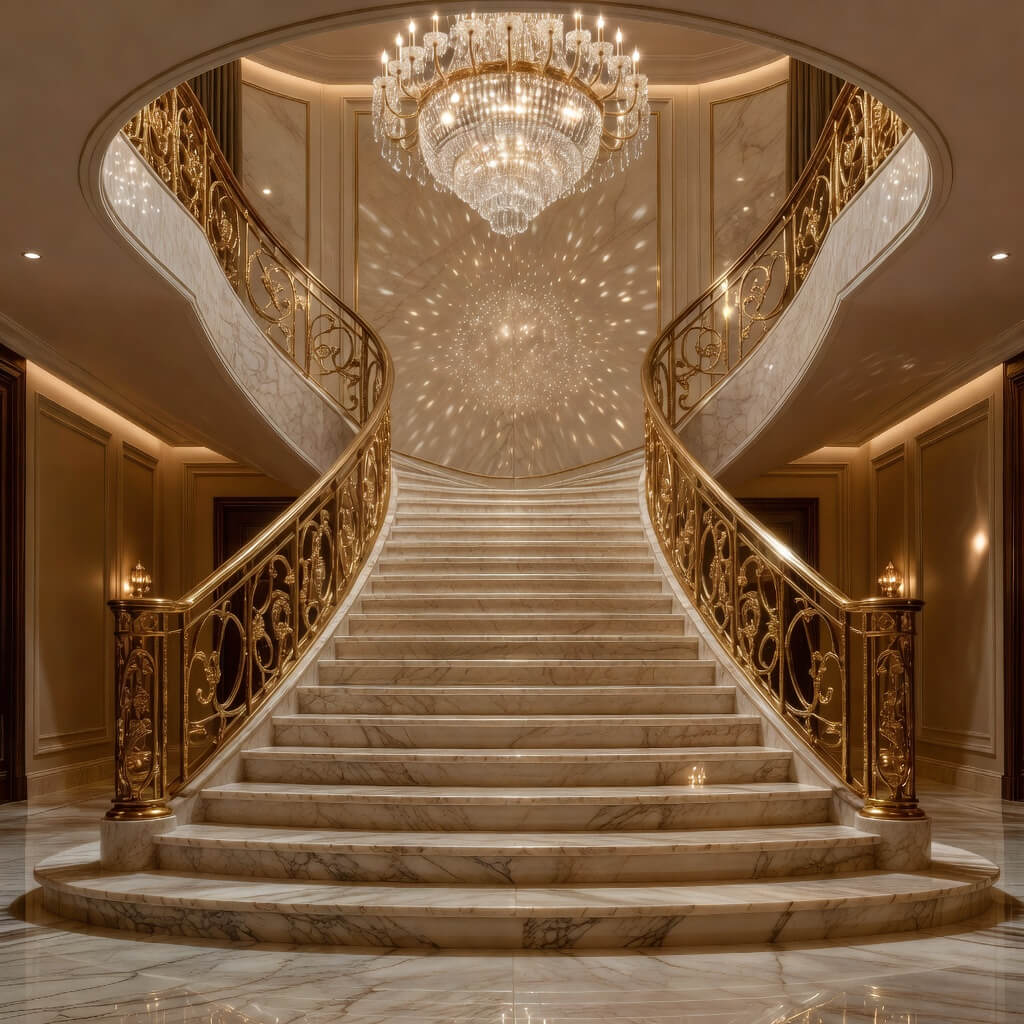
Okay, hear me out before you think I’ve gone full Versailles on you. Gold metal railings can actually be incredibly chic when done right—we’re talking brushed gold or champagne finishes, not shiny disco ball territory.
This design screams elegance and creates a focal point that’s basically impossible to ignore. I’ve seen these in person, and the way they catch light throughout the day is genuinely stunning. Morning light hits differently than evening light, and the railing literally changes mood with your home.
The trick is pairing gold railings with the right interior palette. They work beautifully with neutral backgrounds—think whites, creams, grays, and even deep navy or forest green. The gold becomes your statement piece, your jewelry, the thing that elevates everything else in the room.
Material Options
You’ve got choices here:
- Brass: Develops a natural patina over time (some people love this aged look)
- Stainless steel with gold PVD coating: Modern, durable, won’t tarnish
- Powder-coated steel: Budget-friendly option that still delivers the look
I personally lean toward the PVD-coated stainless steel. It maintains that luxe appearance without the maintenance headaches brass brings.
Design Considerations
Keep the design clean and geometric. Gold already makes a bold statement, so you don’t need overly ornate patterns competing for attention. Simple vertical posts or minimalist horizontal bars let the finish shine without overwhelming your space.
Pair this with marble or light wood stairs for maximum impact. I saw this combo in a friend’s entryway, and I literally stopped mid-conversation to stare. The warm gold against cool white marble? Chef’s kiss.
This isn’t for everyone, obviously. But if you want elegance with a modern twist, gold railings deliver that “wow, who’s your designer?” factor every single time.
Floating Wooden Staircase with Invisible Railing Style
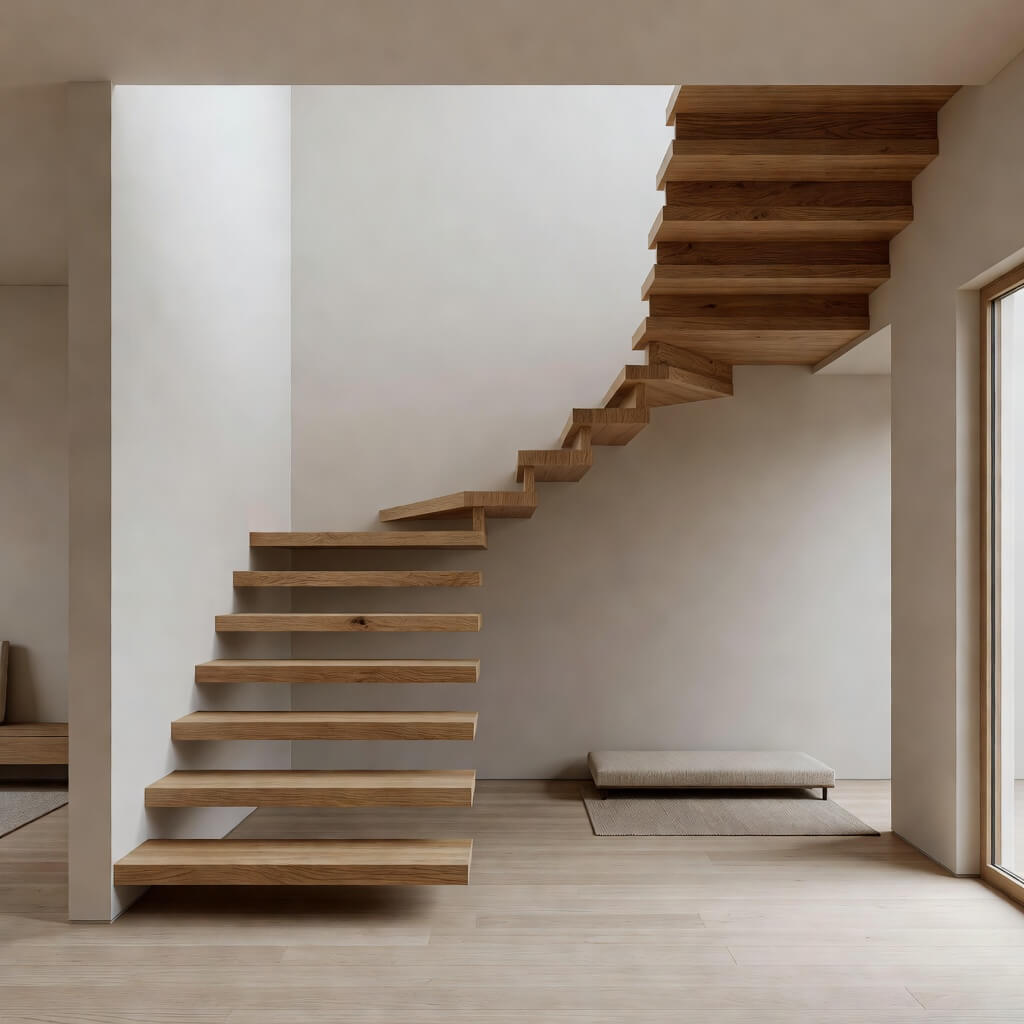
Ever wondered what magic looks like in stair form? Floating wooden staircases with invisible railings are basically architectural sorcery. These designs make your stairs appear to hover in mid-air, defying physics and common sense in the best possible way.
The “invisible” railing typically means glass panels (similar to our first design) but paired with floating stair treads that are anchored directly into the wall. No visible support underneath. Your stairs just… exist there, suspended and stunning.
I’ll be honest—the first time I walked on floating stairs, I hesitated. Your brain sees the gap underneath and goes “nope!” But once you take that first step and feel how solid they are, you realize the engineering is actually brilliant. These stairs can support just as much weight as traditional ones.
The Wow Factor
What makes this design special is the combination of weightlessness and natural warmth. The wooden treads (usually thick, solid wood like oak or walnut) provide that organic, grounded element, while the invisible supports create drama and visual interest.
The open space underneath and around the stairs lets light flow through your home in unexpected ways. I’ve seen these turn dark hallways into bright, airy passages just by not blocking light sources.
Installation Reality Check
Let’s talk real talk: this isn’t a DIY weekend project. Floating stairs require serious structural engineering and professional installation. You need proper wall anchoring capable of handling significant weight and stress. But the result? Absolutely transformative.
Best for:
- Contemporary and minimalist homes
- Spaces where you want to make a statement
- Homes with open floor plans
- Anyone who appreciates clean, uncluttered design
The wooden treads also add acoustic benefits—they’re quieter than metal alternatives, which matters more than you’d think when someone’s running up and down stairs at 6 AM.
Also Read: 10 Trendy Black Stairs Ideas for Minimal Home Aesthetics
Black Iron Industrial Stair Railing with Rustic Finish
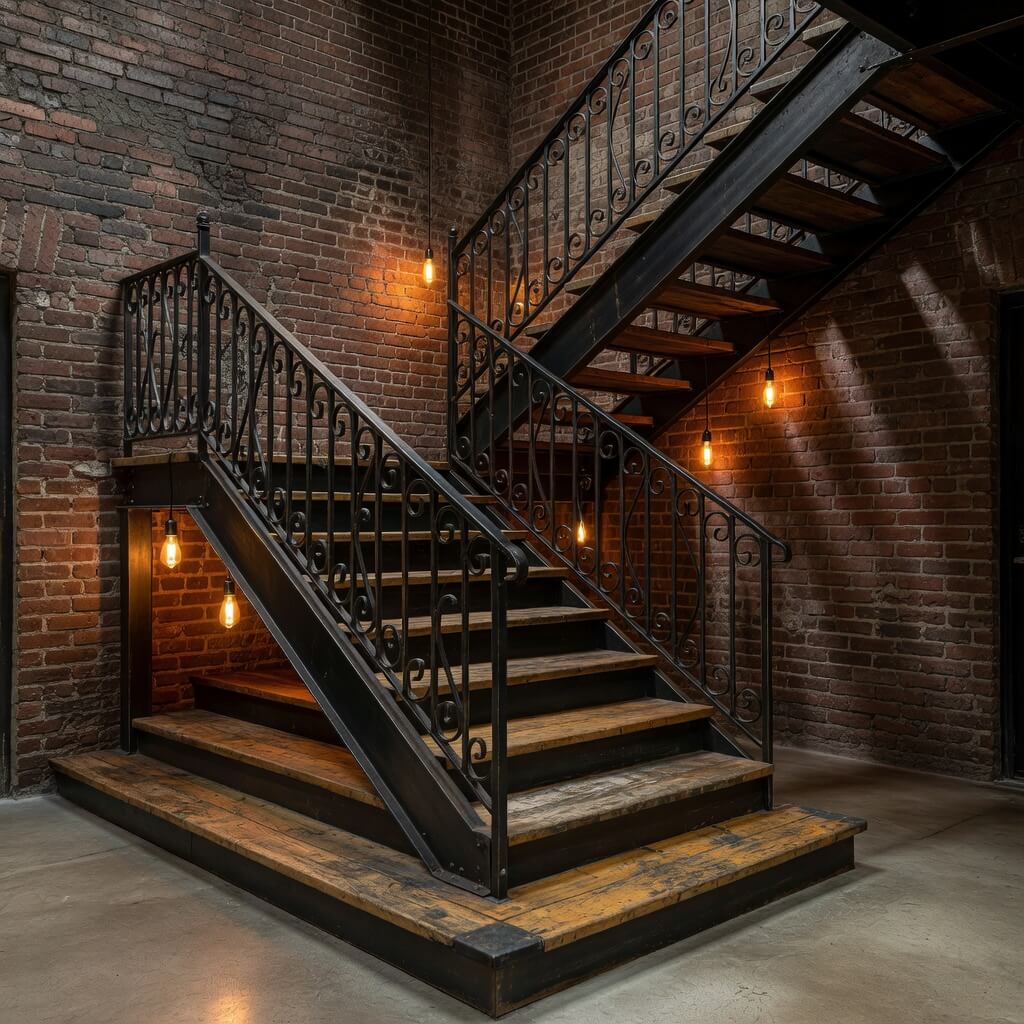
If you’re into that whole industrial-chic vibe (and honestly, who isn’t these days?), black iron railings with rustic finishes bring serious character to your space. We’re talking about the kind of railing that looks like it belongs in a converted loft or a modern farmhouse.
The beauty of black iron is its versatility. It works with literally everything—exposed brick, smooth drywall, wood paneling, concrete floors. I’ve watched this style bridge the gap between ultra-modern and totally rustic, somehow fitting into both worlds perfectly.
The rustic finish is where things get interesting. You want that slightly textured, matte black look—not glossy, not perfectly smooth. Some manufacturers create this with powder coating, others use actual aging processes to develop subtle variations in the finish. The imperfections make it perfect, if that makes sense.
Design Variations
Black iron railings come in tons of configurations:
- Traditional vertical balusters (classic and always works)
- Horizontal bars (more modern, elongates your space visually)
- X-pattern designs (adds architectural interest)
- Simple pipe railings (minimalist industrial)
I’m partial to the horizontal bar design myself. It creates these clean, continuous lines that make your stairs feel like an intentional design feature rather than just a way to get upstairs.
Pairing Suggestions
This railing style plays incredibly well with reclaimed wood stairs. The contrast between rough-hewn wood and sleek black metal? Perfection. I’ve also seen it paired with concrete treads for a more urban, edgy look.
One thing to consider: black shows dust and fingerprints less than lighter finishes (score!), but it can make spaces feel smaller if you’re working with limited natural light. Balance it with lighter walls and good lighting design.
The rustic finish also means you don’t stress about every little scratch or ding. It actually adds to the character over time, developing more personality as you live with it. IMO, that’s way better than worrying about keeping something pristine forever.
Spiral Staircase Railing Design for Compact Spaces
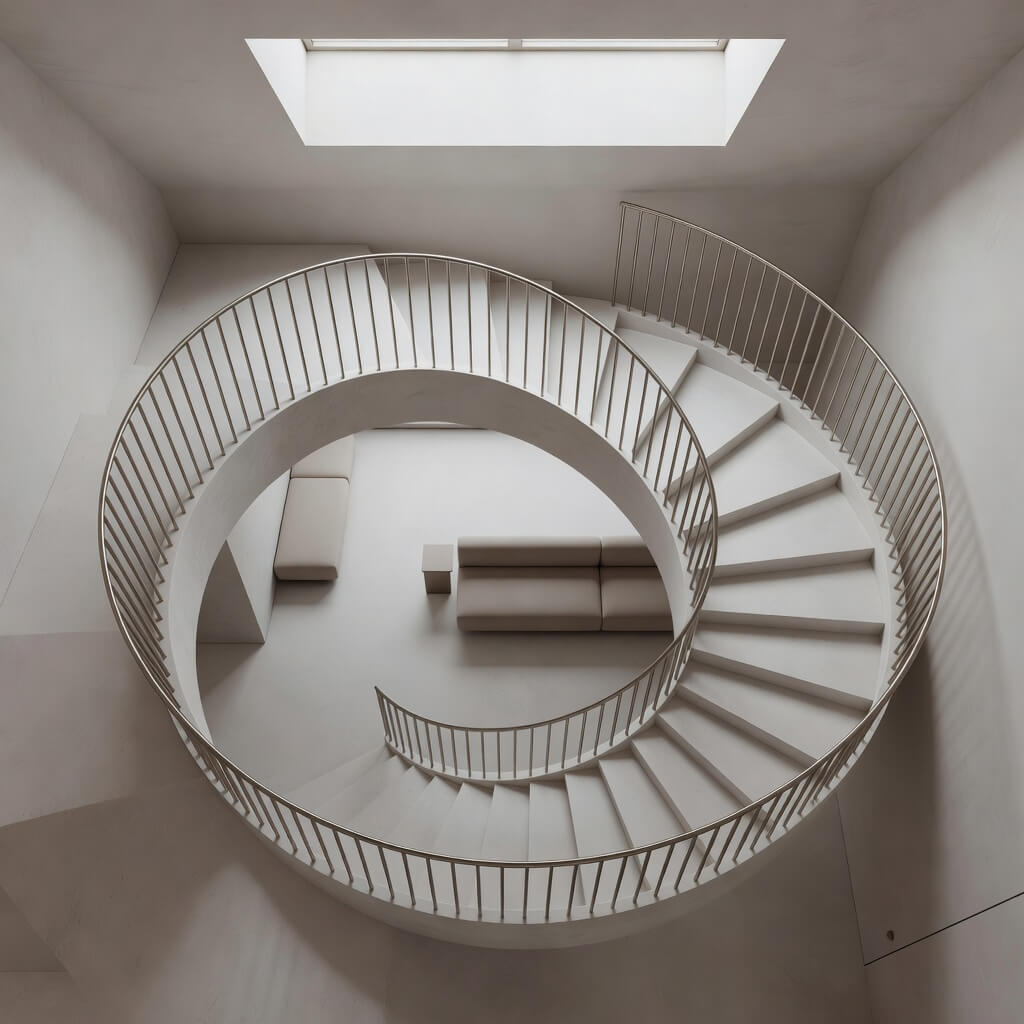
Got a tight space but still need stairs? Spiral staircases with custom-designed railings are your answer. These circular beauties maximize vertical space while minimizing the footprint on your floor—pure spatial efficiency wrapped in sculptural form.
I used to think spiral staircases were only for those tiny European apartments or lighthouse keepers (very specific, I know). But modern designs have transformed them into legitimate design statements that work in contemporary homes. The railing is crucial here because it follows that continuous curve, creating this flowing, organic element.
The railing options for spiral stairs are actually pretty diverse. You can go sleek and minimal with simple metal handrails, or opt for more ornate designs with detailed metalwork that turns your staircase into literal art.
Material Choices Matter
For spiral staircases, your railing material affects both aesthetics and functionality:
- Wrought iron: Classic, durable, can be shaped into intricate designs
- Stainless steel: Modern, low-maintenance, perfect for contemporary spaces
- Wood with metal supports: Warm, inviting, great for transitional styles
- Cable wire: Ultra-modern, maintains openness despite the circular form
The continuous curve of spiral railings creates this really satisfying visual flow. Your eye follows the line upward, and it draws attention to your ceiling height in a cool way.
Practical Considerations
Real talk: moving furniture up spiral stairs is a nightmare :/ I learned this the hard way when trying to get a mattress to a loft space. Consider this before installation if you’ll need to transport large items.
But for secondary staircases, loft access, or homes where space is at a premium? Spiral designs with well-crafted railings are game-changers. They occupy maybe 4-5 feet of diameter while providing full floor access.
The railing also needs to meet building codes for height and spacing, which your installer will know. But unlike straight stairs, you’re creating a sculptural element that becomes room’s centerpiece rather than just functional necessity.
Cable Wire Stair Railing for Modern Open Interiors
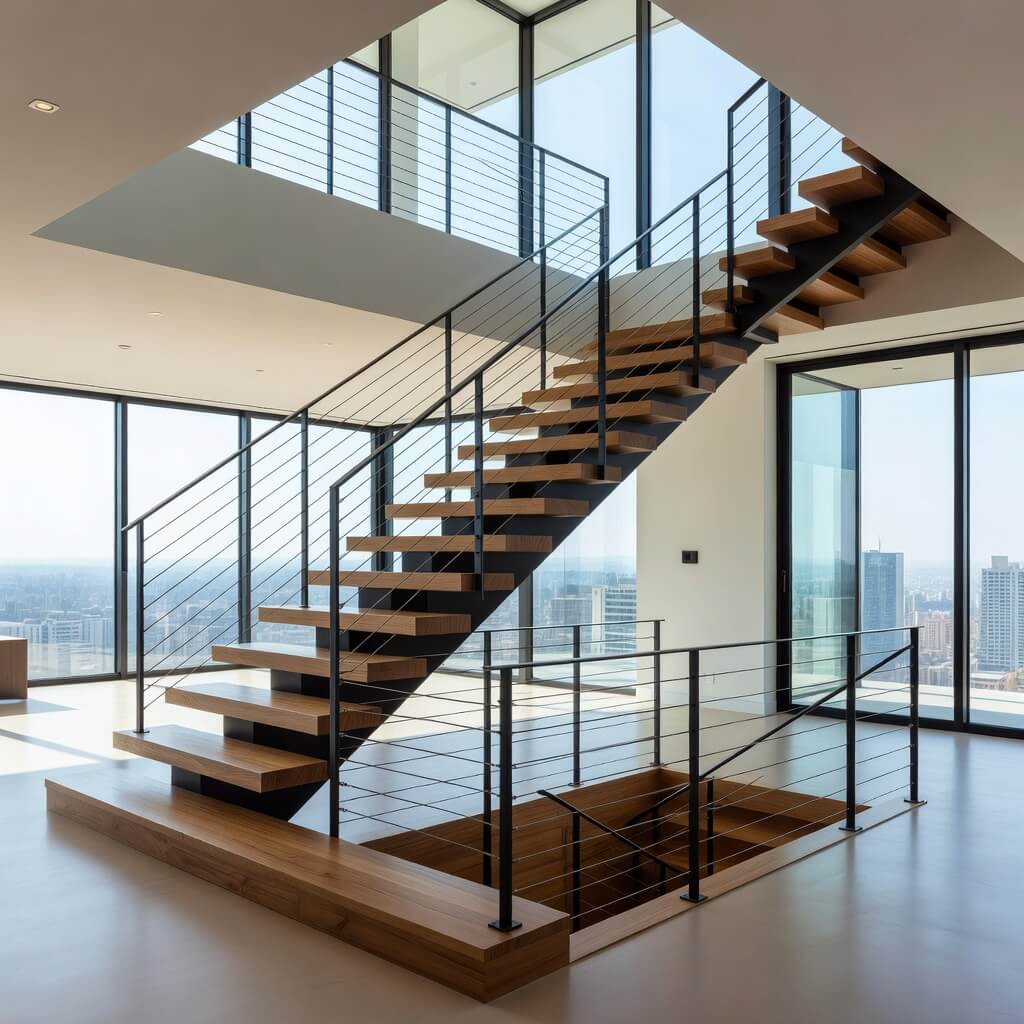
Cable wire railings are what happens when modern design meets practical function, and the result is gorgeously minimalist. Thin stainless steel cables run horizontally between posts, creating barely-there barriers that maintain openness while providing safety.
I’m slightly obsessed with this design (okay, maybe more than slightly). The cables are typically 1/8″ to 3/16″ in diameter—thin enough to feel nearly invisible but strong enough to meet building codes. The effect is this clean, unobstructed look that lets your interior breathe.
What really sells me on cable railings is how they handle light and views. Unlike solid railings or even closely-spaced balusters, cables don’t chop up your sightlines. You can see through them while still having that essential safety barrier. Perfect for homes with great views or open floor plans where you want visual continuity.
Installation Details
The cables need proper tensioning—this isn’t negotiable. Loose cables sag and look terrible (not to mention fail safety standards). Most systems use tensioning fittings at the posts that let you adjust cable tightness over time.
Post spacing is crucial too. You typically need posts every 3-4 feet maximum to maintain proper cable tension. The posts become design elements themselves, so choose wisely:
- Stainless steel posts: Sleek, modern, weather-resistant
- Wood posts: Warmer, works with various styles
- Black powder-coated metal: Industrial, contemporary edge
I’ve seen cable railings in beach houses, mountain cabins, urban lofts, and suburban contemporary homes. They adapt to different environments while maintaining that signature modern look.
Maintenance Reality
Here’s the thing nobody tells you: cables collect dust and require cleaning. You’ll need to wipe them down periodically. But compared to cleaning between dozens of individual balusters? Cable railings are way easier. A damp cloth runs right along the cables, and you’re done.
Best suited for:
- Modern and contemporary interiors
- Homes where you want to maximize views
- Open-concept spaces
- Outdoor deck stairs (stainless steel cables won’t rust)
The cost sits middle-of-the-road—more than basic wood balusters but less than frameless glass. The clean aesthetic you get? Priceless for the right space.
Also Read: 10 Premium Outdoor Stairs Design Ideas for Elegant Homes
White Minimalist Stair Railing for Clean Interior Look
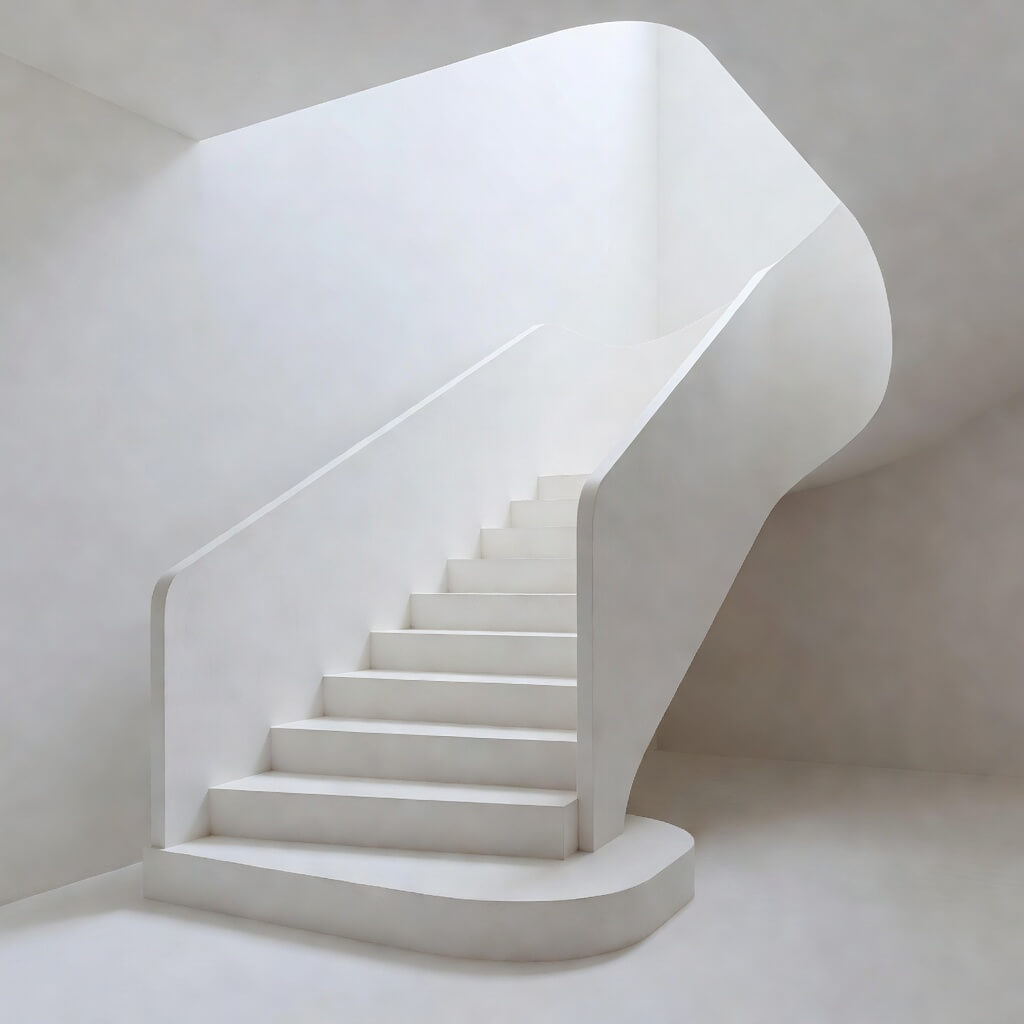
Sometimes less really is more, and white minimalist railings prove this every single time. We’re talking clean lines, simple geometry, and a fresh aesthetic that makes your entire space feel crisp and intentional.
White railings create this seamless flow, especially when paired with white or light-colored walls. Instead of the railing standing out as a separate element, it integrates into your overall design. The stairs become part of the architecture rather than interrupting it.
I’ve installed white railings in two different homes, and both times they transformed spaces from “meh” to “oh!” The reflective quality of white bounces light around, which matters more than you’d think. Darker railings absorb light; white ones amplify it.
Design Approaches
Minimalist doesn’t mean boring. You’ve got options:
- Square vertical balusters: Clean, modern, slightly Scandinavian
- Horizontal bars: Contemporary, elongates the space visually
- Solid white panels: Super minimalist, creates a smooth wall-like barrier
- Simple white handrail with glass: Combines openness with that clean white accent
The key is keeping details simple. No ornate scrollwork, no complicated patterns—just clean geometry and quality materials.
Material Matters
For white railings, your material choice affects durability and maintenance:
- Painted wood: Classic, can be repainted, shows wear over time
- Powder-coated metal: Durable, chip-resistant, low maintenance
- PVC/composite materials: Never needs painting, moisture-resistant
- Painted steel: Strong, modern, long-lasting finish
I lean toward powder-coated metal or quality composites. White paint on wood railings can chip and yellow, especially in high-traffic areas. The initial cost difference pays off in not repainting every few years.
Styling Considerations
White minimalist railings work beautifully in:
- Scandinavian-inspired interiors
- Coastal and beach house designs
- Modern farmhouse styles
- Contemporary apartments and condos
Pair them with light wood stairs for a soft, natural contrast, or go bold with dark hardwood for striking definition. I’ve seen both approaches work beautifully—it depends on whether you want the stairs to blend in or stand out.
One warning: white shows dirt and hand oils. If you’ve got kids with perpetually sticky hands (same), you’ll be wiping down that handrail regularly. But the fresh, clean look makes it worth the extra few minutes of maintenance.
Mixed Wood and Metal Stair Railing Contemporary Design
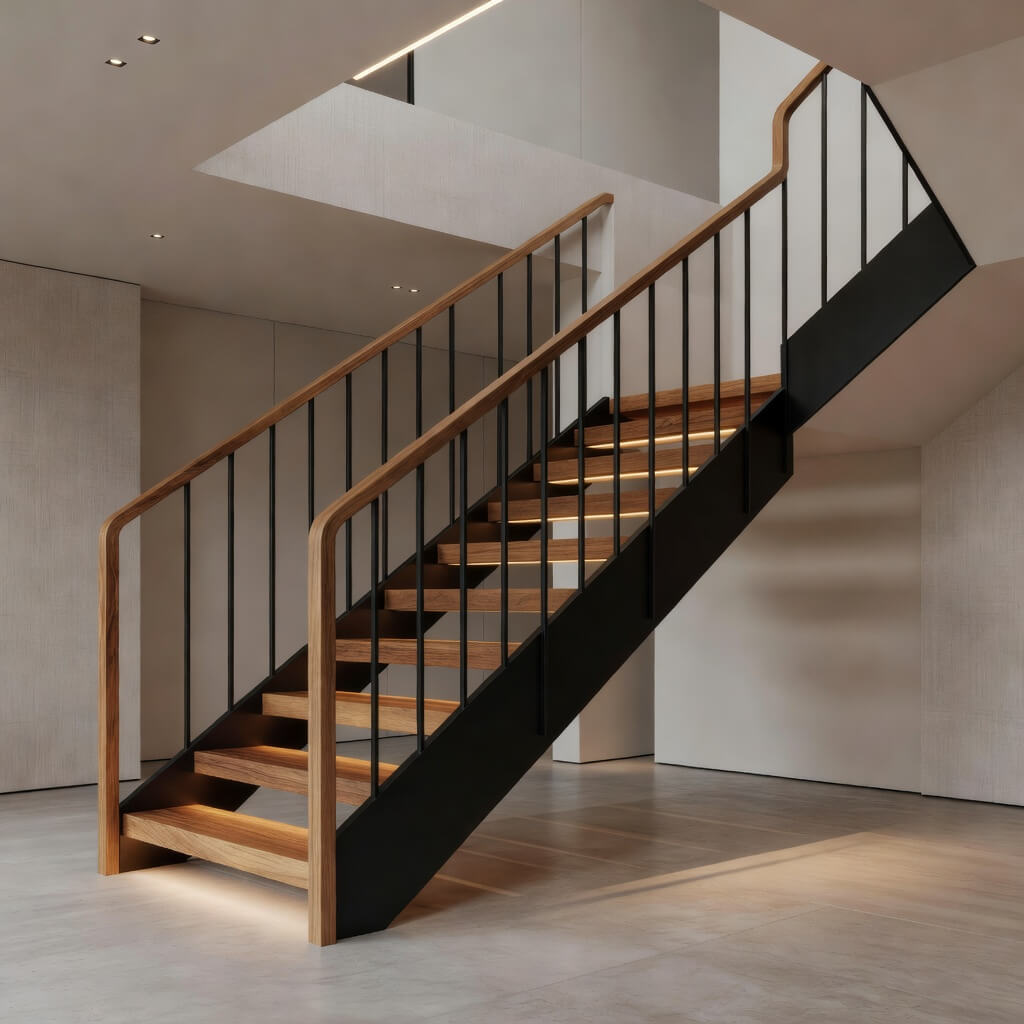
Want the warmth of wood with the edge of metal? Mixed wood and metal railings give you the best of both worlds, creating contemporary designs with serious visual interest and textural variety.
This combination works because wood and metal naturally complement each other. Metal provides structure and modernity; wood brings warmth and organic texture. Together, they create railings that feel both current and timeless—a tricky balance to nail.
I’ve seen this executed tons of different ways, and the variety is honestly impressive. You might have wooden handrails on metal posts, metal handrails with wood balusters, or alternating wood and metal elements in geometric patterns. Each approach creates a different vibe.
Popular Combinations
Let me break down some combinations I’ve seen work really well:
- Dark wood handrail + black metal balusters: Classic contemporary, works in most homes
- Light wood posts + horizontal metal bars: Scandinavian modern with industrial hints
- Walnut handrail + stainless steel cables: Warm meets sleek, incredibly popular right now
- Metal frame + wood-filled panels: Creates substantial presence while maintaining warmth
The dark wood and black metal combo is probably my favorite. It’s sophisticated without being stuffy, modern without being cold. You get that contemporary edge but your space still feels inviting.
Design Balance
The trick is deciding which material dominates. Too much metal and you lose warmth; too much wood and you lose that contemporary edge. Most successful designs lean slightly toward one material while using the other as accent.
For example, if you choose metal posts and cables, make the handrail substantial wood. The wood becomes the touchpoint—literally, the thing hands grip—while the metal provides the visual structure. This creates tactile warmth even when the overall look is modern.
Durability Considerations
Mixed materials mean different maintenance needs:
- Wood requires occasional refinishing or oiling (depends on finish)
- Metal might need touch-ups if scratched (powder coating helps prevent this)
- Combination means you’re maintaining two materials, not one
But honestly? The visual payoff makes the maintenance worth it. These railings add architectural interest that single-material designs sometimes lack.
Perfect for:
- Transitional style homes bridging traditional and modern
- Contemporary designs that need warming up
- Industrial lofts wanting organic elements
- Anyone who can’t decide between wood and metal (why not both?)
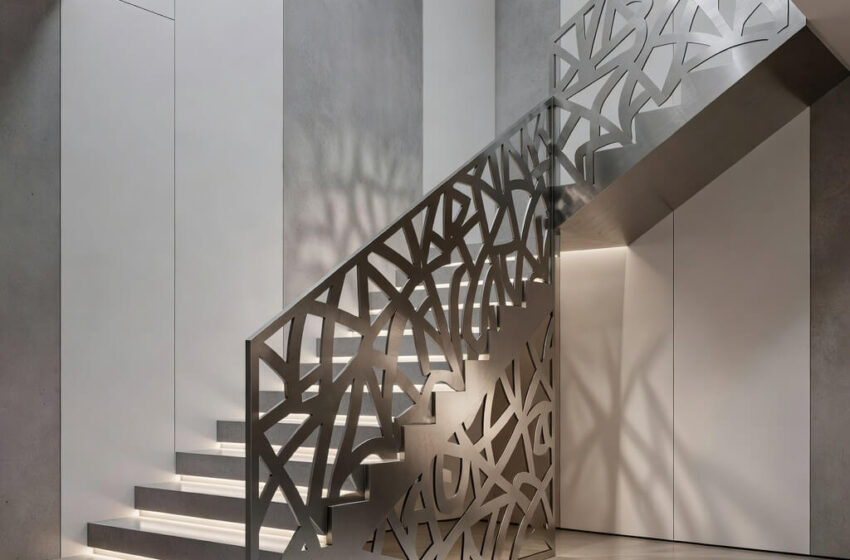
Geometric Pattern Stair Railing for Artistic Homes
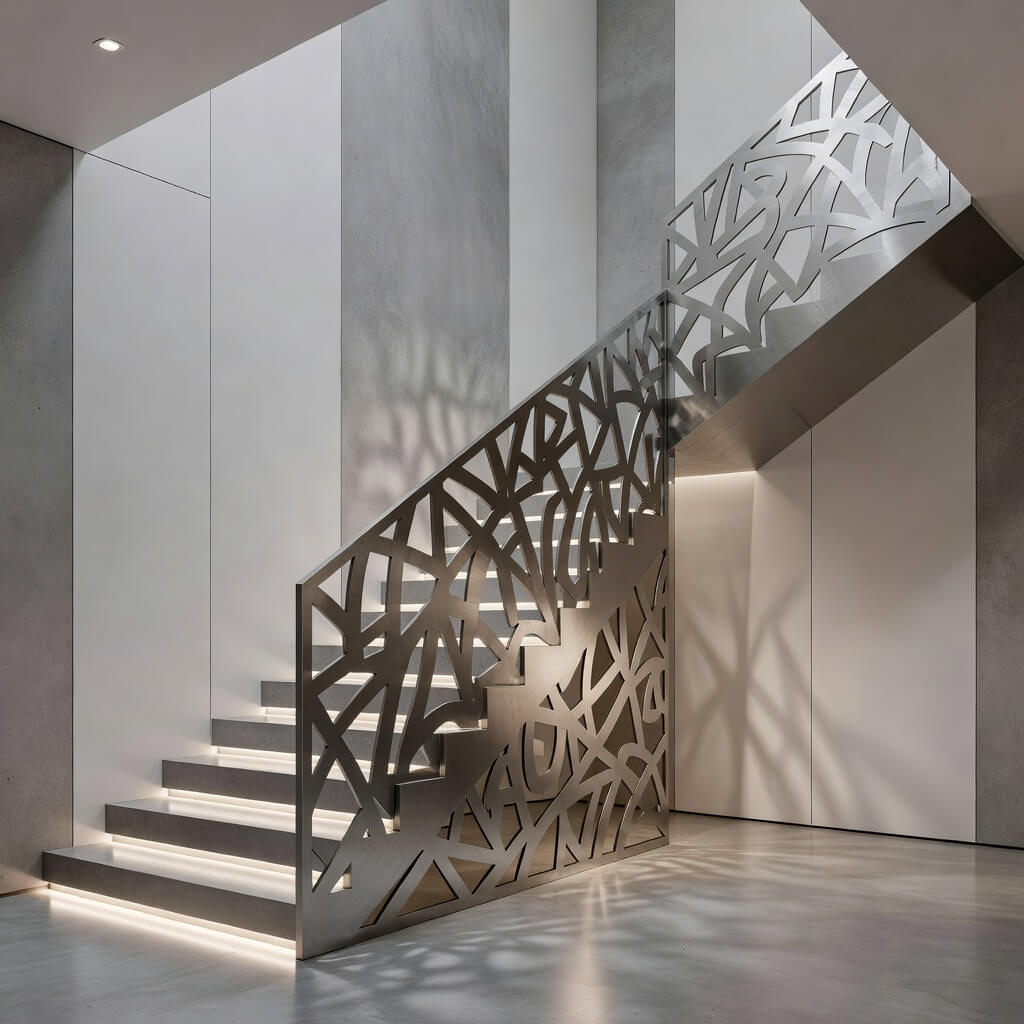
If you’re the type who sees stairs as blank canvases (and I’m definitely that type), geometric pattern railings let you turn functional safety features into legitimate art installations. We’re talking overlapping shapes, angular designs, and visual patterns that make people stop and stare.
Geometric railings work through repetition and intentional design. Instead of simple vertical balusters, you get chevrons, hexagons, interlocking circles, diamond patterns, or completely custom geometric configurations. Your staircase becomes the conversation piece, the feature that defines your space.
I visited a home last year with a custom geometric railing pattern based on Art Deco sunburst designs. I’m not exaggerating when I say I spent ten minutes just photographing it from different angles. That’s the power of good geometric design—it creates visual interest that rewards closer inspection.
Pattern Possibilities
The options are genuinely endless, but here are patterns I’ve seen work beautifully:
- Chevron/herringbone patterns: Dynamic, directional, draws the eye upward
- Overlapping circles: Organic geometry, softer than angular designs
- Diamond lattice: Classic, works in traditional and modern settings
- Asymmetric geometric fills: Contemporary, artistic, totally unique
- Repeating triangular forms: Sharp, modern, architectural
The key is choosing patterns that complement your interior style rather than fighting against it. Mid-century modern homes love retro geometric patterns. Contemporary spaces can handle more complex, abstract designs. Traditional homes might incorporate geometric patterns with classical proportions.
Material and Finish
Metal is the usual choice for geometric patterns because it’s easier to fabricate into precise shapes. Laser-cut steel, wrought iron, and aluminum all work well, depending on your design complexity and budget.
Finish choices dramatically affect the vibe:
- Matte black: Modern, sophisticated, shows off pattern details
- Brushed metal: Industrial, contemporary, catches light beautifully
- Painted colors: Bold, artistic, makes pattern pop even more
- Mixed finishes: Super custom, creates depth and complexity
I’ve seen geometric patterns in brass, copper, and even mixed metals. The pattern itself becomes so prominent that the material almost becomes secondary—though quality materials ensure your art piece lasts.
Installation and Cost
Real talk: custom geometric railings cost more than standard designs. You’re paying for design work, custom fabrication, and specialized installation. But if you want your home to feel truly personalized and artistic, this is where you invest.
The installation complexity varies by pattern. Simpler repeating patterns are more straightforward; complex, one-of-a-kind designs require serious expertise. Work with fabricators who specialize in custom metalwork and can turn your vision into reality.
Best for homeowners who:
- Appreciate art and want it integrated into architecture
- Have modern, contemporary, or eclectic design styles
- Want a staircase that’s genuinely unique
- Don’t mind investing in custom work
Also Read: 10 Stylish Stairs in Living Room Ideas Interior Goals
LED-Integrated Stair Railing for Futuristic Interior Glow
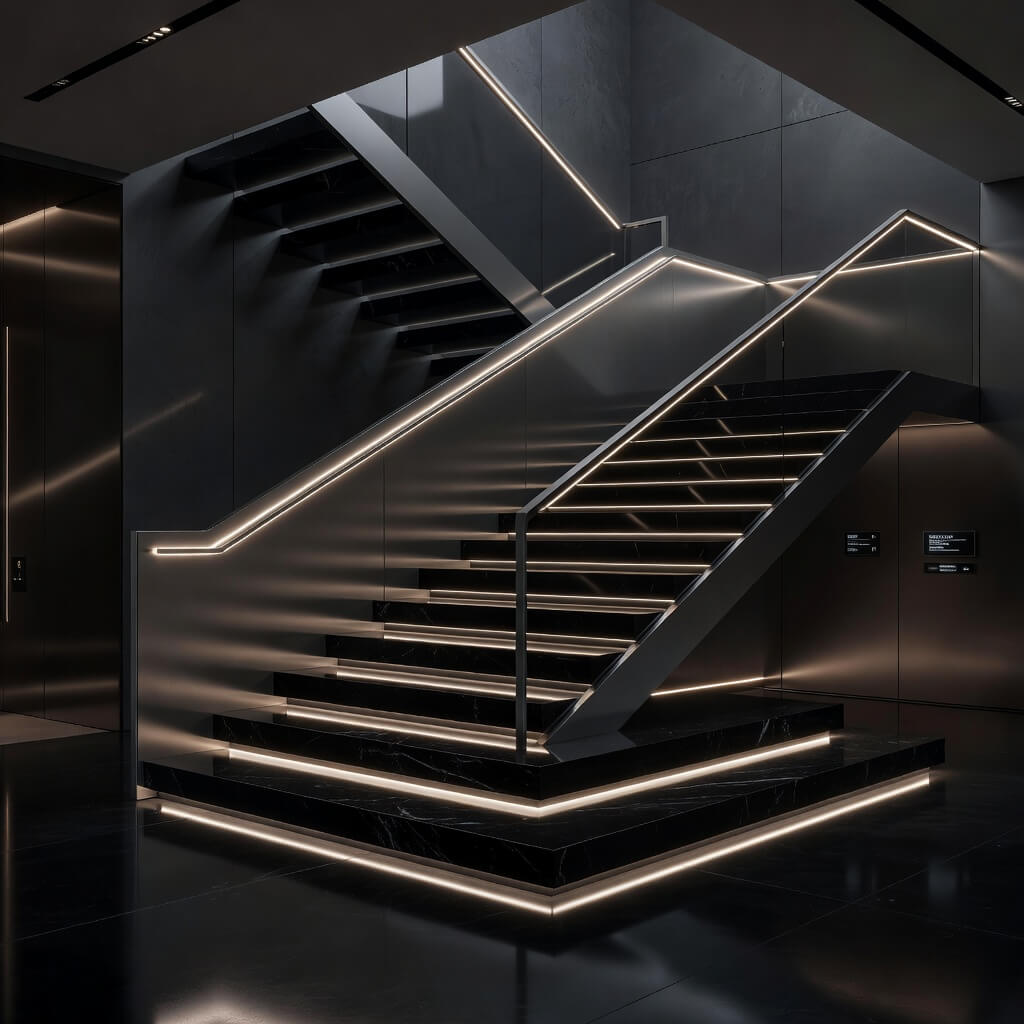
Okay, we’re ending with the coolest option (fight me if you disagree): LED-integrated stair railings that literally glow. This is where function meets futuristic design, creating stairs that guide you with light while looking absolutely incredible.
LED integration can happen several ways. You might have lights embedded in the handrail itself, lighting strips along the underside of the rail, LEDs built into posts, or even illuminated panels within the railing structure. Each approach creates different lighting effects and vibes.
I installed LED stair lighting in my current place, and I genuinely can’t imagine stairs without it now. The subtle glow provides practical illumination for nighttime navigation (no more stumbling down dark stairs at 2 AM), plus it creates this ambient lighting that transforms the entire space.
Lighting Design Options
Let’s break down the main approaches:
Handrail Integration
- LEDs run through translucent handrail material
- Creates continuous glowing rail
- Super futuristic, incredibly functional
- Perfect for ultra-modern homes
Underside Strip Lighting
- LED strips mount underneath handrail or along posts
- Provides downward glow that illuminates treads
- Subtle, practical, less visually prominent
- Works in various design styles
Post Illumination
- LEDs built into railing posts
- Creates rhythmic light pattern along staircase
- Architectural, modern, visually interesting
- Highlights the railing structure itself
Glass Panel Backlighting
- LEDs behind frosted or textured glass panels
- Creates diffused, glowing barrier
- Dramatic, artistic, statement-making
- Works best in contemporary settings
I’ve got the underside strip lighting approach, which gives just enough glow to see stairs clearly without being too in-your-face. But I’ve seen the fully illuminated handrails in person, and they’re genuinely stunning—just more commitment to the futuristic aesthetic.
Color and Control
Modern LED systems offer color-changing options and smart controls. Want cool white during the day and warm amber at night? Done. Want to match your lighting to seasons or moods? You can do that too.
Smart integration means:
- Voice control through Alexa, Google, etc.
- Smartphone app adjustments
- Automation based on time of day
- Motion sensors that activate when someone approaches
The motion sensor option is game-changing for nighttime bathroom trips or early morning kitchen runs. The lights gently illuminate when you approach, then fade after you pass. It’s like living in a slightly less terrifying sci-fi movie 🙂
Practical Benefits
Beyond looking incredible, LED stair lighting actually improves safety. Illuminated stairs reduce trip and fall risks, especially for older adults, kids, or anyone navigating in low light. The railings become visual guides as much as physical supports.
LEDs are also energy-efficient and long-lasting. You’re not constantly replacing bulbs or worrying about energy costs. Most quality LED strips last 50,000+ hours, which is literally years of illumination.
Installation Considerations
This requires electrical work, which means hiring professionals unless you’re actually an electrician (and if you are, you probably don’t need my advice here). The wiring needs to integrate cleanly into your railing design without exposed cords or obvious electrical components.
Plan this during new construction or major renovations when you have access to walls and can run wiring properly. Retrofit installations are possible but trickier and potentially more expensive.
Best for:
- Ultra-modern and contemporary homes
- Anyone who loves smart home technology
- Spaces where you want dramatic lighting effects
- Homes where nighttime stair safety is a concern
- People who appreciate futuristic design (obviously)
The cost varies wildly depending on complexity, but expect to pay premium prices for quality systems with smart controls and professional installation. Worth it? If you want your home to feel like it’s from 2045 instead of 2025, absolutely.
Wrapping This Up
So there you have it—ten absolutely gorgeous stair railing designs that can seriously transform your interior space. From the barely-there elegance of glass and cable systems to the dramatic glow of LED-integrated designs, there’s honestly something here for every style and preference.
Here’s what I want you to take away from all this: your stair railing isn’t just a safety requirement. It’s an opportunity to express your design personality, create visual interest, and elevate your entire home’s aesthetic. Whether you go minimalist with clean white railings or bold with geometric patterns, you’re making a statement about how you live and what you value in your space.
The practical side matters too, obviously. Consider your lifestyle, maintenance willingness, budget, and existing interior style. That stunning LED system might not make sense in a traditional colonial, just like rustic black iron might feel out of place in an ultra-modern minimalist loft. The best railing design is the one that works for your specific situation.
Don’t be afraid to mix inspiration from multiple designs either. Maybe you love the openness of cable railings but want the warmth of wood posts. Perfect—combine them! The most successful designs often blend elements to create something uniquely suited to the space.
Whatever direction you choose, commit to quality materials and professional installation. Stairs are high-traffic, high-impact areas that need to perform safely for years. Cutting corners on railing design or installation is a recipe