10 Simple Basement Stairs Ideas on a Budget Makeover
- Stairs Design
 Ben
Ben- 0
- 33 minutes read
Look, I get it. You walk past those basement stairs every single day, and they’re giving you absolutely nothing. They’re dark, dated, maybe a little creaky, and honestly? They’re screaming for help. But here’s the thing—you don’t need to drop a small fortune to transform those sad steps into something you’d actually want to show off.
I’ve spent way too much time obsessing over basement renovations (blame HGTV and my Pinterest addiction), and I’ve learned that basement stairs are like the Cinderella of home improvement projects. With the right budget-friendly ideas, they go from overlooked to “wait, did you hire a designer?” And the best part? Most of these ideas won’t require you to eat ramen for the next six months.
So grab your coffee, get comfy, and let’s talk about 10 simple basement stairs ideas that’ll make your wallet and your home happy. Trust me, your basement is about to get a serious glow-up.
Modern Minimalist Basement Staircase Makeover
Ever notice how minimalist designs make everything look ten times more expensive? That’s exactly what we’re going for here.
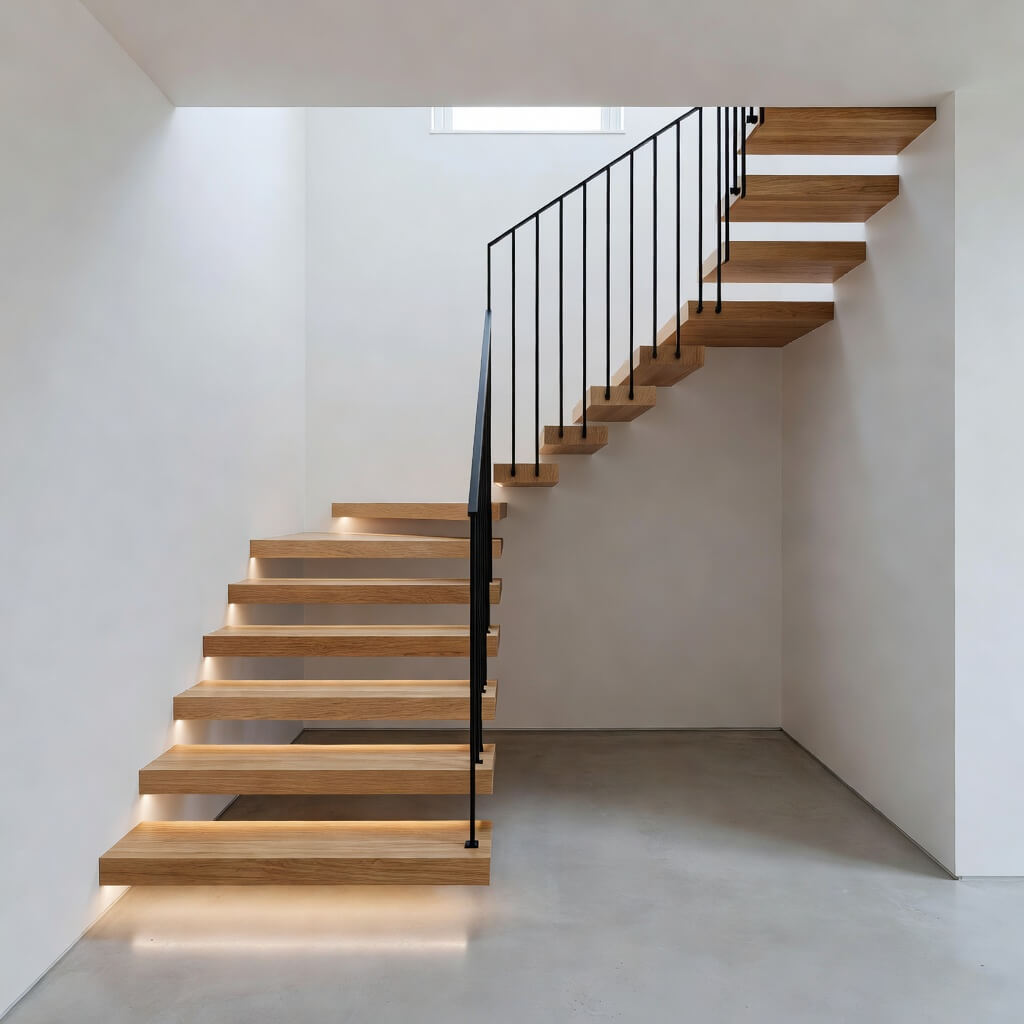
The modern minimalist approach strips away all the unnecessary stuff and focuses on clean lines, neutral colors, and simplicity. I’m talking white or light gray painted risers, sleek wooden treads (or even painted treads if you’re feeling brave), and removing any chunky, outdated balusters.
Here’s what you’ll do on a budget:
- Paint everything white or a soft gray—seriously, paint is your best friend and costs like $30-40 per gallon
- Remove carpet runners if you have them (they’re usually hiding decent wood underneath)
- Replace bulky wooden balusters with simple metal rods or thin wooden spindles
- Add a simple handrail in black or brushed nickel for contrast
I tried this in my old rental basement, and the transformation was insane. The stairs went from “creepy horror movie vibes” to “oh, that’s actually kind of nice.” The whole project cost me around $150, and most of that was the metal rods I picked up at Home Depot.
Pro tip: If you’re renting, stick to paint and temporary solutions. But if you own the place, removing carpet and refinishing the wood underneath gives you that high-end look without the high-end price tag.
Under-Stair Storage Optimization Design
Why does everyone treat the space under basement stairs like some weird void where you toss random Christmas decorations and forgotten sporting equipment? That space is prime real estate, my friend.
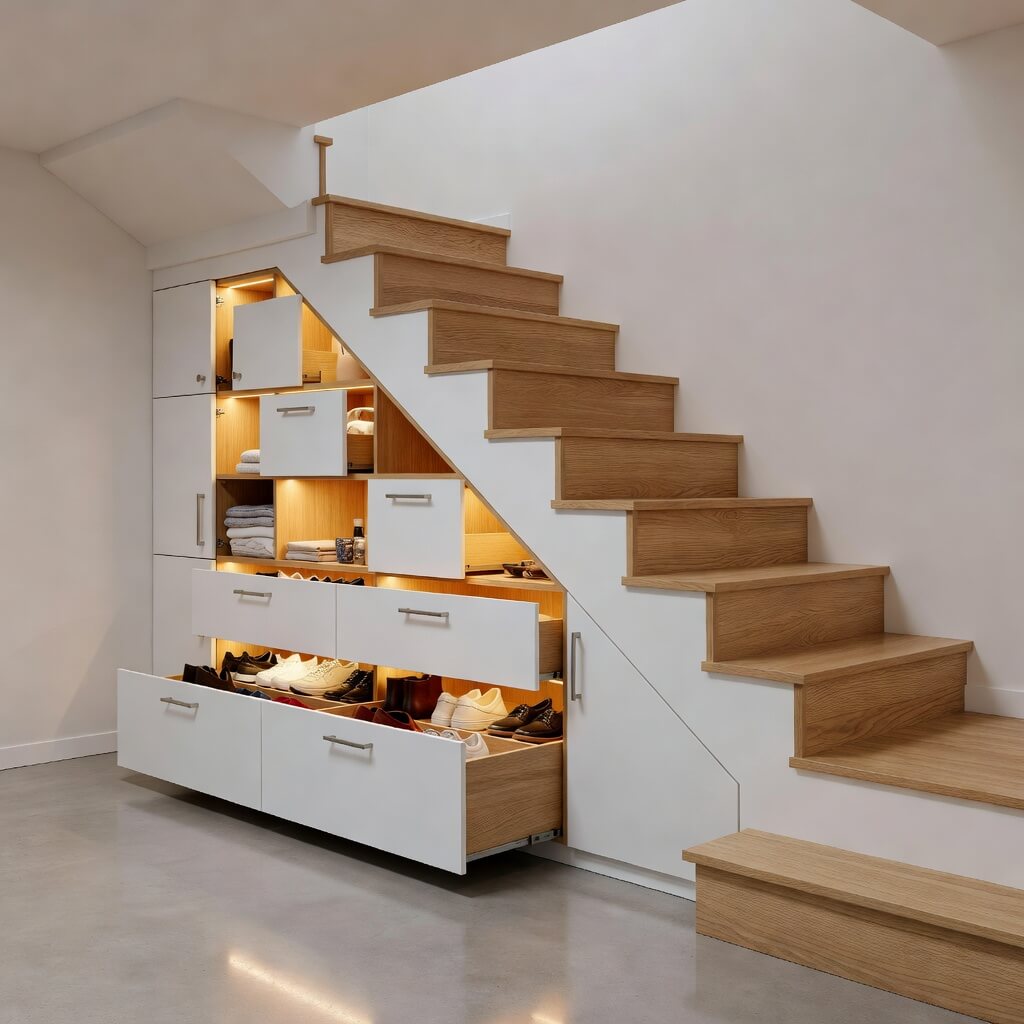
The under-stair area can become pull-out drawers, built-in shelving, or even a cozy reading nook if you’re feeling ambitious. And you don’t need to be a master carpenter to pull this off.
Budget-friendly storage ideas include:
- Installing simple floating shelves using brackets from IKEA ($20-30)
- Building basic pull-out storage bins on wheels (DIY with plywood and casters)
- Adding hooks and pegboards for tool organization
- Creating a wine rack using PVC pipes (yes, really—Pinterest has amazing tutorials)
- Hanging curtains to hide the space but keep it accessible
I converted my under-stair space into a pantry area for bulky items, and it freed up SO much kitchen space. I used basic wire shelving units from Target (about $40 each), and suddenly I had a home for all those Costco purchases I definitely didn’t need but bought anyway 🙂
The key is measuring carefully and maximizing vertical space. Stack those shelves high, use clear bins so you can see what’s inside, and label everything if you’re into that whole “organized life” thing.
Luxury Glass Railing Basement Stairs
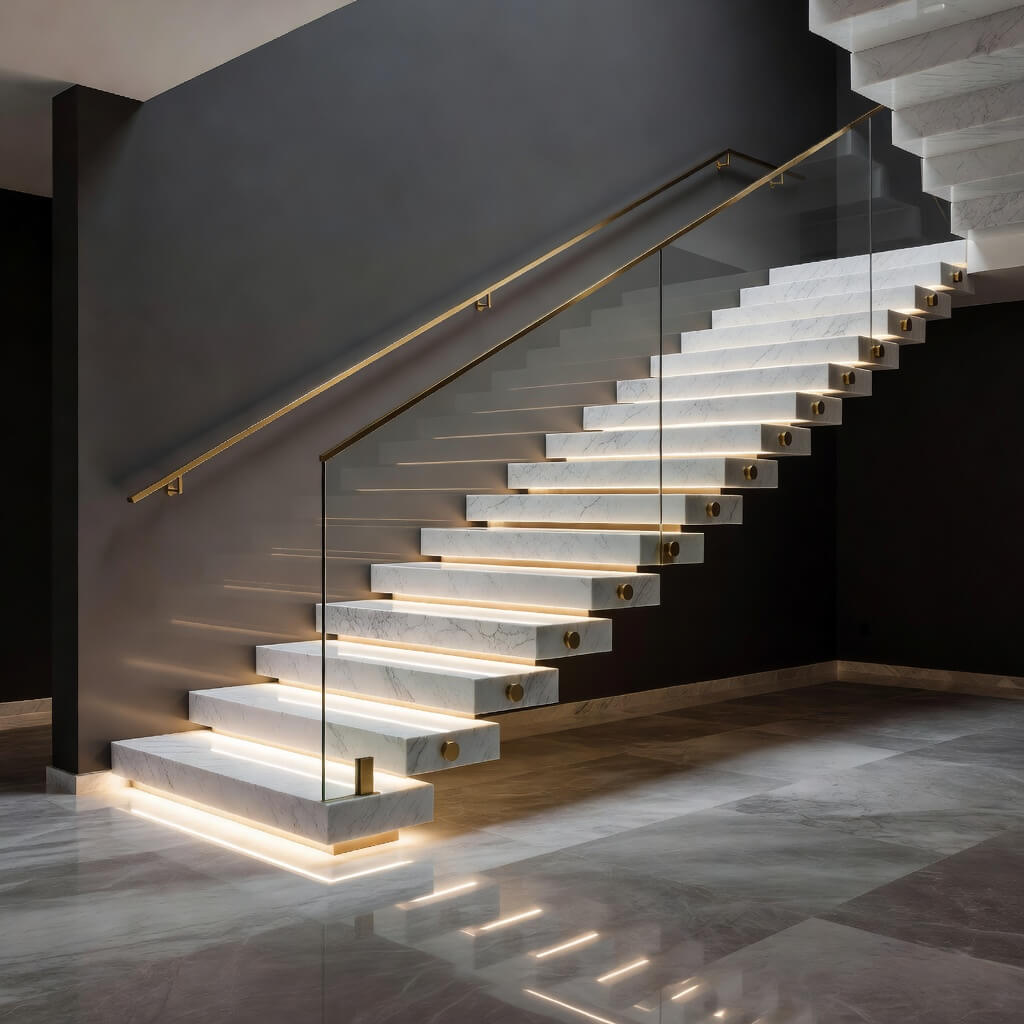
Okay, hear me out. I know “luxury” and “budget” sound like they’re crashing into each other here, but stick with me.
You can’t install actual custom glass railings without selling a kidney—those run thousands of dollars. But you CAN create the illusion of that high-end glass look using some clever alternatives that won’t destroy your bank account.
Here’s the workaround:
- Use clear acrylic panels instead of tempered glass (fraction of the cost)
- Install aluminum railing kits that accept panel inserts
- Look for DIY railing systems at hardware stores (they exist!)
- Consider cable railings as a modern alternative (less expensive than glass)
I’ve seen people pull off this look for around $300-500, compared to the $2,000+ professional installations would cost. The acrylic sheets give you that open, airy feeling that makes basements feel less cave-like, and they let light flow through your stairwell.
FYI, you’ll need to check local building codes before installing any railing system. Safety first, folks—no makeover is worth a dangerous staircase.
If full glass/acrylic feels too ambitious, try this instead: keep your existing railing but paint it a crisp white and clean up the space around it. Sometimes just removing visual clutter creates that luxury vibe you’re after.
Also Read: 10 Gorgeous Stairs Railing Design Ideas Interior Upgrade
Small Space Floating Basement Stairs Concept
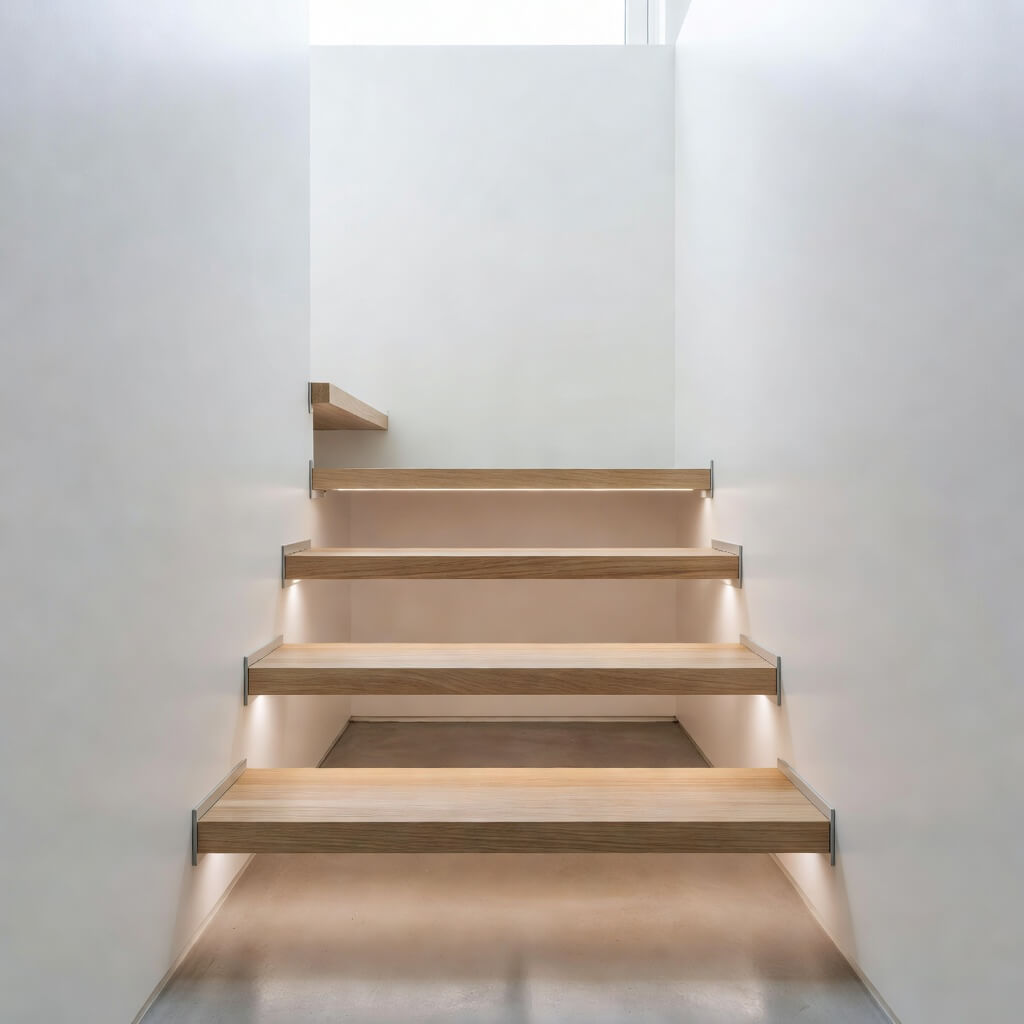
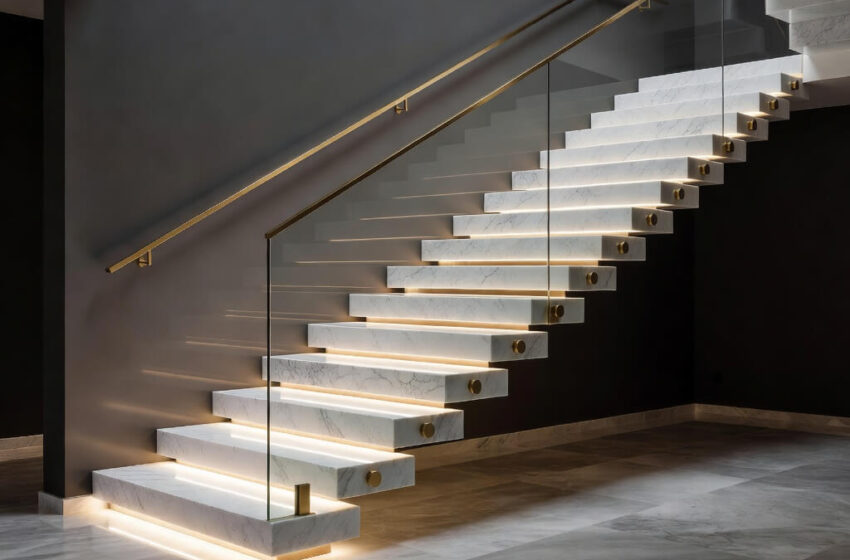
Now we’re getting fancy! Floating stairs look absolutely stunning and make small spaces feel way bigger than they actually are.
The thing about true floating stairs is that they’re structurally complex and expensive. But we’re not actually going to build floating stairs from scratch (unless you’re a structural engineer with weekend plans). Instead, we’re going to create the floating effect without the massive construction bill.
Here’s how you fake it:
- Paint stair risers the same color as your walls so they visually disappear
- Remove or paint out side skirt boards in the wall color
- Install open risers if your current stairs have backing boards (check codes first!)
- Use glass or thin metal railings that don’t block sightlines
- Paint stringers (the diagonal support beams) to match the wall
The goal is making the stairs feel less bulky and more open. When you eliminate visual barriers and create continuity between walls and stairs, your eyes perceive more space than actually exists. It’s basically an optical illusion, and it works ridiculously well.
I helped my sister do this to her narrow basement stairs, and the difference was night and day. We painted everything the same warm white color, and suddenly her claustrophobic stairwell felt like it doubled in size. Total cost? About $60 in paint and a weekend of work.
Rustic Wooden Basement Stair Transformation
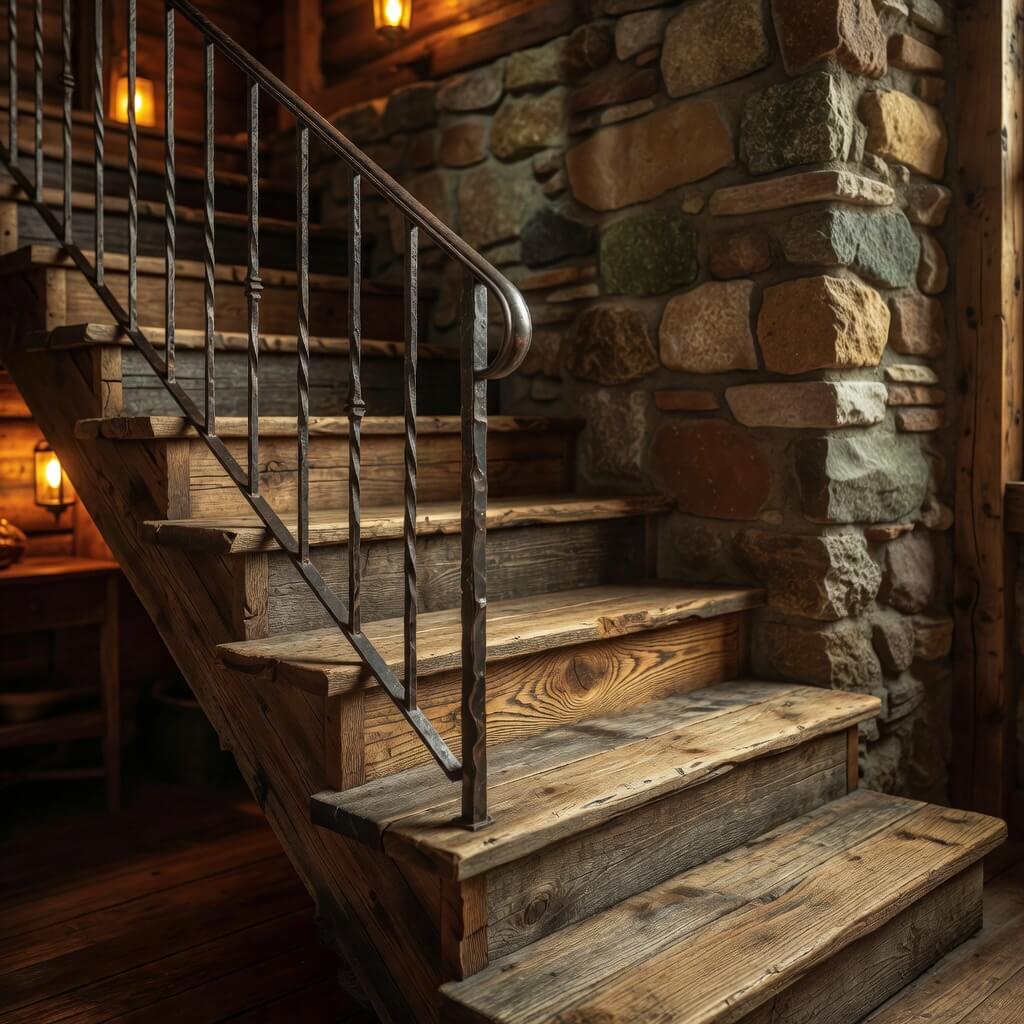
If modern minimalism isn’t your vibe, let’s go the complete opposite direction—rustic and cozy.
The rustic wooden look brings warmth, character, and that farmhouse feel everyone’s still obsessed with. And honestly? Wood is pretty forgiving for DIY projects, which makes this approach super beginner-friendly.
Budget rustic transformation ideas:
- Stain or refinish existing wood treads in a rich walnut or weathered gray
- Add reclaimed wood (or new wood made to look reclaimed) to stair fronts
- Install a chunky wooden handrail for that farmhouse touch
- Use wood planks on walls along the staircase for accent walls
- Add wrought iron or oil-rubbed bronze hardware
You can find affordable wood planks at big box stores, and sometimes you can score reclaimed wood from Facebook Marketplace or Habitat for Humanity ReStores for next to nothing. I grabbed some gorgeous barn wood pieces for $20 once, and they looked like a million bucks after a good cleaning.
The secret to rustic on a budget: you don’t need perfect wood. Knots, variations in color, and slight imperfections actually ADD to the rustic aesthetic. So that cheaper wood with “character”? That’s exactly what you want.
If you’re going for full farmhouse vibes, pair your wooden stairs with some vintage-style lighting and maybe a runner rug in a neutral pattern. Chef’s kiss.
LED Lit Basement Stairs Modern Design
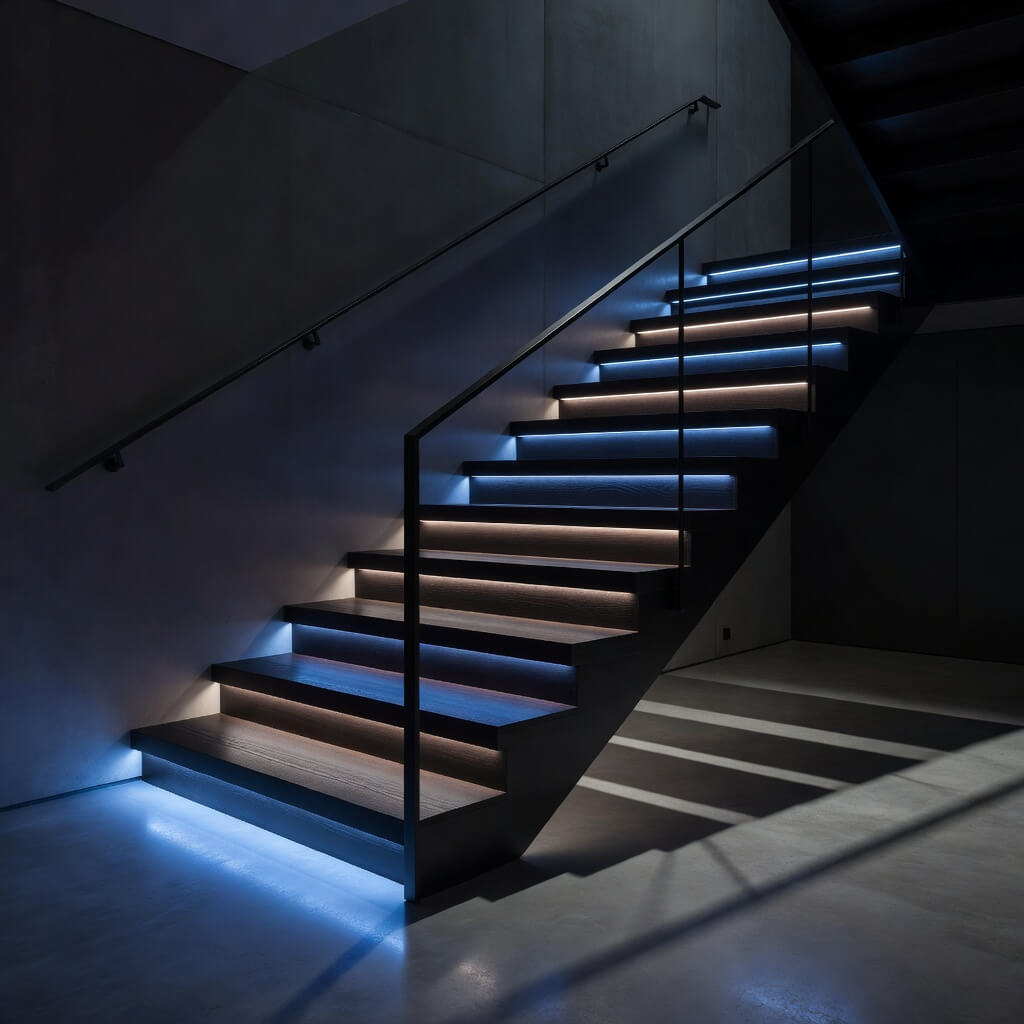
Want to know what instantly makes any space look more expensive and modern? Strategic lighting. And LED strips are your secret weapon here.
LED lighting under stair treads or along railings creates this incredible ambient glow that’s both functional and gorgeous. Plus, LEDs are energy-efficient, so you’re not jacking up your electricity bill for the aesthetic.
Here’s your budget LED game plan:
- Purchase adhesive LED strip lights (Amazon has tons for $15-30)
- Install them along the underside of each tread for that floating effect
- Add LED strips along handrails or at the base of walls
- Use motion-sensor options so lights activate when you walk by
- Choose color-changing LEDs if you want to get fancy with mood lighting
I installed LED strips on my basement stairs last year, and I legitimately get compliments every time someone comes over. The installation took maybe an hour (seriously, they’re adhesive-backed), and now my stairs look like something out of a luxury hotel. The motion sensor feature means I never fumble around in the dark anymore—the stairs light up automatically when I approach.
Pro tip: Warm white LEDs look more sophisticated than the bright blue-white ones. Save the rainbow colors for your gaming setup, not your stairs :/
The best part about LED lighting? If you screw it up, you just peel it off and try again. No permanent damage, no stress.
Also Read: 10 Trendy Black Stairs Ideas for Minimal Home Aesthetics
Industrial Style Basement Stair Ideas
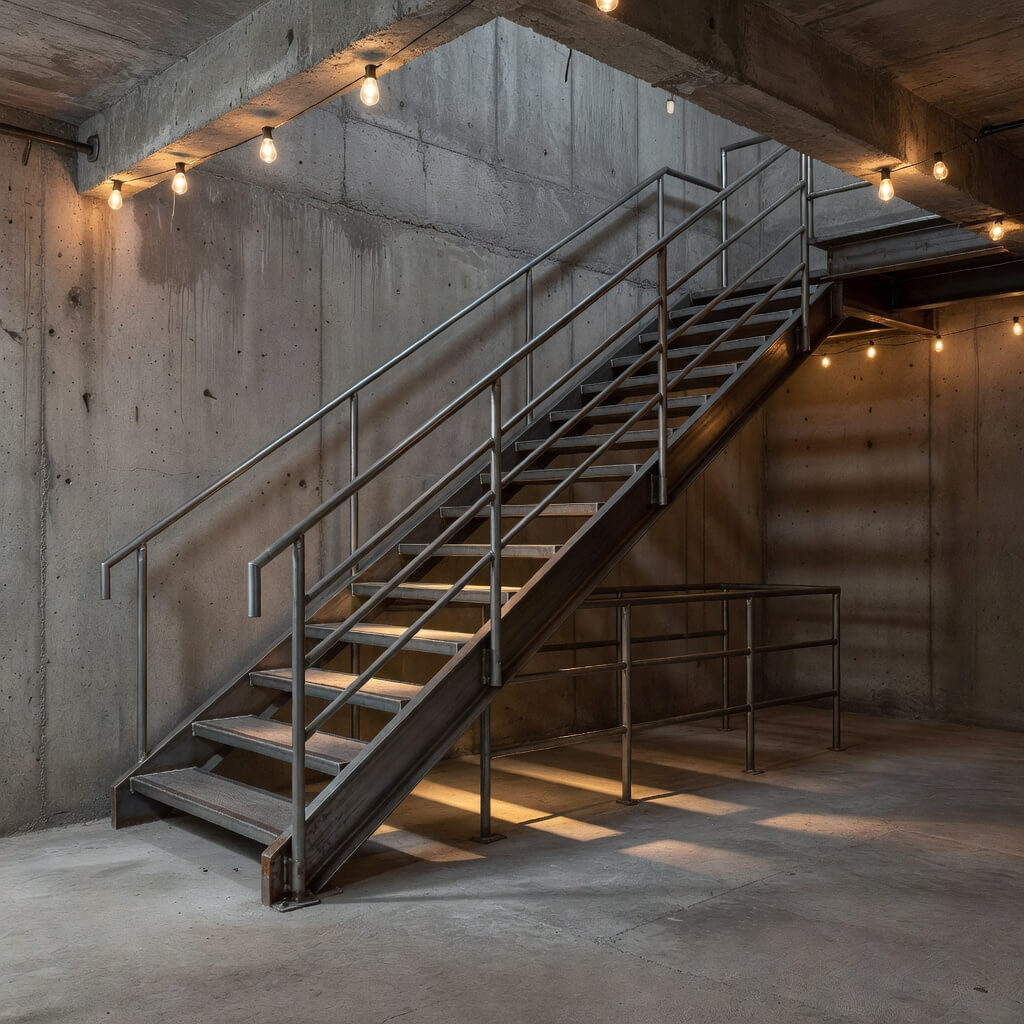
Industrial style is perfect for basements because basements already have that raw, unfinished potential. You’re just leaning into it intentionally.
This look embraces exposed materials, metal accents, and a no-frills aesthetic that’s honestly really easy to achieve on a budget. You’re not hiding imperfections—you’re showcasing them as design features.
Industrial basement stair elements:
- Black metal pipe railings (DIY-able with supplies from hardware stores)
- Exposed wood treads with metal brackets
- Concrete or painted concrete-look risers
- Edison bulb lighting fixtures
- Metal mesh or perforated metal as railing infill
The industrial look is super forgiving because “rough around the edges” is literally the point. That slightly worn wood? Feature. Those metal pipes that aren’t perfectly polished? Totally on brand.
You can build black pipe railings yourself for a couple hundred dollars using standard plumbing pipes and fittings. I’ve seen this done so many times, and it always looks ridiculously cool. YouTube has approximately one million tutorials on pipe railing installations, so you’ve got plenty of guidance.
Pair your industrial stairs with some exposed brick (if you have it) or a brick-look accent wall using peel-and-stick wallpaper. Add some metal wall art or vintage industrial signs, and boom—you’ve got yourself a basement that could double as a trendy coffee shop.
Hidden Closet Under Basement Stairs
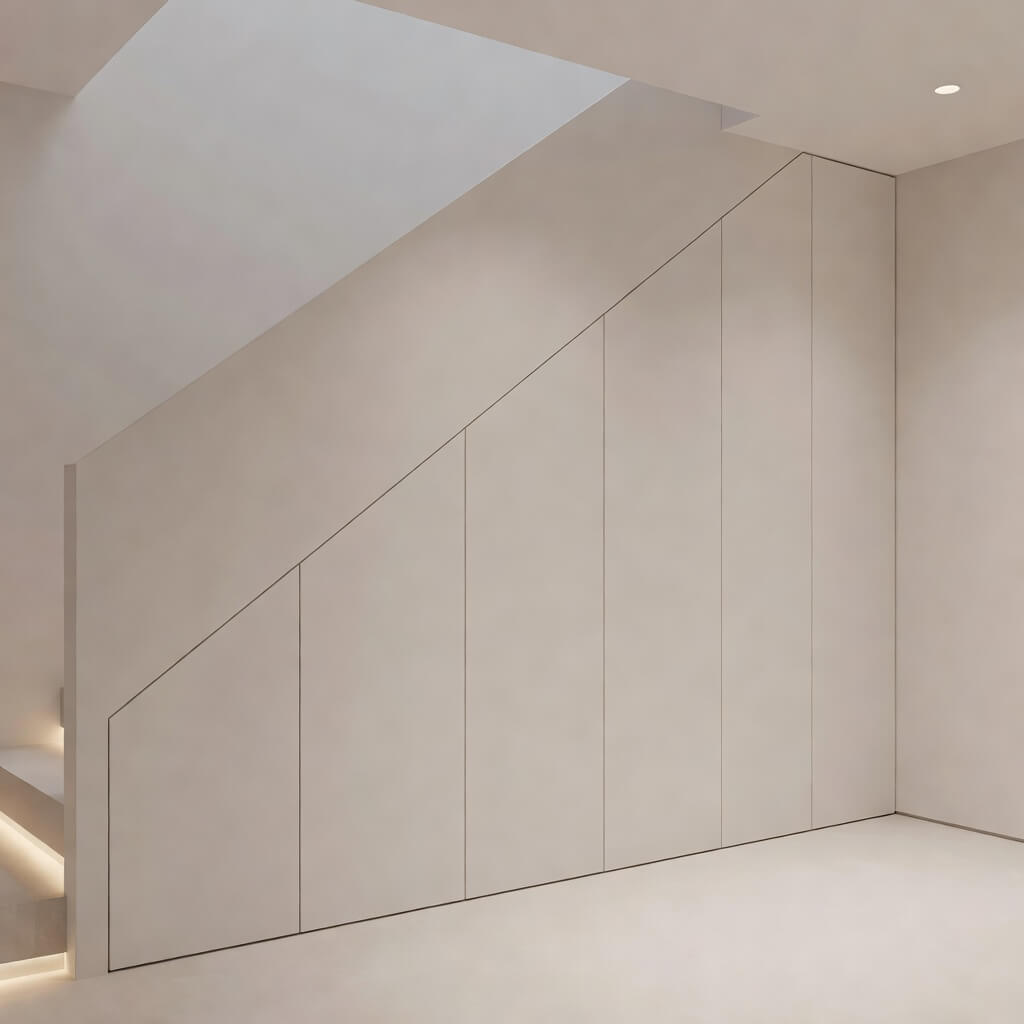
Remember when we talked about under-stair storage? Let’s take that concept up a notch with a full hidden closet.
This idea is part storage solution, part secret room fantasy fulfillment. Who doesn’t want a hidden closet? It’s like being in a mystery novel, except instead of finding treasure, you’re finding your vacuum cleaner. Still counts.
Creating a hidden closet on a budget:
- Build a simple door frame that matches your wall
- Install a hidden/flush door (or disguise a regular door with matching paint)
- Add shelving inside using basic brackets and boards
- Use the space for seasonal items, cleaning supplies, or extra pantry storage
- Install a simple light fixture inside (battery-operated if wiring is complicated)
I’ve seen people create these using basic framing lumber and a standard door, then paint the whole thing to blend seamlessly with the surrounding wall. The entire project might run you $100-200 depending on door choice and interior shelving.
The real magic is in making the door disappear. You can use flush-mount door hardware, magnetic catches, or even a bookshelf door kit if you want to get really extra with it. IMO, the bookshelf door is worth the splurge if you have the wall space—pulling a book to open a secret closet never gets old.
Even a basic closet with a standard door beats having that space go to waste. Add a coat of paint that matches your walls, keep the hardware minimal, and you’ve got bonus storage that doesn’t scream “I’m a door!”
Budget DIY Basement Stair Upgrade Ideas
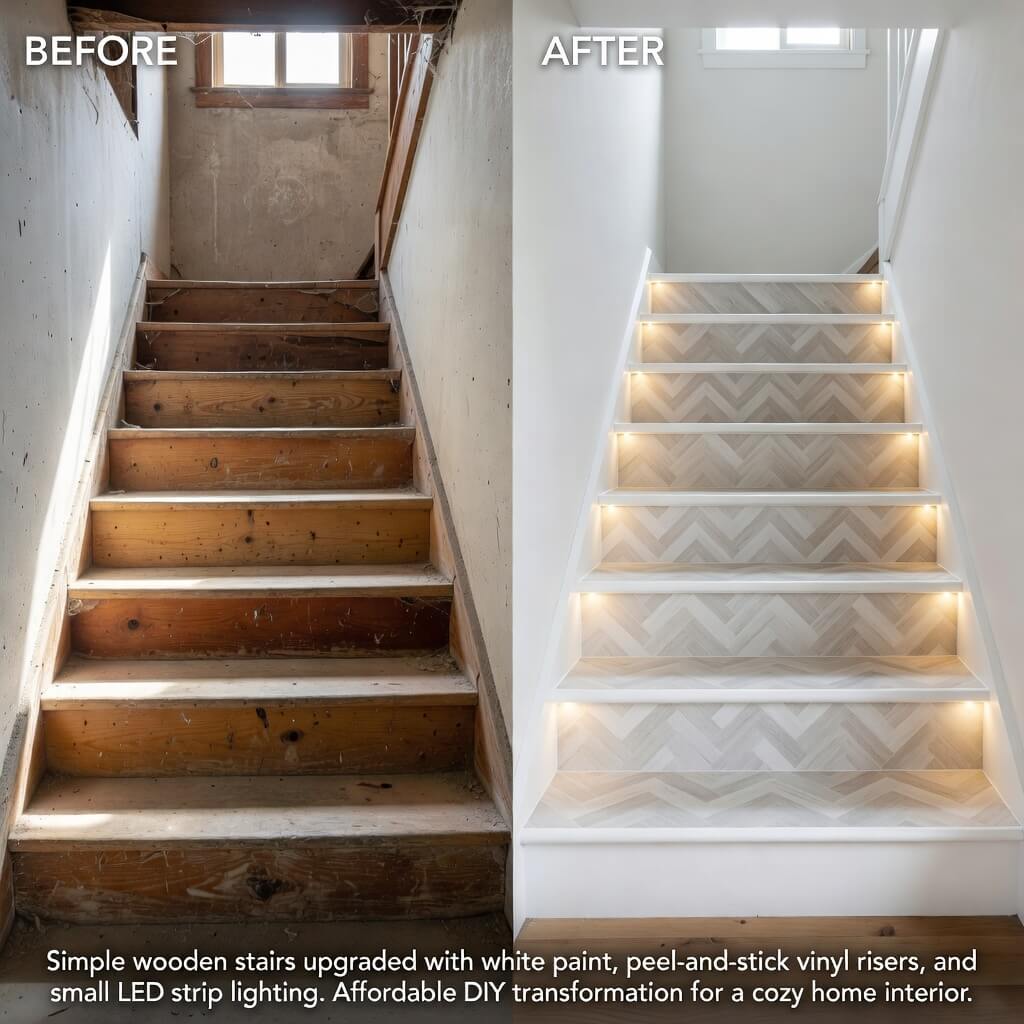
Let’s talk about the ultra-budget options for those of us who need results but are working with basically pocket change.
Sometimes you don’t need a complete overhaul—you just need to breathe some life into what you already have. These ideas cost almost nothing but deliver surprising impact.
Super affordable upgrade ideas:
- Paint it all: Seriously, a few gallons of paint can transform everything ($50-80)
- Add a runner rug for color and texture (IKEA has options under $30)
- Replace just the handrail with something more modern ($40-80)
- Clean and repair instead of replace (wood filler and stain work wonders)
- Stencil patterns on risers for visual interest (cost of stencil and paint)
- Add wall art or a gallery wall along the staircase (print your own art)
- Install peel-and-stick wallpaper on risers ($20-40 per roll)
I once transformed a friend’s basement stairs using only paint, a runner rug from Target, and some wall art we printed and framed from Walmart. Total cost was under $100, and her stairs went from “aggressively beige” to actually interesting.
The truth about budget makeovers: Labor is usually the expensive part. When you DIY, you’re trading time and effort for money. So grab some podcasts, recruit a friend who owes you a favor, and make a weekend of it.
Don’t underestimate what fresh paint can do. White risers with natural wood treads is literally a classic look that works in any home. Add some personality with artwork or a pop of color on the handrail, and you’re golden.
Also Read: 10 Premium Outdoor Stairs Design Ideas for Elegant Homes
Dark to Bright Basement Stair Renovation Style
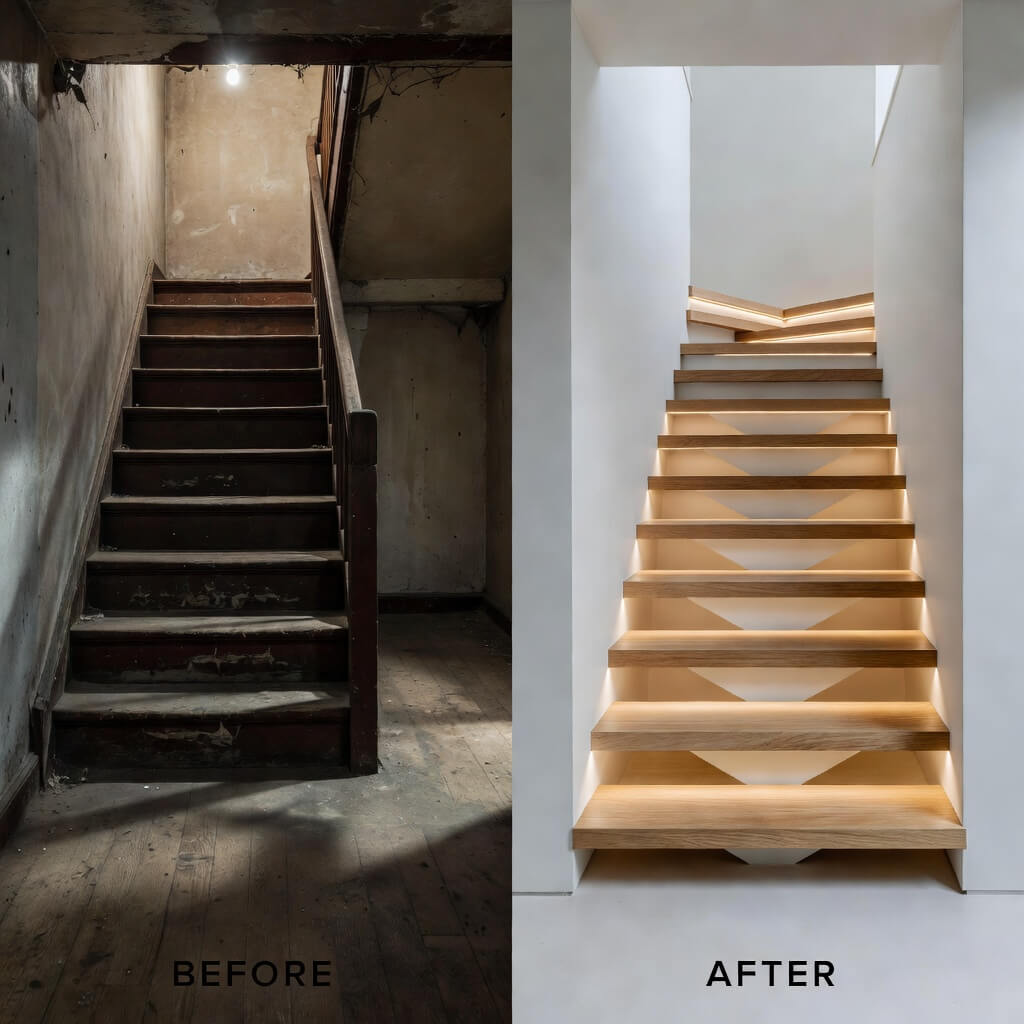
Basements are notoriously dark and cave-like, and dark stairs just compound the problem. Let’s fix that.
The dark-to-bright transformation focuses on maximizing light and creating the illusion of more space. This approach combines several elements we’ve already discussed but with one clear mission: bring the light.
Brightening strategies:
- Paint everything in light, reflective colors (whites, light grays, soft beiges)
- Add lighting at every opportunity (overhead, under-tread, along walls)
- Remove heavy carpet in favor of lighter materials
- Install mirrors on adjacent walls to bounce light around
- Choose light-colored or clear railings that don’t block light
- Paint the ceiling above the stairs white to reflect maximum light
I worked on a basement where the stairs were dark wood with dark brown walls and almost no lighting. We painted the walls a soft cream, the stairs white with light oak treads, added LED strip lighting, and installed two ceiling lights. The transformation was absolutely bonkers—it went from dungeon to actually inviting.
Lighting is non-negotiable if you’re trying to brighten a space. Natural light in basements is usually minimal, so you need to compensate with good artificial lighting. Layer your light sources—ambient overhead lighting, task lighting on the stairs, and accent lighting for drama.
Want to know a cheap trick? Add a large mirror at the bottom or top of your stairs where it can reflect both natural and artificial light. A big mirror from IKEA costs like $40, and it’ll make your space feel twice as big and twice as bright.
The psychological impact of bright stairs versus dark stairs is huge. You’ll actually want to use your basement when it doesn’t feel like descending into a cave.
Wrapping This Up
So there you have it—ten totally doable basement stair makeovers that won’t require you to take out a second mortgage or possess professional contractor skills.
The beautiful thing about basement stairs is that you can literally start with whatever fits your budget today. Maybe that’s just a gallon of white paint this month. Next month, maybe you add some LED strips. The month after that, perhaps a new handrail. These projects are forgiving, stackable, and pretty hard to completely mess up (though I’ve certainly tried).
Here’s what I want you to remember: Your basement stairs don’t have to stay sad just because they’re not on the main floor. They deserve love too. And honestly? Sometimes the projects that transform the “forgotten” spaces in our homes end up being the most satisfying.
Start small, work with what you’ve got, and don’t be afraid to get creative. Watch some YouTube tutorials, browse Pinterest for inspiration (but don’t get sucked into the vortex for three hours—we’ve all been there), and just go for it. The worst that happens is you need to repaint something. The best that happens is you create something you’re genuinely proud of.
Now get off the couch and go look at those stairs with fresh eyes. I promise they’re not as hopeless as you think. Your basement’s Cinderella moment is waiting—you just need to make it happen. And when you’re done and someone compliments your stairs, try not to talk their ear off about adhesive LED strips and the magic of white paint. (Or do. No judgment. I definitely would.)
Happy renovating, friend. You’ve got this! ????