10 Premium Outdoor Stairs Design Ideas for Elegant Homes
- Stairs Design
 Ben
Ben- 0
- 40 minutes read
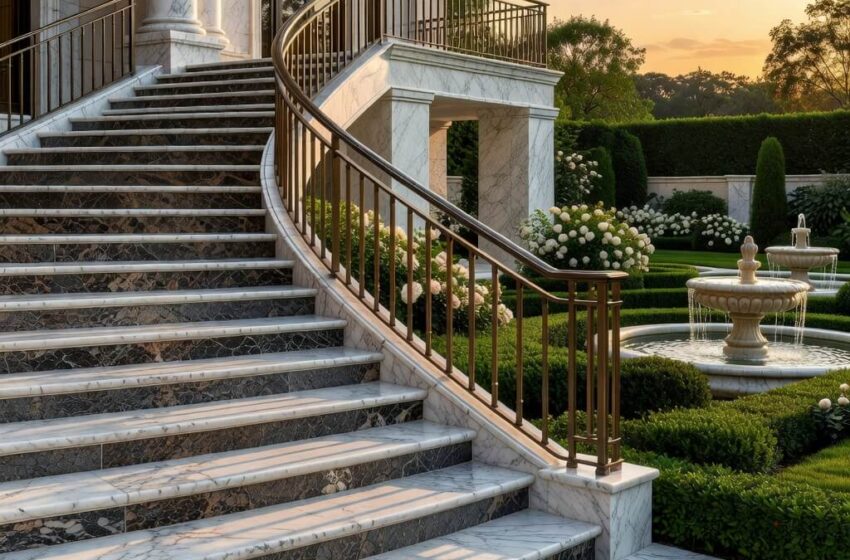
Look, I’ll be honest with you—outdoor stairs don’t exactly scream “exciting home improvement project.” Most people think of them as those boring, purely functional things you trudge up and down. But here’s the thing: I stumbled onto outdoor stair design a few years back when renovating my garden, and suddenly my whole perspective flipped. These architectural features can literally transform your home’s exterior from “meh” to “magazine-worthy.”
You know what separates a house from a HOME? The details. And trust me, premium outdoor stairs aren’t just about getting from point A to point B anymore. They’re statement pieces, conversation starters, and frankly, they can boost your property value faster than you can say “curb appeal.” So grab your coffee, get comfy, and let me walk you through ten seriously stunning outdoor stair designs that’ll make your neighbors do a double-take.
Modern Floating Concrete Outdoor Stairs Design
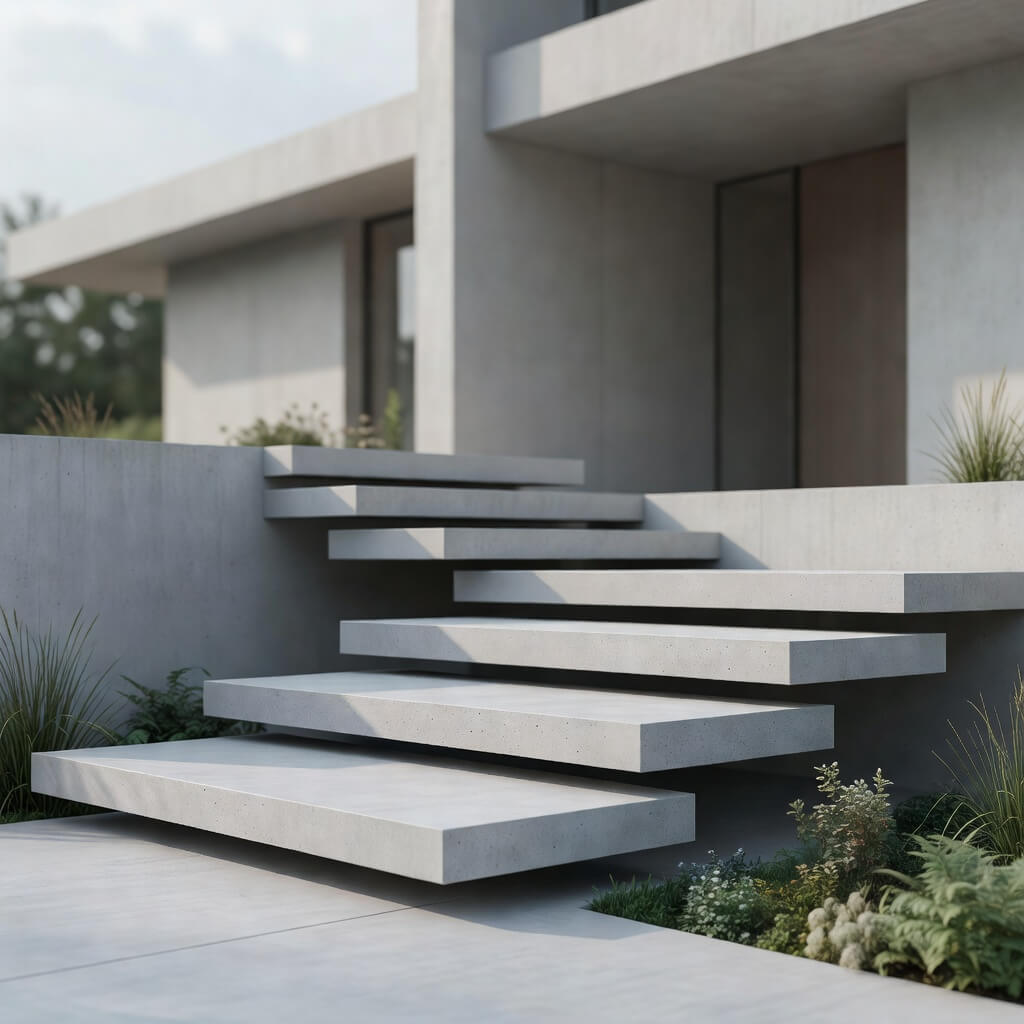
Ever seen those sleek concrete steps that look like they’re defying gravity? Yeah, those floating beauties make my heart skip a beat every single time.
Floating concrete stairs bring this ultra-modern vibe that screams contemporary elegance. I remember visiting a friend’s hillside property where they installed these bad boys, and honestly, I spent half the evening just staring at them like some weirdo. The magic lies in how they appear to hover without visible support structures—though obviously, they’re engineered with hidden steel reinforcements that do all the heavy lifting.
Why Floating Concrete Works
Here’s what makes this design absolutely killer:
- Visual Lightness: Despite concrete being heavy, the floating design creates an airy, weightless appearance
- Clean Lines: No clutter, no fuss—just pure geometric perfection
- Durability: Concrete laughs in the face of weather, insects, and time itself
- Customization: You can add different finishes, from smooth polish to exposed aggregate
The installation isn’t exactly a weekend DIY project (unless you’re a structural engineer with serious skills). You need professionals who understand cantilever construction and weight distribution. But the investment? Totally worth it, IMO.
Making It Work for Your Space
Think about pairing floating concrete stairs with minimalist landscaping. I’ve seen them look absolutely stunning against clean gravel beds or modern xeriscaping. The contrast between the structured geometry and organic plantings creates this chef’s kiss moment 🙂
One tip from my own experience: lighting makes or breaks this design. Install uplights beneath each step, and you’ll get this dramatic shadow play that looks absolutely phenomenal at dusk.
Rustic Wooden Garden Pathway Stairs Idea
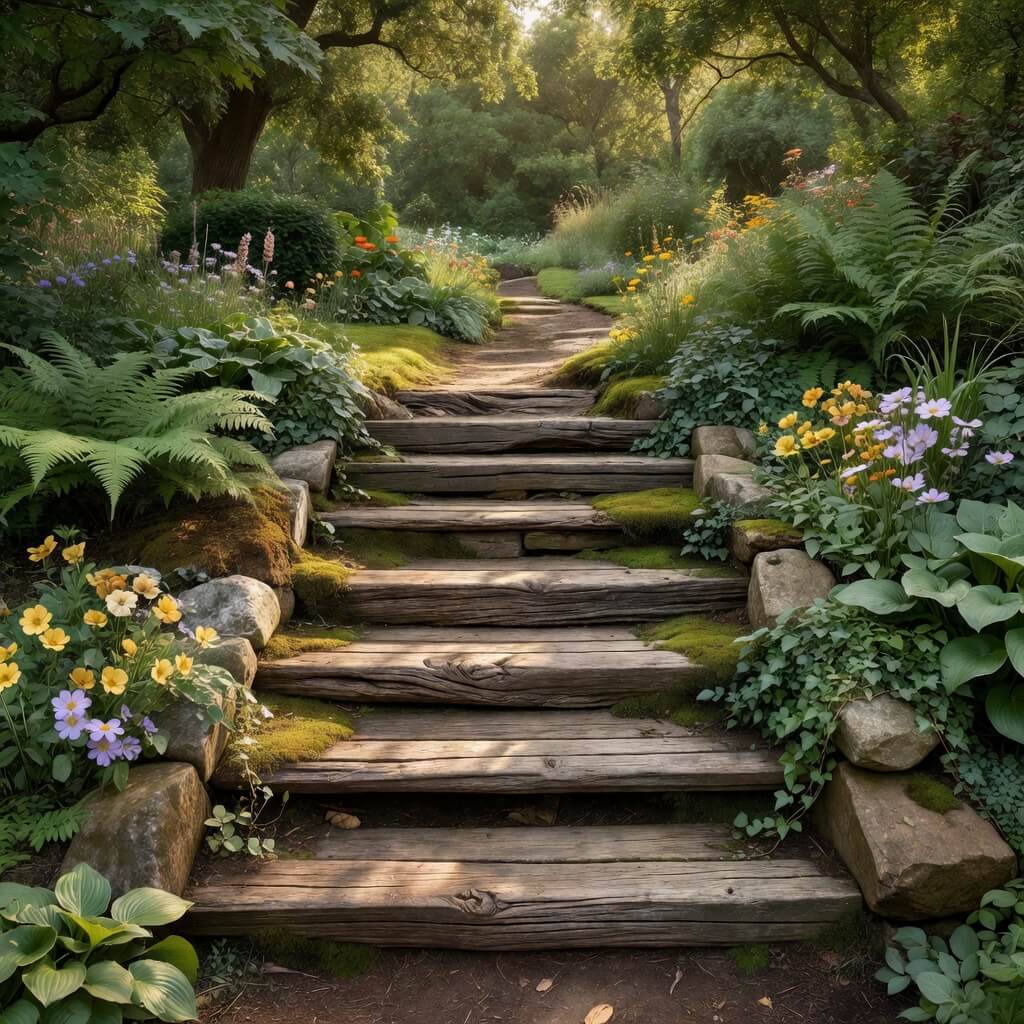
Okay, let’s swing completely the other direction. Sometimes you don’t want sleek and modern—sometimes you want that warm, earthy, “I could live in a cottage and be perfectly happy” vibe.
Wooden garden stairs bring instant charm that concrete just can’t match. I built a set of these leading down to my vegetable garden last spring, and they’ve already developed this gorgeous weathered patina that makes me ridiculously happy every time I see them.
Choosing Your Wood Wisely
Not all wood plays nice with outdoor conditions. You need to choose species that can handle moisture, temperature swings, and UV exposure without turning into splinter city. Here are your heavy hitters:
- Cedar: Naturally rot-resistant, smells amazing, ages beautifully
- Redwood: Gorgeous color, incredibly durable, but pricey
- Pressure-treated pine: Budget-friendly, widely available, needs regular maintenance
- Ipe (Brazilian walnut): Insanely hard, lasts forever, but costs a small fortune
I went with cedar for mine because the natural oils keep bugs away, and honestly, the smell during those first few months was absolutely intoxicating.
Design Flexibility You’ll Love
Wooden stairs give you creative freedom that other materials don’t. Want chunky railroad tie steps? Done. Prefer delicate lumber with decorative risers? Easy. Thinking about adding curves or irregular shapes that follow your garden’s natural flow? Wood bends to your will (sometimes literally).
The cool part about rustic wooden stairs is they actually look better as they age. That silvery-gray weathering? Pure character. Those little moss patches in the corners? Adds authenticity. Just make sure you’re sealing or treating the wood appropriately so “character” doesn’t become “structural failure.”
Minimalist Metal Frame Outdoor Stair Concept
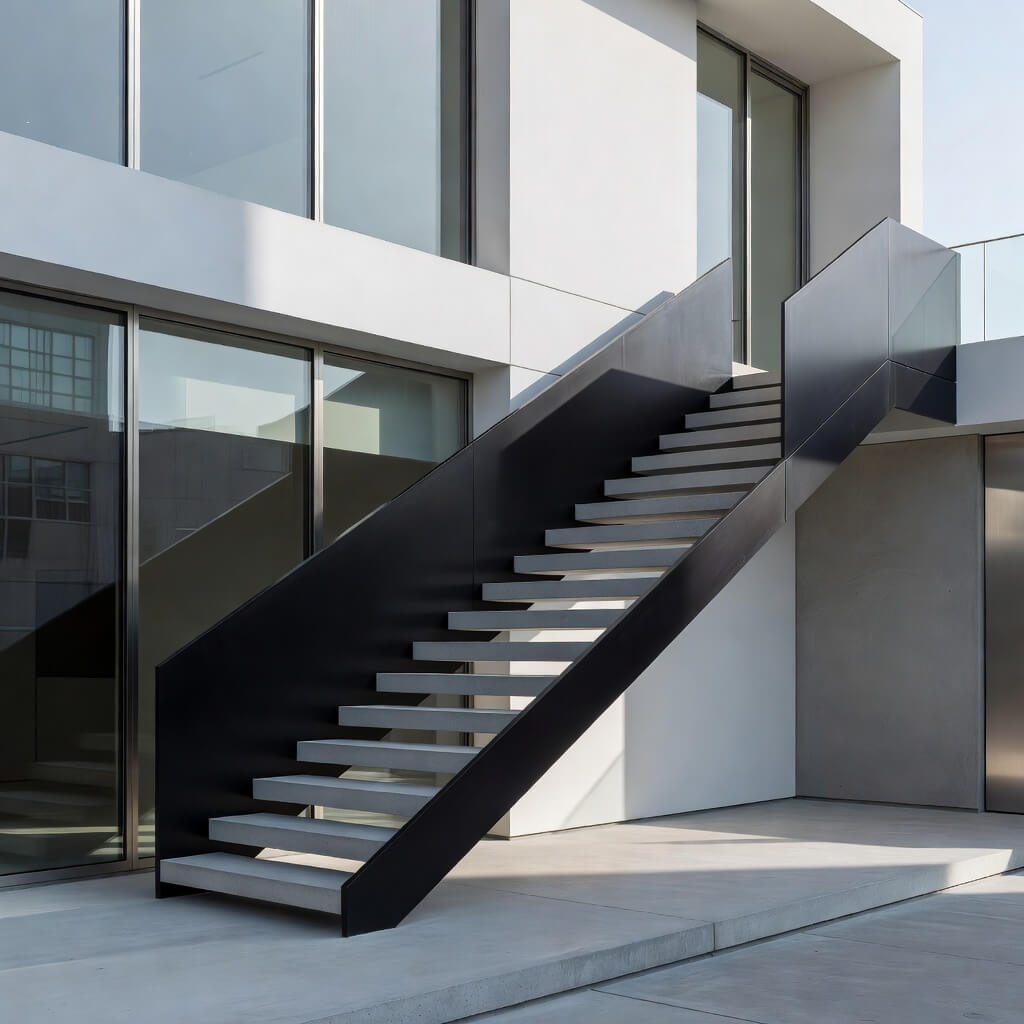
Metal stairs hit different, you know? They’ve got this industrial-chic thing happening that works equally well for urban rowhomes and modern suburban properties.
I toured a contemporary home last year where the architect designed these absolutely gorgeous steel-frame stairs with perforated metal treads, and I’m still thinking about them. The whole structure was powder-coated in matte black, creating this striking visual element against the white exterior walls.
The Perks of Metal Construction
Metal outdoor stairs bring benefits that might surprise you:
- Strength-to-weight ratio: Incredibly sturdy without being visually heavy
- Powder-coating options: Any color you can imagine, plus weather protection
- Low maintenance: No rotting, no termites, minimal upkeep
- Modern aesthetic: Clean lines that complement contemporary architecture
The biggest concern people have with metal stairs is the “won’t they get slippery?” question. Valid worry! That’s why perforated treads or textured surfaces are absolute must-haves. Water drains right through perforations, and you avoid that terrifying ice-rink effect during winter.
Customization That Speaks Volumes
Here’s what I love about metal: fabricators can create basically anything you can sketch. Want super-thin stringers for a floating appearance? Check. Need a dramatic spiral design? No problem. Thinking about mixing metal with wood treads for warmth? Chef’s kiss again!
FYI, the cost varies wildly depending on complexity and metal type. Steel remains the most affordable option, while aluminum costs more but won’t rust. Corten steel gives you that intentionally rusty, earthy vibe that’s super trendy right now.
Also Read: 10 Stylish Stairs in Living Room Ideas Interior Goals
Luxury Stone Cladded Exterior Stair Design
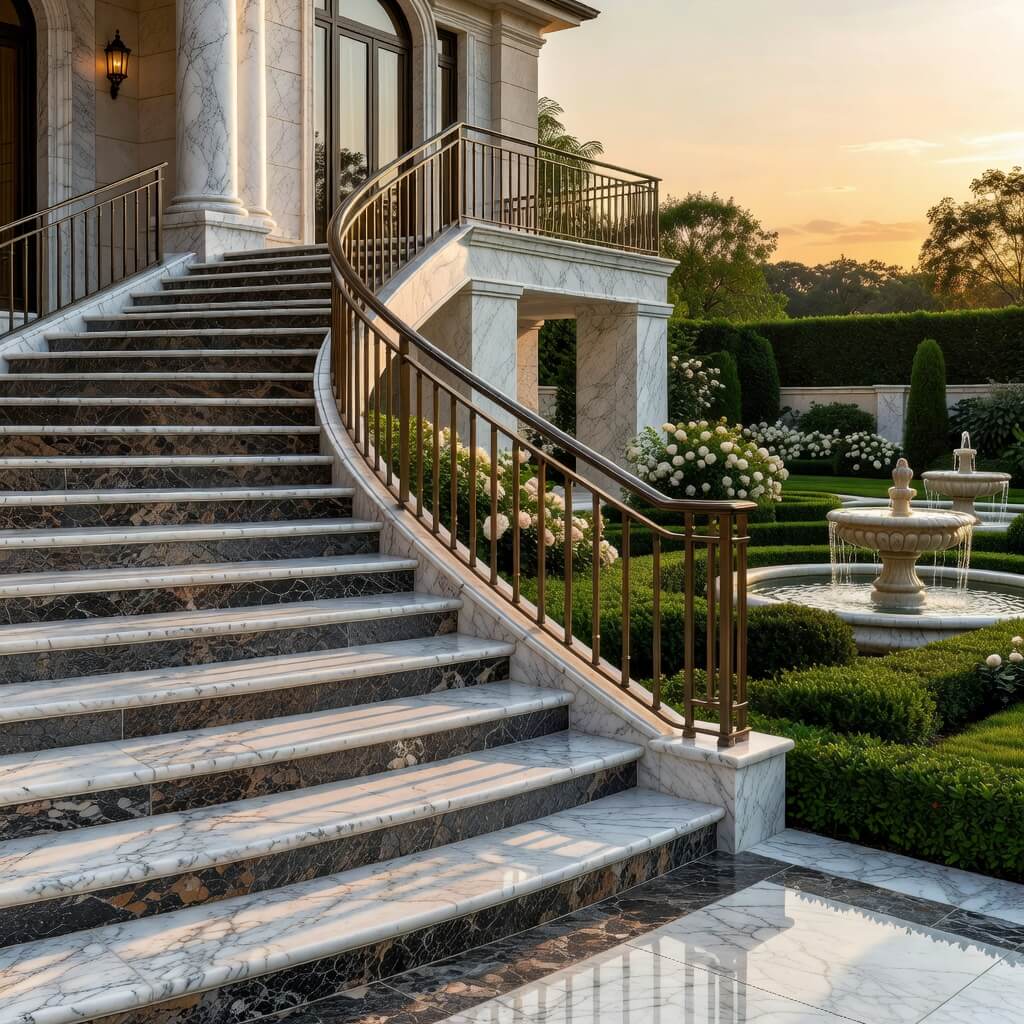
Nothing—and I mean NOTHING—says “I’ve made it” quite like stone-cladded stairs. We’re talking old-world elegance meets timeless sophistication.
My aunt renovated her Mediterranean-style home with travertine-clad stairs leading to the entrance, and guests literally compliment them every single time they visit. There’s something about natural stone that screams luxury without being obnoxious about it.
Stone Options That Impress
When you’re investing in stone stairs, you’ve got gorgeous options:
- Travertine: Earthy tones, natural texture, reasonably priced for natural stone
- Granite: Incredibly hard, resists scratching, comes in countless colors
- Limestone: Soft appearance, classic look, needs sealing
- Bluestone: Gorgeous blue-gray color, durable, perfect for contemporary designs
- Marble: Ultimate luxury, stunning veining, high maintenance
Each stone type brings its own personality to your exterior. Travertine has those characteristic holes that give it organic texture. Granite looks polished and permanent. Marble makes a statement that says “yes, I have a housekeeper.”
Installation and Maintenance Real Talk
Stone cladding isn’t cheap, and installation requires skilled masons who know what they’re doing. You’re typically looking at stone slabs or tiles applied over a concrete base structure. The concrete provides strength; the stone provides beauty.
Maintenance depends entirely on your stone choice. Granite basically laughs at everything you throw at it. Marble requires regular sealing and stains if you look at it wrong. Travertine sits happily in the middle—durable enough for regular use but needs occasional attention.
One thing I’ve learned: sealed stone stairs with proper drainage outlast basically everything else. You’re making an investment that your grandkids will inherit.
Curved Landscape Outdoor Staircase Idea
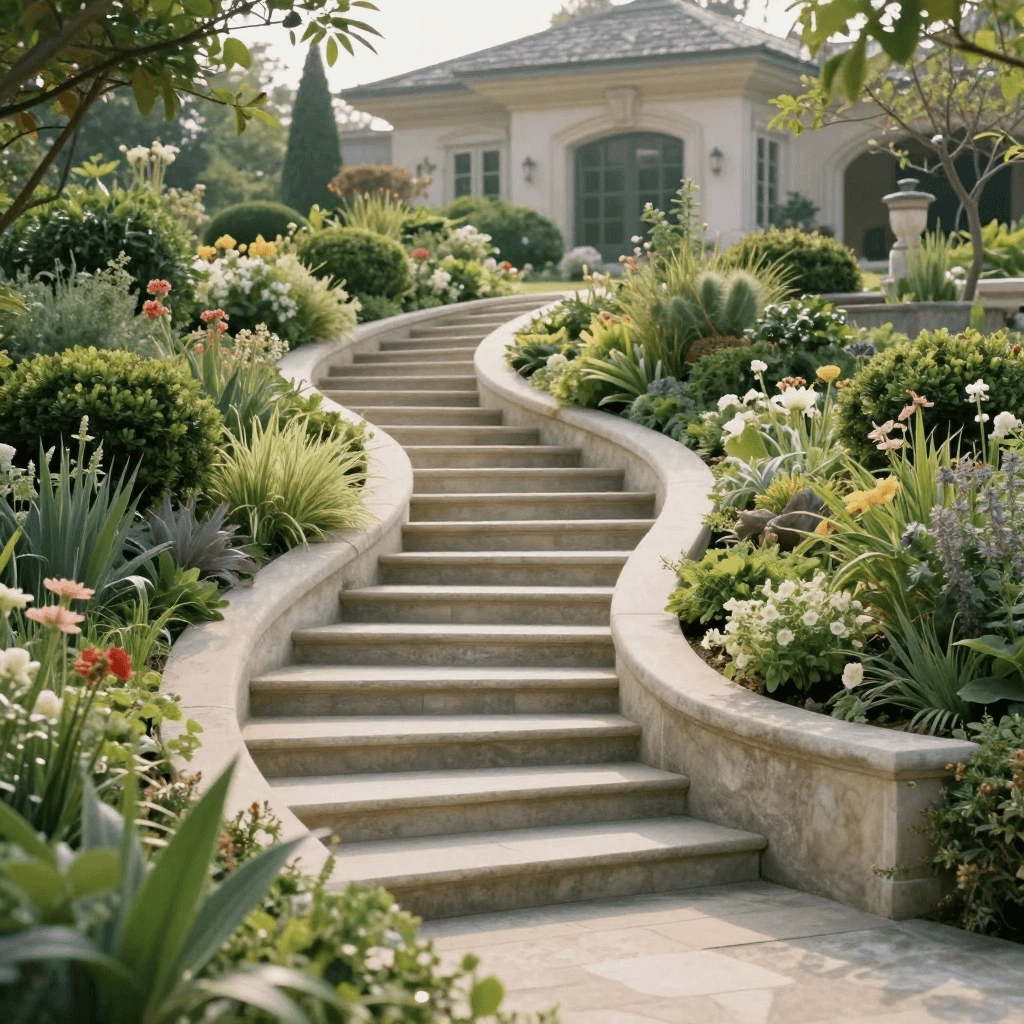
Straight lines are fine and all, but sometimes your landscape demands something more organic, more flowing, more… curved.
I visited a hillside property where the landscape designer created these sweeping curved stairs that followed the natural contours of the slope, and honestly? Art. Pure functional art. The stairs didn’t fight against the landscape—they became part of it.
Why Curves Change Everything
Curved outdoor staircases transform how people move through your property:
- Natural flow: Curves mimic natural landscape features
- Visual interest: Your eye follows the curve, creating dynamic movement
- Softer appearance: Less harsh than rigid straight lines
- Space efficiency: Sometimes curves actually save space by working with your lot’s natural shape
The psychology behind curves is fascinating too. Straight stairs feel direct and purposeful—boom, you’re going UP. Curved stairs invite exploration and create this sense of journey. They make your garden feel larger because you can’t see the entire path at once.
Materials That Bend to Your Will
Not every material loves curves equally. Stone, brick, and concrete handle curves beautifully because you’re building with individual units or moldable materials. Long wooden planks? They’ll fight you unless you’re doing gentle curves or cutting each tread individually.
I’ve seen stunning curved stairs made from:
- Brick: Individual units make tight curves possible
- Poured concrete: You can literally mold any shape you imagine
- Cut stone: Individual pieces arranged in curves
- Flexible composite materials: Modern materials designed specifically for curves
The key to successful curved stairs is professional planning. You need someone who understands rise, run, and building codes while incorporating curves that actually make sense for your landscape.
LED Lit Night Glow Outdoor Stairs Design
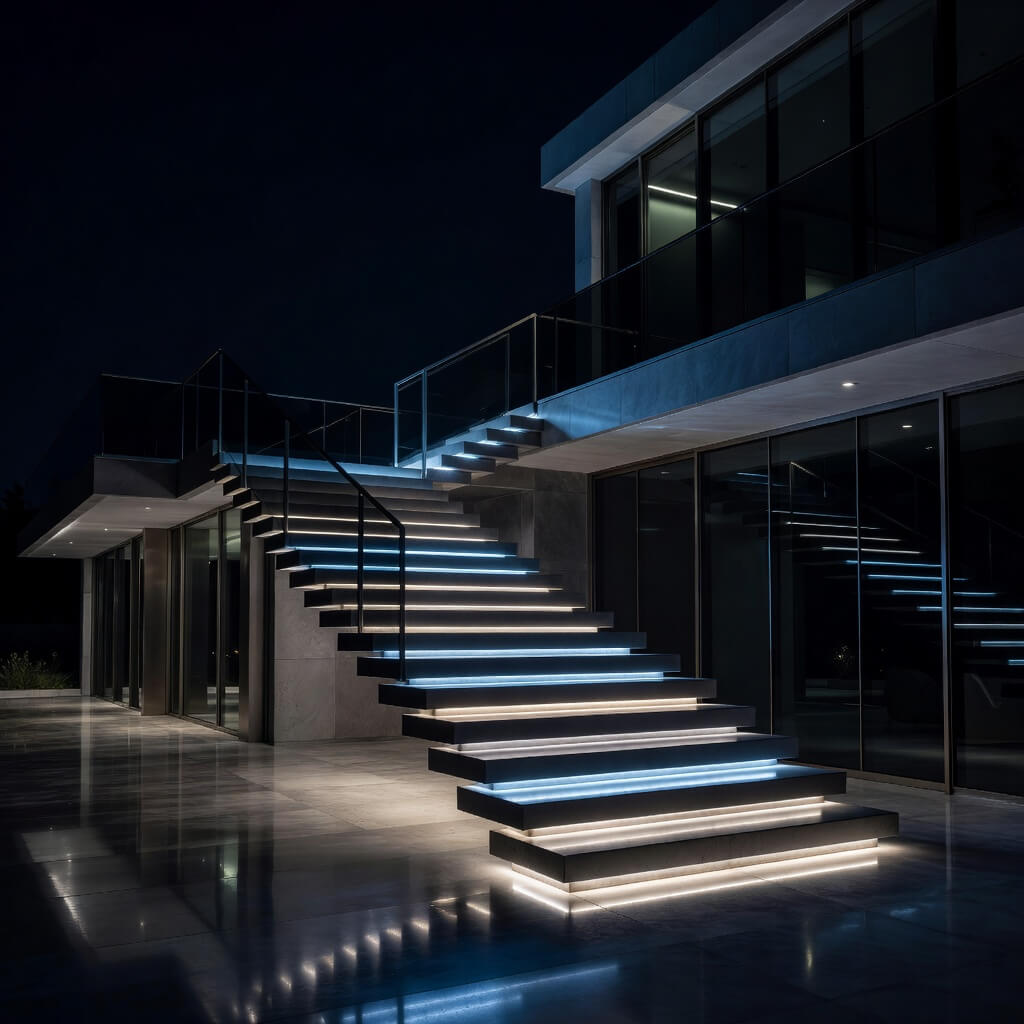
Okay, this is where outdoor stairs get downright sexy. LED-lit stairs transform safety features into nighttime spectacles.
I installed LED strip lighting under the nosing of my deck stairs, and let me tell you—every evening feels like I’m walking into a boutique hotel. The soft glow isn’t just gorgeous; it’s genuinely practical for navigating stairs after sunset without blinding yourself with harsh floodlights.
Lighting Options That Shine
Modern LED technology gives you options our parents never dreamed of:
- Strip lighting: Continuous glow under stair nosing or along risers
- Individual step lights: Small fixtures embedded in risers or sides
- Color-changing RGB: Because sometimes you want purple stairs (no judgment)
- Motion-activated: Lights trigger when you approach, saving energy
- Solar-powered: Eco-friendly option that eliminates wiring hassles
I went with warm white LED strips because they create this inviting glow without turning my yard into a nightclub. But I’ve seen color-changing setups that look absolutely stunning for outdoor entertaining.
Installation Smarts
Here’s what nobody tells you about LED outdoor stair lighting: weatherproofing matters way more than you think. Cheap connections and inadequate sealing mean your beautiful lighting system dies after one rainy season.
Invest in proper outdoor-rated LED systems with IP65 or higher ratings. Pay attention to where you’re running your wiring. Consider hiring an electrician for low-voltage lighting installation—yes, even though it’s “just” 12V systems. Trust me, doing it right the first time beats redoing failed DIY attempts.
The maintenance? Basically non-existent if you install quality components. LEDs last for years, use minimal electricity, and they don’t get hot enough to create fire hazards.
Also Read: 10 Inspiring Modern Stair Design Ideas for Small Spaces
Small Space Side Yard Outdoor Stair Solution
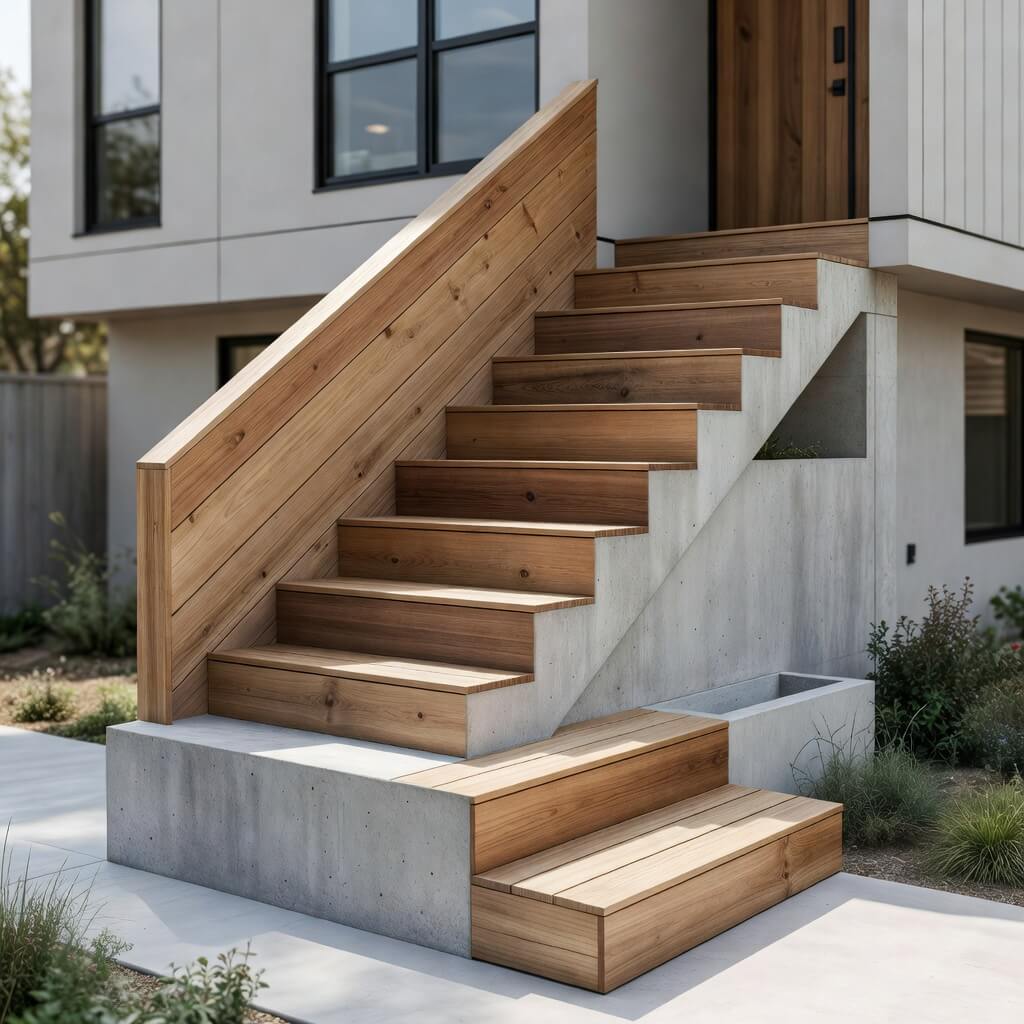
Not everyone has sprawling estates with room for dramatic staircase statements. Some of us work with narrow side yards where every inch counts :/
I faced this exact challenge with a narrow passage between my house and fence that needed stairs. Width constraints meant I had to get creative, and honestly, the solution I found works better than a standard staircase would’ve.
Maximizing Limited Width
When you’re working with tight spaces, every design decision matters:
- Alternating tread stairs: Half-width treads that alternate left-right, saving 30-40% of space
- Spiral or curved designs: Utilize vertical space instead of horizontal
- Open risers: Creates visual openness in cramped quarters
- Light colors: Makes narrow spaces feel larger
- Vertical gardens: Add greenery without stealing floor space
I ended up going with alternating tread stairs (also called ship’s ladders or paddle stairs). They look unique, save tons of space, and honestly, they’ve become a conversation piece. The learning curve for using them lasts about three trips up and down, then they feel totally natural.
Safety Without Sacrificing Space
Narrow stairs need extra safety considerations. Handrails become absolutely non-negotiable. Good lighting prevents missteps. Slip-resistant treads save you from emergency room visits.
One trick I learned: mounting handrails to the wall instead of posts saves precious width. Wall-mounted rails can be sleek and modern or traditionally decorative—your choice. Just make sure they meet local building codes for height and strength.
Small space stairs prove that limitations breed creativity. You might not have room for a grand staircase, but you can definitely create something clever and functional that maximizes every available inch.
Green Integrated Planter Outdoor Stairs Idea
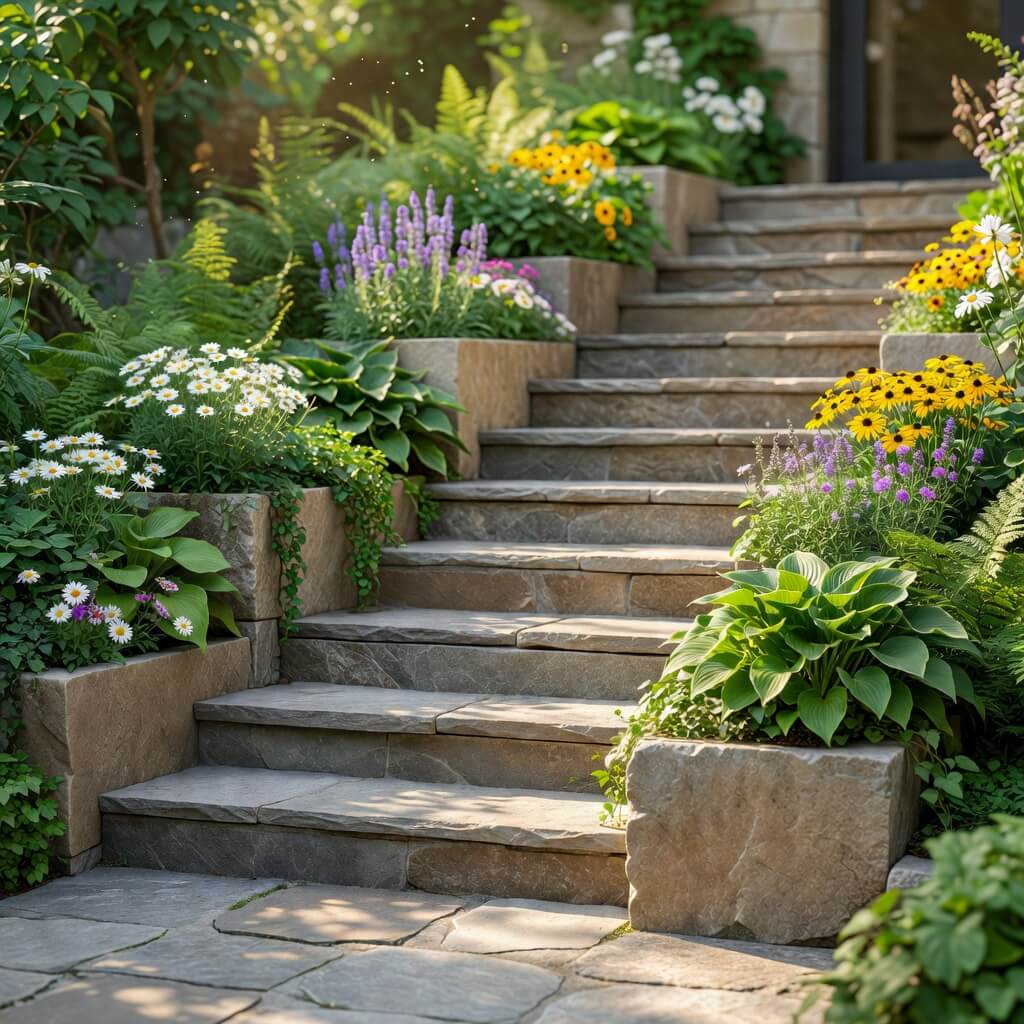
Why should stairs just be stairs when they could also be vertical gardens? Combining planters with your outdoor stairs creates this lush, living architectural feature that evolves with the seasons.
My neighbor built stairs with integrated planters along the sides, and watching them change through spring, summer, and fall is genuinely delightful. Spring bulbs give way to summer perennials, which transition to fall ornamental grasses. The stairs literally never look the same twice.
Design Integration Approaches
You can incorporate greenery into outdoor stairs several ways:
- Side planters: Built-in planters flanking each side of the stairs
- Riser planters: Individual planters built into vertical riser spaces
- Landing planters: Larger planted areas at stair landings and turns
- Hanging planters: Suspended containers along stair railings
- Living walls: Vertical garden systems installed beside stairs
I’m partial to side planters because they frame the stairs beautifully without interfering with foot traffic. You get this green corridor effect that makes climbing stairs feel like walking through a garden rather than just… climbing stairs.
Plant Selection Strategy
Here’s where people often mess up: they choose plants that either die immediately or take over the world. You need plants that:
- Match your climate zone: Obviously, but I’ve seen people ignore this basic rule
- Tolerate your light conditions: Full sun? Shade? Partial? Plant accordingly
- Stay appropriately sized: Monster hostas overwhelming your stairs? Not cute
- Require similar maintenance levels: Unless you enjoy constant gardening chores
For sunny stairs, I love using ornamental grasses, sedums, and lavender—all low-maintenance champions that look gorgeous year-round. Shady stairs do beautifully with hostas, ferns, and heucheras. Both situations benefit from seasonal bulbs tucked in for spring color.
The maintenance trade-off is real though. Green stairs need watering, occasional fertilizing, and seasonal cleanup. But watching bees visit your stairway lavender while you sip morning coffee? Totally worth the effort.
Glass Railing Modern Exterior Stair Design
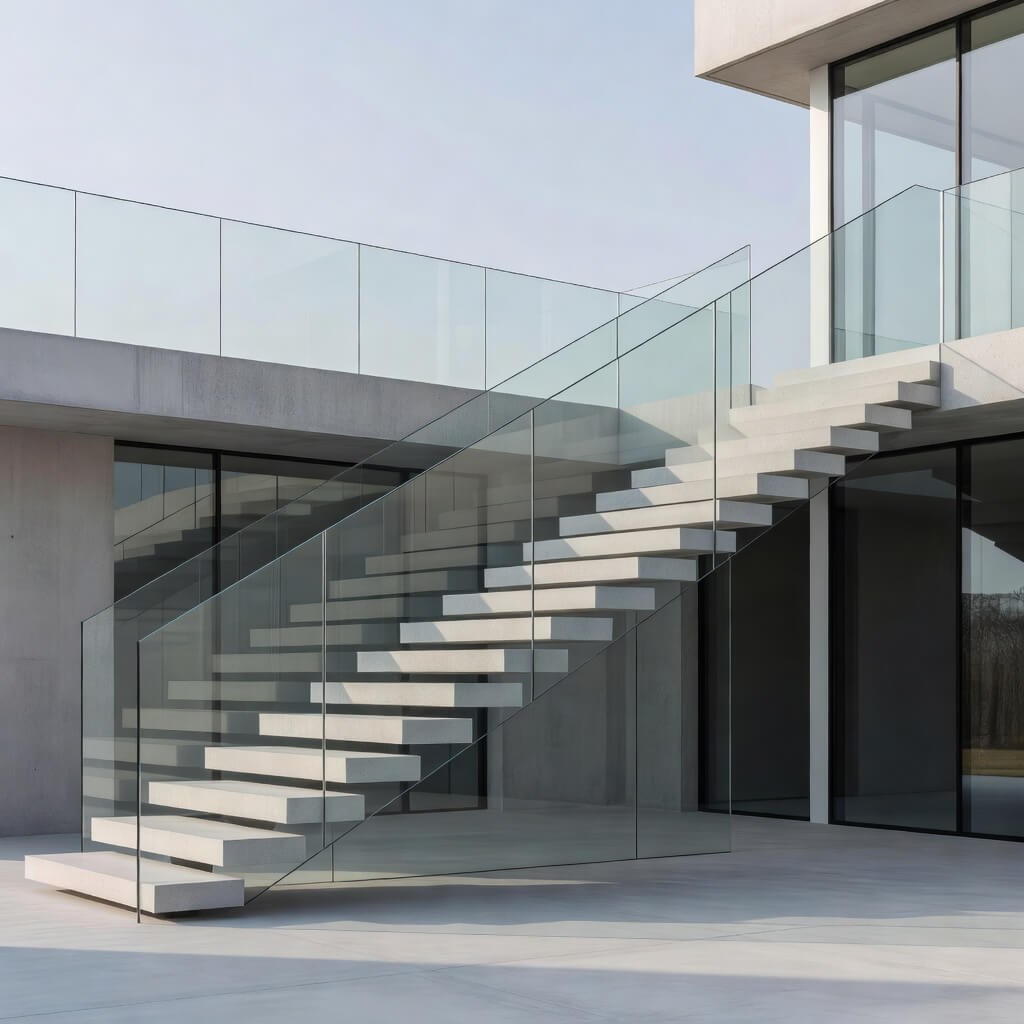
Glass railings might seem impractical at first—won’t they get dirty? Don’t they show every fingerprint?—but hear me out. The visual impact of frameless or minimal-frame glass railings on outdoor stairs is absolutely stunning.
I visited a contemporary home overlooking a lake where glass-railed stairs descended from the main deck to a lower patio. The transparent barriers preserved the lake view while providing necessary safety. Brilliant design that prioritized the vista instead of blocking it with traditional railings.
The Visual Benefits
Glass railings bring specific advantages to outdoor stair design:
- Unobstructed views: Nothing blocks your sightlines to gardens, water features, or landscapes
- Light transmission: Glass doesn’t create shadows like solid railings
- Modern aesthetic: Sleek, contemporary appearance that elevates any design
- Perceived spaciousness: Transparency makes areas feel larger and more open
The effect works especially well on elevated stairs or deck stairs where views matter. Why invest in beautiful landscaping or choose a property for its views, then block everything with opaque railings? Glass solves this elegantly.
Practical Considerations
Yes, glass requires cleaning. No, it’s not as terrible as you’re imagining. Tempered safety glass with protective coatings resists water spots and makes cleaning easier than standard glass. A quick squeegee after rain prevents most issues.
The safety aspect deserves attention: you need tempered safety glass specifically designed for railing applications. This isn’t regular window glass. When (if) it breaks, it shatters into small granules instead of dangerous shards. Building codes specify thickness requirements, typically ½-inch tempered glass for residential applications.
Cost runs higher than traditional railing materials—let’s not pretend otherwise. But if maintaining views matters to you, glass railings deliver value that transcends simple dollars.
Also Read: 10 Modern Stairs Wall Design Ideas That’ll Give You Serious
Brick and Wood Mixed Rustic Outdoor Stairs Concept
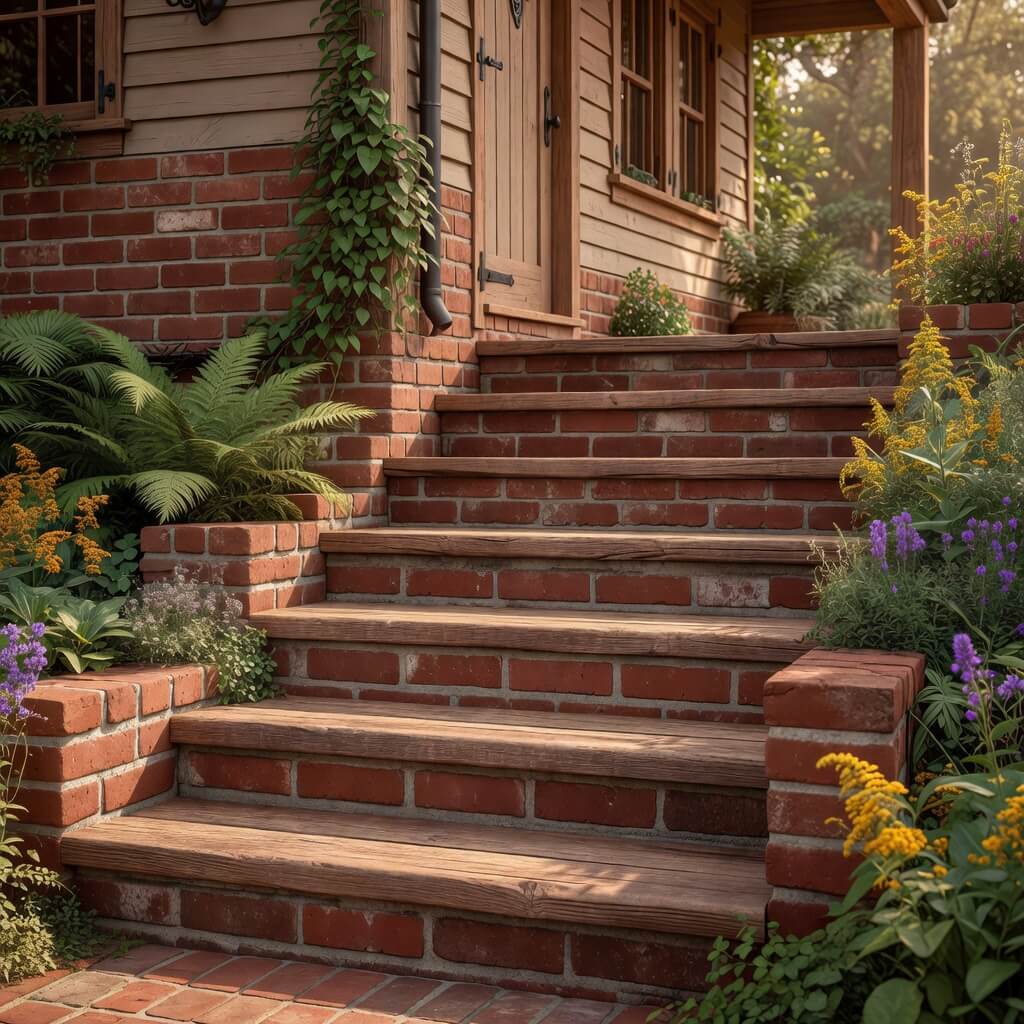
Here’s where traditional meets rustic charm in the best possible way. Combining brick and wood creates outdoor stairs with timeless appeal that works for everything from colonial revivals to modern farmhouses.
I helped a friend design mixed-material stairs for his craftsman bungalow, pairing reclaimed wood treads with brick risers. The combination brought warmth, texture, and this authentic character that plain stairs never achieve.
Why This Combination Works
Brick and wood complement each other perfectly:
- Textural contrast: Rough brick against smooth wood creates visual interest
- Color variation: Warm brick tones and rich wood grains layer beautifully
- Durability combination: Brick handles moisture better; wood provides comfortable treads
- Historical authenticity: Traditional pairing that’s stood the test of time
The practical benefits matter too. Brick risers handle water exposure, splashing, and ground moisture without rotting. Wood treads provide warmer, more comfortable walking surfaces than brick alone. Each material does what it does best.
Design Variations Worth Considering
You can interpret the brick-and-wood concept several ways:
- Brick risers, wood treads: Classic approach that’s tried and true
- Brick sides, wood steps: Wood stairs framed by brick cheek walls
- Alternating materials: Creative patterns mixing both throughout
- Brick foundation, wood structure: Brick base supporting wooden stairs above
My favorite approach uses reclaimed or salvaged materials whenever possible. Old brick brings patina and character impossible to replicate with new materials. Reclaimed wood beams for treads add history and often superior durability compared to new lumber.
Maintenance Reality Check
Both materials need appropriate care. Wood requires sealing or staining every few years depending on exposure and climate. Brick might need occasional repointing if mortar deteriorates. Neither material is maintenance-free, but both age gracefully when properly cared for.
The beauty of this combination is how it matures over time. Wood develops gorgeous weathered patina. Brick might grow moss or lichen in shaded areas (which I personally love, though some people frantically scrub it away). The stairs develop personality as they age instead of just looking worn out.
Wrapping This Up
Look, I’ve gone on way longer than I probably should have about outdoor stairs, but honestly? This stuff genuinely excites me. Your outdoor stairs represent this perfect intersection of function and beauty—they HAVE to work properly for safety and building codes, but they can also absolutely transform your home’s exterior character.
Whether you’re drawn to the sleek minimalism of floating concrete, the warm charm of wooden garden steps, the industrial edge of metal frames, or any combination of materials and styles we’ve covered, remember this: the best outdoor stair design is the one that genuinely fits YOUR home, YOUR lifestyle, and YOUR budget.
Don’t let anyone shame you for choosing practical over flashy, or vice versa. I’ve seen gorgeous budget-friendly stairs built with creativity and sweat equity that outshine expensive contractor installations that lacked soul. The magic isn’t just in the materials—it’s in thoughtful design that considers your specific property, needs, and aesthetic preferences.
And hey, if you tackle any of these outdoor stair projects, take it from someone who’s made every possible mistake: measure twice (okay, three times), invest in proper structural support, prioritize safety alongside beauty, and don’t skip steps in the process just because you’re excited to finish. Your future self navigating these stairs for years to come will thank you for doing it right the first time.
Now get out there and create some stunning outdoor stairs that make your neighbors wonder if they should up their game. You’ve got this!