10 Inspiring Modern Stair Design Ideas for Small Spaces
- Stairs Design
 Ben
Ben- 0
- 31 minutes read
Picture this: you walk into someone’s home and the first thing that stops you dead in your tracks isn’t their fancy art collection or that ridiculously expensive coffee table. It’s their staircase. Yeah, you heard me right—stairs can absolutely steal the show, especially when you’re working with limited square footage.
I’ve been obsessed with compact living solutions for years now (blame my tiny apartment phase), and let me tell you something—small spaces don’t mean compromising on style. If anything, they force you to get creative, and that’s where these modern stair designs come in clutch.
Whether you’re renovating a cramped townhouse or designing a loft that’s tighter than your jeans after Thanksgiving, these ten stair ideas will make you rethink everything you thought you knew about vertical circulation. Ready to turn that necessary evil into your home’s crown jewel?
Floating Glass Edge Staircase
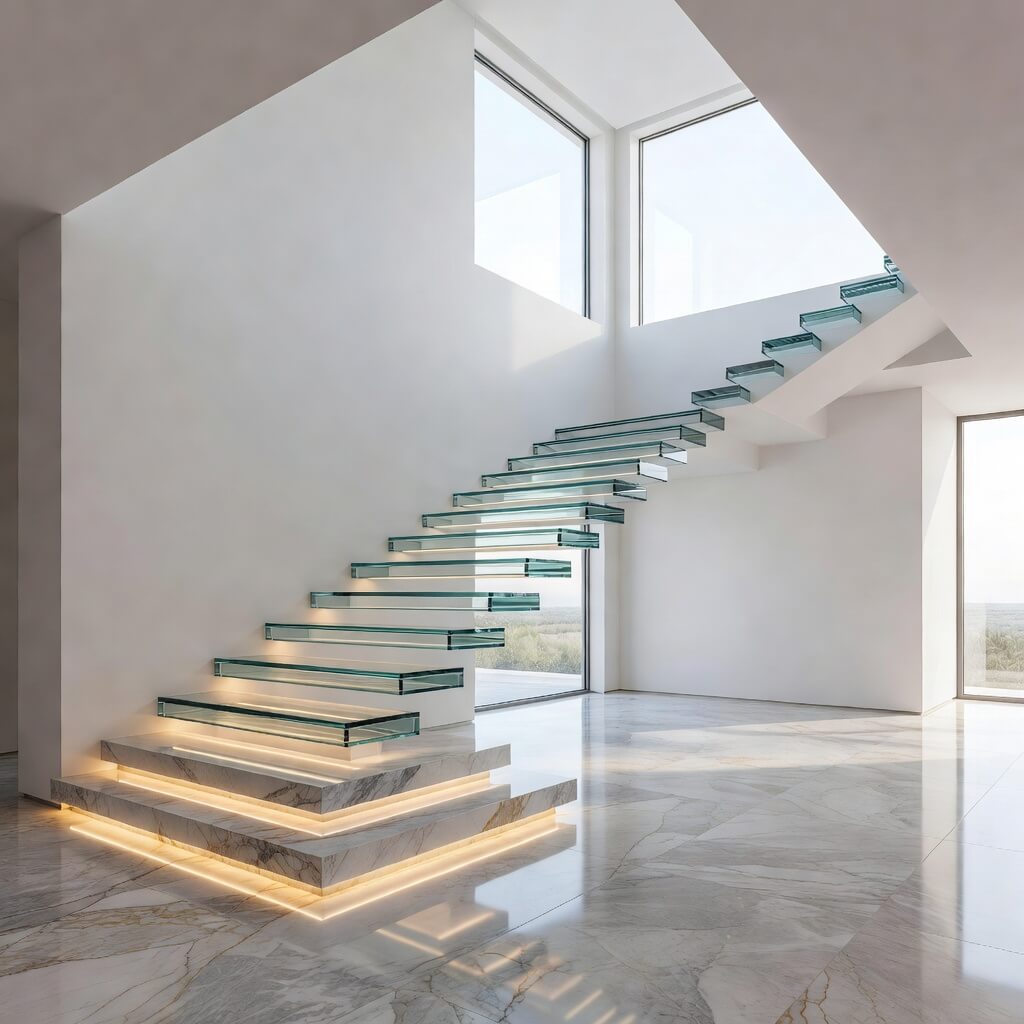
Let’s kick things off with something that’ll make your guests do a double-take. Floating glass edge staircases are basically the magicians of the stair world—they create the illusion of steps suspended in mid-air while keeping your space feeling incredibly open.
The magic happens with the combination of thick glass treads and minimal structural support. Usually, you’ll see these bad boys anchored to one wall with a sleek steel or aluminum spine running underneath. The glass edges catch and reflect light in ways that make your small space feel exponentially larger.
Now, before you start panicking about safety (because I know you are), modern laminated glass is ridiculously strong. We’re talking about glass that can handle way more weight than your average family gathering. The key specifications you want to look for include:
• Minimum 1.5-inch thick laminated glass treads
• Structural glazing adhesive for edge mounting
• Hidden steel reinforcement within the glass layers
• Non-slip surface treatment on top
The downside? Your wallet might feel a bit lighter—quality glass staircases typically run between $15,000-$40,000. But honestly, when you factor in the visual square footage you gain back, it’s like getting free space.
I’ve seen these work particularly well in modern townhomes where natural light is premium real estate. The transparency doesn’t block sightlines to windows, so that precious sunlight can flow through your entire vertical space.
Minimalist White Mono Stringer Stairs
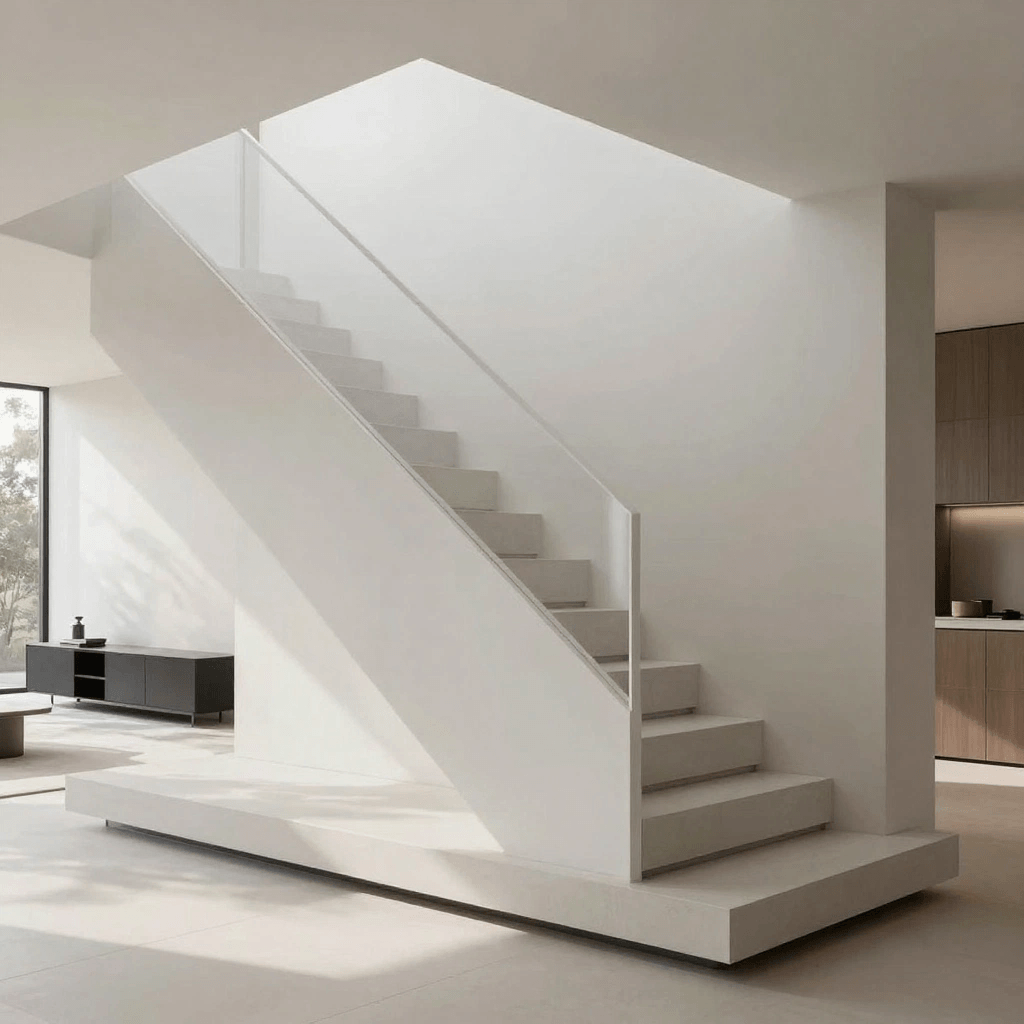
Ever noticed how some staircases just seem to disappear into the background while still looking absolutely stunning? That’s the superpower of white mono stringer stairs. These beauties use a single central support beam (the stringer) with steps cantilevered out on both sides.
The genius lies in the visual lightness. Traditional staircases with bulky side supports can make small spaces feel cramped and choppy. But with a mono stringer design, you get clean lines and maximum openness underneath for storage or just breathing room.
What makes these particularly smart for compact living is the customization potential. You can adjust the step depth, width, and spacing to fit your exact space constraints. Plus, that central stringer can double as a design element—I’ve seen people integrate lighting, built-in shelving, or even living walls into that central spine.
The construction typically involves:
• Engineered steel or laminated wood central beam
• Powder-coated white finish for durability
• Hidden connection hardware for clean aesthetics
• Optional under-stair storage integration
Installation is surprisingly straightforward compared to more complex floating designs, which means lower labor costs. You’re looking at roughly $8,000-$20,000 depending on materials and length.
Pro tip from my own experience: if you’re going with wood, spring for the higher-grade engineered lumber. I learned this the hard way when a friend’s cheap pine stringer started showing stress cracks after just two years.
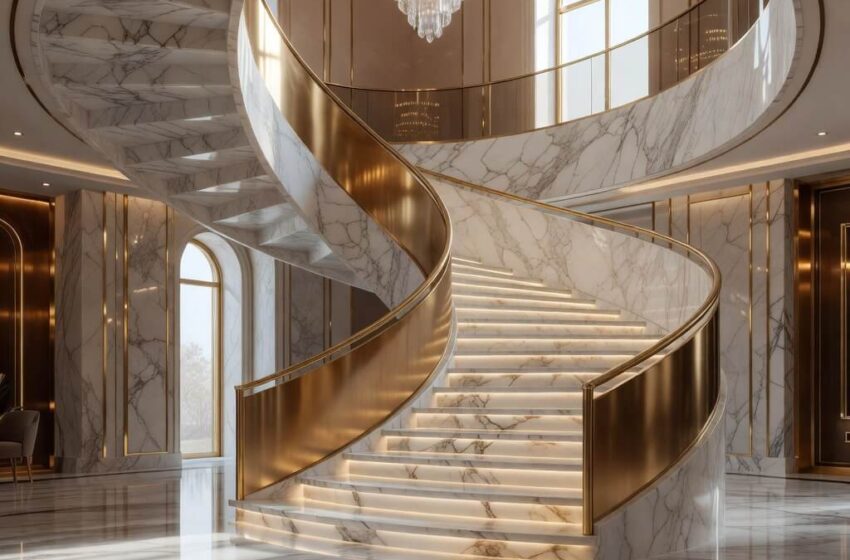
Luxury Marble Spiral Stair Design
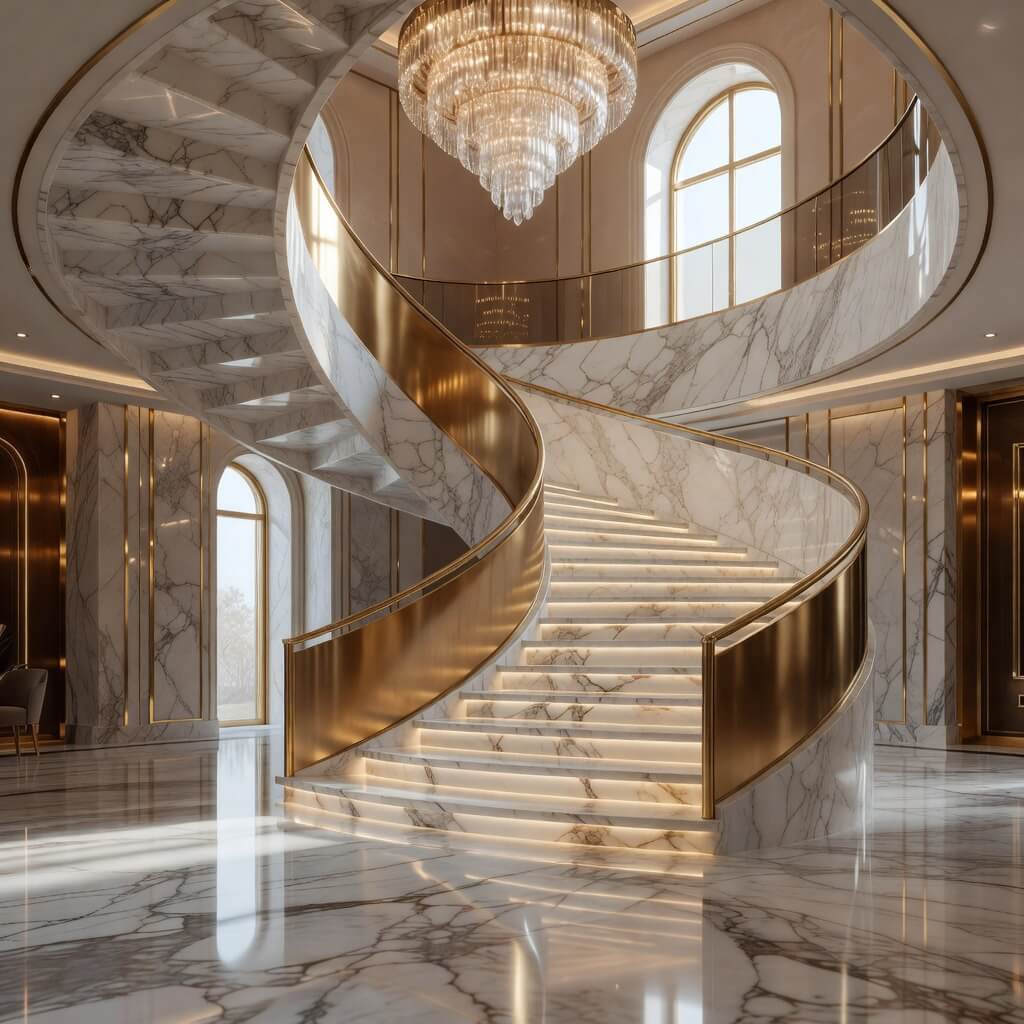
Okay, I’ll admit it—when someone first suggested marble spiral stairs for a small space, I thought they’d lost their mind. Marble? In a tiny area? But then I actually saw one in person, and holy cow, was I wrong.
Spiral stairs are naturally space-efficient, requiring only a circular footprint instead of a long linear run. Add marble into the mix, and you get this incredible sense of luxury that makes your small space feel intentionally intimate rather than just cramped.
The key to making marble spirals work in compact areas is proportion and color choice. Light-colored marbles like Carrara or Thassos reflect light and create visual expansion. The natural veining adds movement and interest without overwhelming the space.
Here’s what you need to consider for marble spiral installations:
• Solid marble treads require expert fabrication and installation
• Central steel pole provides primary structural support
• Individual steps are typically 2-3 inches thick
• Professional sealing is essential for durability
The biggest challenge? Weight distribution. Marble is heavy, so your floor structure needs to handle the concentrated load at the central support point. Most installations require structural engineering consultation, but don’t let that scare you off.
I’ve seen these work incredibly well in converted loft spaces where the industrial bones can handle the weight, and the marble adds this beautiful contrast between raw and refined.
Cost-wise, you’re entering luxury territory at $25,000-$60,000, but the resale value impact is significant. Nothing says “high-end design” quite like genuine marble stairs.
Also Read: 10 Modern Stairs Wall Design Ideas That’ll Give You Serious
Industrial Metal Frame Staircase
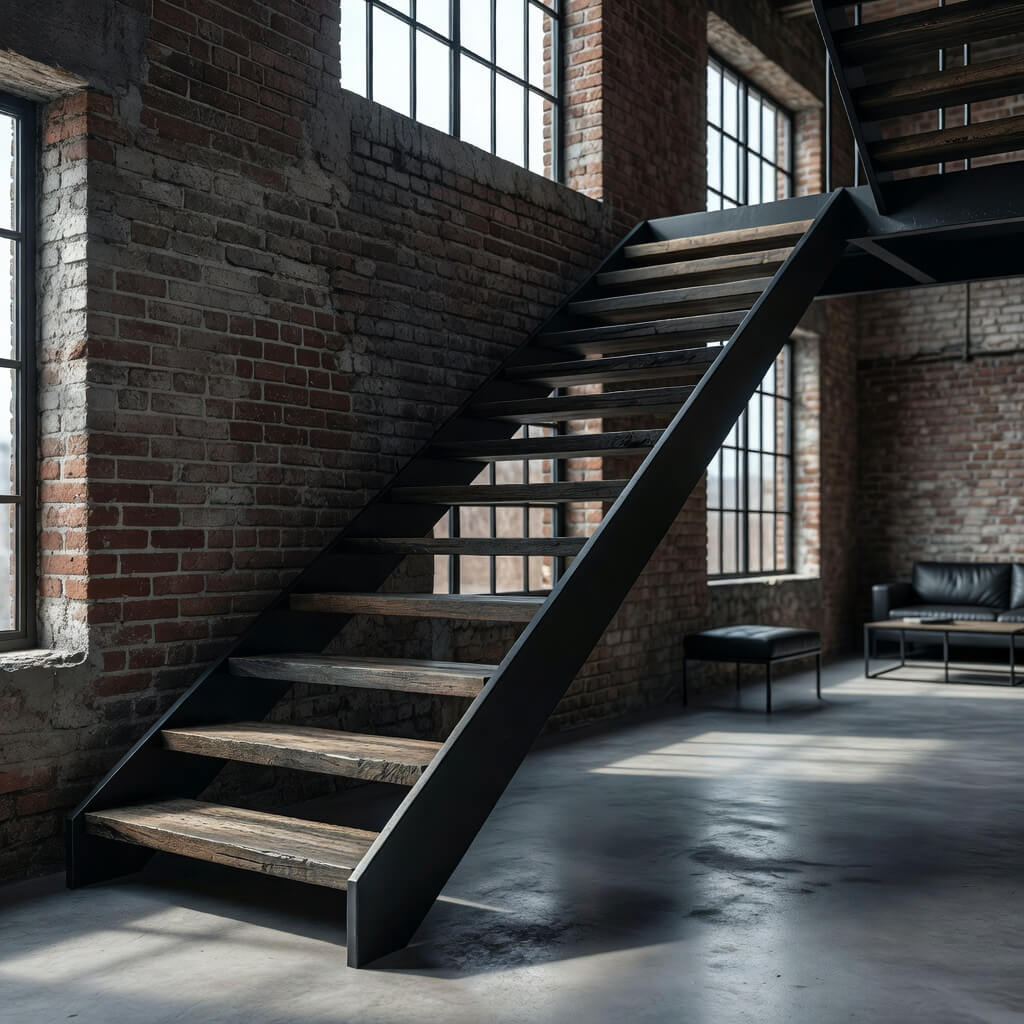
Want to know what never goes out of style? Raw, honest materials that don’t try to be something they’re not. Industrial metal frame staircases embrace this philosophy completely, and they’re surprisingly perfect for small spaces.
The beauty of industrial design lies in its structural efficiency. Every element serves a purpose—no unnecessary frills or space-wasting decorative elements. You get clean lines, open risers for visual transparency, and incredibly durable construction that’ll outlast whatever design trends come next.
Metal frame stairs work particularly well in small spaces because they can be ultra-customized to fit weird angles and tight dimensions. Traditional wood construction has limitations, but steel can be bent, welded, and configured to work with even the quirkiest architectural challenges.
The typical construction includes:
• Hot-rolled steel tube frame for maximum strength
• Powder-coated finish in matte black or raw steel
• Open riser design for visual lightness
• Wood, metal, or glass tread options
The industrial aesthetic pairs beautifully with exposed brick, concrete floors, and large windows. I’ve seen these stairs become the focal point in converted warehouse apartments where they complement the existing architectural character.
Maintenance is refreshingly simple—occasional touch-ups on the powder coating and standard cleaning. No refinishing, no special treatments, just straightforward upkeep.
Budget-wise, you’re looking at $5,000-$15,000, making industrial stairs one of the more accessible options for achieving high-impact design in small spaces.
Wooden Floating Steps with LED Lighting
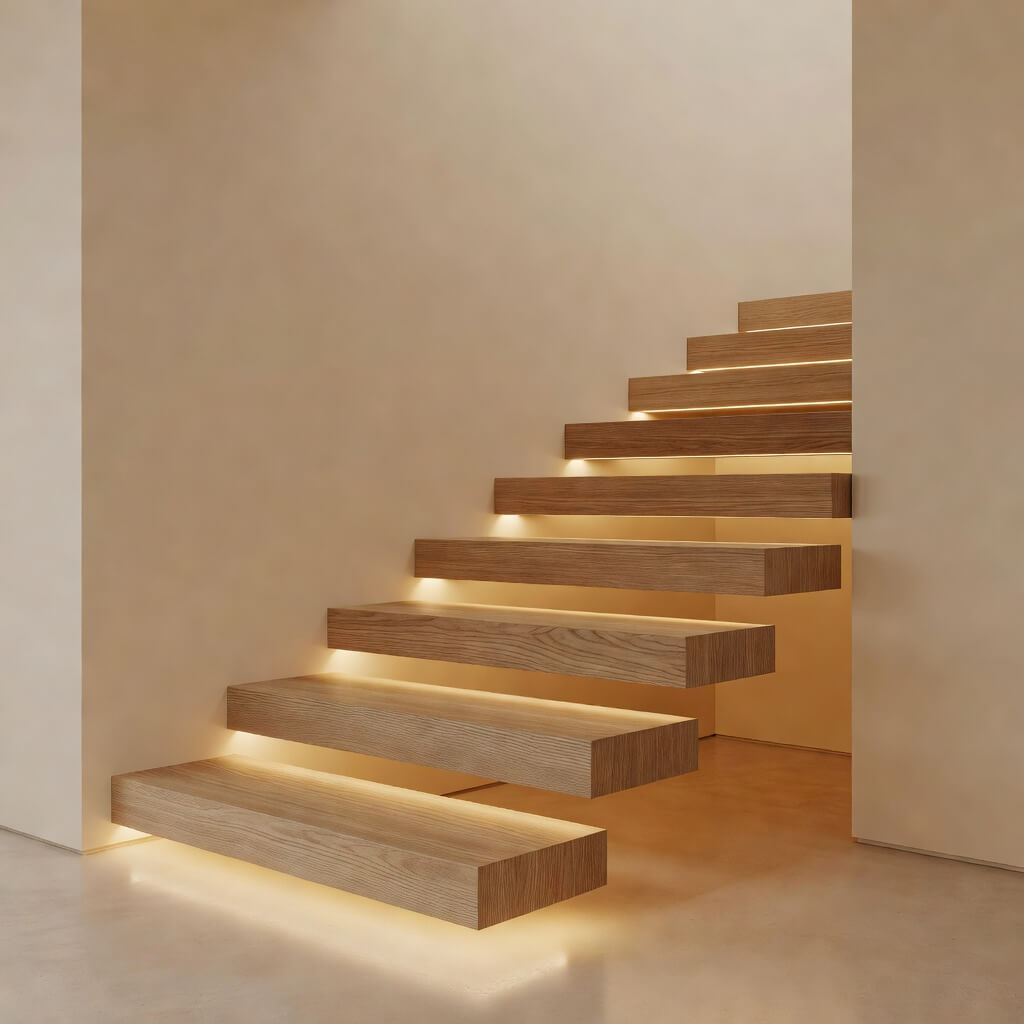
Now we’re talking about pure magic 🙂 Wooden floating steps with integrated LED lighting create this incredible floating effect while adding functional illumination to your vertical circulation.
The engineering behind these is more sophisticated than it appears. Each step is typically a thick hardwood plank (usually 3-4 inches) that cantilevers from a hidden wall-mounted cleat system. The LED strips are routed into channels cut into the underside or back edge of each tread.
What makes these absolutely brilliant for small spaces is the dual functionality. You get your stairs, obviously, but also ambient lighting that can reduce the need for additional fixtures. The upward wash of light from each step creates vertical emphasis that makes ceilings feel higher.
LED integration options include:
• Under-tread LED strips for dramatic uplighting
• Edge-lit options for subtle step definition
• Color-changing systems for mood lighting
• Motion-sensor activation for automatic operation
The wood choices are crucial here. You want something that can handle the cantilever loads while looking stunning. White oak, walnut, and maple are the go-to choices for their strength and grain character.
Installation requires both carpentry and electrical expertise, so factor in coordination between trades. The electrical rough-in needs to happen before the finish work, and everything needs to align perfectly for that clean, integrated look.
From a practical standpoint, I love that these stairs can completely change the mood of a space. Bright white LEDs for task lighting during the day, warm amber tones for evening ambiance. It’s like having a dimmer switch for your entire vertical space.
Under-Stair Storage Modern Design
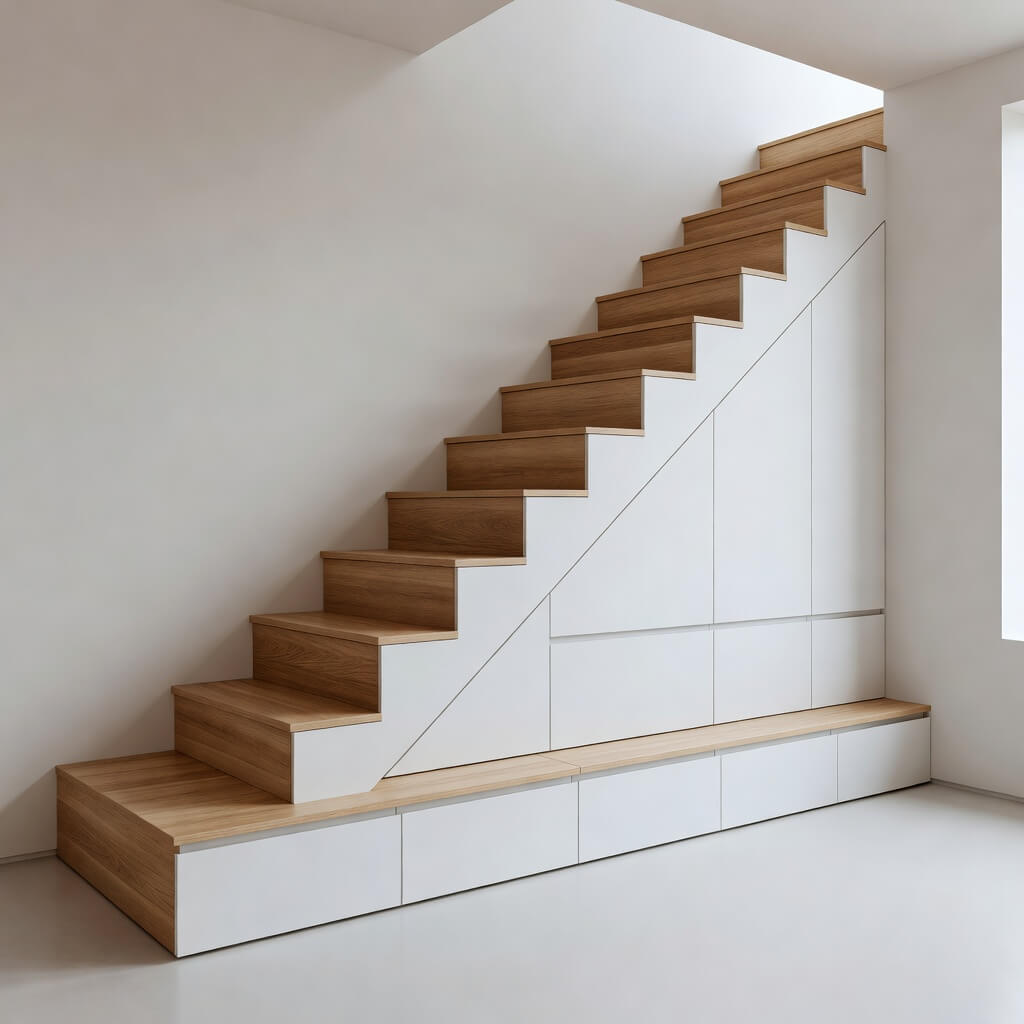
Let’s be real—wasted space under stairs drives me absolutely crazy. You’ve got this potentially valuable cubic footage just sitting there, and most people either ignore it completely or shove it full of random junk. Modern under-stair storage design changes that game entirely.
The key principle here is integration, not addition. Instead of retrofitting storage into an existing staircase, modern designs plan the storage from the ground up. This means the storage becomes part of the stair’s architectural language rather than an afterthought.
I’ve seen incredibly clever solutions that include:
• Pull-out drawer systems that follow the stair angle
• Built-in wine storage with climate control
• Home office nooks with integrated lighting and power
• Pet spaces with custom ventilation and access doors
The design challenge is making the storage feel intentional and elegant. Clean lines, consistent materials, and thoughtful proportions are essential. You don’t want your storage solution to look like you just stuffed cabinets under the stairs.
Measurement precision is absolutely critical here. Every inch matters when you’re working within the angled constraints of the stair structure. Professional design and installation usually pays for itself in maximizing the usable space.
The material choices should complement your stair design. If you’ve got white oak treads, continue that into the storage fronts. Steel frame stairs? Consider blackened steel storage doors.
Budget impact varies wildly based on complexity, but even basic pull-out storage systems typically add $3,000-$8,000 to your stair project. The value isn’t just in the storage itself—it’s in the visual organization and clutter reduction that makes your small space feel more spacious.
Also Read: 10 Brilliant Home Stairs Design Ideas for Space Saving Living
Black Steel and Glass Modern Stairs
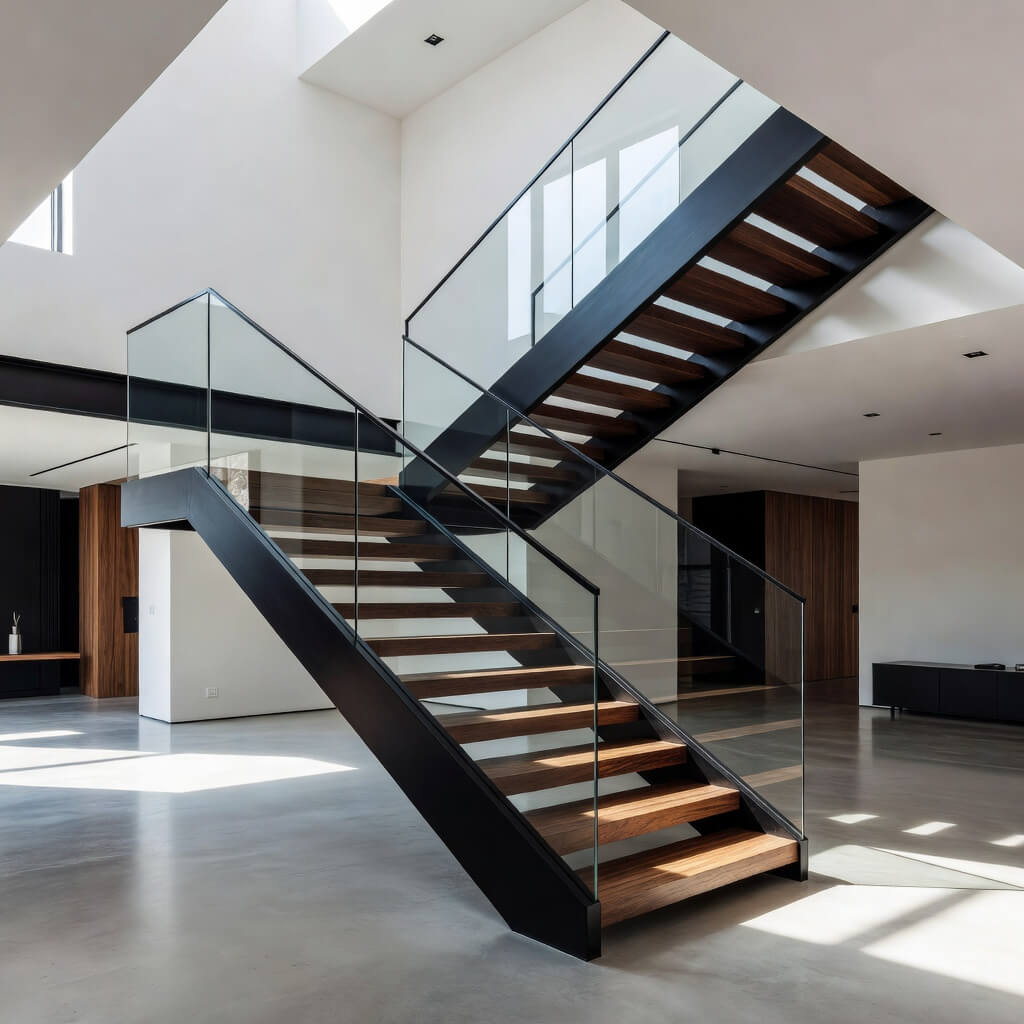
There’s something undeniably powerful about black steel and glass combinations. They create this perfect balance between industrial strength and contemporary elegance that works incredibly well in small modern spaces.
The contrast between materials is what makes this combination so visually compelling. Matte black steel provides the structural drama while clear glass keeps everything feeling open and light. It’s like getting the best of both design worlds.
What I particularly love about black steel frames is their visual weight. They create strong architectural lines that can help define spaces in open-concept small homes. The stairs become a room divider without actually blocking light or airflow.
Technical considerations for steel and glass combinations include:
• Structural steel frame capable of supporting glass panels
• Tempered glass panels with polished edges
• Precision fabrication for tight tolerances
• Powder-coated steel finish for durability
The glass can be configured in multiple ways—as infill panels between steel railings, as treads themselves, or as protective barriers. Each approach creates a different visual effect and has different budget implications.
Maintenance is surprisingly straightforward. Quality powder-coated steel resists fingerprints and scratches, while tempered glass cleans easily with standard glass cleaners. No special treatments or seasonal maintenance required.
I’ve seen these stairs work particularly well in converted industrial spaces, modern townhomes, and contemporary additions where they bridge the gap between old and new architectural elements.
The cost typically ranges from $12,000-$28,000 depending on the complexity of the glass integration and the size of the installation.
Scandinavian Open Riser Staircase
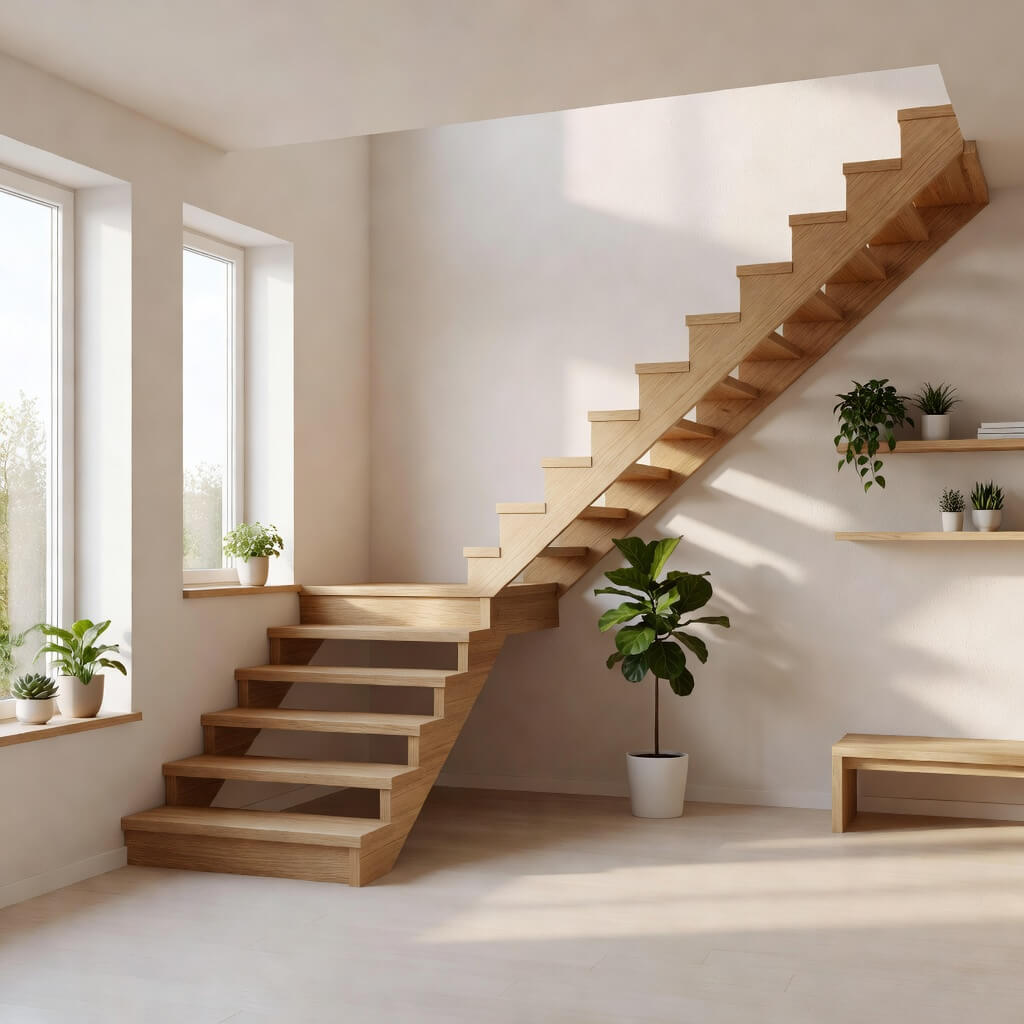
Scandinavian design principles translate incredibly well to small space stair solutions. The emphasis on natural materials, clean lines, and functional simplicity creates stairs that feel substantial without overwhelming compact interiors.
Open riser design is central to the Scandinavian approach—no vertical boards between steps means visual transparency and light penetration. Your small space feels more connected vertically, and natural light can flow through the stair structure.
The material palette is typically light-colored woods like birch, pine, or white oak with minimal or clear finishes. The goal is to celebrate the natural wood grain while keeping everything feeling fresh and bright.
Scandinavian stair construction emphasizes:
• Solid wood treads with visible grain character
• Minimal metal hardware, often in black or brass
• Clean geometric lines without unnecessary ornamentation
• Integration with built-in storage or seating
What makes this style particularly smart for small spaces is the psychological impact. Scandinavian design creates a sense of calm and order that makes limited square footage feel more livable rather than cramped.
The sustainability aspect is also worth considering. Quality Scandinavian stairs use responsibly sourced wood with low-impact finishes. They’re built to last decades, which means less environmental impact over the long term.
Installation is typically straightforward since Scandinavian design favors simple, honest construction methods. Labor costs tend to be lower than more complex contemporary designs.
Budget expectations run $6,000-$18,000, making this one of the more accessible high-quality stair design approaches.
Curved Modern Concrete Stair Design
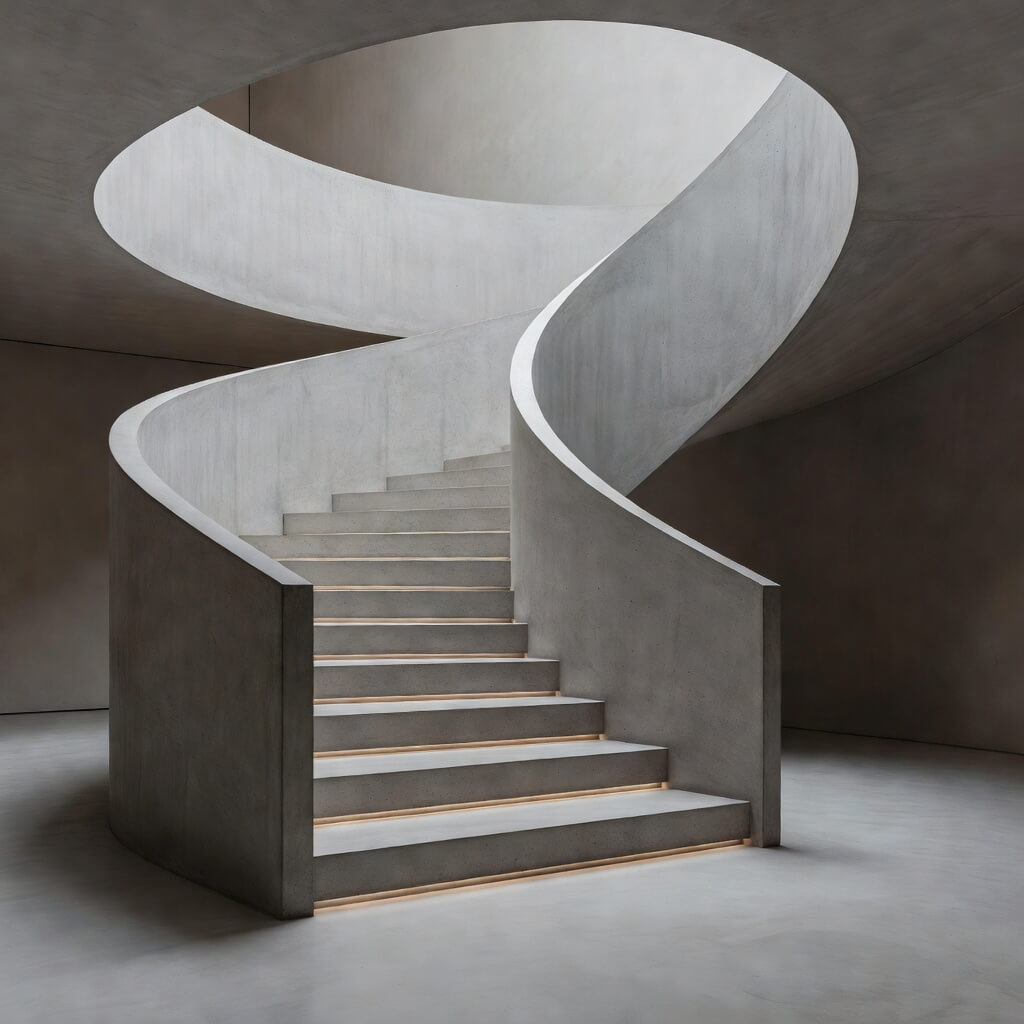
Concrete stairs in small spaces? Hear me out before you dismiss this idea :/ Modern concrete techniques can create incredibly elegant curved stairs that become sculptural focal points while maximizing space efficiency.
The magic of curved concrete stairs lies in their continuous flow. Instead of the choppy, angular geometry of traditional stairs, curves create smooth transitions that guide the eye upward and make small spaces feel more dynamic.
Modern concrete isn’t your grandfather’s heavy, rough material. Polished concrete can achieve mirror-like finishes, colored concrete can match any design palette, and advanced forming techniques allow for incredibly complex curves and details.
Key advantages of curved concrete stairs include:
• Custom formwork allows perfect fit to space constraints
• Integral color and finishes eliminate maintenance
• Thermal mass helps regulate small space temperatures
• Incredible durability and longevity
The design process requires collaboration between architects, structural engineers, and specialized concrete contractors. The curves need to be structurally sound while maintaining comfortable step proportions.
I’ve seen stunning examples where the concrete stair becomes a continuous ribbon that flows from floor to ceiling, creating this incredible sense of movement in compact spaces.
The construction process is more complex than other stair types—custom formwork, precise concrete mixing, and skilled finishing work. But the results can be absolutely breathtaking.
Budget considerations are significant at $20,000-$45,000, but you’re getting a truly custom architectural element that’ll never need replacement.
Also Read: 10 Creative Stairs and Hallway Ideas for Stylish Spaces
Space-Saving Zigzag Compact Stairs
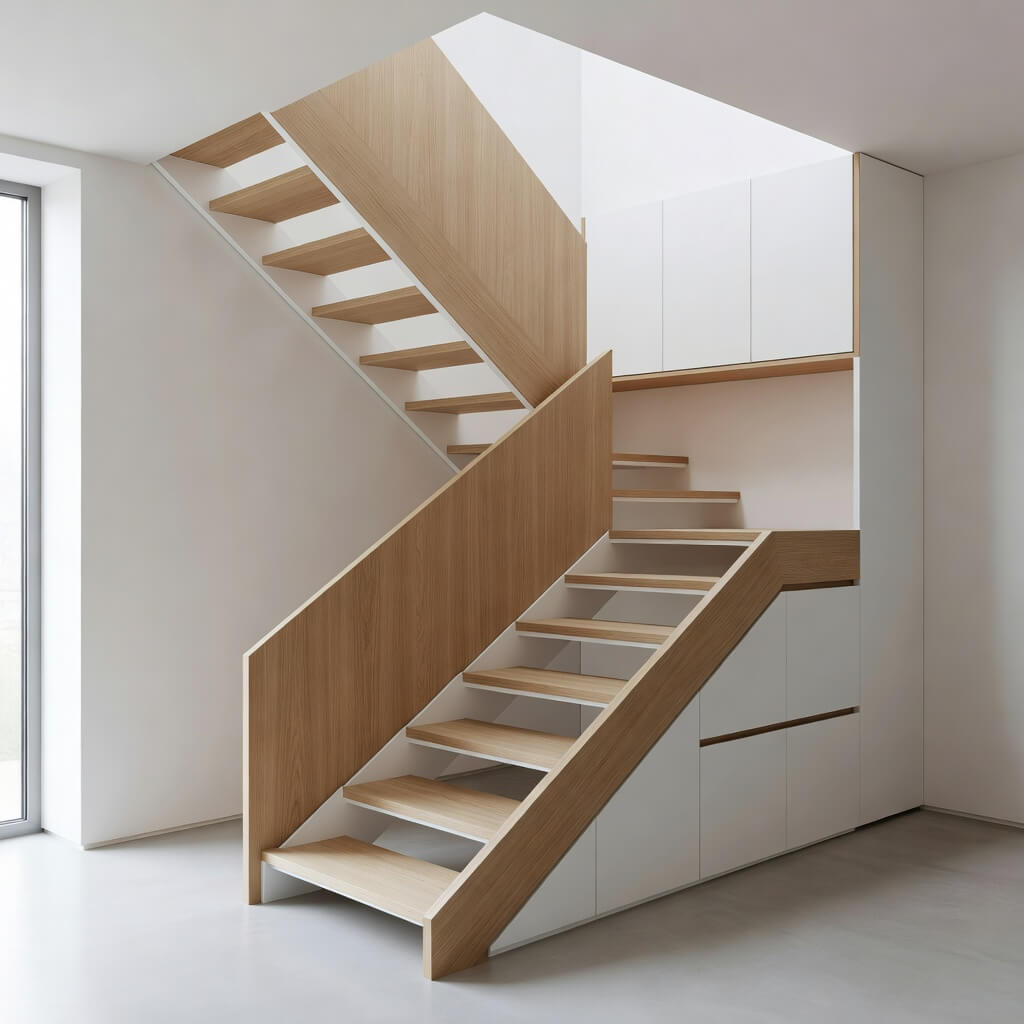
Let me introduce you to the ultimate small space problem solver—zigzag compact stairs. These brilliant designs maximize vertical circulation while minimizing the horizontal footprint, often requiring less than half the floor space of traditional straight stairs.
The zigzag configuration alternates step direction, creating this efficient back-and-forth pattern that’s surprisingly comfortable to use. Each step is deeper than it appears because you’re using your whole foot rather than just the ball of your foot like on traditional steep stairs.
What makes zigzag stairs particularly clever is their adaptability to irregular spaces. Got a weird alcove or an awkward corner? Zigzag stairs can probably work with it. They’re incredibly forgiving of spatial constraints that would make traditional stairs impossible.
Safety considerations are important here. Handrails are absolutely essential, and the step configuration needs careful design to maintain comfortable stride patterns. Building codes vary significantly for compact stair designs, so professional guidance is crucial.
Construction options range from DIY-friendly modular systems to custom-built installations. Modular systems typically cost $2,000-$6,000 and can be installed by confident DIYers. Custom builds range from $5,000-$15,000 but offer perfect integration with your space.
The psychological impact of zigzag stairs is interesting—they create this sense of adventure and playfulness that can make small spaces feel more dynamic and engaging rather than restrictive.
I’ve seen these work particularly well in tiny houses, loft conversions, and split-level additions where traditional stairs simply wouldn’t fit.
Making Your Small Space Work
After exploring all these incredible stair design options, you might be feeling a bit overwhelmed (trust me, I get it). The key to success with small space stairs isn’t just picking the prettiest option—it’s understanding how your vertical circulation fits into your overall living strategy.
Think about your daily routines, your space limitations, and your long-term plans. A floating glass staircase might be stunning, but if you’ve got kids or elderly family members, those open edges might not be practical. Industrial metal frames look incredible, but they might not jive with your cozy cottage aesthetic.
The best small space stair is the one that disappears when you don’t need it and performs beautifully when you do. Whether that’s through visual transparency, space-saving configuration, or integrated storage functionality, your stairs should solve problems rather than create them.
Remember, you’re not just buying stairs—you’re investing in a architectural element that’ll impact your daily life for decades. Take the time to work with professionals who understand both the technical requirements and the design implications.
Your small space has incredible potential. The right stair design can unlock that potential and create something truly extraordinary. Now get out there and make it happen! 🙂