10 Perfect Farmhouse Stairs Ideas for Beautiful Home Style
- Stairs Design
 Ben
Ben- 0
- 43 minutes read
Look, I’m just going to say it—stairs often get the short end of the stick when it comes to home design. You spend hours obsessing over kitchen backsplashes and living room layouts, but those steps connecting your floors? Yeah, they usually become an afterthought. But here’s the thing: farmhouse staircases can absolutely steal the show if you let them. I’ve spent way too much time scrolling through Pinterest (don’t judge me) and visiting friends’ homes, and I’ve noticed that the right staircase doesn’t just get you from point A to point B—it becomes a statement piece that ties your whole farmhouse aesthetic together.
Whether you’re renovating an old farmhouse or just trying to inject some rustic charm into your suburban home, your stairs deserve some love. I’m talking about designs that make guests stop mid-conversation and ask, “Wait, who did your stairs?” So grab your coffee, get comfortable, and let’s talk about ten farmhouse staircase ideas that’ll make you actually excited about that vertical space in your home.
Modern Rustic Farmhouse Wooden Staircase Design
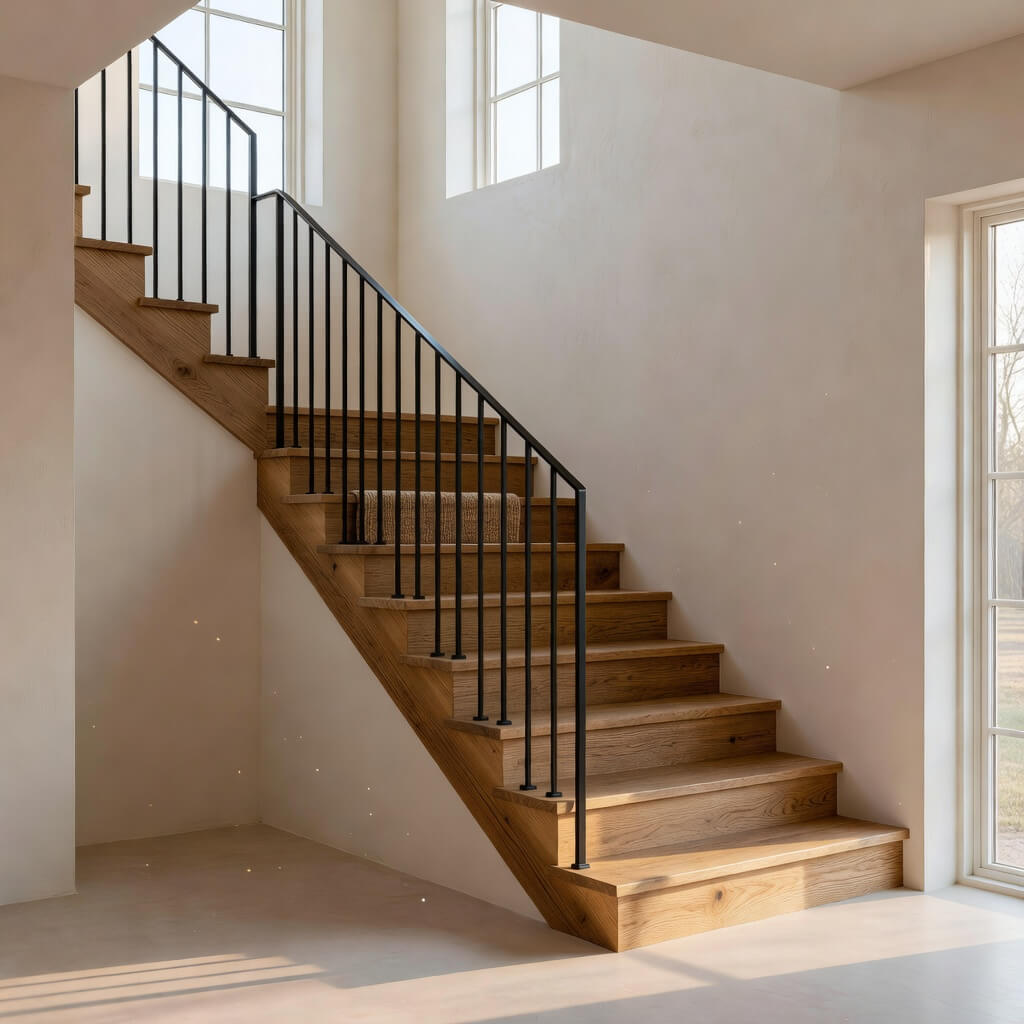
You know what makes me happy? When someone perfectly balances modern and rustic without making it look like a design identity crisis. The modern rustic wooden staircase does exactly that.
This design typically features clean lines with natural wood elements that showcase the grain and character of the material. I’m talking about thick wooden treads paired with simple, sleek supports that don’t scream “I’m trying too hard.” The beauty here lies in the simplicity—you let the wood do the talking.
What I love most about this approach is the versatility. You can go with warm oak tones for that cozy farmhouse vibe, or opt for darker walnut shades if you want something more dramatic. The modern touch comes from the minimal hardware and straight-line design, while the rustic element shines through in the natural wood texture.
Here’s what you should consider for this style:
- Thick, solid wood treads (usually 2-3 inches) that feel substantial underfoot
- Metal or wood stringers with clean, geometric shapes
- Minimal or hidden hardware to maintain that sleek look
- Natural finish or light stain that highlights wood grain
- Simple handrails without ornate detailing
Ever walked on stairs that feel solid and well-built? That’s the experience you get here. I remember visiting a friend’s renovated barn conversion, and their modern rustic staircase was the first thing that caught my eye. The chunky oak treads paired with matte black metal supports created this perfect marriage of old and new that made me slightly jealous, not gonna lie.
The trick with this design is avoiding the temptation to over-decorate. Let the wood quality speak for itself. You don’t need fancy balusters or intricate carvings—the natural beauty of good timber combined with contemporary lines creates enough visual interest on its own.
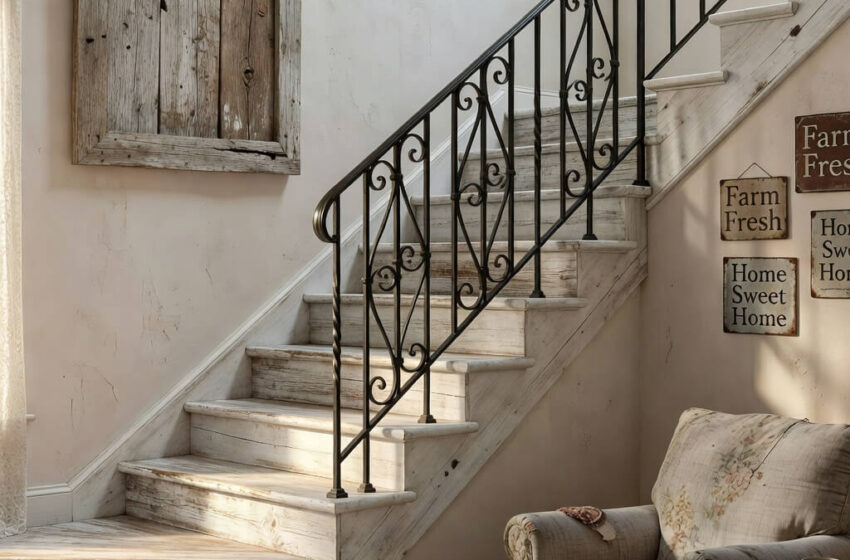
Whitewashed Farmhouse Staircase with Black Iron Railings
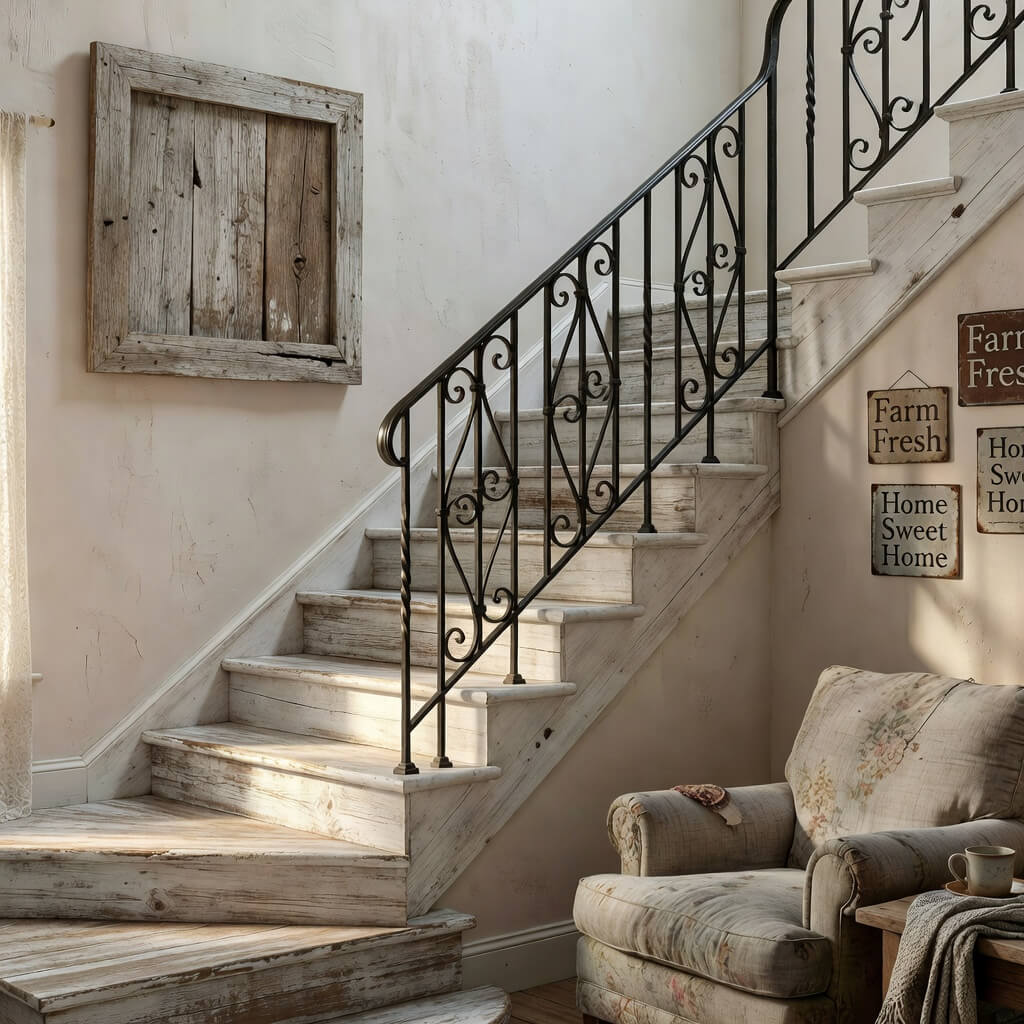
Okay, can we talk about how the whitewashed-and-black-iron combo is basically the little black dress of farmhouse design? It works. Every. Single. Time.
This look screams classic farmhouse, and honestly, it’s one of my personal favorites because it brightens up a space while maintaining that rustic character. The whitewashed or painted white treads and risers create an airy, fresh feeling that makes your stairwell feel larger and more inviting. Then you add those black iron railings and suddenly you’ve got this gorgeous contrast that adds depth and sophistication.
I’ve seen this executed in so many ways, but the most stunning versions use wrought iron balusters with simple, traditional designs. Think straight bars, subtle twists, or minimal scrollwork—nothing too elaborate. The black iron against white wood creates visual drama without overwhelming the space.
What makes this design particularly smart:
- White reflects light, making narrow stairwells feel more spacious
- Black iron adds structure and defines the staircase edges beautifully
- Easy to maintain (a quick wipe-down keeps it looking fresh)
- Works with various farmhouse substyles from modern to traditional
- Budget-friendly if you’re painting existing stairs white
Here’s a pro tip I learned the hard way: if you’re going the whitewashed route rather than solid paint, test your technique on scrap wood first. Whitewashing shows the wood grain underneath, which is gorgeous, but getting the consistency right takes practice. You want translucent white, not streaky mess 🙂
The railings deserve special attention too. I’d suggest investing in quality iron components rather than cheap alternatives. The difference in craftsmanship shows, and since railings are both functional and decorative, you want them to last. Plus, you’re literally grabbing these every day—quality matters.
Cozy Country Style Carpeted Farmhouse Stairs
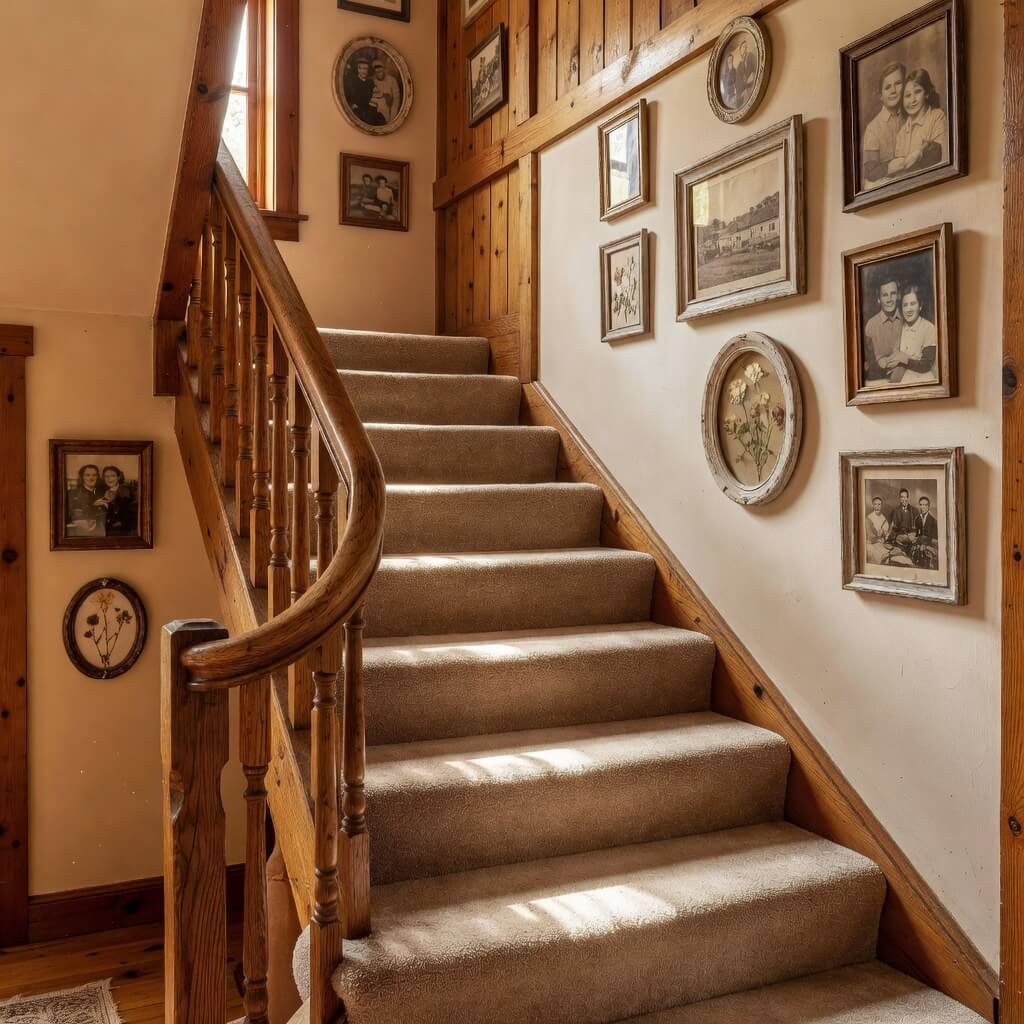
Let me guess—you just cringed at the word “carpeted,” right? Hear me out, though. Runner carpets on farmhouse stairs can be absolutely stunning when done correctly, and they add a level of comfort and warmth that bare wood just can’t match.
I’m not talking about wall-to-wall carpeting that hides beautiful wood completely (that would be criminal). I mean a tastefully chosen runner that travels up the center of your stairs, leaving gorgeous wood exposed on both sides. This design softens the look, reduces noise, and adds texture that complements the farmhouse aesthetic perfectly.
The key is choosing the right carpet. You want something that feels country-chic without looking dated. Think about these options:
- Natural fiber runners like jute or sisal for organic texture
- Striped patterns in muted tones that add visual interest
- Solid neutral colors that let your wood shine
- Low-pile options that won’t bunch or wear unevenly
- Traditional patterns like subtle florals or geometric designs
What I absolutely love about this approach is the customization factor. You can choose runner width, color, and pattern to perfectly match your home’s personality. Want something more formal? Go with a deeper pile in rich navy. Prefer casual? A natural jute runner gives you that laid-back farmhouse feel.
FYI, carpet runners also provide practical benefits beyond aesthetics. They offer better traction (especially important if you have kids or elderly family members), they muffle footstep sounds, and they’re actually easier on your joints than hard surfaces. Plus, in colder climates, they make those morning trips downstairs much more pleasant.
Installation matters here. You can secure runners with traditional stair rods (which look amazing and add a decorative element) or use tackless strips for a cleaner look. I’ve seen both work beautifully, so it really comes down to personal preference.
Also Read: 10 Amazing Steel Stairs Design Ideas for Luxury Interiors
Open Floating Wooden Farmhouse Staircase Concept
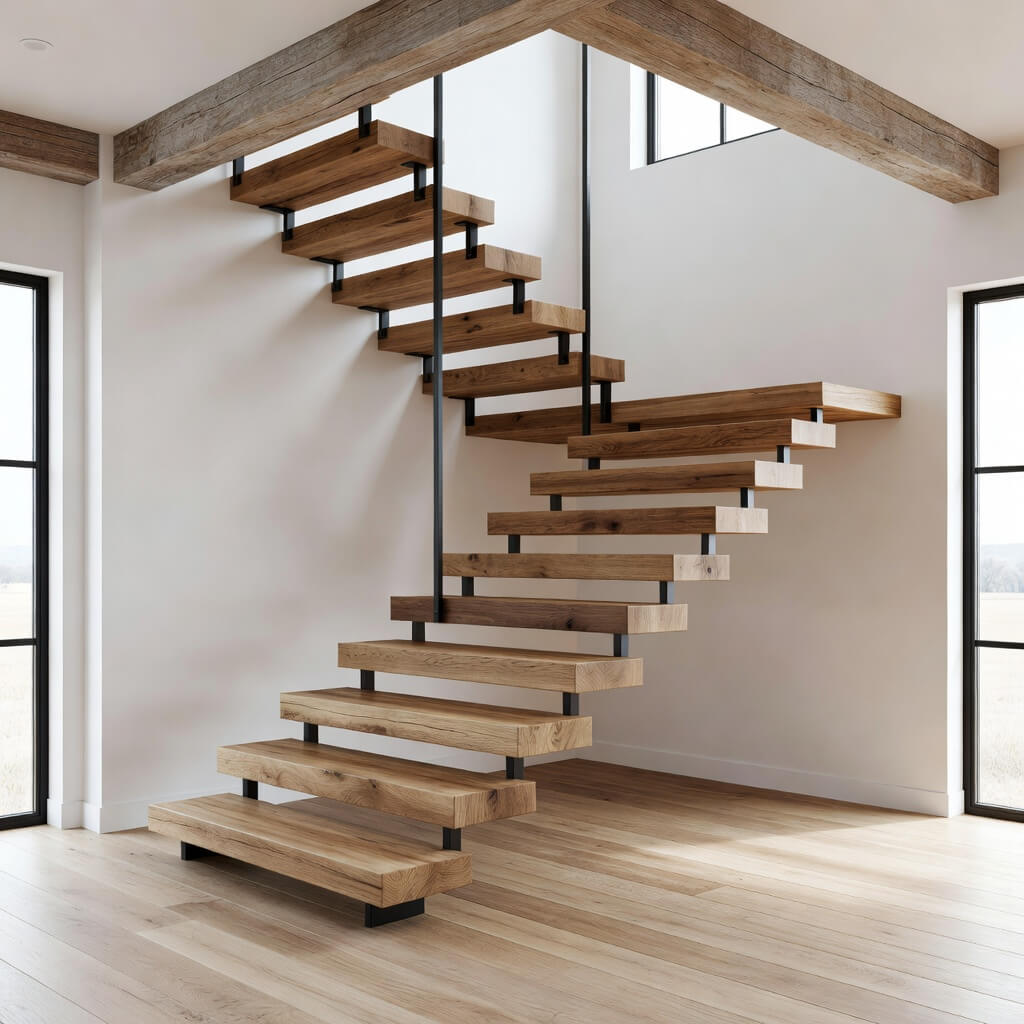
Want to make a bold statement? Open floating stairs might just be your answer. Now, I know what some purists might say—”floating stairs aren’t farmhouse!”—but stick with me here. When you use rustic wood treads and integrate them thoughtfully, you create a stunning modern farmhouse hybrid that feels fresh and unexpected.
Floating stairs appear to hover without visible support underneath the treads. The structural support is either hidden within the wall or uses minimal side stringers. The result? A visually light staircase that creates openness and lets light flow through your space.
For a farmhouse vibe, you need to make smart material choices:
- Thick, substantial wood treads (think 3-4 inches) in rustic finishes
- Exposed wood grain showing natural character and knots
- Warm wood tones rather than ultra-modern gray or white
- Simple metal brackets or supports in black or bronze finishes
- Minimalist cable or glass railings that don’t compete with the wood
I saw this concept executed beautifully in a farmhouse renovation where the designer used reclaimed barn wood for the floating treads. The chunky, weathered planks looked incredible suspended against a white shiplap wall. The contrast between the ultra-modern floating concept and the rustic wood created this “I can’t stop staring” moment.
Here’s the honest truth though: floating stairs aren’t for everyone. If you have young kids who constantly drop toys, you might get tired of things rolling off into the open space below. And some people find them unsettling to walk on initially. But if you want to create architectural drama and showcase beautiful wood in an unexpected way, this design delivers big time.
The installation requires professional expertise—this isn’t a DIY weekend project. The structural engineering needs to be perfect to ensure safety, but when done right, you get a staircase that becomes the focal point of your entire home.
Vintage Farmhouse Stairs with Reclaimed Wood Finish
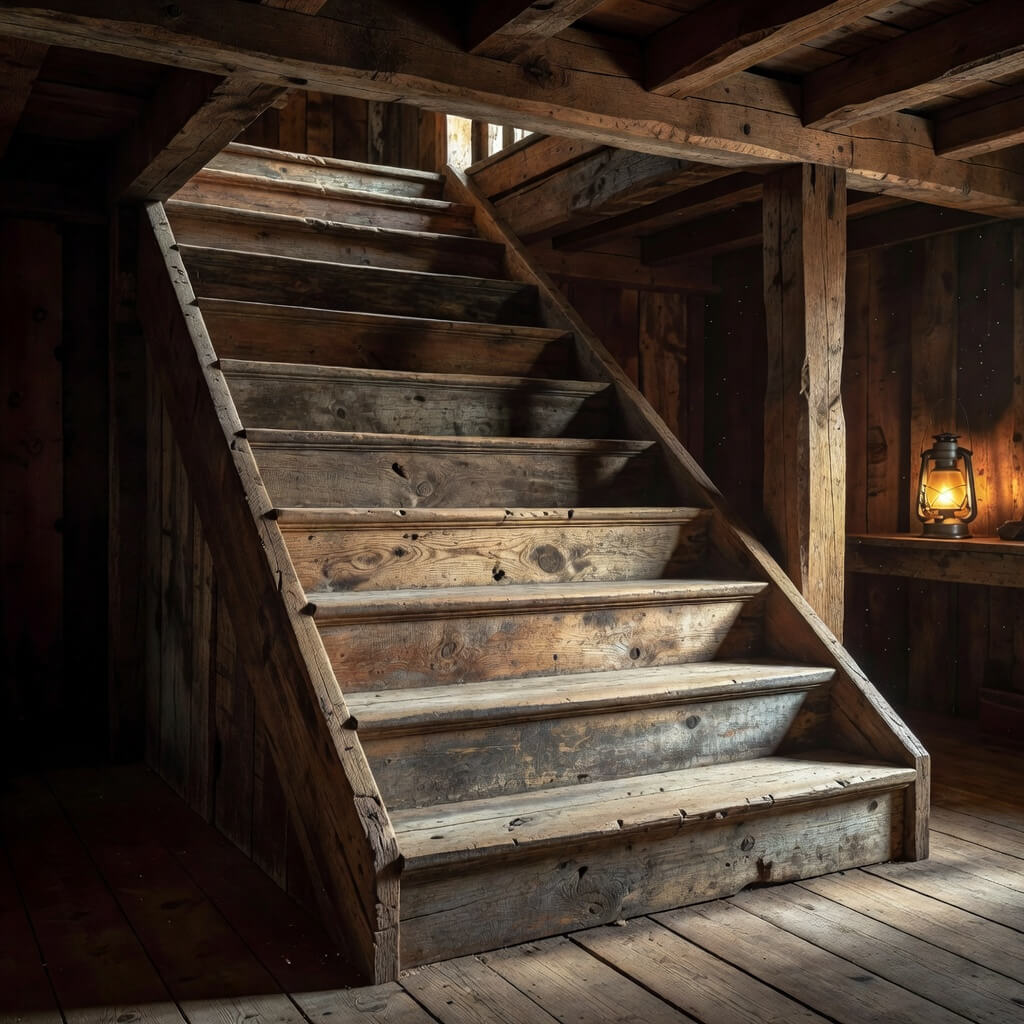
Speaking of reclaimed wood (smooth transition, right?), let’s talk about going full vintage farmhouse with your staircase. Nothing says authentic farmhouse charm like reclaimed wood with genuine history and patina.
This approach embraces imperfection. We’re talking wood with nail holes, weathering marks, and variations in color that tell a story. Each board brings its own character, creating a staircase that looks like it’s been part of your home for generations—even if you just installed it last month.
The beauty of reclaimed wood stairs lies in their authenticity. You can source materials from:
- Old barns being demolished (classic farmhouse connection)
- Retired factory floors with incredible wear patterns
- Vintage homes being renovated
- Reclaimed wood suppliers who specialize in architectural salvage
- Wine barrel staves for something really unique
What makes this design particularly special is that no two staircases will ever look identical. The variation in wood tones, the unique distressing, and the historical character create a one-of-a-kind feature in your home.
I’m not gonna lie—sourcing and installing reclaimed wood requires more effort than buying new materials. You need to inspect boards carefully, clean them properly, and sometimes deal with uneven dimensions. But IMO, the end result is worth every bit of extra work. The depth and richness you get from genuinely aged wood can’t be replicated with artificial distressing techniques.
Finishing options range from leaving the wood natural (just sealed) to applying light waxes or oils that enhance the grain without hiding the character. I’d avoid heavy stains on reclaimed wood—you’re literally covering up the exact features that make it special.
Pair your reclaimed wood stairs with simple iron railings or rope balusters for maximum farmhouse authenticity. The combination creates a staircase that feels like it belongs in a century-old homestead.
Minimal Farmhouse Staircase with Glass Side Panels
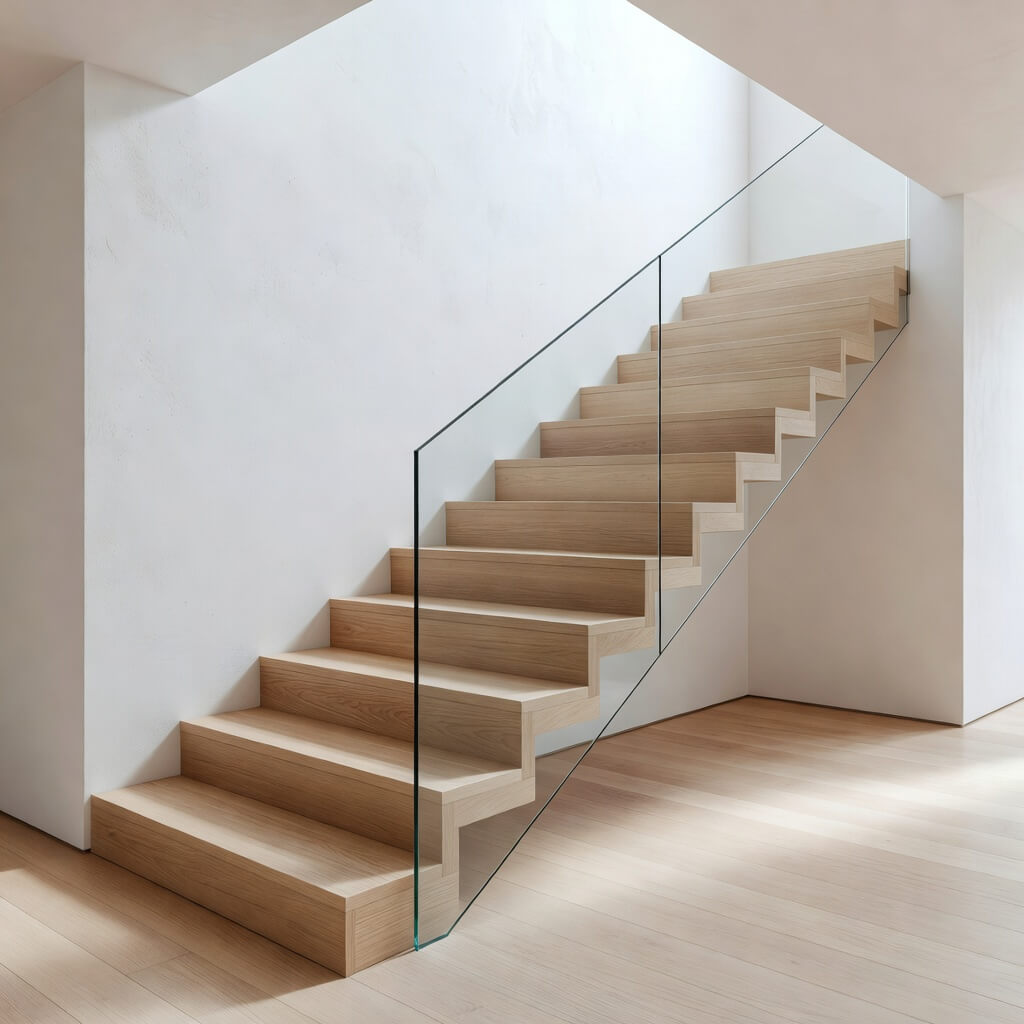
Who says farmhouse has to mean heavy and traditional? The minimal farmhouse staircase with glass panels proves you can have clean, contemporary lines while maintaining rustic warmth.
This design uses transparent or frosted glass panels as balustrades instead of traditional railings or balusters. The glass creates a safety barrier without blocking sightlines or making the space feel closed in. When you combine this modern element with natural wood treads and simple wood or metal handrails, you get something that feels both current and timeless.
Why I’m genuinely excited about this option:
- Glass maximizes natural light flow throughout your home
- Creates visual openness even in smaller spaces
- Easy to clean (just wipe down the glass panels)
- Pairs beautifully with wood for that farmhouse connection
- Looks expensive without necessarily breaking the bank
The key to making this work in a farmhouse context is choosing the right wood elements. Go for warm oak, pine, or ash for treads and handrails. The natural wood grounds the modern glass, keeping the design from feeling too contemporary or cold.
Glass type matters too. You can choose:
- Clear tempered glass for maximum transparency
- Frosted or textured glass for a bit more privacy
- Tinted glass in bronze or gray tones
- Ultra-clear low-iron glass that doesn’t have that greenish tint
I visited a renovated farmhouse last year where the owners installed glass panel railings on their staircase, and I was honestly blown away by how much brighter it made the entire central hallway. Natural light from a second-floor window traveled all the way down to the first floor without obstruction. The space felt twice as large.
One practical consideration: glass shows fingerprints and smudges. If you have young kids who like to press their hands and faces against every surface (you know who you are), be prepared for regular cleaning. But honestly? The visual benefits outweigh the maintenance for most people.
Also Read: 10 Cheap DIY Stairs Makeover Ideas That Look Luxurious
Shiplap Wall Farmhouse Staircase Inspiration
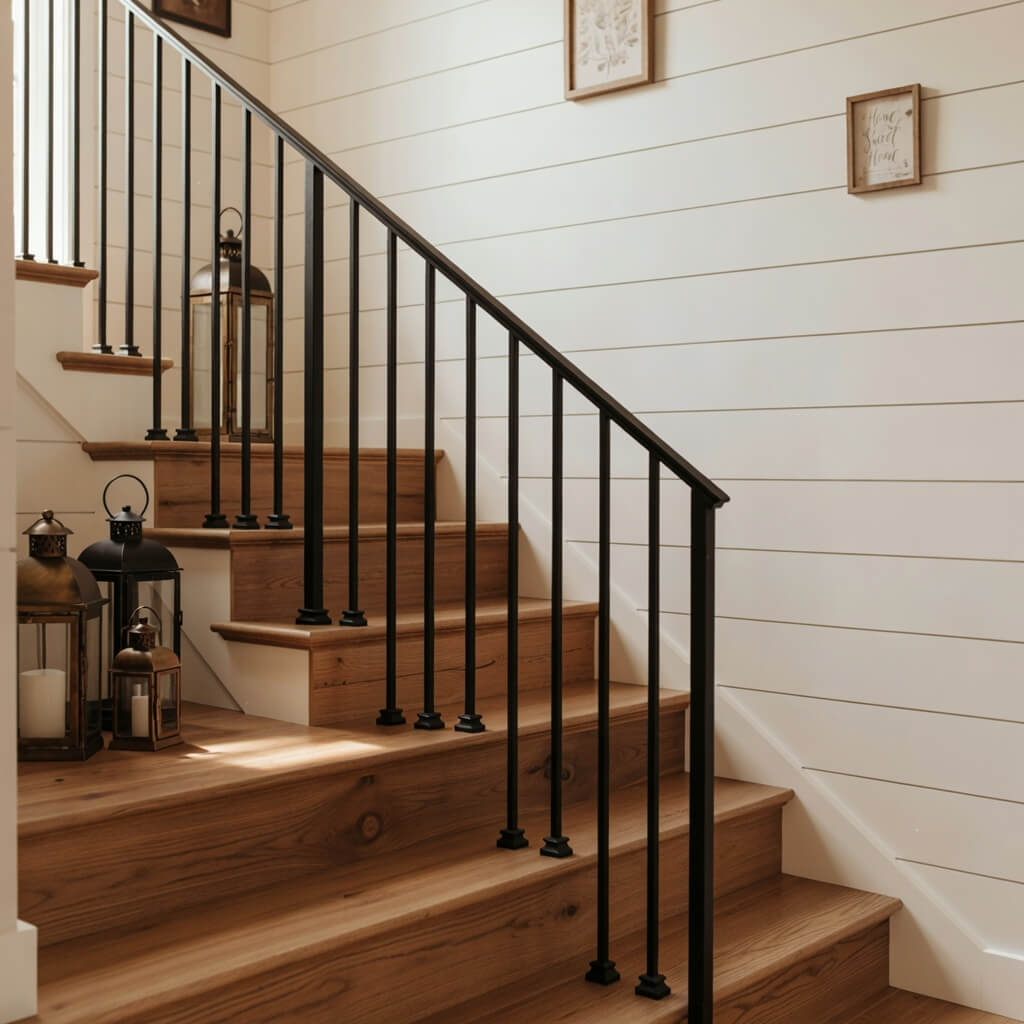
Can we have a real moment here? Shiplap has been done to death in some circles, but when you use it on staircase walls, it still absolutely works. The horizontal lines of shiplap create beautiful texture and movement that guides the eye along your staircase.
The classic approach uses white painted shiplap covering the walls alongside your stairs, creating a fresh, cottage-like atmosphere that brightens the space. But you don’t have to stop there—natural wood shiplap or even painted versions in soft grays, greiges, or muted colors can be equally stunning.
What I love about shiplap in stairwells:
- Adds architectural interest without overwhelming the space
- Hides wall imperfections beautifully (older homes, I’m looking at you)
- Creates texture that plays with light throughout the day
- Relatively affordable to install
- Timeless farmhouse element that won’t feel dated quickly
The installation runs horizontally along your stairwell walls, with each board carefully aligned despite the angle of the stairs. This takes some skill to execute properly, especially at corners and angles, but the result creates this cohesive flow that makes your staircase feel intentionally designed rather than just functional.
You can enhance the shiplap wall approach by pairing it with other elements:
- Wood or painted stairs that complement the wall color
- Simple railings that don’t compete with the wall texture
- Gallery wall styling with frames hung against the shiplap
- Lighting that creates shadows highlighting the horizontal lines
- Contrasting trim at baseboards and ceiling lines
I’ve seen people worry that shiplap makes spaces feel too “country” or casual, but honestly, it’s all about execution. Clean white shiplap with modern light fixtures and simple railings feels fresh and current. Natural wood shiplap with vintage accessories leans more traditional. You control the vibe through your styling choices.
Here’s a thought: if you’re not ready to commit to full shiplap installation, you could start with a painted accent wall at the top or bottom of your staircase to test the look. Sometimes you need to live with a design element before going all-in.
L-Shaped Farmhouse Stairs with Under-Storage Space
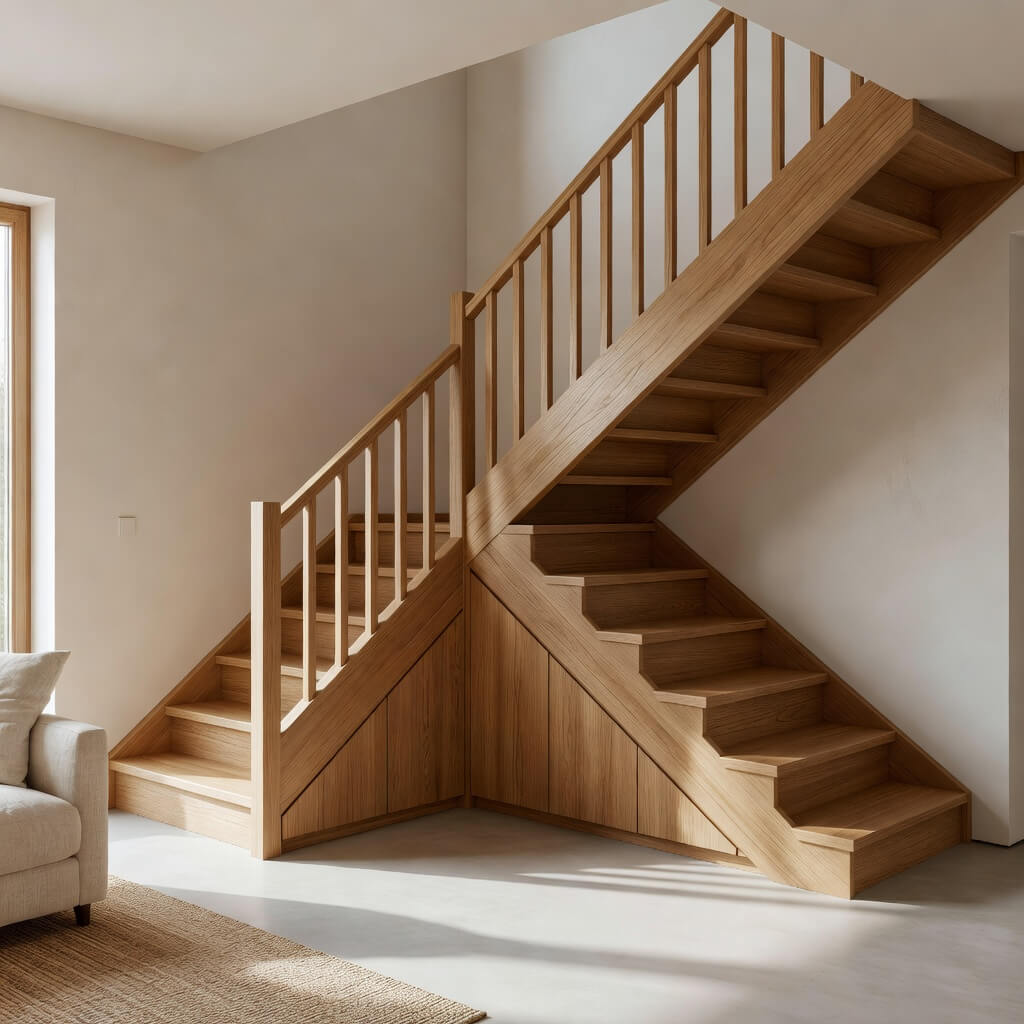
Let’s talk about being smart with space, because who couldn’t use more storage? L-shaped staircases (those that turn 90 degrees at a landing) naturally create empty space underneath, and honestly, wasting that space should be illegal.
I love when people get creative with this area. The storage possibilities are endless, and they all maintain that farmhouse functionality-meets-style vibe:
- Built-in cubbies or shelving for books, baskets, and decor
- Closed cabinet storage with shaker-style doors
- Wine storage with individual bottle slots
- Coat closet with hooks and shoe storage
- Reading nook with cushioned seating and bookshelves
- Pet area with a cozy bed and food station
- Pantry extension for extra dry goods storage
The farmhouse aesthetic works perfectly here because it emphasizes practicality and purpose. Farmhouses historically maximized every inch of space, so incorporating storage under your L-shaped stairs isn’t just trendy—it’s authentically farmhouse.
Design-wise, you want to integrate the storage so it feels intentional, not like an afterthought. Use matching materials to your staircase (if you have oak treads, use oak for cabinet doors). Keep hardware consistent with other elements in your home. Add thoughtful lighting inside open shelving areas.
I helped a friend design storage under her L-shaped farmhouse stairs, and we went with open shelving in the upper section (displaying vintage crocks and baskets) with closed cabinet storage below (hiding less attractive items). The combination looked intentional and beautifully styled while solving her storage crisis. Win-win.
Here’s the thing though: retrofitting storage under existing stairs can get complicated with structural considerations. You might need to work with professionals to ensure you’re not compromising support structures. But if you’re building new or doing major renovations, planning this storage from the start makes implementation much easier.
The landing area of L-shaped stairs also offers decorating opportunities. Add a console table with farmhouse decor, hang a statement mirror, or create a small gallery wall. This landing becomes a mini focal point that breaks up the vertical climb and adds personality.
Spiral Farmhouse Wooden Staircase Design Idea
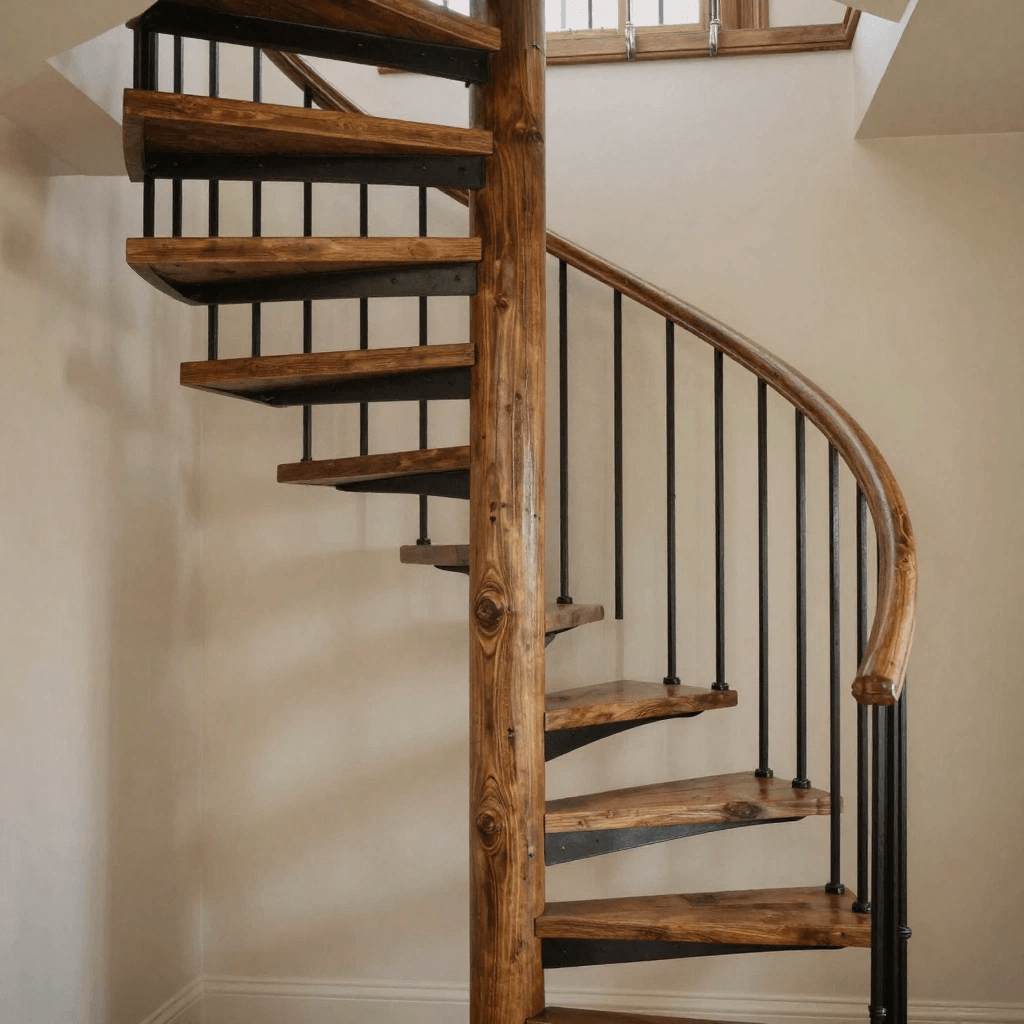
Okay, I’ll admit—spiral staircases aren’t the first thing that comes to mind when you think “farmhouse.” But hear me out, because a wooden spiral staircase can absolutely work in the right farmhouse setting, especially when space is tight.
Spiral stairs save significant floor space compared to traditional straight or L-shaped designs. This makes them perfect for:
- Secondary access points like from kitchen to loft
- Small spaces where traditional stairs won’t fit
- Additions or renovations with space constraints
- Architectural interest in open floor plans
- Unconventional farmhouse styles that embrace eclectic elements
The key to making spirals work in farmhouse design is choosing rustic wood construction with warm finishes. Skip the ultra-modern metal spirals and instead opt for chunky wood treads with simple metal or wood supports. The natural material creates that essential farmhouse connection.
I saw an incredible example in a barn conversion where the designer installed a spiral staircase from the main living area up to a loft office. They used thick reclaimed wood for the treads with a central metal pole and simple cable railings. Instead of feeling out of place, it became a talking point that added character and solved a tricky space problem.
What you should consider for farmhouse spiral stairs:
- Tread depth and width (you want comfortable, not cramped)
- Wood finish that matches other farmhouse elements
- Handrail design that’s safe but doesn’t look industrial
- Integration with surrounding space (doesn’t feel random)
- Building codes in your area regarding spiral stair dimensions
The honest truth? Spiral stairs aren’t ideal as your main staircase if you have mobility issues, young kids, or need to move large furniture between floors. They work best as secondary access or in homes where space absolutely demands the compact footprint.
But when they work, they work beautifully. The circular form creates visual interest and guides the eye upward in a way that traditional stairs can’t match. Plus, the space underneath a spiral staircase creates interesting opportunities for cozy reading nooks or decorative displays.
Also Read: 10 Ultimate Stairs Tiles Design Ideas for Perfect Homes
Luxury Farmhouse Staircase with Statement Lighting
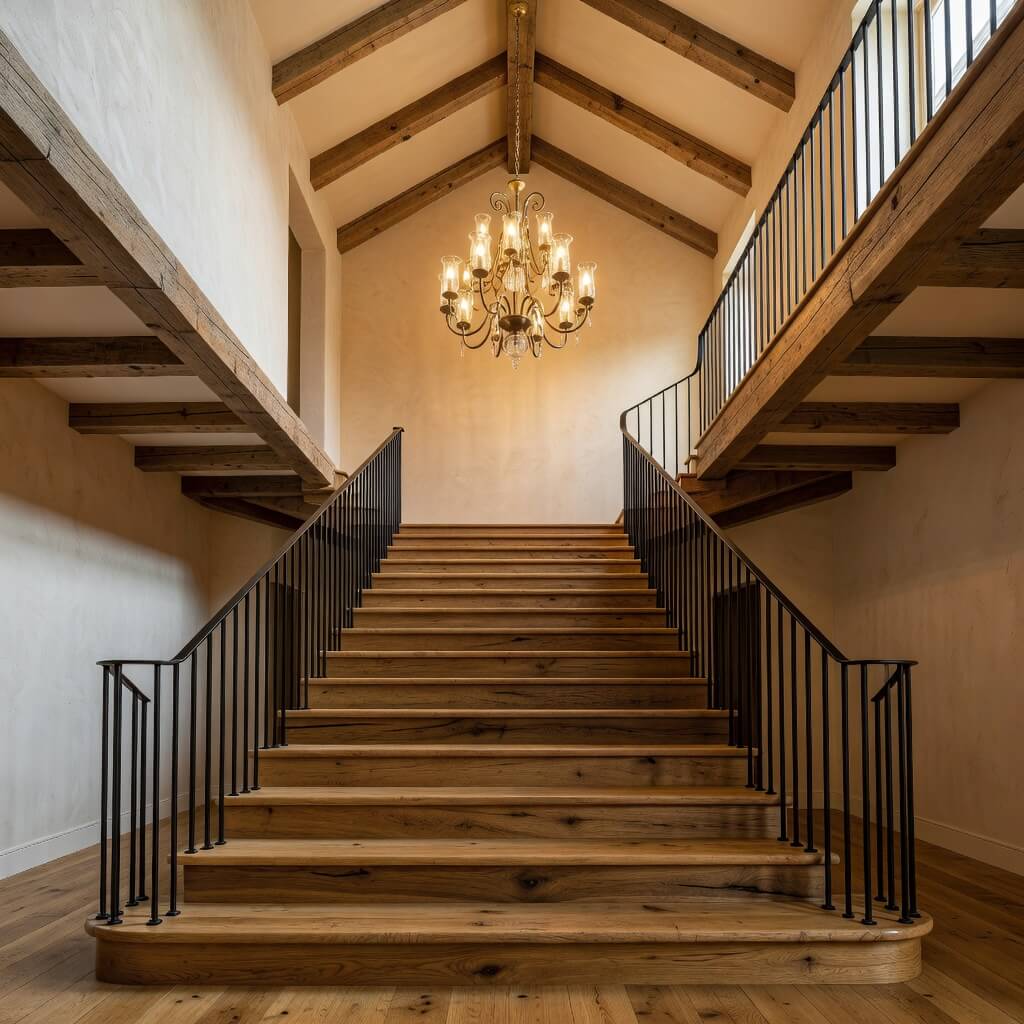
Want to know what takes a good staircase and makes it absolutely stunning? Statement lighting. I’m talking about fixtures that make people look up and say “whoa.”
Luxury farmhouse style embraces high-end materials and finishes while maintaining rustic roots. For staircases, this means combining quality wood construction, beautiful railings, and show-stopping light fixtures that create drama and illuminate your architectural investment.
The lighting options for farmhouse staircases are honestly endless:
- Oversized chandelier hung in the stairwell at varying heights
- Multiple pendant lights creating a cascading effect
- Dramatic lantern-style fixtures in wrought iron or bronze
- Modern wagon wheel chandeliers with Edison bulbs
- Linear suspension lights following the stair angle
- Wall sconces lining the stairwell in vintage styles
What I find most impactful is when the lighting fixture fills the vertical space of the stairwell appropriately. A tiny chandelier in a two-story stairwell looks sad and lost. But a substantial fixture that commands attention? That creates the luxury factor you’re after.
I recently toured a modern farmhouse where the designer installed a custom chandelier made from reclaimed wood beams and Edison bulbs that extended down three stories. It was absolutely jaw-dropping and perfectly balanced rustic materials with contemporary design. The light it cast on the white oak stairs below highlighted every beautiful grain detail.
For luxury farmhouse stairs, don’t skimp on:
- Quality wood with beautiful grain and proper finishing
- Custom railings that feel substantial and well-crafted
- Attention to detail in trim and transitions
- Professional installation ensuring everything is perfect
- Layered lighting combining statement fixtures with practical illumination
The staircase becomes a true focal point in luxury farmhouse design. You can enhance this with architectural details like coffered ceilings in the stairwell, wainscoting or board-and-batten on the walls, or statement newel posts that anchor the design.
Here’s something people sometimes forget: your lighting fixture needs to be accessible for bulb changes and cleaning. I love the look of a three-story chandelier, but think about the practical reality of maintaining it. Sometimes the most luxurious choice is the one that looks amazing and functions well long-term.
Bringing It All Together
So there you have it—ten farmhouse staircase ideas that range from traditional to contemporary, budget-friendly to luxury-level. The beauty of farmhouse design is its flexibility. You’re not locked into one specific look, and you can absolutely mix elements from different ideas to create something uniquely yours.
What I’ve learned from watching countless farmhouse stair projects (yes, I have a problem, and no, I’m not seeking help) is that the most successful designs share common traits: they use quality natural materials, they consider both form and function, and they feel authentic rather than forced.
Whether you go with the classic whitewashed-and-black-iron combo, embrace floating stairs for dramatic effect, or invest in statement lighting that makes jaws drop, your staircase should reflect your personal style while serving its practical purpose. After all, you’ll walk these steps countless times—you might as well enjoy the view.
The farmhouse aesthetic gives you permission to prioritize comfort, character, and authenticity over trends that won’t age well. That’s what makes it such a enduring style choice. Your stairs can be beautiful, functional, and completely you.
Now comes the fun part—deciding which of these ideas speaks to you and fits your space. Maybe you’re drawn to the cozy warmth of carpeted runners, or perhaps you’re ready to make a bold statement with glass panels and minimal design. Whatever direction you choose, commit to it fully and execute it with attention to detail.
Your farmhouse stairs are more than just a way to get upstairs. They’re an opportunity to showcase your design vision, add character to your home, and create something that makes you genuinely happy every time you see it. And honestly? That’s what good design is all about.