10 Ultimate Stairs Tiles Design Ideas for Perfect Homes
- Stairs Design
 Ben
Ben- 0
- 39 minutes read
You know that awkward moment when you’re showing guests around your new home, and everyone’s oohing and aahing over your kitchen backsplash and bathroom fixtures, but then they reach your stairs and… silence? Yeah, I’ve been there. Stairs are like the forgotten middle child of home design—everyone walks on them multiple times a day, but nobody thinks about making them actually look good.
Here’s the thing: your staircase isn’t just a functional necessity. It’s prime real estate for making a design statement. And choosing the right tiles? That’s where the magic happens. I’ve spent way too many hours obsessing over stair tile designs (my partner thinks I’m crazy), but trust me, it’s worth it. The right tiles can transform your stairs from “meh” to “wow, did you hire an interior designer?”
So let’s talk about 10 killer stair tile designs that’ll make your home look absolutely perfect. Whether you’re building from scratch or giving your existing stairs a much-needed facelift, these ideas will get your creative juices flowing.
Modern Marble Stair Tiles with Luxury Veins
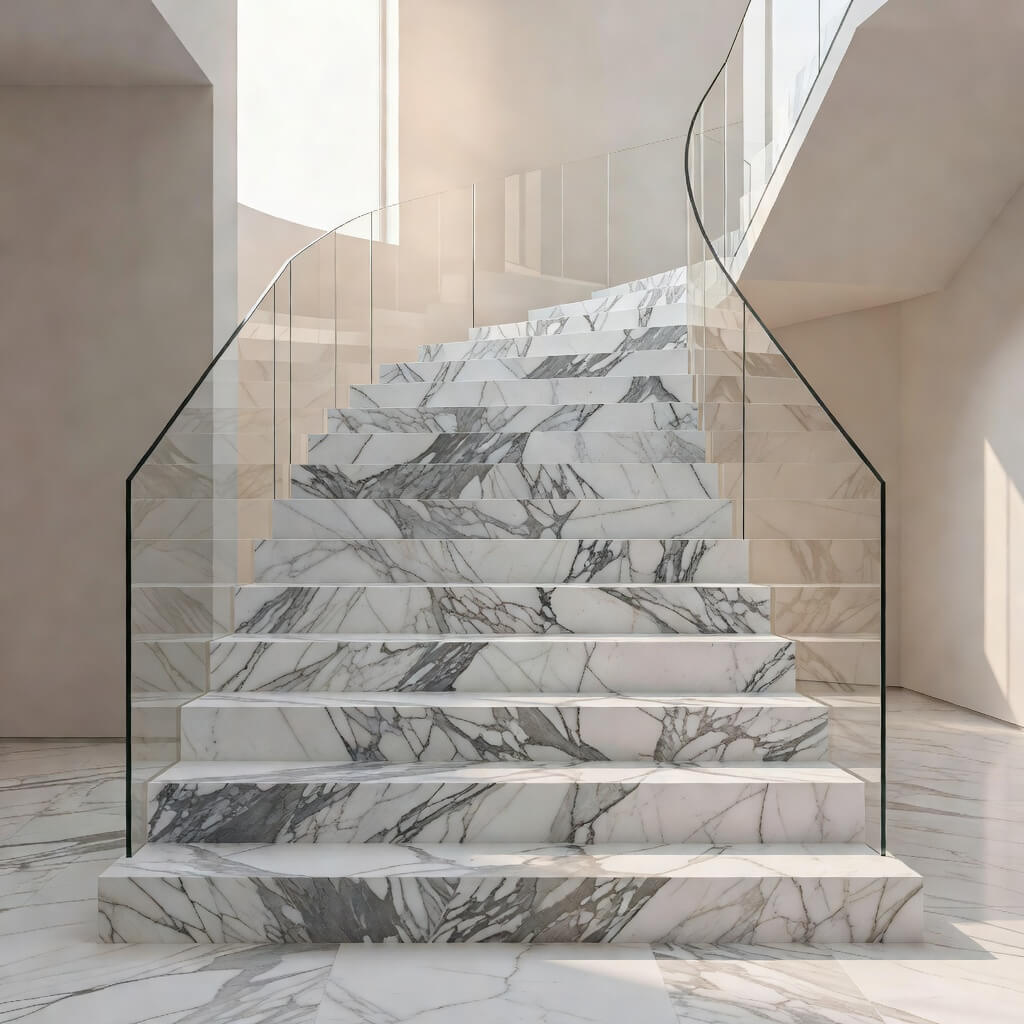
Let’s kick things off with the showstopper—marble. When I first saw modern marble tiles with those dramatic veins running through them, I honestly thought they were too fancy for a regular home. Boy, was I wrong.
Marble stair tiles bring instant sophistication to any space. The natural veining patterns create this organic, flowing look that’s impossible to replicate with synthetic materials. Each tile tells its own story with unique patterns, which means your staircase becomes a one-of-a-kind feature.
Here’s what makes marble tiles worth the investment:
- Natural beauty: Those veins aren’t printed—they’re the real deal, formed over millions of years
- Timeless appeal: Marble never goes out of style (seriously, it’s been trendy since ancient Rome)
- Cool temperature: Perfect if you live in warmer climates
- Increases home value: Buyers go absolutely nuts for marble features
Now, I’m not gonna sugarcoat it—marble requires some TLC. You’ll need to seal it regularly, and acidic spills are its kryptonite. But if you can handle a bit of maintenance, the payoff is incredible. Pro tip: go for honed marble instead of polished on stairs. Trust me on this one—polished marble stairs are basically ice rinks waiting to happen.
My personal favorite? Calacatta marble with bold grey veins. It’s dramatic enough to make a statement but versatile enough to work with almost any design aesthetic. Pair it with brushed brass handrails, and you’ve got yourself an entrance that screams luxury.
Anti-Slip Textured Outdoor Stair Tile Design
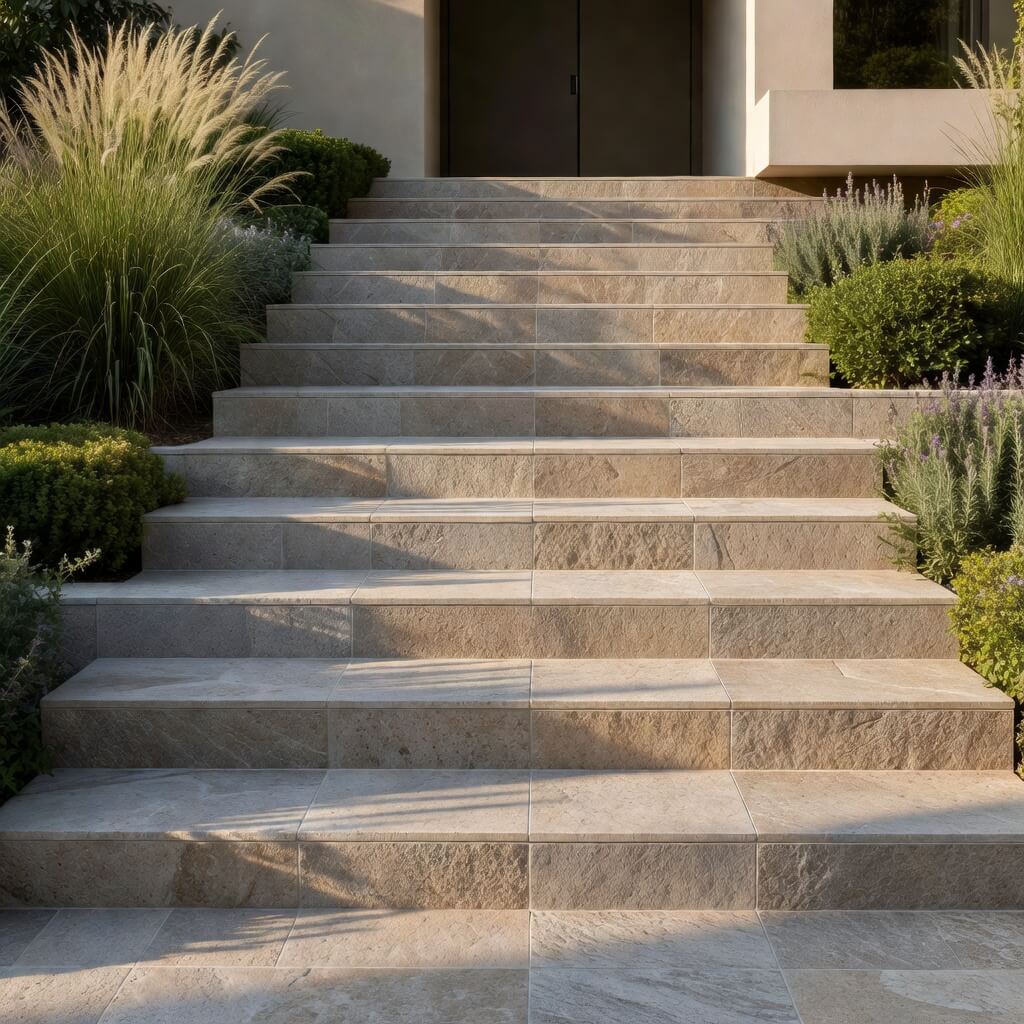
Okay, real talk—outdoor stairs can be death traps when it rains. I learned this the hard way after a particularly embarrassing tumble in front of my in-laws (they still bring it up at family dinners, thanks guys).
Anti-slip textured tiles aren’t just about safety, though that’s obviously the main selling point. Modern designs have come so far that these tiles can actually look amazing while keeping you vertical.
What to look for in anti-slip outdoor stair tiles:
- R-rating: This measures slip resistance. For outdoor stairs, aim for R11 or higher
- Weather resistance: Frost-proof and UV-resistant materials are non-negotiable
- Texture depth: Deep enough for grip but not so rough that they’re uncomfortable barefoot
- Drainage grooves: Some designs include channels that help water run off
The beauty of these tiles is that manufacturers have gotten creative with textures. You can find everything from subtle bumps to bold geometric patterns that add visual interest while keeping things safe. I’ve seen outdoor stairs with wave-pattern anti-slip tiles that look absolutely stunning—functional AND gorgeous. Who says you can’t have both?
For color choices, darker shades work better outdoors because they hide dirt and weathering. But here’s a curveball: consider lighter tones with anti-slip coating if your stairs get direct sunlight. Dark tiles can get hot enough to fry an egg in summer (slight exaggeration, but you get the point).
Installation Tips
When installing these babies, make sure your contractor knows what they’re doing. The slope matters—outdoor stairs need proper drainage, or you’ll end up with water pooling. A slight forward tilt (about 1-2 degrees) does the trick without being noticeable.
Minimalist White and Grey Staircase Tile Ideas
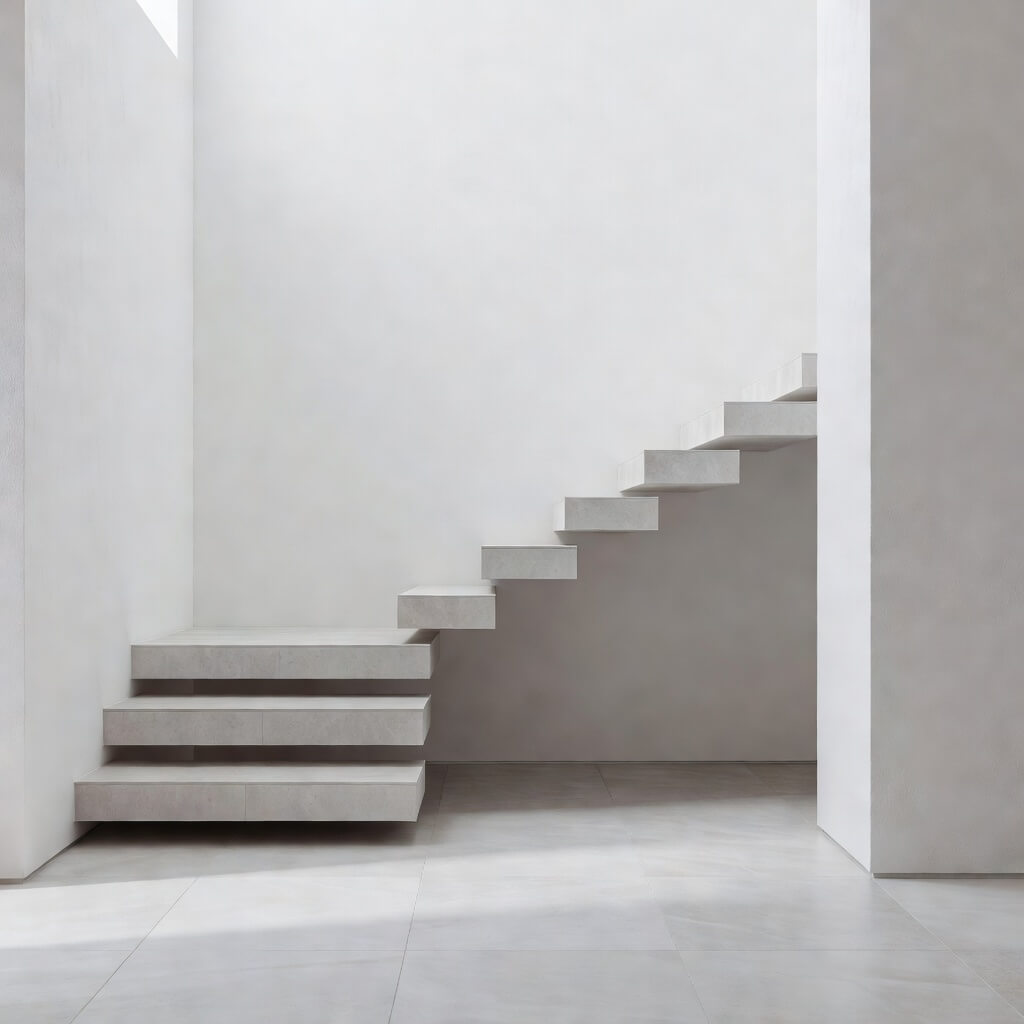
If you’ve spent any time on Pinterest (haven’t we all? :)), you’ve probably noticed the minimalist trend taking over. White and grey stair tiles are the poster children of this movement, and honestly, I’m here for it.
There’s something incredibly calming about a monochromatic staircase. It doesn’t scream for attention—it just quietly elevates the entire space. The best part? This design works with literally any home style, from ultra-modern to Scandinavian to industrial.
Why white and grey tiles rock:
- Versatility: They match everything, so you won’t regret your choice in five years
- Space enhancement: Light colors make narrow staircases feel more open
- Clean aesthetic: Creates that Instagram-worthy minimalist vibe
- Easy to style: You can change up your décor without worrying about clashing
Now, some people worry that white tiles will show every speck of dirt. Valid concern. But here’s the secret: go for light grey instead of pure white, or use a subtle pattern that camouflages minor marks. I installed white tiles with barely-there grey veining in my last project, and they’ve been surprisingly forgiving.
One thing I absolutely love about this design approach is playing with different textures. You can mix matte and glossy finishes, or combine smooth tiles on the treads with textured tiles on the risers. This adds depth without introducing color chaos.
Design Variations
Ombre effect: Start with white at the bottom and gradually transition to darker grey as you go up. It’s subtle but creates amazing visual flow.
Checkered pattern: Alternate white and grey tiles for a classic look with personality.
Large format tiles: Fewer grout lines mean cleaner appearance and less maintenance (FYI, cleaning grout is nobody’s idea of fun).
Also Read: 10 Easy Stairs Makeover Ideas for a Stylish Transformation
Wooden Finish Porcelain Stair Tiles for Cozy Homes
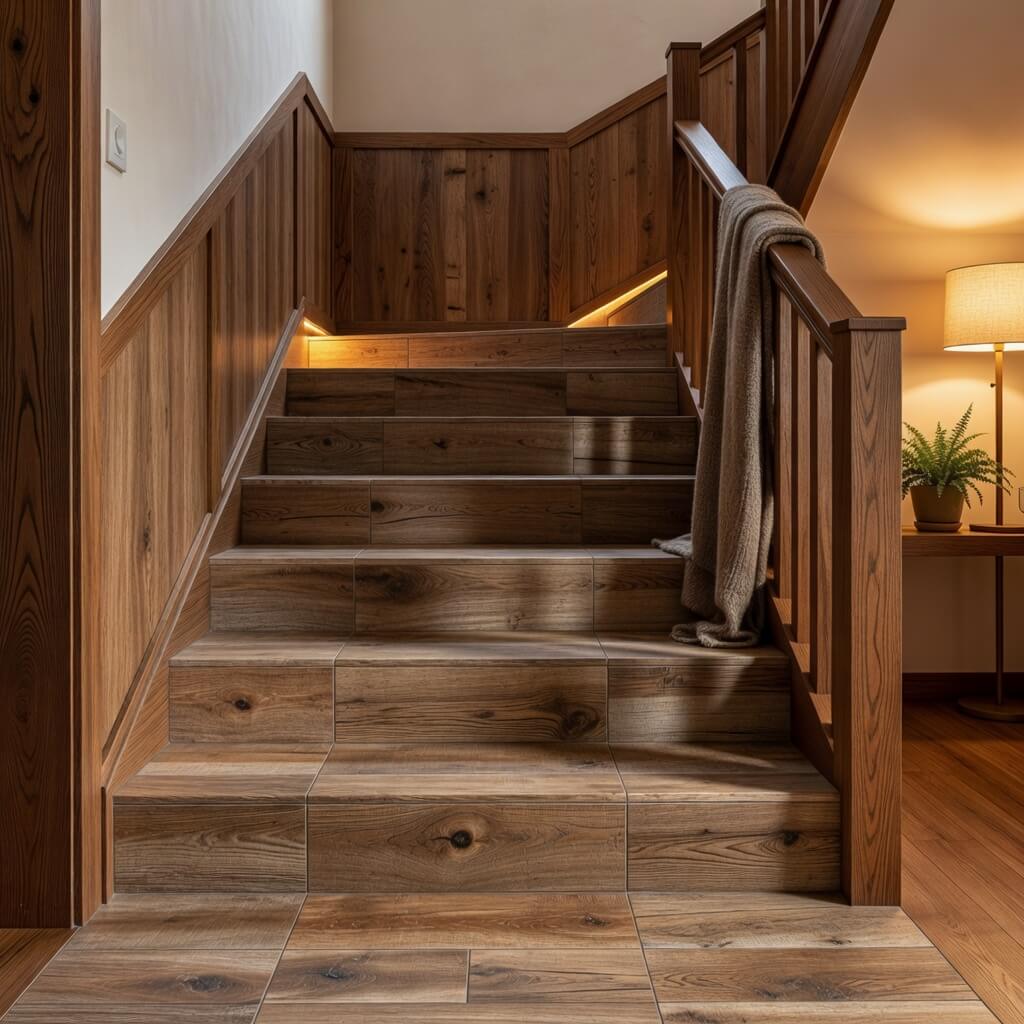
Ever wanted the warmth of wooden stairs without the maintenance nightmare? Welcome to wood-look porcelain tiles—the best thing to happen to stairs since, well, stairs.
I was skeptical at first. How could porcelain possibly mimic real wood convincingly? Then I saw them in person, and I literally had to touch them to believe they weren’t actual wood. The technology has gotten THAT good.
These tiles give you all the cozy, homey vibes of wood with none of the drawbacks. No warping, no water damage, no termites, no refinishing every few years. Just beautiful, wood-like aesthetics that last forever.
Benefits that sold me on wood-look porcelain:
- Durability: These things are practically indestructible
- Water resistance: Spills? No problem. Wet feet from the pool? Bring it on.
- Low maintenance: Sweep and mop occasionally—that’s it
- Cost-effective: Less expensive than hardwood, especially long-term
- Consistent appearance: No worrying about color variations or knots
The key to pulling off this look is choosing high-quality tiles with varied patterns. Cheap versions have obvious repeating patterns that scream “fake.” Premium options replicate wood grain so accurately that even contractors sometimes do a double-take.
For stairs specifically, I recommend planks that run lengthwise along each step. This creates a natural flow and makes installation easier. The color? That’s personal preference, but I’m partial to medium oak or walnut tones. They hide wear better than very light or very dark options.
Styling Your Wood-Look Stairs
Pair these with wrought iron railings for a farmhouse vibe, or go with glass panels for modern elegance. The beauty is that wood tones work with practically any design direction. I’ve seen them look equally stunning in rustic cabins and contemporary townhouses.
Geometric Pattern Stair Tile Designs for Modern Interiors
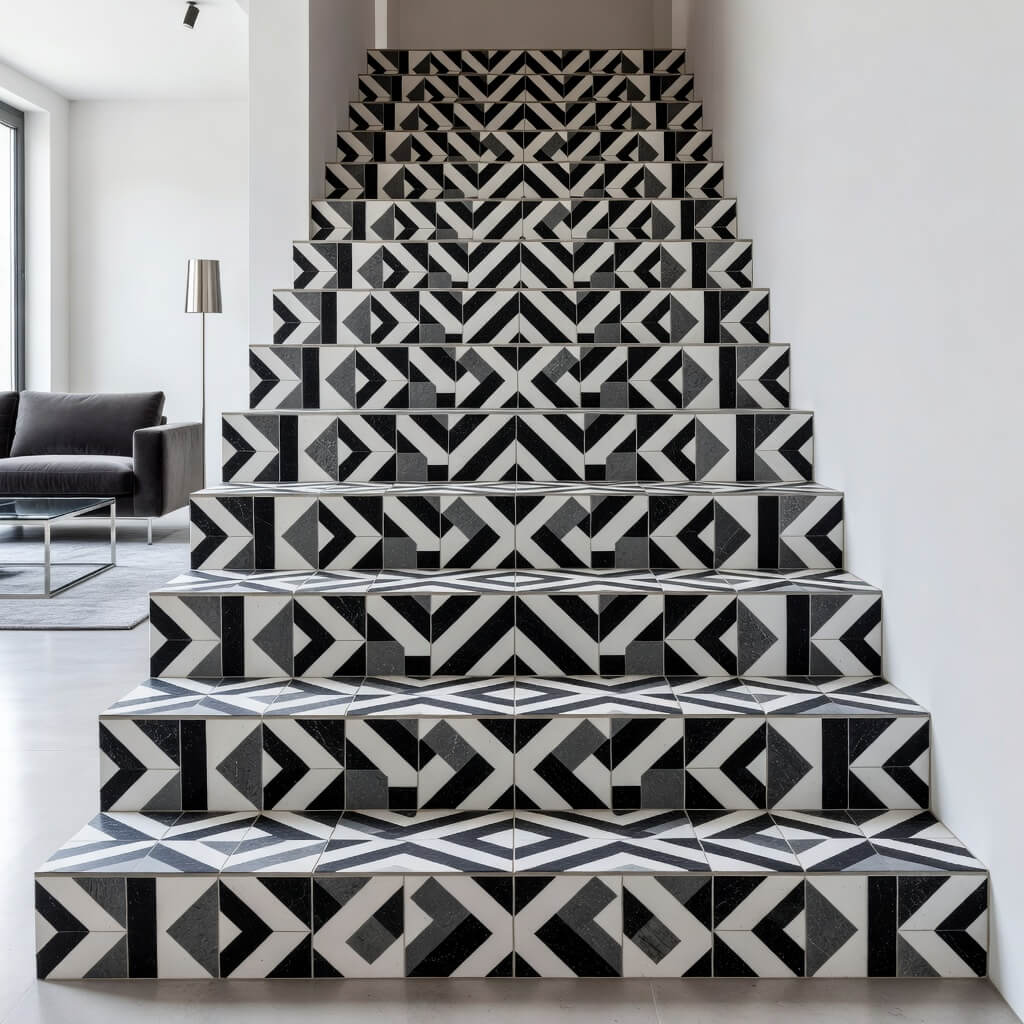
Ready to make a bold statement? Geometric pattern tiles are where boring staircases go to get a personality transplant.
These designs range from subtle hexagons to eye-popping chevrons to intricate Moroccan-inspired patterns. The right geometric tiles can turn your stairs into legitimate artwork. I’m talking showstopper, conversation-starter, “you designed this yourself?!” level impressive.
Popular geometric patterns for stairs:
- Hexagons: Classic honeycomb shapes that add interest without overwhelming
- Chevrons: V-shaped patterns that create dynamic movement
- Triangles: Mix different sizes for a contemporary edge
- Diamonds: Timeless pattern that works in traditional or modern spaces
- 3D cubes: Creates optical illusion depth (more on this later)
The trick with geometric tiles is balance. You want impact without making people dizzy every time they use the stairs. I usually recommend using bold geometric patterns on the risers (vertical part) and keeping the treads (where you step) solid or subtly textured. This gives you visual punch while maintaining functionality.
Color combinations matter too. Black and white geometric patterns never fail—they’re crisp, clean, and undeniably modern. But don’t sleep on colorful options either. Navy and gold geometrics? Stunning. Blush pink and grey? Surprisingly sophisticated.
Installation Considerations
Geometric patterns require precision installation. Seriously, hire a professional for this one unless you’re a tiling wizard. Misaligned patterns will haunt you every single day. Been there, noticed a slightly off tile every morning for six months until I couldn’t take it anymore and had it redone :/
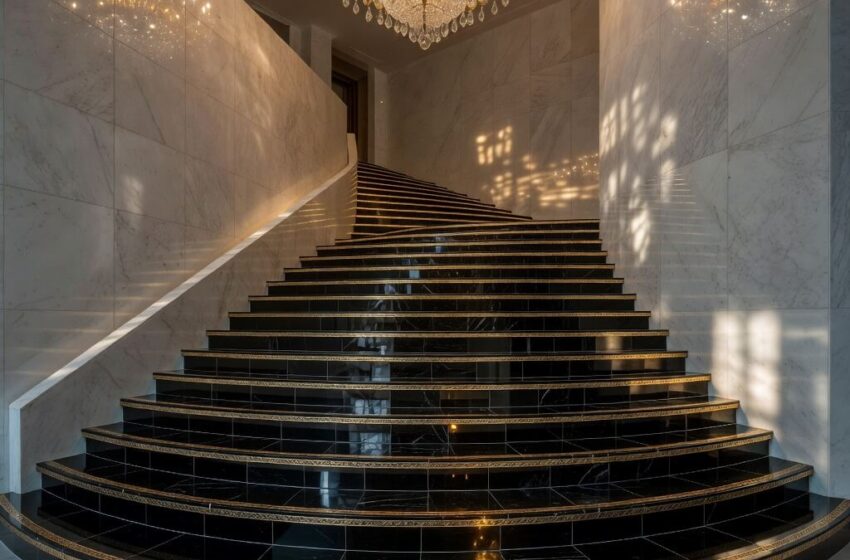
Black and Gold Luxury Stair Tile Inspiration
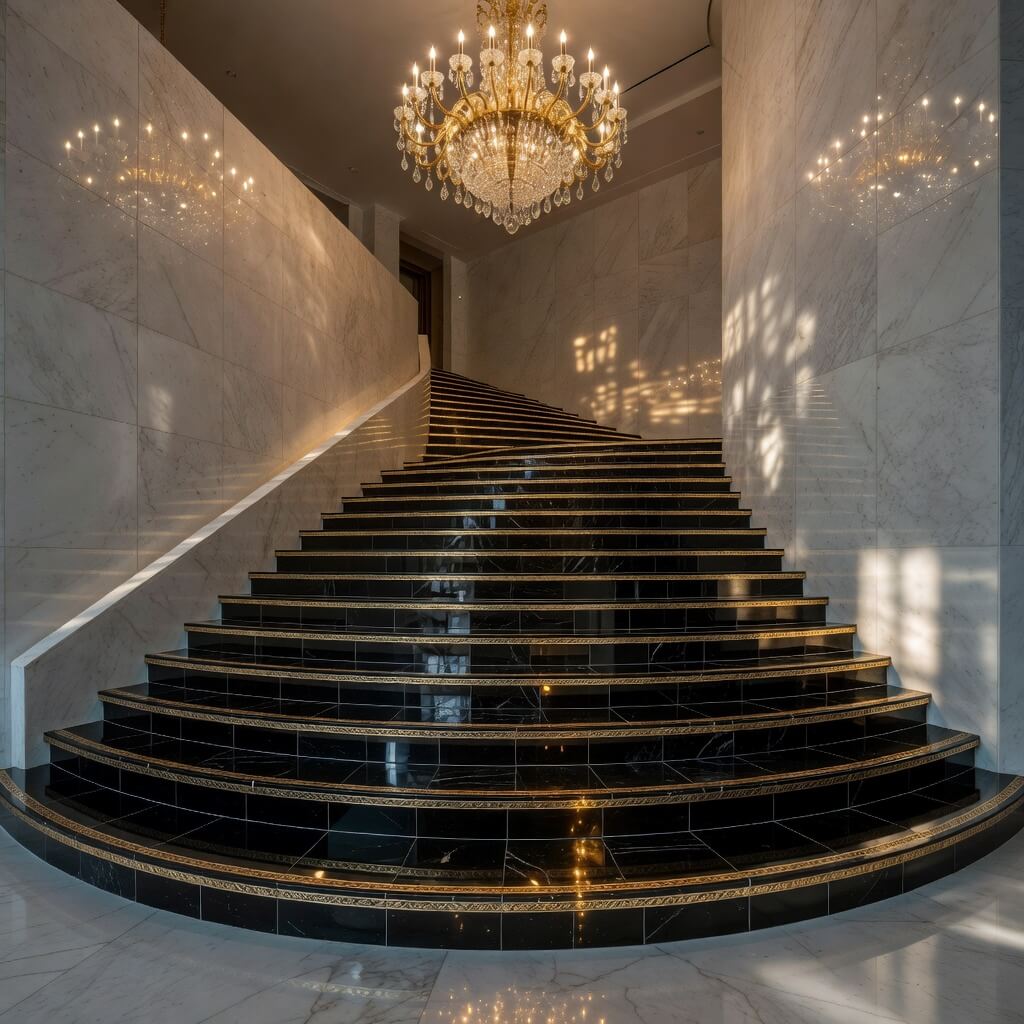
Want to channel your inner royalty? Black and gold stair tiles are the epitome of luxury and drama. This combination has been synonymous with opulence for centuries, and when done right, it’s absolutely breathtaking.
I’ll admit, I was intimidated by this look initially. It feels like something you’d see in a boutique hotel or a celebrity home, not a regular residence. But after helping a friend install black tiles with gold veining, I’m a total convert. It’s bold, yes, but incredibly sophisticated.
Why black and gold works so well:
- High contrast: Creates immediate visual impact
- Timeless luxury: This color combo has never gone out of style
- Versatile tones: Works with both warm and cool color schemes
- Hides dirt: Black tiles are forgiving between cleanings
- Reflects light beautifully: Gold accents catch and reflect ambient light
The key is choosing the right type of gold accent. Real gold inlay tiles exist but cost a small fortune. Most people (myself included) opt for gold-veined tiles or black tiles with metallic gold details. These give you the luxury look without requiring a second mortgage.
For stairs, I love using large-format black tiles with diagonal gold veins. The pattern draws the eye upward, making the staircase feel grander. Alternatively, you can use solid black tiles on treads and incorporate gold geometric patterns on the risers.
Styling Tips
Pair black and gold stairs with brass or gold-toned handrails to tie everything together. Add a statement chandelier or pendant lights along the stairwell, and you’ve created a entrance that rivals five-star hotels. IMO, this look works best in homes with higher ceilings and good natural light—black can feel heavy in darker, smaller spaces.
Also Read: 10 Simple Basement Stairs Ideas on a Budget Makeover
3D Illusion Stair Tiles for Creative Home Design
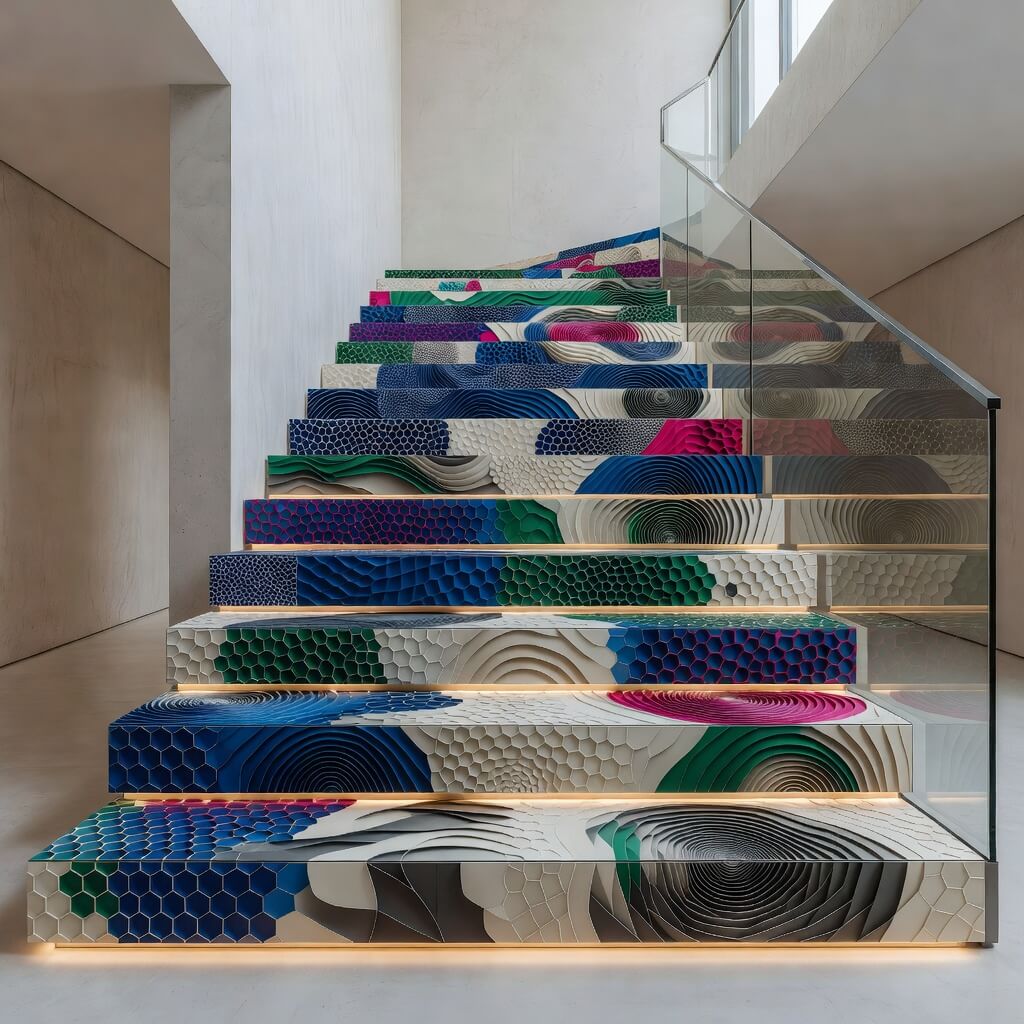
Alright, this is where things get fun. 3D illusion tiles mess with your perception in the best possible way. They use clever patterns and shading to create depth, movement, or impossible geometric shapes that make you do a double-take.
I first encountered these at a design expo, and I spent an embarrassing amount of time just staring at a staircase, trying to figure out if the tiles were actually protruding or if it was all visual trickery. (It was trickery. Brilliant, mind-bending trickery.)
Types of 3D illusion effects:
- Cube patterns: Create the appearance of stacked cubes using shading
- Wave designs: Make flat surfaces look like they’re rippling
- Tunnel effects: Appear to recede into the distance
- Gradient shading: Creates depth through color transitions
- Impossible geometry: Think M.C. Escher-style patterns
These tiles are perfect if you want your home to feel unique and artistic. They’re conversation starters that guests will literally stop and photograph. Plus, they work surprisingly well with modern, minimalist interiors—the tiles themselves provide all the visual interest you need.
Fair warning: 3D illusion tiles aren’t for everyone. Some people find them disorienting, and they can be a bit much in small spaces. I recommend using them as accent features rather than covering entire staircases. Maybe just the risers, or alternating between illusion tiles and solid colors.
Best Placement Strategies
Use 3D tiles on the risers only while keeping treads simple and slip-resistant. This creates impact without compromising safety. The last thing you want is someone missing a step because they’re trying to figure out if it’s going up or down.
Also, ensure proper lighting. These tiles rely on light and shadow to create their effects, so good illumination is essential. Consider installing LED strip lighting along the sides or under the nosing of each step.
Rustic Stone Stair Tile Ideas for Natural Look Homes
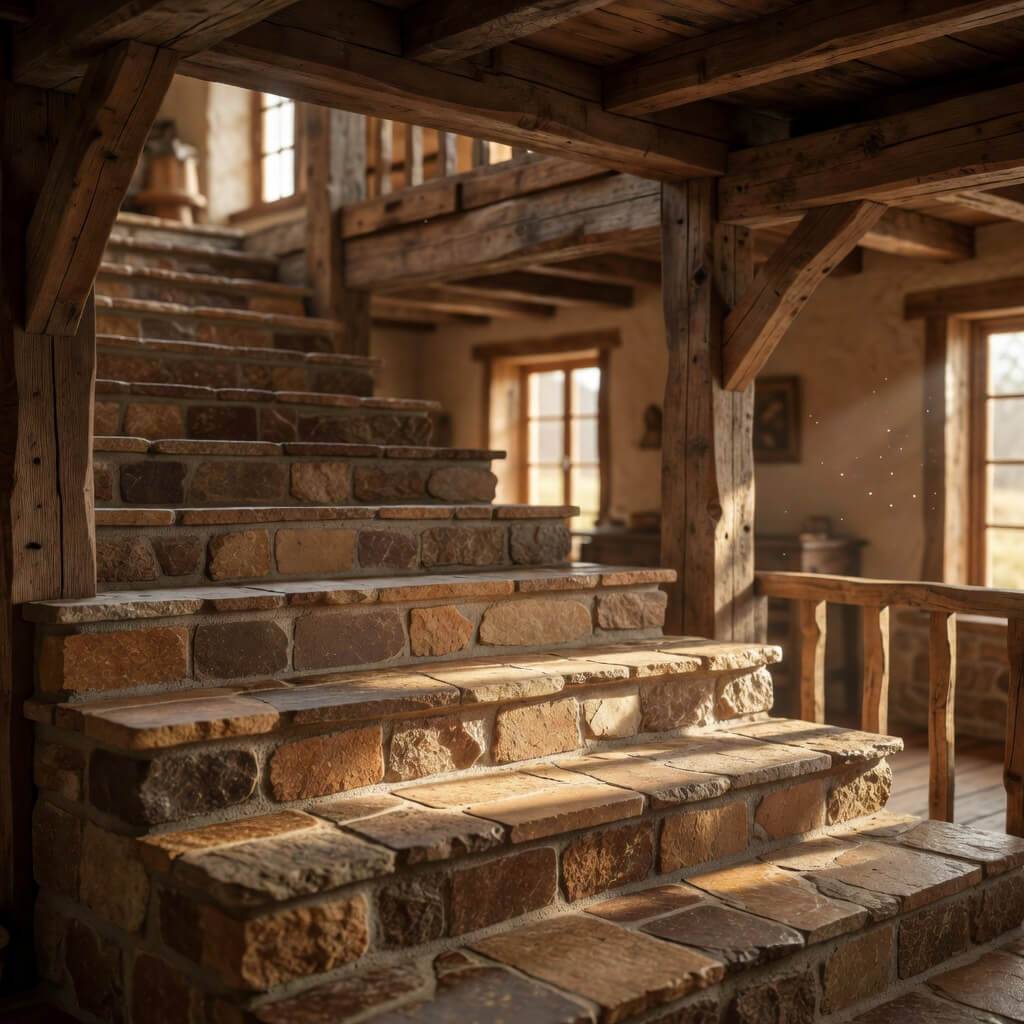
There’s something primal and comforting about natural stone. It connects us to the earth, brings the outdoors in, and creates spaces that feel grounded and authentic. If you’re building or renovating a home with rustic, farmhouse, or nature-inspired aesthetics, stone stair tiles are calling your name.
I worked on a mountain cabin renovation last year where we installed slate tiles on the stairs. The rough, natural texture and earthy tones fit the setting so perfectly that it felt like the stairs had been carved from the mountain itself. That project reminded me why I fell in love with design in the first place.
Popular natural stone options for stairs:
- Slate: Durable, naturally slip-resistant, gorgeous color variations
- Travertine: Warm tones, distinctive porous texture, Mediterranean vibe
- Limestone: Soft, neutral palette, works in both rustic and refined settings
- Sandstone: Earthy, textured, perfect for outdoor-indoor flow
- Flagstone: Irregular shapes create organic, one-of-a-kind patterns
The beauty of natural stone is that no two pieces are identical. Each tile has its own character—different colors, veining, fossils, or texture. Your staircase becomes truly unique, impossible to replicate exactly.
Now, stone does require some consideration. It’s heavy (make sure your structure can handle it), it needs sealing to prevent staining, and it’s generally more expensive than ceramic or porcelain. But the authenticity and longevity? Totally worth it for the right home.
Maintenance Reality Check
Let’s be honest—stone isn’t the lowest-maintenance option. You’ll need to reseal it periodically, and some types are more porous than others. Travertine, for example, can stain if you’re not careful. But slate? That stuff is practically bulletproof. Choose your stone type based on your actual lifestyle, not just aesthetics.
For homes with kids or heavy traffic, I recommend slate or granite. They can take a beating and still look great. Save the softer stones like limestone for low-traffic areas or homes where you can actually maintain them properly.
High-Gloss Ceramic Stair Tiles for Elegant Shine
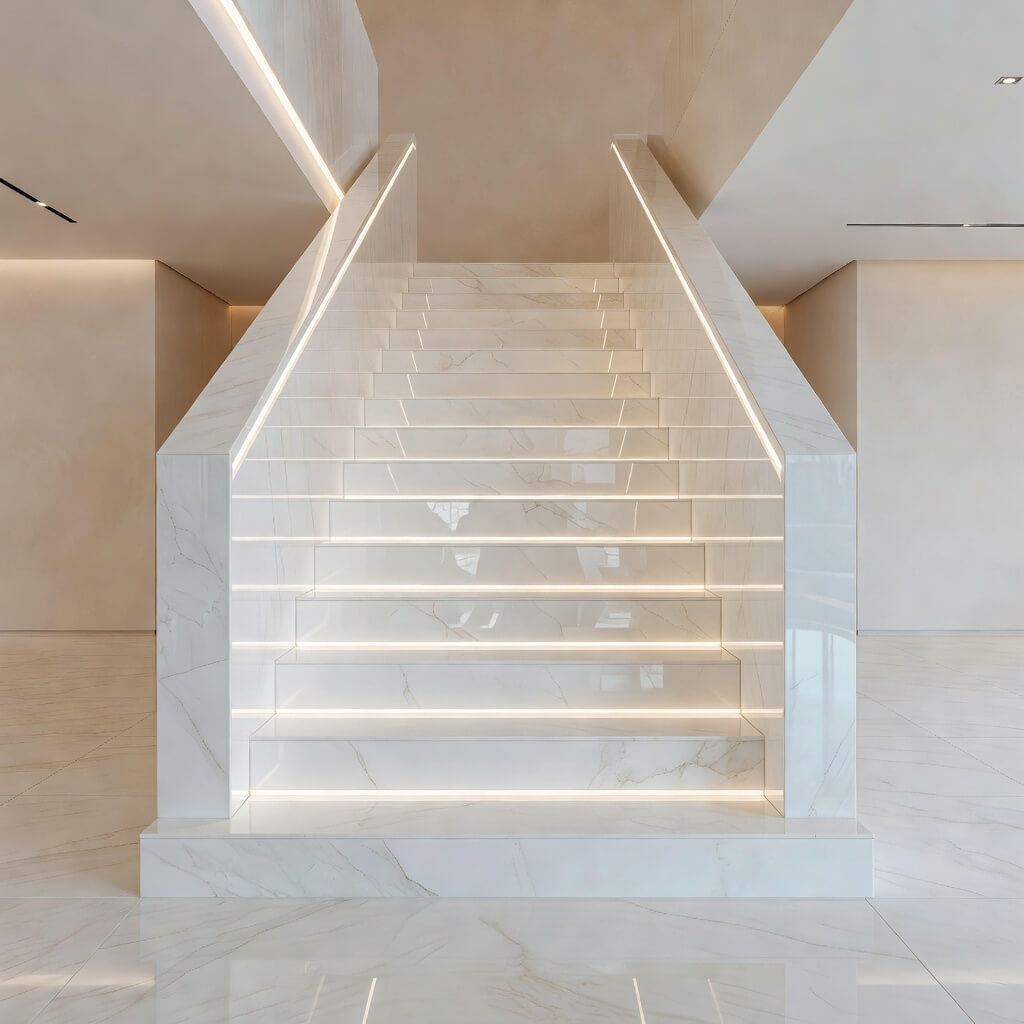
Want to add instant glamour to your home? High-gloss ceramic tiles are like jewelry for your stairs—they catch light, create shine, and elevate everything around them.
When I installed glossy white tiles on my own stairs, the transformation was incredible. The light reflection made the entire hallway brighter, and the polished finish gave the space a refined, upscale feel. Every time I walk past, I get a little hit of satisfaction (yes, I’m that person).
Advantages of high-gloss tiles:
- Light reflection: Makes spaces feel brighter and more open
- Easy cleaning: Smooth surface wipes clean effortlessly
- Luxurious appearance: That shine screams quality
- Color vibrancy: Glossy finish makes colors pop
- Contemporary aesthetic: Perfect for modern or Art Deco styles
The downside? These tiles can be slippery, especially when wet. For stairs, this is a legitimate concern. My solution: use high-gloss tiles on the risers for visual impact, and choose matte or textured tiles for the treads where you actually step. Best of both worlds—safety and style.
Color-wise, you can’t go wrong with classic options. Pure white creates a clean, spa-like feel. Black delivers drama and sophistication. But don’t overlook bold colors—emerald green, sapphire blue, or even metallic finishes can create stunning effects.
Combining Glossy and Matte Finishes
One of my favorite techniques is mixing glossy and matte tiles in the same color family. Use glossy tiles on risers and matte on treads, or create patterns that alternate between finishes. This adds textural interest while maintaining color cohesion. The contrast between shiny and matte surfaces creates subtle sophistication that’s really pleasing to the eye.
Also Read: 10 Gorgeous Stairs Railing Design Ideas Interior Upgrade
Moroccan Pattern Stair Tile Designs for Artistic Spaces
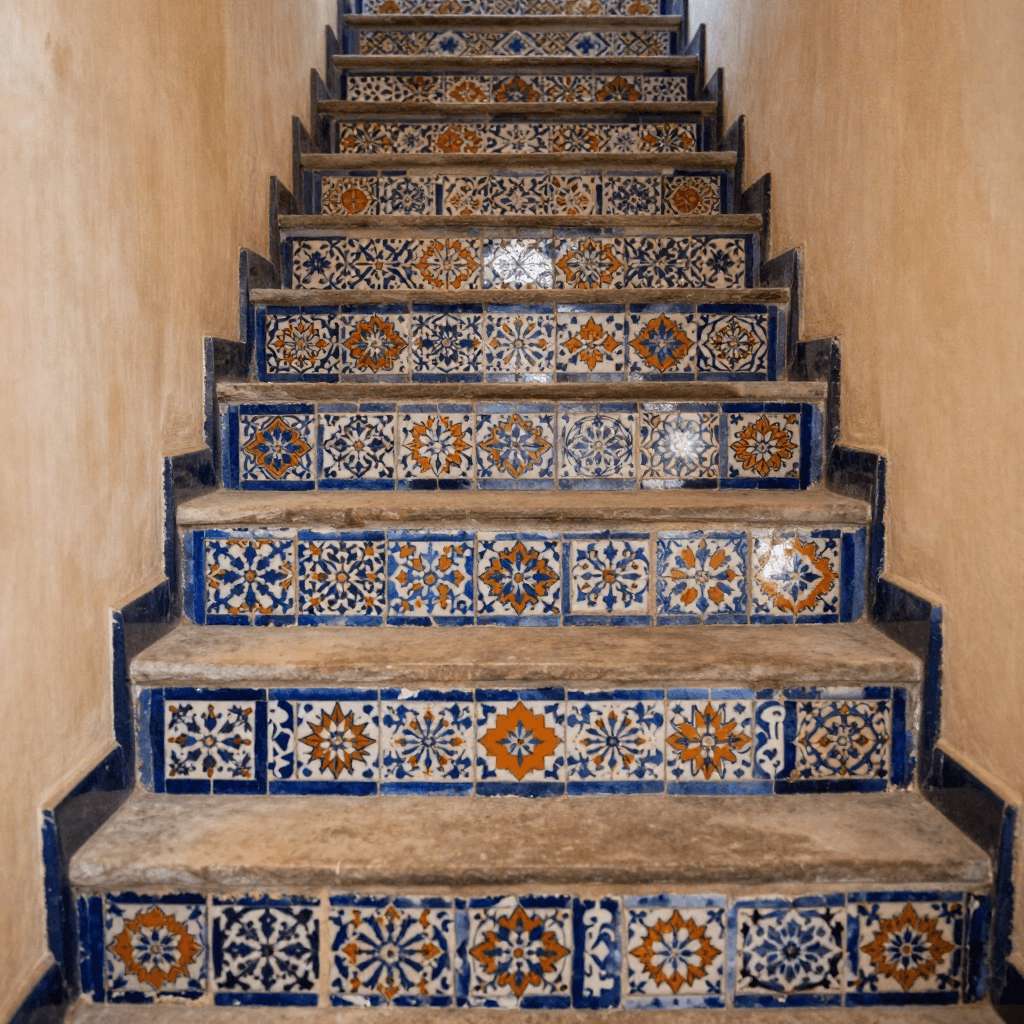
Last but definitely not least—Moroccan pattern tiles. If you want your stairs to look like they belong in a stylish riad in Marrakech, this is your design direction. These tiles are all about intricate patterns, rich colors, and serious artistic flair.
Moroccan tiles (also called cement tiles or encaustic tiles) feature hand-painted designs with geometric or floral patterns. The craftsmanship is incredible—each tile is a tiny work of art. When you arrange them on stairs, you create a stunning visual tapestry that’s impossible to ignore.
What makes Moroccan tiles special:
- Handcrafted quality: Many are still made using traditional methods
- Vibrant colors: Bold blues, greens, reds, and yellows
- Intricate patterns: Detailed geometric or floral designs
- Cultural richness: Brings global, worldly vibe to your home
- Unique combinations: Mix and match different patterns for custom looks
I used Moroccan tiles on a client’s staircase last year, and the result was absolutely magical. We chose a blue and white pattern that tied into their Mediterranean-inspired home, and it became the star of the entire space. Guests would literally stop mid-conversation to admire the stairs. That’s the power of good design, folks.
The trick with Moroccan tiles is not going overboard. These patterns are busy and colorful, so balance them with neutral walls and simple handrails. Let the tiles be the star—everything else should support, not compete.
Pattern Mixing Like a Pro
You can use a single pattern for a cohesive look, or mix multiple complementary patterns for more visual interest. If mixing, stick to the same color palette and ensure patterns share similar design elements. I usually recommend choosing one dominant pattern and using others as accents.
For stairs, consider using Moroccan tiles on risers only, keeping treads solid-colored. This prevents visual overload while still delivering that wow factor. Plus, solid treads are more practical from a safety standpoint.
Sealing and Maintenance
Real cement Moroccan tiles are porous and require proper sealing. Don’t skip this step, or you’ll regret it the first time someone spills red wine (or coffee, or juice, or… you get it). Apply a quality penetrating sealer before and after grouting, then reseal annually for high-traffic areas like stairs.
Bringing It All Together
So there you have it—10 stunning stair tile designs that can transform your home from ordinary to absolutely remarkable. Whether you’re drawn to the timeless elegance of marble, the cozy warmth of wood-look porcelain, or the artistic flair of Moroccan patterns, there’s a perfect option for your space and style.
Here’s what I’ve learned from years of working with stair tiles: the best design is the one that makes you smile every time you see it. Don’t just follow trends—choose tiles that resonate with your personal aesthetic and lifestyle. Your home should reflect who you are, not what Pinterest says is popular this month.
Remember to consider practical factors too. Safety comes first, especially if you have kids, elderly family members, or pets. Maintenance requirements matter—be honest about how much upkeep you’re willing to do. And budget wisely, but don’t cheap out on quality. You walk these stairs every single day; they deserve proper investment.
My personal favorite? I’m torn between the drama of black and gold and the artistic charm of Moroccan patterns. But ask me tomorrow, and I might say something completely different. That’s the beauty of design—there are so many incredible options, and each brings something unique to the table.
Whatever you choose, hire a qualified installer (seriously, this isn’t a DIY project unless you really know what you’re doing), invest in quality materials, and trust your instincts. Your stairs are about to become the feature everyone notices—in the best possible way.
Now stop scrolling through articles and go start planning your stair transformation. Your home is waiting for its upgrade! 🙂