10 Modern Clothing Store Counter Design Ideas for Trendy Stores
- Counter Design
 Ben
Ben- 0
- 37 minutes read
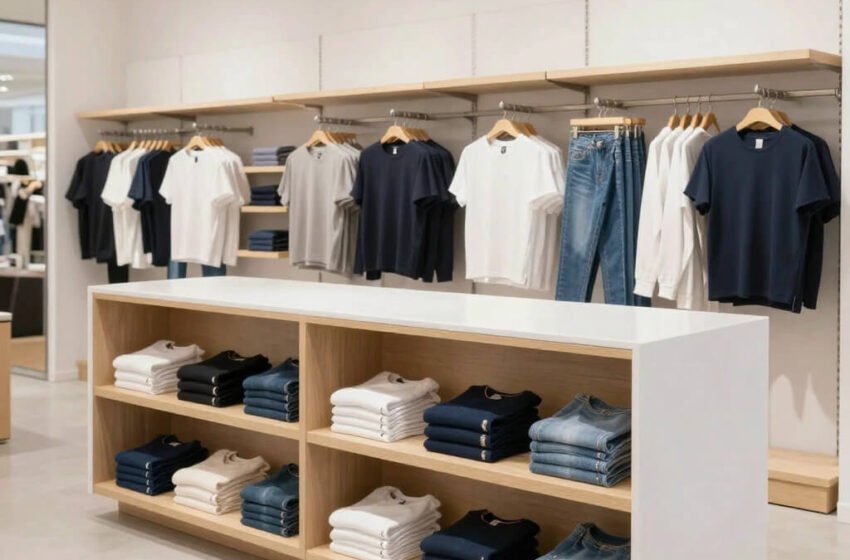
Look, I’ll be honest with you—your counter can make or break the entire vibe of your clothing store. You could have the most incredible inventory, the coolest displays, and the perfect lighting, but if customers walk up to a boring, outdated counter? That’s where the magic dies. I learned this the hard way when I helped my friend redesign her boutique last year. We spent thousands on new racks and fixtures, but the real transformation happened when we finally tackled that sad, generic checkout area.
Your counter isn’t just where transactions happen. It’s the last impression customers get before they leave (and trust me, last impressions stick). It’s where they decide whether to follow you on Instagram, whether they’ll come back, and whether they’ll tell their friends about your store. So yeah, this matters more than you think.
Let me walk you through ten counter designs that actually work in modern clothing stores. I’ve seen these in action, and they’re not just pretty—they’re functional, they fit different budgets, and they can transform your space from “meh” to “wow.”
Minimal Modern Boutique Counter Design
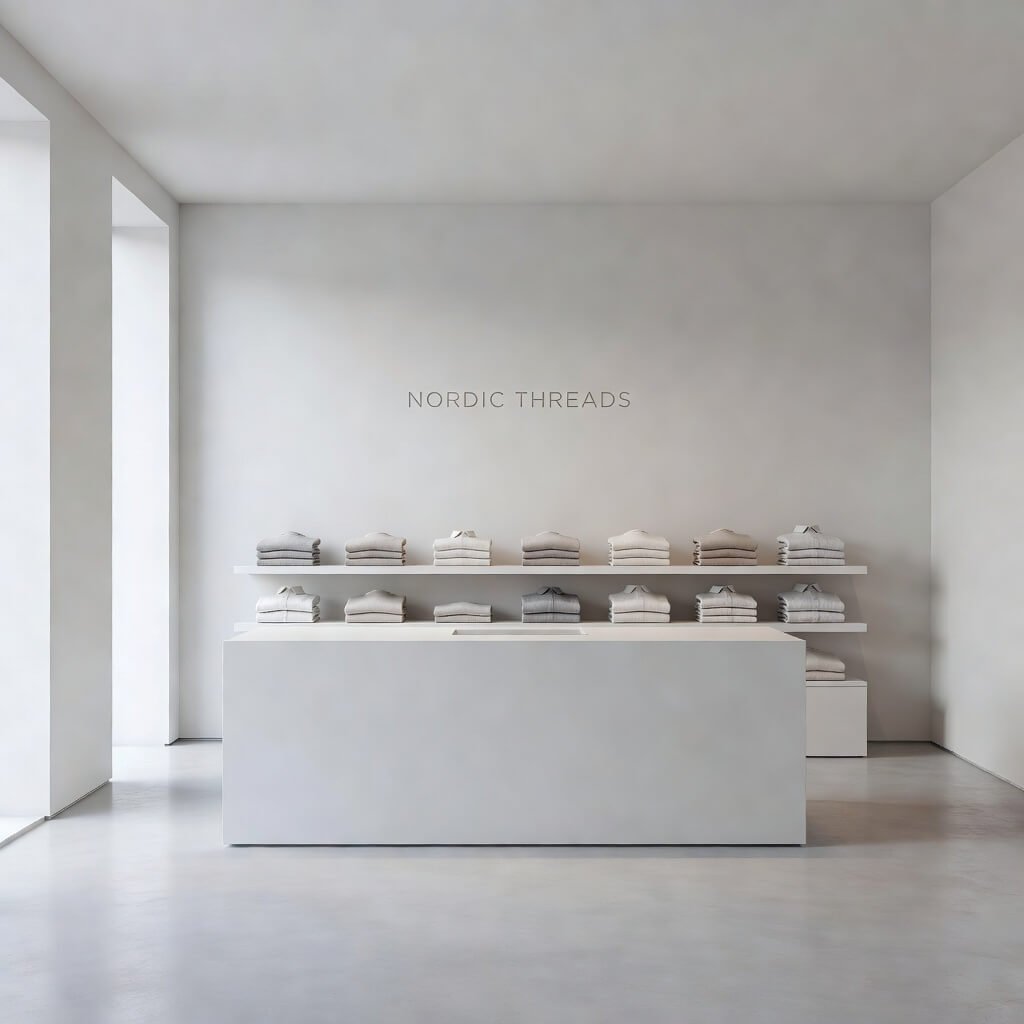
Ever notice how the most expensive stores always look… empty? That’s minimalism for you, and it works like a charm for a reason.
The minimal modern counter is all about clean lines, neutral colors, and zero clutter. Picture a sleek white or light gray counter with absolutely nothing on top except maybe a single iPad for checkout and a small succulent (because apparently, every minimalist space needs a succulent). The beauty here is that nothing distracts from your actual products.
I visited this boutique in Brooklyn that nailed this aesthetic. Their counter was a simple rectangular design in matte white, floating against the wall with hidden storage underneath. No visible cash register, no messy receipt rolls, no pens scattered everywhere. Just clean, simple, elegant.
Here’s what makes this design work:
- Concealed storage keeps all the messy stuff out of sight
- Neutral palette (white, beige, light gray) matches any store aesthetic
- Simple geometric shapes create a modern, sophisticated feel
- Minimal hardware means no bulky handles or decorative elements
The trick with minimal design is that you can’t fake it. You need to actually keep things organized because every piece of clutter shows. If you’re naturally messy (no judgment, I am too), this might drive you crazy. But if you can maintain it? Your store will photograph beautifully, and customers will perceive everything as higher-end.
Making Minimalism Work for You
Don’t confuse minimal with cheap. You need quality materials because there’s nowhere to hide shoddy construction. A laminate counter trying to look minimal just looks… sad. Invest in solid surfaces, quality finishes, and proper installation.
Also, think about proportions. A minimal counter should feel balanced—not too bulky, not too tiny. It should ground the space without overwhelming it.
Luxury Marble Finish Clothing Store Counter
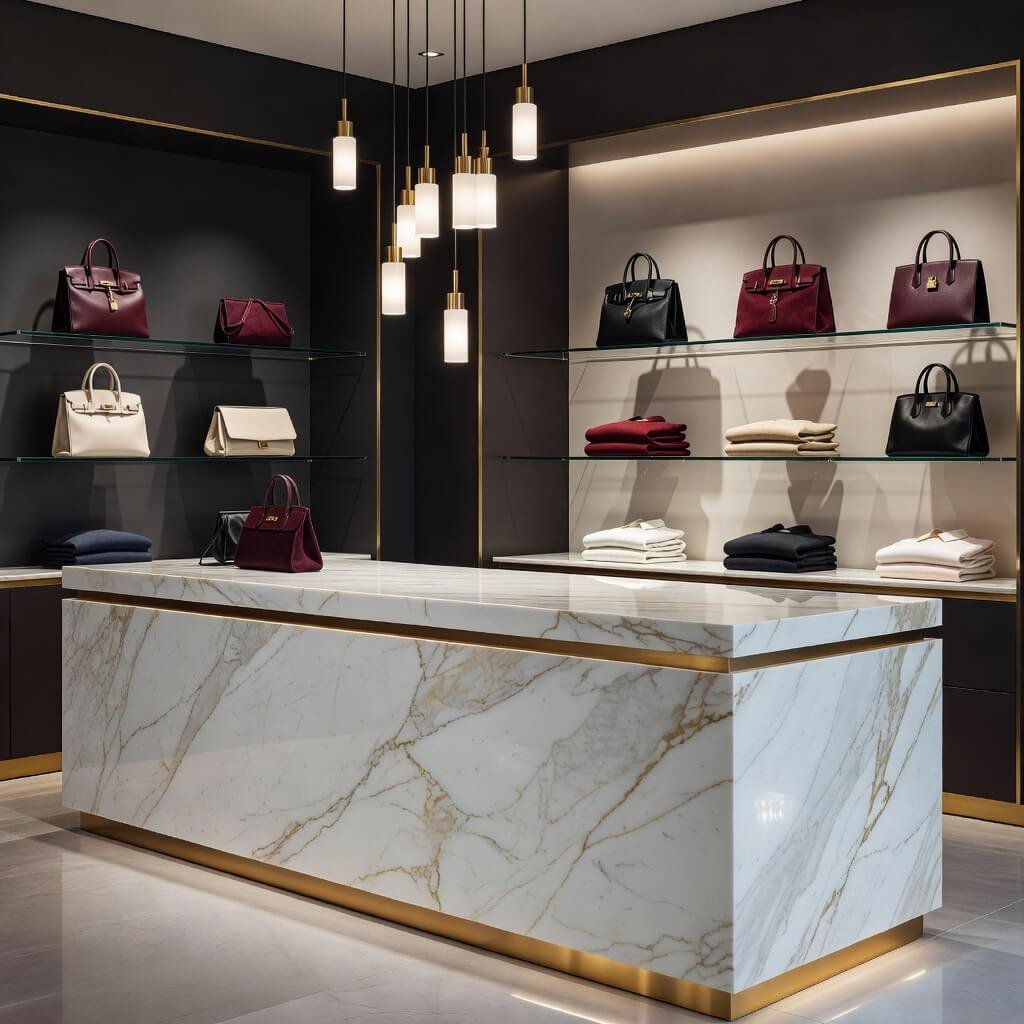
Want customers to feel like they’re shopping somewhere fancy? Marble does that job without you saying a word.
Real talk: nothing screams luxury quite like marble. I don’t care if it’s 2024 or 2034—marble will always read as expensive and elegant. A marble-finished counter instantly elevates your entire store’s perceived value. I’ve seen stores literally double their average transaction value after renovating with marble elements. Coincidence? I think not.
Now, before you panic about the price tag, you have options. Real marble slabs cost a fortune and require serious maintenance (those stains, ugh). But marble-look porcelain, quartz, or even high-quality marble-patterned laminate can give you that luxe look without the luxury price or the stress of maintaining actual marble.
Key features of a luxury marble counter:
- Veined patterns in white, black, gray, or even dramatic green tones
- Polished finish that catches light beautifully
- Thick edge profile (waterfall edges look incredible but cost more)
- Paired with gold or brass hardware for maximum impact
I remember walking into this high-end boutique in LA where they had this stunning black marble counter with gold veining. The whole checkout area looked like a piece of art. Customers were literally taking photos of the counter. That’s free marketing, my friend.
The Reality Check
Marble (real or faux) works best for stores targeting a higher-end market. If you’re selling vintage tees and casual wear, marble might feel weirdly out of place. Know your brand, know your customers. Also, FYI, if you go with real marble, you’ll need to seal it regularly and clean up spills immediately. It’s high-maintenance, kind of like that friend we all have.
Space-Saving Small Shop Cash Counter Setup
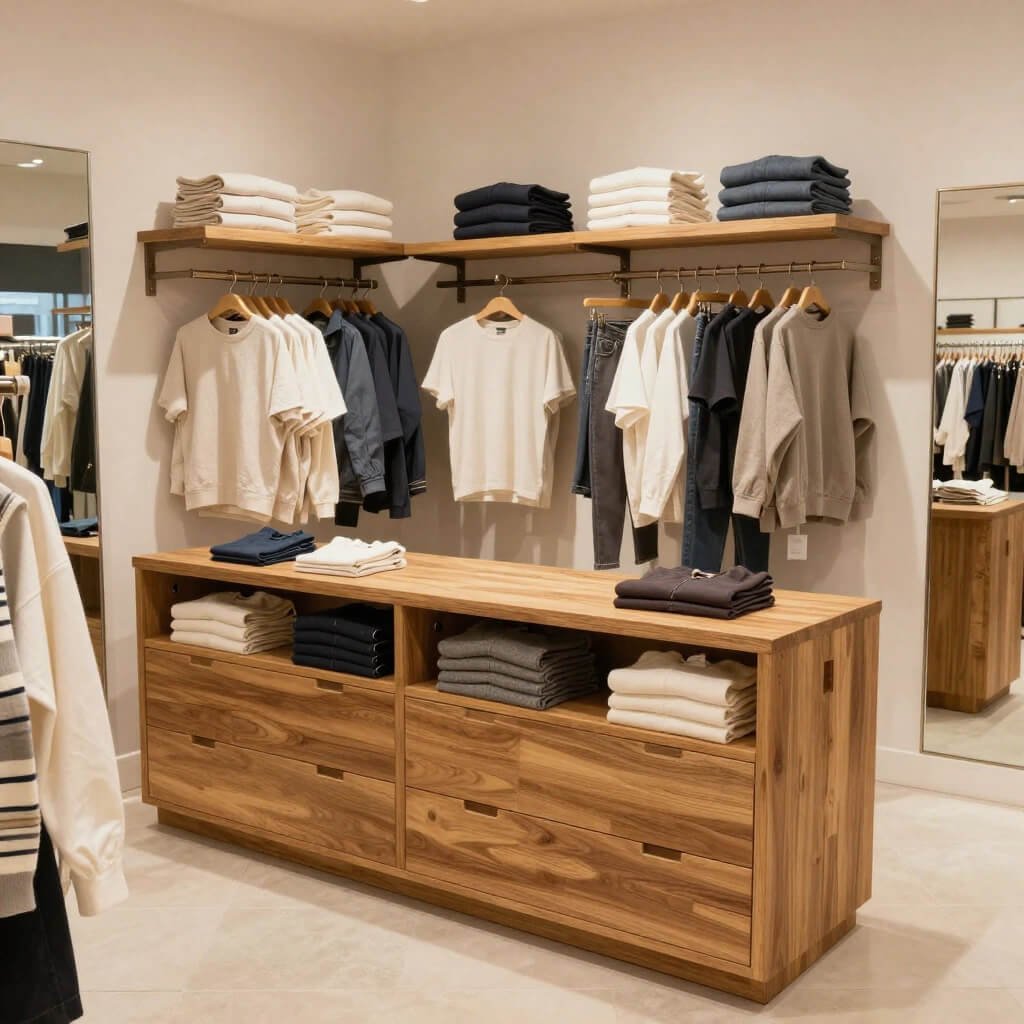
Got a tiny store? Join the club. Not everyone can afford massive retail space, and honestly, small can be cozy and charming when you design it right.
The challenge with small stores is making every square inch count. Your counter can’t be this giant obstacle course that customers have to navigate around. You need something that handles transactions efficiently without eating up your entire floor plan.
I’ve seen brilliant solutions for this. Wall-mounted floating counters that take up minimal floor space. Narrow counter designs (18-24 inches deep instead of the standard 30) that still function perfectly. Corner installations that use otherwise wasted space.
Smart Small Counter Features
Check out these space-saving ideas:
- Vertical storage instead of wide horizontal cabinets
- Wall-mounted shelves above the counter for display or storage
- Fold-down extensions that give you extra workspace when needed
- Mobile counter units on wheels that you can reposition
- Built-in seating on the customer side (doubles as display space)
One boutique I consulted for had maybe 300 square feet total. We installed a 4-foot-wide floating counter in the corner with shelving above and a small cabinet below. It handled everything they needed without making the space feel cramped. Actually, it made the store feel more curated and intentional.
The real secret? Multi-functional design. Your small counter needs to work overtime. It’s checkout, it’s display space, it’s storage, it’s maybe even your office area when the store’s closed. Embrace the multi-tasking.
Also Read: 10 Inspiring Showroom Counter Design Ideas for Shop Upgrade
LED Backlit Glass Display Counter Design
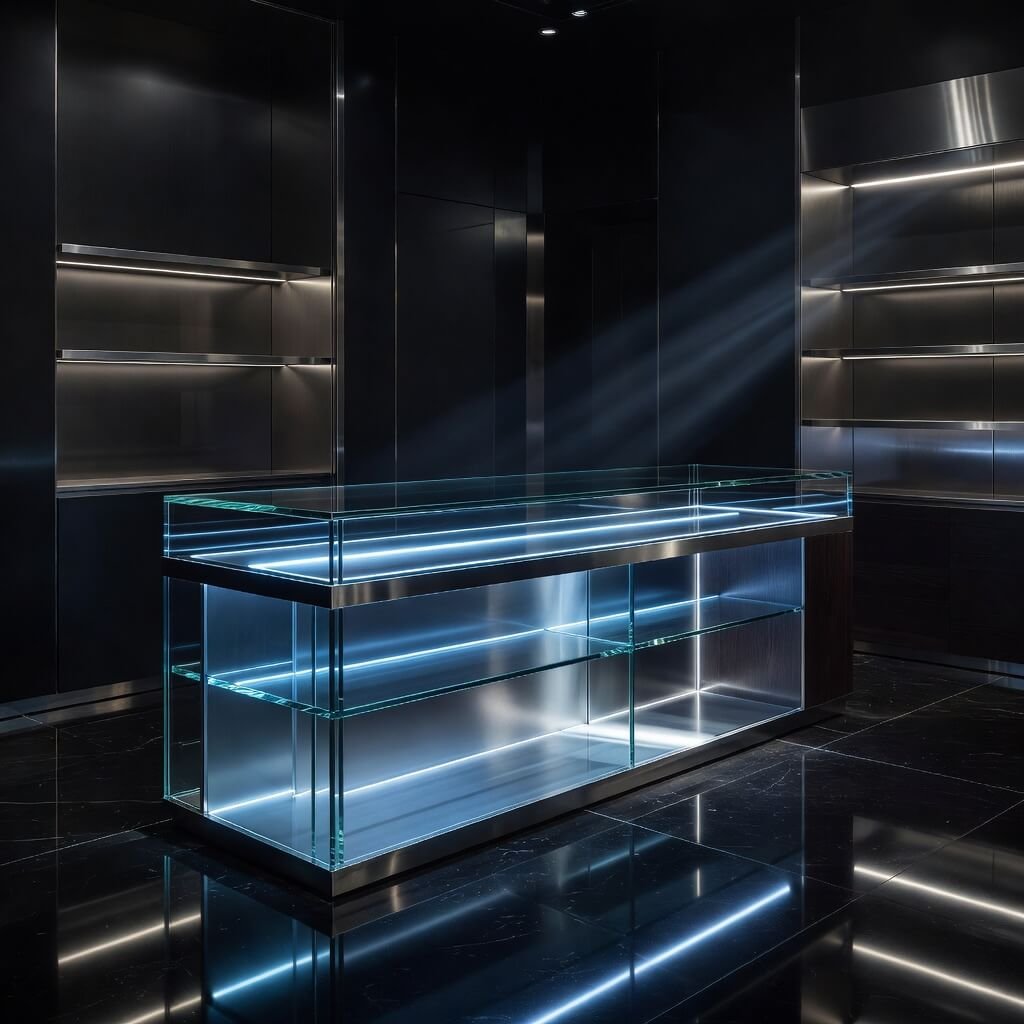
Want to add some drama? LED backlighting is where it’s at.
There’s something almost futuristic about LED-backlit glass counters, and they work incredibly well for trendy, fashion-forward stores. The glow creates ambiance, highlights products if you’re displaying accessories in the counter, and just looks really, really cool.
I walked into this sneaker boutique last month that had a frosted glass counter with blue LED backlighting. The entire counter glowed, and they had limited-edition sneakers displayed inside the counter itself. People crowded around it like it was a museum exhibit. That’s the power of good lighting.
What makes LED backlit counters special:
- Customizable colors let you change the mood (some systems let you adjust via app)
- Energy-efficient modern LEDs last forever and cost pennies to run
- Highlight display items inside the counter beautifully
- Create ambiance especially in stores with dim or moody lighting overall
- Instagram-worthy which means free social media content
You can go subtle with warm white lighting that just adds a soft glow, or you can go bold with color-changing LEDs that match your branding or seasons. Holiday time? Red and green. Summer? Cool blues. You get it.
Installation Considerations
Here’s the thing—LED systems aren’t complicated, but they do require planning. You need electrical access, you need the right type of glass (tempered, possibly frosted or etched), and you need to think about heat dissipation (even though LEDs run cool, trapped heat can still be an issue).
Work with a professional on this one unless you’re super handy with electrical work. A badly installed LED system looks cheap and might actually be dangerous. Not worth the risk.
Wooden Rustic Boutique Checkout Counter
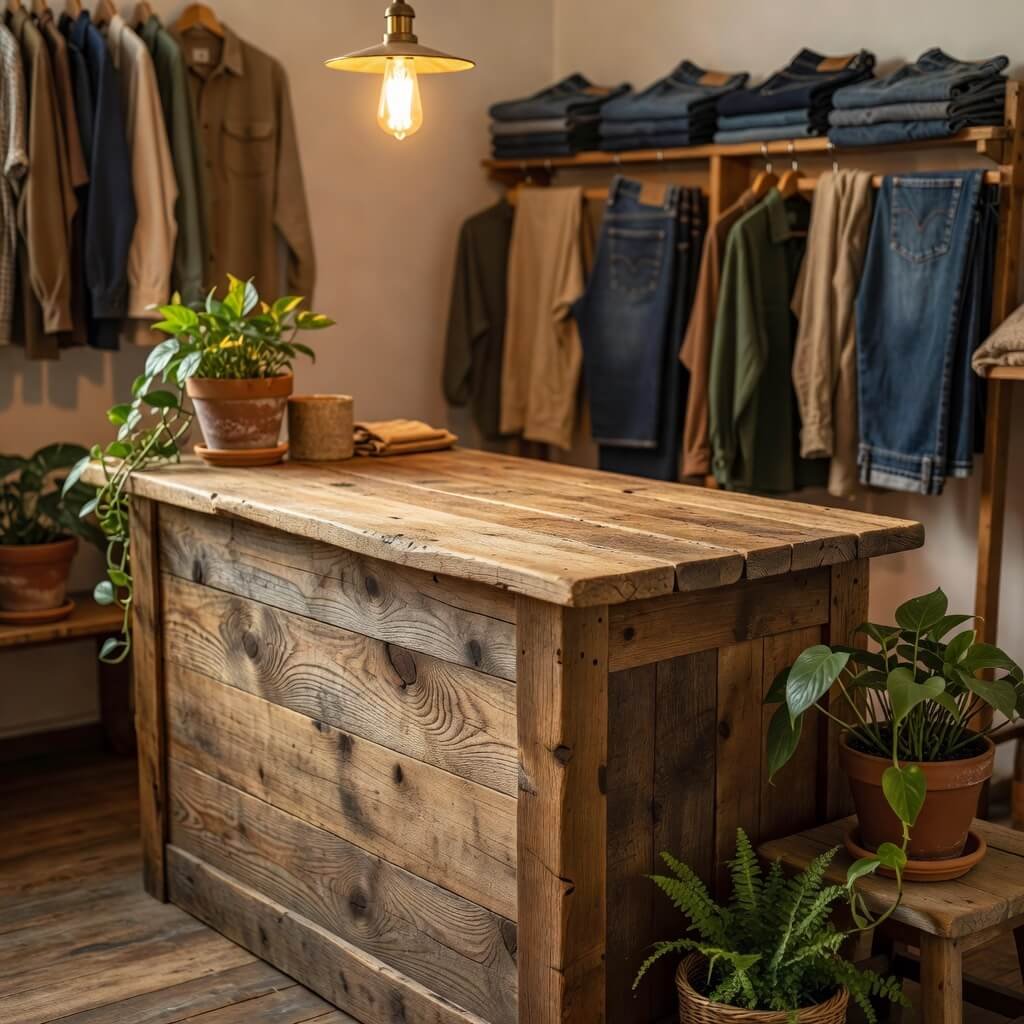
Sometimes modern means sleek and metallic, but sometimes it means bringing natural materials into contemporary spaces. Rustic wood counters are having a serious moment right now.
Wood brings warmth that you just can’t get from glass, marble, or metal. It makes your store feel welcoming, approachable, and somehow more authentic. I’ve seen rustic wooden counters work beautifully in vintage clothing stores, eco-friendly boutiques, and even high-end casual wear shops.
The key word here is “rustic,” which doesn’t mean sloppy or unfinished (usually). We’re talking about:
- Reclaimed wood with visible grain, knots, and character
- Live edge slabs that show the natural edge of the tree
- Weathered finishes in gray, brown, or natural tones
- Chunky proportions that feel substantial and grounded
- Visible joinery like exposed bolts or metal brackets
I helped design a counter for a sustainable fashion boutique using reclaimed barn wood. The wood had this gorgeous patina and every scratch and mark told a story. Customers constantly asked about it, which gave the staff a perfect opportunity to talk about the store’s sustainability mission. Your counter became a conversation starter and brand reinforcement. That’s smart design.
Maintaining the Rustic Look
Wood requires some care. You need to seal it properly to protect against spills and wear. High-traffic counters need durable finishes, not just some oil and hope 🙂
Also, rustic doesn’t mean rough. You don’t want customers getting splinters at checkout. The wood should be properly sanded and finished, even if it looks weathered and old.
U-Shaped Retail Counter for Clothing Stores
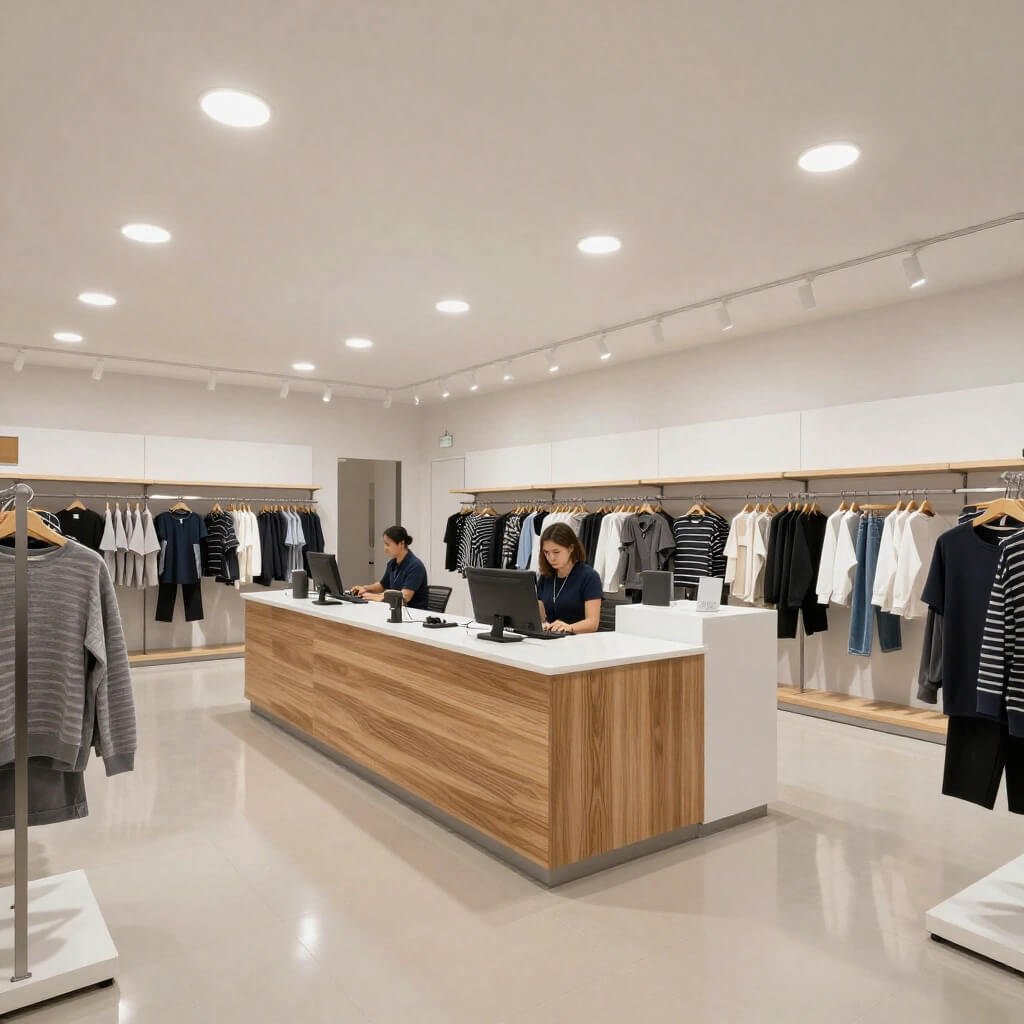
Layout matters more than most people realize, and U-shaped counters solve several problems at once.
A U-shaped counter creates a defined checkout zone while allowing staff to access everything easily. You’ve got workspace on three sides, storage underneath in multiple directions, and customers stay on one side of the U while staff can move around inside efficiently.
Think about the traffic flow here. Customers approach from one direction, complete their transaction, and move on. Staff members can serve multiple customers if needed, grab bags or tissue paper from one section, process payments from another, and wrap purchases from a third area—all without tripping over each other.
Benefits of the U-Shape Configuration
Let me break down why this layout works:
- Multiple work zones for different tasks (wrapping, payment, bagging)
- Better staff efficiency especially with multiple employees
- More storage accessible from the inside of the U
- Defined customer space that feels organized, not chaotic
- Face-to-face interaction that feels more personal than side-by-side counters
I’ve seen this work incredibly well in busier boutiques where you might have two or three staff members working during peak hours. They’re not bumping into each other, they can tag-team customers, and everything flows smoothly.
The downside? U-shaped counters take up more floor space. If you’re working with a tiny store, this probably isn’t your solution. But if you have the room, it’s worth considering, especially if you do good volume.
Also Read: 10 Elegant Breakfast Counter Design Ideas for Modern Living
Black Matte Premium Fashion Store Counter
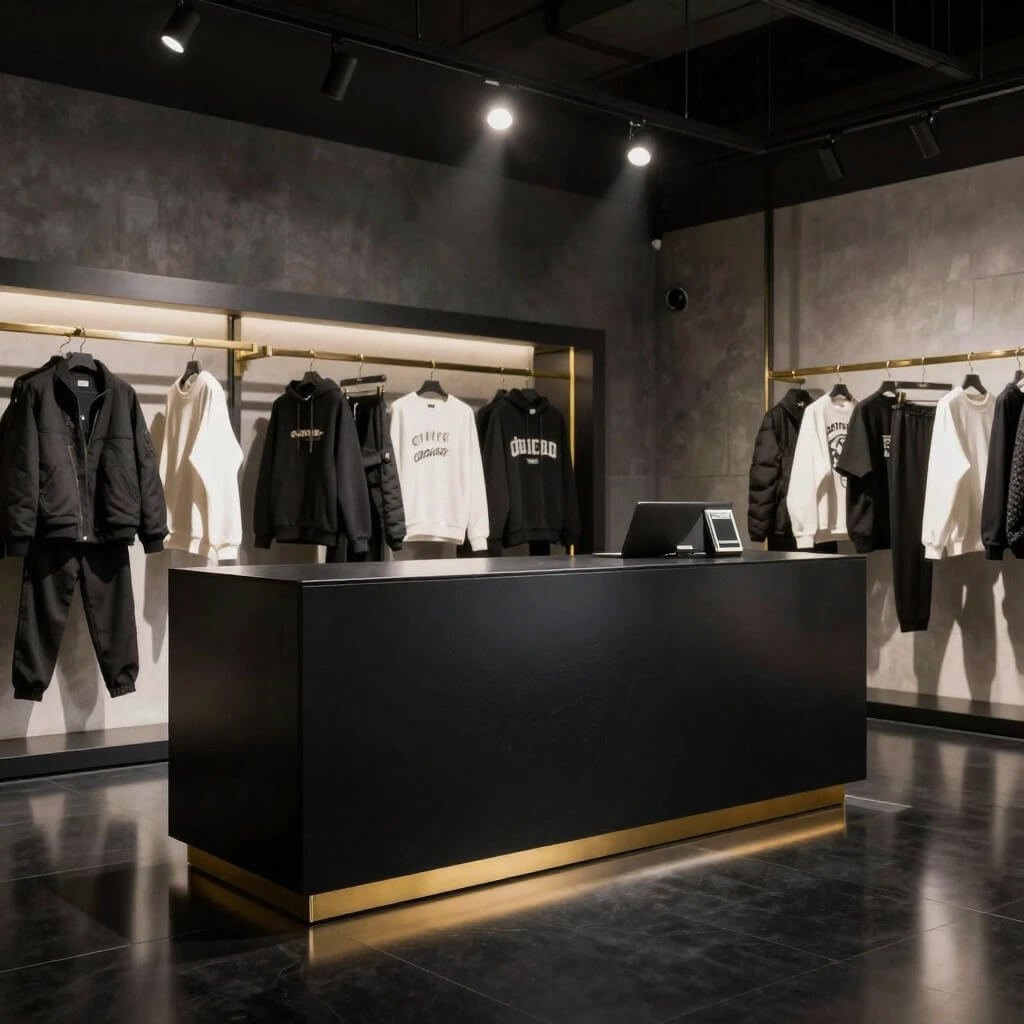
Bold, modern, and undeniably chic—black matte finishes make a statement without trying too hard.
There’s something about a black matte counter that just reads as “premium fashion.” It’s sophisticated without being stuffy, modern without being cold, and it works with virtually any color scheme you’ve got going in your store. I’ve seen black matte counters in minimalist boutiques, streetwear shops, and luxury designer stores. It’s versatile like that.
The matte finish is crucial here. Glossy black can look cheap or dated (think 1980s lacquer furniture), but matte black feels contemporary and intentional. It doesn’t show fingerprints as badly as glossy surfaces either, which is a massive practical advantage in a high-touch retail environment.
Style options for black matte counters:
- All-black design for maximum drama and impact
- Black with wood accents for warmth (black base, wood countertop)
- Black with metal details like brass, copper, or brushed gold
- Black with white contrast for a classic, graphic look
One of my favorite counter designs was in this edgy fashion boutique: matte black base with a thin brass edge detail and brass hardware. Simple, striking, and it made everything around it look more expensive.
Keeping It Fresh, Not Dated
Here’s my concern with black matte: it can go from trendy to tired quickly if you’re not careful. The key is pairing it with quality materials and keeping the design clean. A cheap black laminate counter looks cheap, period. But a well-constructed black counter with quality finishes? That looks like a million bucks.
Also, consider your lighting. Black absorbs light, so you need good illumination around your checkout area or the whole zone can feel dark and uninviting. Plan accordingly.
Open Shelf Integrated Sales Counter Design
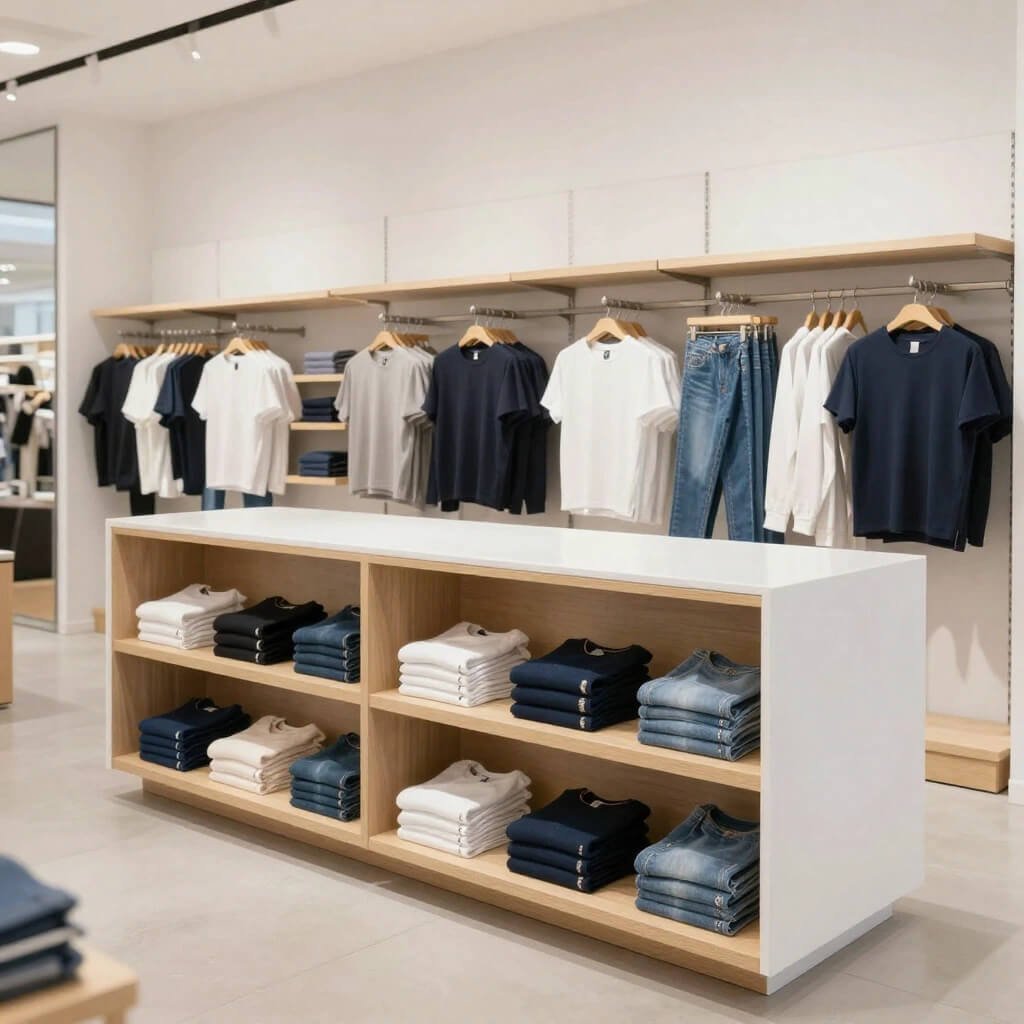
Why hide everything when you can make your storage part of the display?
Open shelf counters blur the line between checkout and merchandising. The shelves become display space for accessories, impulse-buy items, or branded merchandise while still functioning as your checkout area. It’s efficient, it’s visually interesting, and it can actually boost your add-on sales.
Picture this: a counter with open cubbies on the customer-facing side displaying sunglasses, jewelry, scarves, or whatever accessories complement your clothing. Customers browse while they wait, you make additional sales, and the counter looks curated instead of purely functional.
I implemented this concept for a boutique that sold women’s clothing and accessories. We built a counter with eight open cubbies on the front, and they merchandised them with different accessories. Those cubbies generated about 20% of their accessory sales even though they made up maybe 5% of their total display space. High-value real estate, for sure.
Making Open Shelving Work
A few things to keep in mind:
- Keep displays organized because messy open shelves look chaotic fast
- Rotate merchandise regularly so repeat customers see something new
- Price items clearly since customers will be examining them up close
- Secure valuable items if you’re displaying anything expensive
- Maintain cleanliness because every shelf is visible and will show dust
This design works best for stores with good accessory or small item inventory. If you only sell clothing, you might not have enough small items to make this concept work effectively.
Curved Elegant Designer Boutique Counter
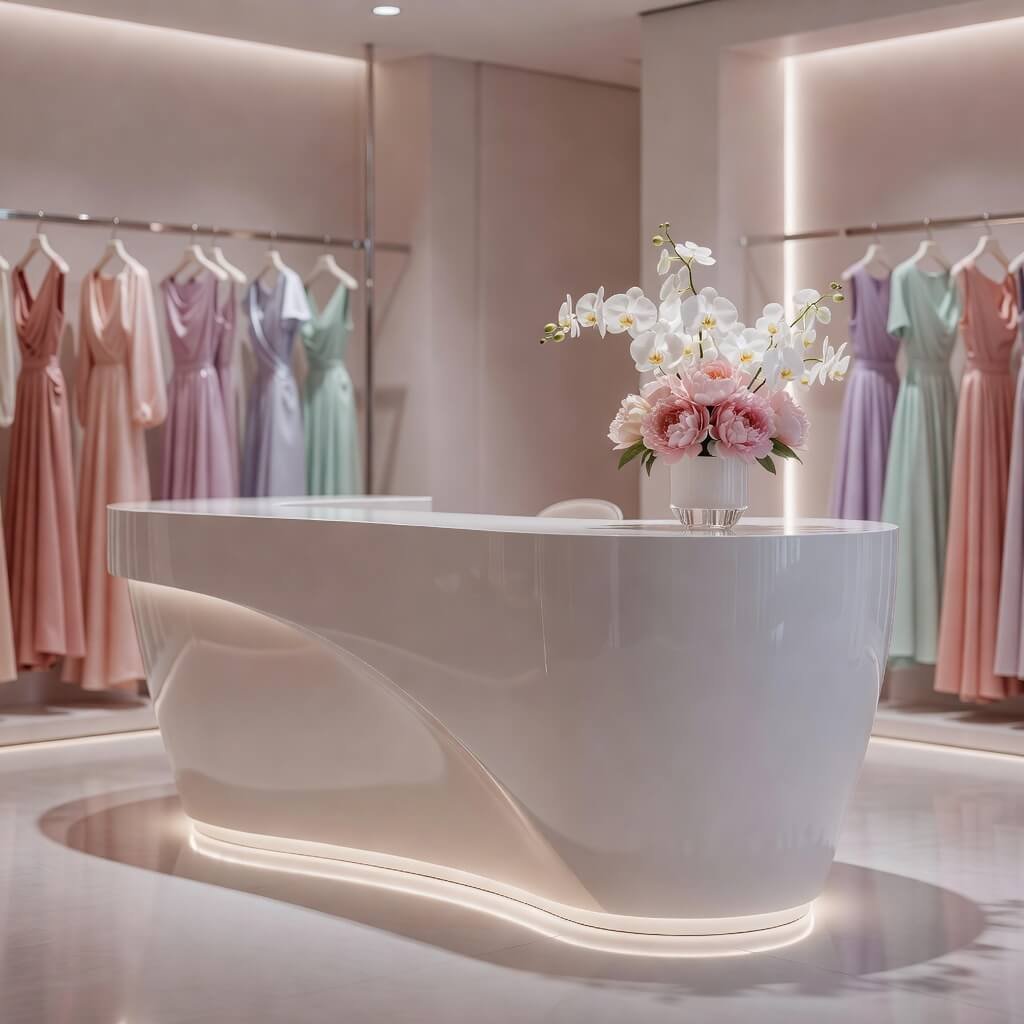
Straight lines are fine, but curves? Curves add sophistication and visual interest that rectangular boxes just can’t match.
A curved counter immediately signals “designer” or “luxury” because curves are harder to build and more expensive to execute. You know those high-end boutiques where everything looks like it was custom-designed? They usually feature curved elements, and the counter is often the centerpiece.
I’m talking about gentle, elegant curves—not weird squiggly shapes that look like they’re melting. Think of a counter that bows outward slightly, creating a softer approach for customers, or a reception-style curved desk that wraps around in an arc. The curves create flow and movement in your space.
Why Curves Cost More (But Might Be Worth It)
Let’s be real: curved counters are more expensive. You can’t just grab standard materials and cut them to size. You need custom fabrication, skilled installers, and materials that can handle curves (or layers of materials built up to create the curve).
But the impact? Totally different from a standard rectangular counter. Curves:
- Soften the entire space visually
- Create better traffic flow (no sharp corners to bump into)
- Photograph beautifully from multiple angles
- Signal attention to design detail that customers notice
- Make staff interactions feel more welcoming and less transactional
One luxury boutique I visited had this gorgeous curved counter in ivory lacquer with a marble top. It was the first thing you saw when you walked in, and it set the tone for the entire shopping experience. Worth the investment? For their brand and price point, absolutely.
IMO, if you’re targeting a budget-conscious market, maybe skip the curved counter and invest elsewhere. But if you’re positioning yourself as a premium boutique, this is the kind of design detail that reinforces your brand positioning without saying a word.
Also Read: 10 Gorgeous Cafe Counter Design Ideas for Urban Cafes
Industrial Style Metal Frame Store Counter
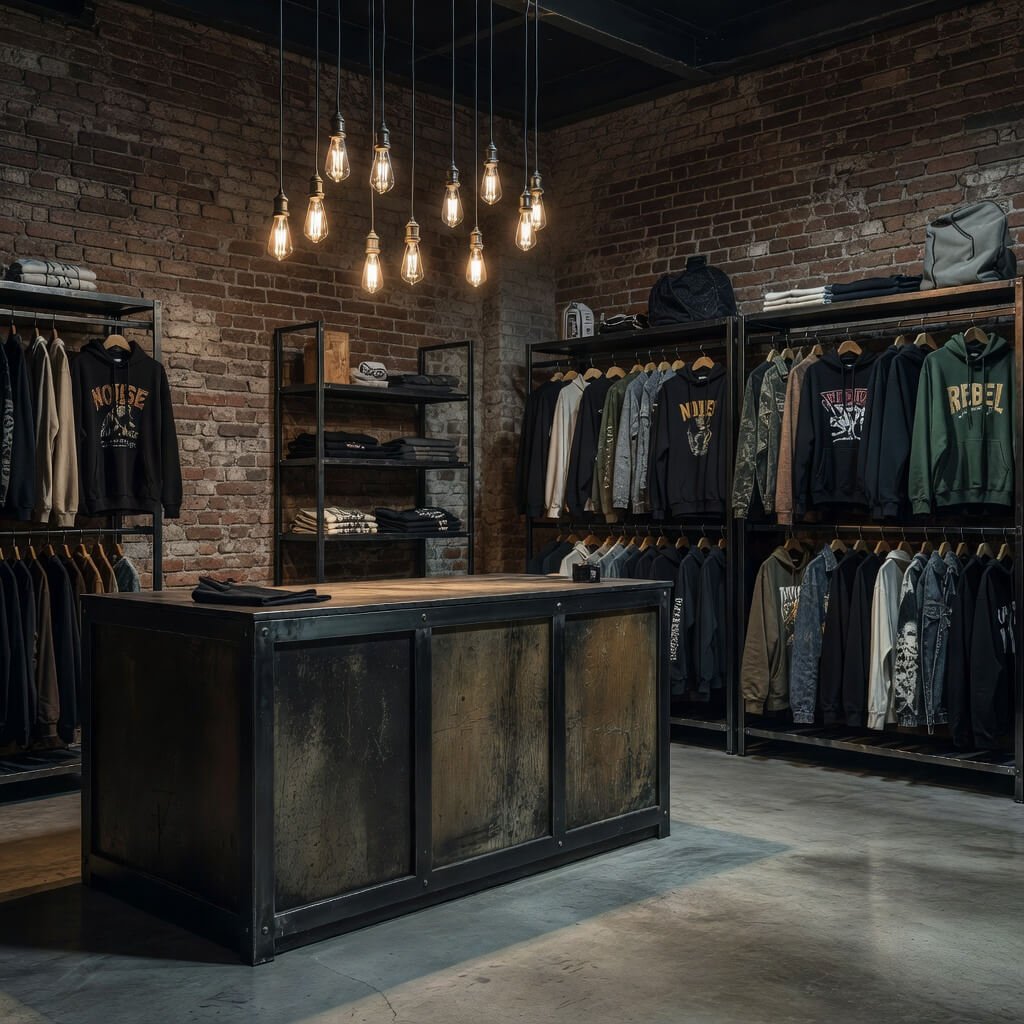
Raw, edgy, and perfect for urban streetwear or contemporary fashion stores—industrial counters bring serious attitude.
Industrial design embraces the raw and unfinished: exposed metal frames, concrete or wood tops, visible bolts and welds, and a utilitarian aesthetic that says “we’re too cool to try too hard.” This style works incredibly well for streetwear boutiques, vintage stores, contemporary menswear, and any brand that leans into urban or edgy aesthetics.
Think black steel frames, maybe powder-coated or left raw with a clear coat to prevent rust. The countertop might be reclaimed wood, concrete, or even a metal mesh. Everything feels solid, functional, and unapologetically industrial.
I consulted for a streetwear shop that built their counter from black steel pipe and reclaimed wood planks. The whole thing cost them maybe $400 in materials, and it looked like something from a high-end urban boutique. The industrial aesthetic is actually pretty budget-friendly if you’re willing to DIY or work with a local metal fabricator instead of buying pre-made retail fixtures.
Industrial Design Elements That Work
Here’s what makes industrial counters effective:
- Metal frames in black steel, galvanized metal, or raw iron
- Mixed materials like metal + wood or metal + concrete
- Visible construction showing bolts, welds, and joinery
- Utilitarian hardware (no decorative pulls, just functional)
- Raw or minimally finished surfaces that embrace imperfection
The beautiful thing about industrial design is that wear and tear actually adds to the aesthetic. Scratches, dents, patina—it all contributes to that authentic, used-and-loved vibe. Unlike a pristine white minimal counter that shows every flaw, industrial counters get better with age.
Who Should Skip This Style
If you’re running a romantic feminine boutique or a luxury formal wear store, industrial probably isn’t your vibe. Know your brand and your customers. This aesthetic works for specific markets, and forcing it into the wrong context just feels off.
Wrapping It All Up
So there you have it—ten counter designs that can genuinely transform your clothing store from basic to memorable.
Here’s what I want you to take away from this: your counter isn’t just functional; it’s a branding opportunity, a customer experience touchpoint, and honestly, it’s probably going to end up in a bunch of Instagram posts. Whether you go minimal and clean, luxe with marble, space-efficient and smart, or bold with industrial metal, make sure it actually reflects your brand and serves your customers well.
Don’t just pick what looks cool in a photo. Think about your actual space, your actual workflow, and your actual budget. A gorgeous counter that doesn’t function well or that you can’t afford to maintain properly is just going to frustrate you.
And hey, you don’t have to renovate everything tomorrow. Sometimes just updating your counter can refresh your entire store aesthetic. Start there, see what happens, and build from what works.
Which design speaks to you? Have you tried any of these in your own store? The checkout counter might be the last stop in the customer journey, but it’s where you seal the deal—literally and figuratively. Make it count.