10 Luxury Corridor Wall Design Ideas for Chic Interiors
- Corridor Design
 Ben
Ben- 0
- 37 minutes read
You know what everyone forgets about? Corridors. Yeah, those long, narrow spaces that connect your rooms get the short end of the design stick. We obsess over living rooms, bedrooms, even bathrooms get more attention than these poor hallways. But here’s the thing—your corridor is basically the runway of your home. Everyone walks through it, everyone sees it, and honestly? It’s one of the easiest places to make a massive style statement without breaking the bank (well, mostly).
I’ve spent way too much time staring at boring hallway walls, both in my own place and at friends’ houses. That blank, soulless expanse just screaming for personality. So I got a bit obsessed with corridor design, and now I’m here to share what I’ve learned. These ten luxury wall design ideas will transform your hallway from “meh” to “wow, tell me everything about this!” Trust me, your guests will notice.
Minimal Floating Frame Gallery Corridor
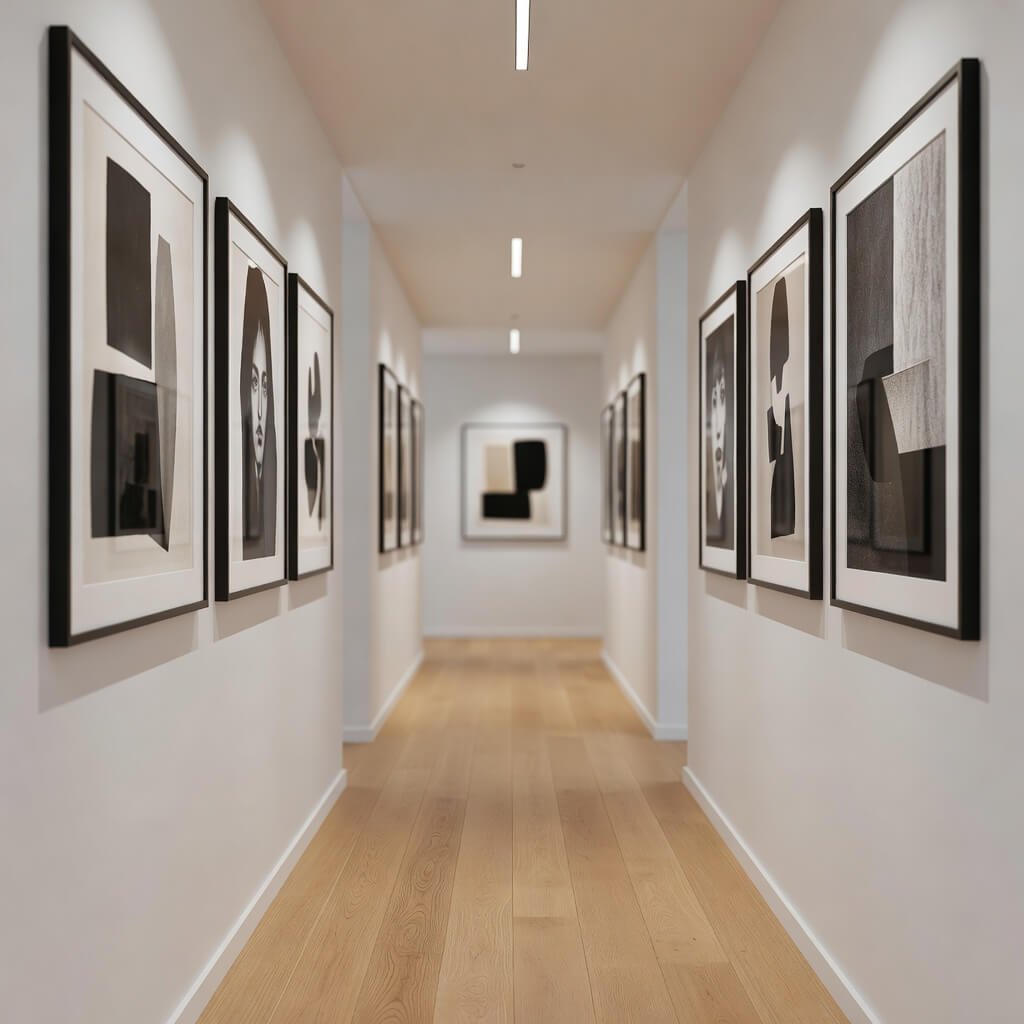
Let’s kick things off with my personal favorite—the floating frame gallery. You’ve probably seen those Pinterest-perfect hallways with perfectly aligned frames that seem to hover off the wall. That’s what we’re talking about here.
The beauty of this design lies in its simplicity and impact. You grab a collection of frames in matching or complementary styles, fill them with art, photos, or prints that speak to you, and arrange them along your corridor wall. But here’s where the “floating” part comes in—you use invisible mounts or ultra-slim frames that create this gorgeous shadow effect.
How I Actually Did This
I tried this in my own narrow hallway last year, and wow, what a difference. I went with black metal frames in three different sizes and filled them with black-and-white architectural photography. The key? Consistency in spacing. I measured everything out (yeah, I actually used a level—shocking, I know).
Here’s what you need to nail this look:
- Frame selection: Stick to 2-3 frame styles max. Unity is your friend here.
- Spacing consistency: Keep 2-3 inches between each frame for a cohesive look.
- Height placement: Center your frames at eye level, roughly 57-60 inches from the floor.
- Content curation: Mix personal photos with abstract art or typography for visual interest.
The floating gallery works especially well in modern and contemporary homes. It adds sophistication without overwhelming the space. Plus, you can swap out the content whenever you get bored—flexibility FYI 🙂
Luxury Mirror Illusion Hallway Wall
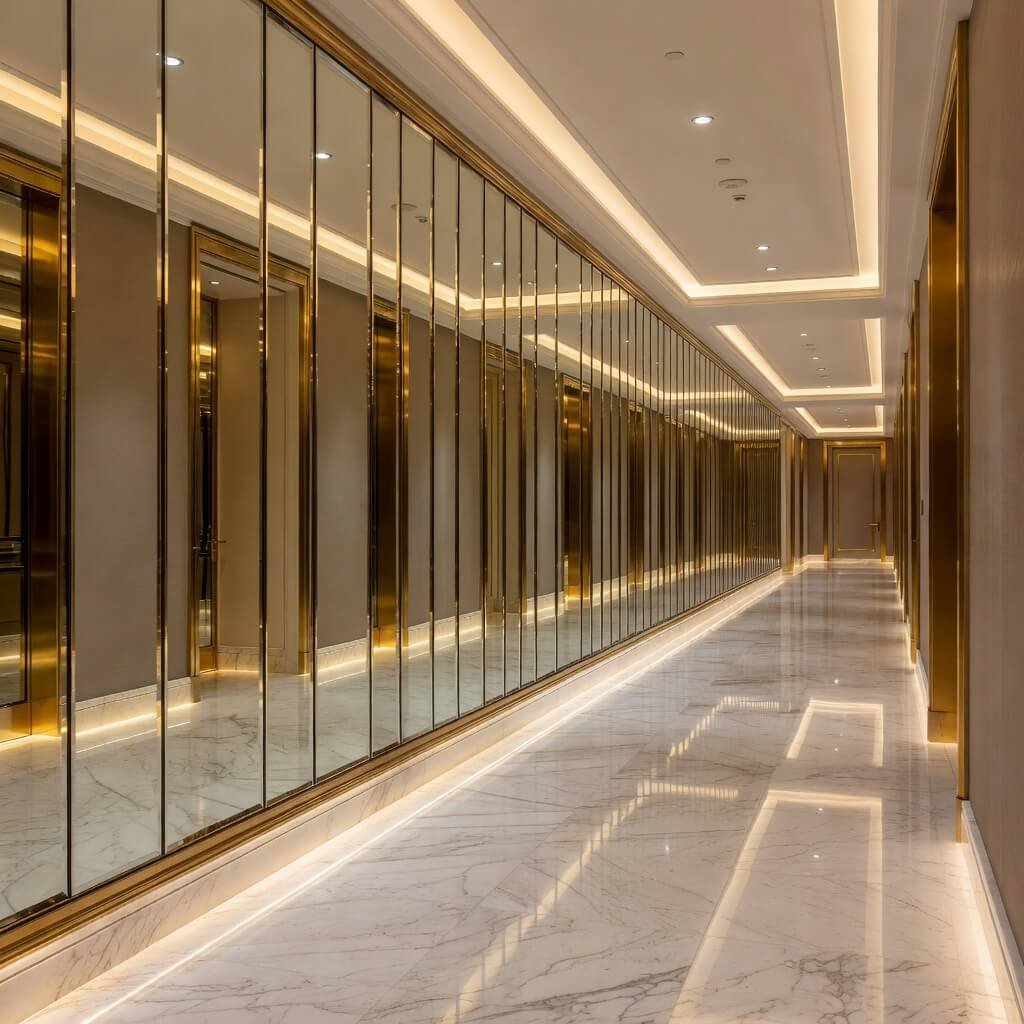
Ever walked into a corridor that felt like it went on forever, even though you knew it was only eight feet long? Mirrors, my friend. Strategic mirror placement creates an illusion of endless space that’s basically magic.
I’m talking about floor-to-ceiling mirrors, antiqued mirror tiles, or even a single statement mirror that doubles your hallway’s visual width. This isn’t your grandma’s medicine cabinet situation—these are architectural mirrors that become part of the wall itself.
Why This Works So Well
Mirrors reflect light, obviously. But in a corridor—often the darkest space in any home—they amplify whatever natural or artificial light you have. I installed a full-length antiqued mirror panel on one side of my friend’s hallway, and the transformation was insane. The space went from dungeon-esque to airy and bright.
Consider these mirror options:
- Antiqued mirror tiles: These have a vintage, worn look that adds character
- Frameless panels: Clean, modern, and make the illusion seamless
- Geometric mirror arrangements: Think hexagons or diamonds for added visual interest
- Mirrored panels with beveled edges: Catches light at different angles for extra dimension
One warning though—don’t go overboard. You want luxury, not a funhouse. One wall is usually enough, positioned opposite a window or light source if possible.
Warm LED Strip Modern Corridor Design
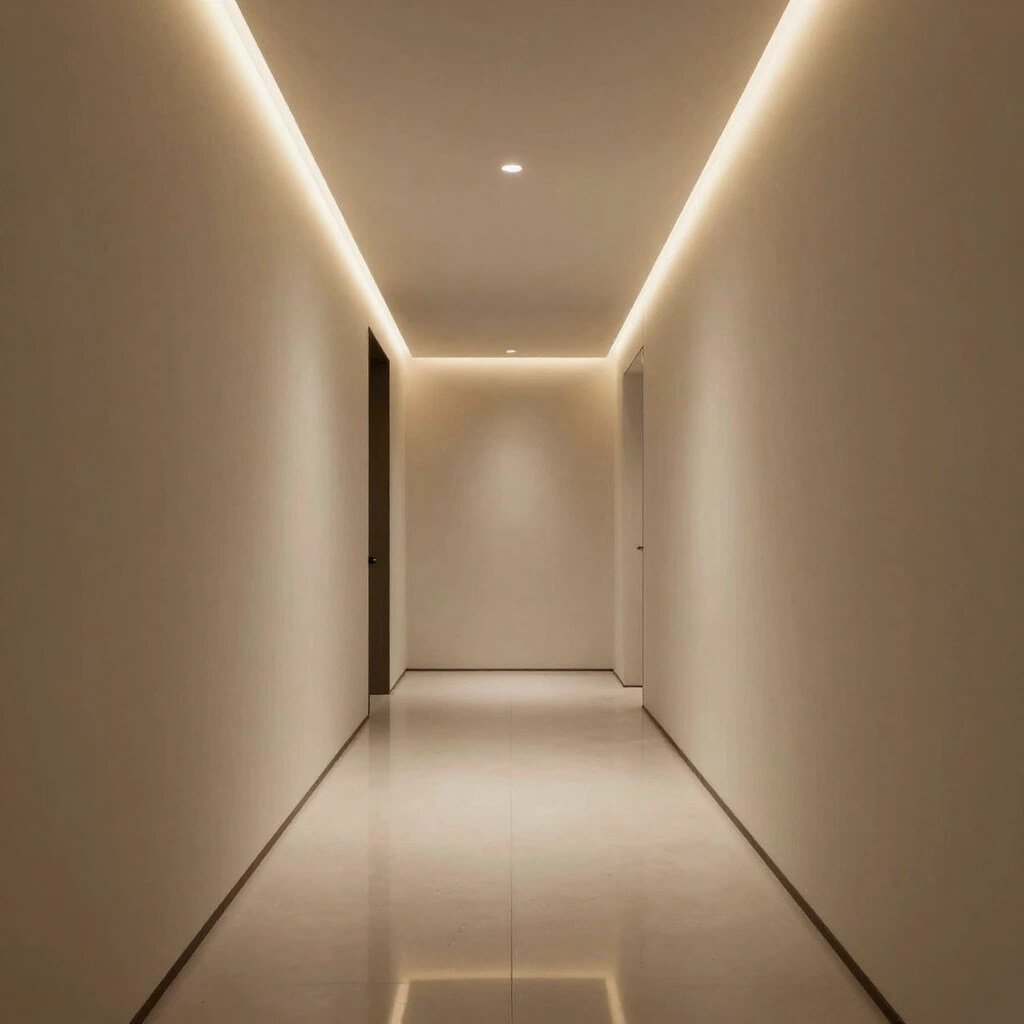
Okay, this one’s a bit more technical, but stick with me because the payoff is incredible. LED strip lighting integrated directly into your corridor wall design creates this sleek, futuristic vibe that also happens to be super functional.
I’m not talking about slapping some Christmas lights up there (though no judgment if that’s your thing). I mean professionally installed LED strips recessed into wall panels, behind floating shelves, or within architectural niches. The result? A soft, ambient glow that turns your hallway into an experience.
Getting the Lighting Right
The trick here is warm white LEDs (around 2700-3000K color temperature). Cool white makes everything look clinical and cold—not the luxury vibe we’re going for. You want that gentle, welcoming warmth that makes people want to linger.
I helped my sister install LED strips behind horizontal wall panels in her corridor, and now it looks like something out of a boutique hotel. Here’s what made it work:
- Recessed channels: We cut shallow grooves into the wall panels to hide the actual LED strips
- Dimmer switches: Essential for controlling the mood and intensity
- Consistent placement: Strips at regular intervals (every 12-16 inches) for even lighting
- Color consistency: All LEDs from the same manufacturer to avoid color variations
This design pairs beautifully with modern, minimalist, or contemporary interiors. It’s expensive compared to just painting a wall, sure, but the ambiance and functionality you get? Worth every penny, IMO.
Vertical Wooden Slat Accent Wall Hallway
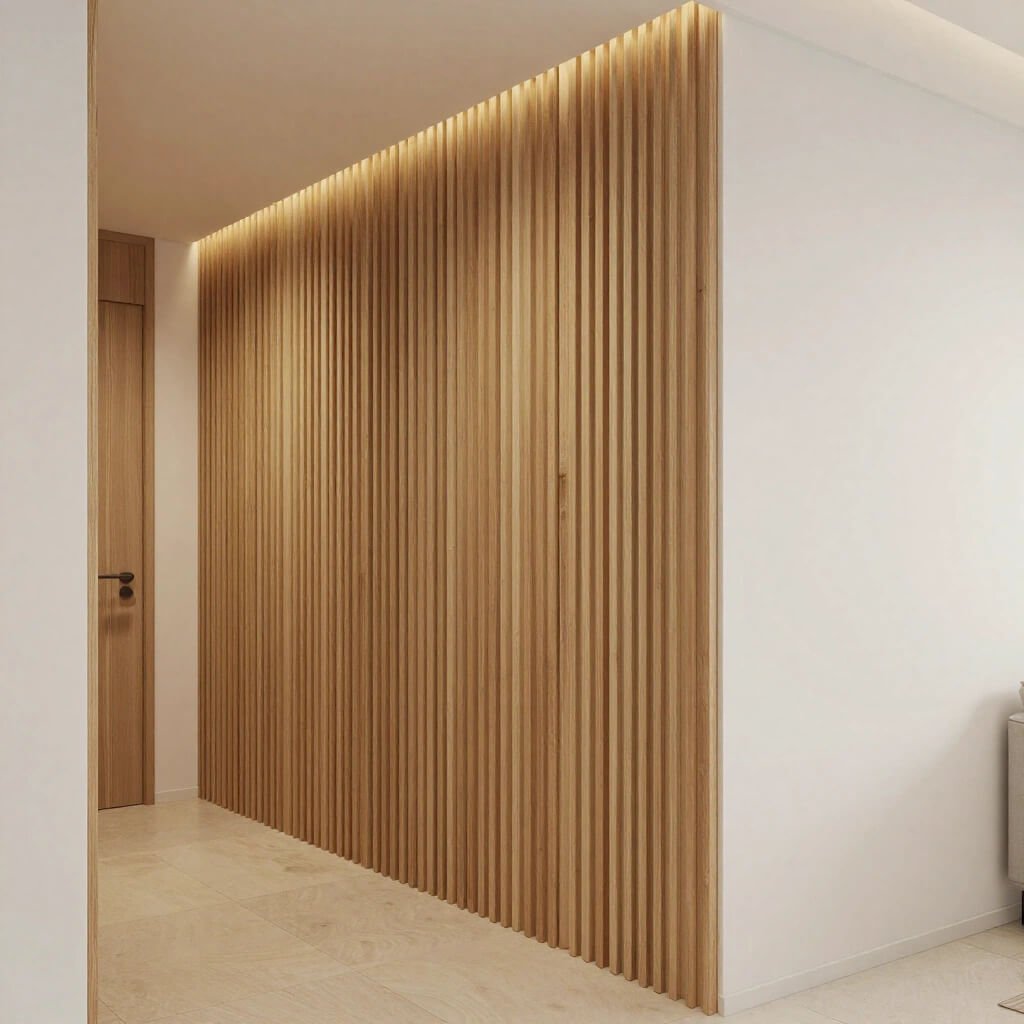
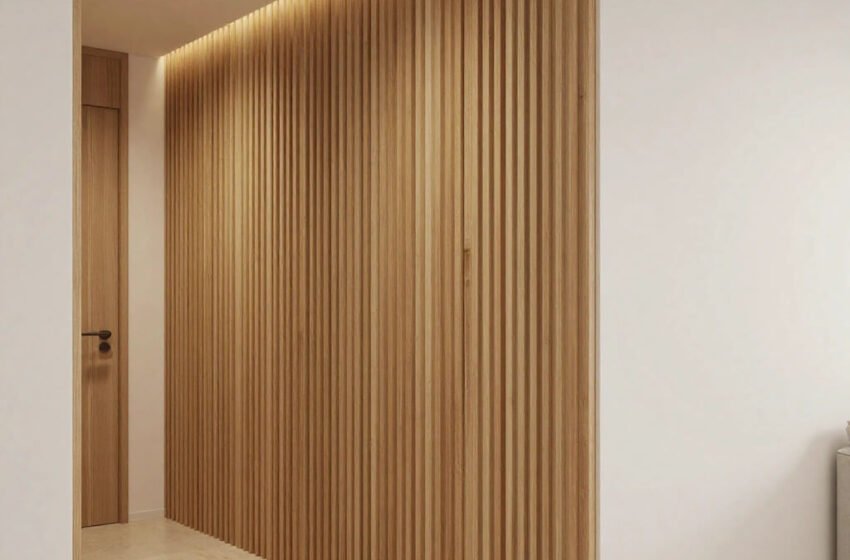
If you want texture, warmth, and a touch of that organic luxury everyone’s obsessed with right now, wooden slats are your answer. These vertical panels add depth and visual interest without cluttering the space.
Picture this: evenly spaced wooden slats running floor to ceiling along your corridor wall, with subtle gaps between them. You can go natural wood, stained dark walnut, or even painted white for a Scandinavian feel. The vertical lines also make your ceiling appear higher—bonus!
My Wooden Slat Adventure
I installed walnut slats in my entryway corridor about six months ago, and I literally stop and admire them every single day. The texture catches light differently throughout the day, creating this ever-changing visual element that never gets boring.
What you need to know:
- Slat width: 2-4 inches works best; wider can overwhelm narrow corridors
- Gap spacing: Usually half the slat width (so 1-2 inches for a 2-4 inch slat)
- Mounting options: Direct to wall with adhesive, or on a backing board for easier installation
- Wood selection: Oak, walnut, pine, or even bamboo for sustainability points
This design brings natural warmth to modern spaces and works brilliantly in mid-century modern, contemporary, or transitional homes. It’s also surprisingly good at hiding imperfect walls—just saying, if your corridor has some battle scars 🙂
Boho Rattan Art Corridor Wall Styling
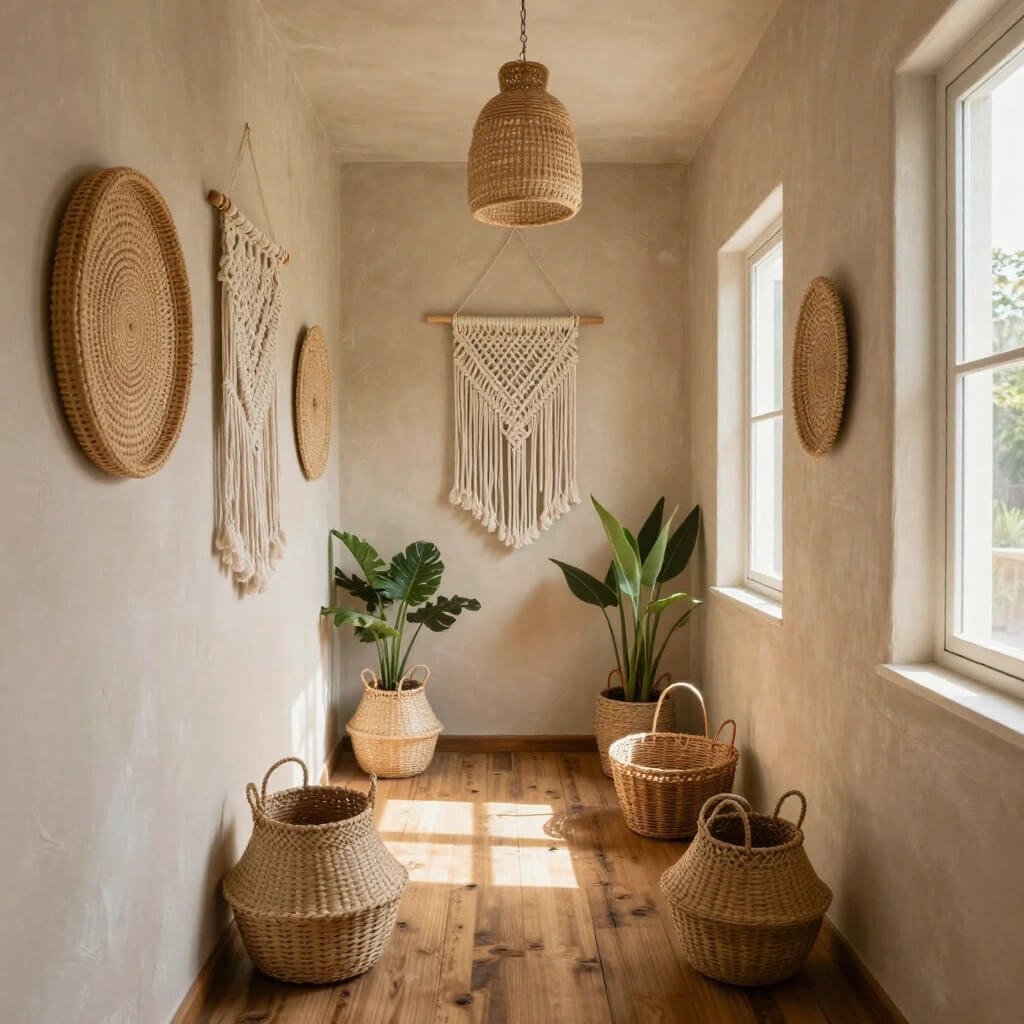
Not everything needs to be sleek and modern. Sometimes you want that relaxed, eclectic, “I-collected-these-treasures-from-my-travels” vibe. Enter rattan and natural fiber art for your corridor walls.
Think woven rattan wall hangings, macramé pieces, wicker baskets arranged artistically, maybe even some dried pampas grass in there. This boho approach creates a warm, inviting atmosphere that feels personal and lived-in.
Making Boho Work Without Looking Cluttered
Here’s the challenge with boho styling: it can quickly tip from “artfully curated” to “my aunt’s garage sale.” I learned this the hard way when I first tried this look. Too much texture, too many competing elements, and suddenly your corridor looks chaotic.
The solution? Intentional placement and restraint. Choose 3-5 statement rattan pieces and arrange them with breathing room. Here’s my formula:
- One large focal piece: A substantial rattan wall hanging or mirror frame
- 2-3 medium pieces: Smaller woven baskets or macramé hangings
- Greenery: Add potted plants or dried botanicals for softness
- Neutral background: White, cream, or light beige walls let the rattan shine
This style absolutely kills it in coastal, bohemian, or California casual interiors. It brings texture and personality without requiring perfect symmetry or precision. Much more forgiving if you’re not into measuring everything to the millimeter.
Monochrome Black and White Photo Corridor
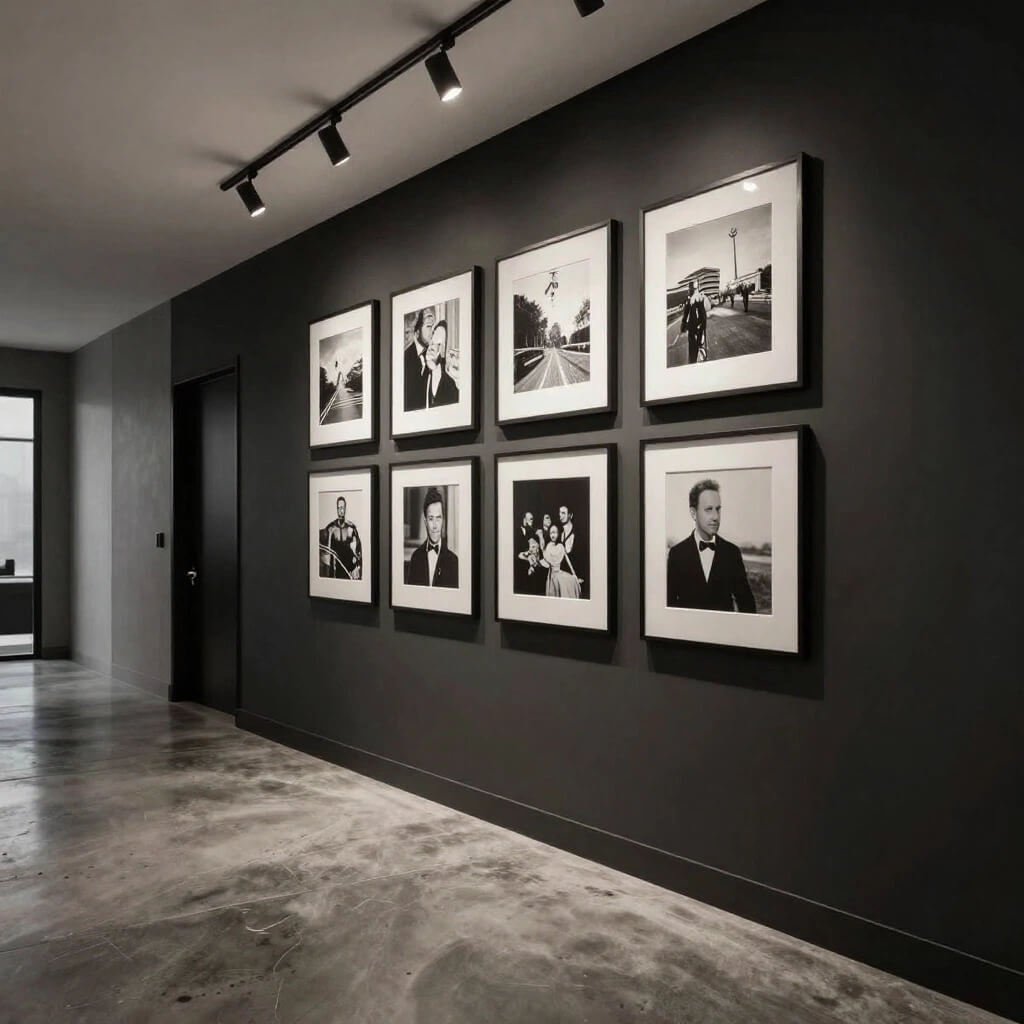
Sometimes luxury is all about bold simplicity. A monochrome black and white photography corridor makes a statement that screams sophistication without saying a word.
I’m talking museum-quality black and white photographs—large format prints of landscapes, architecture, portraits, or abstract compositions. The key is keeping everything in that monochrome palette while varying the subject matter and composition for visual interest.
Curating Your Collection
This is where your personal taste really comes through. You could go all Ansel Adams with dramatic landscapes, or Robert Mapplethorpe with striking portraits, or mix contemporary photography with vintage prints. The monochrome palette unifies everything even when the subjects are wildly different.
What I did in my friend’s hallway:
- Selected 7 black and white photographs ranging from 16×20 to 24×36 inches
- Chose a mix of subjects: urban architecture, natural landscapes, and one abstract close-up
- Used identical matte black frames with white matting
- Arranged them asymmetrically but balanced—largest in the center, smaller flanking
Pro tips for this look:
- Print quality matters: Invest in good prints or have them professionally done
- Frame consistency: Same frames, same matting, same mounting style
- Lighting: Add picture lights or track lighting to highlight the photography
- Curation over quantity: 5-7 excellent photos beat 15 mediocre ones
This design works in literally any interior style. Black and white is timeless, elegant, and never goes out of fashion. Plus, it makes you look like you have impeccable artistic taste, even if you bought everything online in one night (guilty).
Hidden Storage Wall Panel Corridor Design
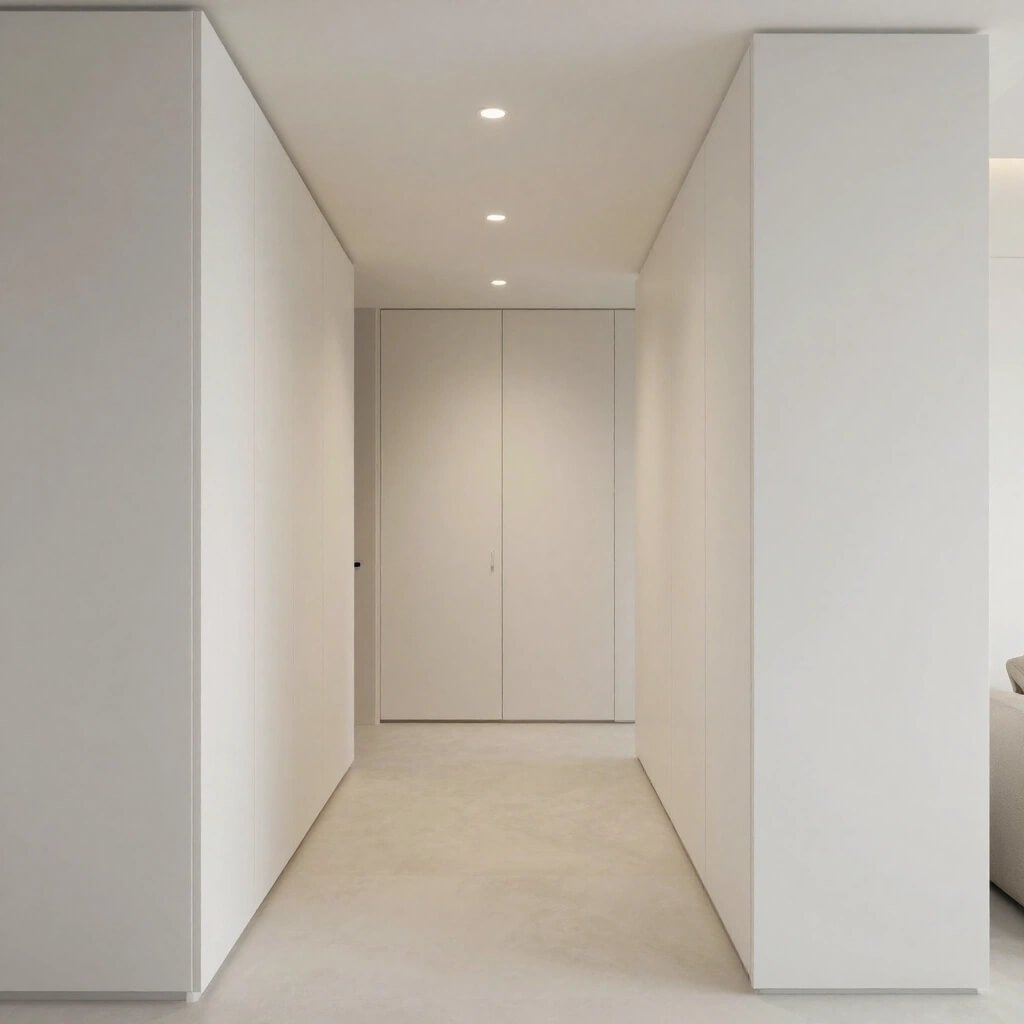
Now we’re getting practical. Ever noticed how corridors become dumping grounds for coats, bags, keys, and random stuff? What if your beautiful corridor wall could also hide all that clutter?
Hidden storage panels are basically secret compartments disguised as sleek wall panels. Press-to-open mechanisms, recessed handles, or completely invisible seams that only you know about. It’s like having a secret passage, except it just holds your winter scarves. Still cool though.
Function Meets Luxury
I installed these in my narrow corridor because I was tired of looking at coat hooks and shoe piles. The panels run floor to ceiling, match the wall perfectly when closed, and pop open with a gentle push. Behind them? Shelves, hooks, and compartments for everything that used to clutter the space.
Design considerations:
- Panel material: High-quality MDF, wood veneer, or even painted to match your walls
- Opening mechanism: Push-to-open, touch latch, or minimal recessed handles
- Interior organization: Built-in shelves, hooks, and cubbies maximize the space
- Seamless integration: Panels should blend perfectly with the wall when closed
This works especially well in:
- Small homes where storage is premium
- Modern and minimalist designs that prioritize clean lines
- Family homes that need to hide everyday chaos
- Rental properties where you can’t do major renovations
The cost is higher than just painting a wall, obviously. But the combination of aesthetics and functionality makes this investment totally worthwhile. Plus, every time someone discovers the hidden compartments, you get to feel like a design genius.
Green Indoor Plant Vertical Corridor Wall
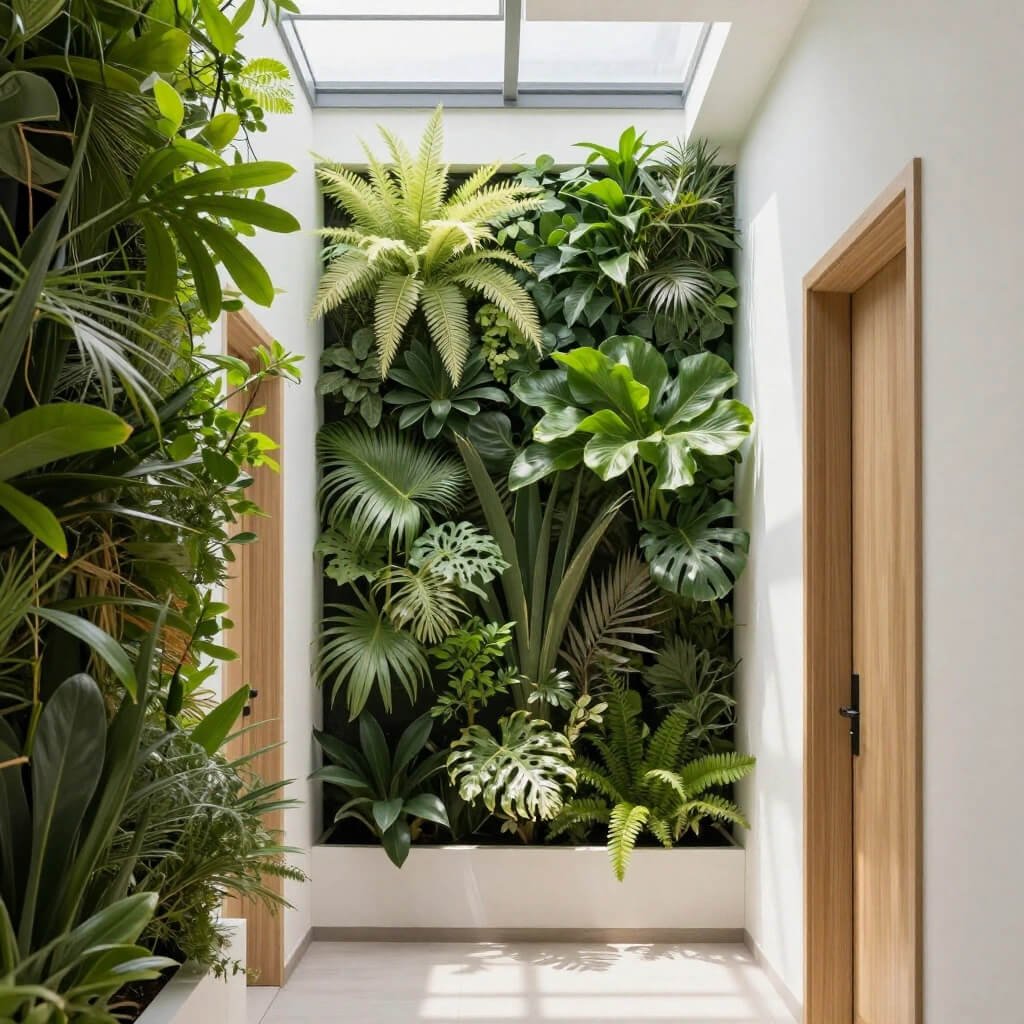
Plants. Everyone loves them, Instagram worships them, and they actually improve air quality. But floor plants in a narrow corridor? Recipe for constantly knocking things over. The solution: vertical plant walls that bring all that green goodness without sacrificing floor space.
I’m talking living walls, vertical planters, mounted pots, or even a sophisticated modular system that creates a lush green corridor. It’s like walking through a botanical garden, except it’s your hallway and you don’t have to pay admission.
Creating Your Green Wall
Full disclosure: I killed my first attempt at this. Turns out, plant walls need proper planning—who knew? (Everyone, probably.) But once I figured out the basics, the result was absolutely worth the learning curve.
Essential elements for success:
- Plant selection: Choose low-light tolerant plants like pothos, philodendron, or snake plants
- Watering system: Built-in irrigation or accessible individual pots make maintenance easier
- Lighting: Add grow lights if your corridor lacks natural light
- Backing material: Moisture-resistant backing prevents wall damage
- Modular vs. custom: Modular systems are easier to install and maintain
Types of vertical plant walls:
- Pocket systems: Felt or fabric pockets that hold individual plants
- Mounted planters: Individual pots mounted at varying heights
- Living wall panels: Pre-planted panels you attach to the wall
- Floating shelves: Simple shelves holding potted plants at different levels
This design brings life, color, and actual health benefits to your corridor. It works beautifully in modern, biophilic, tropical, or eclectic interiors. Just be honest with yourself about your plant-parenting abilities before committing to a massive living wall :/
Modern Geometric 3D Panel Hallway Wall
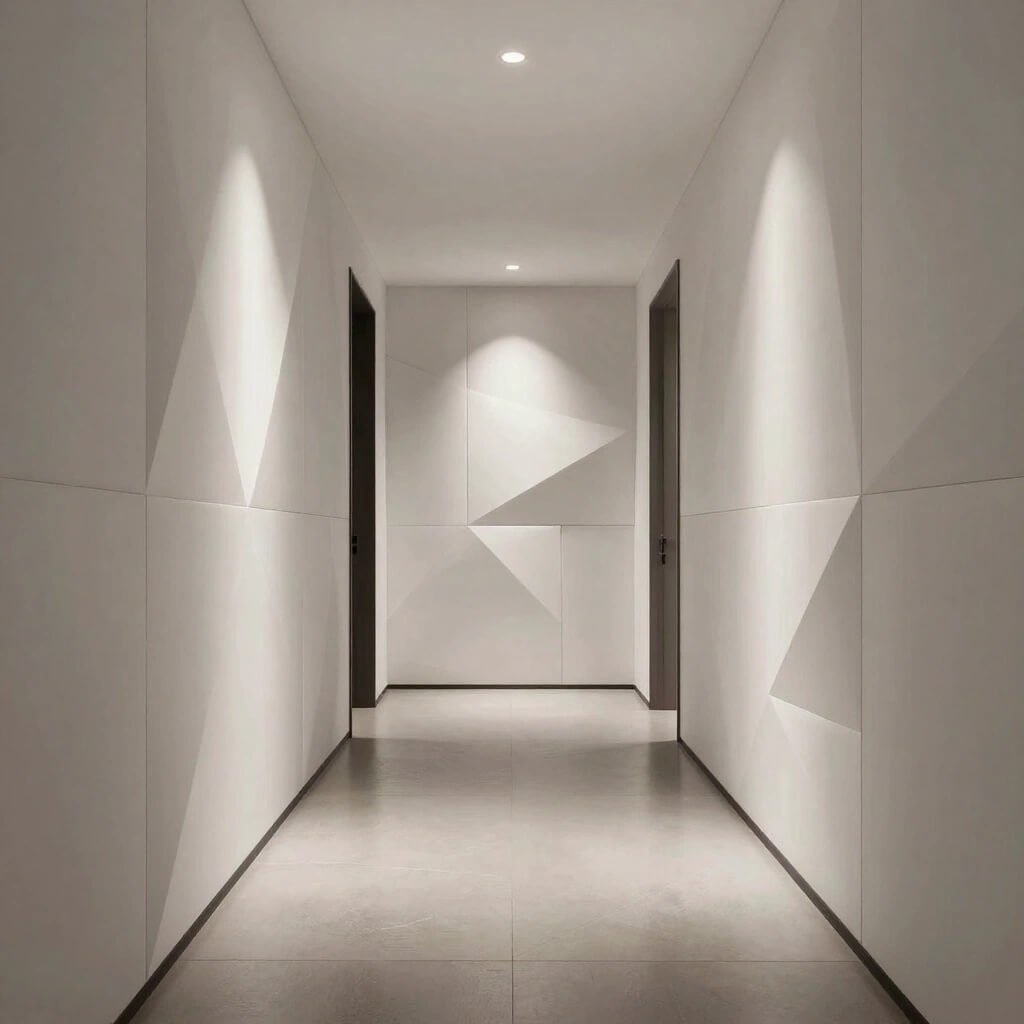
Want to add serious drama and dimension? 3D wall panels with geometric patterns create shadows, depth, and visual complexity that flat walls just can’t match.
These panels come in all sorts of materials—PVC, MDF, gypsum, wood—and feature raised geometric patterns like hexagons, waves, triangles, or abstract designs. When light hits them, they create this constantly shifting shadow play that’s honestly mesmerizing.
The Impact Factor
I saw these panels at a friend’s place and immediately went home to research them. The three-dimensional aspect transforms a corridor from a space you walk through into a space you actually notice and appreciate. It’s architectural drama without requiring actual architectural changes.
Panel options and considerations:
- Material choice:
- PVC: Lightweight, moisture-resistant, affordable
- MDF: Paintable, more substantial, mid-range price
- Gypsum: High-end, sophisticated, can be custom-made
- Wood: Natural texture, warm, higher price point
- Pattern selection: Subtle patterns for small corridors, bold patterns for larger spaces
- Paint treatment: Monochrome for modern, contrasting colors for drama
- Lighting: Side lighting or uplighting enhances the 3D effect
- Installation: Some are peel-and-stick, others need professional installation
This design screams luxury and contemporary style. It works best in modern, contemporary, or art deco interiors. The panels do cost more than paint or wallpaper, but the visual impact you get is incomparable. Plus, they’re surprisingly good at acoustic dampening—your corridor gets quieter, which is a nice bonus.
Scandinavian Light Tone Minimal Corridor Wall
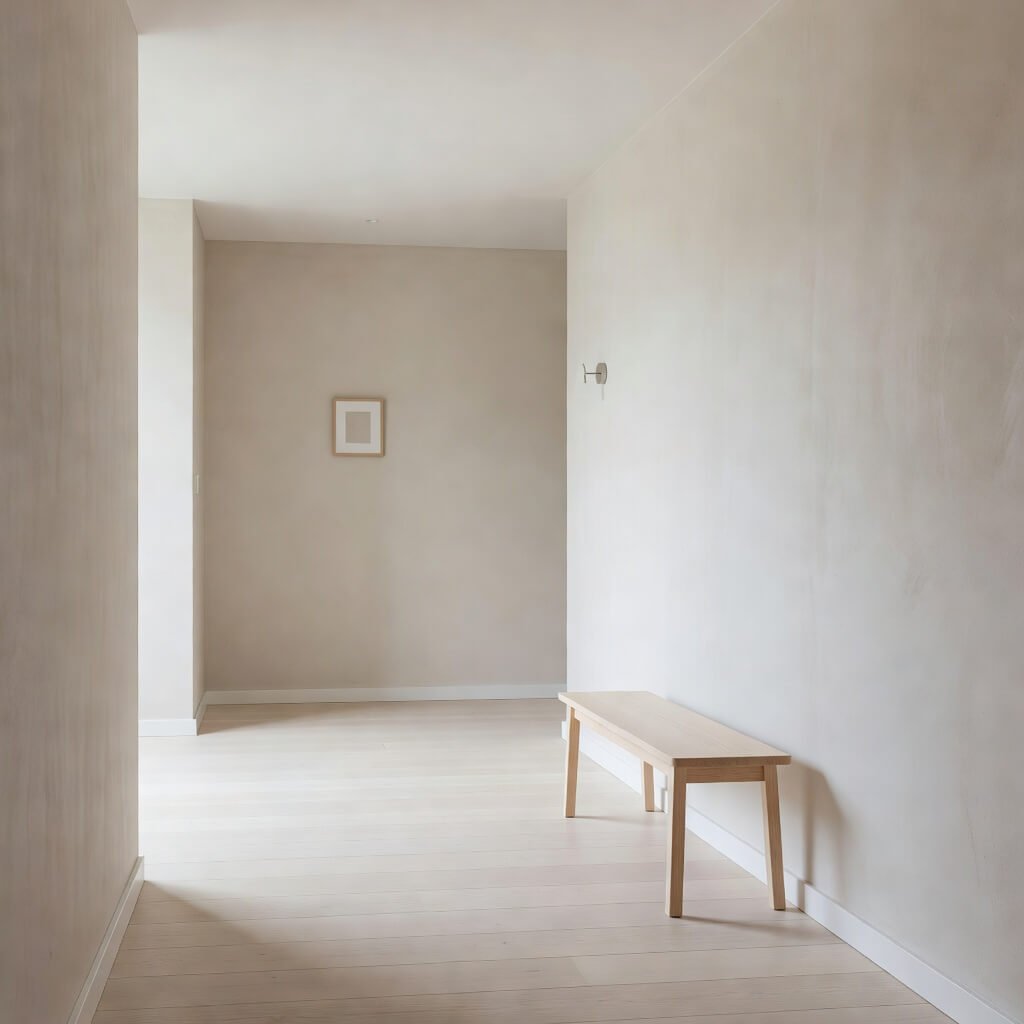
Last but definitely not least, let’s talk about the Scandinavian approach: light, bright, minimal, and effortlessly elegant. This style embraces white and pale wood tones, clean lines, and just enough decoration to feel warm without cluttering.
Think white or pale gray walls, light wood accents, maybe a simple wooden bench, and very selective artwork or decoration. The focus is on space, light, and simplicity. It’s the design equivalent of a deep breath—calm, clear, and refreshing.
Achieving Scandinavian Simplicity
I converted my corridor to this style last spring, and the difference in how the space feels is remarkable. It went from cramped and dark to open and serene. The secret isn’t just painting everything white—it’s about thoughtful choices in every element.
Key components:
- Wall color: Pure white, warm white, or very pale gray
- Wood accents: Light woods like birch, ash, or pine in natural finish
- Flooring: Light wood or white-washed floors extend the airy feel
- Minimal decoration: One or two pieces of simple art or a single plant
- Functional elements: A slim console, simple hooks, or floating shelf—all in light wood or white
What makes it luxurious:
- Quality over quantity: Fewer items, but each one is well-made and beautiful
- Natural materials: Real wood, natural textiles, nothing fake or plastic
- Perfect execution: Clean lines, precise installation, professional finish
- Lighting: Maximized natural light plus warm artificial lighting
This style works phenomenally well in small corridors because the light tones and minimal approach maximize the sense of space. It’s also incredibly calming—your hallway becomes this peaceful transition zone between rooms.
The Scandinavian minimal corridor isn’t about being sparse or cold. It’s about being intentional, choosing quality, and creating a serene space that lets you breathe. Plus, it photographs beautifully, so your Instagram will thank you.
Bringing It All Together
So there you have it—ten completely different approaches to corridor wall design, each bringing its own flavor of luxury and style. The floating gallery for art lovers, mirrors for space-maximizers, LED strips for tech enthusiasts, wooden slats for texture junkies, rattan for free spirits, monochrome photos for sophisticates, hidden storage for practical folks, plant walls for nature lovers, 3D panels for drama queens (said with love), and Scandinavian minimal for zen seekers.
Here’s the thing though: your corridor should reflect your personal style, not just follow trends. I’ve tried several of these approaches in different spaces, and each time, the projects that worked best were the ones that genuinely excited me. When I forced a style that looked great on Pinterest but didn’t match my vibe, I ended up redoing it within six months.
Think about how you use your corridor, what mood you want to create, and what level of maintenance you’re actually willing to commit to. That plant wall? Gorgeous, but needs regular watering. The mirror panels? Stunning, but show every fingerprint. Hidden storage? Brilliant, but not cheap. Be real with yourself about your lifestyle, budget, and design preferences.
My personal recommendation? Start with one wall, one idea, and see how it feels. You can always expand or adjust. I started with just a small floating gallery, loved it, and then added LED lighting later. Your corridor doesn’t need to be perfect immediately—it can evolve as you figure out what works for your space and style.
And honestly? The fact that you’re even thinking about your corridor design puts you ahead of most people. These hallways deserve love too. They’re the connective tissue of your home, and when you make them beautiful, you’re improving your daily experience every single time you walk through your house.
Whatever design you choose, make it yours, make it intentional, and make it something that brings you a little spark of joy every time you see it. Because luxury isn’t just about expensive materials or trendy designs—it’s about creating spaces that make you feel good. And if your corridor can do that? You’ve absolutely nailed it.