10 Premium Corridor Ceiling Design Ideas for Hotel Style Look
- Corridor Design
 Ben
Ben- 0
- 46 minutes read
Look, I’ll be honest with you—when I first started paying attention to corridor ceilings, my friends thought I’d completely lost it. “It’s just a ceiling,” they’d say. But here’s the thing: the difference between a hallway that feels like a cramped afterthought and one that screams five-star luxury? It’s all happening above your head, my friend. Your corridor ceiling can literally transform your home from “meh” to “wow, did you hire an interior designer?” And trust me, I’ve spent way too many hours staring up at hotel ceilings (completely normal behavior, right?) to figure out what actually works.
So grab your coffee, and let’s talk about the ten corridor ceiling designs that’ll make your guests wonder if they accidentally walked into a boutique hotel instead of your hallway.
Modern LED Strip Corridor Ceiling Glow
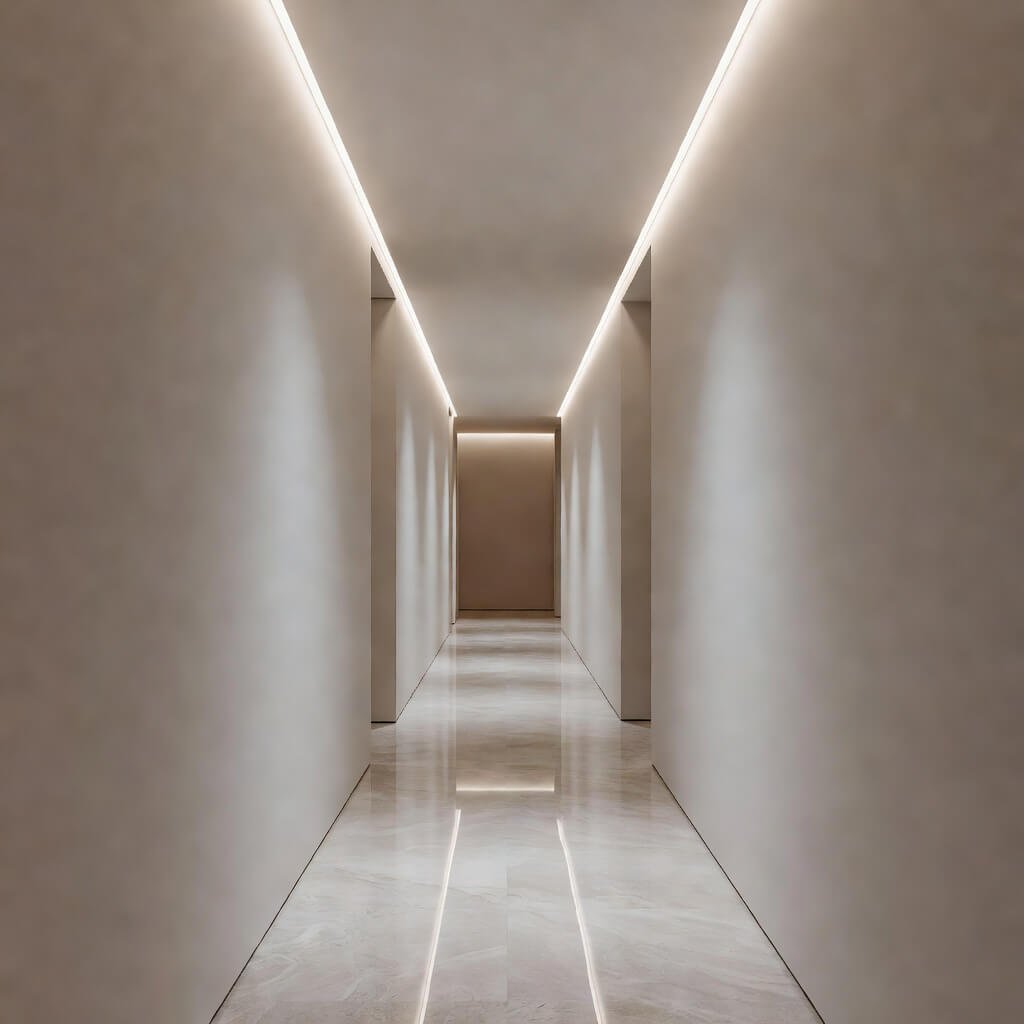
Okay, starting strong here because LED strip lighting is my absolute favorite game-changer for corridors. You know that soft, futuristic glow you see in upscale hotels where you can’t quite figure out where the light’s coming from? That’s LED strips working their magic.
I installed these bad boys in my own hallway about two years ago, and I still get a little thrill every time I walk through at night. The beauty of LED strip lighting is that it creates this gorgeous indirect illumination that makes your corridor feel wider and taller than it actually is. No harsh overhead lights blinding you when you stumble out for a midnight snack 🙂
How to Execute This Look
Here’s what you need to pull this off:
- Recessed channels in your false ceiling where the LED strips hide
- Dimmable LED strips (trust me, you’ll want to adjust the mood)
- Color temperature around 3000-4000K for that warm, inviting hotel vibe
- Continuous runs without visible gaps—this isn’t amateur hour
The trick is creating a clean recessed groove running the length of your corridor. You can go with parallel lines on either side of the ceiling, a central spine running down the middle, or even a geometric pattern if you’re feeling adventurous. The light washes across the ceiling surface, creating this beautiful ambient glow that feels sophisticated without trying too hard.
FYI, the installation isn’t rocket science, but you’ll want someone who actually knows what they’re doing with electrical work. I learned this the hard way after my first DIY attempt resulted in flickering lights that made my hallway look like a haunted house.
Why This Works
The LED strip approach solves multiple problems at once. It eliminates dark corners, creates visual interest on an otherwise boring plane, and uses minimal energy. Plus, you can sync these to smart home systems if you’re into that whole futuristic living situation. Picture dimming your corridor lights from your phone while you’re already in bed. Yeah, it’s as satisfying as it sounds.
Minimalist White False Ceiling Hallway Design
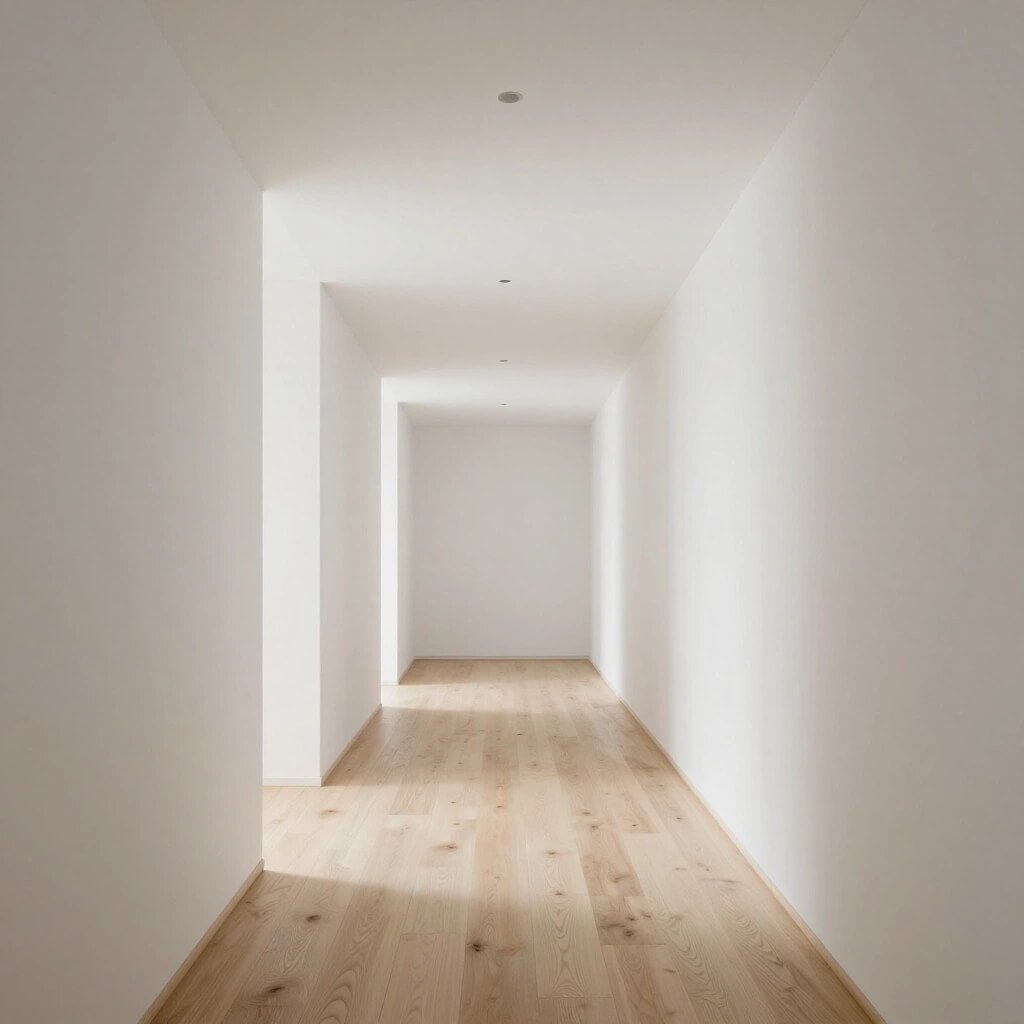
Let me tell you something about white false ceilings—they’re the little black dress of corridor design. Simple, elegant, and they work with literally everything. But “simple” doesn’t mean boring, and that’s where people mess up.
A minimalist white false ceiling is all about clean lines and intentional design choices. I’m talking about a multi-level ceiling with subtle drops, strategic lighting placement, and absolutely zero visual clutter. When done right, it makes your corridor feel like it belongs in a Scandinavian design magazine.
The Art of Subtle Layering
Here’s what separates amateur white ceilings from professional ones:
- Layered drops at different heights to create depth
- Hidden lighting integrated into the ceiling architecture
- Smooth, matte finish that doesn’t reflect light harshly
- Minimalist fixtures if you use any at all
The secret sauce? You create visual interest through geometry and lighting rather than color or texture. Think clean rectangular drops that run parallel to your corridor walls, maybe with a slightly recessed center section that houses your lighting. The white surface acts as a reflector, bouncing light around and making your hallway feel more spacious.
I’ve seen people paint their false ceiling white and call it a day—that’s not what we’re doing here. We’re creating architectural interest while maintaining that crisp, clean aesthetic that makes hotels feel expensive.
Getting the Details Right
The finish quality matters more with white ceilings than any other color. Every imperfection shows up like a neon sign, so you need flawless execution. Use high-quality gypsum board, ensure your joints are perfectly taped and mudded, and for the love of all that’s holy, use the right primer before painting.
Also, consider the white shade carefully. Pure white can feel cold and sterile (hospital vibes, anyone?), while warm whites create that inviting atmosphere you’re actually after. I prefer something in the off-white to warm white range—it feels cleaner than cream but warmer than arctic white.
Luxury Wooden Beam Corridor Ceiling Style
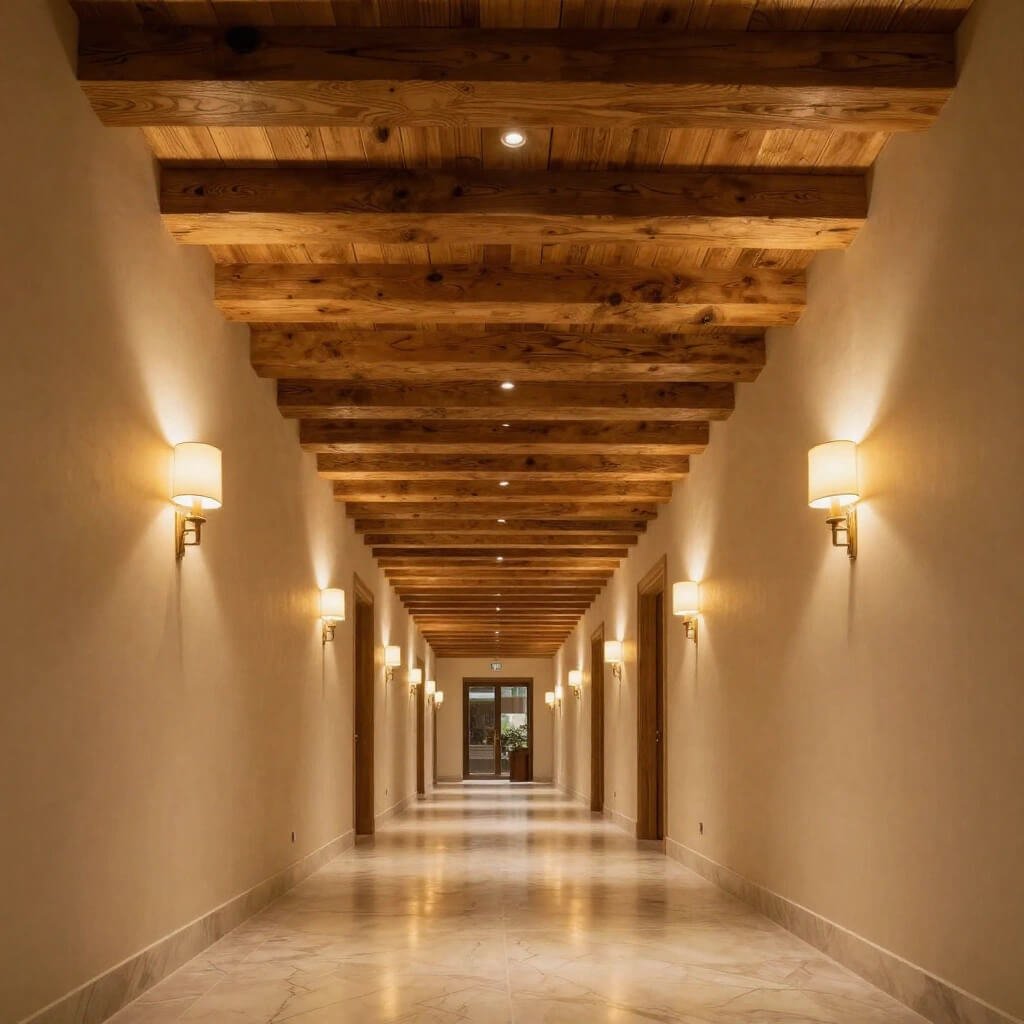
Now we’re talking serious drama. Wooden beam ceilings bring warmth, texture, and that high-end resort feeling that makes you want to pour yourself a whiskey and contemplate life’s mysteries. This isn’t your grandma’s rustic farmhouse look—we’re going for refined luxury here.
The first time I saw exposed wooden beams in a hotel corridor in Bali, I literally stopped walking to stare. The contrast between modern design elements and natural wood created this stunning visual that felt both contemporary and timeless. Ever wondered why wood just makes spaces feel more expensive? It’s that organic texture and warmth that synthetic materials can never quite replicate.
Modern vs. Traditional Execution
You’ve got options with wooden beams:
- Dark stained beams against light ceilings for contrast
- Natural wood tones for a softer, organic feel
- Parallel beam arrangement running the corridor length
- Perpendicular spacing at regular intervals
- Mixed with recessed lighting between beams
IMO, the modern approach uses sleek, straight-edged beams rather than rough-hewn rustic ones. You want clean lines and consistent spacing. The beams can be structural or purely decorative (faux beams have come a long way, people), but they need to look intentional.
I’ve incorporated this in a client’s home—we used dark walnut beams running perpendicular to the hallway every four feet, with LED strips recessed between them. The result? Pure magic. The wood added warmth while the lighting kept things modern and bright.
Practical Considerations
Here’s the thing about wooden beams—they’re not exactly lightweight, and they need proper support. If you’re going decorative rather than structural, make sure your ceiling can handle the weight. You’ll also need to consider maintenance because wood in any form requires some TLC over time.
The spacing and proportion matter enormously. Beams too close together feel claustrophobic; too far apart and they lose impact. A good rule of thumb? One beam every 3-5 feet depending on your corridor width and ceiling height. And please, match your wood tone to other elements in your space. A random wood species that appears nowhere else in your home looks confused, not curated.
Also Read: 10 Luxury Corridor Wall Design Ideas for Chic Interiors
Geometric Patterned Pop Ceiling Hallway Look
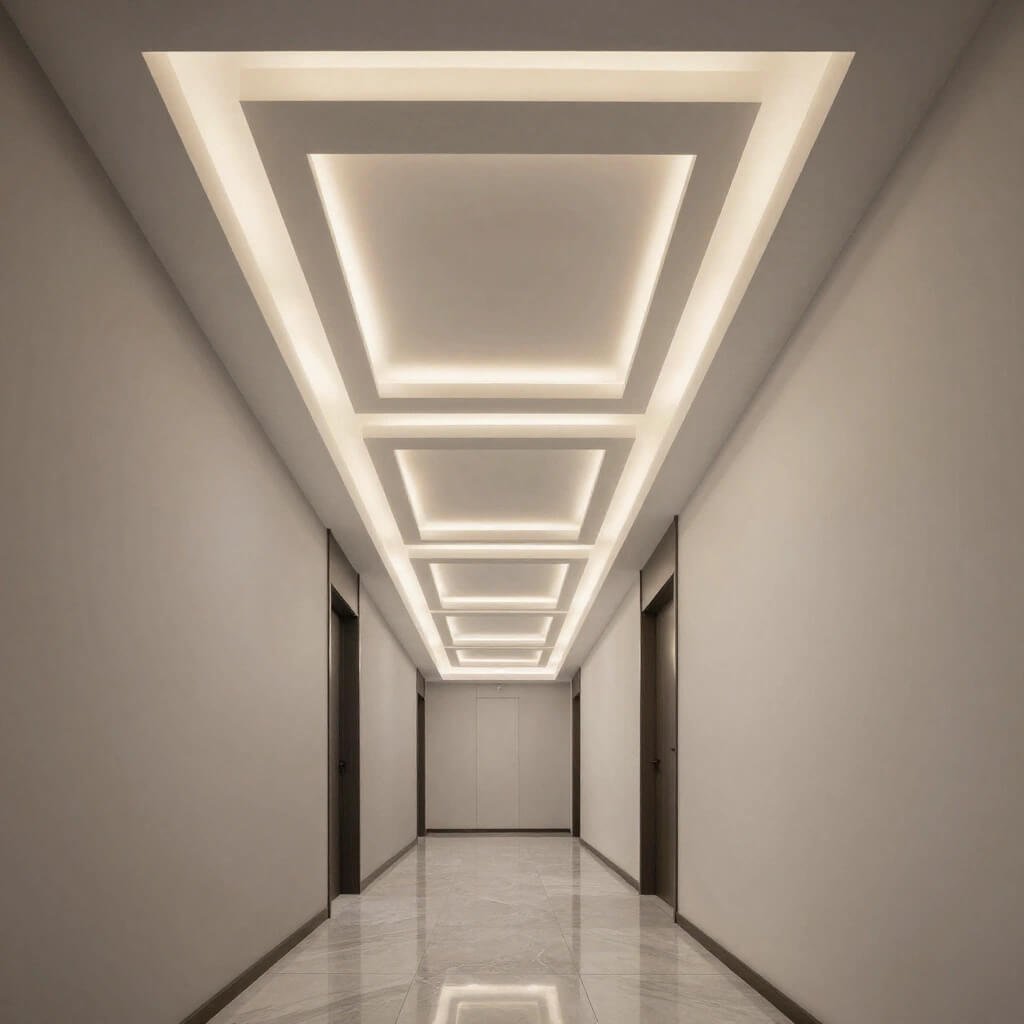
Alright, this one’s for the bold among us. Geometric POP (Plaster of Paris) ceilings are statement-makers that turn your corridor into an Instagram-worthy art installation. But fair warning—this is a high-risk, high-reward situation that requires excellent execution.
Geometric patterns add visual movement to your ceiling plane. We’re talking hexagons, chevrons, coffered squares, or interlocking rectangles that create three-dimensional interest. When you walk down a corridor with a well-executed geometric ceiling, your eye constantly has something interesting to follow.
Pattern Selection Strategy
Not all geometric patterns work in corridors. You need to think about the linear nature of hallway spaces:
- Linear patterns that emphasize the corridor’s direction
- Modular repeating shapes that create rhythm
- Scale-appropriate designs (too small gets busy, too large loses impact)
- Depth variation with raised and recessed sections
I worked on a project where we created a coffered ceiling pattern with square recesses running down the center of the corridor. Each recess had hidden LED lighting, and the effect was absolutely stunning. It transformed a narrow, forgettable hallway into the home’s architectural highlight.
The key? Your geometric pattern should guide movement through the space rather than fight against it. Patterns that run perpendicular to traffic flow can make corridors feel chopped up, while those that emphasize the length create that graceful, flowing feeling hotels nail so perfectly.
Execution Challenges
Let’s be real—geometric POP ceilings are not DIY territory unless you’re a skilled craftsman. You need precise measurements, perfect symmetry, and clean execution. Even slight irregularities become glaringly obvious with geometric patterns.
Also, consider your ceiling height. Geometric designs with depth require adequate clearance. A corridor with 8-foot ceilings probably isn’t the place for dramatic dropped geometric elements that’ll have tall people ducking. You need at least 9-10 feet to really make this work without creating a claustrophobic tunnel effect.
Warm Ambient Cove Lighting Corridor Design
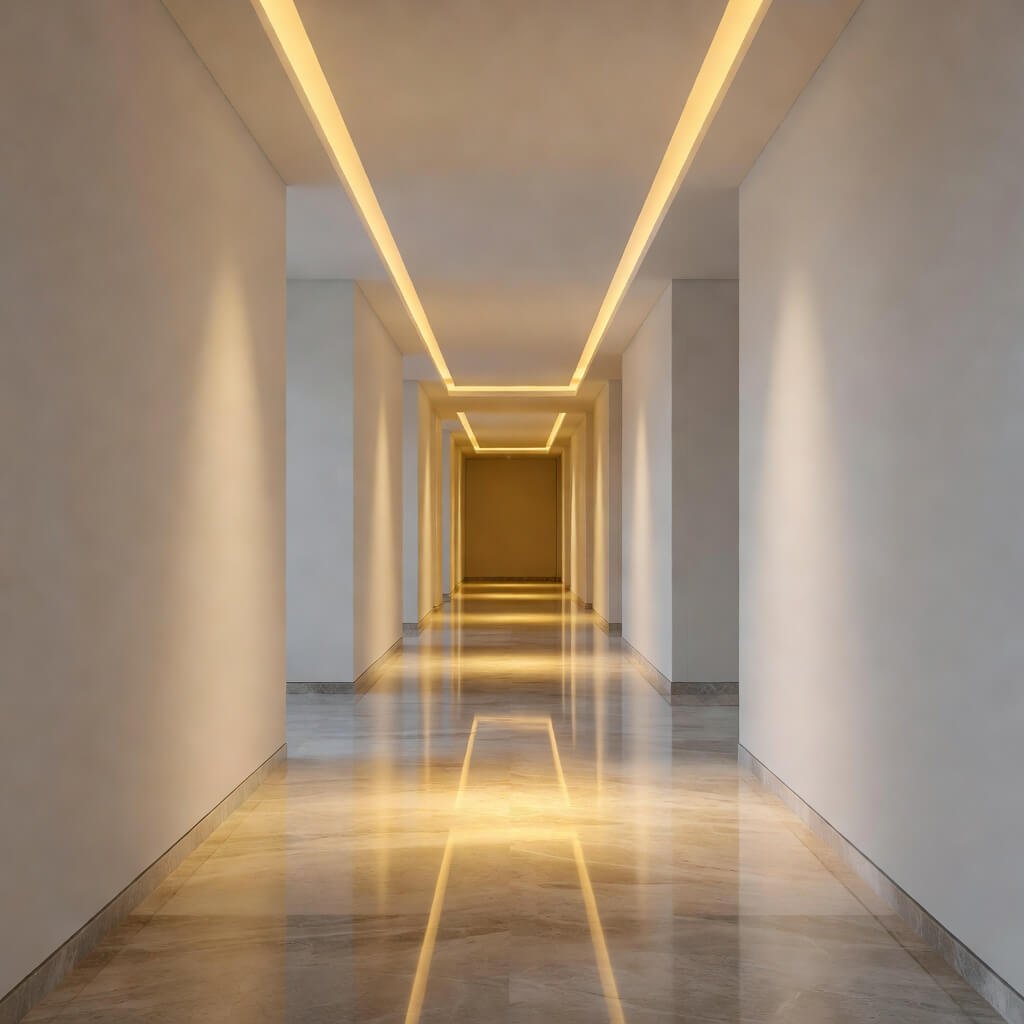
If LED strips are my favorite, cove lighting is a close second. This classic hotel technique creates that sophisticated, welcoming glow that makes you feel expensive just walking through the space. It’s timeless, elegant, and surprisingly versatile.
Cove lighting involves creating a recessed ledge (usually where the wall meets the ceiling) where you hide your light source. The light bounces off the ceiling and walls, creating soft, indirect illumination that’s easy on the eyes and heavy on ambiance.
Creating the Perfect Cove
Here’s what you need for cove lighting success:
- Adequate recess depth (at least 6-8 inches works best)
- Proper light placement to avoid visible bulbs or strips
- Warm color temperature (2700-3000K for that cozy hotel feeling)
- Continuous runs without dark spots or gaps
I’ll never forget walking through a boutique hotel in Paris where the entire corridor was lit exclusively with cove lighting. No harsh overhead fixtures, no glaring spotlights—just this beautiful, enveloping glow. It felt intimate without being dark, and I immediately knew I had to recreate it somehow.
The beauty of cove lighting is its versatility. You can run it on both sides of your corridor, create a single central cove down the middle of the ceiling, or even combine it with other ceiling treatments for layered lighting effects.
Getting the Temperature Right
Here’s where people often screw up—they use cool white LEDs in their cove lighting and wonder why it feels like a hospital. The magic of hotel corridor lighting is in the warm tones. You want light that feels like sunset, not midday fluorescents.
I recommend testing different color temperatures before committing. Get some sample LED strips and see how they actually look in your space at different times of day. Your corridor’s wall color, floor material, and natural light all affect how your cove lighting performs. What looks perfect in a showroom might read completely different in your actual hallway.
Narrow Hallway Stretch Illusion Ceiling Design
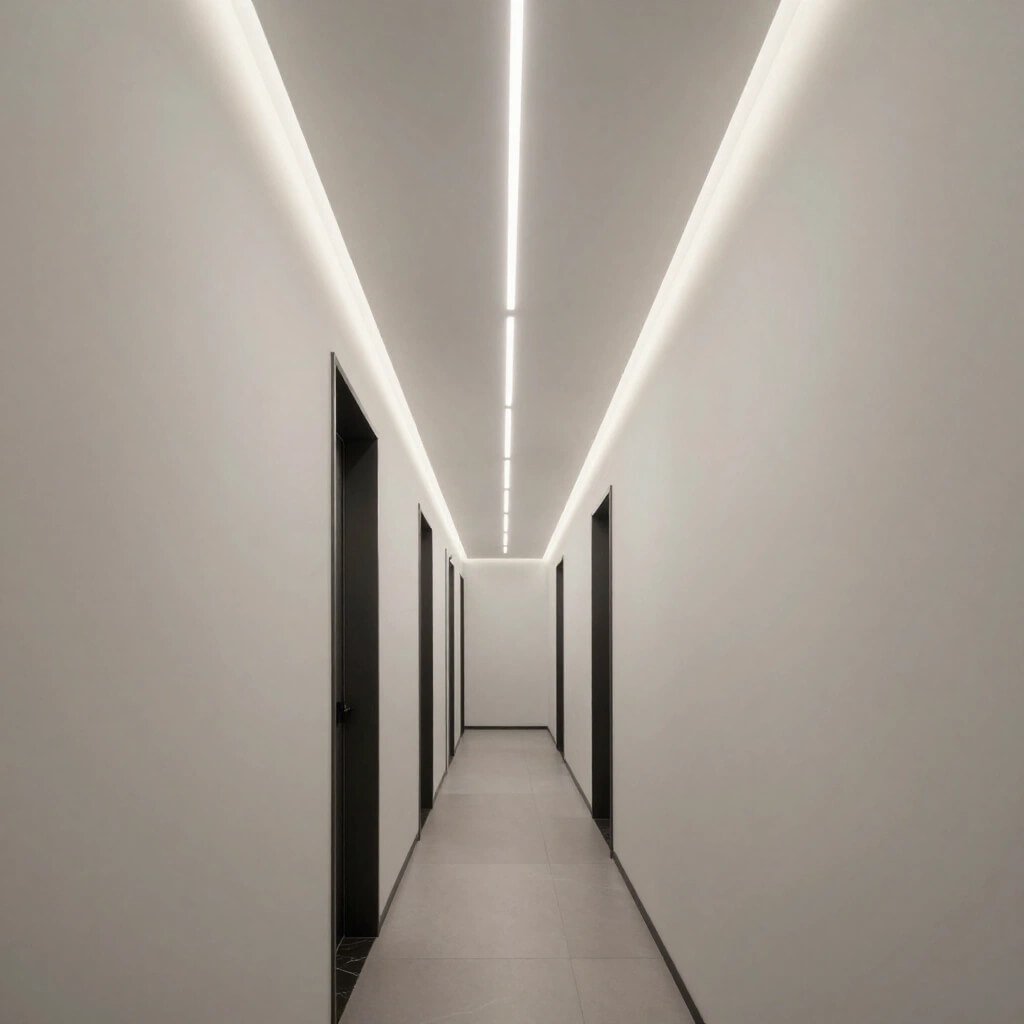
Okay, let’s talk about one of the biggest challenges in residential design—narrow, cramped corridors that feel like you’re walking through a tunnel. The right ceiling design can literally expand your space visually without knocking down any walls. Pretty cool, right?
The stretch illusion technique uses strategic design elements to make your ceiling appear higher and your corridor wider than the tape measure says it is. It’s all about manipulating perspective through smart choices in color, lighting, and architectural detail.
Visual Expansion Techniques
Here’s how you trick the eye:
- Lighter ceiling colors that recede visually
- Vertical design elements on walls that draw the eye up
- Central ceiling features that pull focus from narrow walls
- Strategic lighting that emphasizes length over width
- Reflective or glossy finishes that add depth
One of my favorite tricks? Create a central recessed panel running the length of your corridor with lighting inside. This draws the eye down the center line and away from the close walls. Your brain focuses on the interesting ceiling feature rather than the narrow width, and suddenly the space feels more open.
Another killer move—use horizontal lines or stripes on your ceiling running parallel to the corridor. This emphasizes the length and creates forward movement that makes the space feel less confined.
Color Psychology
Color plays a huge role in the stretch illusion. Lighter shades make surfaces recede while darker ones advance toward you. In a narrow corridor, you absolutely want your ceiling to recede, so we’re thinking whites, light grays, soft blues, or pale warm neutrals.
But here’s a pro tip most people miss—you can use a slightly darker shade on your walls than your ceiling to make the ceiling appear higher by comparison. The contrast creates visual separation that adds perceived height. I’ve used this trick in corridors with 8-foot ceilings, and people consistently guess they’re 9 or 10 feet tall.
Also Read: 10 Fresh Corridor Design Home Ideas for Stylish Interiors
Elegant Marble Finish Corridor Ceiling Concept
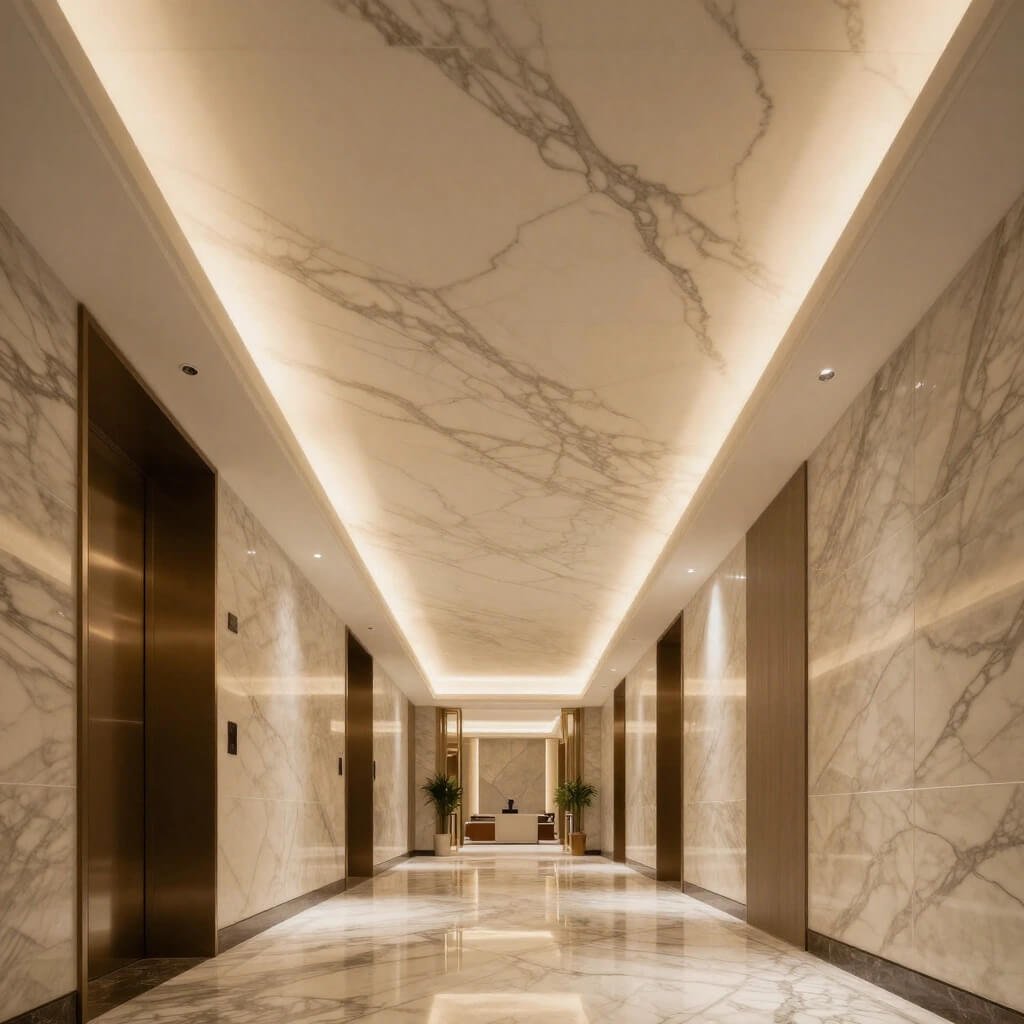
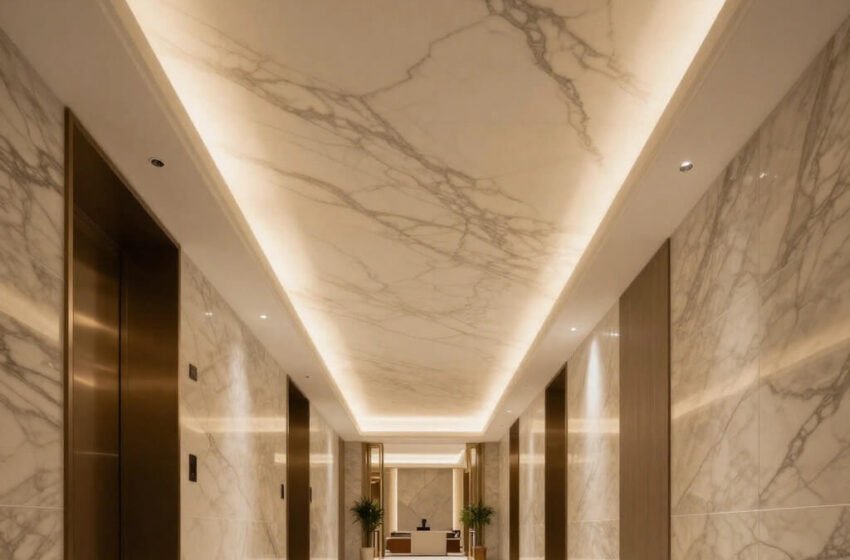
Now we’re getting fancy. Marble finish ceilings are the ultimate luxury move—bold, dramatic, and absolutely dripping with opulence. This isn’t for everyone (or every budget), but when you want to make a serious statement, marble delivers.
Before you panic about the weight and cost of actual marble on your ceiling—relax. We’re usually talking about marble-effect panels, laminates, or realistic printed finishes rather than slabs of actual stone. Technology has blessed us with some incredibly convincing alternatives that give you the look without the structural nightmare or the second mortgage.
Executing Marble Ceiling Design
The marble ceiling approach works best when you:
- Limit it to accent areas rather than the entire surface
- Choose subtle veining instead of dramatic patterns
- Coordinate with other finishes in your space
- Balance with simpler wall treatments
- Light it properly to highlight the marble effect
I saw this executed brilliantly in a Dubai hotel where they used backlit marble panels in the corridor ceiling. The light came through the semi-translucent marble (or marble-effect material), creating this ethereal glow with the veining visible. It was stunning—like walking under illuminated clouds.
You can create a central marble panel running down your corridor’s centerline, use marble finish in recessed ceiling sections, or even create a geometric pattern combining marble with other materials. The key is restraint. Too much marble reads as Vegas excess rather than refined luxury.
Choosing Your Marble Style
Not all marble patterns work equally well on ceilings:
- Carrara marble (white with gray veining) feels classic and elegant
- Calacatta (white with bolder veining) makes more of a statement
- Emperador (brown tones) adds warmth
- Black marble (use sparingly!) creates drama
Think about your overall color scheme. Marble finish ceilings work best in spaces that already have some luxury finishes—pairing it with builder-grade everything else creates weird dissonance. You want your corridor ceiling to feel like a cohesive part of your design story, not a random extravagance that wandered in from a different house.
Dark Modern Matte Ceiling Hallway Aesthetic
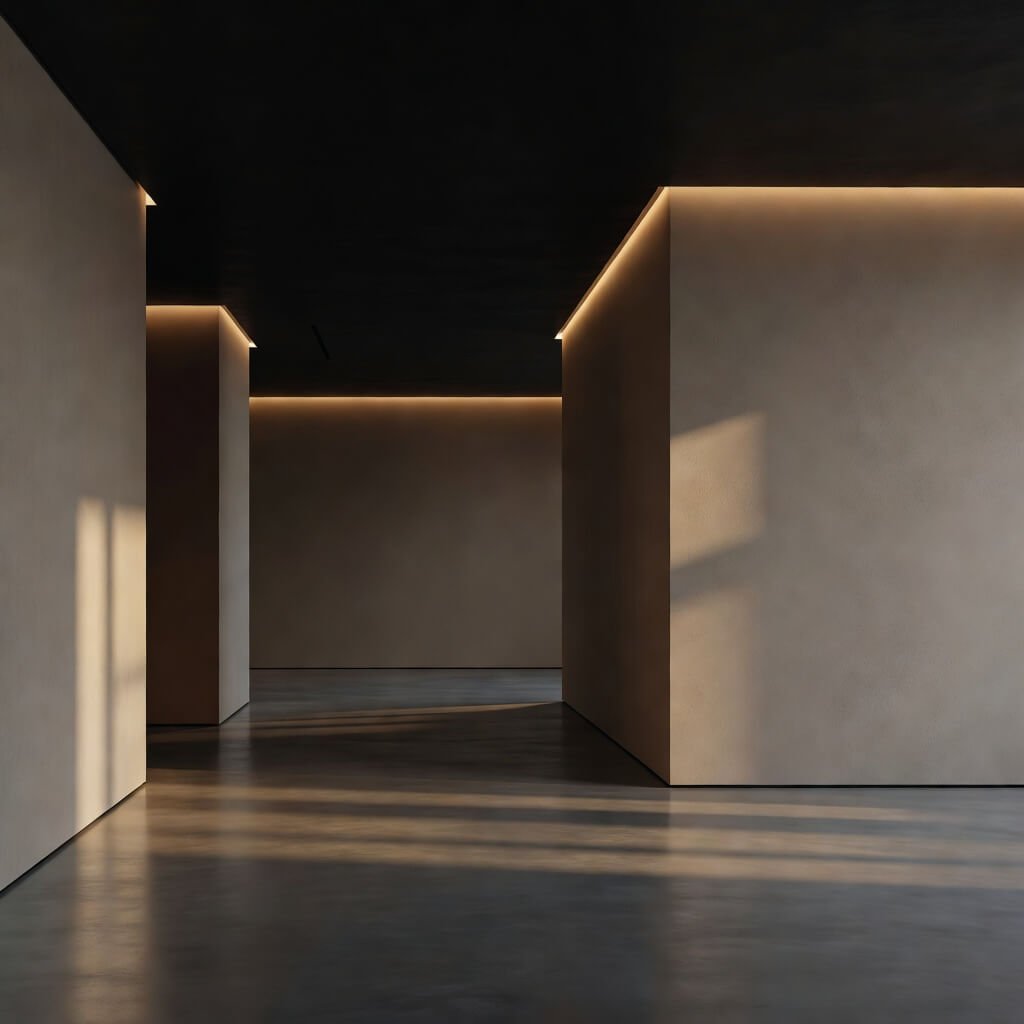
Plot twist—sometimes going dark is the absolute right move. I know, I know, everything I’ve said about light colors making spaces feel bigger. But hear me out on dark matte ceilings because when done right, they create this moody, sophisticated aesthetic that’s incredibly hotel-chic.
Dark ceilings work through the magic of visual recession. Counterintuitively, painting your ceiling a dark matte color can make it seem to disappear, especially when paired with good lighting. Your eye doesn’t register the ceiling as a limiting boundary but rather as infinite space above.
The Dark Ceiling Formula
Here’s how you make dark ceilings work in corridors:
- Matte finish is non-negotiable (glossy dark ceilings feel oppressive)
- Excellent lighting strategy to prevent cave vibes
- Lighter walls to maintain brightness
- Sufficient ceiling height (9+ feet works best)
- Quality dark paint (cheap paint shows every flaw)
I was skeptical about this trend until I stayed at a boutique hotel in Copenhagen with dark charcoal ceilings in the corridors. The walls were light gray, the lighting was warm and plentiful, and the overall effect was incredibly sophisticated. It felt intimate and cozy without being the least bit cramped.
The color choice matters. We’re talking deep charcoal, navy, or near-black rather than medium dark colors that just look dirty. You want a color so deep it almost dissolves visually.
Lighting Considerations
You absolutely cannot skimp on lighting with dark ceilings. You need multiple light sources at various levels:
- Recessed ceiling spots (more than you’d use with light ceilings)
- Wall sconces to bring light to eye level
- Accent lighting on artwork or architectural features
- Strategic uplighting if your design allows
The dark ceiling becomes a backdrop for your lighting rather than a light reflector. This creates pools of light and shadow that add drama and dimension. It’s the exact opposite approach from bright, evenly lit corridors, but the luxury factor is equally high.
Scandinavian Soft Light Corridor Ceiling Style
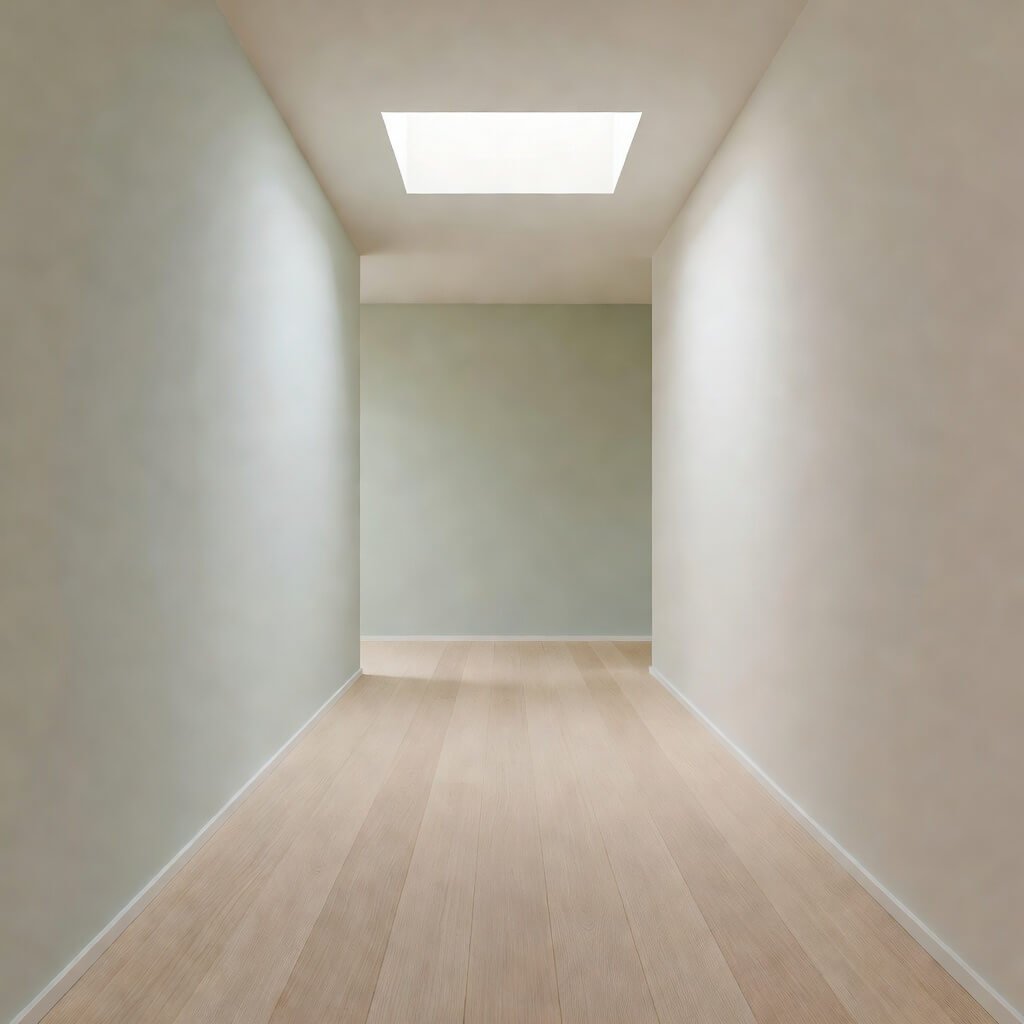
Ah, Scandinavian design—where simplicity meets functionality and somehow manages to feel luxurious anyway. The Scandi approach to corridor ceilings is all about clean lines, natural materials, soft lighting, and that hygge-inducing coziness we all crave.
This style emphasizes natural light maximization and soft artificial lighting that mimics daylight quality. You won’t find harsh spotlights or dramatic cove lighting here. Instead, think diffused, gentle illumination that creates calm, welcoming corridors.
Elements of Scandi Ceiling Design
The Scandinavian corridor ceiling typically includes:
- Simple white or light wood ceilings with minimal ornamentation
- Diffused lighting fixtures rather than directional spots
- Natural material integration (wood, linen, simple plaster)
- Skylight incorporation where structurally possible
- Clean geometric forms without excessive detail
I visited a friend’s renovated home in Stockholm, and her corridor featured a simple white tongue-and-groove ceiling with integrated LED panels that diffused light through frosted covers. Zero drama, maximum function, and it felt absolutely perfect. Sometimes the most understated approach wins.
The beauty of Scandi style is its accessibility. You don’t need exotic materials or complex construction. You need clean execution, quality basic materials, and thoughtful lighting. That’s it. No POP designs, no marble, no geometric complexity—just well-done simplicity.
The Lighting Philosophy
Scandinavian design obsesses over light quality because those Nordic winters are no joke. The corridor ceiling should distribute light evenly and gently:
- Recessed panel lights with diffusers
- Simple pendant fixtures with fabric or glass shades
- Warm white LEDs (3000K) that mimic soft daylight
- Dimming capability to adjust throughout the day
Avoid multiple color temperatures or dramatic lighting changes in a Scandi corridor. Consistency and gentleness define this approach. You want someone walking from room to room through your corridor to experience smooth, comfortable lighting transitions that feel natural and unstudied.
Also Read: 10 Incredible Hotel Corridor Design Ideas for Chic Look
High-End Luxury Hotel Style Corridor Ceiling
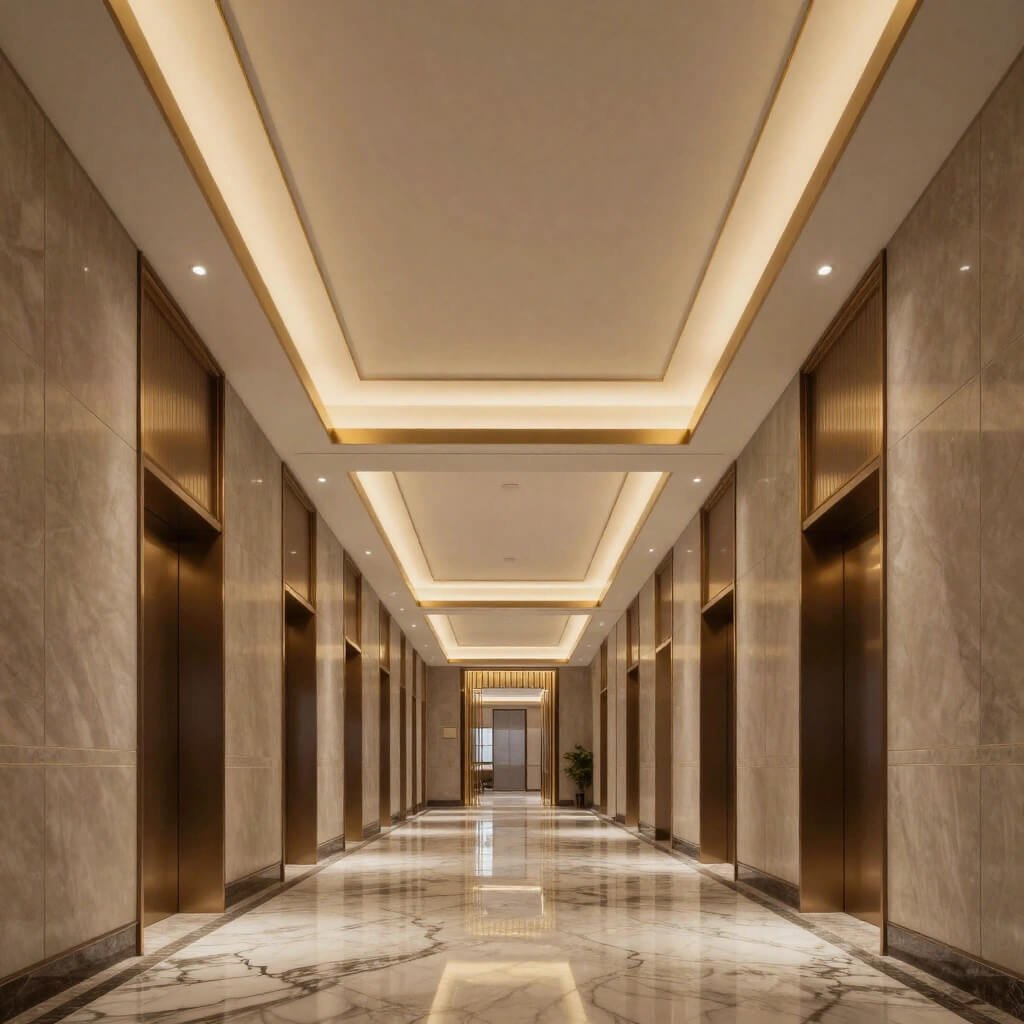
Okay, let’s bring it all home with the ultimate luxury hotel corridor ceiling—the kind that makes you want to take your shoes off, slow down, and appreciate the design. This is where we combine the best elements we’ve discussed into one cohesive, over-the-top gorgeous approach.
High-end hotel corridors nail the ceiling game because they understand something crucial: the ceiling is part of the journey, not just a functional necessity. Every design choice creates an experience that begins the moment you step out of your room.
The Luxury Combination Strategy
Top-tier hotel corridors typically combine multiple elements:
- Layered lighting with ambient, accent, and task components
- Material variety (combining wood, metal, plaster, etc.)
- Architectural interest through coffering, beams, or geometry
- Seamless integration with walls and floors
- Technology integration (automated lighting, sensors, etc.)
The best luxury hotel corridor I’ve experienced was at a resort in Kyoto. The ceiling featured wooden slats in a geometric pattern with integrated LED lighting between them. The wood was light oak with a natural finish, and the lighting could shift from cool to warm throughout the day. The corridor also included subtle cove lighting at the wall-ceiling junction and adjustable spotlights highlighting artwork.
Was it expensive? Absolutely. Was it worth it for creating an unforgettable experience? Also absolutely.
Bringing Hotel Style Home
You don’t need an unlimited budget to capture high-end hotel ceiling aesthetic in your corridor. Focus on these investment priorities:
- Excellent lighting design (this makes or breaks luxury feel)
- Quality materials (even in small doses)
- Professional installation (luxury looks DIY-proof)
- Thoughtful details (smooth transitions, hidden hardware, clean lines)
One of my clients wanted that five-star hotel corridor vibe on a realistic budget. We created a multi-level false ceiling with recessed LED lighting and added decorative wooden beams (affordable faux beams that looked incredible). The lighting was dimmable and warm-toned. The walls got a fresh coat of premium paint in a soft gray. Total transformation from builder-grade boring to boutique hotel chic, and we did it without taking out a loan.
The Experience Factor
Here’s what separates good corridor ceilings from luxury hotel-level ones—the experience factor. Every choice should contribute to how someone feels walking through your space:
- Does the lighting feel welcoming or harsh?
- Does the ceiling height feel appropriate or oppressive?
- Do the materials feel quality or cheap?
- Does the design create visual interest or boredom?
- Does everything feel intentional or haphazard?
Luxury hotel corridors answer these questions with meticulous attention to detail, quality, and user experience. You can absolutely channel this energy in your own home by thinking beyond just “what looks good” to “what feels amazing.”
Wrapping This Up
So there you have it—ten corridor ceiling designs that’ll transform your hallway from forgotten pass-through to architectural statement. Whether you’re vibing with minimalist Scandinavian simplicity or going full luxury with marble and wooden beams, the ceiling is your secret weapon for that hotel-style sophistication.
The truth? Most people completely ignore their corridor ceilings until they’ve exhausted every other design opportunity in their homes. But you’re not most people (clearly, since you’ve read this far). You understand that premium design happens everywhere, including the spaces we just walk through without thinking.
My advice? Start with your lighting—it’s the highest-impact change you can make. Get that right, and suddenly you’re 70% of the way to hotel-worthy corridors. Add one or two architectural elements from this list, keep your execution quality high, and boom—you’ve got yourself a corridor worth showing off.
Now go forth and make your ceiling the conversation piece it deserves to be. Your hallway will thank you, your guests will be impressed, and you’ll get to experience that little thrill of walking through a genuinely well-designed space every single day. Worth it? Absolutely.