10 Creative Small Corridor Design Ideas for Narrow Spaces
- Corridor Design
 Ben
Ben- 0
- 26 minutes read
You know that awkward narrow hallway in your home? The one that feels like a forgotten afterthought between rooms? Yeah, I used to hate mine too. It was this cramped, dimly lit tunnel that made me want to sprint through it rather than actually appreciate it as part of my living space.
But here’s the thing – narrow corridors don’t have to be design dead zones. I’ve spent the last few years experimenting with different approaches, and honestly, some of my favorite design moments now happen in these compact spaces. Why? Because constraints force creativity, and creativity leads to some seriously cool solutions.
Ready to transform that hallway from “meh” to “wow”? Let me walk you through ten game-changing design ideas that actually work in real narrow spaces.
Minimalist White Narrow Corridor with Floating Shelves
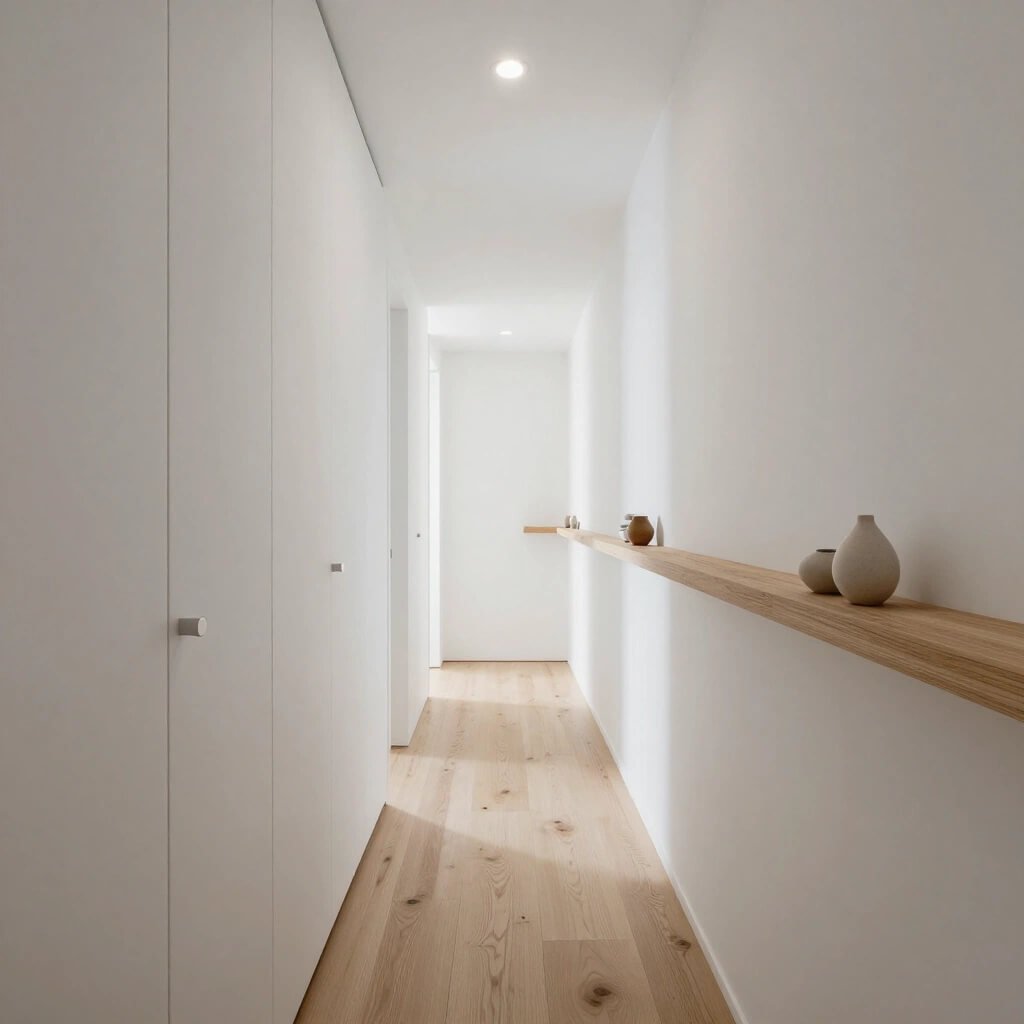
Let’s start with my personal favorite – the minimalist white approach. I discovered this style when I was desperately trying to make my 3-foot-wide hallway feel less like a prison corridor.
White walls create an instant sense of spaciousness. But here’s where most people mess up – they stop at just painting the walls white and call it a day. The magic happens when you add those floating shelves strategically placed at eye level.
I installed three floating shelves along one wall, each about 18 inches apart. The key is keeping them narrow – around 6 to 8 inches deep maximum. You don’t want people bumping into them as they walk through.
What goes on these shelves? Here’s what I learned works:
• Small potted plants (succulents are perfect)
• A few carefully chosen books
• One or two decorative objects max per shelf
• Maybe a small picture frame
The beauty of this setup is that it adds visual interest without cluttering the space. Your eye travels horizontally along the shelves, which actually makes the corridor feel wider. Pretty clever, right?
Pro tip: Paint the shelves the same color as your walls. They’ll appear to “float” and won’t break up the clean lines you’re going for.
Mirror Illusion Small Hallway Design with LED Lighting
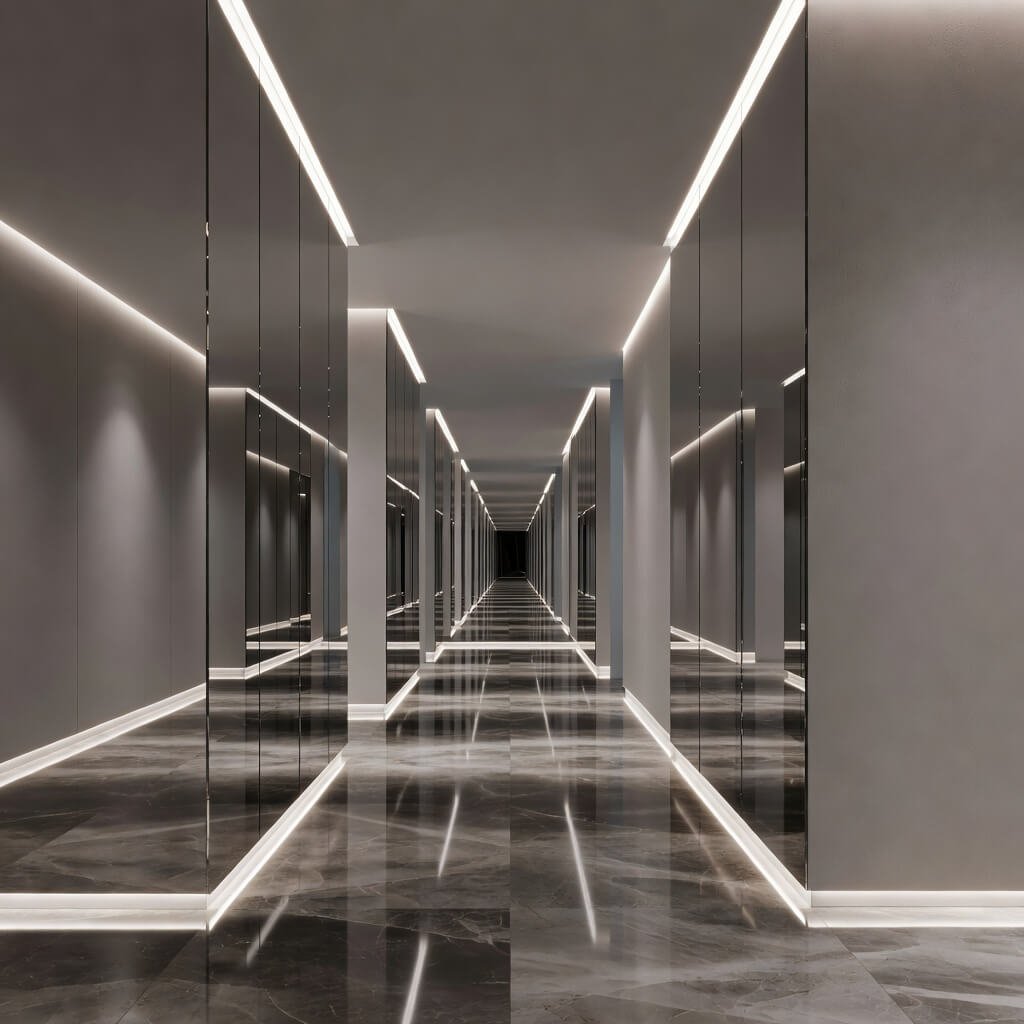
Want to know the closest thing to actual magic in interior design? Mirrors in narrow spaces. I’m not talking about one tiny mirror hanging awkwardly on the wall. I mean going big with this concept.
I installed a full-length mirror on one wall of my hallway, and the transformation was instant. The space literally doubled in visual size. But the real game-changer came when I added LED strip lighting behind the mirror.
Here’s how you make this work:
• Mount LED strips around the mirror’s perimeter
• Use warm white LEDs (3000K) for a welcoming feel
• Install a dimmer switch – this is crucial
• Position the mirror opposite any natural light source if possible
The LED lighting creates this incredible halo effect around the mirror. During the day, it reflects natural light and bounces it around the space. In the evening, you can dim the LEDs for ambient lighting that makes the hallway feel like a boutique hotel corridor.
Warning: Don’t go overboard with cool blue LEDs. I made this mistake initially, and it felt like walking through a spaceship. Not the vibe most of us are going for 🙂
Warm Wooden Slim Corridor with Hidden Storage Cabinets
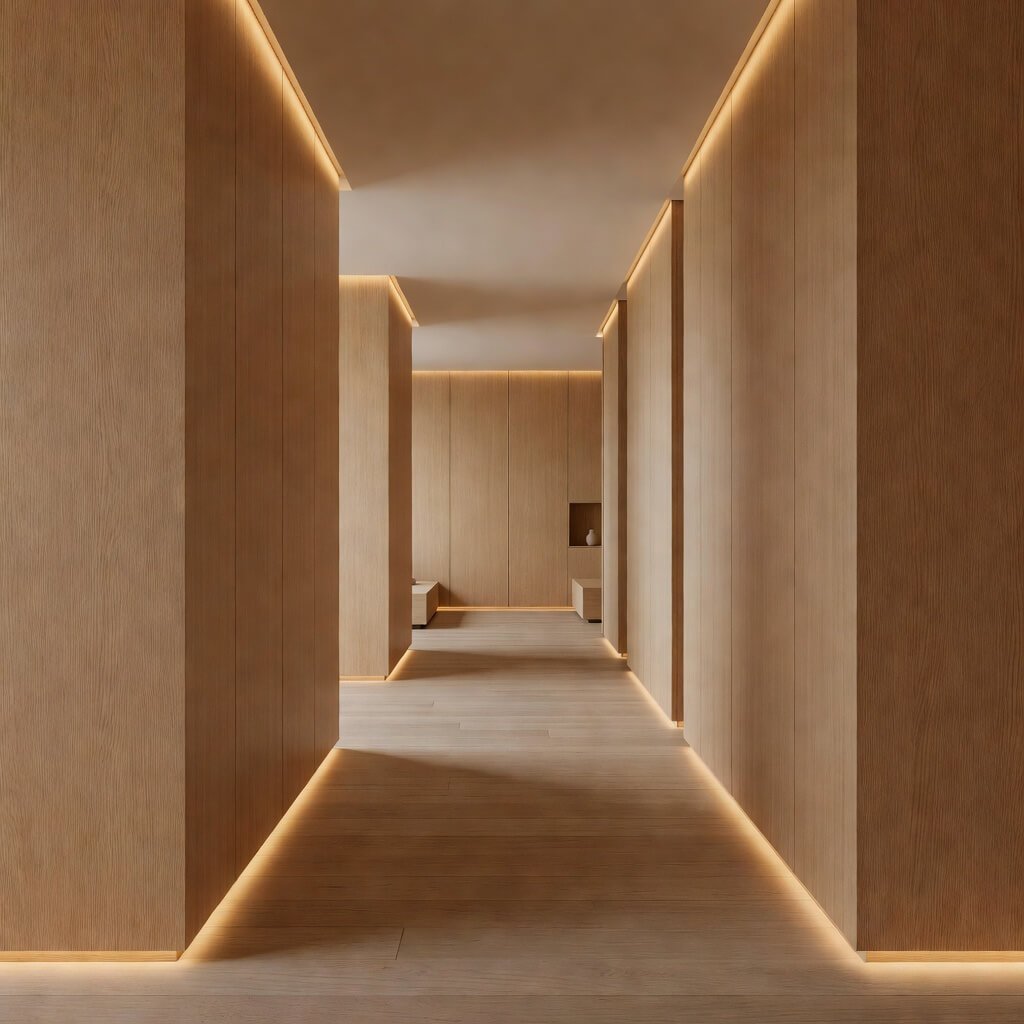
Nothing beats the cozy factor of wood, but in a narrow corridor, you need to be smart about how you use it. I learned this the hard way when I first tried to install bulky wooden furniture and ended up creating an obstacle course.
The secret is built-in hidden storage that doesn’t protrude into the walking space. I had custom cabinets built into the wall cavity – essentially creating a recessed storage system that sits flush with the wall surface.
Here’s what works in this design:
• Recessed cabinets with push-to-open mechanisms
• Warm wood tones like oak or walnut
• Vertical wood paneling to draw the eye upward
• Integrated lighting within the cabinetry
The hidden storage is perfect for storing shoes, cleaning supplies, or seasonal items. You get all the functionality without sacrificing precious floor space.
I chose a warm honey oak finish, and honestly, walking through this corridor now feels like strolling through a high-end cabin. The wood adds texture and warmth while the hidden storage keeps everything clutter-free.
Bonus: The vertical wood paneling creates an illusion of height, which partially compensates for the narrow width.
Also Read: 10 Beautiful Office Corridor Design Ideas Minimal Luxury Spaces
Modern Black Accent Narrow Corridor with Wall Art Gallery
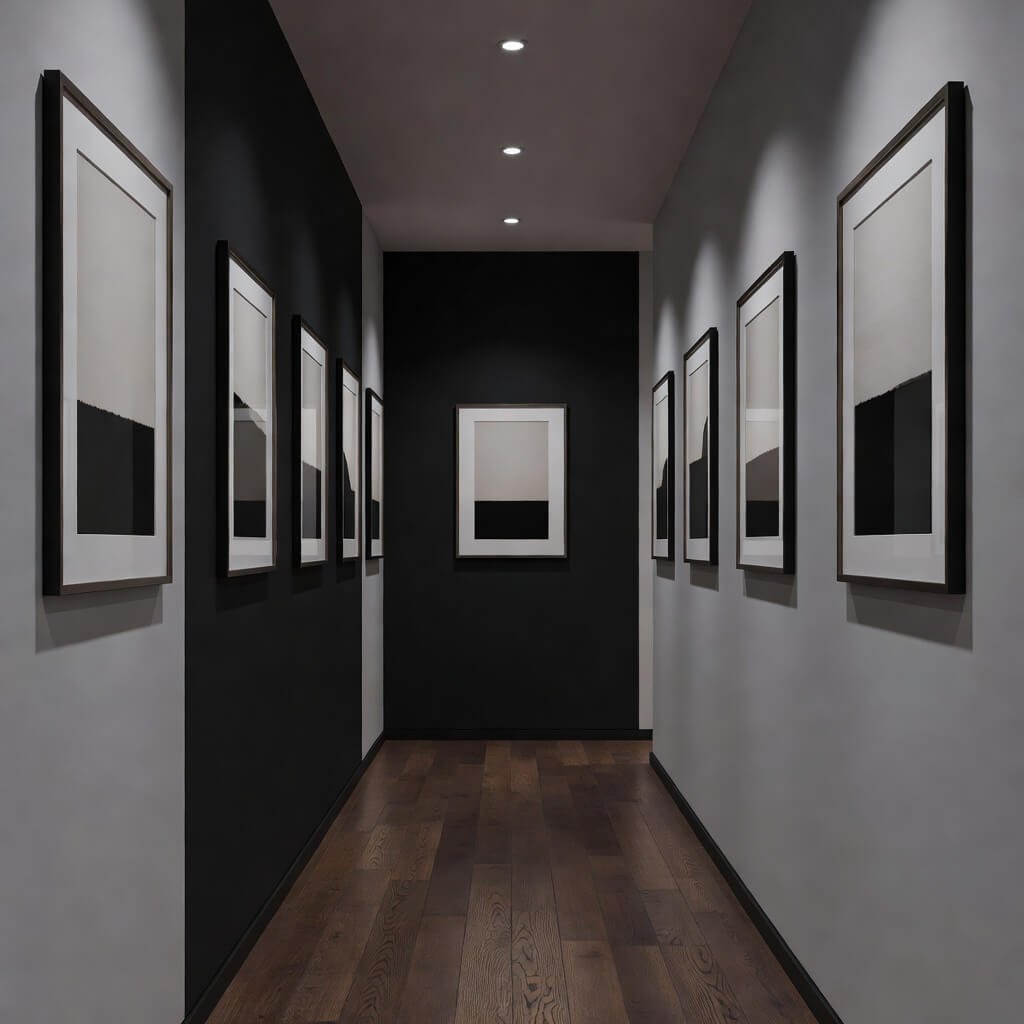
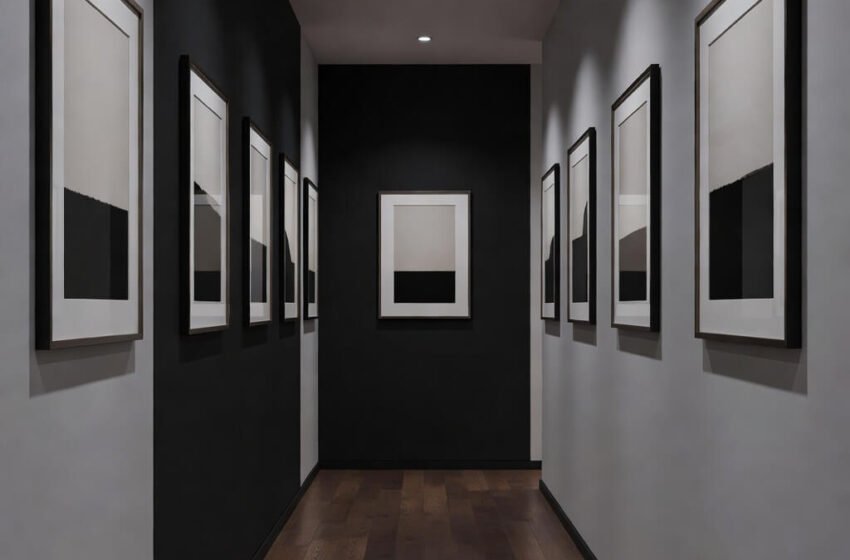
Black walls in a narrow space? I know, I know – it sounds counterintuitive. But hear me out, because this approach creates one of the most dramatic and sophisticated looks you can achieve.
I painted one accent wall in deep charcoal black and left the others white. The contrast creates depth and makes the space feel intentionally designed rather than accidentally narrow.
The real star of this setup is the curated wall art gallery. I’m talking about a carefully planned collection of artwork, photographs, and prints that tell a story as you walk through the space.
Here’s my gallery wall formula:
• Mix different frame sizes but stick to one color (I used black frames)
• Include 2-3 larger pieces as anchors
• Fill in with smaller prints and photographs
• Maintain consistent spacing between pieces
• Use picture ledges for easy rearranging
The black wall makes the artwork pop in a way that white walls simply can’t match. It creates this gallery-like atmosphere that transforms your hallway into an art experience.
FYI: Good lighting is essential for this look. I installed track lighting to properly illuminate the artwork, and it makes all the difference.
Bright Scandinavian Small Hallway with Natural Light Focus
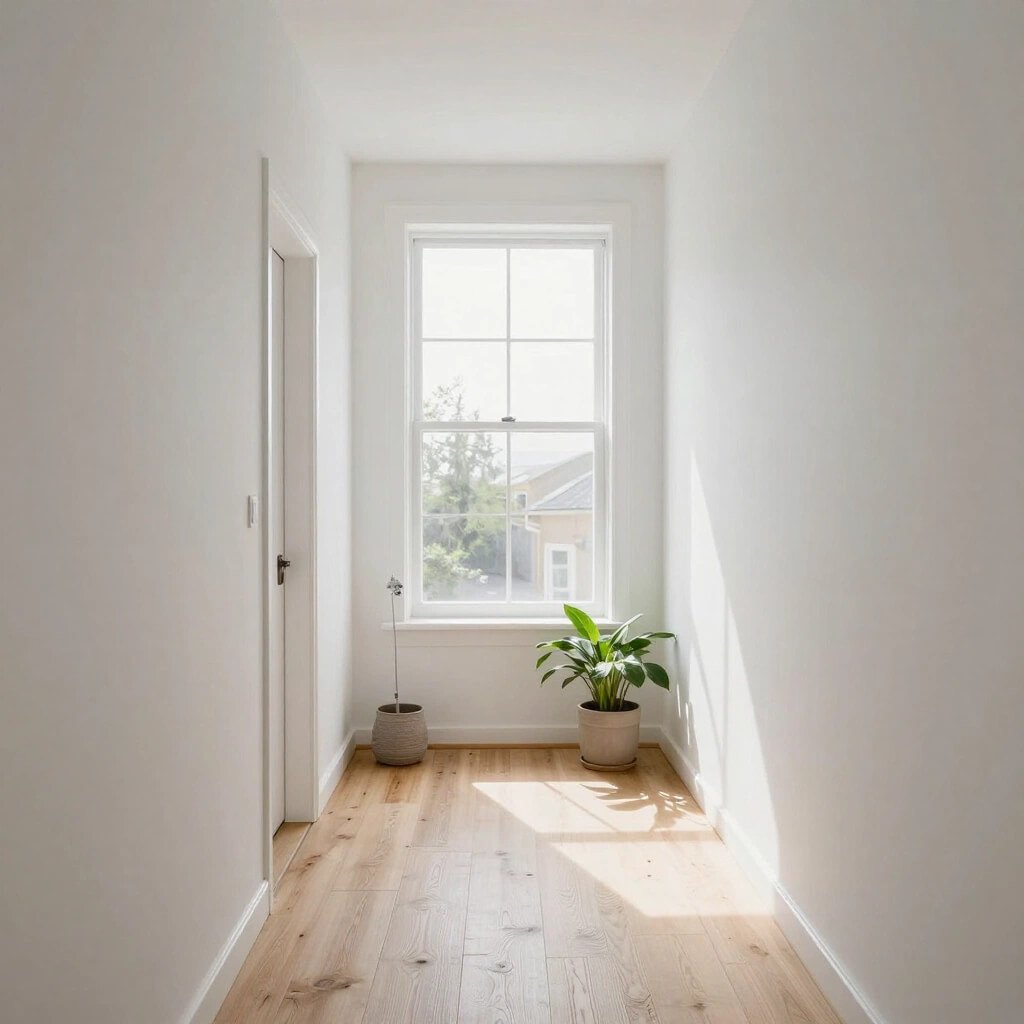
Scandinavian design was practically invented for small spaces, so it makes perfect sense for narrow corridors. The core principle? Maximize every bit of natural light and create a clean, functional aesthetic.
I redesigned my friend’s hallway using this approach, and the results were stunning. We started by painting everything in crisp white and light gray tones. But the real magic happened when we addressed the lighting situation.
Natural light became our obsession. We replaced the solid door at the end of the hallway with a glass-paneled door. We added a small skylight where structurally possible. We even installed a light tube to bring in more daylight from above.
Key elements of the Scandinavian corridor:
• Light wood accents (think blonde pine or birch)
• Minimal, functional furniture pieces
• Natural textures like wool or linen
• Plants that thrive in indirect light
• Clean lines and uncluttered surfaces
The result feels fresh, clean, and surprisingly spacious. There’s something about Scandinavian design that makes even the smallest spaces feel calm and organized.
We added a simple wooden bench with built-in storage underneath. It’s perfect for sitting while putting on shoes, and the storage compartment holds all the everyday items that tend to clutter up hallways.
Luxury Marble Finish Compact Corridor with Gold Accents
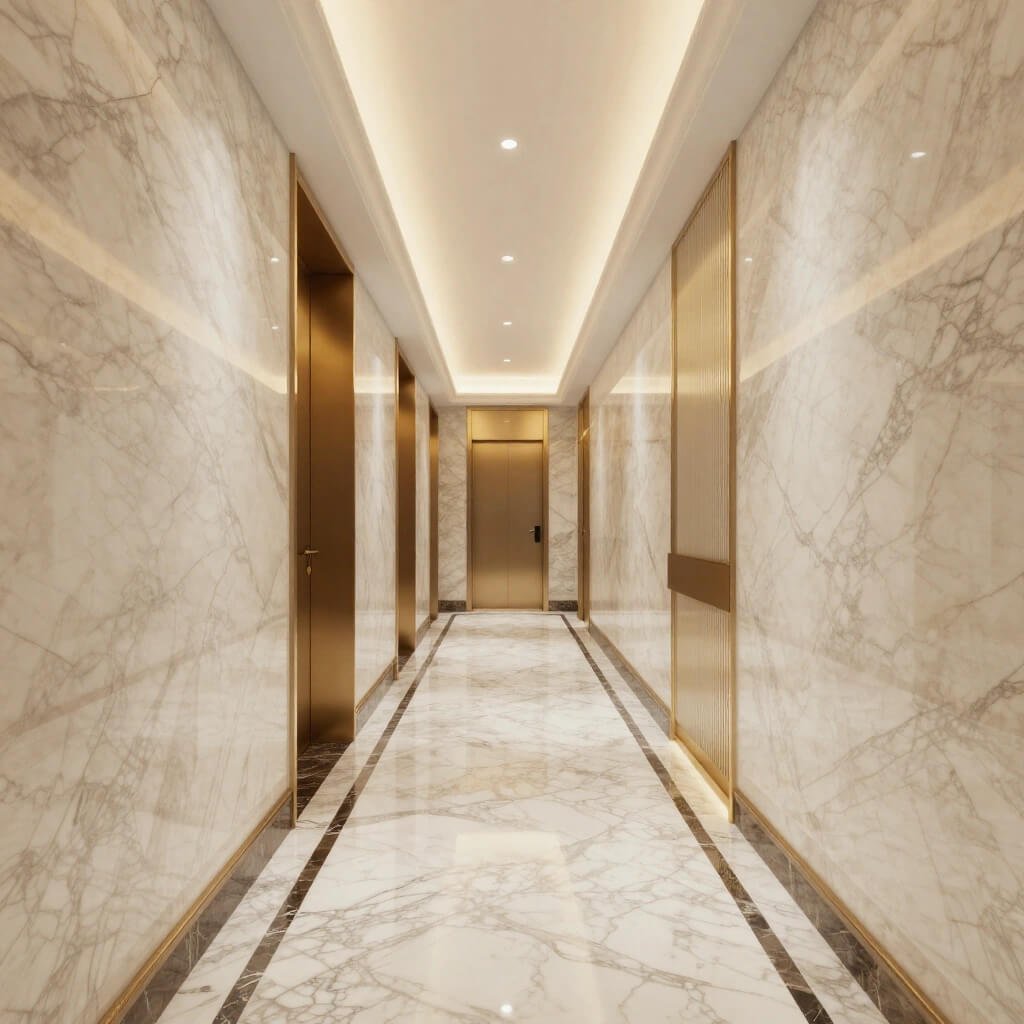
Okay, let’s talk about going completely over-the-top in the best possible way. Marble in a narrow corridor might sound excessive, but done right, it creates an incredibly luxurious feel.
I worked on this approach in a client’s home, and we used large-format marble-look porcelain tiles instead of real marble (much more budget-friendly and practical). The veining in the marble creates visual movement that actually helps the space feel less confined.
The gold accents are what really make this design sing:
• Gold-framed mirror
• Brass light fixtures with warm LED bulbs
• Gold hardware on any storage pieces
• Metallic picture frames
The key is restraint – you want enough gold to create luxury without looking like a rapper’s mansion. We used warm brass tones rather than bright gold, which feels more sophisticated and timeless.
The marble floor runs the entire length of the corridor, which creates an unbroken visual line that makes the space feel longer. Pro tip: Use large format tiles with minimal grout lines to maximize this effect.
Also Read: 10 Premium Corridor Ceiling Design Ideas for Hotel Style Look
Boho Style Narrow Corridor with Plants and Rattan Decor
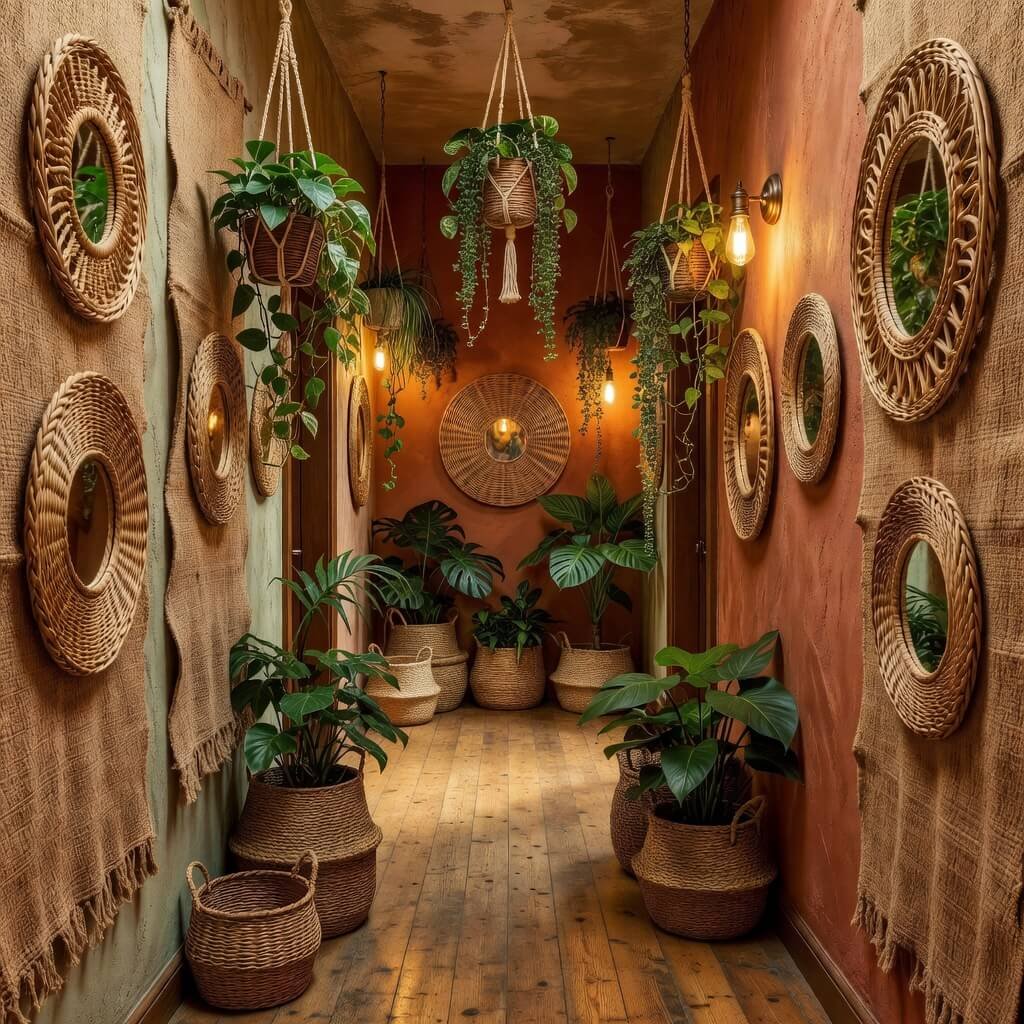
Who says narrow corridors can’t have personality? The bohemian approach is all about embracing texture, natural materials, and yes, lots of plants.
I transformed a builder-grade hallway using this style, and it went from boring to Instagram-worthy in one weekend. The secret is layering different textures and creating visual interest at multiple levels.
Here’s what makes boho corridors work:
• Rattan storage baskets mounted on walls for functional decoration
• Hanging plants at varying heights (macramé hangers are perfect)
• Textured wall hangings like woven tapestries or macramé pieces
• Warm, earthy color palette in terracotta, ochre, and cream tones
The plants are crucial – they bring life and color into what could otherwise feel like a sterile passageway. I used a mix of trailing plants like pothos and structured plants like snake plants.
Storage gets creative in boho style. Instead of traditional shelving, I used hanging rattan baskets and wall-mounted woven storage. Everything feels intentional and artistic rather than purely functional.
The result? A hallway that feels like a cozy, lived-in space rather than just a path between rooms.
Smart Storage Corridor with Built-in Cabinets and Hooks
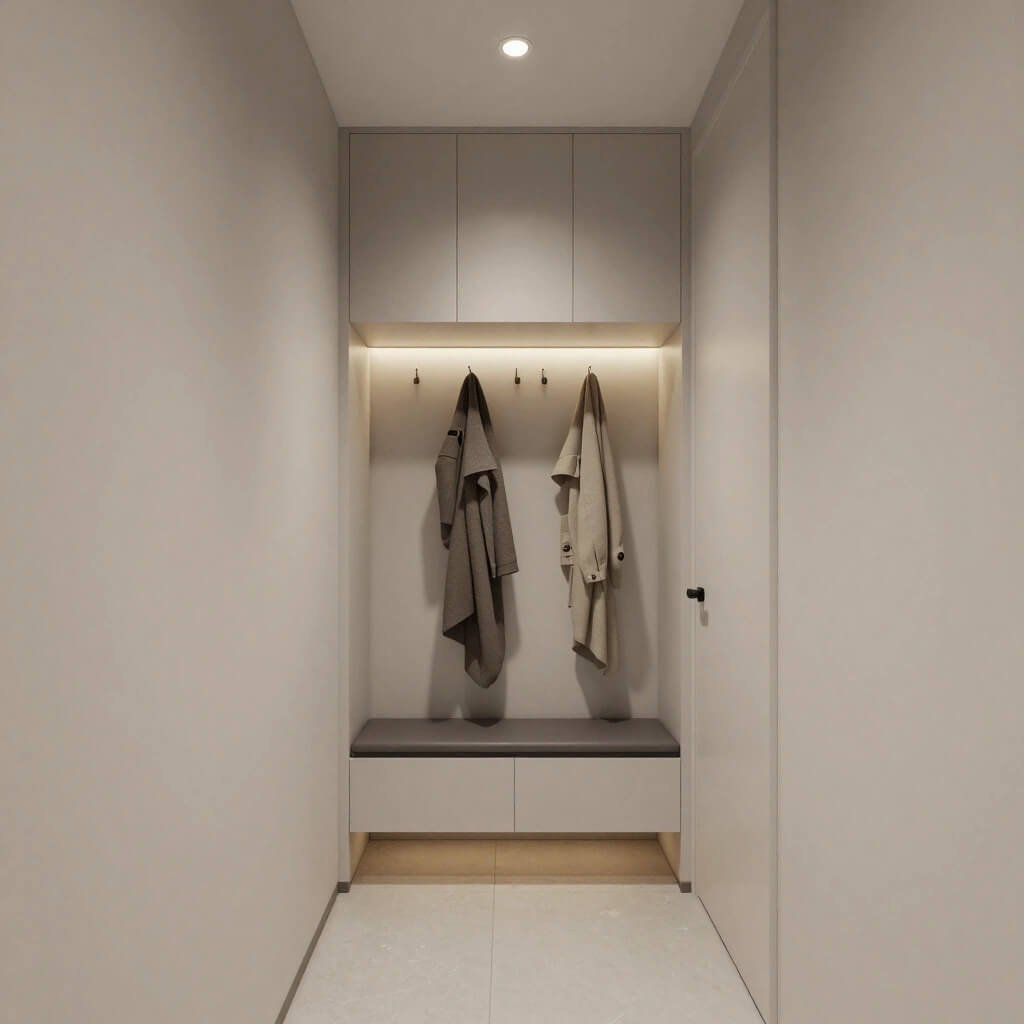
Let’s get practical for a minute. Most narrow corridors become dumping grounds for coats, bags, shoes, and all the random stuff we don’t know what to do with. Smart storage design solves this problem while keeping the space looking intentional.
I designed a storage wall that maximizes every inch of available space. The system includes:
• Floor-to-ceiling built-in cabinets with different compartment sizes
• Wall-mounted hooks at various heights for different family members
• A built-in bench with shoe storage underneath
• Open cubbies for bags and everyday items
The genius is in the organization system. Each family member gets their own section with hooks at the right height and storage compartments sized for their stuff. No more fighting over space or hunting for missing items.
I used a soft gray color for all the cabinetry, which keeps the storage wall from feeling overwhelming. Hidden LED strip lighting under the bench and inside some of the open cubbies adds a high-end touch and makes it easy to find things.
IMO, this is the most functional approach for families with kids or anyone who actually lives in their home rather than just photographing it.
Soft Beige Minimal Corridor with Recessed Ceiling Lights
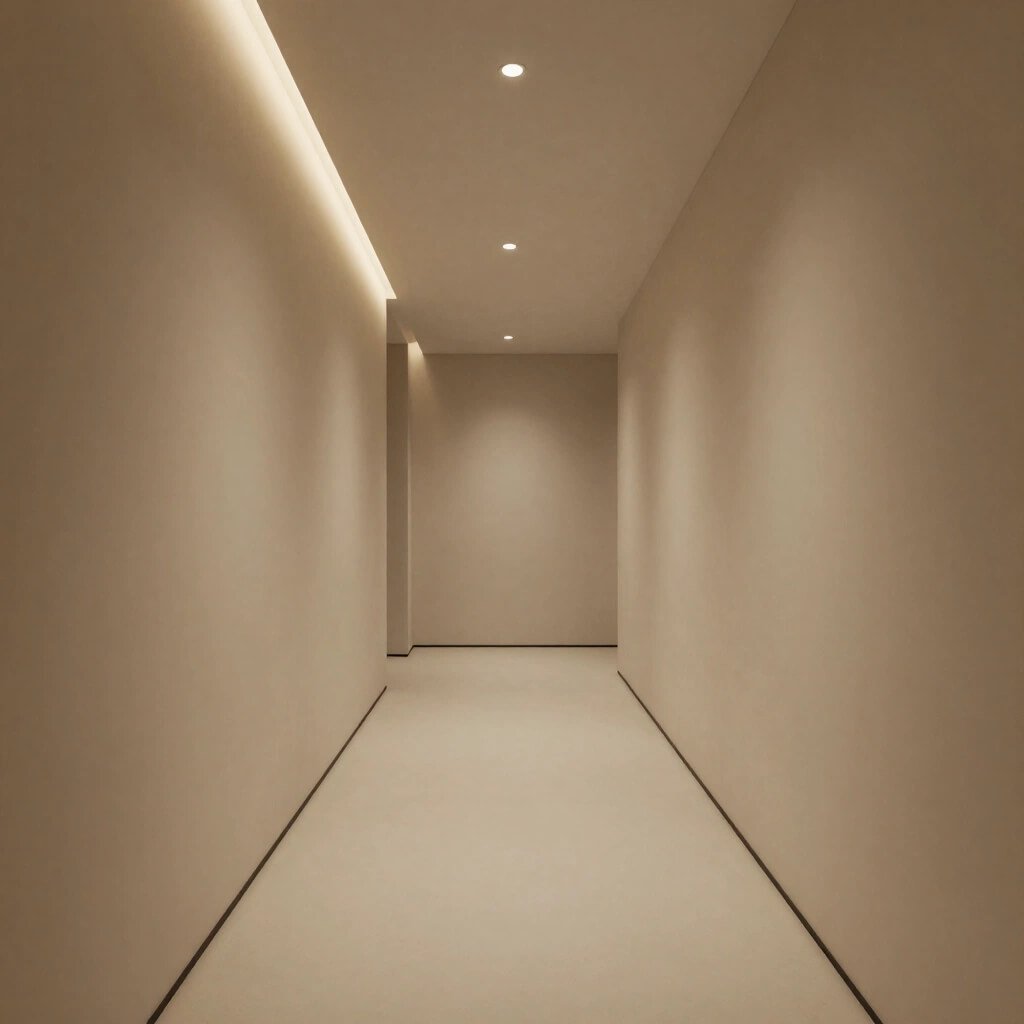
Sometimes you want the corridor to disappear – to feel like a seamless transition between spaces rather than a destination itself. The soft beige minimal approach achieves exactly this.
I used this strategy in a home where the hallway connected several important rooms, and the goal was to create flow rather than make a statement. The result is subtle but incredibly effective.
Beige gets a bad rap, but the right beige is sophisticated and calming. I chose a warm beige with gray undertones that changes throughout the day depending on the light. The walls, ceiling, and trim are all variations of the same color family, which creates a cocoon-like effect.
The lighting design is crucial here:
• Recessed ceiling lights spaced evenly for consistent illumination
• Warm LED bulbs (2700K) for a welcoming feel
• Dimmer controls to adjust the mood throughout the day
• No shadows or dark spots anywhere in the space
The minimal approach means very little decoration – maybe one piece of art or a simple console table. The beauty is in the simplicity and the quality of light.
This design makes the corridor feel larger because there are no visual interruptions. Your eye travels smoothly from one end to the other without getting caught on decorative elements.
Also Read: 10 Luxury Corridor Wall Design Ideas for Chic Interiors
Elegant Vertical Panel Wall Corridor with Ambient Lighting
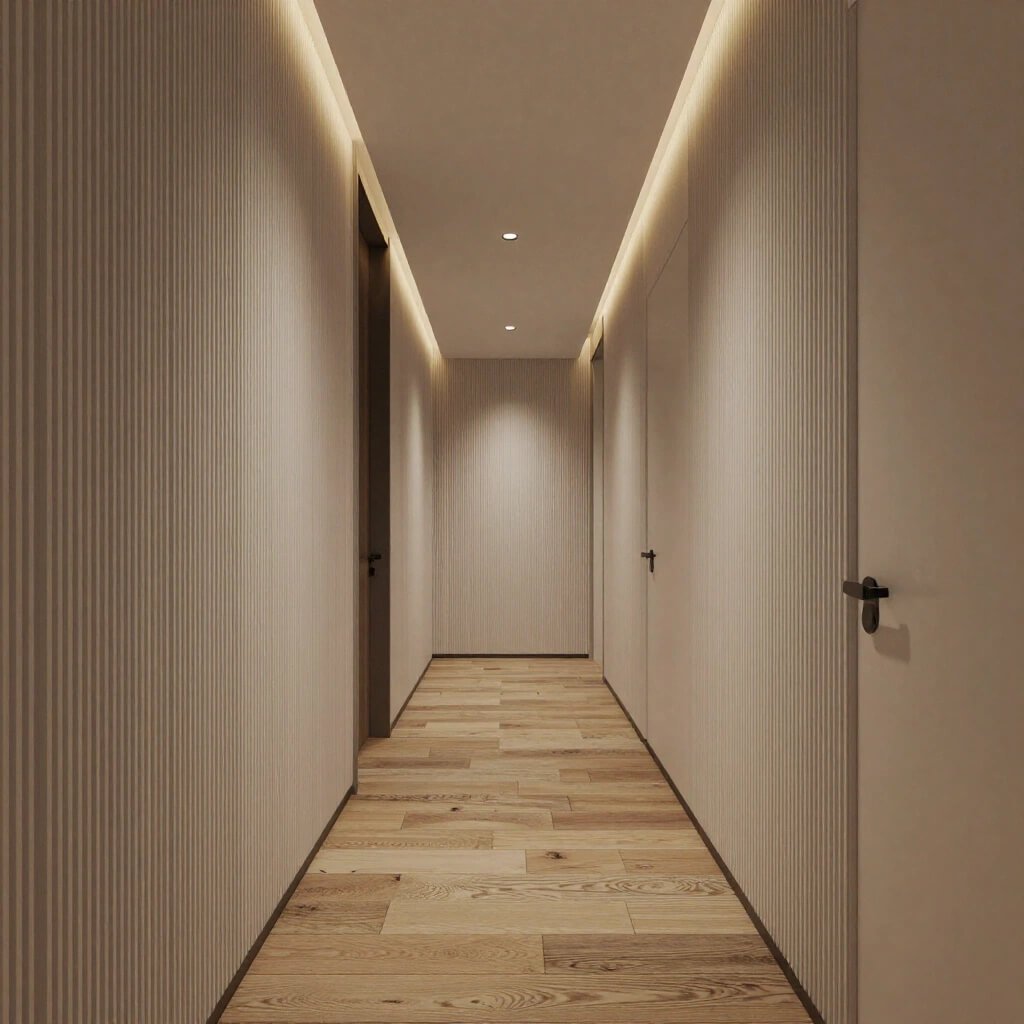
Want to add architectural interest without eating up floor space? Vertical wall paneling is your answer. I installed this in my current home, and it completely transformed the character of the space.
The vertical lines create an illusion of height, which helps offset the narrow width. But the real magic happens when you combine the paneling with integrated ambient lighting.
Here’s how I made it work:
• Tongue-and-groove vertical panels painted in a soft white
• LED strip lighting hidden behind crown molding
• Additional accent lighting at the base of the panels
• Consistent spacing between panels for a rhythmic visual effect
The ambient lighting washes the walls with soft, even illumination. During the day, it supplements natural light. In the evening, you can dim it down for a romantic, hotel-like atmosphere.
The vertical panels add texture and visual interest without protruding into the walkway. They make the walls feel substantial and intentional rather than just flat surfaces separating rooms.
I chose a classic white finish, but this technique would work beautifully in other colors too. The key is ensuring the lighting complements rather than competes with the paneling.
Making Your Choice: What Works for Your Space?
After trying all these approaches (and a few that didn’t make the cut), here’s what I’ve learned: the best narrow corridor design is the one that solves your specific problems.
Do you need more storage? Go with the smart storage approach. Want to make the space feel bigger? Try the mirror and LED combination. Looking for maximum luxury on a budget? The marble-look tiles with gold accents deliver serious impact.
Remember: narrow doesn’t mean neglected. These spaces can become some of the most memorable and functional parts of your home with the right approach. The trick is working with the constraints rather than fighting against them.
Which of these ideas speaks to you? Trust me, once you start seeing your narrow corridor as an opportunity rather than a problem, you’ll be amazed at what’s possible :/
Your hallway is waiting for its glow-up – time to give it the attention it deserves.