10 Aesthetic Coffee Shop Menu Design Ideas for Instagram Cafes
- Coffee Shop
 Ben
Ben- 0
- 38 minutes read
So your coffee tastes amazing, but your menu looks like it crawled out of a 2005 Word document? Yeah, we need to fix that. Your menu isn’t just a list of drinks—it’s basically your café’s first impression, your silent salesperson, and honestly, the star of about 60% of your customers’ Instagram stories. No pressure, right?
I’ve spent way too many hours analyzing coffee shop menus (some might call it an obsession, I call it “research”), and I can tell you this: the difference between a café that gets tagged in hundreds of posts and one that doesn’t often comes down to those little aesthetic details. Your menu design is one of those crucial details that can make someone pull out their phone or just… order and leave.
Let me walk you through ten menu design ideas that’ll turn your café into an Instagram goldmine. These aren’t just pretty concepts—they’re practical, achievable, and actually work in real-world settings. Ready to make your competitors secretly screenshot your menu for “inspiration”? Let’s go.
Minimal Scandinavian Coffee Menu Board Design
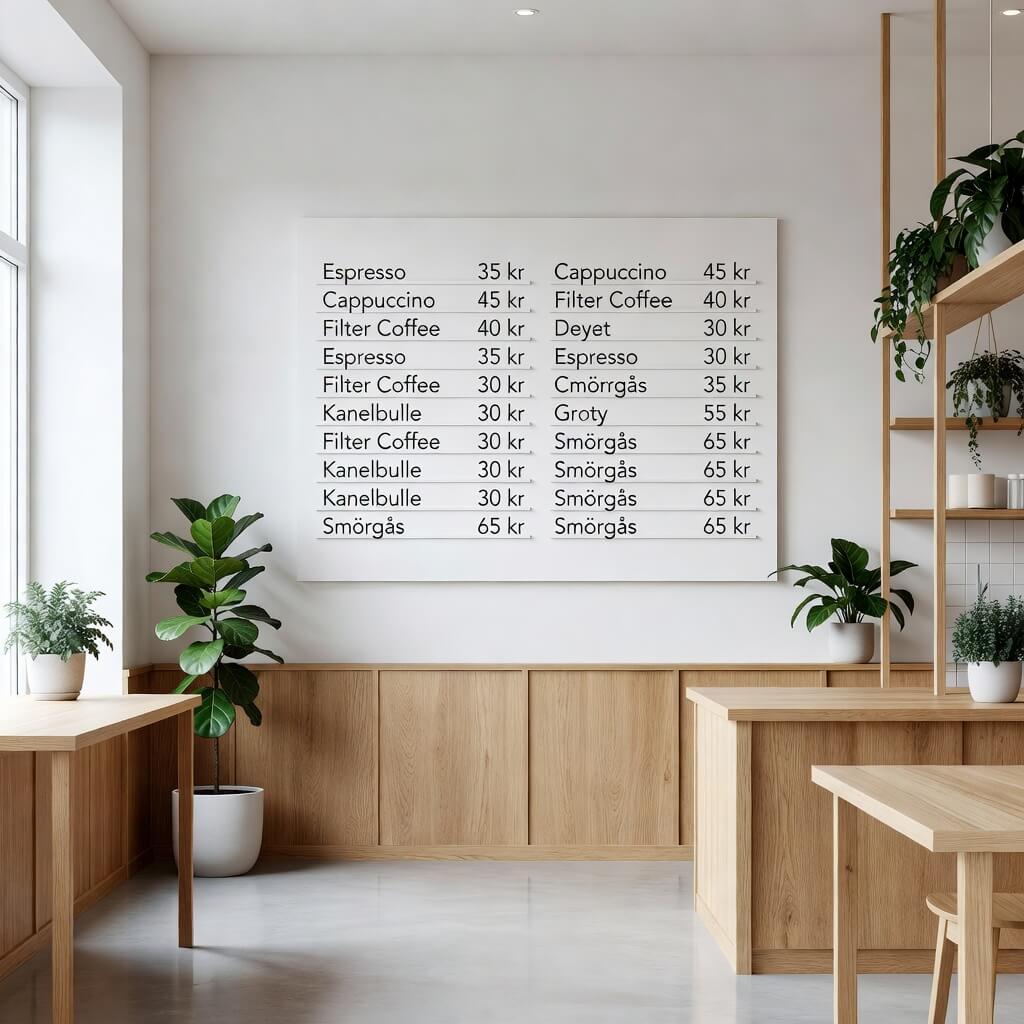
You know that effortlessly chic Scandinavian aesthetic that makes everything look expensive but somehow approachable? That’s what we’re going for here.
The Scandinavian menu design strips everything down to the absolute essentials. Picture a clean white or light gray background, simple sans-serif fonts (think Helvetica or Futura), and lots—and I mean lots—of negative space. The beauty here is in what you don’t include.
Here’s why this works so brilliantly:
- The simplicity makes your menu incredibly easy to read, even for that customer who hasn’t had their coffee yet
- White or neutral backgrounds photograph beautifully without competing with the actual coffee
- The clean aesthetic appeals to minimalist millennials and Gen Z customers who dominate Instagram
- It forces you to edit your menu down to your best offerings (which, FYI, is always a good business move)
When I implemented a Scandinavian-style menu at a friend’s café, we used a large white acrylic board with black lettering. Nothing fancy, just clean typography with subtle line separators between sections. The Instagram engagement jumped by about 40% within two months. Coincidence? I don’t think so.
How to Pull This Off
Keep your font choices to one or two maximum. Use font weight (bold vs. regular) to create hierarchy instead of switching between different typefaces. Price tags should be subtle—think small, lightweight fonts that don’t scream “MONEY!” at your customers.
Add tiny illustrations if you must, but keep them line-based and monochromatic. A simple coffee bean icon or a minimalist cup sketch works. Anything more detailed ruins the vibe.
The key is restraint. If you’re thinking about adding another decorative element, don’t. That’s your answer 90% of the time with Scandinavian design.
Rustic Wooden Café Menu with Chalk Typography
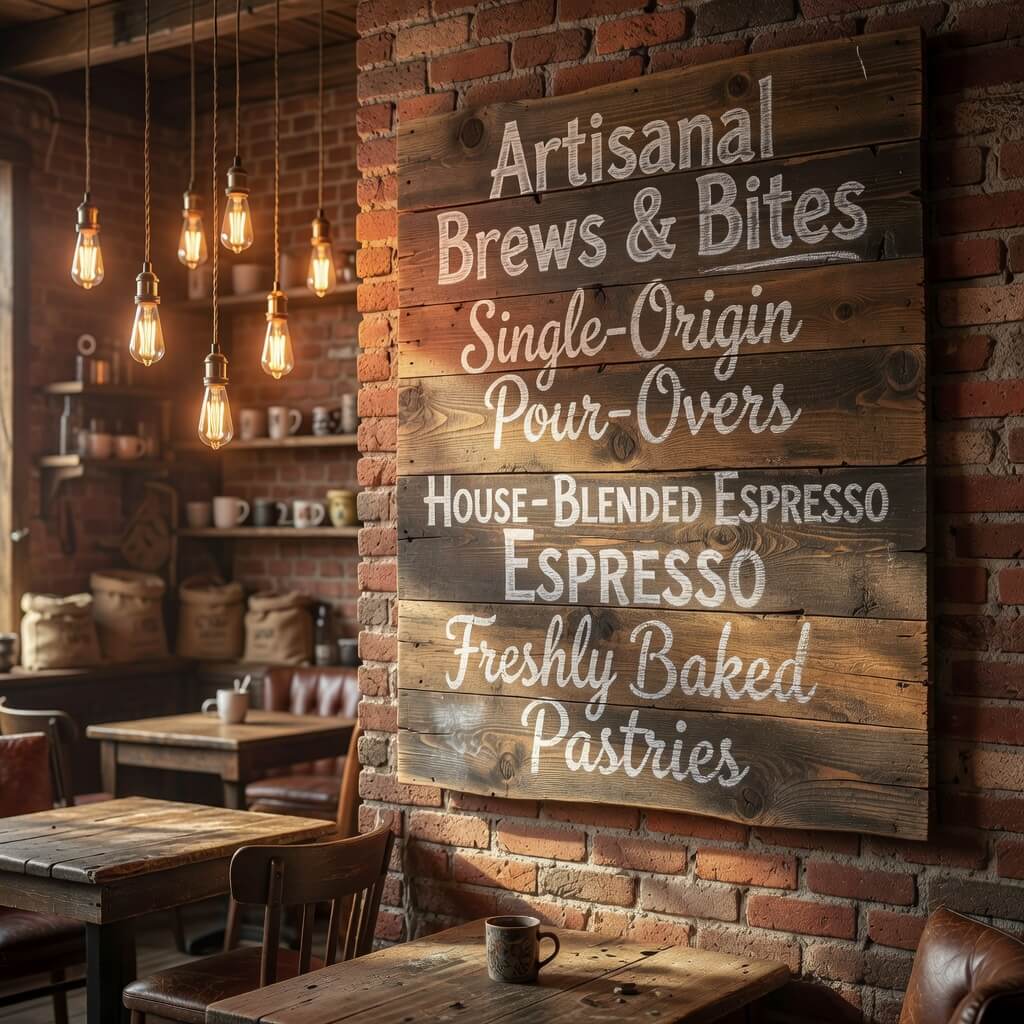
Nothing says “artisanal coffee” quite like a wooden board with chalk writing, right? This design screams cozy, handcrafted, and “we definitely care about where our beans come from.”
I’ve seen this done phenomenally well and absolutely terribly. The difference comes down to execution. A rustic wooden menu board works when you embrace the imperfections rather than fight them. The wood grain, the slight smudges, the hand-drawn letters that aren’t perfectly uniform—that’s the charm.
You’ll want reclaimed wood or something with visible texture and character. New, pristine lumber misses the point entirely. Paint it with chalkboard paint, or better yet, slot actual chalkboards into a wooden frame. This gives you flexibility to change your seasonal offerings without redoing the entire board.
The rustic chalk menu shines because:
- It photographs with tons of character and warmth
- You can update it daily, weekly, or seasonally without printing costs
- The handwritten element feels personal and authentic
- It pairs perfectly with exposed brick, industrial lighting, and all those other café design staples
Here’s the catch though—your handwriting matters. A lot. If your chalk lettering looks like a kindergartener’s, the whole aesthetic falls apart. Either practice your chalk calligraphy (there are tons of YouTube tutorials) or hire someone with actual lettering skills to do your boards.
Making It Instagram-Worthy
Use different chalk colors sparingly—maybe white for the main menu and one accent color for specials. Add little illustrations like coffee cups, leaves, or beans to fill space and add visual interest. But seriously, keep the drawings simple. Nobody needs a chalk Mona Lisa on their menu board.
Consider lighting carefully. Chalkboards can create glare in photos if you’re not strategic about your light placement. Soft, diffused lighting works best.
Luxury Marble-Themed Coffee Shop Menu Layout
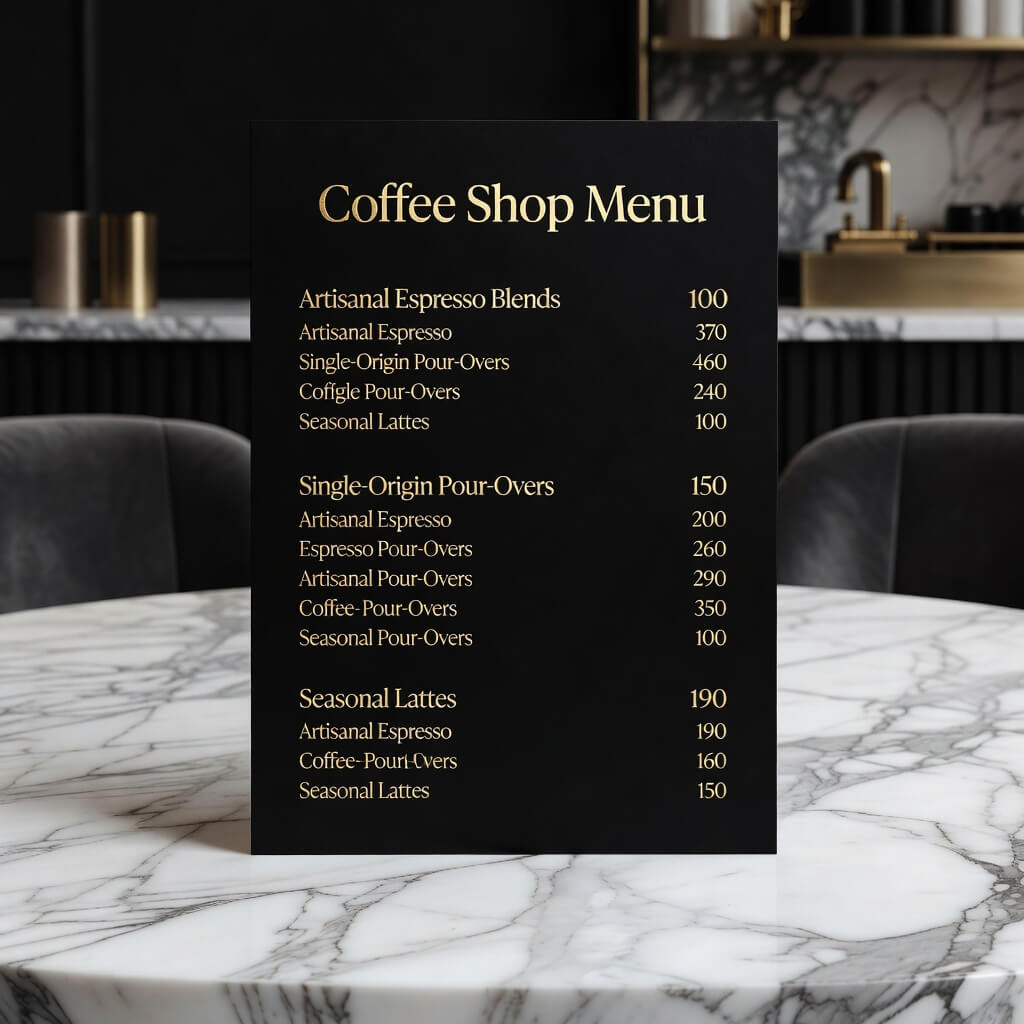
Want to position your café as the high-end option in your neighborhood? Marble says “luxury” faster than almost anything else.
The marble menu aesthetic combines elegance with modernity. Picture soft white and gray marble patterns as your background, paired with rose gold, gold, or black text. It’s sophisticated without being stuffy, and it photographs like an absolute dream.
I helped design a marble-themed menu for an upscale café in a business district, and the owner told me customers literally asked if they could buy copies of the menu to frame. That’s the kind of response you want.
Why marble menus work for Instagram cafes:
- The natural patterns in marble create visual interest without clutter
- It pairs beautifully with metallic accents that catch light in photos
- The luxury association justifies higher price points (yes, really)
- It stands out in a sea of rustic and minimalist designs
You’ve got options here. Print menus on marble-patterned cardstock. Mount printed menus on actual marble tiles (pricier but gorgeous). Use marble-printed acrylic boards. Or go full bougie with engraved marble slabs (though honestly, this is overkill unless you’re charging $12 for a cortado).
Design Details That Matter
Choose fonts carefully. Elegant serif fonts like Didot or Bodoni complement the luxury vibe. Sans-serif can work too if you want a more modern feel—just keep it refined.
The color palette should be cohesive. If you’re using rose gold accents, carry that through to other design elements in your café. Same with regular gold or copper. Consistency is what makes the whole aesthetic come together.
Don’t go too busy with the marble pattern. Subtle veining works better than bold, dramatic patterns that compete with your text. Remember: readability first, aesthetics second.
Also Read: 10 Perfect Coffee Shop Design Outdoor Ideas for Relaxing Vibes
Digital LED Coffee Menu Display Concept
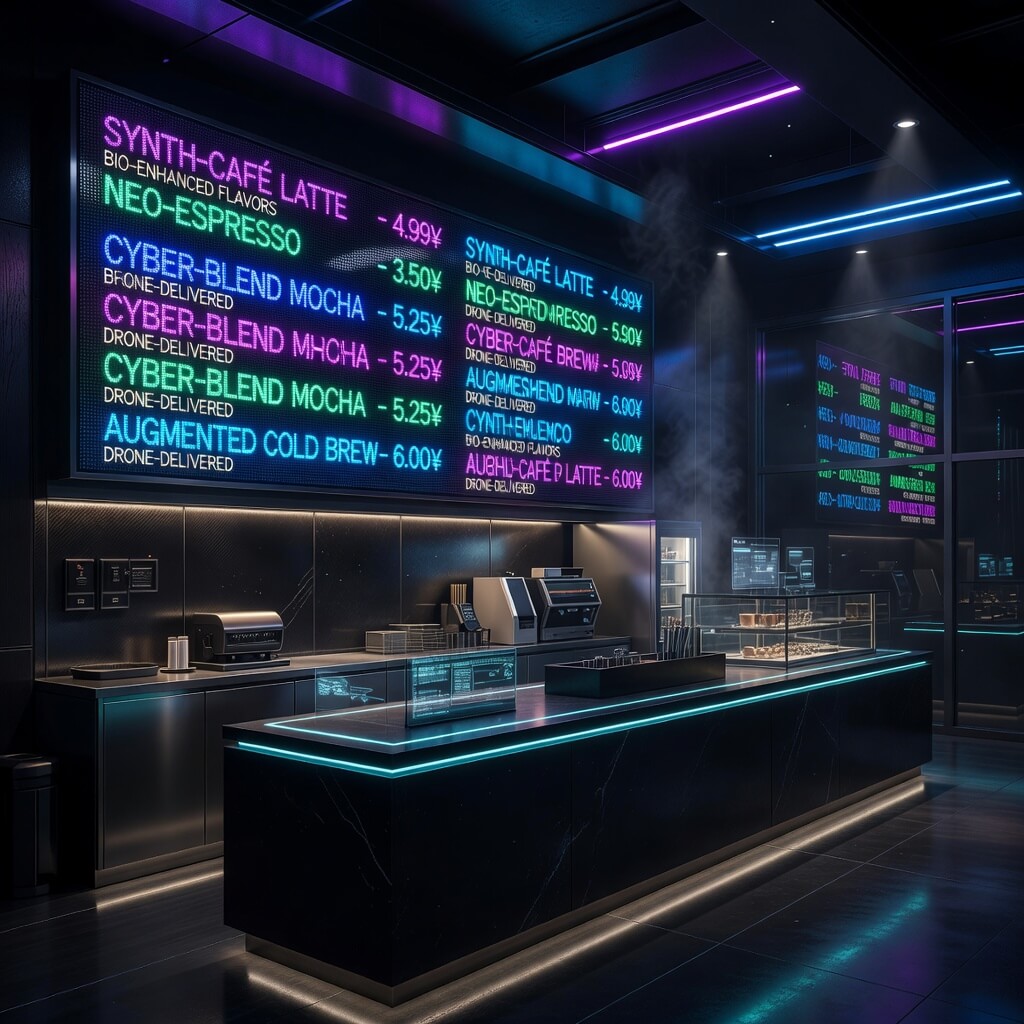
Okay, hear me out on this one. Digital menus might sound like the opposite of cozy café vibes, but modern LED displays have come a long way from those harsh, buzzing fast-food menu boards.
Contemporary LED menu displays can show high-resolution graphics, subtle animations, and custom designs that change throughout the day. Morning menu until 11 AM, then seamlessly switch to your afternoon offerings? Done. Highlight your seasonal pumpkin spice whatever when fall hits? Easy.
The Instagram appeal here is different from static menus. People love posting short videos of aesthetic displays, especially if you incorporate subtle motion graphics—maybe steam rising from an illustrated coffee cup or your café name gently pulsing.
Digital menu advantages:
- Update your menu instantly without reprinting anything
- Showcase mouth-watering photos of your drinks and food
- Adjust pricing on the fly (though maybe don’t do this too obviously)
- Reduce paper waste completely
- Stand out in a market saturated with traditional menus
I’ll admit, I was skeptical about digital menus until I visited a café in Brooklyn that nailed it. They used warm-toned displays with animated backgrounds that mimicked watercolor paintings. It felt artistic and modern, not corporate and cold.
Getting It Right
The key is choosing displays with warm color temperatures. Cool, blue-toned LEDs feel sterile. You want displays that can show warm creams, soft browns, and gentle ambers that complement coffee’s natural color palette.
Keep animations subtle. If your menu looks like a Vegas casino, you’ve gone too far. Think gentle fades, slow movements, nothing that induces headaches or distracts from actually ordering.
Also, consider having a backup. Technology fails, and you don’t want to be menu-less when your display decides to glitch during your morning rush. A simple printed menu as backup saves headaches.
Vintage Retro Coffee House Menu Style
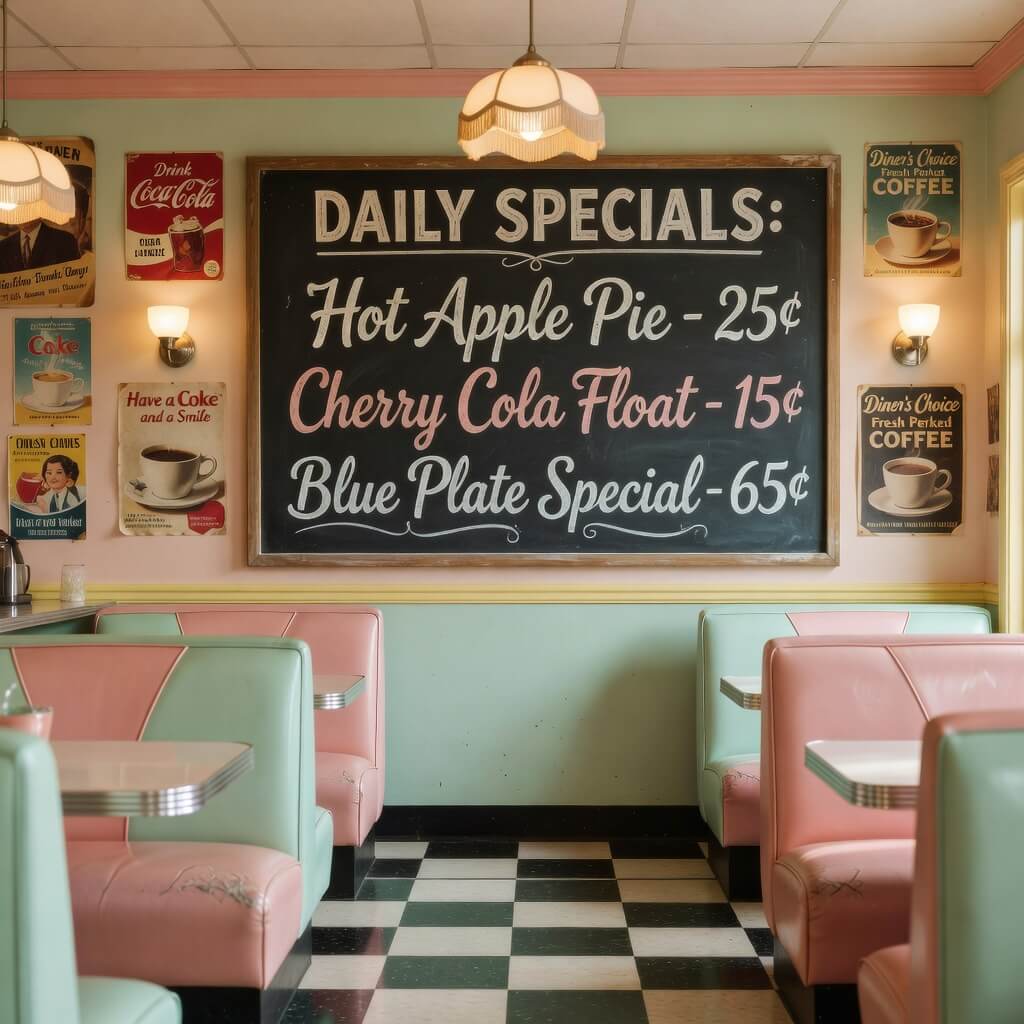
Everything old becomes new again, and retro coffee house aesthetics are having a serious moment right now.
Think 1960s diner meets beatnik coffee culture. Warm oranges, mustard yellows, chocolate browns, and that specific shade of avocado green that your grandma probably had in her kitchen. Pair these colors with retro fonts—the kind you’d see on old coffee tins or vintage advertisements.
The vintage vibe taps into nostalgia (which people absolutely love) while still feeling fresh because it contrasts with the ultra-modern world we live in. IMO, it’s one of the most personality-packed menu styles you can choose.
What makes retro menus Instagram gold:
- Bold, saturated colors photograph incredibly well
- The nostalgic element triggers emotional responses (hello, engagement)
- It gives your brand a distinct personality immediately
- You can have fun with the copy—use playful, old-timey language
I’ve seen cafés nail this by using vintage-style illustrations of coffee pots, cups with steam swirls, and those starburst designs that were everywhere in mid-century graphics. The key is committing to the bit. Half-hearted vintage looks confused, not cool.
Authenticity Is Everything
Don’t just slap a retro font on a boring layout and call it vintage. Research actual vintage coffee advertisements and menus. Notice the composition, the illustration styles, the specific ways they arranged information.
Consider the materials too. Print on cream or off-white cardstock rather than bright white. It’s a small detail, but it reinforces the vintage aesthetic. Laminate it with a matte finish, not glossy—glossy feels too modern.
And please, for the love of good design, use period-appropriate fonts. There are tons of authentic vintage typefaces available. Don’t use Comic Sans and claim it’s retro. It’s not. It’s just wrong 🙂
Modern Gradient Color Coffee Menu Design
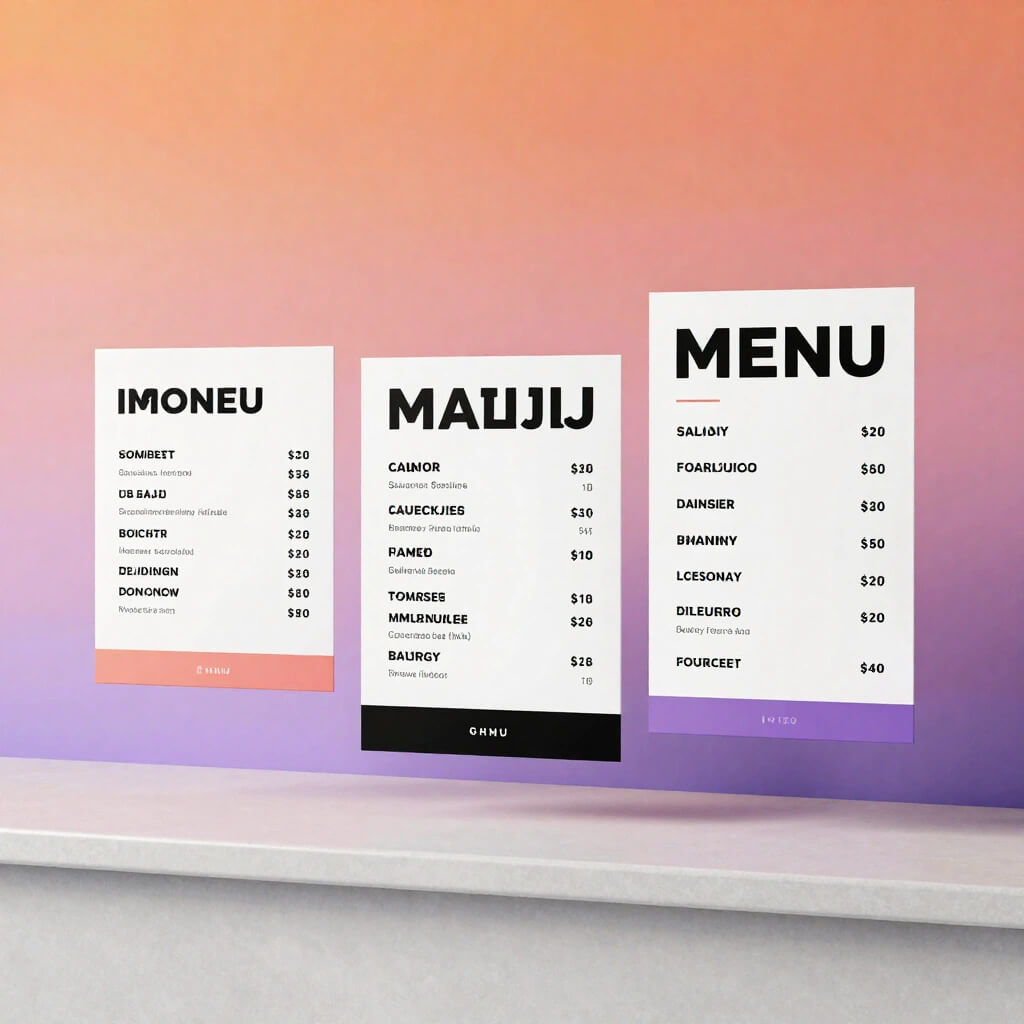
Gradients are everywhere on Instagram right now, and for good reason—they’re gorgeous and endlessly customizable.
A gradient menu design uses smooth color transitions to create visual interest without relying on complex graphics or illustrations. You might go with sunset colors (pink to orange to purple), ocean vibes (teal to deep blue), or earthy tones (cream to terracotta to deep brown).
The beauty of gradients is they feel contemporary and fresh. They signal that your café is current and design-forward. Plus, they photograph beautifully because the color transitions add depth to images.
Why gradient menus work:
- They create movement and flow that guides the eye
- You can customize gradients to match your brand colors perfectly
- They work equally well digitally or printed
- The modern aesthetic appeals to younger demographics who drive social media engagement
I worked with a café that used a gradient menu board going from pale pink at the top to deep rose at the bottom. They positioned it against a white wall, and literally every customer photographed it. The color transition created this dreamy, Instagram-filter effect naturally.
Technical Considerations
Choose colors that transition well together. Not all colors play nicely in gradients—sometimes you get muddy browns in the middle that ruin the effect. Test your gradients before committing.
Consider readability carefully. Your text needs sufficient contrast against the gradient background. This might mean using white text with a dark shadow, or placing text in the lighter areas of your gradient.
If you’re printing, work with a quality printer who understands gradients. Cheap printing can create banding (visible lines between colors) that looks amateurish. Invest in good printing or use digital displays where gradients render perfectly.
Also Read: 10 Brilliant Small Coffee Shop Design Ideas for Budget Cafés
Eco-Friendly Kraft Paper Coffee Menu Concept
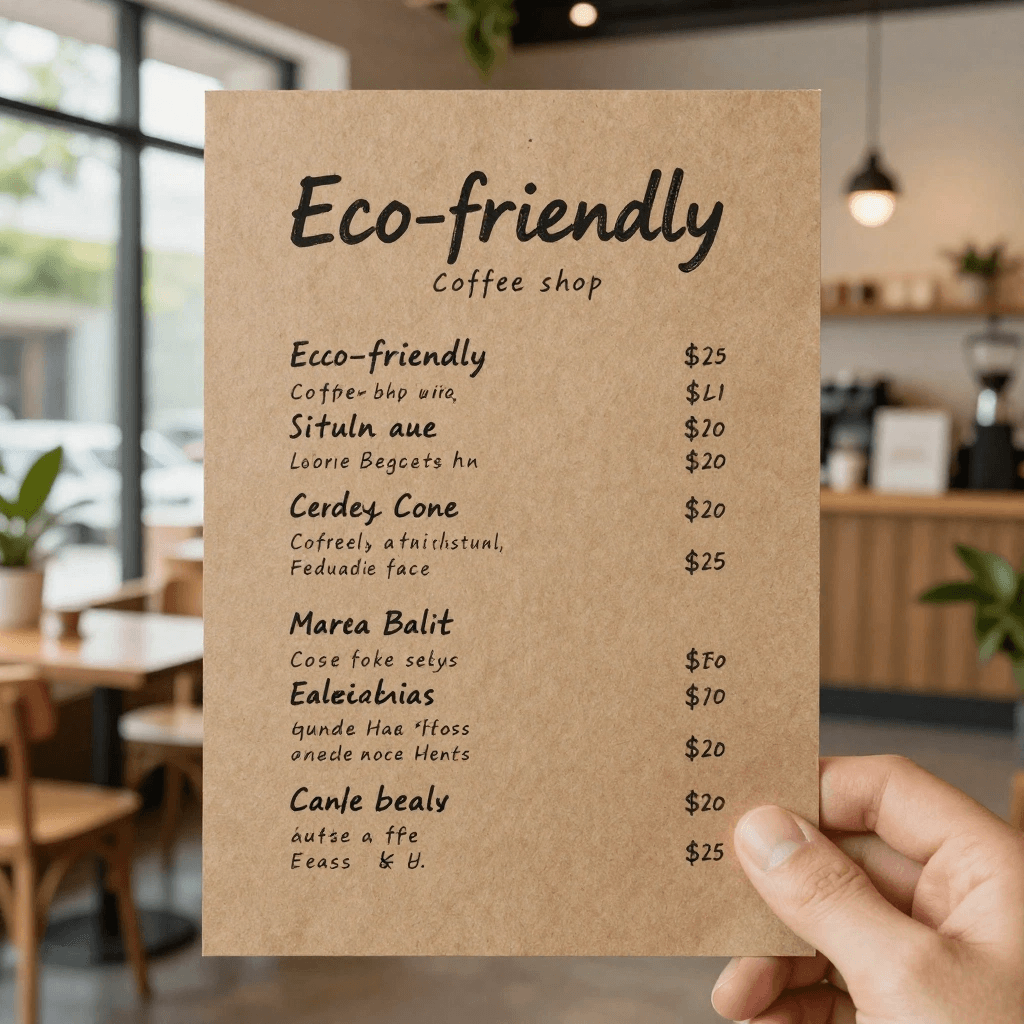
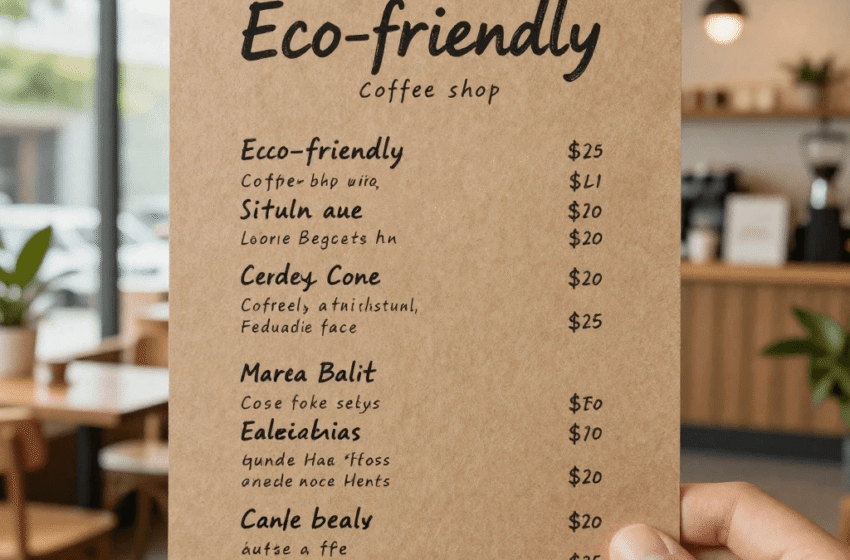
Sustainability isn’t just a trend—it’s a value system that many café customers genuinely care about. An eco-friendly kraft paper menu signals that you share those values.
Kraft paper has this natural, organic aesthetic that pairs perfectly with artisanal coffee culture. The brown, textured background provides warmth, and it contrasts beautifully with dark inks or even white text.
The eco-friendly menu advantage:
- Demonstrates environmental consciousness (which customers notice and appreciate)
- The natural texture photographs with character and depth
- Kraft paper is affordable and accessible
- You can guilt-free replace menus frequently since the material is sustainable
- It pairs perfectly with rustic, natural, or minimalist café designs
I love that kraft paper menus can be as simple or detailed as you want. A basic black ink stamp on kraft paper? Gorgeous and authentic. Full-color printing with botanical illustrations? Also stunning. The material is versatile enough to work with multiple design approaches.
Design Tips for Kraft Menus
Dark colors pop beautifully against kraft paper. Black, deep green, burgundy, or navy all create strong contrast and readability. White ink also looks fantastic if you want a softer, more subtle approach.
Consider adding natural elements to your design—leaves, coffee plant illustrations, beans, or simple geometric patterns inspired by nature. These reinforce the eco-friendly message.
The paper itself tells part of your story, so don’t cover every inch with design. Let some of that kraft texture show through. It’s part of the appeal.
And here’s a practical tip: kraft paper can show wear, smudges, and coffee rings pretty easily. Either embrace this as part of the rustic charm, or replace your menus regularly (which is easy since the material is inexpensive).
Black & Gold Premium Café Menu Design
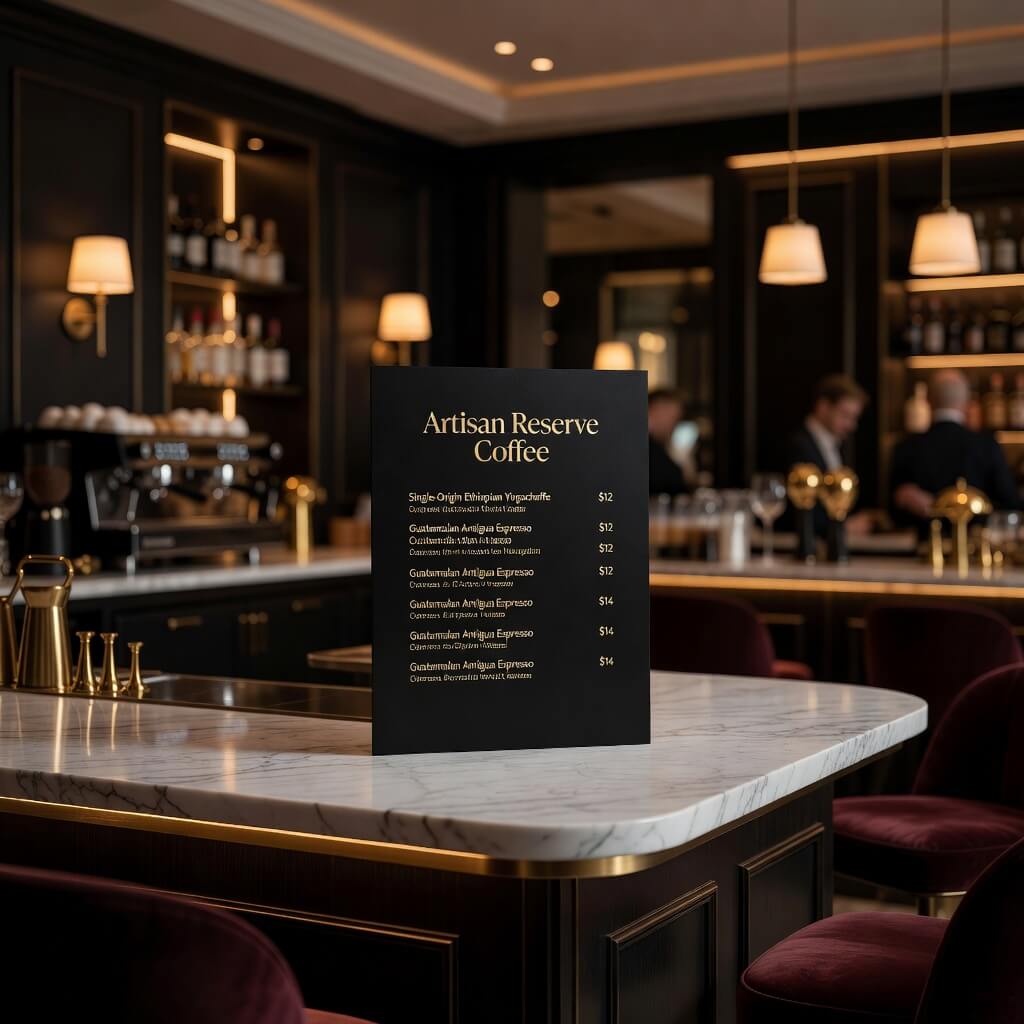
Want to scream luxury without actually screaming? Black and gold is your answer.
This color combination has meant “high-end” for centuries, and it still works today. A black background with gold text (or vice versa) creates drama, sophistication, and an unmistakable premium feel.
I’ve seen this work spectacularly in upscale cafés that want to position themselves as destinations rather than just coffee stops. The black and gold menu sets expectations—this isn’t your grab-and-go coffee. This is an experience.
Why black and gold dominates the premium category:
- The high contrast ensures excellent readability
- Gold accents catch light beautifully in photographs
- The color psychology triggers associations with luxury and exclusivity
- It pairs well with both modern and classic interior designs
You’ve got options with gold—matte gold for subtle elegance, shiny metallic gold for bold luxury, or rose gold for a contemporary twist. Each creates a slightly different mood, so choose based on your overall brand vibe.
Making It Work Without Looking Tacky
Here’s the thing: black and gold can easily tip into tacky territory if you’re not careful. The key is restraint and quality.
Use real gold foiling if you’re printing physical menus. Gold ink is fine, but metallic foiling has that tactile luxury that photographs beautifully and feels expensive in customers’ hands. Yes, it costs more. It’s worth it for this aesthetic.
Keep the design clean. Don’t add unnecessary flourishes, borders, or decorative elements just because you can. The color combination itself is already bold—let it do the work.
Typography matters enormously here. Elegant serif fonts work beautifully, as do refined sans-serif options. Avoid anything too trendy or casual that undermines the premium positioning.
Hand-Drawn Illustration Coffee Menu Style
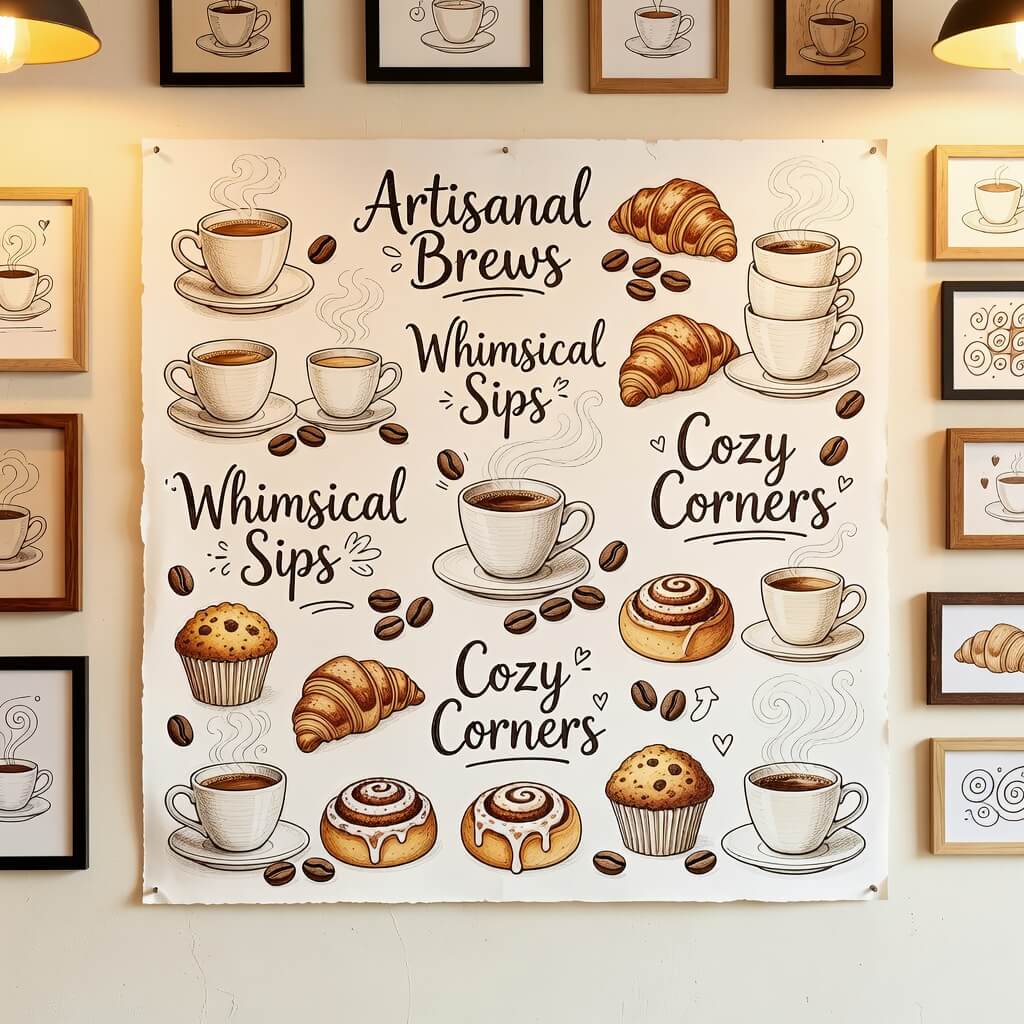
There’s something irresistibly charming about hand-drawn illustrations. They feel personal, creative, and completely unique to your café.
A hand-drawn menu can range from simple line drawings to elaborate watercolor illustrations, from whimsical cartoons to detailed botanical sketches. The style you choose should reflect your café’s personality.
Hand-drawn menus win for several reasons:
- They’re inherently unique—no one else has your exact illustrations
- The artistic element positions your café as creative and thoughtful
- People love sharing hand-drawn art on social media
- Illustrations can explain drinks visually, not just through text
- They create an emotional connection that generic menus can’t match
I’ve been obsessed with a café that has different illustrated menus for each season, drawn by local artists. They rotate artists quarterly, which creates ongoing interest and gives their social media fresh content constantly. Brilliant strategy, honestly.
Creating Your Illustrated Menu
If you’re artistically inclined, draw it yourself. Your personal style makes the menu authentically yours. If you’re not (no judgment—I can barely draw stick figures), hire a local illustrator. This supports local artists and gives you professional-quality work.
Consider what to illustrate. Your logo? Different drink types? Coffee-related elements like beans, plants, or brewing equipment? Choose illustrations that add meaning, not just decoration.
Think about your color palette. Monochrome (single-color) illustrations can be just as impactful as full-color work, and they’re often easier to reproduce consistently across different materials.
Leave white space. Don’t fill every millimeter with drawings. Illustrations should enhance readability, not compete with it.
Also Read: 10 Cozy Coffee Shop Interior Design Ideas Small Space Magic
Transparent Acrylic Coffee Menu Board Idea
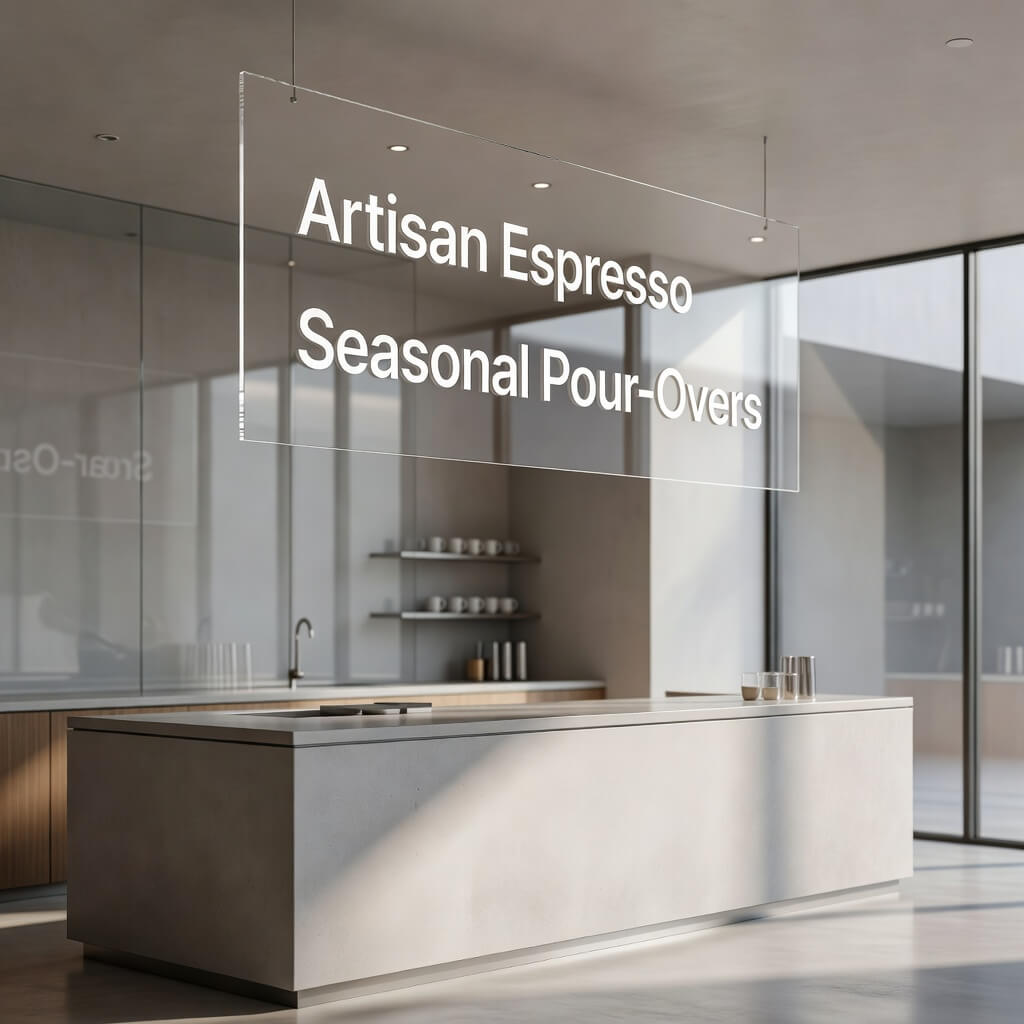
Let me tell you about one of the most Instagram-worthy menu trends I’ve seen lately: transparent acrylic boards.
Picture this: a clear acrylic sheet with your menu printed or engraved on it, mounted slightly away from the wall so it appears to float. Light passes through it, creating dimension and visual interest that flat menus simply can’t achieve.
The transparent element is what makes this special. You can layer multiple acrylic sheets to create depth, use LED edge-lighting to make the text glow, or position them against interesting backgrounds that show through.
Transparent acrylic menus stand out because:
- They’re still relatively uncommon, so they create novelty
- The material feels modern and high-quality
- They photograph with beautiful depth and dimension
- You can create interesting layered compositions
- They’re durable and easy to clean
I visited a café with a transparent acrylic menu mounted in front of a living plant wall. The greenery showed through the clear portions, creating this gorgeous layered effect. Every customer photographed it, and I’m pretty sure it drove half their Instagram engagement.
Design and Installation Considerations
You’ll typically use one of two approaches: print on the acrylic surface, or engrave into the acrylic itself. Engraving feels more premium and permanent, while printing allows for full color.
Consider what shows behind your acrylic menu. A plain wall works, but it’s a missed opportunity. Textured walls, art, plants, or even changing LED backgrounds all create interest.
The mounting matters. Use standoffs that hold the acrylic slightly away from the wall—this creates shadows and depth that make the piece feel three-dimensional in photos.
For text color, white or black typically works best for readability. If you want color, ensure there’s enough contrast with whatever background shows through the transparent sections.
Lighting is crucial. Acrylic catches and reflects light beautifully, so position your menu where natural or artificial light enhances rather than creates glare. Some cafés use edge-lit LEDs that make the acrylic literally glow—incredibly effective, though it requires some technical setup.
Bringing It All Together
Look, your menu design doesn’t just organize information—it tells customers who you are before they taste a single sip of coffee.
Whether you’re drawn to Scandinavian minimalism, rustic charm, marble luxury, or any of these other aesthetics, the key is committing to your choice and executing it well. A half-hearted attempt at any style reads as confusion, not creativity.
Think about your target customers. Who are you trying to attract? The minimalist design appeals to different people than vintage retro. The eco-conscious crowd responds to kraft paper, while luxury seekers gravitate toward marble and black-gold combinations. Know your audience, then design for them.
Don’t forget the practical stuff. Your menu needs to be readable, logically organized, and actually help people order efficiently. All the aesthetic beauty in the world doesn’t matter if customers can’t figure out how much a cappuccino costs or what sizes you offer.
And please, test everything before committing fully. Print a sample, mount a prototype, photograph it in your actual café lighting. What looks good in theory or on your computer screen might not work in real-world conditions. Better to discover issues early than after you’ve invested in twenty printed menus.
Your menu is an investment in your brand. Done right, it becomes one of your most effective marketing tools—customers photograph it, share it, and essentially advertise your café for free. That’s worth getting right.
Now go create something beautiful that makes people actually excited to order coffee. And maybe send me a picture when you do—I’m always on the hunt for great menu design inspiration 😉