10 Stunning Tiny Coffee Shop Design Ideas for Cozy Vibes
- Coffee Shop
 Ben
Ben- 0
- 34 minutes read
Picture this: you’re walking down a busy street, overwhelmed by yet another massive chain coffee shop that feels about as personal as an airport terminal. Then BAM! You spot this adorable little coffee nook that makes you stop dead in your tracks. That’s the magic of tiny coffee shops – they pack more personality into 200 square feet than most places manage in 2,000.
I’ve been obsessed with small-scale café design ever since I stumbled into this hole-in-the-wall place in Prague that was literally carved into a medieval building. The owner served the best cortado I’ve ever had from behind a counter no bigger than my kitchen island. That experience got me hooked on how brilliant design can transform tiny spaces into coffee destinations that feel way bigger than their actual footprint.
Whether you’re planning to open your own micro café or just love drooling over stunning small spaces (no judgment here!), these 10 design ideas will show you how to create maximum impact with minimal square footage. Trust me, size definitely doesn’t matter when you’ve got the right design vision.
Minimal Scandinavian Tiny Coffee Kiosk
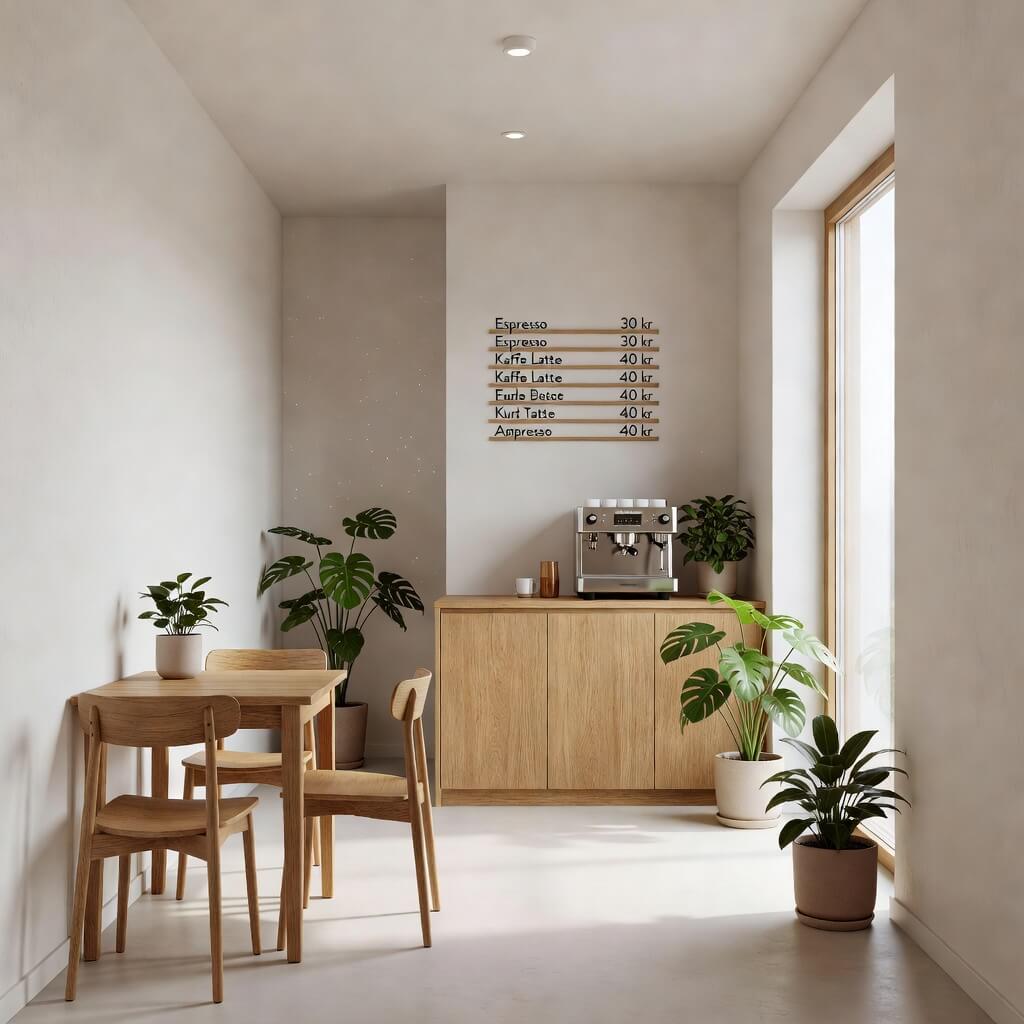
Nothing says “I’ve got my life together” quite like Scandinavian design. These coffee kiosks embrace the “lagom” philosophy – that perfect balance where everything has its place and nothing feels excessive.
I visited this incredible 150-square-foot kiosk in Copenhagen that proved you don’t need clutter to create warmth. The owner used light oak wood throughout, paired with crisp white walls and exactly three pendant lights. That’s it. Yet somehow, this tiny space felt more inviting than my friend’s sprawling suburban kitchen.
The genius lies in the strategic use of negative space. Instead of cramming every corner with equipment, Scandinavian design lets each element breathe. Picture clean lines, handle-free cabinetry, and maybe one carefully chosen plant (because Scandinavians are required by law to include greenery, I’m pretty sure).
Here’s what makes these kiosks work so well:
- Light wood countertops that extend seamlessly into wall-mounted shelving
- Monochrome color palette with whites, grays, and natural wood tones
- Hidden storage solutions that keep visual clutter to an absolute minimum
- Large windows or glass panels to maximize natural light
The beauty of this approach? It photographs like a dream for Instagram, but more importantly, it creates a sense of calm that makes customers want to linger. Even if “lingering” means standing outside with their takeaway cup because there’s literally nowhere to sit 🙂
Industrial Brick Wall Micro Coffee Shop
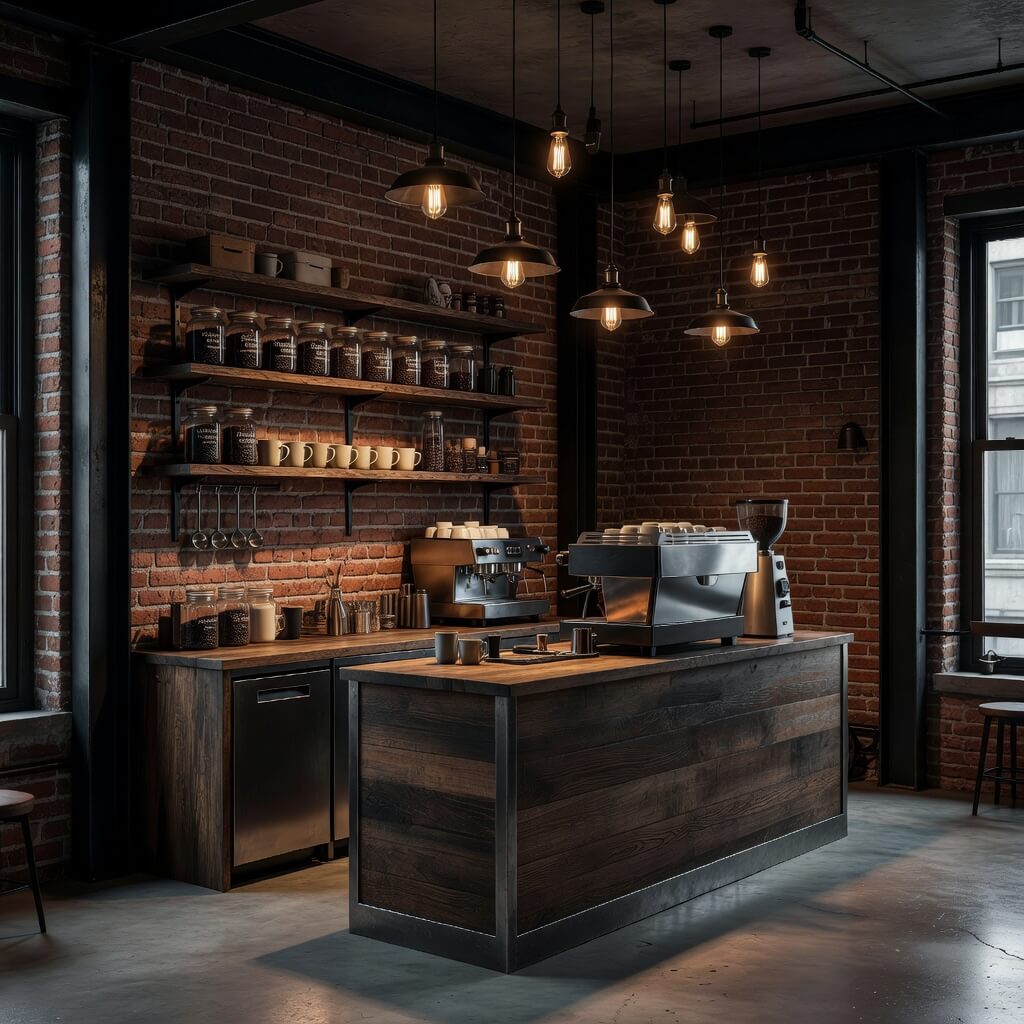
Ever wonder why exposed brick walls make everything look cooler? There’s something about raw industrial elements that screams authenticity – like the space has stories to tell and isn’t trying too hard to impress you.
I helped design a 180-square-foot coffee shop in an old factory building, and we kept one original brick wall completely untouched. That single design decision anchored the entire space and gave it an instant history that no amount of artificial aging could replicate.
The industrial aesthetic works beautifully in tiny spaces because it embraces imperfection. Those rough textures and weathered materials add visual depth without requiring extra square footage. You’re essentially borrowing character from the building’s past.
Key Industrial Elements That Pack a Punch
Metal fixtures become both functional and decorative. Think copper pipes repurposed as espresso machine plumbing that’s deliberately exposed, or steel shelving that doubles as room dividers.
Edison bulb lighting adds warmth to all that cool metal and brick. I’ve seen tiny shops use just three bulbs to create the perfect ambiance – way more effective than expensive light fixtures.
Reclaimed wood accents soften the harder elements. A thick butcher block counter against exposed brick creates this perfect contrast between rough and smooth that somehow makes the space feel bigger.
The trick is balancing raw with refined. Yes, embrace that concrete floor, but make sure your espresso machine is gleaming. Let those ductworks show, but keep your counter immaculate. It’s controlled chaos at its finest.
Japanese Zen Compact Café Design
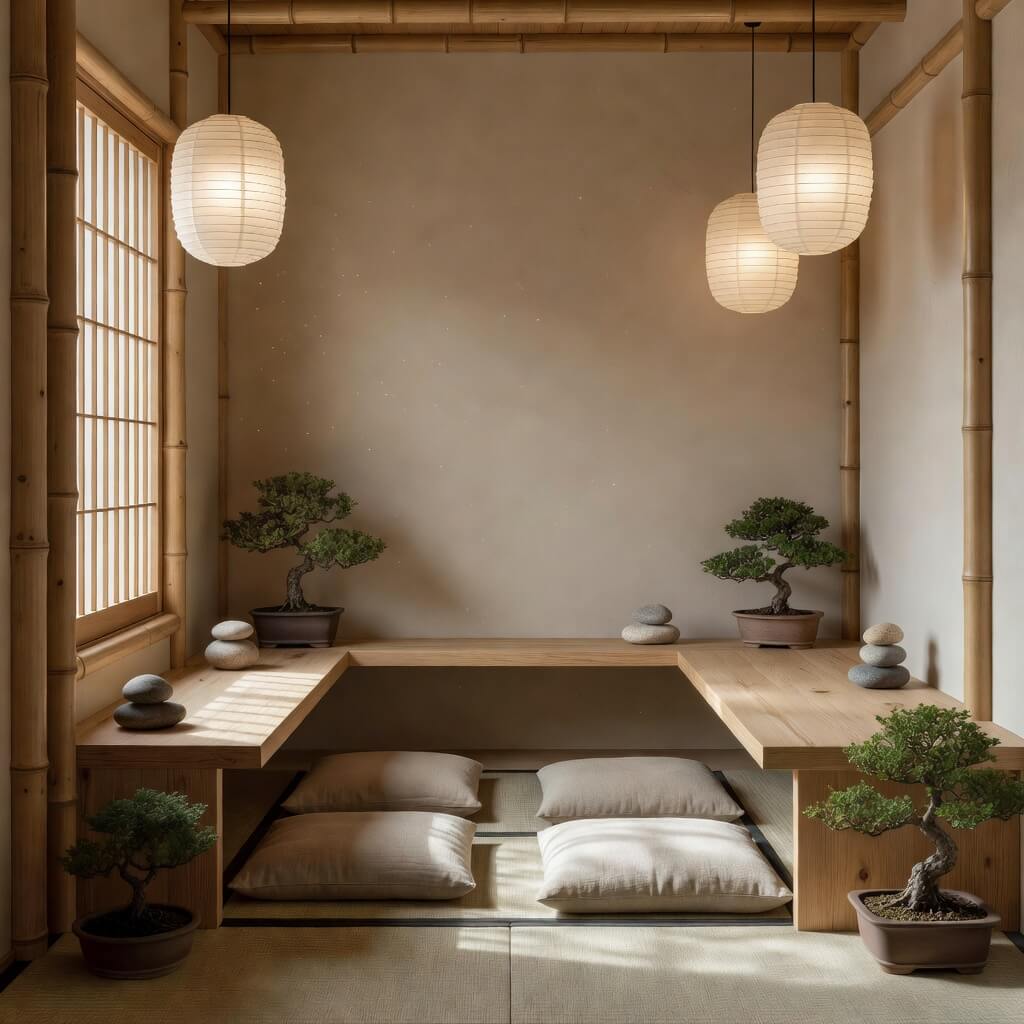
Japanese design principles are basically magic for tiny spaces. I spent a week visiting micro cafés in Tokyo, and honestly, some of these places were smaller than my bedroom yet felt more spacious than most suburban coffee shops.
The secret sauce? Wabi-sabi philosophy – finding beauty in imperfection and impermanence. Instead of fighting the limitations of a small space, Japanese design celebrates them.
One café I visited in Shibuya was literally 120 square feet, but the owner created different “zones” using subtle level changes and natural materials. Every single element served multiple purposes – the wooden bench was also storage, the bamboo room divider doubled as a display shelf, and the single hanging light fixture provided both illumination and a focal point.
Essential Zen Design Elements
Natural materials dominate everything. Think bamboo, untreated wood, stone, and paper screens. These materials age beautifully and develop character over time rather than looking worn out.
Asymmetrical balance creates visual interest without clutter. Instead of matching pairs of everything, Japanese design uses odd numbers and varying heights to guide the eye naturally through the space.
Negative space as a design element – this blew my mind. Empty walls aren’t seen as wasted space but as intentional breathing room that makes everything else feel more significant.
The lighting deserves its own paragraph because Japanese cafés absolutely nail this. Soft, indirect lighting from paper lanterns or hidden LED strips creates this warm glow that makes even the tiniest space feel intimate rather than cramped.
Also Read: 10 Aesthetic Coffee Shop Menu Design Ideas for Instagram Cafes
Glass Box Modern Tiny Coffee Shop
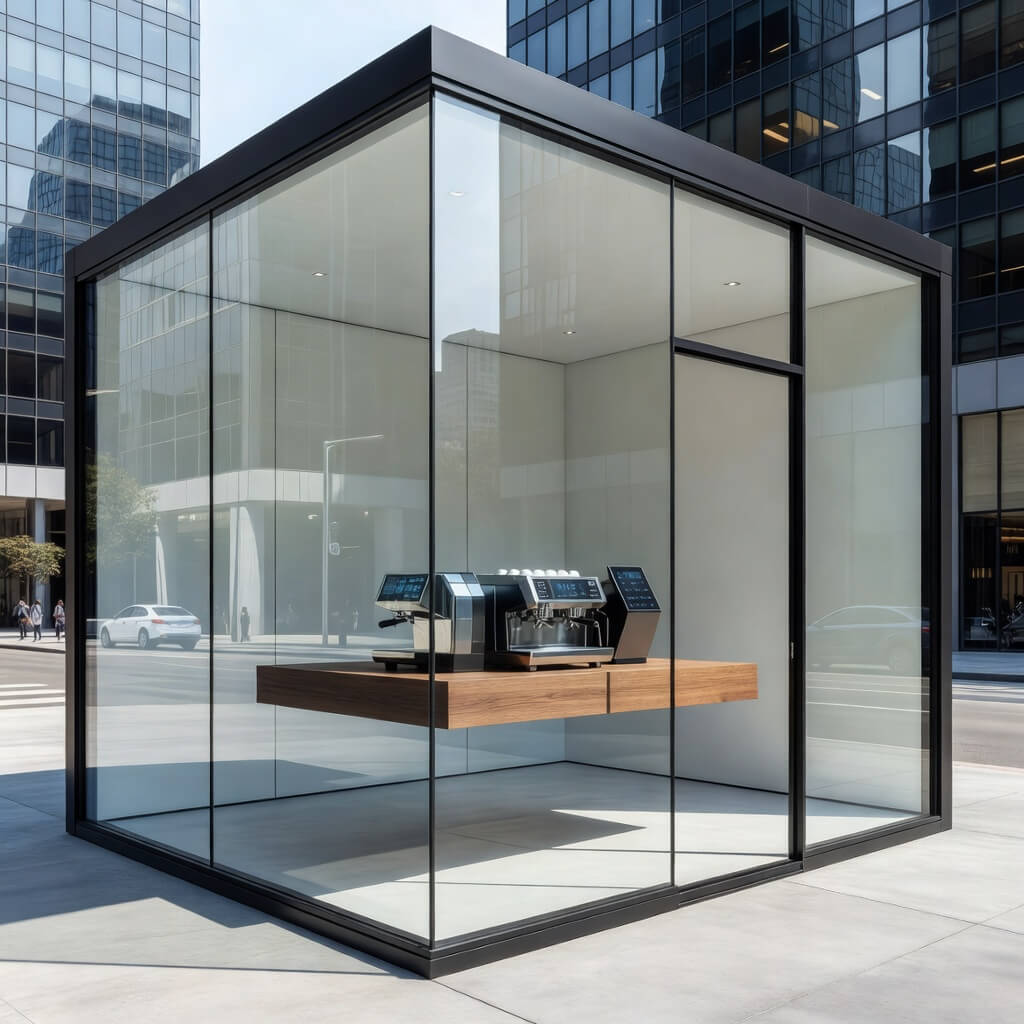
Nothing says “look at me!” quite like a completely transparent coffee shop. I’m talking floor-to-ceiling windows, glass doors, maybe even a glass roof if you’re feeling particularly bold. It’s like putting your café in a fishbowl, but in the best possible way.
Glass creates the illusion of infinite space by borrowing the visual landscape from outside. That tiny 200-square-foot box suddenly feels connected to the entire street, park, or plaza it faces. Smart, right?
I worked with a client who built a glass cube café in downtown Austin, and the transformation was incredible. During the day, it felt like an extension of the park across the street. At night, it became this glowing beacon that drew people like moths to a flame.
But here’s the thing about glass boxes – they live or die on their interior design. Since everything is visible, every detail matters. You can’t hide messy storage or cheap fixtures behind walls.
Making Glass Boxes Work
Minimalist equipment placement becomes crucial. That espresso machine better be gorgeous because it’s now part of the street art. Every cup, every pastry display, every cleaning rag needs to look intentional.
Strategic privacy elements save your sanity. Nobody wants to feel like a zoo exhibit while making coffee. Frosted glass panels, strategically placed plants, or retractable screens give you control over visibility.
Weather considerations aren’t optional. Glass means temperature swings, so invest in quality HVAC systems and consider tinted glass for climate control.
The payoff? Your tiny café becomes a landmark. People remember glass boxes. They photograph them, they talk about them, and most importantly, they come back to them.
Vintage Rustic Corner Coffee Stall
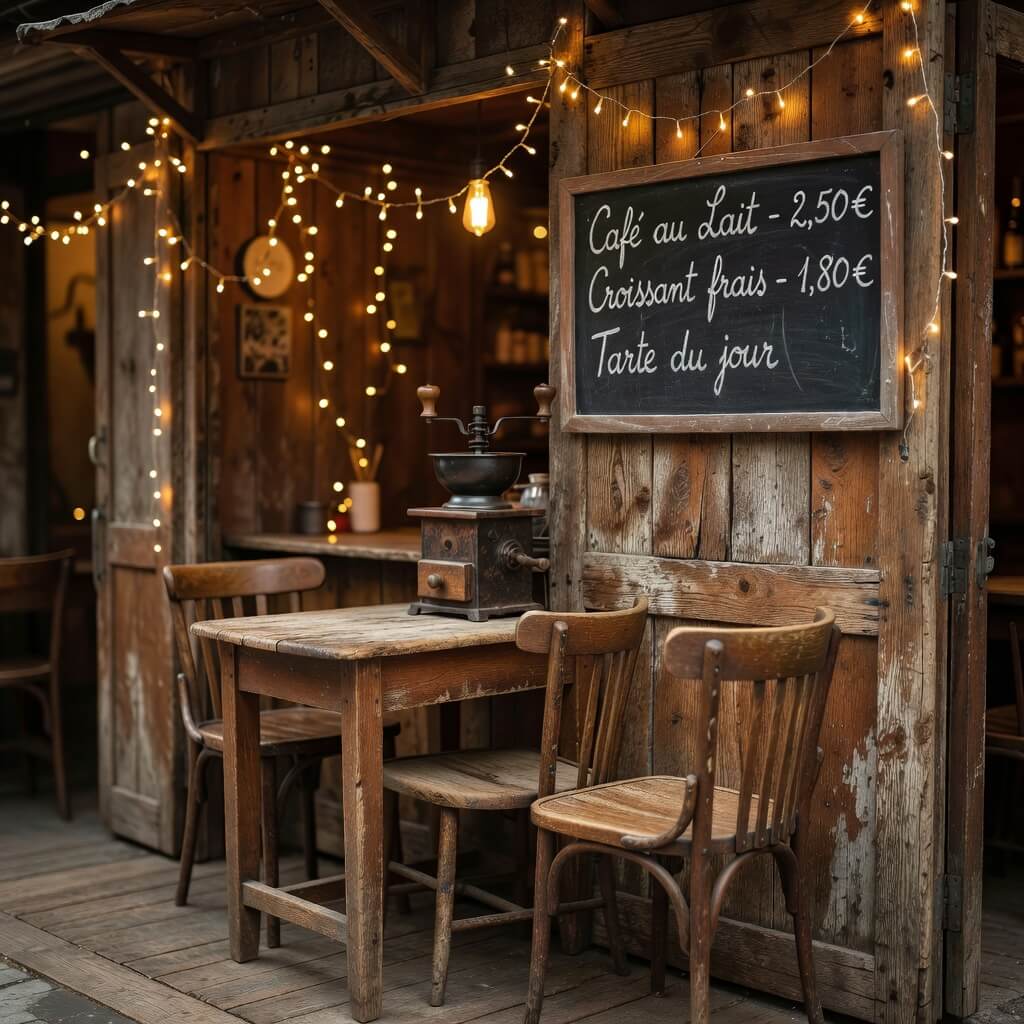
Sometimes the best design approach is to embrace chaos – but make it intentional chaos. Vintage rustic design lets you mix and match elements that shouldn’t work together but somehow create pure magic.
I fell in love with this concept at a farmers market in Portland (where else?), where this vendor had created the coziest little corner using nothing but reclaimed materials and mismatched vintage finds. The counter was an old farmhouse table, the shelving came from a demolished barn, and the menu board was painted on a salvaged window.
The beauty of vintage rustic design? Imperfection is the goal. Those coffee ring stains on the wooden counter aren’t flaws – they’re character marks. That slightly wonky shelf isn’t a mistake – it’s proof that this place has soul.
Building Your Vintage Aesthetic
Layered textures create visual richness in small spaces. Combine rough-hewn wood with soft burlap, smooth metal with distressed paint. The more textures you layer, the more complex and interesting your tiny space becomes.
Collected-over-time feeling beats bought-all-at-once every time. Hit up flea markets, estate sales, and architectural salvage yards. That mismatched collection of vintage coffee tins? Perfect for storing sugar packets.
Warm, ambient lighting sells the whole vibe. String lights, vintage lanterns, or Edison bulbs in mason jars create that “grandma’s kitchen” feeling that makes people want to settle in with their coffee.
Color palette from nature keeps everything cohesive despite the eclectic mix. Think weathered grays, warm browns, cream whites, and maybe a pop of faded blue or green.
The goal is to make your tiny coffee stall feel like it’s been there forever – like it grew organically from the neighborhood rather than being dropped in by a corporate designer.
Container-Based Mobile Coffee Café
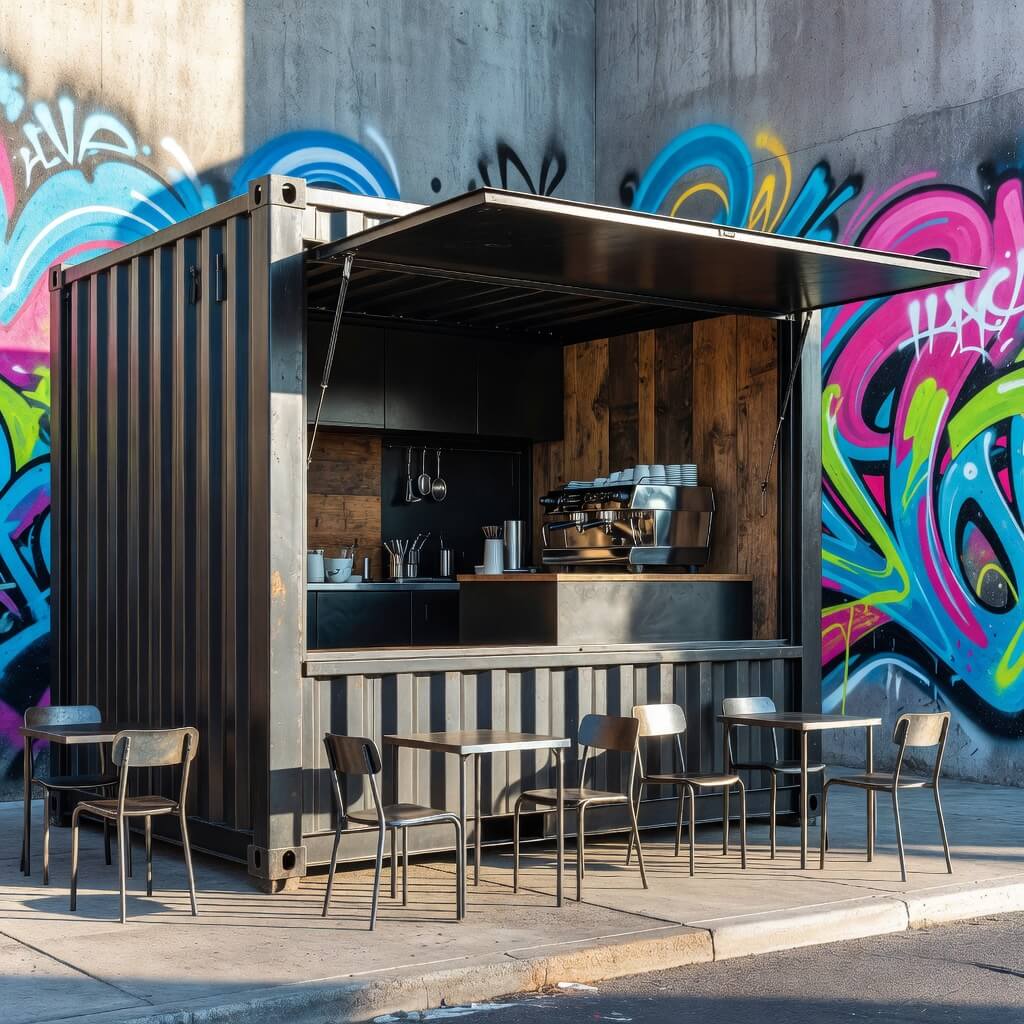
Talk about making a statement! Shipping container cafés are having a major moment, and honestly, I get why. There’s something irresistibly cool about transforming industrial cargo into cozy coffee destinations.
I visited this incredible container café in Austin that the owner had completely reimagined. Twenty feet long, eight feet wide – basically the size of a large walk-in closet – but designed so cleverly that it served 200+ customers a day. The secret? Every square inch had a purpose.
Container design forces you to think vertically and get creative with multifunctional elements. That bench along the window? It’s also storage for coffee beans. The serving counter? It folds down from the wall when not in use.
Container Café Design Strategies
Bi-fold or sliding walls transform the entire experience. Open them up and your container becomes an outdoor pavilion. Close them for weather protection or after-hours security.
Vertical storage solutions maximize your limited footprint. Floor-to-ceiling shelving, hanging storage nets, and wall-mounted everything keep supplies organized without eating into customer space.
Weather-resistant materials aren’t optional when your entire café is essentially outdoors. Invest in marine-grade finishes and rust-resistant hardware.
Mobility considerations keep your options open. Will you stay put or follow the crowds? Design accordingly with either permanent utilities or self-contained systems.
Eye-catching exterior design becomes your marketing. Paint that container in bold colors, add some graphics, maybe string some lights. You want people to spot you from three blocks away.
The coolest part about container cafés? They photograph beautifully for social media, and customers love the novelty factor. Plus, if your location doesn’t work out, you can literally pick up and move. Try doing that with a traditional café!
Also Read: 10 Perfect Coffee Shop Design Outdoor Ideas for Relaxing Vibes
Cozy Book Nook Micro Coffee Shop
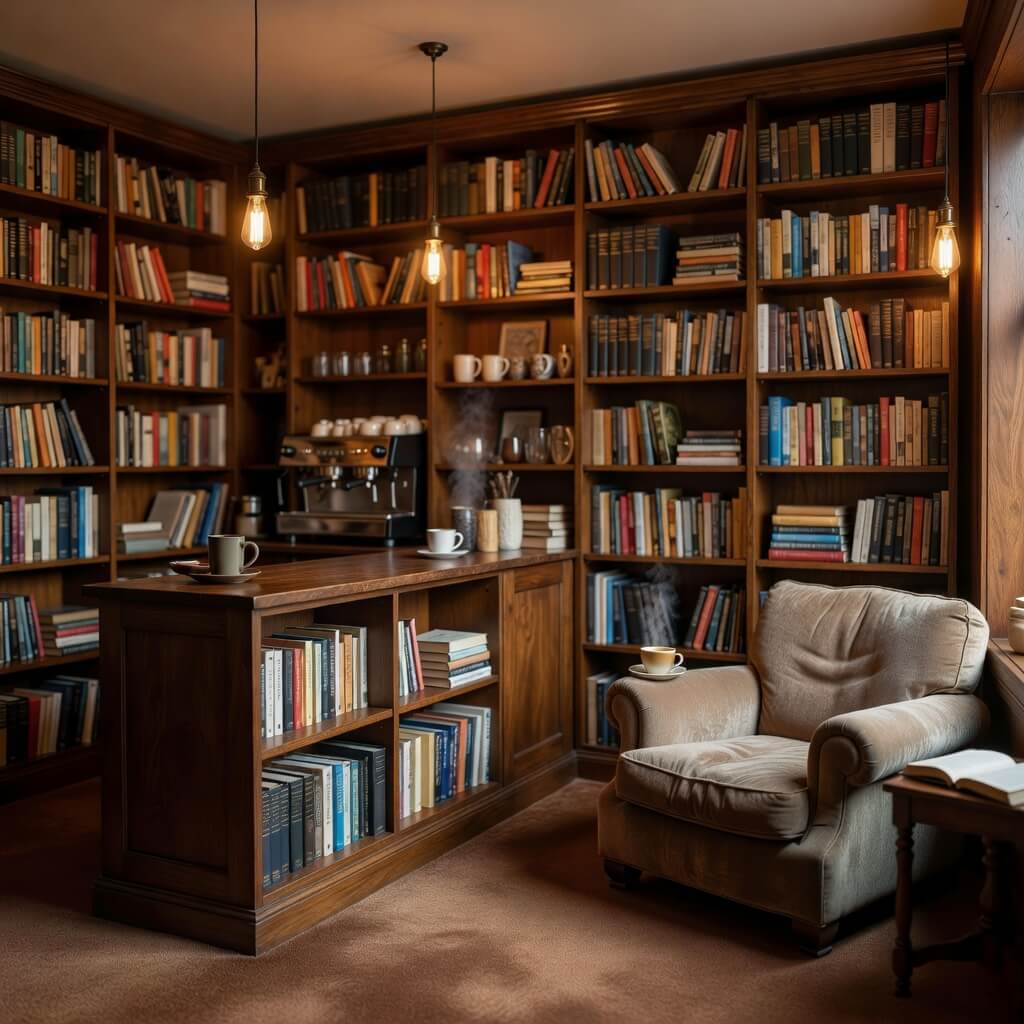
Combining books and coffee is basically printing money – if you do it right. The book nook concept creates this perfect excuse for customers to linger, which means higher per-customer spending and a built-in community atmosphere.
I designed a 250-square-foot book café where every wall was lined with floor-to-ceiling bookshelves, except for the space needed for the coffee bar. Books became the décor, the entertainment, and the sound dampening all at once. Genius, right?
The magic happens when you create these little reading nooks within your already tiny space. A corner with two vintage armchairs, a small side table, and good lighting becomes a destination within a destination.
Creating the Perfect Book Nook Atmosphere
Strategic shelving placement defines different zones. Use bookcases as room dividers to create intimate seating areas without building actual walls.
Comfortable seating becomes your biggest investment. People won’t linger on uncomfortable chairs, regardless of how great your coffee is. Think overstuffed armchairs, window seats with cushions, or built-in benches with throw pillows.
Layered lighting options accommodate different reading preferences. Overhead ambient lighting, table lamps for focused reading, and maybe some string lights for evening atmosphere.
Book curation matters more than quantity. Mix bestsellers with local authors, classics with contemporary finds. Rotate your selection regularly to give regulars a reason to keep exploring.
Quiet zones versus social areas help manage different customer needs. Some people want to chat, others want to read in peace. Design your layout to accommodate both without conflict.
The best part? Books naturally encourage longer stays, which increases your average transaction value. Plus, there’s something undeniably romantic about combining literature with caffeine 🙂
Neon Aesthetic Urban Mini Café
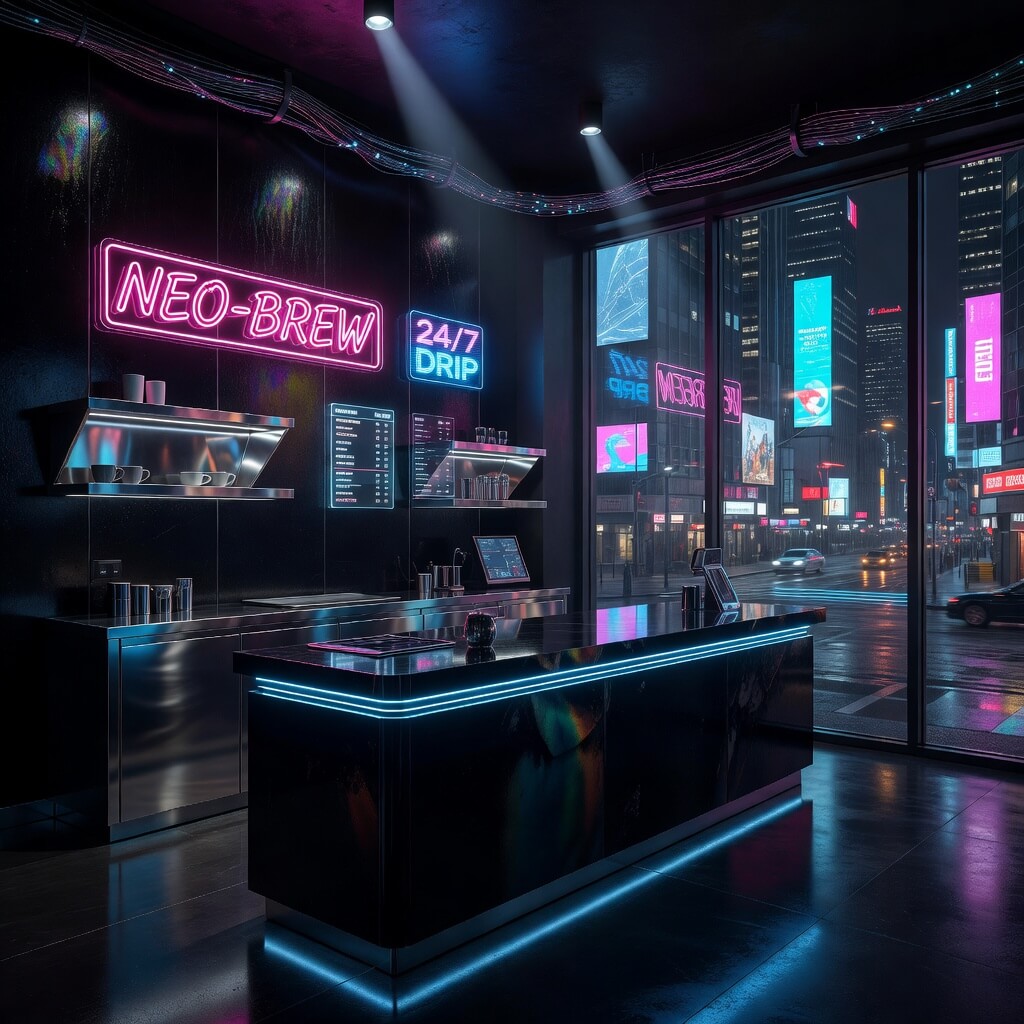
Want to create buzz? Go full cyberpunk coffee shop. I’m talking neon lights, bold graphics, maybe some plants that look like they belong in a sci-fi movie. It’s not for everyone, but when it works, it REALLY works.
This trend started in Seoul and Tokyo, where tiny cafés began incorporating neon signage and LED strips to create these Instagram-worthy spaces that feel like sets from “Blade Runner.” The contrast between high-tech lighting and intimate coffee culture creates this unexpectedly cozy vibe.
Neon lighting serves multiple purposes in tiny spaces. It provides ambient illumination, creates visual interest, and establishes a strong brand identity that customers remember. Plus, it photographs beautifully for social media marketing.
Executing Neon Aesthetic Without Going Overboard
Color temperature balance keeps things from feeling too cold or artificial. Mix warm neon hues (pinks, oranges) with your cool blues and purples.
Strategic placement prevents sensory overload. Maybe neon behind the coffee bar, LED strips under seating, and one statement neon sign rather than covering every surface.
Modern materials complement the futuristic vibe. Think polished concrete, brushed steel, and glossy white surfaces that reflect the neon lighting.
Plant integration softens all that artificial lighting. Succulents and air plants thrive under LED lighting and add organic shapes to balance the geometric neon lines.
Sound design matters as much as visual design. The wrong music can kill the vibe, so curate carefully – think electronic chill, lo-fi hip hop, or ambient soundscapes.
The goal is creating a space that feels like stepping into the future while still serving damn good coffee. It’s Instagram catnip, but more importantly, it offers customers an experience they can’t get anywhere else.
Nature-Inspired Green Wall Coffee Spot
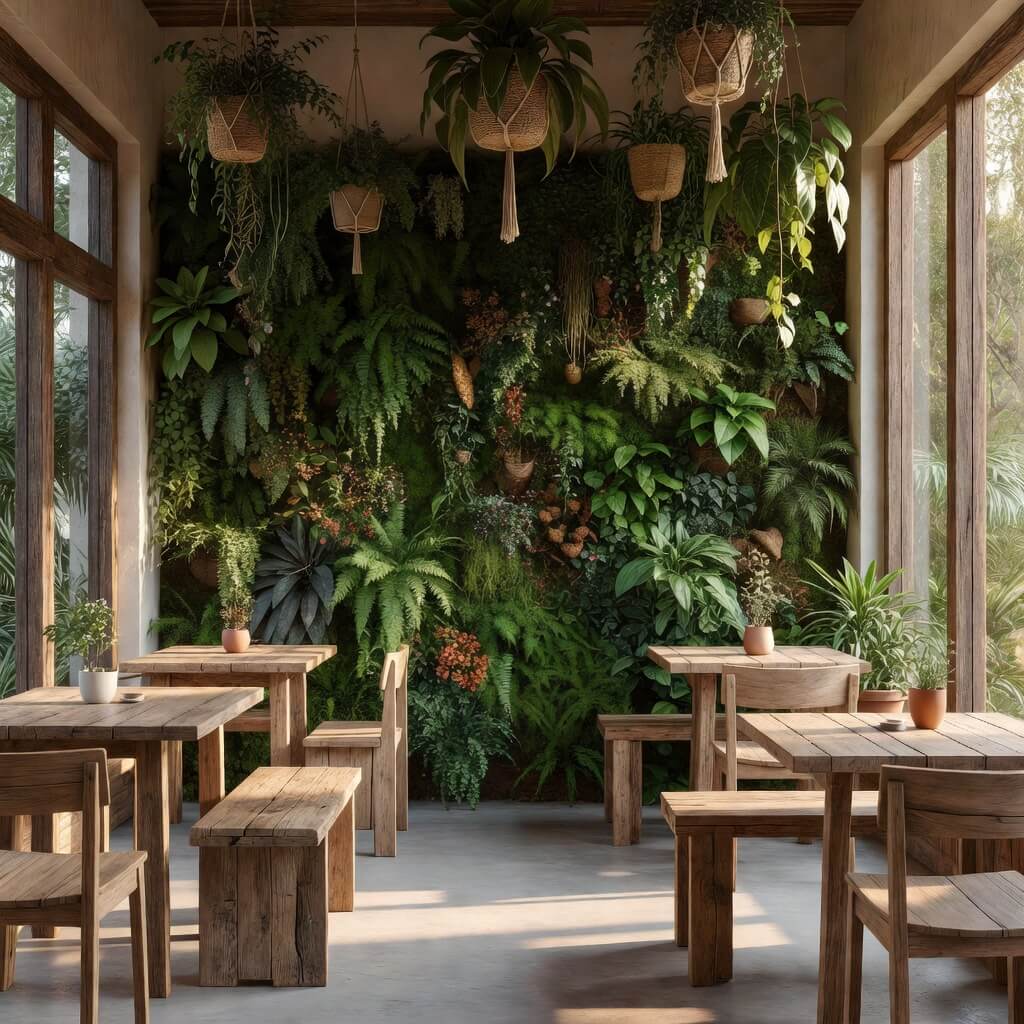
Biophilic design isn’t just trendy – it’s scientifically proven to reduce stress and improve mood. Perfect for coffee shops where you want customers to feel relaxed and want to return regularly.
I worked on a green wall installation in a 180-square-foot café, and the transformation was remarkable. That living wall didn’t just look amazing – it actually improved the air quality and acoustic properties of the space. Plus, customers became genuinely attached to watching the plants grow and change over time.
Living walls work especially well in tiny spaces because they draw the eye upward, creating the illusion of height and depth. Instead of staring at blank walls, customers get lost in layers of green texture.
Creating Your Living Wall Coffee Experience
Plant selection makes or breaks the concept. Choose varieties that thrive in your specific lighting conditions and don’t require constant maintenance. Pothos, philodendrons, and ferns are nearly foolproof and create beautiful cascading effects.
Irrigation systems keep maintenance manageable. Hand-watering a wall of plants daily gets old fast. Invest in drip irrigation or self-watering systems from the start.
Lighting integration supports both plants and ambiance. LED grow lights can double as accent lighting, and natural light from windows becomes even more valuable.
Air circulation prevents mold and keeps plants healthy. Good ventilation also ensures your green wall enhances rather than competes with coffee aromas.
Backup plans for plant mortality keep your wall looking full. Some plants will die – it happens. Have replacement plants ready and consider mixing live plants with high-quality artificial ones in spots where maintenance is difficult.
The payoff goes beyond aesthetics. Customers often mention feeling more relaxed in green spaces, and many become regulars just to enjoy their daily dose of nature with their caffeine fix.
Also Read: 10 Brilliant Small Coffee Shop Design Ideas for Budget Cafés
Luxury Marble Compact Espresso Bar
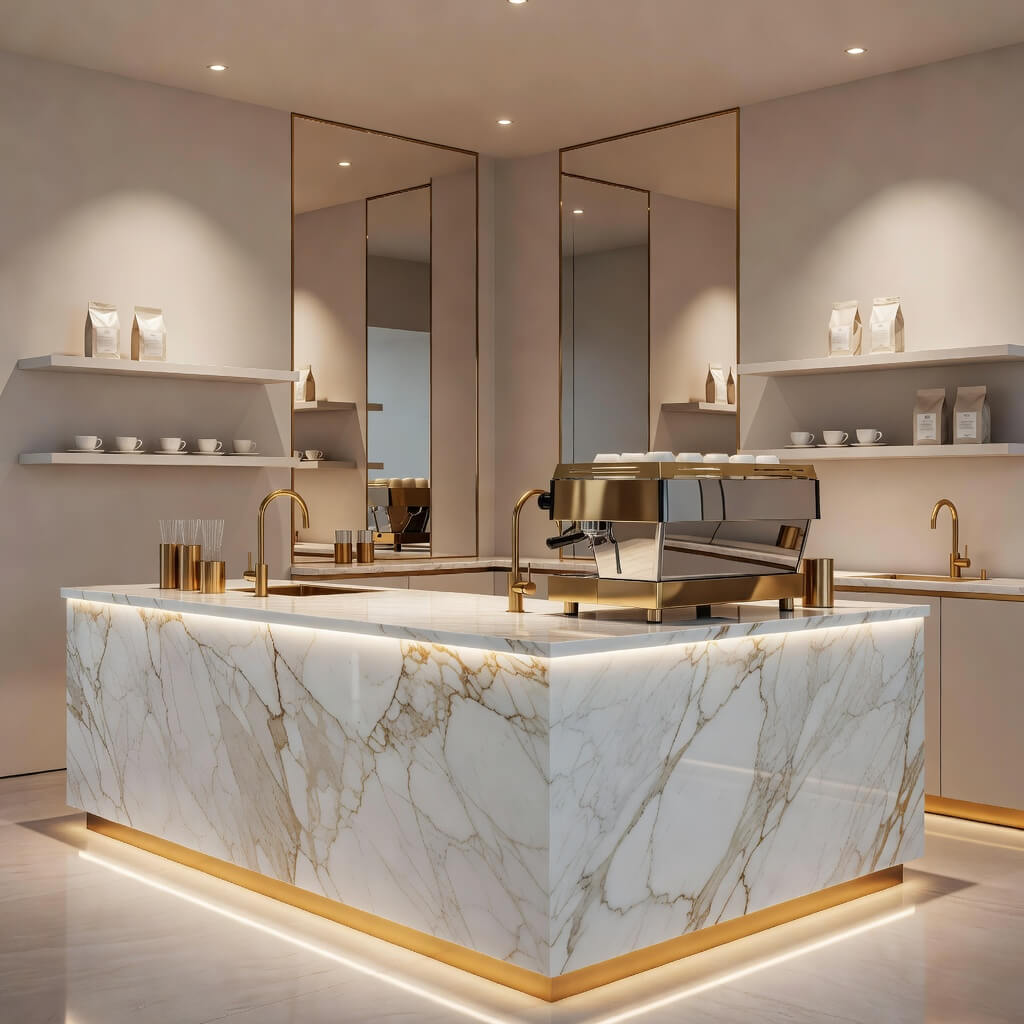
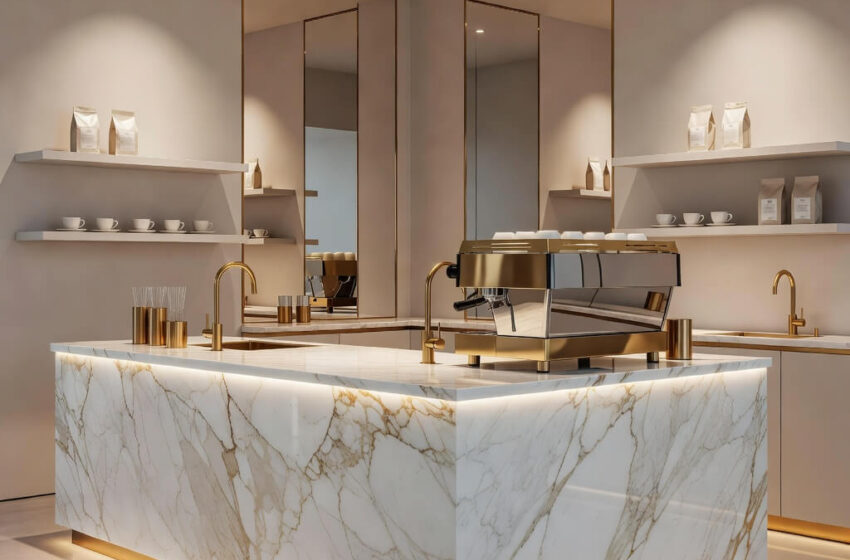
Sometimes you want to go completely over the top in the smallest possible space. Luxury marble design creates this incredible sense of opulence that makes a 150-square-foot café feel like a high-end hotel lobby.
I visited this tiny espresso bar in Milan where every surface was Carrara marble – countertops, wall panels, even the floor. It should have felt cold and pretentious, but somehow it was the coziest little spot. The secret was in the lighting and the warmth of the barista’s personality.
Marble works beautifully in small spaces because it reflects light and creates visual continuity. When everything flows together in one luxurious material, the space feels larger and more cohesive.
Designing with Marble in Mind
Marble selection affects the entire atmosphere. White Carrara feels classic and bright, black marble creates drama, and colored marbles like green or pink add unexpected personality.
Lighting becomes crucial with reflective surfaces. Warm LED strips under the counters create this amazing uplighting effect that makes the marble glow.
Contrast elements prevent the space from feeling sterile. Add warmth with brass fixtures, leather seating, or rich wood accents. The combination of marble and warm materials creates this perfect balance of luxury and comfort.
Practical considerations matter with natural stone. Marble can stain and scratch, so factor in proper sealing and maintenance costs. The investment is worth it for the dramatic impact.
Equipment integration requires planning. High-end espresso machines and marble countertops create this restaurant-quality aesthetic that justifies premium pricing.
Budget allocation focuses on impact areas. Maybe marble countertops and one accent wall rather than covering every surface. Strategic luxury beats total coverage in tiny spaces.
The result? Customers feel like they’re experiencing something special, which translates into higher spending and strong word-of-mouth marketing. Sometimes a little luxury goes a very long way.
Here’s the thing about tiny coffee shop design – constraints actually fuel creativity. When you can’t rely on size to impress people, you have to get clever with every square inch. Whether you’re drawn to Scandinavian minimalism or full-on neon aesthetics, the key is committing fully to your vision and executing it flawlessly.
The best tiny coffee shops I’ve visited all share one thing: they feel intentional. Every design choice serves a purpose, whether that’s creating Instagram moments, encouraging longer stays, or simply making the daily coffee run feel like a special experience.
So pick your style, embrace the limitations, and remember that sometimes the most memorable spaces come in the smallest packages. After all, good things really do come in small packages – especially when those packages serve excellent coffee! 🙂