10 Easy Landscaping Ideas for a Fresh Outdoor Makeover
- Outdoor Ideas
 Ben
Ben- 0
- 45 minutes read
So, you’ve been staring at your yard for the past few months thinking, “Something’s gotta give.” I get it. Your outdoor space has potential, but right now it’s looking about as exciting as a bowl of plain oatmeal. You don’t need to hire a fancy landscape architect or drain your savings account to transform your yard into something that actually makes you want to spend time outside.
Here’s the thing: landscaping doesn’t have to be complicated, expensive, or require a degree in horticulture. I’ve tried more outdoor projects than I care to admit (some spectacular failures included), and I’ve learned that the best transformations often come from simple, strategic changes. Whether you’re working with a tiny balcony or a sprawling backyard, these ten ideas will help you create an outdoor space that doesn’t just look good—it feels like yours.
Let’s jump into these ideas that actually work in the real world, not just in those Pinterest photos that make you question your entire existence 🙂
Small Backyard Landscaping Ideas on a Budget
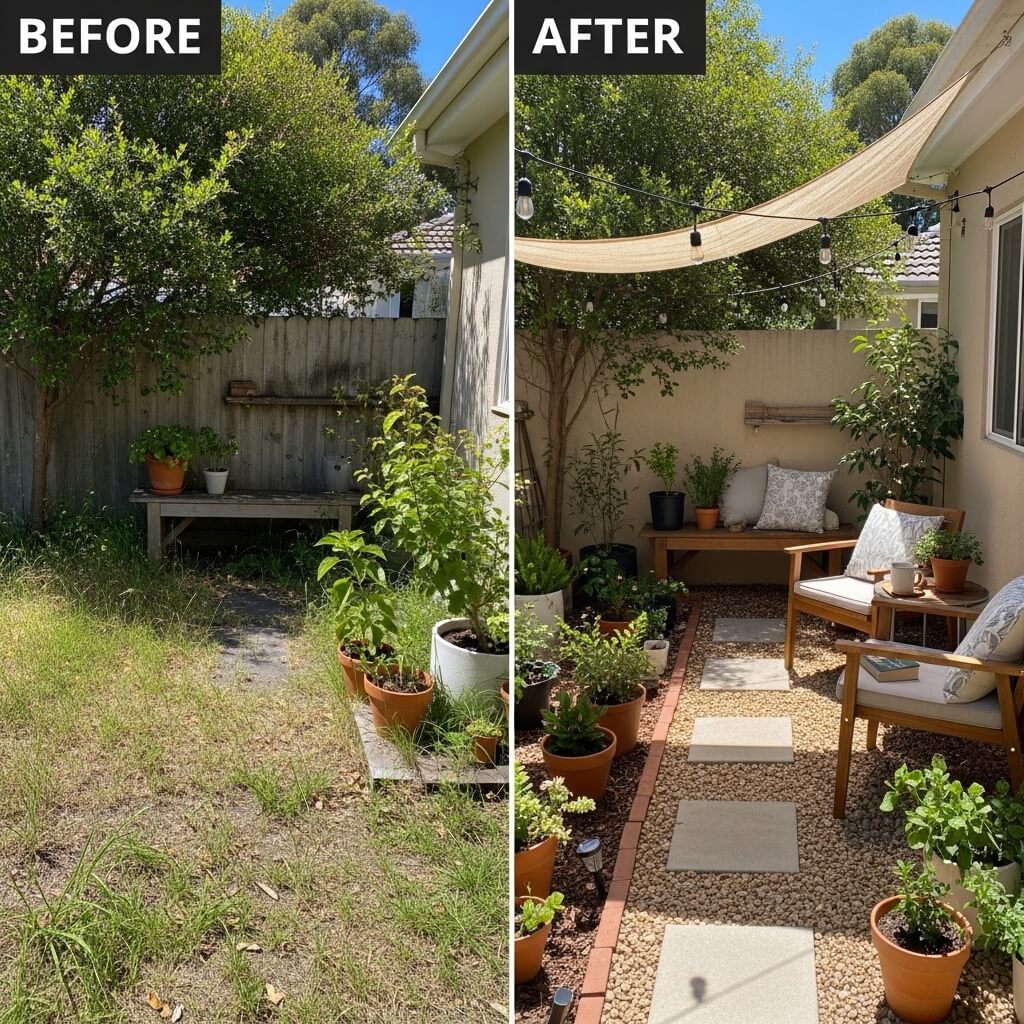
Let’s tackle the elephant in the room first: small spaces and tight budgets. Most of us aren’t working with unlimited square footage or bottomless wallets, and honestly? That’s where creativity shines brightest.
Zone Your Space Like a Pro
Small backyards need smart planning. I learned this the hard way after cramming too many ideas into my 200-square-foot patio and creating what can only be described as organized chaos. The solution? Create distinct zones for different activities.
Think about breaking your space into purpose-driven areas:
- A sitting zone with compact outdoor furniture
- A green zone with container plants or a small garden bed
- A pathway zone that guides movement and creates visual interest
You don’t need actual walls or barriers. A simple change in flooring material, a strategically placed planter, or even outdoor rugs can define these spaces. FYI, outdoor rugs are ridiculously affordable these days and instantly make any area feel more intentional.
Vertical is Your Best Friend
When you can’t expand outward, go upward. Vertical gardening has saved my sanity (and my tiny yard). Wall planters, hanging baskets, trellises with climbing plants—these aren’t just space-savers, they’re focal points that draw the eye up and make your space feel larger.
I mounted a simple wooden ladder against my fence and hung pots of herbs and flowers from the rungs. Cost me about thirty bucks and an afternoon, but it looks like I actually know what I’m doing. Climbing jasmine or morning glories on a trellis can transform a boring fence into a living wall within a single growing season.
Multipurpose Everything
In small spaces, furniture and features need to earn their keep. Storage benches that provide seating? Perfect. A fire pit that doubles as a table when not in use? Genius. Planters that also serve as privacy screens? You’re getting it now.
I replaced my clunky side table with a ceramic garden stool that works as both a plant stand and occasional seating. These dual-purpose pieces keep your space from feeling cluttered while maximizing functionality.
Modern Front Yard Landscaping Ideas
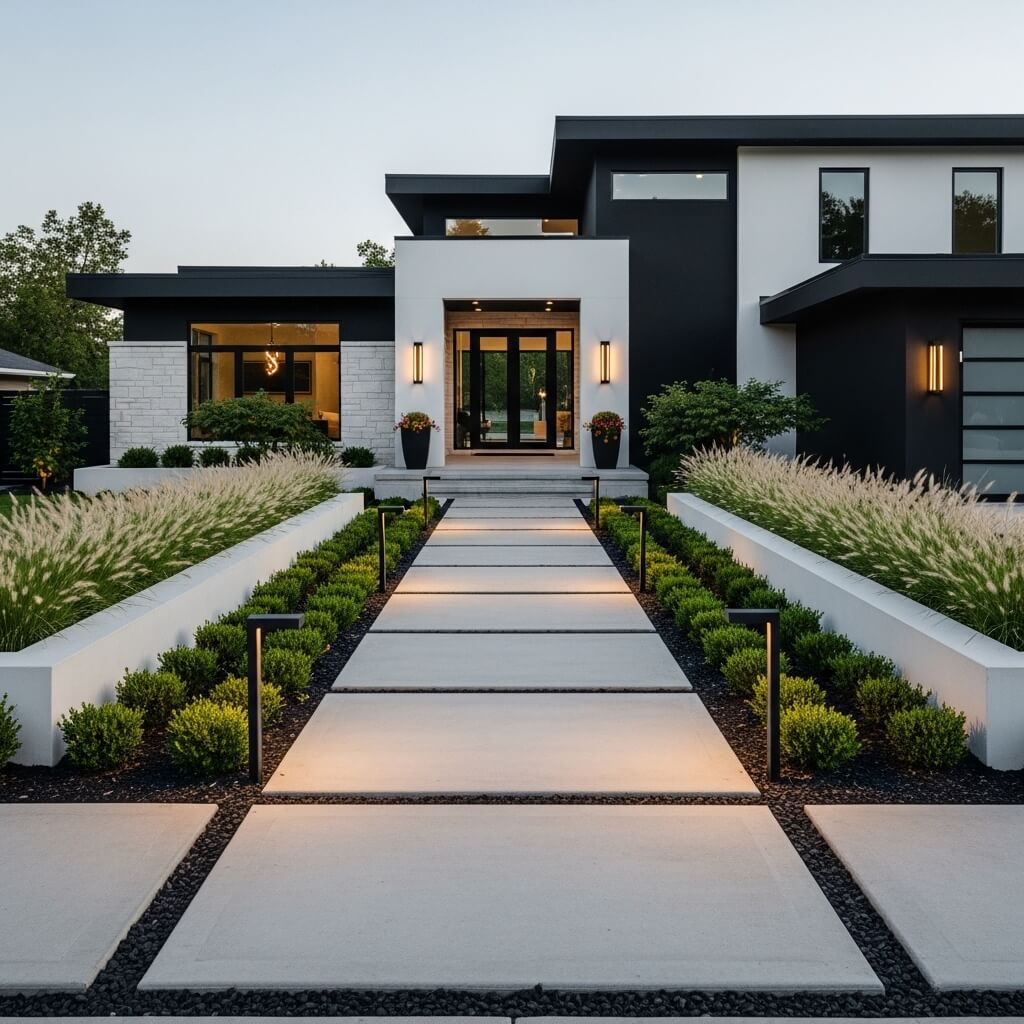
Your front yard is basically your home’s handshake with the world. Ever notice how some houses just look updated, even if they’re not brand new? That’s modern landscaping at work.
Embrace Clean Lines and Geometry
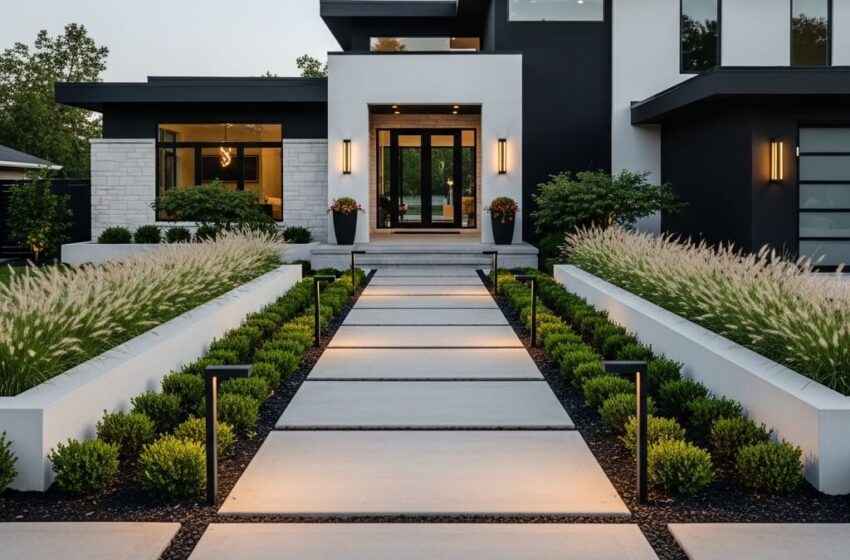
Modern design loves structure. Forget the curvy, romantic cottage garden approach—we’re talking straight edges, geometric patterns, and deliberate placement. This doesn’t mean boring, though. It means intentional.
Consider these elements:
- Rectangular planters with ornamental grasses in staggered heights
- Linear pathways using large-format pavers with consistent spacing
- Box hedges trimmed into crisp shapes
- Symmetrical plantings flanking your entrance
I revamped my front walkway by replacing irregular flagstones with uniform concrete pavers spaced evenly with gravel between them. The transformation was shocking—suddenly my 1980s ranch looked like it belonged in this decade.
Go Monochromatic with Pops of Color
Modern landscapes often use a restrained color palette. Think various shades of green with maybe one accent color repeated throughout. This creates cohesion and sophistication without looking sterile.
My front yard uses mostly green foliage in different textures—spiky grasses, broad hostas, delicate ferns—with deep purple heuchera as the only color accent. It’s simple, it’s elegant, and I don’t have to fuss with constantly changing seasonal flowers.
Strategic Lighting Makes Everything Better
Nothing says “modern” like well-placed landscape lighting. I’m not talking about those solar stake lights that look like a runway. Think subtle uplighting on architectural features, pathway lights flush with the ground, or minimalist bollard lights along walkways.
The right lighting transforms your front yard from “looks decent in daylight” to “wow, these people have their act together” once the sun sets. IMO, this is the upgrade that gives you the most bang for your buck in terms of perceived home value.
Low Maintenance Landscaping Ideas for Beginners
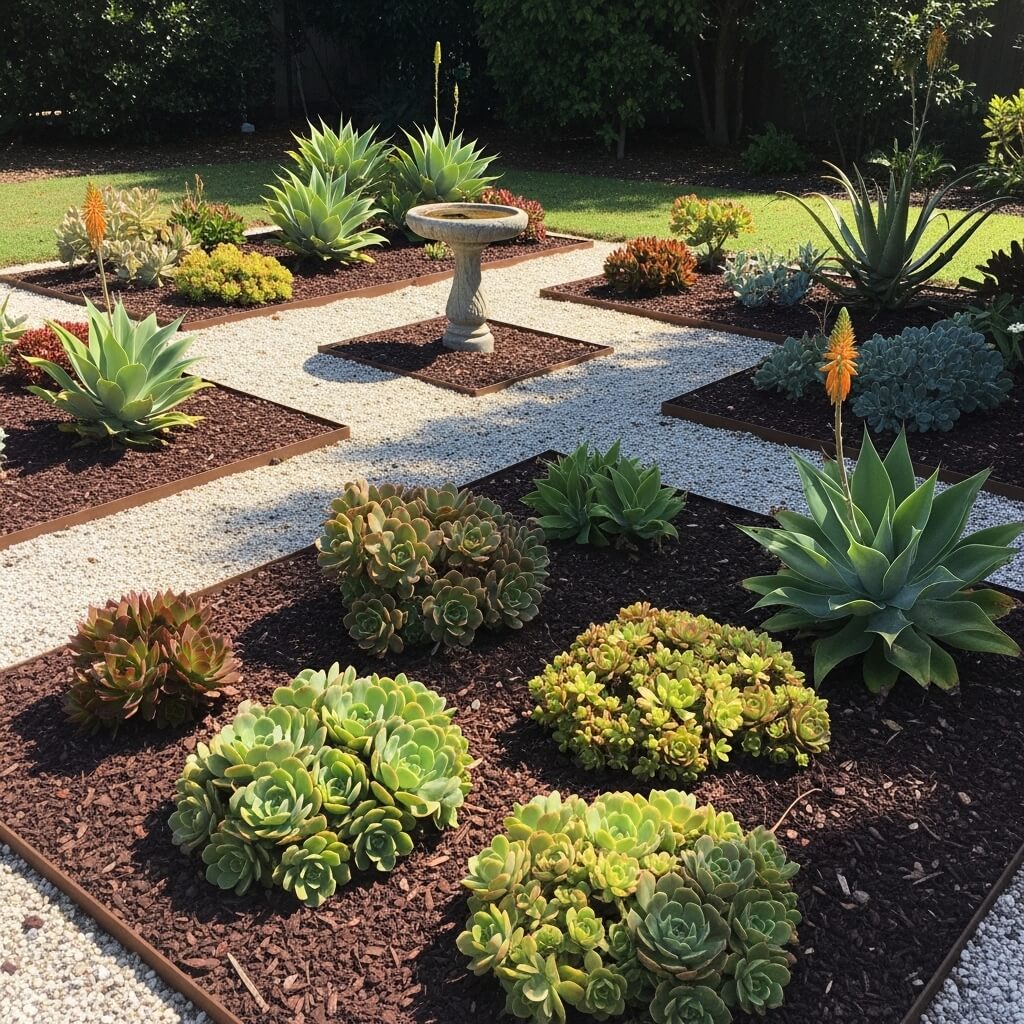
Let’s be real: you want a nice yard, but you don’t want it to become a second job. I feel you. After killing my third azalea bush, I finally accepted that I needed plants that could survive my benign neglect.
Native Plants Are Your New Best Friends
Here’s what nobody tells beginners: native plants are basically landscaping on easy mode. They evolved to thrive in your specific climate, which means they need less water, fewer nutrients, and virtually no babysitting.
I replaced my struggling ornamental plants with native alternatives and the difference was immediate. No more weekend watering marathons or emergency trips to buy plant food. These plants just… thrive.
Research what grows naturally in your region and build your landscape around those species. Your local extension office usually has lists of native plants, and you’ll be shocked at how attractive many of them are.
Mulch is Magic
Want to know the lazy gardener’s secret weapon? Mulch. And lots of it. A thick layer of quality mulch:
- Suppresses weeds so you’re not spending every weekend pulling them
- Retains moisture meaning less watering
- Looks finished and intentional
- Breaks down over time to improve soil quality
I went heavy on hardwood mulch in all my planting beds and my maintenance time dropped by at least 60%. Yeah, you need to refresh it annually, but that’s a small price for basically eliminating weeding.
Install Drip Irrigation and Forget About It
If you’re really serious about low maintenance, invest in a simple drip irrigation system with a timer. I resisted this for years thinking it was too complicated or expensive, but holy wow was I wrong.
You can install a basic system yourself in a weekend. It delivers water directly to plant roots, reduces evaporation, and once it’s set on a timer, you literally don’t think about watering anymore. It’s automated adulting for your garden.
Also Read: 10 Genius DIY Grill Station Cheap Ideas for Small Spaces
DIY Landscaping Ideas with Rocks and Gravel
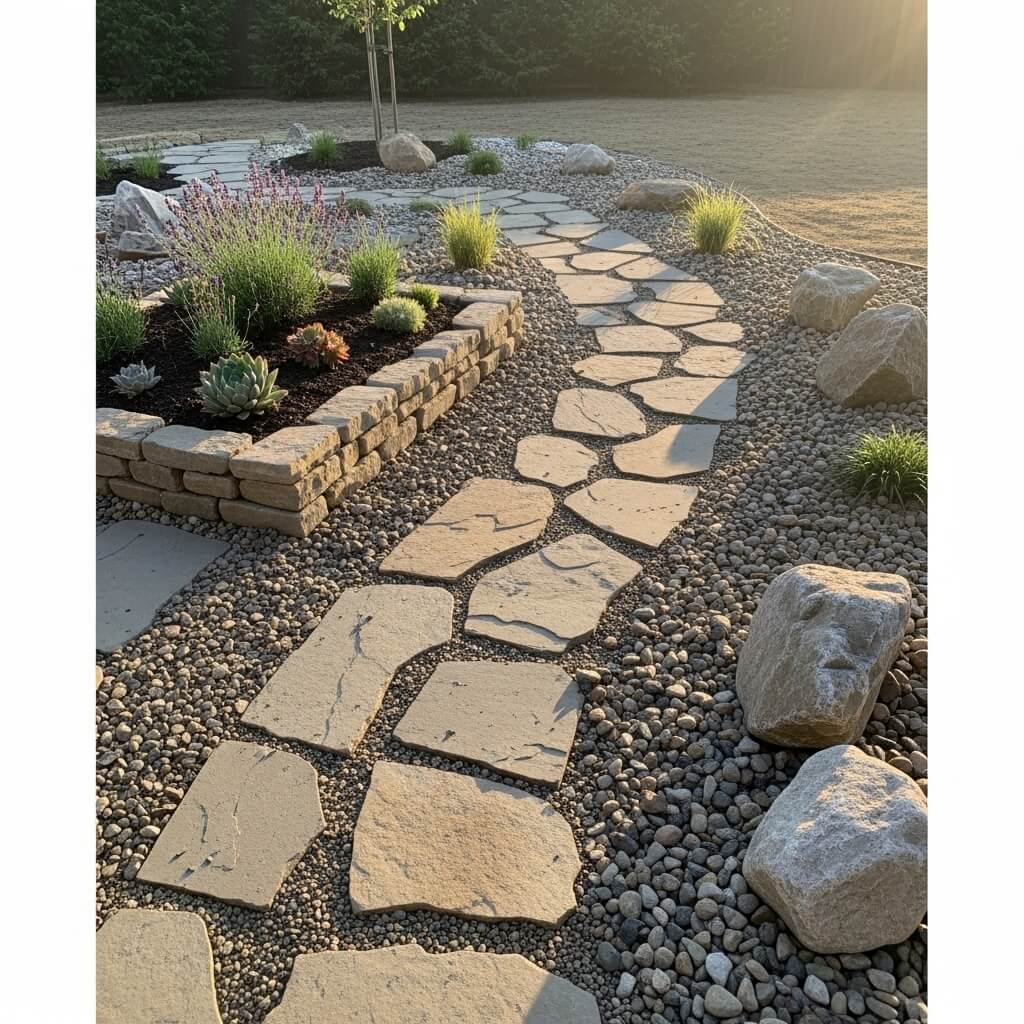
Rock and gravel landscaping has come a long way from those depressing “drought-tolerant” yards that look like parking lots. When done right, these materials create stunning, low-maintenance spaces.
Create a Dry Creek Bed
Even if you don’t have drainage issues, a dry creek bed adds serious visual interest. I built one last spring using river rocks of various sizes, and people constantly ask if it’s a natural feature.
Here’s the basic approach:
- Map out a natural-looking curve through your yard
- Dig a shallow depression about 6-8 inches deep
- Line with landscape fabric to prevent weeds
- Layer different sized rocks with larger boulders along edges and smaller stones in the middle
- Add plants along the banks for naturalistic integration
The whole project cost me under $200 in materials and took a long weekend. It looks like a professional installation but requires zero maintenance beyond occasional debris removal.
Build Rock Garden Borders
Forget buying expensive landscape edging. Stacked flat rocks create gorgeous borders that actually improve with age. I outlined my garden beds with local fieldstone (picked up free from a Craigslist posting, thank you very much), and it has that rustic, timeless look that never goes out of style.
The beauty is in the imperfection. Unlike manufactured edging, natural stone looks better slightly irregular and weathered.
Gravel Pathways for Texture and Sound
There’s something incredibly satisfying about the crunch of gravel underfoot. I replaced one of my concrete walkways with decomposed granite bordered by larger river rocks, and it completely changed the feel of moving through my yard.
Gravel pathways are ridiculously cheap compared to pavers or concrete, they drain perfectly (no puddles!), and they’re easy to install yourself. Pro tip: use landscape fabric underneath and edge restraints to keep everything contained, or you’ll be chasing gravel into your lawn forever.
Minimalist Landscaping Ideas for Clean Outdoor Spaces
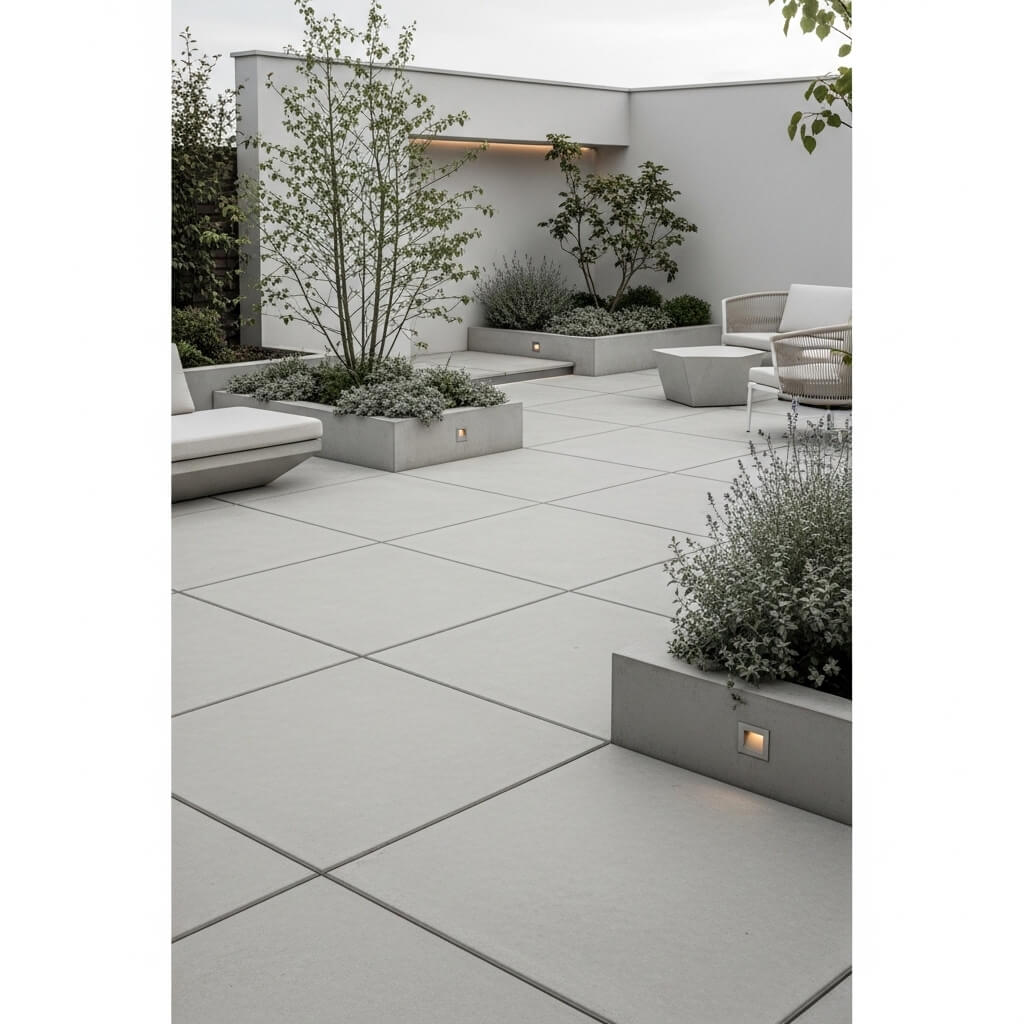
Minimalism in landscaping isn’t about having nothing—it’s about having only what serves a purpose or brings genuine joy. Sounds a bit Marie Kondo-ish, but it works.
The Power of Negative Space
Resist the urge to fill every square inch. Open areas of clean lawn, smooth gravel, or simple ground cover create breathing room that makes your intentional plantings stand out.
I used to pack my yard with plants, thinking more was better. It just looked chaotic. When I removed about 40% of what I had and let some areas stay simple, suddenly the remaining features had impact.
Limit Your Plant Palette
Minimalist landscapes often use just three to five plant species repeated throughout the space. This creates rhythm and cohesion instead of the botanical zoo approach.
My current setup uses exactly four plants:
- Mondo grass as ground cover
- Japanese maples as focal points
- Boxwood for structure
- Ornamental grasses for movement
That’s it. The repetition creates harmony, and the limited variety means I actually know how to care for everything.
Choose Quality Over Quantity
In minimalist design, every element matters more, so invest in pieces that are actually well-made. One beautiful ceramic planter beats five cheap plastic ones every time.
I saved up and bought two large, high-quality concrete planters instead of scattering multiple mediocre ones around. The impact is completely different—sophisticated instead of cluttered.
Tropical Landscaping Ideas for a Lush Backyard
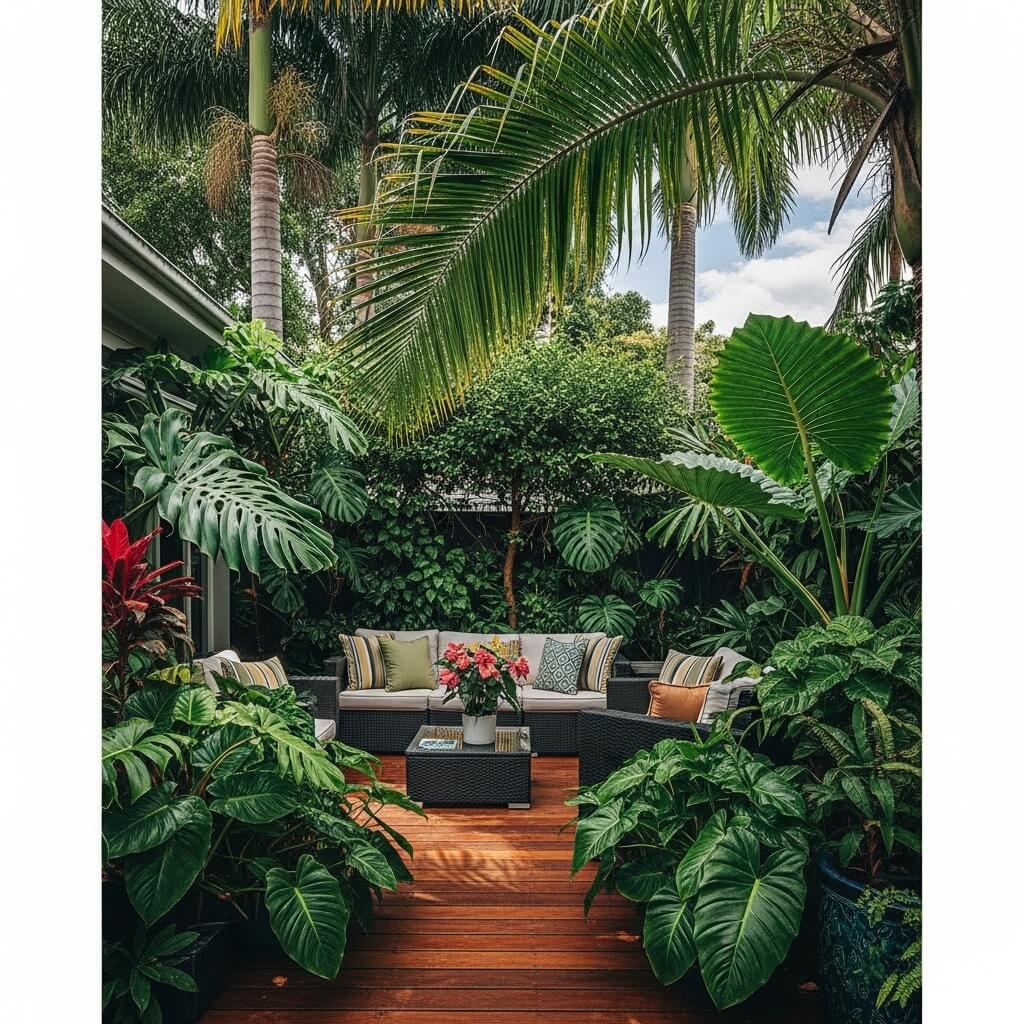
Want to feel like you’re on vacation every time you step outside? Tropical landscaping creates that resort vibe even in non-tropical climates (with the right plant choices).
Layer Your Plantings Like a Jungle
Tropical landscapes are all about abundance and layers. You want different heights, textures, and shades of green creating that lush, enveloping feel.
The basic formula:
- Tall backdrop plants (palms, tree ferns, or banana plants in warm climates; hardy alternatives elsewhere)
- Mid-level shrubs with large, dramatic leaves
- Ground covers that spread and fill in spaces
- Vining plants that climb and drape
I created a tropical corner in my yard using cold-hardy plants that give tropical vibes without actually being tropical. Hostas with huge leaves, ornamental grasses, and climbing hydrangea do the trick in my zone 6 climate.
Go Big with Foliage
Tropical style prioritizes foliage over flowers. Those enormous leaves are what create the jungle effect. Plants like elephant ears, cannas, caladiums, and palms (or palm-lookalikes) bring that bold, architectural presence.
I pot-grow elephant ears in my climate and bring them inside for winter. Yeah, it’s a bit of effort, but the dramatic impact during the growing season makes it worthwhile.
Add Water Features for Ambiance
Nothing says “tropical resort” like the sound of water. This doesn’t mean installing an expensive koi pond (unless you want to). A simple recirculating fountain or small bubbler creates that soothing background sound.
I bought a ceramic pot fountain for about $100, plugged it in, and suddenly my patio felt like a spa. The sound masks traffic noise and just makes everything feel more serene.
Don’t Forget the Hardscaping
Tropical style loves natural materials—think bamboo fencing, teak furniture, stone pathways, and thatched accents. These elements reinforce the theme and make it feel intentional rather than random.
I replaced my metal fence panels with bamboo screens in one section, added a teak bench, and scattered some larger rocks around plantings. The cohesive materials made the whole space feel designed instead of accidental.
Also Read: 10 Luxe Small Beauty Salon Interior Design Ideas on a
Desert Landscaping Ideas with Succulents
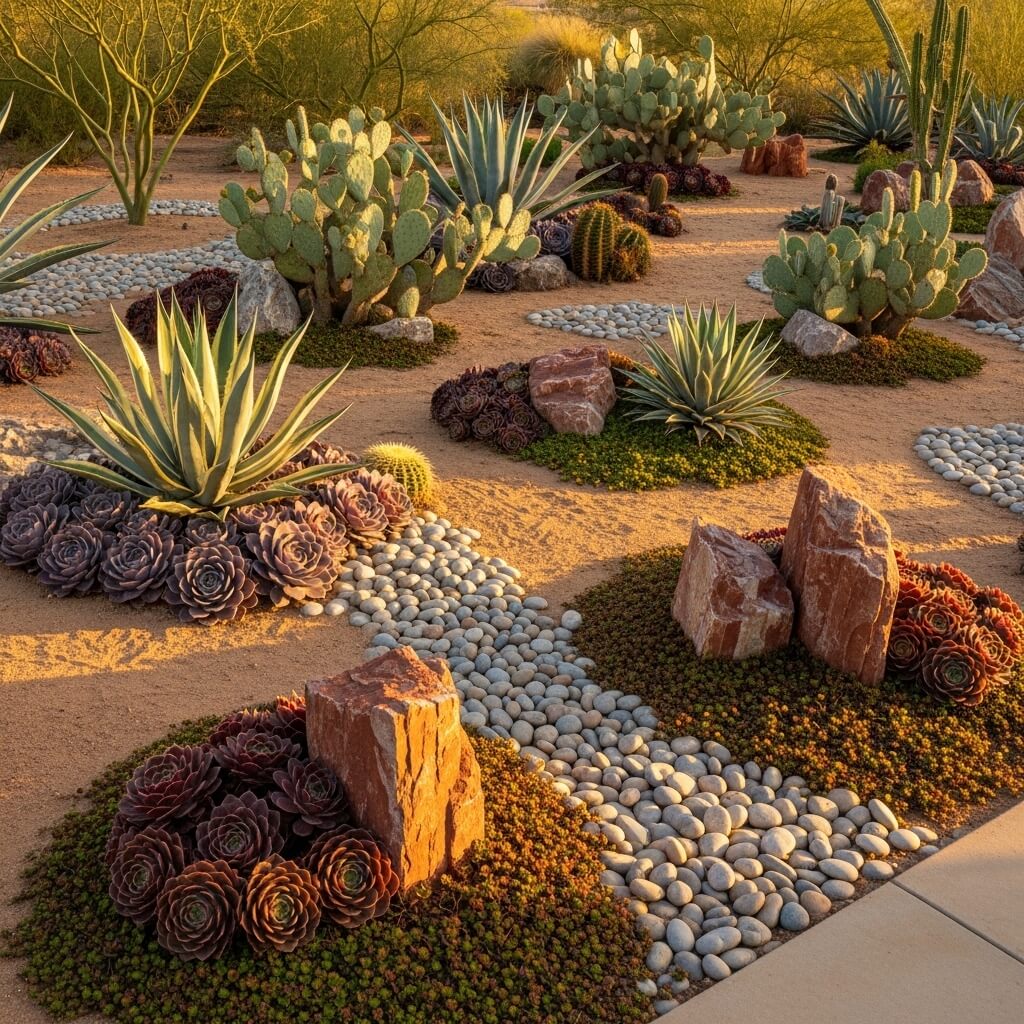
Desert landscaping (xeriscaping) has gotten trendy lately, and for good reason. It’s gorgeous, low-maintenance, and water-wise. Plus, succulents are nearly impossible to kill, which works well for my skill level.
Create Succulent Tapestries
Instead of traditional flower beds, plant succulents in dense, colorful arrangements. Different species offer incredible variety in color (blues, purples, reds, greens), texture (spiky, smooth, fuzzy), and form (rosettes, trailing, upright).
I transformed a problem slope that was impossible to mow into a succulent garden. I planted various sedums, sempervivums, and echeverias in a flowing pattern, and it’s become my favorite feature. Zero watering needed after establishment, and it looks good year-round.
Use Decorative Rocks as Mulch
In desert landscapes, rock mulch makes more sense than organic mulch. It doesn’t decompose, doesn’t attract pests, provides excellent drainage, and comes in various colors to complement your plants.
I used a combination of Mexican beach pebbles and decomposed granite in my succulent beds. The contrast between smooth, rounded stones and the angular plants creates visual interest, plus the light-colored rocks reflect heat and light back to the plants—which they love.
Incorporate Sculptural Elements
Desert plants have such strong forms that they work almost like living sculpture. Agaves, yuccas, and larger cacti become focal points that anchor your design.
I positioned three large agaves at strategic points in my desert bed, and they act as anchors for everything else. Their dramatic shapes need no embellishment—they’re the showstoppers.
Add Boulders for Scale and Interest
Large rocks aren’t just filler in desert landscapes—they’re essential design elements. They provide scale, create microclimates for plants, and add that authentic desert aesthetic.
I had three large boulders delivered (surprisingly affordable if you source locally), partially buried them for a natural look, and used them to create elevation changes in an otherwise flat bed. The dimension they add makes the whole area more dynamic.
Vertical Landscaping Ideas for Small Spaces
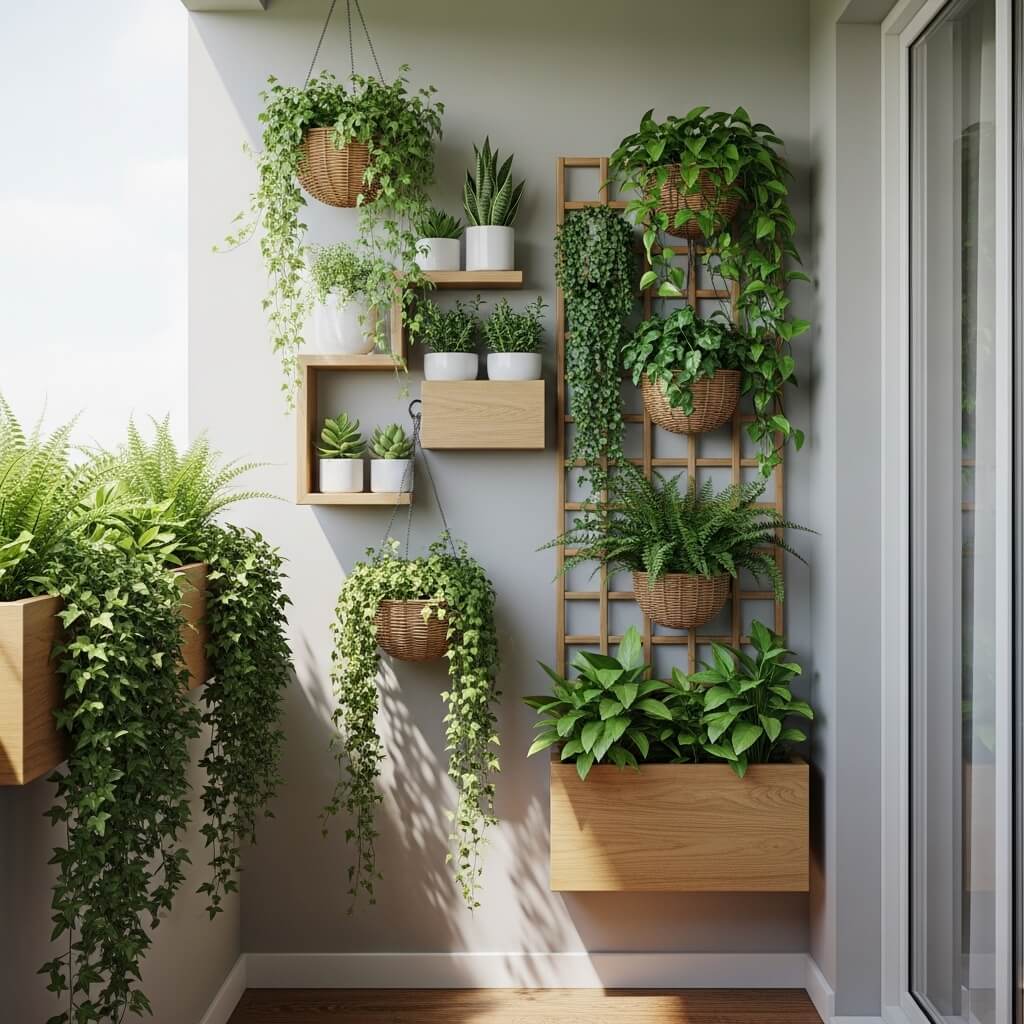
When you’re working with limited square footage, thinking vertically isn’t just smart—it’s essential. I’ve turned my narrow side yard into a productive, attractive space entirely through vertical growing.
Living Walls and Pocket Planters
Wall-mounted pocket planters or modular living wall systems let you grow everything from herbs to flowers to succulents in virtually no floor space. I installed a felt pocket system on my garage wall and grew an entire herb garden vertically.
These systems look modern and architectural, they’re conversation starters, and they actually work. Just make sure you choose one with proper drainage or you’ll have a soggy mess (learned that one the hard way).
Trellises and Climbing Plants
An inexpensive trellis can support beans, peas, cucumbers, flowering vines, or climbing roses. I attached simple wire cattle panels to my fence and grow both edibles and ornamentals on them.
The vertical growing gives you tons of yield or beauty in minimal space, plus it creates privacy and shade. My neighbor’s not-so-attractive storage shed basically disappears behind my climbing roses from June through September.
Tiered Planters and Shelving
Plant stands, ladder shelves, or tiered planters create vertical growing space while keeping plants accessible. I use a weathered ladder shelf on my patio to display potted plants at varying heights.
It’s functional, looks intentional, and I can easily move things around when I inevitably kill something and need to hide the evidence :/
Hanging Baskets at Different Heights
Don’t just hang baskets at one level. Vary the heights to create visual interest and make use of all that vertical space. I have baskets hanging at three different levels from my pergola, creating layers of color and texture overhead.
This works especially well for trailing plants like petunias, fuchsias, or even certain vegetables like cherry tomatoes. Just remember you’ll need to water hanging baskets more frequently—they dry out fast.
Cozy Backyard Landscaping Ideas with Lighting
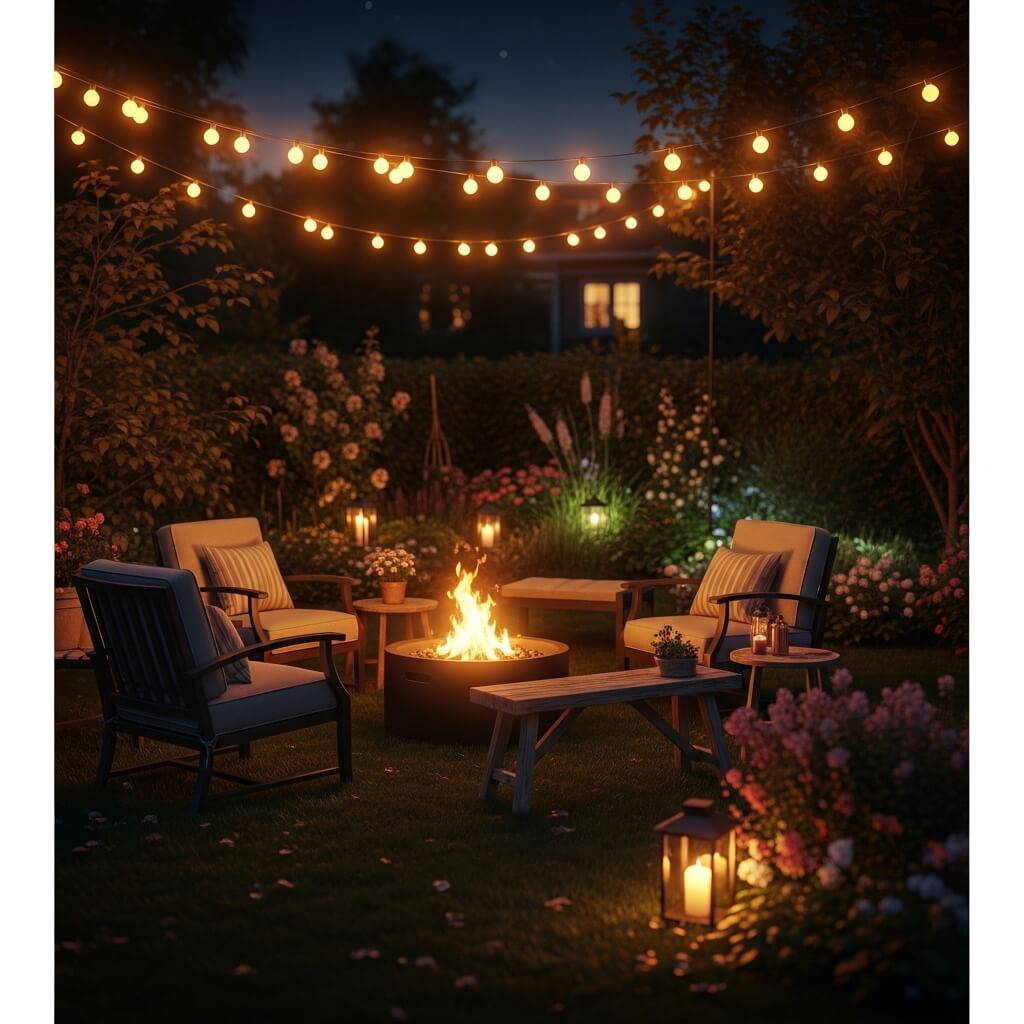
Lighting transforms your yard from a daytime-only space to an enchanting evening retreat. I basically never used my backyard at night until I added proper lighting—now it’s where I want to be.
String Lights for Instant Ambiance
Let’s start with the easiest upgrade: string lights. These things are magical. I hung Edison-bulb string lights over my patio, and suddenly I had a space that rivaled any restaurant patio I’d paid good money to sit at.
Installation took maybe an hour, they’re weatherproof, and they create that warm, inviting glow that makes everything feel special. This is literally the first thing I tell anyone asking how to improve their outdoor space.
Layer Your Lighting Like a Designer
Good landscape lighting uses multiple types at different levels:
- Ambient lighting (string lights, lanterns) for overall illumination
- Task lighting (path lights, step lights) for safety and navigation
- Accent lighting (uplights, spotlights) to highlight features
- Decorative lighting (candles, fire features) for atmosphere
I have path lights along my walkway, uplights on my favorite tree, string lights overhead, and usually some candles on the table. The layering creates depth and interest that a single light source never could.
Solar Lighting Has Gotten Actually Good
I was skeptical about solar lights for years because the early ones were pathetic. But modern solar technology has improved dramatically. I use solar path lights and accent lights that actually provide meaningful illumination.
The key is buying quality solar fixtures with decent-sized panels and better batteries. Yes, they cost more than the cheap ones, but they actually work consistently instead of dimly glowing for about forty-five minutes.
Create a Fire Feature Focal Point
Whether it’s a full fire pit, a tabletop fire feature, or a chiminea, fire adds incredible ambiance. I installed a simple propane fire pit table on my patio, and it extended my outdoor season by months.
The dancing flames draw people in, provide warmth on cool evenings, and create natural gathering spots. Plus there’s something primal and satisfying about sitting around fire that just makes conversations better.
Don’t Forget Uplighting for Drama
One of my favorite lighting tricks is uplighting trees or architectural features. I placed a couple of spotlights at the base of my Japanese maple, shining up through the branches. At night, it looks absolutely stunning—like something from a professional installation.
This technique creates drama and depth while actually using very few fixtures. The shadows and silhouettes add mystery and elegance to your nighttime landscape.
Also Read: 10 Sophisticated Luxury Salon Interior Design Ideas to Try Now
Luxury Landscaping Ideas for High-End Outdoor Design
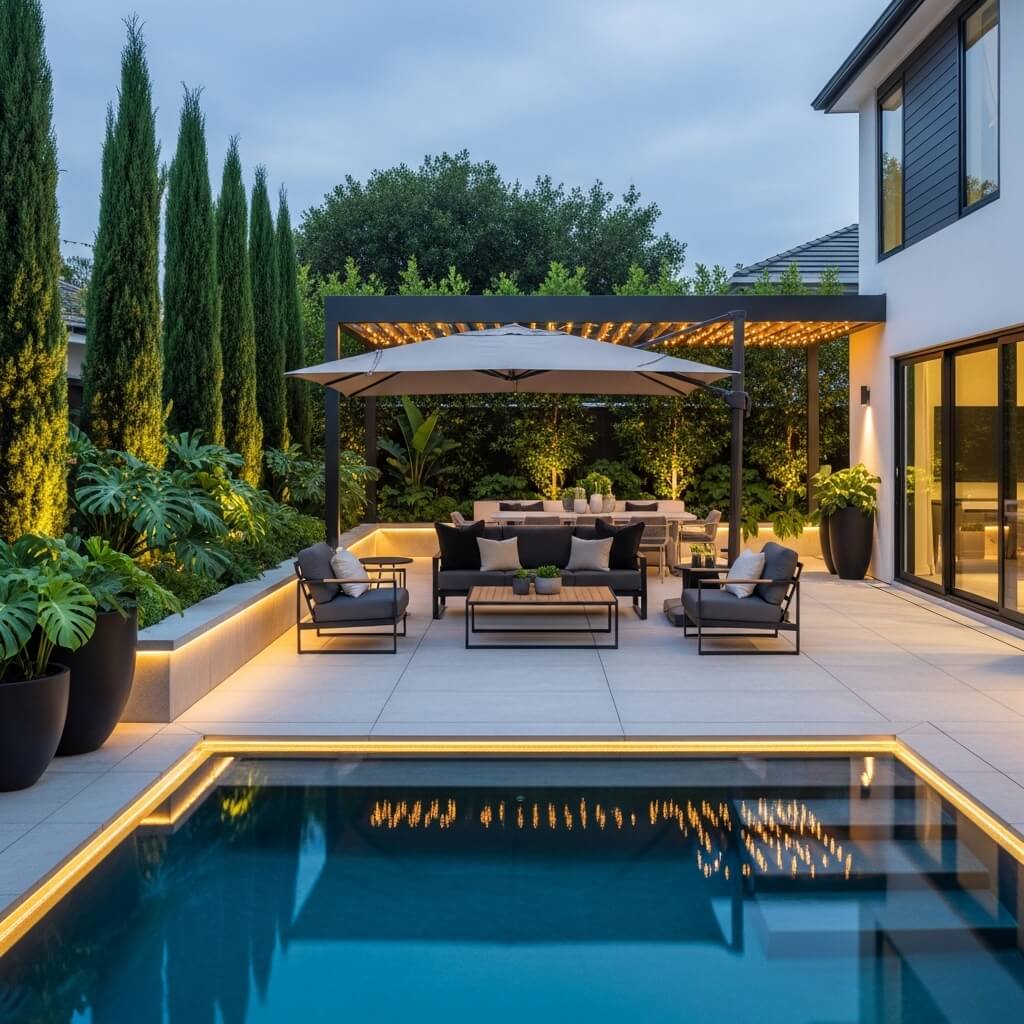
Okay, let’s talk about pulling out all the stops. If budget isn’t your primary constraint and you want to create something genuinely special, these high-end touches separate nice yards from jaw-dropping outdoor spaces.
Invest in Specimen Plants
Mature, high-quality specimen plants—think well-formed Japanese maples, established palms, or perfectly shaped topiary—instantly elevate your landscape. These aren’t cheap, but they provide immediate impact that would otherwise take years to achieve.
I saved up and bought one stunning weeping Japanese maple as a focal point instead of filling my yard with smaller, cheaper plants. That single tree gets more compliments than everything else combined. Quality over quantity works especially well in luxury landscapes.
Custom Hardscaping with Premium Materials
Upgrade from standard pavers to natural stone, from basic concrete to stamped or stained options, from simple wood decking to exotic hardwoods or composite materials that look like wood but last forever.
I splurged on bluestone for my patio instead of concrete pavers, and the natural variation and upscale look completely transformed the space. It cost probably three times as much, but it looks like it belongs in a magazine spread.
Outdoor Kitchens and Living Rooms
High-end outdoor design blurs the line between inside and outside. Built-in grills, outdoor refrigerators, pizza ovens, comfortable weather-resistant furniture, outdoor TVs—these features create true outdoor living spaces.
I installed a basic built-in grill station with a small fridge and lots of counter space. It changed how I entertain completely—I’m not running inside constantly, and guests naturally gather around the cooking area.
Water Features with Presence
We’re not talking about a bubbling pot here—luxury water features make a statement. Infinity-edge pools, multi-tiered fountains, koi ponds with professional filtration, or architectural water walls create focal points that define your entire landscape.
While I haven’t gone full infinity pool (maybe someday), I did install a substantial pondless waterfall feature with real stone that runs about six feet high. The sound carries through my whole yard, and it’s become the centerpiece everything else relates to.
Professional-Grade Lighting Systems
High-end landscapes deserve professional lighting. We’re talking low-voltage systems with transformers, photocells, and timers that automatically adjust seasonally, with fixtures that are both functional and beautiful.
I worked with a lighting designer (yes, this is a thing) to create a system that highlights architectural features, provides path lighting, and creates distinct moods for different areas. There’s even a “party mode” setting that makes me feel ridiculously fancy.
Integrate Smart Technology
Luxury landscapes increasingly incorporate technology—automated irrigation systems you control from your phone, lighting you can adjust by voice command, outdoor sound systems integrated into your landscape design.
I installed a smart irrigation controller that adjusts watering based on weather forecasts and moisture sensors. It sounds excessive, but it’s actually saved water while keeping everything perfectly maintained. Plus, I can’t pretend the convenience factor doesn’t make me smile.
Pulling It All Together
Here’s what I’ve learned through all my landscaping experiments, successes, and spectacular failures: the best outdoor space isn’t necessarily the most expensive or the most elaborate—it’s the one that actually reflects how you want to live outside.
Maybe you need a low-maintenance native plant garden because you travel constantly. Perhaps you want that tropical paradise vibe to relax in after stressful days. Or you might be ready to create an outdoor entertainment space that rivals your indoor living room.
The ideas I’ve shared aren’t about following trends or impressing neighbors (though that’s a nice bonus). They’re about creating outdoor spaces that genuinely improve your daily life. Your yard should be a place you actually use, not just maintain.
Start with one area or one idea. You don’t need to overhaul everything at once. I began with just stringing some lights over my patio. That small change made me want to spend more time outside, which made me notice other improvements I wanted to make, which led to the projects that eventually transformed my entire yard.
The beauty of landscaping is that it’s never really finished. Gardens evolve, your needs change, and there’s always something new to try. Some seasons my yard looks absolutely magazine-worthy, and other seasons… well, let’s just say I’m grateful that plants are forgiving and most mistakes grow out eventually.
Don’t be afraid to experiment. Plants are surprisingly resilient, design rules are made to be broken, and the worst-case scenario is usually just replanting something in a different spot. I’ve moved the same hosta probably four times trying to find the perfect location. That’s not failure—that’s refinement.
Whether you’re working with a tiny balcony or expansive property, with a shoestring budget or unlimited resources, these ten landscaping approaches offer starting points for creating something beautiful. Mix and match ideas, adapt them to your specific situation, and most importantly, have fun with the process.
Your outdoor space has potential. You already know that—it’s why you’re reading this. Now you’ve got practical, tested ideas to actually unlock that potential without losing your mind or your life savings in the process.
Time to get outside and make something happen. Your fresh outdoor makeover is waiting, and honestly? It’s going to be pretty great.