10 Modern Wooden Partition Design Ideas for Open Spaces
- Partition Design
 Ben
Ben- 0
- 35 minutes read
Look, I get it. You bought that gorgeous open-plan apartment or knocked down a wall to create that airy loft vibe, and now you’re standing there thinking, “Wait, where does my living room end and my dining area begin?” Been there, done that, bought the confused-looking furniture arrangement.
Here’s the thing about open spaces—they’re absolutely fantastic until you realize you need some definition without killing that spacious feel you worked so hard to achieve. That’s where wooden partitions swoop in like the design heroes they are. I’ve spent years obsessing over interior design (some might say unhealthily so), and wooden partitions have saved my bacon more times than I can count. They’re stylish, functional, and won’t make your space feel like you just built a prison cell in the middle of your home.
So grab your coffee, and let me walk you through ten wooden partition designs that’ll transform your open space from “awkwardly cavernous” to “architecturally intentional.”
Modern Vertical Wooden Slat Divider
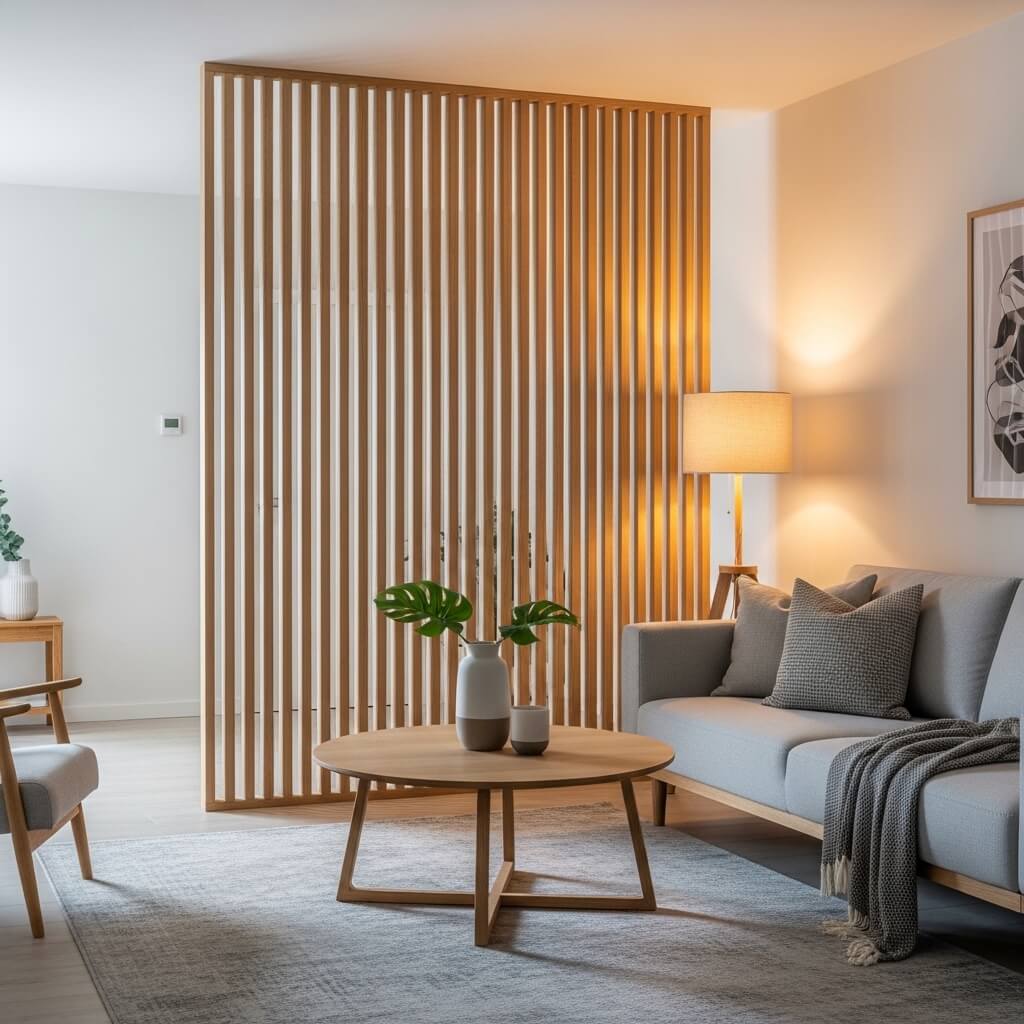
This one’s my absolute go-to recommendation, and I’m not even being biased here. Vertical wooden slat dividers are like the little black dress of partition design—they work everywhere, look fantastic, and never go out of style.
Picture this: evenly spaced wooden slats running from floor to ceiling, creating a semi-transparent barrier that separates your spaces while still letting light and air flow through. Genius, right? I installed one between my living room and home office last year, and honestly, it changed my entire relationship with my apartment.
Why This Design Rocks
Here’s what makes vertical slat dividers so damn effective:
- Light flow: Unlike solid walls, these bad boys let natural light pass through, so you’re not turning half your space into a cave
- Visual continuity: Your eye can still travel through the space, maintaining that open feel
- Customizable spacing: Want more privacy? Space the slats closer. Want it airier? Spread them out
- Easy installation: Most contractors can whip these up without breaking a sweat
The beauty of this design lies in its simplicity. You can stain the wood dark for a sophisticated look, keep it natural for Scandinavian vibes, or paint it white for a coastal aesthetic. I went with walnut staining because I’m fancy like that (or because it matched my existing furniture—potato, potahto).
Pro tip: Consider adding LED strip lighting behind the slats. Trust me on this one. When you light it up in the evening, it creates this subtle, moody ambiance that’ll make your guests think you hired an interior designer. You’re welcome 🙂
Wooden Partition with Built-in Shelves
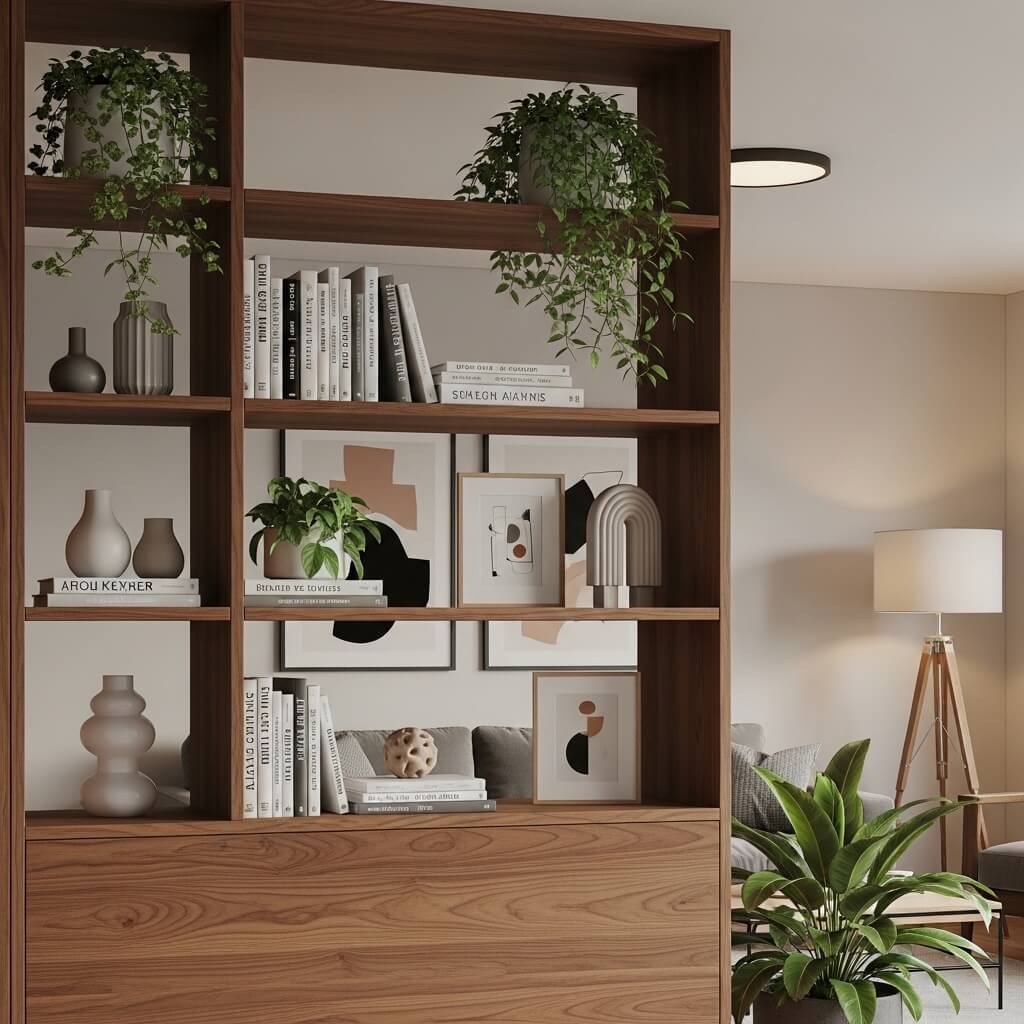
Ever wished your room divider could pull double duty? Yeah, me too. That’s why partition walls with built-in shelving are pure genius—they separate your space AND give you storage. It’s like getting fries with your burger without asking.
I remember visiting my friend’s studio apartment (calling it “cozy” would be generous), and she had this incredible wooden partition with shelves dividing her sleeping area from her living space. One side displayed her book collection, the other held her plants and decorative bits. The partition completely transformed what could’ve been a cramped mess into two functional zones.
Making It Work
Here’s how to nail this design:
- Asymmetrical shelving: Mix shelf sizes for visual interest and practical storage options
- Open vs. closed: Combine open shelves with closed cabinets for items you’d rather hide
- Two-sided functionality: Design it so both sides are usable—nobody likes staring at the back of a bookshelf
- Weight considerations: Make sure your structure can handle what you’re planning to load on it
The trick is balancing aesthetics with function. You don’t want it looking like you just wheeled a library cart into the middle of your room. Choose a wood finish that complements your existing decor, and style those shelves thoughtfully.
FYI, this works particularly well in studio apartments, combined home offices, or kids’ rooms where you need to separate sleep and play areas. I’ve seen people use these to divide kitchen and dining spaces too, storing cookbooks and serving dishes on the shelves. Smart, right?
Minimalist Open Frame Wooden Divider
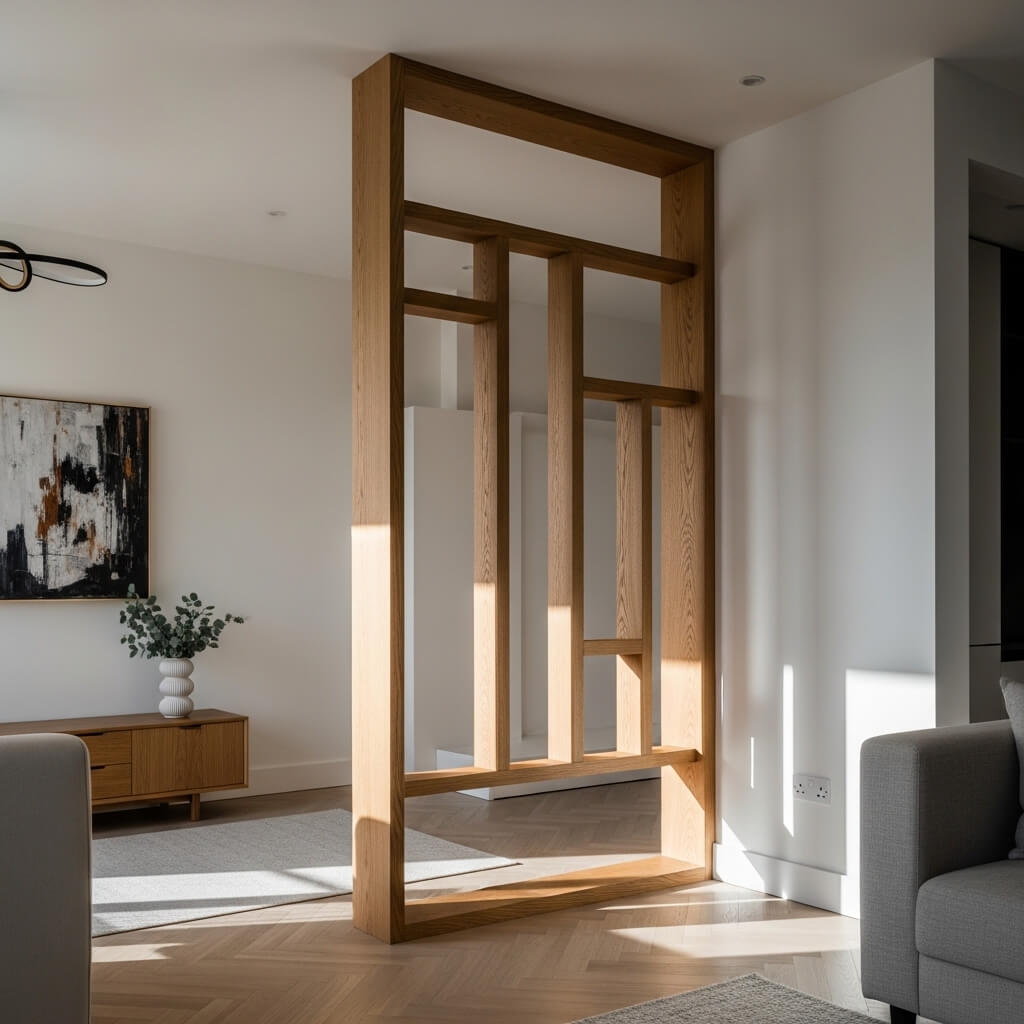
If you’re into that clean, Zen aesthetic (and who isn’t these days?), open frame wooden dividers might just be your soulmate. Picture a simple wooden grid—clean lines, geometric precision, nothing fussy. It’s like the design equivalent of Marie Kondo organizing your space.
I’ll be honest, I was skeptical about these at first. They seemed too simple, you know? Like, “How’s a basic wooden frame going to make any impact?” Boy, was I wrong. The minimalist approach actually makes these dividers incredibly versatile and surprisingly impactful.
The Appeal of Less-Is-More
What makes these work so beautifully:
- Architectural interest: The frame creates visual definition without visual clutter
- Lightweight feel: Perfect for smaller spaces where anything bulky would feel overwhelming
- Styling opportunities: The open squares become frames for hanging plants, art, or decorative objects
- Modern aesthetic: Fits seamlessly with contemporary, mid-century, or minimalist decor
The key here is precision. You want those corners clean, those lines straight, and that finish smooth. This isn’t the project for your buddy who “knows carpentry” but mostly just watches YouTube videos. Quality craftsmanship makes or breaks this design.
I’ve seen people take this concept and run with it—filling some squares with frosted acrylic panels for extra privacy, weaving fabric through sections, or training climbing plants through the frames. The base is simple, but the possibilities? Endless.
Also Read: 10 Elegant Partition Design Living Rooms Ideas for Stylish Interiors
Geometric Pattern Wooden Partition Panel
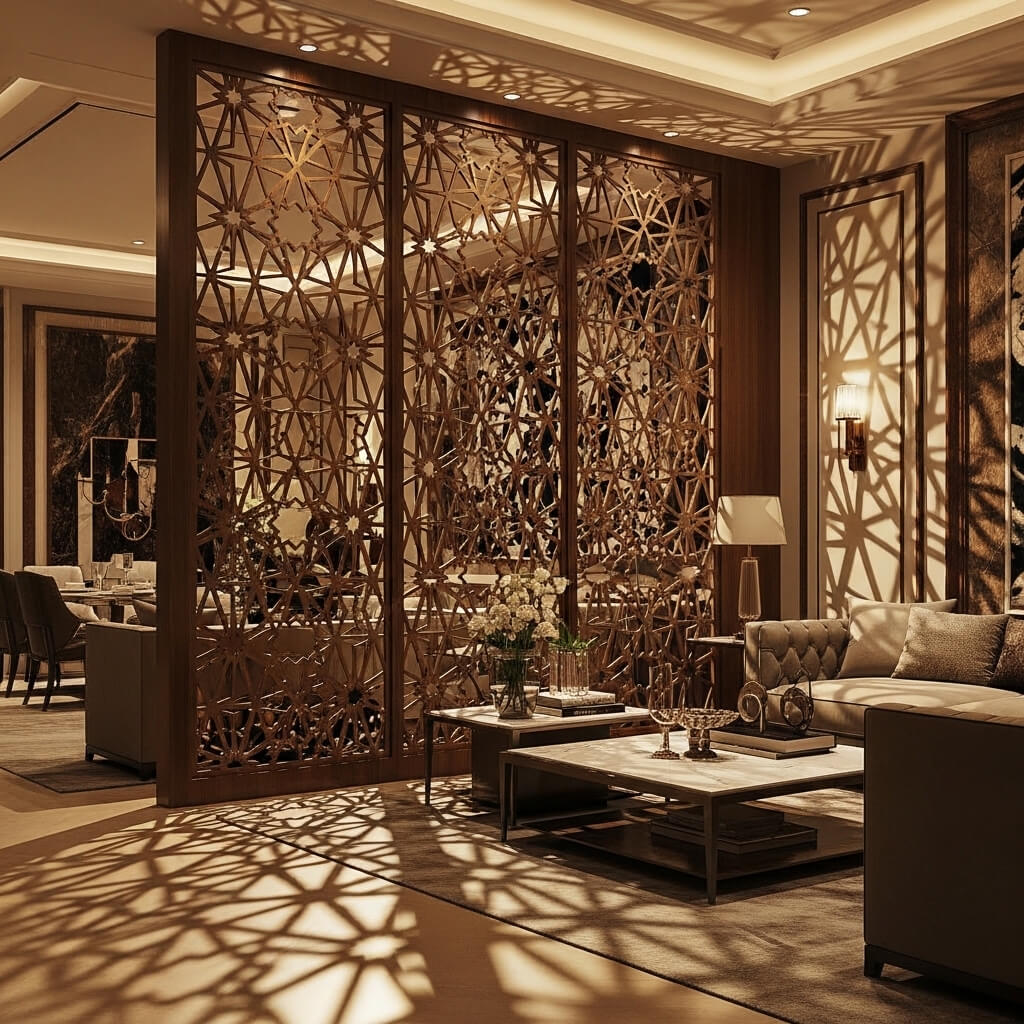
Ready to make a statement? Geometric pattern partitions are like the peacocks of the wooden divider world—bold, eye-catching, and definitely not for wallflowers. We’re talking hexagons, triangles, chevrons, or even custom patterns that turn your partition into legitimate wall art.
My cousin installed one of these in her boutique hotel (she’s fancy), and I literally stopped mid-conversation when I first saw it. The pattern created this incredible play of light and shadow throughout the day that changed the entire mood of the space. Dramatic? Maybe. Awesome? Absolutely.
Choosing Your Pattern
Here’s what to consider when going geometric:
- Space size: Larger patterns work better in bigger spaces; intricate patterns can overwhelm small rooms
- Repetition vs. randomness: Decide if you want a repeating pattern or something more organic
- Complexity: More complex patterns cost more and take longer to create (shocking, I know)
- Visual weight: Dense patterns create more privacy; sparse patterns maintain openness
The thing about geometric partitions is they become a focal point whether you want them to or not. You’re essentially installing a piece of functional art, so make sure it aligns with your overall design vision. This probably isn’t the time to clash with your existing aesthetic—unless you’re going for “eclectic maximalist,” in which case, go wild.
IMO, the honeycomb pattern hits the sweet spot between interesting and overwhelming. It’s recognizable, visually appealing, and doesn’t make your eyes tired trying to figure out what they’re looking at. Plus, it photographs beautifully if you’re the Instagram type (no judgment).
Sliding Wooden Partition Door Design
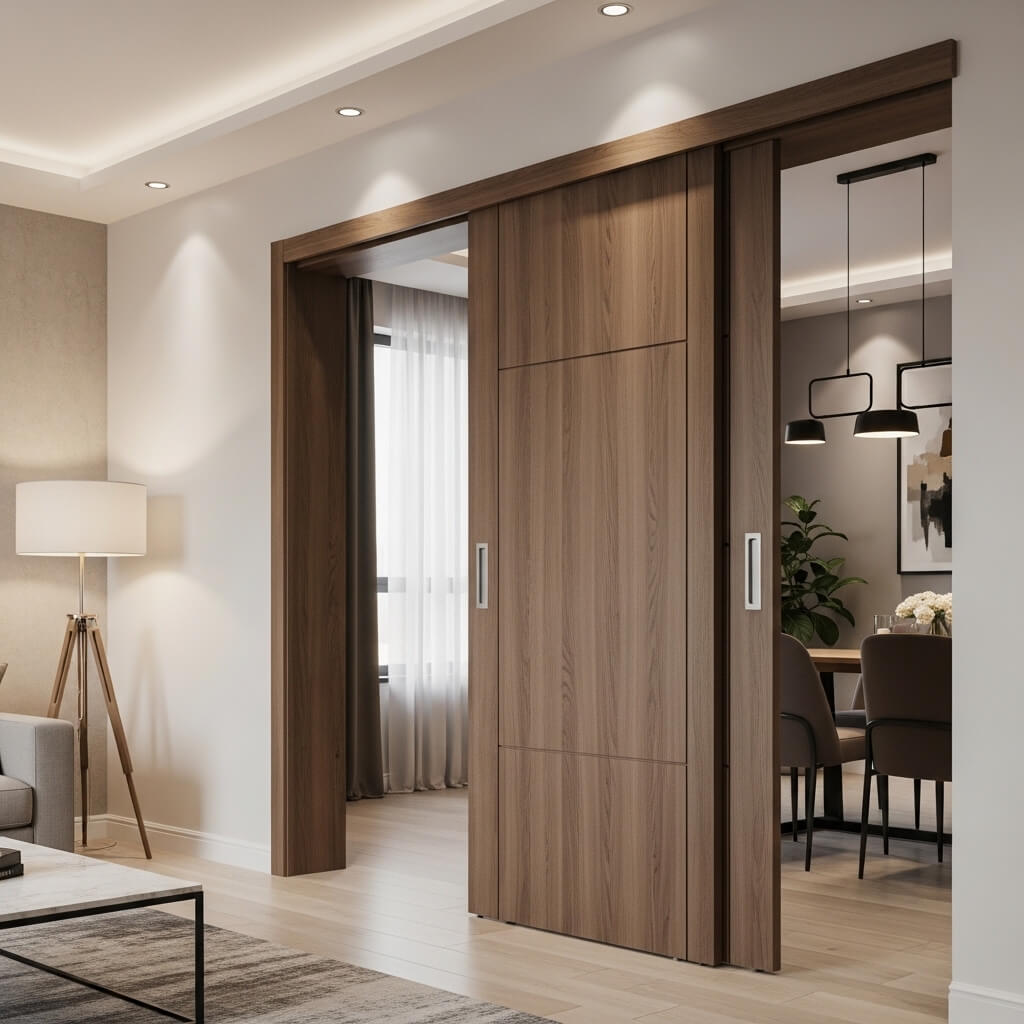
Want flexibility? Like, actually want to change your space layout based on your mood or needs? Sliding wooden partition doors are your answer. These aren’t your grandma’s pocket doors (though I loved those too)—we’re talking floor-to-ceiling, barn-door-style beauties that redefine functional design.
I installed one of these between my dining area and guest room, and it’s honestly one of the best home improvement decisions I’ve made. When I’m hosting dinner parties, I slide it open for a massive entertaining space. When guests stay over, I close it for privacy. It’s like having two floor plans in one home.
Making Sliding Partitions Work
Key considerations for this design:
- Track quality: Don’t cheap out here—smooth, quiet operation depends on quality hardware
- Door weight: Solid wood looks amazing but requires robust mounting and tracks
- Wall space: You need clearance for the door to slide into when open
- Floor clearance: Decide between floor-mounted tracks or suspended systems
The aesthetic options here are wild. You can go rustic with reclaimed barn wood, sleek with smooth painted panels, or artistic with carved or patterned designs. Some people install glass panels within wooden frames for light transmission while maintaining the ability to close off spaces.
One thing nobody tells you: these doors become conversation pieces. Every single person who visits wants to slide it back and forth like they’re discovering indoor plumbing for the first time. It’s actually pretty entertaining :/
Wooden Jali Style Room Divider
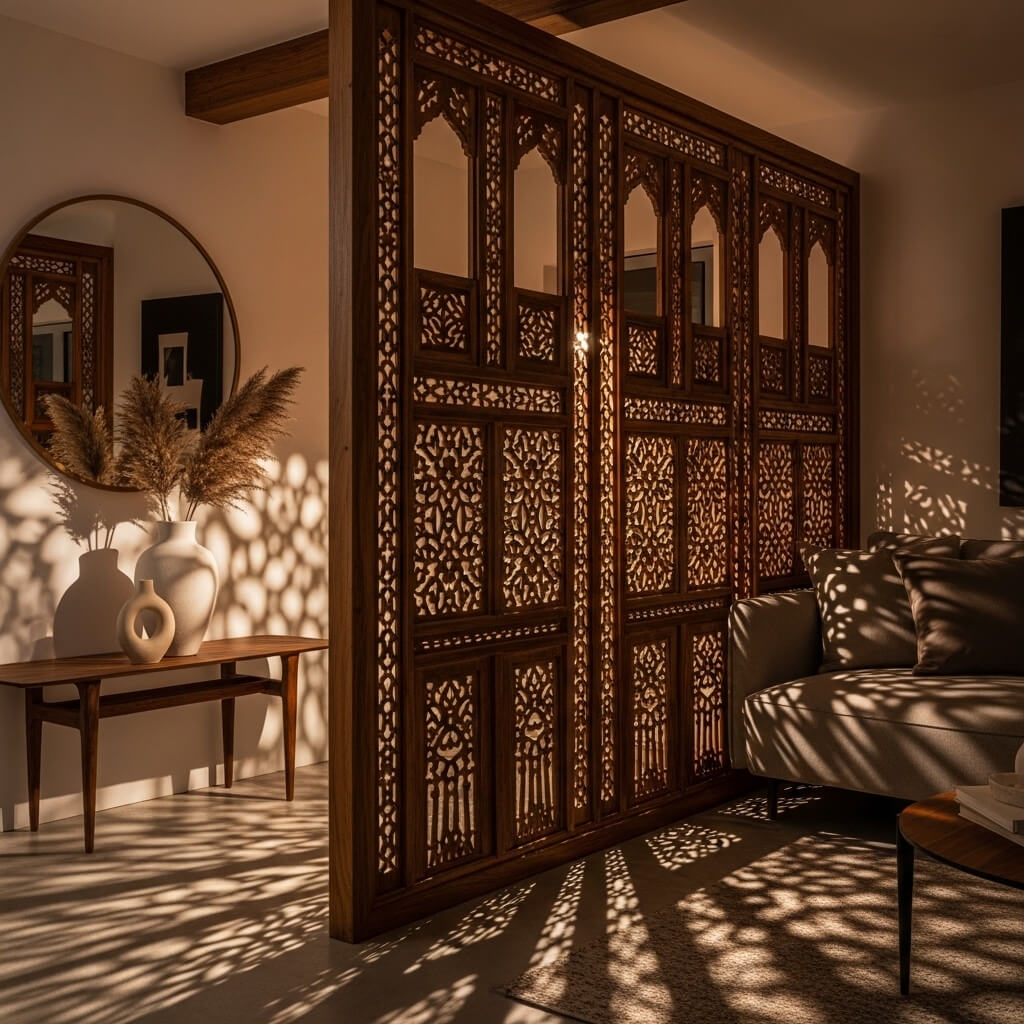
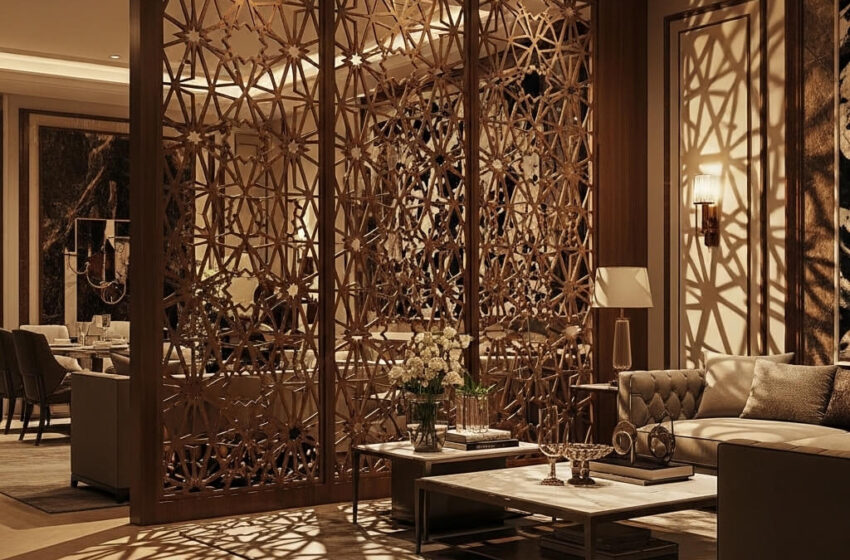
Let’s talk about Jali-style wooden partitions—and before you ask, yes, I’m talking about those gorgeously intricate carved screens that make you wonder how anyone had the patience to create them. Traditional Indian architectural elements meet modern open spaces, and the result is nothing short of stunning.
I saw one of these at a friend’s place who’s way more cultured than me (she travels to actual exotic places, not just Ikea), and I’ve been low-key obsessed ever since. The level of detail, the way light filters through creating these dancing patterns on the floor—it’s basically functional art.
The Beauty of Carved Details
What makes Jali-style partitions special:
- Cultural richness: Brings traditional craftsmanship into contemporary spaces
- Intricate patterns: Each design tells a story through its carved motifs
- Light and shadow play: Creates dynamic visual interest throughout the day
- Statement piece: Instantly elevates the perceived value of your space
Here’s the reality check—authentic hand-carved Jali screens aren’t cheap. Quality craftsmanship commands quality prices. But you know what? You can find CNC-cut versions that capture the aesthetic at a more accessible price point. Sure, they’re not handcrafted by artisans, but they still look incredible and serve the same functional purpose.
You can go traditional with floral and geometric Islamic patterns, or contemporary with simplified, modern interpretations. Either way, you’re adding serious design credentials to your space. Just maybe don’t place it where clumsy people (read: me after a couple glasses of wine) might bump into all those delicate details.
Also Read: 10 Unique Partition Design Ideas for Beautiful Home Spaces
Floating Wooden Partition with Plants
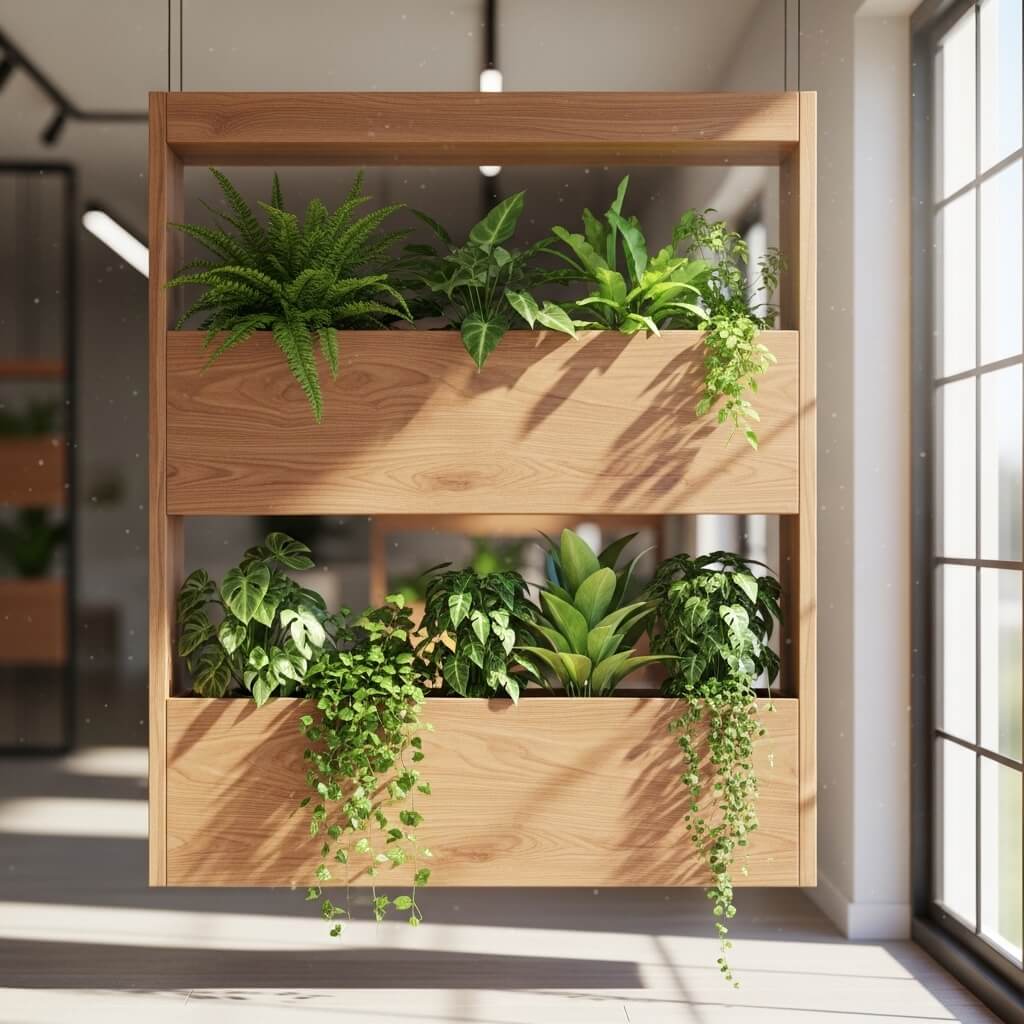
Okay, this one’s my personal favorite, so I might gush a bit. Floating wooden partitions with integrated planters combine my two great loves: wood and not killing houseplants (it’s harder than you think). These partitions appear to float—typically suspended from the ceiling or mounted with minimal floor contact—and include spots for greenery.
I built a version of this last spring (with professional help because I know my limitations), and my apartment went from “nice enough” to “urban jungle chic” basically overnight. The combination of natural wood and living plants creates this organic, breathing divider that changes and grows over time.
Bringing Nature Indoors
Why this design wins hearts:
- Biophilic design: Incorporates nature into your living space for mental health benefits (science says so)
- Air quality: More plants mean better air—your lungs will thank you
- Visual softness: Plants soften the hard lines of wooden structures
- Dynamic element: Your partition literally grows and changes with the seasons
Design-wise, you’ve got options. Some people create wooden ladder-style frames with planter boxes at different heights. Others build horizontal floating boxes with integrated planters. I’ve seen vertical slat designs with hanging planters suspended at varying levels. All gorgeous, all effective.
Real talk though: consider plant maintenance. If you’re choosing this design, you’re committing to plant parenthood. Pick low-maintenance varieties like pothos, snake plants, or philodendrons if you’re not exactly a green thumb. Position the partition where your plants will get adequate light, or invest in grow lights.
Also, waterproofing matters. Trust me on this. You don’t want water damage on your beautiful wooden partition because you forgot to use proper liners in those planters. Been there, learned that lesson the hard way.
Rustic Reclaimed Wood Divider Wall
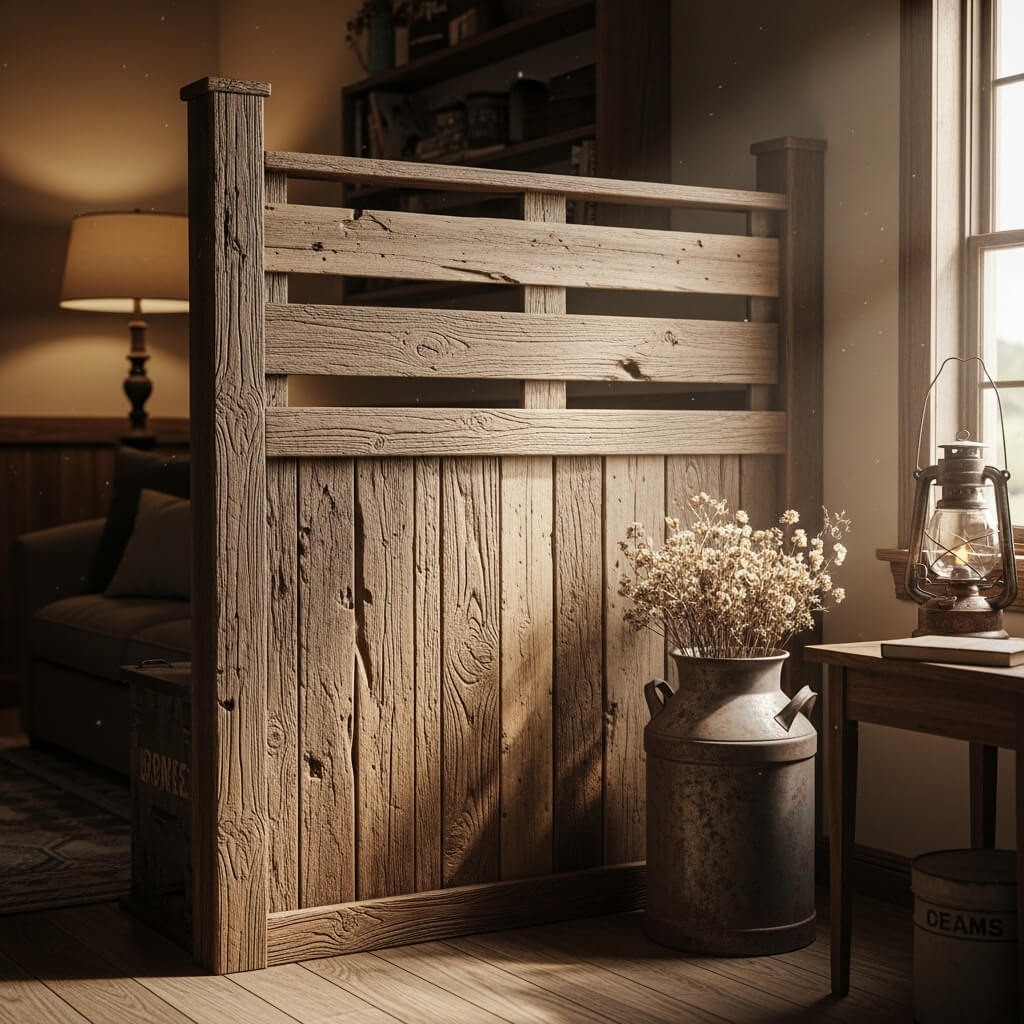
Want instant character and history in your space? Reclaimed wood partitions deliver stories, texture, and sustainability all wrapped up in one gorgeous package. We’re talking wood salvaged from old barns, factories, or deconstructed buildings, repurposed into modern partitions that ooze personality.
I’m a sucker for reclaimed wood—something about the weathered patina, the nail holes, the imperfect coloring just works for me. Each piece carries history, and when you arrange them into a partition, you’re not just dividing space; you’re adding narrative depth to your home.
The Charm of Aged Wood
What makes reclaimed wood partitions special:
- Environmental sustainability: Reusing existing materials instead of harvesting new timber
- Unique character: No two pieces are identical—you get one-of-a-kind results
- Textural interest: Weathering, aging, and wear create visual depth
- Conversation starter: Each piece has its own story
You can arrange reclaimed wood in various patterns—horizontal planks for a contemporary feel, vertical for height emphasis, or mixed orientations for an eclectic vibe. Some people leave the wood completely raw; others clean it up, seal it, and stabilize it while maintaining that aged appearance.
Here’s what they don’t tell you in those Pinterest pictures: reclaimed wood requires prep work. You need to clean it, check for pests (seriously), remove old nails or hardware, and treat it appropriately. Unless you buy it from suppliers who’ve already done this work, you’re in for a project.
Also, reclaimed wood often comes with a price tag that makes people clutch their pearls. Quality, properly prepared reclaimed wood costs more than new lumber. But the aesthetic? Absolutely worth it if it fits your design vision and budget.
Glass and Wood Combo Partition Design
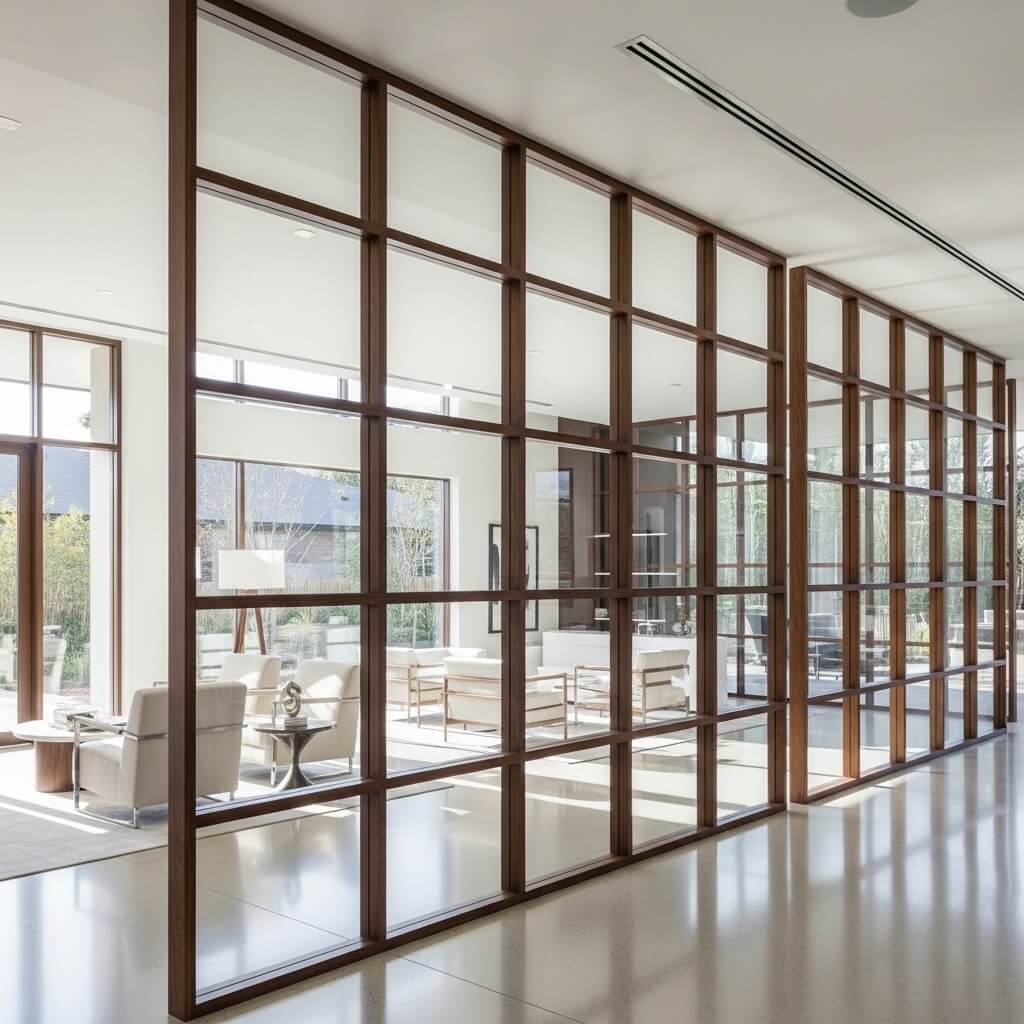
Can’t decide between wood warmth and glass openness? Why choose? Glass and wood combination partitions give you the best of both worlds—the natural beauty of wood framing with the transparency and light transmission of glass panels. It’s like having your cake and eating it too, design-wise.
I helped my brother design one of these for his loft, and the result was better than either of us imagined. The wooden frame provided structure and warmth, while the glass panels kept the space feeling open and bright. Plus, it solved his problem of wanting to separate his bedroom area without blocking light from the only window in that corner.
Balancing Materials
What makes this combination work:
- Maximum light: Glass panels allow natural light to flow through while maintaining separation
- Visual lightness: Less visually heavy than solid wood partitions
- Sound reduction: Glass provides better sound dampening than open slat designs
- Style flexibility: Works with everything from industrial to contemporary to traditional aesthetics
You’ve got choices with the glass too. Clear glass for maximum openness, frosted for privacy, textured for visual interest, or even tinted for mood. The wooden frame can be thick and chunky for a robust look, or thin and minimal for contemporary elegance.
The practical side: glass means cleaning. Fingerprints, smudges, dust—they all show up. If you’ve got kids or pets (or you’re just generally messy), consider frosted or textured glass that hides imperfections better than clear glass. Future you will appreciate this foresight.
Also, installation matters here. You’re dealing with glass, which means weight and fragility. This definitely falls into “hire a professional” territory unless you really know what you’re doing. Watching YouTube videos doesn’t count, Kevin.
Also Read: 10 Brilliant Wall Partition Design Ideas for Modern Spaces
Foldable Wooden Screen Divider
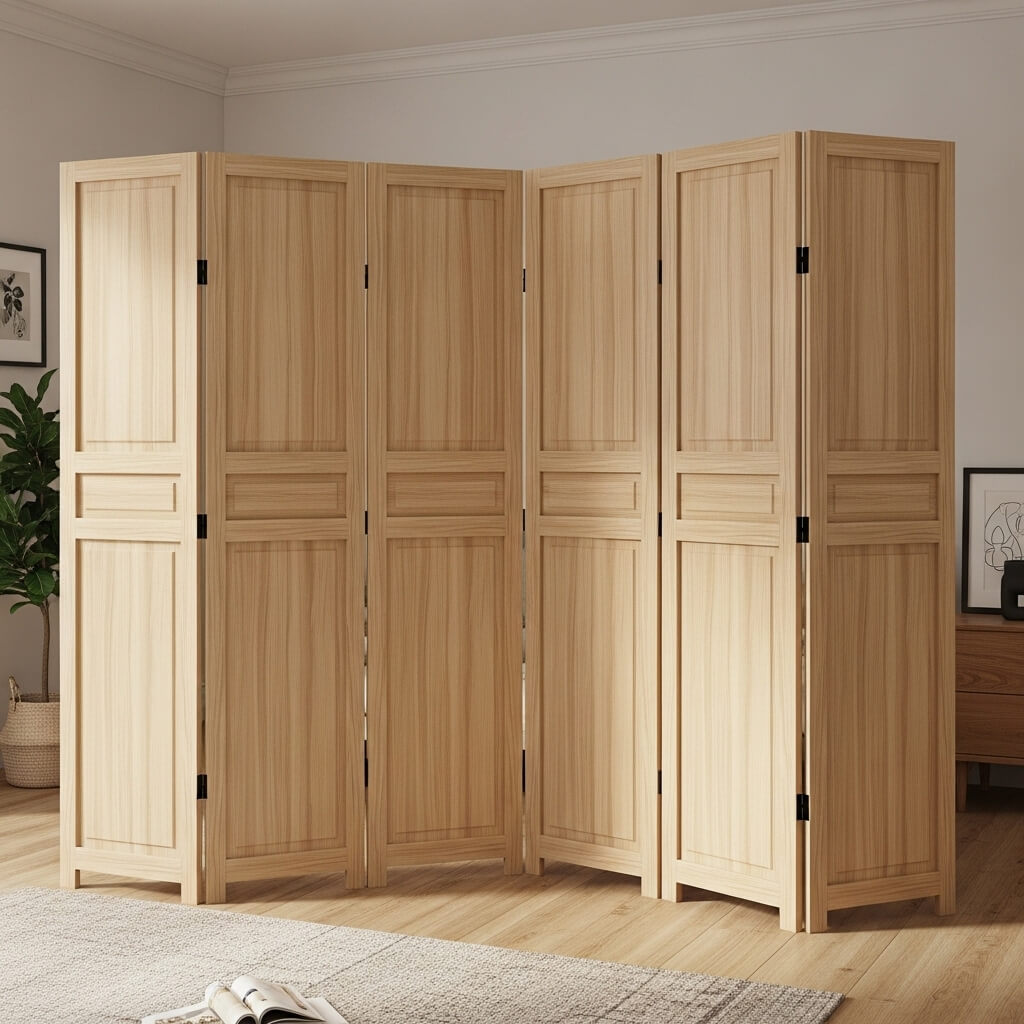
Last but definitely not least, let’s talk about foldable wooden screen dividers—the chameleons of the partition world. These portable beauties give you the ultimate flexibility: partition when you need it, open space when you don’t. It’s the design equivalent of having your space work FOR you rather than the other way around.
I’ve owned several versions of these over the years (commitment issues, maybe?), and they’ve saved me in countless situations. Small dinner party? Fold out the screen to hide the mess in my home office. Need the full space? Fold it up and tuck it away. It’s like spatial magic.
The Freedom of Flexibility
Why foldable screens rock:
- Portability: Move it around as needs change—no installation required
- Storage-friendly: Fold it flat when not in use
- Rental-friendly: Perfect for people who can’t make permanent modifications
- Versatile styling: Each panel can feature different designs or be decorated differently
Design options range from simple three-panel screens to elaborate six or eight-panel configurations. You can go traditional with rice paper and wood frames (giving serious Japanese shoji vibes), modern with solid wood panels, or artistic with carved or painted designs on each section.
The quality spectrum here is WIDE. You’ve got cheap screens that’ll wobble if you look at them wrong, and you’ve got heirloom-quality pieces built to last generations. My advice? Buy the best quality you can afford. Hinges matter. Frame stability matters. You want this thing to fold and unfold smoothly hundreds of times without falling apart.
Style-wise, you can treat each panel as an opportunity. I’ve seen people upholster them with fabric, attach corkboard for a functional office divider, paint each panel a different color, or even create gallery walls on hinged panels. The folding mechanism becomes a feature rather than a limitation.
One heads up: these work best in spaces where you actually need flexibility. If you’re planning to keep it in the same spot permanently, you might as well install something more substantial. But if you love the idea of adapting your space to different needs? This is your winner.
Wrapping It Up
So there you have it—ten wooden partition designs that’ll transform your open space from “uncomfortably vast” to “intentionally designed.” Whether you’re drawn to the sleek modernity of vertical slats, the functionality of built-in shelving, or the flexibility of foldable screens, there’s a wooden partition solution for your specific needs.
Here’s my final piece of unsolicited advice: choose a design that genuinely fits your lifestyle, not just what looks good on Pinterest. That gorgeous geometric pattern might be stunning, but if it doesn’t actually solve your spatial problems or work with your existing aesthetic, it’ll just annoy you every time you walk past it.
Consider your budget, your commitment level (permanent installation vs. movable options), your maintenance willingness (hello, plant partitions), and your actual functional needs. The best partition is the one that makes your daily life better, not just the one that photographs well.
And honestly? You can’t really go wrong with wood. It’s warm, natural, timeless, and works with virtually every design style if you choose the right finish and design. Plus, unlike that trendy tile you thought was a good idea in 2015, wood ages gracefully and remains stylish across decades.
Now go forth and divide your space like the design-savvy person you are. Your open floor plan will thank you for giving it some structure, and you’ll wonder why you didn’t do this sooner. Trust me—I’ve been there, and the before-and-after is always worth it 🙂
Happy partitioning, friends!