10 Stylish Cactus Garden Design Ideas for Balcony Beauty
- Garden Design
 Ben
Ben- 0
- 29 minutes read
Your balcony doesn’t have to look like a concrete wasteland anymore. I’ve spent the last three years transforming tiny outdoor spaces with spiky friends, and trust me, cacti can turn even the most boring balcony into a desert oasis that’ll make your neighbors jealous.
You know what’s great about cacti? They’re basically the perfect low-maintenance plants for people who love beautiful spaces but might forget to water things for… well, longer than they should. Plus, these little warriors handle extreme weather like champs while looking absolutely stunning.
Let me walk you through ten cactus garden designs that’ll transform your balcony into something special. Each one brings its own personality, and I guarantee you’ll find at least three ideas you’ll want to steal immediately.
1. Minimalist Desert Cactus Corner
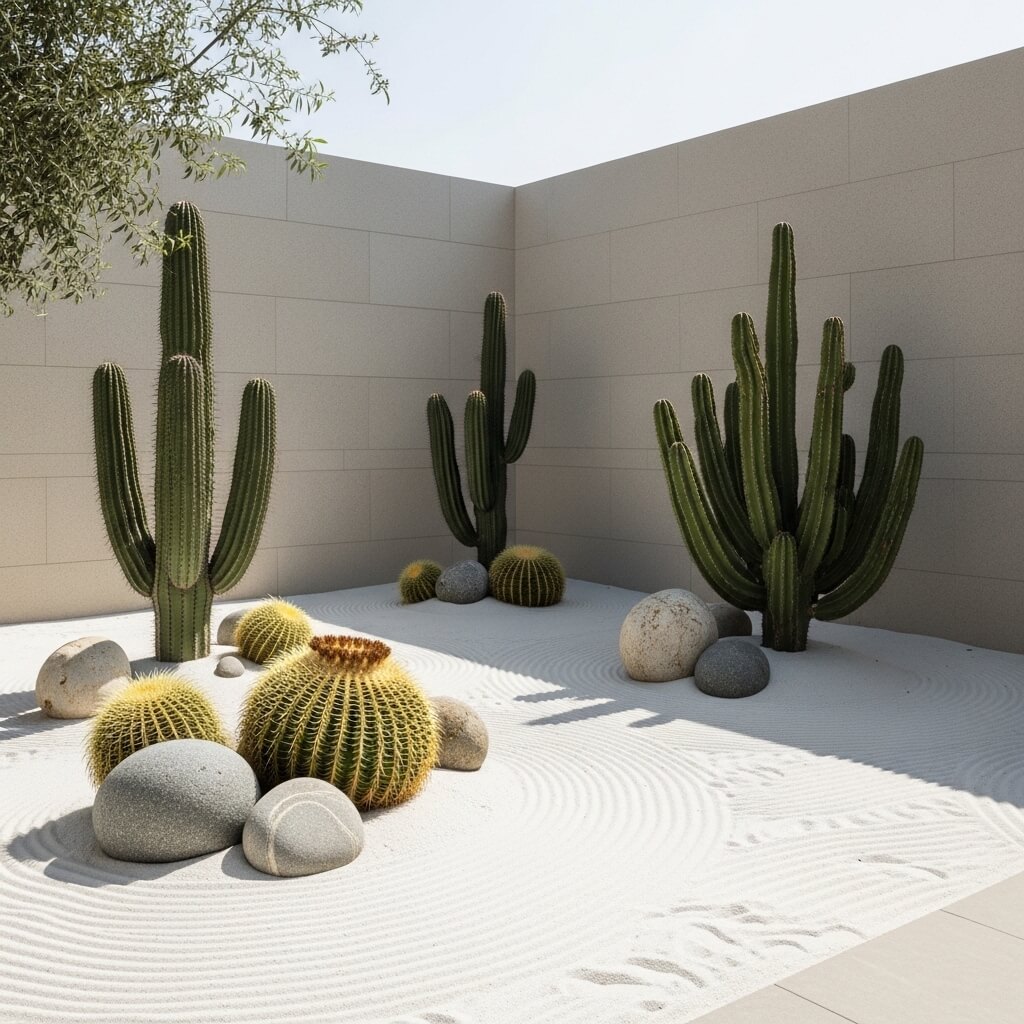
Want to create that clean, Instagram-worthy look without breaking the bank? A minimalist desert corner delivers maximum impact with minimal fuss.
I set up my first minimalist corner using just three key elements: white geometric planters, varying heights of barrel cacti, and light-colored gravel. The secret sauce lies in choosing cacti with different textures but similar color palettes.
Start with a large statement piece like a golden barrel cactus in your biggest planter. Add medium-sized prickly pears in sleek white containers, then finish with small echeveria succulents scattered around the base. The monochromatic color scheme creates visual calm while the varying heights add interest.
Here’s what works best for this design:
- White, gray, or concrete planters only
- Light-colored drainage stones or white sand
- Maximum of three cactus varieties
- Clean lines and geometric shapes
Pro tip: Position your corner where it gets morning sunlight but afternoon shade. Your cacti will thank you, and the stark shadows create dramatic geometric patterns that enhance the minimalist vibe.
2. Boho Style Cactus Patio Garden
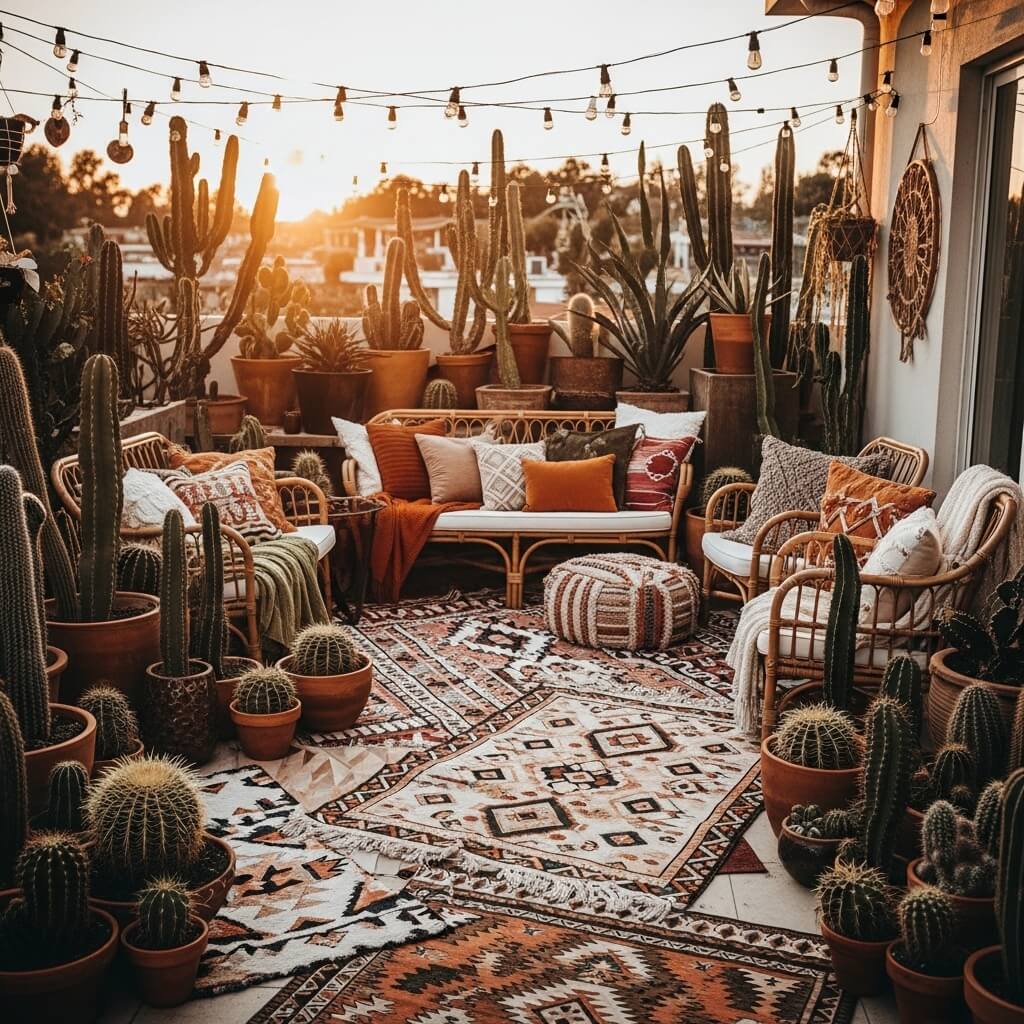
Ever wondered why bohemian gardens feel so magical? It’s all about embracing that beautiful chaos while maintaining enough structure to prevent your space from looking like a plant explosion.
My boho balcony started with macrame hanging planters and quickly spiraled into a delightful mess of textures, colors, and trailing plants. The key to nailing this style lies in mixing natural materials with eclectic containers.
Combine woven baskets, vintage ceramic pots, and hanging macrame planters at different levels. Fill them with string of hearts, burro’s tail succulents, and small barrel cacti. Add colorful Mexican tiles as plant bases, throw in some fairy lights, and suddenly your balcony becomes that cozy retreat you’ve been dreaming about.
Essential boho elements include:
- Macrame hanging planters with trailing succulents
- Vintage or hand-painted ceramic pots
- Natural fiber rugs and cushions
- Warm lighting with string lights or lanterns
- Mixed textures like wicker, ceramic, and metal
The beauty of boho style? “Mistakes” become features. That slightly wonky arrangement of pots? Perfect. The trailing plant that’s growing in an unexpected direction? Even better.
3. Modern Rock Layer Cactus Landscape
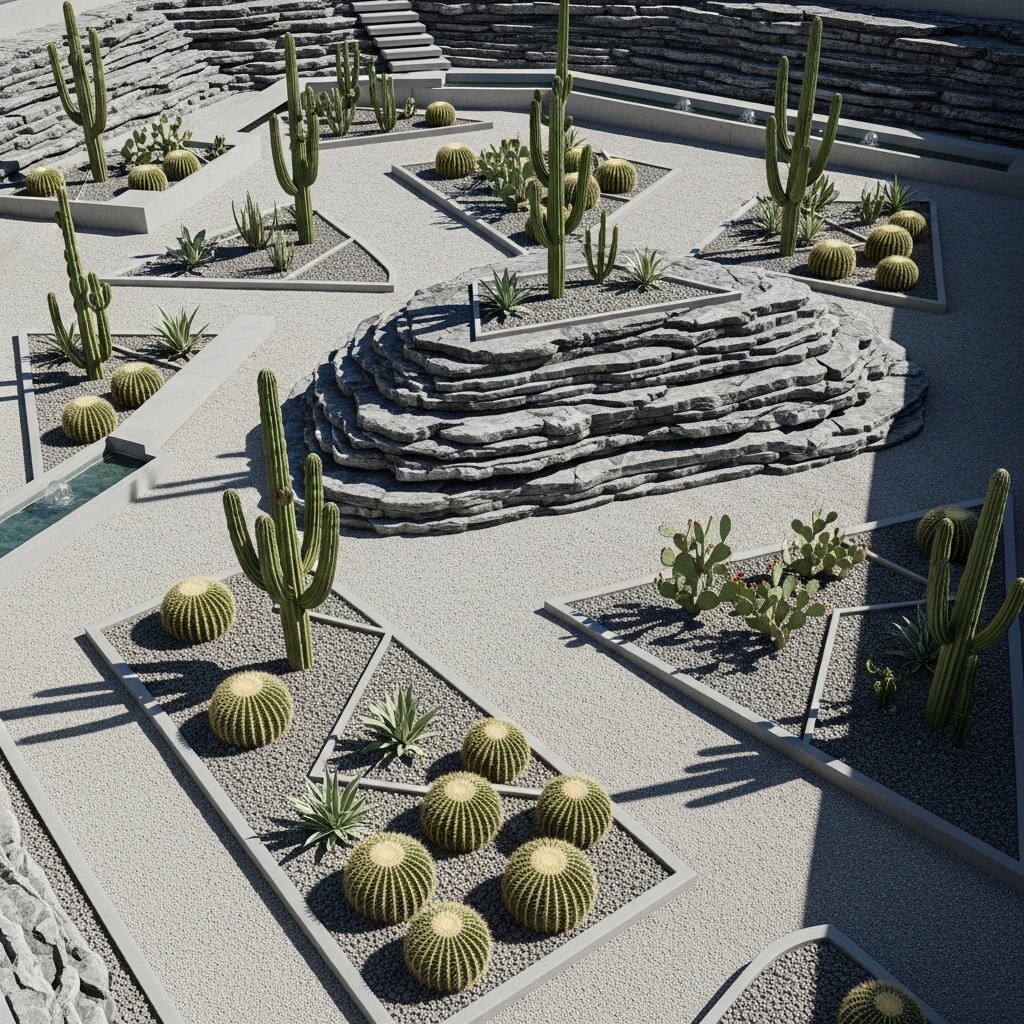
Sometimes you want your balcony to look like it belongs in an architecture magazine, and modern rock layering delivers exactly that sophisticated edge.
I discovered this technique after visiting a contemporary garden show and falling in love with the clean, sculptural quality of layered stone displays. The concept mimics natural rock formations while creating defined zones for different cactus types.
Start with large flat stones or concrete slabs as your base layer. Stack smaller rocks to create graduated levels, then nestle your cacti between the layers. Use consistent rock colors—either warm sandstone tones or cool gray slate—to maintain that modern aesthetic.
Your plant choices should emphasize architectural forms: tall columnar cacti like cereus for vertical impact, low spreading varieties like pad cacti for horizontal balance, and round barrel cacti as focal points.
Key design principles:
- Consistent rock color and texture
- Geometric stacking patterns
- Plants chosen for structural form
- Minimal color variation in containers
- Strategic use of negative space
This style works especially well on larger balconies where you have room to create multiple rock clusters at varying heights.
Also Read: 10 Smart Front Garden Design Ideas for Budget Makeover
4. Small Balcony Cactus Garden Setup
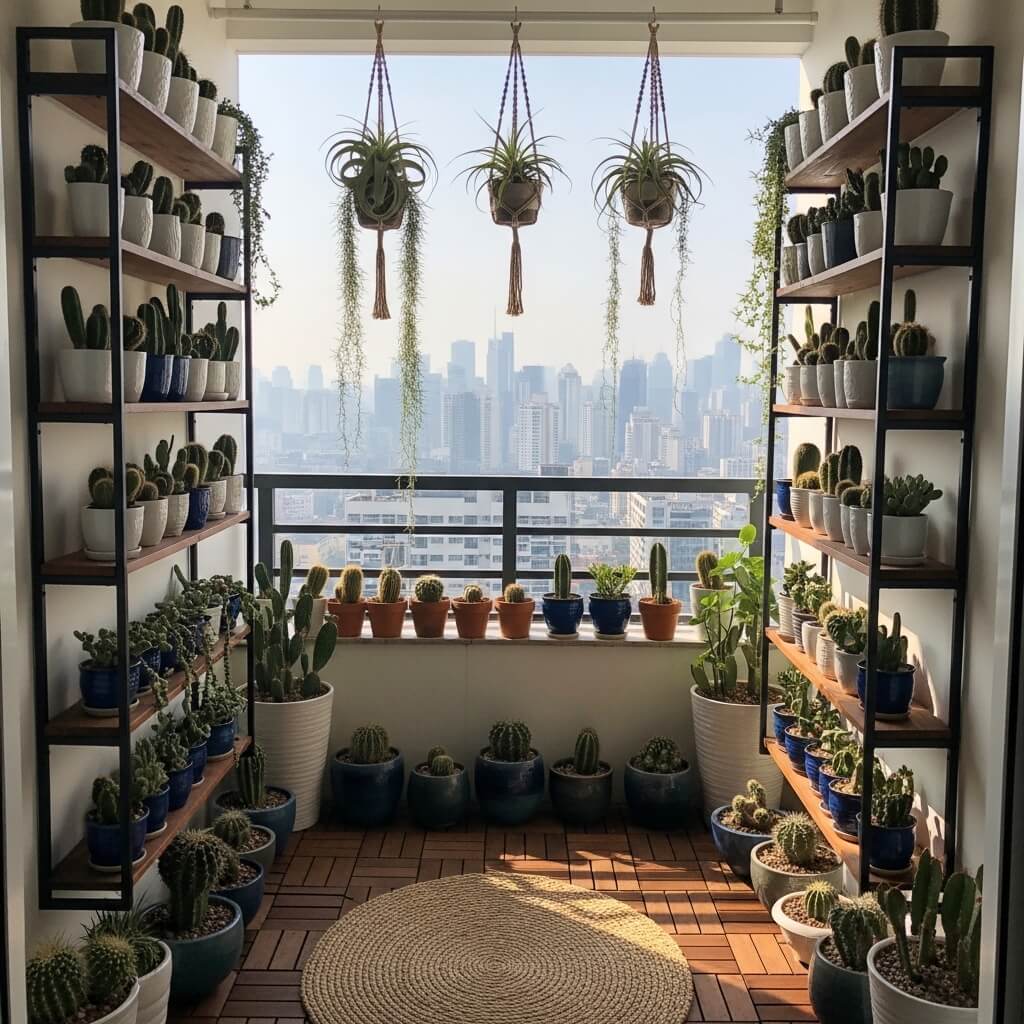
Got a postage stamp–sized balcony? Join the club :/ But here’s the thing—small spaces actually force you to be more creative, and the results can be absolutely stunning.
My tiny balcony taught me that vertical thinking beats horizontal every time. When you can’t spread out, you go up, and cacti are perfect for multi-level displays because they don’t need deep soil.
Create tiers using plant stands, hanging baskets, and wall-mounted shelves. Choose smaller cactus varieties that pack visual punch without taking up precious floor space. Think zebra plants, moon cacti, and small paddle plants that stay compact but offer interesting shapes and colors.
Smart space-saving strategies:
- Tiered plant stands that maximize vertical space
- Corner shelving units with multiple levels
- Rail planters that attach to balcony railings
- Hanging gardens that don’t touch the floor
- Rolling plant carts for easy rearrangement
The trick is creating visual layers without making the space feel cluttered. Stick to a consistent pot style but vary the sizes, and don’t be afraid to use wall space—vertical gardens can be absolutely gorgeous.
5. Indoor Glass Terrarium Cactus Design
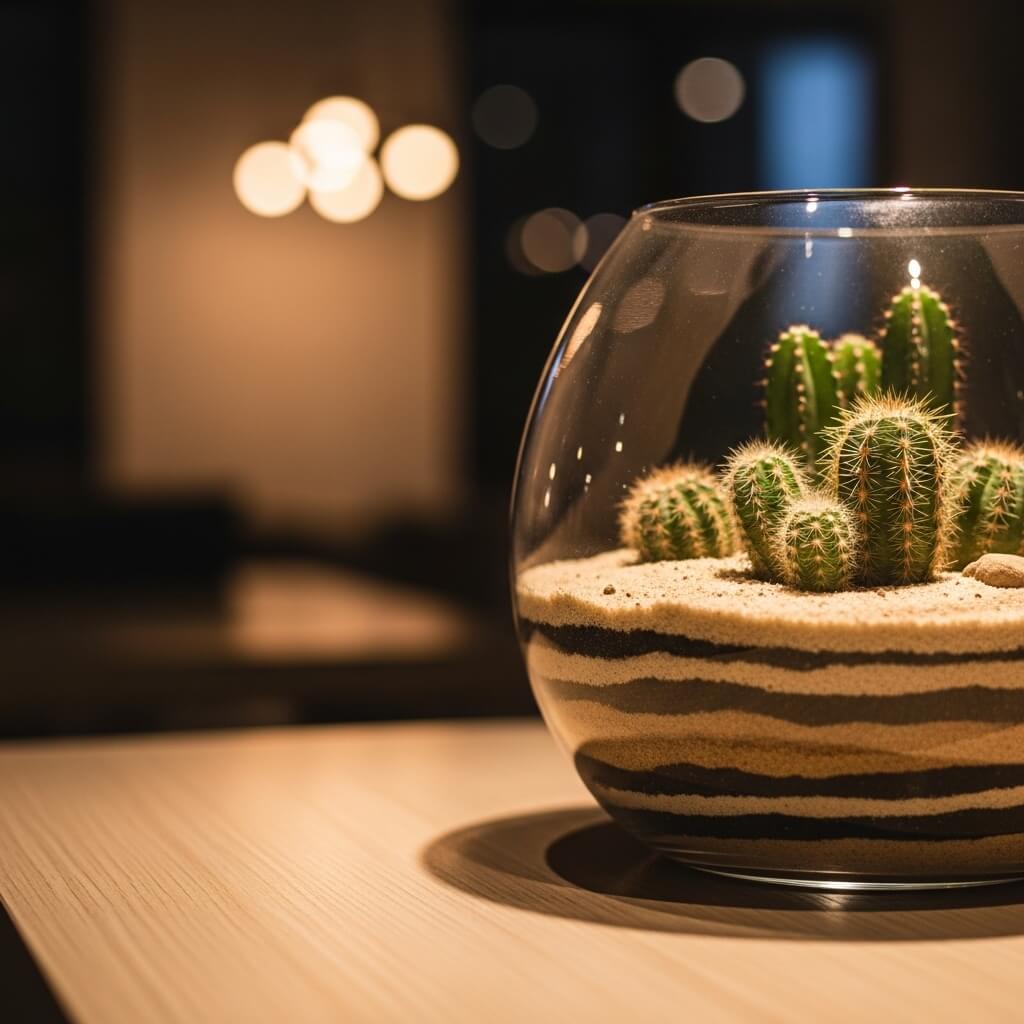
Okay, technically this isn’t outdoor, but hear me out. Glass terrariums bridge indoor and outdoor spaces beautifully, and you can move them between your living room and balcony depending on weather and your mood.
I started my terrarium obsession with a simple glass bowl and three tiny cacti. Now I have an embarrassing collection that spans my coffee table, balcony side tables, and windowsills. There’s something magical about creating these tiny desert worlds in glass containers.
Choose open-top containers for cacti since they need good air circulation. Layer your terrarium with drainage stones, activated charcoal, and well-draining cactus soil. Select tiny specimens that won’t outgrow their space quickly—baby toes, lithops, and small haworthia work perfectly.
Terrarium essentials:
- Open-top glass containers for airflow
- Drainage layer of small stones or gravel
- Quality cactus potting mix
- Long tweezers for precise planting
- Small decorative elements like colored sand or tiny stones
The best part about terrariums? You can experiment with miniature landscapes. Create tiny mountain ranges with colored sand, add small decorative rocks, or even include miniscule figurines for whimsical touches.
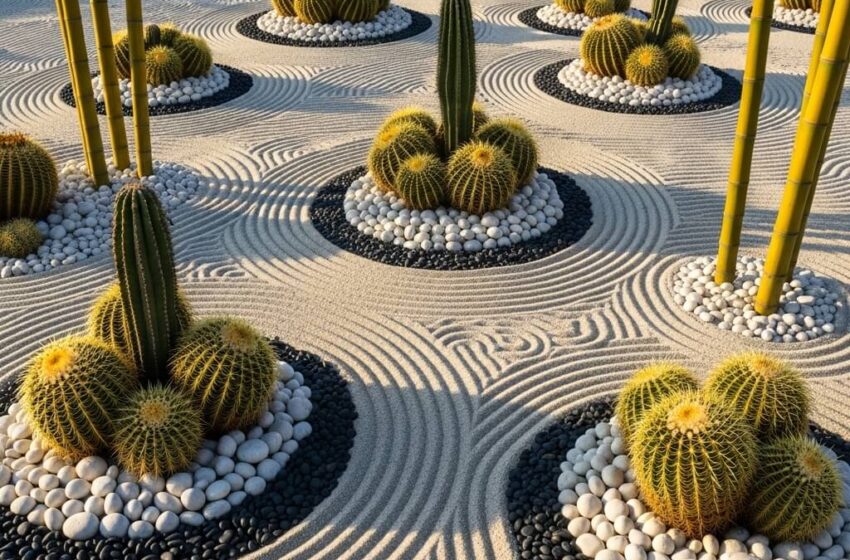
6. Zen-Inspired Cactus Rock Garden
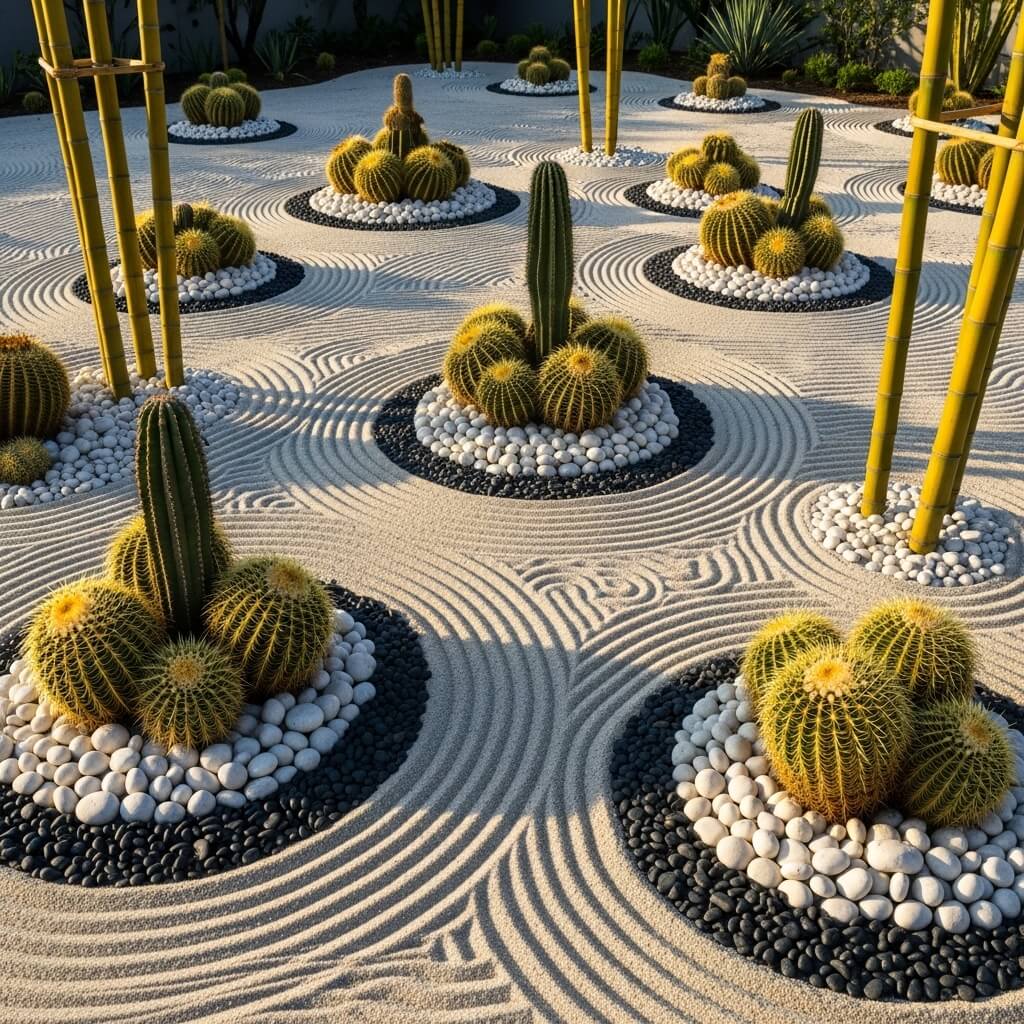
Want to create a space that actually helps you relax after stressful days? A zen-inspired cactus garden combines the meditative qualities of traditional Japanese gardens with the bold beauty of desert plants.
My zen corner started as an experiment in mindfulness. I wanted a space where I could sit with my morning coffee and actually feel peaceful instead of mentally running through my to-do list.
The foundation of zen design lies in simplicity and intentional placement. Choose smooth river rocks, raked sand or fine gravel, and carefully positioned cacti that emphasize natural form over flashy colors. The goal is creating visual harmony that promotes calm reflection.
Create patterns in your sand or gravel using a small rake. Position larger statement cacti as focal points, then add smaller plants in odd-numbered groupings. The asymmetrical balance feels more natural and peaceful than rigid symmetry.
Essential zen elements:
- Neutral color palette focusing on greens and earth tones
- Natural materials like river rocks and bamboo
- Raked sand or fine gravel patterns
- Asymmetrical plant arrangements in groups of three or five
- Clean lines with minimal decorative elements
This style works beautifully in small spaces because less truly becomes more. Each element gets space to breathe and be appreciated individually.
Also Read: 10 Inspiring Rose Garden Design Ideas for Romantic Garden Style
7. Rustic Wooden Planter Cactus Display
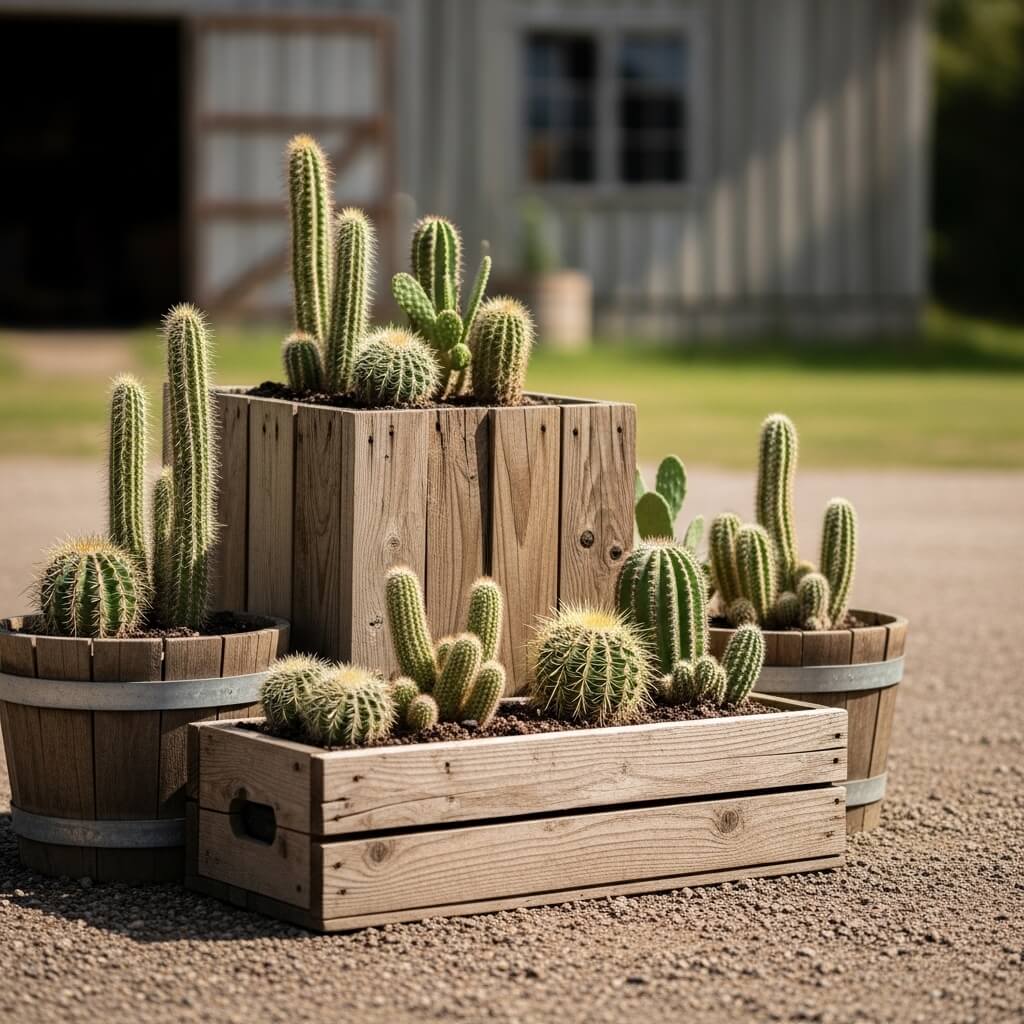
There’s something irresistibly charming about combining the rugged texture of weathered wood with the architectural beauty of cacti. This contrast creates visual interest that feels both natural and curated.
I built my first wooden planter from reclaimed fence boards, and despite my questionable carpentry skills, it turned out absolutely perfect for showcasing my growing cactus collection. The weathered wood patina improved with age, and now it’s my favorite display piece.
Choose planters with natural wood grain and weathering for authentic rustic appeal. Cedar and redwood handle outdoor conditions beautifully while developing gorgeous silver-gray patinas over time. The key is letting the wood age naturally rather than fighting the weathering process.
Arrange your wooden planters at different heights using plant stands, stumps, or stacked wooden crates. Fill them with cacti that complement the earthy aesthetic—barrel cacti, prickly pears, and agave plants all work beautifully with rustic wood.
Design considerations:
- Natural wood that weathers gracefully
- Varying planter heights and sizes
- Earth-toned cactus varieties
- Metal accents like galvanized steel plant tags
- Natural mulch like bark chips or gravel
The beauty of rustic style lies in embracing imperfection. Those weathered edges and natural wood variations become character features that make your garden uniquely yours.
8. Colorful Pot Cactus Arrangement Garden
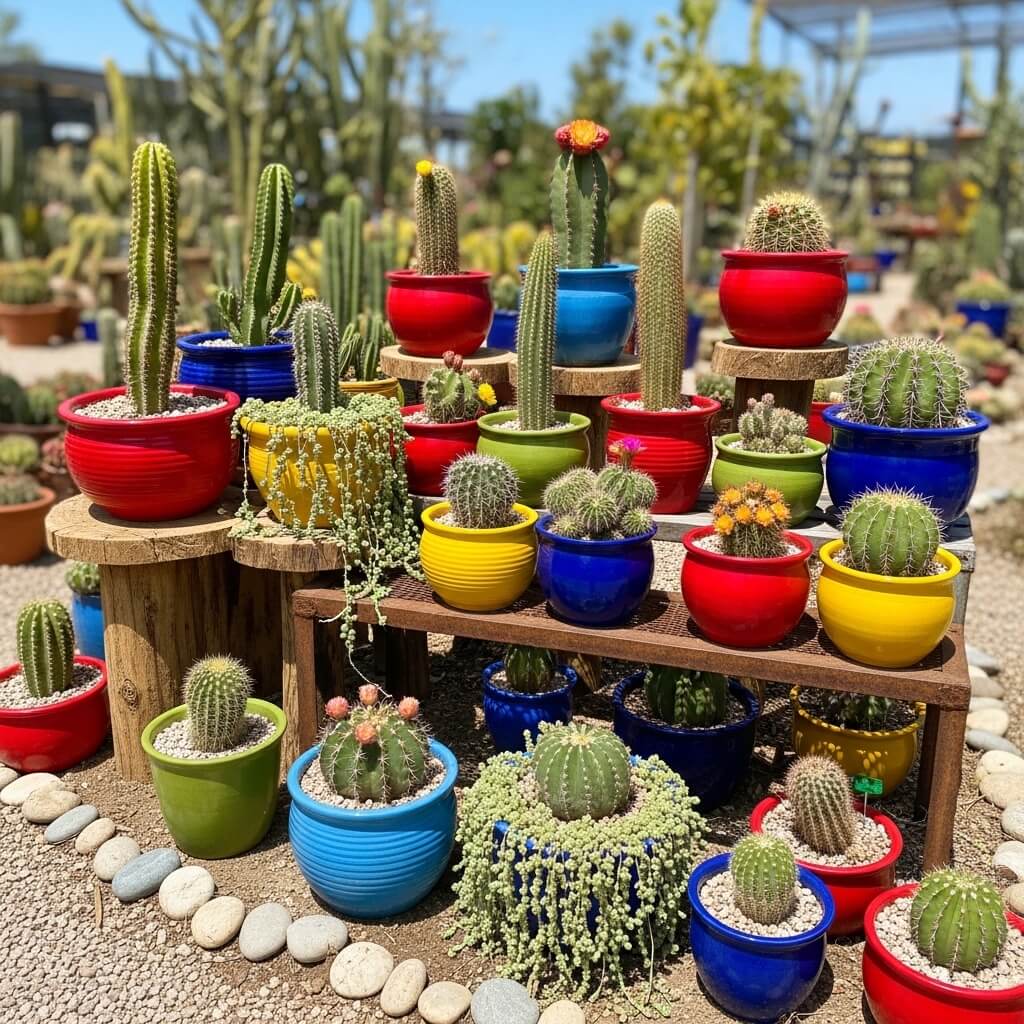
Ready to throw caution to the wind and embrace some serious color? A vibrant pot arrangement brings joy and personality to any balcony, especially during gray winter months when you need visual sunshine.
My colorful collection started with one turquoise pot that I couldn’t resist at a garden center. FYI, that single pot led to what my partner lovingly calls my “rainbow addiction,” and honestly, no regrets here.
The secret to successful colorful arrangements lies in strategic color distribution rather than random placement. Choose a base palette of three to four colors, then repeat them throughout your display to create visual cohesion.
Mix pot sizes and heights while maintaining your color scheme. Pair bright coral pots with sage green planters, add pops of sunny yellow, and ground everything with neutral earth tones. The cacti themselves become beautiful green anchors that unify the diverse container colors.
Color coordination strategies:
- Choose a base palette of 3-4 main colors
- Repeat colors throughout the display for unity
- Balance bright pops with neutral tones
- Consider seasonal color changes for year-round interest
- Group similar colors in odd-numbered clusters
This approach works especially well if your balcony gets lots of natural light—the sun makes those vibrant colors absolutely glow while highlighting the interesting textures and forms of your cacti.
9. Vertical Wall Cactus Garden Design
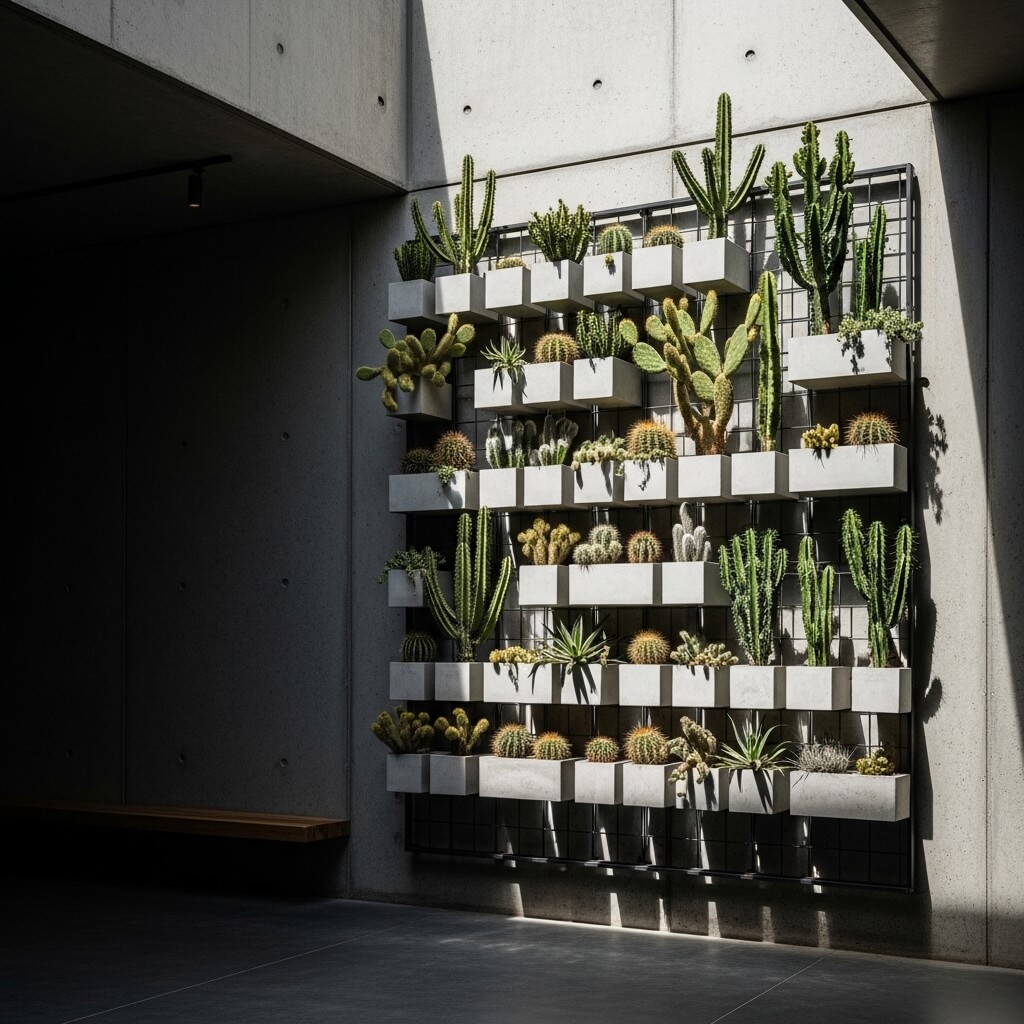
When floor space runs out, smart gardeners look up. Vertical cactus gardens maximize growing space while creating stunning living walls that become focal points of your outdoor area.
My first vertical garden attempt was honestly a disaster involving fallen pots and very unhappy plants. But after some trial and error, I figured out the engineering basics that make wall gardens actually work long-term.
Start with a sturdy wall-mounted grid system or pocket planters designed for succulents. Choose lightweight containers that won’t stress your mounting system, and select cacti varieties that stay relatively small and don’t develop heavy growth patterns.
The key to successful vertical gardens lies in proper drainage and easy access. Each pocket or container needs drainage holes, and you’ll want to reach every plant for maintenance without acrobatic maneuvers.
Vertical garden essentials:
- Strong mounting system appropriate for your wall type
- Lightweight, well-draining containers
- Compact cactus varieties that stay small
- Easy watering system or removable containers
- Strategic layout that considers sun exposure patterns
IMO, the visual impact of a well-designed vertical garden totally justifies the extra planning effort. Plus, you get way more plants in the same square footage 🙂
Also Read: 10 Creative Rock Garden Design Ideas for Stunning Backyard Style
10. Moroccan Desert Style Cactus Yard
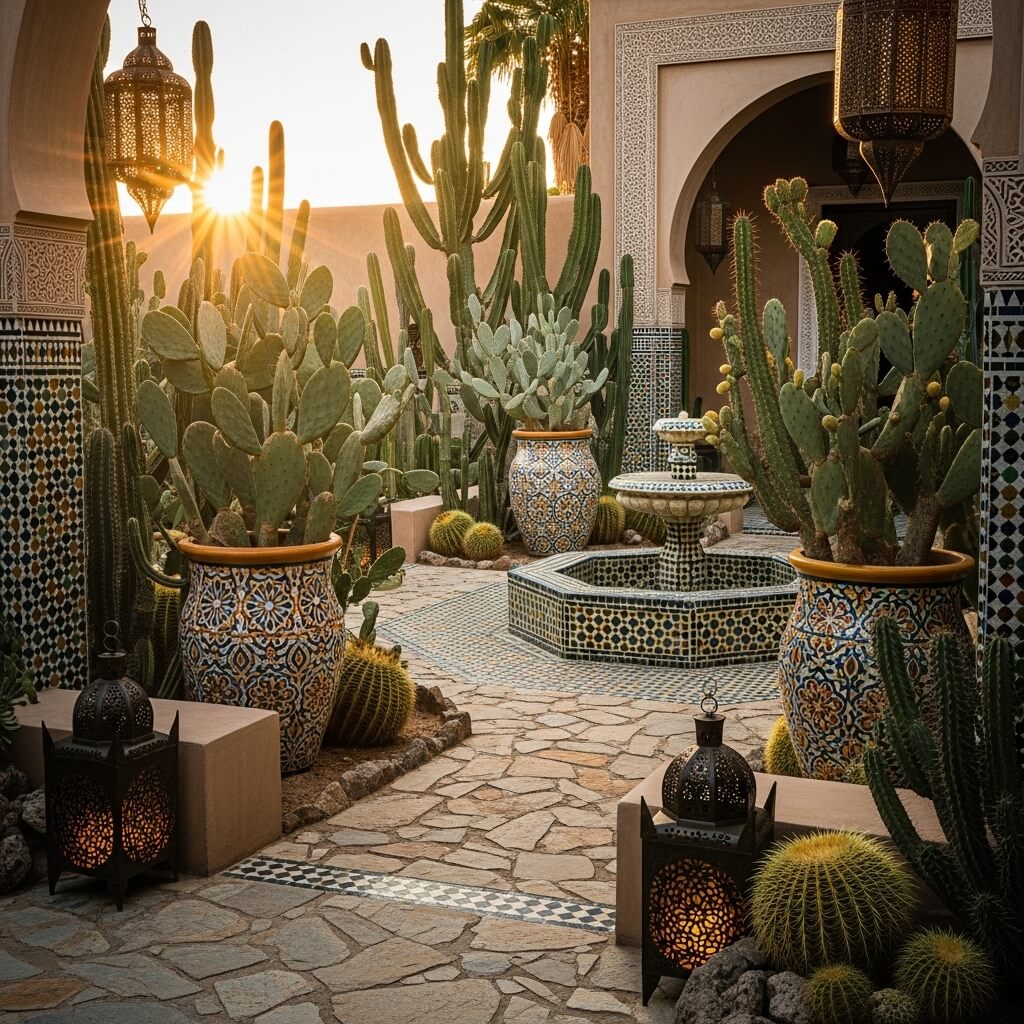
Want to transport yourself to an exotic desert oasis every time you step outside? Moroccan desert styling combines rich colors, intricate patterns, and lush textures that transform ordinary balconies into magical retreats.
I fell in love with this style after visiting a Moroccan-inspired garden at a botanical center. The combination of warm earth tones, geometric patterns, and desert plants created such an inviting atmosphere that I knew I had to recreate it at home.
Start with warm-toned containers in terracotta, deep blues, and rich oranges. Add patterned tiles as plant bases, incorporate metal lanterns for evening ambiance, and choose cacti with interesting architectural forms that complement the exotic aesthetic.
Layer textiles like outdoor rugs and cushions in complementary colors. String up warm-toned lights, add some brass or copper accents, and suddenly your balcony becomes that vacation destination you’ve been dreaming about.
Moroccan design elements:
- Warm color palette of terracotta, deep blue, and burnt orange
- Geometric patterns in tiles and textiles
- Metal lanterns and warm lighting
- Layered textiles and comfortable seating
- Architectural cacti varieties with strong forms
The beauty of Moroccan styling lies in layering different textures and patterns while maintaining a cohesive color story. Each element should feel intentional while contributing to the overall exotic atmosphere.
Creating Your Perfect Cactus Balcony
After experimenting with all these different styles, I’ve learned that the best cactus garden reflects your personality rather than following strict design rules. Maybe you love the clean simplicity of minimalist design, or perhaps the colorful chaos of boho style speaks to your soul.
The practical truth is that any of these approaches can work on any size balcony with a little creative adaptation. Small spaces might focus on vertical elements or terrariums, while larger balconies can accommodate multiple design zones or more elaborate rock arrangements.
Start with one style that genuinely excites you, then let your garden evolve naturally as you discover which plants thrive in your specific conditions and which design elements bring you the most joy. Remember, the goal is creating a space you actually want to spend time in, not just something that looks good in photos.
Your balcony cactus garden should be a reflection of your style, your space, and your commitment level. Whether you choose dramatic vertical walls or simple terrarium collections, the most important element is that you love stepping outside to enjoy your personal desert oasis every day.