10 Smart Front Garden Design Ideas for Budget Makeover
- Garden Design
 Ben
Ben- 0
- 27 minutes read
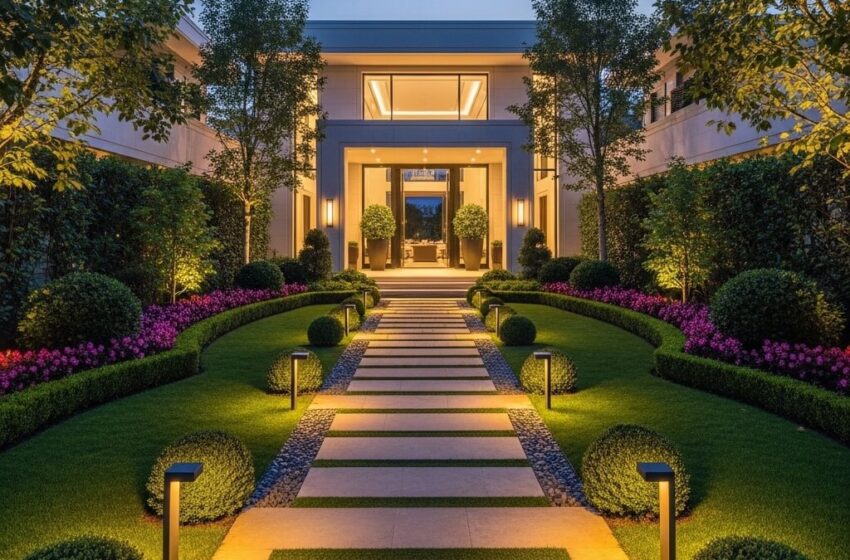
Your front garden looks like a sad, forgotten patch of dirt, doesn’t it? Don’t worry – I’ve been there too, staring out my window at what could charitably be called a “minimalist landscape” but was really just neglect with a fancy name.
Here’s the thing: you don’t need to break the bank to transform that eyesore into something that makes your neighbors actually jealous. I’ve spent the last few years experimenting with front garden makeovers (some successful, others… well, let’s just say my first attempt at topiary looked more like abstract art), and I’m here to share what actually works.
Ready to turn your front yard from “meh” to “magnificent” without selling a kidney? Let’s get started.
Modern Minimalist Front Garden Entrance
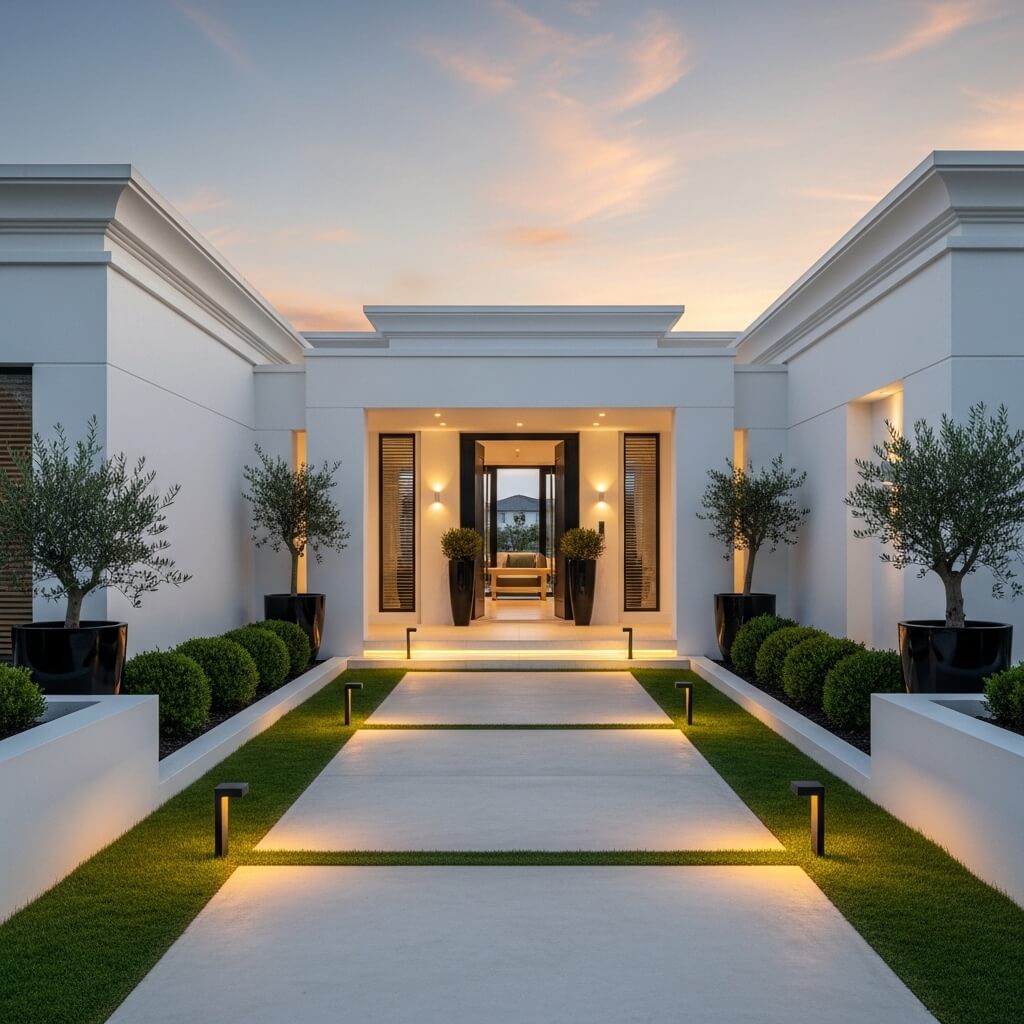
Less really is more – and your wallet will thank you for it. Modern minimalist design is basically the art of doing more with less, which sounds like designer speak but actually translates to “spend smart, look amazing.”
I love this approach because it focuses on clean lines, geometric shapes, and a limited color palette. Think sleek concrete planters with architectural plants like ornamental grasses or sculptural succulents. The beauty lies in the simplicity, not in cramming every plant species from the garden center into your space.
Here’s what works brilliantly on a budget:
• Large format pavers or concrete slabs create instant sophistication
• Ornamental grasses like fountain grass or feather reed grass give movement without fuss
• Simple geometric planters – you can even make these from concrete blocks
• Gravel or crushed stone as ground cover instead of expensive hardscaping
The secret sauce? Repetition and restraint. Choose three materials max and stick with them. I learned this the hard way after my first attempt looked like a plant catalog exploded in my front yard.
Want to add some personality without breaking the minimalist rules? A single statement piece – maybe a sleek wooden bench or a striking architectural plant – can elevate the entire space.
Small Space Vertical Front Garden Design
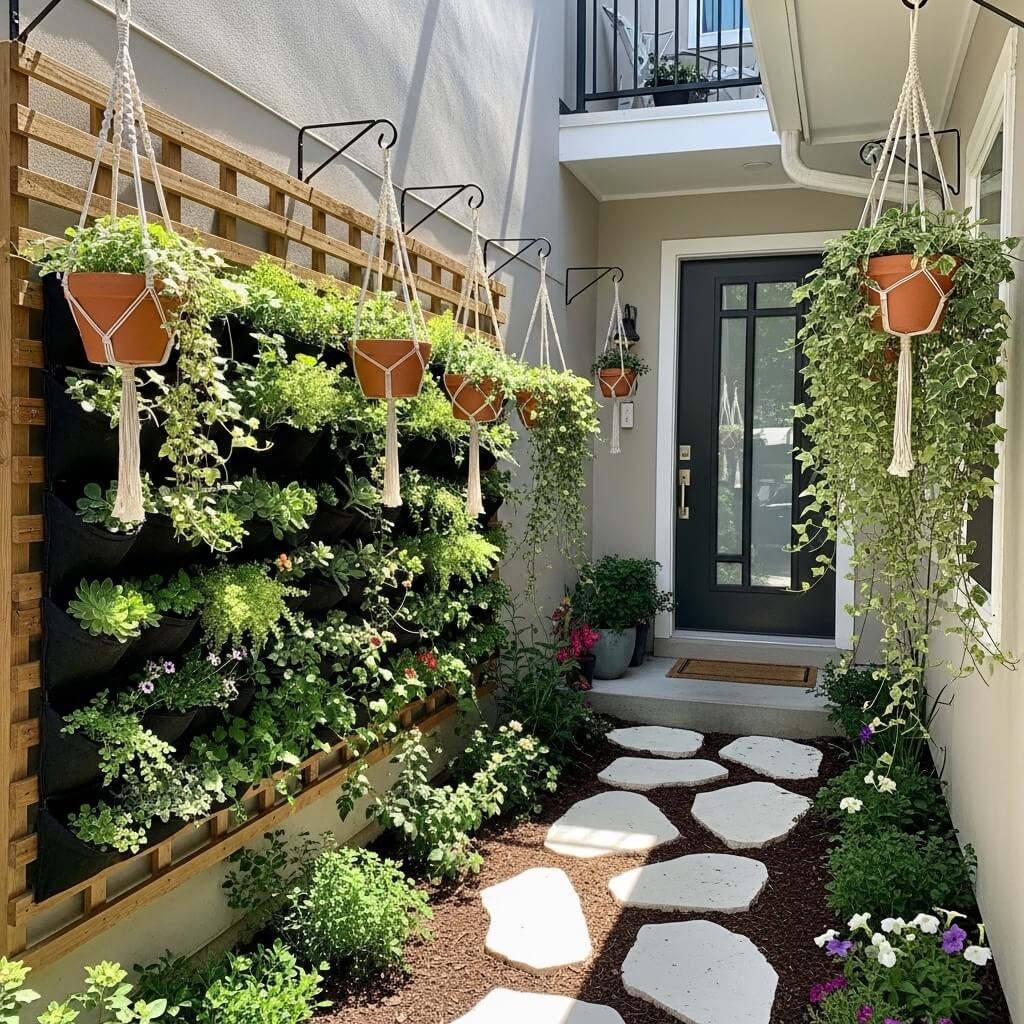
Got a front garden the size of a postage stamp? Welcome to the club! Small spaces actually force you to be more creative, and honestly, some of the most stunning gardens I’ve seen have been tiny.
Vertical gardening is your secret weapon here. Why spread out when you can go up? I discovered this after trying to cram way too much into my 6×8 front space and ending up with what looked like a plant traffic jam.
Here’s how to maximize every inch:
• Wall-mounted planters create layers of interest
• Climbing plants on trellises add height and privacy
• Hanging baskets utilize overhead space
• Tiered plant stands create depth in narrow spaces
• Corner shelving units turn dead space into growing space
The magic happens when you create multiple levels of planting. Think of it like arranging furniture in a small room – you want to draw the eye upward and create the illusion of more space.
Ever noticed how some small gardens feel cramped while others feel cozy? It’s all about the flow and sightlines. Keep pathways clear and use mirrors strategically to bounce light around and create depth.
Luxury Stone Pathway Front Yard Style
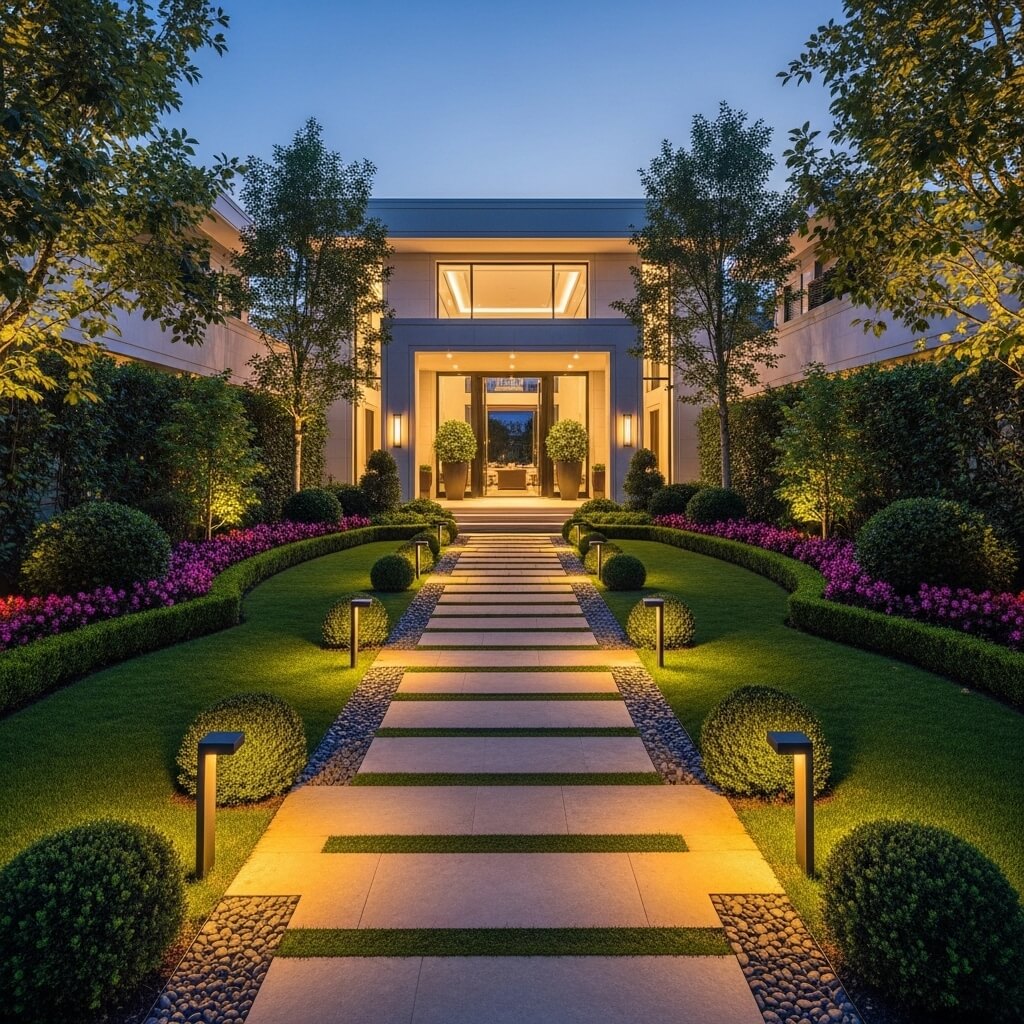
Nothing says “welcome home” quite like a beautiful stone pathway. But here’s the thing – you don’t need imported Italian marble to get that high-end look.
Natural stone alternatives can give you serious luxury vibes without the luxury price tag. I’ve seen budget flagstone installations that rival expensive designer work, simply because the homeowner focused on proper installation and thoughtful design.
Smart stone pathway strategies:
• Mixed stone sizes create visual interest and reduce costs
• Grass or groundcover joints between stones add softness
• Curved pathways feel more expensive than straight lines
• Border plants frame the path and hide imperfections
• Solar pathway lights add evening drama affordably
The key to making budget stone look expensive? Proper preparation and placement. Take time with your base preparation – a wobbly, uneven path screams “DIY disaster” no matter how beautiful your stones are.
Pro tip: Source stones locally when possible. Transportation costs can double your material budget, and local stone often looks more natural in your landscape anyway.
Also Read: 10 Inspiring Rose Garden Design Ideas for Romantic Garden Style
Cottage-Style Flower Front Garden Layout
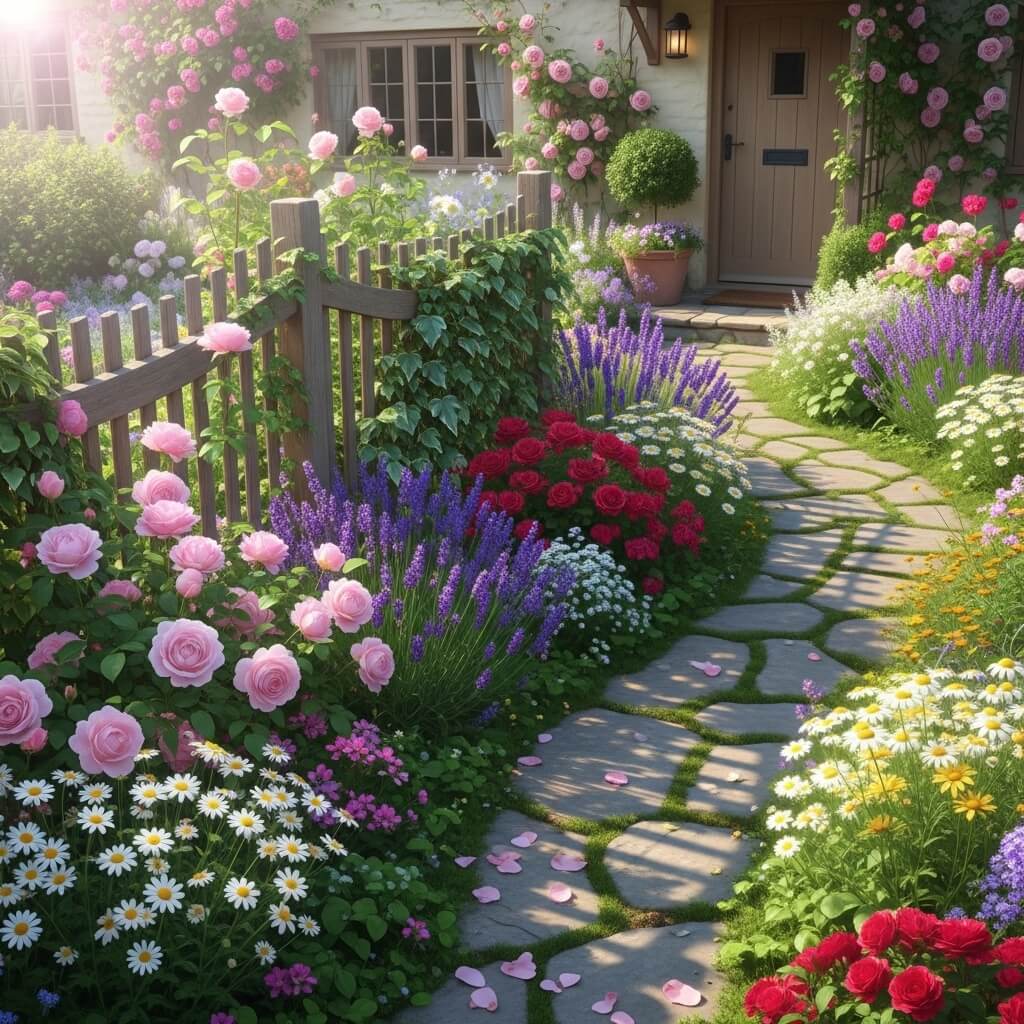
If minimalism makes you yawn and you’re all about that romantic, slightly wild garden vibe, cottage style might be your calling. This approach embraces the “beautiful mess” aesthetic – but there’s definitely method to the madness.
Cottage gardens celebrate abundance and mixing, which actually works in your favor budget-wise. You can combine inexpensive annuals with perennial investments and create something that looks like it’s been growing for decades.
Essential cottage garden elements:
• Mixed flower borders with varying heights and bloom times
• Climbing roses or clematis on arches or fences
• Self-seeding flowers like cosmos, calendula, and sweet alyssum
• Picket fencing or rustic edging to define spaces
• Meandering pathways through planted areas
The cottage garden secret is layered planting. Tall delphiniums in back, medium foxgloves in middle, low sweet alyssum in front – but let them mingle and overlap naturally.
Want to fast-track that established look? Start with perennial bones like lavender, catmint, and hardy geraniums, then fill in with cheerful annuals. The perennials give structure while the annuals provide color punch.
Low-Maintenance Desert Front Garden Design
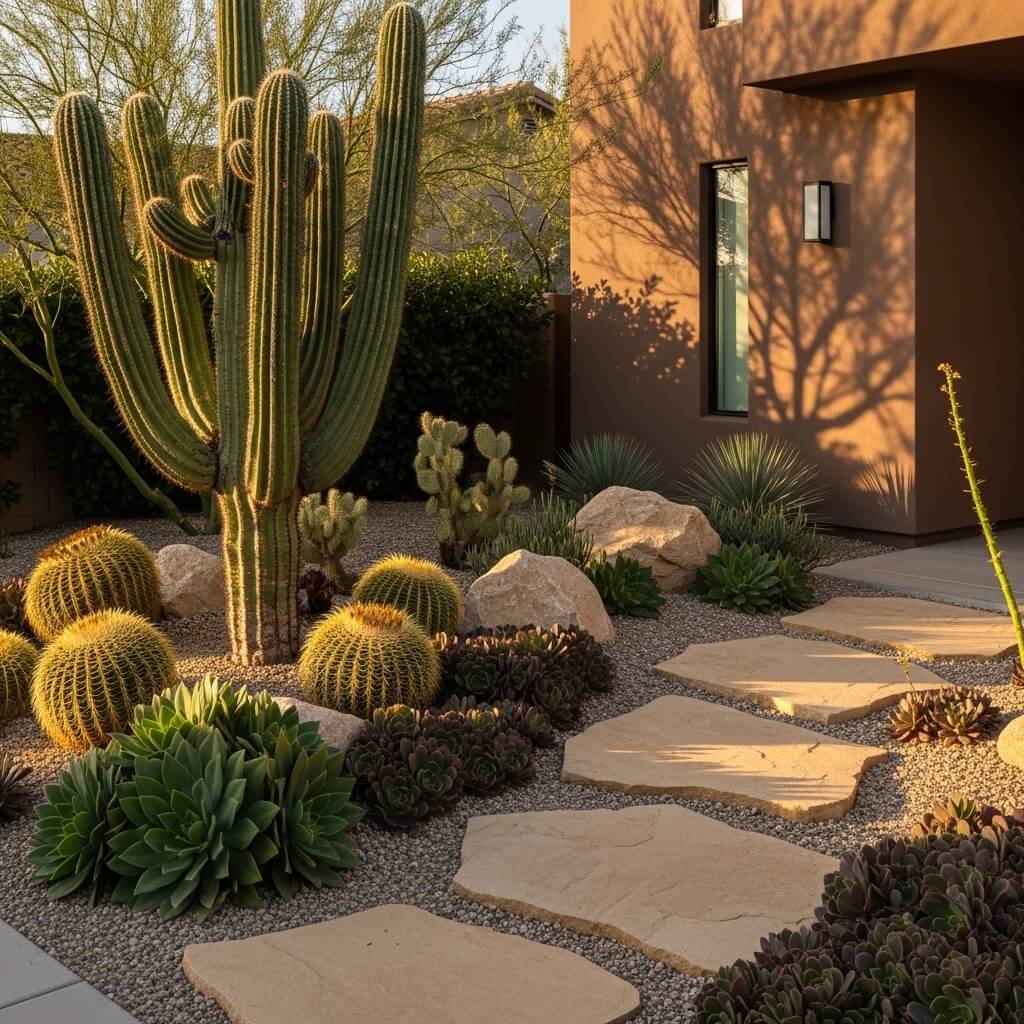
Let’s be honest – not everyone has time to baby their front garden. If you want something gorgeous that basically takes care of itself, desert-inspired design is brilliant (and surprisingly budget-friendly).
Drought-tolerant doesn’t mean boring. Some of the most stunning front gardens I’ve seen celebrate the natural beauty of arid landscapes with dramatic succulents, ornamental grasses, and sculptural plants.
Low-maintenance superstars include:
• Agave and aloe varieties for dramatic focal points
• Ornamental grasses like blue fescue and Mexican feather grass
• Groundcover sedums that spread naturally
• Decorative gravel mulch in various colors and sizes
• Boulder or rock groupings for structural interest
The beauty of this approach? Your “mistakes” often look intentional. That slightly uneven rock placement? It’s naturalistic design, obviously! 🙂
Water-wise gardening also means lower utility bills long-term. Choose plants suited to your climate and group them by water needs. Your future self will thank you when you’re sipping lemonade instead of dragging hoses around.
Japanese Zen Inspired Front Yard Garden
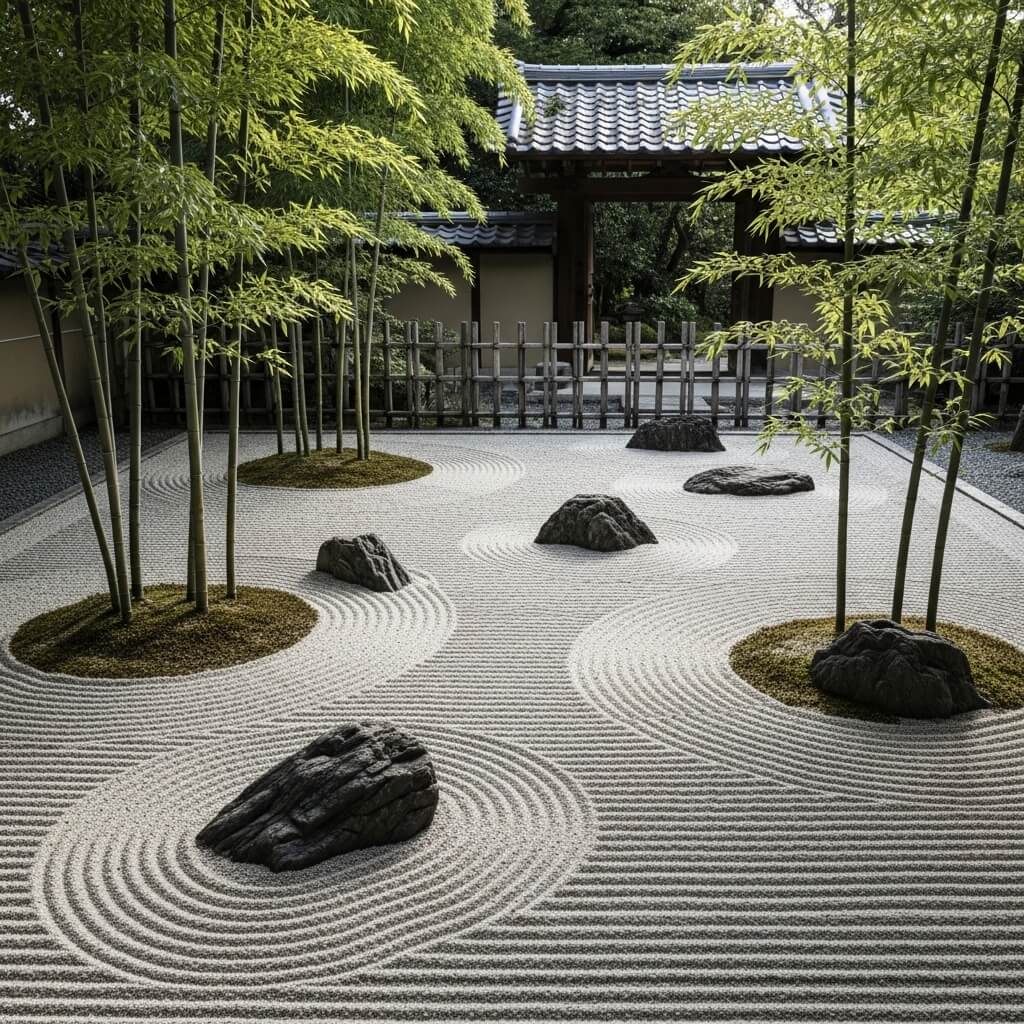
There’s something deeply calming about Japanese garden principles – the careful balance, the thoughtful placement, the sense that every element has purpose. Plus, the emphasis on natural materials and simple plantings can be surprisingly budget-friendly.
Japanese-inspired doesn’t require authentic everything. You’re creating a feeling, not a museum exhibit. Focus on the underlying principles: balance, simplicity, and connection to nature.
Key elements that won’t break the bank:
• Gravel or sand areas for meditation spaces
• Simple water features – even a small fountain creates tranquility
• Carefully pruned shrubs like boxwood or juniper
• Natural stone arrangements in odd-numbered groupings
• Bamboo screening for privacy and sound buffering
• Stepping stone pathways that encourage slow, mindful walking
The Japanese concept of “borrowed scenery” is perfect for small budgets. Frame views of existing trees or distant landscapes to make your space feel larger and more connected to its surroundings.
Restraint is everything in this style. If your instinct is to add more plants, step back instead. The power comes from what you choose to include, not from cramming in every beautiful element you can find.
Also Read: 10 Dreamy Garden Restaurant Design Outdoor Ideas for Romantic Setup
Budget-Friendly DIY Front Garden Makeover
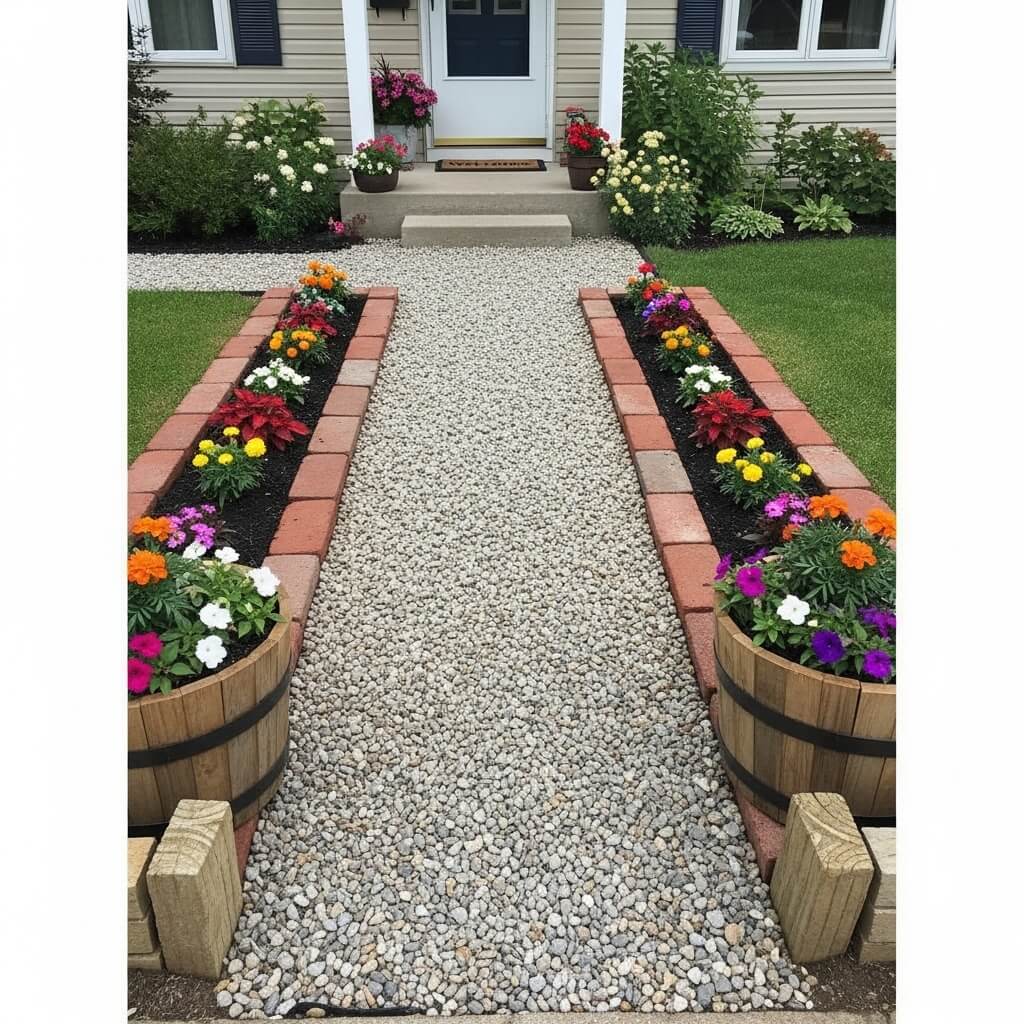
This is where the rubber meets the road – or where the shovel meets the soil, if you want to be literal about it. DIY doesn’t have to mean “looks like I did it myself” in a bad way.
I’ve learned that the biggest budget-busters are usually labor costs and impulse purchases. Planning ahead and doing the work yourself can stretch your dollar incredibly far.
Start with these high-impact, low-cost projects:
• Mulching and edging instantly cleans up any garden
• Painting existing structures like fences, planters, or gates
• Building simple raised beds from basic lumber
• Creating pathways with gravel, stepping stones, or pavers
• Propagating plants from cuttings or divisions
Timing is everything for budget gardening. Shop end-of-season sales, trade plants with neighbors, and start easy plants from seed. I’ve built entire garden sections for the cost of a single designer planter by being patient and strategic.
FYI, the biggest money-saver is often working with what you have. That overgrown shrub might just need pruning, not replacing. Those patchy lawn areas might be perfect for groundcover plantings.
Symmetrical Formal Front Garden Design
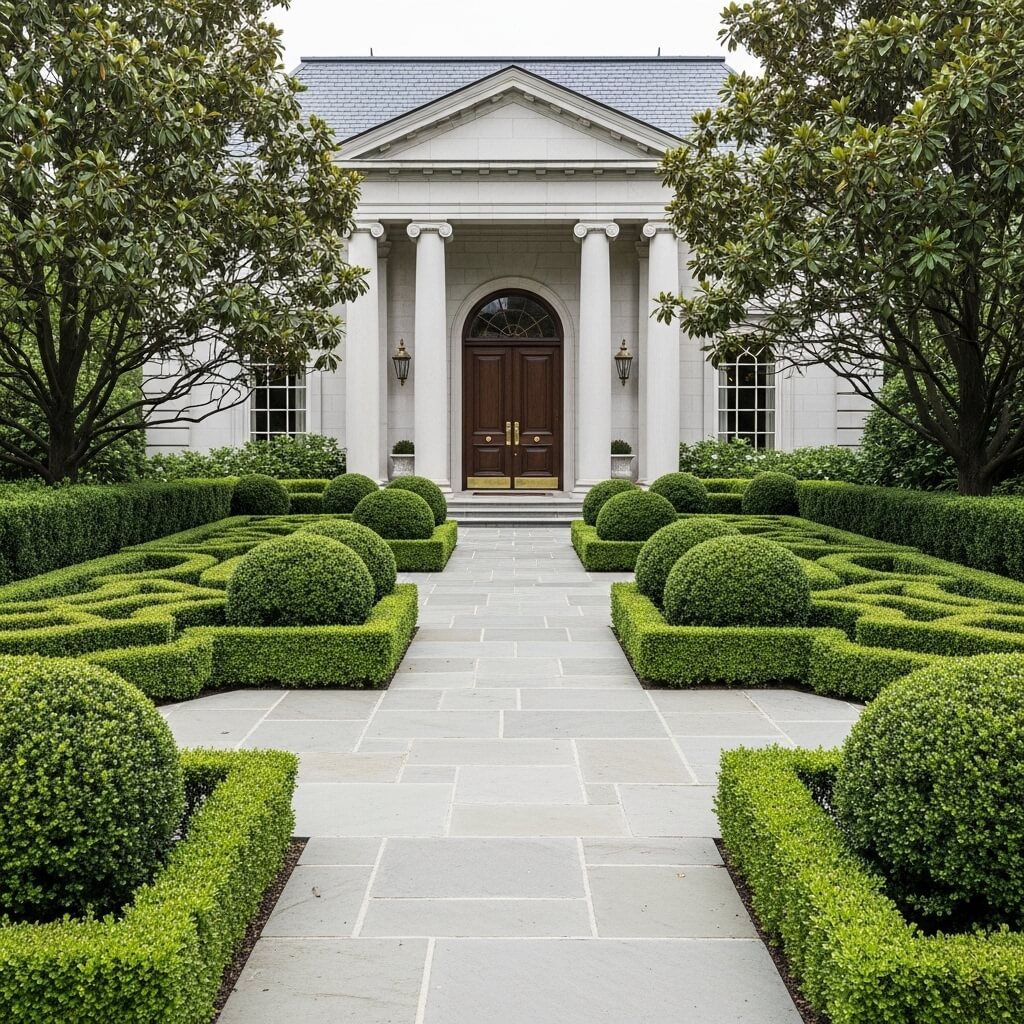
Formal gardens have this reputation for being high-maintenance and expensive, but symmetrical design can actually simplify your choices and reduce costs. When you need two of everything, you can often buy in bulk for better prices.
Formal doesn’t mean stuffy – it means intentional and balanced. Think paired planters, matched plantings, and clear sight lines that create a sense of order and welcome.
Essential formal elements on a budget:
• Matched planters flanking your entrance
• Symmetrical plantings of the same species on each side
• Central focal points like a small fountain or specimen plant
• Clipped hedging to define boundaries and pathways
• Geometric lawn areas or hardscaping patterns
The trick to affordable formal gardening is choosing plants that naturally maintain shape. Boxwood alternatives like Japanese holly or Korean boxwood give you that manicured look with less maintenance.
Scale matters tremendously in formal design. A tiny formal garden can feel precious and charming, while a poorly proportioned one just feels awkward. Measure twice, plant once.
Green Lawn with Accent Plant Borders
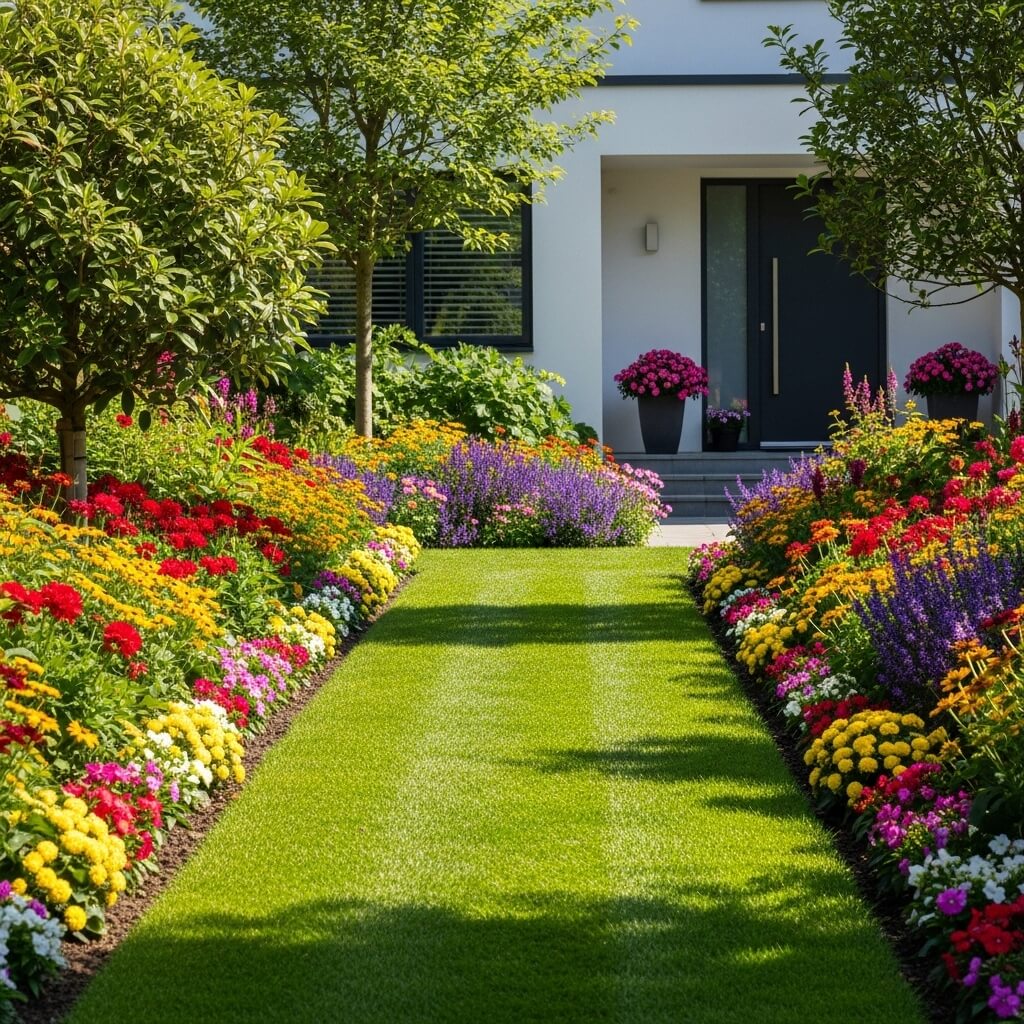
Sometimes the most effective design is the simplest one. A beautiful lawn framed by thoughtful plantings can be absolutely stunning – and surprisingly affordable to maintain once established.
This approach works especially well if you have kids or pets who actually use the lawn space. The key is creating strong borders that frame and define the lawn area while providing seasonal interest.
Border design strategies that work:
• Perennial borders that return year after year
• Mixed shrub plantings for structure and seasonal color
• Ornamental grass edges that soften hard lines
• Bulb plantings for spring color followed by summer annuals
• Evergreen anchor plants that provide winter interest
The secret to making this look intentional rather than basic? Generous planting drifts rather than one-of-everything spotting. Five of the same plant looks purposeful; one each of five different plants looks confused.
Lawn alternatives like clover or ornamental grasses can reduce maintenance while maintaining that clean, open feeling if traditional turf isn’t working in your climate or budget.
Also Read: 10 Budget Indoor Garden Design Ideas for Stylish Homes
Tropical Style Front Entrance Garden Design
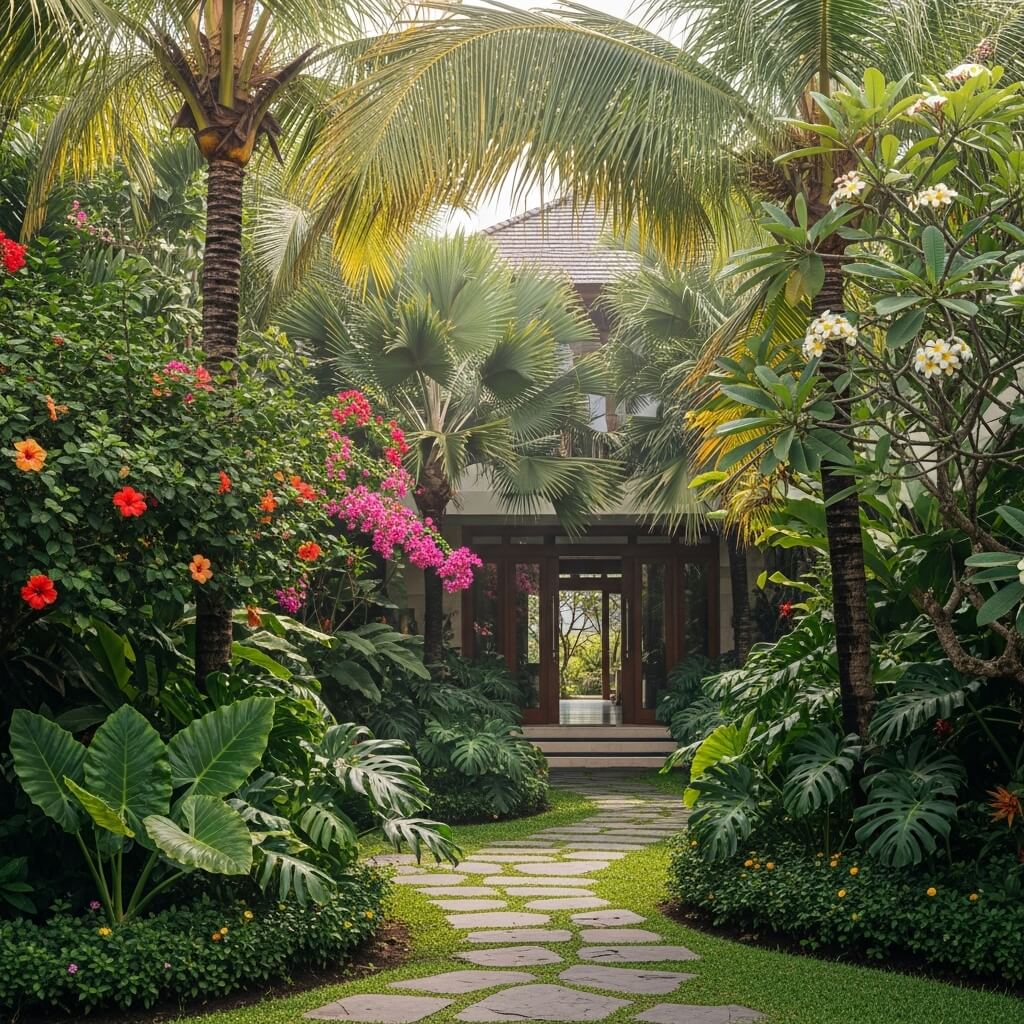
Who says you need to live in the tropics to enjoy tropical style? Bold foliage, dramatic textures, and lush plantings can create that vacation-at-home feeling even in temperate climates.
The tropical look is all about creating layers of lush, dramatic foliage in various shades of green, punctuated by bright flowering accents. Many plants that give tropical vibes are actually quite hardy and budget-friendly.
Cold-climate tropical superstars:
• Large-leafed hostas for that jungle canopy effect
• Hardy bananas like Basjoo that die back but return
• Elephant ears that you can overwinter indoors
• Ornamental grasses like bamboo or fountain grass
• Bold annuals like caladiums, coleus, and impatiens
• Climbing vines on trellises for vertical interest
Container gardening is your friend here – you can move tender plants indoors for winter and rearrange your tropical vignettes as needed.
The magic ingredient in tropical design? Contrast. Mix broad leaves with spiky ones, light colors with dark, smooth textures with rough. It’s like creating a living collage that changes throughout the seasons.
Making It All Work: Final Thoughts
Here’s what I’ve learned after years of front garden experiments: the best garden design is one that fits your lifestyle, budget, and maintenance preferences. That Instagram-perfect cottage garden is meaningless if you hate weeding, and the sleekest modern design falls flat if you love collecting plants.
Start with one area and do it well rather than spreading your budget thin across the entire space. Success breeds success – when you nail that front border or entrance planting, you’ll gain confidence and momentum for the next phase.
Remember, gardens evolve over time. What starts as a simple lawn-and-border design might gradually incorporate more elements as your skills and plant collection grow. The best part about garden design? There’s always next season to try something new.
Your front garden should make you smile every time you come home. Whether that means minimalist sophistication, cottage garden abundance, or tropical paradise vibes, the right design is the one that reflects you and works with your real life – not against it.
Now stop scrolling through garden photos and go get your hands dirty! 🙂 Your dream front garden is waiting, and it doesn’t need to wait for a bigger budget to get started.