10 Inspiring Rose Garden Design Ideas for Romantic Garden Style
- Garden Design
 Ben
Ben- 0
- 33 minutes read
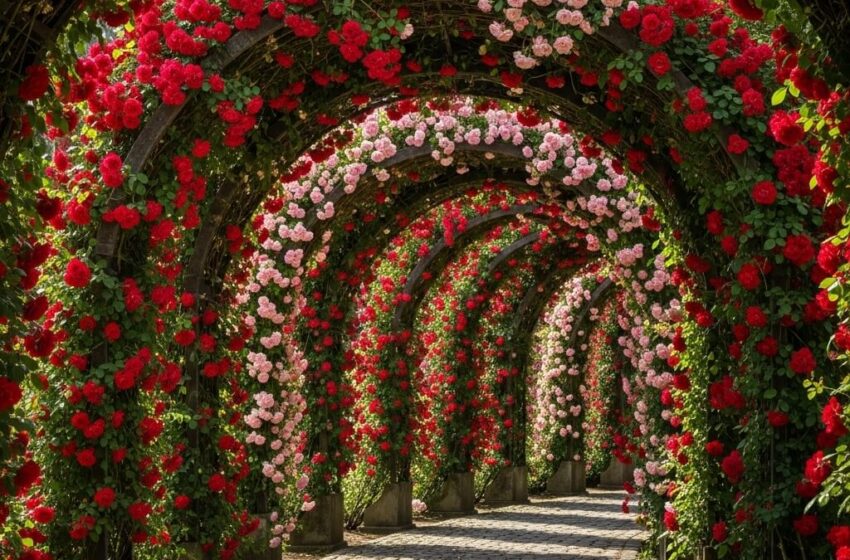
Picture this: you’re sipping your morning coffee, looking out at a garden that makes your neighbors stop mid-stride during their power walks. That’s the magic of a well-designed rose garden – it doesn’t just grow flowers, it grows envy (the good kind, of course).
I’ve spent years experimenting with different rose garden layouts, and trust me, I’ve made every mistake in the book. From planting roses too close together to choosing varieties that clash worse than polka dots with stripes, I’ve learned what works and what definitely doesn’t. Today, I’m sharing ten rose garden designs that’ll transform your outdoor space into something straight out of a romance novel – minus the dramatic plot twists, thankfully.
Romantic Cottage Rose Garden Pathway
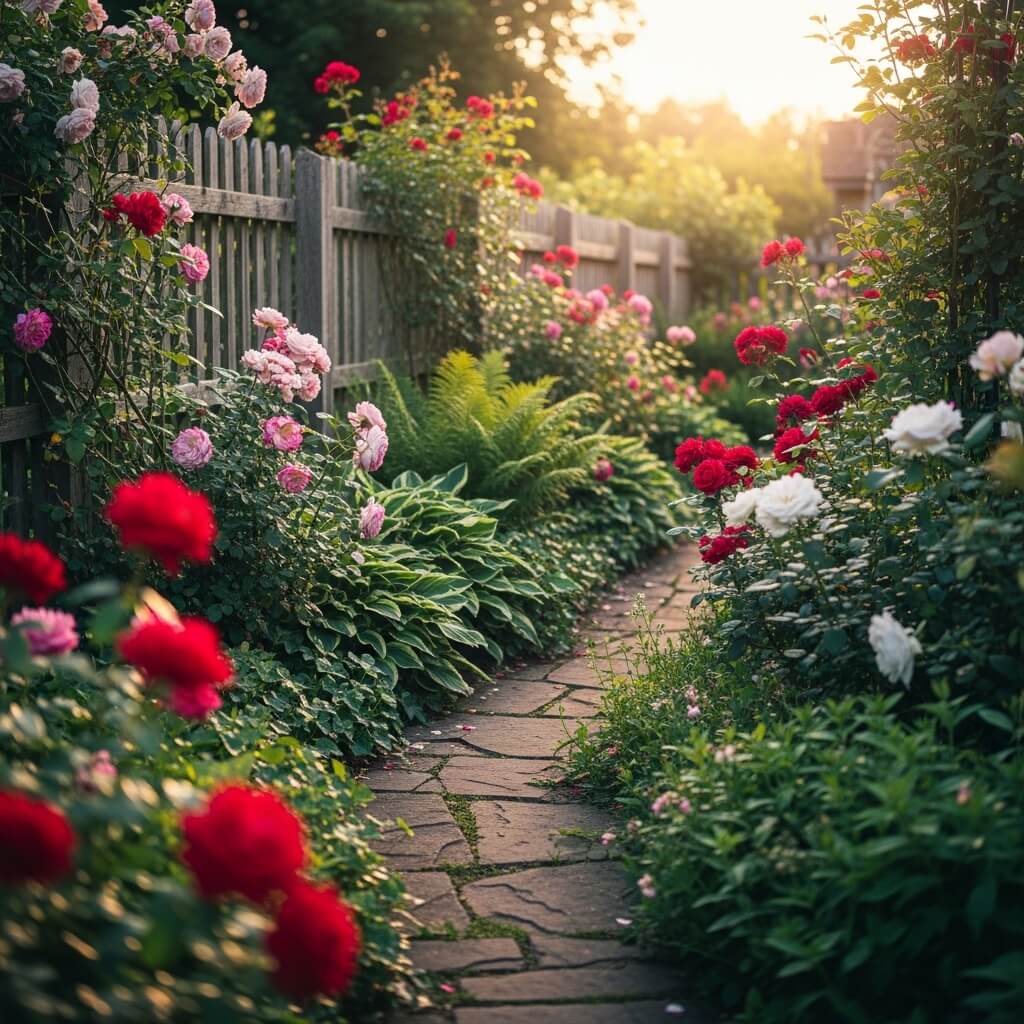
Nothing says “storybook charm” quite like a winding pathway bordered by cascading roses. This design feels like you’ve stepped into a Jane Austen novel, complete with the swoony atmosphere.
The magic happens when you choose climbing and rambling roses that spill over pathway edges naturally. I learned this the hard way after initially trying to keep everything perfectly manicured – it looked more like a military parade than a romantic walkway. Eden, New Dawn, and Zephirine Drouhin work beautifully here because they’re repeat bloomers with incredible fragrance.
Your pathway material matters more than you might think. Worn brick, natural stone, or even well-placed stepping stones create that authentic cottage feel. Avoid anything too modern or precise – you want visitors to feel like they’re meandering through an English countryside, not walking through a shopping mall.
Consider these key elements for your cottage pathway:
- Mixed heights: Combine tall climbing roses with shorter shrub roses
- Fragrant varieties: David Austin roses like Gertrude Jekyll or Lady of Shalott
- Informal edges: Let roses spill naturally rather than trimming everything perfectly
- Companion plants: Add lavender, catmint, and foxgloves for that authentic cottage look
The beauty of this design lies in its apparent randomness – though between you and me, it takes careful planning to achieve that “effortless” cottage look. Place taller roses at the back and shorter ones toward the path, but vary the pattern to avoid that too-perfect nursery display appearance.
Modern Minimalist White Rose Garden Layout
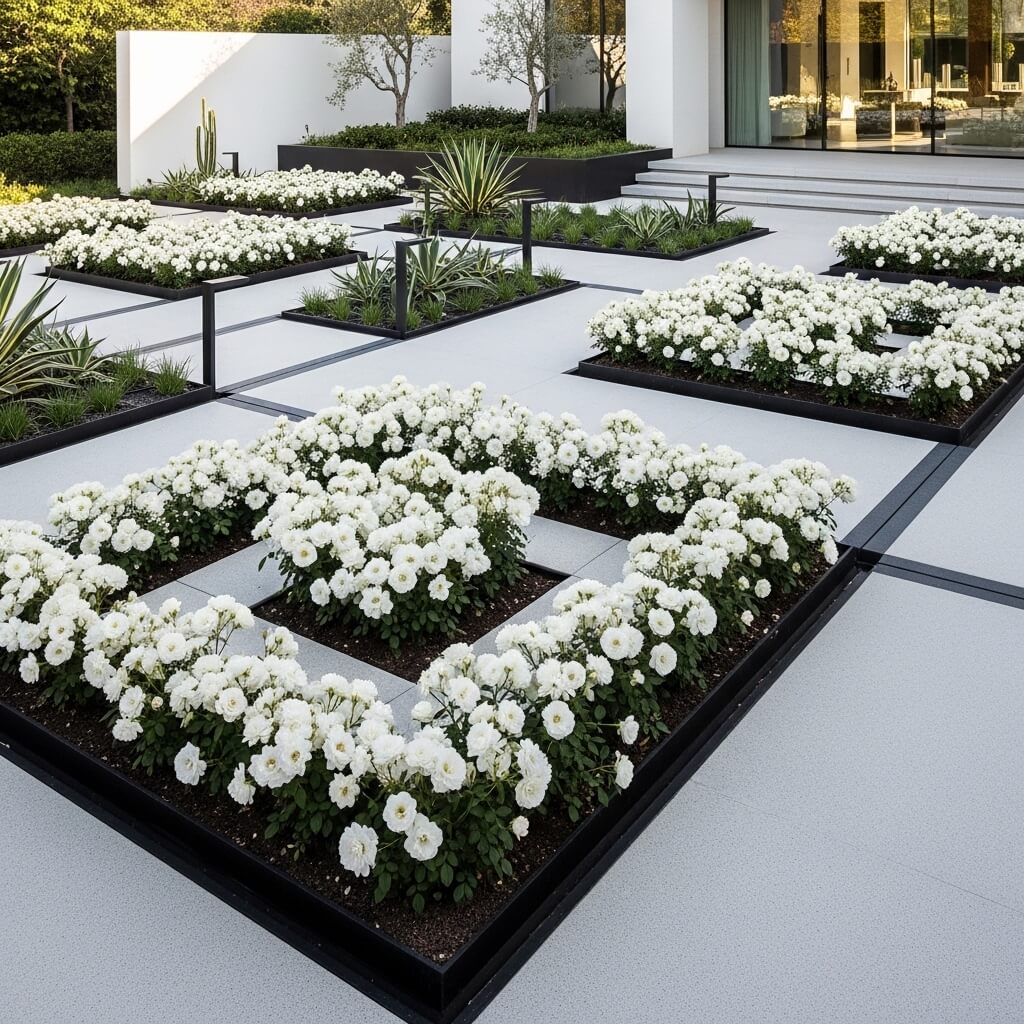
Who says romance has to mean frills and chaos? Sometimes the most breathtaking gardens embrace simplicity with laser focus. A white rose garden delivers elegance that photographs like a dream and never goes out of style.
White roses create a sophisticated palette that works year-round. I used to think white gardens would look boring, but honestly? They’re anything but. The subtle variations in white – from pure snow to cream to ivory – create depth that colored roses sometimes miss.
Choose varieties with different bloom forms and growth habits. Iceberg roses provide reliable clusters of pure white blooms, while Winchester Cathedral offers that classic English rose shape. For something really special, try Madame Alfred Carriere – this climbing rose blooms continuously and has the most incredible fragrance.
Your hardscaping becomes crucial in minimalist designs. Clean lines in your beds, perhaps defined with steel edging or geometric stone borders, emphasize the roses’ natural beauty. I prefer rectangular or square beds over curved ones for this style – it reinforces that modern aesthetic.
Essential elements for minimalist white rose gardens:
- Monochromatic planting: Stick strictly to white and cream varieties
- Clean bed lines: Use geometric shapes with crisp edges
- Quality over quantity: Fewer plants, but choose premium varieties
- Structural elements: Add white gravel mulch or pale stone pathways
The trick with white gardens is avoiding that “hospital sterile” feeling. Add texture through different leaf shapes and growth patterns, but resist the urge to introduce color. Trust me on this one – the restraint pays off beautifully.
Vertical Rose Wall Garden for Small Spaces
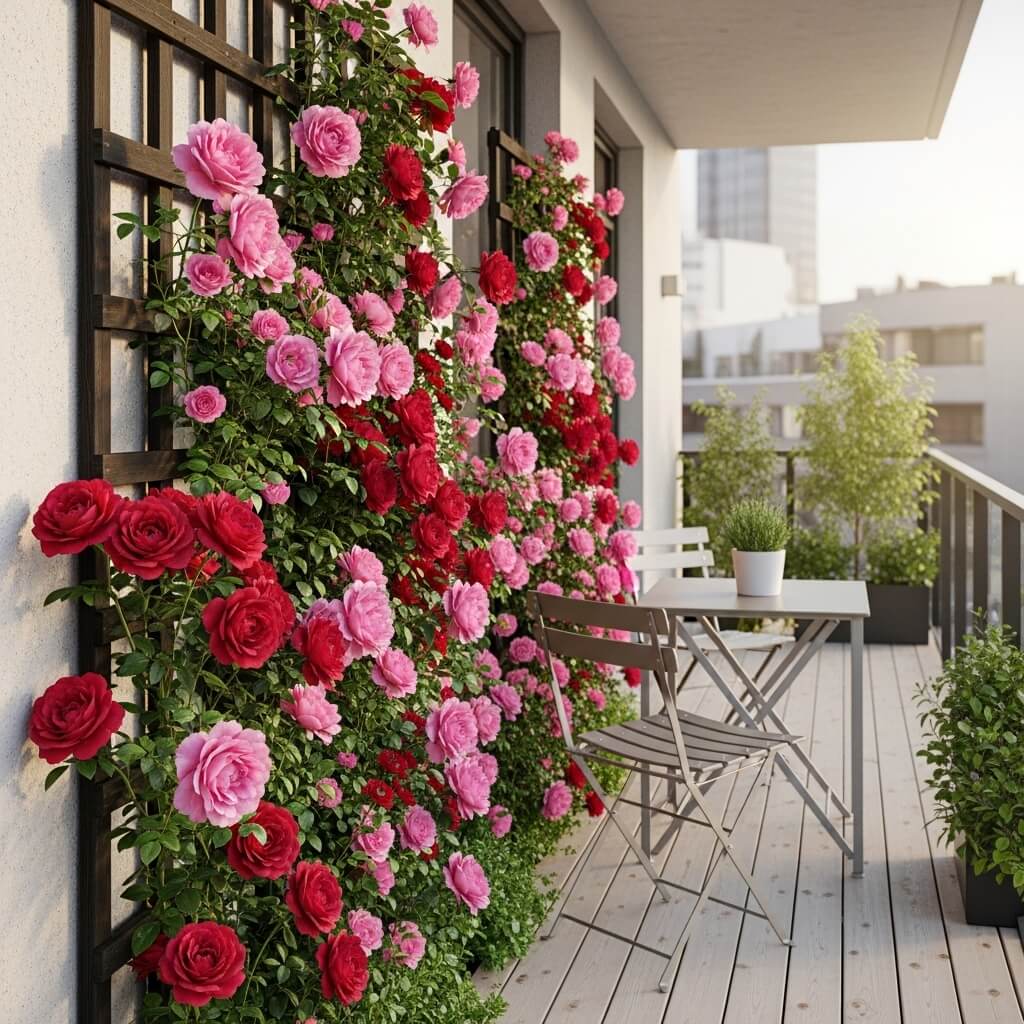
Small space doesn’t mean small dreams, right? Vertical rose gardens maximize your romantic potential when ground space is limited. I’ve seen tiny balconies transformed into rose paradises that rival sprawling estates.
Climbing roses become your best friends in vertical designs. You’ll need sturdy support structures – flimsy trellises will collapse under the weight of mature climbing roses, and that’s a lesson you only want to learn once (speaking from experience here). Invest in heavy-duty trellises, pergolas, or wire systems that can handle substantial weight.
Choosing the right roses makes all the difference. Eden provides incredible repeat blooms with pink edges on white petals. Lady Banks’ Rose grows vigorously but stays relatively manageable. For something truly spectacular, try Pierre de Ronsard – its large, full blooms look like living art against vertical surfaces.
Your watering game needs to be strong with vertical gardens. Roses at the top dry out faster than those at ground level, so consider drip irrigation systems or plan for daily attention during hot weather.
Key considerations for vertical rose walls:
- Support strength: Use galvanized steel or treated wood that won’t deteriorate
- Rose selection: Choose climbers with manageable growth habits
- Irrigation planning: Ensure even water distribution from top to bottom
- Maintenance access: Leave space to reach all areas for pruning and care
The visual impact of a wall covered in blooming roses stops people in their tracks. It’s like having a living tapestry that changes with the seasons – definitely worth the extra planning effort.
Also Read: 10 Creative Rock Garden Design Ideas for Stunning Backyard Style
Circular Rose Bed Centerpiece Design
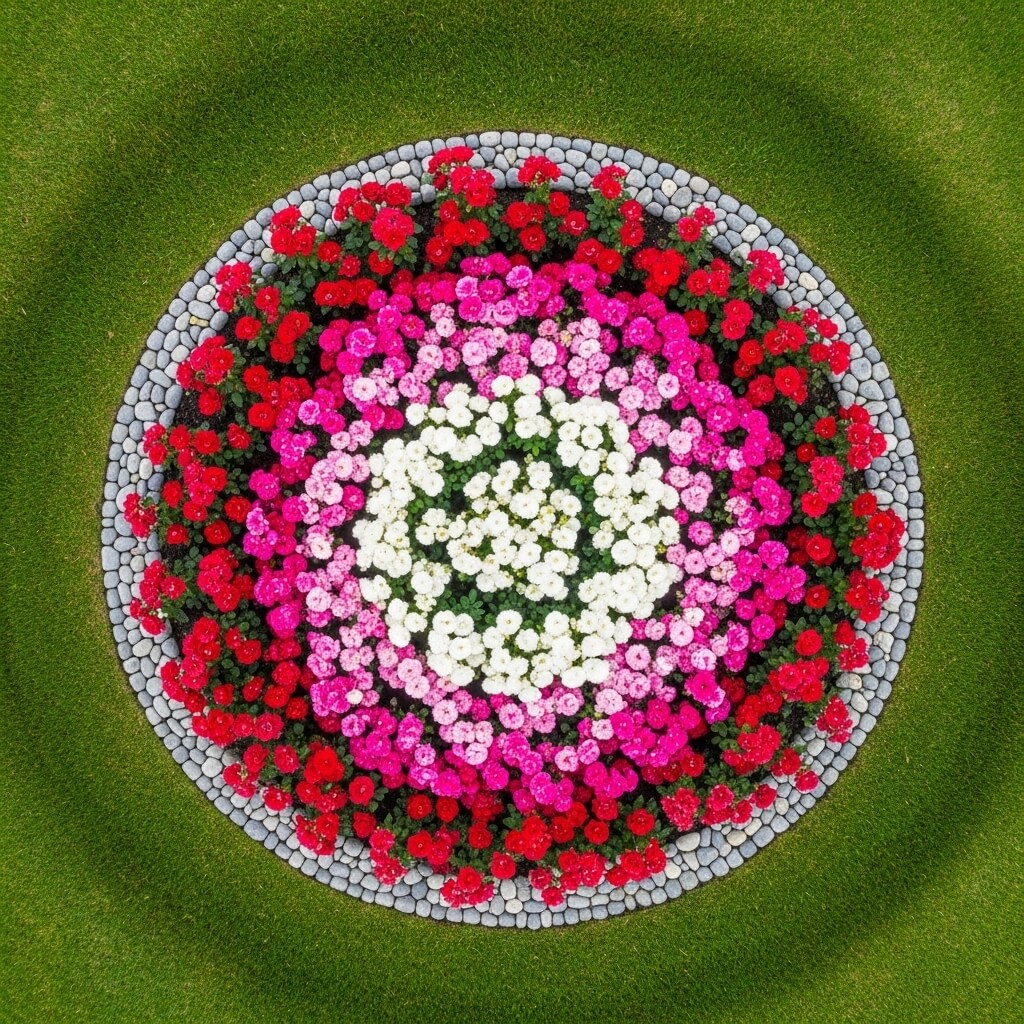
Want to create a focal point that demands attention? Circular rose beds work like garden jewelry – they catch the eye and hold it. This design works whether you’re placing it in your front yard or creating a destination in your back garden.
The key to successful circular beds is layering heights from center outward. I typically place a tall specimen rose or small climbing rose in the center, surround it with medium-height shrub roses, and edge with compact varieties. This creates a dome effect that looks amazing from every angle.
Scale matters enormously here. A tiny circular bed looks like an afterthought, while one that’s too large overwhelms smaller gardens. I’ve found 8-10 feet in diameter hits the sweet spot for most residential gardens – big enough to make an impact without dominating the space.
Consider your viewing angles when planning. Unlike linear beds that look best from certain positions, circular beds need to look good from 360 degrees. This means paying attention to bloom colors and timing from all sides.
Design elements for circular rose beds:
- Central focal point: Standard rose, obelisk with climbing rose, or decorative element
- Graduated heights: Tallest plants in center, shortest at edges
- Color coordination: Plan bloom colors that work together from all viewing angles
- Seasonal interest: Include roses with good foliage or hip production
The maintenance bonus of circular beds? You can reach the center from any side, making pruning and care much easier than with deep rectangular beds. FYI, this is something I wish I’d considered before planting some ridiculously deep borders in my early gardening days 🙂
Archway Rose Tunnel Garden Entrance
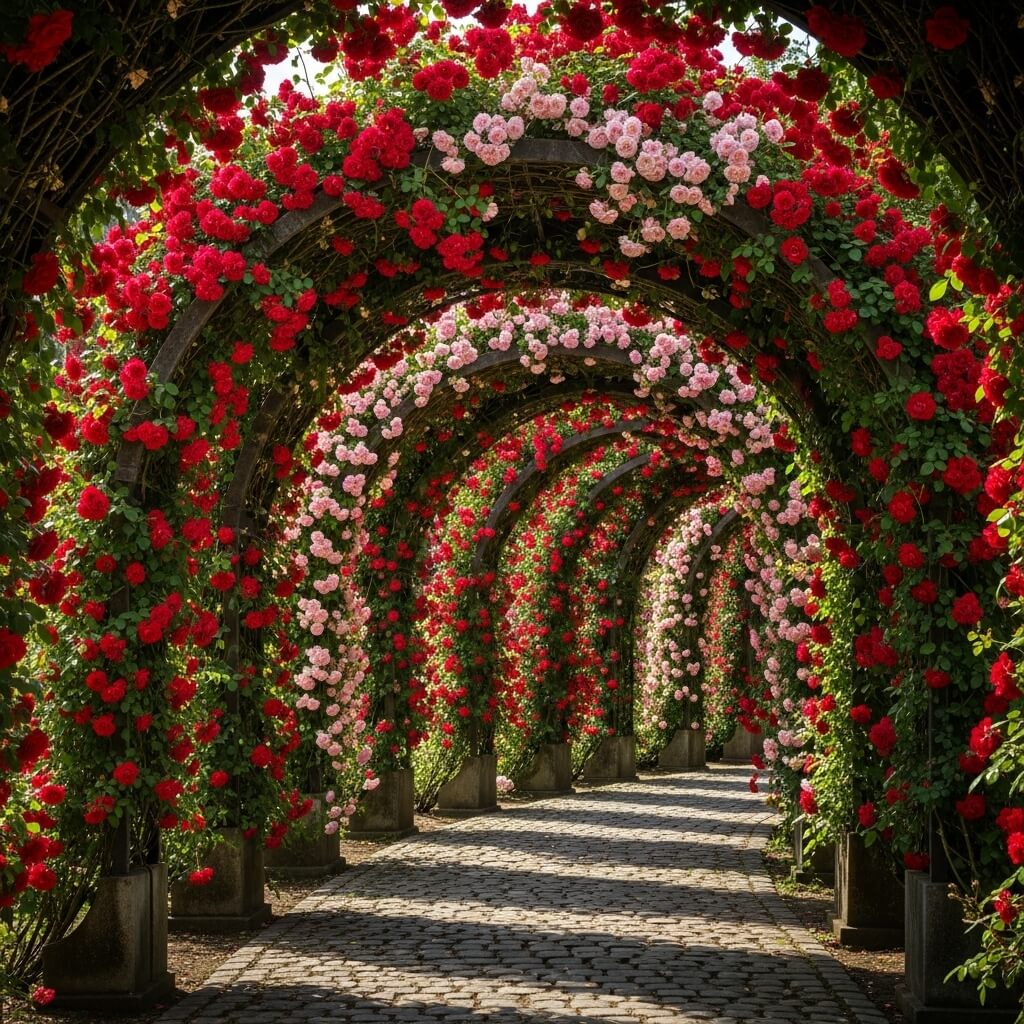
Nothing announces “you’re entering somewhere special” quite like walking through a tunnel of blooming roses. This design creates drama and anticipation – perfect for marking transitions between garden areas or framing entrances.
Building a sturdy archway system requires serious planning. I’ve seen too many homemade arbors collapse under the weight of mature climbing roses. You need either substantial wooden construction or metal framework designed for the job. The investment upfront saves heartbreak later when your roses are established.
Timing your rose selection matters here. Choose varieties that bloom simultaneously for maximum impact, or select ones that bloom in succession to extend the tunnel effect throughout the season. Climbing Eden and New Dawn work beautifully together, providing waves of blooms from early summer through fall.
Think about your tunnel’s dimensions carefully. Too narrow feels claustrophobic, too wide loses that intimate tunnel effect. I’ve found 6-8 feet wide and 8-9 feet tall creates comfortable passage while maintaining the enclosed feeling you’re after.
Essential considerations for rose tunnels:
- Structural integrity: Use metal arches or substantial wooden construction
- Rose compatibility: Choose climbers with similar growth rates and bloom timing
- Maintenance access: Plan for pruning and training access from multiple angles
- Ground preparation: Excellent drainage and soil preparation for long-term success
The payoff comes in year three or four when your roses fully cover the structure. Walking through a tunnel of fragrant blooms feels magical – it’s worth the patience required to get there.
English Style Mixed Color Rose Garden
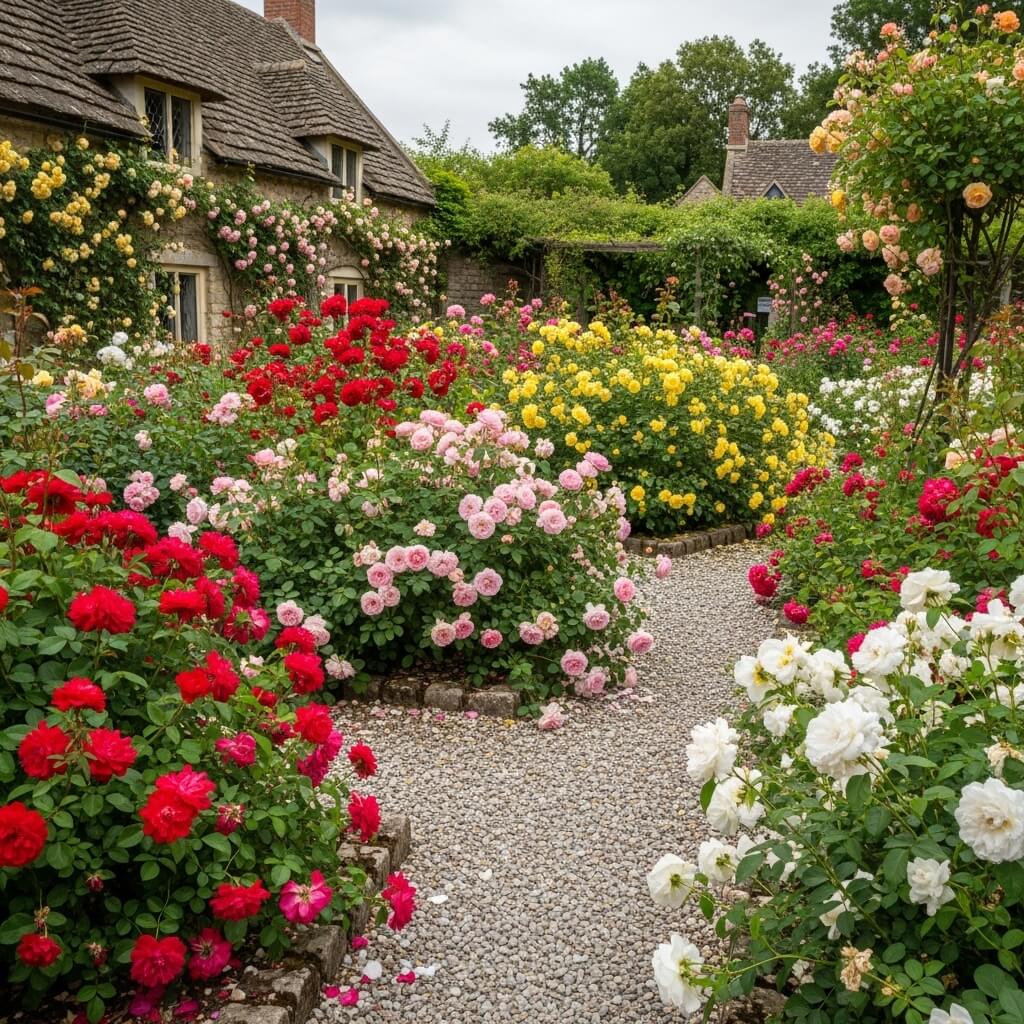
British gardeners perfected the art of combining rose colors without creating visual chaos. This style embraces abundance while maintaining sophisticated color harmony – it’s organized chaos at its finest.
The secret lies in understanding color relationships. Hot colors (reds, oranges, yellows) work together beautifully, while cool colors (pinks, purples, whites) create their own harmonious groups. The trick is either staying within one group or carefully bridging between them with neutral whites or soft yellows.
I love using David Austin English roses for this style because they provide that perfect “old rose” look with modern disease resistance and repeat blooming. Graham Thomas (yellow), Gertrude Jekyll (pink), and L.D. Braithwaite (red) create stunning combinations that bloom continuously.
Your bed shape should feel organic rather than rigid. Curved edges, varied depths, and informal groupings create that authentic English garden feeling. Avoid straight lines and geometric patterns – you want visitors to feel like they’re wandering through a country estate.
Key elements of English-style rose gardens:
- Color harmony: Group related colors or bridge carefully between warm and cool palettes
- Varied heights: Mix shrub roses, climbers, and standards for visual interest
- Companion planting: Include perennials like delphiniums, foxgloves, and catmint
- Organic shapes: Curved bed edges and natural-feeling layouts
The goal is controlled abundance – lots of roses, but arranged thoughtfully rather than randomly. It takes a few seasons to achieve that perfect “established” look, but the wait is absolutely worth it.
Also Read: 10 Dreamy Garden Restaurant Design Outdoor Ideas for Romantic Setup
Balcony Mini Rose Garden with Pots
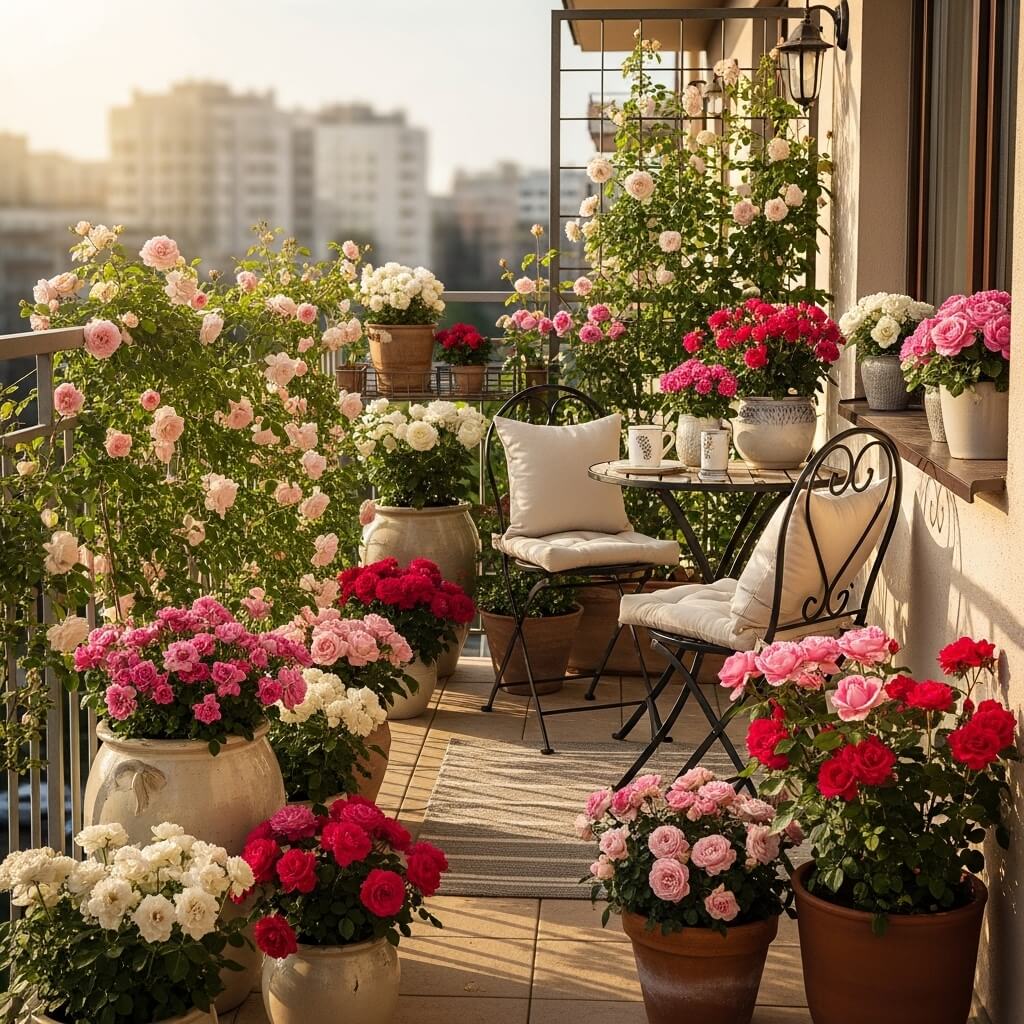
Limited space doesn’t mean limited romance. Container rose gardens bring all the beauty of larger installations to small balconies, patios, or courtyards. I’ve created stunning displays in spaces smaller than most people’s bathrooms.
Container selection makes or breaks small-space rose gardens. Your pots need sufficient depth and width for root development – at least 18 inches in both directions for most roses. Terra cotta looks beautiful but dries out quickly, while glazed ceramics retain moisture better but cost more.
Choose roses bred for container growing. Knockout roses, Flower Carpet series, and many David Austin varieties thrive in pots. Avoid large climbers unless you have substantial containers and support structures – you’ll end up fighting them rather than enjoying them.
Your watering schedule becomes critical with container roses. They dry out much faster than ground-planted roses, especially during hot weather. I check mine daily during summer and have a backup watering system for travel periods.
Container rose garden essentials:
- Proper pot sizing: Minimum 18-inch diameter and depth for most roses
- Quality potting mix: Use rose-specific or premium general potting soil
- Drainage system: Ensure pots have adequate drainage holes
- Feeding schedule: Container roses need more frequent fertilization
The advantage of container roses? You can rearrange your garden whenever inspiration strikes. Move blooming roses to prominent positions and shift dormant ones to less visible spots – it’s like having a constantly changing display. IMO, this flexibility makes container gardening addictive.
Luxury Fountain Rose Garden Courtyard
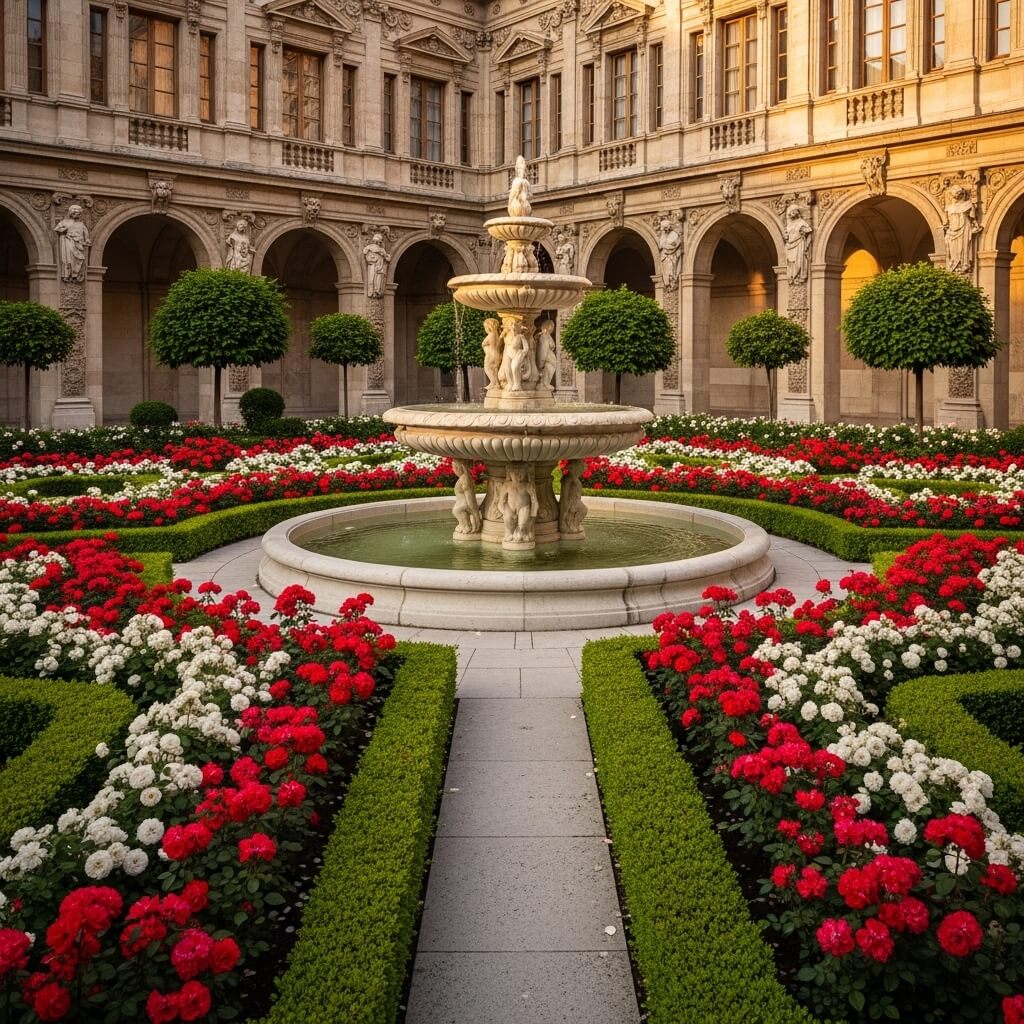
Want to create a space that feels like a high-end resort? Combining roses with water features elevates any garden from nice to absolutely spectacular. The sound of water plus the fragrance of roses creates an almost hypnotic atmosphere.
Your fountain becomes the design anchor that everything else relates to. I prefer placing it slightly off-center rather than dead center – it feels more natural and creates better traffic flow around the space. Size your fountain appropriately for your space; too large overwhelms, too small disappears.
Rose placement around water features requires careful thought. You want fragrant varieties close enough to enjoy, but far enough to avoid constant moisture on foliage (which can promote disease). Climbing roses on nearby structures provide height and drama without crowding the fountain.
Consider the practical aspects of water and roses together. Splashing water can damage delicate blooms, while falling rose petals will require regular fountain cleaning. Plan maintenance access carefully – you’ll need to reach both roses and water features regularly.
Design elements for fountain rose courtyards:
- Proportional scaling: Match fountain size to overall space dimensions
- Strategic rose placement: Close enough for fragrance, far enough for plant health
- Hardscaping coordination: Use materials that complement both roses and water
- Lighting consideration: Plan for evening enjoyment of both elements
The combination of roses and water creates such a sophisticated atmosphere. Evening lighting on both the fountain and roses transforms the space into something truly magical – perfect for entertaining or quiet contemplation.
Rustic Farmhouse Wild Rose Garden Corner
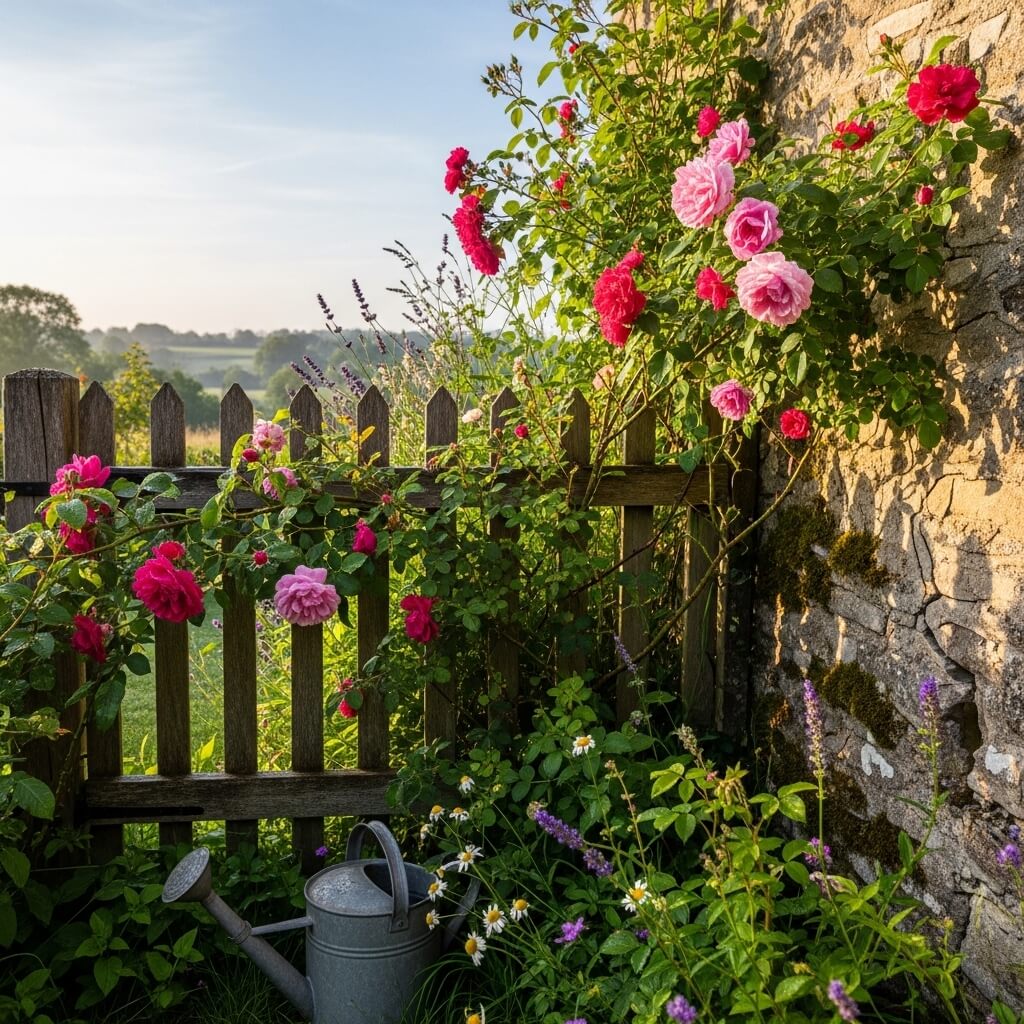
Sometimes the most romantic gardens feel completely unstudied and natural. Farmhouse-style rose gardens embrace that slightly wild, cottage-garden aesthetic that looks effortless but requires thoughtful planning to achieve.
Choosing the right roses sets the entire tone. Old garden roses, species roses, and varieties with natural growth habits work best here. Avoid anything too perfect or formal – you want roses that look like they’ve been growing in that spot for generations.
Your hardscaping should feel authentic rather than new. Weathered wood, natural stone, and informal pathways support the farmhouse aesthetic. I love using reclaimed materials when possible – old fence posts make perfect supports for climbing roses, and weathered stone creates beautiful informal edges.
The “wild” aspect requires restraint. You want controlled wildness rather than actual chaos. Plant roses in loose groupings rather than formal rows, but still provide adequate spacing for air circulation and maintenance access.
Farmhouse rose garden characteristics:
- Authentic materials: Weathered wood, natural stone, reclaimed elements
- Informal planting: Loose groupings rather than rigid patterns
- Heritage varieties: Old garden roses and species roses with natural growth habits
- Companion plants: Include herbs, vegetables, and cottage garden perennials
The beauty of farmhouse style lies in its apparent simplicity. These gardens feel like they evolved naturally over time rather than being planted all at once. Achieving this look requires patience, but the result has incredible charm and authenticity.
Also Read: 10 Budget Indoor Garden Design Ideas for Stylish Homes
Geometric Pattern Rose Flower Bed Design
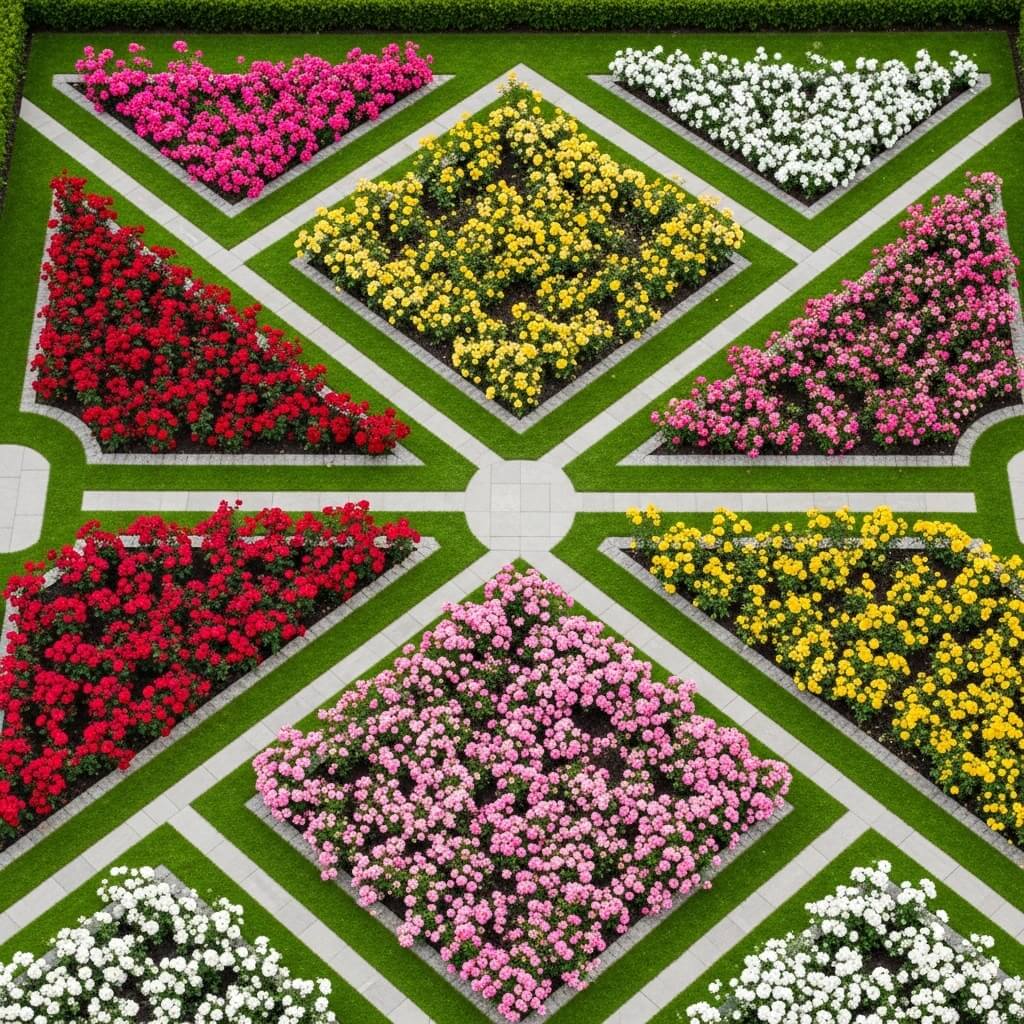
For gardeners who love order and precision, geometric rose gardens offer structured beauty that satisfies the desire for both roses and organization. These designs prove that formality and romance aren’t mutually exclusive.
Successful geometric gardens require precise planning and consistent maintenance. Your initial layout needs to account for mature plant sizes, bloom timing, and seasonal interest. I always sketch these gardens to scale before planting – geometric designs don’t forgive spacing mistakes gracefully.
Choose roses with predictable growth habits and similar care requirements. Hybrid teas work well for formal geometric designs because of their upright growth and classic bloom form. Landscape roses like Knockout varieties provide consistent color and shape for larger geometric patterns.
Your maintenance commitment increases significantly with geometric designs. These gardens require regular trimming, consistent fertilization, and prompt deadheading to maintain their crisp appearance. If you’re not prepared for intensive maintenance, consider simpler geometric patterns or different design styles.
Geometric rose garden requirements:
- Precise spacing: Measure carefully and account for mature plant sizes
- Uniform varieties: Use roses with similar growth habits and maintenance needs
- Regular maintenance: Commit to consistent pruning and care schedules
- Quality edges: Sharp bed lines and neat pathways essential for clean appearance
The payoff for geometric precision is dramatic visual impact. These gardens photograph beautifully and create stunning seasonal displays when properly maintained. They’re perfect for gardeners who find satisfaction in order and precision.
Creating Your Perfect Rose Garden Romance
After years of creating and maintaining various rose garden styles, I’ve learned that the most important element isn’t the design itself – it’s choosing a style that matches your personality and maintenance preferences. A high-maintenance gardener will love the precision of geometric designs, while someone who prefers natural beauty might gravitate toward farmhouse or cottage styles.
Your climate and space dictate what’s actually possible, regardless of what looks appealing in magazines. I’ve seen too many gardeners attempt styles that don’t suit their conditions, leading to frustration rather than romance. Start with your space’s realities, then adapt designs to work within those constraints.
Remember that rose gardens evolve over time. What looks sparse and disappointing in year one becomes lush and romantic by year three or four. The wait tests your patience, but mature rose gardens have a depth and beauty that newly planted ones simply can’t match.
Most importantly, create a garden that makes you happy to spend time in it. Whether that’s sipping morning coffee surrounded by climbing roses or hosting evening gatherings in a fountain courtyard, your garden should reflect your idea of romance – not someone else’s.
The best rose gardens tell stories, create memories, and provide years of enjoyment. Choose a design that excites you enough to invest the time and care needed to bring it to life. Trust me, when you’re standing in your own romantic rose garden, watching the sunset filter through climbing roses, you’ll understand why people have been obsessing over these flowers for centuries.