10 Luxury Shoe Rack Cabinet Design Ideas for Modern Interiors
- Rack Design
 Ben
Ben- 0
- 40 minutes read
Look, we all have that one chaotic corner where shoes just pile up like a sneaker graveyard, right? I mean, I love my footwear collection as much as the next person, but there’s nothing glamorous about tripping over a rogue stiletto at 6 AM. That’s where luxury shoe rack cabinets come in—they’re the unsung heroes that transform your space from messy to magnificent while keeping your precious kicks organized and accessible.
I’ve spent way too much time (and money, honestly) figuring out the perfect shoe storage solutions, and I’m here to share what actually works. These aren’t just boring cabinets—we’re talking about stunning pieces that double as design statements. Whether you’re working with a mansion or a studio apartment, there’s a luxury shoe storage solution that’ll make your interior designer friends jealous.
Hidden Under-Stair Shoe Rack Cabinet Design
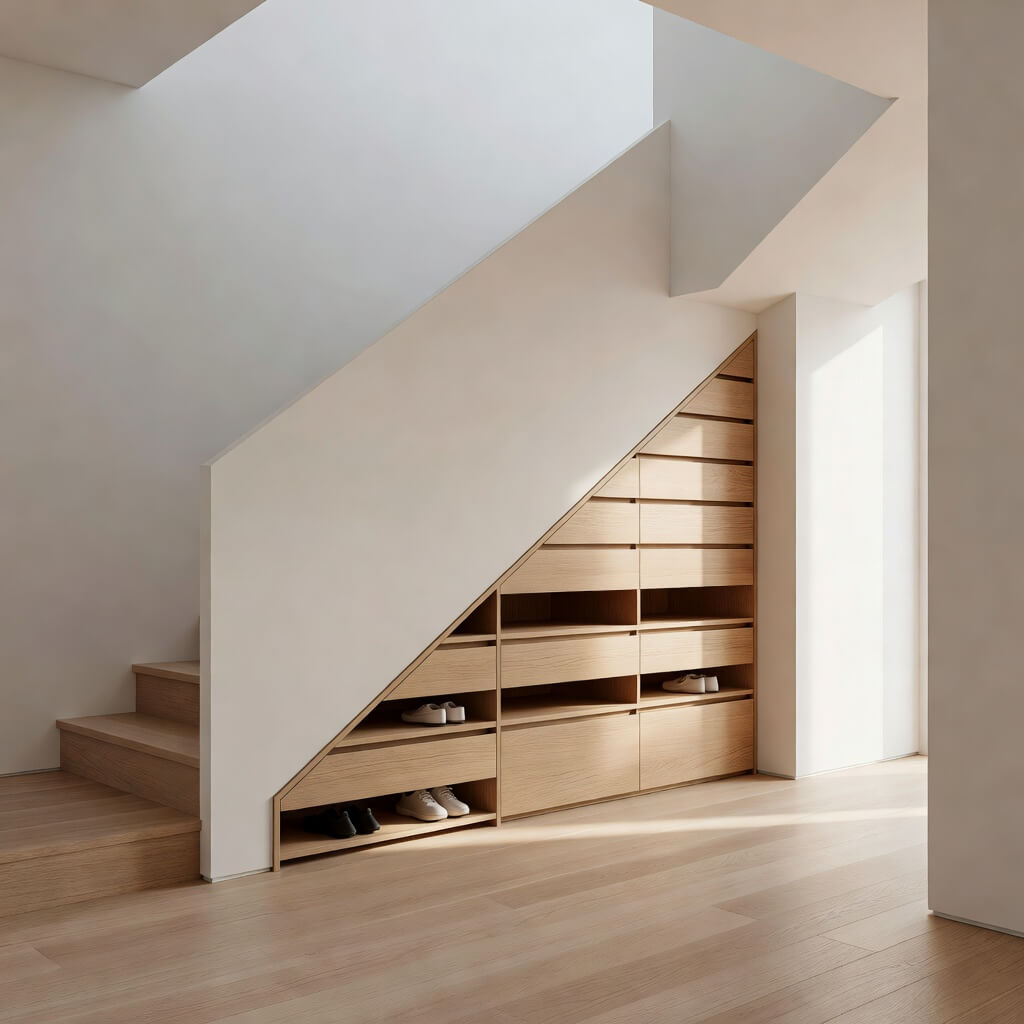
Ever looked at that awkward space under your stairs and thought, “What am I supposed to do with this?” Well, I’ve got news for you—it’s a goldmine for shoe storage.
The under-stair shoe rack cabinet is honestly one of the cleverest solutions I’ve come across. You’re basically turning dead space into a functional luxury storage area. I installed custom pull-out drawers under my stairs last year, and it completely changed the game. No more shoes cluttering the entryway.
Here’s what makes this design absolutely brilliant:
- Custom-fitted compartments that maximize every inch of that triangular space
- Pull-out drawers or sliding shelves for easy access to shoes at the back
- Soft-close mechanisms because slamming drawers is so 2010
- Built-in lighting that makes finding your shoes feel like shopping at a boutique
- Ventilation holes to keep your shoes fresh (trust me, this matters)
The beauty of this design lies in its invisibility. Your guests won’t even know you’re storing 50+ pairs of shoes right there. You can match the cabinet doors to your existing woodwork or paint them to blend seamlessly with your walls. I went with a sleek white finish that makes the whole hallway feel more spacious.
One thing I learned the hard way? Measure twice, cut once. Under-stair spaces are rarely straightforward. The slanted ceiling means you’ll need graduated shelving heights. Work with a carpenter who understands custom cabinetry, or if you’re handy, create a detailed plan that accounts for every angle.
Minimalist Sliding Door Shoe Storage Cabinet
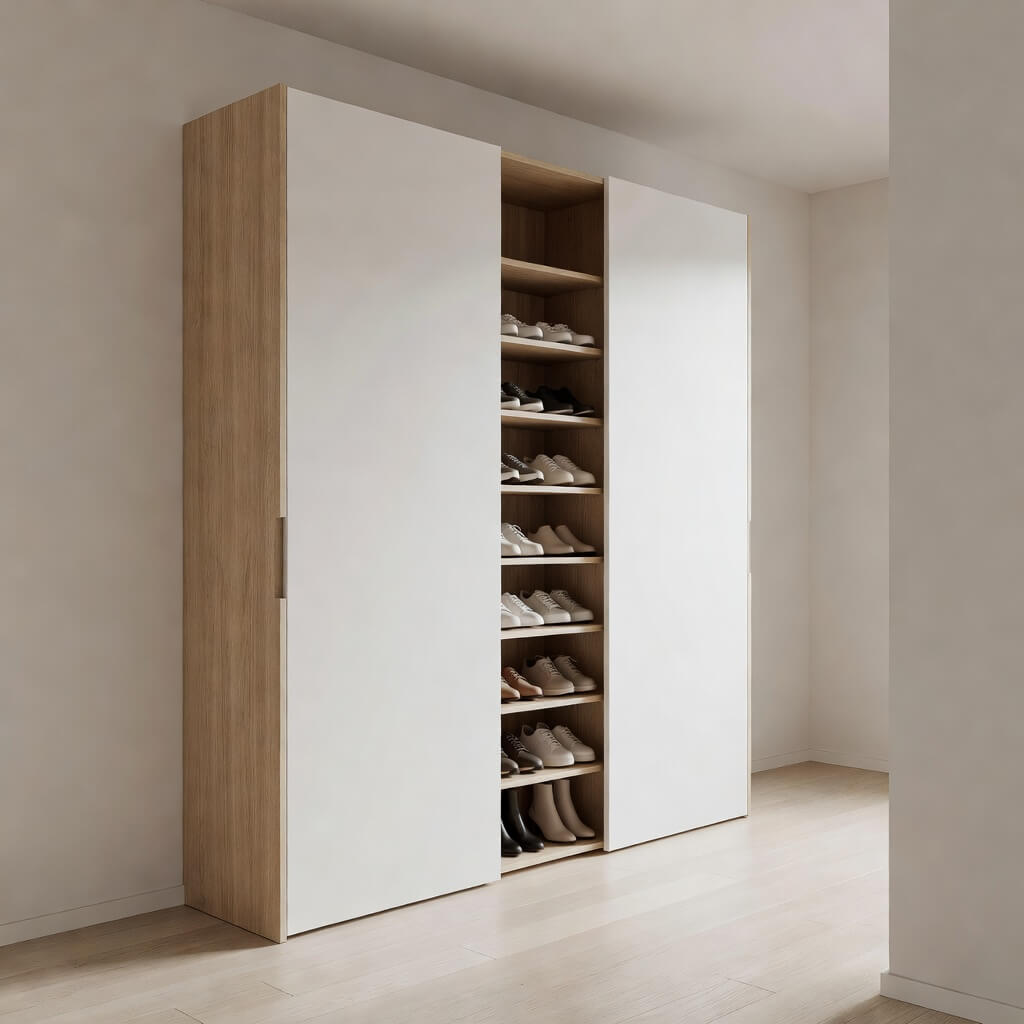
Minimalism isn’t just a trend—it’s a lifestyle, and I’m here for it. The minimalist sliding door shoe cabinet embodies everything I love about clean, modern design.
Picture this: a sleek cabinet with smooth sliding doors that glide open to reveal perfectly organized rows of shoes. No handles, no fuss, just pure functionality wrapped in elegant simplicity. I recently upgraded my bedroom with one of these, and honestly, it feels like I’m living in a contemporary art gallery 🙂
Key features that make this design stand out:
- Handleless sliding doors with push-to-open mechanisms
- Matte or glossy finishes in neutral tones like white, grey, or black
- Internal LED strip lighting that automatically turns on when you open the door
- Adjustable shelving to accommodate everything from flats to boots
- Silent sliding tracks because nobody wants noisy furniture
The minimalist aesthetic works brilliantly in modern interiors where less is more. I opted for a floor-to-ceiling version in matte charcoal grey that disappears into my bedroom wall. When closed, it looks like part of the architecture rather than a piece of furniture.
Here’s a pro tip: choose sliding doors over swinging doors if you’re working with limited floor space. Sliding mechanisms save you at least 2-3 feet of clearance, which makes a massive difference in smaller rooms. Plus, they just look cooler. IMO, there’s something incredibly satisfying about that smooth sliding motion.
Luxury Walk-In Shoe Wall Cabinet Setup
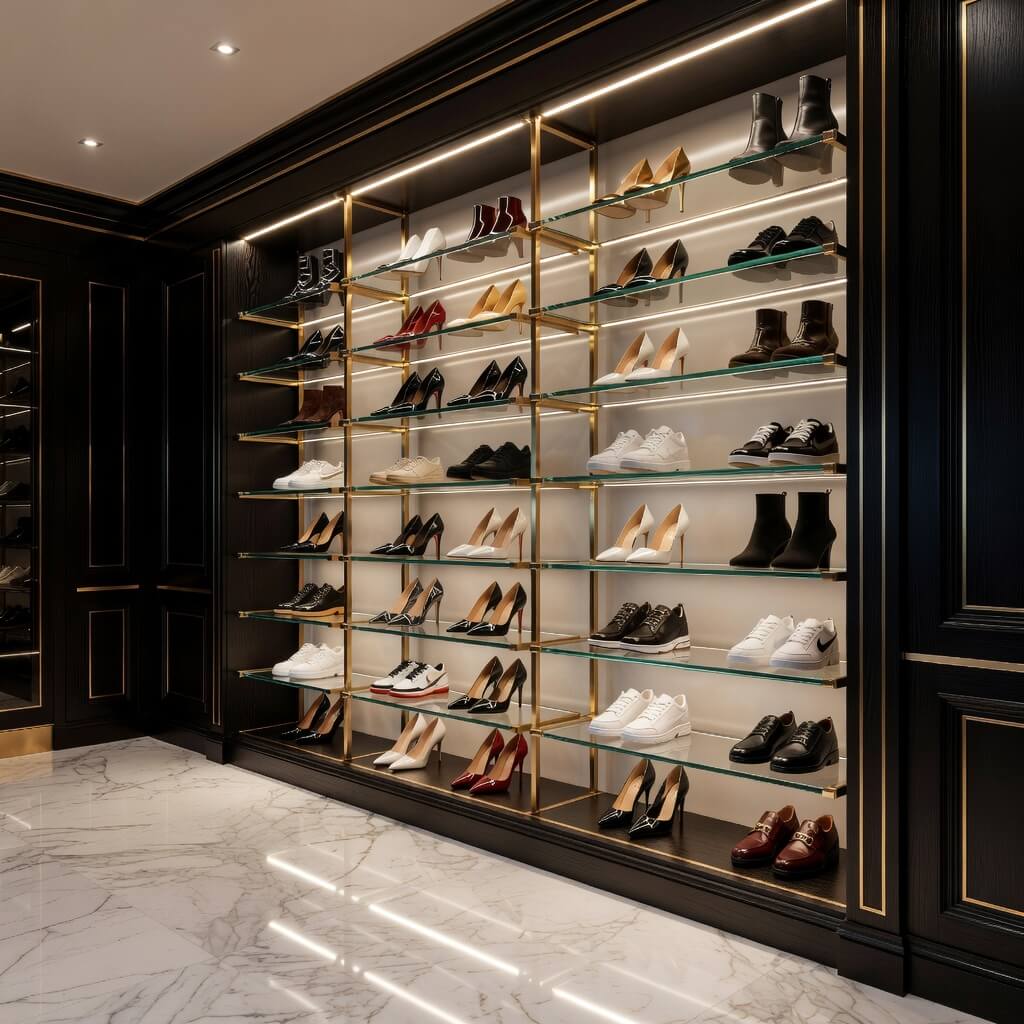
Okay, let’s talk dreams for a second. A dedicated walk-in closet with an entire wall devoted to shoes? That’s not just luxury—that’s living your best life.
I visited a friend’s penthouse last month, and her walk-in shoe wall literally took my breath away. Floor-to-ceiling display shelving with individual LED spotlights for each pair. We’re talking museum-level presentation here, and it made me rethink everything about shoe storage.
What makes a walk-in shoe wall cabinet truly luxurious:
- Glass-fronted cabinets that protect shoes while putting them on display
- Individual shoe platforms with slight tilts for optimal viewing angles
- Integrated seating in the center of the closet for trying on shoes
- Full-length mirrors strategically placed for outfit coordination
- Climate control options for protecting expensive leather and suede
- Pull-out drawers at the bottom for seasonal storage or shoe care products
This setup requires serious space commitment and budget, but if you’ve got both? Go for it. The organizational possibilities are endless. You can arrange shoes by color, style, season, or occasion—whatever speaks to your obsessive-compulsive organizing soul.
I’m currently planning a smaller version for my guest bedroom-turned-closet conversion. You don’t need a mansion to create a walk-in shoe wall—even a 6×8 foot space can be transformed into something spectacular. The key is vertical storage and smart lighting that makes everything feel expansive.
Also Read: 10 Clever Shoe Rack Design Ideas for Small Space Solutions
Space-Saving Vertical Shoe Rack Cabinet Idea
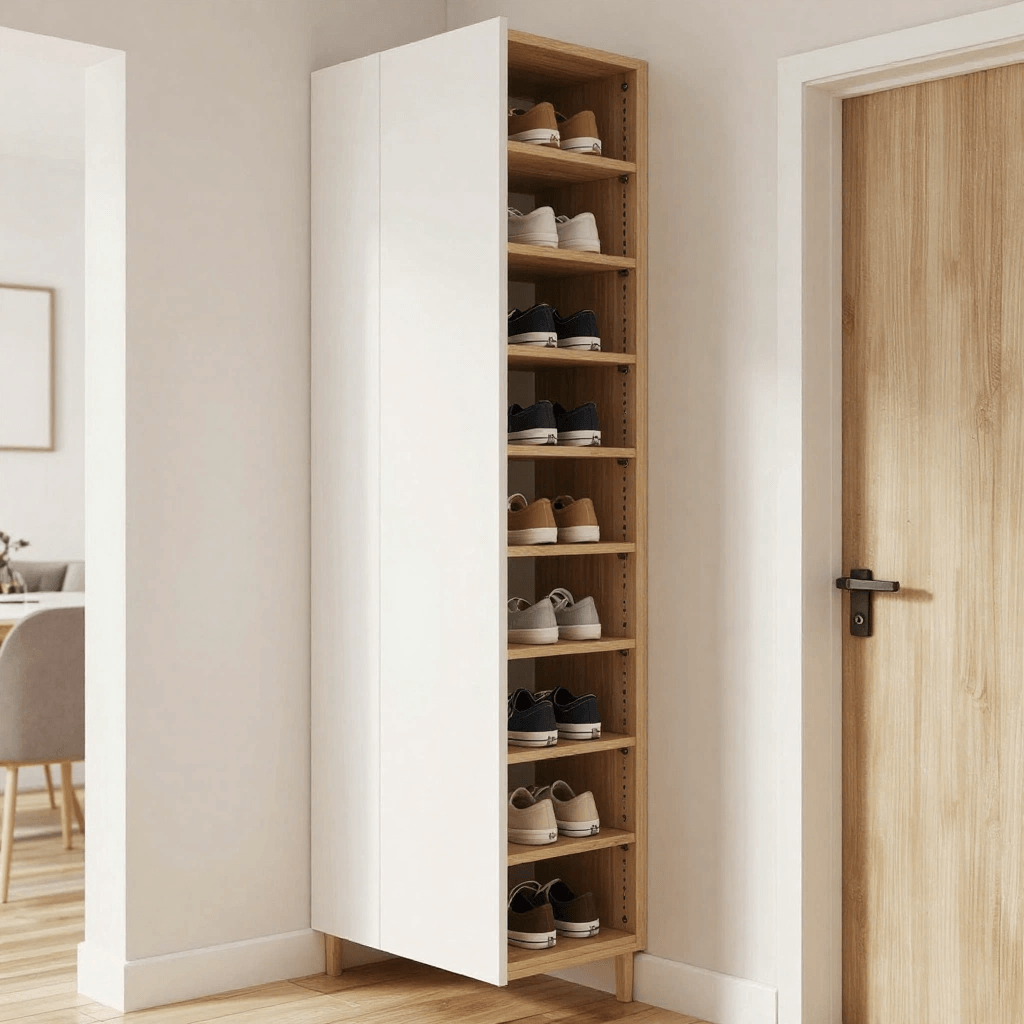
Let’s get real—most of us don’t have unlimited square footage. That’s where vertical shoe rack cabinets become absolute lifesavers.
I discovered the power of vertical storage when I moved into my current apartment. Limited floor space meant I had to think upward, and wow, did it pay off. A tall, narrow shoe cabinet tucked beside my entryway door holds 30 pairs of shoes in a footprint smaller than a coffee table.
Why vertical shoe cabinets are brilliant for modern living:
- Slim profiles (some are only 8-10 inches deep) that fit almost anywhere
- Rotating carousel mechanisms in some high-end models for easy access
- Angled shelves that allow you to see all your shoes at a glance
- Tall designs that utilize ceiling height instead of consuming floor space
- Multi-functional tops that serve as display surfaces for décor or keys
The best vertical cabinets feature tilted shelves that keep shoes visible and accessible. I absolutely hate digging through horizontal piles where you can’t see what’s at the back. With angled shelving, every single pair is visible, which means you’ll actually wear all those shoes you forgot you owned.
Here’s something I learned: mount these cabinets to the wall studs, especially if you’re going floor-to-ceiling. A fully loaded shoe cabinet is heavier than you’d think, and the last thing you want is several thousand dollars worth of footwear crashing down at 2 AM. Safety first, people.
Modern Entryway Shoe Storage Bench Cabinet
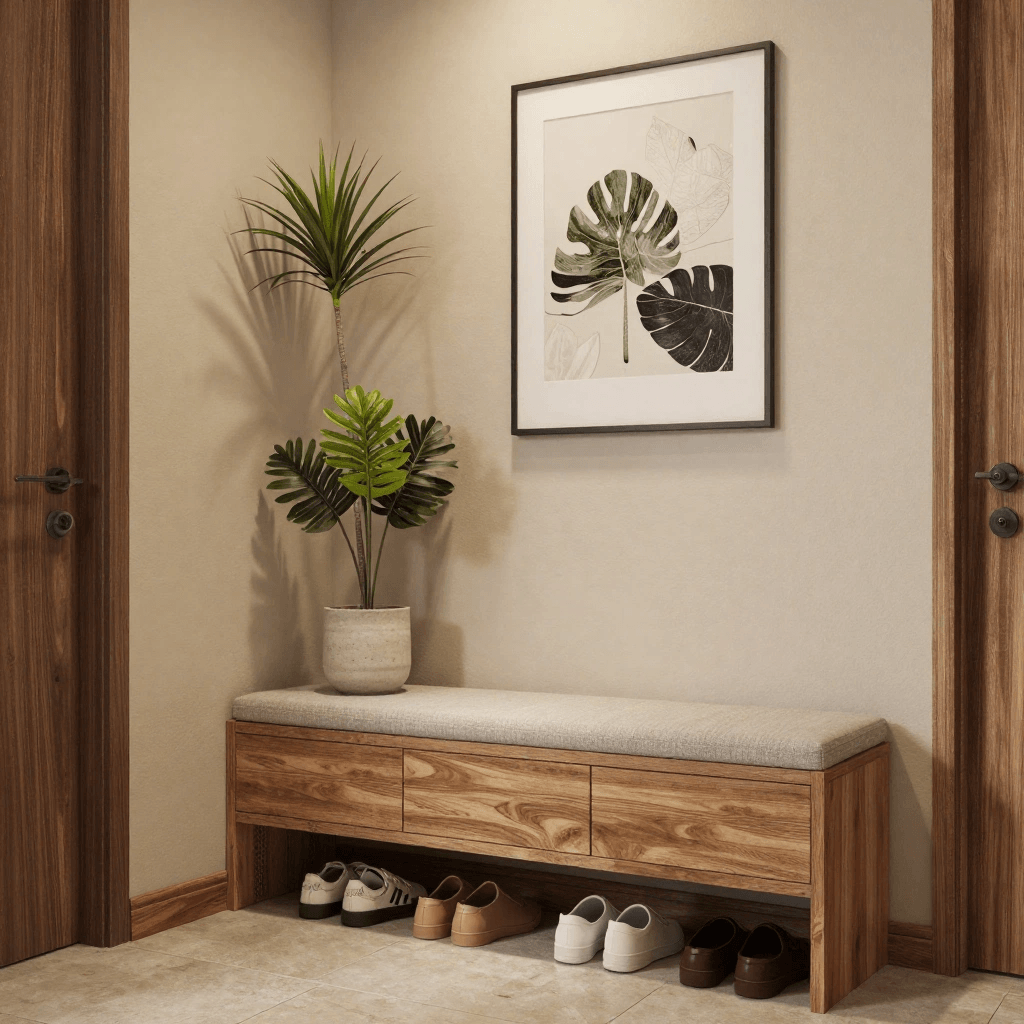
Your entryway sets the tone for your entire home, so why not make it functional AND gorgeous? The shoe storage bench cabinet is the perfect marriage of form and function.
I replaced my basic shoe rack with a modern storage bench last fall, and guests actually compliment it now. Who knew furniture could multitask so elegantly? You sit on it to put on your shoes, store them inside, and it looks like a designer piece from West Elm.
What makes the modern entryway bench cabinet special:
- Cushioned seating on top (usually upholstered in leather, velvet, or durable fabric)
- Lift-up lid or pull-out drawer compartments beneath the seat
- Open cubbies on the sides for everyday shoes you grab constantly
- Coat hooks or pegs integrated into the design for jackets and bags
- Sleek metal or wooden legs in contemporary finishes like brass, black, or oak
The genius of this design is how it eliminates that awkward one-legged hopping dance we all do while putting on shoes. You sit comfortably, slip on your footwear, and you’re done. Meanwhile, everything stays hidden and organized inside.
I chose a bench with a charcoal grey velvet cushion and matte black metal frame. The interior has two deep drawers that slide out completely, making it easy to grab shoes from the back without contortions. Each drawer holds about 6-8 pairs depending on size.
FYI, if you have kids or pets, go for performance fabric on the cushion. Regular velvet might look amazing, but it won’t survive muddy paws or sticky fingers. Trust me on this one :/
DIY Wooden Shoe Rack Cabinet with Seating
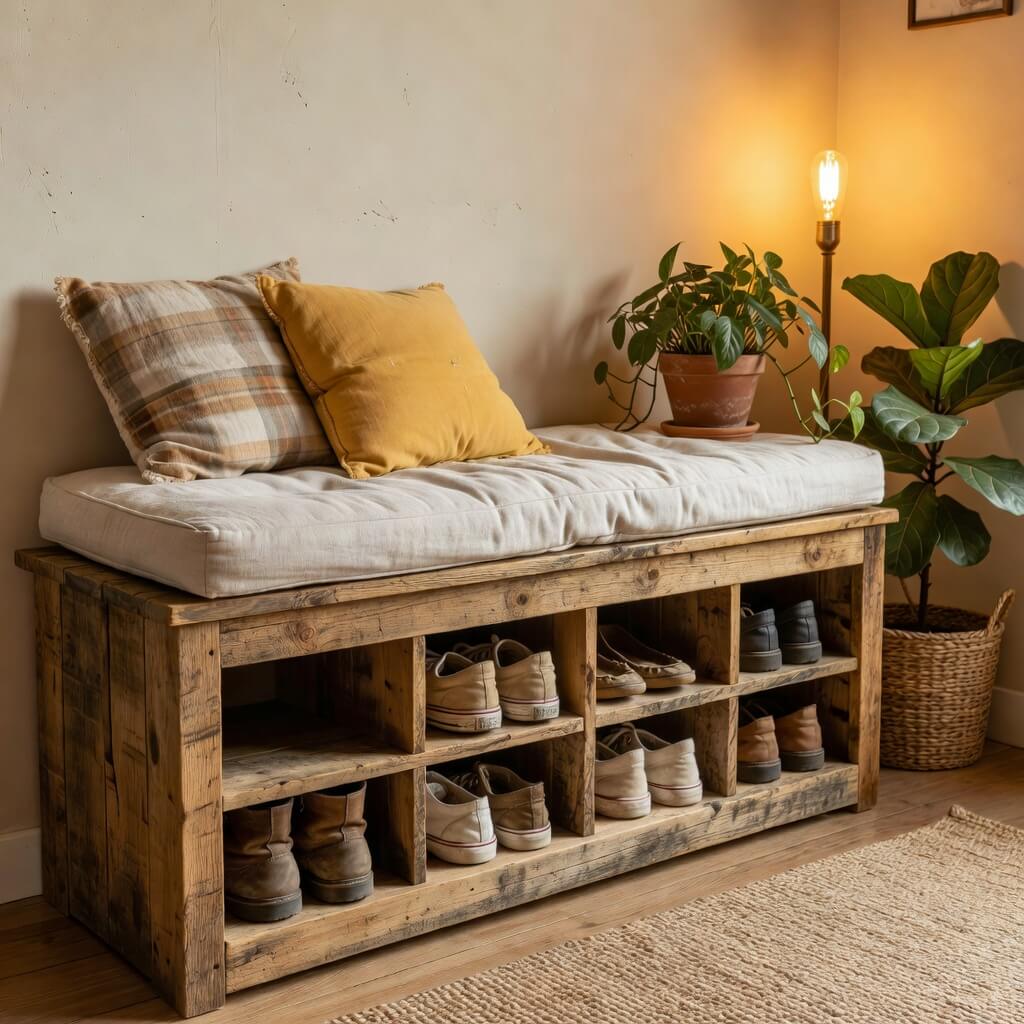
Not everyone wants to drop a fortune on custom cabinetry, and that’s totally fair. Sometimes the most satisfying projects are the ones you build yourself.
I’m not claiming to be a master carpenter here, but I did build a wooden shoe rack cabinet with seating for my mudroom, and it turned out way better than expected. Plus, there’s something genuinely satisfying about creating functional furniture with your own hands.
Materials you’ll need for a basic DIY version:
- Solid wood planks (pine is budget-friendly and easy to work with)
- Wood screws, wood glue, and finishing nails
- Sandpaper (various grits for smoothing)
- Wood stain or paint in your preferred color
- Foam cushion and fabric for the seating area
- Basic tools: saw, drill, measuring tape, level
The basic construction involves building a rectangular box frame with internal dividers for shoe compartments. I created three rows of cubbies, each about 6 inches tall—perfect for most shoe types. The top serves as the bench seat, which I covered with a 2-inch foam cushion wrapped in water-resistant fabric.
Here’s my step-by-step approach:
- Design and measure your space carefully (I made mine 48 inches wide, 18 inches deep, and 20 inches tall)
- Cut all pieces according to your measurements
- Assemble the frame using wood glue and screws
- Add internal shelves to create compartments
- Sand everything smooth (don’t skip this—splinters are no joke)
- Apply stain or paint with multiple thin coats
- Attach the cushion to the top using spray adhesive or Velcro strips
Total cost for my project? About $120 in materials. A similar piece from a furniture store would’ve run $400-600 easy. The trade-off is time and effort, but if you enjoy woodworking, it’s absolutely worth it.
One mistake I made? Not sealing the wood properly before placing it in the mudroom. Moisture is real, and unsealed wood can warp. Learn from my error and apply a good polyurethane or water-resistant sealer, especially if your entryway gets wet.
Also Read: 10 Brilliant Kitchen Under Stairs Ideas for Organized Spaces
Floor-to-Ceiling Built-In Shoe Cabinet Design
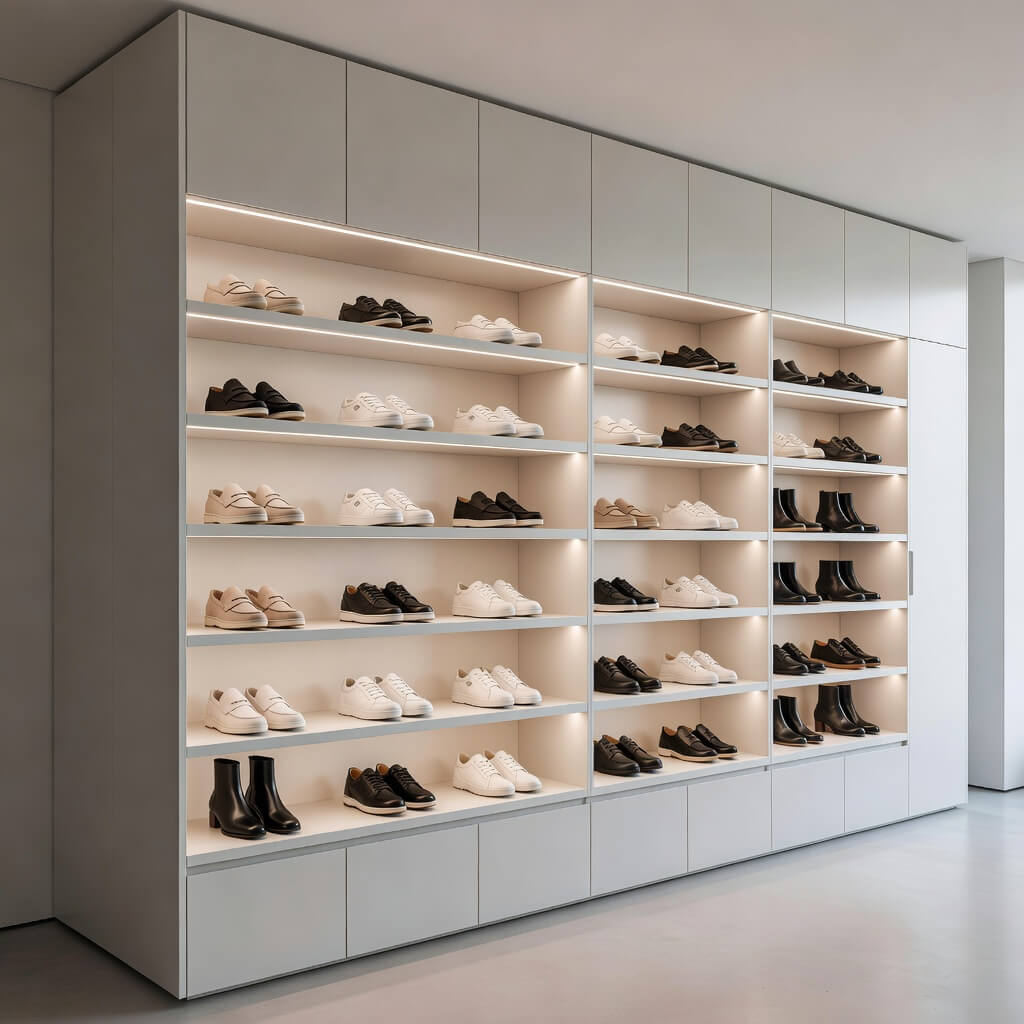
When you’re serious about shoe storage, half-measures won’t cut it. The floor-to-ceiling built-in shoe cabinet is the ultimate commitment to organization and luxury.
I helped my sister design one of these for her master bedroom closet, and the transformation was incredible. We’re talking about utilizing every single vertical inch from the baseboard to the crown molding. The storage capacity is absolutely insane.
Benefits of going floor-to-ceiling:
- Maximum storage capacity without consuming additional floor space
- Custom-fitted to your exact room dimensions for a seamless built-in look
- Creates architectural interest and adds value to your home
- Eliminates dust-collecting gaps above cabinets
- Can incorporate varied storage types at different heights
The design strategy is smart: put everyday shoes at eye level, seasonal or less-used pairs up high, and formal shoes in the middle sections. We installed pull-down mechanisms for the top shelves, similar to what you’d find in modern kitchen cabinets. Game changer.
Construction considerations:
- Work with a professional carpenter for structural integrity
- Ensure proper anchoring to wall studs throughout
- Consider adding a library ladder if you’re going seriously tall
- Mix closed cabinets and open shelving for visual variety
- Install adequate lighting at multiple levels
My sister’s version features soft-close doors, interior LED lighting, and adjustable shelving. The cabinet doors match her bedroom’s existing trim work, making it look like original architecture rather than an addition. Honestly, it’s so well-integrated that visitors assume the house was built with it.
Cost-wise? This is definitely a luxury option. Her 12-foot-tall, 8-foot-wide installation ran about $3,500 including materials and installation. But considering it stores over 100 pairs of shoes and looks phenomenal, she considers it money well spent.
Small Apartment Compact Shoe Organizer Cabinet
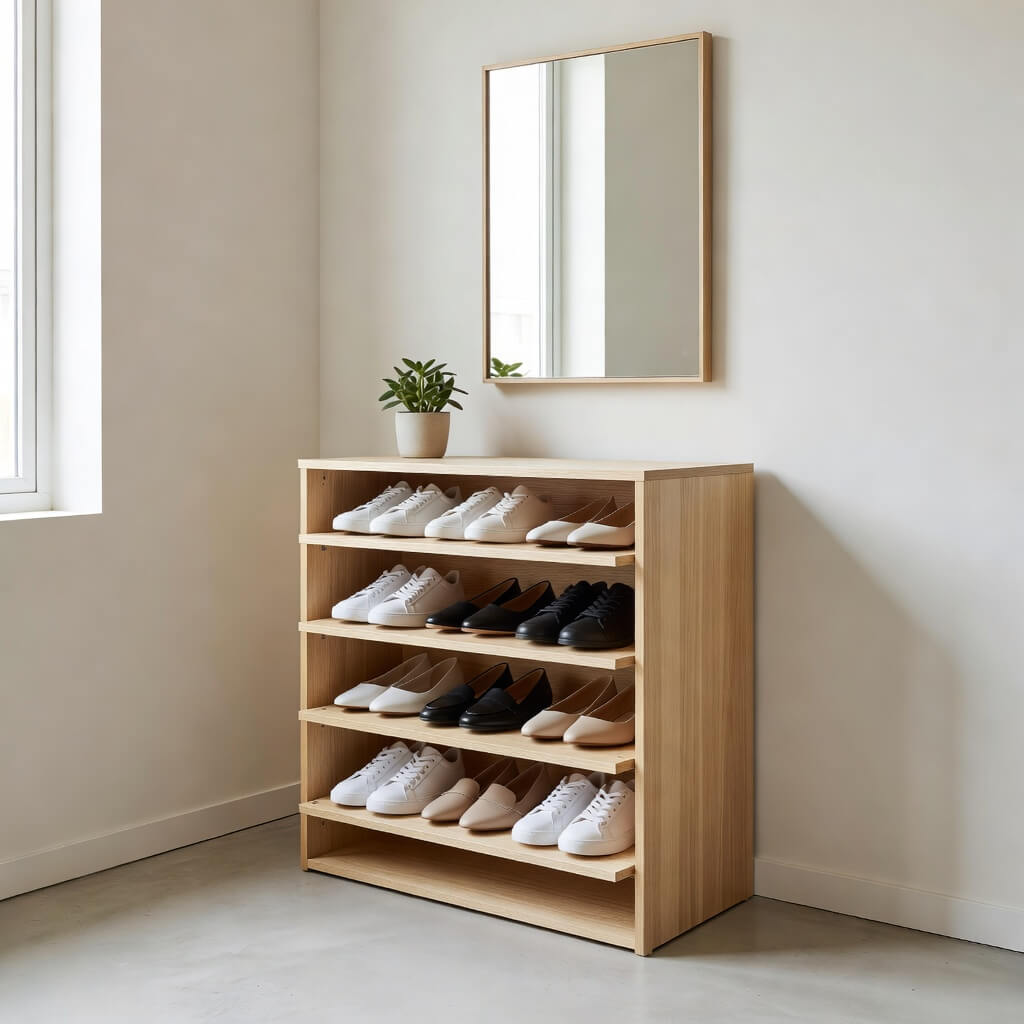
Living in a small apartment doesn’t mean sacrificing style or organization. You just need smarter solutions, and compact shoe organizer cabinets are specifically designed for space-challenged environments.
I’ve lived in my share of tiny apartments, and I’ve tested probably every compact storage solution on the market. The ones that actually work are slim, multi-functional, and vertically oriented.
Features to look for in compact shoe cabinets:
- Depth of 10 inches or less to fit narrow hallways or tight corners
- Multi-tier flip-down doors that hold 2-3 pairs per compartment
- Wheels or casters for easy repositioning during cleaning
- Neutral colors that blend with any décor style
- Dual-purpose tops usable as console tables or display surfaces
The flip-down door style is particularly clever for apartments. Each door tilts open at an angle, revealing shoes stored at a slant that keeps them visible and organized. You can stack these units vertically—some models go 5-6 compartments high, storing 12-15 pairs in a footprint smaller than a doormat.
I currently use a 4-tier white laminate cabinet that’s only 24 inches wide, 9 inches deep, and 48 inches tall. It sits in my entryway and holds all my everyday shoes without looking bulky. The top surface holds my keys, sunglasses, and a small plant, making it look like intentional décor rather than pure storage.
Pro apartment-dweller tip: Choose cabinets that don’t require wall mounting if you’re renting. Freestanding units give you flexibility to rearrange or take with you when you move. Plus, no explaining to your landlord why there are giant holes in the wall.
Mirror Door Shoe Rack Cabinet Design Idea
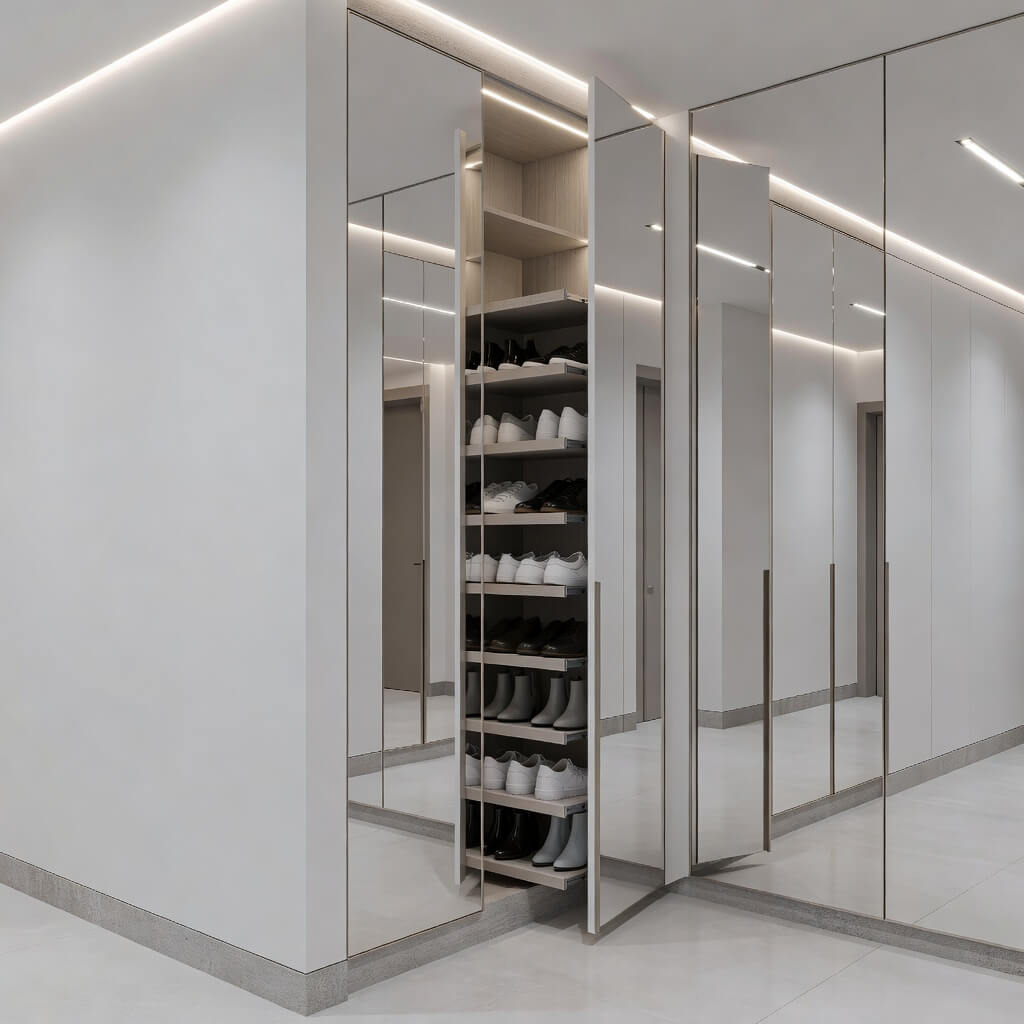
Why choose between a shoe cabinet and a full-length mirror when you can have both? The mirror door shoe rack cabinet is one of those “why didn’t I think of that?” designs that solves multiple problems simultaneously.
I installed one of these in my bedroom about six months ago, and it’s become my favorite piece of furniture. It’s a full-length mirror when closed and a complete shoe organizer when open. Pure genius.
Why mirror door cabinets are brilliant:
- Space-saving dual functionality (mirror + storage in one footprint)
- Makes rooms appear larger thanks to the reflective surface
- Perfect for bedroom or entryway placement where mirrors are already needed
- Disguises storage completely when closed
- Adds light and depth to smaller or darker spaces
The interior typically features multiple shelves or compartments, similar to a standard shoe cabinet. I’ve seen designs with rotating carousels, pull-out drawers, or traditional fixed shelving. My version has six adjustable shelves that I’ve configured to hold everything from sandals to ankle boots.
The mirror itself should be high-quality—not that cheap, warped glass that makes you look like a funhouse reflection. I went with a cabinet that has a beveled edge mirror with a slight tilt function at the top, making it easier to check shoes when you’re actually wearing them.
Installation considerations:
- These cabinets are heavier than standard shoe racks due to the mirror
- Mount securely to wall studs, not just drywall
- Ensure the floor is level to prevent the door from swinging open
- Place it where the mirror will actually be useful (near dressing areas)
One thing that surprised me? How much I use the mirror even when I’m not accessing the shoes. It’s become my go-to spot for checking outfits before heading out, and I constantly forget there’s storage behind it. That’s the mark of truly integrated design.
Also Read: 10 Genius Tiny House Stairs Ideas Small Space Saving Ideas
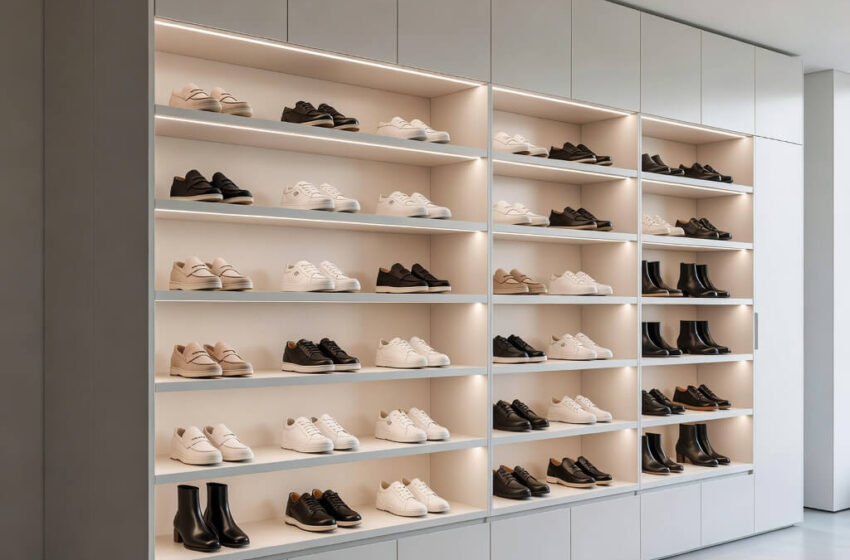
Open Display Stylish Shoe Storage Cabinet Wall
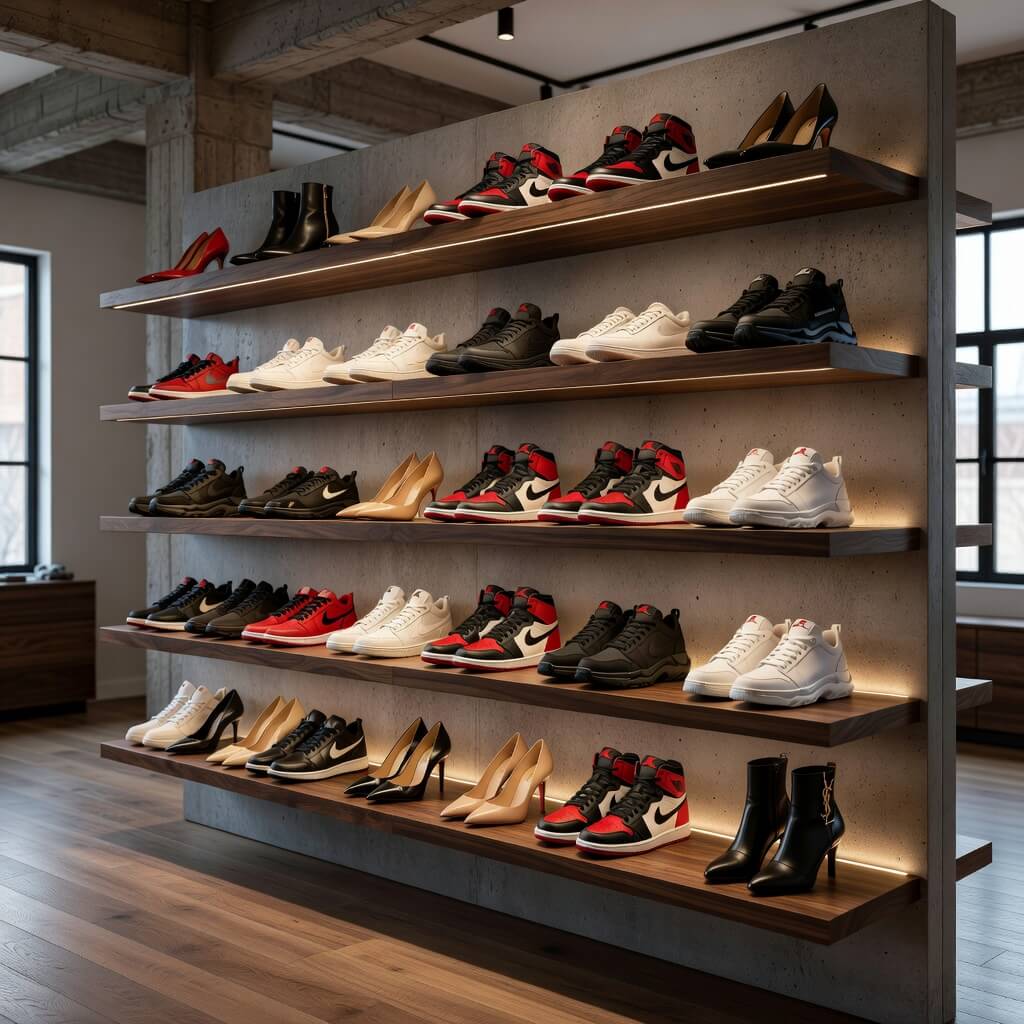
Let’s be honest—some shoes are too beautiful to hide. If you’ve invested in designer heels, limited-edition sneakers, or artisan leather boots, why not display them like the art pieces they are?
The open display shoe storage wall transforms your collection into a visual statement. I’ve seen these executed brilliantly in modern lofts, boutique-style bedrooms, and even creative home offices. Your shoes become part of the room’s aesthetic rather than hidden necessities.
Design elements that make open shoe displays work:
- Floating shelves in varying lengths for visual interest
- Backlit LED strips that highlight each pair dramatically
- Color-coordinated arrangement that creates an intentional palette
- Mix of shelf depths to accommodate different shoe types
- Minimalist brackets or invisible mounting for a clean look
I created a smaller version of this concept in my dressing area using industrial pipe shelving. Five shelves spanning six feet, each displaying shoes arranged by color gradient from black to white. The visual impact is stunning, and it makes getting dressed genuinely enjoyable.
Here’s what works best for open displays:
- Keep shoes clean and well-maintained (they’re on display, after all)
- Rotate seasonal collections to keep the look fresh
- Dust regularly because open shelving collects it like crazy
- Consider UV-protective glass if shoes are in direct sunlight
- Use shoe trees or stuffing to maintain shape for displayed pairs
The psychological effect is real—when your shoes are beautifully displayed, you’re more likely to actually wear them. I’ve definitely noticed I rotate through my collection more frequently now that everything’s visible.
A word of caution: This works best in low-traffic areas or spaces where dust isn’t a major issue. My friend tried this in her entryway near the front door, and the dust situation became overwhelming. She eventually switched to glass-fronted cabinets to protect the shoes while maintaining visibility.
Bringing It All Together
Listen, choosing the right luxury shoe rack cabinet isn’t just about storage—it’s about creating a space that makes you feel organized, sophisticated, and maybe just a tiny bit bougie (in the best way possible).
I’ve experimented with most of these designs personally, and each one serves a specific purpose depending on your space, budget, and lifestyle. The under-stair solution is perfect if you’re maximizing every inch of a home. The minimalist sliding door works beautifully in modern apartments where aesthetics matter as much as function. And if you’re blessed with the space and budget? That walk-in shoe wall is absolutely worth the investment.
My personal recommendation? Start by honestly assessing your space and collection size. There’s no point installing a floor-to-ceiling cabinet if you own 15 pairs of shoes, just like a compact vertical rack won’t cut it if you’re a serious collector with 100+ pairs.
Consider your daily routine too. If you’re rushing out the door every morning, an entryway bench cabinet makes way more sense than a hidden under-stair solution. If you love fashion and want your shoes to be part of your interior design, go with the open display or mirror door options.
Budget matters, obviously. DIY wooden cabinets can be incredibly satisfying and cost-effective if you have the skills and time. Built-in custom solutions require professional help and significant investment but add real value to your home.
And honestly? You might need a combination approach. I use a compact cabinet for everyday shoes by the door, a mirror-door cabinet in my bedroom for special occasion footwear, and open shelving for my favorite designer pieces. Different spaces, different needs, different solutions.
The luxury aspect isn’t necessarily about spending thousands of dollars—it’s about thoughtful design, quality materials, and solutions that make your life genuinely easier. A well-designed shoe cabinet that saves you from morning chaos while looking gorgeous? That’s luxury in my book.
So go forth and organize those shoes! Your feet (and your interior design aesthetic) will thank you. And who knows? Maybe you’ll actually rediscover some forgotten favorites once everything’s properly stored and visible. I certainly did, and my footwear game has never been stronger.
Now if you’ll excuse me, I need to go reorganize my shoe cabinet by heel height because apparently, I’ve become that person. No regrets.