10 Brilliant Kitchen Under Stairs Ideas for Organized Spaces
- Stairs Design
 Ben
Ben- 0
- 40 minutes read
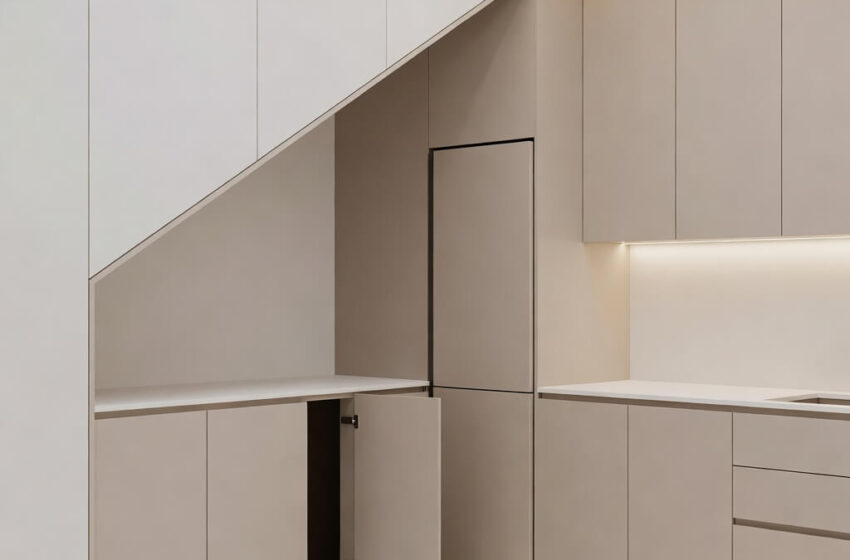
You know that awkward space under your stairs that’s currently housing a graveyard of old shoes, forgotten umbrellas, and probably a vacuum cleaner you haven’t used since 2019? Yeah, that space has massive potential. I’m talking full-blown kitchen functionality in what you thought was just dead square footage.
Look, I get it. The idea of fitting a kitchen under your stairs sounds borderline insane. But here’s the thing—I’ve seen people transform these spaces into legit cooking zones, and honestly, it’s kind of genius. Whether you’re living in a tiny apartment, designing a basement suite, or just want to maximize every inch of your home, under-stair kitchens are having a serious moment.
So grab your coffee (or wine, no judgment), and let’s talk about 10 absolutely brilliant ways you can turn that wasted staircase space into a kitchen that’ll make your friends go “Wait, you built WHAT under there?”
Modern Mini Kitchen Under Stairs Layout Ideas
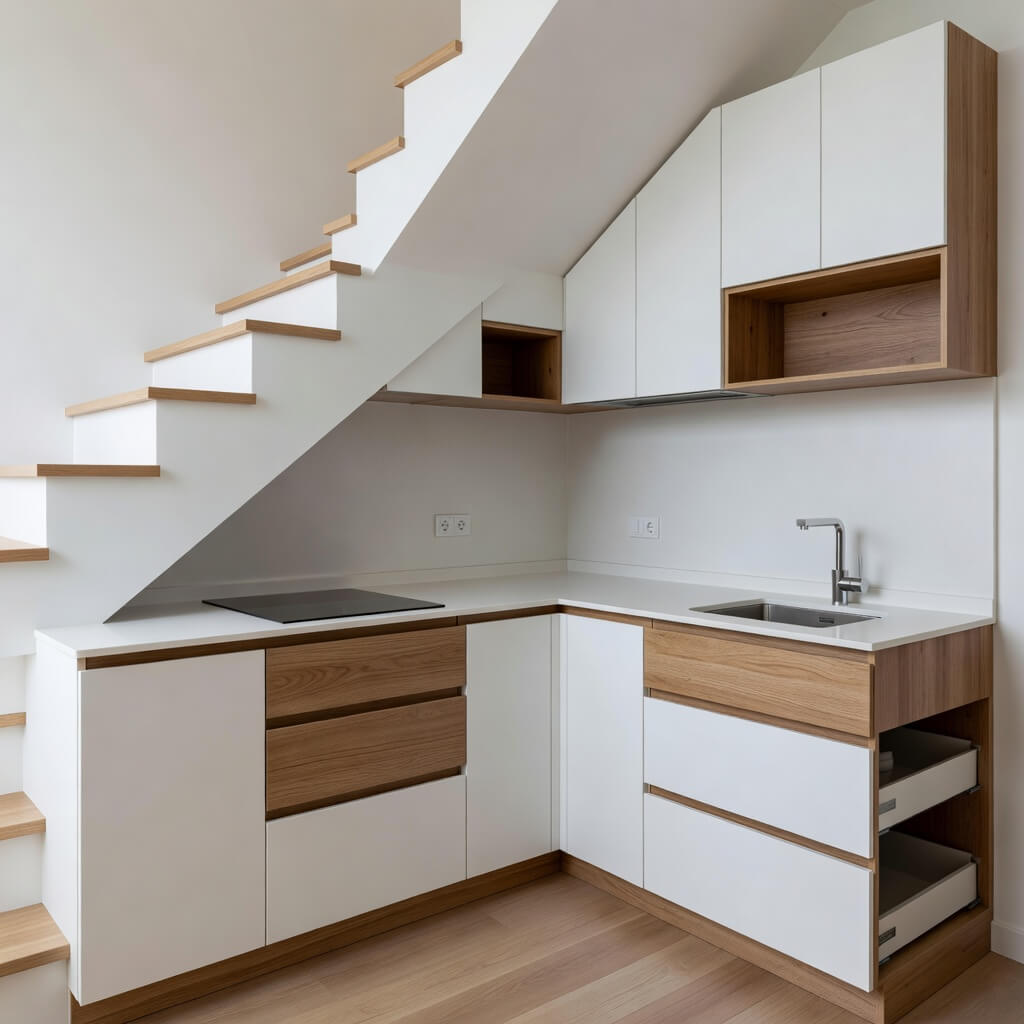
First up, let’s talk about modern mini layouts. These aren’t your grandma’s kitchenettes—we’re talking sleek, contemporary designs that pack a serious punch in a small footprint.
The key to nailing a modern mini kitchen under your stairs is smart zoning. I learned this the hard way when I tried cramming too much into my friend’s under-stair space and ended up with what basically looked like kitchen Tetris gone wrong. You need to think vertically and strategically.
Here’s what actually works:
Essential Layout Components:
- Single-wall configuration that follows the stair slope
- Compact appliances (we’re talking 18-inch dishwashers, apartment-size fridges)
- Induction cooktops instead of full ranges (safer, smaller, sleeker)
- Pull-out countertops for extra prep space when needed
- Handle-less cabinets with push-to-open mechanisms for that ultra-modern vibe
The beauty of modern design is that it thrives on minimalism. You’re not trying to replicate a full kitchen here—you’re creating a functional cooking zone that looks intentional, not crammed. Think stainless steel accents, white or gray cabinetry, and maybe a pop of color with a backsplash.
Ever noticed how modern kitchens always feel bigger than they are? That’s because designers use continuous lines and reflective surfaces. Apply that same logic to your under-stair space. A mirror-finish backsplash can literally double the visual space, and LED strip lighting under cabinets creates depth where there wasn’t any before.
One killer layout trick: position your sink at the tallest point of the stair slope and work downward with storage and smaller appliances. This gives you maximum headroom where you actually need it (nobody wants to bang their head while washing dishes—trust me on this one).
Hidden Compact Kitchen Under Stair Space Designs
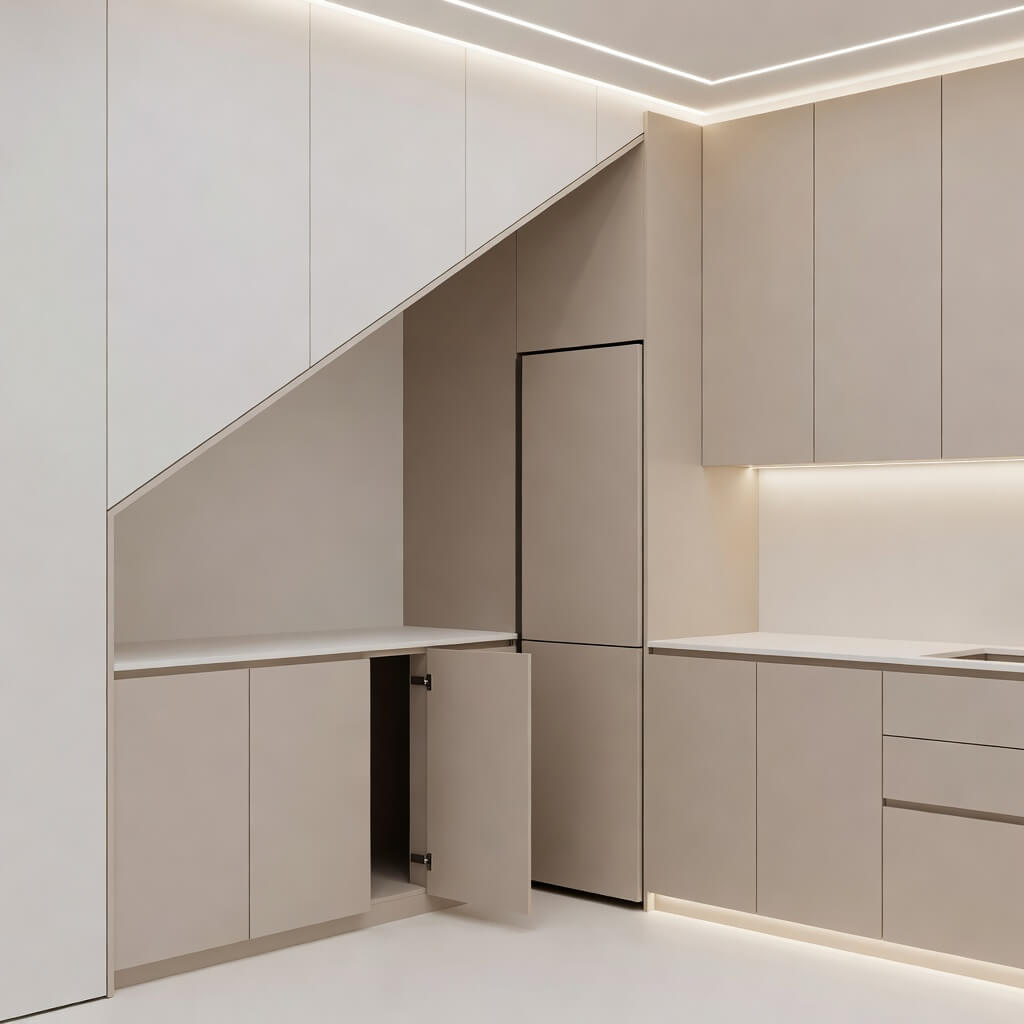
Okay, this is where things get seriously cool. Hidden kitchens are for those of you who want functionality without announcing “HEY, THERE’S A KITCHEN HERE!” to everyone who walks by.
I absolutely love the concept of concealed kitchens because they give you options. Some days you want your kitchen on display; other days you’re hosting and prefer everything tucked away. Flexibility is everything, especially in smaller homes.
Ways to Hide Your Under-Stair Kitchen:
- Pocket doors that slide completely into the wall
- Bi-fold panels that accordion away when not in use
- False bookshelf fronts that swing open (super James Bond, IMO)
- Floor-to-ceiling curtains in heavy fabric for budget-friendly concealment
- Matching paneling that blends with surrounding walls
The sneakiest hidden kitchen I ever saw used a custom panel system that looked exactly like the wall paneling in the rest of the house. You’d walk right past it without knowing there was a full kitchenette behind it. The homeowner even added fake picture frames to the panels for extra camouflage. Brilliant? Absolutely.
Here’s a pro tip: if you’re going the hidden route, ventilation becomes critical. You can’t just seal up a cooking space and hope for the best. Install a recirculating range hood or ensure your concealment system allows for airflow. Nothing ruins the illusion faster than your entire house smelling like last night’s salmon :/
For those renting or on a budget, magnetic chalkboard panels work surprisingly well. They attach to a metal frame you build around your kitchen space, they’re removable, and they double as a grocery list surface. Function meets form, people.
Small Apartment Kitchen Under Stairs Smart Setup Ideas
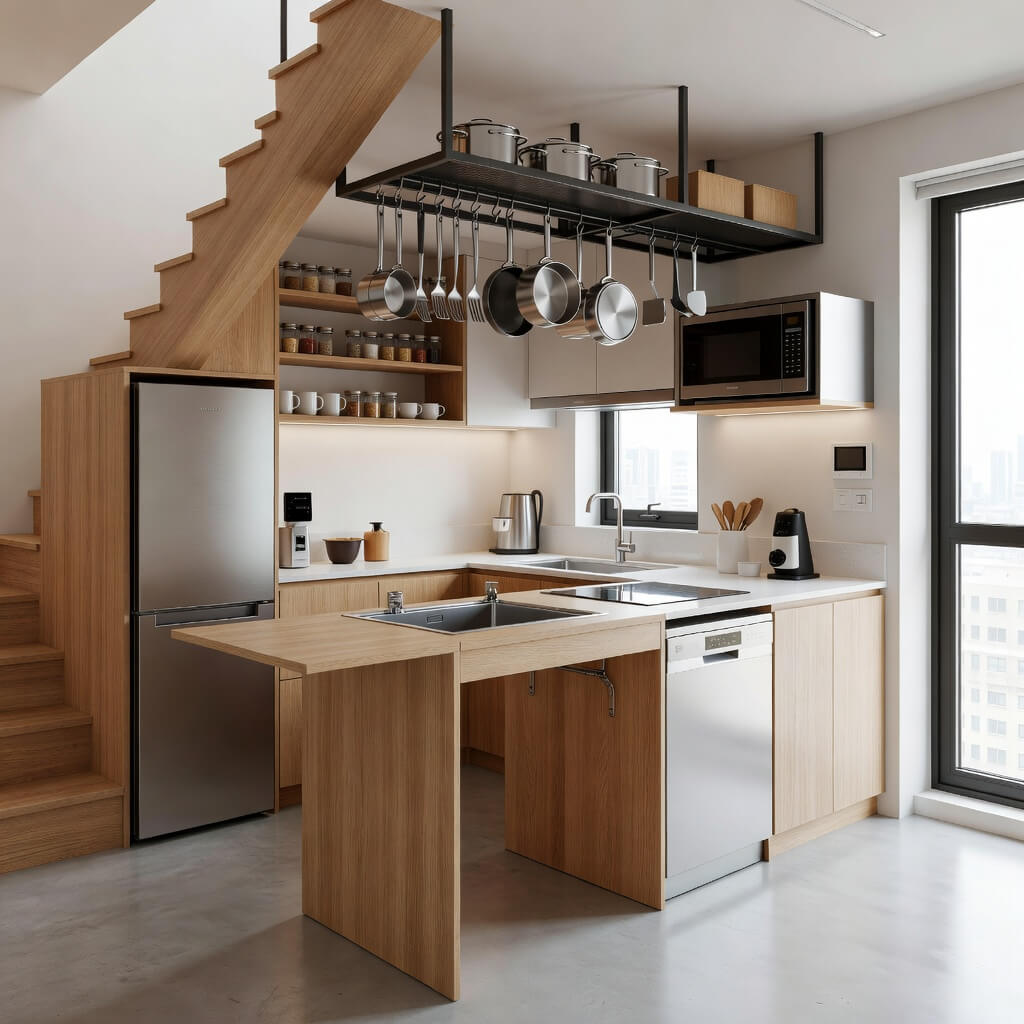
Small apartment living taught me something valuable: every square inch matters. When you’re paying rent based on square footage, that under-stair space isn’t just convenient—it’s financially smart.
I had a friend who lived in a 400-square-foot studio in the city. She converted her under-stair area into a full prep kitchen, which freed up her main space for actual living. Game changer? Absolutely.
Smart Setup Elements for Apartments:
- Plug-and-play appliances that don’t require major electrical work
- Rolling elements that can shift when you need more space
- Multi-function pieces (cutting board that fits over the sink, anyone?)
- Magnetic knife strips and spice racks to free up counter space
- Collapsible dish racks that disappear when not in use
The smartest apartment under-stair kitchen setups focus on modularity. You want pieces that can adapt as your needs change. Maybe right now you’re cooking for one, but next year you’ve got a partner moving in. Your kitchen should evolve without requiring a complete renovation.
One incredibly smart setup I saw used a mobile island that doubled as a dining table. It sat in the middle of the living space normally, but rolled under the stairs when the homeowner was cooking. The island had built-in storage for pots and pans, and the top flipped to reveal a cutting board. That kind of multi-functionality is what separates amateur designs from seriously smart ones.
Another thing—lighting matters more than you think. Under-stair spaces can get cave-like real fast. Install motion-sensor LED pucks so the space illuminates automatically when you approach. It’s a small detail that makes a massive difference in daily usability.
Also Read: 10 Gorgeous Bar Under Stairs Ideas for Home Upgrade
Minimalist Under Stairs Kitchen Storage Solutions
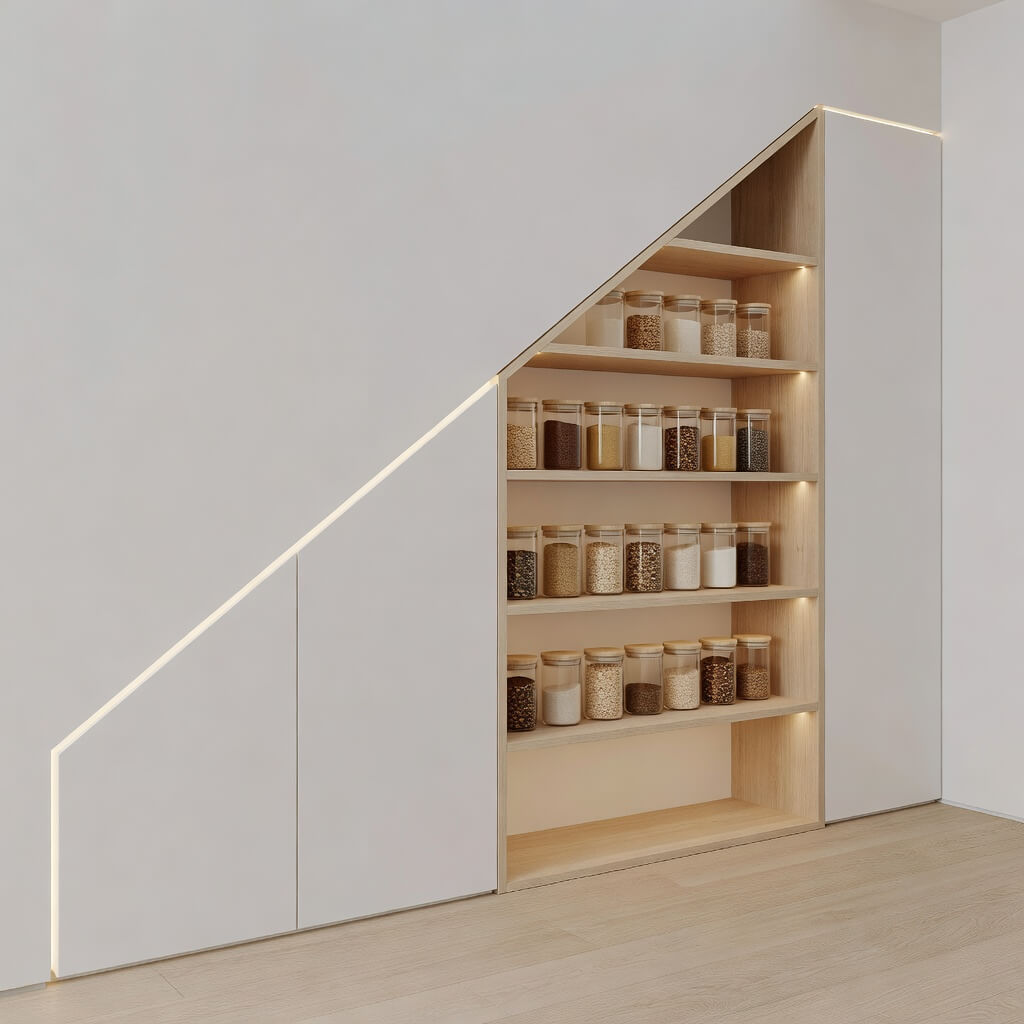
Let’s be real: minimalism isn’t just an aesthetic—it’s a survival strategy when you’re working with limited space. You cannot fit everything in an under-stair kitchen, so you better get ruthless about what actually matters.
I used to be a kitchen gadget hoarder. Three different types of peelers, specialty tools I used twice a year, duplicate measuring cups… you get it. Converting to a minimalist kitchen mindset forced me to ask the important question: “Do I actually use this?” Spoiler alert: the answer was usually no.
Minimalist Storage Essentials:
- Drawer dividers for utensils (visible organization = minimalist heaven)
- Clear containers for pantry items (uniform, stackable, gorgeous)
- Pegboard systems for customizable wall storage
- Lazy Susans for corner cabinets (maximize every inch)
- Under-shelf baskets that create double-decker storage
The minimalist approach works beautifully under stairs because it forces you to work within the space’s natural limitations. That sloped ceiling? Don’t fight it. Use progressively shorter storage solutions as the space tapers.
Here’s what minimalist storage actually looks like in practice: you keep your five most-used pots and pans instead of the 20 collecting dust. You own one excellent chef’s knife instead of a block of mediocre ones. You store food in matching containers instead of a chaotic collection of old takeout tubs.
FYI, minimalist doesn’t mean boring or sterile. Some of the most beautiful kitchens I’ve seen were minimalist. The key is intentionality. Every item you keep should either serve a purpose or bring you genuine joy. Everything else? Donate it, sell it, or throw it out.
One storage hack that’s totally minimalist-approved: magnetic strips on the inside of cabinet doors. They hold small metal items like bobby pins, twist ties, or even small tools, keeping them accessible but invisible. Clean lines, maximum function.
Luxury Modern Kitchen Built Under Staircase Ideas
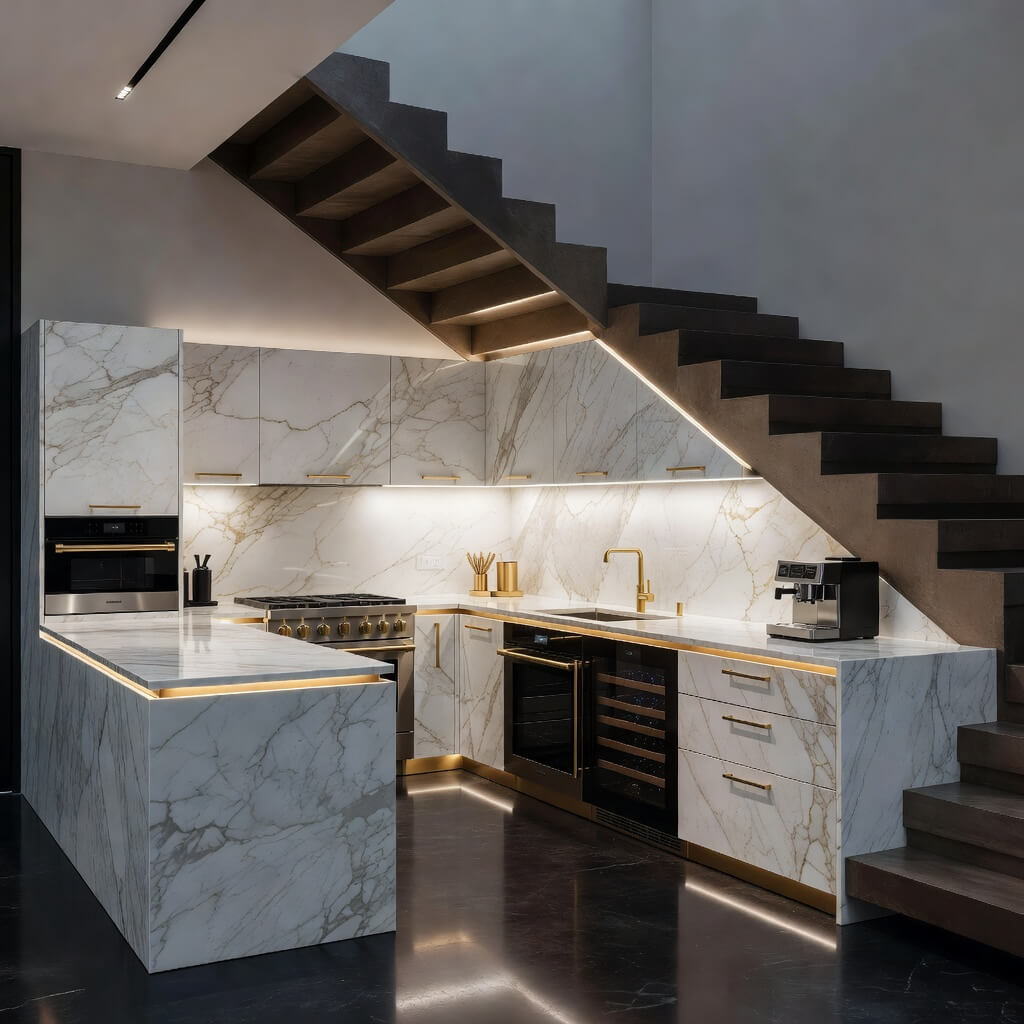
Alright, let’s talk about the fancy stuff. Who says an under-stair kitchen can’t be absolutely luxurious? If you’ve got the budget, you can create something that rivals full-sized designer kitchens.
I once consulted on a home where the homeowner dropped serious money on their under-stair bar and kitchenette. We’re talking marble countertops, custom Italian cabinetry, and a built-in wine fridge that cost more than my first car. Was it over the top? Maybe. Was it stunning? Absolutely.
Luxury Features Worth Considering:
- Natural stone surfaces (marble, quartzite, or granite)
- Custom millwork with soft-close mechanisms on everything
- High-end integrated appliances that blend seamlessly
- Smart home integration (voice-activated lighting, temperature-controlled wine storage)
- Designer fixtures from brands like Kohler or Grohe
- Accent lighting with dimming capabilities for ambiance
Here’s the thing about luxury under-stair kitchens—they work because they’re intentionally extra. You’re not trying to hide or minimize this space; you’re showcasing it as a design feature. Think exposed brass hardware, statement tile backsplashes, or even a small chandelier if the height allows.
One luxury element that actually makes sense from a practical standpoint? Touchless faucets. Yeah, they’re bougie, but when your hands are covered in raw chicken or bread dough, that automatic water flow is worth every penny. Plus, they just look expensive and modern.
The key to pulling off luxury in a small space is quality over quantity. You can’t fit 47 high-end features, so choose three or four statement pieces and build around them. Maybe it’s a show-stopping backsplash, a professional-grade cooktop, or custom lighting. Let those pieces shine instead of competing for attention.
Space Saving Under Stairs Kitchen Cabinet Designs
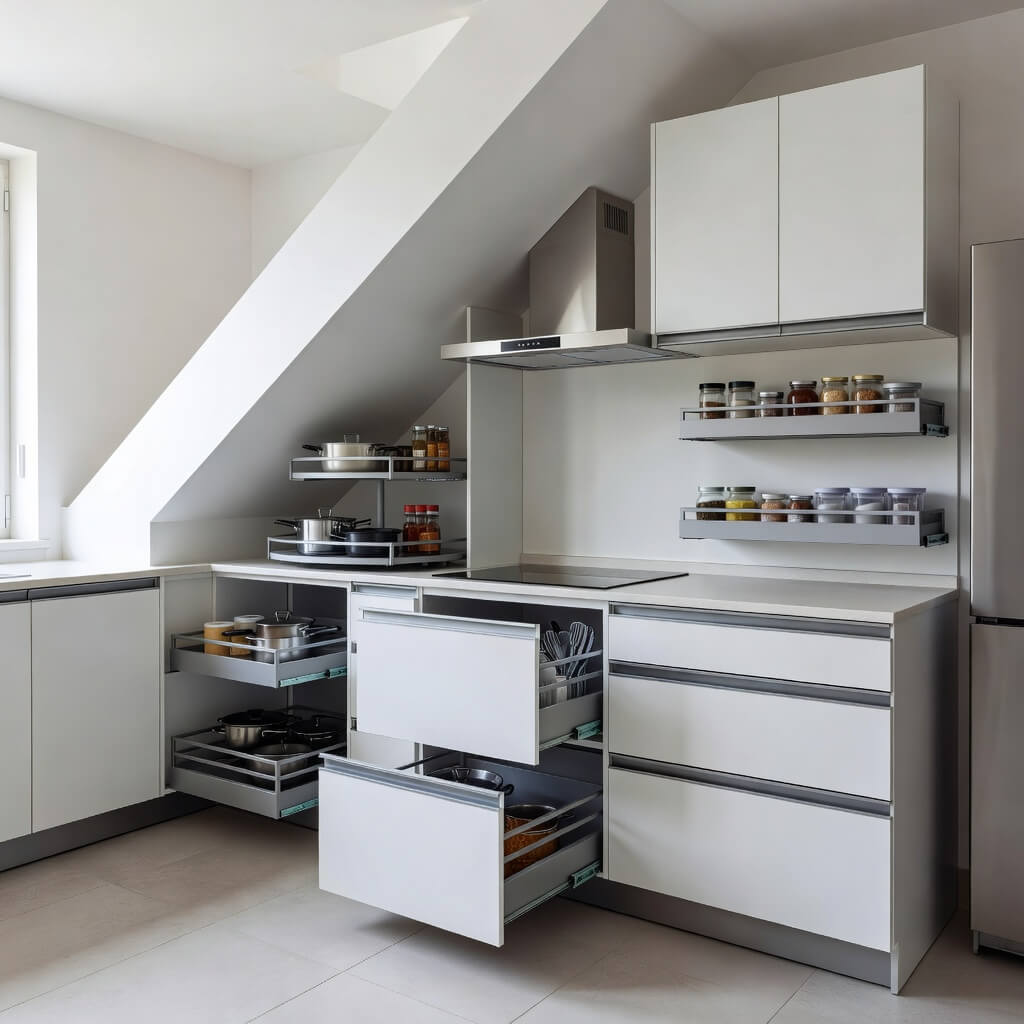
Let’s get tactical about cabinets because this is where most people drop the ball. Standard cabinets won’t work under stairs—the dimensions are all wrong, and you’ll waste a ton of space trying to make rectangular boxes fit into a triangular area.
I learned about custom angled cabinets the hard way. My first attempt at an under-stair project used off-the-shelf units, and I ended up with these weird dead zones that couldn’t hold anything useful. Custom is the only way to truly maximize this space.
Cabinet Design Strategies That Actually Work:
- Progressive height cabinets that match the stair slope exactly
- Pull-out shelving systems instead of fixed shelves (access matters more than you think)
- Corner carousel units for deep, awkward spaces
- Toe-kick drawers at the bottom for flat items like baking sheets
- Vertical dividers for storing pans and cutting boards on their sides
- Appliance garages with retractable doors
Ever tried reaching into a deep cabinet under sloped stairs? It’s basically a black hole where Tupperware lids go to die. Pull-out shelving solves this by bringing everything to you. You can see and access items in the back without doing some weird crawl-and-reach maneuver.
One cabinet hack I swear by: graduated drawer heights. The tallest drawers go where the ceiling height is greatest, tapering down as the space gets shorter. Sounds obvious, but you’d be surprised how many people install uniform cabinets and then wonder why the lower ones waste space.
Also, consider open shelving for some sections. I know, I know—some people hate open shelves. But in an under-stair kitchen, they can actually make the space feel less claustrophobic. Plus, they force you to keep things organized because everything’s on display. Natural accountability 🙂
The absolute best cabinet investment? Soft-close hinges and drawer slides. They’re not just luxury items—they prevent the cabinet-slam echo that happens in enclosed spaces. Your eardrums (and your housemates) will thank you.
Also Read: 10 Perfect Farmhouse Stairs Ideas for Beautiful Home Style
Tiny Home Kitchen Under Stairs Organization Ideas
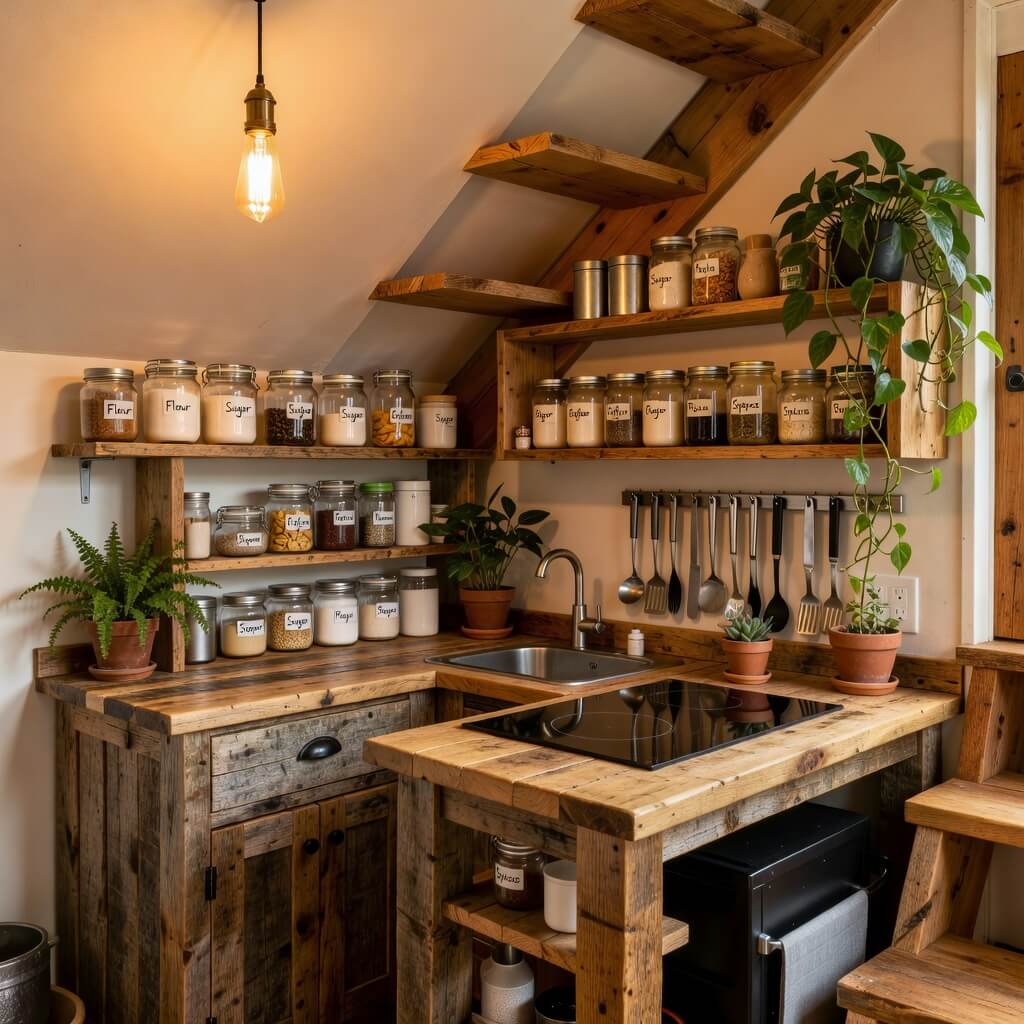
Tiny home living is its own beast, and trust me, I’ve spent enough time in RVs and micro-homes to know that organization isn’t optional—it’s survival mode.
The tiny home philosophy treats every item as if it needs to justify its existence. Does it serve multiple purposes? Does it fold, stack, or nest? If the answer’s no, it probably doesn’t belong in a tiny kitchen.
Tiny Home Organization Must-Haves:
- Nesting bowls and measuring cups that stack inside each other
- Collapsible colanders and storage containers
- Over-the-door organizers for cleaning supplies
- Tension rods creating vertical dividers in cabinets
- Command hooks for hanging mugs, utensils, or dish towels
- Stackable, clear storage bins with labels
Here’s something tiny home enthusiasts get that regular homeowners often don’t: vertical space is your best friend. When you can’t go out, go up. Install hooks on every available wall surface. Use the inside of cabinet doors. Hang baskets from the ceiling if the space allows.
One organizing principle that changed my approach to tiny kitchens: the “one in, one out” rule. Got a new pot? An old one has to go. This prevents accumulation and forces you to constantly evaluate what actually earns its place in your limited space.
Magnetic containers are seriously underrated in tiny kitchens. Stick them to the side of your fridge or any metal surface, and suddenly you’ve got spice storage that doesn’t take up shelf space. Small solution, big impact.
Also, embrace the weird spaces. That six-inch gap between your fridge and the wall? Rolling slim cart. The space above your cabinets? Storage baskets. The dead zone at the very back of the under-stair area? Seasonal items you only need occasionally. Nothing goes unused in a tiny kitchen.
Open Concept Under Stairs Kitchen Style Ideas
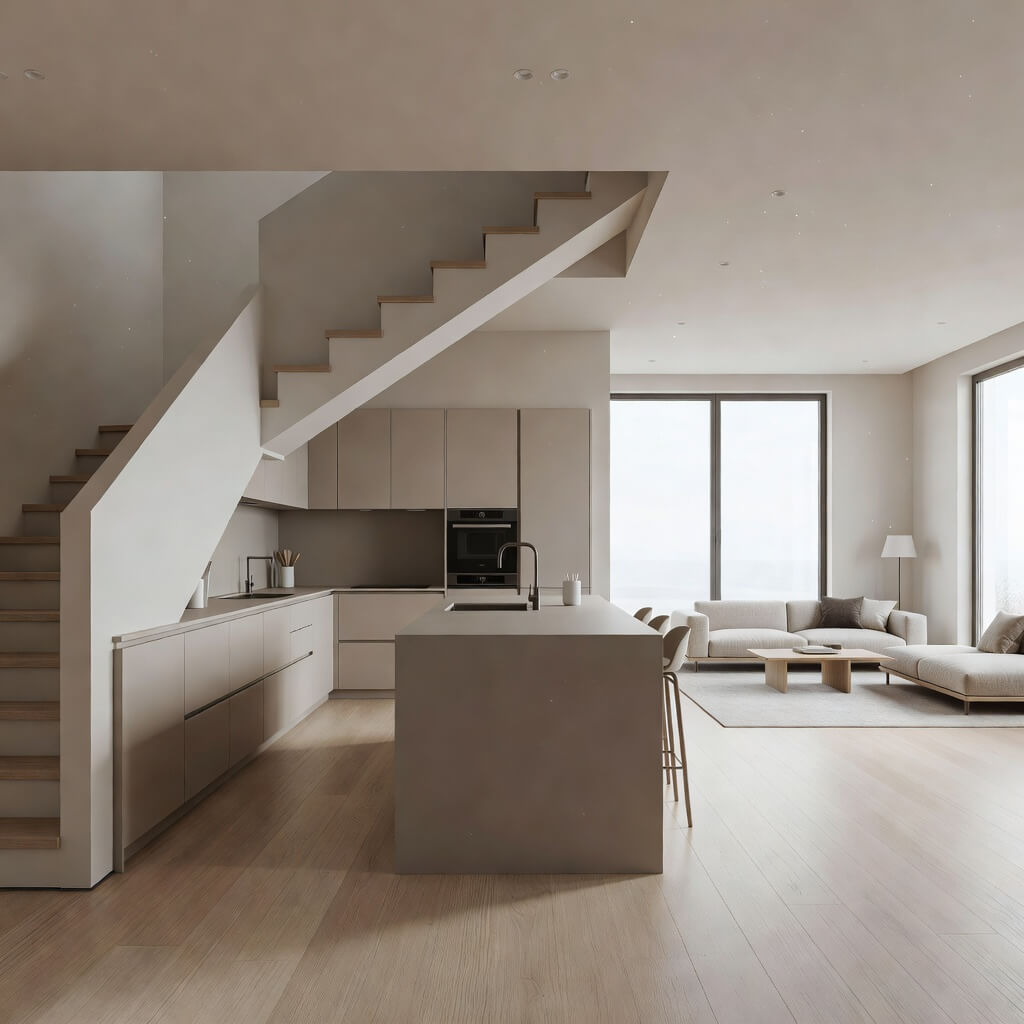
Open concept under-stair kitchens are for the bold. You’re making a statement here: “Yes, my kitchen is under my stairs, and it’s gorgeous enough to showcase.”
The challenge with open concept is that your kitchen becomes part of your living space’s visual flow. Everything needs to be cohesive, clean, and intentional. Random clutter? Everyone sees it. Dirty dishes? They’re on display.
Open Concept Design Principles:
- Consistent color palette with the rest of your space
- Seamless flooring that flows from kitchen to living area
- Quality finishes since everything’s visible
- Strategic lighting that integrates with overall room lighting
- Decorative elements that make it feel intentional, not accidental
I’ve seen open concept under-stair kitchens that used the same cabinetry style as the living room’s built-in shelving. This creates a unified look that makes the kitchen feel like it was always meant to be there, not an afterthought or space-saving hack.
One styling trick that works beautifully: treat the visible side of your under-stair kitchen as a design feature. Maybe it’s a stunning tile wall, interesting wallpaper, or open shelving with color-coordinated dishware. Give people something attractive to look at instead of trying to minimize the kitchen’s presence.
The breakfast bar concept works great in open layouts. Extend your counter a bit beyond the staircase footprint, add a couple of bar stools, and you’ve created a social cooking zone. People can chat with you while you cook without crowding into the actual kitchen space.
Here’s a reality check, though: open concept requires serious commitment to organization. You can’t let dishes pile up or ignore spills. Everything is always on display, which means your cleaning game needs to be strong. If you’re not naturally tidy, this might drive you crazy.
Budget Friendly Under Stairs Kitchen Makeover Ideas
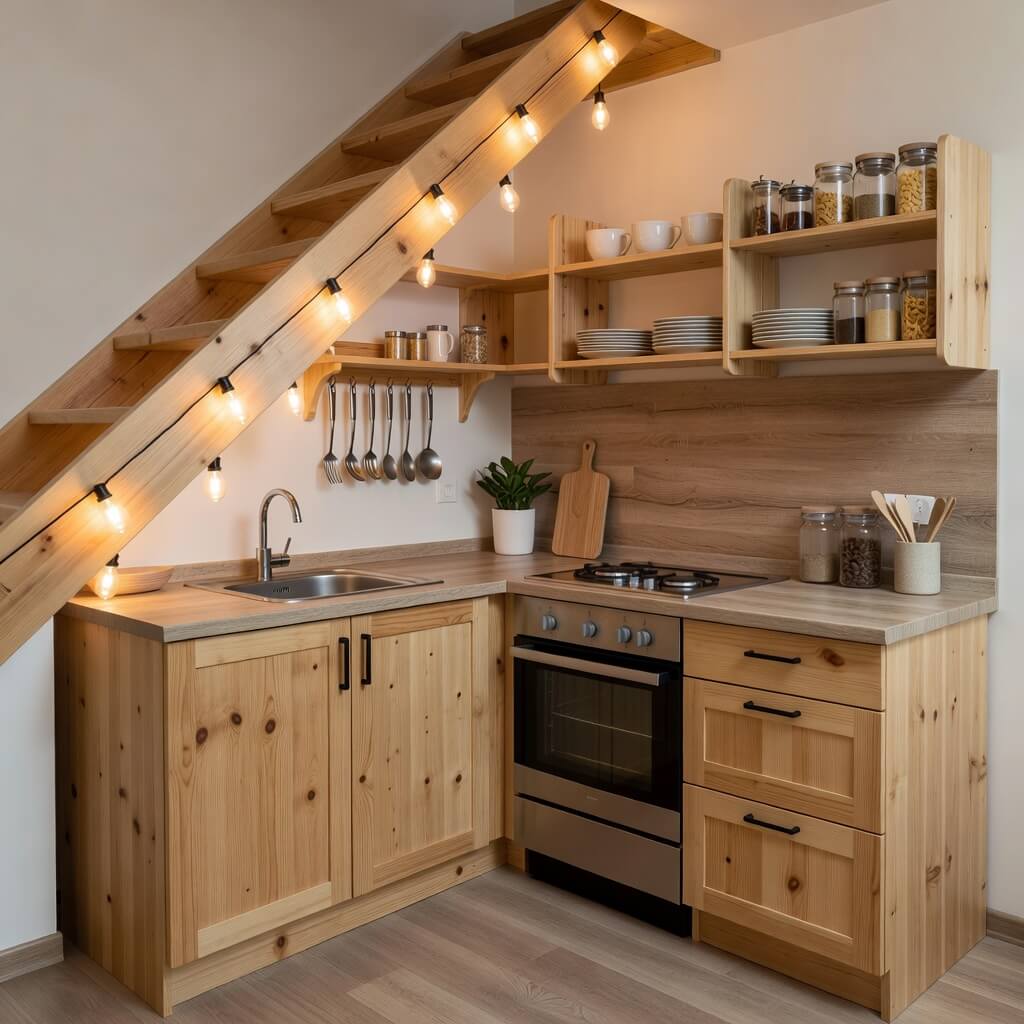
Let’s talk money, because not everyone has thousands to drop on a custom kitchen installation. The good news? You can create a seriously functional under-stair kitchen without breaking the bank.
I’ve done budget makeovers that came in under $1,000, and they looked absolutely respectable. The trick is knowing where to save and where to invest.
Budget-Friendly Makeover Strategies:
- IKEA cabinets cut to fit your space (they’re modular for a reason)
- Contact paper or peel-and-stick tiles for backsplashes
- Secondhand appliances from Facebook Marketplace or Craigslist
- DIY countertops using butcher block or concrete alternatives
- Paint for cabinet transformation (never underestimate the power of fresh paint)
- Floating shelves instead of upper cabinets
Here’s something people don’t talk about enough: you don’t need to do everything at once. I helped a friend phase her under-stair kitchen over six months. Month one: basic framing and electrical. Month two: cabinets. Month three: countertop. She budgeted $200-300 per month, which made the whole project financially digestible.
The biggest budget hack? Do your own labor. Hire out electrical work (safety first, people), but painting, installing floating shelves, and assembling IKEA cabinets? Totally DIY-able with YouTube tutorials and weekend time.
Another money-saver: buy floor models or discontinued items. Appliance stores often deeply discount perfectly good items just because they’re the previous year’s model or have a tiny cosmetic flaw. A scratch you can’t see once something’s installed isn’t worth paying full price to avoid.
For countertops, butcher block from home improvement stores runs way cheaper than stone, and you can install it yourself. Seal it properly, and it’ll hold up beautifully. Or go ultra-budget with laminate—the newer styles actually look pretty decent, and it’s incredibly affordable.
Also Read: 10 Amazing Steel Stairs Design Ideas for Luxury Interiors
Creative Scandinavian Under Stairs Kitchen Designs
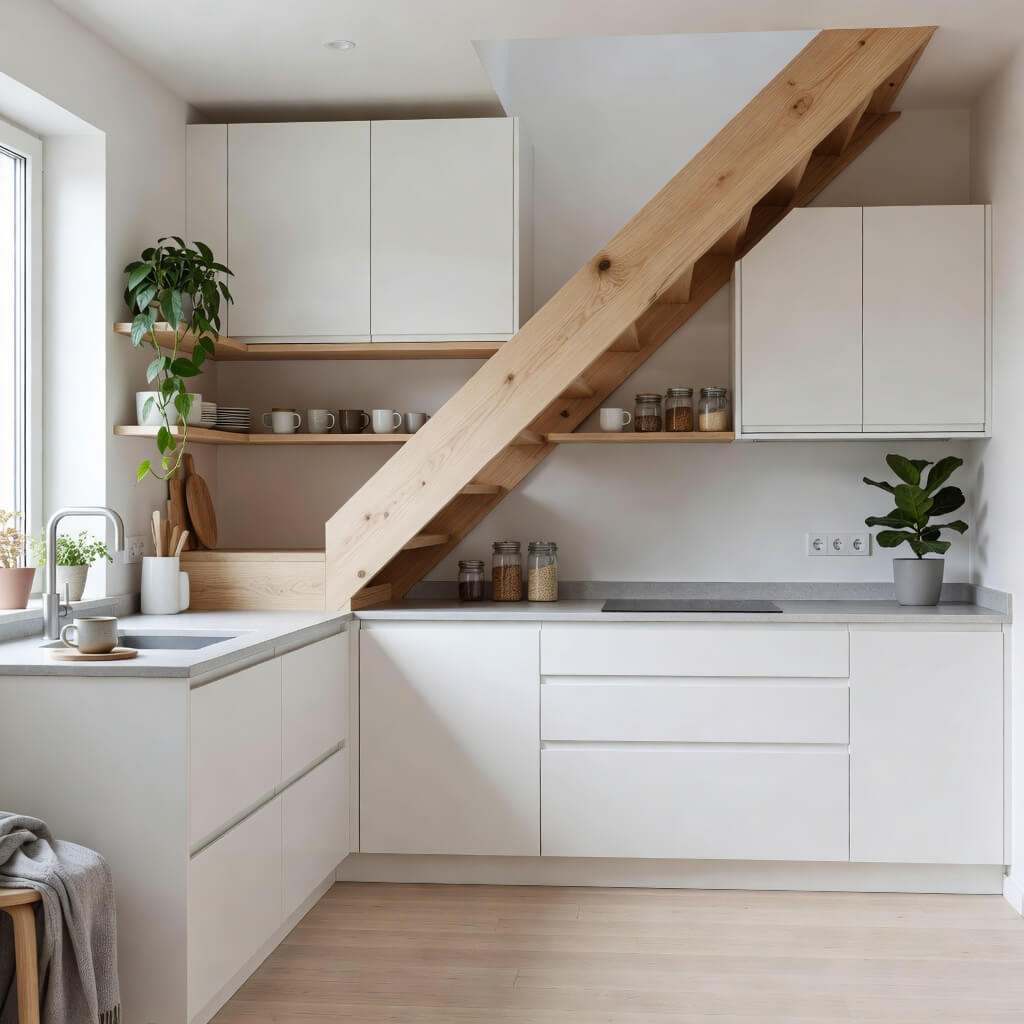
Okay, last but definitely not least—let’s talk Scandinavian design. If minimalism and functionality had a gorgeous Nordic baby, this would be it.
Scandinavian design works ridiculously well for under-stair kitchens because it’s literally built on the principle of making small spaces feel bigger and brighter. This aesthetic was born in countries with long, dark winters and compact living spaces. Sound familiar to your under-stair situation?
Essential Scandinavian Design Elements:
- White or light wood cabinetry (think birch or light oak)
- Matte black or brass hardware for contrast
- Natural materials like wood, stone, and linen
- Plants (lots of them—greenery is non-negotiable)
- Layered lighting from multiple sources
- Minimal decoration focused on functionality
- Textured textiles in neutral tones
The Scandinavian color palette is your best friend in a small, potentially dark space. Those whites, light grays, and natural wood tones reflect light and create an airy feeling. Add black accents for definition, and maybe a single muted color (think dusty blue or sage green) for personality.
I’m slightly obsessed with how Scandinavian design handles storage. Everything has a place, but it’s displayed in a way that feels organic, not rigid. Open shelving with neatly arranged dishes, hanging pots from simple hooks, dish towels folded just so—it’s organized but livable.
Scandinavian Styling Tips:
- Mix open and closed storage for visual interest
- Use baskets for grouping smaller items (but keep them natural materials)
- Add a small plant or herb garden on the counter
- Choose simple, streamlined appliances in white or stainless
- Layer different light temperatures for warmth despite the white palette
Here’s what makes Scandinavian design particularly genius for under-stair kitchens: it prioritizes quality over quantity. You choose fewer items, but they’re well-made and beautiful. That philosophy naturally suits a space where you literally can’t fit excessive stuff anyway.
One final thought on Scandinavian style—it feels calm. And honestly, isn’t that what you want from a small kitchen space? Somewhere functional that doesn’t stress you out? The clean lines and uncluttered surfaces create a sense of peace that makes cooking feel less chaotic, even in a compact area.
Wrapping This Up
Look, transforming your under-stair space into a functional kitchen isn’t just about squeezing appliances into an awkward spot. It’s about reimagining how you use your home and getting creative with the space you’ve got.
Whether you’re going full luxury with custom everything, budget-friendly with DIY solutions, or somewhere in between, the principles remain the same: maximize vertical space, choose multi-functional elements, and design with intention. Every decision should serve both form and function.
The coolest part? Your under-stair kitchen becomes a conversation piece. People will walk into your home and immediately want the tour. “Wait, you built WHAT under there?” Never gets old, trust me.
So take that awkward triangle of wasted space and turn it into something genuinely useful. Your future self (and your home’s functionality) will thank you. Now if you’ll excuse me, I’ve got a sudden urge to reorganize my own under-stair closet… who knows, maybe there’s room for a wine fridge in there ????
Final pro tip: Start with the layout planning before you buy a single thing. Measure twice (or honestly, three times), sketch it out, and really think about your daily usage patterns. The most beautiful kitchen in the world won’t work if you can’t actually cook in it comfortably.
Happy building, friends. May your under-stair kitchen be everything you never knew you needed.